FORT MCMURRAY WILDFIRE: LEARNING FROM CANADA'S COSTLIEST DISASTER - SEPTEMBER 2019 - THE INSTITUTE FOR CATASTROPHIC LOSS ...
←
→
Page content transcription
If your browser does not render page correctly, please read the page content below

Fort McMurray Wildfire:
    Learning from Canada’s costliest disaster
    September 2019

Image Credit: Alan Westhaver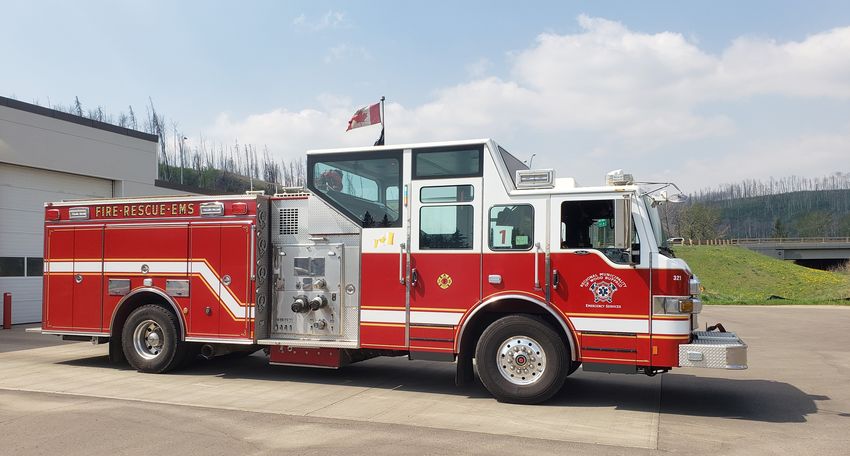
Contents
           Foreword2                                          Section IV: Investing in disaster
                                                               risk reduction                                          24
           Executive summary                             4
                                                               Prevent creation of new risk                            26
           Section I: The 2016                                 Build resistant new structures                          27
           wildfire in Fort McMurray                     6
                                                               Protect existing buildings                              28
           Environmental, economic
                                                               Invest in protective infrastructure                     29
           and social considerations                     7
                                                               Opportunities for improvement                           30
           The climate and fuel considerations           8
                                                               “Don’t let a disaster go to waste”:
           How the fire grew                             8
                                                               Lessons on resilience from the front lines              30
           Timeline for the fire in Fort McMurray        9
                                                               Section V: Building resilience in recovery              32
           Section II: Understanding disaster risk       10
                                                               The Wood Buffalo Recovery Task Force	                   34
           Fire behaviour models                         12
                                                               The Canadian Red Cross invests
           Understanding how homes ignite                      in Fort McMurray                                        36
           from wildfires                                13
                                                               Insurers rebuild new, more resilient homes              36
           Fire behaviour and risk models                14
                                                               Opportunities for improvement                           37
           Hazard and risk maps                          15
                                                               Section VI: Lessons learned 	                           38
           Section III: Strengthening disaster
           risk governance                               16   Understanding disaster risk                             41
           International framework for governance              Strengthening disaster risk governance                  41
           of disaster risk management                   17
                                                               Investing in disaster risk reduction                    41
           Roles and responsibilities for disaster risk
                                                               Building resilience in recovery                         41
           governance in Canada                          18
           Other organizations assessments                     Section VII: Recommendations		                          42
           of wildfire management in Alberta             20
                                                               Learn to live with fire                                 43
           Assessment of wildfire emergency
           management for Alberta                        20   Establish a Wildland Fire Resilience
                                                               Advisory Committee                                      43
           Post-event assessment report (Alberta
           Emergency Management Agency – KPMG)           21   Invest in resilience and risk reduction                 43

           Post-event lessons learned and recommendations      Develop a pre-hazard major wildfire
           (KPMG-Regional Municipality of Wood Buffalo) 21    recovery plan                                           43

           A Review of the 2016 Horse River                    Preparing your business for wildfires                   45
           Wildfire (MNP-AAF)                            22
                                                               Appendix:                                               46
           Canadian Council of Forest Ministers Wildfire
                                                               The research process	                                   46
           Management Reviews and Recommendations 22
                                                               Goals of the Canadian Wildland
           Alberta Department of Agriculture
                                                               Fire Strategy 	                                         47
           and Forestry Annual Report 2017-18            23
                                                               References48
           Forests and addressing climate change         23
           A strong record of cooperation                23

                                                                        Fort McMurray Wildfire: Learning from Canada’s costliest disaster   1
Contents
           Foreword2                                          Section IV: Investing in disaster
                                                               risk reduction                                          24
           Executive summary                             4
                                                               Prevent creation of new risk                            26
           Section I: The 2016                                 Build resistant new structures                          27
           wildfire in Fort McMurray                     6
                                                               Protect existing buildings                              28
           Environmental, economic
                                                               Invest in protective infrastructure                     29
           and social considerations                     7
                                                               Opportunities for improvement                           30
           The climate and fuel considerations           8
                                                               “Don’t let a disaster go to waste”:
           How the fire grew                             8
                                                               Lessons on resilience from the front lines              30
           Timeline for the fire in Fort McMurray        9
                                                               Section V: Building resilience in recovery              32
           Section II: Understanding disaster risk       10
                                                               The Wood Buffalo Recovery Task Force	                   34
           Fire behaviour models                         12
                                                               The Canadian Red Cross invests
           Understanding how homes ignite                      in Fort McMurray                                        36
           from wildfires                                13
                                                               Insurers rebuild new, more resilient homes              36
           Fire behaviour and risk models                14
                                                               Opportunities for improvement                           37
           Hazard and risk maps                          15
                                                               Section VI: Lessons learned 	                           38
           Section III: Strengthening disaster
           risk governance                               16   Understanding disaster risk                             41
           International framework for governance              Strengthening disaster risk governance                  41
           of disaster risk management                   17
                                                               Investing in disaster risk reduction                    41
           Roles and responsibilities for disaster risk
                                                               Building resilience in recovery                         41
           governance in Canada                          18
           Other organizations assessments                     Section VII: Recommendations		                          42
           of wildfire management in Alberta             20
                                                               Learn to live with fire                                 43
           Assessment of wildfire emergency
           management for Alberta                        20   Establish a Wildland Fire Resilience
                                                               Advisory Committee                                      43
           Post-event assessment report (Alberta
           Emergency Management Agency – KPMG)           21   Invest in resilience and risk reduction                 43

           Post-event lessons learned and recommendations      Develop a pre-hazard major wildfire
           (KPMG-Regional Municipality of Wood Buffalo) 21    recovery plan                                           43

           A Review of the 2016 Horse River                    Preparing your business for wildfires                   45
           Wildfire (MNP-AAF)                            22
                                                               Appendix:                                               46
           Canadian Council of Forest Ministers Wildfire
                                                               The research process	                                   46
           Management Reviews and Recommendations 22
                                                               Goals of the Canadian Wildland
           Alberta Department of Agriculture
                                                               Fire Strategy 	                                         47
           and Forestry Annual Report 2017-18            23
                                                               References48
           Forests and addressing climate change         23
           A strong record of cooperation                23

                                                                        Fort McMurray Wildfire: Learning from Canada’s costliest disaster   1
Foreword
When the research team gathering information for this report was in
Fort McMurray in May 2019, smoke from wildfires near High Level
and Slave Lake filled the air.
For some residents who lived through the In addition to providing actionable
costliest disaster in Canada’s history here in recommendations for building resilience,
2016, the sight and smell of smoke still this report commands and highlights the
triggers anxiety, according to Red Cross leadership of Jody Butz, Fire Chief of the
employees who continue to help residents Regional Municipality of Wood Buffalo who is
recover. The smoke reminds Albertans that a helping shift a global mindset from disaster
real threat remains every wildfire season. response to one of preparation and resilience.
This is Zurich’s 15th post-event disaster review Chief Butz and others note that the changing
and the first report on a disaster in Canada. climate is accelerating the pace at which fire
Our previous reports have focused on floods, a spreads today – the fire season has grown
peril that affects more people worldwide than longer, we see an increase in lightning and
any other natural hazard. forest vegetation is becoming drier – making it
harder to rely on traditional fire prevention
With this report, our research expands to study
approaches, such as trimming trees away from
wildfire at a time when fires in Canada
homes and businesses. To illustrate this point,
continue to cause havoc. According to the
wildfires in Alberta destroyed more than
Canadian Interagency Forest Fire Centre,
800,000 hectares of wildland between March
2,500 firefighters have been involved in
and June 2019 – five times more than the
sustained action to suppress wildfires across
five-year average for spring fires in Alberta.1
the country from year start through early
August 2019 – greater than any previous full Now is the time to continue proven resilience
year in Canadian history. recommendations, such as those from
FireSmart® Canada. We are working to foster
This report builds on previous research from
multisector collaboration to reimagine what it
the Institute for Catastrophic Loss Reduction
means to create fire resilience in Fort
(ICLR) by providing a comprehensive
McMurray and in other communities at risk.
assessment of resilience actions taken before
the fire, during the recovery and after the fire. Best regards,
Together, we set out to uncover new insights
leveraging our respective expertise in risk.
We discovered lessons from the 2016 Fort
McMurray wildfire by speaking to community
members who lived through it. We extend a
special thank you to the firefighters,
government officials, nonprofit leaders and Saad Mered
residents who graciously shared their Chief Executive Officer
experiences and insights with us. Without Zurich Canada
them, this report would not have
been possible.
1 See Omstead. (2019) Massive wildfire season has
Alberta seeking review of prevention,
response strategies.
2 Fort McMurray Wildfire: Learning from Canada’s costliest disaster Fort McMurray Wildfire: Learning from Canada’s costliest disaster 3
Foreword
When the research team gathering information for this report was in
Fort McMurray in May 2019, smoke from wildfires near High Level
and Slave Lake filled the air.
For some residents who lived through the In addition to providing actionable
costliest disaster in Canada’s history here in recommendations for building resilience,
2016, the sight and smell of smoke still this report commands and highlights the
triggers anxiety, according to Red Cross leadership of Jody Butz, Fire Chief of the
employees who continue to help residents Regional Municipality of Wood Buffalo who is
recover. The smoke reminds Albertans that a helping shift a global mindset from disaster
real threat remains every wildfire season. response to one of preparation and resilience.
This is Zurich’s 15th post-event disaster review Chief Butz and others note that the changing
and the first report on a disaster in Canada. climate is accelerating the pace at which fire
Our previous reports have focused on floods, a spreads today – the fire season has grown
peril that affects more people worldwide than longer, we see an increase in lightning and
any other natural hazard. forest vegetation is becoming drier – making it
harder to rely on traditional fire prevention
With this report, our research expands to study
approaches, such as trimming trees away from
wildfire at a time when fires in Canada
homes and businesses. To illustrate this point,
continue to cause havoc. According to the
wildfires in Alberta destroyed more than
Canadian Interagency Forest Fire Centre,
800,000 hectares of wildland between March
2,500 firefighters have been involved in
and June 2019 – five times more than the
sustained action to suppress wildfires across
five-year average for spring fires in Alberta.1
the country from year start through early
August 2019 – greater than any previous full Now is the time to continue proven resilience
year in Canadian history. recommendations, such as those from
FireSmart® Canada. We are working to foster
This report builds on previous research from
multisector collaboration to reimagine what it
the Institute for Catastrophic Loss Reduction
means to create fire resilience in Fort
(ICLR) by providing a comprehensive
McMurray and in other communities at risk.
assessment of resilience actions taken before
the fire, during the recovery and after the fire. Best regards,
Together, we set out to uncover new insights
leveraging our respective expertise in risk.
We discovered lessons from the 2016 Fort
McMurray wildfire by speaking to community
members who lived through it. We extend a
special thank you to the firefighters,
government officials, nonprofit leaders and Saad Mered
residents who graciously shared their Chief Executive Officer
experiences and insights with us. Without Zurich Canada
them, this report would not have
been possible.
1 See Omstead. (2019) Massive wildfire season has
Alberta seeking review of prevention,
response strategies.
2 Fort McMurray Wildfire: Learning from Canada’s costliest disaster Fort McMurray Wildfire: Learning from Canada’s costliest disaster 3
Executive summary
Fire burned out of control in northeastern Alberta between May 1 and July 4, 2016. The Horse River fire,
also called the Fort McMurray fire, burned into Fort McMurray on May 3. Two people were killed in a
vehicle collision during the evacuation. Fort McMurray, the largest community in northern Canada, was cut
off for one month. An estimated 88,000 people were evacuated. Hundreds of structures were destroyed
by fire, including 2,579 homes and other dwellings. The estimated financial impact of the fire was $8.9
billion in Canadian dollars. And over the next two weeks the fire burned towards the north destroying a
lodge on May 16 and threatened Canada’s oil sands operations.
Around the same time as the wildfire event, This report follows three years of recovery and 3) Invest in resilience
the economy in the community was suffering through the lens offered by the Sendai
due to a collapse in oil prices and delays in Framework for Disaster Risk Reduction.
and risk reduction
pipeline construction. Through early 2014 it Wood Buffalo and the Government of Alberta
We offer four recommendations:
was widely expected that the international should actively invest in wildfire risk loss
price of crude oil would stay near US$100 a 1) Learn to live with fire reduction. They should aggressively promote
barrel through 2050 and beyond. Plans were all aspects of the FireSmart® program as a
underway to significantly expand production Wood Buffalo and the Government of Alberta strategy to establish a resilient landscape and
over the next decade and the population of should work to better understand and engage property owners. These efforts need
Fort McMurray was expected to double. promote public understanding of the risk of to be sustained and long-term. A provincial
However, the international price for a barrel of loss from wildfire. This can be achieved by code for new development in the
crude petroleum unexpectedly fell in 2014 further strengthening partnerships with urban-wildland interface and local statutory
“You may not control all the events that from a mid-year peak of US$115 to a year-end
low of US$58. Prior to the 2016 wildfire, the
FireSmart® Canada, community leaders,
insurance companies, the Red Cross and
requirements should be enacted. A second
major access road for Fort McMurray should
price briefly fell to US$28. Construction of others to improve property owner awareness be constructed.
happen to you, but you can decide not new oil sands production facilities and
exploration were halted indefinitely, with a
of risk of living with fire. This should include
identifying practices for reducing the risk. The 4) Develop a pre-hazard
profound and immediate impact on the local Government of Alberta should also invest in major wildfire recovery plan
to be reduced by them.” economy dominated by the oil sands industry
for the past fifty years.
research to better understand how to make
structures and communities resistant to Wood Buffalo and other communities in the
urban-wildland interface fire. Most wildland-urban interface should develop a
- Maya Angelou Three takeaways from this analysis of the 2016 Pre-Hazard Wildfire Recovery Plan.
importantly, the federal, provincial and
Fort McMurray fire:
1. Damage from the fire would have been
territorial governments should implement the
Canadian Wildland Fire Strategy as set out in
Communities should plan in advance for
recovery from future fires, with a focus on the
risk of an urban conflagration resulting in
much more extensive but for the 2016 in the 10-year Review and Renewed
courageous efforts of firefighters and Call for Action by the Canadian Council of extensive loss. Communities should develop a
many others involved in the response. Forest Ministers. strategy to enhance community resilience in
Moreover, many, largely unheralded recovery by building back better following a
actions were taken in the months and 2) Establish a Wildland Fire major fire.
years prior to the wildfire to enhance the Resilience Advisory Committee
resilience of the community. More than
The Government of Alberta should establish a
90 percent of the structures in the area
Wildland Fire Resilience Advisory Committee.
affected survived the fire.
The Committee would bring together
2. The recovery following the fire has been stakeholders from many backgrounds to
managed to strengthen the community’s anticipate and prepare for future major fires in
resilience to loss and damage from the wildland-urban interface. Some
future hazards. participants should include wildland
firefighters, local fire officials, oil sands
3. Nevertheless, we find scope for
companies, insurers, the Red Cross, FireSmart®
improvement. The lessons learned are
Canada, researchers and other stakeholders.
organized around the four priorities for
The Committee should be ready to support
action set out in the Sendai Framework
communities affected by fire in
for Disaster Risk Reduction:
the future.
1. Understanding disaster risk
2. Strengthening disaster
risk governance The role of insurance in rebuilding Fort McMurray
3. Investing in disaster risk reduction The widespread use of insurance by property owners injected CA $3.5 billion into Fort
McMurray to support rebuilding and reconstruction. The insurance industry actively
4. Building resilience in recovery worked with the Government of Alberta, Wood Buffalo and others to support a robust
recovery. Moreover, the use of replacement cost insurance strengthened the resilience of
the community to future hazards. Insurance needs to be an essential element of disaster
risk management as was evident when fire burned into Fort McMurray.
4 Fort McMurray Wildfire: Learning from Canada’s costliest disaster Fort McMurray Wildfire: Learning from Canada’s costliest disaster 5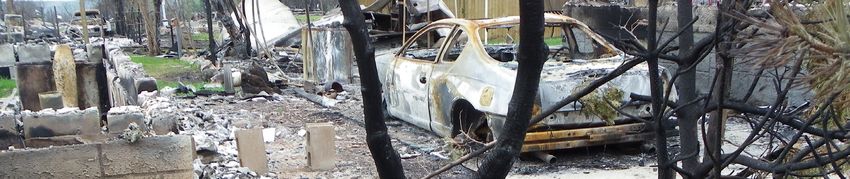
Executive summary
Fire burned out of control in northeastern Alberta between May 1 and July 4, 2016. The Horse River fire,
also called the Fort McMurray fire, burned into Fort McMurray on May 3. Two people were killed in a
vehicle collision during the evacuation. Fort McMurray, the largest community in northern Canada, was cut
off for one month. An estimated 88,000 people were evacuated. Hundreds of structures were destroyed
by fire, including 2,579 homes and other dwellings. The estimated financial impact of the fire was $8.9
billion in Canadian dollars. And over the next two weeks the fire burned towards the north destroying a
lodge on May 16 and threatened Canada’s oil sands operations.
Around the same time as the wildfire event, This report follows three years of recovery and 3) Invest in resilience
the economy in the community was suffering through the lens offered by the Sendai
due to a collapse in oil prices and delays in Framework for Disaster Risk Reduction.
and risk reduction
pipeline construction. Through early 2014 it Wood Buffalo and the Government of Alberta
We offer four recommendations:
was widely expected that the international should actively invest in wildfire risk loss
price of crude oil would stay near US$100 a 1) Learn to live with fire reduction. They should aggressively promote
barrel through 2050 and beyond. Plans were all aspects of the FireSmart® program as a
underway to significantly expand production Wood Buffalo and the Government of Alberta strategy to establish a resilient landscape and
over the next decade and the population of should work to better understand and engage property owners. These efforts need
Fort McMurray was expected to double. promote public understanding of the risk of to be sustained and long-term. A provincial
However, the international price for a barrel of loss from wildfire. This can be achieved by code for new development in the
crude petroleum unexpectedly fell in 2014 further strengthening partnerships with urban-wildland interface and local statutory
“You may not control all the events that from a mid-year peak of US$115 to a year-end
low of US$58. Prior to the 2016 wildfire, the
FireSmart® Canada, community leaders,
insurance companies, the Red Cross and
requirements should be enacted. A second
major access road for Fort McMurray should
price briefly fell to US$28. Construction of others to improve property owner awareness be constructed.
happen to you, but you can decide not new oil sands production facilities and
exploration were halted indefinitely, with a
of risk of living with fire. This should include
identifying practices for reducing the risk. The 4) Develop a pre-hazard
profound and immediate impact on the local Government of Alberta should also invest in major wildfire recovery plan
to be reduced by them.” economy dominated by the oil sands industry
for the past fifty years.
research to better understand how to make
structures and communities resistant to Wood Buffalo and other communities in the
urban-wildland interface fire. Most wildland-urban interface should develop a
- Maya Angelou Three takeaways from this analysis of the 2016 Pre-Hazard Wildfire Recovery Plan.
importantly, the federal, provincial and
Fort McMurray fire:
1. Damage from the fire would have been
territorial governments should implement the
Canadian Wildland Fire Strategy as set out in
Communities should plan in advance for
recovery from future fires, with a focus on the
risk of an urban conflagration resulting in
much more extensive but for the 2016 in the 10-year Review and Renewed
courageous efforts of firefighters and Call for Action by the Canadian Council of extensive loss. Communities should develop a
many others involved in the response. Forest Ministers. strategy to enhance community resilience in
Moreover, many, largely unheralded recovery by building back better following a
actions were taken in the months and 2) Establish a Wildland Fire major fire.
years prior to the wildfire to enhance the Resilience Advisory Committee
resilience of the community. More than
The Government of Alberta should establish a
90 percent of the structures in the area
Wildland Fire Resilience Advisory Committee.
affected survived the fire.
The Committee would bring together
2. The recovery following the fire has been stakeholders from many backgrounds to
managed to strengthen the community’s anticipate and prepare for future major fires in
resilience to loss and damage from the wildland-urban interface. Some
future hazards. participants should include wildland
firefighters, local fire officials, oil sands
3. Nevertheless, we find scope for
companies, insurers, the Red Cross, FireSmart®
improvement. The lessons learned are
Canada, researchers and other stakeholders.
organized around the four priorities for
The Committee should be ready to support
action set out in the Sendai Framework
communities affected by fire in
for Disaster Risk Reduction:
the future.
1. Understanding disaster risk
2. Strengthening disaster
risk governance The role of insurance in rebuilding Fort McMurray
3. Investing in disaster risk reduction The widespread use of insurance by property owners injected CA $3.5 billion into Fort
McMurray to support rebuilding and reconstruction. The insurance industry actively
4. Building resilience in recovery worked with the Government of Alberta, Wood Buffalo and others to support a robust
recovery. Moreover, the use of replacement cost insurance strengthened the resilience of
the community to future hazards. Insurance needs to be an essential element of disaster
risk management as was evident when fire burned into Fort McMurray.
4 Fort McMurray Wildfire: Learning from Canada’s costliest disaster Fort McMurray Wildfire: Learning from Canada’s costliest disaster 5
Section I:
A fire ignited on May 1, 2016, seven kilometres southwest of Fort McMurray.2 Extensive intervention
ultimately brought the fire under control two months later. An estimated 88,000 people were evacuated.
Two people were killed in a vehicle collision during the evacuation. Fort McMurray was cut off for one
The 2016 wildfire month and some neighborhoods were closed for more than four months. The estimated financial impact
of the Fort McMurray wildfire was $8.9 billion – the costliest disaster in Canadian history.3
in Fort McMurray
“What fire does not destroy it hardens.”
- Oscar Wilde
Lessons learned from the 2016 wildfire require
an understanding of how the fire developed
More than 40 percent of Canada is covered by
forest.5 Forest cover extends across the
50,000 in 2000 to reach 125,000 in 2015.
Moreover, prior to the collapse in international
through May, June and early July, but also the country.5.1 Many Canadians live, work or oil prices, Wood Buffalo reported that the
context. The fire struck a community located in play in or near the forest. population might grow to 205,000 by 2028,
a forested region that regularly experiences with most people located in the Fort
The oil sands production facilities near Fort
wildfire. The community was also confronted McMurray.7
McMurray are the most valuable commercial
by the recent collapse in oil prices and the
investments in Canada’s forests. More than In 1971, the population of Fort McMurray was
long-term implications for investment and
95 percent of Canada’s proven oil reserves are 7,000 and many were involved in operating
employment in the region. Moreover, the fire
in northern Alberta, including the McMurray the town’s first oil sands production facility.8 In
was driven by extreme weather conditions –
Formation in the Athabasca oil sands deposits 2015, prior to the fire, the population had
hot, dry and windy – and an extraordinary
located near Fort McMurray.6 The proven oil grown to 82,000.9 The 2015 Wood Buffalo
absence of precipitation through the fall and
reserves in Canada are the third largest in the municipal census reported that the population
winter. These factors added to the complexity
world. In 1967, Canada’s first oil sands in ten rural communities (Anzac, Conklin,
and intensity of the threat.
production facility opened in Fort McMurray. Draper, Fort Chipewyan, Fort MacKay, Fort
Environmental, economic Over the past 50 years, most of Canada’s new Fitzgerald, Gregoire Lake Estates, Janvier,
crude oil production facilities have been Marina Lake and Saprae Creek) and the
and social considerations located near Fort McMurray. hinterland had increased to 4,000. In addition,
Fort McMurray is located in the boreal forest. more than 38,000 workers were located in
Fort McMurray is the largest and one of the
Fire in the wildland is common in northeastern project accommodations or work camps across
fastest growing communities in northern
Alberta. Indeed, the forest requires fire as a the region. In total, the population of Wood
Canada. In 1995, the former City of Fort
natural driver to maintain the health of the Buffalo in 2015 was 125,000, with 82,000 in
McMurray merged with Improvement District
ecosystem and rejuvenate the forest.4 Fort Fort McMurray.
No. 143 to form the Regional Municipality of
McMurray is the largest community in Canada
Wood Buffalo. The number of people working
located north of 55 degrees latitude and one
and living in Wood Buffalo grew rapidly from
of the largest located in or near the forest
anywhere in the country.
2 The description of the Horse River Fire in this report is largely taken from the report for Alberta Agriculture and Forestry Preparedness and Response prepared by MNP LLP –
MNP (2017) A Review of the 2016 Horse River Wildfire.
3 See Alam, R. & Islam, S. (2017). Rapid Impact Assessment of Fort McMurray Wildfire; and KPMG. (2017). May 2016 Wood Buffalo Wildfire, Post-Incident Assessment Report
4 See Brandt, J. P., Flannigan, M. D., Maynard, D. G., Thompson, I. D., & Volney, W. J. A. (2013). An introduction to Canada’s boreal zone: ecosystem processes, health,
sustainability, and environmental issues. Environmental Reviews, 21(4), 207–226; and Alexander. (2014) Fire ecology.
5 See CCFM (2019) Overview – Canada’s forests.
5.1 See Natural Resources Canada. (2019). The state of Canada’s forests report.
6 See Natural Resources Canada (2019) Oil Sands: Economic contributions
7 See Wood Buffalo (2015) The municipal census 2015 report.
8 See Wood Buffalo (2010) 2010 Municipal Census.
9 See Wood Buffalo (2015) The municipal census 2015 report.
6 Fort McMurray Wildfire: Learning from Canada’s costliest disaster Fort McMurray Wildfire: Learning from Canada’s costliest disaster 7
Section I:
A fire ignited on May 1, 2016, seven kilometres southwest of Fort McMurray.2 Extensive intervention
ultimately brought the fire under control two months later. An estimated 88,000 people were evacuated.
Two people were killed in a vehicle collision during the evacuation. Fort McMurray was cut off for one
The 2016 wildfire month and some neighborhoods were closed for more than four months. The estimated financial impact
of the Fort McMurray wildfire was $8.9 billion – the costliest disaster in Canadian history.3
in Fort McMurray
“What fire does not destroy it hardens.”
- Oscar Wilde
Lessons learned from the 2016 wildfire require
an understanding of how the fire developed
More than 40 percent of Canada is covered by
forest.5 Forest cover extends across the
50,000 in 2000 to reach 125,000 in 2015.
Moreover, prior to the collapse in international
through May, June and early July, but also the country.5.1 Many Canadians live, work or oil prices, Wood Buffalo reported that the
context. The fire struck a community located in play in or near the forest. population might grow to 205,000 by 2028,
a forested region that regularly experiences with most people located in the Fort
The oil sands production facilities near Fort
wildfire. The community was also confronted McMurray.7
McMurray are the most valuable commercial
by the recent collapse in oil prices and the
investments in Canada’s forests. More than In 1971, the population of Fort McMurray was
long-term implications for investment and
95 percent of Canada’s proven oil reserves are 7,000 and many were involved in operating
employment in the region. Moreover, the fire
in northern Alberta, including the McMurray the town’s first oil sands production facility.8 In
was driven by extreme weather conditions –
Formation in the Athabasca oil sands deposits 2015, prior to the fire, the population had
hot, dry and windy – and an extraordinary
located near Fort McMurray.6 The proven oil grown to 82,000.9 The 2015 Wood Buffalo
absence of precipitation through the fall and
reserves in Canada are the third largest in the municipal census reported that the population
winter. These factors added to the complexity
world. In 1967, Canada’s first oil sands in ten rural communities (Anzac, Conklin,
and intensity of the threat.
production facility opened in Fort McMurray. Draper, Fort Chipewyan, Fort MacKay, Fort
Environmental, economic Over the past 50 years, most of Canada’s new Fitzgerald, Gregoire Lake Estates, Janvier,
crude oil production facilities have been Marina Lake and Saprae Creek) and the
and social considerations located near Fort McMurray. hinterland had increased to 4,000. In addition,
Fort McMurray is located in the boreal forest. more than 38,000 workers were located in
Fort McMurray is the largest and one of the
Fire in the wildland is common in northeastern project accommodations or work camps across
fastest growing communities in northern
Alberta. Indeed, the forest requires fire as a the region. In total, the population of Wood
Canada. In 1995, the former City of Fort
natural driver to maintain the health of the Buffalo in 2015 was 125,000, with 82,000 in
McMurray merged with Improvement District
ecosystem and rejuvenate the forest.4 Fort Fort McMurray.
No. 143 to form the Regional Municipality of
McMurray is the largest community in Canada
Wood Buffalo. The number of people working
located north of 55 degrees latitude and one
and living in Wood Buffalo grew rapidly from
of the largest located in or near the forest
anywhere in the country.
2 The description of the Horse River Fire in this report is largely taken from the report for Alberta Agriculture and Forestry Preparedness and Response prepared by MNP LLP –
MNP (2017) A Review of the 2016 Horse River Wildfire.
3 See Alam, R. & Islam, S. (2017). Rapid Impact Assessment of Fort McMurray Wildfire; and KPMG. (2017). May 2016 Wood Buffalo Wildfire, Post-Incident Assessment Report
4 See Brandt, J. P., Flannigan, M. D., Maynard, D. G., Thompson, I. D., & Volney, W. J. A. (2013). An introduction to Canada’s boreal zone: ecosystem processes, health,
sustainability, and environmental issues. Environmental Reviews, 21(4), 207–226; and Alexander. (2014) Fire ecology.
5 See CCFM (2019) Overview – Canada’s forests.
5.1 See Natural Resources Canada. (2019). The state of Canada’s forests report.
6 See Natural Resources Canada (2019) Oil Sands: Economic contributions
7 See Wood Buffalo (2015) The municipal census 2015 report.
8 See Wood Buffalo (2010) 2010 Municipal Census.
9 See Wood Buffalo (2015) The municipal census 2015 report.
6 Fort McMurray Wildfire: Learning from Canada’s costliest disaster Fort McMurray Wildfire: Learning from Canada’s costliest disaster 7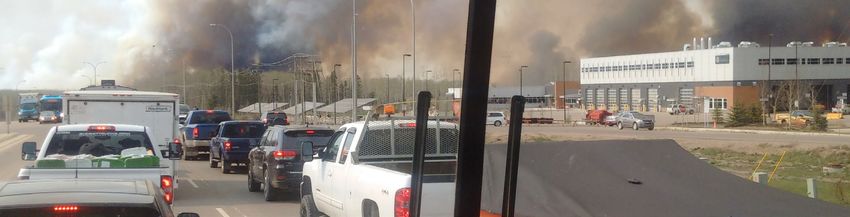
August 2017
June 2016
May 2016
Over the past 50 years, Fort McMurray The climate and How the fire grew Overnight on May 2nd, the wildfire jumped
experienced several periods of boom and bust the Athabasca River, putting more May 1 – A small, two-hectare fire was May 5 – The wildfire continued to
35
tied to the fortunes of the oil sands industry. fuel considerations On May 1, 2016, a wildfire was detected in a neighbourhoods at immediate risk. Some spotted by helicopter at 4:03 p.m. The threaten Anzac and the Fort McMurray
forested area about seven kilometres
Timeline for the Fort McMurray wildfire
The years 2000 through 2014 were a period of In 2015, the year before the wildfire in Fort residents had already begun to evacuate and fire was in a remote location seven First Nation, but the communities did
rapid expansion. Development in the Fort McMurray, the number of fires and area southwest of Fort McMurray. At the time of its the mandatory evacuation for all of Fort kilometres southwest of Fort not experience major damage due
McMurray area included the Fort Hills Oil burned was higher than average.19 The fire detection the fire was about two hectares in McMurray was officially put in place on McMurray. The cause of the fire was to sustained aerial attacks, fireguard
Sands Mine, phase 2 and 3 of Canadian season began early. The cost of firefighting for size.22 Within two days, the wildfire entered May 3rd. Some 88,000 people evacuated not conclusively determined but it and airtanker support. The Fort
Natural Resources’ Horizon development, the the Government of Alberta was $400 million, Fort McMurray, becoming a threat to homes, the region – one of the largest evacuations appears to have been caused by man. McMurray First Nation built a fireguard
Hangingstone Project, Sunrise Energy Project a record high at that time, and more than nearby surrounding communities, and the oil in Canadian history.29 Evacuees had to leave The initial attack began within around their community and initiated
and the second phase of the Kearl operation.10 double the cost from the previous year. sand camps and facilities.23 Within four days using the only highway that runs through 19 minutes. The fire grew and one structural protection in the community.
This contributed to surging employment, Precipitation was very low through the fall (from May 2 to May 6) the wildfire had Fort McMurray, with most evacuees heading hour later crossed the Horse River. Air
increased drastically in size to over 100,000 May 6-18 – Hot, dry and windy
significant in migration, retail and commercial and winter. south and some fleeing north. Many took tanker support was diverted to attack
hectares and was considered to be conditions continued. The wildfire
development, increased home construction, shelter in southern communities. Some the fire, with the first drop at 6:33
In 2016, snow cover near Fort McMurray in uncontrollable without help from the weather grew to the north of Fort McMurray
roadway upgrades and expansion of the drove more than 450 kms to Edmonton. p.m. A local state of emergency was
January and February was well below historic and change in fuels.24 The fire was a threatening oil sands operations,
airport. The population of Fort McMurray Those who travelled north were given refuge declared at 10:00 p.m., and a
levels and was gone by March. The average wildland-urban interface fire during its early work camps and other values at
more than doubled between 2000 and 2014. at the oil sands work camps or welcomed by mandatory evacuation was ordered for
temperature was 5 degrees Celsius above stages because it involved both wildland fuel risk. Suppression efforts focused on
In 2014, personal income per capita in Fort the Indigenous communities of Fort McKay Prairie Creek, Gregoire and the
seasonal norms throughout the winter and and man-made fuels burning at the protecting high-priority values. On
McMurray was more than twice the First Nation and Fort McMurray First Nation. Centennial Trailer Park.
early spring. In late April the region around same time.25 May 16, the fire escaped control
national average, and it was expensive to The hospital in Fort McMurray was
Fort McMurray was significantly warmer and May 2 – Aerial suppression began at and destroyed the Blacksands
build a home, buy food and purchase most As noted in a report published by MNP in evacuated on the evening of May 3rd, with a
drier than usual, including predictions that the 8:22 a.m. By 10:00 a.m. the area Executive Lodge at 10:00 p.m. The
other goods.11 2017, there were characteristics that made this total of 105 patients and 75 staff moved to
temperature could exceed 30 degrees Celsius burned was 818 hectares. Dozer guard fire intensified on its northeastern
In 2013, the Canadian Energy Board reported wildfire particularly difficult to contain within staging areas around Fort McMurray and perimeter to threaten the oil sands
on occasion. Forest fuels were drying quickly. construction began at 4:30 p.m. By
that the international price of crude oil was the first burning period.26 These factors then on to Edmonton.30 production facilities. The area burned
By May 1, the Canadian Fire Weather Index 8:10 p.m. the fire burned up to the
expected to remain stable near US$100 signaled extreme fire risk in included: the relative humidity which dropped While there were the two fatalities previously Athabasca River, with initial spotting grew from 156,607 hectares on May
through 2050 and beyond, providing the northeastern Alberta. from 30 percent to less than 20 percent in mentioned resulting from of a vehicle across the river. The area burned was 6, to 284,214 hectares on May 16,
foundation for a significant expansion of oil under an hour, the temperature increased to collision related to the evacuation, there was 2,655 hectares. The evacuation order and 483,084 hectares on May 18.
In May 2016, conditions throughout over 25 degrees Celsius, and high winds
production near Fort McMurray.12 Wood no loss of life due to the wildfire directly.31 for Prairie Creek and Gregoire Lake
northeastern Alberta were ripe for fire in the during the middle of the day which intensified May 19 – August 2, 2017 –
Buffalo reported that the population could The voluntary re-entry began on June 1 Estates was reduced to a
boreal forest that surrounds Fort McMurray. the extreme burning conditions.27 Conditions improved somewhat.
increase by 80,000 over the next 10 to 15 for residents to return to neighbourhoods voluntary order.
There are many factors that impact The wildfire continued to grow
years, including 55,000 more people living in At almost the same time the fire was reported, that were safe and where houses
susceptibility to wildfire including fuel,weather May 3 – Southeast winds pushed the sporadically, and burned from Alberta
Fort McMurray.13 there was another fire burning, known as were still habitable.32 This excluded the
conditions and topography.20 During the wildfire into Fort McMurray. Spotting into Saskatchewan, but the risk
In June 2014, the international price of crude MMD-004, which was located within the neighbourhoods of Abasand, Beacon Hill to communities and structures in
spring of 2016 severe burning conditions were began in Beacon Hill and Abasand
oil peaked at US$115 a barrel before northwest boundary of Fort McMurray. Due to and Waterways due to health concerns. the wildland was greatly reduced.
anticipated in northeastern Alberta due to at 2:31 p.m., and the MacKenzie
collapsing to close the year at US$58.14 Just its closer proximity to the urban centre of Fort Residents were able to re-enter in Beacon Resources used to suppress the fire
high temperatures and relative humidity levels Industrial Park at 3:05 p.m. The fire
before the fire in 2016, the price briefly fell to McMurray the MMD-004 fire was given Hill and Abasand on August 31 if their home peaked on June 3, including 2,197
decreasing, creating what are known as crossed highway 63 to approach
US$28. Moreover, pipelines required to bring priority due to its closer proximity to the urban was not destroyed by the fire. Residents in wildland and municipal firefighters
“cross-over” conditions, coupled with reduced Waterways at 3:26 p.m. and entered
additional production from Fort McMurray to centre of Fort McMurray. That fire was the Waterways were allowed to return on and support personnel, 77 helicopters,
winter snowfall, early elimination of snow Thickwood at 7:30 p.m. A mandatory
markets across North America and overseas suppressed successfully without damage to October 24. airtanker groups involving 18 aircraft,
cover and absence of spring rains.21 evacuation order was issued for all of
were canceled or delayed. The Canadian surrounding structures although it somewhat Swiss Re estimates that the community Fort McMurray at 6:20 p.m. About and 269 dozers and other pieces of
Energy Board issued a revised outlook in delayed suppression of the fire near experienced CA $5.3 billion in direct 88,000 residents evacuated from the heavy equipment. The Fort McMurray
May 2016, and then again in the fall of 2016, Horse River.28 damage. Almost 70 percent of the direct region. Hundreds of structures wildfire was declared under control
warning that international crude oil prices may damage was covered by insurance - CA were destroyed. on July 4. Fifteen months after the
be sustained below US$60 over the next $3.6 billion, but some damage was not fire began, on August 2, 2017,
25 years, with little expected expansion of oil May 4 – Two people were killed
insured - CA $1.7 billion. The total financial the fire was declared extinguished.
sands operations.15, 16 The situation changed a couple of hundred kilometers
impact was estimated at CA $8.9 billion. The Two lives were lost, and there was
significantly during the 18 months before the south of Fort McMurray in a vehicle
10 See The Conference Board of Canada. Moving 20 See Alary, B. (2016) Fort McMurray blaze among impact included direct damage and indirect unprecedented destruction of
2016 fire and the oil sands industry has Forward. The economic impact of rebuilding the most ’extreme’ of wildfires; and see Lawson and collision during the evacuation.
costs like lost production.33 The fire property. The final area burned was
struggled through the recovery. Wood Buffalo region’s economy. (2017). Armstrong (2008) Weather for the Canadian Forest The Fort McMurray International
destroyed more than 2,579 dwellings, estimated to be 589,552 hectares.
11 Ibid. Fire Danger Rating System. Airport – a critical centre supporting
Reduced expectations for oil prices resulted in 21 Crossover conditions refer to the point at which the 88,000 people were evacuated from the
12 See National Energy Board (2013) Canada’s Energy the fire management effort – was
oil companies announcing cuts in investment Future 2013. ambient relative humidity is less than, or equal to, the Region and over 589,000 hectares of forest
threatened, but the fire passed by
and exploration plans.17 This economic shock 13 See Wood Buffalo (2015) The municipal census ambient air temperature. Government of Alberta. was burned.34
22 See KPMG (2017) May 2016 Wood Buffalo Wildfire,
mid-afternoon. By 9:34 p.m. the fire
was beginning to take hold in the community 2015 report.
Post-Incident Assessment Report. was 12 kilometres from Gregoire
14 See macrotrends.net https://www.macrotrends.
when the fire struck in 2016. This included net/2480 brent-crude-oil-prices-10-year-daily-chart 23 See MNP (2017) A Review of the 2016 Horse 29 See Government of Alberta. (2017a). Home again: Lake Estates and Anzac and the Fort
rising unemployment, out migration and Recovery after the Wood Buffalo Wildfire.
15 See National Energy Board (2016a) Canada’s Energy River Wildfire. McMurray First Nation. Lightning from
declining property values. These challenges 30 See Government of Alberta (2017a) Home again:
Future 2016. 24 See Alary, B. (2016) Fort McMurray blaze among
Recovery after the Wood Buffalo Wildfire.
the pyrocumulonimbus cloud above
continued throughout the recovery. In 2018, 16 See National Energy Board (2016b) Canada’s Energy most ’extreme’ of wildfires. the wildfire caused new fires to start
25 See Westhaver, A. (2017) Why some homes survived : 31 Ibid.
Wood Buffalo reported it’s population had Future 2016 Update.
32 Ibid. up to 40 kilometres ahead of the main
17 See The Conference Board of Canada (2017) Moving Learning from the Fort McMurray wildland/urban
declined by 13,345 since 2015; a reduction of interface. 33 See MNP (2017) A Review of the 2016 Horse fire front.
Forward. The economic impact of rebuilding the
more than 10 percent, and the largest ever 26 The first burning period is until 10am the day after the River Wildfire.
Wood Buffalo region’s economy.
experienced in the community.18 18 See Wood Buffalo (2018a) Census 2018. fire is detected (MNP, 2017) 34 See KPMG (2017). May 2016 Wood Buffalo Wildfire,
27 See MNP (2017) A Review of the 2016 Horse Post-Incident Assessment Report.
19 See MNP (2017) A Review of the 2016 Horse
River Wildfire. River Wildfire. 35 Information describing the timeline is primarily
28 See MNP (2017) A Review of the 2016 Horse found in the MNP (2017) A Review of the 2016
River Wildfire. Horse River Wildfire.
8 Fort McMurray Wildfire: Learning from Canada’s costliest disaster Fort McMurray Wildfire: Learning from Canada’s costliest disaster 9August 2017
June 2016
May 2016
Over the past 50 years, Fort McMurray The climate and How the fire grew Overnight on May 2nd, the wildfire jumped
experienced several periods of boom and bust the Athabasca River, putting more May 1 – A small, two-hectare fire was May 5 – The wildfire continued to
35
tied to the fortunes of the oil sands industry. fuel considerations On May 1, 2016, a wildfire was detected in a neighbourhoods at immediate risk. Some spotted by helicopter at 4:03 p.m. The threaten Anzac and the Fort McMurray
forested area about seven kilometres
Timeline for the Fort McMurray wildfire
The years 2000 through 2014 were a period of In 2015, the year before the wildfire in Fort residents had already begun to evacuate and fire was in a remote location seven First Nation, but the communities did
rapid expansion. Development in the Fort McMurray, the number of fires and area southwest of Fort McMurray. At the time of its the mandatory evacuation for all of Fort kilometres southwest of Fort not experience major damage due
McMurray area included the Fort Hills Oil burned was higher than average.19 The fire detection the fire was about two hectares in McMurray was officially put in place on McMurray. The cause of the fire was to sustained aerial attacks, fireguard
Sands Mine, phase 2 and 3 of Canadian season began early. The cost of firefighting for size.22 Within two days, the wildfire entered May 3rd. Some 88,000 people evacuated not conclusively determined but it and airtanker support. The Fort
Natural Resources’ Horizon development, the the Government of Alberta was $400 million, Fort McMurray, becoming a threat to homes, the region – one of the largest evacuations appears to have been caused by man. McMurray First Nation built a fireguard
Hangingstone Project, Sunrise Energy Project a record high at that time, and more than nearby surrounding communities, and the oil in Canadian history.29 Evacuees had to leave The initial attack began within around their community and initiated
and the second phase of the Kearl operation.10 double the cost from the previous year. sand camps and facilities.23 Within four days using the only highway that runs through 19 minutes. The fire grew and one structural protection in the community.
This contributed to surging employment, Precipitation was very low through the fall (from May 2 to May 6) the wildfire had Fort McMurray, with most evacuees heading hour later crossed the Horse River. Air
increased drastically in size to over 100,000 May 6-18 – Hot, dry and windy
significant in migration, retail and commercial and winter. south and some fleeing north. Many took tanker support was diverted to attack
hectares and was considered to be conditions continued. The wildfire
development, increased home construction, shelter in southern communities. Some the fire, with the first drop at 6:33
In 2016, snow cover near Fort McMurray in uncontrollable without help from the weather grew to the north of Fort McMurray
roadway upgrades and expansion of the drove more than 450 kms to Edmonton. p.m. A local state of emergency was
January and February was well below historic and change in fuels.24 The fire was a threatening oil sands operations,
airport. The population of Fort McMurray Those who travelled north were given refuge declared at 10:00 p.m., and a
levels and was gone by March. The average wildland-urban interface fire during its early work camps and other values at
more than doubled between 2000 and 2014. at the oil sands work camps or welcomed by mandatory evacuation was ordered for
temperature was 5 degrees Celsius above stages because it involved both wildland fuel risk. Suppression efforts focused on
In 2014, personal income per capita in Fort the Indigenous communities of Fort McKay Prairie Creek, Gregoire and the
seasonal norms throughout the winter and and man-made fuels burning at the protecting high-priority values. On
McMurray was more than twice the First Nation and Fort McMurray First Nation. Centennial Trailer Park.
early spring. In late April the region around same time.25 May 16, the fire escaped control
national average, and it was expensive to The hospital in Fort McMurray was
Fort McMurray was significantly warmer and May 2 – Aerial suppression began at and destroyed the Blacksands
build a home, buy food and purchase most As noted in a report published by MNP in evacuated on the evening of May 3rd, with a
drier than usual, including predictions that the 8:22 a.m. By 10:00 a.m. the area Executive Lodge at 10:00 p.m. The
other goods.11 2017, there were characteristics that made this total of 105 patients and 75 staff moved to
temperature could exceed 30 degrees Celsius burned was 818 hectares. Dozer guard fire intensified on its northeastern
In 2013, the Canadian Energy Board reported wildfire particularly difficult to contain within staging areas around Fort McMurray and perimeter to threaten the oil sands
on occasion. Forest fuels were drying quickly. construction began at 4:30 p.m. By
that the international price of crude oil was the first burning period.26 These factors then on to Edmonton.30 production facilities. The area burned
By May 1, the Canadian Fire Weather Index 8:10 p.m. the fire burned up to the
expected to remain stable near US$100 signaled extreme fire risk in included: the relative humidity which dropped While there were the two fatalities previously Athabasca River, with initial spotting grew from 156,607 hectares on May
through 2050 and beyond, providing the northeastern Alberta. from 30 percent to less than 20 percent in mentioned resulting from of a vehicle across the river. The area burned was 6, to 284,214 hectares on May 16,
foundation for a significant expansion of oil under an hour, the temperature increased to collision related to the evacuation, there was 2,655 hectares. The evacuation order and 483,084 hectares on May 18.
In May 2016, conditions throughout over 25 degrees Celsius, and high winds
production near Fort McMurray.12 Wood no loss of life due to the wildfire directly.31 for Prairie Creek and Gregoire Lake
northeastern Alberta were ripe for fire in the during the middle of the day which intensified May 19 – August 2, 2017 –
Buffalo reported that the population could The voluntary re-entry began on June 1 Estates was reduced to a
boreal forest that surrounds Fort McMurray. the extreme burning conditions.27 Conditions improved somewhat.
increase by 80,000 over the next 10 to 15 for residents to return to neighbourhoods voluntary order.
There are many factors that impact The wildfire continued to grow
years, including 55,000 more people living in At almost the same time the fire was reported, that were safe and where houses
susceptibility to wildfire including fuel,weather May 3 – Southeast winds pushed the sporadically, and burned from Alberta
Fort McMurray.13 there was another fire burning, known as were still habitable.32 This excluded the
conditions and topography.20 During the wildfire into Fort McMurray. Spotting into Saskatchewan, but the risk
In June 2014, the international price of crude MMD-004, which was located within the neighbourhoods of Abasand, Beacon Hill to communities and structures in
spring of 2016 severe burning conditions were began in Beacon Hill and Abasand
oil peaked at US$115 a barrel before northwest boundary of Fort McMurray. Due to and Waterways due to health concerns. the wildland was greatly reduced.
anticipated in northeastern Alberta due to at 2:31 p.m., and the MacKenzie
collapsing to close the year at US$58.14 Just its closer proximity to the urban centre of Fort Residents were able to re-enter in Beacon Resources used to suppress the fire
high temperatures and relative humidity levels Industrial Park at 3:05 p.m. The fire
before the fire in 2016, the price briefly fell to McMurray the MMD-004 fire was given Hill and Abasand on August 31 if their home peaked on June 3, including 2,197
decreasing, creating what are known as crossed highway 63 to approach
US$28. Moreover, pipelines required to bring priority due to its closer proximity to the urban was not destroyed by the fire. Residents in wildland and municipal firefighters
“cross-over” conditions, coupled with reduced Waterways at 3:26 p.m. and entered
additional production from Fort McMurray to centre of Fort McMurray. That fire was the Waterways were allowed to return on and support personnel, 77 helicopters,
winter snowfall, early elimination of snow Thickwood at 7:30 p.m. A mandatory
markets across North America and overseas suppressed successfully without damage to October 24. airtanker groups involving 18 aircraft,
cover and absence of spring rains.21 evacuation order was issued for all of
were canceled or delayed. The Canadian surrounding structures although it somewhat Swiss Re estimates that the community Fort McMurray at 6:20 p.m. About and 269 dozers and other pieces of
Energy Board issued a revised outlook in delayed suppression of the fire near experienced CA $5.3 billion in direct 88,000 residents evacuated from the heavy equipment. The Fort McMurray
May 2016, and then again in the fall of 2016, Horse River.28 damage. Almost 70 percent of the direct region. Hundreds of structures wildfire was declared under control
warning that international crude oil prices may damage was covered by insurance - CA were destroyed. on July 4. Fifteen months after the
be sustained below US$60 over the next $3.6 billion, but some damage was not fire began, on August 2, 2017,
25 years, with little expected expansion of oil May 4 – Two people were killed
insured - CA $1.7 billion. The total financial the fire was declared extinguished.
sands operations.15, 16 The situation changed a couple of hundred kilometers
impact was estimated at CA $8.9 billion. The Two lives were lost, and there was
significantly during the 18 months before the south of Fort McMurray in a vehicle
10 See The Conference Board of Canada. Moving 20 See Alary, B. (2016) Fort McMurray blaze among impact included direct damage and indirect unprecedented destruction of
2016 fire and the oil sands industry has Forward. The economic impact of rebuilding the most ’extreme’ of wildfires; and see Lawson and collision during the evacuation.
costs like lost production.33 The fire property. The final area burned was
struggled through the recovery. Wood Buffalo region’s economy. (2017). Armstrong (2008) Weather for the Canadian Forest The Fort McMurray International
destroyed more than 2,579 dwellings, estimated to be 589,552 hectares.
11 Ibid. Fire Danger Rating System. Airport – a critical centre supporting
Reduced expectations for oil prices resulted in 21 Crossover conditions refer to the point at which the 88,000 people were evacuated from the
12 See National Energy Board (2013) Canada’s Energy the fire management effort – was
oil companies announcing cuts in investment Future 2013. ambient relative humidity is less than, or equal to, the Region and over 589,000 hectares of forest
threatened, but the fire passed by
and exploration plans.17 This economic shock 13 See Wood Buffalo (2015) The municipal census ambient air temperature. Government of Alberta. was burned.34
22 See KPMG (2017) May 2016 Wood Buffalo Wildfire,
mid-afternoon. By 9:34 p.m. the fire
was beginning to take hold in the community 2015 report.
Post-Incident Assessment Report. was 12 kilometres from Gregoire
14 See macrotrends.net https://www.macrotrends.
when the fire struck in 2016. This included net/2480 brent-crude-oil-prices-10-year-daily-chart 23 See MNP (2017) A Review of the 2016 Horse 29 See Government of Alberta. (2017a). Home again: Lake Estates and Anzac and the Fort
rising unemployment, out migration and Recovery after the Wood Buffalo Wildfire.
15 See National Energy Board (2016a) Canada’s Energy River Wildfire. McMurray First Nation. Lightning from
declining property values. These challenges 30 See Government of Alberta (2017a) Home again:
Future 2016. 24 See Alary, B. (2016) Fort McMurray blaze among
Recovery after the Wood Buffalo Wildfire.
the pyrocumulonimbus cloud above
continued throughout the recovery. In 2018, 16 See National Energy Board (2016b) Canada’s Energy most ’extreme’ of wildfires. the wildfire caused new fires to start
25 See Westhaver, A. (2017) Why some homes survived : 31 Ibid.
Wood Buffalo reported it’s population had Future 2016 Update.
32 Ibid. up to 40 kilometres ahead of the main
17 See The Conference Board of Canada (2017) Moving Learning from the Fort McMurray wildland/urban
declined by 13,345 since 2015; a reduction of interface. 33 See MNP (2017) A Review of the 2016 Horse fire front.
Forward. The economic impact of rebuilding the
more than 10 percent, and the largest ever 26 The first burning period is until 10am the day after the River Wildfire.
Wood Buffalo region’s economy.
experienced in the community.18 18 See Wood Buffalo (2018a) Census 2018. fire is detected (MNP, 2017) 34 See KPMG (2017). May 2016 Wood Buffalo Wildfire,
27 See MNP (2017) A Review of the 2016 Horse Post-Incident Assessment Report.
19 See MNP (2017) A Review of the 2016 Horse
River Wildfire. River Wildfire. 35 Information describing the timeline is primarily
28 See MNP (2017) A Review of the 2016 Horse found in the MNP (2017) A Review of the 2016
River Wildfire. Horse River Wildfire.
8 Fort McMurray Wildfire: Learning from Canada’s costliest disaster Fort McMurray Wildfire: Learning from Canada’s costliest disaster 9You can also read


