A CASE STUDY OF THE IVORY PARK COMMUNITY WORK PROGRAMME - Centre for the Study of Violence and Reconciliation (CSVR) study on the Community Work ...
←
→
Page content transcription
If your browser does not render page correctly, please read the page content below
A CASE STUDY OF THE IVORY PARK
COMMUNITY WORK PROGRAMME

Centre for the Study of Violence and Reconciliation (CSVR)
study on the Community Work Programme (CWP)

Themba Masuku – Senior Researcher
August 2015
Acknowledgements

This report is based on research carried out in Ivory Park in 2014. I would like to thank the many
people, including staff and participants within the Community Work Programme and others, who
contributed to the research by participating in interviews and focus groups and in other ways.

The research was also supported by feedback from members of the Centre for the Study of
Violence and Reconciliation (CSVR) Urban Violence Study Group, including Hugo van der Merwe,
Malose Langa, Jasmina Brankovic, Kindisa Ngubeni and David Bruce. Many others at CSVR also
assisted with this work in one way or another. David Bruce assisted with the editing of the report.

© September 2015, Centre for the Study of Violence and Reconciliation
3rd Floor, Forum V, Braampark Office Park,
33 Hoofd Street, Braamfontein
P O Box 30778, Braamfontein, 2017,
South Africa; Tel: (011) 403-5650.
Fax: (011) 388-0819.
Email: info@csvr.org.za.
CSVR website: http://www.csvr.org.za

This work was carried out with financial support from the UK Government’s Department for International
Development and the International Development Research Centre, Canada. The opinions expressed in this
work do not necessarily reflect those of DFID or IDRC.

     International Development Research Centre
     Centre de recherches pour le développement international
Table of Contents

Introduction                                  3          Contestation by political parties           31
Methodology                                   4          regarding the Ivory Park CWP
  Literature review                           5        Work done by the CWP in Ivory Park            33
  In-depth interviews                         5          Infrastructure projects                     34
  Focus groups                                7          Environment projects                        34
  Other research methods                      7          Social projects                             35
Description and overview of Ivory Park        8
                                                          Crime prevention as a focus of the         37
  Brief history                               8           social programme
  Demographics of Ivory Park                  8          Economic projects                           38
     Language profile for Ivory Park          9        Issues concerning the CWP in                  40
Local government and politics in Ivory Park   10       Ivory Park emerging from the research
  Local government                            10         Attitudes towards the CWP                   40
  Political control                           10         Challenges facing the CWP in Ivory Park     41
  Political developments                      11            Internal challenges                      41
Challenges facing Ivory Park                  13            External challenges                      42
  Crime and violence                          13         Views of interviewees about the             43
  Drugs as an issue in Ivory Park             15         role of the CWP in addressing crime
  Respondents’ observations about crime       17            Impact of CWP work on the Ivory Park     43
History, development and characteristics      18            community
of the CWP at site
                                                         Impact of the CWP on the lives of           45
  Overview of the Ivory Park site             18
                                                         participants
  What is the aim of the programme?           18
                                                         Absence of gender discrimination            46
  Key focus areas of the CWP programme        19         in the CWP
  in Ivory Park
                                                         Impact of the CWP on social capital         47
  Profile of participants                     19
                                                         in Ivory Park
  Reasons for predominance of women           21
  in the CWP                                           Analysis and conclusion                       48

  Young women in the CWP                      23         General position of the CWP in Ivory Park   49
  Ex-offenders in the CWP                     24         Work ethic and commitment                   50
Development of the CWP in Ivory Park          25         Leadership                                  50
  Inception                                   25         Fairness in the allocation of jobs          50
  Governance of the CWP in Ivory Park         25         Awareness and understanding in
  Local reference committee                   25         Ivory Park about the CWP
  Recruitment and selection                   25         Role of the CWP in addressing crime
  Fairness of the selection and recruitment   27         and violence
  The Ivory Park CWP task team                29       References                                    51

                                                   1
Abbreviations and acronyms

 ANC         African National Congress
 APC         African People’s Convention
 ARV         antiretroviral
 CBO         community-based organization
 COGTA       Department of Cooperative Governance and Traditional Affairs
 COPE        Congress of the People
 CPF         community police forums
 CWP         Community Work Programme
 DA          Democratic Alliance
 ECD         early childhood development
 EFF         Economic Freedom Fighters
 HBC         home-based care
 IA          implementation agent
 ID          identity document
 IFP         Inkatha Freedom Party
 LIA         local implementation agent
 LRC         local reference committee
 NFP         National Freedom Party
 NGO         nongovernmental organization
 PAC         Pan African Congress
 PIA         provincial implementation agent
 RDP         Reconstruction and Development Programme
 SANCA       South African National Council on Alcoholism and Drug Dependence
 SANCO       South African National Civic Organization
 SAPS        South African Police Service
 Stats SA    Statistics South Africa
 UIF         unemployment insurance fund
 Unisa       University of South Africa

                                            2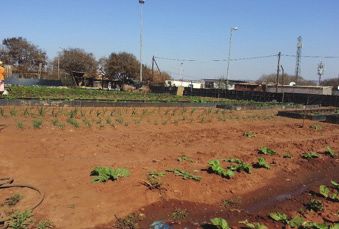
Introduction

The Community Work Programme (CWP) is a                                                       headed households, the sick and the elderly who
government programme within the Department                                                    have no family support; and growing vegetables and
of Cooperative Governance and Traditional affairs                                             supplying them to early development centres, school
(COGTA) whose aim is to provide an employment                                                 feeding schemes and poor households.
safety net to unemployed people of working age.1
The CWP provides two days of work per week (up to                                             This report is based on a research study which
100 days per year) to unemployed people who have                                              was conducted in Ivory Park between June and
been enrolled into the programme. This enables                                                September 2014. The research was part of a study
participants to use the other three days to look for                                          also conducted in six other communities: three
long-term employment and other opportunities.                                                 in the Gauteng,3 two in the Western Cape4 and
                                                                                              one in the North West province.5 The research in
Another purpose of the CWP is to enable                                                       Bokfontein, conducted in 2009, indicated that the
participants to contribute to the development of                                              CWP potentially had a significant impact on positive
public assets and services in poor communities,                                               social cohesion and building relationships among a
and to improve the quality of life of people in                                               range of stakeholders in the community, including
marginalized economic areas by providing work                                                 integrating foreign nationals and preventing
experiences, enhancing dignity and promoting social                                           violence. The findings in the Bokfontein study
and economic inclusion.2                                                                      raised a number of questions around the role of the
                                                                                              CWP in violence prevention and creating safe and
Once enrolled into the programme, participants                                                inclusive cities which needed to be tested.6
perform a variety of tasks which are deemed useful
to the community, such as cleaning the environment                                            The aim of the research in Ivory Park was therefore
(sweeping the streets, clearing dumps and cutting                                             to investigate the impact of the CWP on violence
long grass); working in schools as teacher assistants                                         prevention and creating safer and more inclusive
and career guidance teachers; looking after child-                                            communities.

1
   In Kagiso and Ivory Park there was evidence of a few pensioners enrolled in the CWP.
2
   See, http://www.cogta.gov.za/cwp/?page_id=31.
3
   The research was conducted in Kagiso and Orange Farm.
4
   The study was conducted in Manenberg and Grabouw.
5
   The research was conducted in Bokfontein.
6
 	M. Langa, ‘Bokfontein: The Nations Are Amazed,’ in Karl von Holdt, Malose Langa, Sepetla Molapo, Nomfundo Mogapi, Kindiza Ngubeni, Jacob Dlamini and Adele Kirsten, The
   Smoke that Calls: Insurgent Citizenship, Collective Violence and the Struggle for a Place in the New South Africa. Eight Case Studies of Community Protest and Xenophobic Violence
   (Johannesburg: Centre for the Study of Violence and Reconciliation and Society, Work and Development Institute, 2011).

                                                                                         3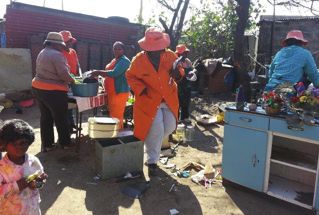
Methodology

The methodological approach was multidisciplinary                                             I attended another coordinators meeting on
and cross-sectional and made use of a variety of                                              23 May to further outline the role-out and deal
methods to gather data. Also, the approach was                                                with questions that coordinators and facilitators had
participatory in that it allowed the researcher                                               regarding the research, ranging from whether this
to spend three months in the company of CWP                                                   was research or an investigation; whether people
participants, facilitators, coordinators and site                                             would be guaranteed anonymity; what benefits the
management while conducting fieldwork.                                                        research was likely to have for the CWP; anxiety
                                                                                              around whether the research could result in the
The fieldwork, which started on 2 June 2014,                                                  closure of the CWP in Ivory Park; who was funding
was preceded by a series of consultation meetings                                             the research and whether CoGTA and Seriti had
with the site manager. The aim of the consultation                                            sanctioned the research. After dealing with the
meetings was to explain the research and get buy-in                                           questions I was again asked to leave, despite having
from the site manager, facilitators and coordinators.                                         requested permission to remain in the meeting
These meetings were also important to allay any                                               as an observer. It was only in the meeting of
fears that people might have regarding the research.                                          30 May that I was invited to stay and observe the
I met the site manager twice during May. In the                                               meeting after a brief presentation. In that meeting
first meeting, which lasted for almost two hours,                                             I also outlined my fieldwork plan and identified
the research was explained in detail. In the second                                           coordinators that I would work with.
meeting, a proposal of how the research would be
rolled out was outlined and discussed with the site                                           The fieldwork, which started in Ivory Park on
manager. I was then invited to present the research                                           2 June 2014, lasted until 14 September 2014.
proposal during the coordinators meeting on 16                                                Table 1 shows a breakdown of the number of
May 2014. Once I had completed my presentation,                                               people interviewed and the methods used to
I was asked to leave the meeting to allow the group                                           collect the data.
to discuss the proposal on their own.

Table 1: Breakdown of methods used and number of people interviewed
            Method used                                                         Target group                                           No. of events or respondents
Focus groups                                    CWP participants                                                                                 15 (estimated 130
                                                Community police forum (CPF) members                                                        participants altogether)
Face-to-face interviews                         Coordinators                                                                                                                 44
                                                Facilitators
                                                CWP site staff
                                                Councillors
                                                Police officers
                                                Social workers
                                                CPF chairperson
                                                Local community-based organizations (CBOs)
                                                and nongovernmental organizations (NGOs)

Informal interviews                             CWP participants                                                                                                             11
Face-to-face interviews                         Beneficiaries of CWP                                                                                                              3
CWP meetings                                    Site staff                                                                                                                        8
                                                CWP facilitators
                                                CWP skilled participants*
                                                CWP coordinators
CWP imbizo                                      Meeting by CoGTA and Seriti                                                                                                       1
Community meeting                               Community crime prevention meetings                                                                                               2
Community outreach                              CWP programmes: aerobics, soccer and netball                                                                                      3
programmes
   Note: *‘Skilled participants’ refers to participants who are employed based on their qualification and skills. The minimum qualification is a matric certificate, which then
   entitles the participant to receive training in a particular area, for example home-based care, career guidance or agriculture.

                                                                                        4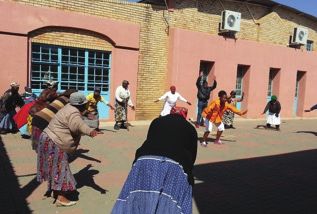
Methodology

In addition to these methods, I also used                                                     section of individuals, including ward councillors,
participant observation. For instance, I visited                                              police officers, CPF leaders, a school principal,
participants as they swept the streets; removed                                               NGO representatives and CWP representatives
debris from drainage systems; cleaned taxi ranks,                                             (participants, coordinators, facilitators, site staff,
community halls and schools; played soccer and                                                skilled participants). Forty-four formal in-depth
netball; and visited and assisted families facing                                             interviews were conducted, of which 38 were voice
crisis.7                                                                                      recorded. Where voice recording was not used,
                                                                                              detailed notes were taken during the interview.
Literature review                                                                             Table 2 shows the breakdown of formal interviews
A small-scale literature review was undertaken                                                conducted. All interviews were conducted in Ivory
on the history of Ivory Park and its demographic                                              Park.
features.
                                                                                              In addition to exploring issues relating to the CWP,
In-depth interviews                                                                           the interviews also explored challenges facing Ivory
In-depth interviews were conducted with a cross-                                              Park, including the issue of crime.

    Table 2: List of interviews
         Interview                       Organization                             Position                               Gender                                Date
    Interview                   African National                       Ward councillor                       Male                                 9 June 2014
                                Congress (ANC)
    Interview                   ANC                                    Ward councillor                       Male                                 5 August 2014
    Interview                   African People’s                       PR councillor                         Male                                 23 July 2014
                                Convention
    Interview                   South African Police                   Station commander                     Male                                 4 June 2014
                                Services (SAPS)
    Interview                   SAPS                                   Sector commander                      Male                                 4 June 2014
    Interview                   CPF                                    Chairperson                           Male                                 10 July 2013
    Interview                   CPF                                    Secretary                             Male                                 5 June 2014
    Group interview             CPF                                    Members of the CPF                    2 Females, 1 Male                    3 June 2014
    Interview                   CPF                                    Patroller                             Male                                 2 June 2014
    Interview                   CPF                                    Patroller                             Female                               2 June 2014
    Interview                   Nokukhanya                             Founder/Principal                     Female                               18 June 2014
                                Early Childhood
                                Development (ECD)
                                Centre
    Interview                   ECD centre                             Founder/Principal                     Female                               18 June 2014
    Interview                   Eco-City Social                        Social worker                         Female                               2 June 2014
                                Development
    Interview                   Primary School                         Principal                             Male                                 15 June 2014
    Interview                   Ivory Park Community                   Manager                               Female                               3 June 2014
                                Hall
    Interview                   Johannesburg                           Community                             Male                                 3 June 2014
                                Municipality                           development worker

	I accompanied the CWP participants when they visited three families that were facing a crisis. One family’s shack had burnt to the ground. Another family’s belongings were de-
7

  stroyed by a fire caused by an electrical fault, although the house survived. I also accompanied the home-based care team when they assisted the elderly, the sick and child-headed
  households.

                                                                                        5
Methodology

Table 2: List of interviews
     Interview                Organization             Position                Gender            Date
Interview            Ivory Park Fire Station Acting commander         Female            3 June 2014
Interview            Ivory Park Fire station   Clerk                  Male              4 June 2014
Interview            Thiba Nyaope              Founder                Male              10 June 2014
Interview            Thiba Nyaope              Programme manager      Male              10 June 2014
Interview            Church                    Social worker          Female            11 June 2014
Interview            Community member          CWP beneficiary        Female            11 June 2014
Interview            Community member          CWP beneficiary        Female            30 July 2014
Interview            CWP                       Site manager           Male              16 July 2014
Interview            CWP                       Safety officer         Male              10 September 2014
Interview            CWP                       Senior administrator   Female            9 September 2014
Interview            CWP                       Inspector              Male              9 September 2014
Interview            CWP                       Facilitator            Female            2 September 2014
Interview            CWP                       Facilitator            Female            2 September 2014
Interview            CWP                       Facilitator            Female            23 July 2014
Interview            CWP                       Coordinator            Female            11 July 2014
Interview            CWP                       Coordinator            Female            11 July 2014
Interview            CWP                       Coordinator            Female            15 July 2014
Interview            CWP                       Coordinator            Female            23 July 2014
Interview            CWP                       Coordinator            Female            23 July 2014
Interview            CWP                       Coordinator            Female            24 July 2014
Interview            CWP                       Sports coordinator     Female            24 July 2014
Interview            CWP                       Sports trainer         Female            22 August 2014
Interview            CWP                       Aerobics trainer       Female            24 August 2014
Interview            CWP                       Participant            Female            25 August 2014
Interview            CWP                       Participant            Male              20 August 2014
Interview            CWP                       Ex-offender            Male              20 August 2014
Interview            CWP                       Ex-offender            Male              20 August 2014
Interview            CWP                       Ex-offender            Male              20 August 2014
Interview            CWP                       Home-based care        Female            11 July 2014
                                               (HBC)
Interview            CWP                       HBC                    Female            11 July 2014

                                                             6
Methodology

Focus groups                                                and 80). Two of the focus groups were held with
Fifteen focus group discussions involving about             skilled coordinators and facilitators who were not
130 participants were conducted. Focus groups               interviewed (see Table 3).
were held in each ward visited (wards 77, 78, 79

Table 3: List of focus groups conducted
           Organization                         Position                    Gender                    Date
CWP                                  Coordinators                     2 males              2 June 2014
                                                                      8 females
CWP                                  Ward 77 participants             5 males              5 June 2014
                                                                      5 females
CWP                                  Ward 77 participants             10 females           5 June 2014
CWP                                  Ward 78 participants             2 males              8 June 2014
                                                                      8 females
CWP                                  Ward 78 participants             1 male               8 June 2014
                                                                      9 females
CWP                                  Ward 79 participants             3 males              3 July 2014
                                                                      7 females
CWP                                  Ward 79 participants             1 male               3 July 2014
                                                                      9 females
CWP                                  Ward 80 participants             10 females           4 August 2014
CWP                                  Ward 80 participants             2 males              4 August 2014
                                                                      8 females
CWP                                  HBC                              6 females            22 August 2014
CWP                                  HBC                              5 females            24 August 2014
Social Development                   Elderly people                   6 females            10 September 2014
Community people                     Soccer players (ex-convicts)     5 males              11 September 2014
Eco-city – Social Development        The elderly playing soccer       2 males              12 September 2014
                                                                      9 females

Other research methods                                      contributions and exclude the police in the
I also attended two CWP meetings. The first dealt           administration of the neighbourhood watch. There
with labour-related issues, grievances, working             were also questions around the role of the CPF in
conditions, uniforms, tools and equipment as well           the suggested neighbourhood watch initiative.
as other CWP-related issues. The second meeting             As noted earlier, I accompanied CWP coordinators
was about the re-registration of CWP participants.          when they visited two families who had lost their
Both meetings were highly charged, with                     homes due to fire. One family was left destitute
participants demanding better working conditions.           as everything that was inside the shack was burnt
In addition, I attended two community-wide crime            to ashes. The other family lost some of their
prevention meetings. The meetings were called               belongings but their brick house was strong enough
by local activists who were mobilizing community            to prevent the fire from spreading throughout the
members to organize themselves and address                  house. I used participant observation methods,
the problem of crime in their community. These              and observed as the CWP coordinators called ANC
meetings were also highly charged as community              officials, councillors and ward leaders requesting
members differed about whether to make financial            support on behalf of the affected families.

                                                       7
Description and overview of Ivory Park

Brief history
Ivory Park is a high-density residential area situated                                                   The growth of Ivory Park has created other
in the north-east of the City of Johannesburg                                                            social problems, such as the growth of informal
in Region A.8 It was established in the 1990s                                                            settlements, backroom shacks, poverty and
by the Transvaal Provincial Administration to                                                            unemployment. Ivory Park is characterized by high
accommodate informal settlers and backyard shack                                                         levels of unemployment, low annual household
dwellers from the nearby townships of Tembisa and                                                        income, inadequate access to housing and
Alexandra.9 However, it was only in 1997 that the                                                        basic services and the proliferation of informal
City of Johannesburg established stands and began                                                        settlements. As a result, ‘many residents are
servicing them, laying out road infrastructure, social                                                   unemployed and some depend on informal
amenities, sanitation, clean water and government                                                        businesses like carpentry, car mechanics and
Reconstruction and Development Programme (RDP)                                                           shoe repairs.’13 Also, ‘some households lack
houses. Despite these interventions, Lesego Maduna                                                       sufficient water for family use, access to improved
observes that,                                                                                           sanitation, security of tenure and housing in a
                                                                                                         permanent and adequate structure in a non-
    Most people live in a state of dire poverty. The area                                                hazardous location.’14
    is geographically remote from the stronger economic
    nodes in the city centre, and the settlement is                                                      Demographics of Ivory Park
    plagued by myriad socio-economic challenges,                                                         Since the 1990s, Ivory Park has seen tremendous
    including illiteracy, child-headed households and                                                    population growth. For instance, between 2001 and
    hopelessness. There is a battery of social ills, like                                                2011, the population of the Ivory Park area grew
    drug and alcohol abuse, peer pressure and petty                                                      by 36% from 135 528 to 184 383 people.15 A
    crime.10                                                                                             number of factors have been advanced to explain
                                                                                                         this growth. The economic factors include the fact
Maduna argues that, as a result, ‘from a distance                                                        that Ivory Park is strategically located between the
Ivory Park can be easily mistaken for a slum yet it is                                                   major economic nodal points of Pretoria, Midrand,
a habitable place with an urban design’ in which the                                                     Kempton Park and Johannesburg.16 The economic
high proportion of shack-type dwellings intermingle                                                      opportunities in this corridor are considered a major
with RDP structures and ‘clean streets intersect                                                         factor in attracting people from across South Africa
untidy ones, pot-holed roads cross tarred ones.’11                                                       as well as migrants from southern African countries.
Also, streets are sometimes flooded with effluent                                                        In 2008, about 20% of the population in Ivory Park
as a result of poorly maintained water and sewage                                                        were foreign nationals.17
infrastructure combined with overpopulation.12

8
     The City of Johannesburg has seven administrative regions. Ivory Park falls under Region A, which also includes Midrand and Diepsloot.
9
 	Nechama Brodie, The Joburg Book: A Guide to the City’s History, People and Places (Johannesburg: Pan Macmillan and Sharp Sharp Media, 2008). Some sources say it was 1991.
     See, for instance, A. Omenya, ‘Towards Effective Self-Help Housing Delivery: Contributions through Network Analysis in Nairobi, Kenya and Johannesburg, South Africa’ (PhD thesis,
     University of the Witwatersrand, Johannesburg, 2007).
10
   	L. Maduna, ‘Hope and Heart in Ivory Park,’ 18 October 2010, http://www.southafrica.info/about/people/ivory-park.htm#.VcG3G_m912C#ixzz3hvGbgS2B (accessed 1 September
     2015).
11
     Ibid., 4.
12
   	See, ‘Sewage Problem Still Plaguing Family,’ Thembisan, 19 February 2014, http://tembisan.co.za/13509/sewage-problem-still-plaguing-family/ (accessed 1 September 2015).
     Also see, Andrew Charman, ‘Photovoice: Street Life in Ivory Park,’ http://www.participate2015.org/wp-content/uploads/2013/05/SLF-Photovoice-Street-Life-Publication-.pdf (accessed 1 September 2015).
13
     Maduna, supra n 10 at 4.
14
     Ibid., 5.
15
   	Analysis of 2001 and 2011 Stats SA census results for Ivory Park. See, Stats SA, ‘Statistical Release (Revised) P0301.4, Census 2011,’ http://www.statssa.gov.za/publications/
     P03014/P030142011.pdf (accessed 8 September 2015); Stats SA, ‘Census 2001: Stages in the Life Cycle of South Africans,’ http://www.statssa.gov.za/publications/C2001Stag-
     es/C2001Stages.pdf (accessed 8 September 2015).
16
     See, City of Johannesburg, ‘The 2008-2013 Region A Economic Development Plan,’ http://www.joburg.org.za/images/stories/2012/Sept/regiona.pdf (accessed 1 September 2015).
17
   	Centre for Social Development in Africa, University of Johannesburg, ‘Johannesburg Poverty and Livelihoods study,’ http://www.ncr.org.za/pdfs/Research_Reports/Livelihoods%20
     study.pdf (accessed 1 September 2015).

                                                                                                   8
Description and overview of Ivory Park
Language profile for Ivory Park The languages spoken in Ivory Park give some
Table 4 shows the language profile of the community sense of the provinces where many people came
of Ivory Park. from as well as their ethnicity. This is so because
Table 4: First language spoken in Ivory Park the population of South Africa is to some degree
Language Percentage distributed across different provinces along language
and ethnic lines. Table 4 shows that, according to
Sepedi 23.29
the 2011 census, almost half of the population
Xitsonga 22.45
in Ivory Park speak Sepedi, Xitsonga and Tsivenda
IsiZulu 21.39
and it is likely that many of these people have
IsiXhosa 7.43 come from, or have historical links to, the Limpopo
IsiNdebele 5.25 province area. In addition to isiZulu-, isiXhosa- and
SeSotho 4.56 Sesotho-speaking residents there are also residents
Tsivenda 3.02 who identified isiNdebele and isiSwati as their main
SeTswana 2.64 language. It is possible that these groups have links
SiSwati 2.12 with Mpumalanga province or Swaziland in the case
English 1.71 of isiSwati speakers and Zimbabwe in the case of
Afrikaans 0.40 isiNdebele speakers. There are also English and
Afrikaans speakers. Typically, these languages are
Sign Language 0.31
Source: Stats SA, Census 2011-
spread across South Africa and spoken largely by
white, Indian, coloured and Asian foreign nationals.
9Local government and politics in Ivory Park
Local government Municipality offices housed at this centre include
Ivory Park falls under the City of Johannesburg. the fire department, local clinic, social service
Section 152 of the constitution enumerates a department, municipal revenue, metro police,
number of objectives of local government, including municipality community hall and a variety of offices
establishing representative and participatory offering services for the youth, the elderly and the
democracy, addressing poverty and inequality, and unemployed. The CWP offices are also located within
promoting local economic and social development. the Lord Khanyile precinct.
Municipalities are required to ensure that scarce
resources are allocated and spent effectively and In addition to the Thusong Service Centre the
that all citizens have access to at least a minimum City of Johannesburg has also established the
level of basic services. Municipalities must also Ivory Park Multi-Purpose Community Centre. It
structure and manage their administration, budget provides a multifunctional mix of sporting, cultural
and planning processes to give priority to the basic and economic activities. Also, the centre offers a
needs of the community, and to promote the social community library, a senior citizens service centre,
and economic development of the community.18 a youth centre, a Council pay point and transport
facilities.20
In order to ensure that government services are
accessible to the residents in Ivory Park, the Political control
government launched a Thusong Service Centre. With regards to local party politics, Ivory Park can be
These centres are aimed at providing comprehensive regarded as a stronghold of the ANC if one considers
government services to communities.19 The services the 2011 municipal elections. However, in the
include municipal services as well as services 2014 general election, although the ANC drew a lot
provided by national and provincial departments. of votes from the four voting stations in Ivory Park,
In Ivory Park, the Lord Khanyile Thusong Service its support was reduced compared to in the 2011
Centre houses national departments such as the municipal elections. The new Economic Freedom
Department of Home Affairs, the Department of Fighters (EFF) and the Democratic Alliance (DA)
Labour, the Department of Social Development, the had more votes in 2014, which reduced the ANC’s
South African Social Security Agency and the office overwhelming majority in the 2011 elections. Tables
of the Public Protector. It also houses the provincial 5 and 6 show the voting patterns in Ivory Park in
Department of Local Government, Department of the 2011 municipal elections and 2014 general
Sports and Recreation and Department of Housing. elections, respectively.
Table 5: Municipal voting results for wards 77 and 78 in Ivory Park, 2011
Ward 77 municipal results Ward 78 municipal results
Party No. of votes Percentage No. of votes Percentage
ANC 7 165 89.20 15 261 88.15
DA 283 3.31 820 4.74
African People’s Convention 327 3.52 373 2.15
(APC)
Pan African Congress (PAC) 42 0.66 347 2.00
Congress of the People (COPE) 146 1.58 142 0.82
Inkatha Freedom Party (IFP) 49 0.49 74 0.43
18
Constitution of the Republic of South Africa, 1996 (Act 108 of 1996), sec. 153(a).
19
For information about services provided by Ivory Park’s Lord Khanyile Thusong Service Centre, see, http://www.thusong.gov.za/provincial_maps/gauteng/lord_khanyile.htm (accessed
1 September 2015).
20
The Thusong Service Centre (formerly Multi-Purpose Community Centre/MPCC) programme of government was initiated in 1999 as a primary vehicle for the implementation of
development communication and information, to integrate government services into primarily rural communities. This was done to address historical, social and economic factors
which limited access to information, services and participation by citizens, as they had to travel long distances to access these services. See, http://www.thusong.gov.za/.
10Local government and politics in Ivory Park
Table 5: Municipal voting results for wards 79 and 80 in Ivory Park, 2011
Ward 79 municipal results Ward 80 municipal results
Party No. of votes Percentage No. of votes Percentage
ANC 13 302 86.14 7 954 84.65
DA 692 2.31 1 117 11.89
APC 274 1.77 62 0.66
PAC 299 1.94
COPE 151 0.87
NFP 61 0.40 24 0.26
Source: Independent Electoral Commission, 2011 21
Table 5 shows that the ANC has the largest support Political developments
in all four wards in Ivory Park. This means that Since the 2011 municipal election, there have
all four wards are under the political authority of been changes in the politics of Ivory Park with
ANC councillors. Ward councillors are political the formation of the EFF. In 2014, the EFF was
heads in their wards and perform their duties with a very new party and the impact of the EFF will
the assistance of ward committees. Wards are be tested more fully in the municipal elections in
administered through ward committees, which are 2016. Table 6 shows the election results from four
represented by democratically elected community voting stations in Ivory Park. When compared with
members. Though ward committees are supposed the 2011 municipal election results they appear to
to be non-partisan, this is not always the case as show a significant decline in the percentage of votes
they are vulnerable to being dominated by the gained by the ANC which is offset by the significant
locally dominant political party.22 Ward committees percentage of votes obtained by the EFF, which did
may be involved in social and political roles in the not exist in 2011 and was only established in 2013.
administration of the services provided in the ward. Although caution should be exercised in comparing
Committee members may be allocated portfolios municipal and general election results in an area,
(e.g. transport, housing, health, education, policing) and the two tables are not directly comparable due
to fulfil. Members who are allocated such portfolios to the fact that Table 5 uses overall results in each
are required to address issues in their own wards. of four wards, while Table 6 only reflects votes at
Wards are further divided into different sections but four voting stations the two sets of results show a
it is not clear how sectional committee members are distinct shift in voting behaviour in the area. It can
chosen or what their role is in relation to the ward be argued that the emergence of the EFF may be
committees.23 a game changer in the politics of Ivory Park given
the party’s appeal to poor and unemployed young
people.
21
See, http://www.elections.org.za/content/Elections/Municipal-elections-results/.
22
Laurence Piper and Roger Deacon, ‘Too Dependent to Participate: Ward Committees and Local Democratisation in South Africa,’ Local Government Studies 35(4) (2009): 415–
433.
23
For the confusing role of the sectional committees, see, Bheki Simelane, ‘Discontent Brews in Ivory Park, Thembisa,’ Daily Vox, 30 July 2014, http://www.thedailyvox.co.za/discon-
tent-brews-in-ivory-park-thembisa/ (accessed 1 September 2015).
11Local government and politics in Ivory Park
Table 6: General election results at four voting stations in Ivory Park, 2014
Ivory Park Community Hall Ivory Park Secondary School
Party No. of votes Percentage No. of votes Percentage
ANC 2 260 74 2 400 72.84
EFF 613 20.07 675 20.49
DA 95 3.11 131 3.98
COPE 14 0.14 22 0.67
IFP 11 0.36 11 0.33
PAC 12 0.39 6 0.18
Ivory Park Primary School Ivory Park North Community Hall
Party No. of votes Percentage No. of votes Percentage
ANC 2 323 67.43 1 928 69.45
EFF 828 24.03 669 24.10
DA 170 24.03 91 3.28
APC 3 0.09 8 0.29
IFP 18 0.52 - -
National Freedom Party 11 0.32 - -
Source: Independent Electoral Commission, 201424
Table 6 shows the national general election results of this research, can be attributed to the emergence
for 2014 in the four voting areas in the four wards in of the EFF who achieved between 20.07% and
Ivory Park. 24.10% of the votes in these four wards. It is
believed that the decline of ANC dominance in Ivory
Table 6 shows that the ANC received between Park will also transform democratic institutions
69.45% and 74% of votes in the four voting stations there, such as ward and sectional committees.
in the four wards in Ivory Park. When these figures These committees, although in principle meant to
are compared to the 2011 municipal election be apolitical, are dominated by ANC supporters and
results, this is a marked decline of support. The members.
decline of ANC support, although outside the scope
24
See, http://www.elections.org.za/content/elections/results/2014-national-and-provincial-elections--national-results/.
12Challenges facing Ivory Park
Ivory Park, just like many other townships in South of these people. I think as councillors we failed to
Africa, faces a number of challenges. The most deal with that situation because when you allow
visible challenges that one is confronted with people to do as they please without following
when entering the township are unemployment, bylaws it is difficult to enforce them later on. Back
overcrowding and lack of adequate housing and rooms were built illegally without the municipality
amenities. Many unemployed people roam the approval and shacks were built where land was
streets or sit on street corners doing nothing. In my earmarked for other developments. As a result,
experience of walking the streets of Ivory Park, there when one shack caught fire engines cannot come
is no difference between a weekday and a weekend, in to quickly put out the fire because these trucks
or mornings, afternoons and evenings. The streets cannot go through. You then find people losing
are busy and crowded with people all the time. There a lot of things because of that. Fire brigades use
are also many informal settlements and backroom water bombs to stop the fire from spreading; that
shacks that have completely saturated the area with is not always effective. I really don’t know how
houses. They are very few empty spaces without we will deal with these problems because there is
shacks or formal housing. no land to resettle people. Ivory Park has reached
a saturation point because all the land has been
Without any doubt, Ivory Park is facing many taken for housing purposes.25
problems. There is no doubt about that. It’s a
problem that is beyond the municipality. A lot Crime and violence
of development is required in this area but the Ivory Park experiences high crime levels, like many
problem is too much. In the past 10 years we have South African townships with slum areas, high
seen many people come to live in our area. We unemployment and lack of delivery of basic services.
have people coming from all over South Africa and As people become desperate to make ends meet,
southern African countries such as Mozambique some resort to criminal activities. However, there are
and Zimbabwe. A lot people benefited from this a myriad of reasons why people resort to crime, a
influx because when these people came here subject outside the scope of this research. A review
they were desperate for accommodation. People of the crime statistics for Ivory Park between 2010
who owned houses and had land started building and 2014 shows that overall crime has increased
backroom houses and shacks to make money out from 5 243 cases in 2010 to 6 297 in 2014.
25
See, http://www.elections.org.za/content/elections/results/2014-national-and-provincial-elections--national-results/.
13Challenges facing Ivory Park
Table 7: Crime statistics for Ivory Park, 2010–2014
Years
Crime category 2010 2011 2012 2013 2014
Total crimes 5 243 5 095 5 353 5 629 6 297
Murder 70 78 83 71 80
Sexual crimes 171 176 173 146 164
Attempted murder 87 61 72 97 73
Assault GBH 594 546 504 599 590
Common assault 301 321 281 301 335
Common robbery 164 123 105 114 97
Robbery aggravating 478 512 558 512 407
Public violence 2 2 4 1 0
Kidnapping 33 24 28 67 37
Robbery residential 100 163 209 158 76
Car hijacking 48 76 81 85 72
Shoplifting 87 108 96 108 128
Theft 460 396 370 368 477
Drug-related crimes 166 245 391 491 1 110
Driving under the influence 189 234 318 409 450
Unlawful possession of firearm 71 54 100 84 46
Burglary non-residential 74 85 65 75 108
Burglary residential 951 899 946 864 920
Theft of motor vehicle 108 134 105 152 193
Theft out of motor vehicle 440 358 368 426 397
Source: Crime Statistics SA, 2010–2014 26
Table 7 shows the crime statistics for Ivory Park the fact that there were 864 to 951 burglaries in
over the last five years. It is not entirely clear how to residential properties between 2010 and 2014.
interpret these statistics. Though there are overall Theft has also remained high. Murder showed an
increases in nine of the categories during the five- increase between 2010 and 2014 (from 70 to 80).
year period, the overall increase from 5 243 to
6 297 in the total number of cases can be attributed Drug-related crime is one of the categories of crime
almost exclusively to the increase of almost 1 000 that SAPS describes as ‘dependent on police action
cases of ‘drug-related crimes’ (from 166 to 1 110). for detection.’ This means that the increase in cases
Other categories that have increased are property could in theory be exclusively the result of more
crime, including shoplifting (from 87 in 2010 enforcement activity, though it is also possible that
to 128 in 2014) and ‘burglary non-residential.’ higher levels of enforcement might be affected by
Car hijackings (from 48 to 72) and theft of motor evidence of higher levels of drug use, or greater
vehicles (from 108 to 193) are also property crimes public pressure to address the problem. Also note
that have increased.27 Burglary of residential that ‘driving under the influence,’ which is also a
properties has remained high as illustrated by crime ‘dependent on police action for detection,’
26
Crime Stats, ‘Ivory Park,’ http://www.crimestatssa.com/precinct.php?id=212 (accessed 1 September 2015).
27
Car hijacking would be classified as a ‘violent property crime.’
14Challenges facing Ivory Park
is the only other crime to increase by more than result, goods such as cell phones and motor vehicles
100 cases (from 189 to 450). In other words, the are preferred objects to steal because they can be
increase in the statistics is mainly shaped by more easily converted into cash.
enforcement activity.
In response to the drug issue, a number of NGOs
Drugs as an issue in Ivory Park and CBOs operate in Ivory Park with a specific
As reflected above, the biggest increase in the Ivory focus on raising awareness about the dangers of
Park crime statistics was in ‘drug-related crimes,’ abusing drugs and alcohol. Organizations such as
which increased from 166 in 2010 to 1 110 in the South African National Council on Alcoholism
2014 (see Photo 1). Like many other townships in and Drug Dependence (SANCA) and Thiba Nyaope
South Africa, Ivory Park is deeply affected by drugs, conduct awareness programmes and campaigns in
especially cheap but very addictive drugs such the community and provide counselling services for
as nyaope (also known as ‘wunga’ or ‘whoonga’). those already addicted to drugs and alcohol. The
Omphemetse Molopyane and Peter Ramothwala28 following quote illustrates the extent of the problem
illustrate the devastating impact of drugs in many in Ivory Park.
townships in their article titled ‘Nyaope Rules
Townships.’ Operation Thiba Nyaope, an Ivory Park- Ivory Park is not winning the war on drugs and I
based NGO working for a drug free South Africa, can say the problem is bigger than we can manage.
described the problem of drugs as ‘a national The problem is compounded by the fact that we
problem.’29 have no funding to implement our programmes. We
have now shifted our strategy now to address this
The nyaope drug is a cocktail drug mixed together problem in schools. Unfortunately, drug dealers
to produce a super-drug. The main ingredients of have infiltrated our schools and many children in
nyaope are heroin and dagga. These illegal drugs schools are dealing and using drugs. However, we
are then mixed with other drugs which can include think that it is an area worth focusing on given the
antiretrovirals (ARVs), rat poison, pool cleaner, milk resources we have. Besides, if we lose this fight
powder and bicarbonate of soda.30 The cocktails of in school we would have lost the whole generation
nyaope differ from area to area. The president of to drugs and alcohol. Our campaign in schools is
Operation Thiba Nyaope, Terrance Dzeli, stated that, supported by the CPF and the police.32
‘People who smoke nyaope will sell anything to feed
their addiction including pots, blankets, clothes,
shoes, television sets, electric irons and kettles. This Another respondent concurred and also
also leads to addicts stealing anything they can get demonstrated the extent of the problem of drug and
in exchange for money to sustain their addiction.’31 alcohol abuse in Ivory Park.
When the problem of drugs and the social and The biggest challenge we have now in fighting the
economic conditions which produce the drug abuse of drugs and alcohol is that these things are
problem are not dealt with effectively, it may result easily available and are cheap. I mean even school-
in an increase in other crime categories. One reason going children can easily afford the nyaope or
for increases in crimes related to theft of goods may marijuana drugs. Also, many people grow marijuana
be to do with the involvement of drug addicts who drugs in their homes and people manufacture the
need to find a way of paying for the drugs that they nyaope drug. The nyaope drug is a concoction
use. There is pressure on people addicted to drugs of many drugs mixed together. Depending on the
to acquire cash in order to purchase drugs. As a concoction it can be very addictive and lethal.
28
Omphemetse Molopyane and Peter Ramothwala, ‘Nyaope Rules Townships,’ New Age, 20 November 2012, http://www.thenewage.co.za/mobi/Detail.aspx?NewsID=70707&-
CatID=1008 (accessed 1 September 2015).
29
Malebo Debeila, ‘Group Tackles Nyaope,’ Tembisan, 4 February 2014, http://tembisan.co.za/13183/group-tackles-nyaope/ (accessed 1 September 2015).
30
health24, ‘Is Nyaope South Africa’s Worst Drug?’ http://www.health24.com/Lifestyle/Street-drugs /News/Street-drug-nyaope-classified-as-illegal-20140403 (accessed 1 September
2015).
31
Molopyane and Ramothwala, supra n 28.
32
Personal interview, male from CBO, 18 June 2014.
15Challenges facing Ivory Park
Other drug users mix rat poison with ARVs and bad things instead of good things.’35 There was a
marijuana while others mix ARVs, marijuana with widespread view amongst participants that satanism
cheap heroin. Other concoctions are a combination as a religion is growing in Ivory Park. The growth of
of crack mixed with detergents. These drugs are satanism is alleged to be ‘due to rich people who
very addictive and many young people have died target poor people and vulnerable people to practise
because of overdose. When someone comes it.’36 There was also a strong view that this new form
to us with this problem it takes a lot of time to of religion was spreading in schools.
rehabilitate him and in most cases we fail. We fail
because we rehabilitate people while living in the We are living in very difficult times now because
same conditions which led them to use drugs. We satanism is destroying our children. Satanists are
do not have rehabilitation centres where we can targeting our children and teaching them all these
remove people for months while they remove drugs bad things. There is nothing that satanism teaches
from their system.33 one except to kill and destroy lives. Unfortunately
this problem is also getting into schools. In the
Some residents believe that the abuse of drugs such school across there we have found strange things
as nyaope is also linked to satanism (see Photo there including dead animals brutally killed as
2). One respondent described satanism as follows: sacrifices. I mean let me go with you to show you
‘Satanism is a religion of devil worshipers. The some of the things that we have seen recently done
followers of satanism are taught to cause harm to by satanists. It is horrific and this community needs
innocent people, creatures and animals.’34 Another to do something about it, otherwise we will all
respondent said, ‘Satanism is premised on doing perish.37
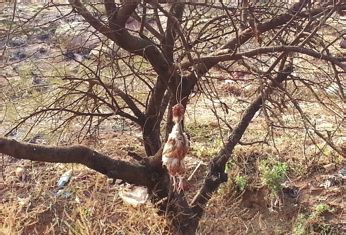
Photo 1: A car arrives where young men were seen gambling, Photo 2: An alleged satanic ritual in which a chicken was
allegedly to deliver drugs to the gamblers. hanged alive and left to die. On the ground there are signs of
burning candles and muti, evidence that some kind of ritual
was performed.
33
Personal interview, male, 18 June 2014.
34
Personal interview, male, 4 June 2014.
35
Personal interview, female, 11 June 2014.
36
Personal interview, male, 26 July 2014.
37
Personal interview, male focus group participant, 5 June 2014.
16Challenges facing Ivory Park
Respondents’ observations about crime homes and people robbed of their possessions.
The issue of crime and corruption was explored The problem as I see it is related to the nyaope
with many respondents in the study. Respondents drugs. When someone is under the influence of
were asked to outline the crime problems that the nyaope everything is easy because that person
community of Ivory Park was experiencing and has no conscious at the time he commits a crime.
also to share their views on whether the CWP had House robberies were not common in the township
any role to play in mitigating this problem. Many but were something common in the suburbs.
respondents identified crime and corruption as the The security has been tightened in the suburbs
biggest problem impacting on development in their by bringing in private security and installing
community. alarm systems. We do not have those things here
hence criminals are now targeting us for [house]
I believe that crime in Ivory Park is out of control robberies.39
because it is not safe as a woman to walk alone
at night. Women in this community are victims of Corruption was also a recurring theme alongside
rape and domestic violence. In my street, in May crime. There was a view that some of the crime
alone two women who stay in my streets were problems were a result of corrupt police officers.
raped on two different occasions. Where were the
police when these things happened and why are I believe that if the police could clamp down on
perpetrators not arrested? This place is definitely their members who are corrupt the crime problem
not safe for women because we live in fear that one will disappear. Police officers are taking bribes
day someone will attack and rape you.38 from criminals and letting them go scot free. How
do you explain that someone is arrested and there
Housebreaking and robberies were other crimes that are witnesses and evidence but the case is thrown
were also mentioned by many respondents. out of court because of insufficient evidence?
Known criminals roam the streets terrorizing
Housebreaking is a serious problem; these days communities and the police are doing nothing
people break into the house during daylight. about it. I really think that perhaps if we removed
Thieves are no longer deterred by light or people all the police officers at this police station and
around because when they have targeted your bring new police officers the situation will change
house and want to break in they will do so whether until they get corrupted. I don’t think the current
it is in the evening or during broad daylight. police are able to deal with the crime situation in
There are also a number of robberies that have Ivory Park. 40
been reported where people are attacked in their
33
Personal interview, male, 18 June 2014.
34
Personal interview, male, 4 June 2014.
35
Personal interview, female, 11 June 2014.
36
Personal interview, male, 26 July 2014.
37
Personal interview, male focus group participant, 5 June 2014.
17History, development and characteristics of the CWP at site
Overview of the Ivory Park site A annual plan, developed in 2014, provides that the
The CWP was introduced on 12 April 2010 in Ivory aims of the CWP in the region are:
Park under the auspices of the Seriti Institute.41 As to grow and develop social life, local economic
noted, the Ivory Park site is in fact a ‘sub-site’ in structures and increase working skills in this
the overall Region A, with the other parts of the site region; and
being Diepsloot and Midrand. Ivory Park comprises to reduce crime and substance abuse by applying
four wards (77, 78, 79 and 80). The Ivory Park the social activities and economic contributions
sub-site also includes adjacent townships such as as transforming tools.42
Ebony Park, Kaalfontein and Rabie Ridge. However,
although interviews were conducted in Ebony Park The plan states that the purpose of the programme is
and Kaalfontein as part of the bigger Ivory Park site, to help alleviate poverty and assist the community to
the primary focus was on Ivory Park township. come together and participate in various programme
activities which are aimed at providing useful work
Since the site was established in 2010, the in exchange for payment of stipends.43 By doing so,
implementation agent (IA) for Region A has changed it is hoped that unemployed people will become less
twice. In 2012 the site was awarded to Dhladhla dependent on government social security systems
Foundation until April 2014, when it reverted back and grants. The plan states that the objectives of the
to the Seriti Institute. At the time of the research, CWP in Region A are:
Seriti had just taken over the Region A site. A to uplift the CWP brand by ensuring that
number of processes, partly related to the transition community members have improved access to
back to Seriti, were still under way, including a skills social services;
audit of all participants and the re-registration of to provide participants with training and
participants. The skills audit was conducted to plan opportunities for skills development, which will
for training and skills development of participants. improve their opportunities for getting employed
The re-registration was done to get rid of ghost by big businesses and industries;
participants and people who have since left the CWP to improve sports and arts in schools, and
programme, either through death or voluntarily. Also, encourage competition amongst schools in the
this exercise was designed to establish the correct same districts;
number of participants in the CWP programme. The to promote health in communities by promoting
Seriti Institute was concerned that Region A had healthy living and lifestyles;
more participants than the budget allowed for. to grow the local economy and improve the
relationship as well as cooperation between the
What is the aim of the programme? businesses sector and the CWP;
The aims of the CWP are defined at national level by to encourage cooperation and oneness amongst
COGTA. However, sites are also expected to develop different stakeholders; and
annual plans and may also define specific aims or to increase staff performance and promote
objectives in these plans. For instance, the Region teamwork in the workplace.44
41
Personal interview, Seriti manager, 4 August 2014.
42
Author copy of the CWP document, Region A, Annual Plan, 2014.
43
Ibid.
44
Ibid.
18History, development and characteristics of the CWP at site
Key focus areas of the CWP programme in Ivory Park alcohol and drug abuse, in particular by young and
Within the CWP, work is usually broadly defined unemployed youths.
as falling into a number of key ‘sectors.’ In Ivory
Park these sectors are defined as Environment, With regards to the infrastructure programmes, 144
Infrastructure, Social and Economic. In terms of the participants in Ivory Park were earmarked to be part
business plan for 2014, 34% of work will be in the of the programme, which was allocated 24% of the
environment sector, including: resources in Ivory Park. Projects in the programme
removing illegal dumps; include assisting local schools with minor electric
maintaining food gardens; repairs; fixing broken windows, doors and leaking
cutting long grass and trees; pipes; improving paving in public buildings; and
cleaning public parks, schools and churches. assisting the municipality infrastructure department
Home visits and care to chronic and home-bound with water drainage and building houses for indigent
sick community members who are unable to be families.
cared for in a hospice or at home are defined as part
of the social sector in Ivory Park The economic sector is the fourth identified sector
to initiate projects for CWP participants. It was
allocated only 16% of CWP resources. This is
Graph 1: Proportion of resources dedicated to despite the business plan recognizing this sector
sectors of the CWP in Ivory Park as one of the most important, particularly as it
involves providing young people in the CWP with
entrepreneurial skills to start cooperatives and
Operational sectors businesses. Eighty-nine CWP participants were
16% earmarked to participate in the Economic sector
Environment programmes.
34%
Infrastructure Profile of participants
As at 30 September 2014, there were 743 CWP
Social 26% participants in Ivory Park, of which 141 were males
and 602 were females (Table 8). The number of
Economic participants in September 2014 was significantly
24% lower than in December 2013, when there were 881
participants.
Source: Region A CWP business plan, 2014
After the Seriti Institute took over the Region A
site in April 2014, a moratorium was placed on
The social sector is allocated 26% of the programme recruitment of new participants because the site
in the CWP. A total of 182 CWP participants were has more participants than provided for in the
earmarked to implement programmes in schools budget. One interviewee said the inflated number of
and early childhood development (ECD) centres, as participants was related to political pressure on the
well as community campaigns aimed at reducing programme.
41
Personal interview, Seriti manager, 4 August 2014.
42
Author copy of the CWP document, Region A, Annual Plan, 2014.
43
Ibid.
44
Ibid.
19History, development and characteristics of the CWP at site
The numbers of CWP participants was forced onto Table 8: Profile of CWP participants in Ivory Park
the programme by the government towards the 2014
Period Males Females Total
general elections. The implementation agent … was
told to recruit more participants than was budgeted December 2013 171 710 881
for and resulted in 600 more people being recruited % 19.4 80.6 100
above the threshold budgeted for. In December September 2014 141 602 743
2013 there were 1 680 CWP in Region A, more than % 18.9 81.1 100
600 people than required. This created a number of
Source: Region A business plan, 2014
challenges including the budget for stipends, safety
equipment and the procurement for doing the work.
Notwithstanding the challenge of over-recruitment
This is why when we took over the site we placed
of participants, Table 8 shows that the CWP in
a moratorium on recruitment because we cannot
Ivory Park is more attractive to female than male
provide resources for all the people in the CWP
participants. As at September 2014, there were
because of the limitation in the budget.45
602 females (81%) compared to 141 males (19%).
The high levels of representation of women are
As a result, the interviewee said:
reflected in every part of the CWP except for office
staff members. The site staff constitute the top
We are sitting with a problem now because we
management structure in the site and are employed
have more people in the programme that we can
on a full-time basis by the IA. Table 9 shows the
afford. Right now as we are procuring uniform,
distribution of office staff as well as coordinators
only 1 000 participants from Region A will be
according to gender in Ivory Park.
given new uniforms and the rest will not because
that is the budget we have. Region A has too many
participants than budgeted for because the IA was Table 9: Distribution of site staff and coordinators
literally forced to bring more people into the CWP according to gender
by politicians. It’s a problem when that happens Gender
because it appears as if the IA is the one refusing Male Female
to employ people and that may create problems for
Office staff 3 2
the IA.
Coordinators (including 5 17
Declining numbers could also be related to the facilitators and skilled
fact that while the moratorium has been in place, workers)
participants have left the programme for a variety
of reasons, including taking up formal employment There are five office staff in the Ivory Park CWP,
elsewhere, maternity, becoming self-employed and commonly referred to as the ‘top five.’ Two females
as a result of sickness or death. occupy the positions of administrator and of skilled
worker responsible for agriculture, respectively.
45
Personal interview, male, 16 July 2014.
20History, development and characteristics of the CWP at site
Three males occupy the positions of site manager, overwhelming view that most men did not want to
safety officer and storeman. The second-highest work hard for very little money, contrary to most
tier in the site is that of coordinators. Coordinators women who are willing to work hard for little money
include facilitators, the site inspector, physical in order to feed their children.
trainers and skilled staff members implementing
HBC programmes. Of the 22 coordinators, five are There are more women than men in this project
males and 17 are females. because women are used to working hard at many
times without getting paid or paid very little. I mean
Reasons for predominance of women in the CWP if you can think of the kind of hard work women do
A number of reasons were advanced to explain why in their homes, cleaning, cooking and looking after
there are fewer men in the CWP programme than children and this work is rarely paid for. So women
women. Reasons provided included the issue of male are used to working hard for nothing. A chance
pride and differences in the approaches that men for many women to work and get paid is a luxury
and women have to the low wages that are paid by most women rarely experience. The experience is
the CWP. totally different from men. Men are generally used
to working and getting paid. Many men also have
A lot of men refuse to join the CWP because they the luxury of changing [and] choosing jobs that pay
say that the money is too little. However, for most better. Men are very few in this project because
women even if the money is little we are able to of their pride. Men have pride even when they are
persevere and make it work. Other men are full unemployed and living in poverty. Men will be very
of pride and refuse to work for little money or be shy to work the kind of work we do in the CWP
associated with a poverty relief project. I really like cleaning the streets, unblocking the drainage
think that most of the men might have pride issue system, doing gardens and cleaning the schools.
but most of them are discouraged by the little As you can see, the men in the CWP are old people
stipend.46 who are retired and perhaps are not looking for
anything better. Women have many responsibilities
This is a very difficult job for many men to do. It is at home to feed their children and at times their
not easy for a man to be seen working in a poverty unemployed husbands. When a child tries for food
relief project and earn the kind of money than he does not call his father he calls his mother. No
we earn. Men are not like women; they have too mother can allow her children to starve and will
much pride. Men would rather try other means like do any work to earn some income to provide food
looking for piece jobs and marketing themselves security to her family. 48
elsewhere in order to get better-paying jobs. Just
look at my group here – I have only three men out Interviews with male participants provided a
of 30 people. As you can see the men that are different set of reasons why so few men join the
working are very old and no longer have stamina to CWP programme despite the fact that many are
take on difficult jobs. I suppose it’s easy for older unemployed. The most common reason given was
men to join the CWP because they no longer have lack of financial security in the CWP.
pride and have older children who are probably
living away from them. It’s difficult for unemployed It’s difficult for unemployed young men to join the
younger men who still have school-going children CWP because the money we get is pathetic. Not
to enrol in the programme also because money will many men who have huge responsibilities of raising
definitely not be enough to sustain the family.47 children would be keen to work for R71 per day.
Most men believe that working for CWP is a waste
Another respondent concurred and argued that most of their time because they can make more money
men are not resilient and hardworking, an important per day than CWP participants make in a month. I
attribute to survive in the CWP. There was also an mean it’s easier to say men don’t want to work hard
46
Personal interview, female facilitator, 23 July 2014.
47
Personal interview, female facilitator, 15 July 2014.
48
Personal interview, female coordinator, 23 June 2014.
21You can also read


