GLOBAL TRENDS FORCED DISPLACEMENT IN 2020 - UNHCR
←
→
Page content transcription
If your browser does not render page correctly, please read the page content below
GLOBAL TRENDS FORCED DISPLACEMENT IN 2020
      Trends at a Glance
         82.4 MILLION
         FORCIBLY DISPLACED WORLDWIDE                                                             26.4 million refugees
         at the end of 2020 as a result of persecution, conflict,
         violence, human rights violations or events seriously
         disturbing public order.
                                                                                                             20.7 million refugees
                                                                                                             		under UNHCR’s mandate

                                                                                                              5.7 million Palestine refugees
          90M

                                                                                                             		under UNRWA’s mandate
          70M

          50M                                                                                    48 . 0 million internally displaced people            1

          30M                                                                                     4 . 1 million asylum-seekers
          10M
                                                                                                  3 . 9 million Venezuelans displaced abroad                2

            -

                1990              2000                2010                 2020

                86%                                              3.7   MILLION
                                                              REFUGEES HOSTED
                                                                                                                               IN1 6
            HOSTED IN                                                                                                    ARE DISPLACED
           DEVELOPING                                             IN TURKEY
           COUNTRIES                                                                                             Relative to their national populations,
                                                                                                                 the island of Aruba hosted the largest
                                                        Turkey hosted nearly 3.7 million
                                                                                                                 number of Venezuelans displaced
                                                        refugees, the largest population
Developing countries hosted 86 per                                                                               abroad (1 in 6) while Lebanon hosted
                                                        worldwide. Colombia was second
cent of the world’s refugees and                                                                                 the largest number of refugees (1 in
                                                        with more than 1.7 million, including
Venezuelans displaced abroad. The                                                                                8)3 , followed by Curaçao (1 in 10),
                                                        Venezuelans displaced abroad.
Least Developed Countries provided                                                                               Jordan (1 in 15) and Turkey (1 in 23).4
asylum to 27 per cent of the total.
                                                             Turkey

                73%
                                                                                                                     Aruba
                                                             3.7 million                                             1 in 6

                                                             Colombia                                                Lebanon
         HOSTED IN                                           1.7 million                                             1 in 8

       NEIGHBOURING                                          Pakistan                                                Curaçao
        COUNTRIES                                            1.4 million                                             1 in 10

                                                             Uganda                                                  Jordan
                                                             1.4 million                                             1 in 15
73 per cent of refugees and
Venezuelans displaced abroad lived                           Germany                                                 Turkey
in countries neighbouring their                              1.2 million                                             1 in 23
countries of origin.

1 Source: Internal Displacement Monitoring Centre
2 This number excludes Venezuelan asylum-seekers and refugees.
3 When the 480,000 Palestinian refugees registered with UNRWA living in Lebanon are included, this proportion increases to one in five.
4 In addition, Lebanon hosted 480,000 and Jordan 2.3 million Palestine refugees under UNRWA’s mandate.

2                                                                                                                              UNHCR > GLOBAL TRENDS 2020
68%                                             5.4  MILLION                                     SOLUTIONS

                                                                                                            3.4
  ORIGINATED FROM                                            VENEZUELAN
 JUST FIVE COUNTRIES                                         REFUGEES AND                                         MILLION
                                                               MIGRANTS                                   DISPLACED PEOPLE
More than two thirds (68 per cent)                                                                                 RETURNED
of all refugees and Venezuelans
                                                     This figure includes Venezuelan
displaced abroad came from just five
                                                     refugees, migrants and asylum-
countries:                                                                                              3.4 million displaced people
                                                     seekers reported through the
                                                     Coordination Platform for Refugees                 returned to their areas or countries
  Syrian Arab Republic                               and Migrants from Venezuela. 6                     of origin in 2020, including 3.2
  6.7 million                                                                                           million internally displaced people
                                                                                                        and 251,000 refugees.
  Venezuela5

                                                             1.1
  4.0 million

  Afghanistan
  2.6 million
                                                                  MILLION
                                                              NEW CLAIMS
                                                                                                              34,400
                                                                                                                   REFUGEES
  South Sudan
  2.2 million                                                                                                      RESETTLED
                                                     Asylum-seekers submitted 1.1 million
  Myanmar                                            new claims. The United States of
  1.1 million                                        America was the world’s largest                    34,400 refugees were resettled in
                                                     recipient of new individual                        2020, one-third of the previous year
                                                     applications (250,800), followed by                (107,800), according to government
                                                     Germany (102,600), Spain (88,800),                 statistics. UNHCR submitted 39,500

           1
                                                     France (87,700) and Peru (52,600).                 refugees to States for resettlement.

       MILLION
  CHILDREN WERE                                        DEMOGRAPHICS OF PEOPLE WHO HAVE BEEN
 BORN AS REFUGEES                                              FORCIBLY DISPLACED

UNHCR estimates that between 2018                    Children account for 30 per cent of the world’s population, but 42 per cent of
and 2020, an average of between                      all forcibly displaced people.7
290,000 and 340,000 children were
born into a refugee life per year.
                                                      60+                                             3% 3%

                                                     18-59                          25%                               27%

                                                     12-17                                        6%      6%

5 This is the number of Venezuelan refugees and
  Venezuelans displaced abroad.
                                                      5-11                                       8%           9%
6 See the Coordination Platform for Refugees and
  Migrants from Venezuela R4V.
7 Sources: Estimation of IDP demographics (IDMC);
  Palestine refugees under UNRWA’s mandate
  (UNRWA); Refugees, people in a refugee-like          0-4                                        6%      6%
  situation, asylum-seekers and Venezuelans                                                                                 Female    Male
  displaced abroad are based on the available data
  (UNHCR) and World Population estimates (UN
  Department of Economic and Social Affairs).         DISCLAIMER: figures do not add up to 100 per cent due to rounding

     UNHCR > GLOBAL TRENDS 2020                                                                                                                3
    Statistics for forcibly displaced people and the population of concern to UNHCR
    The main focus of this report is the analysis of statistical           are not covered by UNHCR’s mandate and excludes
    trends and changes in global forced displacement from                  other categories such as returnees and non-displaced
    January to December 2020 among populations for                         stateless people.
    whom UNHCR has been entrusted with a responsibility
                                                                           The total population of concern to UNHCR relates to
    by the international community.8 The data presented are
                                                                           the people UNHCR is mandated to protect and assist.
    based on information received as of 30 May 2021 unless
                                                                           It includes those who have been forcibly displaced;
    otherwise indicated.
                                                                           those who have returned home within the previous
    At the end of 2020, the total number of forcibly                       year; those who are stateless (most of whom are
    displaced people was 82.4 million, while the total                     not forcibly displaced); and other groups to whom
    population of concern to UNHCR stood at 91.9 million                   UNHCR has extended its protection or provided
    people.                                                                assistance on a humanitarian basis.
    The total number of forcibly displaced people                          These two categorizations are compared graphically
    encompasses refugees, asylum-seekers, internally                       below. A detailed breakdown of UNHCR’s population
    displaced people and Venezuelans displaced abroad.                     of concern by category and country is provided in
    It includes refugees and other displaced people who                    Annex Table 1.

              Forcibly displaced people                     Population of concern to UNHCR
                           82,381,000                       91,923,000

    Refugees under                                                    Includes both refugees and people in refugee-like
    UNHCR’s mandate
                                  20.7M                               situations. Used consistently in both categorizations.

    Palestine refugees under          5.7M                            Not included in UNHCR’s population of concern.
    UNRWA’s mandate

    Asylum-seekers                    4.1M                            Used consistently in both categorizations.

    Venezuelans
                                       3.9M                           Used consistently in both categorizations.
    displaced abroad
                                                                      The biggest difference between the two categorizations is with people who
                                                                      have been internally displaced. When presenting these statistics, UNHCR
                                                                      applies two different sources: IDMC’s IDP statistics collate the total forcibly
                                                                      displaced while those IDPs protected/assisted by UNHCR are included in the
    Internally                                                        total population of concern to UNHCR.
    Displaced People          48.0M                     48.6M         The two sources of IDP data vary significantly in certain countries. Globally,
    (IDPs)                                                            for 2020, IDMC report 48.0 million IDPs while UNHCR reports 48.6 million
                                                                      conflict-affected IDPs.
                                                                      While in total UNHCR reports 4.2 million stateless people, 1.2 million are also
                                                                      forcibly displaced from Myanmar. These 1.2 million are only counted as forcibly
                                                                      displaced when calculating the total population of concern to UNHCR to avoid
    Stateless people                  4.2M                            double counting.

    Refugee returns                     0.25M                         Only included in UNHCR’s population of concern for a period of 12 months.

    IDP returns                       3.2M                            Only included in UNHCR’s population of concern for a period of 12 months.

    Others of concern
    to UNHCR
                                    8.3M                              Only included in UNHCR’s population of concern.

    The figures in this report are based on data reported                  Finder,9 figures contained in this report should be
    by governments, non-governmental organizations                         considered as provisional and subject to change.
    and UNHCR. Numbers are rounded to the closest                          Unless otherwise specified, the report does not refer
    hundred or thousand. As some adjustments may                           to events occurring after 31 December 2020.
    appear later in the year in UNHCR’s Refugee Data

    8 See the Methodology page of UNHCR’s Refugee Data Finder for a definition of each population group.
    9 https://www.unhcr.org/refugee-statistics

4                                                                                                                              UNHCR > GLOBAL TRENDS 2020
Chapter 1

       CHAPTER 1

      Global Forced
      Displacement
      More than 82 million people worldwide are forcibly displaced

                While the 1951 Refugee Convention and the Global Compact on Refugees provide the
                legal framework and tools to respond to displacement, we need much greater political
                will to address conflicts and persecution that force people to flee in the first place.
                Filippo Grandi
                UN High Commissioner for Refugees

      The year 2020 will be remembered as a year like                            fewer people than would have been expected in
      no other. The COVID-19 pandemic has disrupted all                          non-COVID circumstances, and reflecting how many
      facets of life, causing millions of deaths around the                      of those seeking international protection in 2020
      world and leading to human suffering, economic                             became stranded (see Figure 1 by region).10 Similarly,
      recession, restrictions on human mobility and severe                       the United Nations estimate that the pandemic may
      limitations on daily life.                                                 have reduced the number of international migrants by
                                                                                 around two million globally during the first six months
      While the full impact of the COVID-19 pandemic
                                                                                 of the year. This corresponds to a decrease of around
      on wider cross-border migration and displacement
                                                                                 27 per cent in the expected number of international
      globally is not yet clear, UNHCR data shows that
                                                                                 migrants from July 2019 to June 2020.11
      arrivals of new refugees and asylum-seekers were
      sharply down in most regions – about 1.5 million

      Figure 1 | Actual new arrivals of refugees and asylum-seekers versus forecast | 2020

                                        Americas
                              Asia and the Pacific
       East and Horn of Africa and Great Lakes
                                          Europe
                     Middle East and North Africa
                                  Southern Africa
                          West and Central Africa
                                      Grand Total

                                                     -100%      -80%          -60%          -40%          -20%           0%           20%          40%

      A negative percentage in the chart means that there were fewer arrivals than forecast.

      10 Based on displacement trends observed over the past 20 years, expected forced displacement in 2020 was estimated using a gravity model
         addressing explicitly the statistical problems of the non-random selection of destination countries by refugees from different countries of
         origin as well as controlling for the probability of the occurrence of trigger events such as conflict, based on the approaches documented in
         Echevarria & Gardeazabal, 2016 and Abel et al. 2019. Point estimates are based on the predicted values of the original full dataset. The 95 per
         cent bootstrap confidence intervals are computed using 200 resamples with replacement of the original dataset.
      11 United Nations Department of Economic and Social Affairs (UN DESA), Population Division (2020). International Migration 2020 Highlights.
         UN DESA estimates the total number of international migrants at 281 million in 2020.

UNHCR > GLOBAL TRENDS 2020                                                                                                                                 5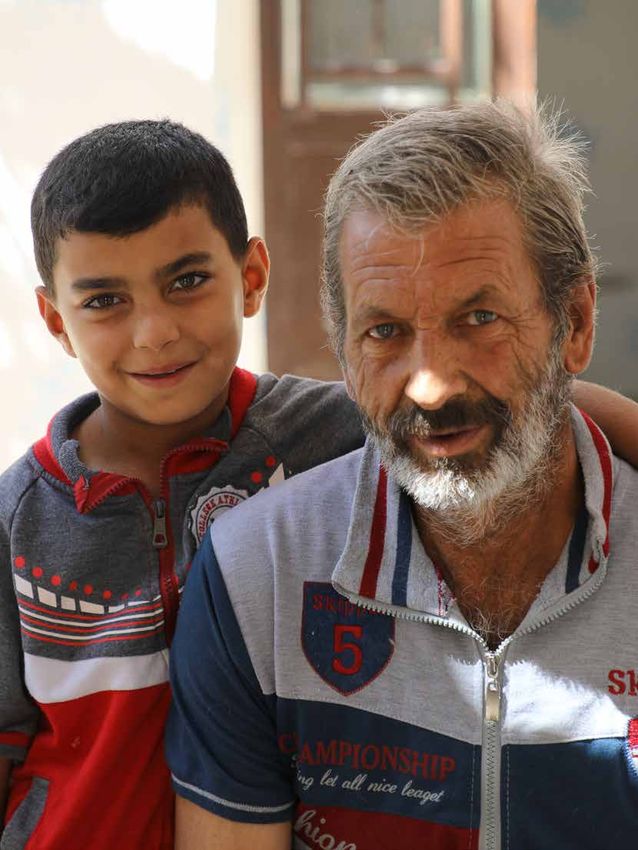
Chapter 1

         People were forced to flee their homes throughout                                   more than 54,000 fled the Tigray region into eastern
         the year despite an urgent appeal from the U.N.                                     Sudan. In northern Mozambique, hundreds of
         Secretary-General on 23 March 2020 calling for a                                    thousands escaped deadly violence, with civilians
         global ceasefire to enable a concerted response                                     witnessing massacres by non-state armed groups in
         to the pandemic.12 By the end of 2020, the number                                   several villages, including beheadings and abductions
         of people forcibly displaced due to persecution,                                    of women and children. The outbreak of hostilities
         conflict, violence, human rights violations and events                              between Armenia and Azerbaijan left a devastating
         seriously disturbing public order had grown to 82.4                                 impact on civilians in both countries and displaced
         million, the highest number on record according to                                  tens of thousands of people.
         available data.13 This was more than double the level
                                                                                             Measures implemented by governments to limit the
         of a decade ago (41 million in 2010, see Figure 2), and
                                                                                             spread of COVID-19, including restricting freedom of
         a four per cent increase from the 2019 total of 79.5
                                                                                             movement and closing borders, made it considerably
         million. As a result, above one per cent of the world’s
                                                                                             harder for people fleeing war and persecution to
         population – or 1 in 95 people – is now forcibly
                                                                                             reach safety. However, a number of States have found
         displaced. This compares with 1 in 159 in 2010.
                                                                                             ways to preserve some form of access to territory
         Several crises – some new, some resurfacing after                                   for people seeking international protection despite
         years – forced people to flee within or beyond the                                  the pandemic. Uganda, for example, has accepted
         borders of their country. Afghanistan, Somalia and                                  thousands of refugees from the DRC while ensuring
         Yemen continued to be hotspots, while conflict in                                   that necessary health measures, including quarantine,
         the Syrian Arab Republic (Syria) stretched into its                                 were also taken.
         tenth year. In the Sahel region of Africa, nearly three-
                                                                                             During 2020, an estimated 11.2 million people
         quarters of a million people were newly displaced
                                                                                             became newly displaced – a total that includes
         in what is perhaps the most complex regional crisis
                                                                                             people displaced for the first time as well as people
         worldwide. In the Democratic Republic of the Congo
                                                                                             displaced repeatedly. This includes 1.4 million who
         (DRC), atrocities carried out by armed groups led to
                                                                                             sought protection outside their country,14 plus 9.8
         UNHCR partners documenting the killings of more
                                                                                             million new displacements within countries.15 This
         than 2,000 civilians in its three eastern provinces.
                                                                                             figure exceeds the 2019 total of 11.0 million.
         In Ethiopia, more than one million people were
         displaced within the country during the year, while

         Figure 2 | Global forced displacement | end-year
                            90
                            80
                            70
    Population (millions)

                            60
                            50
                            40
                            30
                            20
                            10
                            0
                                '10          '11         '12       '13          '14          '15       '16        '17        '18         '19         '20
                                 Internally displaced people   UNRWA refugees         UNHCR refugees   Asylum-seekers    Venezuelans displaced abroad

         12 See https://www.un.org/en/globalceasefire
         13 These included 26.4 million refugees: 20.7 million under UNHCR’s mandate and 5.7 million Palestine refugees registered with the United
            Nations Relief and Works Agency for Palestine Refugees in the Near East (UNRWA). The global figure also included 48.0 million internally
            displaced persons (source: IDMC), 4.1 million individuals whose asylum applications had not yet been adjudicated by the end of the reporting
            period, and 3.9 million Venezuelans displaced abroad.
         14 Consisting of more than 1.1 million new individual asylum claims and 305,500 refugees recognized on a prima facie or group basis. Some of
            these people may have arrived prior to 2020.
         15 Based on a global estimate from IDMC.

6                                                                                                                                  UNHCR > GLOBAL TRENDS 2020
Chapter 1

      With many governments closing borders for extended                     In the early phase of the pandemic, UNHCR and
      periods of time and restricting internal mobility,                     the International Organization for Migration put on
      only a limited number of refugees and internally                       hold resettlement departures for several months
      displaced people were able to avail themselves of                      amid border and travel restrictions around the world.
      solutions such as voluntary return or resettlement to                  While these activities subsequently resumed, only
      a third country. Some 251,000 refugees were able                       34,400 refugees were resettled to third countries in
      to return to their country of origin in 2020, either                   2020, two-thirds of them assisted by UNHCR. This
      assisted by UNHCR or spontaneously. This is the third                  compares to 107,800 the year before and marks
      lowest number of the past decade, and it continues                     a dramatic 69 per cent decline – at a time when
      a downward trend from the previous two years.                          1.4 million refugees are estimated to be in need of
      Impediments to returns in many countries of origin                     resettlement.
      include ongoing insecurity, the absence of essential
      services and the lack of livelihood opportunities.

      Figure 3 | International displacement situations by country of origin | end-2020*

                       Syria                                                       6.7

                Venezuela                0.9                                3.9

               Afghanistan                         2.6

              South Sudan                      2.2

                  Myanmar                1.1

                        DRC          0.8

                    Somalia          0.8

                      Sudan         0.8                                                                  Refugees
                                                                                                         Asylum-seekers

      Central African Rep.         0.6                                                                   Venezuelans displaced abroad
                                                                                                       *Excludes Palestine refugees
                                                                                                       under UNRWA's mandate.
                     Eritrea       0.5

                               0               1             2               3                 4             5               6                 7
                                                                                  (millions)
      Refugees are not the only forcibly displaced people                    The conflict in Syria has dragged on for one full
      struggling to access solutions. In comparison with                     decade, with more than half of its population still
      2019, 40 per cent fewer IDPs (3.2 million versus 5.3                   forcibly displaced, representing by far the largest
      million in 2019) were able to return to their place                    forcibly displaced population worldwide (13.5 million,
      of residence, leaving millions of IDPs in protracted                   including more than 6.7 million internally displaced).
      displacement. Almost half of all IDP returns were                      When considering only international displacement
      concentrated in the Democratic Republic of the                         situations, Syrians also topped the list with 6.8 million
      Congo (1.4 million).                                                   people, followed by Venezuelans with 4.9 million.16

      16 This number includes Venezuelans displaced abroad, Venezuelan refugees and asylum-seekers recorded in UNHCR statistics. It does not
         include other Venezuelans beyond the Latin American and Caribbean region.

UNHCR > GLOBAL TRENDS 2020                                                                                                                         7
Chapter 1

    Afghans and South Sudanese came next, with 2.8                              Colombia followed, hosting over 1.7 million displaced
    and 2.2 million respectively (see Figure 3).17                              Venezuelans. Germany hosted the third largest
                                                                                number, almost 1.5 million, with Syrian refugees and
    There was no change from 2019 in the top five
                                                                                asylum-seekers constituting the largest groups (44
    countries that host the largest number of people
                                                                                per cent). Pakistan and Uganda hosted the 4th and
    displaced across borders.18 Turkey reported the
                                                                                5th largest number, with about 1.4 million each (see
    highest number with just under 4 million, most
                                                                                Figure 4).
    of whom were Syrian refugees (92 per cent).

    Figure 4 | International displacement situations by host country | end-2020*

             Turkey                                                            3.7                                                           0.3

         Colombia                                      1.7

          Germany                         1.2                    0.2

           Pakistan                             1.4

           Uganda                               1.4

    United States          0.3                        1.0

               Peru           0.5                 0.5

                                                                                                               Refugees
             Sudan                    1.0                                                                      Asylum-seekers
                                                                                                               Venezuelans displaced abroad
          Lebanon                   0.9                                                                       *Excludes Palestine refugees
                                                                                                              under UNRWA's mandate.

     Bangladesh                     0.9

                      0                                      1                        2                               3                            4
                                                                                  (millions)

    Children are particularly affected during displacement                      unaccompanied or separated children (UASC)
    crises, especially if their displacement drags on                           lodged new asylum applications in 2020 (2 per cent),
    for many years. New UNHCR estimates show that                               compared to 25,000 one year earlier (1 per cent).20
    almost one million children were born as refugees                           Considering that new asylum applications in 2020
    between 2018 and 2020.19 Many of them are at risk of                        dropped by one million due to COVID-19, this figure is
    remaining in exile for years to come, some potentially                      disproportionately high.
    for the rest of their lives. It is especially challenging
    to ensure the best interests of children who are at
    risk, including children who are unaccompanied
    or separated from their families. Some 21,000

    17   Excluding Palestine refugees under UNRWA’s mandate.
    18   Refers to refugees, asylum-seekers and Venezuelans displaced abroad.
    19   See page 10 for more details.
    20   Both figures are significant underestimates due to the limited number of countries reporting data.

8                                                                                                                             UNHCR > GLOBAL TRENDS 2020
Chapter 1

      What next?                                                                  At the launch of the 2012 Global Trends report25 in
                                                                                  June 2013, António Guterres, who was then U.N. High
                                                                                  Commissioner for Refugees, stated “These truly are
      The magnitude and severity of food crises worsened                          alarming numbers. They reflect individual suffering
      in 2020 as protracted conflicts, extreme weather                            on a huge scale and they reflect the difficulties of
      and the economic fallout of COVID-19 exacerbated                            the international community in preventing conflicts
      pre-existing situations. Forecasts for 2021 are equally                     and promoting timely solutions for them.”26 At the
      worrying, with some of the world’s worst food crises                        time, UNHCR reported that 45 million people were
      – including in displacement-affected countries                              forcibly displaced worldwide. Now, almost a decade
      such as South Sudan, Syria and the Central African                          later, this figure has risen to more than 82 million. It is
      Republic – at risk of turning into famine.21 Similarly, the                 the ninth consecutive year-on-year increase. Based
      World Bank expects the number of people pushed                              on this trajectory, the question is no longer if forced
      into extreme poverty due to COVID-19 to rise to an                          displacement will exceed 100 million people – but
      unprecedented level of between 119 million and 124                          rather when. Clearly, the need for preventing conflicts
      million in 2020.22                                                          and ensuring that displaced people have access to
                                                                                  solutions has never been more pressing than now.
      Although reported incidents of conflict and reported
      violence declined overall in 2020, in nearly half the                       The early months of 2021 have offered a glimmer of
      world’s countries they rose. Because the pandemic                           hope, even as conflict and displacement continue in
      is considered a unique development and vaccine                              many parts of the world. The announcement by the
      distribution in response to COVID-19 is accelerating                        US Government to admit more resettled refugees
      with countries relaxing public health restrictions,                         – up to 62,500 in 2021 and up to 125,000 in 2022
      global conflict levels, locations, and agents are                           – will provide solutions to more of the world’s most
      expected to increase significantly in 2021 – ultimately                     vulnerable refugees, especially if other countries
      to a higher point than both 2019 and 2020, according                        follow suit. Another positive step is the Government
      to ACLED.23                                                                 of Colombia’s announcement in February 2021 to
                                                                                  grant temporary protection status to more than one
      Climate change is driving displacement and
                                                                                  million Venezuelans.27 Many more such symbols of
      increasing the vulnerability of those already forced
                                                                                  solidarity and responsibility-sharing are needed to
      to flee.24 Forcibly displaced and stateless people are
                                                                                  fulfil the rights, needs and, where possible, hopes of
      on the front lines of the climate emergency. Many are
                                                                                  the displaced people around the world – and also
      living in climate “hotspots” where they typically lack
                                                                                  realize the vision of the Global Compact on Refugees.
      the resources to adapt to an increasingly inhospitable
      environment. The dynamics of poverty, food
      insecurity, climate change, conflict and displacement
      are increasingly interconnected and mutually
      reinforcing, driving more and more people to search
      for safety and security.

      21   See 2021 Global Report on Food Crisis
      22   See https://blogs.worldbank.org/opendata/updated-estimates-impact-covid-19-global-poverty-looking-back-2020-and-outlook-2021
      23   See The Armed Conflict Location & Event Data Project, ACLED 2020: The year in review, 2021.
      24   See Displaced on the frontlines of the climate emergency
      25   See https://www.unhcr.org/statistics/country/51bacb0f9/
      26   See https://www.unhcr.org/en-ie/51b9ba826.pdf
      27   All Venezuelans present on Colombian territory and lacking a legal status as of 31 January 2021 and those who will enter the country through
           regular entry points until 30 June 2023 are eligible for temporary protection status.

UNHCR > GLOBAL TRENDS 2020                                                                                                                                9
Chapter 1

         BORN INTO A REFUGEE LIFE – IMPACT ON EDUCATION?
         Registering the birth of every child in the civil registry is essential to recognizing its existence.
         It provides the child proof of legal identity and thus the ability to exercise rights and access
         services. The relevance of birth registration has been recognized in the Sustainable Development
         Goals (SDGs) and their pledge to leave no one behind. In this regard, SDG Target 16.9 is crucial:
         By 2030, provide legal identity for all, including birth registration. 28 Comprehensive and accurate
         data on birth registration remains hard to come by, but UNICEF estimated in 2019 that the number
         of children whose births are registered in the civil registry has risen significantly worldwide.
         However, one in every four children below the age of five, some 166 million in all, remain
         unregistered. 29

         Registering children born to refugees is even more complex – but also vital to ensuring that they
         receive adequate protection and assistance. The number of registered births is often unavailable,
         not reported by governments or not properly recorded in national administrative systems. In many
         cases this is because the births of refugee children cannot or will not be registered in the host
         States’ Civil Registration and Vital Statistics (CRVS) systems or it may be difficult to determine
         among all children registered by authorities, how many are refugees. Even where UNHCR is
         operationally active and maintaining up-to-date figures on refugee family composition to enable
         its work, it is challenging to obtain a full picture. This is partly due to security concerns and other
         barriers that prevent UNHCR and its partners from collecting complete data sets. To fill these
         gaps, UNHCR has used statistical modelling to impute the missing values based on existing
         registration information gathered from governments as well as from UNHCR’s own case
         management system. 30

         However, the results should be viewed with the caveat that there remains statistical uncertainty
         due to the lack of data in some regions for specific refugee populations.

         Based on this analysis, UNHCR estimates that almost one million children were born into a
         refugee life between 2018 and 2020, an average of between 290,000 and 340,000 per year. 31
         The analysis for 2020, however, most likely underestimates the number of children born, due to
         suspension of face-to-face activities in many countries during COVID-related lockdowns. Hence,
         a large number of births were not properly recorded in either host States’ CRVS or refugee
         registration systems. As they adapted to the pandemic, some countries have begun clearing
         these backlogs. Many refugee situations around the world have become protracted, relegating
         more and more children born to refugee parents to spend their entire childhood, and possibly
         their whole lives, outside their country of origin. Many may themselves have children or
         grandchildren born into refugee life. This has major implications for education, with a great many
         refugees never having the experience of going to school in their family’s country of origin. This in
         turn, may exacerbate the risk for children fall into child labour, including in its worst forms. 32

     28 See https://unstats.un.org/sdgs/. SDG Indicator 16.9.1 asks States to report on the “Proportion of children under 5 years of age whose births
        have been registered with a civil authority, by age.”
     29 See UNICEF, Birth Registration for Every Child by 2030: Are we on track?
     30 UNHCR has tested several models with multinomial multiple imputation generating the best results. Figures presented here are based on this
        method.
     31 Refers to refugees and Venezuelans displaced abroad.
     32 See UNICEF-ILO, COVID-19 and child labour: A time of crisis, a time to act

10                                                                                                                           UNHCR > GLOBAL TRENDS 2020
Chapter 1
Developing countries are home to 86 per cent of the world’s refugees, with 6.7 million refugees
hosted in Least Developed Countries. This means systems in countries with limited capacity to
provide basic services will disproportionately absorb refugee students. As a result, the basic
rights and economic, social and psychological needs of millions of refugee children and youth risk
being left unmet.
Data collected since 2015 have shown that, over the years, around half of school-age refugee
children and youth were out of school. However, there has been some success. Out of school
numbers fell from 55 per cent in 2017 to 48 per cent in 2019 across the 12 countries sampled 33
– a seemingly small change which nevertheless represents more than half a million additional
children entering school. Data from 2019 for 12 countries sampled indicates that 77 per cent of
refugee children were enrolled in primary school; however, less than one third moved on to
secondary school, with a lower share of refugee girls enrolling at this level in comparison to
boys. 34 A mere 3 per cent of refugee youth had access to tertiary education in the same year. 35
Governments, UNHCR and partners have made some progress in enrolling refugees in school and
ensuring they have access to accredited education in national systems. For example, in Colombia,
about 334,000 Venezuelan children were enrolled in school in April 2020, representing 3.4 per
cent of the country’s total student population. 36 This constitutes a ten-fold increase from an
enrolment of only 34,030 Venezuelan children in November 2018. 37 In Uganda, refugee education
enrolment rates grew from 43 in 2018 to 57 per cent in 2019. 38 This is largely due to the strong
leadership by the Government in including displaced children in national systems to improve the
education system for both host and refugee populations. In Turkey, currently home to more than
3.6 million Syrian refugees, the Government prioritized education early in the refugee emergency,
making investments that have helped prepare Syrian refugee children to transition from
temporary education centres into the Turkish public school system. Refugee children also
received Turkish language classes, remedial learning and school materials, and teachers received
training. For 2020/2021, nearly 80 per cent of Syrian primary school-aged children were enrolled
in formal education programmes. 39 Similarly, Egypt has facilitated the integration of Syrian refugee
students, with some 95 per cent registered in mostly formal education. 40
Despite these gains, it is hard to keep up with the pace of displacement and the demographic
pressure of children born into protracted displacement. Enrolling 300,000 additional children
each year requires 6,000 classrooms and the recruitment of 10,000 additional teachers. 41 Though
the increasingly protracted nature of emergencies is clear, 42 refugee education continues to be
heavily reliant on emergency funds, leaving little room for long-term planning and, consequently,
a robust response. Greater inclusion of refugee children in host country public schools will require
more cooperation between humanitarian and development actors in a joint effort to strengthen
national education systems for the benefit of all students – refugees and their national peers.
33 See UNHCR, Turn the Tide: Refugee Education in Crisis
34 These figures are Gross Enrolment Ratios, which count all children enrolled in school regardless of their age.
35 See UNHCR, Coming Together for Refugee Education
36 Colombia Ministry of National Education, Letter by Vice Minister, Multilateral Affairs, to the Director of the UNESCO Regional Office for Latin
America and the Caribbean. Bogotá, Ministry of National Education.
37 See UNDP, Migración, desplazamiento y educación en Colombia: Inclusión y educación de migrantes venezolanos en Colombia.
38 Uganda Ministry of Education and Sports, ERP – Year 1 Brochure, December 2019.
39 See ALNAP, No Lost Generation, Continued Learning for All Syrian Children and Youth, p. 6.
40 Ibid, p. 5.
41 Based on a ratio of 50 pupils per classroom and 30 pupils per teacher.
42 See Crawford, N., Cosgrave, J., Haysom, S., Walicki, N., Protracted Displacement: Uncertain paths to self-reliance in exile. Humanitarian Policy
Group – ODI.
UNHCR > GLOBAL TRENDS 2020 11Chapter 2
+ EXPLORE
THE DATA
+ By origin
and asylum
CHAPTER 2
Refugees
The international protection regime, particularly otherwise stated, all references to “people displaced
the right to claim asylum and the principle of non- across borders” in this document refer to both of
refoulement, faced unprecedented challenges in these populations.
2020. As a result, many States restricted or denied
During 2020, some 765,200 people were granted
asylum to those fleeing conflict and persecution.
international protection either on an individual
Despite these restrictions, the number of refugees43
(459,700) or group (305,500) basis.45 This is
worldwide rose by nearly a quarter of a million, from
significantly lower than in 2019 (952,800). In addition,
20.4 million in 2019 to almost 20.7 million at the end
hundreds of thousands of Venezuelans have been
of 2020,44 continuing a rising trend that began close
granted residence permits and other forms of legal
to a decade ago. In addition, there were 3.9 million
stay in Latin America and the Caribbean.
Venezuelans displaced abroad at year-end. Unless
By region of asylum
Figure 5 | People displaced across borders by region | end-year
25
20
15
(in millions)
10
5
-
2010 2011 2012 2013 2014 2015 2016 2017 2018 2019 2020
East and Horn of Africa, and Great Lakes Southern Africa West and Central Africa
Americas Middle East/North Africa Asia and Pacific Europe (incl. Turkey)
43 Includes people in refugee-like situations.
44 Excludes 5.7 million registered Palestine refugees under UNRWA’s mandate.
45 The number of Syrians newly registered in Turkey in 2020 and thus granted temporary protection by the Government is not publicly available.
12 UNHCR > GLOBAL TRENDS 2020Chapter 2
JORDAN. Syrian refugee Abdul Hameed and
his grandson Odai outside their house in
Amman, Jordan. Odai, aged 10, has spent
his whole life in Jordan. Like other
vulnerable Syrian refugee families, they
receive UNHCR cash assistance.
© UNHCR/LILLY CARLISLE
For detailed information on
UNHCR’s work to protect and
support refugees, from the
moment of flight until an
eventual return, resettlement
or other resolution,
see the 2020 Global Report.
UNHCR > GLOBAL TRENDS 2020 13Chapter 2
Europe deepening crisis in the Sahel region and also in
northern Nigeria.47 The region continues to face
Turkey continued to be the largest refugee- a severe humanitarian crisis with widespread and
hosting country in the world, accounting for nearly indiscriminate violence by armed groups as well
3.7 million refugees, or 15 per cent of all people as rising social and political tensions, forcing more
displaced across borders globally. Germany was people to flee their homes. The COVID-19 pandemic
the second-largest hosting country in Europe, and the climate emergency made the situation even
with 1.2 million refugees (5 per cent). Overall, the more complex and volatile. Major flooding affected
number of refugees hosted in Europe rose by the Sahel region early in 2020 and was exploited by
3 per cent. This was mainly due to the granting insurgent groups to expand their operations.
of international protection to over a quarter of
a million people (284,900) within the region, In contrast, the Southern Africa region saw a 3 per
almost half in Germany (83,700) and Spain cent reduction in the number of refugees due to
(46,500) alone. In addition, armed conflict in and verification exercises48 conducted in the Democratic
around Nagorno-Karabakh, which commenced in Republic of the Congo affecting particularly the
September 2020, caused some 90,000 people to number of registered South Sudanese refugees.
flee to Armenia, while over 80,000 people were Despite repeated conflict and violence across
temporarily displaced in Azerbaijan. Those who parts of the country, the Democratic Republic of the
fled to Armenia remain in a refugee-like situation Congo hosted nearly half a million refugees, mainly
in Armenia. Notable reductions in the number of from neighbouring countries.
refugees included a 79,000 decrease in Italy due
to improved source data.46 Americas
The number of refugees and Venezuelans displaced
Sub-Saharan Africa
abroad in the Americas grew by 8 per cent during
The East and Horn of Africa, and Great Lakes region 2020, reaching some 4.6 million by year-end.
hosted 4.5 million refugees at the end of 2020, Continued displacement of Venezuelans, notably
rising by 3 per cent or 122,800 people during the to Brazil, Mexico and Peru, as well as revised
year. The region now hosts nearly 1 in every 5 estimates for Venezuelans displaced abroad in Peru
refugees worldwide. Three countries – Uganda, were the main reasons for this increase. Colombia
Sudan and Ethiopia – alone hosted over two-thirds hosted more than 1.7 million people displaced
of refugees in the region, or some 13 per cent of all across borders, 7 per cent of the global total,
people displaced across borders. The eruption of overwhelmingly from Venezuela. For the first time in
conflict in the Tigray region in Ethiopia led to the five years, the number of Venezuelans in Colombia
outflow of more than 54,000 Ethiopians by year-end decreased, as some 124,600 Venezuelans returned
to Sudan. Displacement from Ethiopia, combined to their country due to the difficulties posed by the
with that resulting from the surge in violence in the pandemic and its economic impact.
Central African Republic and the ongoing South
Sudan crisis, led to Sudan recognizing 125,600 new Asia and the Pacific
refugees on a group basis, the most by a single
The number of refugees in the Asia and Pacific
country in 2020.
region declined by 4 per cent. The drop is
The largest regional increase in the number of largely due to updated figures received from the
refugees in 2020 was in West and Central Africa Government of the Islamic Republic of Iran, which
(+12 per cent). This was primarily due to the reported a decrease of some 178,300 refugees,
46 In 2020, the refugee estimates were updated using the data provided by ISTAT for 2019, augmented with the decisions on asylum
applications provided by the Ministry of Interior in 2020.
47 The Sahel region encompasses Burkina Faso, Chad, Mali, Mauritania and Niger.
48 Verifications are a time-bound registration activity conducted in a specific area and/or for a specific population. They entail verifying and
updating individual registration records and collecting additional information as necessary. Verifications typically lead to more accurate
population figures.
14 UNHCR > GLOBAL TRENDS 2020Chapter 2
mostly among Afghans.49 The previous figures were Middle East and North Africa
provided by the Government in 2015. Together,
Pakistan, Bangladesh and the Islamic Republic of Even as the conflict in Syria entered its 10th year, the
Iran continue to host 13 per cent of the global total of Middle East and North Africa region recorded a 5 per
people displaced across borders. cent drop in the number of refugees during 2020.
This reduction is mainly due to improved estimates of
Somali refugees in Yemen. Lebanon and Jordan host 6
per cent of all people displaced across borders globally.
Table 1 | Refugees, people in refugee-like situations and Venezuelans displaced abroad, by UNHCR
regions | 2020
Change
Start-2020 End-2020
(total)
UNHCR People in People in
regions Venezuelans Venezuelans
refugee- refugee-
Refugees displaced Total Refugees displaced Total Absolute %
like like
abroad abroad
situations situations
- East and Horn
of Africa and 4,388,700 - 4,388,700 4,511,500 - 4,511,500 122,800 3%
- -
Great Lakes
- Southern
744,400 - 744,400 720,400 - 720,400 - 24,000 -3%
Africa - -
- West and
1,204,700 - 1,204,700 1,353,500 - 1,353,500 148,800 12%
Central Africa - -
Total Africa* 6,337,800 - 6,337,800 6,585,400 - 6,585,400 247,600 4%
- -
Americas 592,900 108,800 3,582,200 4,283,900 650,300 108,800 3,856,300 4,615,400 331,500 8%
Asia and Pacific 4,114,400 48,700 - 4,163,100 3,968,400 48,000 - 4,016,400 -146,700 -4%
Europe 6,543,500 27,000 - 6,570,500 6,671,900 105,300 - 6,777,200 206,700 3%
Middle East
and North 2,602,400 40,300 - 2,642,700 2,483,500 26,000 - 2,509,500 - 133,200 -5%
Africa
Total 20,191,000 224,800 3,582,200 23,998,000 20,359,600 288,100 3,856,300 24,504,000 506,000 2%
Estimating the demographic Statistical modelling can be used to impute the sex-
and age-distribution for missing demographic data
composition of people for these populations, helping to fill these data gaps
displaced across borders 50
with estimates. These models are generated using
the available data for a country of origin as a starting
point. Where data for a particular country of asylum
UNHCR compiles data globally on the combined
is missing, the values are estimated using statistical
sex- and age-distribution of the populations of
modelling from the available data for the same origin
concern under its mandate at the end of each year.
country in nearby countries of asylum. This analysis
The availability of demographic data varies greatly
assumes that the composition of refugee populations
by population group and by country of asylum.
within a region is comparable across host countries,
For example, demographic data by age and sex is
as it is likely that the displacement has occurred at the
available for 79 per cent of refugees51 and 49 per cent
same point of time and under similar circumstances.
of Venezuelans displaced abroad.52
49 UNHCR is in consultations with the authorities to understand the reasons behind the decrease reported in 2020 data (170,100 for Afghan
refugees and 8,300 for Iraqi refugees).
50 Includes refugees, people in a refugee-like situation and Venezuelans displaced abroad.
51 Includes people in a refugee-like situation.
52 The calculations do not reflect end-year data for the Dominican Republic as the data was received just before publication. This includes some
114,000 Venezuelans displaced abroad for whom age and sex disaggregation is available.
UNHCR > GLOBAL TRENDS 2020 15Chapter 2
Global figures some 41 per cent of people displaced across borders
were children,53 or 10.1 million of the total 24.5 million.
Some 47 per cent of all people displaced across
The result of applying this approach is shown in borders are estimated to be women and girls.54
Figure 6. UNHCR estimates that at the end of 2020
Figure 6 | Estimated demographic composition of the global population displaced across borders |
end-2020
60+ 2 2
18−59 25 29
12−17 6 6
Age
5−11 9 9
0−4 5 6
Female Male
30% 20% 10% 0 10% 20% 30%
DISCLAIMER: figures do not add up to 100 per cent due to rounding
Regional figures 38 per cent of the refugees in Europe and only 24
per cent in the Americas are estimated to be under
Looking at regions of asylum separately (see Figure 7),
the age of 18.
the relatively high proportion of children in the three
sub-Saharan regions (Southern Africa, West and Central Compared to other regions, there are proportionally
Africa, and East and Horn of Africa and the Great Lakes more women and girls among refugees in West and
region) stands out. The estimated proportion of Central Africa with an estimated 54 per cent. Asia
children among refugees hosted in these regions is and the Pacific as well as Europe have relatively
above 50 per cent, with as much as 56 per cent for lower proportions of women and girls among
some of them. By comparison, the refugees who live there, with 44 per cent of
53 Using a 90 per cent posterior prediction interval, the lower and upper bounds are 38 and 47 per cent.
54 Using a 90 per cent posterior prediction interval, the lower and upper bounds are 42 and 54 per cent.
16 UNHCR > GLOBAL TRENDS 2020Chapter 2
the refugee populations in each of these regions approximately half of the refugee population are
estimated to be female. In the other regions, estimated to be women and girls.
Figure 7 | Estimated demographic composition of populations displaced across borders by region of
asylum | end-2020
East and Horn of Africa
Americas Asia and the Pacific and Great Lakes
Adults 37 38 25 35 24 20
Children 12 12 19 21 27 29
Europe Middle East and North Africa Southern Africa
Adults 25 36 27 27 23 25
Children 18 20 23 24 26 27
40% 20% 0% 20% 40% 40% 20% 0% 20% 40%
West and Central Africa
Adults 26 19
Female Male
Children 28 28
40% 20% 0% 20% 40%
DISCLAIMER: figures do not add up to 100 per cent due to rounding
By country of origin to Syrian asylum-seekers who were granted refugee
status or complementary forms of protection in
Germany and Greece. More than 80 per cent of
Eight out of every 10 people displaced across borders all Syrian refugees are located in neighbouring
originate from just ten countries (82 per cent). The countries, with Turkey alone hosting more than half of
main countries of origin remained consistent with the them (more than 3.6 million).
end of 2019 (see Figure 8). Syria has been the main
country of origin for refugees since 2014, and at the
end of 2020 some 6.7 million Syrian refugees were
hosted in 128 countries, an increase of about 100,000
from a year earlier. This increase is partly attributable
UNHCR > GLOBAL TRENDS 2020 17Chapter 2
Figure 8 | People displaced across borders by country of origin | end-2020
Syria 6,690,000
Venezuela 4,027,000
Afghanistan 2,595,000
South Sudan 2,189,000
Myanmar 1,103,000
DRC 840,000
Somalia 815,000
Sudan 788,000
Central African Rep. 642,000
Eritrea 522,000
As in previous years, Venezuelans constituted the South Sudan followed with roughly 2.2 million
second-largest population of people displaced across refugees, about 95 per cent of whom are hosted
borders, with about 171,800 registered refugees in Uganda (887,400), Sudan (736,700), Ethiopia
and a further 3.9 million Venezuelans displaced (365,000) and Kenya (123,900). A reported 122,000
abroad without formal refugee status. Some 124,600 South Sudanese refugees returned to their country in
Venezuelans returned to their country from Colombia 2020, even as the dire humanitarian situation in the
due to the difficulties posed by the pandemic. country drove further forced displacement.
Despite an overall reduction of about 132,700 About 1.1 million stateless Rohingya refugees have
refugees, Afghans remained the third-largest fled violence in Myanmar in successive waves of
population displaced across borders, with about 2.6 displacement, the majority since 2017, with most of
million refugees at the end of 2020. More than 85 per them (90 per cent) living in Bangladesh and Malaysia.
cent of them are hosted in Pakistan and the Islamic Rohingyas remain at risk, and their future is uncertain as
Republic of Iran. conditions for safe, voluntary, dignified and sustainable
returns to Myanmar are far from being realized.
Sustainable Development Goals – Indicator 10.7.4
Figure 9 | SDG Indicator 10.7.4 - Number of refugees per 100,000 inhabitants | end-2020
Syria 27,700
South Sudan 16,400
Eritrea 12,800
Venezuela* 12,400 *Includes Venezuelans displaced abroad
Central African Rep. 11,700
The proportion of a country’s population who are refugees – SDG indicator 10.7.4 – is a useful way to identify
the countries of origin whose population displaced abroad is highest relative to its inhabitants.55 As shown in
Figure 9, Syria, South Sudan and Eritrea have seen the greatest proportion of their national population become
refugees, with 27,700, 16,400 and 12,800 per 100,000 inhabitants, respectively.
55 See https://unstats.un.org/unsd/statcom/51st-session/documents/. Indicator 10.7.4 is computed as follows: [Number of refugees by country of
origin at end-year / (End-year population in country of origin+number of refugees by country of origin at end-year)]*100,000. For this report,
refugees and Venezuelans displaced abroad have been included. Indicator excludes Palestine refugees under UNRWA’s mandate.
18 UNHCR > GLOBAL TRENDS 2020Chapter 2
By country of asylum asylum hosted people almost exclusively from one
single country. Turkey, for example, hosted more than
3.6 million Syrians, while Colombia hosted more than
Some 56 per cent of all people displaced across
1.7 million Venezuelans and Pakistan hosted 1.4 million
borders were residing in just 10 countries, consistent
Afghans.
with the previous year. The three largest countries of
Figure 10 | People displaced across borders by host country | end-2020
Turkey 3,652,000
Colombia 1,731,000
Pakistan 1,439,000
Uganda 1,421,000
Germany 1,211,000
Sudan 1,040,000
Lebanon 870,000
Bangladesh 867,000
Ethiopia 800,000
Islamic Rep. of Iran 800,000
The Global Compact on Refugees emphasizes the Uganda, the United Republic of Tanzania and Yemen
importance of greater responsibility- and burden- – were home to 14 per cent of the world’s population.
sharing. Yet, when it comes to hosting refugees, the Accounting for just 1.3 per cent of the global Gross
burden is not equally shared. This is clear when we Domestic Product,59 they had the least amount of
compare the number of people displaced across resources available to meet the needs of those
borders to national income levels. According to World seeking refuge. Yet together they hosted 6.7 million
Bank classification,56 high-income countries host just people, 27 per cent of the global total of refugees
17 per cent of people displaced across borders, as and Venezuelans displaced abroad.
in previous years. Upper-middle income countries –
Most people fleeing conflict and persecution prefer
including Turkey, Colombia, the Islamic Republic of Iran,
to remain in close proximity to their country or region
Lebanon and Jordan – hosted 43 per cent of people
of origin. The statistical evidence shows that nearly
displaced across borders at the end of 2020, with a
three-quarters of people displaced across borders
further 18 per cent hosted by lower-middle-income
stay in neighbouring countries. This is consistent with
countries and 22 per cent by low-income countries.
previous years.
Developing regions57 continued to shoulder a
A way to measure the impact of hosting a refugee
disproportionately large responsibility for hosting
population is by comparing the number of refugees
displaced populations. In all, 86 per cent of people
with the host country’s population. Figure 11 helps to
displaced across borders are in developing countries.
shed light on some of the world’s major displacement
Only one of the world’s top-ten hosting countries is in
situations. Four of these 10 countries are directly
a developed region.
affected by the Venezuela crisis and three by
The Least Developed Countries58 – including the Syria crisis. Taking into account Venezuelans
Bangladesh, Chad, the Democratic Republic of the displaced abroad, the Caribbean islands of Aruba and
Congo, Ethiopia, Rwanda, South Sudan, Sudan, Curaçao rank 1st and 3rd on the list, with 159 and 102
56 See https://datahelpdesk.worldbank.org/knowledgebase/articles/906519-world-bank-country-and-lending-groups
57 See https://unstats.un.org/unsd/methodology/m49/ for a list of countries included under each region.
58 See https://unstats.un.org/unsd/methodology/m49/ for a list of Least Developed Countries.
59 Source https://data.worldbank.org/indicator/NY.GDP.MKTP.CD
UNHCR > GLOBAL TRENDS 2020 19Chapter 2
displaced people per 1,000 inhabitants, respectively.60 across borders per 1,000 inhabitants are Armenia,
Lebanon, Jordan and Turkey rank 2nd, 4th and 5th Uganda and Chad. In Armenia, there were 36
when comparing the number of refugees they host displaced people per 1,000 inhabitants at year-end,
in relation to their national population size.61 Three a seven-fold increase from 2019 due to the Armenia-
countries not affected by the Syria or Venezuela Azerbaijan conflict in 2020.
crises but with large numbers of people displaced
Figure 11 | People displaced across borders per 1,000 host country inhabitants | end-2020*
Aruba 159
Lebanon 128
Curaçao 102
Jordan 69
Turkey 43
Armenia 36
Colombia 34
Uganda 31
Guyana 30
Chad 29
*Limited to countries hosting at least 10,000 people. Excludes Palestine refugees under UNRWA's mandate.
PROTRACTED REFUGEE SITUATIONS
UNHCR defines a protracted refugee situation as one in which 25,000 or more refugees from the
same nationality have been in exile for at least five consecutive years in a given host country. 62 It is
important to bear in mind that this definition does not refer to circumstances of individual
refugees, but rather is a reflection of refugee situations as a whole.
Based on this definition, it is estimated that some 15.7 million refugees (76 per cent) were in a
protracted situation at the end of 2020, similar to 2019. These refugees were living in 30 host
countries in connection with 49 different protracted situations. Figures include the prolonged
displacement of Afghans in Pakistan and the Islamic Republic of Iran as well more recent
situations like that of South Sudanese refugees in Kenya, Sudan and Uganda.
In 2020, the situations of Burundian and South Sudanese refugees in the Democratic Republic of
the Congo also became protracted. Two protracted situations no longer meet the requirement of
the statistical definition. These are the situation of Ukrainians in the Russian Federation and of
Iraqis in the Islamic Republic of Iran, which decreased to 18,400 and 20,000 at the end of 2020,
respectively – both below the 25,000 threshold.
60 National population data are from United Nations, Department of Economic and Social Affairs, Population Division, World population
prospects: The 2019 revision, New York, 2019.
61 Figures for Lebanon and Jordan exclude Palestine refugees under UNRWA’s mandate. Lebanon hosted 480,000 and Jordan over 2.3 million
registered Palestine refugees at the end of 2020.
62 Excludes Palestine refugees under UNRWA’s mandate.
20 UNHCR > GLOBAL TRENDS 2020Chapter 2
Map 1 | Refugees, people in refugee-like situations and Venezuelans displaced abroad | end-2020
Germany
Turkey
Pakistan
Sudan
Uganda
Colombia
Ecuador
Peru
Chile
Argentina
Number of people
Refugees, including people
4,000,000 in refugee-like situation
2,500,000
1,000,000 Venezuelans
100,000 displaced abroad
A country is named if it features among the five largest per population group.
The boundaries and names shown and the designations used on this map do not imply official endorsement or acceptance by the United Nations.
THE UNHCR MICRODATA LIBRARY
Providing access to open and timely data is critical to increase the evidence base and inform
decision making. In January 2020, UNHCR launched its Microdata Library (MDL), 63 which
publishes anonymized microdata on forcibly displaced and stateless people as well as on their
host communities. The MDL contains microdata collected by UNHCR or its partners, including
survey, administrative and census data, as well as data contributed by other entities. Data in the
library is catalogued with a minimum set of metadata, and the MDL is continuously updated as
new datasets become available, including several studies on the impacts of COVID-19 on forcibly
displaced people during 2020 and 2021.
A good example is an assessment conducted by UNHCR and the World Food Programme in
September 2020 in East Cameroon.64 This study aimed to gather evidence to gauge the impact of
COVID-19 on livelihoods and food security among refugees from the Central African Republic
(316,000 of the 436,000 refugees in Cameroon). The study was conducted remotely with 275
households and found that 68 per cent of them were living below the Survival Minimum Emergency
Basket line and that over 85 per cent had adjusted their food consumption habits after the COVID-19
pandemic hit their homes. The households surveyed had reduced the number of daily meals due to
COVID-19 in 72 per cent of the cases, could not access typical preferred staple foods in 70 per cent
of the cases, and had consumed food reserves in 57 per cent of the cases. Almost all households
had developed at least one negative coping mechanism at the time of the survey.
63 See https://microdata.unhcr.org/
64 Assessment on the socioeconomic impact of COVID-19 on Central African Republic refugees - East (May 2020). UNHCR Microdata Library;
available at https://microdata.unhcr.org/index.php/catalog/379.
UNHCR > GLOBAL TRENDS 2020 21Chapter 3
+ EXPLORE
THE DATA
+ By origin
+ IDP returns
CHAPTER 3
Internally Displaced
People (IDPs)
The number of people displaced inside their own case for at least the last two decades. Total internal
countries due to armed conflict, generalized violence displacement due to conflict and violence increased
or human rights violations continued to grow in in many places, intersecting with disasters and
2020 for the third consecutive year. The year-end the adverse effects of climate change, as well as
figure of more than 48 million IDPs was once again displacement due to COVID-19. By year-end, UNHCR
the highest level ever recorded. As such, IDPs was responding to situations of internal displacement
continued to constitute the majority of the world’s in a total of 34 countries.
forcibly displaced population, as has been the
Figure 12 | IDPs of concern to UNHCR by region | end-year
50
45
40
35
30
(in millions)
25
20
15
10
5
-
2010 2011 2012 2013 2014 2015 2016 2017 2018 2019 2020
East and Horn of Africa, and Great Lakes Southern Africa West and Central Africa
Americas Middle East/North Africa Asia and Pacific Europe
The countries with the greatest net increases in new internal displacement during the year. This
internal displacement were mainly in Africa, where was primarily due to the eruption of conflict in the
growing numbers of people were forced to flee Tigray region in Ethiopia, a country that was already
conflict and disasters. For example, the East and Horn grappling with displacement but now faced a full-
of Africa and Great Lakes region witnessed massive scale humanitarian crisis, with more than 2.7 million
22 UNHCR > GLOBAL TRENDS 2020You can also read


