PLAN FOR PRISON CLOSURE - THEPEOPLE'S - by Californians United for a Responsible Budget - Californians United for ...
←
→
Page content transcription
If your browser does not render page correctly, please read the page content below

THE
PEOPLE’S
PLAN FOR
PRISON
CLOSURE
by Californians United for a Responsible Budget

2   The People’s Plan for Prison Closure | CURB

Table of
Contents
    01      Executive Summary | p. 4

    02       Introduction
             - Prison Expansion in California: History & Context | p. 6

    03       California Must Close State-Owned Prisons
             - Prisons Are Public Health Disasters | p. 9
             - Prisons Are Environmental Hazards | p. 11
             - Prisons Are Systemically Racist | p. 13
             - Prisons Endanger Our Economy | p.14

    04       California Must Release More People from Prison
             - Free 50,000 Incarcerated People | p. 16
             - Release Elders and Medically Vulnerable People | p. 19
             - Abolish Draconian Sentencing | p. 21
             - Increase Commutations | p. 23
             - Create Equitable Parole Outcomes | p. 26

    05       California Must Invest in a Prosperous Future
             - Closed Prisons Must Stay Closed | p. 28
             - Good Jobs For All Californians | p. 30
             - “Care First” Economies, Communities and Transformative Justice | p. 32
3   The People’s Plan for Prison Closure | CURB

    06        The People’s Roadmap for Prison Closures
              - The Voices of Impacted People and Families | p. 34
              - The People’s Criteria for Prison Closures | p. 35
              - Ten Prisons to Close by 2025 | p. 39
              - Recommendations Summary | p. 40

    07       Conclusion | p. 42

    08       Appendix | p. 46

    09       Acknowledgments | p. 48
4 The People’s Plan for Prison Closure | CURB
Executive Summary
As a coalition of more than 80 organizations Why ten prisons? The better question is: why not
working to reduce the number of people in all 34? The administration’s own nonpartisan
prisons, reduce the number of existing prisons, Legislative Analyst’s Office (LAO) calculated that
and redirect funding to build the infrastructure of shutting down five adult prisons in California
vulnerable communities, Californians United would save $1.5 billion per year by 2025.
for a Responsible Budget (CURB) strongly
supports Governor Gavin Newsom’s proposal for However, their report (released in November
prison closures. of 2020), is focused only on addressing the
economic cost of incarceration in California.
Our community is proud to share this The unprecedented events of 2020–both the
report: The People’s Plan for Prison pandemic, and the historic uprisings in support
Closure (PPPC). The PPPC is a visionary of Black life–have revealed to all Californians
roadmap that demands bold commitments what marginalized communities have always
to justice reinvestment. It provides detailed known: racism and incarceration are public
recommendations including: the prioritization health crises.
of ten prisons to close in the next five years,
and why; a call to close all women’s prisons; Black and vulnerable communities have been
an analysis of cost-savings to be captured and ‘disappeared’ into California’s prisons for forty
reinvested in impacted communities; and data- years. The price of this social abandonment is
driven information about the roles racism and of course incalculable. How can we begin to
draconian sentencing continue to play in both address racism in America with a response that is
prison expansion and overcrowding. anything less than unapologetically bold? Closing
ten prisons in five years would be a truly bold
The California Department of Corrections and step toward accountability and racial justice in
Rehabilitation (CDCR) has been entrusted with the interest of public health.
the responsibility of creating and delivering
a plan for prison closures, including which Over the past decade, Californians have been
prisons to prioritize. Instead, the legislature working diligently at righting the wrongs of the
and Governor’s administration continue to past by changing public safety policies on the
receive more requests from CDCR to increase ballot and in the legislature, resulting in reduced
the Corrections budget by billions of dollars for prison populations with the goal of shifting public
infrastructure repairs and expansion projects. safety to center care, not cages. In order to meet
the people’s goal of cutting wasteful spending
CDCR has no actual vision for prison closures. on corrections, the state must continue to work
Our coalition firmly believes that any roadmap to dramatically increase prison releases–not
created to close prisons must be participatory, transfers–and change ‘tough on crime’ laws and
centering the voices of Californians who are most policies that drive the incarceration crisis.
impacted by incarceration, including people who
are currently incarcerated; formerly incarcerated Prisons prioritized for closure must be emptied
people; their family members across the state; and all functions of the prison must be shut
and people living in prison towns. Informed down. In fact, due to the toxic land on which
and co-written by directly impacted people, this prisons have been built, and the danger to
report offers an initial roadmap for shutting down public health that is exacerbated during a
state owned prisons, starting with ten prisons by global pandemic, prisons must be torn down.
2025. The state must focus on creating a sustainable
5   The People’s Plan for Prison Closure | CURB

vision to clean and repair the land and the communities that have suffered the most from the
environmental injustices caused by prisons and support community investment.

Key Findings
CURB strongly recommends that the Legislature:

  1. Withhold any prison infrastructure spending;
  2. Further accelerate plans for state-owned prison closure to close ten state owned prisons in
     the next five years;
  3. Include additional criteria for prison closures that CDCR has not considered in selecting
     which prisons to close first;
  4. Divest from the Corrections budget and invest in strategies for durable, long-lasting
     decarceration; and
  5. Ensure that closed prisons remain closed and are not repurposed for any other carceral uses.

Accomplishing our goal of closing ten prisons in five years will be hard. It will require political
courage. But history is watching us, and waiting for California to finally address what are the most
significant moral and ethical issues of our time.

   Accomplishing our goal of closing ten prisons in five
   years will be hard. It will require political courage. But
   history is watching us, and waiting for California to
   finally address what are the most significant moral and
   ethical issues of our time.
6   The People’s Plan for Prison Closure | CURB

INTRODUCTION
Prison Expansion in California:
                                                                                                         02
History & Context
The ever-unfolding story of prison expansion                        from 60,000 to nearly 175,000 people. 2
in California is inarguably one of the most
calamitous events in our state’s history.                           This prison construction boom proved
                                                                    insufficient to meet California’s addiction
Starting in the 1970s, the pace and scale of                        to incarceration, leading to massive prison
incarceration grew rapidly, as racist, “tough on                    overcrowding. As populations swelled to twice
crime” laws were passed to both incarcerate                         their capacity, a reported 72 gymnasiums and 125
huge swaths of our population–especially Black,                     dayrooms were being used to cage people.3
Brown, Indigenous, and low-income folks–and                         This resulted in less programming space,
sentence them for longer and longer periods of                      increased violence, and prolonged lockdowns,4
time. California constructed 22 prisons between                     as well as major violations of human rights and
1984 and 2013,1 costing taxpayers billions of                       Constitutional protections.
dollars and requiring massive ongoing funding
allocations for the continued maintenance and                       A Supreme Court ruling forced then-
operation of warehouses for human beings, filled                    Governor Jerry Brown to finally address
with the most marginalized communities by                           prison overcrowding. However, rather than
design.                                                             acknowledge the failures of the state’s reliance on
                                                                    incarceration; repeal the draconian sentencing
Prisons are systemically racist. California                         laws that led to this crisis; and take concrete steps
disproportionately cages more non-whites than                       towards decarceration, California attempted
any state of the former Confederate South, while                    to address overcrowding “while avoiding early
having one of the highest incarceration rates in                    release” of incarcerated people.5
the world. Between 1986 and 2006, the state
prison population jumped to staggering heights,

  1     O’Neil, Caitlin. The 2020-21 Budget: Effectively Managing State Prison Infrastructure. Legislative Analyst’s Office, February
  28, 2020. https://lao.ca.gov/reports/2020/4186/prison-infrastructure-022820.pdf (accessed February 22, 2021), p. 4.

  2   Brown, Edmund G. Governor’s Budget Summary 2014-15. State of California. http://www.ebudget.ca.gov/2014-15/pdf/
  BudgetSummary/FullBudgetSummary.pdf (accessed February 22, 2021), p. 74.

  3    Brown, Edmund G. Governor’s Budget Summary 2012-13. State of California. http://www.ebudget.ca.gov/2012-13-EN/
  pdf/BudgetSummary/FullBudgetSummary.pdf (accessed February 22, 2021), p. 126; California Department of Corrections
  and Rehabilitation. The Future of California Corrections: A blueprint to save billions of dollars, end federal court oversight and
  improve the prison system. 2012. http://www.ccpoa.org/files/futureofcorrections2012.pdf (accessed February 22, 2021), p. 10.

  4     California Department of Corrections and Rehabilitation. The Future of California Corrections: A blueprint to save billions of
  dollars, end federal court oversight and improve the prison system. 2012. http://www.ccpoa.org/files/futureofcorrections2012.
  pdf (accessed February 22, 2021), p. 10.

  5   Brown, Edmind G. Governor’s Budget Summary 2014-15. State of California. http://www.ebudget.ca.gov/2014-15/pdf/
  BudgetSummary/FullBudgetSummary.pdf (accessed February 22, 2021), p. 65.
7   The People’s Plan for Prison Closure | CURB

                                            California Department of Corrections and Rehabilitation Division of
                                            Correctional Policy Research and Internal Oversight Office of Research, Daily
                                            Report of Population, as of Midnight February 5, 2020 & March 3, 2021

                                                                      than ten years, and one person–caged in Los
The cornerstone of this strategy was Public                           Angeles County–was serving a 43-year sentence.7
Safety Realignment (“Realignment” or AB 109).
Broadly, Realignment shifted the responsibility of                    In 2015, California Department of Corrections
numerous penal programs from state jurisdiction                       (CDCR) finally came into compliance with the
to county jurisdiction, moving tens of thousands                      court-ordered population cap of 137.5 percent
of people who were serving time in state prison                       of design capacity. It should be noted, however,
for non-serious, non-sexual, and non-violent                          that the court-ordered cap was for CDCR as a
convictions and parole violations to county                           whole, not per facility. Some facilities continue to
jail.6 Realignment reduced the state’s prison                         operate at more than 137.5 percent capacity
population but led to a significant increase in                       today. 8
the number of people in county jails, including
people serving long sentences.                                        It took a combination of court-ordered programs,
                                                                      citizen ballot initiatives, and sentencing reform
A survey by the California State Sheriff’s                            policies (led by impacted communities and
Association in 2013 discovered that “1,109                            grassroots organizations) to do what CDCR was
prisoners in county jails were serving five- to ten-                  unwilling to do–move toward a real decarceration
year sentences,” 44 were serving terms of more                        strategy. In the courts, this included the

  6    Brown, Edmund, G. Governor’s Budget Summary 2011-12. State of California. http://www.ebudget.ca.gov/2011-12-EN/
  pdf/BudgetSummary/FullBudgetSummary.pdf (accessed February 22, 2021), pp 22-24.

  7    Sacramento Bee & ProPublica. “A Brief History of California’s Epic Journey Toward Prison Reform.” Pacific Standard,
  May 29, 2019. https://psmag.com/social-justice/a-brief-history-of-california-prison-reform (accessed February 22, 2021);
  Brown, Edmund G. Governor’s Budget Summary 2014-15. State of California. http://www.ebudget.ca.gov/2014-15/pdf/
  BudgetSummary/FullBudgetSummary.pdf (accessed February 22, 2021), p. 85.

  8     California Department of Corrections and Rehabilitation. Weekly Report of Population as of Midnight March 3, 2021. Office
  of Research. https://www.cdcr.ca.gov/research/wp-content/uploads/sites/174/2021/03/Tpop1d210303.pdf (accessed March
  4, 2021).
8    The People’s Plan for Prison Closure | CURB

       California disproportionately cages more
       non-whites than any state of the former
       Confederate South, while having one of the
       highest incarceration rates in the world.

establishment of credit earning programs as                           numbers of incarcerated people.13
well as medical and elder parole programs that                        Despite this consistent pressure from California
continue to be in place today.9                                       voters, bad system actors would rather build
                                                                      cages instead of schools; hire prison guards
Three citizen ballot initiatives took steps towards                   instead of health care workers; and use
decarceration: Proposition 36 (2012) created the                      punishment systems steeped in racial injustice
possibility of resentencing for approximately 35                      instead of investing in community-based systems
percent of people sentenced under the Three-                          of care. California’s 30-year policy of prison
strikes Law; Proposition 47 (2014) reclassified                       expansion–while millions of residents struggle
certain felonies to misdemeanors and was                              for basic needs–is inexorably tied to our state’s
applied retroactively, leading to an immediate                        current social and fiscal instability, wasting much
reduction in prison and jail populations;10 and                       needed resources on a system of unprecedented
Proposition 57 (2016) expanded parole eligibility                     injustice.
by modifying opportunities for people in prison
to earn time off their sentences by completing                        Drastically reducing the number of prisons in
certain types of rehabilitation and educational                       the state, as well the number of people in them,
programming.                                                          is the single greatest investment we can make
                                                                      in public health protection, racial justice equity,
Directly impacted communities led efforts to                          and the economic sustainability we all want for
create new parole opportunities for people                            California’s future.
sentenced when they were youth,11 repealed and
reformed numerous sentence enhancements,12
and created avenues for resentencing large

  9   Brown, Edmund G. Governor’s Budget Summary 2014-15. State of California. http://www.ebudget.ca.gov/2014-15/pdf/
  BudgetSummary/FullBudgetSummary.pdf (accessed February 22, 2021), p. 77.

  10     Bird, Mia, et al. The Impact of Proposition 47 on Crime and Recidivism. Public Policy Institute of California, June 2018.
  https://www.ppic.org/wp-content/uploads/r_0618mbr.pdf (accessed February 22, 2021).

  11       For example: SB 260 (2013 - Hancock), SB 261 (2015 - Hancock), and AB 1308 (Stone - 2017).

  12       For example: SB 180 (2017 - Mitchell), SB 1393 (2018 - Mitchell), and SB 136 (Wiener - 2019).

  13       For example, SB 1437 (2018 - Skinner) and AB 2942 (2018 - Ting).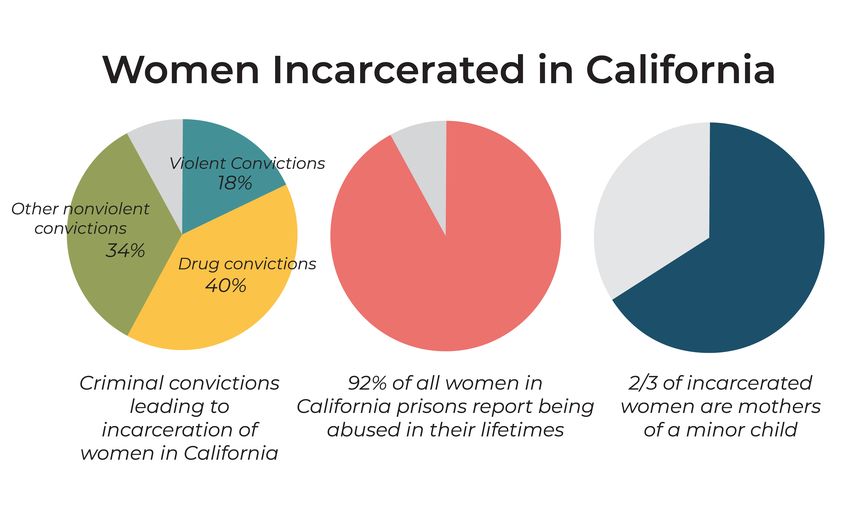
9   The People’s Plan for Prison Closure | CURB

California Must Close
State-Owned Prisons                                                                                    03
Prisons Are
Public Health Disasters
The consequence of caging human beings is                          reported the the highest suicide rate (26.3 per
lethal. Although Governor Gavin Newsom                             100,000) since the recording of annual frequency
ordered a moratorium on the death penalty in                       began back in 1990.16 The suicide rate in
2019, people are still dying in California-owned                   California prisons was nearly 80 percent higher
cages.                                                             than the national average, and according to the
                                                                   US Supreme Court, over 72 percent of suicides
People in state prisons die early, and they are                    in California’s prisons were “most probably
more vulnerable to dying from chronic conditions                   foreseeable and/or preventable.”17
like cancer, heart disease, liver disease, and
respiratory disease.14 It’s said that each year of                 The mortality rate in California state prisons
life served in prison decreases an individual’s life               increased by 41 percent (from 183 to 258 per
expectancy by two years.                                           100,000 incarcerated people) from 2001 to 2016.
                                                                   During this same period, California accounted for
Another leading cause of death in prison is                        11 percent of the nation’s state prisons deaths.18
suicide. Incarcerated people diagnosed with                        This crisis is further exacerbated by infectious
serious mental health disorders account for a                      disease pandemics like COVID-19.
third of the total state prison population, and
receive 12 percent longer sentences on average                         The mortality rate in
across all conviction categories.15 Draconian
sentencing laws have been a sure pathway to                            California state prisons
death by incarceration for many. Since 2000,                           increased by 41% from 2001 to
the prevalence of incarcerated people being                            2016.
treated for “serious mental disorders” (e.g.
schizophrenia, psychotic, and bipolar disorders)
has increased by 150 percent. In 2018, CDCR

  14   Widra, Emily. “Deaths in state prisons are on the rise, new data shows. What can be done?” Prison Policy Initiative,
  February 13, 2020. https://www.prisonpolicy.org/blog/2020/02/13/prisondeaths/ (accessed February 22, 2021).

  15     Stanford Justice Advocacy Project. The Prevalence and Severity of Mental Illness Amongst California Prisoners On the
  Rise. 2017. https://law.stanford.edu/wp-content/uploads/2017/05/Stanford-Report-FINAL.pdf (accessed February 22, 2021).

  16    Report on Suicide Prevention and Response within the California Department of Corrections and Rehabilitation. October 1,
  2019. https://cchcs.ca.gov/wp-content/uploads/sites/60/MH/CDCR-2018-SB-960.pdf (accessed February 22, 2021).

  17     Stanford Justice Advocacy Project. The Prevalence and Severity of Mental Illness Amongst California Prisoners On the
  Rise. 2017. https://law.stanford.edu/wp-content/uploads/2017/05/Stanford-Report-FINAL.pdf (accessed February 22, 2021).

  18    Carson, E. Ann and Mary P. Cowhig. Mortality in State and Federal Prisons, 2001-2016 - Statistical Tables. US Department
  of Justice, Bureau of Justice Statistics, February 2020. https://www.bjs.gov/content/pub/pdf/msfp0116st.pdf (accessed
  February 22, 2021).
10    The People’s Plan for Prison Closure | CURB

                               The consequence of
                      caging human beings is lethal.

As of February 25, 2021, CDCR reported 49,000+                    Sitting in any of the 34 California state-owned
confirmed COVID-19 cases with 211 deaths.                         prisons, thousands of people remain in danger
Testing rates at some individual prisons in the                   of foreseeable (and often preventable) illnesses
previous 14 days were as low as six percent of                    and deaths in CDCR. This includes the more than
their total population. This low testing rate could               6,000 people sentenced to death or life without
dramatically underestimate the true number of                     parole (LWOP), in addition to many others with
total CDCR COVID-19 cases.19                                      virtual life sentences under term enhancements.

   People who have been
   diagnosed with serious mental
   health disorders account for
   1/3 of the total state prison
   population.

  19     California Department of Corrections and Rehabilitation. “Population COVID-19 Tracking.”
  https://www.cdcr.ca.gov/covid19/population-status-tracking/ (accessed February 25, 2021).
11 The People’s Plan for Prison Closure | CURB
Prisons Are
Environmental Hazards
The physical and psychological devastation remain. According to State Water Resources
caused by prisons is intensified by persistently Control Board records, since 1993 state regulators
unaddressed environmental hazards including have cited California prisons at least 199 times for
toxic water quality, poor air quality, and soil violating drinking water standards.22
fungus that causes the lung infection Valley
Fever, all exacerbating threats to life.
High Desert State Prison
At least 21 state prison water sources are toxic (HDSP) provides tap water
and unsafe for human consumption, yet people
who are incarcerated in these prisons–more often that contains levels of arsenic
than not–have no other option but to drink and 2,264 times higher than what
shower in contaminated water. Unaddressed is considered to be safe for
water toxicity issues plaguing California state
prisons include high nitrate levels, which can be
human health.
fatally toxic; Helicobacter pylori, which is linked
While the majority of incarcerated people in
to stomach ulcers and stomach cancer; and
California suffer without clean water, others are
Legionnaires’ disease, which has caused at least
smothered in toxic air and exposed to Valley
four recorded deaths in California prisons in the
Fever. Valley Fever is an infection caused by a
last decade.20
fungus in the soil of the Southwestern United
States and parts of Mexico23 that is contracted
Some prisons stand out for their particularly
when a person breathes in microscopic fungal
egregious violations of human rights. High Desert
spores from the air. While 60 percent of those
State Prison (HDSP), for example, provides tap
affected are asymptomatic, 40 percent experience
water that contains levels of arsenic that are
a range of symptoms including fever, cough, chest
2,264 times higher than what is considered to
pain, shortness of breath, and, if the infection
be safe for human health. HDSP has been cited
spreads outside the lungs, skin rashes, bone
over a dozen times for their arsenic levels, in
lesions, and inflammation of the heart and/or
addition to radium levels that are 13 times higher
brain.24
than health recommendations,21 yet the problems
20 Dannenberg, John E. “Prison Drinking Water and Wastewater Pollution Threaten Environmental Safety Nationwide.” IWW
Environmental Unionism Caucus, November 17, 2007 https://www.prisonlegalnews.org/news/2007/nov/15/prison-drinking-
water-and-wastewater-pollution-threaten-environmental-safety-nationwide/ (accessed February 22, 2021); Venteicher, Wes.
“Legionnaires’ Disease Confirmed in Dead Stockton Prison Inmate.” Sacramento Bee, March 26, 2019. https://www.sacbee.
com/news/politics-government/the-state-worker/article228460594.html (accessed February 11, 2021).
21 Environmental Working Group. CDCR - High Desert State Prisons. https://www.ewg.org/tapwater/system.
php?pws=CA1805004 (accessed February 22, 2021).
22 Sabalow, Ryan, Kasler, Dale, and Wes Venteicher. “Toxic water in California prisons: Sickening inmates and costing
taxpayers millions.” Sacramento Bee, May 3, 2019. https://www.sacbee.com/news/politics-government/capitol-alert/
article229294374.html (accessed February 11, 2021).
23 Crum NF, Lederman ER, Stafford CM, et al. Coccidioidomycosis: a descriptive survey of a reemerging disease. Clinical
characteristics and current controversies. Medicine. 2004;83(3):149-175. https://pubmed.ncbi.nlm.nih.gov/15118543/ (accessed
February 15, 2021).
24 Ruddy BE, Mayer AP, Ko MG, et al. Coccidioidomycosis in African Americans. Mayo Clinic Proceedings. 2011;86(1):63-69.
https://www.ncbi.nlm.nih.gov/pmc/articles/PMC3012635/ (accessed February 11, 2021).12 The People’s Plan for Prison Closure | CURB
Currently, sixteen state prisons are located in Environmental injustice is not limited to those
California’s Central Valley, an area known for its inside prison walls. California prisons also have
toxic air. In the early 1990s, four new California a well-documented history of poisoning local
prisons were built in counties with the highest ecosystems and waterways, posing detrimental
Valley Fever contraction rates.25 Since 2005, impacts on the health of Californians in prison
4,000 imprisoned people in California have been towns. This includes the dumping of a mixture
diagnosed with Valley Fever, causing at least 53 of industrial waste, sewage, gray water, and
deaths.26 In 2015, a federally-ordered screening stormwater that contains Volatile Organic
found that eight percent of imprisoned people in Compounds (VOCs) and Semivolatile Organic
California tested positive for Valley Fever.27 Compounds (SOCs) into Mule Creek;29 the
discharging of toxic water into streams that
Studies also show that Black patients with Valley feed into the Sacramento-San Joaquin Delta by
Fever are 14 times more likely than white patients Deuel Vocational Institute (DVI) in Tracy;30 and
to suffer from an infection that spreads outside numerous wastewater spills by Folsom State
the lungs.28 These statistics underscore that Prison31 and California Men’s Colony (CMC)
California’s state prison system is perpetuating in San Luis Obispo. California prisons have a
environmental racism by caging Black people ruinous effect on the environment, individuals,
and people of color at disproportionate rates and and entire communities.
forcing them to survive in toxic and unhealthy
environments.
Black patients with Valley
Fever are 14 times more likely
than white patients to suffer
from an infection that spreads
outside the lungs.
25 Bayles, Cara. “Behind Bars on Polluted Land: Do American prisoners suffer from environmental discrimination?” The
Atlantic, May 24, 2016. https://www.theatlantic.com/health/archive/2016/05/behind-bars-on-polluted-land/484202/
(accessed February 22, 2021).
26 Gilna, Derek. “California Tests State Prisons for Valley Fever Amid Lawsuits, Deaths.” Prison Legal News, June 3, 2015.
https://www.prisonlegalnews.org/news/2015/jun/3/california-tests-state-prisoners-valley-fever-amid-lawsuits-deaths/
(accessed February 25, 2021).
27 Bayles, Cara. “Behind Bars on Polluted Land: Do American prisoners suffer from environmental discrimination?” The
Atlantic, May 24, 2016. https://www.theatlantic.com/health/archive/2016/05/behind-bars-on-polluted-land/484202/
(accessed February 22, 2021).
28 Ibid.; Ruddy BE, Mayer AP, Ko MG, et al. Coccidioidomycosis in African Americans. Mayo Clinic Proceedings. 2011;86(1):63-
69. https://www.ncbi.nlm.nih.gov/pmc/articles/PMC3012635/ (accessed February 11, 2021).
29 Mitchell, Jack. “Sewer and Water-Quality Issues - a Widespread Issue Across California Prisons.” Ledger Dispatch,
December 15, 2018. http://www.ledger.news/news/local_news/sewer-and-water-quality-issues-a-widespread-issue-across-
california-prisons/article_8e721282-ff1c-11e8-ad8a-93e1f0c7276a.html (accessed February 22, 2021).
30 Tsolkas, Panagioti. “California Prison Spends $417,000 on Bottled Water as Contamination, VIolations Continue.” Prison
Legal News, August 7, 2018. https://www.prisonlegalnews.org/news/2018/aug/7/california-prison-spends-417000-bottled-
water-contamination-violations-continue/ (accessed February 22, 2021).
31 Ortiz, Edward. “City of Folsom smokes out sewer leaks.” Sacramento Bee, March 11, 2015. https://www.sacbee.com/
news/local/article13652915.html (accessed February 11, 2021).13 The People’s Plan for Prison Closure | CURB
Prisons Are
Prisons Are Systemically Racist
Systemically Racist
CA General
Population
CA Prison
Population
Brown & Black people are
disproportionately incarcerated.
Black Black
6.5% 28%
Black people–as well as Latinx and Indigenous life without parole (LWOP) and other extreme
people–face continuous generational damage sentences, accounting for nearly 68 percent
to their families and communities because of of people serving these death sentences.35 The
California’s racist system of imprisonment. In proportion of Black and Brown people who are
2017, the rate of imprisonment of Black men in prison on death row and serving LWOP and
in California was ten times that of white men, other draconian sentences exposes the enforced
worse than Mississippi, which has a disparity of disposability and expendability of Black and
three to one, and Louisiana, which has a disparity Brown lives in our cities, state, and country.
of four to one.32 According to the US Census
Bureau, Black people make up approximately 6.5 Systemic racism ensures the Black community
percent of California’s population;33 however, in (as well as Indigenous and Brown people) are
December 2018, they made up 28.5 percent of disproportionately subjected to long sentences,
California’s prison population.34 representing less than 15 percent of the national
population, but comprising as much as as much
The Exceptions Clause of the 13th Amendment to as 55 percent of people serving actual and virtual
the US Constitution, subsequent Jim Crow laws, life sentences. To effectively confront racism
and similar forms of criminalization, transformed and our incarceration addiction, California must
prisons to resemble the enslavement-dependent invest in healthy communities that center care
industries of the South, with exploitation along and offer equity, resources and healing as the
similar racial lines. Black, Latinx, and multiracial cornerstones of public safety–not revenge and
people overwhelmingly make up the majority unending punishment.
of people on death row and those sentenced to
32 Nellis, Ashley. The Color of Justice: Racial and Ethnicl Disparity in State Prisons. The Sentencing Project, June 14, 2016.
https://www.sentencingproject.org/publications/color-of-justice-racial-and-ethnic-disparity-in-state-prisons/ (accessed
March 15, 2021).
33 United States Census Bureau. “QuickFacts: California” https://www.census.gov/quickfacts/CA (accessed February 11,
2021).
34 California Department of Corrections and Rehabilitation. “Offender Data Points for the 24-month Period Ending in June
2018.” Division of Correctional Policy Research and Internal Oversight Office of Research, January 2019. https://www.cdcr.
ca.gov/research/wp-content/uploads/sites/174/2019/08/DataPoints_062018.pdf (accessed February 11, 2021).
35 Jackman, Tom. “Study: 1 in 7 US prisoners is serving life, and two-thirds of those are people of color.” Washington Post,
March 2, 2021. https://www.washingtonpost.com/nation/2021/03/02/life-sentences-growing/ (accessed March 10, 2021)14 The People’s Plan for Prison Closure | CURB
Prisons Endanger
Our Economy
Let’s talk about
general fund and special funds close to $3
billion, totaling just over $16 billion of state
budgets. funding for corrections. This is one of the highest
expenditures of its kind in the country.39
California’s longtime partiality to punishment
as an answer to public safety has revealed that The general fund includes $1.4 billion to
spending on corrections is a wasteful investment support local community Corrections, nearly
of taxpayer dollars. California’s own Penal Code $500 million for enhancing law enforcement
affirms that “criminal justice policies that rely on activities and growth, and about $1 billion to
building and operating more prisons to address the Board of State and Community Corrections
community safety concerns are not sustainable, (BSCC), a significant increase to the amount
and will not result in improved public safety.”36 allocated to the agency last year. This includes
a one time allocation for $12.1 million to county
While California struggles through reforming probation departments–despite their historic
its penal system–and a global pandemic–prison mismanagement–to “support” the expedited
budgets continue to rise and spending for release of some individuals from prison as related
public health remains desperately underfunded, to the COVID-19 pandemic.
impacting the most marginalized communities.
For example, years of budget cuts to public The state prison population has gone from
health led to the elimination of more than 55,000 200 percent of design capacity to just below
positions within local health departments from the court-ordered cap of 137.5 percent, as of
2008 through 2017.37 2019. The relentless activism of the community
during the pandemic freed people and saved
If the state is truly decreasing its reliance on lives, contributing to the prison population’s 20
punitive answers to public safety, then why percent reduction. However, many of these so-
has the Corrections budget increased from called “reductions’’ are due to COVID-19 safety
$8.9 billion (2012-2013) to this coming year’s guidelines that placed a hold on transferring
proposed $13.1 billion? This figure is also people from county cages to state-owned cages.
misleading, because CDCR plans to spend a lot
more. On February 11, 2021, CDCR official Chris Lief
(Deputy Director of Facility Planning) faced
Governor Newsom’s 2021-22 proposed budget deserved scrutiny by the Senate Subcommittee
for Corrections38 includes $13.1 billion in the 5 as he struggled to answer even the most basic
36 Cal. Penal Code § 17.5(a)(3)
37 Johnson, Steven Ross. “Report: Public Health funding falls despite increasing threats.” Modern Healthcare, April 24, 2019.
https://www.modernhealthcare.com/government/report-public-health-funding-falls-despite-increasing-threats (accessed
March 10, 2021).
38 Newsom, Gavin. Governor’s Budget Summary, 2021-22: Criminal Justice. January 2021. http://ebudget.ca.gov/2021-22/
pdf/BudgetSummary/CriminalJustice.pdf (accessed March 15, 2021).
39 Cruz, Ingrid. Policing and Corrections Spending by State. MoneyGeek, February 2021. https://www.moneygeek.com/
living/state-policing-corrections-spending/ (accessed March 15, 2021).15 The People’s Plan for Prison Closure | CURB
questions about CDCR’s proposed infrastructure This is not our–or anyone else’s–
repairs at various facilities: toxic water supplies definition of a responsible budget.
contaminated with arsenic and manganese at
Valley State Prison (VSP) and Central California Prisons and CDCR infrastructure costs are
Women’s Facility (CCWF); expensive capital bottomless pits of wasteful spending. It’s clear
projects at multiple institutions; as well as CDCR has no plan for prison closure. It’s well
opaque–or nonexistent–plans to close prisons past time to deny any increases to the Corrections
in California as instructed to by Governor budget for infrastructure needs. We care very
Newsom.40 much for people living in unsafe prisons, but
state officials continue to fail to do what will
During the proceedings, Chair María Elena actually protect people in prisons and provide
Durazo (D–CA) accused CDCR of leaving the public safety–investing in communities and
legislature “in the dark” as they requested billions releasing people from dilapidated, poisonous
for prison projects without giving the “full prisons and jails.
picture” necessary for the legislators to make
responsible decisions.
It was a revelation to all that CDCR–and the
Newsom administration itself–has no specific,
overarching plans for prison closure, despite
the Governor’s statements on the issue and the
nonpartisan Legislative Analyst’s Office (LAO)
report that outlines $1.5 billion in savings if
California could close five prisons by 2025.41 A budget reveals
what we truly value.
The LAO also questioned CDCR’s fiscal analysis.42
They explained that while CDCR reported a
repair backlog of approximately $1 billion, the A budget reveals what we truly value. California
actual cost for prison repair projects would must redefine its priorities and completely
actually be closer to $13 billion. In addition to reexamine its relationship with justice and safety
this backlog, the LAO reports that according to prioritize care. Divestment from ineffective,
to an in-depth assessment conducted by an punitive responses to harm–like prisons–is
external contractor, an additional $11 billion necessary in order to reallocate resources toward
in capital outlay would be required to maintain community-based answers to public safety
the 12 oldest prisons, plus additional billions to and provide a sustainable fiscal future for all
maintain the remaining facilities.43 Californians.44
40 Nguyen, Linhchi. “Lawmakers, Watchdogs Criticize CDCRs Inability to Explain Multi-Billion Dollar Prison Infrastructure
Plan.” Davis Vanguard, February 19, 2021. https://www.davisvanguard.org/2021/02/lawmakers-watchdogs-criticize-cdcrs-
inability-to-explain-multi-billion-dollar-prison-infrastructure-plan/ (accessed March 15, 2021).
41 Venteicher, Wes. “California should close 5 prisons to save money after releasing 25,000 inmates, analyst says.”
Sacramento Bee, November 19, 2020. https://www.sacbee.com/article247304129.html (accessed March 15, 2021).
42 Nguyen, Linhchi. “Lawmakers, Watchdogs Criticize CDCRs Inability to Explain Multi-Billion Dollar Prison Infrastructure
Plan.” Davis Vanguard, February 19, 2021. https://www.davisvanguard.org/2021/02/lawmakers-watchdogs-criticize-cdcrs-
inability-to-explain-multi-billion-dollar-prison-infrastructure-plan/ (accessed March 15, 2021).
43 O’Neil, Caitlin. The 2020-21 Budget: Effectively Managing State Prison Infrastructure. Legislative Analyst’s Office, February
28, 2020. https://lao.ca.gov/reports/2020/4186/prison-infrastructure-022820.pdf (accessed February 22, 2021)
44 Cowan, Jill. “Why Los Angeles Officials Voted to Cancel an Almost $2 Billion Contract.” New York Times, August 15, 2019.
https://www.nytimes.com/2019/08/15/us/los-angeles-jails.html (accessed February 22, 2021).16 The People’s Plan for Prison Closure | CURB
California Must
Release More
People From Prisons
04
Free 50,000
Incarcerated People
In June 2020, after visiting San Quentin and prison population to slightly less than 100,000
recording a startling range of unsafe conditions, people by November 2020 (not including those
a team of University of California health experts held in county jails who await transfer to a state
concluded that the prison should be substantially facility). However, despite continued efforts to
emptied, its population reduced by 50 percent.45 free people in prison who face chronic illness or
The First District Court of Appeal in California death from COVID-19, expedited releases have
agreed, writing that CDCR had shown “deliberate virtually stopped. Between July 10th and August
indifference” to incarcerated people during 9th 2020, more than 4,000 people in prison were
the COVID-19 pandemic and consistently took released (according to court documents).47
inadequate steps to protect their health. The
lack of urgency exhibited around the pandemic’s Between August 9th and November 30th 2020,
impact in state prisons by CDCR and government CDCR released fewer than 450 people from
officials, the court wrote, is “morally indefensible prison, some sources report.48 Statewide, the
and constitutionally untenable.” The court cited number of infected incarcerated people increased
the Eighth Amendment, which prohibits cruel 130 percent the week of December 12th, 2020,
and unusual punishment.46 logging 3,684 new cases, with one facility’s
(California Substance Abuse Treatment Facility
Months of unrelenting pressure from health in Corcoran) infection rate rising to 2.5 times
and human rights activists since mid-March the average at California’s other prisons, and 17
2020 moved system actors to reduce California’s times that of the state’s free population.49 Now
more than 49,000 people in prison—in excess
45 Fagone, Jason. “California could cut its prison population in half and free 50,000 people. Amid pandemic, will the state
act?” San Francisco Chronicle, August 14, 2020. https://www.sfchronicle.com/culture/article/Can-California-cut-its-prison-
population-in-half-15482084.php (accessed February 11, 2021).
46 Griesbach, Rebecca and Timothy Williams. “San Quentin Ordered to Reduce Prison Population by Half Over Virus Fears.”
New York Times, October 21, 2020. https://www.nytimes.com/2020/10/21/us/san-quentin-prison-coronavirus.html (accessed
February 11, 2021).
47 Amended Joint Case Management Conference Statement at 1, Plata v. Newsom, (N.D. Cal. Nov 11, 2020). https://
calmatters.org/wp-content/uploads/2020/11/Dkt-3487-PLATA-Amended-Joint-CMC-Statement_11.18.20_0489.OVR_-2.pdf
(accessed February 11, 2021).
48 Lyons, Rhonda. “COVID-19 infections hit record high in California prisons.” CalMatters, November 30, 2020. https://
calmatters.org/justice/2020/11/california-prisons-covid/ (accessed February 11, 2021).
49 Winton, Richard and Anita Chabria. “Coronavirus numbers for inmates soar across the state.” Los Angeles Times,
December 12, 2020. https://www.latimes.com/california/story/2020-12-12/soaring-coronavirus-numbers-for-inmates-and-
staff-at-state-substance-abuse-prison-leads-to-six-deaths (accessed February 11, 2021).17 The People’s Plan for Prison Closure | CURB
of 50 percent—have tested positive for COVID-19. are the only defense is unconscionable. History
At least 211 incarcerated people have died from will judge our collective moral and public health
COVID-19.50 failures.
In January 2021, the union for California state If and when California prisons reach the dubious
correctional officers—the California Correctional status of “herd immunity” from COVID, it is
Peace Officers Association (CCPOA)—invited ultimately meaningless. Prisons are notorious
staff members from every prison to gather in petri dishes55 for infection. The novel coronavirus
Las Vegas,51 defying a statewide ban on non- will not be the last pandemic the US faces
essential travel and threatening the health of during our lifetime;56 it may not even be the
everyone in their communities. While this event worst. The status quo in all California prisons is
was ultimately canceled, it was the latest example unsustainable in a changing world.
of CDCR’s continued ineptitude and gross
negligence. Incarcerated people–who have no Given the present prison population, California
ability to social distance and must fight for access must immediately release at least 50,000 people
to water, soap, hand sanitizer and masks52– in the interest of public health, prioritizing
struggle against both the virus and their jailers to individuals over age 55 and those who are
stay safe. medically vulnerable. This is not a radical idea.
In fact, this number is low. It reflects only one,
specific decarceration strategy: a direct response
More than 50% of incarcerated to the COVID-19 pandemic, irrespective of the
people in California have other basic, universally acknowledged reasons
tested positive for COVID-19. why we must reduce prison populations, such as
systemic racism.
Statistics about COVID-19 infection rates
inside California prisons are dizzying, often Prison closures must go hand in hand with
inaccurate, and seem to worsen daily.53 The fact multiple strategies for mass releases. Releasing
that California’s prisons remain at well over 100 50,000 people from prison is the floor, not the
percent capacity54 during a global pandemic for ceiling. The same logic used by the experts cited
which social distancing and personal hygiene in the San Quentin court decision would apply
to all overcrowded state prisons and jails.57 In
50 California Department of Corrections and Rehabilitation. “Population COVID-19 Tracking.” https://www.cdcr.ca.gov/
covid19/population-status-tracking/ (accessed February 25, 2021).
51 Venteicher, Wes. “Update: California prison union headed to Las Vegas for board meeting amid COVID-19 surge.”
Sacramento Bee, January 7, 2021. https://www.sacbee.com/news/politics-government/the-state-worker/article248318735.
html (accessed February 11, 2021).
52 Jarosz, Brooks. “Inmates: ‘inhumane conditions’ at California prison amid COVID-19.” Fox KTVU, May 27, 2020.
https://www.ktvu.com/news/inmates-inhumane-conditions-at-california-prison-amid-covid-19 (accessed February 11, 2021).
53 Clayton, Abené. “‘People are terrified’: a coronavirus surge across California’s prisons renews calls for releases.” The
Guardian, December 29, 2020. https://www.theguardian.com/us-news/2020/dec/29/california-coronavirus-cases-prison-
system (accessed February 11, 2021).
54 California Department of Corrections and Rehabilitation. “Weekly Report of Population as of Midnight January 20, 2021.”
Division of Correctional Policy Research and Internal Oversight, Office of Research. https://www.cdcr.ca.gov/research/wp-
content/uploads/sites/174/2021/01/Tpop1d210120.pdf (accessed February 11, 2021).
55 Yan, Holy. “Prisons and jails across the US are turning into ‘petri dishes’ for coronavirus. Deputies are falling ill, too.” CNN,
April 10, 2020. https://www.cnn.com/2020/04/09/us/coronavirus-jails-prisons/index.html (accessed February 11, 2021).
56 McLaughlin, Kelly. “WHO chief warns that COVID-19 won’t be the world’s last pandemic as he tells countries to prepare
for future emergencies.” Business Insider, December 27, 2020. https://www.businessinsider.com/who-chief-warns-covid-19-
wont-be-worlds-last-pandemic-2020-12 (accessed February 11, 2021).18 The People’s Plan for Prison Closure | CURB
History will judge our collective
moral and public health failures.
fact, a second judge in Orange County recently ordered a 50 percent reduction in their county jail
population.58
Decarcerating roughly half of the current prison population is the only reasonable response to
the public health threat of viruses like COVID-19–a threat that prisons will continue to pose to
all Californians until they are permanently shut down.59 We must act now and prioritize mass
releases before the next, inevitable tragedy strikes our extremely vulnerable prison population and
surrounding communities.
57 Fagone, Jason. “California could cut its prison population in half and free 50,000 people. Amid pandemic, will the state
act?” San Francisco Chronicle, August 14, 2020. https://www.sfchronicle.com/culture/article/Can-California-cut-its-prison-
population-in-half-15482084.php (accessed February 11, 2021).
58 De Leon, Kristine and Chip Yost. “Court orders 50% reduction at Orange County jails due to COVID-19.” KTLA5, December
11, 2020. https://ktla.com/news/local-news/court-orders-50-reduction-at-orange-county-jails-due-to-covid-19/ (accessed
February 11, 2021).
59 Ollove, Michael. “How COVID-19 in Jails and Prisons Threatens Nearby Communities.” PEW, July 1, 2020. https://www.
pewtrusts.org/en/research-and-analysis/blogs/stateline/2020/07/01/how-covid-19-in-jails-and-prisons-threatens-nearby-
communities (accessed February 11, 2021).19 The People’s Plan for Prison Closure | CURB
Release Elders and
Medically Vulnerable People
On any given day, 37 percent of the total That’s over 30,000 people.63
California prison population (as much as 37,000
people in January of 2021) have at least one California must end extremely long sentences,
underlying condition that the US Center for most of which are being served by people who
Disease Control and Prevention (CDC) says puts statistically pose minimal risk of rearrest.
them at risk for complications from a serious Incarcerated people over the age of 50 tend to
viral illness, such as COVID-19.60 have low rates of recidivism and high rates of
parole success.64 For people 55-59 years old, the
The growing number of older adults61 in national arrest rate is around 0.14 percent. It is
California prisons is alarming as well, not only estimated that it costs two to three times more
because they are considered a higher medical to incarcerate elderly people than non-elderly
risk.62 Aging prison populations are due in large individuals, with most costs deriving from their
part to draconian sentencing laws that have expensive medical care.65
ravaged entire generations of marginalized
communities. As of June 2019, nearly one in four Compassionate releases for medically vulnerable
people in California prisons is age 50 or older, or individuals in prison (such as those who suffer
24 percent of the total prison population. from diabetes; chronic obstructive pulmonary
disorder; other lung conditions; high blood
24% of the total prison pressure; and those with cancer)66 and
incarcerated people over age 50 will save lives
population is over 50. and reduce the need to provide complex medical
60 Cruz, Mimi Ko. “The Pandemic Experience in Prisons.” UCI School of Social Ecology, September 9, 2020. https://
socialecology.uci.edu/news/pandemic-experience-prison (accessed March 15, 2021); Sugie, Naomi, Reiter, Keramet, and
Kristin Turney. “California needs to protect its prison staff and inmates during COVID-19 pandemic.” CalMatters, May 30, 2020.
https://calmatters.org/commentary/california-needs-to-protect-its-prison-staff-and-inmates-during-covid-19-pandemic/
(accessed March 15, 2021); Li, Weihua and Nicole Lewis. “This Chart Shows Why the Prison Population is so Vulnerable to
COVID-19.” The Marshall Project, March 19, 2020. https://www.themarshallproject.org/2020/03/19/this-chart-shows-why-the-
prison-population-is-so-vulnerable-to-covid-19 (accessed March 15, 2021).
61 Booker, Meredith. “BJS data shows graying of prisons.” Prison Policy Initiative, May 19, 2016. https://www.prisonpolicy.
org/blog/2016/05/19/bjsaging/ (accessed February 11, 2021).
62 National Council on Aging. “NCOA Statement: Congress Must Protect Old Adults from COVID-19.” [Press Release] March 3,
2020. https://www.ncoa.org/article/ncoa-statement-congress-must-protect-older-adults-from-covid-19 (accessed February
11, 2021).
63 California Department of Corrections and Rehabilitation. Offender Data Points: Offender Demographics for the 24-Month
Period Ending June 2019. Office of Research, October 2020. https://www.cdcr.ca.gov/research/wp-content/uploads/
sites/174/2020/10/201906-DataPoints.pdf (accessed February 11, 2021).
64 California Department of Corrections and Rehabilitation. 2013 Outcome Evaluation Report. Office of Research, January
2014. https://web.archive.org/web/20160710214750/http://www.cdcr.ca.gov/Adult_Research_Branch/Research_Documents/
Outcome_Evaluation_Report_2013.pdf (accessed February 22, 2021).
65 Legislative Analyst’s Office. Elderly Inmates in California Prisons. May 11, 2010. http://www.lao.ca.gov/handouts/
crimjust/2010/Elderly_Inmates_05_11_10.pdf (accessed February 22, 2021).
66 The Justice Collaborative, et al. “Letter to Governor Newsom - CDCR and COVID 19.” March 13, 2020. https://
thejusticecollaborative.com/wp-content/uploads/2020/03/Letter-to-Governor-Newsom_CDCR_COVID_19-1.pdf (accessed
February 22, 2021).20 The People’s Plan for Prison Closure | CURB
For people 55-59 years old, the
national arrest rate is around
0.14% and parole success is high.
It costs 2-3x times more to
incarcerate elderly people than
non-elderly individuals, with
most costs deriving from their
expensive medical care.
care or make transfers to hospitals during emergencies like a global pandemic, in which healthcare
workers inside and outside of prisons are stretched thin.
All persons aged 50 years and older who have served at least 15 years of their sentence, regardless
of their conviction type, should be eligible to petition for streamlined parole suitability hearings. In
addition, after any elderly parole hearing at which parole was denied, the Board of Parole Hearings
(BPH) should be required to schedule the next parole consideration within one or two years. The
parole of elders and people at high medical risk for illness or death will be an essential component of
prison population reduction and facility closure.21 The People’s Plan for Prison Closure | CURB
Abolish
Draconian Sentencing
As crime rates fell over the past two decades, The average age of a person sentenced to
the number of people sentenced to lengthy LWOP is 19 years old. This country is alone in
prison terms continued to rise. People were not comparable Western democracies in sentencing
inflicting more harm within their communities. youth to life in prison, with more than 7,000
The penal code became more harsh, condemning youth nationwide serving life sentences and
thousands upon thousands of people to unending another 2,000 serving virtual life prison terms
incarceration. of 50 years or more.68 LWOP confines people
behind bars for their entire lives with almost
California’s Three-strikes Law (1994, amended no chance for release, regardless of whether or
2012) as well as other sentence enhancements not they have demonstrated personal growth or
and special circumstances charges have driven present no current threat to our communities.
the proliferation of lengthy or life sentences,
some without the possibility of parole. People According to The Sentencing Project, between
are serving longer sentences because of added 1992 and 2017 the population of people serving
prison time due to mandatory minimums for LWOP in the US grew by 400 percent, from
previous felonies and/or the current charge; the 12,453 to over 50,000. Over 5,200 people are
use or presence of firearms; state identified gang now serving LWOP sentences in California state
affiliation (which is often racially biased); and prisons, one of the largest populations in the
elevated abettor convictions which encourage country. Virtually the only way a person currently
the maximum possible punishment. Increases serving LWOP has an opportunity for release is
to sentencing were implemented under an through a rare commutation by the Governor.
overzealous prosecutorial culture and the “tough
on crime” era. Ending LWOP, the most severe punishment
in California (alongside the other death
Between July 2018 and June 2019, only 3.2 penalty, capital punishment), is key to ending
percent of people serving life sentences were extremely long sentences and the culture of
released, and only 0.4 percent of people serving perpetual punishment. Our transformation of
“Third Strike’’ sentences were released.67 These punishment systems must address all forms of
and other “tough on crime” policies must sentences in order to meaningfully reduce our
be abolished and people impacted by these prison population, especially the most severe.
draconian sentences must have their cases LWOP, enhancements, Three-strikes, and other
reevaluated. This includes a population that is draconian tools of a bygone era have crowded
generally forgotten when discussing reprieve, prisons in California that are already over
people serving life without the possibility of capacity. California sentences one in four women
parole (LWOP). to life in prison, which is a higher proportion of
67 Note: According to a CDCR footnote, these numbers include people who died in prison. California Department of
Corrections and Rehabilitation. Offender Data Points: Offender Demographics for the 24-month Period Ending June 2019.” Office
of Research, October 2020. https://www.cdcr.ca.gov/research/wp-content/uploads/sites/174/2020/10/201906-DataPoints.
pdf (accessed February 22, 2021).
68 The Sentencing Project. Virtual Life Sentences. August 2019. https://www.sentencingproject.org/wp-content/
uploads/2019/08/Virtual-Life-Sentences.pdf (accessed February 22, 2021); Yoon, Hayne. “Back to School: A Common-Sense
Strategy to Lower Recidivism.” Vera Institute of Justice, September 19, 2019; https://www.vera.org/blog/back-to-school-a-
common-sense-strategy-to-lower-recidivism (accessed February 22, 2021).22 The People’s Plan for Prison Closure | CURB
The average age of a
person sentenced to
LWOP is 19 years old.
This country is alone* in sentencing youth to life
in prison, with more than 7,000 youth nationwide
serving life sentences and another 2,000 serving
virtual life prison terms of 50 years or more.
*In comparable Western democracies
women serving life sentences than anywhere else commutation or parole. In fact, few studies exist
in the country.69 that track all forms of extremely long sentences
and the breadth of their impact. The information
Women serving life sentences are found to have that is available is significant and indicative.
suffered the highest rates of traumatic abuse
prior to their incarceration. Through our lived
experience, we know that virtually everyone who
We must confront and
harms another person also reports enduring reverse a punishment
harm, with little opportunity for harm-addressing culture that has fueled
treatment that would center accountability
alongside healing, safety, and justice. We must
unprecedented levels of
interrupt these cycles of harm–ones that our imprisonment.
prisons have failed to disrupt and instead,
perpetuate further–with community-based We must confront and reverse a punishment
systems of care and an expansion of the social culture that has fueled unprecedented levels of
safety net. imprisonment. California should end all forms
of extended sentencing in the interest of public
We need more reliable data on how many health, fiscal responsibility, and to facilitate the
incarcerated California residents are impacted number of releases necessary for prison closure.
by all forms of draconian sentencing, as well as a
race and gender equity-based examination of all
factors–often arbitrary–that lead to long-term
sentences, and what factors undermine or enable
69 California Department of Corrections and Rehabilitation. Offender Data Points: Offender Demographics for the 24-month
Period Ending December 2018.” Office of Research, January 2020. https://www.cdcr.ca.gov/research/wp-content/uploads/
sites/174/2020/01/201812_DataPoints.pdf (accessed October 8, 2020).You can also read


