Overview of Foreign Language Transcription - Presented by: Patrick Janson, Foreign Language Committee, Chairperson 2020 - National Braille ...
←
→
Page content transcription
If your browser does not render page correctly, please read the page content below
Overview of
Foreign Language
Transcription

Presented by:
Patrick Janson, Foreign Language Committee, Chairperson 2020

© This material may not be reproduced without the written consent of the National Braille Association, Inc.
Don’t Be Afraid of
Foreign Language Braille!
We all get to a spot where we have an opportunity to try something new,
where fear, doubt and anxiety enter into the mind.
Don’t let foreign language braille live in that realm for you!
My journey into Foreign Language braille….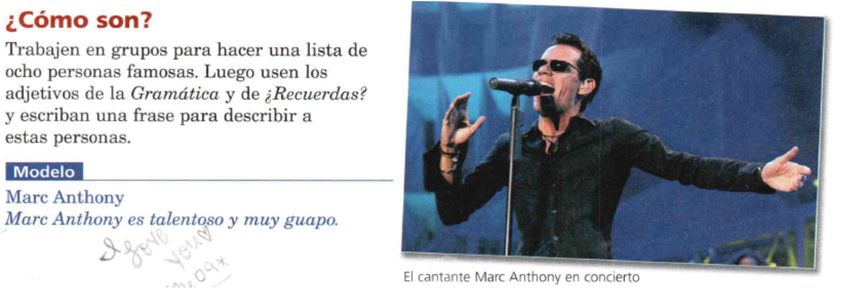
Foreign Language in Music Textbooks
Composer names I encountered almost immediately.
Béla Bartók
Edgard Varèse
György Ligeti
Antonin Dvořák
Witold Lutosławski
When I first got started in EBAE, there was only one method of handling these accents:
a dot 4 preceding the affected letter.
Now that we use the Rules of UEB as our guidebook, let’s look at some of that
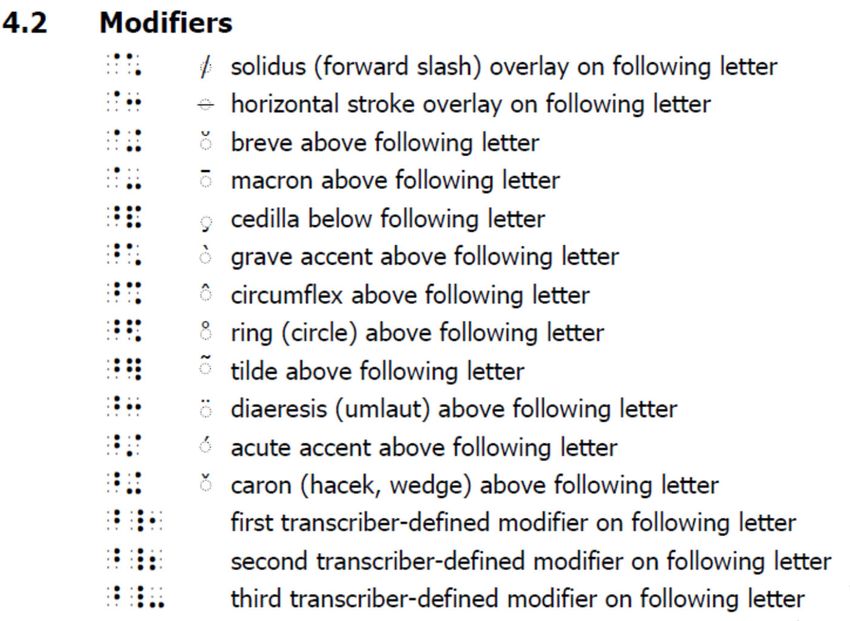
document.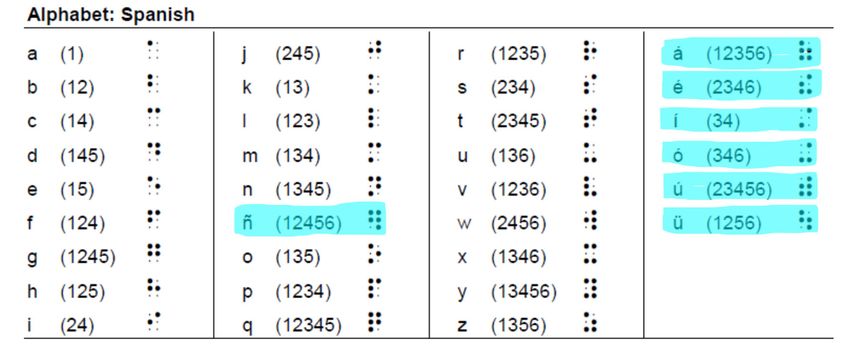
The Rules of UEB – p. 42
Back to Those Composer Names Béla Bartók ,B^/ELA ,B>T^/OK Edgard Varèse ,$G>D ,V>^*ESE Antonin Dvořák ,ANTON9 ,DVO^+R^/AK György Ligeti ,GY^3ORGY ,LIGETI Witold Lutosławski ,WITOLD ,LUTOS@*LAWSKI
What I Discovered Next in Music Braille
Transcriptions
It was decided by expert music braillists before me that when we transcribe
song lyrics in a foreign language, we use the foreign language letters from the
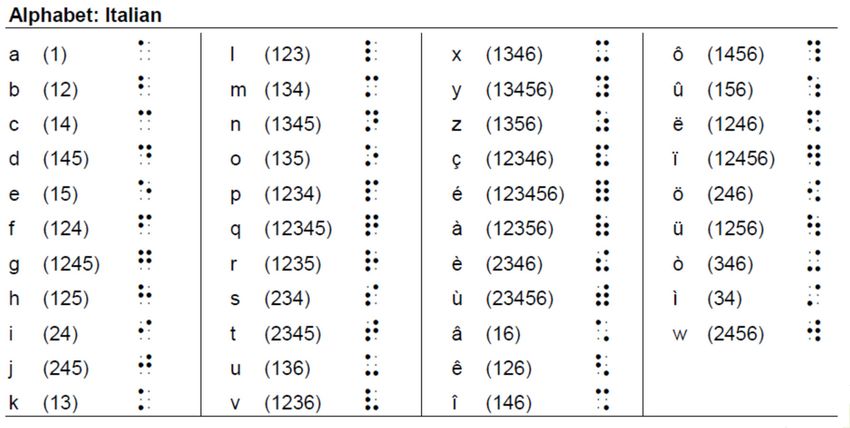
World Braille Usage document and not the UEB modifiers.
German
French
Italian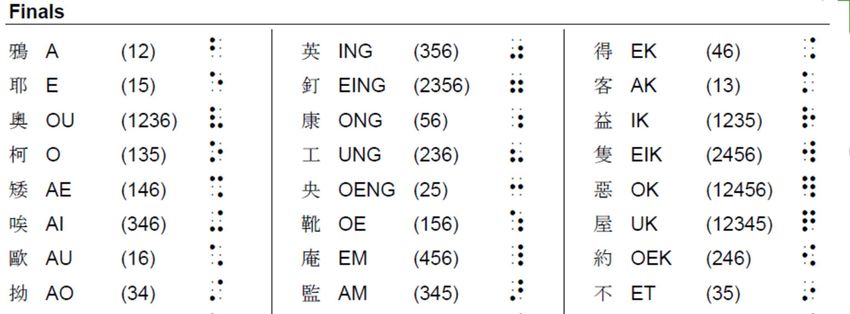
We All Have Our Own Journey Into
Foreign Language Braille
In this presentation, we’ll discuss the tools you’ll need to be successful in
your approach to foreign language materials. Those tools are:
The Provisional Guidance for Transcribing Foreign Language Material in UEB
(2015).
World Braille Usage (2013).
And, of course, The Rules of Unified English Braille (2013) and Braille Formats
(2016).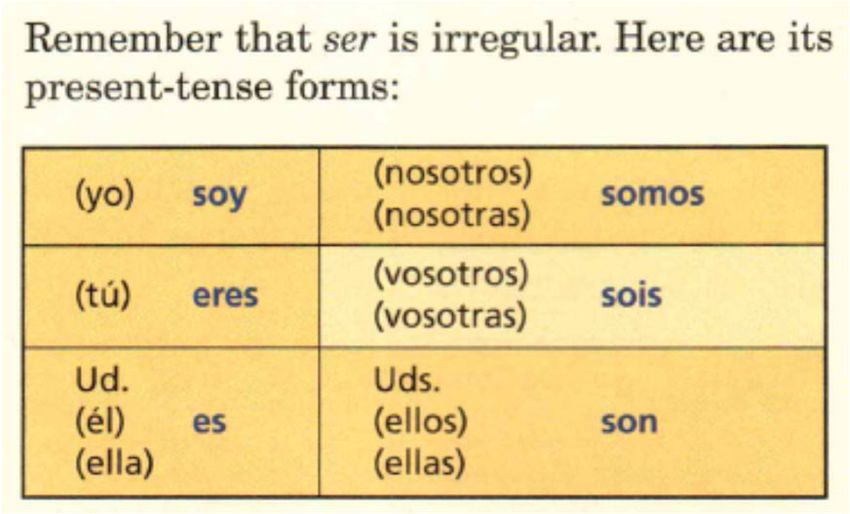
Let’s first look at the Provisional Guidance
for Transcribing Foreign Language Materials
in UEB, published 2015 by BANA
This document primarily covers four methods used to transcribe Foreign
Language Materials.
Method 1. UEB Accents and Contractions in Anglicized Words
Method 2. UEB Accented Letters in Uncontracted Words
Method 3. Using Foreign Language Signs for Accented Letters
Method 4. Using the Full Foreign Language Braille Code for the specific language.
It also has sections discussing Languages in Non-Roman Scripts, Old English,
Standard Usage for Educational Materials, and References for Foreign Language
Braille Codes.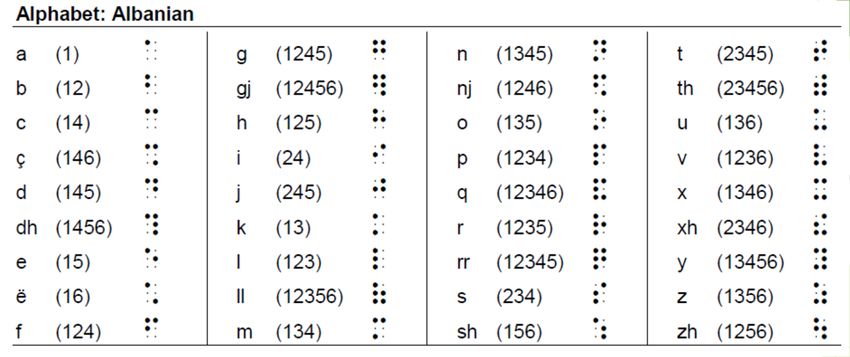
The Four Methods
The rules of Unified English Braille (UEB) allow a range of approaches for
transcribing foreign language text. These methods result in braille that is
appropriate for a variety of types of texts as well as for different groups of readers.
The Braille Authority of North America (BANA) recommends four general methods
that should be suitable to cover the majority of cases.
In general, follow the Braille Formats: Principles of Print to Braille Transcription,
2016 when creating foreign language texts. Also, review Section 13: Foreign
Language of The Rules of UEB, 2013.
Let’s now look at each method in detail…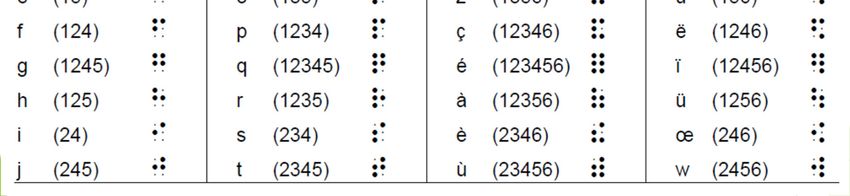
Method 1. UEB Accents and Contractions
in Anglicized Words
English has adopted many words that contain accent marks. In Method 1, any
foreign words or phrases that are commonly used in English and include
accented letters are transcribed (contracted) using the standard UEB rules
regarding modifiers.
Method 1 is appropriate when encountering the occasional foreign word or
short phrases, names, and titles that occur in material commonly written in
English. This method is especially appropriate for readers who are not likely
familiar with the special foreign language signs used in Methods 3 and 4.
In the case of extended pieces of foreign text (e.g., a whole paragraph), it is
permissible to transcribe using uncontracted braille, as in Method #2.UEB Modifiers Used in the Examples Ahead Cedilla ^& ç Grave accent ^* è Circumflex ^% û Acute accent ^/ é Umlaut ^3 ü
Examples of Method 1
I would like a salade niçoise and a crème brûlée please.

,I WD L A .1SALADE .1NI^&COISE & A
.1CR^*EME .1BR^%UL^/EE PL1SE4

Thomas Mann: Joseph in Egypt (Joseph in Ägypten), 1936

,?OMAS ,MANN3 .7,JOSEPH 9 ,EGYPT
"
Method 2. UEB Accented Letters and
Uncontracted Words
Using Method 2, it is permissible for any foreign words or phrases that include
accented letters and punctuation to be transcribed into uncontracted braille
following UEB Rule 13.2.1. This method would be appropriate for educational
materials for younger students who may benefit from seeing such words
without contractions.
First, determine if the word or phrase is actually foreign. Often foreign terms
will be shown in a different typeface, but a dictionary can also be consulted
to see if the term is English or not. English words included in the expression
should be uncontracted as well.
Use the UEB signs and accent marks as indicated in the UEB Rulebook,
Sections 4.2 and 13.5. The grade 1 indicator and code switch indicators are
not used.Modifiers Used in the Examples Ahead Spanish acute / í
Examples of Method 2
The announcement started: Lord Byron era un poeta muy conocido.

,! ANN\NCE;T />T$3 .7,LORD ,BYRON ERA UN
POETA MUY CONOCIDO4.'

The word "demonstrate" comes from the Latin demonstrare.

,! ^W 8DEMON/RATE0 COMES F ! ,LAT9
^1DEMONSTRARE4

I like comer aquí en Burger King.

,I L .7COMER AQU^/I EN ,BURGER ,KING4.'
Method 3. Using Foreign Language Signs for
Accented Letters
In this method, follow Section 13.6 in the UEB Rulebook. The foreign language
signs for accented letters are used as needed in foreign text, though all other
signs (e.g., punctuation) may be in UEB. Neither foreign contractions nor UEB
contractions are used in foreign words, though UEB contractions are used in
surrounding English words.
In the normal use of this method, UEB code switch indicators are not inserted
for the accented letters. For this to be viable, the distinction between English
text and foreign text needs to be sufficiently clear from the context (e.g.,
format or font change) so that the foreign accented letters are unlikely to be
mistaken by the reader for UEB contractions or other signs. In cases where
there is likely to be confusion, UEB code switch indicators can be used at that
specific point. However, this should be regarded as the exception when using
this method.
For the curious, the code switch indicators (used to enclose non-UEB
material) are "(' for opening and ,") for closing. Method 3 is appropriate for the foreign text in foreign language school
textbooks, foreign language school assessments, foreign language grammar
books and phrase books, bilingual dictionaries (e.g., English/French), etc. It
may also be appropriate for foreign language literature in which the
document is written entirely in that language.
For cases in which foreign language phrase books are expected to be used by
casual users (e.g., for vacations abroad), it may be more appropriate to use
Method 1 or Method 2 because they do not require the reader to know or to
be informed of special braille signs.Modifiers used in Examples Ahead
French
e acute = é
a grave ( à
o circumflex ? ô
Spanish
inverted question mark ^;8 ¿
o acute + ó
n with a tilde ] ñExamples in Method 3 Finish your postcard by writing Amitiés (Best wishes) or à Bientôt (see you soon) or Affectueusement (love) and sign your name. ,F9I% YR PO/C>D BY WRIT+ .1,AMITI=S "
Method 4. Using the Full Foreign Language
Braille Code
Method 4 uses the full braille code of a specific country. This method requires
the transcriber to be fluent in the specific language and to know the braille
code for that language. UEB code switch indicators (non-UEB indicators)
should normally be used where foreign text is mixed with English text in UEB.
However in some cases, where the use of foreign language code is clear, the
code switch indicators are not necessary. If the foreign language braille code
includes contractions (e.g., French or German), then there is an option to use
or not use such contractions, depending on the expected readership of the
braille.
Method 4 is appropriate for foreign language literature (i.e., text entirely
written in that language), where the readership is expected to be familiar
with the foreign code. It may also be appropriate for other material for these
readers, where the switching between English and foreign text is clear cut
and does not require the frequent use of code switch indicators.Symbols and Modifiers Used in Examples
Ahead
German
asterisk ,9
bold word _
dot or period '
a umlaut >
o umlaut [
u umlaut \Example of Method 4
(uncontracted German braille)
* Neue Startzeit beim Köln-Marathon
Erstellt 03.02.2014
Die Marathonläufer beim Köln-Marathon 2014 haben einen kurzen Tag: statt wie
bisher um 11:30 Uhr erfolgt der Startschuss über die 42,195 km bereits um 10 Uhr.
,9 NEUE STARTZEIT BEIM _K[LN-_MARATHON
ERSTELLT #JC'JB'BJAD
DIE MARATHONL>UFER BEIM K[LN-MARATHON
#BJAD HABEN EINEN KURZEN TAG3STATT WIE
BISHER UM #AA3#CJ UHR ERFOLGT DER
STARTSCHUSS \BER DIE #DB1AIE,KM BEREITS
UM #AJ UHR'Recap
Method 1 (UEB accents and contractions in Anglicized words) should generally
be used for foreign words, phrases, names, titles, etc. occurring in the
majority of books, assessments, and other material typically written in
English.
Method 2 (UEB accented letters and uncontracted words) would be
appropriate for educational materials for younger students when they are
transcribed into uncontracted braille.
Method 3 (using foreign language signs for accented letters) should generally
be used for the foreign text in foreign language school textbooks, foreign
language school assessments, foreign language grammar books and phrase
books, bilingual dictionaries (e.g., English/French), etc.
Method 4 (using the full foreign language braille code) is appropriate for
foreign language literature (i.e. text entirely written in that language), where
the readership is expected to be familiar with the foreign code.So, unless you are transcribing a book for young people that utilizes foreign language or are fluent in a foreign language and are transcribing a book intended for readers of that county, you’ll be using Methods 1 or 3 only!
Other Helpful Tools
A great start is consulting The Rules of UEB, Section 13: Foreign Language
(pages 185 – 197). There you will find some of the more common FL code signs
for accented or modified characters.
You’ll see various examples of sentences that combine English with FL.
Guidelines for contracting anglicized words derived from specific
languages
Using UEB symbols such as the Spanish inverted question mark and
exclamation mark
Using FL code signs, code switch indicators, dealing with mixed-language
literature and more!World Braille Usage
Next, look at the World Braille Usage document. Included in the Contents
are:
The International Phonetic Alphabet
Braille Usage by Country (listings for over 140 countries!)
Braille Alphabets Used in Multiple Countries (listings for over 25
languages)
The document is 226 print pages, but I primarily use only the last 45 pages.
This is where braille symbols are given for the full alphabet of 25+ languages.
Chances are you’ll only ever be given an opportunity to do FL materials in a
handful of those 25 languages - French, German, Italian, and Spanish being
the most likely.
We’ll look at a few sections…World Braille Usage – German (p. 182)
WBU – Spanish (p. 201)
WBU – French (p. 180)
WBU – Italian (p. 190)
WBU Albanian (p. 165)
Latin-Based Languages vs. Character-
Based Languages
Most transcribers born and raised in English-speaking countries will only be
able to transcribe Latin-based languages (at least initially). We can recognize
letters in most Latin-based languages and therefore can transcribe letter-to-
letter.
Character-based languages however, such as Hebrew, Mandarin Chinese and
many other Asian languages, use characters or symbols. We’ll look at a few,
just for fun. (Note: Hebrew is not a language given in WBU. Ironically, neither
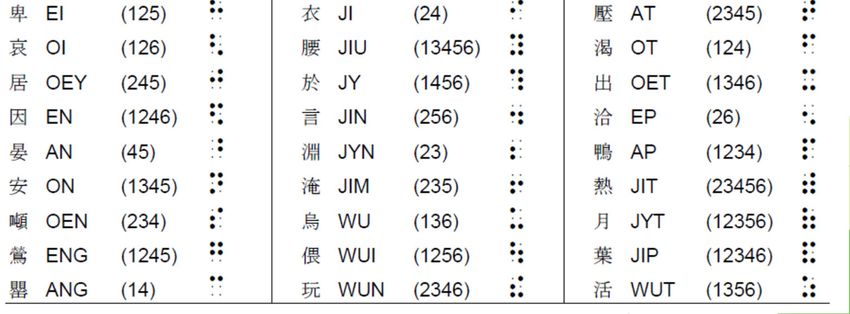
is Latin!)Cantonese
Many of the Asian languages are transcribed in braille as pronunciations
instead of creating graphics to represent the characters. One reason is that a
single character can have different pronunciations depending on its context.
A Cantonese character is transcribed in three consecutive cells:
The initial sound
The final sound
The tone (swoop of the voice)Cantonese Initials
Finals
Tones
Putting It All Together
Here’s an example of Mandarin Chinese in a style called “Common Chinese
Braille.”
,,LESSON #A ,GREET+S
"('DI2 IA K52 32 H6,")
,D^*I Y@-I K^*E ,W^*EN H^+AOHebrew Braille
I won’t show as much detail in the construction of Hebrew braille, but it is fascinating
to see an example!
אשׁית בָּ ָ ֣רא ֱא ִ ֑הים ֵ ֥את הַ שָּׁ ַ ֖מיִ ם וְ ֵ ֥את הָ ָ ֽא ֶרץ׃
֖ ִ בְּ ֵר
The letters (vowels in parentheses) in the first word are as follows: Bet (sh'va), Resh
(tsere), Aleph, Shin (Hiriq), Yod, Tav
Transcribed: B,R/A%IJ?Braille Formats
Of course, even when you have a handle on the four methods and individual
language modifiers, you will need to consult the sections of Braille Formats
that relates to FL materials. As I search “foreign language” in the document, I
see sections such as:
16.6 Gloss Notes in FL Texts
17.7 Word Lists in FL Texts
21.9 Alphabetic References in FL Materials
Appendix D: FL Symbols
Later this week, on Thursday, November 19 at 4:30 p.m., Cindi Laurent will
present a workshop on “Foreign Language Formatting.”Google Translate
This is a useful tool to decipher the meaning of directions, captions and other
FL material that might be beneficial in your transcription. Let me show an
example…Let’s Put What We’ve Learned into an
Actual FL Transcription
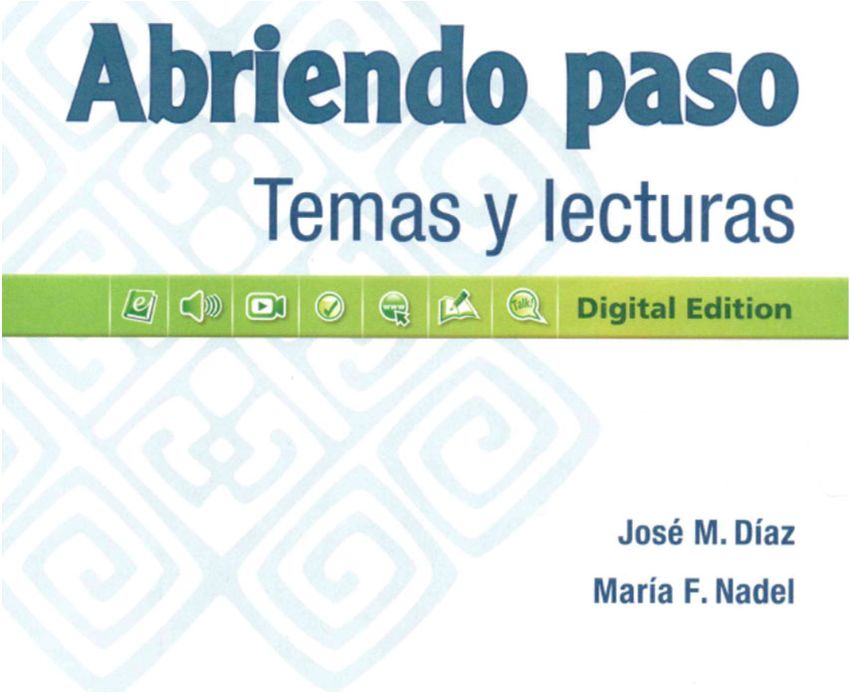
We shall now look at the most popular FL language taught in America’s
schools: Spanish.
In a foreign language book such as Spanish, you’ll only use UEB signs for
modifiers on the title page and the times they show up in English translations
of sentences and explanatory paragraphs. Otherwise, we will follow Method 3
in our transcription.
Let’s look at examples from some Spanish textbooks.Title Page ,ABRI5DO PASO ,TEMAS ;Y LECTURAS ,DIGITAL ,$I;N ,JOS^/E ;,M4 ,D^/IAZ ,MAR^/IA ;,F4 ,NADEL
Method 3
In this method, follow Section 13.6 in the Rules of UEB. The foreign language
signs for accented letters in World Braille Usage are used as needed in foreign
text, though all other signs (e.g., punctuation) should be in UEB.
Neither foreign contractions nor UEB contractions are used in foreign words,
though UEB contractions are used in surrounding English words.World Braille Usage – Spanish
WBU symbols we do NOT use in Method 3
Inverted Question and Exclamation Marks These UEB symbols are unique to Spanish:
Method 3 Examples

    ^;8,RECUERDAS8
,"H >E "S "Q ^WS T >E (T5 US$ ) .1SER3

_4 ^;8,QUI!N"
Conversations
,GLORIA1 ,ENRIQUE
,-,OYE1 ,ENRIQUE1 ^;8ERES ART/STICO8
,-,S/1 SEG)N MIS AMIGOS SOY MUY
ART/STICO Y ESTUDIOSO4 ,TAMBI!N DICEN
QUE SOY RESERVADO4 ,Y ,GLORIA1 ^;8C+MO
ERES T)8
,-,BUENO444MIS AMIGOS DICEN QUE SOY
PACIENTE Y TRABAJADORA4 ,PERO SEG)N MI
HERMANITO1 ^;6SOY IMPACIENTE Y
PEREZOSA6Typeform changes and Photos
,MODELO
,M>C ,AN?ONY
.7,MARC ,ANTHONY ES TALENTOSO Y MUY
GUAPO4.'
@. ,EL CANTANTE ,MARC
,ANTHONY EN CONCIERTOThis rule also applies for couplets (one line in Spanish, the next line
the translation in English) with a name with an accent.
Mi nombre es Martín.
My name is Martín.
We treat the Spanish sentence in foreign language uncontracted, but
the English in UEB contracted with UEB modifiers.
,MI NOMBRE ES ,MART/N4
,MY "N IS ,M>T^/IN4Text Color
,! V]B .1SER
,Y H LE>N$ TO USE ! V]B .1SER )
ADJECTIVES TO TELL :AT "S"O IS L4
,ESAS CHICAS @#1SON @#1BONITAS4
,Y H AL LE>N$ TO USE .1SER ) .1DE TO
TELL ": "S"O IS F4
@#1,SON @#1DE ,BUENOS ,AIRES4Charts ,REMEMB] T .1SER IS IRREGUL>4 ,"H >E XS PRES5T-T5SE =MS3 7777777777777777777777777777777777777777 "
Vocabulary Lists

      TO TALK AB 5]GY
     AHORRAR3 TO SAVE
EL   AIRE ACONDICIONADO3 AIR 3DI;N+
LA   CALEFACCI+N3 H1T
     ECON+MICO1 -A3 ECONOMICAL
     EFICIENTE3 E6ICI5T
LA   ELECTRICIDAD3 ELECTRIC;Y
LA   ENERG/A3 5]GY
     SOLAR3 SOL>
Some Additional Information Before We
Wrap Up
The Braille Authority of North America (BANA) has a task force that is working
on more details for us, and eventually working toward a full Guidelines for
Foreign Language Braille Transcription.
Also, the BANA Formats Committee is making proposed changes in an errata
document for Braille Formats that relates to Foreign Language materials.
More to come in future years!Where to Find the Helpful Tools
The Provisional Guidance for Transcribing Foreign Language Materials in UEB
can be found at the BANA website at
http://www.brailleauthority.org/foreign-language/index.html
The Rules of UEB can be found at http://iceb.org/ueb.html
Braille Formats: Principles of Print-to-Braille Transcription, 2016 can be
found at http://www.brailleauthority.org/formats/formats2016.html
World Braille Usage can be found at
https://www.perkins.org/international/about/world-braille-usage
Google Translator can be found at https://translate.google.com/Any Questions?
I can take questions now, or you can write in to Ask An
Expert, or write to me directly at:
patrick@braillemusicandmore.com
Make sure to attend the other foreign language workshop
presentation this week. On Thursday, November 19 at 4:30
p.m., Cindi Laurent will present “Foreign Language
Formatting.”You can also read


