OXFORD AND THE WORLD 2021-22
←
→
Page content transcription
If your browser does not render page correctly, please read the page content below

OXFORD
AND THE
WORLD
  2021–22

            1
CON T E NTS
                                                             Oxford University Images/James Whitaker

The University of Oxford .............................3

Oxford and the World.....................................8
The university of ox fo r d

  Note:
  This brochure does not reflect the changes to
  the University’s activities caused by the COVID-19
  pandemic, which in particular has affected teaching
  arrangements, fieldwork, and access to libraries
  and museums. Continually updated information on
  Oxford’s pandemic response and COVID-19 research
  can be found at www.ox.ac.uk/coronavirus

The University of Oxford aims to advance learning by
teaching and research for the benefit of society on a
global scale.

Drawing strength from its distinctive, college-based
structure and interdisciplinary culture, Oxford has
consistently developed its capacity to generate and
share knowledge. For hundreds of years the University

                                                                                                                         Wikipedia
has continued to make significant contributions to global
society, culture and economics.                                   Dorothy Hodgkin

Oxford’s expertise encompasses science, health, society
and culture. In each of these areas the University has made       Nobel Prizes
key contributions to the advancement of knowledge.                Current and former Oxford staff and students
                                                                  had won a total of 56 Nobel Prizes by 2020, with
Research carried out by Oxford’s staff, students and
                                                                  multiple Oxford alumni and staff winning prizes in
alumni has made an enormous impact on the world over
                                                                  each of the six categories.
the centuries. Among the most distinctive elements of
Oxford’s unique profile are the University’s success in           Notable Nobel laureates associated with the
spinning out companies that convert scientific research           University include chemist Dorothy Hodgkin;
into high-tech products and services; its global network          economists Amartya Sen and Joseph Stiglitz;
of tropical medicine laboratories, which have been at             Howard Florey, a member of the team that
the forefront of the fight against infectious disease for         discovered penicillin; authors VS Naipaul and
decades; and its close connections with British history,          TS Eliot; physicist Erwin Schrödinger; and Peace
philosophy, religion and literature.                              Prize recipient José Ramos-Horta.
The impact of Oxford’s expertise in research and education        Current and former Oxford staff and students have
is further enhanced by Oxford University Press, the world’s       also won a total of 21 Fields Medals, Balzan Prizes,
biggest English-language academic press and English               Rolf Schock Prizes and Abel Prizes.
language teaching publisher.

In the coming decade the University will further expand
the impact of its research and education to maintain
Oxford’s position as one of the world’s most renowned
centres of learning.

                                                              3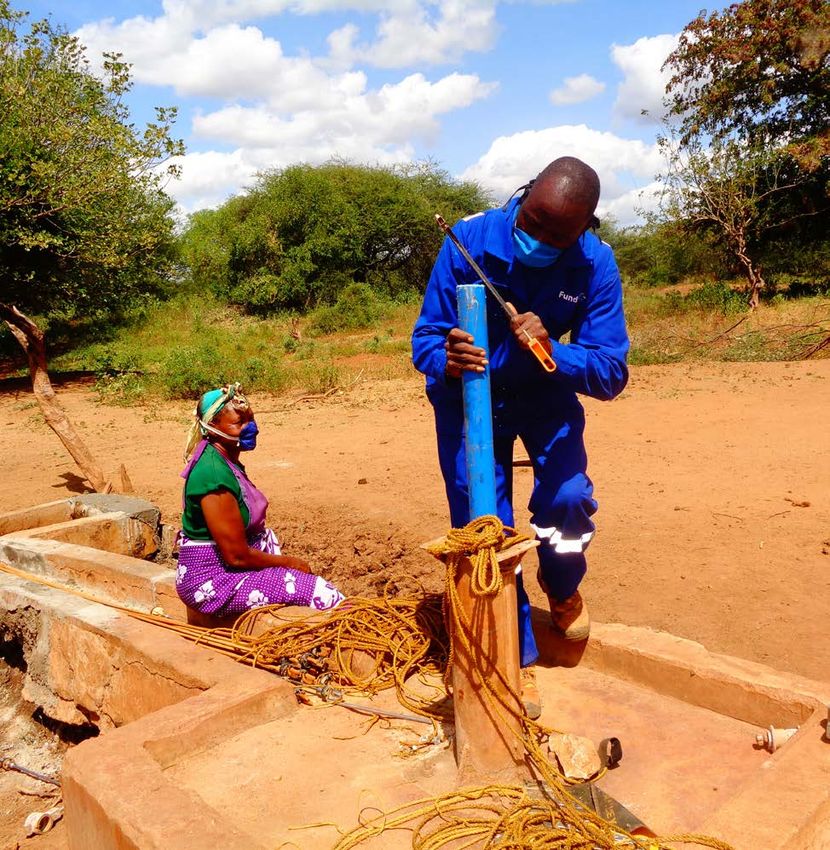
The un i ve r s i t y o f oxford

 A CENTRE OF LEARNING
 F OR MOR E THAN 9 00 YEAR S                                          C O NNE C TING B R ITAIN
 The University of Oxford is the oldest university in the
                                                                      A ND THE WO R LD
 English-speaking world. The exact date of the University’s           Emo of Friesland became the first international
 foundation is not known, but teaching was taking place in            student at Oxford, when he travelled from
 Oxford by 1096. The University developed rapidly after               Groningen (now in the Netherlands) to Oxford in
 1167, when King Henry II banned English students from                around 1190. His time at the University marks the
 attending the University of Paris.                                   start of Oxford’s long history of internationalisation:
 Despite a popular legend that University College was                 alumnus Thomas Stephens was the first recorded
 founded by King Alfred the Great in 872, it is now                   Englishman to visit India in 1579, while the
 accepted that Oxford’s three oldest existing colleges                University began collecting Chinese publications
 – University, Balliol and Merton – were founded between              in 1604.
 1249 and 1264. Colleges continued to be founded in                   Oxford played a leading role in training British civil
 Oxford in the centuries that followed, with the most                 servants for service abroad from the middle of the
 recent, Reuben College, being founded in May 2019.                   nineteenth century. In the 1960s these courses
 By the late medieval period, Oxford had achieved                     opened up to aspiring diplomatic leaders from
 eminence above every other seat of learning, winning                 around the world, transforming into the Diplomatic
 the praises of popes, kings and sages. In 1355,                      Studies Programme, also known as the Foreign
 Edward III paid tribute not only to the University itself,           Service Programme, which still exists today. The
 but also to the services to the country provided by                  Programme now has more than 1,200 alumni and
 Oxford graduates.                                                    has contributed staff to more than 140 countries’
                                                                      diplomatic services.
 Since that time, the University has been at the heart
 of Britain’s scientific, cultural, religious and political
 development. Oxford hosted King Charles I’s counter-
 Parliament during the English Civil War, was the scene

                                                                                                                                        Oxford University Images/Museum of the History of Science
 of famous debates about evolution, and educated almost
 half of Britain’s prime ministers. Over the centuries
 Oxford’s ancient teaching and research departments
 such as the Faculty of Divinity and Faculty of Classics
 have continually evolved, and have been joined by new
 centres for teaching and research such as the Blavatnik
 School of Government and the interdisciplinary Oxford
 Martin School. The University will continue to grow its
 teaching and research capabilities to meet society’s
 ever-evolving needs.

                                                                  Engraving of University buildings on Broad Street, Oxford, by James
                                                                  Basire, from a drawing by Edward Dayes, c.1800

       World leaders educated at Oxford
       Around 60 heads of government or state, including close to half of all British prime ministers and at least
       30 leaders of other nations, have either been educated or have taught at Oxford.

       Notable world leaders associated with the University include: King Abdullah II of Jordan, former President of
       the United States Bill Clinton, King Harald V of Norway, former Prime Minister of Australia Bob Hawke, Prime
       Minister of Pakistan Imran Khan, former President of Ghana John Kufuor, former President of East Timor and
       Nobel Peace Prize recipient José Ramos-Horta and former Prime Minister of India Dr Manmohan Singh.

                                                              4
The university of oxfo r d

             A PERSONAL APPROACH
             T O EDUCATI ON
             Oxford’s approach to undergraduate teaching is based
             around the intensive Oxford tutorial: the heart of an
             undergraduate education at the University. The Oxford
             tutorial is a conversation, normally between two or three

                                                                                                                                    Oxford University Images/John Cairns
             students and their tutor, who is an expert on the topic.
             Teaching in this way offers a level of personalised attention
             from academic experts that is rare even at other world-
             leading universities.

             Tutorials are provided at Oxford’s colleges. Every student
             is a member of a college as well as the University. The
             colleges are academic communities, comprehensive in
             their provision of education yet focused in terms of scale.
             They also provide libraries, study spaces and lodgings for
             many students, and are the hub for social life.                   WO R LD - C LAS S R E S O UR CE S
             At their tutorials students are encouraged to go beyond           Roughly half of Oxford’s students are postgraduates.
             the facts they have learned, developing their own theories        Postgraduate students are also members of a college
             to challenge the assumptions of their classmates and even         (with the exception of those on non-matriculated
             their tutor. The tutorial makes an undergraduate education        courses). Although their teaching and research
             at Oxford intensive and challenging; its spirit of free inquiry   activities take place in their department, they also
             and discourse is an essential expression of Oxford’s culture      benefit from their college’s resources and are able
             and values. Tutorials are combined with learning through          to draw upon the expertise of its interdisciplinary
             lectures, seminars and laboratory work.                           community, as well as the subject specialists in their
                                                                               department.

                                                                               Education is bolstered by lectures from leading
                                                                               academics, some of the world’s largest libraries and
                                                                               best-equipped laboratories, and a rich term-time
                                                                               schedule of public lectures, debates and screenings.
                                                                               Oxford students are also able to draw on the
                                                                               collections of the University’s four museums, including
                                                                               the Ashmolean, the world’s first university museum
                                                                               and one of the most-visited sites in Britain.

                                                                               Oxford’s postgraduate students are part of a
                                                                               world-renowned research community. The
                                                                               University’s research output was rated first out
                                                                               of all UK universities in the Research Excellence
                                                                               Framework 2014, and its medical and health
                                                                               teaching and research has been rated best in the
                                                                               world for eight years running by Times Higher
                                                                               Education.

                                                                               Around half of Oxford’s postgraduate research
                                                                               students receive full or partial funding. Scholarships
                                                                               available to Oxford postgraduate applicants include
                                                                               the prestigious Clarendon Scholarships, awarded to
                                                                               the most promising research students, and the
                                                                               world-famous Rhodes Scholarships.

                                                                               Above: The Weston Library

                                                                               Left: Student in tutorial
Rob Judges

                                           5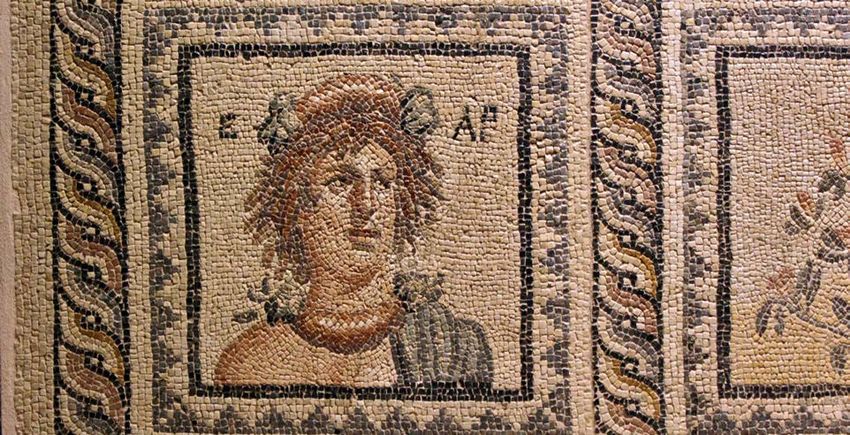
The un i ve r s i t y o f oxford

    Oxford admits 1st                    Oxford alumnus Thomas                                 Oxford welcomes its
 international student                      Stephens visits India                               first Chinese visitor
     Today almost 50%                  The University now employs                           Chinese student numbers
   of students are from                         170 Indian faculty                         have increased more than
         outside the UK                                                                   tenfold in the last 20 years

1096                                    1249                                            1636
                      1190
                                                                1579

                                                                                                                   1684

   Study begins at Oxford                    Oxford’s earliest existing                      The first Laudian Professor
                                             college is founded                              of Arabic is appointed
   The oldest university in the
   English-speaking world                    The University now has                          More than 70 faculty now
                                             44 colleges and halls                           study the Middle East

                                                                          Oxford has been a centre of learning, research
 U N I VERS I TY OF OX FORD T IME L I N E                                 and innovation for more than 900 years.

                                                                 6
The university of oxfo r d

         Abraham Lincoln is                     Kofoworola Moore                           Bill Clinton is                 Oxford is ranked
        sworn into office on                     becomes the first                   admitted to Oxford               the best university in
       an Oxford University                        African woman                 Almost 60 heads of state           the world by the Times
                Press bible*                          to graduate               or government have been             Higher Education World
   1,700 American students                           from Oxford               educated at the University              University Rankings
       now study at Oxford                       The University now                                                   The University has been
                                              has over 400 students                                                    ranked top every year
            *Barack Obama used                          from Africa                                                            since in 2017
                  the same bible

1749

                                                  1879

                            1861                                                          1945

                                                                  1935                                                       1993

                                                                                                       1968

   The Radcliffe Camera is opened
                                                                                                                                                  Pictures by OUI/Greg Smolonski, OUI/Rob Judges, OUI/Pawel Sytniewski, Mimi Zou, Wikipedia

   The University now has 375 buildings,
   not including college buildings                                                                                                         2017

                                                                                                         Needle-free injection
                  Foundation of Lady Margaret
                                                                                                company PowderJect founded,
                  Hall and Somerville, Oxford’s
                                                                                                 one of Oxford’s early spinouts
                    first two women’s colleges
                                                                                                The University has now launched
                              All colleges now admit
                                                                                               more than 150 spinout companies
                              both men and women
                                                                 Howard Florey awarded
                                                                     Nobel Prize for the
                                                                  discovery of penicillin
                                                         In total, Oxford staff and students
                                                              have received 56 Nobel Prizes

                                                                              7
Ox f o r d a n d t h e w orld

     The work of universities is a global endeavour.
     The discovery, interpretation, preservation and
                                                                   OX F O R D’S I N T E R N A T I O N A L
     transmission of knowledge is carried out through
     interchanges between scholars, scientists and
                                                                   S TUD E NTS, S TA F F AND ALU M N I
     students across the world. The ultimate purpose
     of a university – wherever it may be located – is
     to build and critique a body of knowledge for                       Oxford students by nationality (of 24,515)
     the world as a whole.
                                                                    December 2019 figures
     Oxford, as one of the world’s major universities,                                                    EU
                                                                                                         17%
     plays a strong part in this. Academics at the
     University study subjects the world over, and work
     in collaboration with colleagues around the world.                                                           USA
                                                                                                                  6%
     Oxford’s staff themselves come from all over the
     world, as do its students. The importance of global              UK
     engagement is recognised in the University’s current            55%
                                                                                                                  China
     strategic plan, which states that Oxford’s research                                                           7%
     will address the most significant problems facing the
     world today, ultimately aiming to change the world
     for the better.
                                                                                                           International
     This brochure will show some of the ways that                                                            - Other
                                                                                                                15%
     global engagement is taking place at Oxford.

                                                                                 Non-UK students (of 10,954)
                                                                   December 2019 figures

                                                                 Postgraduates
                                                                   on taught                                   Postgraduates
                                                                    degree                                      on research
                                                                    courses                                       degree
                                                                     33%                                          courses
                                                                                                                    37%

                                                                                                        Visiting students
                                                                     Undergraduates
                                                                                                               5%
                                                                          25%

                                                                                 Oxford academic-related staff
                                                                                   by nationality (of 7,843)
                                                                                                          Academic, research
                                                                                                          and related support
                                                                                                                 staff, August
                                                                                                                 2020 figures

                                                                                                                 Non-UK
                                                                    UK
                                                                                                                  44%
                                                                   46%

                                                                                            Unknown
                                                             8                                10%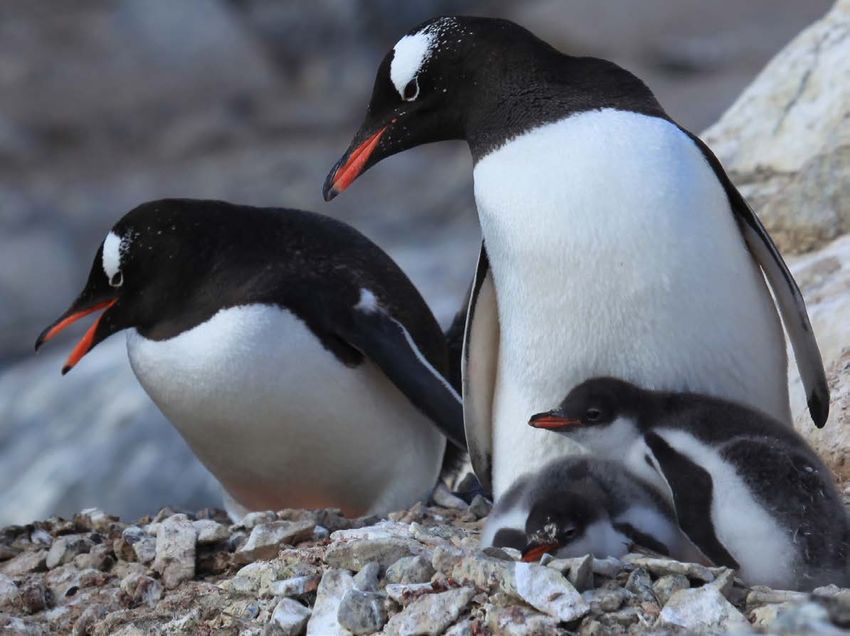
Oxf ord and th e wor ld

N OTABL E I NTERNATI ONAL F IGUR E S AT OXF O R D
Many well-known international figures have had a connection with the University.

Prominent figures who have worked at Oxford                      Notable graduates of the University
Austria:                                                         Australia:
Sir Ernst Gombrich, art historian, author of The Story           Rupert Murdoch, media owner, founder of News
of Art;                                                          Corporation;
Erwin Schrödinger, theoretical physicist, joint                  Canada:
winner of the Nobel Prize in Physics;                            Mark Carney, former governor of the Bank of England and
Canada:                                                          the Bank of Canada;
Charles Taylor, philosopher;                                     France:
China:                                                           George Steiner, literary critic;
George F. Gao, virologist, director-general of the Chinese       India:
Centre for Disease Control and Prevention;                       Indira Gandhi, former prime minister of India;
Germany:                                                         Vikram Seth, writer, author of A Suitable Boy;
Sir Ernst Chain, biochemist, co-developer of penicillin
                                                                 Japan:
at Oxford, joint winner of the Nobel Prize in Medicine;
                                                                 Emperor Naruhito and Empress Masako;
Ireland:
                                                                 Jordan:
Seamus Heaney, poet, winner of the Nobel Prize in
                                                                 Prince Hassan bin Talal, advocate for inter-faith dialogue;
Literature;
Dame Iris Murdoch, philosopher and writer;                       South Africa:
                                                                 Pixley ka Isaka Seme, lawyer, political activist, one of the
Latvia:                                                          founders of the African National Congress;
Sir Isaiah Berlin, philosopher and founding president
of Oxford’s Wolfson College;                                     United States:
                                                                 J. William Fullbright, US senator, established the Fullbright
Spain:                                                           scholarship programme;
Javier Marías, writer;
                                                                 Joseph Heller, writer, author of Catch-22;
United States:                                                   Elena Kagan and Stephen Breyer, serving US Supreme
John Goodenough, physicist, whose work at Oxford                 Court justices;
was instrumental in the development of the lithium-
                                                                 Alain Locke, philosopher and writer, first African
ion battery, joint winner of the Nobel Prize in
                                                                 American Rhodes scholar, leading advocate of the Harlem
Chemistry.
                                                                 Renaissance movement;
                                                                 John Rawls, philosopher, author of A Theory of Justice.

                                                             9
Ox f o r d a n d t h e w orld

     DEVEL OP ING TI ES WI TH I ND IA AND AF R IC A
     Oxford has a commitment to develop and increase its links with India and Africa. To that end, two networks
     have been established within the University to promote and co-ordinate activity related to those regions.

       IndOx – the India–Oxford Initiative
       The India–Oxford Initiative (IndOx) was created in 2018          seeks in particular to support students and early-career
       as a mechanism to build and sustain partnerships between         researchers in developing such collaborations.
       individuals and institutions in India and academics and
       researchers at the University. It acts as a hub to coordinate    Within Oxford, the initiative aims to attract participants
       India-related activities across the University, and as a         from across the University. Its strategy board includes
       contact point for potential external partners.                   representatives from all five of Oxford’s divisions, and
                                                                        one representative from an Oxford college or centre
       IndOx seeks to develop equitable partnerships with               with an India focus. In addition, IndOx’s working groups
       Indian organisations and institutions, leading to                provide another forum for participation by academics
       collaborative academic research of mutual benefit, and           with links to India.

     AfOx – the Africa Oxford Initiative                                These targeted programs include essay writing workshops
     The Africa Oxford Initiative (AfOx) is a cross-University          and tips on pursuing DPhils at Oxford. AfOx also hosts an
     network established to bring the University of Oxford’s            annual online admissions open day for prospective African
     long-standing, multi-disciplinary engagement with                  graduate applicants.
     Africa under one platform. The overarching goal of
     AfOx is to ensure Africa remains a strategic priority for
     the University. AfOx supports research and academic
     excellence by facilitating sustainable and equitable
     research partnerships between researchers based in
     African institutions and the University. AfOx is working
     with colleagues across Oxford to develop a University-
     wide strategy to increase the number of African
     students studying at Oxford and increase the University’s
     engagement with research institutions and universities
     based in Africa.

     AfOx uses its considerable expertise of the dynamic
     African academic landscape to mobilise resources for
     Africa-focused research, working with departments
     and colleges across the University and with universities,
     research institutions, governments and NGOs across
     African countries. Such collaborations have facilitated
     new advances in the fields of medical science, big data
     engineering and astrophysics, conserving environments
     and ecosystems, archaeology, and preservation of
     ancient languages amongst other research areas. To
     enable effective partnerships that are genuinely co-
     developed, they offer two researcher mobility schemes
     – the AfOx Visiting Fellowship Programme and the AfOx
     Travel Grant.

     In support of students, and in partnership with the
                                                                                                                                               AfOx

     Oxford University Africa Society, AfOx runs academic
     support programs to enhance the graduate experience at
                                                                        AfOx’s Focus on Research Africa (FORA) event, 2019. FORA brings
     Oxford, promote a sense of belonging and enhance the               together experts in a variety of disciplines from Oxford and partner
     academic success of emerging African leaders in Oxford.            institutions in Africa to discuss Africa-related issues.

                                                                   10
Oxf ord and th e wor ld
Oxford University Images / John Cairns Photography
The quad at Oxford’s St Antony’s
College. On the right is the
Investcorp building, designed by
Zaha Hadid Architects
11Ox f o r d a n d t h e w orld
S OCIET Y AND HEALTH
Oxford has one of the largest groupings of social scientists in the world, and is an internationally recognised
centre of excellence for biomedical and clinical research and teaching. Academics and scientists at Oxford work
on understanding and tackling some of the major health and social challenges that face people around the world.
Digital health monitoring Together with further study sites elsewhere in Africa and
southeast Asia, the centre’s facilities are amongst the
Oxford’s Nuffield Department of Women’s & Reproductive
largest-scale and most enduring research facilities run by
Health is working with the George Institute for Global
any university overseas.
Health to help prevent cardiovascular disease among
women in rural India following high-risk pregnancy. The centre’s work includes fundamental research, drug
SMARThealth Pregnancy is an extension of the discovery, and clinical trials and implementation, focusing
SMARThealth project developed jointly by Oxford and the on infectious diseases that kill millions each year, and
George Institute, which uses smartphone applications to it works in line with the healthcare priorities of its host
help community healthcare workers diagnose and manage countries and in alignment with its local host institutions.
patients in situations where there are few trained doctors. The centre specifically aims to provide world-class
A pilot study of SMARThealth Pregnancy is focusing on research facilities in its host countries, coupled with
identifying diabetes and high blood pressure in pregnant a strong ethos of capacity development that includes
and postpartum women, who are at greater risk of going local training programmes for aspiring research scientists.
on to develop heart disease if they experience these It also conducts research funded by major bodies such
conditions during pregnancy. as the Gates Foundation, the European Commission,
UKRI and (formerly) DFID.
The Centre for Tropical Medicine
and Global Health Past research has, for example, informed the World
Health Organisation’s advice on first-line treatment
Oxford’s Centre for Tropical Medicine and Global Health
for malaria. More recently, the centre is undertaking a
is an international network of medical research centres,
significant amount of global research into COVID-19.
primarily funded by Wellcome and based in Oxford and at
Wellcome programmes in Kenya, Vietnam and Thailand. Understanding cities
PEAK Urban is a project run from Oxford’s Centre on
Migration, Policy and Society (COMPAS) that aims to
understand how cities work as systems. Its research is
intended to inform decision-makers on ways of improving
urban life, and ultimately to contribute towards the UN’s
Sustainable Development Goal 11: making cities and
human settlements inclusive, safe, resilient and sustainable.
An international and multi-disciplinary project, PEAK
Urban conducts studies of cities around the world under
the themes of city governance, health and wellbeing,
migration and cities, sustainable cities, and sustainable
growth. Oxford’s partners in the project are the Indian
Institute for Human Settlements (IIHS), Peking University,
the Universidad EAFIT in Colombia, and the African Centre
for Cities at the University of Cape Town.
Large-scale research on the causes
of chronic diseases
The China Kadoorie Biobank is investigating the long-term
causes of common chronic diseases that contribute to
premature death, such as stroke, diabetes, cancer and
heart disease. A collaboration between Oxford’s Nuffield
Left: An entomologist dissecting mosquito wings at the Oxford University
Clinical Research Unit (OUCRU) in Vietnam, part of Oxford’s Centre
Pearl Gan
for Tropical Medicine and Global Health, as part of work on the
mosquito-borne dengue virus. The picture was taken for OUCRU’s
‘Picturing Health: Dengue in Vietnam’ project
12Oxf ord and th e wor ld
Hufton+Crow
Above: Oxford’s Blavatnik School of Government
Department of Population Health, the Chinese Academy class and the countries of origin of its community cover
of Medical Sciences and Peking University, the Biobank most of the world. In September 2020, the School
collected questionnaire data and measurements from welcomed degree students from 53 different countries
over 510,000 participants in China between 2004 and and territories.
2008. Biological samples were also taken for genetic
and biochemical analyses. Participants’ subsequent major Seeking examples of success all over the world in
health events are being tracked indefinitely – including tackling big issues and improving lives, the Blavatnik
their ultimate cause of death – and the data is used to School undertakes research to understand deeply
investigate the effects particular factors have on the why and in what context they were successful; and
group’s health and mortality. then helps policymakers from other countries understand
how such success could be applied to their contexts.
Recent China Kadoorie Biobank findings include that:
Measuring and reducing poverty
if current cigarette consumption patterns continue, around the world
smoking could account for 2 million deaths annually
in China by 2030 and 3 million by 2050; The Oxford Poverty and Human Development
Initiative (OPHI) runs the Multidimensional Poverty
improvements in cardiovascular care and outcomes Peer Network (MPPN), which it founded together
in China can be linked to healthcare reforms; with Mexico’s National Council for the Evaluation of
Social Development Policy and Colombia’s Department
higher red meat and fish consumption is associated for Social Prosperity. The MPPN aims to help eliminate
with an increased risk of diabetes. poverty by developing and promulgating more
sophisticated methods of measuring poverty, and
Improving government worldwide by promoting the creation of better designed and
Oxford’s Blavatnik School of Government exists to more effective policies for reducing poverty. Its work
inspire and support better government and public policy centres around supporting policymakers in using a
around the world. Its research, teaching and engagement method of measuring poverty developed at the OPHI
activities are led by the challenges dominating the that complements income-based measures of poverty
agendas of governments and by the needs of the people by taking into account multiple other aspects of
they serve. deprivation, such as poor health, poor or no education,
and low living standards. The network’s members
With an exceptionally global approach, the Blavatnik include ministers and senior officials from more than
School’s areas of research, the case studies taught in 60 governments and 19 international organisations.
13Ox f o r d a n d t h e w orld
S OCIET Y AND HEALTH ( c o n t i nu e d )
Cliff Nyaga
Above: A FundiFix technician fixing a handpump at Nzaini Community in Kitui, Kenya, during the COVID-19 pandemic. FundiFix is a social
enterprise that provides professional maintenance services for water infrastructure in rural communities. Its development was led by Oxford’s
Smith School of Enterprise and the Environment
Ensuring water supplies in rural communities It helps communities keep their waterpoints working, as
well as contributing to an understanding of the relative
A number of Oxford projects co-ordinated by the
performance and reliability of different types of handpump.
University’s Smith School of Enterprise and the
The work now forms part of the Uptime consortium, which
Environment work together to improve water services in
is delivering reliable water services to over one million rural
rural Kenya. Their work combines the remote monitoring of
people in Burkina Faso, the Central African Republic, Kenya
handpumps with a model for delivering and funding timely
and Uganda.
servicing of handpumps and small piped water schemes.
14Oxford University Images/Nasir Hamid
15
Oxf ord and th e wor ldOx f o r d a n d t h e w orld
T HE E NVIRONM ENT AND THE NA TUR A L WO R LD
Oxford is widely recognised as one of the world’s leading science universities. Scientists and researchers work
on both fundamental and cutting-edge applied research. Work being done at Oxford aims to contribute to
understanding the natural world, and to finding ways of living sustainably within it.
Sustainable air conditioning for produce usable fuels. The company hopes soon to open a
a warming world waste-to-fuel plant capable of handling 10,000 – 20,000
tonnes of plastic.
As climate change causes increased temperatures and
heatwaves, the energy needed for air conditioning is likely The Large Hadron Collider
to triple by 2050. How can this need for cooling be met
without exacerbating the very problem it’s responding to? Oxford’s particle physics group has a substantial
The Future of Cooling programme at the Oxford Martin commitment to the Large Hadron Collider (LHC) at CERN,
School aims to understand how sustainable cooling can be the world’s largest and most powerful particle accelerator.
delivered for all, and to establish the provision of cooling as Scientists from Oxford are closely involved in the
a global priority for the successful implementation of the
general operations of the LHC and in two of the major
UN’s Sustainable Development Goals.
experiments that run on the collider: ATLAS, which tests
Turning waste plastic into fuel the predictions of the Standard Model of particle physics,
and LHCb, which tries to explain the dominance of matter
Plastic waste is a major environmental problem – plastic over antimatter in the universe.
is used and disposed of in great volume, yet it does not
biodegrade easily and only 10% of plastic is recycled. Oxford is also closely involved in efforts to create a
Oxford Sustainable Fuels (OSF), a spin-out company successor to the LHC – in the Future Circular Collider
from Oxford’s Department of Chemistry, has created a and Compact Linear Collider projects at CERN, and in the
novel use for waste plastic and also tyres. ‘End-of-life’ International Linear Collider alternative that would be sited
plastic and tyres can already be turned into an oil-like in Japan. It is also part of the major project to upgrade the
substance, but one which is volatile and difficult to use. LHC to create the High-Luminosity Large Hadron Collider
OSF has developed ways of processing this substance to (HL-LHC), extending the LHC’s life to around 2040.
Below: A view of the ATLAS detector at the Large Hadron Collider. Partially designed and built by Oxford’s particle physics group, the detector is
one of the largest and most complex scientific instruments ever constructed
Claudia Marcelloni/CERN
16Liam Quinn, CC BY-SA 2.0. Gentoo penguins with chicks at Jougla Point, Antarctica. https://flic.kr/p/aePSjb
Oxf ord and th e wor ld
Above: Researchers at Oxford’s Department of Zoology studied how Antarctic penguin populations adapt to changing ecosystems
Studying the impact of climate change yields can be increased significantly; addressing this is
on animals considered one of the ‘grand challenges’ for science in
the 21st century. The C4 Rice Project, led by Oxford’s
Researchers from the United States, Canada, and Department of Plant Sciences, aims to create a higher-
Oxford’s Department of Zoology have shown how yielding breed of rice through the introduction of a trait
species may succeed or fail to adapt to changing that will increase its photosynthetic efficiency. Originally
ecosystems, by studying the historical diets of two begun by the International Rice Research Institute (IRRI)
Antarctic penguin species. The study found that both in the Philippines, the project has partners in Australia,
species ate krill as their staple food during a period Germany, Taiwan and the USA, and receives funding
when human activity had contributed to a krill surplus. from the Gates Foundation.
However, subsequent human activity has put krill stocks
under pressure, and the study found that only one of Building the world’s largest radio telescope
the two penguin species has been able to vary its diet
Astrophysics at Oxford is a leading partner in the
to cope. The study illustrates the difficulties that animals
international Square Kilometre Array (SKA) project to
with a specialised diet face from human impact on their
build the world’s largest radio telescope. The SKA will
environments.
be a transformational scientific instrument because of
Ensuring the supply of staple foods the speed and detail of its coverage of the sky, with a
total collecting area of more than a square kilometre
for a growing population
divided between sites in South Africa and Australia.
In future, demand for food is likely to grow due to an Oxford teams are involved in receiver and software
increasing population, while the ability to grow that design, and in planning for scientific exploitation of the
food will be threatened by the loss of agricultural land data. A world-wide project with partners in over fifteen
to urbanisation. In Asia, these pressures mean that the countries, the SKA is one of the UK’s key strategic
predicted future demand for rice will not be met unless science projects for the coming decade.
17Ox f o r d a n d t h e w orld
HIS T ORY, PEOPLES AND C ULTUR E S
Oxford is one of the world’s major centres for the study of the world’s history, peoples and cultures.
Its faculties in these fields are amongst the world’s largest, and amongst the most broad-ranging in
terms of the subjects they cover.
Centres for the study of languages and sound and hearing. A variety of European, ancient and
cultures other languages are studied as part of this work, including
a number that are threatened with extinction, helped by
World-leading centres at Oxford combine the study of the faculty’s close connection to the Modern Languages
languages with the study of the cultures in which they faculty.
are used.
The Oxford School of Global and Area Studies
The Faculty of Medieval and Modern Languages is one
of the world’s leading centres for the study of European The Oxford School of Global and Area Studies (OSGA) is
languages, literatures and cultures. It covers more than amongst the world’s leading centres for area studies and is
15 European and Slavonic languages over the span of the world’s largest community of area studies scholars. It
their historical development, and over the scope of their comprises the African Studies Centre, the Latin American
geographical spread – Portuguese in Brazil, for example, Centre, the Middle East Centre, the Nissan Institute of
or French in parts of Africa. The department also promotes Japanese Studies, the Russian and East European Studies
language learning in schools, through initiatives such as its Centre, and the South Asian Studies Centre. It also runs
Creative Multilingualism project. the graduate Contemporary China Studies Programme at
Oxford’s China Centre jointly with the Faculty of Oriental
In the Faculty of Oriental Studies, around 20 ancient and Studies.
modern languages from the Middle East and Asia are
studied and taught, as a part of studying the cultures, The Nissan Institute of Japanese Studies
literatures, histories and religions of the people and places
The Nissan Institute of Japanese Studies, part of the
that use them. The breadth of Oxford’s coverage of
Oxford School of Global and Area Studies, was established
these regions is matched by only a few other universities
at Oxford in 1981 thanks to an endowment from the
in the world.
Nissan Motor Corporation. It and the Oriental Studies
Oxford’s Faculty of Linguistics, Philology and Phonetics faculty are Oxford’s two centres for Japanese studies:
studies language itself as a phenomenon from a variety the Nissan Institute focuses on the study of Japan from
of perspectives. This includes studying language structure a social sciences perspective, while work at Oriental
and how languages have developed historically, how the Studies is mainly in the humanities. Members of both units
brain processes language, and the mechanisms of speech, contribute to the teaching of undergraduate Japanese
students, run a combined MSc and MPhil in Japanese
Studies, and supervise DPhils on Japan-related topics in
many departments.
Since the 1980s, the Nissan Institute has been responsible
for the Nissan Institute/Routledge Japanese Studies Series,
the largest single series of academic works on Japan
published anywhere in the world.
Tracing the lives of convicts in Britain
and Australia
The Digital Panopticon website brings together material
from British and Australian records of convicts sentenced
in London between 1780 and 1925. It allows the lives
of around 90,000 individuals to be traced through the
millions of records in the 50 datasets used by the site.
These include trial records, records of sentencing and
transportation, and records held on individuals after they
had reached the Australian colonies. Digital Panopticon is a
Oxford University Images/PS:unlimited
joint project between the Universities of Liverpool, Oxford,
Sheffield, Sussex, and Tasmania in Australia.
Left: A student taking part in an experiment to measure brain
activity in response to language material at the Faculty of Linguistics’
Language and Brain Laboratory
18Oxf ord and th e wor ld
Sean Leatherbury/Manar al-Athar
Above: An example of an image from Oxford’s Manar al-Athar picture repository of archaeological sites. It shows a portion of a larger mosaic that
depicts Telete and the Seasons, in the Zeugma Mosaic Museum in Turkey
Recording and protecting world heritage School of Archaeology in partnership with Leicester and
Durham Universities, it is funded by Arcadia, a charitable
The Faculty of Classics is home to the Manar al-Athar
fund of Lisbet Rausing and Peter Baldwin. The EAMENA
website, a repository of high-resolution images of
project uses satellite imagery to discover and record
archaeological sites covering the parts of the former
undocumented archaeological sites and to monitor the
Roman empire that later came under Islamic rule. It makes
state of sites across the region, building up a public
high-quality images freely available for teaching, research
database of site information. Where sites are at risk, the
and publication, and is the first website of its kind to
provide such material labelled in both English and Arabic, project documents them in greater detail and works with
to facilitate its use in the Middle East and North Africa. local and international bodies to investigate and preserve
them. As part of this work, through a scheme funded by
Endangered Archaeology in the Middle East and North the British Council’s Cultural Protection Fund, the EAMENA
Africa (EAMENA) is a project that aims to identify, project provides training to heritage organisations in the
record and help protect that region’s threatened region, including in Egypt, Iraq, Jordan, Lebanon, Libya,
archaeological sites and landscapes. Run by Oxford’s Palestine, Tunisia, and Yemen.
Google Earth/Maxar Technologies
Above: The Endangered Archaeology in the Middle East and North Africa project monitors threatened archaeological sites using satellite imagery.
These images show damage inflicted by looting to the site of the multi-period city of Apamea, Syria, contrasting the site in 2003 and 2017
19Ox f o r d a n d t h e w orld
Ashmolean Museum, object accession no. WA1846.158
One of the Raphael drawings in the Ashmolean
Museum’s collection, a chalk portrait of an unknown
youth, or possibly a self-portrait (1498–99)
20Oxf ord and th e wor ld
T HE UN IVERSI TY’S GARDENS, LIB R A R IE S AND MUS E UMS
Oxford University Images/Bodleian Library
University Museum of Natural History.
Oxford University Images/Oxford
Far left: A page from the
Bodleian Libraries’ Gutenberg
Bible
Left: ‘Wallace’s giant bee’ from
Indonesia, the world’s largest
bee, from the Museum of
Natural History’s Alfred Russel
Wallace collections.
The University of Oxford’s gardens, libraries and museums The Pitt Rivers Museum houses an almost three-story-tall
house some of the world’s most significant collections. Haida totem pole from British Columbia, where it had been
With over 21 million objects, specimens and printed erected in 1879 to mark the adoption of a daughter by the
items originating from around the world, these collections Haida chief Anetlas and his wife.
not only constitute one of the world’s largest and most
important repositories for scholars and researchers, but The History of Science Museum has the world’s finest
they also bring more than three million visitors each year collection of astrolabes and sundials from Europe, the
to the University’s public museums and galleries, library Middle East, Asia and Africa. It includes a geared astrolabe
spaces and gardens. made in Isfahan in around 1200 that is the oldest surviving
geared machine in the world.
The Gardens, Libraries and Museums (GLAM) division of
the University comprises: The Museum of Natural History holds tens of thousands
of specimens collected by Alfred Russel Wallace, one of the
the Bodleian Libraries, the largest academic library 19th century’s greatest explorers and naturalists, mostly
system in the United Kingdom; during his expedition to the Malay Archipelago (the area of
the Ashmolean, a museum of art and archaeology of modern-day Malaysia, Indonesia and the Philippines).
international stature, and Britain’s first public museum;
Finally, the University’s Botanic Garden has seven
the History of Science Museum, the world’s finest glasshouses that recreate different climatic conditions,
collection of historical scientific instruments; allowing them to house plants from around the world.
the Museum of Natural History, an internationally For example, the warm and humid environment of the
significant collection of geological and zoological rainforest house allows tropical plants such as coffee,
specimens; cocoa, pineapple, plantain and vanilla to be grown in the
the Pitt Rivers Museum, which houses one of centre of Oxford.
the world’s finest collections of anthropology and
Below: History of Science Museum’s 13th century geared astrolabe. An
archaeology;
ingenious internal mechanism reveals the phases of the moon, displays
the Botanic Garden and Arboretum, the oldest botanic the days of the lunar calendar and shows the relative positions of sun
garden in Britain. and moon on two concentric rings.
HSM inv. 48213.
Some highlights of the University’s collections
The Bodleian Libraries’ collections of rare books include one
of the few surviving bibles printed by Johannes Gutenberg
in Germany in the 15th century, which were the first books
to be printed in Europe from movable metal type.
The Ashmolean Museum’s Western Art collection includes
the world’s largest and most important group of drawings
History of Science Museum, University of Oxford.
by the Italian Renaissance artist Raphael. In 2017, the
Ashmolean hosted a major exhibition of Raphael drawings
from both its own collection and those of other institutions,
including the Albertina Museum in Vienna, the Louvre in
Paris, and Florence’s Uffizi Gallery.
21Ox f o r d a n d t h e w orld
T HE UN IVERSI TY’S GARDENS, LIB R A R IE S AND MUS E UMS ( co nt in ue d)
the ‘Cambrian explosion’, a period beginning 540 million
years ago that saw a leap in the diversity and complexity
of living organisms and the first evolution of the various
Oxford University Images/Botanic Garden
fundamental body plans exhibited by modern animals.
The exhibition was particularly notable for its display
of specimens loaned by Yunnan University from the
Chengjiang fossil site in China, one of the most important
sites of fossil evidence from the Cambrian explosion.
Based on an initiative developed by a group of Berlin
museums, the Multaka–Oxford project brings locally
resident forced migrants from the Middle East and
Above: Biology undergraduates being given a tutorial at the Botanic elsewhere to the History of Science Museum and Pitt
Garden’s lily house Rivers Museum to act as volunteer guides. As well as
building up their experience of working in the UK and their
Projects and exhibitions links in the community, the volunteers contribute their
The University’s gardens, libraries and museums undertake perspectives on objects in the museums that originate
a variety of projects and other activities where they work from their home countries. ‘Multaka’ means ‘meeting
with international partners or address issues of global point’ in Arabic.
relevance; these are a small selection: The Pitt Rivers Museum, along with thirteen other
The Artefacts of Excavation project, run by the Ashmolean European museums, is involved in TAKING CARE –
Museum and Oxford’s Griffith Institute of Egyptology, Ethnographic and World Cultures Museums as Spaces
aims to re-establish links between artefacts that were of Care, a project that examines how these kinds of
excavated by British expeditions in Egypt and then museums could inform a broad concept of ‘care’ – how
dispersed amongst institutions around the world, and to their preservation practices could be extended to
thereby inform a critical examination of historical museum preserving threatened traditions, languages or species;
and archaeological practices. how traditional knowledge embodied in their collections
could inspire more sustainable ways of living; and
The Museum of Natural History’s major recent exhibition, whether they can play a role in bringing people together
First Animals, brought together fossils from the period of to care for our shared world.
Below: The Haida totem pole from British Columbia in the collection of the Pitt Rivers Museum
Oxford University Images/Pitt Rivers Museum, photographed by Malcolm Osman
22Oxf ord and th e wor ld
T HE W O RLD’S LARG EST UNIV E R S ITY P R E S S
Oxford University Press (OUP), a department of the It shares the University’s uncompromising standards,
University, is the world’s largest university press with defining qualities, and belief in the transformative power
the widest global presence. It currently publishes of education to inspire progress and realize human
thousands of new publications each year, has offices potential.
in more than 60 countries, and employs approximately
6,000 people around the world. It has become trusted by millions through a diverse
publishing program that includes scholarly works
OUP furthers the University’s objective of excellence in all academic disciplines; Bibles; music; school and
in research, scholarship, and education by creating the college textbooks; children’s books; materials for
highest quality academic and educational resources and teaching English as a foreign language; business books;
services and making them available across the world. dictionaries and reference books; and academic journals.
THE STEPHEN A. SCHWARZ M A N C E N T R E :
A NEW HOME FOR OXFORD H U M A N I T I E S
Oxford has led the world in the study of humanities Hopkins Architects has been appointed to design the
and ethics for nearly 1,000 years and today offers an new centre. The firm’s past projects include Portcullis
unrivalled depth and range of expertise across disciplines. House for the UK’s parliament, redevelopment plans for
Thanks to a landmark gift of £150 million from Stephen A. the Victoria and Albert Museum and the Royal Academy
Schwarzman, the American philanthropist and co-founder of Arts, the London 2012 Olympic Velodrome, and work
of the Blackstone investment group, Oxford’s humanities for a number of universities including Cambridge,
faculties will for the first time be housed together in a Hamburg and Harvard. The practice is known for designing
single place. environmentally efficient buildings, which is one of the
goals for the new centre at Oxford.
Once it is built, the Stephen A. Schwarzman Centre for
the Humanities will house the Faculties of English; History;
Linguistics, Philology and Phonetics; Medieval and Modern The soprano Dame Emma Kirkby, accompanied on lute, performing
at the University’s historic Sheldonian Theatre
Languages; Music; Philosophy; and Theology and Religion
in a space designed to encourage experiential learning and
bold experimentation through cross-disciplinary and
collaborative study.
The centre will also be home to a new institute for ethics
in AI which will build upon the University’s world-class
capabilities in the humanities to lead the study of the
ethical implications of artificial intelligence and other
new computing technologies.
In addition to its academic function, the Schwarzman
Centre will serve as a major cultural venue for the city
of Oxford. The facilities it will offer for performances
Oxford University Images/John Cairns Photography
and exhibitions will centre around what is intended to
be a world-class concert hall to seat 500 people, and it
is hoped the quality of the centre’s facilities will attract
leading musicians, artists and performers from around the
world. Speaking about the new venue and referring to the
troubles faced by the performing arts due to COVID-19
restrictions, Oxford’s Head of Humanities Professor
Karen O’Brien said, ‘Building a new, world-class concert
hall in Oxford is a statement of our confidence in the
value of the arts and humanities despite this time of
great uncertainty.’
23Oxford OX1 2JD
Wellington Square
University of Oxford
Tel: +44 (0)1865 280 417
The International Engagement Office
Email: international.engagement@admin.ox.ac.uk
Designed by the Design Studio, Public Affairs Directorate, Oxford University. Printed by the Print Studio, Estates Services, Oxford University. Front picture by Oxford University Images/Rob Judges PhotographyYou can also read


