South East Europe 2020: Jobs and Prosperity in a European Perspective Sarajevo, March 2014 - CEI
←
→
Page content transcription
If your browser does not render page correctly, please read the page content below
South East Europe 2020: Jobs and Prosperity in a European Perspective Sarajevo, March 2014

Rationale for SEE 2020
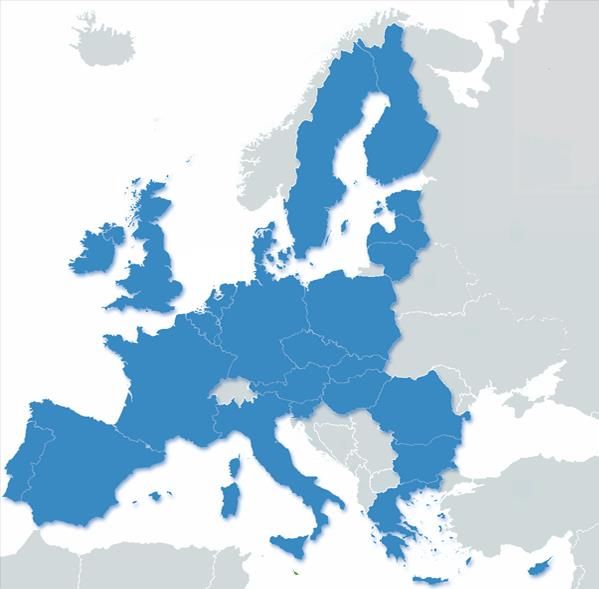
SEE 2020 materialized as a response to Europe 2020, as the
region was left out of the main European growth framework:

1. Preparations for future membership
   suggest that the Europe 2020 policy
   goals and implementation methods
   are pertinent to enlargement
   countries, with a strong need to adjust
   the strategy to region’s needs, making
   it more realistic and credible
2. Help anchor reform efforts into an
   overarching growth and development
   agenda and refocus on growth and
   competitiveness                                           ?
3. Introduce greater coherence and
   coordination into the regional
   cooperation framework

Ministries of economy – Main Catalyst

  Regional vision-building efforts channeled through SEE
  Investment Committee, main regional body for
  competitiveness and investment-related reforms:
  At the Ministerial meeting on November 24, 2011:
   – Adopted SEE 2020 Vision
   – Provided clear mandate to the RCC/SEEIC and national
      administrations to engage on regional strategy development
   – Secured resources for the strategy

  At the Ministerial meeting on November 9, 2012:
   – Adopted 11 regional and 77 national headline targets to be reached
      by 2020
Five pillars of SEE 2020
                                              Integrated growth
                                         deeper regional trade and investment
                                          linkages and policies enhancing the
                                          flow of goods, investment, services
                                                     and persons

     Smart growth                                                                           Inclusive growth
commitment to compete on value                                                           skills development, employment
added, promoting knowledge and                                                              creation and labour market
  innovation across the board                                                              participation by all, including
                                                                                         vulnerable groups and minorities

                Sustainable growth                                    Governance for growth
             enhancing competitiveness, entrepre-                        improving the capacity of public
                neurship and a commitment to                         administrations to strengthen the rule
              greener and more energy-efficient                       of law and reduce corruption so as to
                        development                                  create a business-friendly environment
SEE 2020 Embodied in 11 Headline Targets
                    Increase of GDP per capita   Growth of Total Trade in        Reduction of Trade Deficit
                    relative to the EU           Goods and Services
                                                                                 % of GDP
                    % of EU 27                   EUR billion
                                                                                     2010            2020
Overall

                                         44                          209.5

                         36.4                         94.4
                                                                                     -15.7          -12.3

                         2010           2020          2010           2020

                    Growth of intra-regional     Growth of overall FDI inflows
                    trade in goods
Integrated growth

                    EUR billion                  EUR billion

                                       30.5                          8.8

                                                      3.4
                         12,5

                         2010           2020          2010           2020
SEE 2020 Embodied in 11 Headline Targets
                Growth of GDP per person                        Growth of Highly Qualified                         Growth of enterprise
                employed                                        Workforce                                          creation

                                                                                             Sustainable growth
Smart growth

                thousand EUR                                     million people                                     net registered firms (000)

                                      36.3                                          2,0                                                      36,1
                      27.5
                                                                      1,7                                                 30,1

                      2010            2020                            2010          2020                                  2010               2020

Growth of exports of goods                                      Growth of overall                                  Increase of government

                                                                                             Governance f/growth
and services per capita                                         employment rate                                    effectiveness
                                             Inclusive growth

thousand EUR                                                    % of 15+                                           WBI index

                                                                                    44.4                                                    2,80
                               4.3                                                                                      2,33
                                                                     39.5
               1,8

               2010            2020                                   2010          2020                                 2010               2020
Pillar 1: Integrated growth
Dimension: A. FREE TRADE AREA
Ministries/ agencies: Ministries in charge of trade; Ministries in charge of economy; other related institutions
Measures •Elimination of tariffs and quotas, completion of liberalisation of trade in agricultural products
•Elimination of non-tariff (technical, sanitary and phytosanitary) barriers to trade
•Facilitation of trade through employing transparency tools and the elimination of non-automatic import
licences contravening WTO and EU practice
•Liberalisation of trade in services via reducing restrictiveness in this area
•Facilitation of free flow of investment through coordination of investment policies and promotion, and
better protection of investors and investment
Dimension: B. COMPETITIVE ECONOMIC ENVIRONMENT
Ministries/agencies: Ministries in charge of trade; Ministries in charge of economy; other related institutions
Measures •Strengthen competition policy creating a Trade Defence Instrument Free Trade Area in the region
•Strengthen intellectual property rights through better protection of trademarks
•Create a functioning public procurement market in the region
Dimension: C. INTEGRATION INTO THE GLOBAL ECONOMY
Ministries/ agencies: Ministries in charge of trade; Ministries in charge of economy; other related institutions
Measures: •Prioritise and implement business climate reforms
•Improve market access through completing a single diagonal cumulation zone under the PEM and the
harmonisation of MFN duties in the region towards EU CET
•Establish an investment concept to enhance participation in regional supply chains and global supply
networksPillar 2: Smart growth
Dimension: D. EDUCATION AND COMPETENCE
Ministries/ agencies: Ministries in charge of education
Measures •Increase quality, focus on qualifications and mobility
•Introduce policies to increase equitable access to high quality education and implement measures to
prevent early-school leaving and ‘drop-out’ and improve completion rates at all levels
Dimension: E. R&D AND INNOVATION
Ministries/agencies: Ministries in charge of science; Ministries in charge of economy; other related institutions
Measures •Establish a Research Excellence Fund to strengthen research capabilities and promote research excellence
•Introduce a Technology Transfer programme to stimulate industry-science collaboration, produce
marketable research
•Create an early stage start-up programme using both non-financial and financial instruments to support a
viable long-term market for innovation finance.
Dimension: F. DIGITAL SOCIETY
Ministries/ agencies: Ministries in charge of information society, other respective ministries and agencies
Measures: •Prioritise and implement business climate reforms
•Improve market access through completing a single diagonal cumulation zone under the PEM and the
harmonisation of MFN duties in the region towards EU CET
•Establish an investment concept to enhance participation in regional supply chains and global supply
networks
Dimension: G. CULTURE AND CREATIVE INDUSTRIES
Ministries/ agencies: Ministries in charge of culture, other respective ministries and agencies
Measures: •Develop common approaches to rehabilitating regional heritage
•Establishment of the Regional Film Fund (RFF) to complement available national and Euro-level funds
•Implementation of a regional Design IncubatorPillar 3: Sustainable Growth
Dimension: H. ENERGY
Institutions: Ministries in charge of energy, other related institutions
Measures: •Implement measures to increase efficient use of energy by achieving a minimum 9% energy saving target
•Put in place measures to achieve national share of renewable energy in gross final energy consumption by
2020, in line with the targets adopted in 2012, through the Renewable Energy Directive
•Inform and empower consumers to achieve behavioural changes to promote affordability and safety.
•Develop instruments to create investment friendly climate and stimulate infrastructure development.
•Create a well functioning SEE energy market that would provide affordable but cost reflective supplies
Dimension: I. TRANSPORT
Institutions: Ministries in charge of transport
Measures: •Develop and implement measures to Improving the utilization rate of transport infrastructure
•Ensure harmonisation with the EU transport regulatory framework for creating common market conditions
•Develop co-modal solutions by optimization of individual transport modes
•Introduce measures for reducing energy consumption and costs per unit of transport service
•Put forward measures to improve the ratio of railway and waterborne transport
•Enhance aviation transport activities and air traffic cooperation in the region and implement JSPA initiative
•Increase the use of Intelligent Transport System in the transport sector
Dimension: I. ENVIRONMENT
Institutions: Ministries in charge of environment, agriculture
Measures: •Increase adaptive capacity through awareness raising and education on climate change adaptation
•Develop measures to increase the share of irrigated agriculture land and volume of annual forestation
Dimension: K. COMPETITIVENESS
Institutions: Ministries in charge of economy; other related institutions
Measures •Develop regional activities to support SME development, including clustering and FDI–SME linkages
•Enhancing regional value chains through sector-specific actions
•Regional activities to support greater access to finance
•Peer review of SME development and policy, relying on harmonised SME statistics
•Coordinated efforts to improve business integrity
•Enhanced regional cooperation in the area of tax and competition policyPillar 4: Inclusive Growth
Dimension: L. EMPLOYMENT
Ministries/ agencies: Ministries in charge of employment; other related institutions
Measures •Build regional capacity for harmonized monitoring of migration and mobility with a view to a gradual lifting
of labour market restrictions in the region.
•Apply modern approaches in labour market governance that stimulate employment, including the
flexicurity approach, evidence based policy making, and partnerships for labour market transition.
•Tackle informal employment through an exchange of information and experiences, improved inter-
institutional and intra-regional cooperation and by testing appropriate policy measures
•Promote social economy initiatives: setting up a regulatory framework, networking, sharing know-how and
identifying good practices
Dimension: M. HEALTH
Ministries/agencies: Ministries in charge of health; other related institutions
Measures •Introduce policy measures for improving the health gain of the populations, with a focus on low-income
and disadvantaged groups, by strengthening the delivery of universal and high-quality health-promoting
services
•Strengthen the institutions and improve inter-sectoral governance of the health sector at all levels,
including health information infrastructure and regional cross-border information exchange
•Harmonise cross-border public health and public health services legislation, standards and procedures;
develop mutual recognition and trust to enable the creation of a Free Trade Area from a public health
perspective
•Strengthen human resources in the health sector, harmonise the qualifications of health professionals in
the SEE region, monitor Human Resources for Health (HRH) mobility.Pillar 5: Governance for growth
Dimension: N. EFFECTIVE PUBLIC SERVICES
Ministries/ agencies: Ministries in charge of public administration reform
Measures •Rely on e-governance especially at the local level to ensure efficiency and a lack of bias
•Introduce a procedure for continuous improvement of the competence of public officials
•Review the relations between various levels of government to ensure full respect of the principle of
subsidiarity
•Consider introducing elements of fiscal decentralisation in order to improve the responsibility of local
governments
Dimension: O. ANTI-CORRUPTION
Ministries/agencies: Ministries in charge of justice, interior, PAR
Measures •Introduce simple, clear, enduring and transparent rules of access to public services
•Increase public awareness through regular reports and by supporting independent agencies
•Rely on competitive procedures and avoid direct deals especially in public procurement
•Introduce regular evaluations of all government programmes and projects and independent auditing
Dimension: P. JUSTICE
Ministries/ agencies: Ministries in charge of justice; other related institutions
Measures: •Introduce a comprehensive and enduring system of education and increased competence in the judiciary
•Introduce regulation that supports alternative dispute resolution and their complementarity with the
judicial systemPrioritization through sectors
EXAMPLE: FOOD PROCESSING AND BEVERAGE
Prioritize removal of trade barriers of raw materials, intermediate and final products
integrated Liberalize manufacturing-related services (e.g. integrated logistics services)
Incentivize investment in the given sector
Identify regional skills-gaps and skills mismatches within the sector with an objective to
smart install mutual recognition arrangements for the given profession
VET programmes to target gaps
Prioritize infrastructure investment geared towards supporting the value chain
sustainable
inclusive Mutual recognition arrangements
Piloting alternative dispute resolution methods for the given sectors
governance Automate licensing and concessionary procedures through e-gov services (e.g. paperless
customs)SEE 2020 Implementing Structure
Ministries of
trade,
economy,
investment
SEEIC CEFTA
Ministries of ERI
PAR, justice, SEE Ministries of
interior, pillar: TFCS education,
judicial RAI integrate science,
authorities d growth information
e-SEE society, culture
RESPA pillar: pillar:
governan smart SEECEL
NALAS GovBoard
ce growth
RCC R&D
SEE Platform
2020
pillar: pillar:
inclusive sustainab SEEIC
IGWGSD growth le growth
Ministries of Ministries of
education, ECS economy, energy,
employment, environment,
social affairs, SEEHN REC agriculture,
health SEETO transportImplementation through flagships
Integrated Smart growth Sustainable Inclusive growth Governance for
growth growth growth
Skills and mobility
Investment
Inclusion
Innovation
Resource efficiency
ConnectivitySEE 2020 Monitoring Timeline
TIMELINE
MAIN
STAKEHOLDERS Q1 Q2 Q3 Q4
SEE 2020 NAT’L
COORDINATOR
National 2020 Action Plans Implementation
MINISTRIES/
AGENCIES
DIMENSION
COORDINATORS Regional 2020 Workprogramme Implementation
(REGNL STRUCTRS)
REGIONAL Annual Implementation
SEE2020 Baseline
COOPERATION Report (starting in
report (2014 only) 2015)
COUNCILBaseline Report Elements: • Monitoring overview of quantitative and qualitative indicators with accompanying narrative (state of play) • Summary of regional action plans (forward- looking regional component) • Country profiles – summarized national action plans (forward-looking national component)
Main challenges and mitigation
National level
   Capacity to develop and implement action plans
   - Short term TA to help develop plans
   - Long-term flagship initiative on capacity development to address constraints
   Political support
   - Annual policy cycles with monitoring at political level (Governing Board)
   - Maintained focus by other partners (e.g. EU)
Regional level
   Constraints relating to status, capacity, governance and funding
   - Short term TA to help develop plans and set-up monitoring structures
   - Long-term political support
SEE 2020 as a Strategy for Integration

     SEE 2020 targets, policy
         objectives and
    implementation methods

                                 Western
                                 Balkans
Cooperation at the level of
  measures (e.g. trade                                      23.7 million
 facilitation, investment
     promotion, etc.)
                                        Other
                                      SEE states
                                                          142.4 million

      Knowledge transfer, peer
           learning, etc.                  Other EU
                                                      500 million
thank you RCC Secretariat Trg BiH 1/V, 71000 Sarajevo Bosnia and Herzegovina http://www.rcc.int
You can also read


