PAST 323 MINS 415 Christian Ministry in Te Ao Māori Course Outline 2022
←
→
Page content transcription
If your browser does not render page correctly, please read the page content below

PAST 323 MINS 415

                         Christian Ministry in Te Ao Māori

                                    Course Outline 2022

                                     Nau mai, haere mai ki tēnei pepa, ko te
      SUMMER SCHOOL 2022
                                     minitatanga Karaitiana i roto i te ao Māori.
  Course Coordinator and Lecturer:
                                     Welcome to PAST 323 / MINS 415. This
                                     paper explores Christian ministry within a
  Rev Dr Wayne Te Kaawa              contemporary Māori world taking into
                                     consideration,       Māori      expressions,
  wayne.tekaawa@otago.ac.nz          understanding and practice of ministry that
                                     includes issues ranging from tribalism,
                                     urbanisation, models of ministry, pastoral
care, ecumenism, social media, re-genesis of ministry and the renaissance of Atua
Māori.

This is the first paper in theology to offer students the option of writing and delivering
their assessments in te reo Māori along with having a te reo Māori speaking roopu for
smaller group work.

 LECTURER’S INTRODUCTION

                                    Your course co-ordinator and lecturer for this paper
                                    is Rev Dr Wayne Te Kaawa (Tūwharetoa ki
                                    Kawerau, Ngāti Awa and Tūhoe). Wayne is the
                                    inaugural lecturer of Māori Theology in the
                                    Theology Programme at the University of Otago.
                                    He also brings with him many years of experience
                                    in ordained ministry in various Māori and non-Māori
                                    communities and chaplaincies throughout the
                                    country.

                                    Wayne       can    be        contacted      at
                                    wayne.tekaawa@otago.ac.nz or by phone (03) 471
                                    6458.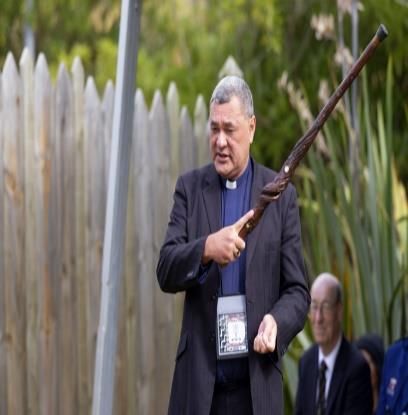
Theology Programme               PAST323/ MINS415               Campus Course Outline

The hosts for the 5-day residential intensive at Te Rau College are PhD students, Rev
Michael Tamihere (Principal, Te Rau College) and Rev Christopher Huriwai who will
be teaching selected aspects of the paper, sharing some insights from their Doctoral
research.

 Rev Christopher Huriwai                                  Rev Michael Tamihere
Doctoral Topic: The Theology of                        Doctoral topic: Towards         a
Taonga Puoro and Anglican liturgy.                     Māori Ecclesiology.

                            We are pleased to introduce Captain Hana Seddon of
                            the Salvation Army who will be the Chaplain for this
                            paper and will make herself available for people to talk
                            through issues while offering space for prayer,
                            meditation and personal reflection.
                                   Also teaching selected aspects of the paper are
                            the Rev Pane Kawhia who is a Mihinare Priest in
                            Ruatoria. Guest lecturer is the Venerable Rev Dr Hirini
                            Kaa, author of Te Hāhi Mihinare: The Māori Anglican
                            Church. We are also blessed to have the Most Rev
Archbishop, Don Tamihere, Bishop of Aotearoa, join us during the intensive week.

 LEARNING OUTCOMES

PAST 323
Students who successfully complete this paper will:

   1. Describe key developments in the history of Christian ministry in te ao Māori
      (The Māori World).

   2. Analyse contemporary trends in ministry in te ao Māori and their implications
      for Christian ministry.

   3. Critically identify and analyse distinctive aspects of models of pastoral care
      and its intersection with mātauranga Māori (Māori knowledge).

                                          2
Theology Programme               PAST323/ MINS415               Campus Course Outline

   4. Demonstrate familiarity with important theories and theorists concerning
      Christian ministry in te ao Māori and Hāhi Māori (Māori Church).

   5. Engage in a critical exegesis of selected texts using the Paipera Tapu (Māori
      language Bible).

MINS 415:
Students who successfully complete this paper will:

   1. Describe key developments in the history of Christian ministry in te ao Māori
      (The Māori World).

   2. Analyse contemporary trends in ministry in te ao Māori and their implications
      for Christian ministry.

   3. Critically identify and analyse distinctive aspects of models of pastoral care
      and its intersection with mātauranga Māori (Māori knowledge).

   4. Demonstrate familiarity with important theories and theorists concerning
      Christian ministry in te ao Māori and Hāhi Māori (Māori Church).

   5. Engage in a critical exegesis of selected texts using the Paipera Tapu (Māori
      language Bible).

   6. Critically analyse the relationship between mātauranga Māori and Christian
      ministry.

   7. Critically compare the different types of public and prophetic ministry between
      the Māori prophets and the Māori Churches.

 TEACHING

Teaching will be by two methods:
   • Four 2-hour videoconferences
   • A 5-day intensive residential at Te Rau College in Gisborne

In the event that we are unable to gather in Gisborne due to Covid-19 then a shortened
version of the 5-day intensive will be delivered by videoconference.

If Auckland based students are unable to join the intensive week in Gisborne, some
sessions will be Zoomed live followed by follow up session the following week
specifically for distance students.

                                          3
Theology Programme                PAST323/ MINS415              Campus Course Outline

 VIDEO CONFERENCING

Distance study requires students to accept a high level of responsibility for their own
study. Success is most easily achieved by students who are self-motivated, who
engage readily in self-directed study, and who prepare well for the videoconferences.
The videoconferences will not cover all the material in each module. Instead, they will
focus on some of the key themes and provide opportunity for interaction between
students and the course teacher. Much of the learning will take place as you work
through the Study Guide modules and readings on your own.

Accessing the Videoconferences

Please see the 'Zoom Information' link on Blackboard and the 'Essential Information'
web page for instructions on how to access Zoom and join in the videoconference
sessions. The URL you need to join the sessions is posted under 'Zoom
Information.'

Schedule of Videoconferences

 SESSION       DATE                                            TIME
               11 January
 1             Introduction to ministry and the te ao Māori    6-8pm
               context.
               13 January
 2                                                             6-8pm
               Mātauranga Māori in Christian ministry.
               9 February
 3                                                             6-8pm
               Assignment drop in korero.
               10 February
 4                                                             6-8pm
               Assignment drop in korero.

Attendance at the Videoconferences
Attending videoconferences is a requirement of taking this course. If you are obliged
by circumstances beyond your control to miss one, you may find a recording of the
proceedings of the Videoconference on Blackboard under the Videoconference
Recordings Link.

Here is the link for the videoconferences:
Topic: PAST323/MINS415
Join from PC, Mac, iOS or Android

(Press control and then click on link)

https://otago.zoom.us/j/99197275869?pwd=azE3MUlQWFVZMW04NXpmUDhXV1Budz09

Meeting ID: 991 9727 5869
Password: 578346

                                           4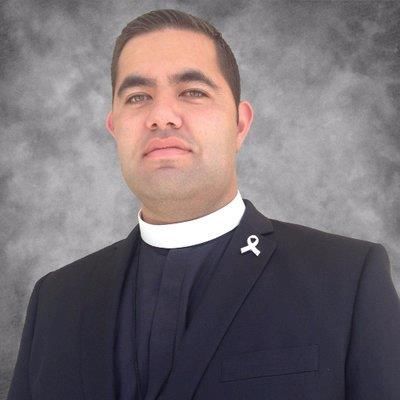
Theology Programme                PAST323/ MINS415               Campus Course Outline

5-DAY RESIDENTIAL INTENSIVE

                                                           The venue for the 5-day
                                                           residential intensive from
                                                           January 17-21 is Te Rau
                                                           College in Gisborne. The
                                                           College is situated at 9
                                                           Temple Street, Gisborne.

                                                   Teaching sessions will be
                                                   held here from 12:30pm
                                                   Monday concluding on
                                                   Friday at 12:30pm with
                                                   lunch. For those wishing to
                                                   stay on site, marae style
accommodation is provided. Should you prefer more privacy, you are welcome to
arrange accommodation off-site at your own cost.

Te Rau College is the ministry training centre of the Pīhopatanga o Te Tairawhiti.

ACCOMMODATION AND MEALS:
Accommodation and meals at Te Rau College are covered by the University.
Alternatively, students are welcome to make their own arrangements for
accommodation at their own expense. Breakfast, lunch and dinner will be provided at
Te Rau College.

WHAT TO BRING:
If you are intending to stay on site, please bring clothes and personal items for a four
night stay. Mattresses, sheets and pillows will be provided but please provide your
own sleeping bag and/or blankets. Be aware that the sleeping facilities are communal.

TRANSPORT:
Students are responsible for arranging their own transport to and from the venue in
Gisborne, but we will assist in exploring options for sharing rides from the airports and
other North Island locations.

WHAKAWHANAUNGATANGA
This module will be completed in full on Monday afternoon of 17 January. This module
consists of the opening karakia, mihi whakatau, lunch, a history of Te Rau College and
whakawhanaungatanga where you will be given time to introduce yourself.

God is honoured first and foremost, as visitors we are welcomed and reciprocate with
greetings, food is shared and enjoyed, history is shared and acknowledged, old
friendship are re-connected and new friendships are made. Once this process is
complete, we are then ready to share and learn with each other.

                                           5
Theology Programme                         PAST323/ MINS415                           Campus Course Outline

TE NOHO WĀNANGA I TURANGANUI A KIWA
GISBORNE RESIDENTIAL INTENSIVE

 TE WA –   MONDAY                   TUESDAY             WEDNESDAY           THURSDAY                 FRIDAY
 TIME      17 JANUARY               18 JANUARY          19 JANUARY          20 JANUARY               21 JANUARY
 7:30am                             Parakuihi           Parakuihi           Parakuihi                Parakuihi
                                    Breakfast           Breakfast           Breakfast                Breakfast
 8:45am                             Karakia             Karakia             Karakia                  Karakia
                                    House Keeping       House Keeping       House Keeping            House Keeping
 9:00am                             Te Paipera Tapu     Social media,       A Theology of Protest:   Closing korero
                                    continued           covid-19 and        Politics and social      by Archbishop,
                                                        ministry            justice in Māori         The Most Rev
                                                                            ministry.                Don Tamihere

 10:00am                            Paramanawa          Paramanawa          Paramanawa               Paramanawa
                                    Morning tea         Morning tea         Morning tea              Morning tea
 10:30am                            The history of      Assignment 2:       Ecumenism                Group final
                                    Kaiwhakaako         Group Research      Te Runanga               discussion
                                    and what we can     time.               Whakawhanaungatan
                                    learn from them     .                   ga
                                    today in ministry
 11:30                              Discussion          Discussion          Discussion group:        Closing karakia
                                    group:              group:              Rua Rakena Reading
                                    Māori Marsden       Tui Cadigan
                                    Reading.            Reading.

 12:30pm   Opening karakia and      Kai o te aonui o    Kai o te aonui o    Kai o te aonui o te ra   Kai o te aonui
           whakatau (welcome)       te ra               te ra               Lunch                    o te ra
                                    Lunch               Lunch                                        Lunch
                                                                                                     Haere ra
 1:30pm    Kai o te aonui o te ra   Panel               A tikanga Māori     The theology of
           Lunch                    discussion:         mandate: Māori      Taonga Puoro, liturgy
                                    Ministry in a       models of           and worship.
                                    changing context    pastoral care.
                                    of te ao Māori.
 2:30pm:   Course overview          Paramanawa          Paramanawa          Paramanawa
                                    Afternoon tea       Afternoon tea       Afternoon tea
 3:00pm    Inaugural Lecture        Ministry in the     Theology of         Matakite, Tohunga,
           Rev Michael Tamihere,    Pentecostal,        death, dying and    Ariki, Towards a Māori
           Tumuaki o Te Rau         Charismatic,        ministry during     Ecclesiology.
           Kareti                   Evangelical         tangihanga.
                                    traditions.
 4:00pm    Whakawhanaungatanga      Assignment one      Assignment one      Assignment 2 Group
           Introductions            research time.      research time.      panel discussions:

                                                                            Group 1
           Mapping questions for    MINS415:            MINS415:            Group 2
           the week.                Discussion          Discussion Board    Group 3
                                    Board Post 1:       Post 2:             Group 4
 6:00pm    Kai o te ahiahi –        Kai o te ahiahi     Kai o te ahiahi     Kai o te ahiahi
           Dinner                   Dinner              Dinner              Dinner
 7:00pm    The Most Rev Arch-       Group discussion    Evening Speaker:    Group discussion
           Bishop Don Tamihere.                         Rev Dr Hirini Kaa
           Te Paipera Tapu.                                                 Assignment research
                •    Te Mata                            Group discussion    time.
                •    Te Ngakau
                •    Te Ritenga                                             MINS415: Discussion
                                                                            Board Post 3:
 8:30pm    Karakia o te po          Karakia o te po     Karakia o te po     Karakia o te po
           Evening devotions        Evening             Evening             Evening devotions
                                    devotions           devotions

At this stage we will be proceeding with Programme A.

                                                        6
Theology Programme PAST323/ MINS415 Campus Course Outline
PROGRAMME B: ALTERNATIVE PROGRAMME VIA ZOOM
In the event that we are unable to meet in person in Gisborne due to covid-19 the
following programme will be delivered online via Zoom.
Here is the Zoom link below (Press control and then click on link).
https://otago.zoom.us/j/99197275869?pwd=azE3MUlQWFVZMW04NXpmUDhXV1Budz09
Meeting ID: 991 9727 5869
Password: 578346
TE WA – MONDAY TUESDAY WEDNESDAY THURSDAY FRIDAY
TIME 17 JANUARY 18 JANUARY 19 JANUARY 20 JANUARY 21 JANUARY
10:00am Morning devotion Morning devotion Morning devotion Assignment 2:
Group panel
The history of A tikanga Māori A Theology of Protest: discussions:
Kaiwhakaako mandate: Māori Politics and social
and what we can models of justice in Māori ministry. Group 1
learn from them pastoral care. Group 2
today in ministry. Group 3
Group 4
11:00am Paramanawa Paramanawa Paramanawa Paramanawa
Morning tea Morning tea Morning tea Morning tea
11:30am Ministry in the Social media, Ecumenism /Runanga Closing korero
Pentecostal, covid-19 and Whakawhanaungatanga by Archbishop,
Charismatic, ministry. The Most Rev
Evangelical Don Tamihere.
traditions.
12:30pm Kai o te aonui o Kai o te aonui o Kai o te aonui o te ra Closing
te ra te ra Lunch karakia
Lunch Lunch
1:30pm Opening karakia and Ministry in a Assignment 2: The theology of Taonga
whakatau (welcome) changing context Group Research Puoro, liturgy and
Whakawhanaungatanga of te ao Māori. time. worship
Introductions
2:30pm: Programme overview Paramanawa Paramanawa Paramanawa
Afternoon tea Afternoon tea Afternoon tea
3:00pm The Most Rev Arch- Theology of Guest Speaker: Matakite, Tohunga,
Bishop Don Tamihere. death, dying and Rev Dr Hirini Kaa Ariki, Towards a Māori
Te Paipera Tapu. ministry during Ecclesiology.
• Te Mata tangihanga.
• Te Ngakau
• Te Ritenga
4:00pm Te Paipera Tapu Discussion Discussion Discussion group:
continued group: group: Rua Rakena Reading.
Māori Marsden Tui Cadigan
Reading reading
5:00pm Closing devotion Closing Closing Closing devotion
devotion devotion
7Theology Programme PAST323/ MINS415 Campus Course Outline
PROGRAMME C:
In the event that the residential intensive in Gisborne is able to go ahead but students
cannot attend due to Covid-19 then where possible, sessions will be live-streamed,
recorded and uploaded to Blackboard.
The following week I will make myself available via Zoom to students for a number of
discussions and an opportunity to complete assessments.
The dates and times for the extra sessions are:
• Wednesday 26 January: 1-3pm
• Thursday 27 January: 1-3pm
• Friday 28 January: 1-3pm
The Zoom link will be emailed to you closer to the time.
ASSESSMENT QUESTIONS
Ka pirangi koe ki te tuhi to aromatawai kei roto i te reo Māori, he pai tēnā.
This is the first paper in Theology to offer students the option of writing and delivering
all their assessments in either te reo Māori or in English. During the week a te reo
Māori roopu will operate for discussion groups and assessments.
Assignments for PAST 323:
For PAST 323, this paper is assessed by means of a journal, a group project and one
essay.
Assignment 1:
Length: 1500 words
Value: 30% of final grade
Due date: Friday, 28 January 2022
Complete three journal entries, each of approximately 500 words. The entries should
address the following topics:
1. What can you learn from the theological theories of the Rev Māori Marsden
from the course readings God, man and universe that may inform your own
theology and practice of ministry?
2. What can you learn from the article by Sister Tui Cadigan: How Māori Talk
about God that may inform your own theology and practice of ministry?
3. What can you learn from The Māori Response to the Gospel by Rua Rakena
that could benefit your own theology and practice of ministry?
Time will be allocated during the 5-day residential intensive in Gisborne to work on
this assignment. Once you have completed your three entries, submit these in a
word document on Blackboard.
8Theology Programme PAST323/ MINS415 Campus Course Outline
Assignment 2:
Length: 2000 words
Due date: Friday 21 January 2022.
Value: 20% of final grade. Grades will be apportioned as follows:
• 10% for the written transcript (this grade will be shared by the
group)
• 5% for individual performance in the oral presentation
• 5% for peer assessment of your contribution to the group
Working with the group of students to which you will be assigned at PAST 323,
design and deliver a recorded 40-minute panel discussion that explores one of the
following subjects:
• What would a liturgy of Aotearoa New Zealand look like?
• What is cultural safety in ministry?
• Is your Church in need of decolonisation, if so, explain why and how
this would be done?
• Discuss what is meant by ‘liturgical sovereignty’ used in the article by
Canon Chris Huriwai.
When this is complete, watch your own recording as a group and discuss amongst
yourselves what you have learnt from watching the recording.
• Assign yourself a mark out of 5
• Assign each other a mark out of 5
Outputs:
1. A group presentation via videoconference.
2. A transcript of approximately 2,000 words outlining the substance of your oral
presentation.
Students will be assigned to a group during the intensive week and will be given an
opportunity to commence and complete the group project during the week.
Assignment 3:
Length: 2500 words
Due date: Monday, 14 February 2022
Value: 50% of final grade that will be apportioned as follows:
• 45% for the poster
• 30% for the report
• 25% based on peer reviews and responses
In this assignment you will be working in a group of three people. The purpose of this
assignment is for you to identify the tikanga / values in your theology and practice of
pastoral care. There is scope to be experimental and creative, this should be a fun
assignment.
1. Design a poster that expresses at least 3 tikanga involved in your theology of
pastoral care.
9Theology Programme PAST323/ MINS415 Campus Course Outline
2. Write a report of 1500 words that explains your poster and the tikanga /
values in your theology and practice of pastoral care.
3. Share your poster and your report with the other two people in your
roopu/group.
4. Provide a peer review on the posters and reports of your peers in no more
than 350 words.
5. When you receive your peer reviews, write your response in 150 words to
each of the peer reviews.
6. Submit:
• Your poster
• Your report that includes:
➢ Your two-peer reviews that you received in response to your poster
and report
➢ Your two responses to your peer reviews
Assignments for MINS 415
For MINS 415, this paper is assessed by means of a journal, a group project,
discussion board and one essay.
Assignment 1:
Length: 2000 words
Value: 30% of final grade
Due date: Friday, 28 January 2022
Complete four journal entries on each the following topics. Each journal entry should
be approximately 500 words.
1. What can you learn from the theological theories of the Rev Māori
Marsden from the course readings God, man and universe that may inform
your own theology and practice of ministry?
2. What can you learn from the article by Sister Tui Cadigan: How Māori Talk
about God that may inform your own theology and practice of ministry?
3. What can you learn from The Māori Response to the Gospel by Rua
Rakena that could benefit your own theology and practice of ministry?
4. What are your thoughts on the statement by Dr Pā Henare Tate that:
‘Maori are crying out for a form of Christianity that is ‘theirs’, one that is
couched in the language, imagery, symbols, systems, stories, values,
theology and liturgy that speaks to them as to who they are in this land.’
10Theology Programme PAST323/ MINS415 Campus Course Outline
Time will be allocated during the 5-day residential intensive in Gisborne to work on
this assignment. Once you have completed your three entries, submit these in a
word document on Blackboard.
Assignment 2:
Length: 2500 words
Due date: Friday, 21 January 2022
Value: 20% of final grade. Grades will be apportioned as follows:
• 10% for the written transcript (this grade will be shared by the
group)
• 5% for individual performance in the oral presentation
• 5% for peer assessment of your contribution to the group
Working with the group of students to which you will be assigned at MINS 415 level,
design and deliver a recorded 40-minute panel discussion on one of the following
topics:
• What would a liturgy of Aotearoa New Zealand look like?
• What is cultural safety in ministry?
• Is your Church in need of decolonisation, if so, explain why and
how this would be done?
• Discuss what is meant by ‘liturgical sovereignty’ used in the
article by Canon Chris Huriwai.
When this is complete, watch your own recording as a group and discuss amongst
yourselves what you have learnt from watching the recording.
• Assign yourself a mark out of 5
• Assign each other a mark out of 5
Outputs:
1. A group presentation via videoconference
2. A script of 2,500 words outlining the substance of your oral presentation.
Students will be assigned to a group during the intensive week and will be given an
opportunity to commence and complete the group project during the week.
Assignment 3:
Length: 1500 words
Value: 15% of final grade
Due date: Friday, 4 February 2022
Discussion Board:
On the Tuesday, Wednesday and Thursday on the Residential intensive in Gisborne
a question will be posted in the Discussion Board on Blackboard.
1. Respond to each question in 300 words.
2. After you have made your post on Blackboard, in 200 words, respond to a
post from another student in the same thread.
This will give you 6-posts and 1500 words in total.
11Theology Programme PAST323/ MINS415 Campus Course Outline
Blackboard Discussion Posts:
Post 1: Comment on this statement by Rev Dr Hirini Kaa:
‘When combined with Mātauranga Māori and Indigenous agency, Te Paipera Tapu
becomes a source of liberation.1
Post 2: Dr Lynne Taylor says that: the Covid-19 pandemic forced churches to
radically adapt their worship, ministry, and mission practices.2
How did you adapt or not adapt your worship, ministry and mission practice in
response to covid-19?
Post 3: What insights can you incorporate into your own theology and practice of
ministry from church traditions other than your own?
Assignment 4:
Length: 3000 words
Due date: Monday, 14 February 2022
Value: 35% of final grade that will be apportioned as follows:
• 45% for the poster
• 30% for the report
• 25% based on peer reviews and responses
In this assignment you will be working in a group of three people. The purpose of this
assignment is for you to identify the tikanga / values in your theology and practice of
pastoral care. There is scope to be experimental and creative and you are expected
to have fun completing this assignment.
1. Design a poster that expresses at least 3 tikanga involved in your theology of
pastoral care.
2. Write a report of 2000 words that explains your poster and the tikanga /
values in your theology and practice of pastoral care.
3. Share your poster and your report with the other two people in your
roopu/group.
4. Provide a peer review on the posters and reports of your peers in 350 words.
5. When you receive your peer reviews, write your response in 150 words to
both peer reviews.
1
Kaa, Hirini, “When Christianity came to Aotearoa: 150 years of the Bible in te reo Māori.” The Spinoff
26 September 2018. (Course Reader).
2
Taylor, Lynne, “Reaching Out Online: Learning From One Church’s Embrace of Digital Worship,
Ministry and Witness.” Witness: Journal of the Academy for Evanglism in Theological Education,
vol.35 (2021): 1-14. (Course Reader)
12Theology Programme PAST323/ MINS415 Campus Course Outline
6. Submit:
• Your poster
• Your report that includes:
➢ Your two peer reviews that you received in response to your poster and
report
➢ Your two responses to your peer reviews
RESOURCES
• Blackboard, the University’s online learning tool;
• This Course Outline and the Study Guide
• eReserve, a resource for electronic readings, which you can access via
Blackboard;
• The Theology Programme “Style Guide” which recommends students use the
16th edition of the Chicago Style Guide when writing essays. It is available online
at http://www.otago.ac.nz/theology/study/studentresources/
• The handbook Distance Learning Information and Support, providing advice on
administrative matters not covered in this Course Outline and on the Distance
Library Service. (You may download the PDF from the 'Essential Information'
web page).
THIS IS IMPORTANT!
Please Note: You must have access to Blackboard and your University email
address in order to complete this paper. You will receive access once your enrolment
is complete. Communications from your lecturer regarding teaching matters will be
provided only through Blackboard and your University email address, as outlined in
the University's Student Communications Policy, so you must check these emails
regularly. eVision will also send important messages through your University email. If
you have any concerns about your access to Blackboard or to other course resources,
please contact the lecturer or administrative staff immediately so that these can be
resolved.
You will find there is a lot of helpful information and resources on the Theology
Programme website. In particular, we require you to read the section called “Essential
Student Information.” You will find it here:
http://www.otago.ac.nz/theology/study/studentresources/
This page provides a number of useful resources such as the Style Guide and the
Plagiarism Declaration Form you must attach to your assignments. It supplies detailed
information on assessment and student support. In particular, it contains guidance on
the topics of plagiarism and deadlines, both of which can incur penalties if not heeded.
This also is where you will find instructions for making online discussion posts and
13Theology Programme PAST323/ MINS415 Campus Course Outline
submitting assignments electronically. It is very important you make yourself familiar
with this material. The assumption is that you have read it.
Reference will be made to information on the website in the following pages, so do
take the time to follow the links and absorb the material. It will save you from making
costly mistakes and help to make the practical experience of distance study a
straightforward one.
REFERENCING SYSTEM
For writing essays, the Theology Programme requires that you use the 16th edition of
the Chicago Style Guide, which is the norm for many academic journals in the
Humanities and is often recommended for theses in the humanities. The Programme
has prepared a Style Guide, which outlines the Chicago Style and offers other advice
on essay presentation. You may find it via the Theology Programme’s “Student
Resources and Information” page:
http://www.otago.ac.nz/theology/study/studentresources/
SUBMITTING WRITTEN WORK
All assignments shall be submitted electronically via the “Assignment” feature on
Blackboard by midnight on the due dates notified. Please do not submit paper copies.
For full instructions about how to submit assignments electronically via Blackboard as
well as other important information on plagiarism, grading, and deadlines, please see
the “Essential Information” web page.
All Assignments submitted in the Theology Programme must be prefaced with a
student Plagiarism Declaration Form (or the plagiarism declaration on Blackboard
must be ticked). They will not be deemed to have been submitted unless and until the
Plagiarism Declaration Form has been submitted or box ticked. The form can be
downloaded from http://www.otago.ac.nz/theology/study/studentresources/
It is also on the Blackboard site for this course.
ACADEMIC INTEGRITY
All Assignments submitted in the Theology Programme must be prefaced with
a student Plagiarism Declaration Form (or the plagiarism declaration on
Blackboard must be ticked when submitting an assignment).
It can be downloaded from http://www.otago.ac.nz/theology/study/studentresources/
It is also on the Blackboard site for this course.
14Theology Programme PAST323/ MINS415 Campus Course Outline
Academic integrity means being honest in your studying and assessments. It is the
basis for ethical decision-making and behaviour in an academic context. Academic
integrity is informed by the values of honesty, trust, responsibility, fairness, respect
and courage. Students are expected to be aware of, and act in accordance with, the
University’s Academic Integrity Policy.
Academic Misconduct, such as plagiarism or cheating, is a breach of Academic
Integrity and is taken very seriously by the University. Types of misconduct include
plagiarism, copying, unauthorised collaboration, taking unauthorised material into a
test or exam, impersonation, and assisting someone else’s misconduct. A more
extensive list of the types of academic misconduct and associated processes and
penalties is available in the University’s Student Academic Misconduct Procedures.
It is your responsibility to be aware of and use acceptable academic practices when
completing your assessments. To access the information in the Academic Integrity
Policy and learn more, please visit the University’s Academic Integrity website at:
www.otago.ac.nz/study/academicintegrity
or ask at the Student Learning Centre or Library. If you have any questions, ask your
lecturer.
http://www.otago.ac.nz/administration/policies/otago116838.html
http://www.otago.ac.nz/administration/policies/otago116850.html
STUDENT SUPPORT
The “Essential Information” web page provides helpful information on how to access
the University Library’s resources, as well as a guide to the support services available
to students at the University of Otago, including the Student Learning Centre and
Disability Support.
For all administrative enquiries, please contact the Theology Administrator:
Email: theology@otago.ac.nz Phone: 03 479 8639
We recommend that you contact the Programme as soon as possible if you have
any problems participating in the course or accessing resources. Please
remember to check your University email account regularly for updates and
announcements.
THEOLOGY PROGRAMME
University of Otago, PO Box 56, Dunedin 9054, New Zealand
www.otago.ac.nz/theology
15You can also read


