Pathways for Advancing Careers and Education (PACE): Briefing on Implementation and Early Impact Findings for Valley Initiative for Development ...
←
→
Page content transcription
If your browser does not render page correctly, please read the page content below
Pathways for Advancing Careers
and Education (PACE):
Briefing on Implementation and
Early Impact Findings for
Valley Initiative for Development
and Advancement (VIDA)

                 Karen Gardiner, Abt Associates
                 Elizabeth Copson, Abt Associates

McAllen, Texas        March 7, 2018
Austin, Texas         March 8, 2018
The Pathways for Advancing Careers and Education (PACE)
Study is supported by the Office of Planning, Research, and
Evaluation (OPRE), Administration for Children and Families
(ACF), U.S. Department of Health and Human Services (HHS)
(Contract #: HHSP23320072913YC).

The contents of this presentation do not necessarily represent
the official views or policies of OPRE, ACF, or HHS.

                                                                 2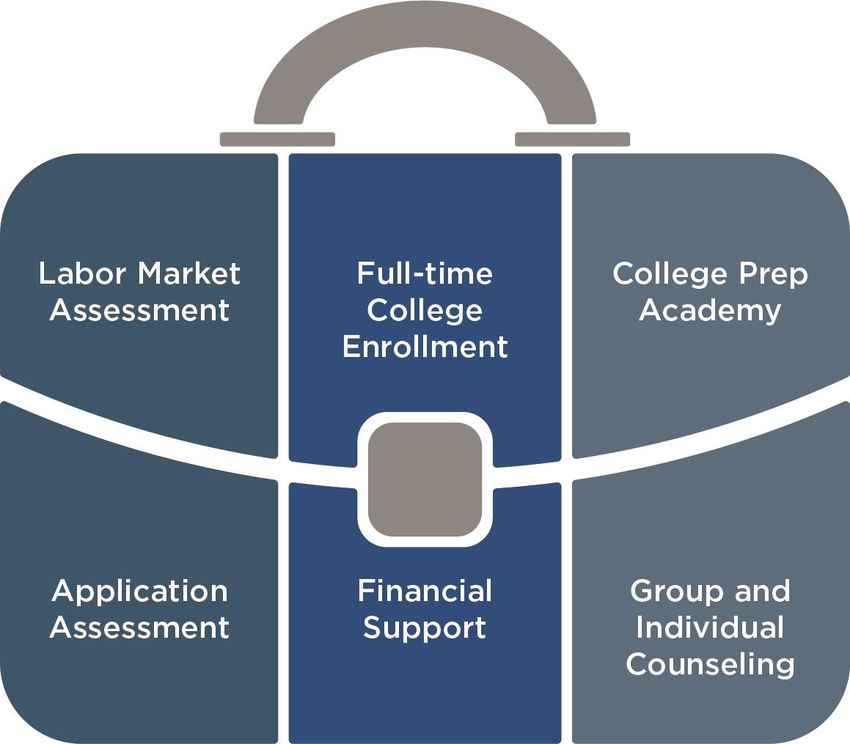
Findings in a nutshell
Pathways for Advancing Careers and Education
Evaluation
VIDA evaluation findings
What’s next?
Questions and discussion
3
Number of       Rates of full-   Credential
college credits   time college     attainment
    earned         enrollment

                                                4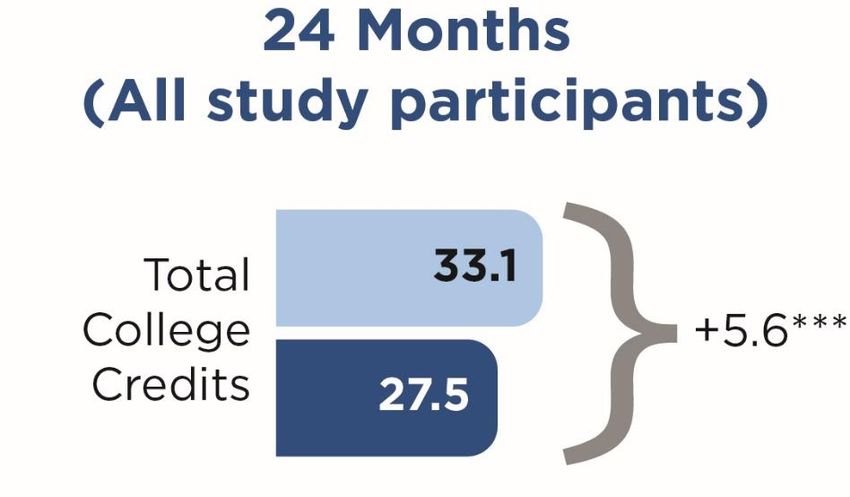
Founded in 1995
Based on Project
QUEST model
5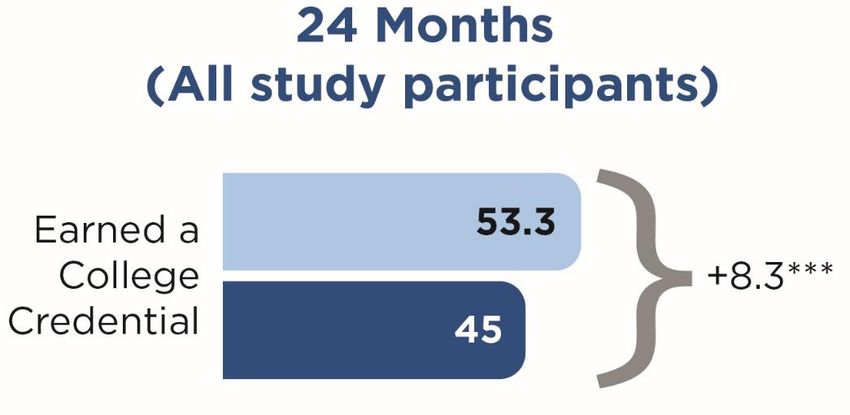
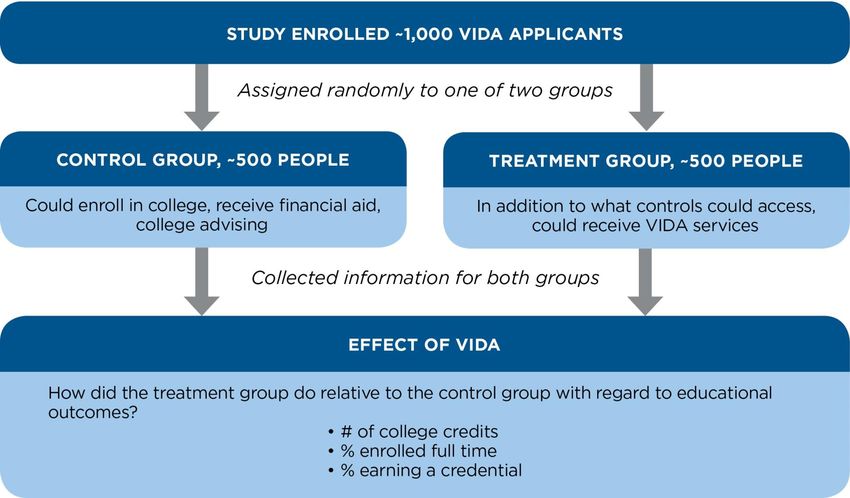
Part of PACE, an evaluation of 9 promising “career
pathways” programs
Used “gold standard” methodology to assess
impacts on educational attainment and career
progress
6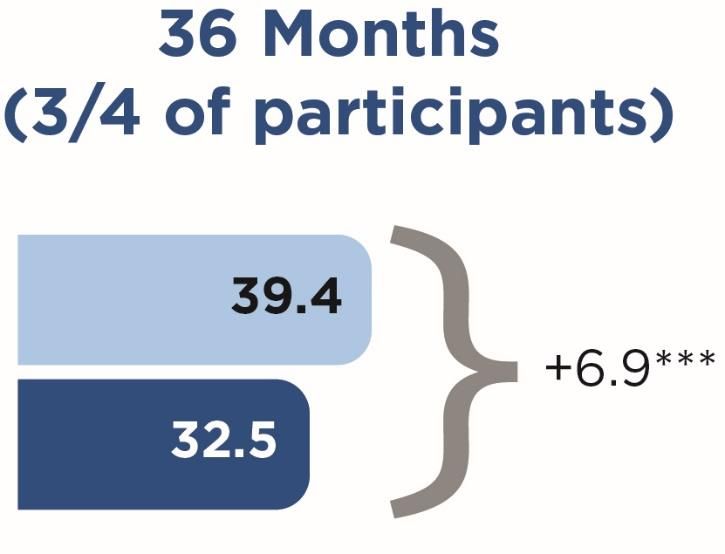
7
8

2011     2012      2013     2014      2015       2016      2017      2018      2019      2020   2021

Study enrollment
2011 to 2014

                    Early impacts after
                                                           Report
                    24 months
                                                            2017
                    Educational outcomes

                             Intermediate impacts after
                             36-42 months                                      Report
                             Educational, employment,                           2019
                             earnings outcomes; cost-benefit

                                                        Long-term impacts after
                                                        72 months                               Report
                                                        Educational, employment, earnings,       2021
                                                        family wellbeing outcomes

                                                                                                   9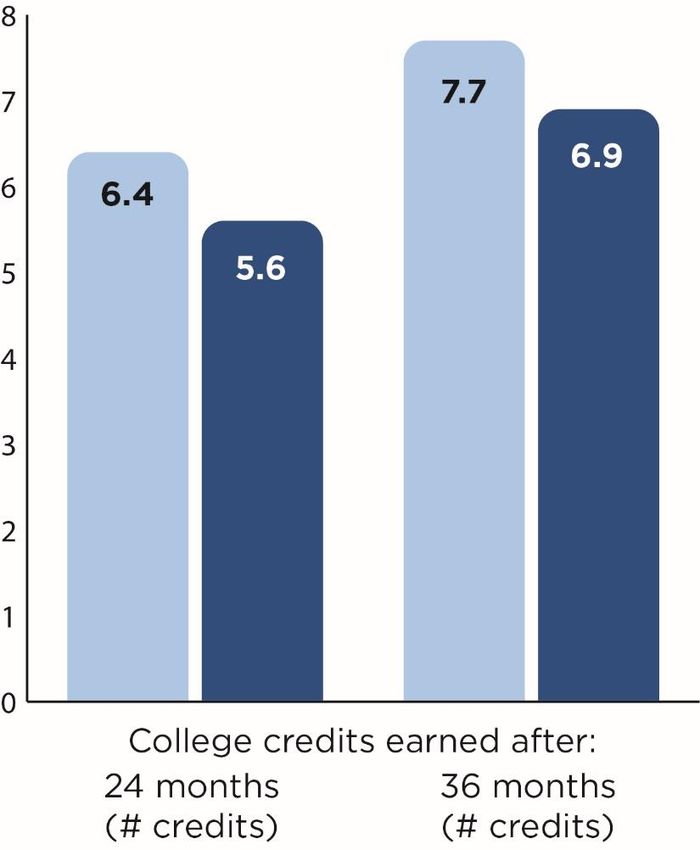
VIDA participants earned more college credits.

                                            10
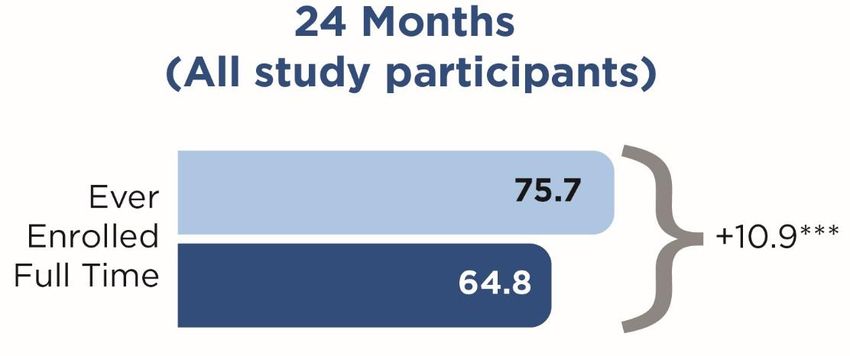
VIDA participants enrolled in college full-time
at a greater rate.
11VIDA participants earned more
college credentials.
1213
Evaluation not designed to determine the role of
each program component on outcomes
Implementation study findings offer insight
– We asked program staff and participants,
“what makes a difference?”
– Answer: financial support + counseling
14 VIDA provided an average of almost $7,000 in direct
financial assistance per participant
– Supported tuition/fees, books, tools, uniforms,
transportation to school
“I think VIDA does an
“If it was just counseling without excellent job in providing
financial assistance, the program anything…They pay your
wouldn’t be effective. These tuition, and that’s probably
individuals have their plates full...The the biggest thing…I’m so
last thing they need is encouragement glad that I don’t have to
without something in it for them.” worry about it.”
‒VIDA Staff ‒VIDA Participant
15 One-on-one once a month, group sessions three
times a month
Identify and address possible barriers to college
attendance before they cause drop-out
“The counseling sessions, being
“Accountability at every step is very there, kind of like a parent really.
important from the very beginning to Like, “Hey, how are you doing?”
the end. This is not an entitlement Like, “Hey, are you continuing with
program, not a “gimme”, charity. You that? Are you having issues? What’s
have to commit to going to school, going on?” They were always there.
making grades, and seeing your They were a call away, a text away. It
counselor. You commit I commit, you was ridiculous the amount of
bail I bail.” attention.”
‒VIDA Staff ‒VIDA Participant
16 Intermediate outcomes study
– 36+ month impacts on education, employment and
earnings
– Cost-benefit study
Long-term outcomes study
– 72-month impacts on employment, earnings, personal
and family wellbeing
17 Report available online
– www.acf.hhs.gov/opre/research/project/pathways-for-
advancing-careers-and-education
– www.career-pathways.org
Contact the study team
karen_gardiner@abtassoc.com
elizabeth_copson@abtassoc.com
howard.rolston@verizon.net
Contact the Federal Project Officer
Nicole.Constance@acf.hhs.gov
1819
You can also read


