Patients' and Clinicians' Visions of a Future Internet-of-Things System to Support Asthma Self-Management: Mixed Methods Study
←
→
Page content transcription
If your browser does not render page correctly, please read the page content below
JOURNAL OF MEDICAL INTERNET RESEARCH                                                                                                          Hui et al

     Original Paper

     Patients’ and Clinicians’ Visions of a Future Internet-of-Things
     System to Support Asthma Self-Management: Mixed Methods
     Study

     Chi Yan Hui1, BEng, MSc, PhD, CEng; Brian McKinstry1, MD; Olivia Fulton1, BN; Mark Buchner2, BSc; Hilary
     Pinnock1, MD
     1
      Asthma UK Centre for Applied Research, Usher Institute, University of Edinburgh, Edinburgh, United Kingdom
     2
      Tactuum Ltd, Glasgow, United Kingdom

     Corresponding Author:
     Hilary Pinnock, MD
     Asthma UK Centre for Applied Research
     Usher Institute
     University of Edinburgh
     Old Medical School, Teviot Place
     Edinburgh
     United Kingdom
     Phone: 44 0131 650 8102
     Email: hilary.pinnock@ed.ac.uk

     Abstract
     Background: Supported self-management for asthma reduces acute attacks and improves control. The internet of things could
     connect patients to health care providers, community services, and their living environments to provide overarching support for
     self-management.
     Objective: We aimed to identify patients’ and clinicians’ preferences for a future internet-of-things system and explore their
     visions of its potential to support holistic self-management.
     Methods: In an exploratory sequential mixed methods study, we recruited patients from volunteer databases and charities’
     social media. We purposively sampled participants to interview them about their vision of the design and utility of the internet
     of things as a future strategy for supporting self-management. Respondents who were not invited to participate in the interviews
     were invited to complete a web-based questionnaire to prioritize the features suggested by the interviewees. Clinicians were
     recruited from professional networks. Interviews were transcribed and analyzed thematically using PRISMS self-management
     taxonomy.
     Results: We interviewed 12 patients and 12 clinicians in the United Kingdom, and 140 patients completed the web-based
     questionnaires. Patients expressed mostly wanting a system to log their asthma control status automatically; provide real-time
     advice to help them learn about their asthma, identify and avoid triggers, and adjust their treatment. Peak flow (33/140, 23.6%),
     environmental (pollen, humidity, air temperature) (33/140, 23.6%), and asthma symptoms (25/140, 17.9%) were the specific data
     types that patient most wanted. Information about asthma and text or email access to clinical advice provided a feeling of safety
     for patients. Clinicians wanted automated objective data about the patients’ condition that they could access during consultations.
     The potential reduction in face-to-face consultations was appreciated by clinicians which they perceived could potentially save
     patients’ travel time and health service resources. Lifestyle logs of fitness regimes or weight control were valued by some patients
     but were of less interest to clinicians.
     Conclusions: An automated internet-of-things system that requires minimal input from the user and provides timely advice in
     line with an asthma action plan agreed by the patient with their clinician was preferred by most respondents. Links to asthma
     information and the ability to connect with clinicians by text or email were perceived by patients as features that would provide
     a sense of safety. Further studies are needed to evaluate the usability and effectiveness of internet-of-things systems in routine
     clinical practice.

     (J Med Internet Res 2021;23(4):e22432) doi: 10.2196/22432

     https://www.jmir.org/2021/4/e22432                                                                J Med Internet Res 2021 | vol. 23 | iss. 4 | e22432 | p. 1
                                                                                                                     (page number not for citation purposes)
XSL• FO
RenderX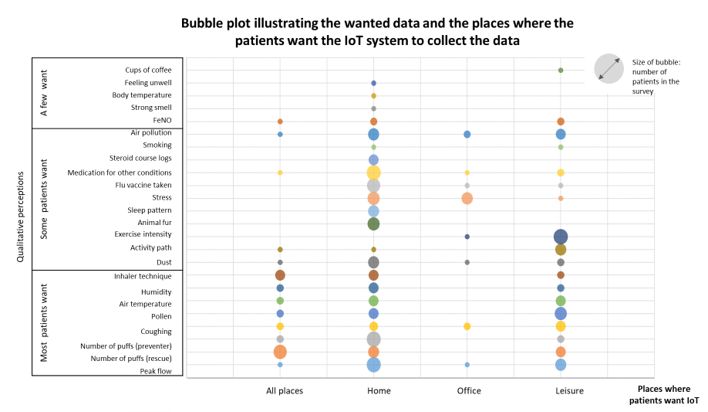
JOURNAL OF MEDICAL INTERNET RESEARCH                                                                                                       Hui et al

     KEYWORDS
     asthma; supported self-management; telehealth; mobile application; internet-of-things

                                                                          preferences, and environmental context or integrated with a
     Introduction                                                         patient’s electronic health records. Mobile systems that connect
     Asthma is a chronic disease, affecting 235 million people            asthma smart devices and pull data from electronic health
     worldwide [1]. Supported self-management reduces emergency           records [22,23] and apps that support asthma self-management
     use of health care resources, improves asthma outcomes, and          [31] have been developed, but often, technology researchers
     reduces morbidity [2-4]. The PRISMS (Practical Systematic            focus on novelty and ensuring acceptability of their technology
     Review of Self-Management Support for Long-term Conditions           [32], rather than exploring the breadth of functionality that could
     [5]) taxonomy consists of a 14-item list of strategies that have     support patients’ everyday life of living with a condition and
     been used to support self-management in long-term conditions         meet the demands of clinicians providing routine clinical care
     and which readers can select according to applicability to their     [33]. In contrast, clinical research typically focuses on evaluating
     context. In the context of asthma, these strategies include          older, established digital health technologies and their impact
     information about the condition, an action plan agreed upon          on patient health outcomes [34,35]. To our knowledge, there is
     between the patient and their clinician, self-monitoring of asthma   no research that explores which IoT features are desired by
     status with feedback, recording of physiological measures, use       patients and clinicians in the context of asthma self-management.
     of equipment, lifestyle, and social support. Technology can help     We, therefore, aimed to explore the perspective of patients and
     support self-management [6], and many patients are interested        clinicians on which self-management features (as defined by
     in a broad range of self-management support strategies, with a       the PRISMS taxonomy) they would want in a future IoT system.
     seamless link to their clinician if needed [7]. The internet of
     things (IoT)[8] and wireless networks such as The Things             Methods
     Network (TTN; [9]), long-range wide area networks
     (LoRaWAN), Wi-Fi, and mobile networks, enable asthma status
                                                                          Ethical Approval
     to be logged automatically by smart devices (eg, smart inhalers,     This mixed methods study was conducted between May 2019
     smart peak flow meters, smart watches). Long-life invisible          and January 2020, with the approval of the National Health
     environmental sensors with embedded intelligence supported           Service (NHS) London Fulham Research Ethics committee (ref
     by Raspberry Pi [10] and Arduino [11] can measure indoor and         19/LO/0703). The study was sponsored by the University of
     outdoor environmental triggers which can be correlated to            Edinburgh and the NHS Lothian (Academic and Clinical Central
     asthma logs that alert patients to changes status, give real-time    Office for Research and Development). All participants were
     advice on self-management, and can share data with health care       fully informed about the study and provided their consent.
     advisors if necessary.
                                                                          Design
     The IoT is a giant system comprising networks linking                We used qualitative interviews and a web-based questionnaire
     web-based services and clouds with online sensors and actuators.     to explore patients’ and professionals’ vision for future IoT
     Sensors are able to communicate with each other to make              features. We adopted an exploratory sequential design [36],
     distributed intelligent decisions in real time [12-15] An app or     using qualitative interviews with purposively selected patients
     webpage can be provided to give users a door to interact with        and clinicians to identify the preferred IoT features, which in
     the system (eg, to view data dashboards; to receive advice; to       turn were used to inform a web-based questionnaire in a wider
     receive reminders to collect data, reorder medication, or make       asthma patient community enabling triangulation of interview
     appointments with their clinician). The IoT health care network      findings.
     has defined an IoT topology [16], which is an architecture and
     platform that can be used for diagnosis, personalized medication,    Patient and Clinician Recruitment
     emergency service, home rehabilitation, remote surgery remote        Patient Recruitment
     monitoring, and self-management of conditions such as diabetes
     [17-20], hypertension [18,21], and asthma [18,22,23]. The            We included UK-based adult patients who were actively using
     implementation of 5G IoT will increase data transmission speed       treatment for asthma [37] and excluded anyone who needed
     and reduce the transmission latency, allowing a faster and           carers’ support to manage their asthma. We recruited patients
     seamless service [16]. IoT interconnectivity between patients        from volunteer databases and asthma charities social media.
     and their health care providers, the community services, and         We identified patients in the Scottish Health Research Register
     their living environment can be used to provide overarching          (SHARE) [38], Register for Asthma Research (REACH), and
     and personalized patient self-management support.                    Asthma UK volunteer database [39]. People registered in these
                                                                          databases have given consent to be contacted about asthma
     There are many asthma-related smart devices in the market (eg,       research. Eligible patients were invited with emails sent by
     smart inhalers [24], smart spirometers and peak flow meters          SHARE, REACH, and Asthma UK, which included a
     [25], respiratory rate sensors, wearable sensors that detect         recruitment link on behalf of the research team. We also posted
     wheezing and sleeping patterns [26-28], and digital fraction of      advertisements on Asthma UK and Asthma UK Centre for
     exhaled nitric oxide meters [29]), some of which have                Applied Research (AUKCAR) Facebook and Twitter that
     laboratory-proven accuracy [24,29,30]. Few, however, are able        included a recruitment link. People who were interested in the
     to be personalized to a patient’s clinical profile, social
     https://www.jmir.org/2021/4/e22432                                                             J Med Internet Res 2021 | vol. 23 | iss. 4 | e22432 | p. 2
                                                                                                                  (page number not for citation purposes)
XSL• FO
RenderX
JOURNAL OF MEDICAL INTERNET RESEARCH Hui et al
study used the link to register their interest. They were asked and asked patients to think about their previous usage of asthma
to read the information leaflet, confirm their eligibility, provide apps and their previous asthma self-management experience to
basic demographics, and give consent to be contacted (via the decide the features that they would want to be included in a
contact details they provided) in order complete the registration. future IoT system, and how often they think they would use
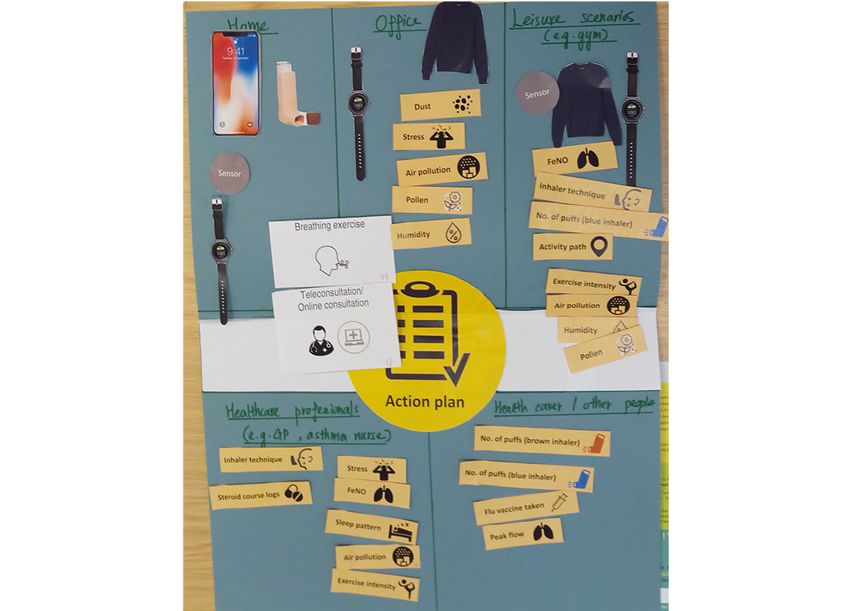
them. For task 2, we provided images of current and future
Sampling for Qualitative Interviews potential smart devices in the market (smart inhaler, smart peak
We purposively recruited a maximum variation sample of 12 flow meter, smart fabric, smart watch, voice assistant, smart
patients to take part in individual interviews. Sampling was purifier, human robot, and robot pet) and available data and
based on age (16-25 years, 26-45 years, 16-65 years, 65 years asked patients to discuss their future potential. Specifically we
or older); ownership of an action plan (or not); duration of asked them to use the images to create a IoT system that they
asthma (diagnosed 10 would want to support their daily self-management, and if, how,
years); hospital admission in the previous 12 months (or not); and when they would use each device for self-monitoring and
confidence with using technology (ability to download apps by what data (if any) they would want to be able to send to their
themselves, need help, never tried). health care professionals and their health carers, for example,
parents or spouse. (Figure 1 is an example of a task completed
Clinician Recruitment
by a participant.)
We recruited health care professionals from primary and
secondary care through newsletters and social media (the NHS At the end of each task, participants were asked to add any
Research Scotland Primary Care Network and professional features, data, or smart devices that they thought would be useful
bodies such as the Primary Care Respiratory Society and the but that were not included in the list or images (or were not yet
NHS Lothian Respiratory Managed Clinical Network). We also available).
approached individual professionals who were actively involved Professionals were asked to think about their previous
in clinical care or research through personal networks. experiences providing care for people with asthma and select
Data Collection the features from the list [7] that could support self-management
and data that they would like to receive in order to assist their
Think-Aloud Qualitative Interviews consultations with patients.
We adopted a think-aloud approach [40] to explore patients’ Finally, we showed participants a prototype app (an interface
and professionals’ preferences on the future design and utility app which included many wanted features [7]) to stimulate their
of IoT systems to support asthma self-management. thoughts on how they would like to interact with a
We asked patients to complete 2 tasks in the interview. For task self-management support IoT system (Multimedia Appendix
1, we provided a list of the most wanted app features 2).
(Multimedia Appendix 1) identified in our previous study [7]
https://www.jmir.org/2021/4/e22432 J Med Internet Res 2021 | vol. 23 | iss. 4 | e22432 | p. 3
(page number not for citation purposes)
XSL• FO
RenderXJOURNAL OF MEDICAL INTERNET RESEARCH Hui et al
Figure 1. An example of a task completed by a participant.
Administration of the Web-Based Questionnaire
Development of the Web-Based Questionnaire
We used Bristol Online Survey, a secure web-based survey
The web-based questionnaire aimed to quantify the features
platform that complies with ISO27001 information security
wanted by interviewees and their perceived usefulness enabling
standards and the General Data Protection Regulation, to build
us to triangulate the findings. Participants’ feedback in the
the web-based questionnaire and collect data. To test content
qualitative interview informed the features listed.
validity and readability, we invited a patient volunteer and an
The questionnaire (Multimedia Appendix 3) collected basic independent researcher to try out the questionnaire
demographic information (age group and gender) and asked independently. Their feedback was incorporated in the
questions regarding what data that they would want an IoT questionnaire before it was sent to participants. Potential
system to collect and where they would want the data to be participants who had not been selected for an interview and who
collected. The flow of questions reflected the sequence that we had given permission to be contacted regarding the survey were
used in the interviews. To reduce instances of missing data, emailed a participant information sheet and a link to the
each question had to be completed before progressing to the questionnaire.
next. First, we offered a list of features based on our previous
research [7] and the interview responses. Survey participants
Data Analysis and Synthesis
were asked to select the top 5 types of data that they would like Qualitative Analysis
collected by the IoT system and to prioritize them. A free-text
Interviews were digitally recorded, transcribed, and coded in
option was provided. Second, we asked participants to choose
NVivo (version 12; QSR International). We used PRISMS
where it would be most useful for the technology to collect these
taxonomy [3] as a framework to categorize the IoT features
data. The choices were informed by the interviews—“home,”
(themes) that emerged from the interviews. In addition, our
“at work/office/school,” “the place where they are at leisure
thematic analysis explored issues of particular importance to
activities that they do regularly (eg, gym, running, etc),” and
the participants. One reviewer (CYH) coded 2 interviews
“others.” If participants chose the leisure option, we asked the
(patient, professional) independently, and another reviewer (HP)
participants to specify which leisure scenario they thought was
reviewed the coded transcriptions to standardize the coding,
relevant to that data type. We offered a variety of activities
which was then applied (by CYH) to all the transcriptions. CYH
informed by the interviews and a free text option.
(reviewed by HP) coded features suggested by patients and
professionals separately and extracted the features, which were
then combined in tables for comparison. We categorized the
https://www.jmir.org/2021/4/e22432 J Med Internet Res 2021 | vol. 23 | iss. 4 | e22432 | p. 4
(page number not for citation purposes)
XSL• FO
RenderXJOURNAL OF MEDICAL INTERNET RESEARCH Hui et al
individual assessments of the features as would “always use,” clinicians’, no new app features were generated after 15
“often use,” “use when needed,” or “less likely to use” according interviews. We estimated that a sample size of 12 would be
to the words used in the interviews (Table 1). In our previous likely to achieve data saturation and was within our resources
study [7] on self-management features wanted by patients’ and for conducting individual interviews.
Table 1. Defining patients’ perceptions of potential future usage.
Usage Examples of words used by patient interviewees
Always use “always use,” “would always use,” “very helpful,” “would be good,” “more important,” “definitely a must”
Often use “would often use,” “would be good,” “really/extremely useful,” “it might be useful,” “something that I’d probably use
often, if I could, or if I can”; “once a month,” “quite/might be/ useful,” “might interest me”
Use it when needed “safety net,” “absolutely need it,” but like “rare occurrences,” “once a year,” “very important just to remind yours oc-
casionally,” “it wouldn’t be like every day,” “a bit of a waste of time if you have that popping up every day,” “check
in on regularly”
Less likely to use Unlikely to use because “I know what to do” “the factors do not affect me”, “the feature is already provided by the
current practice”, “no need to have this feature as an extra”; or they “hope not to use this feature very often” or “would
not rely on it”; or they “haven’t used it before”.
Not applicable “Does not apply to them”; “no point in it”
from Asthma UK’s social media, email, or website; 42 (11.6%)
Quantitative Analysis and Triangulation of Findings were from the AUKCAR Twitter; 10 (2.8%) were from SHARE;
We used descriptive statistics to analyze patients’ preference 3 (0.8%) were from REACH, 2 (0.6%) were recommended by
ratings for the data they would like a future IoT system to collect their hospital or a relative, 8 (2.2%) received an e-mail invitation
and in which circumstances the system would be most useful. from Asthma UK and others responded to our advertising. Of
We used data from the survey to quantify the features wanted the 362 patients, 12 were selected for an interview, and the
by interviewees and their perceived usefulness. remaining 350 were invited to complete the web-based
questionnaire: 3 rejected the invitation (2 were no longer
Interpretation
available to take part and 1 declined when they realized there
The findings, data synthesis, and interpretation were discussed was no payment), and 29 were undeliverable emails. Thus, 318
regularly within the multidisciplinary study team, which were sent the web-based questionnaire link, of whom 140
included a patient representative, technology developer, health (44.0%) completed the questionnaire. Of the 140 participants,
care professionals, and researcher. The researcher had an 139 participants (99.3%) completed the questionnaire within
engineering and technology background and clinical research 15 minutes, and 1 person (0.7%) appeared to take 3 hours and
experience with patients and clinicians in asthma app 42 minutes to complete the questionnaire (most likely because
development. the thank you page was not closed after completion). There were
no instances of missing data.
Results
Of 152 participants (12 interviewees and 140 web-based
Participants questionnaire respondents), most (74/152, 49%) were 46 years
to 65 years of age, 69.1% (105/152) were female, 54.6%
Patients (83/152) had an action plan, 75.0% (114/152) had been
Invitations were sent by email to 572 patients (SHARE n=211; diagnosed with asthma for more than 10 years, 12.5% (19/152)
Asthma UK n=220; REACH n=141). Advertisements were had been admitted to hospital in the previous 12 months, and
posted to the Asthma UK’s Facebook and Twitter (185,800 86.2% (131/152) were confident that they could download apps
followers) and AUKCAR Twitter (1224 followers). Of 362 themselves (Table 2).
patients who expressed interest in the study, 297 (82.0%) were
https://www.jmir.org/2021/4/e22432 J Med Internet Res 2021 | vol. 23 | iss. 4 | e22432 | p. 5
(page number not for citation purposes)
XSL• FO
RenderXJOURNAL OF MEDICAL INTERNET RESEARCH Hui et al
Table 2. Characteristics of patient participants.
Patient characteristics Interviewees (n=12), n (%) Questionnaire respondents (n=140), n (%)
Age (years)
16-25 3 (25.0) 2 (1.4)
26-45 2 (16.7) 39 (27.9)
46-65 3 (25.0) 71 (50.7)
>65 4 (33.3) 28 (20.0)
Gender
Female 8 (66.7) 97 (69.3)
Male 4 (33.3) 42 (30.0)
Prefer not to say 0 (0.0) 1 (0.7)
Action plan ownership
Yes 4 (33.3) 79 (56.4)
No 3 (25.0) 16 (11.4)
No asthma action plan but I have been told what to do 5 (41.7) 45 (32.1)
Diagnosed with asthma
Less than 6 months 0 (0.0) 1 (0.7)
Between 6 months and 1 year 0 (0.0) 1 (0.7)
Between 1 year and 10 years 4 (33.3) 32 (22.9)
More than 10 years 8 (66.7) 106 (75.7)
Admission to the hospital because of asthma in the last 12 months
No 8 (66.7) 125 (89.3)
Yes and now my asthma care is provided by general practitioner/asth- 1 (8.3) 5 (3.6)
ma nurse
Yes and I am still attending the hospital (specialist) clinic 3 (25.0) 10 (7.1)
App download experience
I download apps by myself 12 (100) 119 (85.0)
I usually ask someone to download apps for me 0 (0.0) 5 (3.6)
I have never downloaded an app 0 (0.0) 16 (11.4)
people with asthma, and some had research experience using
Professionals digital technology to monitor patients’ medication use and
Twelve professionals were recruited from primary, secondary, symptoms for respiratory patients (Table 3).
and tertiary care in the United Kingdom. All provided care for
https://www.jmir.org/2021/4/e22432 J Med Internet Res 2021 | vol. 23 | iss. 4 | e22432 | p. 6
(page number not for citation purposes)
XSL• FO
RenderXJOURNAL OF MEDICAL INTERNET RESEARCH Hui et al
Table 3. Characteristics of professional participants.
Professional role n Experiencea Additional description
General practitioner 2 >8 years Primary care: respiratory lead n=1; accident & emergency experience n=1
Asthma nurse 2 >20 years General practice asthma-trained nurse n=2
Pharmacist 4 1-20 years Respiratory pharmacists n=3; community pharmacist n=1 (reviewing patients during asthma ad-
missions or when referred by general practitioner or asthma nurse; checking inhaler technique,
choosing devices, addressing medication adherence)
Consultant chest 1 —b Secondary and tertiary care (severe asthma center and community lead)
physician
Asthma pediatrician 3 —b Lead consultant in a pediatric asthma service n=1; Using smart inhaler n=1; 30 years of pediatric
asthma research experience n=1 (looking after children with a range of asthma severities, conducting
face-to-face consultation, determining patients’ symptoms, making management plans, offering
advice to general practitioners, and reviewing test results)
a
Experience seeing patients with asthma on a regular basis.
b
Information not available.
asthma condition, and what they considered (or had been told
Mixed Methods Assessment: Features and Their by professionals) was best practice for asthma.
Perceived Usefulness
Monitoring, supported by feedback advice, was the feature that
Interview Themes most patients wanted to see in an IoT system. Information about
Perceptions of the 12 patients about the potential usefulness of asthma and an action plan were also priorities. Flexible access
features were mapped to the PRISMS taxonomy (Table 4; the to follow-up advice with a general practitioner or asthma nurse
full version can be found in Multimedia Appendix 4). Features by text or email service were “safety net” features that most
wanted by patients reached saturation within 10 interviews, and patients thought would create a sense of “staying connected”
we stopped sampling at 12 interviews. with clinicians, although they stated they would only use it when
needed. One patient with hearing problems who struggled to
Patients decided the usefulness of potential IoT features based
communicate during an exacerbation wanted a panic button to
on their own past asthma self-management experiences (eg,
automatically text for emergency help. Perceptions on
ownership or use of action plan and smart peak flow meter, their
monitoring of control, and feedback are presented in more detail
relationship with their clinicians, medication usage, use of
below. Other features were wanted by patients but were lower
emergency services), their asthma triggers, their curiosity about
priority (Multimedia Appendix 4).
what affected their asthma, the severity and control of their
https://www.jmir.org/2021/4/e22432 J Med Internet Res 2021 | vol. 23 | iss. 4 | e22432 | p. 7
(page number not for citation purposes)
XSL• FO
RenderXJOURNAL OF MEDICAL INTERNET RESEARCH Hui et al
Table 4. Summary of the potential usefulness of features mapped to the PRISMS taxonomy [5].
Theoretically Features Patient Clinicians
based support
Information about Information about asthma Online information was of interest, ideally person- Professionals considered that reputable informa-
asthma and avail- management alized to clinical context and individual situation tion such as inhaler technique videos, treatment
able resources (eg, broad range of information for newly diag- information, why and how the medication should
nosed, safety net information for experienced pa- be taken were important for patient self-manage-
tients) ment
Provision of action What to do when condi- Most patients wanted a (digital) action plan to re- Most clinicians suggested an action plan to remind
plan tion gets worse mind them what to do when they forgot the agreed about medication adjustment and agreed actions
actions when their conditions were getting worse if patients’ condition was getting worse
Regular clinical re- Routine review reminder; Most patients wanted reminders for the yearly re- Most professionals thought reminders would en-
view remote options. view. Some preferred web-based or teleconsulta- courage attendance, and agreed remote consulta-
tion consultation for regular reviews to save travel tions were convenient though not always clinically
time appropriate
Monitoring condi- Logging asthma symp- Most patients wanted automatic logging with in- Most clinicians thought objective data would help
tion with feedback toms, peak flow, and telligent feedback and the facility to transfer data them assess status and help patients understand
medication use. to the hospital or general practitioner practice. their triggers. They were skeptical that reminders
Reminders could be useful though ideally only would improve adherence to logging. Flagging
generated when their asthma was bad. Some pa- excess or increasing use of recuse medication
tients wanted alerts when they had increased use could alert patients and professionals to poor
of rescue inhaler control
Practical support Medication reminders Some patients thought reminders to take medica- Clinicians wanted medication adherence logs and
with adherence and support tion were useful if they were busy or forgetful but agreed with low-medication alerts to facilitate re-
would not change opinions. Automatic prompting ordering. Warning about overordering were also
reordering of medication was wanted. Most pa- important.
tients wanted flu vaccine alerts Flu vaccination reminders should pop up in both
patients and clinicians’ system
Provision of equip- Smart devices Most patients wanted to try smart devices (in- Clinicians generally interested in how the whole
ment halers, peak flows, activity trackers) technology system, as opposed to how individual
smart device can support patients
Provision of easy Panic button for emergen- A few patients suggested this would be helpful Clinicians generally considered this was a dupli-
access to support cy because it could be difficult to speak during exac- cate emergency system, though might be useful
when needed erbations for brittle high-risk asthma
Communication Emails, texts, and What- Most patients wanted flexibility to ask quick fol- Clinicians agreed with a flexible approach to re-
with health care sApp messages low up questions, and a patient with hearing views, including text services for quick follow up
professionals problems found WhatsApp useful questions, though resources would be needed
Training for every- Air pollution/pollen high Most patients wanted environmental features, and Clinicians were less interested in these data,
day activities alert some young patients (16-25 years old) suggested though some thought environmental information
it could identify triggers and help them to plan could help patients to understand (and avoid)
their day triggers
Training for self- Incorrect inhaler tech- Most patients thought it was good to be prompted Most clinicians wanted inhaler technique checks
management activi- nique alert when their inhaler technique was incorrect with real-time alerts for patients recorded for dis-
ties cussion at a review
Training for psy- Breathing exercise Some patients wanted breathing exercises to keep Most clinicians were keen to encourage patients
chological strate- themselves calm and considered it would help to do breathing exercises to improve asthma
gies their asthma symptoms
Social support Social media and alerts One patient wanted a friend alerted when she was One clinician suggested a social media page to
admitted to the hospital enable sharing of experiences
Lifestyle advice Physical activity and Some patients wanted to connect asthma logs with One clinician suggested an individualized fitness
and support weight loss their activity tracker, while others would use a program for people with severe asthma, and 2
weight watching facility clinicians wanted individualized weight manage-
ment plans
(prioritized by 25/140, 17.9%) and peak flow measurement
Survey Findings and Triangulation With Interview (33/140, 23.6%). For most respondents (24/32, 75.0%), this was
Themes a task to be undertaken at home, though some considered that
The responses to the survey are illustrated with a bubble plot symptom monitoring could be useful at home, work, or leisure
(Figure 2). In keeping with the priorities of the interviewees, locations. Monitoring environmental asthma triggers (pollen,
the largest bubbles represent monitoring of symptoms humidity, air temperature) was prioritized by 23.6% (33/140).
https://www.jmir.org/2021/4/e22432 J Med Internet Res 2021 | vol. 23 | iss. 4 | e22432 | p. 8
(page number not for citation purposes)
XSL• FO
RenderXJOURNAL OF MEDICAL INTERNET RESEARCH Hui et al
Figure 2. Information that patients want internet-of-things system features to capture. FeNO: fractional exhaled nitric oxide.
I’m a big believer in logging things so that if you’ve
Qualitative Perceptions of Specific Features got a history... I mean to log things, but I forget, so
Smart Devices for Monitoring Asthma Control it would be good to have something there. [Patient 5,
>65 years old, male]
Some patients explained that a peak flow was “useful” and
“needed” to help clinicians assess their asthma. Most Several suggestions were made about how an IoT system could
professional interviewees agreed with this and thought that a help overcome this discrepancy. A word that was used
log of peak flows, symptom scores, and medication use would frequently was “automatic.” Most patients wanted an IoT system
engage patients and could inform assessment of control and that could automatically log their asthma condition. They were
management strategies. interested in trying smart devices (eg, smart peak flow meter);
some explicitly mentioned that this would enable them to capture
I see particularly important is logging asthma data automatically though they were not clear how the devices
symptoms and medication use. Peak flow, maybe less could capture their asthma status without some effort on their
so, but the symptoms and medication use I think are part. A device with an automated data transfer feature still
very important. although peak flow is far from perfect, requires the user to blow the air into the meter, and patients
it just shows that the patient has engaged to some acknowledged that to do this regularly would require motivation
degree, that they’re seeing differences, whether it’s such as a request from researchers or their clinician. Patients
in the morning or evening or when they...after had different opinions on using voice assistants, smart watches,
exercise and they’re engaged with that, so I know smart fabrics, smart purifiers, human robots, and robot pets to
when I ask them some questions about their symptom collect additional data automatically:
experience that they’re thoughtful about it. [Health
care professional 7, general practitioner] Smart peak flow would be the way forward I think, it
really would, because it’s recording it (my peak flow).
However, in contrast to the priority attached to logging, most
If you say to me record it every day, I would record
patients acknowledged that in reality they checked their peak
it every day...I very rarely use it (the current
flow “rarely” or “only when their asthma was getting worse.”
mechanical peak flow). But if this smart peak flow is
The reasons for not measuring every day were varied. Some
going to record my peak flow at that particular time
“forgot,” while others felt “weird doing it in front of people,”
each day or twice a day, that’s only going to be good
but many suggested it was unnecessary as they knew their
to help me and to help my doctor understand, you
asthma and could assess status by how they felt.
know. [Patient 2, >65 year old, male]
Not very often. I do sometimes, if I get chest infections It would be good to have something that I could just
or if I get tight chested or if it’s not, if I just feel quickly tell it what’s happening. Probably not when
there’s something wrong, then I test what my peak I’m having an asthma attack because I can’t talk.
flow is, just to see what it is. [Patient 4, 26-45 years [Patient 1, 46-65 years old, female]
old, male]
https://www.jmir.org/2021/4/e22432 J Med Internet Res 2021 | vol. 23 | iss. 4 | e22432 | p. 9
(page number not for citation purposes)
XSL• FO
RenderXJOURNAL OF MEDICAL INTERNET RESEARCH Hui et al
I don’t have my inhalers with me and my other sensors These data were of less interest to clinicians though some
in the office, so for me, given I’m going in and out of suggested that, together with indoor triggers, outdoor pollution,
meetings and various other things and travelling exercise intensity, weight, peak flow, and symptoms, data could
about and stuff, it’s probably easier if I just have the provide real-time feedback and help patients understand which
watch and any clothing or something with sensors on factors affected their asthma in order to avoid them.
it that can do it, in an ideal world. [Patient 4, 26-45
years old, male] Discussion
(Voice assistant) It’s not very secure, I don’t like that.
[Patient 5, >65 years old, male] Principal Results
How the data were used was an important motivator. Most Both patients and clinicians expressed their interest in automated
patients said it was “good” or even “essential” that data from monitoring with real-time feedback within an IoT system that
smart peak flow meters and inhalers were transferred could support a wide range of self-management tasks. In the
automatically to the system so these logs could be correlated qualitative interviews, patients mostly wanted the system to log
with other data and displayed graphically on a mobile phone. peak flow, asthma symptoms, and environmental triggers
Some suggested that they would log peak flows if their clinicians (pollen, humidity, air temperature); provide advice on relevant
asked them to do so. actions or medication adjustment to suit different levels of
asthma control; and provide alerts about the number of doses
Clinicians were keen to see a record of medication use to enable of medication remaining and inhaler technique. The
assessment of adherence. They favored automated logging of questionnaire responses quantified these preferences with the
this information via a smart inhaler as that was perceived to be most wanted features being monitoring peak flow (33/140,
more accurate. 23.6%), environmental asthma triggers (pollen, humidity, air
It would be very useful if the patient is logging their temperature) (33/140, 23.6%), and symptoms (25/140, 17.9%).
asthma symptoms and peak flow, medication Clinicians wanted automated objective logs about patient
use...because that’s then helping us to adjust on condition that they could access during a consultation. Patients
treatment. I would love to know if they were taking it considered that easy access to information and clinical advice,
(prescribed medication) every day like they’re telling such as text or email communication via the system, provided
me they are. [Health care professional 4, prescribing a feeling of safety, while clinicians appreciated the potential
support pharmacist] reduction in face-to-face consultations because it would reduce
patient travel time and the use of health service resources.
Feedback and Advice Lifestyle logs (fitness regimes or weight control) were wanted
Patients in the interviews suggested a broad range of information by some patents but were of less interest to clinicians.
and advice that could be usefully provided through an IoT Strengths and Limitations
system such as a timely alert when their asthma control changed;
the amount of medication to be taken according to asthma Our study identified the preferred IoT features for patients and
control to reduce medication side effects; the numbers of doses clinicians and the type of data that they wanted the system to
taken and remaining in the inhaler, ideally with an option to collect; however, there are some limitations. First, due to limited
order a repeat prescription when the medication was running resources and time, we excluded children under 16 years old
low; and correct inhaler technique. from patient interviews though we included experienced
pediatricians to provide insights on the needs of children with
The clinician interviewees concurred with these priorities, asthma and their carers. Second, we did not manage to interview
especially the need for detecting poor inhaler technique and any patients who were newly diagnosed with asthma (within
linking to information about correct use of an inhaler. They also the previous year) who may well have had specific needs for
saw value in feedback supporting treatment adjustment information and support. Similarly, all our participants were
according to an action plan. familiar with downloading and using apps, suggesting that our
Environmental Data recruitment strategy of using social media reached a
technologically experienced population. Although this approach
Outdoor environmental data such as pollen, humidity, and air will have resulted in some perspectives being overlooked, the
temperature were considered “good to know” and “useful” data sample included in the study were demographically diverse,
by many patients. Patients who were newly diagnosed with with a range of experiences of living with asthma, and could
asthma wanted to learn which environmental factors affected provide a range of perspectives on the potential of technological
their asthma, whereas those who already knew what triggered support. Increasingly, the global population is becoming more
their asthma wanted to use daily environmental data to plan familiar with digital communication. However, we reached data
their day. saturation [41,42] in the qualitative analysis, and the web-based
(The outdoor environmental data) could maybe questionnaire, which attracted a broader range of patients,
suggest like how likely they are to be actual triggers provided findings that were consistent with the qualitative data.
as opposed to me just thinking. Then if it suggests Third, though the features that participants said that they wanted
that I’m really triggered by something then I could were related to participants’ past experience, we also used
put more effort to avoid that. [Patient 10, 16-25 years images of emerging technologies and stimulated discussion
old, female]
https://www.jmir.org/2021/4/e22432 J Med Internet Res 2021 | vol. 23 | iss. 4 | e22432 | p. 10
(page number not for citation purposes)
XSL• FO
RenderXJOURNAL OF MEDICAL INTERNET RESEARCH Hui et al
about novel features that could potentially contribute to patients did not complete logs, it was typically intentional and
managing their asthma. not due to forgetfulness [45]. A solution suggested by both
patients and professionals was to simplify data collection by
Reflexivity automating the process and increase motivation by providing
The researchers had engineering and research experience in useful graphical feedback or linking with professional advice,
developing asthma apps. To reduce the influence on the though even this requires some input from the patient. Further
interview findings of the researcher’s background, the coding advances may require the development of systems that that
and interpretation of results were discussed with study team silently monitor use of rescue medication with a smart inhaler
members from different backgrounds and with different that requires no input by the patient and only alerts patients in
experiences, including general practitioners, a patient, and a the event of unusual behavior patterns (eg, increased usage)
technology developer. This range of expertise enabled the study with advice from their action plan on jhow to regain control.
to present a balanced interpretation.
Monitoring is also influenced by whether the patients’ clinician
Comparison With Published Literature is interested in the results. Home monitoring with feedback has
IoT is an option to support self-management. Asthma action shown promise as a self-management strategy for people with
plans, asthma education, and regular consultations with hypertension [46] and diabetes [47]. The sense of having the
clinicians are core component of effective self-management; ongoing interest and support of a clinician is a factor in
which aims to support patients achieve good control by maintaining motivation to self-manage [48]. Our interviewees
recognizing when their asthma is getting worse and responding felt “safe” if they had an easy way (text or email) to contact
promptly and appropriately [43]. The features that patients clinicians when they had concerns or needed clarifications. A
wanted from the IoT system resonated with these aims (ie, such recent review [49] of patients with asthma and chronic
as facilitating learning about asthma and its triggers, logging obstructive pulmonary disease revealed similar preferences for
asthma status, providing alerts to highlight deterioration and accessible support. Similarly, patients with type 2 diabetes
offering feedback advising on treatment adjustment and other wanted technology that allowed 2-way text communication with
actions). Features such as monitoring how much medication is their clinicians.[50]. The professional interviewees in our study
left and inhaler technique can be delivered by smart inhalers considered that, when text and email are offered as options, they
that are already on the market. have the potential to reduce face-to-face consultations and save
health care resources.
There is, however, an anomaly. Most patients wanted features
that enabled regular monitoring of peak flow and symptoms, Conclusion
but the literature suggests that this is rarely, if ever, achieved An IoT system can encompass the range of components needed
in real life [7]. For example, in the context of chronic obstructive to support asthma self-management. Patients and clinicians
pulmonary disease, patients who are more severely affected by preferred features that monitor asthma status (preferably using
their disease (ie, those who might find monitoring most helpful) automated silent monitoring), provide timely advice in line with
were less likely to use communication technologies such as an agreed upon asthma action plan, and allow observation of
mobile phones, text messaging, email, and video chat [44]. Our environmental factors in relation to asthma control. Our
interviewees acknowledged this discrepancy by explaining that technologically literate participants appreciated the ability to
they actually only logged their asthma control when they were connect to asthma information, as well as easy access to
concerned about increasing symptoms, but that, most of the clinicians by text or email. Sustained use was acknowledged as
time, they did not see the necessity of monitoring because they a challenge. Large-scale evaluation of usability, health
already knew the status of their asthma. Reminders are unlikely outcomes, and resource implications are needed to realize the
to solve the problem of nonadherence to logging because, when potential benefits of silent monitoring connected IoT systems.
Acknowledgments
CYH received funding from (Scotland) Chief Scientist Office and Asthma UK Innovation (grant CSO-AUK-2018-03) to plan
and carry out the study. BM and HP received funding from European Institute of Innovation and Technology (grant 18113). The
views expressed in this publication are those of the authors and not necessarily those of the Chief Scientist Office or Asthma UK.
We are grateful to patient and professional participants for taking part in this study; Asthma UK, AUKCAR, SHARE, and REACH
for help with patient recruitment; the National Health Service Research Scotland Primary Care Network, Primary Care Respiratory
Society, and Lothian Respiratory Managed Clinical Network for help with professional recruitment; and AUKCAR Patient Public
Involvement group members for advice on the interview materials.
Authors' Contributions
CYH and HP designed the study. CYH extracted data. HP and synthesized the data. HP is the study guarantor. CYH and HP
wrote the manuscript. BM reviewed the final manuscript. OF commented on the findings from patient perspective, and MB
commented on implications from technology perspective. All authors approved the final version of the manuscript.
https://www.jmir.org/2021/4/e22432 J Med Internet Res 2021 | vol. 23 | iss. 4 | e22432 | p. 11
(page number not for citation purposes)
XSL• FO
RenderXJOURNAL OF MEDICAL INTERNET RESEARCH Hui et al
Conflicts of Interest
MB is managing director of Tactuum Ltd. OF contributes in a lay capacity to Teva Pharmaceuticals, AstraZeneca, and WEGOHealth.
Multimedia Appendix 1
Features and screenshots.
[DOCX File , 221 KB-Multimedia Appendix 1]
Multimedia Appendix 2
Detailed topic guide.
[PDF File (Adobe PDF File), 179 KB-Multimedia Appendix 2]
Multimedia Appendix 3
Web-based questionnaire.
[PDF File (Adobe PDF File), 110 KB-Multimedia Appendix 3]
Multimedia Appendix 4
Perceived usefulness of wanted feature.
[PDF File (Adobe PDF File), 139 KB-Multimedia Appendix 4]
References
1. Chronic respiratory diseases: asthma. World Health Organization. 2020. URL: https://www.who.int/news-room/q-a-detail/
asthma [accessed 2020-12-26]
2. Gibson PG, Powell H, Coughlan J, Wilson AJ, Abramson M, Haywood P, et al. Self-management education and regular
practitioner review for adults with asthma. Cochrane Database Syst Rev 2003(1):CD001117. [doi:
10.1002/14651858.CD001117] [Medline: 12535399]
3. Pinnock H, Parke HL, Panagioti M, Daines L, Pearce G, Epiphaniou E, PRISMS and RECURSIVE groups. Systematic
meta-review of supported self-management for asthma: a healthcare perspective. BMC Med 2017 Mar 17;15(1):64 [FREE
Full text] [doi: 10.1186/s12916-017-0823-7] [Medline: 28302126]
4. Levy M, Andrews R, Buckingham R. Why asthma still kills. Royal College of Physicians. URL: https://www.rcplondon.ac.uk/
sites/default/files/why-asthma-still-kills-full-report.pdf [accessed 2020-12-26]
5. Pearce G, Parke HL, Pinnock H, Epiphaniou E, Bourne CLA, Sheikh A, et al. The PRISMS taxonomy of self-management
support: derivation of a novel taxonomy and initial testing of its utility. J Health Serv Res Policy 2016 Apr;21(2):73-82.
[doi: 10.1177/1355819615602725] [Medline: 26377727]
6. Pinnock H. Connecting professionals and patients: how technology can support asthma self-management. In: Proceedings
of Respiratory Drug Delivery Europe 2017. 2017 Presented at: Respiratory Drug Delivery Europe; April 25-28; Nice,
France p. 43-52.
7. Hui CY, Walton R, McKinstry B, Pinnock H. Time to change the paradigm? a mixed method study of the preferred and
potential features of an asthma self-management app. Health Informatics J 2020 Jun;26(2):862-879 [FREE Full text] [doi:
10.1177/1460458219853381] [Medline: 31195877]
8. Internet of Things (IoT) ecosystem study. IEEE. 2015. URL: https://standards.ieee.org/content/dam/ieee-standards/standards/
web/documents/other/iot_ecosystem_exec_summary.pdf [accessed 2020-12-26]
9. The Things Network. The Things Industries. URL: https://www.thethingsnetwork.org/ [accessed 2021-04-02]
10. Raspberry Pi. Raspberry Pi Foundation. URL: https://www.raspberrypi.org/ [accessed 2020-12-26]
11. Arduino. Arduino. URL: https://www.arduino.cc/ [accessed 2020-12-26]
12. Minerva R, Biru A, Rotondi D. Towards a definition of the Internet of Things (IoT). IEEE Internet Initiative. URL: https:/
/iot.ieee.org/images/files/pdf/IEEE_IoT_Towards_Definition_Internet_of_Things_Revision1_27MAY15.pdf [accessed
2020-12-26]
13. Overview of the internet of things. International Telecommunication Union. URL: https://www.itu.int/rec/T-REC-Y.
2060-201206-I [accessed 2020-12-26]
14. What is the Internet of Things? IBM Corp. URL: https://www.ibm.com/blogs/internet-of-things/what-is-the-iot/ [accessed
2020-12-26]
15. Ejaz W, Anpalagan A. Internet of Things for Smart Cities: Technologies, Big Data and Security. Cham: Springer; 2019.
16. Riazul Islam SM, Kwak D, Humaun Kabir M, Hossain M, Kwak KS. The Internet of Things for health care: a comprehensive
survey. IEEE Access 2015;3:678-708. [doi: 10.1109/access.2015.2437951]
17. Saheb T, Izadi L. Paradigm of IoT big data analytics in the healthcare industry: a review of scientific literature and mapping
of research trends. Telemat Inform 2019 Aug;41:70-85. [doi: 10.1016/j.tele.2019.03.005]
https://www.jmir.org/2021/4/e22432 J Med Internet Res 2021 | vol. 23 | iss. 4 | e22432 | p. 12
(page number not for citation purposes)
XSL• FO
RenderXJOURNAL OF MEDICAL INTERNET RESEARCH Hui et al
18. Thuemmler C, Bai C. Health 4.0: Application of Industry 4.0 Design Principles in Future Asthma Management. Cham:
Springer; 2017:23-37.
19. Thilakarathne NN, Kagita MK, Gadekallu DTR. The role of the Internet of Things in health care: a systematic and
comprehensive study. Int J Eng Manag Res 2020 Aug 31;10(4):145-159. [doi: 10.31033/ijemr.10.4.22]
20. Deshkar S, Thanseeh R, Menon V. A review on IoT based m-Health systems for diabetes. Int J Comput Sci Telecommun
2017;8(1):13-18 [FREE Full text]
21. Baali H, Djelouat H, Amira A, Bensaali F. Empowering technology enabled care using IoT and smart devices: a review.
IEEE Sensors J 2018 Mar 1;18(5):1790-1809. [doi: 10.1109/jsen.2017.2786301]
22. MyAirCoach. The myAirCoach Consortium. 2015. URL: https://www.myaircoach.eu/content/what-myaircoach-project
[accessed 2020-12-26]
23. Bui AAT, Hosseini A, Rocchio R, Jacobs N, Ross MK, Okelo S, et al. Biomedical real-time health evaluation (BREATHE):
toward an mHealth informatics platform. JAMIA Open 2020 Jul;3(2):190-200 [FREE Full text] [doi:
10.1093/jamiaopen/ooaa011] [Medline: 32734159]
24. Smartinhaler for asthma. National Institute for Health and Care Excellence. 2017 Jan 11. URL: https://www.nice.org.uk/
advice/mib90/chapter/The-technology [accessed 2020-12-26]
25. Carpenter DM, Jurdi R, Roberts CA, Hernandez M, Horne R, Chan A. A review of portable electronic spirometers:
implications for asthma self-management. Curr Allergy Asthma Rep 2018 Aug 25;18(10):53. [doi:
10.1007/s11882-018-0809-3] [Medline: 30145683]
26. Massaroni C, Nicolo A, Sacchetti M, Schena E. Contactless methods for measuring respiratory rate: a review. IEEE Sensors
J 2020:1-1 [FREE Full text] [doi: 10.1109/jsen.2020.3023486]
27. Greiwe J, Nyenhuis SM. Wearable technology and how this can be implemented into clinical practice. Curr Allergy Asthma
Rep 2020 Jun 06;20(8):36 [FREE Full text] [doi: 10.1007/s11882-020-00927-3] [Medline: 32506184]
28. Tag: asthma. Wearable technology. URL: https://www.wearable-technologies.com/tag/asthma/ [accessed 2020-12-26]
29. Harnan SE, Tappenden P, Essat M, Gomersall T, Minton J, Wong R, et al. Measurement of exhaled nitric oxide concentration
in asthma: a systematic review and economic evaluation of NIOX MINO, NIOX VERO and NObreath. Health Technol
Assess 2015 Oct;19(82):1-330 [FREE Full text] [doi: 10.3310/hta19820] [Medline: 26484874]
30. VanZeller C, Williams A, Pollock I. Comparison of bench test results measuring the accuracy of peak flow meters. BMC
Pulm Med 2019 Apr 08;19(1):74 [FREE Full text] [doi: 10.1186/s12890-019-0837-3] [Medline: 30961573]
31. Tinschert P, Jakob R, Barata F, Kramer J, Kowatsch T. The potential of mobile apps for improving asthma self-management:
a review of publicly available and well-adopted asthma apps. JMIR Mhealth Uhealth 2017 Aug 02;5(8):e113 [FREE Full
text] [doi: 10.2196/mhealth.7177] [Medline: 28768606]
32. Shuwandy ML, Zaidan BB, Zaidan AA, Albahri AS. Sensor-based mhealth authentication for real-time remote healthcare
monitoring system: a multilayer systematic review. J Med Syst 2019 Jan 06;43(2):33. [doi: 10.1007/s10916-018-1149-5]
[Medline: 30612191]
33. Harst L, Lantzsch H, Scheibe M. Theories predicting end-user acceptance of telemedicine use: systematic review. J Med
Internet Res 2019 May 21;21(5):e13117 [FREE Full text] [doi: 10.2196/13117] [Medline: 31115340]
34. Hui CY, Walton R, McKinstry B, Jackson T, Parker R, Pinnock H. The use of mobile applications to support self-management
for people with asthma: a systematic review of controlled studies to identify features associated with clinical effectiveness
and adherence. J Am Med Inform Assoc 2017 May 01;24(3):619-632 [FREE Full text] [doi: 10.1093/jamia/ocw143]
[Medline: 27694279]
35. Hanlon P, Daines L, Campbell C, McKinstry B, Weller D, Pinnock H. Telehealth interventions to support self-management
of longterm conditions: a systematic metareview of diabetes, heart failure, asthma, chronic obstructive pulmonary disease,
and cancer. J Med Internet Res 2017 May 17;19(5):e172 [FREE Full text] [doi: 10.2196/jmir.6688] [Medline: 28526671]
36. Hanson WE, Creswell JW, Clark VLP, Petska KS, Creswell JD. Mixed methods research designs in counseling psychology.
J Couns Psychol 2005 Apr;52(2):224-235. [doi: 10.1037/0022-0167.52.2.224]
37. 2019/20 General Medical Services (GMS) contract Quality and Outcomes Framework (QOF). National Health Service.
2019. URL: https://www.england.nhs.uk/wp-content/uploads/2019/05/gms-contract-qof-guidance-april-2019.pdf [accessed
2020-12-26]
38. McKinstry B, Sullivan FM, Vasishta S, Armstrong R, Hanley J, Haughney J, et al. Cohort profile: the Scottish Research
register SHARE. a register of people interested in research participation linked to NHS data sets. BMJ Open 2017 Feb
01;7(2):e013351 [FREE Full text] [doi: 10.1136/bmjopen-2016-013351] [Medline: 28148535]
39. REACH. Asthma UK Centre for Applied Research. URL: https://www.aukcar.ac.uk/reach [accessed 2020-12-26]
40. Fonteyn ME, Kuipers B, Grobe SJ. A description of think aloud method and protocol analysis. Qual Health Res 2016 Jul
01;3(4):430-441. [doi: 10.1177/104973239300300403]
41. Guest G, Bunce A, Johnson L. How many interviews are enough? Field Methods 2016 Jul 21;18(1):59-82. [doi:
10.1177/1525822x05279903]
42. Francis JJ, Johnston M, Robertson C, Glidewell L, Entwistle V, Eccles MP, et al. What is an adequate sample size?
operationalising data saturation for theory-based interview studies. Psychol Health 2010 Dec;25(10):1229-1245. [doi:
10.1080/08870440903194015] [Medline: 20204937]
https://www.jmir.org/2021/4/e22432 J Med Internet Res 2021 | vol. 23 | iss. 4 | e22432 | p. 13
(page number not for citation purposes)
XSL• FO
RenderXYou can also read


