Payments without borders1 - Bank for International Settlements
←
→
Page content transcription
If your browser does not render page correctly, please read the page content below
Morten Bech                     Umar Faruqui                  Takeshi Shirakami
               morten.bech@bis.org              umar.faruqui@bis.org           takeshi.shirakami@bis.org

Payments without borders1

Cross-border and multicurrency payment systems have the potential to make cross-border
payments faster, cheaper and more transparent. A simple taxonomy reviews the different designs
and functionality of existing systems. Such systems remain rare, and most handle small volumes
and values. However, a number of new projects will go live in the next few years.
JEL classification: E42.

Cross-border payments are generally slower, more expensive and more opaque than
domestic ones. They tend to flow through the so-called correspondent banking
network, where chains of banks work to get funds from the payer to the payee.
     There are several ways to potentially improve cross-border payments. One is to
streamline processing along the chains of correspondent banks. 2 Another is to
replace the payment chains (or parts thereof) with dedicated cross-border and/or
multicurrency (CBMC) payment systems.
     This special feature focuses on the latter approach by looking at existing systems
with a view to drawing lessons. While CBMC arrangements are not new, they are
relatively rare. One reason is the complications in setting them up. On top of
operational challenges, some complexities of domestic systems are amplified in a
cross-border context. These include cross-border governance, conflict of laws issues,
and adherence to multiple anti-money laundering (AML) and combating the
financing of terrorism (CFT) regimes. Moreover, some issues are unique to cross-
border or cross-currency systems such as foreign exchange (FX) conversion and
liquidity management in foreign currencies. These are not always straightforward to
solve. In addition, the volumes and values processed by existing systems are often
very low (both in absolute terms and relative to domestic systems), suggesting that
“build it and they will come” does not uniformly apply to CBMC systems.

1
      We thank Claudio Borio, Stijn Claessens, Marc Hollanders, Wenqian Huang, Hyun Song Shin and
      Philip Wooldridge for helpful comments and suggestions. We are also grateful to Ismail Mustafi,
      Róbert Szemere and Luis López Vivas for excellent research assistance. The views expressed are those
      of the authors and do not necessarily reflect those of the Bank for International Settlements.
2
      SWIFT’s global payments innovation (gpi) initiative is designed to speed up cross-border
      correspondent banking transactions by allowing end-to-end tracking of payments in real time (SWIFT
      (2019)).

BIS Quarterly Review, March 2020                                                                       53
Key takeaways

     •     Payments across borders and currencies can be made faster, cheaper and more transparent by linking
           domestic systems, allowing banks from abroad remote access or building dedicated systems.

     •     Cross-border and multicurrency payment systems are more complex to set up and operate than domestic
           systems.

     •     There are only a handful of successful examples at present, but new systems are being implemented or
           planned.

    After a recent lull in new CBMC systems, things may be at a turning point. A
number of new systems are in the pipeline and likely to go live in the next few years.
Moreover, the type of CBMC systems is changing. Whereas past systems have
primarily focused on wholesale payments, some of the newer projects aim at retail
flows.
    The feature starts by presenting a taxonomy of CBMC systems. It then discusses
the challenges involved in setting them up and concludes with a summary of
emerging trends and policy issues.

Cross-border and multicurrency payments

Cross-border payments are those where the payer and payee reside in different
jurisdictions. Many of these are also cross-currency payments – that is, payments
where the payer and payee are debited and credited, respectively, in different
currencies.
    However, not all cross-border payments are cross-currency. Exceptions include
payments within monetary unions or payments in parts of the global economy where
there is a common invoice currency. For example, in the European Union the Single
Euro Payments Area (SEPA) initiative has simplified euro bank transfers to make them
as cheap and as fast as domestic ones (ECB (2014)). Globally, the US dollar remains
the most common invoice currency, and for many markets, such as oil and other
commodities, prices are quoted in USD. Regionally, other currencies may be a
“vehicle” for funds transfers, such as the Australian dollar in the South Pacific and the
South African rand in southern Africa.
     There are also a number of other payment types that have cross-border elements
embedded in them. These include foreign currency payments within a jurisdiction and
situations where a payment in one currency is linked to a payment in another – a
process known as payment versus payment (PvP). For the former type, the cross-
border element relates to the fact that even if parties within a jurisdiction agree to
pay each other in, say, USD, there is still need for a settlement agent3 with access to
the US payment system to square net positions at some point.
    CBMC systems have been built to facilitate the various types of cross-border
payments. The number of these systems is, however, low – especially if we disregard
cross-border systems in currency areas, such as the euro area.

3
         An entity that manages the settlement process for transfer systems or other arrangements that
         require settlement. The settlement agent sometimes differs from the owner or settlement institution
         of the system (CPMI glossary).

54                                                                          BIS Quarterly Review, March 2020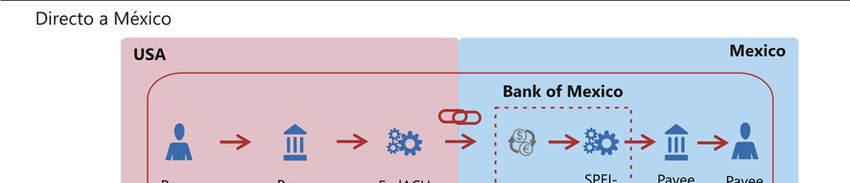
Taxonomy of cross-border and multicurrency payment systems1                                                                 Table 1

                                                                        Geographical reach

                                                    Within borders                                   Cross-border
                                                                                             Single currency cross-border
    Settlement

                 Domestic/single              Domestic payment systems
    currencies

                                                                                              (3 implemented, 1 under way)
                                                       Offshore                               Multicurrency cross-border
                 Foreign/multiple
                                              (9 implemented, 0 under way)                    (7 implemented, 3 under way)
1
  The numbers refer to authors’ estimates of, respectively, systems in operation and projects under way targeting implementation in
2020–21.

                                A rudimentary survey of central bank and industry websites suggests that,
                           around the world, there are currently about 20 systems that offer cross-border, cross-
                           currency, multicurrency or PvP services (Table 1 and Annex Table A). In addition, there
                           are at least four projects that aim to go live in the next few years. This compares with
                           the more than 90 major domestic payment systems in the 27 jurisdictions that are
                           members of the Committee on Payments and Market Infrastructures (CPMI).
                                The 23 systems and projects identified fall into three broad categories, as shown
                           in Table 1, depending on the type or number of currencies that the system handles
                           (domestic/single or foreign/multiple) and its geographical reach (within or across
                           borders). The three categories are: (i) offshore, (ii) single currency cross-border and (iii)
                           multicurrency cross-border.

                           Offshore systems

                           Some jurisdictions have substantial volumes of payments between domestic financial
                           institutions in one or more foreign currencies. In such cases, it might make sense to
                           “onshore” these payments by building an offshore system. An offshore system
                           processes payments denominated in a currency different from that of the jurisdiction
                           (CPMI glossary). Typically, these systems are built by adding currencies to new or
                           existing systems or reusing the same technical infrastructure for a new separate
                           system that then operates with a foreign currency.
                                Offshore systems have potential advantages. These include the ability to make
                           foreign currency payments during local business hours and the opportunity to save
                           on liquidity in the foreign currency if payments are netted before they are settled
                           using the designated settlement agent abroad. The Clearing House Automated
                           Transfer System (CHATS) in Hong Kong SAR is the poster child of multicurrency
                           offshore systems. It is a group of real-time gross settlement (RTGS) systems, each of
                           which settles in HKD, USD, EUR and RMB. CHATS is operated by Hong Kong Interbank
                           Clearing, a private entity jointly owned by the Hong Kong Monetary Authority (HKMA)
                           and the Hong Kong Association of Banks. Real-time gross settlement of HKD
                           payments began in 1994. In 2000, USD-CHATS was launched to allow settlement of
                           USD transactions during Asian business hours. USD-CHATS uses HSBC as its
                           settlement bank and also provides intraday liquidity to participants. CHATS added
                           the euro in 2003 and Chinese renminbi in 2006 (Graph 1, left-hand panel). The
                           settlement banks are Standard Chartered Bank (Hong Kong) and Bank of China (Hong
                           Kong), respectively.

                           BIS Quarterly Review, March 2020                                                                       55
Payment volumes in single currency and offshore systems generally remain low
Transactions settled in selected systems Graph 1
CHATS euroSIC SADC-RTGS
Per cent USD trn Per cent USD trn Per cent USD bn
160 20 11 4 1.1 24
120 15 9 3 0.9 18
80 10 7 2 0.7 12
40 5 5 1 0.5 6
0 0 3 0 0.3 0
13 14 15 16 17 18 19 13 14 15 16 17 18 14 15 16 17 18
Lhs: Rhs: Lhs: Rhs: Lhs: Rhs:
USD/HKD HKD euroSIC/SIC euroSic SADC/SAMOS SADC
RMB/HKD EUR
USD
RMB
CHATS = Clearing House Automated Transfer System (Hong Kong SAR); euroSIC = Euro Swiss Interbank Clearing; SADC = South African
Development Community; SAMOS = South African Multiple Option Settlement; SIC = Swiss Interbank Clearing.
Sources: South African Reserve Bank; Swiss National Bank; Hong Kong Interbank Clearing; SIX Group Interbank Clearing.
Other examples of offshore payment systems are the Lebanese RTGS system
(BDL-RTGS), the USD options in the RTGS systems of the central banks of Azerbaijan,
Jamaica, Tanzania and the United Arab Emirates, and the renminbi settlement service
in Malaysia.
Single currency cross-border systems
Economic agents located across borders may wish or need to pay each other
repeatedly in one of their currencies or even in a third currency. This occurs, for
example, if one currency dominates trade or finance flows between the agents. If
volumes are sufficient, then building a dedicated system to handle such flows may
make sense.
In general, there are two models for providing single currency cross-border
systems: one involves allowing some level of “remote access” to a common system,
and the other entails interlinking systems across borders. Switzerland uses both
models. The “domestic” RTGS system, Swiss Interbank Clearing (SIC), allows qualified
foreign-domiciled banks to participate via remote access4 – that is, a foreign bank
does not need to have a physical presence in Switzerland via a branch or a subsidiary.
This setup permits cross-border payments in Swiss francs; for instance, a participant
located in London can transfer CHF to participants in Frankfurt or Basel directly via
SIC and vice versa (Graph 2, first panel). This form of remote access to an RTGS system
is, however, unique. Most central banks grant accounts only to financial institutions
4
All participants with remote access to SIC must be subject to the equivalent level of standards
regarding supervision, anti-money laundering and telecommunications infrastructure as Swiss
participants are subject to.
56 BIS Quarterly Review, March 2020that are supervised or overseen by domestic authorities. Roughly one in five SIC
participants is a foreign-domiciled entity.
Swiss euroSIC links to the euro area RTGS system TARGET2 5 (Graph 2, third
panel). The system dates back to the introduction of the euro in 1999. It runs on the
same technical platform as SIC, and both systems are operated by SIX Interbank
Clearing.6 All cross-border euro payments to and from Switzerland are channelled
through the Swiss Euro Clearing Bank (SECB) in Frankfurt, which acts as the link
between the two systems. For banks in Switzerland, euro payments have over the last
couple of years accounted for around 5–7% of the value of Swiss franc payments
(Graph 1, centre panel).
In 1999, the common currency prompted also Denmark, Sweden and the United
Kingdom to introduce new euro RTGS systems despite the fact that they did not join
the euro. The systems became part of the TARGET system which interlinked the
national RTGS systems in the euro area. Joining TARGET allowed banks in the three
countries to make and receive cross-border euro payments (Graph 2, fourth panel). A
combination of low volumes and the changing prospects of joining the euro
ultimately led to the closure of the systems.
The countries of the Southern African Development Community (SADC)7 provide
another variation on how a single currency cross-border system can be set up via
remote access. Eligible banks from SADC countries hold ZAR accounts in the SADC-
RTGS and can access the system from their own country and make payments.
The SADC-RTGS was set up in 2013, partly with a view to enhancing regional
monetary cooperation and financial integration. The system is owned and governed
by the SADC Payment System Oversight Committee (Graph 2, second panel). The
system is hosted by the South African Reserve Bank (SARB) and runs on the same
infrastructure as the SARB’s domestic RTGS system (SAMOS). The values settled by
the SADC-RTGS have grown over time, but still represent only about 1% of the values
in SAMOS (Graph 1, right-hand panel). This, in part, reflects the importance of the US
dollar for cross-border payments in the SADC region, and the relatively high liquidity
management costs for participating banks.8
5
TARGET stands for Trans-European Automated Real-time Gross settlement Express Transfer system.
6
SIX Interbank Clearing is a subsidiary of SIX Group, a private financial services company. It operates
SIC on behalf of the Swiss National Bank.
7
Angola, Botswana, Comoros, the Democratic Republic of the Congo, Eswatini, Lesotho, Madagascar,
Malawi, Mauritius, Mozambique, Namibia, Seychelles, South Africa, Tanzania, Zambia and Zimbabwe.
8
Non-South African banks need to have a separate, off-system arrangement for prefunding their ZAR
accounts in the SADC-RTGS through their correspondent banks in South Africa.
BIS Quarterly Review, March 2020 57Payment flows in selected single currency cross-border systems Stylised illustrations Graph 2 BI-REL = Banca d’Italia Regolamento Lordo; PSP = payment service provider; SADC = South African Development Community; SECB = Swiss Euro Clearing Bank in Germany; SIC = Swiss Interbank Clearing; SIX = SIX Group (a private financial services company in Switzerland); TARGET = Trans-European Automated Real-time Gross settlement Express Transfer system (TARGET was the precursor of the current Eurosystem RTGS system, TARGET2). Source: Authors’ elaboration. 58 BIS Quarterly Review, March 2020
Multicurrency cross-border systems

                           There are about half a dozen multicurrency cross-border systems in operation and
                           two projects under way. They fall into three groups, based on the services offered:
                           cross-currency, choice of currency and PvP arrangements. Cross-currency service
                           allows the payer to be debited in one currency and the payee to be credited in
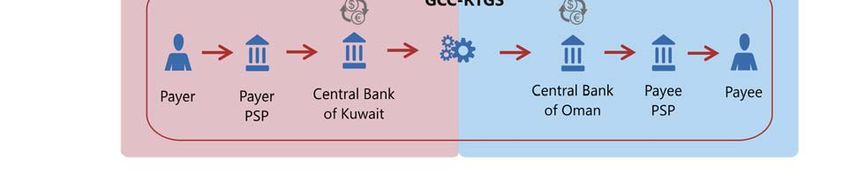
                           another. Examples are Directo a México and the forthcoming Gulf Cooperative
                           Council RTGS system (GGC-RTGS). In contrast, choice of currency service allows users
                           to select the currency of a payment from among those the system settles in; examples
                           are the Regional Payment and Settlement System (REPSS) of the Common Market for
                           Eastern and Southern Africa (COMESA), the East African Payment System (EAPS) of
                           the East African Community (EAC) and the forthcoming Arab Regional Payment
                           System (ARPS). PvP allows conditional processing of payments, a prime example
                           being CLS.
                                Directo a México was set up in 2005 to facilitate remittances from the United
                           States to Mexico. It links the Federal Reserve's automated clearing house (FedACH)
                           with the Mexican RTGS system (SPEI),9 and allows USD/MXN payments (Graph 3, top
                           panel). The Bank of Mexico provides the FX conversion at near wholesale rates. In
                           December 2019, the system processed some 43,000 payments worth USD 27.4
                           million, implying an average payment of USD 640 (Graph 4, left-hand panel).

Payment flows in selected cross-currency systems
Stylised illustrations                                                                                 Graph 3

GCC-RTGS = Gulf Cooperative Council regional system; PSP = payment service provider.
Source: Authors’ elaboration.

                           9
                                SPEI is both the RTGS and the retail payment system in Mexico.

                           BIS Quarterly Review, March 2020                                                  59
Other than CLS, multicurrency systems have not attracted large volumes
Transactions settled in selected systems Graph 4
Directo a México EAPS and REPSS (Kenya) CLS
USD USD mn Per cent USD mn Mn USD trn
650 32 0.4 800 200 1,600
550 24 0.3 600 150 1,200
450 16 0.2 400 100 800
350 8 0.1 200 50 400
250 0 0.0 0 0 0
04 07 10 13 16 19 14 15 16 17 18 03 06 09 12 15 18
Average payment (lhs) Lhs: (EAPS+REPSS)/KEPSS Total volume (lhs)
Value of payments (rhs) Rhs: EAPS Total value (rhs)
REPSS
EAPS = East African Payment System (EAC); KEPSS = Kenya Electronic Payments and Settlement System (ie the domestic RTGS for the Kenyan
shilling); REPSS = Regional Payment and Settlement System (COMESA).
Sources: Central Bank of Kenya; CLS; Quandl; BIS Red Book statistics.
Another example of a cross-currency system is the forthcoming GCC-RTGS
(Graph 3, bottom panel). It is expected to go live later in the year, and will settle
payments in the currencies of six Gulf region countries. 10 The central banks will
convert the currencies based on FX rates set at the start of the business day. The fact
that the GCC countries peg their currency to the US dollar11 alleviates FX risk. Based
in Saudi Arabia, the Gulf Payments Company will operate the system.12
REPSS offers choice of payment in either USD or EUR across COMESA countries.
It has a common clearing house in Zimbabwe, and the Bank of Mauritius acts as its
settlement bank, debiting and crediting the accounts of the participating central
banks on its books. Any payments made between participating countries are cleared
daily, on a net basis. CENFRI (2018) reports that REPSS is used infrequently and
primarily for wholesale or trade transactions.
EAPS offers multicurrency payments across the EAC countries.13 Unlike REPSS,
EAPS settles in the local currencies of the participating countries. To settle, the system
relies on the existing RTGS systems as well as bilateral account relationships between
the central banks. Moreover, it requires commercial banks to prefund payments with
their deposits at the central banks (CENFRI (2018)).
Volumes settled through the African cross-border payment systems are low.
Kenya, for example, participates in both EAPS and REPSS. In 2018, its central bank
10
Bahrain, Kuwait, Oman, Qatar, Saudi Arabia and the United Arab Emirates.
11
Kuwait is the exception, as it pegs its currency to a basket of currencies (of which the US dollar is the
most dominant).
12
The Gulf Payments Company is owned and operated by the six GCC central banks.
13
Burundi, Kenya, Rwanda, Tanzania and Uganda.
60 BIS Quarterly Review, March 2020processed 18,307 EAPS and 620 REPESS payments, worth about USD 680 million and
USD 43 million equivalent, respectively (Graph 4, centre panel).
ARPS, also known as Buna, is scheduled for launch in 2020. The system will be
operated by a supranational entity – a subsidiary of the Arab Monetary Fund − and
will be located in the United Arab Emirates. Regional central banks and qualifying
commercial banks will be able to hold multicurrency accounts at ARPS, including in
USD, EUR and eligible Arab currencies. Accounts need to be prefunded, and any FX
conversions will take place outside ARPS.
CLS is a noteworthy example of a cross-border multicurrency system that
provides PvP services. Founded in 2002 with the support of major central banks, it
provides settlement services in 18 currencies to mitigate FX settlement risk (see box).
CLS settles millions of trades worth trillions of dollars (Graph 4, right-hand panel).
Challenges of setting up
The rarity of cross-border and multicurrency systems is likely to be due to a
combination of factors. In the first place, setting up any payment system – domestic
or cross-border − is a complex undertaking (Bech and Hancock (2020, in this issue)).
Some of the challenges in implementing a domestic payment system are amplified in
a cross-border context. These challenges are both technical and political.
On the technical side, there are four key challenges. First, cross-currency
payments require an FX conversion at some point. In the correspondent banking
model, this conversion is done by one or more correspondent banks along the
payments chain. Often it is done by either the first (ie the payer’s) bank or the last
(ie the payee’s) bank in the chain. FX conversion is difficult to provide for most cross-
border or multicurrency payment systems, as it requires a “balance sheet” and the
willingness and ability to manage risks (eg market risk and FX settlement risk). Hence,
in cases where FX conversion is part of a system’s service offerings, it is typically done
by a closely affiliated bank.
Second, liquidity management in foreign currencies can be costly. Liquidity is the
grease that allows payment systems to operate smoothly. For domestic systems, the
settlement agent (eg a central bank or a commercial bank) often provides intraday
liquidity. For cross-border and multicurrency systems, the settlement agent might not
be willing or able to provide intraday liquidity to foreign participants or in foreign
currency. Thus, in the cross-border context, liquidity management is typically done
via prefunding, ie keeping balances in relevant accounts. This comes with trade-offs.
While the prefunding is essential in reducing the risk of payment delays and failures,
it can add costs for participants (eg in the form of idle buffer balances) or create
additional credit exposures elsewhere in the financial system (eg if credit is provided
by commercial banks in the country of a foreign currency to support the prefunding).
Third, ensuring a high degree of technical interoperability across payment
systems is difficult. Interoperability involves multiple facets, including operating
hours, access criteria, clearing and settlement procedures, and messaging standards.
Ensuring interoperability can be resource-intensive and time-consuming, especially
when there are required changes to legacy IT systems in the domestic payment
infrastructure and at member banks. In addition, any move towards interoperability
across jurisdictions needs to be synchronised, further exacerbating the “collective
action problem”.
BIS Quarterly Review, March 2020 61Payment versus payment
The settlement of FX trades can create significant risk exposures among counterparties. This FX settlement risk relates
to the risk that arises when one counterparty fails to make a payment in a currency after the other has made its
payment in a countercurrency (Bech and Holden (2019)). Over the past two decades, market participants have made
significant progress in reducing FX settlement risk by using payment versus payment (PvP) and other risk-reducing
methods such as netting.
PvP ensures that the final transfer of a payment in one currency occurs if and only if the final transfer of a payment
in another currency or currencies takes place (CPMI glossary). Technically, PvP settlement can be achieved in different
ways. It can be done through a direct link between two payment systems or through a common agent in the middle.
CHATS is an example of the former. In 2000, USD-CHATS was launched, allowing the clearing and settlement of
US dollar transactions in Hong Kong SAR during Asian business hours. Since 2000, CHATS has added the capability of
settling euro (2003) and renminbi (2006) transactions. These components of CHATS enable payments in multiple
currencies. In addition, payments in any supported currencies can be linked and settled on a PvP basis. USD-CHATS is
directly linked with the RTGS systems in Malaysia (since 2006), Indonesia (2010) and Thailand (2014), which enables
PvP between the US dollar and those countries’ currencies.
CLS is an example of the latter. It is a dedicated PvP settlement system and achieves PvP with a common agent
in the middle, ie CLS Bank (CLSB). Each direct participant in CLS has a single multicurrency account at CLSB, which is
located in the United States. CLSB, in turn, is a (remote) participant in the RTGS systems of the 18 currencies that it
settles. Trades submitted by CLS participants settle on a gross basis (ie one by one) on their accounts at CLSB. By
contrast, the funding by participants of their CLS accounts occurs through the local RTGS systems and on the basis of
the multilateral net short position (Graph A).
Payment flows in CLS Graph A
* = a subsidiary, branch or correspondent bank of Bank B2; ** = a subsidiary, branch or correspondent bank of Bank A1.
Source: Authors’ elaboration.
Finally, compliance risks and costs related to AML/CFT are typically higher in the
cross-border context. Yet AML/CFT requirements vary across jurisdictions, which
generally weakens the business case for centralising the AML/CFT screening function
within a cross-border payment system. Where that screening function is centralised,
establishing clear rules as to who would be liable in case of irregularities is vital but
difficult to operationalise.
On the political side, cross-border systems often need to be have a high degree
of shared political will among participating jurisdictions. A common motivation for
CBMC systems is to promote financial or economic integration in a region. Any new
62 BIS Quarterly Review, March 2020system needs to attract transaction volume above a certain threshold to grow
sustainably. This can be challenging where competing incumbent networks
(eg correspondent bank chains or closed-loop services) exhibit “inertia” because of
their network externality. Strong public policy support is often required to overcome
such inertia.
Furthermore, connecting payment systems in different jurisdictions also gives
rise to legal issues. For instance, differences in settlement finality rules may lead to a
scenario where a payment is regarded as final in one jurisdiction but not final in
another. The United Kingdom’s withdrawal from the European Union has led several
European countries to adapt their solvency laws to ensure settlement finality (Clancy
(2018)). Moreover, it is more likely that cross-border systems will face issues arising
from a conflict of laws (eg ambiguity as to which jurisdiction’s laws apply). Closing
such legal gaps sometimes requires new legislation or treaties.
Conclusions
A number of new cross-border systems are expected to be launched in the early
2020s. Beyond numbers, cross-border systems are also extending in scope. Until now,
most of the implementations or augmentations have focused on wholesale payments
and thus involve RTGS systems. Future projects are increasingly focused on retail
payments. For instance, the SADC-TCIB system, 14 expected to go live in 2020, is
geared towards remittance payments across a number of African countries. P27, a
proposed payment infrastructure for Nordic area countries, will first link automated
clearing houses and then retail fast payment systems. Sweden is planning to leverage
the pan-European retail fast payment system (TIPS) to settle its domestic retail
payments. Finally, new peer-to-peer technologies also hold promise with a view to
easing cross-border frictions (HKMA-BOT (2020), Auer and Böhme (2020, in this
issue)).
Safe and efficient CBMC systems can serve as public goods (Carstens (2019)).
These systems can increase competition in the cross-border payments market. This
can help contain the potential monopolistic powers of (existing or future) closed-loop
or peer-to-peer arrangements (G7 (2019)). CBMC systems can also provide an
alternative to the current correspondent banking setup for cross-border payments.
This can be especially relevant if the decline in correspondent banking relationships
continues (Rice, von Peter and Boar (2020, in this issue)).
However, as noted above, there are a number of challenges in setting up CBMC
systems, which calls for planning and coordination. The public and private sectors
both need to step up their game if payments are to flow across borders safely,
efficiently and quickly – giving us payments without borders.
14
TCIB stands for Transactions Cleared on an Immediate Basis.
BIS Quarterly Review, March 2020 63References Auer, R and R Böhme (2020): “The technology of retail central bank digital currency”, BIS Quarterly Review, March, pp 85–100. Bech, M and J Hancock (2020): “Innovations in payments”, BIS Quarterly Review, March, pp 21–36. Bech, M and H Holden (2019): FX settlement risk remains significant, BIS Quarterly Review, December, pp 48–9. Carstens, A (2019): The future of money and the payment system: what role for central banks?, lecture at Princeton University, 5 December. Clancy, L (2018): “CLS seeking legal fix for Brexit settlement threat”, RISK.net, 30 July. Centre for Financial Regulation and Inclusion (CENFRI) (2018): Payment systems in sub Saharan Africa, December. European Central Bank (2014): “Single Euro Payments Area (SEPA) reaches major milestone for retail payments“, press release, August. G7 Working Group on Stablecoins (2019): Investigating the impact of global stablecoins, October. Hong Kong Monetary Authority and Bank of Thailand (2020): Inthanon-LionRock: leveraging distributed ledger technology to increase the efficiency of cross-border payments, January. Rice, T, G von Peter and C Boar (2020): “On the global retreat of correspondent banks”, BIS Quarterly Review, March, pp 67–83. SWIFT (2019): “SWIFT enables payments to be executed in seconds”, press release, 23 September. 64 BIS Quarterly Review, March 2020
Annex
Cross-border and multicurrency payment systems Table A
Selected implementations and major enhancements since 1998
Cross- Off- Cross- Settlement
Year Country System Currencies Retail1 PvP5
border2 shore3 currency4 bank
1998 CH SIC (remote access) CHF SNB
CHAPS euro,
1999 GB, SE, DK EUR ECB
E-RIX, DEBES
CH euroSIC EUR SECB6
2000 HK CHATS7 USD HSBC8
2002 Global CLS9 AUD, CAD, CHF, EUR, GBP, JPY, USD CLSB10
2003 HK CHATS EUR SCB11
Global CLS (new currency) DKK, NOK, SEK, SGD CLSB
2004 Global CLS (new currency) HKD, KRW, NZD, ZAR CLSB
2005 MX/US Directo a México MXN, USD BoM12
2006 HK CHATS RMB BoCHK13
MY/HK CHATS/RENTAS14 MYR vs USD CBM15
2008 Global CLS (new currency) ISL, MXN CLSB
2010 HK CHATS/BI-RTGS IDR vs USD BI16
JM JamClear USD
2011 TZ TISS, TACH 17
USD TACH
2012 LB BDL-RTGS EUR, GBP, USD BDL18
COMESA19 REPSS20 EUR, USD CCH/CBoM21
MY RSS RMB CBM
AE UAEFTS USD, EUR
2013 EAC 22
EAPS 23
BIF, KES, RWF, TZS, UGX EAC CBs24
SADC25 SADC RTGS ZAR SARB26
2014 TH/HK CHATS/BATHNET THB vs USD BoT27
MU MACSS28 CHF, EUR, GBP, USD, ZAR BoMU29
2015 Global CLS (new currency) HUF CLSB
Projects
2020 GCC 30
GCC RTGS AED, BHD, KWD, OMR, QAR, SAR CBs
SADC SADC-TCIB31 ZAR SARB
2021 AMF32 ARPS33 EUR, USD
SE P27 DKK, EUR, SEK
Strikethrough = no longer in operation; italics = private sector.
1
Process retail payments. 2 Payer and payee in different jurisdictions. 3 Settling a foreign currency. 4 System does FX conversion.
5
Payment versus payment. 6 Swiss Euro Clearing Bank. 7 Clearing House Automated Transfer System. 8 Hong Kong and Shanghai
Banking Corporation. 9 Continuous Linked Settlement. 10 CLS Bank. 11 Standard Chartered Bank. 12 Bank of Mexico. 13 Bank of China
HK. 14 Real Time Electronic Transfer of Funds and Securities. 15 Central Bank of Malaysia. 16 Bank Indonesia. 17 Tanzania Interbank
Settlement System; Tanzania Automated Clearing House. 18 Banque du Liban (Central Bank of Lebanon). 19 Common Market for Eastern
and Southern Africa. 20 Regional Payment and Settlement System. 21 COMESA clearing house/Central Bank of Mauritius. 22 East African
Community. 23 East African Payment System. 24 Central banks. 25 South African Development Community. 26 South African Reserve
Bank. 27 Bank of Thailand. 28 Mauritius Automated Clearing and Settlement System. 29 Bank of Mauritius. 30 Gulf Cooperation
Council. 31 Transactions cleared on an Immediate Basis. 32 Arab Monetary Fund. 33 Arab Regional Payment System.
Source: Central bank and company websites.
BIS Quarterly Review, March 2020 65You can also read


