Phase 2 Re-mobilisation Plan 1st August 2020 to 31st March 2021 - July 2020 - NHS ...
←
→
Page content transcription
If your browser does not render page correctly, please read the page content below
Phase 2 Re-mobilisation Plan
1st August 2020 to 31st March 2021

                              July 2020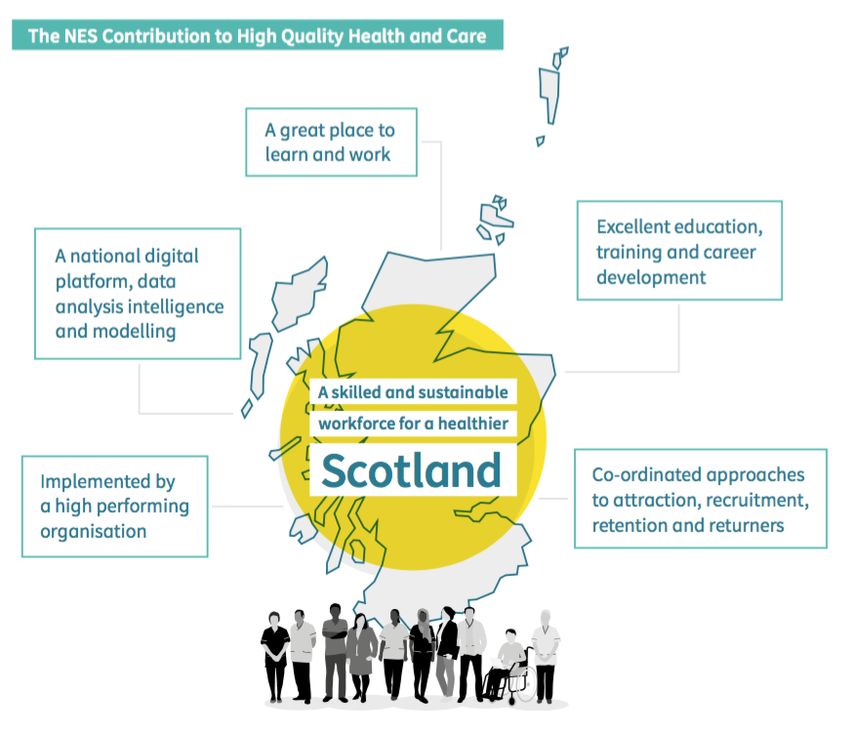
Contents

1.     Introduction ............................................................................................................... 3
2.     National Boards Collaborative ................................................................................ 4
3.     Strategic Context ...................................................................................................... 5
4.     Risk Management ..................................................................................................... 8
5.     High Quality Learning and Employment .............................................................. 10
       a.     Lead Employer and National Employment Policies ......................................... 10
       b.     Quality Management and Educational Governance ........................................ 11
       c.     Medical Appraisal.............................................................................................. 12
       d.     Faculty Development and Accreditation ........................................................... 12
       e.     Educational Support Roles and Networks ........................................................ 12
6.     Attraction, Recruitment, Training and Retention ................................................ 14
       a.     Recruitment, Careers Promotion and Youth Employment ............................... 14
       b.     Undergraduate and Pre-registration Education................................................ 15
       c.     Additional Cost of Teaching (ACT) ................................................................... 15
       d.     Postgraduate Training Grades ......................................................................... 16
       e.     Post-registration Education............................................................................... 17
       f.     Career Support Programmes and Resources for Returners ........................... 18
7.     A Skilled, Adaptable and Compassionate Workforce ........................................ 18
       a.     Continuing Professional Development ............................................................. 19
       b.     Role Development and Frameworks for Practice ............................................ 19
       c.     Mental Health .................................................................................................... 20
       d.     Maternal and Child Health ................................................................................ 21
       e.     Person-centred Education and Training ........................................................... 22
       f.     Equality and Diversity ....................................................................................... 22
       g.     Healthcare Support Workers (HCSW) .............................................................. 23
       h.     Organisational, Leadership and Management Development........................... 23
       i.     Quality Improvement (QI) Education ................................................................ 24
       j.     Patient Safety, Clinical Skills and Public Health............................................... 25
8.     Digital Platform, Analysis, Intelligence and Modelling ...................................... 25
       a.     The National Digital Platform ............................................................................ 26
       b.     The TURAS Digital Platform ............................................................................. 28
       c.     Data Analysis Intelligence and Modelling ......................................................... 28
       d.     NHS Scotland (NHSS) Business Systems ....................................................... 29
       e.     Digital Skills Development ................................................................................ 29
9.     A High Performing Organisation........................................................................... 30
       a.     Staff Governance, Health and Wellbeing ......................................................... 30
       b.     Finance ............................................................................................................. 31
       c.     Properties and Facilities ................................................................................... 31
       d.     Board Governance ............................................................................................ 32
10.    Conclusion............................................................................................................... 33

Contents                                                                                                             2|Page
1.      Introduction
1.1     NHS Education for Scotland (NES) is the national NHS Board with responsibility for
        education, training, workforce development. Having the right numbers of skilled,
        trained and supported staff, in the right place, at the right time and in the right roles is
        essential to providing high quality health and care services, which address health
        inequalities and encourage and support people to take more responsibility for their
        own health and wellbeing. In addition to providing national workforce and digital
        services which play a key role in supporting those who deliver frontline health and
        care1, NES directly funds and manages learners who comprise a significant element
        of the NHS Scotland patient-facing workforce2.

1.2     Over the first four months of COVID 19, much routine NES business was suspended,
        in part reflecting the changed clinical activity upon which it depends, and in part to
        support the service response to the pandemic. Following on from the first phase
        mobilisation plan submitted at the end of May for the period to end July 2020, this
        second phase Re-mobilisation Plan (RMP) - to the end of March 2021 - provides a
        high-level summary of the services we will recover, modified for the current

1   NHS Education for Scotland Strategy 2019-2024
2   Over 40% of Doctors in the HCHS sector are doctors in training managed by NES.

Contents                                                                                3|Page
restrictions, over the next eight months whilst also considering contingency plans for
future waves of COVID 19.
1.3 This RMP supports the Scottish Government’s Re-mobilise, Recover, Re-design:
The Framework for NHS Scotland (the SG Framework)3, published on 31 May 2020
and describes our priority targets for recovery up to 31st March 2021 in support of the
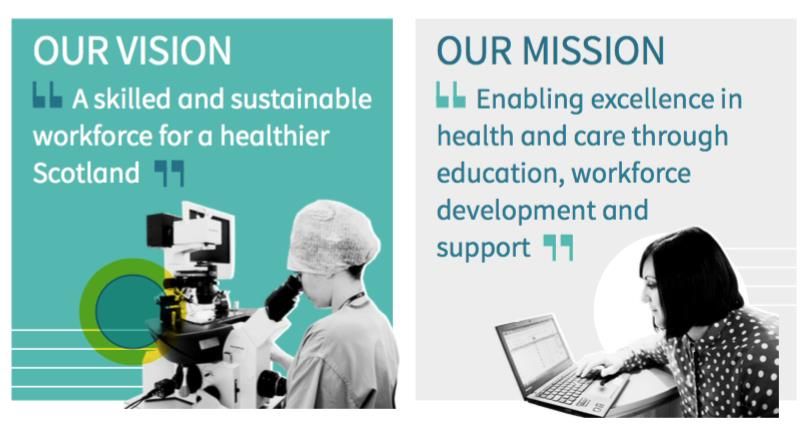
NHS Scotland Mobilisation Programme with our focus on a skilled and sustainable
workforce supported by digital innovation and high-quality data.
1.4 Although substantial work has been undertaken to mitigate the impact of COVID 19,
disruption to education and training and workforce supply is anticipated as we
recover our workforce and digital services. Many of our education and training
programmes are based on workplace learning, and their full recovery will depend
on the impact of the pandemic on clinical capacity, waiting time back-logs and new
models of care as we continue to live with COVID 19. Other key dependencies which
will affect recovery include the commissioned activity of higher and further education
and decisions taken by UK professional bodies and regulators. In addition, longer
term workforce supply depends on undergraduate activity in the education sector
which has also been subject to disruption. The extent of much of this disruption
remains unclear at this time.
1.5 This RMP summarises our contribution to the SG Framework, based on a review of
our detailed operational and financial plan in response to COVID 19 which, when
complete, will hold more detailed information on outcomes, targets, timelines, risks
and budgets. Successful delivery of this RMP is dependent on Scottish Government
confirmation of budgets and commissioned activity (e.g. for the national digital
platform), within a revised financial plan which takes account of COVID 19.
2. National Boards Collaborative
2.1 NES is part of a collaborative of eight national NHS Boards providing services where
improved quality, value and efficiency is best achieved through a national approach.
The national NHS Boards have a key role to play in resetting the design and delivery
of health and social care services in response to COVID 19 and this RMP contributes
to the national NHS Boards collaborative, building on recent submissions to the
3 Re-mobilise, Recover, Re-design: the framework for NHS Scotland
Contents 4|PageScottish Government. These submissions start to identify priority areas of
collaboration, with a focus on ensuring a strong and connected approach from
recovery through to renewal in response to the unprecedented service changes
brought about by COVID 19, many of which will need to be sustained and will require
new education and training support.
2.2 Each of the national NHS Boards has specific contributions to make to the recovery
phase and there are areas of common interest where a co-ordinated and
collaborative approach will add value. As part of re-mobilisation the national NHS
Boards are identifying priority themes for collaborative work with an initial focus on
enabling digital access to primary care and addressing public health inequalities
through shared data and improved intelligence.
2.3 In general terms NES also has an important contribution to make across the
collaborative in relation to community based and primary care, mental health and
data and intelligence. This will involve consideration of the curricular changes
required to support new ways of working, training and continuing professional
development (CPD) and support for service re-design through new training pathways
and programmes. In mental health, our pre and post registration programmes and
multi-disciplinary mental health education, including those in primary care, social
care and the third sector, have an important contribution to make. In primary care,
new ways of working will guide how we adapt educational delivery and support new
services and training delivery models for community-based and primary care
practitioners. In addition, we will work with national NHS Board partners to improve
access to data and intelligence for workforce planning and we will restart
development of the TURAS workforce platform and the national digital platform
subject to funding and Scottish Government agreement on commissioned work.
3. Strategic Context
3.1 It is important to note that NES’s re-mobilisation will be impacted by a continuing
requirement to live and work with COVID 19 and the constraints and dependencies
outlined throughout this plan. However, placing a focus on a skilled and sustainable
workforce is an important element of COVID 19 recovery and renewal and involves
continued support for employee wellbeing and for more flexible careers. In addition,
understanding the supply routes into health and social care, allied to improved career
entry and progression, awareness of career opportunities and role development will
Contents 5|Pagebe crucial to ensuring we have the right numbers of trained staff, in the right place at
the right time as we continue to live – and to deliver health and care services with
COVID 19.
3.2 This RMP reflects the aims and principles of the SG Framework and our workforce
and digital support for the objectives of that framework. In terms of resilience, the
NES response to future waves of COVID 19 will be to review how areas of our
normal business could be adapted to support frontline services and provide targeted
support through; educational materials; changed arrangements for learners and
trainees; staff redeployment; digital resources for the health and social care
workforce and national approaches to digital innovation and development. However,
while we will continue to consider contingency plans for future waves of COVID 19, it
is important to be aware that any further ‘suspension’ of undergraduate and
postgraduate training would have a negative impact on learners and future workforce
supply.
3.3 NES also has an important role to play in the SG Framework objectives related to
staff health and wellbeing through educational infrastructure and workforce
resources for recovery, mental health and wellbeing. In addition, we have a key role
as digital leaders to support the objective related to ‘innovations and digital
approaches’, through; the national digital platform; the TURAS workforce
platform and better access to workforce data and intelligence.
3.4 This RMP seeks to re-establish our alignment, as far as possible within the current
restrictions, to Scotland’s National Performance Framework4, the strategic outcomes
set through the NES Strategy 2019-245 and our operational and financial planning
framework; all of which place a focus on the role NES must play in shaping a skilled
and sustainable workforce for the new models of care which will be required in
response to COVID 19. This RMP aims to recover, as far as possible, the NES
activities around workforce recruitment, retention, planning and careers and mitigate
the impact of COVID 19 on future workforce supply, as we work towards achieving
the right numbers of trained staff in the right place at the right time.
4 Scotland’s National Performance Framework
5 NES Strategy 2019-24
Contents 6|Page3.5 Throughout the pandemic NES has been configured to operate as effectively as
possible while Scotland learns to live with COVID 19. We are deploying a phased
approach to recovery and renewal as follows.
• Mission Critical - business critical activities to return in the short term.
• Recovery - remediate the COVID 19 impact in the medium term.
• Renewal - establish different, more efficient and effective ways of working and
an adapted business model in the longer term.
3.6 This RMP to the end of March 2021 focuses on the Mission Critical and Recovery
phases with a focus on ‘Once for Scotland’ workforce and digital services to help
create more time for care. In addition, much of the training and workforce
development described in this RMP supports new models of primary, community
and social care which help ensure people receive services closer to home. Much of
this workforce development is multi-professional and multi-agency in support of
policy commitments to reforming health and social care, shifting the balance of care
and public health and prevention.
3.7 In Scotland, the experience of COVID 19 has also highlighted the need for
nationally available digital systems, data and standards, which can be used
flexibly as circumstances change. A priority for COVID 19 recovery and renewal will
be digitally enabled models of care which use data and intelligence for service and
workforce planning and provide access to services with less need to travel. The NES
Strategy 2019-24 identifies key areas of focus which are as important for recovery
and renewal as they were prior to the pandemic. These provide the headings for our
Contents 7|Pagecorporate planning framework under which we describe our recovery activities in this
RMP.
• a high-quality learning and employment environment
• national infrastructure to improve attraction, recruitment, training and retention
• education and training for a skilled, adaptable and compassionate workforce
• a national digital platform, analysis, intelligence and modelling
• a high performing organisation (NES)
3.8 The activities described in this RMP are planned and delivered in partnership with
NHS Boards, key social care and third sector organisations and UK regulatory
bodies with a focus on developing the workforce, providing national digital services
and improving the use of data and intelligence. These activities reflect a whole
systems approach, working with service delivery partners HEIs and professional
bodies to provide educational and digital support for the new models of care which
will be designed in response to COVID 19.
4. Risk Management
4.1 Managing risks as we re-mobilise will be impacted by uncertainty around the ability
of the clinical environment to support learning as frontline services deal with COVID
19 back-logs and reduced capacity. Prior to COVID 19 our plans had identified
strategic risks to workforce supply which were evidenced by increasing turnover and
vacancy rates across the system. In future, increasing the supply routes into health
and social care and improving retention will be essential to minimising workforce
gaps in future as will action to restart core NES activities and develop capacity
through workforce development and digital innovation as far as practicably possible
in the current circumstances.
4.2 Over the last four months, the NES corporate risk register was reviewed to reflect the
impact of COVID 19 on existing risks and to identify new risks to education and
training and workforce supply. In broad terms our areas of ongoing risk include an
increasing reliance on non-recurrent funding allied to funding for new
activities and the various cost and system pressures associated with ‘Once for
Scotland’ initiatives. Our corporate risk register has been adjusted to acknowledge
that additional funding may be required for new work such the COVID 19
Accelerated Recruitment Portal (CARP), potential double-running costs across
Contents 8|Pageprofessional groups, the impact of pausing training programmes and exam deferrals.
In addition, policy decisions as a result of COVID 19 may present both risks to and
opportunities for attraction, recruitment and retention initiatives, future workforce
supply and training progression. The residual risk scores have been increased to
reflect the cumulative level of uncertainty across all the health and social care
professional groups we support.
4.3 In addition to these ongoing corporate risks, a new COVID 19 strategic risk register
has been developed to include both organisational and directorate risks that have
been categorised and scored in line with our risk management strategy. Most of
these risks are being mitigated but an element of new risk relates to the impact of
the pandemic on clinical capacity, waiting time back-logs and new models of
care which may affect the re-mobilisation of workplace-based learning as we
continue to live with COVID 19. In addition, there is a new short-term risk relating to
the CARP portal. The scale and pace of CARP development, combined with the
large volume of stakeholders involved, means that successful delivery has not been
completely within our control. The current situation is developing and changing at
such pace that risk evaluations will continue to evolve, and the COVID 19 risks are
being regularly reviewed. Both the corporate risk register and the COVID 19 strategic
risk register will be reported to the NES Board at each meeting.
4.4 If these corporate and COVID 19 specific risks are not managed, service capacity
and capability could be further impacted by high vacancy rates and skills deficits
within the health and care workforce. Potentially, this may also lead to difficulties in
delivering national digital initiatives, impacting the service’s ability to create more
time for frontline care and develop greater resilience in response to future
pandemics. NES will mitigate these risks through strong stakeholder engagement
and partnership working with Scottish Government, health and social care partners,
the education sector and UK regulatory bodies to confirm resourcing and be clear on
expectations and deliverables for key areas of our re-mobilisation activity and
national work on digital innovation and access to data and intelligence. These
actions, allied to the re-mobilisation of workplace-based learning and the
development of national initiatives to increase workforce supply and introduce new
technology, will help to ensure that the financial planning which underpins this RMP
enables us to achieve the outcome of a skilled and sustainable workforce.
Contents 9|Page4.5 In response to the UK’s exit from the European Union (Brexit), NES has increased
the staffing risk rating to reflect on-going concerns about the availability of the clinical
workforce for education and training. In terms of the NES workforce, it is not
considered likely that there will be an immediate impact, however for healthcare staff
in training there is wider work being undertaken around the workforce supply
challenges that already exist and could be exacerbated by Brexit. NES is also
actively involved in supporting national trainee surveys to gain accurate data and to
date applicant numbers to healthcare careers appear stable. In addition, the UK
government’s plans for immigration after Brexit are likely to have implications for
recruitment to careers in healthcare and we will review the further details relating to
the UK’s Points-based Immigration System6 published in July 2020 in order to
identify what these are likely to be.
5. High Quality Learning and Employment
5.1 A key aspect of NES’s re-mobilisation is our educational governance and quality
management activities and the deployment of educational infrastructure and
employment initiatives to maintain high-quality learning and employment in line with
regulatory standards. This involves restarting at a reduced level, NES quality
management and employment activities for the trainee medical, dental, psychology,
pharmacy and healthcare science workforce and performance management of pre-
registration nursing, midwifery and allied health professional (NMAHP) programmes.
a. Lead Employer and National Employment Policies
5.2 From August 2020, NES will continue implementation of flexible employment models
to enhance the attractiveness of Scotland as a place to work and train. Subject to
funding, we will continue to lead implementation of the DDiT lead employer
programme and workplan. We will agree new timescales for developing TURAS
People and TURAS Learn to support the lead employer model for doctors and
dentists in training and ensure statutory and mandatory training compliance. Subject
to funding, we will also restart work and agree new timescales to extend the lead
employer model to dental trainees, further improving the employment experience
through streamlined pre-employment checks and links to payroll.
6 The UK's points-based immigration system: policy statement
Contents 10 | P a g e5.3 We will also deploy phase one of a workforce policies national digital solution and,
subject to funding and reviewed timescales, develop TURAS to enable trainees to
apply for less than full time training, out of programme experience, and study leave.
Subject to resources, over the next eight months, we will design and deploy phase
two of ‘Once for Scotland’ workforce policies which involves providing content and
user experience expertise and website infrastructure. In accordance with national
implementation, we will set out a local implementation plan.
b. Quality Management and Educational Governance
5.4 Over the next eight months NES will re-mobilise quality management (QM) activities
at a slightly reduced level such as QM visits, end of placement reviews, annual
reviews with employers and education providers and feedback mechanisms from
both trainees and service users.
5.5 In medicine and dentistry specialty training boards will be reinstated in August 2020,
some with revised terms of reference. Moving forward, meetings will be held virtually,
be time limited and will follow a more structured agenda. We will also restart our
quality management systems and site visits with increased use of digital technology.
Implementation of the General Medical Council’s (GMC) new quality assurance
process will continue in consultation with NHS Board Directors of Medical Education.
From August 2020 we will test virtual quality management visits and a new training
package. We will also consider the use of webinar polls for trainees at the end of
virtual visits. In dentistry no quality management visits have yet been scheduled and
the situation is being monitored with trainees given access to online resources and
online events planned for the new training year.
5.6 In psychology we will adjust arrangements for clinical placements to help trainees
obtain the required experience during COVID 19, including remote working and
digital delivery. Routine trainee placement visits and assessment have been
reduced or had their format revised. We will also provide additional supervisor
training and support as required. We have increased the number of placements and
associated reviews/visits due to an increase in trainee intake numbers for doctorate
programmes commencing in Sept/Oct 2020. In addition, the psychology trainee
survey timelines are shifting.
5.7 Effective educational commissioning is crucial to ensuring high-quality education and
training. To support this, we will recommence work with higher and further education
Contents 11 | P a g eto consolidate a new education commissioning model which was recently used for
operating department practitioner (ODP), integrated community nursing and
paramedic programmes. This approach will ensure the outcome of good educational
governance, quality control and improvement with the essential first step of data
collation, to enable a better understanding of workforce supply.
c. Medical Appraisal
5.8 NES has the ‘statutory responsible officer’ role7 for all doctors in training and in
supporting training for and auditing medical appraisal across Scotland. We provide
revalidation, career conversations and appraisal resources to help develop practice,
drive improvements in clinical governance and give patients confidence that their
treatment is up to date. Appraisal will restart in October 2020 and NES medical
appraisal courses will recommence in early 2021 based on advice from our lead
appraiser meetings which have now reconvened. The courses will be reviewed to
improve accessibility using remote learning and online applications within the
Scottish Online Appraisal Resource (SOAR).
d. Faculty Development and Accreditation
5.9 Methods of course delivery for faculty development have been reviewed and adapted
to the current COVID 19 situation. Further discussions and review will follow, and
NES will restart activities designed to deliver and enhance training for staff providing
educational supervision and practice education to improve the quality of the learning
and employment environment where we recruit, manage and quality assure
education and training. ‘Train the Trainer’ educational programmes will restart,
revised to be delivered at distance where possible. In medicine plans to develop and
pilot a formal evaluation for the new Recognition of Trainer (ROT) process will be
conducted between July and December 2020. In dentistry, we will provide access
and support to training and continuing professional development (CPD), for all dental
and dental care professional (DCP) trainers and tutors to ensure that they maintain
accreditation as trainers, assessors and verifiers.
e. Educational Support Roles and Networks
5.10 From August 2020 NES will start to re-mobilise clinically qualified educational
support staff who work on a full time or sessional basis across NHS Boards and in
care homes. Formal teaching and training will resume in August 2020 subject to local
7 The Medical Profession (Responsible Officers) Regulations 2010
Contents 12 | P a g ecapacity with staff asked to consider online education. These staff will support the
recommencement of training programmes, facilitate placements, support practice
education and provide the infrastructure to ensure training meets regulatory
requirements. In addition, recruitment to clinical fellow programmes will recommence
at a lower level than originally planned. Remote and rural educational programmes
will be reviewed and reinstated to ensure delivery as planned pre COVID 19 with a
strong focus on virtual delivery using webinars and local/regional live events which
should enhance our reach to learners.
5.11 The NES nursing, midwifery and the allied health professions (NMAHP) team will re-
mobilise our practice education networks which are fundamental to supporting
students and mentors in practice settings. As well as ongoing engagement, we will
develop resources and deliver training in relation to clinical supervision and develop
a strategy for the provision of practice-based learning experiences for AHPs. Work
will continue to ensure Scotland’s compliance with the Nursing and Midwifery
Council’s (NMC) Future nurse: Standards of proficiency for registered nurses8 by
developing an online learning resource for the preparation of practice supervisors
and practice assessors, and further enhancing the quality management of the
practice learning environment to support implementation of the new NMC
educational framework.
5.12 In many areas face to face training delivery will remain paused over the next eight
months and there is ongoing work to improve and adjust training to take account of
the constraints of the pandemic on clinical service and the impact on the lives of
learners. In psychology for example this involves liaising closely with our networks to
make sure we understand the changing needs, developing podcasts, webinars,
protocols for virtual supervision, eLearning modules and regular newsletters.
5.13 Over the next eight months, NES will re-mobilise our work to support key
recommendations from the UK Shape of Training Review9 to reform the structure of
postgraduate medical training across the UK. This will involve full participation in
Scottish and UK-level meetings on curricula redesign and credentialing of medical
skills, supporting priorities for Scotland such as surgical training and internal medical
training, and developing a credential in remote and rural practice. We will also
8 NMC Future nurse: Standards of proficiency for registered nurses
9 GMC Shape of Training Review
Contents 13 | P a g econtinue to work with key partners to improve junior doctors’ working lives by
contributing to expert working groups supporting the wellbeing of staff, and the
redesign of rotas.
6. Attraction, Recruitment, Training and Retention
6.1 Crucial to addressing the current demands on health and care and with a focus on
the longer-term, NES will restart work on careers in healthcare, helping to equip
young people for jobs and improve access to learning for healthcare support
workers. In response to COVID 19, it will be increasingly important to improve the
attractiveness of NHS Scotland as an employer, with a focus on widening access
and developing careers
a. Recruitment, Careers Promotion and Youth Employment
6.2 Until the end of September 2020 NES will manage processing of expressions of
interest through the COVID 19 Accelerated Recruitment Portal (CARP), under the
direction of Scottish Government. This will require continued redeployment of a
significant number of NES staff from their substantive roles. In terms of further
developing options for HR shared services, we will recommence work with the East
Region Recruitment Transformation group, to progress the business case for an east
region recruitment service across six NHS Boards. In addition, to support the
resumption of workplace based postgraduate training and trainee rotations, NES will
provide recruitment services, working to Scottish Government target numbers for
postgraduate and pre-registration training to achieve the outcome of a supply of well-
trained staff to meet demand. We will restart a range of activities to promote
awareness of healthcare careers, including career promotion events, support to
relevant recruitment campaigns and the NHS Careers Scotland website.
6.3 Over the next eight months NES will support workforce sustainability through
promotion of NHS Scotland career opportunities in accordance with national priorities
and plans, working in partnership with internal and external partners including NHS
Boards and Scottish Government. We will provide advice and guidance to NHS
Boards through employability and apprenticeship networks and influence the
development and range of appropriate apprenticeship frameworks in conjunction with
Scottish Government, Skills Development Scotland, the College Development
Network and NHS Boards. In addition, we will support online and physical promotion
of careers in health and care, including provision of resources and advice for NHS
Contents 14 | P a g eScotland strategies on youth employment. Finally, to support our new role in data
and analytics for workforce planning, we will restart work to develop national learning
resources to increase workforce planning capability across health and social care in
conjunction with key stakeholders and representatives of appropriate regional and
national planning networks and bodies.
b. Undergraduate and Pre-registration Education
6.4 Over the coming months NES will complete our annual performance management
process for undergraduate nursing and midwifery education provision across
Scotland. In addition, significant work will be undertaken with partners to support the
re-mobilisation of NMAHP and paramedic students into appropriate placements to
ensure a continued pipeline of newly qualified staff into the workforce. Working in
partnership, we will ensure that the newly developed paramedic education
programme is supported by a quality assurance and performance monitoring
process and achieves Health and Care Professions Council (HCPC) approval for the
first cohort of students commencing in September 2020.
6.5 In dentistry we will support current dental nurse students and pre-registration
trainees for whom programmes have been delayed or extended due to the COVID
19 towards successful completion, using technology enabled learning. We will also
provide dental nurse induction and pre-registration training places across all NES
sites.
6.6 NES will restart work on our joint action plan with the Scottish Funding Council
(SFC). In medicine this includes achieving the outcomes of widening access,
increasing the pool of applicants who stay in Scotland and enabling students to gain
more experience in primary care. We will also collect and analyse recruitment and
retention data to inform commissioning and we will work with Scotland's colleges to
strengthen access to pre-registration programmes.
c. Additional Cost of Teaching (ACT)
6.7 Additional Cost of Teaching (ACT) governance groups for undergraduate medicine,
dentistry and pharmacy, have continued to meet online throughout COVID 19.
Some reporting has been delayed but NES will continue ACT monitoring work with
NHS Boards and universities to ensure the needs of the NHS are fully met. In
medicine, we are creating a new monitoring framework and providing funding for
'widening access' initiatives. We will also support the recommendations made by the
Contents 15 | P a g eIncreasing Undergraduate Education in Primary Care Review Group10 to ensure
GP practices are properly supported for teaching medical students. In pharmacy we
are re-planning the experiential learning options for students taking into
consideration the impact of COVID 19 on student placements and we developed a
range of virtual/remote options. Working in partnership with the two schools of
pharmacy this re-mobilisation is ready to implement in August 2020. In dentistry, we
will work with key stakeholders to monitor the use of funding for dental outreach
centres providing clinical placements for final year students.
d. Postgraduate Training Grades
6.8 Many of the ongoing recruitment and assessment processes across postgraduate
training in a range of professional groups have continued throughout COVID 19,
reviewed and adapted (e.g. increasing use of technology for recruitment and
assessment), on a four UK nation basis to take account of the pandemic. From
August 2020 workplace based postgraduate training and trainee rotations will
resume, including work-based assessments, subject to capacity limitations within the
clinical environment. In medicine this will involve re-mobilisation of doctors in training
to agreed Scottish Government target numbers, including work to expand the
general practice workforce, supply to remote and rural areas and the numbers of
medical foundation trainees, particularly in mental health and general practice. In
dentistry, national vocational training, core, specialty and post Certificate of
Completion of Specialist Training (CCST) and therapist vocational training (TVT) will
recommence to agreed target numbers with some delayed recruitment and
programme starts due to local processes, uncertainty regarding aerosol generating
procedures and to allow general dental practices to resume normal working. Like
many other professions, dental teaching materials will be delivered online and we are
working collaboratively with external education providers to develop new online
educational resources which can be used across all dental schemes.
6.9 NES will also progress recruitment to target numbers for healthcare science and
applied psychology and psychotherapy training and we will recommence the national
pre-registration pharmacist (PRPS) scheme. In healthcare science we will continue
discussions with the Scottish Government on new initiatives to develop roles and
improve workforce supply and retention. In pharmacy, PRPS recruitment has been
reworked to focus on remote ‘Situational Judgement’ tests agreed at UK level with a
10 Undergraduate medical education in Scotland: Enabling more general practice-based teaching.
Contents 16 | P a g enew virtual delivery model, a provisional register to deal with delayed registration and
additional support for new online assessments. In psychology, revised recruitment
for doctoral programmes took place in May and all trainees are due to commence in
October 2020 as planned. Revised recruitment plans for other trainees due to start in
early 2021 are in the planning phase. Clinical placements for all trainees have been
adjusted to support remote and digital delivery of supervised clinical practice to meet
regulatory and professional standards. It is anticipated that trainees will complete as
planned with minimum impact.
6.10 To support these programmes, we will review development of the training
programme management (TURAS TPM) system to enable more professional groups
to use it and to improve areas such as trainee study leave monitoring and reporting,
and development of an online study leave process. While development of new
TURAS functionality has been paused due to COVID 19, we will review our focus on
this area as part of business recovery over the next few months.
e. Post-registration Education
6.11 NES re-mobilisation will include commissioning NMAHP education programmes in
line with the transforming roles agenda and to support ministerial commitments. This
covers education for advanced nursing practice, district nursing, integrated
community nursing and staff working within care homes, as well as education for
assistant practitioner radiographers, non-medical prescribing, general practice
nursing and nurse endoscopy. Activity will be continued to support development of
the peri-operative workforce along with the Scottish Access Collaborative/Elective
Care Centres. We will also restart commissioning for school nursing, and we will
support nurses through postgraduate diplomas as part of the Scottish Government’s
commitment to additional advanced nurse practitioners and school nurses in training.
6.12 A series of webinars for AHPs will be delivered in direct response to the emerging
needs of the workforce. As a result of COVID 19, there is increasing demand for
such provision and themes of webinar topics are emerging. Simulation sessions for
AHPs will also be delivered to support the UK four nations rehabilitation statement
and skills for COVID 19 deployment. In addition, the AHP careers fellowship scheme
will continue to support work-based change and improvement projects which
contribute to local and national priorities and which provide career development.
Contents 17 | P a g e6.13 To support post qualification training for dental care professionals we will provide
post registration training places using technology enabled learning. In addition, we
will support students whose post-registration training has been delayed or extended
towards successful completion, using a technology enabled learning. This includes
orthodontic therapy trainees, practice managers, medical and dental receptionists
and dental care professionals. We will prepare to recruit experienced dental nurses
wishing to upskill as orthodontic therapists, practice managers and receptionists in
preparation for commencing a training programme in 2021.
f. Career Support Programmes and Resources for Returners
6.14 NES will re-mobilise return to work programmes accompanied by careers advice and
enhanced induction for practitioners. In medicine we will restart GP returner and
enhanced induction programmes, along with mentoring and coaching and a staying
in practice scheme (SIPS). In dentistry we will recommence returning to practice
initiatives and support for returning to work. We will also deliver a programme of
remediation and support for dental registrants, including mandatory training. We will
design and develop nationally consistent guidance to support AHP returners to
practice and provide nursing and midwifery return to practice programmes within two
Universities.
7. A Skilled, Adaptable and Compassionate Workforce
7.1 Crucial to dealing with the impact of COVID 19 on waiting times and health and
social care integration will be new models of community-based and primary care
supported by NES continuing professional development (CPD) programmes and a
range of education and role development. In addition, throughout the COVID 19
pandemic the NES TURAS Learn platform has continued to provide health and
social care staff with access to learning, knowledge, evidence and subscription
content. Over the next eight months we will continue to migrate NHS Boards and
local authorities to TURAS Learn and provide organisations with the functionality to
develop eLearning content in a way that reduces the cost of migrating from current
systems.
Contents 18 | P a g ea. Continuing Professional Development
7.2 NES has restarted continuing professional development (CPD) programmes focused
on primary care practitioners and teams supported by our CPD Connect11 and
TURAS Learn12 platforms. These programmes have been reviewed and revised to
maximise attendance rates based on new online delivery models. This covers
programmes for general medical and dental practice, general practice nursing, GP
practice pharmacists and pharmacy technicians, community pharmacists and
optometrists.
7.3 In primary care we will restart programmes for GP practices to provide clinical
leadership and supervision to multi-disciplinary teams. We will restart vocational
training for practice managers in January 2021 and recommence GP nursing
programmes in November 2020. In optometry, CPD is being provided remotely and
we are working with our partners to restart ‘teach and treat’ clinics, develop digital
learning resources for mandatory training and ocular hypertension and glaucoma
and we are assessing how we can support pre-registration optometry trainees who
are delayed in starting the College of Optometrists scheme for registration. We will
also restart the commissioning of education for district nurses, community
children's nurses and looked after children's nurses. In pharmacy, CPD
programmes have fully recommenced with a focus on more regional events and
online delivery. Dental CPD is unlikely to provide the number of events originally
planned for 2020/21 but the significant and rapid move to online delivery of webinars,
with large numbers of attendees will help to ensure access to high quality, relevant
CPD and mandatory training.
b. Role Development and Frameworks for Practice
7.4 NES will restart role development covering forensics, post/peri CCT training,
Specialist and Associate Specialist (SAS) doctors and dentists and clinicians
delivering healthcare in psychiatry. We have received confirmation of funding for a
national accredited Introduction to Forensic Medicine Examination course for nurses
and doctors working in custody environments. By September 2020 we will restart
training for sexual offences examiners and nurses, and we are encouraging online
delivery where possible for our SAS development programme. For clinicians
delivering healthcare in psychiatry, new online resources are being developed and
11 https://www.cpdconnect.nhs.scot/
12 https://learn.nes.nhs.scot/
Contents 19 | P a g ethe pilot of simulation-based training for years 1-3 of core psychiatry training will be
restarted towards the end of 2020. In optometry, optical assistant role development
has moved to remote delivery and we are examining the most appropriate options for
placement of those undertaking our glaucoma qualification.
7.5 Throughout COVID 19 demand for independent prescribing (IP) training has
increased and over the next eight months we will commission IP training from both
Schools of Pharmacy at the University of Strathclyde and Robert Gordon University
using a remote teaching solution. In optometry, COVID 19 has also highlighted the
valued role that independent prescribers have in the community, as a result we have
increased the number of funded places offered and worked with the Glasgow
Caledonian University to offer a fast track option. These cohorts are now being
delivered and assessed remotely.
7.6 In dentistry our role development work to support priority vulnerable groups is
restarting with a blended learning approach wherever possible. Over the coming
months we will convert learning materials for digital delivery and assessment whilst
delaying the practical elements until the fourth quarter of the year. This will still result
in a reduction in completed training in some areas because of the limitations on how
much practical training can be delivered. These programmes support national oral
health initiatives and we are working closely with our partners and stakeholders on
recovery plans which will include additional education and training to support new
ways of working with COVID 19 a continuing risk factor. Guidance on mouth care
during the COVID 19 crisis has been produced for the hospital patient, care home
and care at home services with supporting ‘Open Badges’ (digital records of
achievement from assessment of online learning) suitable for health, social care and
third sector. These will form the foundation for an educational framework to support
national oral health initiatives and others who are involved with improving oral health
and reducing health inequalities for priority groups.
c. Mental Health
7.7 Throughout the pandemic there has been a continued focus on mental health and
wellbeing as the impact of COVID 19 on society has become apparent. NES has
provided a range of mental health and wellbeing educational resources over the
last four months and over the next eight months will re-mobilise support in these
areas:
Contents 20 | P a g e• pre and post registration education of mental health disciplines (mental health
nursing, psychiatry, clinical psychology)
• mental health education for pre and post registration healthcare disciplines
including those in primary care settings (general medical practitioners, practice
nurses, allied health professionals, health visitors, school nurses)
• mental health education for multidisciplinary staff, social care and third sector
staff (care home, residential care and care at home staff)
7.8 NES is restarting mental health education for practitioners across health and social
care in child and adolescent mental health services (CAHMS), psychological
interventions for dementia, psychological wellbeing in adults with learning disabilities,
mental health improvement and the suicide prevention. In most of these areas
training has been adjusted for remote delivery and training numbers are slightly
reduced over the next eight months.
7.9 We will continue to support education for Scotland’s Dementia Strategy including
provision of learning network events for dementia specialist improvement leads and
training for frontline health and social care staff in palliative care and end of life for
people with dementia. In addition, our psychology and NMAHP teams will commence
the development of a repository of resources across all levels of the knowledge and
skills framework for mental health improvement and suicide prevention.
d. Maternal and Child Health
7.10 NES’s training programmes aimed at strengthening attachment, parenting and family
relationships, and supporting children's developmental competence have been
adjusted and training numbers reduced across four programmes delivered by our
psychology team. New work supporting implementation of the ‘Solihill Approach’
online resource is being delivered in partnership with Scottish Government. In
addition, our child health programmes building psychological capacity and capability
and meeting training requirements in psychosocial care have seen a planned
reduction in training numbers and have been redesigned for remote delivery.
7.11 We will deliver a range of training courses primarily for maternity care professionals
through the Scottish Multi-professional Maternity Development Programme
(SMMDP), including neonatal resuscitation, obstetric emergency, and other CPD
provision. These courses will also support NHS Boards with core mandatory training
Contents 21 | P a g erequirements and the continuity of care model outlined in Best Start. The Family
Nurse Partnership (FNP) programme will continue to provide core learning,
supervisor learning and CPD for family nurses and supervisors. We will also
commission a new education programme for school nursing to commence in the
forthcoming academic year.
7.12 The NES NMAHP and psychology teams will develop and pilot training and learning
resources designed to ensure that women using maternity services in Scotland
receive a ‘trauma informed’ approach throughout their maternity journey, that
identifies their needs and mitigates the potential adverse impact of trauma on
pregnancy and birth. In addition, we will deliver training to AHPs in effective decision
making (EDM) which will further develop the practice of staff currently using the EDM
reasoning framework.
e. Person-centred Education and Training
7.13 NES educational resources for health and social care professionals in death, dying
and bereavement are being enhanced with a suite of COVID 19 resources including
monthly webinars, new online educational content and film resources. Planning for a
virtual NES conference in this area is now underway alongside a first national
‘Bereavement Charter’.
7.14 The NES spiritual care and chaplaincy team will continue to deliver Values Based
Reflective Practice (VBRP®), support for the Patient Reported Outcome Measure
(PROM) and Community Chaplaincy Listening to create more time for care. We will
also work with the Scottish Social Services Council (SSSC) to support the carers
strategy.
f. Equality and Diversity
7.15 In August 2020 NES will recommence a review of our equality outcomes and
strategy to ensure that they are aligned and responsive to the emerging priorities of
the COVID 19 remobilisation. We will implement equality and diversity networks,
in alignment with the direction laid out by Scottish Government. Subject to resources,
we will provide subject specialist advice, and discovery support, for the NES Data
Group to develop workforce equality statistics which better meet stakeholder needs
for workforce equalities intelligence and to support statutory reporting. To improve
access to reasonable adjustments, we will review timescales and restart work to
introduce ‘passporting’ arrangements for doctors and dentists in training. NES will
Contents 22 | P a g econtinue to promote fairness for all trainees, and we will continue to work with
regulators to tackle differential attainment rates between demographic groups. We
will continue to evaluate information about learners’ performance, progression and
outcomes so we can monitor the impact of the action plan we have in place.
g. Healthcare Support Workers (HCSW)
7.16 Over the next eight months NES will aim to maintain current levels of traffic to the
estates and facilities, and business and administration, hubs on TURAS Learn and
we will restart development of new learning resources and a communications
strategy for promotion of the hubs. We will undertake a review of regional learning
events to inform future provision as part of continuing to support improved, widened,
access to learning and development for a comprehensive range of non-clinical
healthcare support workers. We will also contribute to the development of
infrastructure for clear education and career pathways and, subject to resourcing,
continue support for Recognition of Prior Learning (RPL).
7.17 For clinical HCSWs we will continue to build an evidence base for associate practice
educator roles and will, using appropriate technologies, deliver masterclasses and
workshops with NHS Boards to support the ongoing development of roles and career
pathways for the HCSW workforce.
h. Organisational, Leadership and Management Development
7.18 Over the next eight months NES will continue to work with the Scottish Government
to implement Project Lift13 leadership development, talent management and
appraisal. This will include providing early careers programmes and supporting
leadership communities in integration settings, including delivery of two cohorts of
the Leadership Cubed programme and Career Conversations for high potential
individuals.
7.19 NES will manage the Coaching for Wellbeing service currently supporting the
health and social care workforce. This service, accelerated in response to COIVD
19, is on track to exceed the original coaching target agreed with Scottish
Government who have asked for costings for continuation of the service for the rest
of this year and potentially beyond. In addition, we will continue to deliver national
programmes completing active cohorts for Leading for the Future, Scottish
13 https://projectlift.scot/
Contents 23 | P a g eCoaching and Leading for Improvement and Human Factors. These support
collaborative and compassionate leadership and management, contributing to the
growth of Project Lift leadership communities across health and care. We will also
continue to deliver established early careers programmes e.g. Scottish Clinical
Leadership Fellowships, Graduate Management Training Scheme, New Horizons for
Peer Thinking. Subject to funding and the availability of NHS Board resource, we will
also recommence discovery workshops for an NHS Scotland Finance Academy. In
medicine we will restart delivery of the LaMP programme for doctors and dentists in
2021 and commence development of a multi-disciplinary programme.
i. Quality Improvement (QI) Education
7.20 The Scottish Quality and Safety Fellowship will not run for 2020/2021 but QI
training for Non-Executive Board Members will be available along with the Scottish
Coaching and Leading for Improvement and Scottish Improvement Foundation
Skills programmes, now using virtual delivery where appropriate. We will continue
work with two NHS Boards to develop an education plan and training materials for
clinical teams to use QI approaches to achieve waiting times, whilst enabling skill
capacity building as part of the Access QI programme. We will also develop a ‘Train
the Trainer’ value management improvement coach programme and educational
materials for NHS Boards, deliver quality improvement coaching to NES
organisational improvement projects and provide the Scottish Improvement Leader
Programme across the public sector, now also being delivered virtually. New
primary care QI educational resources for GP specialty training will also be
developed through our patient safety team and we have provided online facilitation
skills for QI training and development throughout COVID 19.
7.21 Dental clinical effectiveness activities will continue to develop resources to support
the Scottish Government’s dental response to COVID 19 as NHS dental teams
resume care. These include guides for acute dental problems management and
associated drug prescribing, a practice closure checklist, a dental practice recovery
toolkit and a review of evidence on aerosol generating procedures. In addition, we
will evaluate the impact of COVID 19 on the dental workforces’ education, training,
career progression, working environment and health and well-being through surveys,
interviews and focus groups, in partnership with external stakeholders as
appropriate.
Contents 24 | P a g eYou can also read


