Pioneering personalized medicine in epigenetics - CORPORATE PRESENTATION
←
→
Page content transcription
If your browser does not render page correctly, please read the page content below

Pioneering
personalized medicine
in epigenetics          C O R P O R AT E P R E S E N TAT I O N
                                                   2Q-2021
                                     O R Y : S M / O R Y. M C
Legal Notice

DISCLAMER This document has been prepared by Oryzon Genomics, S.A. exclusively for use during the presentation. Oryzon Genomics, S.A. does not assume liability for this document if it is used
with a purpose other than the above. The information and any opinions or statements made in this document have not been verified by independent third parties; therefore, no express or
implied warranty is made as to the impartiality, accuracy, completeness or correctness of the information or the opinions or statements expressed herein. Oryzon Genomics, S.A. does not assume
liability of any kind, whether for negligence or any other reason, for any damage or loss arising from any use of this document or its contents. Neither this document nor any part of it constitutes
a contract, nor may it be used for incorporation into or construction of any contract or agreement. Information in this document about the price at which securities issued by Oryzon Genomics,
S.A. have been bought or sold in the past or about the yield on securities issued by Oryzon Genomics, S.A. cannot be relied upon as a guide to future performance.

IMPORTANT INFORMATION This document does not constitute an offer or invitation to purchase or subscribe shares, in accordance with the provisions of Law 24/1988, of 28 July, on the
Securities Market, Royal Decree-Law 5/2005, of 11 March, and/or Royal Decree 1310/2005, of 4 November, and its implementing regulations. In addition, this document does not constitute an
offer of purchase, sale or exchange, nor a request for an offer of purchase, sale or exchange of securities, nor a request for any vote or approval in any other jurisdiction. The shares of Oryzon
Genomics, S.A. may not be offered or sold in the United States of America except pursuant to an effective registration statement under the Securities Act of 1933 or pursuant to a valid exemption
from registration. Any public offering of the Company’s securities to be made in the United States will be made by means of a prospectus that may be obtained from the Company or the selling
security holder, as applicable, that will contain detailed information about the Company and management, as well as financial statements.

FORWARD-LOOKING STATEMENTS This communication contains forward-looking information and statements about Oryzon Genomics, S.A., including financial projections and estimates and their
underlying assumptions, statements regarding plans, objectives and expectations with respect to future operations, capital expenditures, synergies, products and services, and statements
regarding future performance. Forward-looking statements are statements that are not historical facts and are generally identified by the words “expects,” “anticipates,” “believes,” “intends,”
“estimates” and similar expressions. Although Oryzon Genomics, S.A. believes that the expectations reflected in such forward-looking statements are reasonable, investors and holders of Oryzon
Genomics, S.A. shares are cautioned that forward-looking information and statements are subject to various risks and uncertainties, many of which are difficult to predict and generally beyond
the control of Oryzon Genomics, S.A., that could cause actual results and developments to differ materially from those expressed in, or implied or projected by, the forward-looking information
and statements. These risks and uncertainties include those discussed or identified in the documents sent by Oryzon Genomics, S.A. to the Comisión Nacional del Mercado de Valores, which are
accessible to the public. Forward-looking statements are not guarantees of future performance. They have not been reviewed by the auditors of Oryzon Genomics, S.A. You are cautioned not to
place undue reliance on the forward-looking statements, which speak only as of the date they were made. All subsequent oral or written forward-looking statements attributable to Oryzon
Genomics, S.A. or any of its members, directors, officers, employees or any persons acting on its behalf are expressly qualified in their entirety by the cautionary statement above. All forward-
looking statements included herein are based on information available to Oryzon Genomics, S.A. on the date hereof. Except as required by applicable law, Oryzon Genomics, S.A. does not
undertake any obligation to publicly update or revise any forward-looking statements, whether as a result of new information, future events or otherwise.

                                                                                                                                                                                                    2
An epigenetic champion determined to bring new therapies to the patients
Epigenetics expertise applied to oncology and CNS
indications
Two molecules with positive clinical data in humans
Programs in Phase II
A leading & growing epigenetic platform with an
expanding pipeline
One of the most liquid biotech stocks in Europe
Cash & cash equivalents of $50m by Dec 31st 20201
Cash runway till 2023
(1) https://www.oryzon.com/en/news-events/news/oryzon-reports-results-and-corporate-update-4th-quarter-and-year-ended-december-31 3
Multiple shots on goal to address significant unmet medical needs

         Iadademstat (ORY-1001)                Vafidemstat (ORY-2001)
                                                                                          Growing pipeline
              LSD1 inhibitor                        LSD1 inhibitor
                     ONCOLOGY                         CNS & COVID-19                      HDAC-6 inhibitor
                  Differentiation                       Prosynaptic                     Other epigenetic targets
               Anti-cancer stemness               Anti-neuroinflammatory

 • AML / SCLC / Solid Tumors          • BPD / SCZ / PMS / AD                     • HDAC6i ready for nomination
 • 4 Phase I/II clinical trials:      • 6 Phase I/II clinical trials:            • Additional leads against a variety of
      ≈100 patients treated                +300 subjects treated                   new targets
 • Safe & well tolerated              • Safe & well tolerated
 • Phase II in AML ongoing            • Efficacious in Phase IIa in aggression
      (+80% ORRs on evaluable pts)    • Phase IIb in BPD (ongoing) and SCZ
 • Phase II w ICIs in prep                 (in prep)
                                      • Deploying a precision medicine
                                           approach

 AML: Acute Myeloid Leukemia          BPD: Borderline Personality Disorder
 SCLC: Small Cell Lung Cancer         SCZ: Schizophrenia
                                      PMS: Phelan McDermid
                                      AD: Alzheimer’s Disease                                                              4
I A DA D E M STAT
A P h a s e I I C l i n i c a l S ta ge A ge nt
                                 in Oncology
Iadademstat (ORY-1001): The most potent LSD1 inhibitor
LSD1 is involved in different cancers and in cancer stemness
High levels of LSD1 often correlate with more aggressive
forms of cancer and/or bad prognosis
Iadademstat is a highly potent and selective, oral LSD1i.
First-in-class & best-in-class
Safe and well tolerated in Phase I and various Phase II
studies (100 subjects dosed)
Modified from Maiques-Diaz et al. 2018, Cell Reports 22, 3641–3659
Produced strong differentiation and showed antileukemic
activity in a FiM Phase I/Ib trial in R/R-AML
6
Iadademstat produces differentiation and has antileukemic activity in R/R AML patients

                                                   https://ascopubs.org/doi/full/10.1200/JCO.19.03250

         41 R/R AML               Good safety profile                             Strong differentiation
         patients                 Good pharmacology                               Antileukemic activity

                                                                                                           7
ALICE: A Phase II trial in AML with LSD1i in Combination with azacitidine in the Elderly or unfit

  • Multicenter, single arm & open label             • Accrual status as per Dec 31, 2020:
     study                                               21 patients enrolled, of which:
  • Up to 36 patients to be enrolled                    • 20 patients enrolled as per protocol
  • Primary endpoint: Safety and                        • 14 evaluable patients (bone marrow
     tolerability of the combo with                       aspirate available after C1)
     hypomethylating agent azacitidine
                                                        • 5 patients not evaluable (no available
  • Secondary endpoints: Response; time                   bone marrow aspirate)
     to response; duration of response;
                                                        • 1 patient still in C1
     overall survival

                         Last report presented at
                                                                                                    8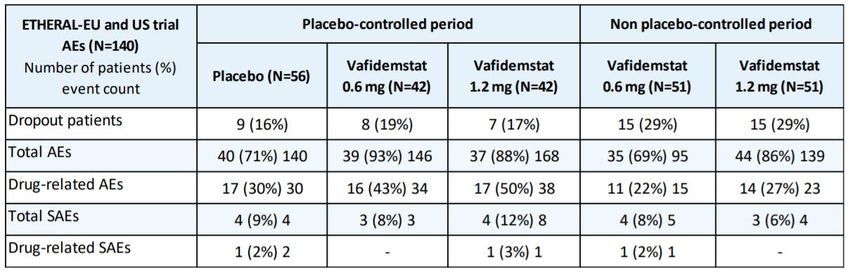
Phase II ALICE: High ORR rates, rapid onset of action, and clinically meaningful durability

                                                                                                  • The combo appears as safe and
                                                                                                     well tolerated

    85.7%
     85.7%
     85.7%                              58.3
                                          58.3
                                           58.3  %%%                        86%
                                                                              86%
                                                                               86%                • From the 41 SAEs, only 2 have
      ORR
        ORR
         ORR                            CR/CRi rate
                                          CR/CRi
                                           CR/CRirate1 11
                                                   rate                  Resp Durability
                                                                           Resp
                                                                            Resp        2 22
                                                                                Durability
                                                                                 Durability          been considered to be probably
      85.7%                                 58.3%                          onon  86%
                                                                              CR/CRi
                                                                               onCR/CRi
                                                                                  CR/CRi             related to iadademstat (1 ICH and
               ORR                            CR/CRi rate1                     Resp Durability2      1 DS)
                                                                                 on CR/CRi
    3434
       days
       34days
          days                       11.2
                                      11.2months
                                       11.2months
                                            months                      9.7 months
                                                                          9.7
                                                                           9.7months
                                                                               months             • No QTc prolongation; no
Time to to
  Time
   Time  response
          toresponse
             response             Current mOS
                                    Current
                                     Current  in in
                                            mOS
                                             mOS CR/CRi
                                                  inCR/CRi
                                                     CR/CRi              Current mDoR
                                                                           Current
                                                                            CurrentmDoR
                                                                                    mDoR             neuronal, hepatic, renal or any
         34 days                           11.2 months                        9.7 months             other organ toxicity
     Time to response                   Current mOS in CR/CRi                  Current mDoR          https://www.oryzon.com/sites/default/files/events/20201207_ASH2020_poster.pdf

• Long responses maturing: 4 Patients already >1year, longest EFS
     response (ongoing) >2 years                                                                                Next clinical update:
•    40% transfusion independent patients from those with >120d on                                                June 9-17 2021
     treatment

 Data from ASH2020 updated as per Dec 31 and corresponding to 14 evaluable patients
 (1) % over the ORR population (2) Durability >6 months

                                                                                                                                                                                     9
Iadademstat a therapeutic approach for SCLC with a well-defined MoA

       SCLC is very aggressive           LSD1 is a well
       and represents 10% to             characterized
       15% of all lung cancers           target in SCLC

 • Two clinical studies done with iadademstat in          • Iadademstat produces complete and durable
   SCLC:                                                    tumor regression in different chemoresistant
                                                            SCLC PDX models
    • Phase I study (NCT02913443) (18 patients) →
      RP2D in mono                                        • Iadademstat is efficacious in combos with
                                                            platinum/etoposide and other agents as ICIs
    • Phase IIa (CLEPSIDRA) (14 patients) → Safety
      in mono & Signs of clinical efficacy
                                                          • Identified and patented biomarkers that
                                                            differentiate SCLC tumors by sensitivity to LSD1i

                                                                                                                10
Iadademstat: SCLC Phase II CLEPSIDRA - encouraging efficacy signals
• Open label, multicenter, Phase IIa study • Platinum/etoposide in combo with iadademstat showed
• Biomarker selected, sensitive platinum 2L hematotoxicity
ED-SCLC patients • Iada alone was safe and well tolerated. Toxicity
• iada in combination with 4-6 cycles disappeared when treated with iada alone
carboplatin/etoposide (21 d/cycle). After • Despite suboptimal dosing, efficacy signals were
chemo, iada could be administered alone encouraging with 40% OR and mean DoR of 4.5 months
• 14 patients enrolled. Study finalized • 60 % clinical benefit rate (6/10 evaluable patients): 4PRs
+ 2 long-term SD
• One patient had 15 cycles in monotherapy, with a total
tumor size reduction of 90% and a relative tumor size
reduction during iadademstat monotherapy of 53%
C-16
11Multiple Commercial Opportunities in Hematoncology and Solid Tumors
• Potential for fast market regulatory path in
AML. To be announced in 2H2021
ODD granted for AML • New trials in combo in preparation in solid
and rare tumors. To be announced in
2H2021
• Strong clinical activity gravitating towards
US in 2021-2023. Favoring a broad
utilization through combinations and
investigator-initiated trials
• A clear registrational strategy
12VA F I D E M STAT
A Phase II compound
fo r C N S d i s e a s e sVafidemstat (ORY-2001): a “Neuron-fixer” drug in Phase IIb
Vafidemstat is a small molecule LSD1i, optimized for CNS.
Positive results in 7 different animal model read-outs
Epigenetic MoA that reduces neuroinflammation and
overexpresses key plasticity neuronal genes
High BBB penetration (CSF levels)
Safe and well tolerated in Phase I and various Phase II
studies (+300 subjects dosed)
Reduces Aggression and Agitation in BPD, ADHD, ASD and
in AD. Improves general condition in BPD patients
14Vafidemstat reduces agitation and aggression: REIMAGINE, a Phase IIa basket trial in psychiatry
BPD patients
8 *** 5 *
• Single center, single arm, open label study 4
CGI-S score
6
CGI-I score
3
• 30 patients, PPAS: n=23: 9 BPD, 6 ASD, 8
4
2
2
ADHD 0
1
0
•
Visit 1 Visit 7 Visit 1 Visit 7
Primary endpoint: Safety & tolerability
• Secondary endpoints: Reduction of 6 *** 15 **
NPI-total score
aggression / Other disease related outcomes
NPI-AA score
4 10
• Study finalized. Data presented at EPA-2020 2 5
0 0
Visit 1 Visit 7 Visit 1 Visit 7
p=0.0027
6
Vafidemstat was safe and well tolerated,
reduced agitation-aggression and improved 150 ** 200 4
CSSRS score
overall status in BPD patients
BPDCL score
BPDCL score
150
100
2
100
50
50 0
0 0
Visit 1 Visit 7 Visit 1 Visit 7 Baseline 54
Treatment day
15PORTICO: a Phase IIb in BPD
• Double blind, placebo controlled
adaptive design with interim analysis to
assess statistical power. 156 patients
• Two primary endpoints: overall clinical
BPD improvement and improvement in
aggression
• CTA approved in Spain. Identification of
sites in US, DE, BG and SRB is ongoing
• First patient enrolled March 2021
• To file US IND 1H 2021
Borderline Personality
Disorder
A serious psychiatric condition affecting 1.6% in the general population. BPD patients often experience emotional instability, impulsivity,
irrational beliefs and distorted perception, and intense but unstable relationships with others.
1.4 million patients in US are being treated with off-label drugs
16Schizophrenia
Prevalence of schizophrenia (SCZ) and related psychotic
disorders in the US range between 0.25% and 0.64%.
No current approved treatments for the Negative Symptoms
EVOLUTION: a Phase IIb in SCZ
• Double blind, placebo controlled
adaptive design with interim
analysis to assess statistical power.
80 patients (40 vafi : 40 placebo)
• 2 arms, vafi as add-on to SoC. 6
months of treatment
• Primary endpoint: efficacy to
address SCZ Negative and Cognitive
Symptoms
• 6-10 sites
• Spanish government funded
• CTA submitted & FPI expected 1H
2021
17LSD1 and Precision Medicine in CNS
LSD1 is mainly expressed in the CNS and plays a critical role
in neurogenesis and the regulation of cortical development
After birth, LSD1 contributes to neurite morphogenesis
in the mammalian cortex
LSD1 is the most abundant histone demethylase in
the PFC
LSD1 localizes in-vivo to enhancers and promoters of
confirmed CNS disease risk genes
LSD1 has been involved in neurodevelopmental diseases
18Methylation is involved in SCZ and ASD; LSD1 inhibition rescues phenotypes in genetic models
• Mutations of SETD1A have been LSD1
implicated in schizophrenia, SETD1A
developmental disorders like autism
spectrum disorder (ASD) and other Me Me Me
rare syndromes Me Me Me
• Mice with the mutated Setd1a gene
recapitulate human schizophrenia
symptoms
• Oryzon-LSD1 inhibitors reverse
these deficiencies
Modified from Andrea Piunti and Ali Shilatifard, Science 2016;352:aad9780
SETD1A is a histone methyltransferase that belongs to the COMPASS family: six H3K4 methyltransferases that also contains
KMT2A (or MLL1), KMT2B (or MLL2), KMT2C (or MLL3) and KMT2G (or SET1B). 19Methylation is involved in Kabuki syndrome; LSD1 inhibition rescues phenotypes in genetic models
• Mutations of MLL2 (KMT2D) have LSD1
been implicated in Kabuki syndrome
• Mice with the mutated MLL2 gene Me Me Me
recapitulate Kabuki patient Me Me Me
symptoms like cranio-facial
abnormalities, growth retardation,
and immune dysregulation
• LSD1 inhibitors reverse these
deficiencies
Modified from Andrea Piunti and Ali Shilatifard, Science 2016;352:aad9780
MLL2 is a histone methyltransferase that belongs to the COMPASS family: six H3K4 methyltransferases that also contains
KMT2A (or MLL1), KMT2C (or MLL3), KMT2F (or SETD1A), and KMT2G (or SET1B) 20Shank3 mutations cause ASD, Phelan-McDermid syndrome and SCZ
• SHANK3 encodes a protein that is
essential for proper functioning of
the synapse, the junction between
neurons
• The majority of people lacking a
functional copy of the Shank3 gene
have both autism and severe
intellectual disability LSD1 inhib. restores Prefrontal Cortex
electrophysiological dysfunctions in Shank3
• Mice with the mutated Shank3 mutant mice
gene recapitulate human PMS-ASD Zhen Yan Oral Comm SFN-2019
symptoms
• Oryzon-LSD1 inhibitors reverse
these deficiencies alone or in
combination with HDAC2 inhibitors
21LSD1 inhibition, a key target for personalized therapy in CNS
• LSD1 acts as a downstream molecular hub where a variety of neuronal signaling pathways converge
• LSD1 inhibition can correct distinct independent deficiencies occurring upstream
22LSD1 inhibition paves the way for personalized medicine in psychiatry
Collaborations ongoing with major clinical institutions to inform
and prepare personalized medicine clinical studies
SETD1A-related SCZ SHANK3-related ASD
• Patients carrying these mutations identified in the • +200 patients carrying these mutations identified in
Amish community in US Spain
• Study to characterize psychometrically up to 60 • Study to characterize psychometrically up to 40
subjects subjects
• Results expected in 3Q21 • Results expected in 3Q21
23ESCAPE: Phase II trial with vafidemstat to prevent ARDS in severe COVID-19 patients
ESCAPE RATIONAL:
• Vafidemstat is safe in the elderly
• Vafidemstat reduces inflammation
• LSD1 inhibitors reduce cytokine release syndrome ex-vivo in
Covid-19
Multi-center, open label, two arms, randomized study in combination
with best supportive care (1:1)
• N= 40+20. Six centers in Madrid and Barcelona metropolitan areas.
• Primary endpoint: efficacy of vafidemstat in preventing Acute
Respiratory Distress Syndrome (ARDS) in adult severely ill patients
with COVID-19
• Secondary endpoints: Reduction of systemic and pulmonary
inflammatory biomarkers
• Recruitment finalized
• Analysis ongoing (preliminary results expected in 1H 2021)
24A rich flow of clinical catalysts ahead
Iadademstat
ONCOLOGY
new ED-SCLC Phase II
new AML Phase II
ALICE AML Phase II
clinical update ALICE: clinical update ALICE: clinical update
Q4 2020 Q1 2021 Q2 2021 Q3 2021 Q4 2021 Q1 2022 Q2 2022 Q3 2022 Q4 2022
Vafidemstat
ETHERAL/REIMAGINE AD Phase IIa
Final 12m data
CNS
SCZ/SetD1a data Columbia Uni collab
ASD/Shank3 data La Paz Hospital collab
PORTICO BPD Phase IIb AD Aggression/agitation (under evaluation)
EVOLUTION SCZ Phase IIb Neg Symptoms
25ORYZON
Thank you
ONCOLOGY A unique dual EPIGENETIC CNS
proposition in CNS and
Iadademstat ONCOLOGY Vafidemstat
• A personalized medicine approach
with multiple shots on goal
• First-in-class & best-in-class LSD1i in • First-in-class LSD1i in CNS
• 2 Phase II programs. Safety proven
Oncology
in +400 subjects dosed
• Safe: +300 subjects in several trials
• Safe: ~100 patients dosed • Reduces agitation and aggression in
• Well funded to 2023
• Robust and durable responses in psychiatric disorders (BPD, ADHD,
AML (85% ORRs) • Value-inflection updates in 2021-22 ASD) and in AD
• FDA & EMA ODD in AML • Two new Phase IIb studies in 2021
• A SCLC trial with ICI in preparation in BPD and SCZ
• A dual registrational strategy • Trials in genetically-defined patient
subpopulations in SCZ and ASD
under study
Thank you 26Backup Slides
Iadademstat: A potent and selective LSD1 inhibitor with similar MoA in AML and SCLC

LSD1 (aka KDM1A) is known to form a complex (CoREST) with corepressor proteins including RCOR and HDAC proteins, to augment its
gene repressor activity
 • In hematopoietic cells, LSD1 also physically interacts with       • Insulinoma-associated protein 1 (INSM1) is a zinc-finger
   growth factor – independent 1 (GFI1) or growth factor –              transcription factor that plays an important role in the
   independent 1B (GFI1B), which are transcriptional repressors         development of neuroendocrine tissues. INSM1 interacts with
   and critical regulators of hematopoietic cell lineage                LSD1 via its SNAG domain and the resulting complex controls
   development and differentiation.                                     neuroendocrine differentiation.

 •   Iadademstat inhibits the recruitment of LSD1 by SNAG domain            • Iadademstat inhibits recruitment of LSD1 by INSM1 resulting in
     transcription factors like GFI1, key in the differentiation block in     reactivation of the NOTCH signaling, reduced expression of the
     AML.                                                                     transcription factor ASCL1 and tumor growth inhibition in SCLC
                                                                              models.

                                                                                                                                           28
Iadademstat is efficacious in monotherapy in some PDX-SCLC xenografts
Response to iadademstat in PDX models of SCLC is remarkably strong and durable in some cases
• FHSC04 model: derived
from a SCLC patient who
relapsed after first line
therapy
• 6/10 FHSC04 mice treated
with iadademstat did not
show relapse after 300
days
• Biomarkers for LSD1
responsiveness identified
and used to stratify
patients in CLEPSIDRA
Sci Signal. 2019 Feb 5;12(567)
29LSD1 and I-O: Emerging relevant literature supporting synergy in immune cold-tumors
B16F10 syngeneic model
1000
tumor volume (mm^3)
800
600 B16F10 syngeneic melanoma model cervical cancer allograft TC-1 model
400 B16F10 syngeneic model Vector CD8+ TILs
Iada
1000
(mm3)
200
PCBO
CMC CD47 mAb
Tumor volumen (mm3)
G1_CMC
CMC CMC + αPD-1
(mm^3)
G2_CMC + αPD-1
0 Anti-PD1
CMC + anti-PD-1
G3_iadademstat
Iada + CD47 mAb
800 iada
volumen
Iadademstat
G4_iadademstat + αPD-1
y
7 11 15 18 22
da y y y y Iada + antiPD1
Iadademstat + anti-PD-1
da da da da
***
**
600
volume
***
Tumor
400
tumor
CD8 40x CD8 40x
200
CMC
0 CMC + anti-PD-1
Iadademstat iadademstat iadademstat + αPD-1
11
15
18
22
7
y
Iadademstat
From: LSD1+silencing
anti-PD-1
contributes to enhanced efficacy of
da
y
y
y
y
da
da
da
da
anti-CD47/PD-L1 immunotherapy in cervical cancer
100µg Anti-PD-1
Antitumoral activity of iadademstat in combination with
CD8
immunotherapy in different in-vivo modelsCD8of melanoma
15 µg/Kg iadademstat 5/2
(45 ug/m2/d)
40x
and other 40x
tumors
*B16F10 cells pre-treated with support
iadademstat before inoculation exploring this combination in the clinic
Iadademstat shows efficacy as single agent
Journal of Clinical Oncology. 2019;37:e14248 and Company unpublished data
Increased CD8+ lymphocyte tumor
and increased efficacy in combination with
https://www.nature.com/articles/s41419-021-03556-4 infiltration observed in all treated groups,
Cell. 2018 Jul 26; 174(3): 549–563.e19
anti-PD1, as measured by tumor volumen, in compared to vehicle.
the B16F10 syngeneic melanoma model. 30Vafidemstat: Upstream epigenetic mechanism produces an anti-inflammatory and prosynaptic response
LSD1 localizes in-vivo to enhancers and promoters of confirmed CNS disease risk genes
LSD1 binds to TFs that control IEG expression and stress in the PFC-amygdala axis, including SRF
• Vafidemstat up-regulates genes associated with Neuroplasticity & Cognition
• Vafidemstat reduces the expression of inflammatory genes as S100A9 and others
in SAMP8 AD model and IL-6, IL-1B and many others in MS models
Mukai J, et al. Neuron. 2019 Oct 1. pii:
S0896-6273(19)30787-1.
31Methylation is involved in SCZ and ASD and LSD1 inhibition rescues phenotypes in genetic models
• A clear molecular mechanism of action
Normal Phenotype SCZ Phenotype Restored Phenotype
Ex-vivo ORY-1001 rescues anatomical LSD1 inhibition rescues the contralateral axon Rescue of WM performance in
neuronal branching deficits in prefrontal branching and navigation deficits in-vivo in Setd1a+/- mice treated with ORY-1001
cortex neurons of Setd1a +/-mice Setd1a +/-mice
32Alzheimer’s disease & Aggression-agitation in AD
Vafidemstat reduces agitation and aggression in moderate and severe AD patients

           REIMAGINE-AD
•   Single center, single arm, open
    label Phase IIa study
•   N = 12 patients
•   Primary endpoint: Reduction of
    aggression as measured by
    validated scales
•   Secondary endpoints: Safety and
    tolerability; QoL plus other
    disease related outcomes
•   A protocol amendment was             • Safe and well tolerated
    granted to extend the treatment
    up to 12 months for those
                                         • Significant reduction of agitation/aggression after 6 and 12
    patients with signals of cognitive       months of treatment
    improvement after initial 6          •   Anecdotal sustained benefit in cognition after 12 months in
    months of treatment (N=2, 2 out
    of 4 moderate AD patients)               a subset of AD patients

                                                                                                      34
Vafidemstat is safe and reduces CSF levels of an inflammatory biomarker in AD patients
ETHERAL: A double-blind Phase IIa study to inform and design future studies
• Multicenter, 6 +6 months randomized. Placebo
+2 intervention arms. 140 patients enrolled.
EU+US study
• Primary endpoint: Safety and tolerability
• Secondary endpoints:
• Cognition/Agitation/Apathy/
Depression/QoL
• Volumetric MRI
• CSF BIOMARKERS
• Safe and well tolerated at both doses
after 12-month treatment
• Good PK and Target engagement
• Vafidemstat treatment reduces CSF
levels of the inflammatory biomarker
YKL-40 at 6 months in AD patients
35Thank you
You can also read


