POETRY COMPETITION INTERVENTION - PSI
←
→
Page content transcription
If your browser does not render page correctly, please read the page content below
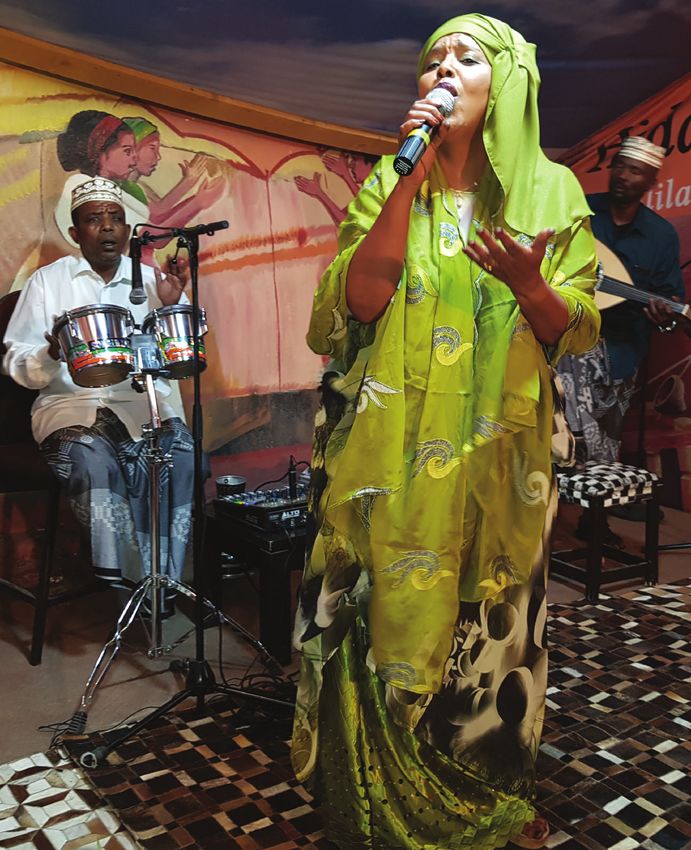
POETRY COMPETITION INTERVENTION

Healthy lives. Measurable results.
CMYK      CMYK      CMYK      CMYK
                                         55        24        4         12
                                         0         0         16        8
                                         11        100       100       7
                                         0         0         0         0

                                         RGB       RGB       RGB       RGB
                                         100       205       247       22
                                         202       220       206       224
                                         223       41        15        226

                                         HTML      HTML      HTML      HTML
                                         #64CADF   #CDDC29   #F7CE0F   #DEE0E2

    CONTENT
    1   INTRODUCTION                4

    2   CONTEXT                     6

    3   UNDERSTANDING THE PROBLEM   8

    4   ADDRESSING THE PROBLEM      9

    5   THE DESIGN JOURNEY          10

    6   POETRY                      11

    7   THE POETRY COMPETITION      14

    8   ROLL OUT                    16

    9   THEORETICAL BACKGROUND      21

2
    4
Acronyms
 ANC     Antenatal Clinic

 BPC     Birth Preparedness Class

 CBO     Community Based Organization

 CHV     Community Health Volunteer

 CPR     Contraceptive Prevalence Rate

 DFID    Department for International Development

 FBO     Faith-Based Organization

 FCC     Female Community Champions

 IEC     Information, Education and Communication

 IPC     Inter-personal Communication

 MCH     Maternal and Child Health (Clinic)

 MCPR    Modern Method Use

 MOH     Ministry of Health

 MOHD    The Ministry of Health Development

 PSI     Population Services International

 SAHAN   Somali Advocates for Health and Nutrition

 SBCC    Social Behavior Change Communication

 SGC     Small Group Communication

 SHINE   Somali Health and Nutrition Programme

 TBA     Traditional Birth Attendant

 TOT     Trainer of Trainers

                                                     3
1. Introduction

    The MoH and PSI are implementing the Demand Creation for Health Services component of
    DFID’s Somali Health and Nutrition Programme (SHINE) programme dubbed SAHAN (Somali
    Advocates for Health and Nutrition). SAHAN is the first ever, large-scale dedicated demand
    creation programme being implemented in the Somali context

          Antenatal Care                                                   Nutrition

                                                  2
                                1                                  3

                                          Birth Spacing

    Under this programme, the MoH and PSI aim to increase access to and utilisation of reproductive,
    nutrition, child, and maternal health services and to promote healthy behaviour change. We are
    using an adaptive, evidence-based, participatory design to better understand the persistent
    barriers to uptake of health services and health-seeking behaviour and develop and test
    innovations in demand creation that target the external factors which influence individual
    behaviour to improve the health of Somali women and children.

    SAHAN’s strong learning agenda is to influence the global community of practice (CoP)’s
    development of reproductive, maternal and child health and social and behaviour change
    programmes and policies in contexts like Somalia and Somaliland. SAHAN also wants to influence
    the use of innovative methods like Human-Centred Design (HCD) and Social Network Analysis
    (SNA) for promoting behaviour change in addition to adaptive learning and management in the
    Somali context.

4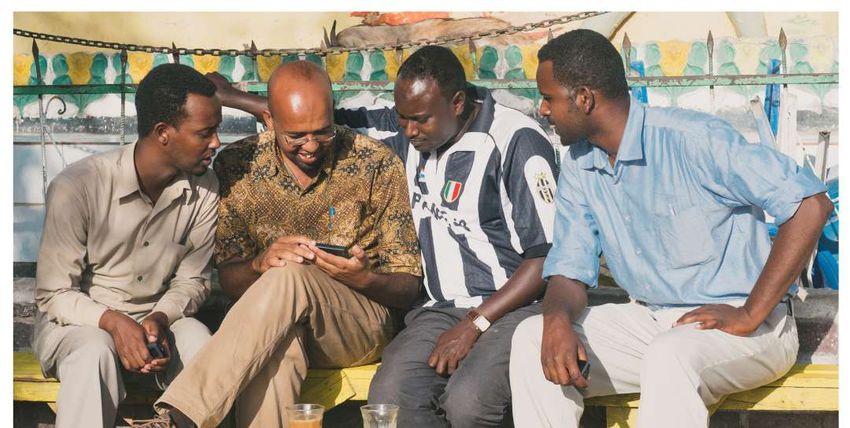
SAHAN Program Approach

This program approach involves several rounds of immersive research, which is followed by
ideation, design and co-creations activities to produce prototypes. The prototypes designed are
then tested and iterated until the user finds them suitable. They are also tested for scalability,
desirability and feasibility, the results of which determines if and how they will be piloted. The
piloting activities are carried out at a modest population scale, just large enough to provide
evidence that will inform country wide scalability, and also influence the international community
of practice on key learnings and best practices.

The end products from SAHAN will be used by multiple stakeholders working within the Somali
context and beyond, hence proper capture, packaging and documentation of all the processes
within SAHAN is of vital importance.

                                                                                  ch
        Maternal health                                                         oa
                                                                              pr
        18 months                                                           Ap
                                                                       le
                                                                    yc
                                                                 ec
                                                              Lif

                                                                                              Design Challenges

        Children under 5
        18 months

                                                                                                        5
2. Context

             Somalia has some of the highest infant, child, and maternal mortality rates in
             the world.

             20
                            Maternal

                                                   &
                            mortality was                                                     mortality was

             15
                            732/                                                              137/ 1,000
                            100,000 live                                                      live births.
                            births

            1
                                 in   18                                               15% while mCPR
                                 women die in Furthermore,                             only increased from
                                 pregnancy or CPR remains at                           4.3% in 2012 to
                                 at childbirth in
                                                                                       5.1% in 2016
                                 Somalia.

            Contributing to this is lack of access to skilled delivery, closely-spaced births and
               adolescent marriages. Low government investment in health services, poor
            infrastructure and socioecological factors contribute to low access and utilisation
HTML         HTML              HTML of maternal health services.
#F7CE0F       #DEE0E2                #464143

            Children under five are disproportionately impacted by preventable and treatable diseases.

                 24%
                pneumonia
                                                               Only   1/3 of caregivers in Somaliland and Puntland
                                                               and 23.5% in South Central seek care for suspected
                                     19%                       pneumonia.

                                        Diarrhea

           17%                                          only 54% in Somaliland, 41% in Puntland, and
                                                       47% in South Central treat children for diarrhoea.
            neonantal
            disorders

                              12%                                and only 25% in Somaliland, 17% in Puntland,
                              measles                            and 32% in South Central vaccinate their
                                                                 children for measles.
                Leading Causes of under
                 five year olds deaths in
                         Somalia

   6
Nutrition is also a major concern for pregnant and lactating women and children, with
environmental factors and a high number of internally displaced people playing a major role in
the relatively unchanged malnutrition rates since 2007. About 308,000 children, or one in eight,
are acutely malnourished and 56,000 are severely malnourished. South Central contributes
65% of the acute malnutrition country total. Exclusive breastfeeding and infant and young
child nutrition continue to be major challenges because of among others, inadequate nutrition
knowledge and unavailability of certain nutrition foods.
(Sahan research Summary 2019)

The Shine Programme

DFID is implementing a health system strengthening programmed under the name Somali
Health and Nutrition Programme (SHINE) from 2016 to 2021. This programme has both a
supply side strengthening and demand creation components. PSI is implementing the demand
creation program known as Somali health and Nutrition (SAHAN) which aims to increase access
to and utilisation of reproductive, nutrition, child, and maternal health services and to promote
healthy behaviour change. PSI is using an adaptive, evidence-based, human centered approach
to better understand the persistent contextual barriers to uptake of health services and health-
seeking behaviour and then design, test and pilot innovative solutions to increase demand and
change in behaviour.

                                                                                                7
3. Understanding the Problem:
    Somali women and children face more health challenges than any other country in the world
    accounting for one of the worst maternal and under-five mortality rates. One in seven Somali
    children die before they reach their fifth birthday. Save the Children’s state of the world mother
    report once described Somalia as the worst place in the world to be a mother.

    Through the discovery phase of SAHAN’s program approach which involved immersive research
    activities, we discovered that the Somali mother (Persona -Amina) though being the bastion
    of the
        0 family’s wellbeing, lacks0the needed knowledge and
                                                           0 has little decision-making
                                                                                      45 power as
    concerns health matters. Decisions are made only after consultations with her Influencers (her
    husband, mother, mother-In-law and sometimes the religious leaders) who largely lack correct
    health Information as shown by Insights generated from the Immersive research findings
    conducted in different areas of the country.
        RGB                           RGB                           RGB                           RGB
       205
      Research Finding               247                          22 Insight
                                                           Programme                           70
        220                          206                            224                        65
     1.Finding: The men and largely the society            1.Amina’s226
                                                                     happiness in marriage is manifested
        41                           15
     have relegated responsibilities of the household
                                                                                               67
                                                           by her respect for the husband; leaving him to
     including her health and that of the children to      be the decision maker for the household and
     be the sole responsibility of the mother despite      her health choices too. Amina trusts that her
     having the final say on her decisions.                husband is well informed and acts for the good
        HTML                          HTML
     2.Finding: The husband is the key lever for health
                                                                     HTML
                                                           of the family and his wife.          HTML
         #CDDC29
     outcomes                         #F7CE0F
                because he is the decision    maker. He             #DEE0E2                       #464143
                                                           2.Amina trusts her husband’s wisdom and
     makes most decisions for the betterment of            leadership; this is also the cultural requirement
     his wife and family; unfortunately, some of the       of a woman. She fears being perceived as a
     decisions he makes lead to poor health outcomes       rebel wife especially by the community if she is
     for his family because of low knowledge and           perceived to be making decisions without her
     myths. He Is largely Influenced by religion and his   husband’s approval.
     friends who are his key sources of information.

     1. Finding: The health system has consistently        1. Husbands are the gatekeepers of family
     denied men the opportunity to learn about             planning decisions.
     health. More information is given to women
     who are not decision makers. Some of the              2. Pregnancy and childbirth are the stages
     information women are empowered with is               where Amina is emotionally weakest and needs
     sensitive and can jeopardize her relationship         comfort, familiarity, support, and empathy.
     with her husband if she divulges it or if she
     makes decisions alone. She wants these                3.Superwoman tendency: Belief that Amina is
     initiatives to come from her husband.                 inherently strong and not needing to use MCH
                                                           services. Would only use them as the last resort
     2. Findings: Amina is also under pressure from
     her husband and the community to bear more
     children and in quick succession.

8
4.Addressing the problem

In order to reduce the health burden In Somalia11 and Increase health
                                                                    100 utilization and achieve
                                                                                         100
desirable health behaviour, It Is Important to 0address the lack of health
                                                                    0       literacy targeting
                                                                                         0     Amina
and her Influencers starting with the husband, the religious leaders and the older women.

                   Kos, a former IPC agent who
                                             RGB had worked with  RGBwomen on Birth
                                                                                  RGBSpacing
                   for 6 years, shared 2 key issues
                                             100    that she felt 205
                                                                  needed to be addressed:
                                                                                  247
                                               202                 220                 206
                   “the women are busy they223 are working daily 41
                                                                 at home to ensure15that their
                   families are happy and functioning properly -but they can find help with the
                   children from their mothers, husband and sisters, so:
                                               HTML                HTML                HTML
                   1st address Knowledge –#64CADF
                                                they need to know      about the benefits
                                                                    #CDDC29               of Birth
                                                                                       #F7CE0F
                   Spacing, of ANC visits and Facility delivery, they just lack enough knowledge
                   and if they knew, they will make informed choices.

                   Women consults their husbands. You can have men sessions to compliment
                   and assist the wife convince their husbands.

                   2nd improve the services at the facility -poor services push the mothers
                   away – why should they come to be mistreated and served poorly.

Access to information is therefore key to any behavioral actions that Amina and her influencers will
take regarding the identified health issues. Whilst acknowledging that there are other systemic
challenges facing service utilization and improvement of health indicators in Somalia as seen
through the social ecological model, demand creation strategies need to identify an entry point
to addressing this mirage issues.

                                                                                                       9
5. The Design Journey
The design challenge that SAHAN seeks to address is:
How might we enable Anima and her key influencers to gain the
?
needed health information and knowledge that will stimulate a
change in behaviour and enable them take actions that will lead
to better health for her and her family
The Design Challenge
This design challenge resulted from the synthesis of the immersive research findings which
generally indicated that Somali women and men are regularly exposed to health information
from traditional sources like the radio, the TV and from health workers. They however to not take
these messages seriously enough to take action. Although desk review of previous researches
associate increase in knowledge to improved health behaviours, the progress made over the
last few years has only been marginal. It is also known that traditional health campaigns were
limited in their effectiveness as they were mostly targeted at the woman only.
The SAHAN innovations team then sought to design innovative ways of communicating health
messages that will be laced with calls to action targeting not just the woman of reproductive age
but her influencers as well. During the ideation process, co-creation and several brainstorming
activities were applied to develop ideas and concepts on how best to not only communicate
health messages but also stimulate measurable change in behaviour.
The team found it necessary to sensitize the Somali community towards the daily challenges
of the Somali woman and mobilize the much needed support that will enable her take actions
towards healthier behaviors.
Some of the Non-Traditional Innovations conceptualized by the team for Sensitizing the Somali
community include:
Poetry Competition IVR – Interactive Voice Response First 1000 Days Campaign
106. Poetry
The existence of art is likened to that of humankind in history. Art can be described as creating a
form of expression by the artist using his/her imagination, technical skill or conceptual ideologies.
This art can be in painting, sculpture, architecture and also in form of performing arts such as
music, theatre, film, dance and poetry. Poetry as a form of art uses language in stylistic forms
such as rhythmic words, similes, symbolism and many literature devices to evoke meanings
on a certain idea. It dates back to pre-historic times in Africa during certain occasions such as
hunting.
The Somali community has a longstanding poetic tradition with the Arabic poetry being one
of the oldest in history. Poets in the Somali community memorized volumes of poems from
ancient history and used them to teach and entertain their kinsmen. Somalia is known as ‘A
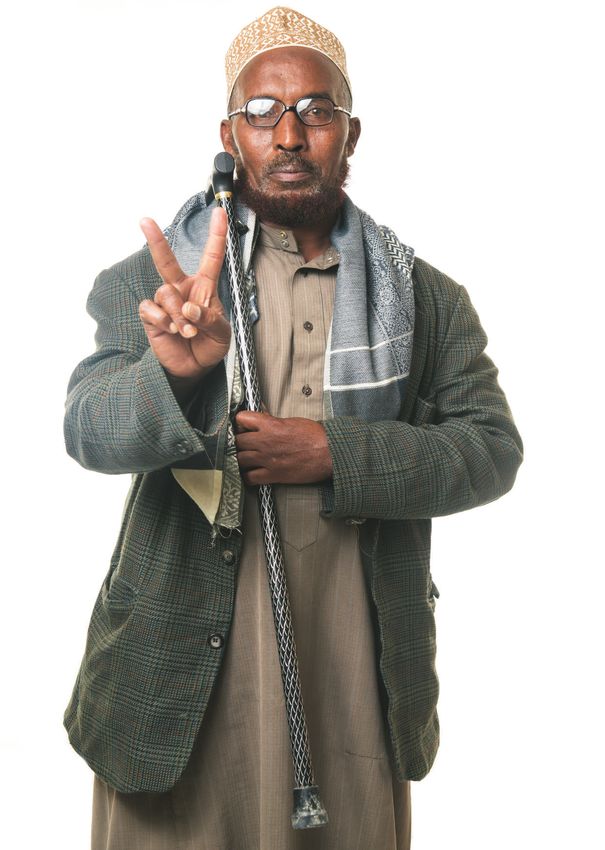
Nation of Poets’ as a result of their longstanding oratory tradition. Poetry is an important way
of communicating complex and sensitive human topics in Somali culture.
Poems are used to pass ideas which are political, spiritual, emotional or philosophical to explore
people’s perception, for pleasure and beauty, and to elicit certain emotions about something,
teach or challenge certain societal grounds that people may have.
Some of the notable Somali poets include Sayyid Mohammed Abdulla Hassan, Garaad Farah,
Ismail Mire and Rage Ugas. It also features later generation poets like Mohammed Ibrahim,
Abdullahi Suldan Tima Adde, Abdulkadir Hersi Siyad and Abdullahi Mohamud Isse Sangub.
Poetry among the Somali people played an important role of teaching about the history of the
Somali. With modern forms of communication and transport, poetry has been spread from one
region to another, with poets travelling and leaving behind their work to be evaluated as well
as appreciated.
Poets in the Somali community have the responsibility of preserving history and shaping events
through their public favor both socially and politically. One such example is Sayyid Muhammed
Abdille Hassan (Mad Mullah) who used his verse to unify Somalis in the fight against British
colonialism.
“O Kinsman, Stop the War” – a poem created by Salaan Arrabay was an anti-war weapon, to
appeal to two rival sections of the Isaaq clan to end a long-standing feud.
In the period between 1970-1991, poetry in the Somali community was used to mobilize national
programs such as immunizations and carry out literacy campaigns.
Coupled with the low literacy levels, co- creations sessions and behavioral sciences’ natural
spontaneous behaviour, poetry was identified as most spontaneous way in which the Somalis
learn and adopt new knowledge and way of life. This was so evident that during the testing
of the poetry competition it was very easy to get nationally renowned poets and the national
cultural center Hiddo dhawr in Somaliland was ready and willing to not only own the competition
but provide the venue and platform for the competition
1112
To sustain the awareness raising and knowledge gained from the use of poetry, a competition
angle was weaved in the design to provide the much-needed edutainment and edge to the
health messages that would be passed through poetry. Edutainment has been defined as the
art of integrating social issues into popular and high-quality entertainment formats e.g Poetry
and Drama, based on a thorough research process these programme format get people talking
- not only about exciting storylines, and interesting characters, but also about the issues that are
woven into the programmes. It is also often easier to speak about certain issues, such as birth
spacing or sex in the third person. These formats stimulate constructive public debate and are
thought to be a powerful change agent in development communication and generally create a
supportive environment for social change.

               Testing:

As part of the program approach test innovations with the users, several rounds of concept
testing activities were carried out in Hargeisa

• The 1st round of testing involved a testing for desirability and feasibility among poets for a
competition of this nature. This involved the distribution of competition promotional leaflets at
the Hargeisa International Book Fair in 2018. The team handling that activity also had discussions
with 7 poets during the event in which they discussed their possible interest and feasibility of
the competition. The poets also gave the tea some ideas on how best to promote and increase
participation of the general public in the competition, the 7 poets involved in the interviews gave
positive feedback on the concept and encouraged the team to proceed.

• A Second round of testing involved developing a Facebook page and promoting the competition
on the page. Essays and press releases on the health of the Somali Woman and child were
also uploaded on the page to stimulate potential writers on the kind of messages we intend
to promote through their poems. As a result, five poets responded with submissions in the
Facebook page within a week of the call. This was irrespective of the fact that no prize winnings,
or incentives were attached at that time.

• The third round of testing was carried out on the 21st of March 2019 during the world poetry
day where a renowned Somali poet was engaged to promote the potential competition on
Facebook. He recited a prerecorded poem on how poetry can be used to promote improved
healthy behaviour for the Somali people. This post attracted 2,775 engagements (likes, comments
and shares) and reached 13,600 people while the video gained 4,089 views from the public
within the first week. There were also several requests for information about the competition and
how submissions will be made.                                                                    13
7. The Poetry Competition
SAHANs Hiil Hooyo Poetry Competition is an innovative poetry competition where both Young
and aspiring Somali poets are challenged to bring their creativity into action by using poetry as a
tool to address complex issues surrounding maternal health. This competition is expected to draw
attention to the challenge’s mother’s experience during pregnancy, childbirth, and the postnatal
period. Using poetry as a method for expressing empathy for the mother can be an effective
way of increasing awareness and sensitizing the Somali communities on the support required by
mothers during this period.
In Somali language, the word ‘hiil‘, means giving deliberate support by any means to someone
who is entitled (mother, brother sibling, friend, ally), The name Hiil Hooyo was an outcome of a
brainstorming session aimed to find catchy but also meaning full names that resonates SAHAN’s
objectives to the prototypes. The name was internally identified by innovations teams at one on
the design workshops but never tested externally though through subsequent engagements it was
discovered that is used by a project run by Finnish Somalia Network, an NGO working for better
mother and child healthcare through training of midwifes, improved facilities and access to pre-
natal care in the same context
14Goal
The goal of the poetry competition Is to provide key health messages and knowledge to the
society at large so it can make better health decisions for Amina and their children
Objectives:
• Present messages in a format that resonates with the Somali people (art of poetry)
• Promote community owner ship of MCH continuum of care
• Produce Champions/advocates for mother’s health
• Create content to be used for the health campaigns and channels
• Sensitize the community towards the challenges of the Somali woman and mobilize them
towards her support.
Target Audience: Somali Community at large
Target Location: Throughout Somalia and Somaliland
How It Works:
Poetry competition addresses the key thematic areas that SAHAN addresses ANC and Facility
delivery, Nutrition and Birth Spacing. It is structured in a competition format to make it engaging
and reach majority of the target audience to complement other behavior change interventions.
Young poets are invited to participate in the competition to bring their talent and creativity to
bare while conveying the key health information that mothers require during pregnancy and
the postnatal periods. These poets are then mentored by a select panel of renowned poets
and assisted to improve their artistic element and the accuracy of the health area messages.
The poets will present to a larger audience through Facebook and television for a period of 2
months During which the public will get to vote for the best poets across the thematic health
areas. The best poets are later invited to perform to a live audience in the Grand finale event
where the winners of the overall competition will be selected.
The best poems will be aired regularly after the competition to sustain health messaging across
the different states
158. Roll Out
Recruitment for Poetry Competition Judges
Popular and seasoned Somali poets will be recruited as subject matter experts and as judges of
the competition to inspire the young aspiring competitors, to provide the needed objectivity and
transparency of the vetting process. The judges will also be involved as co-designers of the general
operationalization and execution of the poetry competition.
Key functions of the Judges will be to:
• Roll out a poetry competition that communicates, stimulates interest and participation across
the length and breadth of the country.
• Guide the execution of a poetry media campaign that uses poetry to communicate the
challenges of Somali mothers and the kind of support they require during pregnancy, childbirth
and breastfeeding.
Judges Selection Criteria
• Influential across cultural and political circles.
• Reputable and respected among community
• Non-controversial and accepted across the different groups and across the whole of Somalia
• Has evidence of at least 5 popular self-composed poems that resonate across the whole of
Somalia.
• Should be a person who is accessible, reachable, flexible, passionate for health (particularly
maternal health)
• Has experience in similar competitions or mass media activities in support of poetry or maternal
health
• Setting the health area thematic approach
SAHAN addresses three thematic health areas: ANC/Facility Delivery, nutrition and birth Spacing.
All of which can be targeted in a single poetry competition as they are equally important for
the programme. However, an information sharing meeting with potential judges for the poetry
competition urged that it is of the best option to select one key health area at a time. This brings
impact that can be easily observed as compared to an integrated theme approach which would
have :
•High chance that one health area is focused much while scarcely discussing the other two
•Poems will be lengthy and, as a result, loose audience focus and attention.
This led to the decision that the opening round of submissions will be for ANC and facility delivery.
Submissions will be made in writing and a short video not longer than 2minutes. These will first be
screened by the judges and only the preferred will be further screened by our health area experts.
Recommendations on improving health messages will be allowed to qualifying candidates. These
poems will then be reproduced in video by our own production agency and promoted on social
media, radio and TV.
While the promotion is ongoing, all qualified contestants will be working on their second task on
Maternal Nutrition, which will be reviewed and produced in the same light. And while the nutrition
is being promoted, they will have the 3rd task which will be birth spacing.
This implies that all the finalists will have 3 poems each to present at the grand finale.
16The Selection Criteria for competitors Structure
Aesthetics (the branch of philosophy which deals with questions of beauty and artistic taste)
and content are the basis of evaluating each piece of poetry script submitted. The first two
parts need subject matter/poetry experts as it relates literature rules. The Judges recruited will
support the programme team in the technical evaluation of the competing poets. The content
part needs medical expertise and the programme team should help the judges identify those
pieces relevant to the theme of the poetry competition. Specifically, the following criteria are
evaluated:
Number of
Presentation Literature Relevance to Originality Language
words/pages/
skills alignment the theme universality
lengths of
video
Competition launching and call for submission
• The large part of this prototype, including competition launching, promotion and public
voting will live entirely on traditional media and on social media.
• A dedicated Facebook page promoting the competition will be launched and call for
submissions where Potential participants can seek guidance, information, ask questions to
the team using the pages messaging/chatting feature or query under comments sections of
the posts posted on the Facebook for the benefit of the general audience.
• Whilst Facebook page can be a rich source of information for this competition, other media
will be used to launch and promote it, as they are very instrumental in engaging and reaching
population in the entire Somalia and Somaliland. For instance, radios is widely listened
thorough out Somalia and Somaliland and can reach rural community which is 59% (World
Bank 2016). Over 20 TV channels exist in the countries’ different states and localities in the
Somali peninsula. However, HCTV is the most prominent and widely watched in each region
of Somalia and Somaliland.
• Call for submission will be promoted through Facebook (paid-Ad), Twitter, TV (Horn Cable
TV) and radio Hargeisa
• The call of submission will mostly cover ANC/facility delivery and Nutrition with the aim of
getting as many poets to participate as possible since the topics are less controversial as
compared to Birth spacing.
• Time for submission will take 2-weeks from the day of the announcement. Whereas Facebook
promotion will continue until the closure of the submission a limit will be placed on the other
channels to minimize costs.
• Both written and short video submission will be made for the first task in order to be able to
screen for presentation skills and rhyming.
17The Selection of Poets
• Applications are vetted as they are received for the purpose of minimizing time. All applications
are evaluated against previously set criteria.
• First, the Judges would vet the submission on the basis of their poetic application. Based
on time and budget availability for the competition, applications pass across the judges
and they can do the vetting process at their comfort zones individually or the implementing
organizations can give a room and other available resources in their premises.
• Second, the program teams will review the health area messaging and help score this section.
Each piece will go through all the judges and every judge will give his own score and the final
waited score.
• A total of 20 poets will be selected from the submissions received from the public who will
proceed to be mentored and coached for the online public competition.
• Judges can be paid thorough either two options. The first entails number of poems judges
can assess in a day of eight hours equivalent payment of a one-day fee for a consultant. The
second is paying the judges a specific amount of money for each poem they reviewed. The
latter is better to use if the number of poems available are limited in number. They choice of
either options will also be based on the situation and the phase of the competition.
Mentoring of poets on style, health messaging and production of
presentation
• The 20 selected poets will then receive orientation coaching and mentorship on all the key
thematic health areas of SAHAN to produce relevant, creative piece of poems during different
phases of the competition (ANC and facility delivery, Birth Spacing and Nutrition). SAHAN
team and Judges will facilitate these coaching and mentoring sessions.Once mentored, the
selected 20 will be internally vetted across the thematic areas where the top 3 poets per
theme will be selected for production, airing and public voting. Producing creative work
needs essential ingredients including time.
• Once the poets and the poems have been vetted, the production of presentation formats
to fit Facebook, tv and radio will take place. This will ensure that content shared out for
public viewership has been vetted and approved by the ministry and has the right health
information. Recorded videos script of top 9 poems 3 per health area, are recorded for public
voting as shown:
180
Poems public voting structure 11
0
Competition launching and call for Applications are vetted and a
Competition is launched by a Coached and mentored poets
pool of poets selected for
submission focusing on ANC/ call of submission E.g.: 200 (pool of poets). No: 20 poets
mentoring on health issues
Facility delivery application received
E.g.: top 20
RGB
100
202
223
Thematic area rounds of ANC Round Nutrition Round Facility Delivery round
All the 20 Poets submit All the 20 Poets submit All the 20 Poets submit
competition(internal)
HTML
#64CADF
ANC top 3 Nutrition top 3 Facility top 3
Production and Public voting Production and public voting Production and public voting Production and public voting
Thematic area champions Nutrition Facility Delivery Champion
ANC Champion
Grand finale and Live performance All health area champions: Live performance at grand finale
19The Competition goes live for Public engagement
Once the vetted poems are ready for viewership and engagement with the Public, we will go live
on social media -Facebook and open the channels for public voting.
Publicity for vetting:
In each stage of the competition, audiences have a share in deciding who the winners are based
on their observations. This is to create an interest/motivation for the audience to participate and
listen to the intended health messages during the process.
The captured videos will be promoted for a period two weeks per theme in TV and social media
(Facebook) encouraging the audience to vote for their best through SMS. Each audience can
give his vote only one time. The results from this will be incorporated into the already decided
results by judges.
Grand finale (Live presentation)
Winners of each phase will be announced in front of all large audiences comprising different
parts of the communities. The programme team will discuss the SAHAN programme and the
journey that this competition has experienced. Finally, champions will present their poems on
stage.
209. Theoretical background
Given the identified barrier and design challenge, SAHAN applied the transtheoretical model/
stages of changes model (TTM) as the core underpinning model to address the knowledge gaps.
TTM operates on the assumption that people do not change behaviors quickly and decisively.
Rather, change in behavior, especially habitual behavior, occurs continuously through a cyclical
process. The TTM is not a theory but a model; different behavioral theories and constructs can
be applied to various stages of the model where they may be most effective. The TTM posits that
individuals move through six stages of change: precontemplation, contemplation, preparation,
action, maintenance, and termination. For each stage of change, different intervention strategies
are most effective at moving the person to the next stage of change and subsequently through
the model to maintenance, the ideal stage of behavior. Key among this is information which
is needed at it stage (Prochaska & DiClemente, 1983; Prochaska, DiClemente, & Norcross,
1992)Identifies the stage that benefits most from health education as the pre-contemplation
stage or the stage of “Not knowing” which is also well illustrated under the communication
for behavior impact (COMBI) framework-HIC-DARM which calls for appropriate communication
at all stages of behavior adoption. If people have already heard about the behaviour but are
not fully informed, information to raise awareness will be the starting-point. If they are already
informed but are not convinced, then you will start with information needed to convince and
this is where health education approaches play a crucial role and hence recognized as the entry
point to behavior change communication.
Theory of Reasoned Action:
This theory states that the intention of a person to adopt a recommended behaviour is determined
by:
• A person’s subjective beliefs, that is, his or her own attitudes towards this behaviour and his
or her beliefs about the consequences of the behaviour. For example, a young woman who
thinks that using contraception will have positive results for her will have a positive attitude
towards contraceptive use.
• A person’s normative beliefs, that is, how a person’s view is shaped by the norms and
standards of his or her society and by whether people important to him or her approve or
disapprove of the behaviour.
• This concept is relevant because young people’s attitudes are highly influenced by their
perception of what their peers do and think. Also, young people may be motivated by the
expectations of respected peer educators.
21IBMR Model: Information, motivation, behavioral skills, and resources The IMBR model addresses health- related behaviour in a way that can be applied to and across different cultures. It focuses largely on the information (the ‘what’), the motivation (the ‘why’), the behavioral skills (the ‘how’), and the resources (the ‘where’) that can be used to target at-risk behaviors. For example, if a woman knows that using contraceptives properly may prevent unwanted pregnancy, she may be motivated to use them correctly, but may not be able to purchase or find them. Thus, the concept of resources is important to this model. This implies that a programme of this nature should include comprehensive approach of all four IMBR concepts to ensure availability of the essential components for reducing risky behaviour and promoting healthier lifestyles. Citation: Prochaska, J.O., DiClemente, C.C., & Norcross, J.C. (1992). In search of how people change: Applications to the addictive behaviors. American Psychologist, 47, 1102-1114. PMID: 1329589. Trevor Gordons Stammers ; Healing allusions -use of Poetry in teaching medicine. Nov 3rd 2015 0024353. Journal of contemporary Medical education. Suruchi Sood, Amy Henderson Riley, and Kristine Cecile Alarcon Subject: Health and Risk Communication, Mass Communication, Media and Communication: Entertainment-Education and Health and Risk Messaging Online Publication Date: May 2017 DOI: 10.1093/acrefore/9780190228613.013.245 Psi immersive research summary . Save the children .State of the world mother 2019
Healthy lives. Measurable results.
You can also read


