Porsche Engineering - Inside China - Magazine
←
→
Page content transcription
If your browser does not render page correctly, please read the page content below
Porsche Engineering                            Magazine
                                               Issue
                                               1/2020

                                               www.porsche-engineering.com

        AUTOMOTIVE DEVELOPMENT OF THE FUTURE

             Inside China
Started off for a drive.
Returned home with an epic story.
The new 911 Turbo S.
The 911 Turbo S has the potential to turn every drive into an unforgettable story. This is ensured by
the power output of 478kW (650PS), Porsche Active Aerodynamics (PAA), PASM sports suspension
and an array of intelligent assistance systems. Discover more at www.porsche.com/911Turbo

Fuel consumption (in l/100km) urban 15.5 · extra urban 8.6 · combined 11.1; CO₂ emissions combined 254g/km

Porsche Engineering Magazine 1/2020                                     EDITORIAL                                                                            3

                                                                        Dear Reader,

                                                                        A Chinese proverb says: “One generation builds the road the next
                                                                        will travel.” We—as a company, as a society, as individuals—set the
                                                                        course for future generations in the here and now. This applies both
                                                                        to concrete developments we are working on and the ways in which
                                                                        we work together.

                                                                        We have been partnering with Chinese companies for decades.
                                                                        And we learn from each other every day. Mobility is in a state of
                                                                        upheaval—and that is nowhere more evident than in China. New
                                                                        drivetrain strategies, highly automated driving functions, and a
                                                                        wide range of connectivity services are shaping the Chinese market.
                                                                        Together with our customers and partners, we are continuing to
                                                                        develop these technologies. In addition to our understanding of the
                                                                        market and our expertise in both traditional and digital disciplines,
                                                                        one thing in particular helps us in this process: the deep conviction
                                                                        that we are successful when our customers are successful.

                                                                        We are proud to have accompanied the development of the auto-
                                                                        motive future in China for more than 25 years, as well as to have
                                                                        played a role in shaping it together with Chinese car manufacturers,
                                                                        suppliers, IT companies, and local subsidiaries of international
                                                                        OEMs. A positive culture of cooperation is as important to us as the
                                                                        latest findings from the worlds of business and science, tech play-
                                                                        ers, and universities. So we are working together to build the roads
                        Dr. Peter Schäfer,
               Managing Director Porsche Engineering
                                                                        that the next generation will drive on.

                                                                        I hope you enjoy reading this China issue of our magazine.

                                                                        Best regards,
                                                                        Peter Schäfer

ABOUT  T PORSCHE ENGINEERING: Creating forward-looking solutions was the standard set by Ferdinand Porsche when he started his design office in 1931.
In doing so, he laid the foundation for today's Porsche customer developments. We renew our commitment to that example with each new project that we
carry out for customers. Porsche Engineering combines expertise from vehicle and system development with the latest innovations from function and software
development and validates these using comprehensive simulation and testing facilities.
34    Cell culture: Researchers develop new batteries

                                                                                                                             52    E-pioneer: Mate Rimac
                                                                                                                                   builds super sports cars
                                                                                                                                   and battery systems

                                                                                                                      DOSSIER

                                                                                                                       10 – 33

                                                                                                                             12    Partnership:
                                                                                                                                   In Shanghai, Porsche
                                                                                                                                   Engineering works for
                                                                                                                                   Chinese OEMs and
                                                                                                                                   Western customers

58   Transfer with tradition: Findings from motor sports are integrated into the series   42   To the point: The right temperature at the charging station
Porsche Engineering Magazine
Issue
1/2020
03 Editorial
04 Contents
06 News
DOSSIER:
INSIDE CHINA 10 An immensely influential market
Dossier overview
12 Highly sought expertise
In Shanghai, Porsche Engineering offers Chinese and Western OEMs its
comprehensive expertise
18 Flexible platform
Concept and package for different body variants and drive systems
24 On skyhooks
New chassis platform with skyhook function for China
28 “We shore up the main capabilities of automobile manufacturers”
Interview with Tencent Vice President Cham Zhong about the future of the car
32 Closely networked
Chinese digital companies drive the networking of the automobile industry
TRENDS AND
TECHNOLOGIES 34 The perfect cell
Researchers in search of better batteries for electric vehicles
VISION 40 The religion of data
Bestselling author Yuval Noah Harari on algorithms and the new “dataism”
PERFORMANCE
AND EXPERTISE 42 Algorithm with foresight
With predictive thermal management for optimally tempered batteries
48 Continuous health check
Artificial intelligence monitors the condition of vehicle batteries
MISSION 52 Electrified
Mate Rimac talks about his company and the mobility of the future
PORSCHE AND
PRODUCT 58 From pit stop to auto dealership
Teams from racing and series work closely together at Porsche
64 The power of evolution
A portrait of the new 911 Turbo S and the new 911 Turbo S Cabriolet
OUTSIDE THE BOX 68 Outside the box
Recommendations for thinkers, tinkerers, and geeks
TRADITION 70 A family car for China
In 1994, Porsche Engineering developed the “C88”
71 Imprint
Authors 24 Andreas Burkert is an ATZ 32 Valerio Pellegrini is a communi- 58 Constantin Gillies is an economist
correspondent and an author. He cation designer in Milan. Among and business journalist. His sub-
writes about automotive other things, he deals with data jects include companies, technol
engineering, electric mobility, and AI. visualization and illustration. ogy, digitalization, and logistics.
6                          News

                                                                Virtual and augmented reality

                                                                Fast decisions with
                                                                the Visual Engineering Tool

                                                                Porsche Engineering is increasingly
                                                                relying on virtual and augmented reality
                                                                (VR and AR) in development. Using the
                                                                in-house-developed Visual Engineering
                                                                Tool (VET), engineers can in many
                                                                cases reduce complex real models and
                                                                rebuilds and thereby save time and costs.
                                                                Among other things, VET was used in the
                                                                development of the new Porsche Cayenne
                                                                Coupé, one of the highlights of which is its
                                                                large glass roof. Instead of constructing
                                                                different variants in real life, the developers
                                                                created a virtual model from CAD data. The
                                                                model could be equipped with numerous
                                                                realistic glass variants on a daily basis and
                                                                viewed from different angles in different
                                                                lighting conditions. This allowed important
                                                                decisions to be made more quickly. The
                                                                VET system is being continuously refined
                                                                by Porsche Engineering. It can be used not
                                                                only to assess visual aspects or component
                                                                variants, but also to present technical
                                                                content. Until now, VET has been used
                                                                for ergonomics and assembly studies, the
                                                                representation of dimension data, and as
                                                                a virtual wind tunnel. In addition to VR,
                                                                AR is currently being integrated into
                                     Porsche Cayenne Coupé      the VET system as well, for instance for
             Fuel consumption (urban): 11.7 - 11.6 l/100 km     cross-location collaboration.
             Fuel consumption (highway): 8.0 - 7.9 l/100 km
            Fuel consumption (combined): 9.4 - 9.3 l/100 km
                  CO₂ emissions (combined): 215 - 212 g/km
                                          Efficiency class: D

    #Inside                     Porsche Engineering on Instagram
                                Porsche Engineering has expanded its social media presence

    Porsche                     and is now also available on Instagram at @porsche.engineering.
                                In addition to news and information about upcoming events,
                                visitors dive into the world of the company and experience which

    Engineering                 trends and technologies the engineers of Porsche Engineering
                                are working on.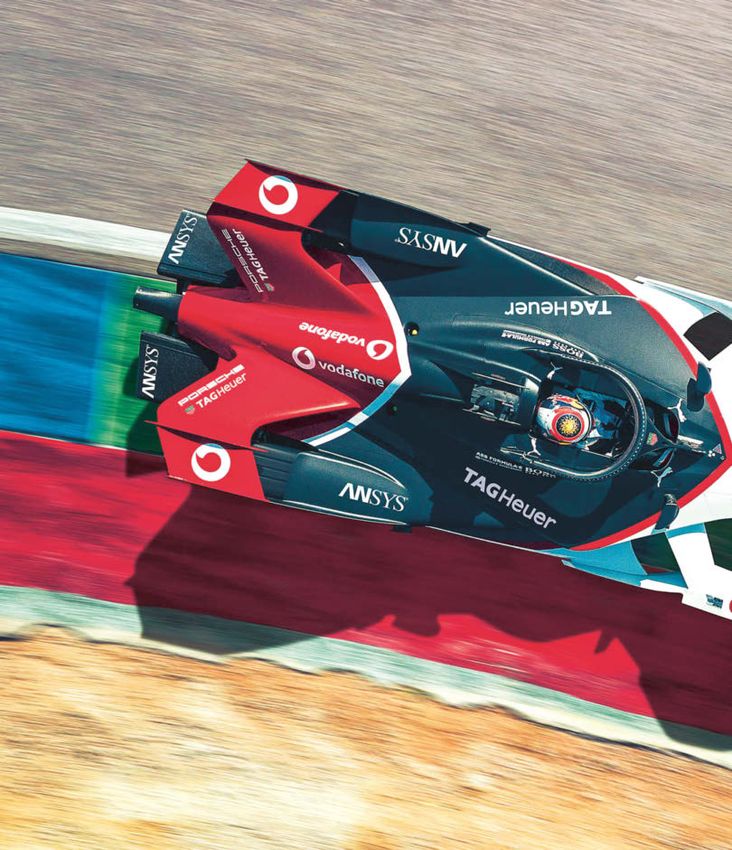
Porsche Engineering Magazine 1/2020                                                                                                      7

                                                          Further expansion of function and software development

                                                          More employees and office space in Cluj
                                                          Porsche Engineering continues its growth in Cluj, Romania. The location,
                                                          which specializes in the areas of function and software development,
                                                          had roughly 200 employees at the end of 2019 as planned and will
                                                          create additional jobs in the course of this year. Porsche Engineering
                                                          Romania is also expanding geographically in preparation for further
           “We have invested a                            growth. The increasing numbers of personnel and space reflect the many
                                                          projects under way, particularly in the areas of artificial intelligence and
            lot in activities like                        autonomous driving. “We have invested a lot in activities like model-
                                                          based and web development. As the automotive market is developing in
          model-based and web                             this direction, we will continue to expand our capabilities in both areas,”
              development.”                               says Marius Mihailovici, Managing Director of Porsche Engineering
                                                          Romania. In Cluj, experts work together in national and international
                      Marius Mihailovici,                 teams on the latest technologies to develop, test, and validate the cars
       Managing Director of Porsche Engineering Romania   of the future.
8                                                NE WS

    Porsche Turbo Charging

    Porsche Leipzig opens fast charging park
    and invites the public to try it                                                12
                                                                                public high-power chargers

    Porsche has launched a new public charging park dubbed Porsche
    Turbo Charging in Leipzig. The Porsche Leipzig Customer Center in
    the popular trade fair city now features twelve high-power chargers
    with 350 kW (direct current) and four charging points with 22 kW
    (alternating current)—seven days a week, around the clock, and for
                                                                                350 kW
    customers of all vehicle brands. The total capacity of the charging          direct current (12 units)
    park, including six internal fast charging points and a further 22
    internal charging points, is around 7 MW. The electricity is derived
    entirely from renewable energy sources. As part of a charging flash
    mob, Porsche Leipzig invited the public to fill up on electricity free of
    charge at the charging park on February 29. The event was quickly
    fully booked: more than 400 visitors with 170 e-vehicles from almost
                                                                                 22 kW
    every vehicle brand took part in the electrifying event. Experts from       alternating current (4 units)
    Porsche Engineering were on hand to answer technical questions and
    provide support during charging. The fast charging stations, called
    Porsche Turbo Chargers, were developed by Porsche Engineering
    and set new standards in terms of charging times. Depending on
    the vehicle model, energy for a range of up to 100 kilometers can be
    charged in just five minutes. All vehicles with a Combined Charging
                                                                                   7 MW
    System connection (CCS2) can use the fast charging function.                of power, including internal
                                                                                     charging points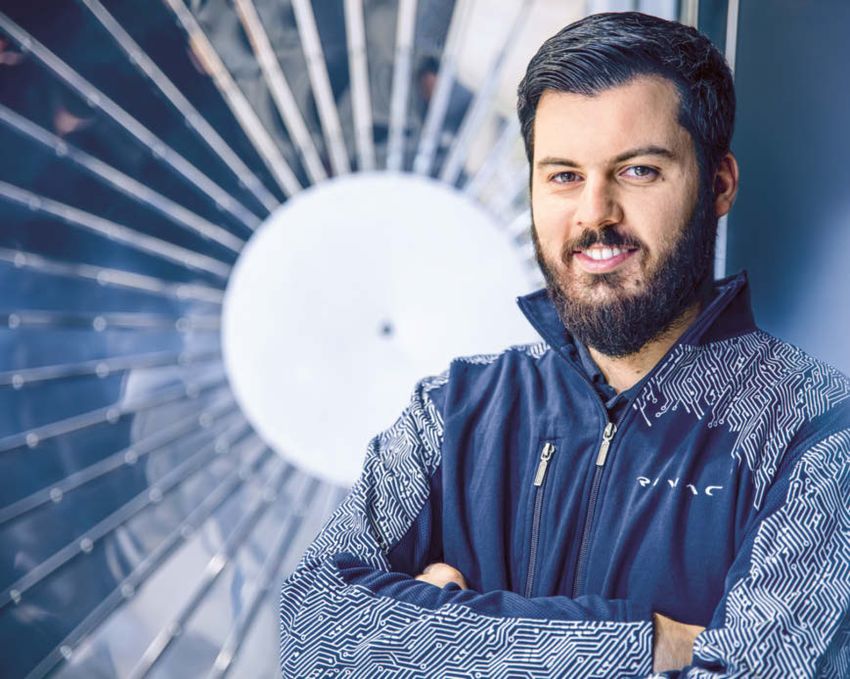
Porsche Engineering Magazine 1/2020                                                                                      9

Groundbreaking endurance tests

Driving robots complement test drivers
behind the wheel

The engineering team at the Nardò Technical Center (NTC)
is not only working on new ways of testing autonomous
driving functions, but also the future of automotive
endurance tests. In February, a production vehicle covered
hundreds of kilometers on the circuit and the neighboring
test tracks. There was no human driver behind the wheel;
instead, a robot was in command of the steering wheel and
pedals. The robot accelerated to up to 130 km/h on the
circuit and covered 600 kilometers in a single night shift.
During the tests, the sports car was connected to another
vehicle via a direct wifi link. This enabled the engineers to
observe all parameters in real time as well as to intervene
by remote control in case of an emergency. Professional
test drivers will remain indispensable for vehicle validation
in the future, but robotic drive automation will make it
easier to perform similar tests in a more reproducible man-
ner. The margin of error is so small that even the smallest
deviations from the target values can be detected. “These
driverless tests are groundbreaking,” says Davide Palermo,
manager of the ADAS Center of Competence at the NTC.
“We have made a great leap forward—in terms of the
complexity of test automation, vehicle set-up, parameter
tuning, and intense activity on the track.”

                                                                Turbo for Talents

                                                                Summer camp for youths in Nardò
                                                                The Nardò Technical Center continues its commitment to
                                                                the local community through its partnership with the A.C.
                                                                Nardò soccer club. This year, the program focuses on the
                                                                prevention of bullying and initiatives to spread important
                                                                educational values such as fitness, fairness, integrity,
                                                                respect, and trust. The commitment in Nardò is part of the
                                                                Porsche corporate program Turbo for Talents, which aims
                                                                to promote the social and personal development of young
                                                                people through high-quality sports training.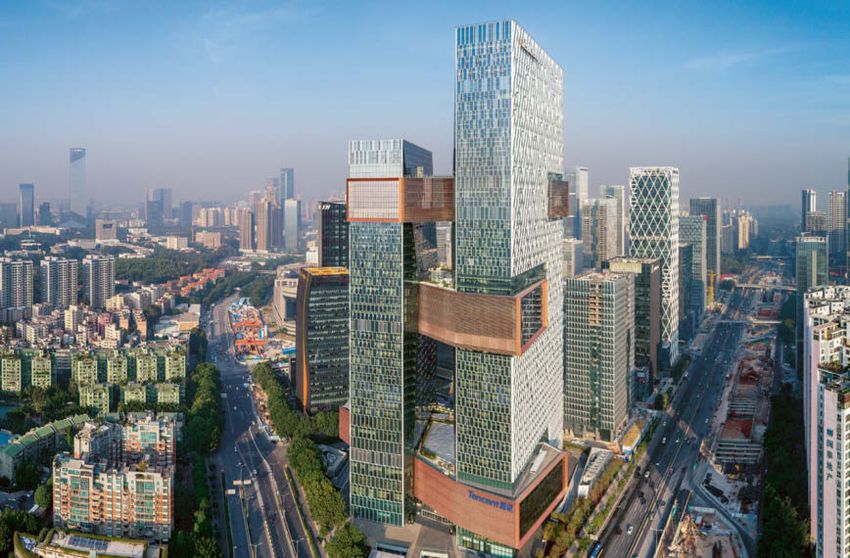
10          INSIDE CHINA

       An immensely
     influential market
Porsche Engineering Magazine 1/2020 AN IMMENSELY INFLUENTIAL MARKE T 11
China is booming. A middle class with high purchasing power expects
first-class vehicles that seamlessly connect with the ubiquitous
smartphones. Chinese and Western OEMs are driving forward new
and classic vehicle development themes at full steam. Reports from
a country that is helping to shape the future of mobility.
12 Highly sought expertise
Developments for Chinese and Western OEMs in Shanghai
18 Flexible platform
Variant development in China
24 On skyhooks
A new chassis platform in 18 months
28 “We shore up the main capabilities
of automobile manufacturers”
Cham Zhong, Vice President of Tencent, in an interview
32 Closely networked
Chinese digital companies and the automobile market12 INSIDE CHINA
Autocity: In Anting, almost everything is about cars.
Porsche Engineering maintains a site here tailored to
the local customers’ specific requirements and with
access to one of China’s best talent pools.Porsche Engineering Magazine 1/2020 HIGHLY SOUGHT E XPERTISE 13
The company has pursued engineering projects
together with its local customers here since 2015.
Key fields of research are suspension systems, high-
power charging, and software development. Porsche
Highly sought Engineering’s Chinese operations have a fair history:
the engineers have been active here for more than
25 years—opening a branch here was the logical
thing to do. “Customer projects have always been
expertise part and parcel of Porsche,” says Kurt Schwaiger,
head of the Shanghai branch. “We’re simply continuing
the history.” Besides Chinese OEMs, the key accounts
also include companies from the VW Group.
Text: Thomas Kern Contributor: Kurt Schwaiger Photos: Kai Hartmann
Better response to customer requirements
Kurt Schwaiger plans to use the Anting site to
In Anting near Shanghai, around 75 Porsche Engineering
respond more rapidly to customer requirements. For
staff work for Chinese car manufacturers and customers one thing, there’s a time difference between China
from the VW Group. The site has cutting-edge test facilities and Germany of six or seven hours—depending on
and investigates the latest trends in the automotive the season. Always a stumbling block in terms of
quick project turnaround. Then there also used to
industry as well as automated driving and e-mobility. be language barriers. Opening a local site eliminat-
ed those. Today, Kurt Schwaiger and his team can
support Chinese customers in developing vehicles,
while filling in western customers on valuable details
concerning the Chinese market.
With the Chinese market undergoing major change,
Porsche Engineering’s expertise is highly sought late-
ly. The times when China was “the world’s workshop”
have long gone. The country is advancing towards a
high-tech economy with a large, well-educated, and
affluent middle class. The customers have long been
just as demanding here as they are in the traditional
markets. And the government has ambitious plans,
too: China wants the intelligent and connected
N
vehicle—ICV for short—to be a common sight on
its roads by 2025 at the latest. The aim is to have
all vehicles communicate in real time and to share
ot far from the world-famous Formula 1 data, for example on congested traffic. On top of that,
race track Shanghai International Circuit, we find the For more than China wants 15 percent of all vehicles in the country
town of Anting. Anting was an early bird in becoming
a key location for the Chinese automotive industry.
25 to be highly automated and ten percent to be driving
entirely by themselves by no later than 2030. This
Shanghai Automotive Industry Corporation (SAIC) years, gives the Chinese market tremendous influence on
was founded there in 1984, with the joint venture Porsche Engineering the future of the motor car.
has assisted Chinese
SAIC-VW following in 1988. Today, start-ups like Nio
customers.
and suppliers like Schaeffler, ZF, and Brose maintain Porsche Engineering in Shanghai deals with more or
sites here, too. Almost everything else in town is less every aspect of vehicle design. “It all started off
also all about cars. In 2007, an automobile museum with chassis design,” Kurt Schwaiger says. “We made
opened in Anting, and right next to it we find the
Porsche Experience Center. So it makes sense that
2015 a name for ourselves with that here.” Today, this has
become entire suspension systems based on highly
Porsche Engineering
Porsche Engineering chose Anting to set up its opens its Anting site advanced electronics: all-wheel steering, stabilizers,
Chinese base. near Shanghai. four-wheel drive, air suspension. “The past two years14 INSIDE CHINA
Chassis systems for China:
Staff fine-tuning and
checking the chassis
components.
High-power charging:
Testing a battery and
battery management system
for electric vehicles (on left).
Check: Reviewing
designs for suspension
components (on right).Porsche Engineering Magazine 1/2020 HIGHLY SOUGHT E XPERTISE 15
have seen customer interest in electronic suspension Porsche Engineering’s work in Anting is moving
systems rise significantly,” Kurt Schwaiger relates. steadily more and more into software development.
This is due to some extent to the smart chassis
And then there’s the electrical engineering and elec- systems, but overall is owed to the new electronic
tronics division (E/E), which is the one that deals with driver assistance systems, which lead up to the
all of the smart control units in a vehicle. The tech self-driving cars of the future. These assistance
specialists at Porsche Engineering in Shanghai always systems require even more than others to be
Ben Wang
start by developing the software to match their designed on site in China. “Chinese traffic is different
Manager Software
customer’s specifications, and in the next step test Development to traffic in Europe or the USA. The people have a
it on HiL (hardware-in-the-loop) test rigs. The test different way of driving,” the expert, Ben Wang,
rigs lead the control units to act just as they would explains. “For instance, the relative number of
if they were in a real vehicle, enabling trial runs long beginner drivers is much higher in China. Some of the
before any prototypes are available. While before, all traffic signs are different, too, and automatic parking
tests ran in Germany, Anting now has the necessary needs to take into account that underground parking
equipment on site. “We save so much time now that lots in China are designed differently.” Ben Wang hails
we can run the important tests right here and right from the neighboring province of Jiangsu. He joined
away,” says Naikai Du, who is also responsible for HiL Porsche Engineering two years ago. He considers his
Naikai Du
test rig development in Anting. Senior Manager Electric & job both a challenge and an inspiration: “We’re always
Electronics needing to adapt to new customer requirements.
High-power charging for electric vehicles is another The fields of traffic and traffic control, for example,
major topic in China, where a huge market for electric are massively in flux.”
cars is emerging. Porsche Engineering developed a
special charging station that delivers up to 350 kW Seamlessly integrated car and phone
of charging power to recharge a Porsche Taycan
in mere minutes. The major markets, however, all Testing and validation are also part of the Shanghai
observe different standards. China is subject to the branch’s portfolio. Here, infotainment systems and
national GB/T standard (GuoBiao), which means that Estha Li
their interconnectivity are a key field of operations.
the charging station needs to be adjusted to comply Senior Manager “Chinese drivers consider these things really im-
with the Chinese market’s specifications. “We and a Connectivity portant,” says Kurt Schwaiger. Indeed, smartphones
local enterprise are acting development partner for feature in every walk of life here, perhaps more so
this. All Porsche dealers in China will be supplied this than anywhere else in the world. Nowadays, almost
charging station,” Kurt Schwaiger says. every day-to-day activity is resolved, optimized, and
measured using a mobile phone. With WeChat, for
example: on the face of it, the app is the Chinese
version of WhatsApp. But it also acts like Instagram,
Facebook, Twitter, and—most significantly—as a
credit card. Almost all payment transactions in China
these days use WeChat Pay, or its competitor service
Alipay. “So Chinese drivers all assume there’s a seam-
less integration between car and smartphone,” Kurt
911 Carrera Cabriolet Schwaiger says.
Fuel consumption (urban):
12.9 l/100 km
Fuel consumption (highway):
Network integration goes further yet, pursuing
7.6 l/100 km prevention of congestion and immediate detection of
Fuel consumption accidents. “Plug-in hybrids and fully electric vehicles
(combined): 9.6 l/100 km
CO₂ emissions (combined): send related data to the national data center via a
218 g/km corporate server,” Estha Li explains. She comes from
Efficiency class: G
Beijing and has been on board with Porsche Engineer-
ing since 2017. “Our server lets us share data specif-
Taycan Turbo S ically and as needed, which lets us realize all kinds of
Electricity consumption support for drivers. The corresponding functions have
(combined): to be developed here in China, indeed they couldn’t be
26.9 kWh/100 km
CO₂ emissions (combined): developed elsewhere.”
0 g/km
Efficiency class:
Germany: A+
Kurt Schwaiger, the branch manager, has lived in
Switzerland: B Shanghai for the past ten years. When he took on his16 INSIDE CHINA
Future technology: Working on the intelligent and connected vehicle.
Three questions for
Kurt Schwaiger
“China is setting out on
a new path of its own”
What do customers in China expect?
1
A rapid response, most of all. Everything
here moves much faster. That’s why it’s so
important to have our branch in Shanghai,
in the same time zone as our customers and
with the requisite language skills, so that
we can react quickly and flexibly to require-
ments. There’s also a keen eye to prices.
“Chinese traffic is different 2
Is it difficult to find good staff in China?
to traffic in Europe or Generally speaking, China has an abundance
of good, skilled workers. But locating them
the USA. People have a different isn’t always so easy. Here in Shanghai, our
location gives us an edge because a lot of
way of driving.” Chinese people want to be here. Our good
connections to Tongji University also help us
Ben Wang, find new junior talent. And there’s our strong
Manager Software Development brand, of course. All this keeps employee
turnaround in the low single-digit figures.
How does the Chinese automotive market
3
differ from its western counterpart?
job in Anting in 2015, the Shanghai branch employed Today, Chinese businesses are at a real-
a staff of eight. Today, 75 people work here, and staff ly high level. Highly automated driving is
will be increased to over 100 by year’s end. At the going to be a major thing in China in the
same time, the business premises will grow from years to come. Here, China is treading new
1,500 to 2,100 square meters. Geographically, the paths, as a pioneer. For V2X applications, for
premises divide into two locations: the larger of the
two lies in the Autocity Innovation Park in Anting. In
the months ahead, a second building will be rented
>100
staff will be working
instance, they’ll be using only mobile comms
standards like LTE-V and 5G. Because the
Chinese government doesn’t permit the
to allow for expansion of the team. The first floor will at the Shanghai branch export of geo-based data, all the testing
by late 2020.
feature a workshop accessible to customers. The needs to be done here in the country.
branch’s second location is in Minhang, a suburban
district in Shanghai’s southeast.
A regular part of the Shanghai branch’s operations
is its cooperation with renowned Tongji University.
Every two years, the partners jointly host the Tongji
Porsche Engineering Symposium, a platform forPorsche Engineering Magazine 1/2020 HIGHLY SOUGHT E XPERTISE 17
top execs to discuss the latest developments in the
automotive trade. The cooperation also includes
exchanges in the form of internships and thesis
programs as well as sponsoring the local Formula
Student team, in which students design their own
race cars and take part in competitive racing. This
provides the branch with ideal connections to one
of China’s best talent pools—essential for continued
growth in one of the world’s most important auto-
motive markets.
IN BRIEF
The Chinese market is heavily in flux. Customers expect the
best technology and solutions tailored to their requirements—
for example when it comes to integrating vehicle and smart-
phone. In its branch in Anting, Porsche Engineering is right on
Kurt Schwaiger the market’s pulse and responds rapidly to local customers’
The branch manager has lived in Shanghai queries. At the same time, the staff supply western businesses
for the past ten years. The branch first made with valuable insights into the Chinese market.
a name for itself with chassis design. Today,
its portfolio covers a wide range of fields.
On-site testing: Engineers validating control unit software on HiL test rigs.18 INSIDE CHINA
E
L X I
F B L E
P L F O
AT R
Adaptable: Platforms must take into account the requirements of different drive systems and different model variants.
MPorsche Engineering Magazine 1/2020 FLE XIBLE PL ATFORM 19
In vehicle development, the concept and package design assumes
a central role in the early phase, as this is where the technical
foundations for the later products are laid. For a customer from China,
Porsche Engineering used an existing vehicle architecture to verify the
feasibility of a comprehensive platform concept with different body
variants and drive systems in a relatively short time, and gathered valuable
information for further development activities in the process.
Text: Richard Backhaus
Contributors: Humberto de Campos do Carmo, Stefan Bender
Illustrations: Florian Müller
W hen automobile manufacturers de-
velop a new vehicle model, good advance planning
is required. At the very outset of the development
model with an all-electric drive unit: on the one hand
an additional sedan, and on the other hand drivetrain
variants with internal combustion engines, an electric
process, the technical concept and the package (defi- drive unit with range extender, and a hybrid system.
nition of the vehicle geometry, including the ergo- If, as in this case, the concept development is to be
nomics and usage conditions, as well as the definition based on an existing vehicle, the experts start with
and management of the different zones in the vehicle) a precise analysis of the existing platform. “In each
must be defined so that the final developed vehicle will case, we focus on the most critical vehicle deriva-
later correspond to the original ideas. Some projects tives, such as the heaviest or most powerful variant—
require a different approach, however, for instance the worst-case scenario, so to speak,” explains de
when an OEM has already started a vehicle develop- Campos do Carmo.
ment and later decides to launch further vehicles and
drivetrain variants derived from the original concept. Studies indicated that the body structure of the front
end was too soft for the heaviest derivative of the
An increasing number of such requests are coming platform. “In order to improve crash safety, we pro-
from car manufacturers in China. “There are currently posed enlarging front longitudinal members,” reports
many new OEMs being founded there that have only
been developing cars for a few years,” explains Hum-
berto de Campos do Carmo, who as Senior Manager
Vehicle Concepts and Package at Porsche Engineer-
ing has already implemented a wide range of different
projects for customers worldwide. “These companies
are therefore turning to us for conceptual platform
development that takes into account all drivetrain
variants and various model derivatives. They might
wish, for example, to expand the existing vehicle
concept into a platform by adding further body and
drivetrain variants.”
“We have experts from all vehicle
sectors and we use the latest simulation
One recent example is a platform concept com- and development tools.”
missioned by a Chinese customer. The aim was to
develop various derivatives based on an existing SUV Humberto de Campos do Carmo, Senior Manager Vehicle Concepts and Package20 INSIDE CHINA
de Campos do Carmo. “We also had to change the fills the entire available package space; in the versions
suspensions so that different ground clearances and with the range extender and the hybrid drivetrain,
heights could be achieved for SUV and sedan." Using the fuel tank for the combustion engine was placed
tires with different diameters, springs of different behind the smaller battery pack.
stiffness, and special spacers on the axle carrier, the
developers were able to adapt the vehicle height to Core elements of the platform
the varying requirements without having to interfere
with the basic axle design. The cooling system also If it becomes apparent during concept development
had to be modified: the analysis showed that the heat that the effort required to change the existing plat-
exchanger was too small for the SUV version with a form is too high, the customer is faced with a choice:
combustion engine. It was adapted to the new condi- it can either skip its current project in favor of a plat-
tions in further vehicle development. form-compliant solution or pursue both approaches
in parallel. “From a cost perspective, the focus on the
One of the biggest challenges was the package of future-proof platform architecture would usually be
different sized batteries for the electric model vari- best,” says de Campos do Carmo. “However, when a
ants. “Together with the customer, we developed the vehicle project is already very advanced, customers
concept for an underbody structure that is identical often decide to develop both concepts to market
for all vehicles,” says de Campos do Carmo. “In each maturity at the same time and absorb the additional
case, different mounting points accommodate the costs as a lesson learned.”
different sized batteries of the electric variants, so
we were able to avoid cost-intensive modifications in Ideally, a customer should therefore define the desired
this area.” The battery of the purely electric vehicle segments, drivetrain concepts and engine variants to
Conceptual platform development
Starting from an existing SUV model with an all-electric drive unit, Porsche Engineering has developed several different variants: an additional
sedan and drivetrain variants with internal combustion engines, an electric drive unit with range extender, and a hybrid system.
Basic vehicle SUV 1
SUV variants Sedan variants
Platform
Identical parts
E-platform
HV module
Platform
Identical parts
E-platform
HV module
SUV 2 Sedan 1
Platform
Identical parts
E-platform
HV module
Platform
Identical parts
E-platform
HV module
Internal combustion
engine vehicle
Plug-in hybrid vehicle
Electric vehicle with
range extender
SUV 3 Sedan 2
Battery electric vehiclePorsche Engineering Magazine 1/2020 FLE XIBLE PL ATFORM 21
Step-by-step development
The optimal accommoda- Ergonomics concept:
Definition of the seat positions
tion for passengers: This is
the most important goal of
every vehicle concept.
The first step is the ergo-
nomics concept on the
basis of anthropometry
(the science of the human
body and skeletal charac-
teristics). The dimension
concept describes the
geometric values and
interrelationships; it also
takes into account legal
requirements and the
Dimension concept:
geometry of components. Definition of the main dimensions
Finally, the package
concept guarantees that
in the end everything is in
the right place. The idea
of the package concept is
to bring the goals of the
departments into line with
their sometimes contra
dictory requirements.
Package concept:
Definition of the main components22 INSIDE CHINA
Common underbody structure
Different mounting points of the common underbody structure accommodate the differently sized batteries of the electric variants.
The battery of the all-electric vehicle fills the entire available package. In the versions with the range extender and hybrid drivetrain,
the fuel tank for the combustion engine is located behind the somewhat smaller battery pack.
Battery Battery Battery
Battery electric vehicle Plug-in hybrid vehicle Electric vehicle with
range extender
be covered by a new platform in advance. This gives Defining the concept and package of a new vehicle
the engineers responsible for the concept and package requires extensive experience at all levels of vehicle
basic conditions as well as maximum freedom and the development and the development methodology
opportunity to develop the vehicle platform in a tar- chain. “We have technical experts from all vehicle
geted manner, while also allowing them to incorporate sectors, and we use the latest simulation and devel-
factors such as the automobile manufacturer's product opment tools,” says de Campos do Carmo. “And then,
and brand strategy into their considerations. The cus- of course,there is the high degree of flexibility and
tomer benefits from an efficient development process customer focus with which we handle development
that leads to optimal results in a very short time. projects, which is also appreciated by our partners
in China.”
Customers from China typically work on a very tight
schedule, which is not comparable with the develop-
ment cycles of European car manufacturers. “In the
abovementioned project we had about six weeks from
the requirements analysis to the finished result. To IN BRIEF
avoid communication problems in the coordination
process, resident engineers from the customer sup- Ideally, concept development occurs at the very beginning
of a project. But a platform concept for additional drivetrain
ported us as a link to the development team in China,” and model derivatives can also be derived from an existing
says de Campos do Carmo. “This trusting and close vehicle. In the case of a Chinese customer, Porsche Engineer-
cooperation was a decisive factor in successfully com- ing has succeeded in doing this by modifying the chassis,
pleting the project within the specified timeframe.” cooling system, and underbody, among other things.Porsche Engineering Magazine 1/2020 FLE XIBLE PL ATFORM 23
Package of high-voltage batteries
China is currently experiencing a real hybrid ics, the high-voltage wiring of the complete
and electric vehicle boom, which is leading electrical system, and the thermal manage-
to the development of a large number of ment of the energy storage system reduce
new vehicle concepts. “Many of the car the developers’ leeway in the placement of
manufacturers are start-up companies to the battery system. “Since with high-volt-
whom we can provide technical support in age batteries, literally every millimeter “If a customer gives us the
integrating the high-voltage battery into the counts, a precise definition of the technical
cell module for the vehicle
vehicle,” says Stefan Bender, Lead Engineer requirements is the basic prerequisite for
Battery Package at Porsche Engineering. package development,” says Bender. project, we integrate it
in such a way that it meets
In general, the high-voltage battery is the Many smaller companies lack this analy- all requirements in
largest and heaviest individual module that sis. “The result of this is quite often that,
has to be accommodated in the vehicle as together with the customer, we create the best possible way.”
part of the concept and package develop- a development process tailored to the
Stefan Bender, Lead Engineer
ment process. The requirements for crash customer's needs in parallel with the actual
Battery Package
safety, the vehicle’s center of gravity posi- battery package project,” says Bender. As an
tion, which is important for driving dynam- example, he cites a customer who wanted
to integrate an oversized battery into his ve-
hicle. “Together with the customer, we first
determined what performance the vehicle, Here, Porsche Engineering can draw on
and thus the battery, had to provide.” expertise gained over decades in the devel-
opment and optimization of the electrical,
In order to be able to meet all the specifica- mechanical and thermodynamic properties
tions in terms of their mutual interactions, of batteries. For example, the experts use
the integration of the battery into the vehi- calculation models that are created and val-
cle must be initiated as early as possible in idated in-house—for example for the “heart”
the development process. This applies both of the energy storage system, the battery
to all-electric vehicles and hybrid models cell. In addition to the simulation tools, test
based on a conventional vehicle platform benches are also available to them.
designed for combustion engines, where
there is no excess construction space for “In the concept and package of a traction
the battery. The aim is always to design the battery, we consider all the details of the
battery module as compactly as possible vehicle. For example, a sports car, unlike
during the development phase in order to a city car, can be expected to have high
leave plenty of space for placement, and instantaneous currents,” explains Bender.
then to accommodate it in the vehicle as re- “We adjust the connection of the individual
quired. “If a customer gives us the cell mod- cells within the battery pack to this, for ex-
ule for the vehicle project, we integrate it in ample, so that the contact resistances and
such a way that it meets all requirements in the resulting heat generation over several
Single cell module:
The high-voltage battery has
the best possible way,” says Bender. “How- acceleration processes in quick succession
a major impact on crash safety ever, overall system solutions in which we do not increase too much and the engine
and driving dynamics. Its integration can develop the battery unit individually and power does not have to be reduced for com-
is therefore a special challenge. tailor it to the package are preferable.” ponent protection reasons.”24 INSIDE CHINA
On skyhooks
Text: Andreas Burkert Contributors: Dr. Martin Braun, Johannes Wüst
For a Chinese customer, Porsche Engineering
developed a chassis platform with a variable damper
system and skyhook feature. The challenge:
to design a smart and cost-optimized chassis for a
two-model electric vehicle series—in only 18 months.
Mass production kicked off on time in March, 2020.
A vehicle’s character is defined by its sus-
pension system. The more tightly wheel suspension,
tires, body, and driver interweave, the smoother your
system PASM (Porsche Active Suspension Manage-
ment) is another tried-and-tested element in this
kind of semi-active suspension system. It responds
control over advanced driving maneuvers. For sporty to dynamic alterations, such as you might encounter
drivers, this is often key to making a purchase deci- during a sudden evasive maneuver, in the blink of an
sion. Of course, the chassis also has a major effect eye. In only fractions of a second, PASM ramps up
on driving safety and ride comfort. With electrified shock absorber force on both axles to reduce lateral
powertrains and the trend toward automated driving, tilt or body see-sawing. Driving maneuvers of utmost
the latter will be even more important in future than precision become possible—and safe.
it is today. Disruptive progress, like the advances in
e-mobility, is among the greatest challenges the in- Falling back onto its experience with designing
ternational automotive industry faces. To address the sportscar chassis, Porsche Engineering is able to
greater requirements regarding driving dynamics and offer its customers cutting-edge solutions. Like it did
ride comfort, automobile manufacturers are seeking for a Chinese enterprise: “Our customer wanted us
to employ advanced design tools. to design the front and rear axles for a model series
comprising a number of electric vehicles from scratch
To understand the possibilities modern suspension and including the software algorithms and controllers
systems offer, it’s worth taking a look at the sports- for a variable shock absorber system,” says Johannes
cars Porsche developed in the past. Besides a driving Wüst, Senior Manager Chassis Design. Dr. Martin
dynamics control system stabilizing the vehicle in ex- Braun, Senior Manager Chassis Systems at Porsche
treme driving maneuvers (Porsche Stability Manage- Engineering, adds: “The customer specified bench-
ment, PSM), they also feature smart torque distribu- mark vehicles we had to catch or outperform within
tion (Torque Vectoring). The variable shock absorber a tight deadline and budget.” The goal was to buildPorsche Engineering Magazine 1/2020 ON SK YHO OKS 25
Master of the switchback: The new suspension design guarantees ride comfort and excellent driving dynamics.26 INSIDE CHINA
a suspension system that could hold its own against custom-tailored solutions feasible in short times at
established international competitors when it came little expense. “This kind of software-based control is
to ride comfort and driving dynamics. complex,” Braun says. “But it helps us keep produc-
tion costs down by letting algorithms handle the lion’s
Though the front and rear axles’ mechanical design was share of comfort and driving dynamics functions.”
conventional, getting it done in time to meet the tight
deadline while also integrating the design specs of the The skyhook function keeps the
overall platform was no minor feat. One of these specs, vehicle body as steady as possible
for example, was a double wishbone axle with alloy
arms and pivot bearings. The lower control-arm plane In the end, this meant using only a small number of
was resolved to optimize scrub radius and Ackermann sensors and actuators. Instead of four leveling and
toe-out. “For the rear axle, we focused heavily on get- eight acceleration sensors complementing an inertial
ting a really good shock absorber ratio and longitudinal measurement unit (IMU), the IMU now interacts with
compliance,” Wüst explains with respect to the 5-arm “This kind of only two acceleration and two leveling sensors. The
design. “We also aimed for excellent elasto-kinematics result is the cost-optimized, smart damper control
and rigidity in both axles.” The resulting axle designs
software-based system (Continuous Damping Control, CDC). The sys-
are now suitable for both sedans and SUVs in terms of control system tem expands upon the familiar skyhook feature with
spring travel, maximum axle load, and fatigue limits. keeps production a whole range of software-based add-ons—among
them pothole detection and lane changing. When
To obtain the specified driving characteristics, the
costs down.” active, it keeps the vehicle body as steady as possible,
engineers developed a special electronic system Dr. Martin Braun,
irrespective of the present road conditions, almost
architecture for the front and rear axles’ damper Senior Manager as if the vehicle were actually attached to skyhooks.
control system. This system architecture allows the Chassis Systems While driving, the control system manages to damp
damper controller to adjust perfectly to the control or neutralize vibrations across the entire frequency
systems in the respective vehicle. On top of that, it range, especially those in the higher-frequency range
supports a variety of sensor layouts, in turn making from 16 to 30 hertz.
Principle of the damper control system
The controller’s architecture supports a variety of sensor layouts. Custom-tailoring takes little time and costs are kept low.
Damper control in the control unit
Acceleration
sensors
Front left
Front right Diagnosis
Special
features Trouble-
shooting
Damper current
Signal output
Signal input
XYZ Signal filter
Front left
Inertial measure- Scaling Current distribution Front right
ment unit Rear left
Signal forwarding
Rear right
Distribution
Leveling Skyhook
sensors Axle fusion
Rear left
Rear rightPorsche Engineering Magazine 1/2020 ON SK YHO OKS 27
Acceleration along z-axis
The measurements recorded in the vehicle prove that high-frequency vibration in the range
from 16 to 30 hertz can be fully neutralized.
Acceleration
in m/s2
1.0
0.9
Reference vehicle
Customer’s vehicle
0.8
0.7
0.6
0.5
0.4
0.3
0.2
0.1
2 4 6 8 10 12 14 16 18 20 22 24 26 28 30 Frequency in Hz
Besides first-grade technology solutions, the Chinese vehicles make it possible to quickly draft and fine-
OEM also expected close collaboration and support tune an axle concept in the early design phase. “This
in setting up their capacities. “To begin with, our way, we can avoid major change cycles during the
customer’s R&D team was still quite small at less trial phase,” says Wüst. “So we’re not only saving on
than 400 staff. It grew considerably over the course development time, but also cutting down on test
of the project,” Wüst remembers. “An entirely new components and prototyping tools and ultimately
production infrastructure was set up, alongside saving a lot of money.”
designing the vehicle itself.” Working closely with the
customer’s production division, Porsche Engineering’s Another benefit was that working simultaneously on
engineers discussed the requirements mass produc- “An entirely the control system and on the software offered extra
tion needed to meet and incorporated the findings in new production potential for optimizing. Wüst is full of praise for
their designs. Experience gained in past projects and the Chinese customer here, lauding that the design
infrastructure
on Porsche’s production lines in Zuffenhausen and targets and vehicle variants were already defined with
Leipzig proved invaluable, too. was set up, great precision when the project kicked off. During
alongside the project itself, decisions on where to take things
One of the greatest challenges was the customer’s were always reached quickly and pragmatically,
designing the
tight schedule. Start of production was expected every time taking into account Porsche Engineering’s
only 18 months after completing the first prototype. vehicle itself.” advice and avoiding delays. “Without these rapid-fire
To meet this specification, Porsche Engineering decisions, the short development schedule would
Johannes Wüst,
began using simulation platforms and rapid proto- have been our undoing,” Wüst confides. In the end,
Senior Manager
typing system right from the beginning. “This let us Chassis Design the ambitious schedule was met and the model
get the first prototypes running for tests really quick- series went into mass production according to plan
ly,” Braun elaborates. The specifically designed mule in March, 2020.28 INSIDE CHINA
Technology giant: Tencent, based in Shenzhen, is one of China’s largest Internet companies.
“We shore up the main capabilities of
automobile manufacturers”
Interview: Jost Burger
The Chinese technology group Tencent is driving forward the development
of new forms of mobility and services related to vehicles. In an interview,
Cham Zhong, Vice President of the company, talks about the automotive
market in China and Tencent’s collaboration with classic OEMs.Porsche Engineering Magazine 1/2020 INTERVIE W 29
Pioneer: Cham Zhong wants to turn vehicles
into data nodes within smart cities.
Could you give us some examples?
ZHONG: First of all, we offer integrated automotive
intelligence solutions and bring Internet services
popular among Chinese consumers into the car,
such as WeChat, QQ Music, or Tencent Maps. We
also take the lead in developing an in-car light
app framework, with cloud update, no need to
download, and use-and-go apps. This enables
such features as smart parking, car washing, car
refueling, car charging or restaurant reservation,
all of which are based on the WeChat Unconscious
Payment system.
Secondly, we are forging into the new territory of
autonomous driving, mainly by focusing our efforts
on three basic pillars: a data development cloud
platform, a simulation platform, and high-preci-
sion mapping. In terms of simulation, Tencent has
combined its game engine with industrial-grade
vehicle dynamics models and integrated traffic
simulations based on virtual-reality, allowing users
to test autonomous driving in a highly realistic
simulated environment.
We have also rolled out the “Smart 4S” solution to
help 4S dealerships—dealerships that pursue a
full-service approach by bringing together sales,
service, spare parts and surveys—sell cars more
efficiently. Through digital tools and platforms
like WeChat and mini programs, as well as AI
and big data technologies represented by facial
recognition, this solution can help 4S dealerships
to attract customers more efficiently and accu-
rately. Through its Automotive Cloud platform,
Tencent helps automotive manufacturers maintain
an efficient grip over the entire product lifecycle
from manufacturing, sales to after-sales services.
Why is the automotive market attractive to Tencent? Furthermore, Tencent Keen Security Lab has been
CHAM ZHONG: The automotive industry is one of working on information security for years where it
the most important efforts of Tencent to embrace comes to internet access and over-the-air capabil-
the industrial internet. China boasts the world’s ity for vehicles.
greatest potential for car consumption, not to
mention the high acceptance rate and demand for
intelligent products among Chinese consumers.
Tencent Talking about over-the-air capabilities, how
important is cloud technology in this context?
was founded in 1998
According to a McKinsey survey, 69 percent of and generated a turnover
ZHONG: One cannot talk about digitalization without
Chinese consumers would like to change their car of around 49 billion mentioning the indispensable cloud capability
into an “intelligently connected” car. Automotive euros in 2019. behind it. Tencent’s Automobile Cloud provides
manufacturers are vying to change their positioning a full-chain solution ranging from Infrastruc-
from “automakers” to “mobility service providers.” ture-as-a-Service and Platform-as-a-Service to
Over the past few years, we have formed various Software-as-a-Service and Data-as-a-Service.
Tencent had
partnerships with 28 domestic and foreign auto-
motive brands regarding automobile intelligence
systems, autonomous driving and shared mobility
63,000 What exactly are potential applications of this
technology?
employees at the
services. As a digital assistant, Tencent is well end of 2019. ZHONG: During the R&D and manufacturing stages,
positioned to help automotive manufactures gain automobile manufacturers are able to cut costs
a better understanding of the Chinese market and and boost efficiency by employing big data to pro-
its customers. vide guidelines. Big data is also essential for accu-30 INSIDE CHINA
rate lead generation and thus enhances marketing “In the coming interact with their car by voice. Virtual keys can
and sales efficiency. With respect to after-sales, work as a platform for the auto brand to commu-
the Tencent Cloud helps manufacturers set up
decade, China nicate and interact with its customers. Brands can
a comprehensive user management system and will usher in inform their customers of the real-time status and
provide multi-scenario value-added services, such a golden age of maintenance progress of their cars via WeChat
as ride sharing, which may lead to novel business notifications.
the industrial
models. In the meantime, the data-driven services Third, the capability to help customers access a
can provide services such as battery life and ve- internet.” wide range of services while driving. Auto brands
hicle lifecycle estimation, part failure analysis and need to build an all-inclusive service ecosystem
forecast, driver behavior analysis, scenario-based by bringing together a vast number of developers
data analysis, and service recommendation. and service providers to enrich the in-car app
ecosystem.
How can companies like Tencent and classic OEMs Fourth, the cloud-powered capabilities accompany a
benefit from a collaboration? vehicle throughout its entire lifecycle. The lengthy
ZHONG: Automotive manufacturers have developed and complex supply chain—from manufacturing
cutting-edge manufacturing technologies and to sales and use including vehicle status and af-
maintain a sophisticated supply-chain system. ter-sales—is a daunting challenge for auto brands
In this new era, the automotive industry must that could be eased by cloud-based processes.
embrace the internet to thrive, while internet
companies must learn the fundamentals of the What role do vehicles play in the overall concept of
automotive industry. Tencent is poised to bridge the “Smart City” of the future?
this gap by offering flexible and modular digital ZHONG: With new technologies such as big data,
toolboxes and ecological connectors. cloud computing, AI or 5G, Smart Cities will spring
By shoring up the four main capabilities of automotive up one after another. Vehicles will become import-
manufacturers, Tencent helps automakers enhance ant data nodes in these cities. They can sense the
customer experience. First, the capability to rec- surrounding environment, upload real-time traffic
ognize and understand users: Intelligent systems data to the cloud, and assist efforts towards digital
will remember seat positions, preferred music or traffic and city management. Built on 5G tech-
commuter routes. When a customer walks into a nology and the cooperative vehicle-infrastructure
4S dealership, intelligent systems will immediately system, the intelligent V2X human-vehicle-road
identify them and anticipate their needs. network will become the new urban infrastructure.
Autonomous driving:
Second, the capability to communicate and con- In addition, self-driving vehicles are more versatile
Tencent is making
nect with customers in various ways. Customers use of the cloud, and can function as different spaces, such as con-
a simulation platform,
and precise roadmaps.Porsche Engineering Magazine 1/2020 INTERVIE W 31
ference room, cinema, shop, home, etc., increas- Integration:
ingly blurring the boundaries between them. They Tencent Auto
Intelligence
will also increase the use of shared mobility with
(TAI) enables
fewer private cars and more urban space in the efficient and
future. Vehicles might drive to a suburban parking convenient
lot at night by themselves and return in the morn- processing of
ing to pick up passengers. various services.
What does Tencent think of the development
of Level 4 or Level 5 autonomous driving? Which
course still has to be set up—technologically,
socially, and legally?
ZHONG: L4/L5 autonomous driving is a necessary
precondition for autonomous driving and shared
mobility on which it is based. Currently, we have
set two parallel courses. First, we are pushing al-
gorithm development and data accumulation for an
ideal L4/L5 autonomous driving solution. Second,
we are taking into account the needs of customers
by promoting applications in specific scenarios.
Therefore, we are working towards a solution that
combines a highway pilot and a traffic jam pilot,
the commercialization of which will provide strong How does Tencent define “luxury” in the digital age?
data support for our future R&D efforts. ZHONG: Luxury in the digital age must take into ac-
From a technical perspective, autonomous driving count services provided—how to leverage digital
relies on high-precision map data, cloud comput-
ing, and simulation techniques. At the policy level,
Portfolio means. Traditional brand image campaigns easily
lead to uniformity. Therefore, we should shift our
Tencent’s product range
local governments need to gradually relax relevant includes WeChat, one of focus to services. They can make all the difference
policies to allow testing on public roads. We the most widespread chat and bring a brand closer to its customers.
need to clarify road safety conditions and ethical and payment services
judgments. We need support of road network in China. It also offers China is developing rapidly. Where will the country
video games, music,
infrastructures such as 5G-based intelligent trans- be in the next ten years? In which technology areas
and numerous activities
portation and traffic systems. With regard to the in the field of artificial will it stand out?
social aspect, we need to increase public accep- intelligence. ZHONG: In the coming decade, China will usher
tance of autonomous driving, eliminate consumer in a golden age of the industrial internet. Digital
anxiety, and gain the public’s trust. technologies such as 5G, AI, and cloud computing
will accelerate the intelligence upgrade of diverse
What do Chinese digital natives value when it comes industries. The “digital economy” will become the
to in-vehicle infotainment? engine of growth for China and the entire world.
ZHONG: Digital natives are currently the main Blessed with the fertile soil that allows new tech-
customers of the Chinese automotive indus- nologies to quickly move into the market, China
try. They are accustomed to constant real-time will witness the unprecedentedly large-scale
connection with the digital world and continuous commercialization of substantial cutting-edge
access to its services. Such expectations are technologies.
frustrated by the offline state experienced by
drivers—it is difficult to check your smart phone
while being behind the wheel.
To address this offline anxiety and ensure services
are accessible from different terminals and in
diverse scenarios, Tencent is providing perfect
service continuity between mobile phone and
cockpit via Super ID, the uniform identification
system. Our Auto Intelligence system (TAI) enables
efficient and convenient processing of diverse
services through its robust interactive architec- Cham Zhong joined Tencent in 2004 and is now the com-
pany’s Vice President. As head of the Intelligence Mobility
ture and massive use-and-go light apps. Last
Business and Intelligent Platform Business, he is responsible
year we launched WeChat for Auto, to help drivers for Tencent Maps, Tencent Auto Intelligence, Tencent Auton-
communicate more safely through full Voice User omous Vehicle, Tencent Location-based Services, Tencent
Interface (VUI). Cloud Xiaowei, and Tencent AI Translation teams.You can also read


