Preclinical Assessment of a New Polyvalent Antivenom (Inoserp Europe) against Several Species of the Subfamily Viperinae - MDPI
←
→
Page content transcription
If your browser does not render page correctly, please read the page content below
toxins
Article
Preclinical Assessment of a New Polyvalent
Antivenom (Inoserp Europe) against Several Species
of the Subfamily Viperinae
Alejandro García-Arredondo 1, *, Michel Martínez 2 , Arlene Calderón 3 , Asunción Saldívar 2
and Raúl Soria 3
 1    Laboratorio de Investigación Química y Farmacológica de Productos Naturales, Facultad de Química,
      Universidad Autónoma de Querétaro, Querétaro 76010, Mexico
 2    Veteria Labs, S.A. de C.V. Lucerna 7, Col. Juárez, Del. Cuauhtémoc, Ciudad de México 06600, Mexico;
      mmartinez@veterialabs.com (M.M.); asaldivar@veterialabs.com (A.S.)
 3    Inosan Biopharma, S.A. Arbea Campus Empresarial, Edificio 2, Planta 2, Carretera Fuencarral a Alcobendas,
      Km 3.8, 28108 Madrid, Spain; arlene.calderon@veterialabs.com (A.C.); rsoria@inosanbiopharma.com (R.S.)
 *    Correspondence: alejandro.gr@uaq.mx; Tel.: +52-442-192-1200 (ext. 5527)

 Received: 21 January 2019; Accepted: 27 February 2019; Published: 5 March 2019

 Abstract: The European continent is inhabited by medically important venomous Viperinae snakes.
 Vipera ammodytes, Vipera berus, and Vipera aspis cause the greatest public health problems in Europe,
 but there are other equally significant snakes in specific regions of the continent. Immunotherapy
 is indicated for patients with systemic envenoming, of which there are approximately 4000 annual
 cases in Europe, and was suggested as an indication for young children and pregnant women, even
 if they do not have systemic symptoms. In the present study, the safety and venom-neutralizing
 efficacy of Inoserp Europe—a new F(ab’)2 polyvalent antivenom, designed to treat envenoming by
 snakes in the Eurasian region—were evaluated. In accordance with World Health Organization
 recommendations, several quality control parameters were applied to evaluate the safety of this
 antivenom. The venom-neutralizing efficacy of the antivenom was evaluated in mice and the
 results showed it had appropriate neutralizing potency against the venoms of several species of
 Vipera, Montivipera, and Macrovipera. Paraspecificity of the antivenom was demonstrated as well,
 since it neutralized venoms of species not included in the immunization schemes and contains
 satisfactory levels of total proteins and F(ab’)2 fragment concentration. Therefore, this new polyvalent
 antivenom could be effective in the treatment of snake envenoming in Europe, including Western
 Russia and Turkey.

 Keywords: Viperinae; Vipera; Macrovipera; Montivipera; neutralization; paraspecificity; antivenom

 Key Contribution: Inoserp Europe is an effective and safe polyvalent equine F(ab’)2 antivenom.
 It has neutralizing potencies against the venoms of several species of the genera Vipera, Montivipera,
 Macrovipera, and species not included in the immunization schemes.

1. Introduction
     The European continent is inhabited by medically important venomous snakes of the subfamily
Viperinae [1,2]. According to the World Health Organization, the venomous snakes causing the greatest
public health problems in Europe are Vipera ammodytes, Vipera berus, and Vipera aspis [2]. V. berus,
usually known as European adder, is extremely widespread in Europe [1,3]. V. ammodytes, commonly
known as nose-horned viper, is considered the most venomous European snake and primarily inhabits
the southern and eastern regions of Europe [1,3,4]. The distribution of V. aspis is limited to Western

Toxins 2019, 11, 149; doi:10.3390/toxins11030149                                  www.mdpi.com/journal/toxins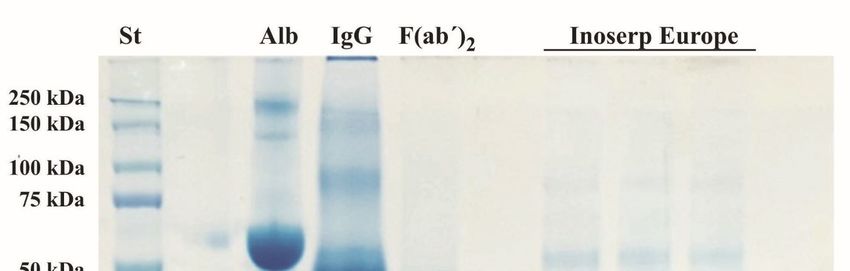
Toxins 2019, 11, 149                                                                                2 of 11

Europe, including France, Switzerland, and Italy [1,3]. In addition, there are other equally significant
snakes in some specific regions, Montivipera xanthina and Macrovipera lebetina are the most dangerous
species in Turkey [5]; M. xanthina is also distributed around Central Europe and the Middle East,
whereas Macrovipera lebetina is distributed in Eastern Europe, the Middle East, Northern Africa, Central
Asia, and South Asia [1].
     In an epidemiological study, the reported average number of snakebites in Europe—including
Western Russia and Turkey—was around 7500 cases per year (1.06 per 100,000 inhabitants), with more
than 90% of victims being hospitalized and 0.05% died [3].
     In general, the clinical symptoms caused by snakebites in Europe are classified into local or
systemic. Local symptoms may include pain, swelling, redness, edema, ecchymosis, necrosis, and
numbness. The systemic symptoms include tachycardia, hypotension, anaphylaxis, nausea, vomiting,
abdominal pain, hemorrhagic syndrome, pulmonary bleeding, coagulopathy, and neurotoxicity [4,6–8].
     A clinical gradation of the envenoming caused by viper bites classifies the symptoms into the
following: grade 0, fang marks and absence of local and symptoms; grade 1, local edema and absence of
systemic symptoms; grade 2, regional edema and moderate systemic symptoms; and grade 3, extensive
edema and severe systemic symptoms [9,10]. In a posterior classification, grade 2 was divided into 2a
(regional edema and/or hematoma) and 2b (grade 2a symptoms associated with systemic signs or
biological abnormalities) [11].
     Mortality due to snakebite in Europe is not a major problem, compared to Africa and India, but
cases of snakebite have usually required hospitalization and an appropriate treatment. At the present
time, use of highly purified immunoglobulin fragments dramatically reduce both the severity and
mortality of snakebites [3]. Immunotherapy is indicated for systemic envenoming (grades 2 and 3), and
has been recommended for young children, pregnant women, and patients with progressive swelling,
even if they are not classified as grade 2 or 3 [3,4].
     For regions inhabited by several medically important snake species, the World Health
Organization recommends the manufacture of polyspecific antivenoms that are effective against
all possible regional snake varieties [2]. This is important because, as a rule, patients cannot identify
the species that bit them; thus, an expert analysis of the shape of the snakebite is required [12]. In the
present study, the safety and venom-neutralizing efficacy of Inoserp Europe—a new F(ab’)2 polyvalent
antivenom, designed to cover envenoming caused by medically important snakes of the Eurasian
region—were evaluated.

2. Results

2.1. Physicochemical and Biochemical Characteristics of the Antivenom
     Lyophilized Inoserp Europe antivenom is a sterile lyophilized white powder formulated to be
reconstituted with 10 mL of sterile water for injection. The reconstitution time of the lyophilized
powder was 22 s, producing a colorless to pale yellow transparent solution with a total protein
concentration of 17.4 mg/mL, and a final pH value of 6.81 at 25.3 ◦ C.
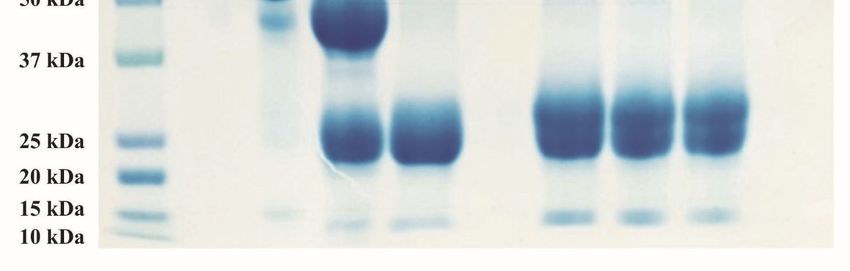
     Qualitative analysis of the antivenom by SDS-PAGE under reducing conditions revealed two
prominent bands of approximately 25 kDa (Figure 1), corresponding to the digested heavy and light
chains of reduced F(ab’)2 fragments.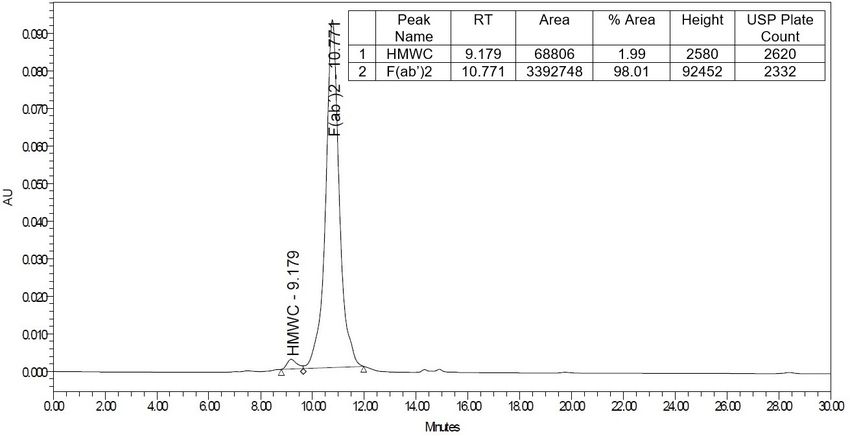
Toxins 2018,
Toxins2019,
Toxins 10,
2018,11, xx FOR
10,149 FOR PEER
PEER REVIEW
REVIEW 333of
of 11
of11
11
Figure 1. Qualitative analysis of the antivenom by SDS-PAGE under reducing conditions (12%
Figure
Figure 1.
1. Qualitative
acrylamide analysis
gels). The protein
Qualitative of
of the
theofantivenom
analysisprofile by
by SDS-PAGE
the antivenom
antivenom under
(25 µg of protein)
SDS-PAGE reducing
under was conditions
compared
reducing with 10(12%
conditions µL
(12%
acrylamide
of
acrylamide gels).
a Precision PlusThe
gels). protein
Protein
The profile
profile of
Kaleidoscope
protein of the antivenom
standard
the (St),(25
antivenom 15µg
(25 µgof
µg ofofprotein)
equine was
protein) was compared
serum albuminwith
compared 10
(alb),
with µL
1015
µLµgof
of
aa Precision
of Precision Plus
Plus Protein
purified horse Kaleidoscope
IgG (IgG),
Protein and 15 µgstandard
Kaleidoscope (St),
of purified
standard 15
15 µg
horse
(St), IgG
µg of equine
of F(ab’) serum
serum2albumin
2 [F(ab’)
equine ]. Protein
albumin (alb),
bands
(alb), 15 µg
µg of
15 were of
visualized
purified with
horse a
IgGCoomassie
(IgG), premixed
and 15 µg staining
of solution.
purified horse IgG F(ab’) [F(ab’) ].
purified horse IgG (IgG), and 15 µg of purified horse IgG F(ab’)2 [F(ab’)2]. Protein bands were
2 2 Protein bands were
visualized
visualized with
with aa Coomassie
Coomassie premixed
premixed staining
staining solution.
solution.
In addition, quantitative analysis of the antivenom by size-exclusion chromatography showed
that F(ab’)
In 2 fragments
In addition,
addition, compriseanalysis
quantitative
quantitative 98.01% of
of the
its total composition
antivenom (Figure 2). chromatography showed
by size-exclusion
that F(ab’)2 fragments comprise 98.01% of its total composition (Figure 2).
Figure 2.
Figure2.
Figure Quantitative
2. Quantitative analysis
Quantitativeanalysis of
analysisof the
ofthe antivenom
theantivenom by
antivenomby size-exclusion
bysize-exclusion chromatography.
size-exclusionchromatography.
chromatography.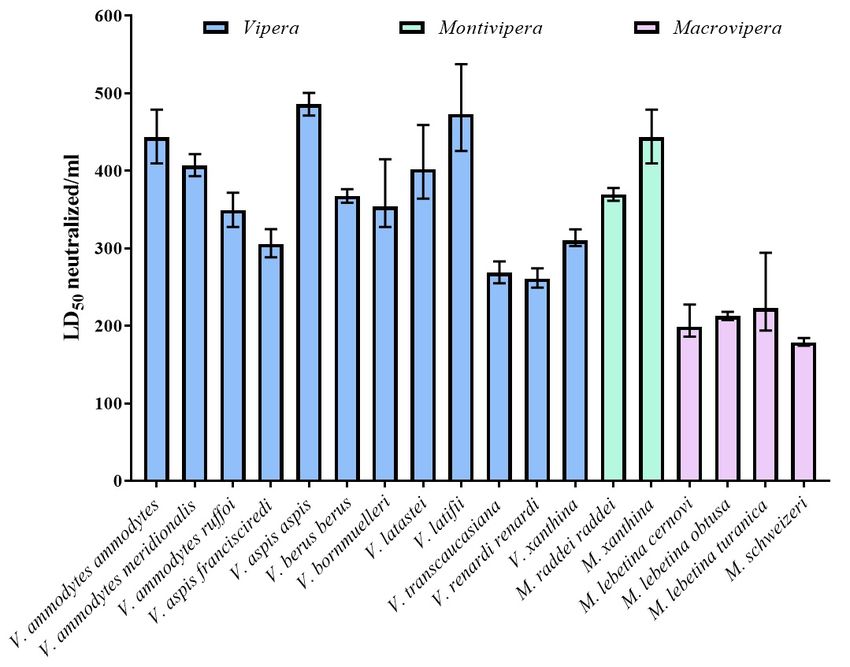
Toxins 2019, 11, 149                                                                                                     4 of 11

2.2. Neutralization of Lethality (Paraspecificity Evaluation)
     Table 1 shows results of the determination of lethal activity of the venoms used in this study to
determine the paraspecificity of Inoserp Europe antivenom (Figure S1). The venoms of Vipera berus
berus, Montivipera raddei raddei (both from Turkey), and Vipera latifii from Iran showed slightly higher
lethal activity than the others. The venoms of the genus Macrovipera showed lower lethal activity than
that of the other venoms. The other venoms presented median lethal dose values (LD50 ) in a range
from 7.03 to 12.78.

      Table 1. Geographic origin and median lethal dose values (LD50 ) of the venoms used in the present
      study determined by intravenous injection in mice (n = 5). LD50 are expressed in µg of venom/mouse
      (18–20 g). 95% confidence intervals are included in parentheses.

                                                                                                   LD50 in µg/Mouse
                                   Venom                                               Origin
                                                                                                       (95% CI)
                       Vipera ammodytes ammodytes **                                  Albania       8.07 (7.48–8.54)
                       Vipera ammodytes meridionalis                           **      Greece       7.34 (6.20–8.16)
                          Vipera ammodytes ruffoi                     **                Italy       8.29 (7.14–8.95)
                         Vipera aspis francisciredi                   **            Switzerland    12.78 (10.51–14.05)
                             Vipera aspis aspis              *                         France       8.42 (7.65–9.38)
                             Vipera berus berus              *                        Turkey        5.28 (5.06–5.48)
                            Vipera bornmuelleri                  *                    Lebanon      11.32 (11.14–11.52)
                               Vipera latastei       *                                 Spain        8.17 (7.09–9.01)
                                Vipera latifii   *                                      Iran        5.52 (4.88–6.16)
                          Vipera transcaucasiana                     **               Turkey        8.13 (6.94–9.03)
                           Vipera renardi renardi                    **               Romania      11.84 (10.91–12.70)
                              Vipera xanthina            *                            Turkey        7.03 (6.85–7.16)
                         Montivipera raddei raddei                        **          Turkey        4.08 (3.21–4.59)
                           Montivipera xanthina                  **                   Turkey        7.17 (5.87–8.10)
                        Macrovipera lebetina cernovi *                              Turkmenistan   19.71 (18.34–20.60)
                        Macrovipera lebetina obtusa *                                Azerbaijan    16.32 (15.73–16.93)
                       Macrovipera lebetina turanica *                                 Russia      18.36 (17.17–19.30)
                          Macrovipera schweizeri **                                    Greece      17.32 (16.87–18.11)
                          * Obtained from Latoxan, S.A.S.; ** Obtained from Alphabiotoxine Laboratory.

     Table 2 and Figure 3 summarize the results of the paraspecificity of the antivenom. Smaller
amounts of antivenom were required to neutralize the lethal activity of the venoms of the species
used in its production. Nevertheless, Inoserp Europe antivenom effectively neutralized five times
the LD50 of all the venoms analyzed in this study, which demonstrates its cross-neutralization and
paraspecific neutralization.
Toxins 2019, 11, 149 5 of 11
Table 2. Median effective dose values (ED50 ) of the antivenom against the venoms tested expressed in
µL of antivenom that neutralize 5 × LD50 , mg of venom neutralized by ml of antivenom, mg of venom
neutralized by vial of antivenom, and number of LD50 of venom neutralized by vial of antivenom. 95%
confidence intervals are included in parentheses.
ED50 in µL ED50 in mg/mL ED50 in mg/vial LD50 Neutralized/vial
Venom
(95% c.i.) (95% CI) (95% CI) (95% CI)
Vipera ammodytes
11.28 (10.44–12.21) 3.58 (3.30–3.86) 35.77 (33.05–38.65) 4432.6 (4095.0–4789.3)
ammodytes
Vipera ammodytes
12.29 (11.86–12.72) 2.99 (2.89–3.09) 29.86 (28.85–30.94) 4068.3 (3930.8–4215.9)
meridionalis
Vipera ammodytes
14.32 (13.45–15.26) 2.89 (2.72–3.08) 28.95 (27.16–30.82) 3491.6 (3276.5–3717.5)
ruffoi
Vipera aspis
16.35 (15.39–17.33) 3.91 (3.69–4.15) 39.08 (36.87–41.52) 3058.1 (2885.2–3248.9)
francisciredi
Vipera aspis aspis 10.29 (9.99–10.61) 4.09 (3.97–4.22) 40.94 (39.70–42.18) 4859.1 (4712.5–5006.0)
Vipera berus berus 13.61 (13.29–13.94) 1.94 (1.89–1.98) 19.38 (18.92–19.85) 3673.8 (3586.8–3762.2)
Vipera bornmuelleri 14.14 (12.05–15.26) 4.00 (3.71–4.70) 40.03 (37.09–46.97) 3536.1 (3276.5–4149.4)
Vipera latastei 12.44 (10.89–13.73) 3.28 (2.98–3.75) 32.84 (29.75–37.51) 4019.3 (3641.7–4591.4)
Vipera latifii 10.57 (9.30–11.75) 2.61 (2.35–2.97) 26.12 (23.50–29.69) 4730.4 (4255.3–5376.9)
Vipera transcaucasiana 18.63 (17.66–19.65) 2.18 (2.07–2.30) 21.82 (20.73–23.02) 2683.8 (2549.7–2831.3)
Vipera renardi renardi 19.15 (18.23–20.06) 3.09 (2.95–3.25) 30.91 (29.51–32.47) 2611.0 (2492.5–2742.7)
Vipera xanthina 16.13 (15.41–16.51) 2.18 (2.13–2.28) 21.78 (21.28–22.80) 3099.8 (3028.5–3244.5)
Montivipera
13.53 (13.23–13.84) 1.51 (1.47–1.54) 15.08 (14.74–15.42) 3695.5 (3612.7–3779.3)
raddei raddei
Montivipera xanthina 11.28 (10.44–12.21) 3.18 (2.94–3.43) 31.78 (29.36–34.34) 4432.6 (4095.0–4789.3)
Macrovipera
25.14 (21.99–26.87) 3.92 (3.67–4.48) 39.20 (36.68–44.82) 1988.9 (1860.8–2273.8)
lebetina cernovi
Macrovipera
23.53 (22.94–24.11) 3.47 (3.38–3.56) 34.68 (33.84–35.57) 2124.9 (2073.8–2179.6)
lebetina obtusa
Macrovipera lebetina
22.42 (16.99–25.78) 4.09 (3.56–5.40) 40.95 (35.61–54.03) 2230.2 (1939.5–2942.9)
turanica
Macrovipera
27.96 (27.13–28.66) 3.10 (3.02–3.19) 30.97 (30.22–31.92) 1788.3 (1744.6–1843.0)
schweizeriToxins 2019, 11, 149 6 of 11
Toxins 2018, 10, x FOR PEER REVIEW 6 of 11
Figure 3. Results of the paraspecificity of the antivenom.
Figure 3. Results of the paraspecificity of the antivenom.
3. Discussion
3. Discussion
In Europe, the epidemiological studies of snakebites show that mortality is not a serious problem;
In Europe,
nevertheless, mostthecases
epidemiological studies of snakebites
required hospitalization and a rapid show that mortality
recognition is not abecause
of symptoms serious
problem; nevertheless, most cases required hospitalization and a rapid
it is essential to decide if immunotherapy is required [3,4,6,12,13]. Usually, immunotherapy with recognition of symptoms
because it isisessential
antivenoms indicatedtoonlydecide if immunotherapy
to patients with systemic is required
envenoming [3,4,6,12,13]. Usually,
(approximately immunotherapy
4,000 annual cases
with antivenoms is indicated only to patients with systemic envenoming
in Europe), but it was suggested that antivenom should be indicated to young children and (approximately 4,000 annual
pregnant
cases in Europe), but it was suggested that antivenom should be indicated
women—representing 50% of snakebite cases—even if they do not have systemic symptoms [3,4]. to young children and
pregnant
In women—representing
a previously reported descriptive50% of eight
review, snakebite cases—even
antivenoms available if for
theythedo not have
treatment systemic
of European
symptoms [3,4]. In a previously reported descriptive review, eight antivenoms
Vipera spp. envenoming were identified, and the need of more preclinical data to ensure the efficacy available for the
of
treatment of European Vipera spp. envenoming were identified, and the need
those antivenoms was mentioned [14]. In fact, the World Health Organization strongly suggests the of more preclinical data
to ensure the
assessment ofefficacy
several of those control
quality antivenoms was mentioned
parameters [14]. Inneutralization
and preclinical fact, the WorldinHealthorder Organization
to guarantee
strongly suggests the assessment of
the safety and efficacy of the antivenoms [2]. several quality control parameters and preclinical neutralization
in order to guarantee
In the the safety
present study, and efficacy
the safety of the antivenoms [2].
and venom-neutralizing efficacy of a new lyophilized and
In the present
non-pyrogenic study, the
polyvalent safety
F(ab’) and venom-neutralizing efficacy of a new lyophilized and non-
2 antivenom against the venoms of several medically important
pyrogenic snakes
venomous polyvalent F(ab’)2were
of Europe antivenom
assessed.against the venoms
The chosen of several ofmedically
active substances important
this antivenom are
venomous snakes of Europe were assessed. The chosen active substances
F(ab’)2 fragments because they offer advantages over IgG, which is associated with undesirable2 of this antivenom are F(ab’)
fragments
effects [3]. because
Moreover, theysomeofferauthors
advantages overthat
suggest IgG,F(ab’)
which antivenoms
is associatedare with undesirable
more effective effects
than Fab[3].
2
Moreover, some authors suggest that F(ab’) 2 antivenoms are more effective than Fab antivenoms
antivenoms because they have a longer half-life in the serum compartment and no additional doses
because
are neededthey have a longer half-life in the serum compartment and no additional doses are needed
[15,16].
[15,16].
The assessment of some biochemical and physicochemical characteristics of the antivenoms is
The assessment
necessary to ensure theirof some biochemical
safety. For example, andhigh
physicochemical
levels of albumin characteristics of the antivenoms
or other contaminants, like Fcis
necessary to
fragments in ensure their safety.
the antivenoms For example,with
or antivenoms highalevels of albumin or of
high concentration other
totalcontaminants,
protein, havelike beenFc
fragments in the antivenoms or antivenoms with a high concentration of total protein, have been
associated with early adverse reactions in patients treated with immunotherapy [2,17]. For theseToxins 2019, 11, 149 7 of 11
associated with early adverse reactions in patients treated with immunotherapy [2,17]. For these
reasons, the World Health Organization recommends that the total protein concentration of the
antivenoms should not exceed 10 g/dL, and they also recommend that immunoglobulins or their
fragments should constitute more than 90% of that value [2]. The antivenom produced in the present
study meets those quality requirements: it contains a total protein concentration of 17.4 mg/mL
(1.74 g/dL), of which 98.01% are F(ab’)2 fragments. This antivenom contains a lower quantity of protein
per dose than the antivenoms available for the treatment of European Vipera spp. envenoming [14],
and the analysis by electrophoresis and chromatography show that the major constituents of this
antivenom are F(ab’)2 immunoglobulin fragments. These data show that Inoserp Europe antivenom
has advantages over snake antivenoms that are currently used in humans in Europe. However,
it is important to consider that, like other antivenoms, Inoserp Europe may contain some antibody
fragments that are not related to the venoms.
Inoserp Europe is a polyvalent antivenom designed to cover envenoming caused by medically
important snakes of Europe, including Western Russia and Turkey. The species causing the greatest
public health concern in Europe are Vipera ammodytes, V. berus, and V. aspis [1,2]. The nose-horned
viper, V. ammodytes, is considered the most venomous European snake and is mainly distributed in
Central Asia, the Middle East, Central Europe, and Western Europe [1,3,4]. The venom of this species
induces local effects like extensive swelling, edema, and ecchymosis [7]. This venom induces important
hemostatic alterations that results in systemic effects like hemorrhagic syndrome, pulmonary bleeding,
and coagulopathy [4]. In addition, this venom also induces cardiotoxicity and neurotoxicity, which in
some cases results in vessel and myocardial dysfunction and cranial nerve paresis or paralysis [7,18,19].
The European adder, V. berus, is the medically important venomous snake most widely distributed
in Europe, and is widely found in Eastern Europe, Western Europe, Central Europe, Central Asia,
and East Asia [1,2]. Its main venom symptoms are hemorrhagic effects [20], and the systemic
symptoms include dizziness, tachycardia, hypotension, shock, and gastrointestinal symptoms [21–23].
Nevertheless, it has been reported that the venom of V. berus also induces neurotoxic activity [24,25],
which is due to individual intra-population variability in the venom composition [26].
V. aspis is the other significant European venomous snake distributed in Western Europe; this
includes France, Switzerland, and Italy [1,3]. Its symptoms are similar to those provoked by the venom
of V. berus and also include neurotoxic effects [20]. There are other medically important snakes in some
specific regions of Europe [1,2]. For example, Macrovipera lebetina is distributed in Eastern Europe,
the Middle East, Northern Africa, and Central and South Asia [1], and is one of the most dangerous
species in Turkey [5]. Montivipera xanthina is another of the most dangerous species in Turkey, and is
also distributed around central Europe and the Middle East [1,5].
Snake venoms are highly complex: they are biologically active mixtures that typically contain
several enzymatic and non-enzymatic components. Most of these are peptides and proteins with
neurotoxic, hemolytic, proteolytic, or cytotoxic properties [23,27]. Studies of the proteome and
peptidome of Vipera venoms suggest broad similarities in their composition, but it is clear that there
are variations in the toxin composition among species and subspecies that determine the differences in
their mechanisms of envenoming [7,20,26–29]. Therefore, the use of polyvalent antivenoms increases
the efficacy of the treatment.
In order to assess the venom-neutralizing efficacy of Inoserp Europe antivenom in this study,
the lethality of the venoms in mice was first determined. As expected, the venoms of genera Vipera
and Montivipera species were the most lethal. In general, the venoms analyzed in this study had
LD50 valuesin a similar range to those previously reported in other studies [21,30,31]. The results
of the preclinical neutralization showed that Inoserp Europe antivenom effectively neutralized the
lethality of all venoms analyzed in this study, demonstrating its paraspecificity, since it neutralized
venoms of species not included in the immunization schemes, like Montivipera raddei raddei, V. xanthina,
V. renardi renardi, V. transcaucasiana, V. latifii, and V. bornmuelleri. The World Health Organization
classified some of these snake species as being of secondary medical importance (category 2), sinceToxins 2019, 11, 149 8 of 11
they are highly venomous but less frequently involved in clinical cases [1,2]. It is noteworthy to mention
that when comparing the potencies of this antivenom with those of other products, Inoserp Europe
antivenom seems to be more effective [30,31]. These data are important because they clearly suggest
that Inoserp Europe antivenom could be highly effective for the treatment of envenoming caused
by diverse European vipers of the genera Vipera, Montivipera, and Macrovipera, including the species
causing the greatest public health in the Eurasian region. This study has some limitations. The venoms
of V. ammodytes, V. berus, and V. aspis cause coagulopathy and neurotoxicity in humans [4,7,18–25], and
so the ability of Inoserp Europe antivenom to neutralize the hemorrhagic, procoagulant, necrotizing,
and neurotoxic activities of these venoms needs further study.
4. Conclusions
In summary, this study provides evidence of the safety and venom-neutralizing efficacy of Inoserp
Europe, a new polyvalent equine F(ab’)2 antivenom. This antivenom contains satisfactory levels
of total proteins (1.74 g/dL) and F(ab’)2 fragment concentration (98.01%); the antivenom also has
appropriate neutralizing potency against the venoms of several species of the genera Vipera, Montivipera,
and Macrovipera. The paraspecificity of the antivenom was demonstrated by its ability to neutralize
venoms of species not included in the immunization schemes. This antivenom could be effective in the
treatment of snake envenoming in Europe, including western Russia and Turkey.
5. Materials and Methods
5.1. Venoms
The venoms used in the present study were obtained as certified lyophilized powders from
Latoxan, S.A.S. (France), and Alphabiotoxine Laboratory (Belgium).
5.2. Animal Handling
Hyperimmune plasma production was developed in the Vivarium of Veteria Labs (Puebla,
Mexico). In order to determine the neutralizing potency of the antivenom, CD1 mice of either sex
weighing 18 to 20 g were used. The animals were supplied by Unidad de Producción y Experimentación
de Animales de Laboratorio (UPEAL) from Centro de Investigación y de Estudios Avanzados del
Instituto Politécnico Nacional (CINVESTAV). The animals were maintained with free access to standard
mouse food pellets and water ad libitum. All experiments were carried out following the Official
Standard NOM-062-ZOO-1999 for the production, care, and use of laboratory animals. This study was
based on the guidelines and approvals of the Preclinical Research Unit Ethics Committee (UNIPREC);
code: BPL-002/15; the date of the approval: 16 June 2016.
5.3. Antivenom Production
Inoserp Europe antivenom is a lyophilized preparation of equine F(ab’)2 immunoglobulin
fragments produced according to the protocols recommended by WHO [2]. Horse hyperimmune
plasmas were produced by immunization with a mixture of lyophilized pools of venoms of the
following European species: Vipera ammodytes, Vipera aspis, Vipera berus, Vipera latastei, Montivipera
xanthina, Macrovipera schweizeri, Macrovipera lebetina obtuse, Macrovipera lebetina cernovi, and Macrovipera
lebetina turanica. Hyperimmune plasmas were collected from whole blood with anticoagulant.
F(ab’)2 fragments were obtained by enzymatic digestion with pepsin and precipitation with
ammonium sulfate. Fc and other components from the enzymatic digestion were removed by filtration.
After further filtration, concentration and washing, tangential flow filtration was performed on the
crude total F(ab’)2 . Finally, the product was sterilized and concentrated to yield the formulated bulk
product, then it was lyophilized. The protein content was determined using the Bradford assay [32]
and a standard curve prepared with lyophilized IgG.Toxins 2019, 11, 149 9 of 11
5.4. Sodium Dodecyl Sulfate-Polyacrylamide Gel Electrophoresis (SDS-PAGE)
Electrophoretic analyses of the antivenom were performed as previously described by
Laemmli [33] under reducing conditions. The samples were diluted 1:1 in a sample buffer buffer (Cat
# 161-0737, Bio-Rad, Hercules, CA, USA) containing β-mercaptoethanol, and were then heated at
95 ◦ C for 5 min. Then, the samples were loaded in 12% polyacrylamide gels and were electrophoresed
at 80 V for 1 h and then at 100 V for 45 min, using Tris-glycine-SDS as buffer (25 mM Tris, 192 mM
glycine, pH 8.3, Bio-Rad, Cat # 161-0734). Protein bands were visualized using Coomassie stain G-250
(Bio-Rad, Cat # 161-0786). Molecular masses were determined by comparison with Precision Plus
Protein Kaleidoscope (Bio-Rad, Cat # 161-0375). The antivenom profile (25 µg of protein) was compared
with the profiles of 15 µg equine serum albumin (Cat # ESA-BSH, RMBIO, Missoula, MT, USA), 15 µg
purified horse IgG (Fitzgerald, Cat # 31R-1055, (Cat # 31R-1055, Fitzgerald, North Acton, MA, USA),
and 15 µg purified horse F(ab’)2 (Fitzgerald, Cat # 31C-CH0807).
5.5. Analysis by High-Performance Liquid Chromatography (HPLC)
An analysis of the antivenom was carried out by size-exclusion chromatography in an HPLC
system (Waters 1515, Milford, MA, USA) coupled with UV detector (Waters 2489). Samples of
20 µL of antivenom (1.65 mg/mL) were submitted to a BioSuite 250 SEC analytical column (10 µm,
10 × 300 mm, Waters) eluted with 0.1 M phosphate buffer, pH 6.7, at a flow rate of 1.7 mL/min.
The absorbance was read at 280 nm.
5.6. Neutralization of Lethality (Paraspecificity Evaluation)
The median lethal dose (LD50 ) of each venom was determined according to the protocols
recommended by WHO [2]. In other words, different doses of venom, dissolved in sterile saline
solution (0.15 M NaCl) at a final volume of 0.5 mL, were injected intravenously in groups of five mice.
The deaths occurring within 48 h were recorded, and the LD50 value of each venom was calculated by
fitting a log dose–response curve using nonlinear regression analysis. Venom LD50 is defined as the
minimal amount of venom causing death in 50% of the injected mice, and in this study, was expressed
in µg venom/mouse.
In order to determine the neutralization potency of the antivenom, different doses of antivenom
were pre-incubated with each venom (5 × LD50 ) and dissolved in sterile saline solution for 30 min at
37 ◦ C [2]. After incubation, volumes of 500 µL of the mixture were injected intravenously in groups of
five mice. The period of observation was 48 h, and the percentage of survival was used to calculate the
median effective dose (ED50 ). The ED50 value is defined as the quantity of antivenom that protects
50% of injected mice, and was expressed in µL antivenom that neutralizes 5 × LD50 , mg venom
neutralized by mL antivenom, mg venom neutralized by vial of antivenom, and number of LD50 of
venom neutralized by vial of antivenom.
5.7. Data Analysis and Statistics
Data and statistical analyses were performed in Prism 7.0 (GraphPad Software, Inc., San Diego,
CA, USA). The LD50 and ED50 values were interpolated by fitting log dose–response curves using
nonlinear regression analysis and all results were expressed as means and 95% confidence limits.
Values were considered significantly different if there was no overlap of the 95% confidence limits.
Supplementary Materials: The following are available online at http://www.mdpi.com/2072-6651/11/3/149/s1,
Figure S1: Comparison of the median lethal dose values (LD50) of the venoms used in the present study determined
by intravenous injection in in mice.
Author Contributions: Conceptualization, A.G.-A., M.M. and R.S.; methodology, M.M. and A.S.; validation, A.C.
formal analysis, A.C. and A.G.-A; investigation, A.G.-A.; resources, M.M.; data curation, A.C.; writing—original
draft preparation, A.G.-A.; writing—review and editing, A.G.-A.; visualization, A.G.-A.; supervision, R.S.; project
administration, R.S.; funding acquisition, R.S. and M.M.
Funding: This research received no external funding.Toxins 2019, 11, 149 10 of 11
Acknowledgments: The authors thank Baldomero Rocha Hernández and José Luis Mendoza Porcayo for their
technical support in the electrophoretic and chromatographic analysis.
Conflicts of Interest: The authors declare no conflict of interest.
References
1. World Health Organization (WHO). Venomous Snakes Distribution and Species Risk Categories. Available
online: http://apps.who.int/bloodproducts/snakeantivenoms/database/ (accessed on 14 October 2018).
2. World Health Organization (WHO). Guidelines for the Production, Control and Regulation of Snake
Antivenom Immunoglobulins. Annex 5. WHO Tech. Ser. 2017, 204, 87–91. [CrossRef]
3. Chippaux, J. Epidemiology of Snakebites in Europe: A Systematic Review of the Literature. Toxicon 2012,
59, 86–99. [CrossRef] [PubMed]
4. Karabuva, S.; Vrkić, I.; Brizić, I.; Ivić, I.; Lukšić, B. Venomous Snakebites in Children in Southern Croatia.
Toxicon 2016, 112, 8–15. [CrossRef] [PubMed]
5. Cesaretli, Y.; Ozkan, O. Snakebites in Turkey: Epidemiological and Clinical Aspects between the Years 1995
and 2004. J. Venom. Anim. Toxins Incl. Trop. Dis. 2010, 16, 579–586. [CrossRef]
6. Tekin, R.; Sula, B.; Cakır, G.; Aktar, F.; Deveci, Ö.; Yolbas, I.; Çelen, M.K.; Bekcibasi, M.; Palancı, Y.; Dogan, E.
Comparison of Snakebite Cases in Children and Adults. Eur. Rev. Med. Pharmacol. Sci. 2015, 19, 2711–2716.
[PubMed]
7. Latinović, Z.; Leonardi, A.; Šribar, J.; Sajevic, T.; Žužek, M.C.; Frangež, R.; Halassy, B.; Trampuš-Bakija, A.;
Pungerčar, J.; Križaj, I. Venomics of Vipera Berus Berus to Explain Differences in Pathology Elicited by Vipera
Ammodytes Ammodytes Envenomation: Therapeutic Implications. J. Proteom. 2016, 146, 34–47. [CrossRef]
[PubMed]
8. El Zahran, T.; Kazzi, Z.; Chehadeh, A.A.-H.; Sadek, R.; El Sayed, M.J. Snakebites in Lebanon: A Descriptive
Study of Snakebite Victims Treated at a Tertiary Care Center in Beirut, Lebanon. J. Emerg. Trauma. Shock
2018, 11, 119–124. [CrossRef] [PubMed]
9. Audebert, F.; Sorkine, M.; Bon, C. Envenoming by Viper Bites in France: Clinical Gradation and Biological
Quantification by ELISA. Toxicon 1992, 30, 599–609. [CrossRef]
10. Audebert, F.; Sorkine, M.; Robbe-Vincent, A.; Bon, C. Viper Bites in France: Clinical and Biological Evaluation;
Kinetics of Envenomations. Hum. Exp. Toxicol. 1994, 13, 683–688. [CrossRef] [PubMed]
11. Boels, D.; Hamel, J.F.; Deguigne, M.B.; Harry, P. European Viper Envenomings: Assessment of ViperfavTM
and Other Symptomatic Treatments. Clin. Toxicol. 2012, 50, 189–196. [CrossRef] [PubMed]
12. Valenta, J.; Stach, Z.; Stříteský, M.; Michálek, P. Common Viper Bites in the Czech Republic—Epidemiological
and Clinical Aspects during 15 Year Period (1999–2013). Prague Med. Rep. 2014, 115, 120–127. [CrossRef]
[PubMed]
13. Jollivet, V.; Hamel, J.F.; de Haro, L.; Labadie, M.; Sapori, J.M.; Cordier, L.; Villa, A.; Nisse, P.; Puskarczyk, E.;
Berthelon, L.; et al. European Viper Envenomation Recorded by French Poison Control Centers: A Clinical
Assessment and Management Study. Toxicon 2015, 108, 97–103. [CrossRef] [PubMed]
14. Lamb, T.; de Haro, L.; Lonati, D.; Brvar, M.; Eddleston, M. Antivenom for European Vipera Species
Envenoming. Clin. Toxicol. 2017, 55, 557–568. [CrossRef] [PubMed]
15. Ismail, M.; Abd-Elsalam, M.A.; Al-Ahaidib, M.S. Pharmacokinetics of 125I-Labelled Walterinnesia Aegyptia
Venom and Its Distribution of the Venom and Its Toxin versus Slow Absorption and Distribution of IGG,
F(AB’)2 and F(AB) of the Antivenin. Toxicon 1998, 36, 93–114. [CrossRef]
16. Bush, S.P.; Ruha, A.-M.; Seifert, S.A.; Morgan, D.L.; Lewis, B.J.; Arnold, T.C.; Clark, R.F.; Meggs, W.J.;
Toschlog, E.A.; Borron, S.W.; et al. Comparison of F(Ab’) 2 versus Fab Antivenom for Pit Viper Envenomation:
A Prospective, Blinded, Multicenter, Randomized Clinical Trial. Clin. Toxicol. 2015, 53, 37–45. [CrossRef]
[PubMed]
17. Morais, V. Antivenom Therapy: Efficacy of Premedication for the Prevention of Adverse Reactions. J. Venom.
Anim. Toxins Incl. Trop. Dis. 2018, 24, 7. [CrossRef] [PubMed]
18. Luksić, B.; Bradarić, N.; Prgomet, S. Venomous Snakebites in Southern Croatia. Coll. Antropol. 2006,
30, 191–197. [PubMed]Toxins 2019, 11, 149 11 of 11
19. Karabuva, S.; Brizić, I.; Latinović, Z.; Leonardi, A.; Križaj, I.; Lukšić, B. Cardiotoxic Effects of the Vipera
Ammodytes Ammodytes Venom Fractions in the Isolated Perfused Rat Heart. Toxicon 2016, 121, 98–104.
[CrossRef] [PubMed]
20. Zanetti, G.; Duregotti, E.; Locatelli, C.A.; Giampreti, A.; Lonati, D.; Rossetto, O.; Pirazzini, M. Variability in
Venom Composition of European Viper Subspecies Limits the Cross-Effectiveness of Antivenoms. Sci. Rep.
2018, 8, 9818. [CrossRef] [PubMed]
21. Calderón, L.; Lomonte, B.; Gutiérrez, J.M.; Tarkowski, A.; Hanson, L.A. Biological and Biochemical Activities
of Vipera Berus (European Viper) Venom. Toxicon 1993, 31, 743–753. [CrossRef]
22. Moser, B.; Roeggla, G. Vipera Berus Bite in a Child, with Severe Local Symptoms and Hypotension. Wilderness
Environ. Med. 2009, 20, 100–101. [CrossRef] [PubMed]
23. Czajka, U.; Wiatrzyk, A.; Lutyńska, A. Mechanism of Vipera Berus Venom Activity and the Principles of
Antivenom Administration in Treatment. Przegl. Epidemiol. 2013, 67, 641–646. [PubMed]
24. Malina, T.; Krecsak, L.; Warrell, D.A. Neurotoxicity and Hypertension Following European Adder (Vipera
Berus Berus) Bites in Hungary: Case Report and Review. QJM 2008, 101, 801–806. [CrossRef] [PubMed]
25. Malina, T.; Babocsay, G.; Krecsák, L.; Erdész, C. Further Clinical Evidence for the Existence of Neurotoxicity
in a Population of the European Adder (Vipera Berus Berus) in Eastern Hungary: Second Authenticated
Case. Wilderness Environ. Med. 2013, 24, 378–383. [CrossRef] [PubMed]
26. Malina, T.; Krecsák, L.; Westerström, A.; Szemán-Nagy, G.; Gyémánt, G.; M-Hamvas, M.; Rowan, E.G.;
Harvey, A.L.; Warrell, D.A.; Pál, B.; et al. Individual Variability of Venom from the European Adder (Vipera
Berus Berus) from One Locality in Eastern Hungary. Toxicon 2017, 135, 59–70. [CrossRef] [PubMed]
27. Bocian, A.; Urbanik, M.; Hus, K.; Łyskowski, A.; Petrilla, V.; Andrejčáková, Z.; Petrillová, M.; Legath, J.
Proteome and Peptidome of Vipera Berus Berus Venom. Molecules 2016, 21, 1398. [CrossRef] [PubMed]
28. Halassy, B.; Brgles, M.; Habjanec, L.; Balija, M.L.; Kurtović, T.; Marchetti-Deschmann, M.; Križaj, I.;
Allmaier, G. Intraspecies Variability in Vipera Ammodytes Ammodytes Venom Related to Its Toxicity
and Immunogenic Potential. Comp. Biochem. Physiol. C. Toxicol. Pharmacol. 2011, 153, 223–230. [CrossRef]
[PubMed]
29. Bolton, F.M.S.; Casewell, N.R.; Al-Abdulla, I.; Landon, J. Production and Assessment of Ovine Antisera for
the Manufacture of a Veterinary Adder Antivenom. Vet. Rec. 2014, 174, 406. [CrossRef] [PubMed]
30. Archundia, I.G.; de Roodt, A.R.; Ramos-Cerrillo, B.; Chippaux, J.-P.; Olguín-Pérez, L.; Alagón, A.; Stock, R.P.
Neutralization of Vipera and Macrovipera Venoms by Two Experimental Polyvalent Antisera: A Study of
Paraspecificity. Toxicon 2011, 57, 1049–1056. [CrossRef] [PubMed]
31. Casewell, N.R.; Al-Abdulla, I.; Smith, D.; Coxon, R.; Landon, J. Immunological Cross-Reactivity and
Neutralisation of European Viper Venoms with the Monospecific Vipera Berus Antivenom ViperaTAb. Toxins
2014, 6, 2471–2482. [CrossRef] [PubMed]
32. Bradford, M.M. A Rapid and Sensitive Method for the Quantitation of Microgram Quantities of Protein
Utilizing the Principle of Protein-Dye Binding. Anal. Biochem. 1976, 72, 248–254. [CrossRef]
33. Laemmli, U.K. Cleavage of Structural Proteins during the Assembly of the Head of Bacteriophage T4. Nature
1970, 227, 680–685. [CrossRef] [PubMed]
© 2019 by the authors. Licensee MDPI, Basel, Switzerland. This article is an open access
article distributed under the terms and conditions of the Creative Commons Attribution
(CC BY) license (http://creativecommons.org/licenses/by/4.0/).You can also read


