Preparing to Teach Cambridge Primary and Lower Secondary - Course Overview
←
→
Page content transcription
If your browser does not render page correctly, please read the page content below

Preparing to Teach
Cambridge Primary
and Lower Secondary

Course Overview
Dear Teacher,

    This professional development course is for teachers using primary
    and lower secondary resources from Cambridge University Press.
    The course is available for English, English as a second language,
    maths and science. For the course overview, we have used English
    as an example.

    We understand that teachers and schools around the world have
    different needs. To suit your requirements, you can choose between
    three different delivery options:

        •    Use the materials for self-study

        •    Join two online masterclasses

      • Attend a face-to-face workshop in your region
    		  (available from September 2021 subject to
    		pandemic restrictions)

    For all delivery options, you will gain access to our downloadable
    and fully customisable PowerPoint training materials. Learn from these
    sessions and use the materials to deliver your own in-school workshops
    and get the best out of our resources.

    I hope that you enjoy finding out how we can support you to embed
    our resources.

    Kathryn Joy
    Teaching and Learning Lead, Professional Development
    Cambridge University Press

2                    To find out more about our professional development opportunities, visit:
Welcome to Preparing to Teach
         What are Preparing to Teach courses?

         Preparing to Teach courses are professional development courses
         that combine training on pedagogy and resources. They will
         help you learn how to use Cambridge resources confidently and
         effectively, with component walkthroughs, curriculum updates,
         practical examples of key teaching approaches and lesson
         planning demonstrations.

         •   These courses are for heads of department and subject
             leaders, who will then cascade the knowledge to their
             teaching teams through in-school workshops

         •   The downloadable training materials are customisable –
             move, translate, delete or add slides where you feel it will help

         •   We know that teachers are often provided with resources but
             are not trained on how to use them, which is where Preparing
             to Teach courses will be able to help

         The training materials cover four sessions, which you can run as:

         •     One full day

         •     Two half days

         •     Four 1.5–2-hour sessions

cambridge.org/education/pd                                                       3
Content of the course

                 What to expect

                 This slide shows what is covered in each session of the course. You can
                 choose which material is relevant for you and your teaching team, in
                 order to tailor your training.

                 There are workshop notes included with each slide, highlighting
                 important information and explaining activities.

                                         If you see this icon on a slide, it means that there is an
                                         activity on that slide for teachers to try. These activities
                                         support understanding and model good active learning
                                         techniques, which teachers can try out for themselves.

                             Content of in-school workshops

             Session 1                              Session 2              Session 3                  Session 4
             Introducing                            Setting up for         Lesson planning          Lesson planning
             Cambridge Primary                      success                demonstrations               practice
             English

              Introducing:                      •    Active learning                                   Teachers plan
                                                                           Planning for:
              • the curriculum                  •    Classroom setup       • face-to-face lessons      their first few
                 framework from                 •    Daily routines                                    lessons.
                                                                           • online lessons.
                 2020                           •    Schemes of work
              • the Cambridge                   •    Speaking to parents
                 resources.

    Building Brighter Futures Together

    © Cambridge University Press 2021

4                                             To find out more about our professional development opportunities, visit:
Introducing the resources

                 Discover how the resources can be used to help you deliver the
                 new Cambridge International curriculum frameworks from 2020.

                 This session includes:

                 •                 Guidance on how the resources support the curriculum changes

                 •                 Unit walkthroughs highlighting new features within the resources

                 •                 Specific examples to demonstrate how the resources
                                   support active learning, language awareness and
                                   assessment opportunities

                 If you are not following the Cambridge International curriculum
                 frameworks, you will see how the resources can be used to support
                 you to deliver active and engaging lessons.

                          Session 1 of 4
                          Introducing
                          Cambridge Primary English

    Building Brighter Futures Together

    © Cambridge University Press 2021

cambridge.org/education/pd                                                                            5
Introducing the resources

                 Session 1 will start with an introduction to the structure of the
                 curriculum framework. This slide focuses on the differences
                 between the Cambridge Primary English as a First Language
                 curriculum framework and Cambridge Primary English as a Second
                 Language curriculum framework, and will be included in both
                 English Preparing to Teach courses.

                 Other slides explore ‘what’s new’, including new curriculum sub-
                 strands, learning intentions and the integration of key skills. You
                 can ask your teachers to remember the ‘key changes’ and reflect
                 on the benefits they hope to enjoy when using the resources.

                                   Introducing the Cambridge Primary English
                                   Curriculum Framework from 2020
                               English as a First Language                                 English as a Second Language
                                                                               What are the aims?
                               •        using language for a range of different            •   effective, practical communication
                                        purposes and audiences                             •   awareness of language-learning skills
                               •        evaluation and analysis skills                     •   foundation for further study of the English
                               •        critical reading skills with a range of texts          language and for study using English as the
                               •        foundation for further study of English as a First     medium of instruction.
                                        Language and English Literature.

                                                                  How is the curriculum content organised?
                               Learning objectives are organised into three       Learning objectives are organised into five
                               strands: Reading, Writing, Speaking and Listening. strands: Reading, Writing, Speaking, Listening and
                               Grammar is embedded in Reading and Writing.        Use of English.
                                                                               What is assessed?
                               Paper 1 Reading and Writing (non-fiction)                   Paper 1 Reading and Usage
                               Paper 2 Reading and Writing (fiction)                       Paper 2 Writing
                               Grammar is assessed within both papers.                     Paper 3 Listening.
    Building Brighter Futures Together

    © Cambridge University Press 2021

6                                                       To find out more about our professional development opportunities, visit:
Here is an example of a slide which explores some of the new
                 curriculum sub-strands for Cambridge Primary English. The workshop
                 notes provide an insight into how the resources support these new
                 sub-strands.

                 Activity example 1

                 Ask teachers the following questions before going through the
                 sub-strands:

                 •                Why do you think Cambridge has placed this emphasis on
                                  speaking and listening?

                 •                Which strands will be most challenging for your learners?

                 Encourage discussion in pairs and then share responses. Mention
                 the importance of 21st century skills.

                 Go through the sub-strands with your teachers one by one.

                              New speaking and listening sub-strands
     Which of these sub-strands will be most challenging for your
     learners? How confident are they about speaking?
     Are they able to listen actively and effectively to others?

                                                              Speaking                Why do you think there is a much
                                                             and listening            greater emphasis on talk?
                                                             sub-strands

                                 Making
                                               Showing          Group work                     Reflection and
                                yourself                                        Performance
                                             understanding     and discussion                   evaluation
                               understood

    Building Brighter Futures Together

    © Cambridge University Press 2021

cambridge.org/education/pd                                                                                               7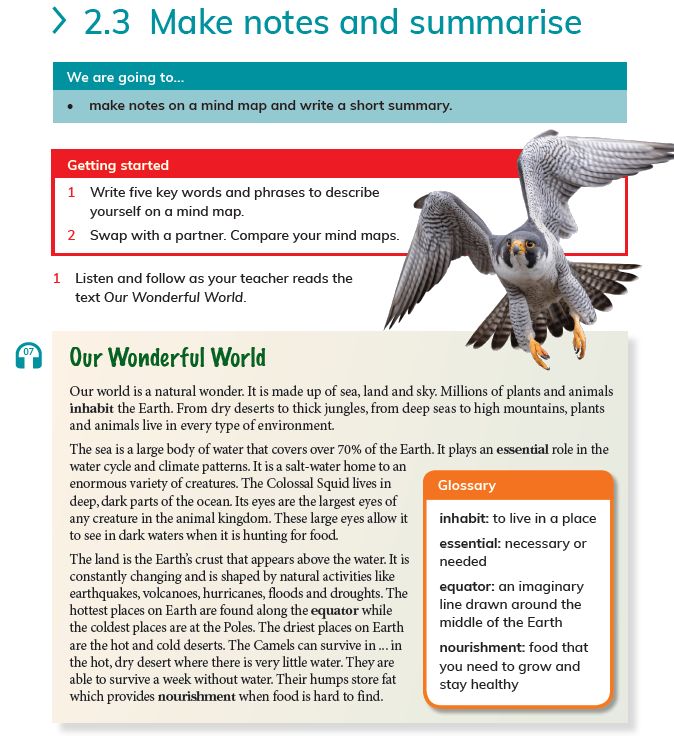
Introducing the resources

                  Session 1 will continue to provide an introduction to the resources,
                  including an overview of the components and key approaches to
                  teaching and learning.

                  The slides will follow a unit walkthrough, looking at specific examples of
                  how the resources support the key teaching approaches.

                  The unit walkthrough will explore:

                  •                Structure and contents of the components

                  •                Unit plan

                  •                Starting a session

                  •                Features to support key skills development

                  •                Differentiation features

                  •                Ending the unit and assessment opportunities

                                   Unit plan

       The approximate
    teaching time for each
         session helps
        teachers plan a                                                  The unit plan outlines the
     sequence of lessons.                                                  learning content and
                                                                          available resources for
                                          Teacher’s Resource                   each session.
     Building Brighter Futures Together
    © Cambridge University Press 2021

8                                                 To find out more about our professional development opportunities, visit:
Here is an example of a slide which explores ‘Starting a session’ using
                  the resources. The workshop notes provide guidance on how features
                  within the resources support active learning and language awareness,
                  as well as the key skills which are integrated within the task.

                  Activity example 2

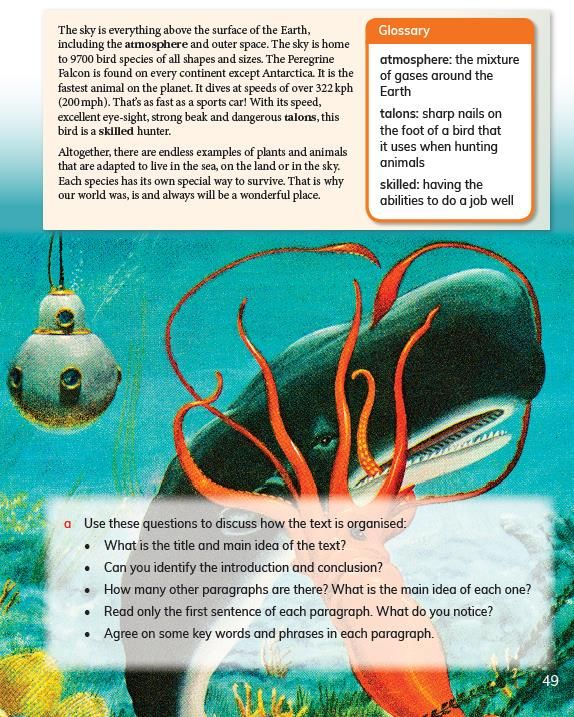
                  Work through the listening activity about the natural world on this slide.

                  •                Play the audio recording or read the text

                  •                Listen to the recording several times if needed

                  •                Draw teachers’ attention to the glossary boxes for
                                   vocabulary support

                  •                Encourage teachers to support learners during listening activities,
                                   by stopping the audio at intervals to discuss vocabulary and
                                   analyse the text

                               Starting a session                        Getting started activities
                                                                        engage learners and help
                                                                        teachers find out what the
                                                                          learner knows already.

       Learning                                                                                           Key
       objectives                                                                                     vocabulary
          help                                                                                        is defined.
        learners
      know where
        they are
         going.

       Recordings
         of texts
       available in                                              Integration of all four skills
          digital                                               with multiple opportunities for
        editions                                                    speaking and listening
     Building Brighter Futures Together
                                          Learner’s Book
    © Cambridge University Press 2021

cambridge.org/education/pd                                                                                          9
Setting up for success

                 Learn best practice for setting up an active learning classroom.

                 This session focuses on active learning as one of the key approaches to
                 teaching and learning.

                 Active learning focuses on how students learn, not just on what they
                 learn. Active learning encourages students to ‘think hard’ rather
                 than passively receiving information. It encourages students to take
                 responsibility for their learning and supports them in becoming
                 independent and confident learners.

                 This session will also cover:

                 •                Classroom set-up
                 •                Daily routines
                 •                Schemes of work
                 •                Speaking to parents

                               Is your classroom set up for active learning?
                   Flexible seating                                                        Teacher position during
                   means that learners                                                     the lesson is important –
                   can interact with                                                       are you able to move
                   each other; in pairs,                                                   around the classroom?
                   in groups as a class.

                                                            Classroom displays
                                                            are in English to support
                                                                                          ?
                                                            learners with their work.

     Building Brighter Futures Together

     © Cambridge University Press 2021

10                                           To find out more about our professional development opportunities, visit:
Here is an example of a slide which explores an example classroom
routine for active learning. The workshop notes provide an explanation
of the ‘No hands up’ approach and ideas for how to use it within
the classroom.
Activity example 3
Ask teachers to think about how they run their classroom to encourage
active learning:
• How do they make sure that all learners are engaged in
their learning?
• What other classroom techniques are effective in engaging
all learners?
Example routine for active learning
The ‘No hands up’ approach Learners know that they The teacher has a random
may be asked a question selection technique for
at any time – it does not taking answers – for
depend on them putting example, ‘lolly sticks’ with
their hand up. each of the learners’
names on them.
Building Brighter Futures Together
© Cambridge University Press 2021
cambridge.org/education/pd 11Setting up for success
This session also supports departments with practical considerations,
such as unit structure and timetabling.
When teaching with Cambridge resources, you need to think about
how the units will be taught across each stage, while also ensuring that
you have time to build in some creativity and freedom.
This slide shows an example of a scheme of work from a teacher’s
resource for Cambridge Primary English, which provides an outline of
the learning intentions and approximate number of learning hours. We
recommend that teachers adapt it for their school.
An additional slide explores some ideas for giving learners even more
English practice, such as a reading programme, film club or pen pals.
How many lessons should I spend on each
session?
All the relevant
resources for this unit
Approximate number from Cambridge
Recommendedof learning hours for
number Primary English
of sessions per Globalthis unit
English ‘lesson’
Building Brighter Futures Together
Teacher’s Resource
© Cambridge University Press 2021
12 To find out more about our professional development opportunities, visit:This slide explores how to introduce parents and school leaders to
Cambridge resources. The workshop notes provide example answers
to the questions on the slide, but as each school context is different we
recommend that you consider how parents at your school will respond.
Activity example 4
Discuss the questions on the slide with your teachers so everyone feels
confident answering questions from parents.
• Why don’t learners complete all the exercises in the
learner’s book?
• Why is it important for children to ask questions and feel
safe to make mistakes?
• Why are there fewer tests with grades?
• How can Cambridge Primary English work alongside other
literacy schemes?
Preparing parents & school leaders
for Primary English
The following questions may be worth discussing
with parents and leaders before the start of term:
Why don’t learners Why is it important for
How can Primary
complete all the children to ask Why are there fewer
English work alongside
exercises in the questions and feel safe tests with grades?
other literacy schemes?
Learner’s Book? to make mistakes?
Building Brighter Futures Together
© Cambridge University Press 2021
cambridge.org/education/pd 13Lesson planning demonstrations
Start practising how to plan lessons that embed the key approaches to
teaching and learning, using Cambridge resources.
This session includes two example lesson plans using the resources:
• Face-to-face lesson
• Online lesson
The lesson planning demonstrations provide a walkthrough of how
each of the example lesson plans were put together.
The demonstration will follow the structure of the lesson planning
checklist. The workshop notes will provide step-by-step guidance
on how to create a lesson plan, with a focus on how the resources
can be used to support each step for both teachers and learners.
There will also be slides showing how to record your ideas on a
lesson planning template.
Lesson planning checklist
1. Plan learning intentions and success criteria.
2. Plan language support.
3. Plan starter activities.
4. Plan main activities.
5. Plan assessment for learning and differentiation.
6. Plan reflection and plenary.
7. Plan homework.
Building Brighter Futures Together
© Cambridge University Press 2021
14 To find out more about our professional development opportunities, visit:Here is an example of a slide which demonstrates part of step 3 on the
lesson planning checklist, ‘Plan starter activities’. On this slide, teachers
are asked to engage in the example activity to experience active
learning first-hand and to see how it fits within the lesson plan.
Activity example 5
You could try this activity with your group:
• Ask your team to take on the role of the learner
• Call out each word from the slide and ask ‘learners’ to write
the letter they think corresponds to the correct definition
• ‘Learners’ hold their ‘boards’ face down with the answers
• Count to three and then ask ‘learners’ to hold up their answers
Step 3: Plan starter activities
introduction character resolution extract
A personal,
Text taken from a The beginning of The solving of a
animal or fictional
story a story problem
being in a story
A B C D
Building Brighter Futures Together
© Cambridge University Press 2021
cambridge.org/education/pd 15Lesson planning demonstrations
Here is an example of a slide which demonstrates part of step 6
on the lesson planning checklist, ‘Plan reflection and plenary’. The
workshop notes explain that the teacher will need to look for an activity
which consolidates the learning from the lesson and provides extra
assessment for learning opportunities.
The example on the slide shows a page from the teacher’s resource,
which suggests three possible plenary activities. The workshop notes
also explain how to use the workbook, as part of the plenary session
and to set homework tasks.
Step 6: Plan reflection and plenary
Plenary
ideas
Workbook
Looking activities
ahead to the
next session
– discuss
learners’
reading
range.
Building Brighter Futures Together
Teacher’s Resource Workbook
© Cambridge University Press 2021
16 To find out more about our professional development opportunities, visit:After you have explored step 7 on the lesson planning checklist, ‘Plan
homework’, you will be encouraged to review the planning process
with teachers once again at the end of the session.
There will be a separate walkthrough for the online lesson plan.
Activity example 6
Review the planning process with teachers. You could ask:
• What is new for them?
• What is the same?
• What is better?
• How will using elements of this process help learners
and teachers?
Step 7: Plan homework
Workbook
activities
Question 5 –
extension
Workbook
Building Brighter Futures Together
© Cambridge University Press 2021
cambridge.org/education/pd 17Lesson planning demonstrations
Here is an example from the online lesson planning demonstration.
In this example, the teacher decides to use assessment for learning and
the workshop notes suggest ideas on how to achieve this remotely.
Online tip:
Learners can show their understanding visually in an online
environment – as long as cameras are activated.
• They can use faces to show confidence:
o A smiley face for ‘yes, I am confident with this’.
o A straight face for ‘I understand most of this’.
o A downward smiley for ‘I am not feeling confident’.
Some online platforms have interactive functions that could also be
used to gain a sense of confidence from learners.
Step 5: Plan assessment for learning and
differentiation
I feel confident that I can
I understand most of this work
sequence the steps of a I need more help with this.
but am not fully confident yet.
recipe.
Building Brighter Futures Together
© Cambridge University Press 2021
18 To find out more about our professional development opportunities, visit:Lesson planning practice
This session is an opportunity for you and your teaching team to plan
together using the resources.
Lesson planning template:
• You may decide to provide your own planning template or use
the template provided as part of the course
• The template can be used for individual lessons or a sequence
of lessons
• By planning a series of lessons together, you can see how the
activities within the resources support the key approaches and
learning objectives
Planning template
Section headings:
• Learning intentions
• Success criteria
• Resources
• Language support, including
key vocabulary
• Introducing the lesson
• Main activities
• Assessment opportunities
Teacher’s Resource
• Differentiation opportunities
• Plenary and reflection
• Homework (if required)
• Notes
Building Brighter Futures Together
© Cambridge University Press 2021
cambridge.org/education/pd 19To find out more about our professional development opportunities,
please visit cambridge.org/education/pdYou can also read


