Presentation Outline - Sustainability Network
←
→
Page content transcription
If your browser does not render page correctly, please read the page content below
COMMISSIONER OF THE ENVIRONMENT AND
            SUSTAINABLE DEVELOPMENT

           FINDINGS FROM THE FALL 2014 REPORT

                       Webinar - Webinaire
                       12 Novembre, 2014

                           Julie Gelfand
                 Commissioner of the Environment
               and Sustainable Development, Canada

            Presentation Outline

• Who we are

• Findings from the Commissioner of the
  Environment and Sustainable Development’s Fall
  2014 Report

                                                     2

                                                         1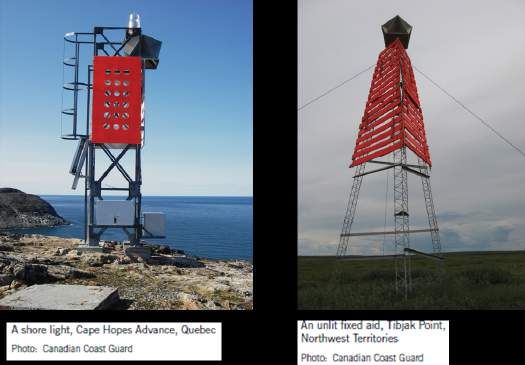
Auditor General of Canada

• Independent Officer of Parliament (10-year term)
  – Established in 1878; powers and responsibilities are set forth in
    the Auditor General Act.
• Reports directly to Canada’s Parliament; audits federal
  government departments and agencies.
• Audit reports:
  – Contain observations and recommendations
  – Fact-based, objective
  – Made public and are well covered by the media
  – Focus on management and implementation of policy, not merits
    of policy (we are policy neutral/not policy advocates)
• Also the auditor for Canada’s territorial governments:
  Nunavut, the Yukon, and the Northwest Territories

                                                                        3

     Commissaire à l’environnement et au
          développement durable

• Établi en vertu de la Loi sur le vérificateur général (1995) :
  – Poste créé en 1995
  – Nommé par le vérificateur général du Canada (mandat de
    sept ans)
  – Audite les résultats des programmes fédéraux liés à
    l’environnement et au développement durable; surveille la
    mise en œuvre de la Stratégie fédérale de développement
    durable du Canada (SFDD) et les stratégies de
    développement durable (SDD) des ministères
  – Gère le processus de pétition en matière d’environnement

• Tout comme le vérificateur général, le CEDD relève
  directement du Parlement du Canada

                                                                        4

                                                                            2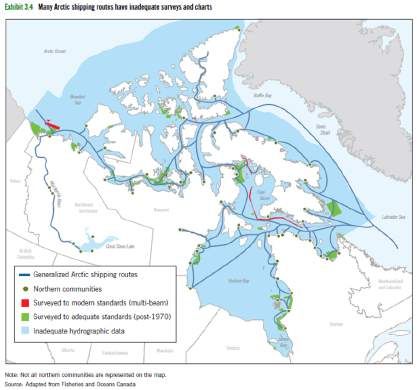
Relationship to the Federal Government

                                     Parliament

                                         Ac
                               rts

                                                    La
                                            co
                             po

                                                      ws
                                              un
                           Re

                                                t
                                                ab
                                                 e l
          Office of the
         Auditor General
                                       Audits                Federal
        Commissioner of the                                Government
     Environment & Sustainable
            Development

                                                                        5

   Commissioner’s Fall 2014 Report
• Mitigating Climate Change
• Environmental Monitoring of Oil Sands
• Marine Navigation in the Canadian Arctic
• Implementation of the Canadian Environmental
  Assessment Act, 2012
• Application of Strategic Environmental Assessment
  in the federal family
• Petitions
• Commissioner’s Perspective

                                                                        6

                                                                            3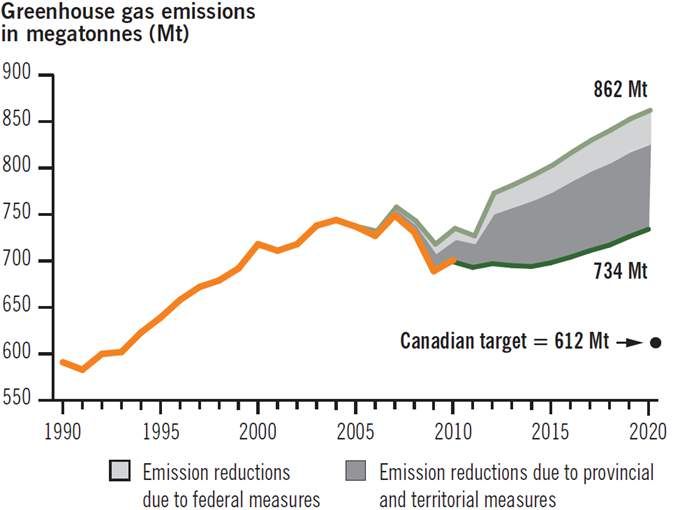
Questions remain unanswered
Despite some initiatives and progress in certain
areas, it is not clear how the government intends to
address significant environmental challenges that
future growth and development will likely bring
about:
 – What will Environment Canada’s role be in future oil
   sands monitoring?
 – What is the rationale for projects being subject to
   federal environmental assessments?
 – What level of service will the federal government
   provide in the Arctic to support increased marine
   navigation?
 – Where is the national plan to achieve Canada’s
   international GHG emissions reduction target?

                                                                          7

   L’atténuation des changements
             climatiques
• Ce sujet a fait l’objet d’un audit à cinq reprises depuis 2006.
• En 2014, nous avons examiné :
 – si des mesures visant à réduire les émissions de gaz à effet de
   serre avaient été mises en place (et si le gouvernement fédéral
   s’était conformé à de bonnes pratiques pour établir les
   règlements);
 – si les mesures en place faisaient l’objet d’une évaluation;
 – si les gouvernements fédéral, provinciaux et territoriaux
   coordonnaient leurs actions;
 – s’il y avait des plans en place pour atteindre la cible fixée dans
   l’Accord de Copenhague pour 2020;
 – si les indicateurs utilisés pour estimer les émissions futures et en
   rendre compte étaient adéquats;
 – si le Canada avait atteint ses objectifs de financement accéléré.

                                                                          8

                                                                              4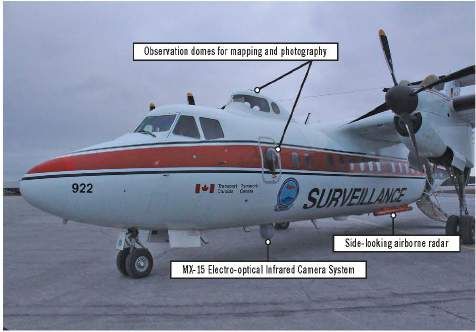
Evidence is stronger that 2020 target
             will be missed

                                          9

  Current federal measures will have little
effect on greenhouse gas emissions by 2020

                                          10

                                               5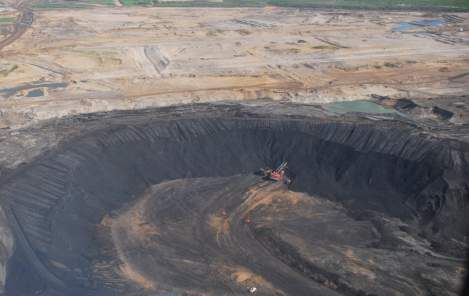
Need to develop an overall plan
             to achieve targets

• Quantitative description of what contribution
  the federal government will make to
  Canada’s 2020 target (and beyond).
• Detailed description of what measures it will
  take and planned timelines.
• Regular reviews to assess progress.
• Regular reports to Parliament.

                                                             11

  Methods to estimate and report future
          emissions are sound
Recommend separating the effects of federal and provincial
policy measures and consistently reporting the future
emissions from Canada’s forests.

                                                             12

                                                                  6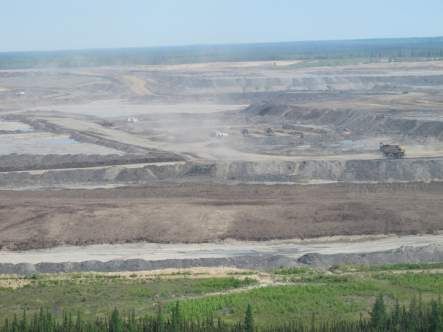
La majeure partie de l’aide versée par le Canada aux
  pays en développement n’est pas parvenue aux
                bénéficiaires finaux

            Le Canada a fourni un financement accéléré
            de 1,2 milliard de dollars de 2010 à 2012.

            La majeure partie des fonds (73 %) n’est pas
            encore parvenue aux bénéficiaires finaux.

                                                           13

     Environmental Monitoring of Oil Sands

• In 2012, the governments of Canada and Alberta
  committed to implementing an environmental monitoring
  program for the oil sands.

• The Joint Canada-Alberta Implementation Plan for Oil
  Sands Monitoring (Joint Plan) aims to enhance
  understanding of cumulative effects and environmental
  change.

• We looked at whether Environment Canada planned and
  implemented its monitoring projects under the Joint Plan
  according to timelines and budgets, and the objectives and
  approaches set out in the Joint Plan.

                                                           14

                                                                7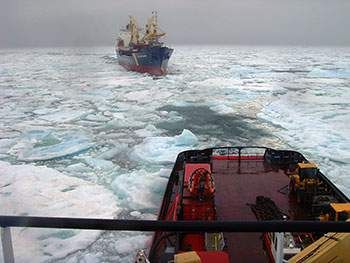
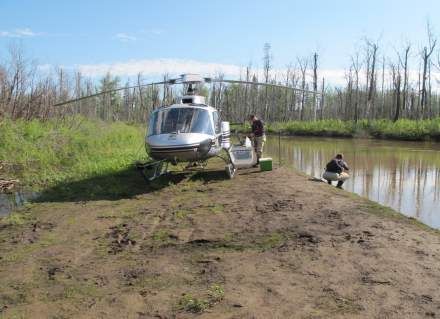
Overall, Environment Canada implemented the
monitoring projects we examined on time and on budget

         Water quality monitoring north of Fort McMurray, Alberta
   Surveillance de la qualité de l’eau, au nord de Fort McMurray, Alberta

                                                                            15

 Further efforts needed to engage stakeholders,
 incorporate traditional ecological knowledge, and
            integrate monitoring results

           Oil sands operations north of Fort McMurray, Alberta
  Exploitation de sables bitumineux, au nord de Fort McMurray, Alberta

                                                                            16

                                                                                 8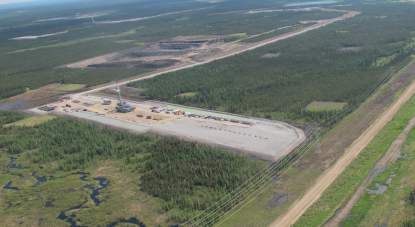
Le rôle d’Environnement Canada à l’égard de la
 surveillance des sables bitumineux après mars 2015
              n’est pas clairement défini

Exploitation de sables bitumineux, au nord de Fort McMurray, Alberta
        Oil sands operations, north of Fort McMurray, Alberta

                                                                       17

Marine Navigation in the Canadian Arctic

• Do federal departments adequately support safe
  marine navigation in Canadian Arctic waters?
• Is there a shared vision and coordinated strategy to
  support safe navigation?
• We looked at
  – Surveys and charts
  – Aids to navigation
  – Weather and ice information
  – Icebreaking services
  – Surveillance of marine traffic and spills

                                                                       18

                                                                            9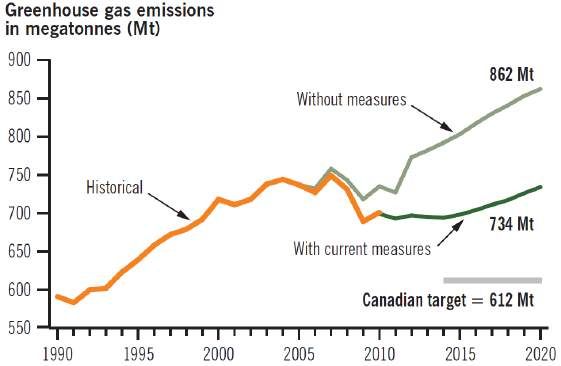
Weather and ice information improving

The
  Na1onal
  Aerial
  Surveillance
  Program
  plane
  rou1nely
  monitors
  ice
  condi1ons.

 L’avion
  du
  Programme
  na0onal
  de
  surveillance
  aérienne
  surveille
  régulièrement

                                      l’état
  des
  glaces.


                                                                                                                19

Canadian Arctic waters are inadequately
        surveyed and charted

                                                                                                                20

                                                                                                                     10
Canadian Coast Guard does not know if it is
meeting user needs re: aids to navigation
21
La présence de brise-glaces dans l’Arctique
diminue alors que le trafic maritime augmente
Le
brise-‐glace
Terry
Fox
de
la
Garde
cô1ère
(au
premier
plan)
libère
un
navire
dans
la
baie
Frobisher
le
25
juillet
2012.
Photo
:
Denis
Lambert,
Environnement
Canada
22
11No long-term strategic vision for Arctic
marine transportation
23
Implementation of the Canadian
Environmental Assessment Act, 2012
• Project list
• Public participation
• Substitution & equivalency
• Cumulative effects
24
12Clarity and transparency of projects subject
to EA (project list) needs to be improved
• In-situ oil sands, dredging, and wind turbines are not on
the project list.
• Screening decisions for determining which projects on the
list will undergo an assessment is not public.
Oil sands operations, north of Fort McMurray, Alberta
Exploitation de sables bitumineux, au nord de Fort McMurray, Alberta
25
Public participation needs to be improved
• Stakeholders and Aboriginal groups raised concerns
about capacity to participate effectively in the EA
process.
26
13Substitution and Cumulative Effects
• Cumulative effects guidance is not yet finalized;
Agency is exploring regional studies possibilities.
• Agency has ensured conditions in place for
substituting provincial process for federal process.
– Minister has approved eight substitutions in B.C.
27
Integration of environmental considerations into
proposals to Cabinet and Treasury Board can be
improved
• Most departments examined have established mechanisms
to apply strategic environmental assessments to
proposals going to Cabinet and the Treasury Board.
– Citizenship and Immigration Canada and Transport
Canada have developed SD assessment tools.
• Privy Council Office and Treasury Board of Canada
Secretariat have recently revised their internal processes.
• Environmental implications (potential positive and negative
effects, impacts on FSDS goals and targets) are not
systematically included in policy, plan and program
proposals submitted to Cabinet or the Treasury Board.
28
14Petitions
• Getting Answers—A Guide
to the Environmental
Petitions Process
• Available at
http://www.oag-bvg.gc.ca
29
Commissioner’s Perspective
• Canadians expect the federal government to prepare for the
future.
• To address issues ranging from climate change, the impacts
of oil sands development and arctic shipping, the
government needs to answer:
– How will it reach its GHG emission targets?
– What services should it provide in the Arctic to support
increased navigation and minimize environmental risk?
– What should be Environment Canada’s role in future oil
sands environmental monitoring?
• Federal departments need to take a more integrated
approach to decision making. They can do this by investing
in better information, acting on the information they
acquire, and engaging Canadians in their decisions.
30
15Thank you/Merci !
Web:
hUp://www.oag-‐bvg.gc.ca
Twi'er:
@CESD_CEDD
@CEDD_CESD
YouTube:
hUp://www.youtube.com/user/OAGBVG/videos
31
16You can also read


