Financial Solutions for City Resilience (Cohort 2) 2nd Nyali Bridge PPP Viability Study (Mombasa, Kenya) - GFDRR
←
→
Page content transcription
If your browser does not render page correctly, please read the page content below
Financial Solutions for City Resilience (Cohort 2)
2nd Nyali Bridge PPP Viability Study (Mombasa, Kenya)
Mark A. Smith
July 2018
PPP Viability Studies: Approach and Methodology

Infrastructure        • High level assessment of the key economic activities / drivers of the
Assessment              cities and of the infrastructure that supports these economic activities

Legal and             • Review national and municipal legal regulatory and institutional
Institutional           conditions
Reviews

Site &                • Support in identification of potential infrastructural challenges
Infrastructure        • Analyze site suitability in terms of ownership, resettlement and
Evaluation              relocation, infrastructure availability and utilities

Demand supply &       • Demand study to provide the basis for a conceptual design, an estimate
Project description     of the capital investment required and project revenues

                      • Preparation of financial model, PPP project structure, comparative risk
Viability               matrix and value-for-money & affordability analyses
Assessment
                      • Preparation of preliminary project implementation plan

Workshop and          • Workshop to finalise contracting options
Capacity Building     • Assistance in development of capacity for PPP projects

                                                                           World Bank Group CRP: Markets Case Study   2
2nd Nyali Bridge
   PPP Viability Study

© 2016 Deloitte & Touche
Transaction Advisory Consortium

                           In association with

                           In conjunction with

                                                 4
© 2016 Deloitte & Touche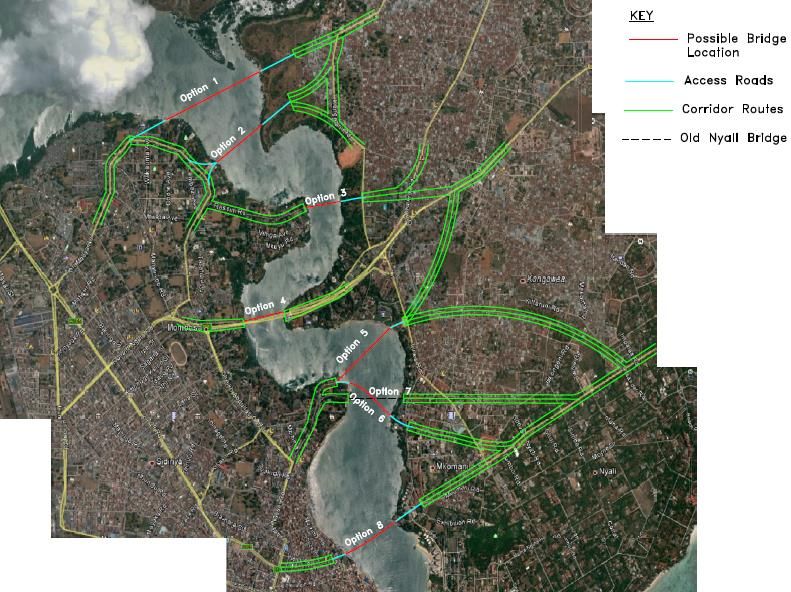
Feasibility Study
Project Background and
Objectives

                           5
© 2016 Deloitte & Touche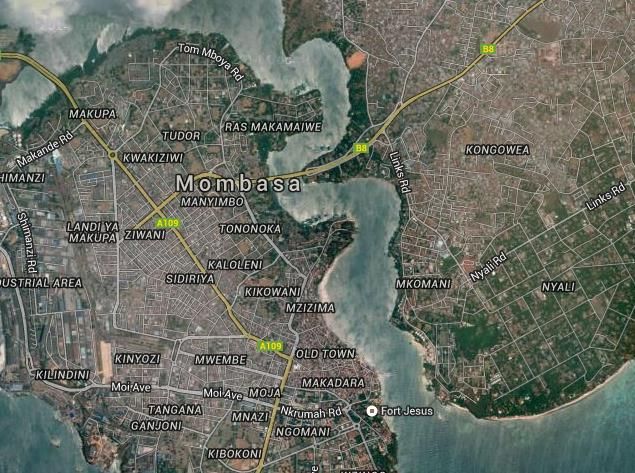
Introduction
The Current Nyali Bridge

• The existing bridge has served
  Mombasa for over 35 years.
• Built in 1979 with financing
  from the Government of
  Japan.
• Has provided the only direct
  link between the Mombasa
  North Coast Mainland and
  Mombasa Island.
• Mombasa is Kenya’s second
  biggest city and East Africa’s
  largest sea port.

                                   6
© 2016 Deloitte & Touche
Introduction
Mombasa City: Sustaining Growth
• Mombasa county has grown exponentially over the past four decades.
• The population within Mombasa county is expected to rise beyond 1.2 million
  people by 2025.
• This growth implies increased traffic, which will require sustainability
                                                                                                        Source: KNBS (Forecast by Deloitte
                   Mombasa County Historical and Forecast Population                                    based on 2012 Population Growth
                                                                                                        Rate of 2.7% provided by KNBS)
                                  1400000

                                  1200000

                                  1000000
                     Population

                                  800000

                                  600000

                                  400000

                                  200000

                                       0
                                            1960   1990   2000   2014   2015F   2016F   2017F   2018F   2019F        2020F        2025F

                                                                                                                                             7
© 2016 Deloitte & Touche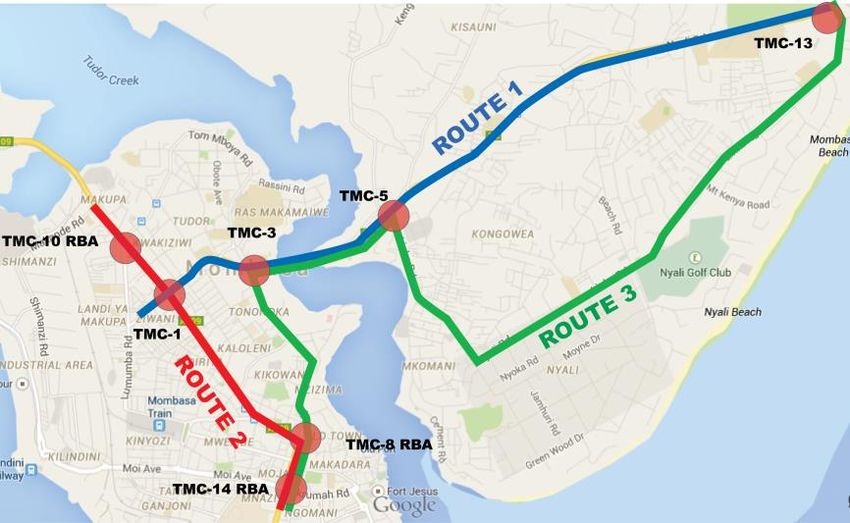
Introduction
The 2nd Nyali Bridge: Project Importance
• Mombasa has begun experiencing
  major traffic congestion, especially
  during rush hour times.
• The city will require more
  accessibility to sustain population
  and economic growth.
• Having a second direct access
  route between Mombasa Island
  and the Northern Mainland
  provides additional security.
• A new bridge will ease congestion
  on the existing Nyali Bridge and
  the wider areas either side of
  Tudor Creek, help reduce wasted
  time and support Mombasa's
  economy.
                                           8
© 2016 Deloitte & Touche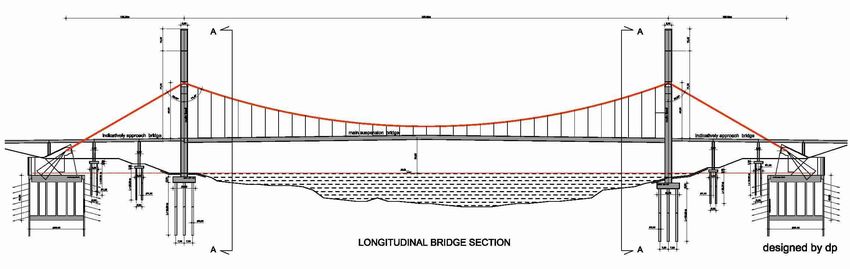
Introduction
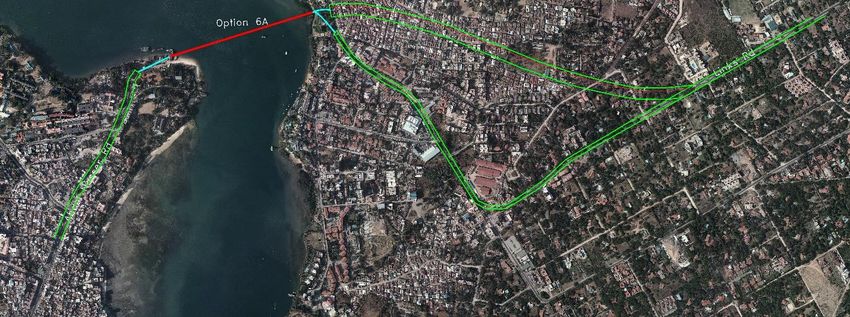
The 2nd Nyali Bridge: The Project
• Development,
  Operation, and
  Maintenance of a
  2nd Nyali Bridge
• PPP Project
• Expected to be
  tolled

                                    9
© 2016 Deloitte & Touche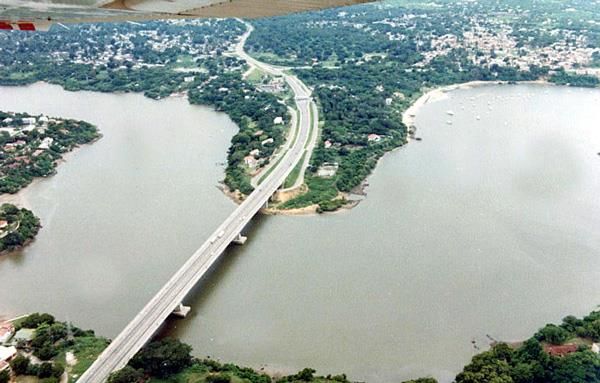
Mombasa: Other Projects Under Consideration
                                         Please note that these drawings were done on an approximate basis and
                                         do not provide as a true representation of the eventual developments or
                                                                                                                   1. Northern
                                         the views of any of the parties involved within them.                        By-pass
                            7            These are provided for example purposes only
                                                                                                                   2. Ferry
                                                                                                                   3. A109
                                                                                                                   4. Donga
                   3b
                                                                                                                      Kundu
                                                                                                                   5. Likoni
                                                     1a
                                                                                                                      Crossing
                                                                                                                   6. B8
                                                                  1b                                                  Expansion
                                                                                                                   7. Mariakani
                                                                                                                      Kilifi
                                                                                        6                          8. Port Reitz
                                     8
                                4a
                                                        3a

                           4b
                                                          5

                                         4c         6
                                                                                                                             10
© 2016 Deloitte & Touche
Feasibility Study
Traffic Analysis and
Modelling
11
© 2016 Deloitte & ToucheTraffic Analysis
Existing Nyali Bridge traffic
• Some 50,000 trips daily across the Existing Nyali Bridge (excluding
motorcycles and tuk tuks)
• Close to its design capacity
• AM and PM peaks Illustrate the importance of commuter traffic
12
© 2016 Deloitte & ToucheTraffic Analysis
Travel Times
Section Avg. Speed
Malindi Rd (R1) 13 km/h
Nairobi Rd (R2) 21 km/h
Links Rd (R3) 18 km/h
WB Travel Time Plot - Nyali To Town
40
Cumulative Travel Time
30
3.2 km/h
20 Bridge Area AM
[mins]
Off-Pk
10
PM
0
0 1 2 3 4 5 6 7 8
Distance [km]
Travel between Links/Malindi Rd junction to Saba Saba (8 km) takes
up to 49 minutes (Speed over bridge: up to 3.2km/h)
© 2016 Deloitte & ToucheTraffic Modelling
Future Volume Projections
Undertaken using demand modelling
on the basis of demographic and Historical Population Growth
economic factors
Factors considered: 780
553
• Population growth 447
384 332
• GDP growth 174
284
177
248
100 127
• Vehicle registrations 1962 1969 1979 1989 1999 2009
Kenya Mombasa
• Price elasticity
• Transport sector output Growth 2035
Parameter 2013 Rate Values
• Planned infrastructure /Port /Bypasses
It is expected that traffic will be grow Population 1.04M 3.5% 2.95M
by up to 2.0 times by the year
2035 Employment 0.9M 3.2% 1.69M
14
© 2016 Deloitte & ToucheTraffic Analysis and Modelling
Conclusions
• Traffic congestion already causes significant economic cost, with travel speeds
as low as 6km/h.
• Traffic over the existing Nyali Bridge has an AADT of 46,000, which is close to
its design capacity
• Traffic (if unconstrained) is projected to double in the next 20 years, which will
cause significant further congestion and delays
There is a pressing need for a new Nyali Bridge
• The majority of trips over the Existing Nyali Bridge have an origin or destination
in the CBD
• A new bridge to the South of the Existing Nyali Bridge would yield the greatest
traffic benefits, in terms of traffic operations and capacity, attracted volumes,
travel time savings and network connectivity
Traffic analysis points towards a Southerly bridge
15
© 2016 Deloitte & ToucheFeasibility Study
Location Selection
16
© 2016 Deloitte & ToucheLocation Selection
Overview of Process
Overview of
Traffic Survey & High level
Engineering /
Analysis financial analysis
ESIA Factors
Longlisting of Potential Sites
Shortlisting of Potential Sites
Selection of
Preferred Site and
Project Scope
17
© 2016 Deloitte & ToucheLocation Selection
Started with a Long List of 8 potential sites
18
© 2016 Deloitte & ToucheLocation Selection
Reasons for rejecting certain longlisted options
Option 4
Options 1 & 2 • Primary issue is
• Not supported the feeder road
by traffic network, not the
analysis bridge
• Difficult to link to • Does not create
road network an additional link
• Environmental
impact on Tudor
• Option 1 only:
long bridge Option 7 (Old Nyali
Bridge)
• Sharp bend on
Mombasa Island side
not conducive to traffic
flow
Option 8
• Variants of Option 6
• Unacceptable impact on
preferable
Mombasa Old Town
19
© 2016 Deloitte & ToucheLocation Selection
Preferred Location Selected
• The DG of KURA, Governor of Mombasa and TA Team Leader jointly
announced the preferred location
• Meetings were held with media, local residents, business representatives
and political stakeholders
• The selection of the preferred location was confirmed in a document signed
by KURA, Mombasa County Government and Deloitte
20
© 2016 Deloitte & ToucheFeasibility Study
Bridge Conceptual
Design
21
© 2016 Deloitte & ToucheBridge Conceptual Design
Process for Selection of Bridge Structure Type
• Following confirmation of the Preferred location of the 2nd Nyali Bridge, we
assessed alternative structure types for the bridge:
• Conventional concrete bridge
• Cable stayed bridge
• Suspension bridge
• The conventional concrete was discounted at an early stage, primarily on cost
grounds (with the materials required, especially for numerous pylons and piers
in the water to support the deck)
• The TA team presented the cable stayed and suspension bridge options to
KURA and Mombasa County Government and invited them to advise on the
structure type to be used for the conceptual design taking account of:
• Design aesthetics, cost and uniqueness (the technical capability and
deliverability of the two structure types being similar)
22
© 2016 Deloitte & ToucheBridge Conceptual Design
Selection of Bridge Structure Type
Cable Stayed Bridge Suspension Bridge
• Carriageway beam is supported from • Steel carriageway beam supported via
the pylon directly by straight cables hangers from two main cables
in parallel or harp like arrangements
• Anchor blocks four (4) no.; higher total
• Anchor blocks two (2) no.; lower total quantities
quantities
• second longest in Africa and the 74th
• Longest in Africa and Europe and the worldwide
5th worldwide.
Considering the landmark appearance, KURA and MCG advised that the
Suspension bridge option be elaborated further. A conceptual / outline design,
construction process and cost estimate has been developed for a Suspension bridge
for the 2nd Nyali Bridge.
23
© 2016 Deloitte & ToucheBridge Conceptual Design
Delivering the desired capacity
24
© 2016 Deloitte & ToucheBridge Conceptual Design
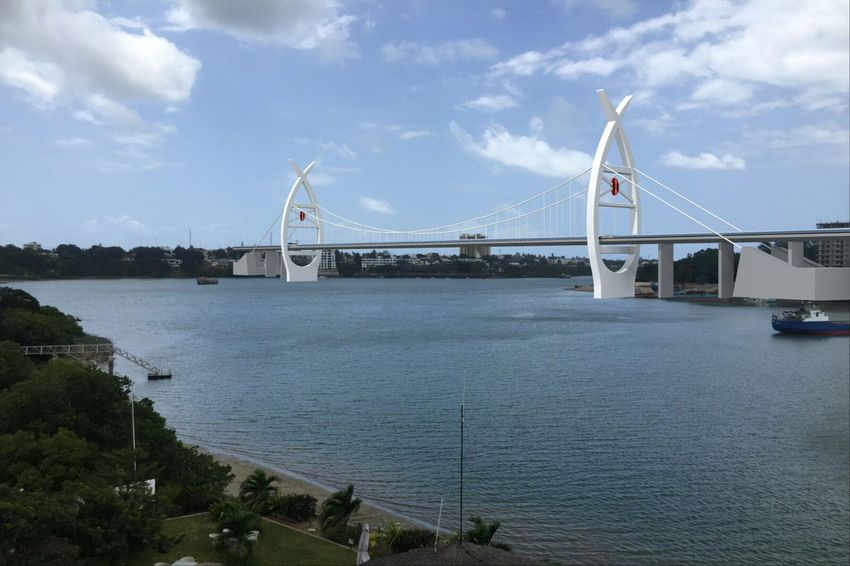
Daytime (Artist’s Impression)
25
© 2016 Deloitte & ToucheBridge Conceptual Design
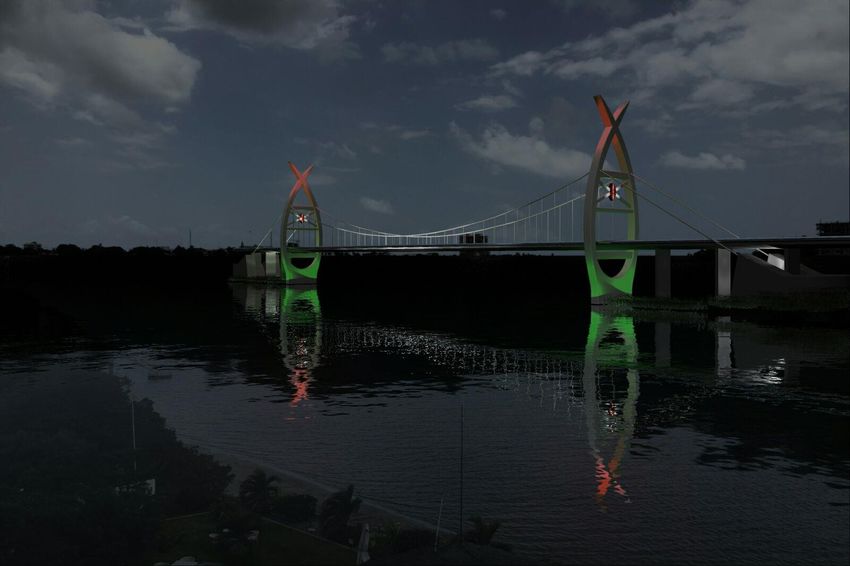
Night time (Artist’s Impression)
26
© 2016 Deloitte & ToucheFeasibility Study
ESIA issues
27
© 2016 Deloitte & ToucheEnvironmental and Social Impact Issues
Project Impacts and Mitigation Measures
Project Phase Positive Impacts Negative Impacts & their mitigation measures
Social Environmental Mitigation Measures
Pre- Employment creation Land acquisition, Vegetation clearance RoW limited to construction,
construction change in land use Habitat fragmentation O&M areas
Loss of structures Tree planting & re-landscaping
Proper Compensation
Construction Increases Direct & Indirect Safety and Health Air pollution Occupational health & safety
sources of employment risks Excess noise & management systems
Contributes in economic Utility services vibrations Advance notice &
growth disruption Water quality communication
Provision of market for Gender Inequality degradation Use of proper signage &
supply of construction Traffic congestion & Soil degradation barricades, emergency plan
materials diversions Solid waste generation Speed control
Waste management
Operation Reduces traffic congestion, Tolling Impacts Vehicular emissions Efficient tolling systems to
accidents and noise ensure smooth traffic flow
Promotes infrastructural Alteration of natural Availability of high occupancy
tourism drainage system vehicle lanes
Reduction in congestion & Impact to aquatic Noise barriers, low noise paving
travel times, better biodiversity materials
connectivity & reliability Improve drainage systems
Alternative direct link Re-landscaping, tree plantation
28
© 2016 Deloitte & ToucheEnvironmental and Social Issues
Resettlement Action Plan (RAP)
Key Impacts (Bridge and immediate approach roads only)
Affected households: 203 households
63 enterprises (employing over 178 people) will be displaced; largely
informal, unregistered businesses (Roadside hotels, Kiosks and boat
builders/repairers)
Need for alternative space for traders, No resettlement of residents
(as at time of survey) but since changed
Estimated budget for RAP (including land acquisition): KES 1.63
Billion*
o Compensation for land – 622,174,064
o Compensation for structures – 488,327,385
RAP implementation schedule: maximum 16 months
* Preliminary estimates for Ph I; Subject to finalization by NLC
29
© 2016 Deloitte & ToucheLegal Due Diligence
30
© 2016 Deloitte & ToucheLegal Due Diligence 1. Policy justification for the Project 2. Procuring Authority Powers 3. Legislation under which the Project is to be procured 4. Legal framework governing roads in Kenya 5. Legal framework applicable to tolling of roads in Kenya 6. Project Procurement Considerations and PPP Options 7. Project Site enablement issues 8. Private Party Project Implementation Issues 9. Project Funding 10. Managing Project Legal Risk 31 © 2016 Deloitte & Touche
Funding Options

                           32
© 2016 Deloitte & Touche
Funding Options
Comparison of Potential Funding Sources
Ease of Reliability /
Funding Options Revenue Potential Acceptability Disbursement Profile
implementation Predictability
Tolls High Moderate Moderate High Matches
Motor Vehicle Taxes Low Low Easy High Partly matches
Fuel Taxes Low Moderate Easy High Partly matches
Betterment Levy Low to Moderate Low Moderate Moderate Does not match
Freight Charges Low Moderate Moderate Moderate Matches
Tax Increment
Moderate Moderate Moderate Moderate Does not match
Financing
Joint Development High Moderate Moderate Moderate Partly matches
Developer / Impact
Moderate Moderate Easy Low Partly matches
Fee
Vehicle License
Low Moderate Easy Moderate Does not match
Charges
VAT on vehicle
Low Moderate Easy Moderate Does not match
insurance premiums
Property Taxes Moderate Low Moderate Moderate Does not match
Sale of Property
Low Low Moderate Moderate Does not match
Rights
Area Licensing /
Permits / Low Low Moderate Moderate Partly matches
Concession Charges
Advertising Fees Low High Easy Moderate Does not match
Tax on Lottery
Low Moderate Easy Low Does not match
winnings
33
© 2016 Deloitte & ToucheProject Summary
Implementation
Schedule
34
© 2016 Deloitte & ToucheImplementation Plan
Key Activities
Procuring Agency
Substantial Ph I: notice of
LA progress possession
Land Acquisition
RFQ
preparation
Addressing Policy & & Release RFQ
Guideline Gaps Bid Evaluation IE Selection
Evaluation
Release of
RFP Notice of Clearance
Award facilitation
Ph I: Project Ph I Land
Approval Competitive Dialogue CA signing
handover
Q3 2016 Q4 2016 Q1 2017 Q2 2017 Q3 2017 Q4 2017 Q1 2018
RFQ Obtaining
Submission Signing CA
Clearances
Initial Market Sounding Opportunity assessment Financial
SPV
formation Closure
Bid
Consortium finalization
Submission
Bid Submission
Private contingent on Ph I
Sector/Developer land acquisition
© 2016 Deloitte & Touche Note: Indicative implementation plan subject to approvals, land acquisition and publication of RFQ/RFP35etcImplementation Plan Development schedule Sl. Key Activity/milestone Timeline 1 Approval of final feasibility report Jul-16 2 Substantive progress on land acquisition July - Nov 2016 3 Finalisation of transaction / prequalification documents Oct-16 4 Invitation to pre-qualify Dec-16 5 Preparation of Prequalification documents by prospective bidders Jan-17 6 Submission of Qualification documents (45 days from invitation) Jan-17 7 Prequalification evaluation Feb-17 8 Issuance of request for bid proposal Feb-17 9 Pre-bid conference Apr-17 10 Competitive dialogue May-17 11 Bid submission deadline (Contingent on status of Land acquisition) Jul-17 12 Bid Evaluation July - Oct 17 13 Notice of Award Nov-17 14 Agreement signing Nov-17 15 Financial Close Mar-18 © 2016 Deloitte & Touche Note: Indicative implementation plan subject to approvals, land acquisition and publication of RFQ/RFP36etc
We are pleased to enclose our presentation on the Project Location and Scope – Stakeholder presentation, in relation to the Provision of Transaction Advisory
Services for the Development, Operation and Maintenance of the Second Nyali Bridge PPP project in accordance with our contract with the National Treasury
of Kenya dated 25 November 2014.

This presentation contains a number of outstanding matters that require clarification or confirmation. We therefore reserve the right to add, delete and/or
amend the presentation as appropriate. In preparing this Presentation, we have relied upon and assumed, without independent verification, the accuracy and
completeness of information available from public sources, discussions with relevant authorities and other third party sources. No party is entitled to rely on the
Presentation for any purpose whatsoever and we accept no responsibility or liability for its contents to any party.

For your convenience, this presentation may have been made available to you in electronic and hard copy format. Multiple copies and versions of this
presentation may, therefore, exist in different media.

Deloitte and/or the Project Consortium do not take responsibility for delays caused by approvals, land acquisition, political, security, or any other factors which
are not directly influenced by Deloitte and/or the Project Consortium.

You should not, without our prior written consent, refer to or use our name or the report for any other purpose, refer to them in any investment circular or other
document, or make them available or communicate them to any other party (except for your affiliated organisations and your other professional advisors).

Deloitte and/or the Project Consortium accept no liability to any party in connection with this presentation.

Deloitte refers to one or more of Deloitte Touche Tohmatsu Limited, a UK private company limited by guarantee, and its network of member firms, each of
which is a legally separate and independent entity. Please see www.deloitte.com/about for a detailed description of the legal structure of Deloitte Touche
Tohmatsu Limited and its member firms.
                                                                                                                                                                      37
 © 2016 Deloitte & Touche
You can also read


