PROFI TABILITY ANALYSIS: BAMBOO SHOOT AND POLE PRODUCTION - BALINKBAYAN
←
→
Page content transcription
If your browser does not render page correctly, please read the page content below
Profitability Analysis No. 04/2007

                                   Profitability Analysis:
                               Bamboo Shoot and Pole
                                          Production

                Philippine Council for Agriculture, Forestry and Natural Resources Research and Development
                                                                                    Department of Science and Technology
ISO 9001:2000
                                            Providing science solutions for a vibrant agriculture and sustainable environment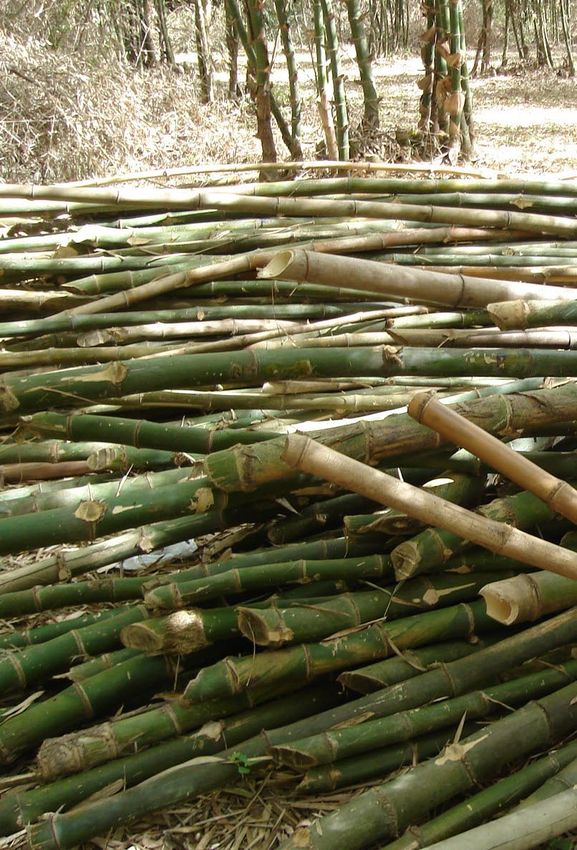
About PCARRD
T   he Philippine Council for Agriculture, Forestry and Natural Resources Research and Development
    (PCARRD) is one of the sectoral councils under the Department of Science and Technology (DOST).
Established in 1972, PCARRD formulates policies, plans, and programs for science and technology-
based development in the agriculture, forestry, and natural resources (AFNR) sectors. It coordinates,
evaluates, and monitors the national research and development (R&D) efforts in AFNR. It also allocates
government and external funds for R&D and generates resources to support its programs.

The first DOST council to earn an ISO 9001:2000 certification for its quality management system,
PCARRD is engaged in active partnerships with international, regional, and national organizations
and funding institutions for joint R&D, human resource development and training, technical
assistance, and exchange of scientists, information, and technologies.

The Council supports the National Agriculture and Resources Research and Development Network
(NARRDN), composed of national multi- and single-commodity and regional R&D centers, cooperating
stations, and specialized agencies. As such, PCARRD has been a potent arm in catalyzing the Philippine
AFNR sectors toward self-sufficiency and global competitiveness.

MAILING ADDRESS                        PHILIPPINE COUNCIL FOR AGRICULTURE,
                                       FORESTRY AND NATURAL RESOURCES
                                       RESEARCH AND DEVELOPMENT
                                       Los Baños, Laguna
TELEPHONES                             Los Baños - (63) (049) 536-0014 to 536-0015/
                                       536-0017 to 536-0020 & 536-0024
FAX                                    Los Baños - (63) (049) 536-0016/536-0132
                                       DOST Bicutan, Tagig, Metro Manila
                                       (63) (02) 837-1651
E-MAIL                                 pcarrd@pcarrd.dost.gov.ph
WEBSITE                                http://www.pcarrd.dost.gov.ph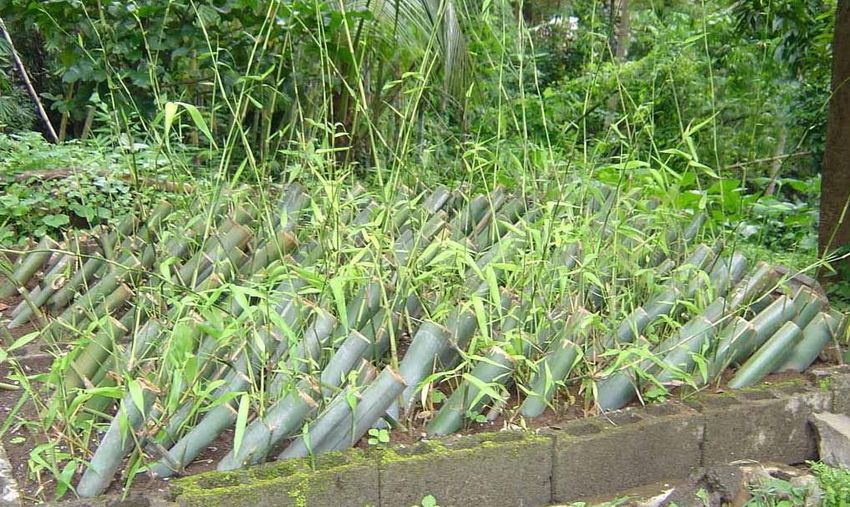
Profitability Analysis:
        Bamboo Shoot and Pole
             Production

Philippine Council for Agriculture, Forestry and Natural Resources
             Research and Development (PCARRD)
           Department of Science and Technology (DOST)

                        Los Baños, Laguna
                              2007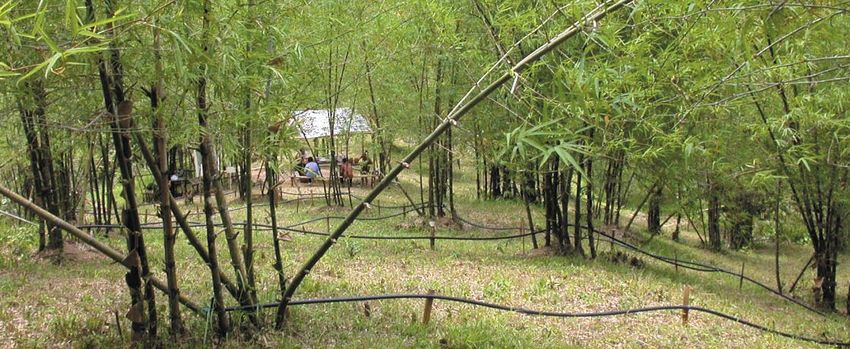
First Edition 2007

ISSN: 1908-8043

Bibliographic Citation:
Philippine Council for Agriculture, Forestry and Natural Resources Research and
    Development. Profitability analysis: bamboo shoot and pole production. Los Baños,
    Laguna: PCARRD, 2007. 17p. -(Profitability Analysis No.04/2007)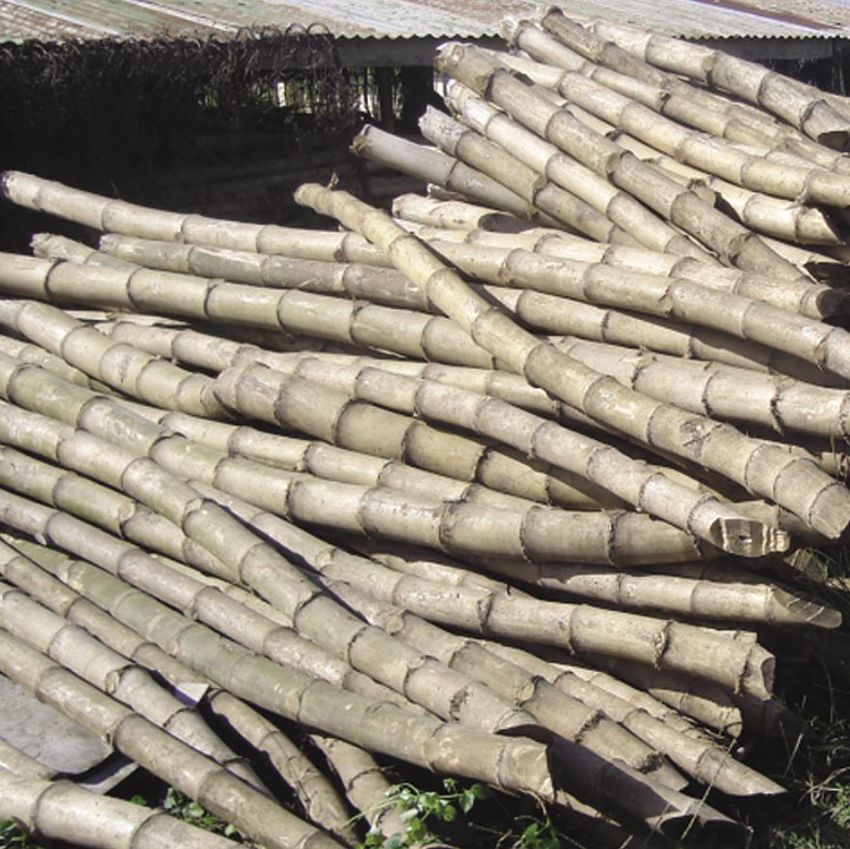
Icongratulate PCARRD-DOST for coming up with this Profitability Analysis, which

Message
           is not just a publication, but more importantly, a science and technology (S&T)-
          based solution. PCARRD has put together the necessary information that would
          make agribusiness venture more technically and financially viable.

          The tested package of technology (POT) that PCARRD and its research and
          development (R&D) partners have developed and included in this publication,
          together with the encouraging financial projections, highlights the role of S&T in
          achieving our national development goals.

          I am optimistic that with the dissemination of the Profitability Analysis, which
          PCARRD has prepared for a significant number of priority commodities
          and products, our people will develop greater appreciation of S&T-based
          entrepreneurship in agriculture and natural resources sectors.

          Hon. ESTRELLA F. ALABASTRO
          Secretary
          Department of Science and Technology
          Republic of the Philippines

                                               iii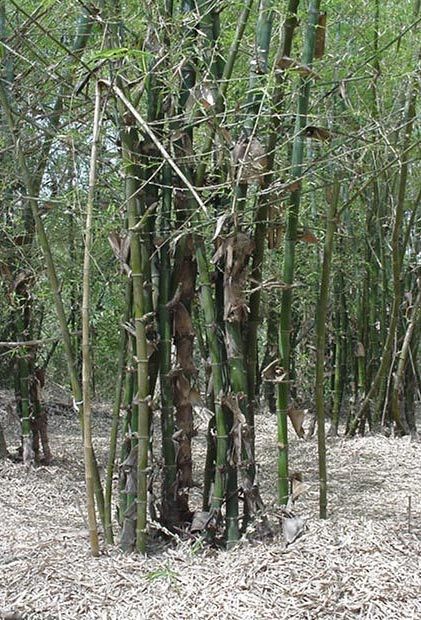
A   gribusiness is among the flourishing enterprise in the country today. However,
Message
              many of our people, particularly the small and medium entrepreneurs could
          not easily engage in agribusiness due to constraints in the establishment process.

          This publication, the Profitability Analysis, is a very laudable initiative by PCARRD-
          DOST having put together a set of solutions addressing startup constraints.
          Specifically, this publication contains key technical and financial information
          necessary to start, operate, and profit from a science and technology (S&T)-based
          agribusiness enterprise.

          I commend PCARRD for pursuing the development of this publication. This very
          important contribution will definitely help boost entrepreneurship, especially in
          the rural sector; create additional income and job opportunities; and promote then
          production of high quality agribusiness products.

          Cong. LUIS R. VILLAFUERTE
          Chair, Committee on Aquaculture and Fisheries
          Member, Committee on Science and Technology
          Member, Committee on Agriculture
          House of Representatives

                                                iv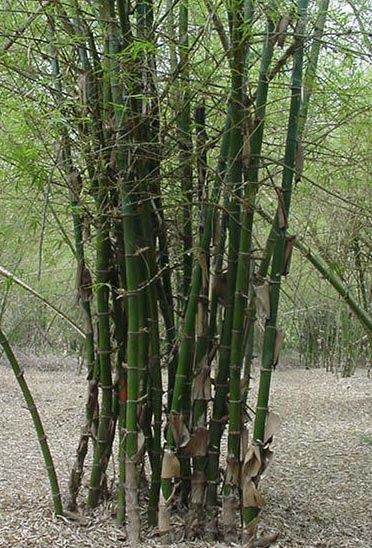
T  his year, the Philippine Council for Agriculture, Forestry and Natural Resources

Foreword
              Research and Development (PCARRD) offers a new technology publication that
           promises to be fully utilizable and handy.

           The Profitability Analysis (PA) arose from our yearning to address your needs as
           small and micro entrepreneurs, farmers and growers. More than just a handout,
           this innovative package of information provides tools to help you gain and secure
           a niche in your business enterprise.

           The PA series is based on our study of selected commodities. Here you will find the
           technical and financial data you will need to put up an agricultural enterprise. It
           presents analytical tools you can use in project planning and in predicting how
           the business would operate under a set of assumptions. Thus, it ensures that your
           projects are technically and economically feasible for implementation. Through
           the profitability analysis and other information, we at PCARRD, hope to contribute
           substantially in providing livelihood options for Filipinos, especially those in rural
           communities.

           Specifically, this PA contains information on bamboo pole and shoot production,
           soil type requirements, vegetative propagation, plantation establishment,
           harvesting of shoots and poles, and clump management. It also details the cost-
           and-return analysis in bamboo pole and shoot production.

           Feel free to use the information in these pages. Contact us for any further
           information you may need or better yet, for any suggestions on how we can make
           this publication better. Together, we can improve the agricultural production
           system for bamboo poles and shoots and seal their importance in our national
           economy.

           PATRICIO S. FAYLON
           Executive Director

                                                 v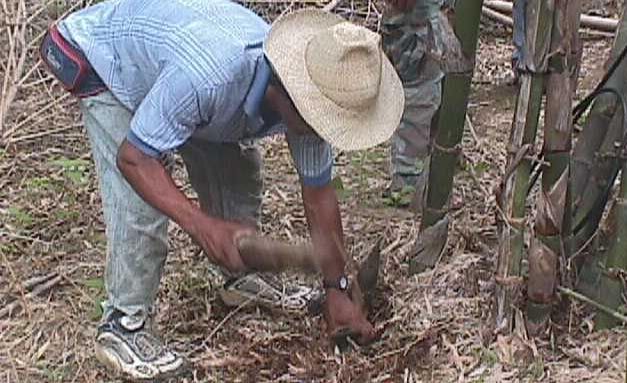
Message from Secretary Estrella F. Alabastro iii

Contents
           Message from Congressman Luis R. Villafuerte iv
           Foreword v

           Introduction 1

           Package of Technology 13

           Profitability Analysis
             Projected income statement, bamboo production (shoot and pole
               production) 3
             Projected cash flow, 1-ha bamboo plantation, (before financing) 5
             Projected cash flow, 1-ha bamboo plantation, (after financing) 5
             Capital investments, 1-ha bamboo plantation 7
             Working capital and other startup costs, 1-ha bamboo plantation 7
             Initial investment 9
             Depriciation table (Straight Line Method, zero salvage value) 9
             Production and sales projection, 1-ha bamboo plantation 9
             Annual labor requirement 11
             Amortization schedule, 19% p.a. (includes service charge of 3% p.a.) 11
             Technical and financial assumptions 12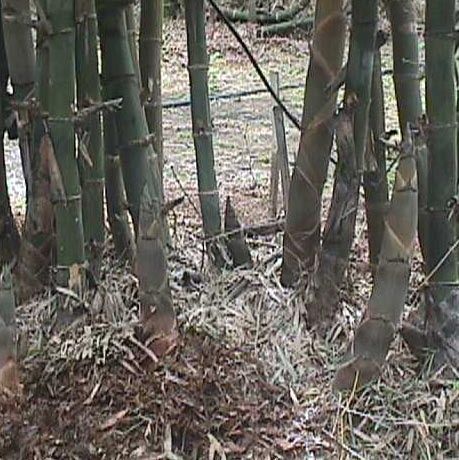
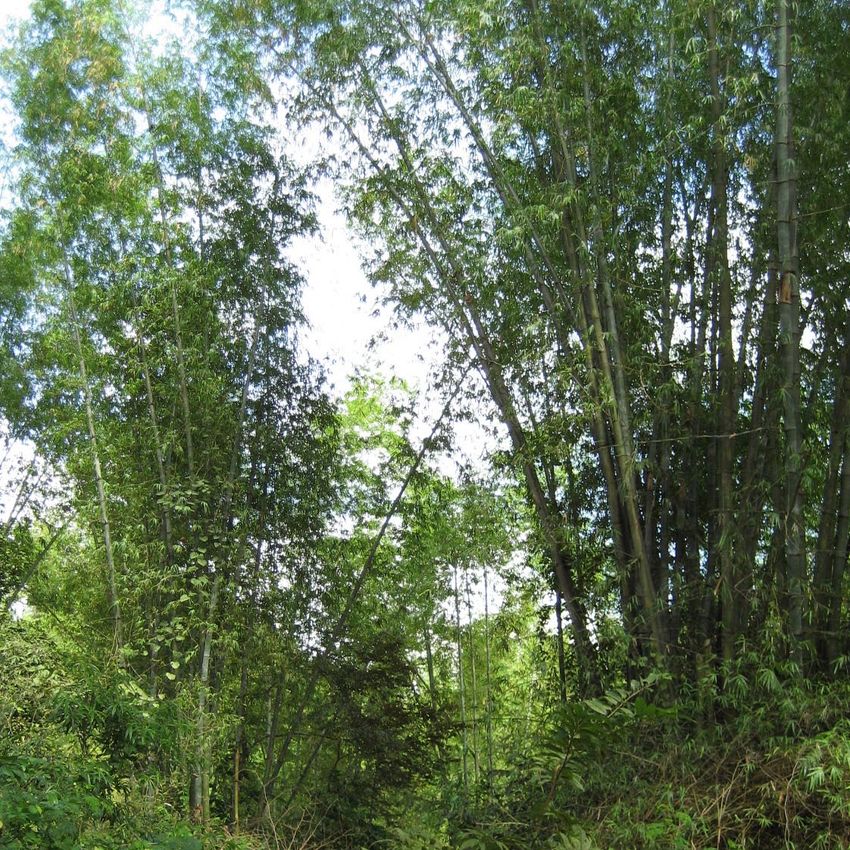
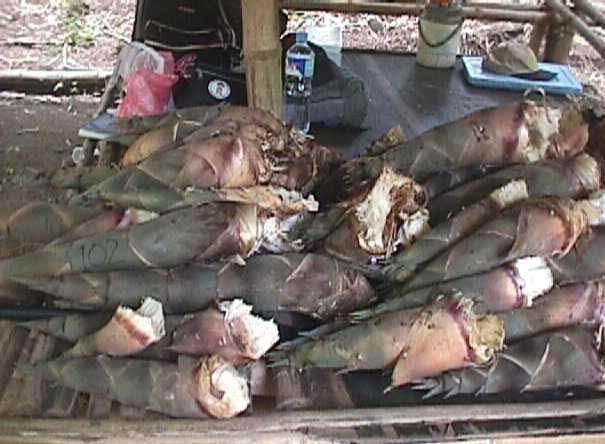
Introduction         T  he Kawayan tinik is an important bamboo resource for the Philippine
                        rural population. Aside from being a premium species for edible shoot
                     production, it also provides raw materials for construction, furniture,
                     handicraft, and other novelty items.

                     With its distinct characteristics and wide utility, kawayan tinik has become
                     an indispensable raw material for high-value furniture and handicrafts.

                     Experts estimate the demand for poles would increase to 3.5 million for
                     furniture making and 575,000 for handicrafts.

                      This makes bamboo shoot and pole production a good investment option
      Initial Capital                P92,254.00
                                                        for small and medium entrepreneurs.

      Net Present Value (based                             A 1-ha, 275-seedling bamboo
      on a 10-year cash flow                                plantation, is a profitable investment
      projection at 19% discount rate)   P58,275.65
                                                           requiring a relatively small initial
      Internal Rate of Return (based                       capital of P92,254. Income is realized
      on a 10-year cash flow projection) 26%                on the first year of harvest (year 5)
                                                           while the total initial capital is fully
      Payback Period                     5.2 years         recovered the following year (year 6).

                     The estimated internal rate of return (IRR) based on ten-year cash flow
                     projection stands at 26% while the net present value (NPV) at 19%
                     discount rate is P58,275.65.

                     The package of technology (POT) for kawayan tinik pole and shoot
                     production was developed and tested in strategic pilot plantation sites in
                     Luzon, Visayas, and Mindanao. The cost and yield estimates of the POT were
                     based on plantations developed in openland/grassland areas using culm
                     cutting propagules.
Projected income statement, bamboo plantation (shoot and pole production).
Year 1 2 3 4 5 6 7 8 9 10
Income from Sales of Bamboo Poles 0.00 0.00 0.00 0.00 47,250.00 63,000.00 78,750.00 78,750.00 78,750.00 78,750.00
Income from Sales of Bamboo Shoots 0.00 0.00 0.00 0.00 44,100.00 73,500.00 73,500.00 73,500.00 73,500.00 73,500.00
Gross Sales 0.00 0.00 0.00 0.00 91,350.00 136,500.00 152,250.00 152,250.00 152,250.00 152,250.00
Less: Production Cost
- Fertilizer 850.50 850.50 850.50 850.50 850.50 850.50 850.50 850.50 850.50 850.50
- Farm Labor 4,050.00 7,500.00 7,500.00 7,500.00 7,500.00 7,500.00 7,500.00 7,500.00 7,500.00 7,500.00
Total Production Cost 4,900.50 8,350.50 8,350.50 8,350.50 8,350.50 8,350.50 8,350.50 8,350.50 8,350.50 8,350.50
Gross Income from Sales -4,900.50 -8,350.50 -8,350.50 -8,350.50 82,999.50 128,149.50 143,899.50 143,899.50 143,899.50 143,899.50
Less: Overhead Expenses
- Repair of Equipment and Facilities (10% 129 129 129 129 129 129 129 129 129 129
of depreciating assets)
- Depreciation 129 129 129 129 129 129 129 129 129 129
- Land rent 10,000 10,000 10,000 10,000 10,000 10,000 10,000 10,000 10,000 10,000
Total Overhead Expenses 10,258.00 10,258.00 10,258.00 10,258.00 10,258.00 10,258.00 10,258.00 10,258.00 10,258.00 10,258.00
Net Profit (before interest) -15,158.50 -18,608.50 -18,608.50 -18,608.50 72,741.50 117,891.50 133,641.50 133,641.50 133,641.50 133,641.50
Less: Interest Expense 12,269.78 10,588.21 8,587.13 6,205.85 3,372.13
Net Profit (before tax) -15,158.50 -18,608.50 -18,608.50 -18,608.50 60,471.72 107,303.29 125,054.37 127,435.65 130,269.37 133,641.50Projected cash flow, 1-ha bamboo plantation (before financing).
Year 0 1 2 3 4 5 6 7 8 9 10
Before Financing
Inflows
Gross Income from Sales 0.00 0.00 0.00 0.00 91350.00 136500.00 152250.00 152250.00 152250.00 152250.00
Total Cash Inflows 0.00 0.00 0.00 0.00 91350.00 136500.00 152250.00 152250.00 152250.00 152250.00
Outflows
Cash Flow from Investment Activities 92254
Production Cost 4900.50 8350.50 8350.50 8350.50 8350.50 8350.50 8350.50 8350.50 8350.50 8350.50
Overhead Expenses (less: depreciation) 10129.00 10129.00 10129.00 10129.00 10129.00 10129.00 10129.00 10129.00 10129.00 10129.00
Total Outflows (before financing) 92254 15029.5 18479.5 18479.5 18479.5 18479.5 18479.5 18479.5 18479.5 18479.5 18479.5
Net Cash Flow (before financing) -92254 -15029.5 -18479.5 -18479.5 -18479.5 72870.5 118020.5 133770.5 133770.5 133770.5 133770.5
Projected cash flow, 1-ha bamboo plantation (after financing).
Year 0 1 2 3 4 5 6 7 8 9 10
After financing
Inflows
Gross Income from Sales 0.00 0.00 0.00 0.00 91350.00 136500.00 152250.00 152250.00 152250.00 152250.00
Loan 64,577.8
Total Cash Inflows 64577.8 0.00 0.00 0.00 0.00 91350.00 136500.00 152250.00 152250.00 152250.00 152250.00
Outflows
Cashflow from Investment Activities 92254
Production Cost 4900.50 8350.50 8350.50 8350.50 8350.50 8350.50 8350.50 8350.50 8350.50 8350.50
Overhead Expenses (less: depreciation) 10129.00 10129.00 10129.00 10129.00 10129.00 10129.00 10129.00 10129.00 10129.00 10129.00
Loan Amortization:
- Principal 8850.40 10531.97 12533.05 14914.33 17748.05
- Interest 12269.78 10588.21 8587.13 6205.85 3372.13
Total Outflows (before tax) 92254 15029.5 18479.5 18479.5 18479.5 39599.680 39599.680 39599.680 39599.680 39599.680 18479.5
Net Cash Flow (before tax) -27676.2 -15029.5 -18479.5 -18479.5 -18479.5 51750.319 96900.319 112650.319 112650.319 112650.319 133770.5
NPV (before financing) 58275.65
Payback (before financing) 5.2 years
IRR (before financing) 26%
Note: NPV, Payback, and IRR before financing are the preferred indicators of profitablity.Capital investments, 1-ha bamboo plantation.
Particulars Unit Price Quantity Cost
Seedlings 75 275 20,625
Farm Equipment
- weighing scale 430 1 430
- shovel 200 1 200
- rake 200 1 200
- grass shears 460 1 460
Total Capital Investment 21,915
Working capital* and other starup costs, 1-ha bamboo plantation.
Particulars Cost
Repair of Equipment and Facilities (10% of depreciating assets; Year 2-4) 387.00
Land Rental (first 4 years) 40,000.00
Unit Quantity Unit Price
Materials
- Fertilizer (first 4 years) kg 63 13.5 3,402.00
Labor
- Land preparation** mds 150 15 2,250.00
- Planting/replanting md 150 10 1,500.00
- Fertilizer application (first 4 years) md 150 2 1,200.00
- Maintenance (Year 2-4) md 150 48 21,600.00
Total Working Capital and Startup Cost 70,339.00
* To cover initial operating costs until there is a steady flow of income.
** Sketching, staking, field layout and clearing, hole digging.
*** Weeding, cleaning, thinning, mounding, watering.Initial investment.
Particulars Cost
Capital Investment 21,915
Working Capital and Startup Costs 70,339
Total Initial Investment 92,254
Depreciation table (Straight Line Method, zero salvage value).
Particulars Cost Life Span Year 1 Year 2 Year 3 Year 4 Year 5 Year 6 Year 7 Year 8 Year 9 Year 10
Weighing scale 430 10 43 43 43 43 43 43 43 43 43 43
Shovel 200 10 20 20 20 20 20 20 20 20 20 20
Rake 200 10 20 20 20 20 20 20 20 20 20 20
Grass shears 200 10 46 46 46 46 46 46 46 46 46 46
Total 129 129 129 129 129 129 129 129 129 129
Production and sales projection, 1-ha bamboo plantation.
Year 1 2 3 4 5 6 7 8 9 10
Bamboo Poles
Production 0 0 0 0 630 840 1,050 1,050 1,050 1,050
Price 75 75 75 75 75 75
Sales 47,250 63,00 78,750 78,750 78,750 78,750
Bamboo Shoots
Production 0 0 0 0 630 1,050 1,050 1,050 1,050 1,050
Price 70 70 70 70 70 70
Sales 44,100 73,500 73,500 73,500 73,500 73,500
Total Gross Sales 91,350 136,500 152,250 152,250 152,250 152,250Annual labor requirement.
Year 1 2 3 4 5 6 7 8 9 10
Land Preparation 2,250
Planting/replanting 1,500
Fertilizer application 300 300 300 300 300 300 300 300 300 300
Maintenance 7,200 7,200 7,200 7,200 7,200 7,200 7,200 7,200 7,200
Total 4,050 75,00 7,500 7500 7,500 7,500 7,500 7,500 7,500 7,500
Amortization schedule, 19% p.a. (includes service charge of 3% p.a.).
Year 5 6 7 8 9 Totals
Balance 64,577.8 55,727.402 45,195.43 32,662.3789 17,748.051 0
Rate 1 1.19 1.4161 1.685159 2.0053392 7.2965982
Principal 8,850.40 10,531.97 12,533.05 14,914.33 17,748.05 64,577.80
Interest 12,269.78 10,588.21 8,587.13 6,205.85 3,372.13 41,023.10
Amortization 21,120.18 21,120.18 21,120.1802 21,120.18 21,120.18Technical and financial assumptions.
Technical Assumptions
Yield per ha
- bamboo pole 1050 poles
- bamboo shoot 840 kg
Seedling per ha 275 seedlings
Bamboo clumps per ha 210 clumps
Fertilizer Requirement 0.3 kg/clump or 63 kg/ha
Labor Requirement
- Land preparation 15 man-days
- Planting/replanting 10 man-days
- Fertilizer application 2 mand-days
- Maintenance (weeding, cleaning, thinning, 48 man-days
mounding,watering)
- Harvesting 48 man-days
No. of years before first harvest 4 years
Financial Assumptions
Total Investment Cost 92,254
Equity (30%) 27,676
Loan (70%, payable in 5 years) 64,578
Grace Period 4 years
Source of Loan Quedancor
Rate of Interest on Capital 19%
- Interest Rate per Annum 16%
- Service Charge per Annum 3%
NPV Discounting Rate 19%
Depreciation Method Straight line, 0 salvage value
Selling Price of Bamboo Pole P75/pole (farmgate price)
Selling Price of Bamboo Shoot P70/kg (farmgate price)
Cost of Bamboo Seedling P75/seedling
Cost of Fertilizer P13.5/kg
Labor Rate P150/man-day
Land Rent P10,000/yearProfitability Analysis: Bamboo Shoot and Pole Production 13
Package of Technology
Bamboo Species Kawayan Tinik (Bambusa blumeana)
Pole Production
Clump/plantation age
for initial commercial
harvest • 5 years old
Pole maturity for harvest • 3 years old
Pole/culm height • 15–25 m
Pole/culm basal diameter • 6–10 cm
Average yield/clump • 3–5 poles or culms
Average yield/ha • 1050 poles
Shoot Production
Shoot basal diameter • 6–10 cm
Shoot height • 8–10 cm
Shoot fresh weight • 1 kilo/shoot
Average yield/clump • 3–5 shoots
Average yield/hectare • 630–1050 shoots
Soil Type Requirement • Attains optimum growth in well
drained soil, sandy loam, and clay
loam soil
• Most suitable pH of 5.0–6.0, while
nonsuitable for saline soils and water-
logged areas
Climate • Optimum temperature ranges from
8.80C to 360C
• Rainfall: 150-200 mm/month;
Optimum growth requires more than
200 mm/month14 Profitability Analysis: Bamboo Shoot and Pole Production
Vegatative Production
Selection and collection
of planting stock • Select healthy mother clump from
which 1–2 year-old culms shall
be taken as sources of cuttings for propagation
• Cut the 1–2 year old culm into either 2-node or 1-node
culm cutting
• Choose nodes with well-developed buds
• Cut 5–8 cm below the node and 10•13 cm above the node.
A sharp crosscut saw or knife may be used for this purpose
Potting and rooting • The culm cuttings can be planted directly in
18 cm x 18 cm x 28 cm polyethylene bags with ordinary
clay-loam soil and about 10% organic fertilizer (chicken
dung)
• An alternative is to set the cuttings in a misting bed. The
misting bed is a rooting bed enclosed with a single line of
hollow blocks and filled with river sand. Use fine river sand
as the rooting medium
• Keep the misting bed moist using a mist sprayer or
sprinkler
• Transfer the rooted cuttings to black plastic bags with
ordinary clay-loam soil and about 10% organic fertilizer
(chicken dung) within 20–25 days
Care and maintenance
of planting stocks
in the nursery • Water the potted cuttings daily (at least twice a day (in the
morning and in the afternoon)
• Place potted cuttings under partial shade
• Water the plants regularly
• After 2 months, transfer the plants into the open to
harden the newly developed shoots by exposing them
under the sun
• The plants should be ready for planting after 6 monthsProfitability Analysis: Bamboo Shoot and Pole Production 15
Plantation Establishment
Selection of
planting site • Select suitable plantation site in grassland/openlands
with well-drained soil. Flat land with well-drained soil is
preferable. Hillside with suitable slopes and exposure may
be considered
• Sketching, staking, and final layout
Preparation of
plantation site • Clear weeds
• Dig planting holes of 60 cm x 60 cm. The top soil is used as
bed soil to the propagules when planted
Planting operations • To ensure high survival, outplanting should be done at the
onset of the rainy season
• Employ a 7 m x 7 m spacing
Fertilization at planting
planting time • Each propagule is fertilized at 200-300 g of complete
fertilizer
Plantation maintenance • The sustainable development of planted propagules
requires the following activities : (1) replacement of dead
propagules; (2) weed control; (3) watering; (4) fertilization
and thinning; and (5) protection
• Mark every culm as soon as it emerges from the ground to
monitor the culm age
Harvesting of Shoots • The shoots during the first half of the shooting period
are healthy and expected to survive until fully grown into
culm. Twenty-five percent (25%) of the shoots during the
first half of the shooting period may be harvested. Seventy-
five percent (75%) of the shoots are allowed to grow into
poles. All the shoots that occur during the last half of the
shooting period may be harvested as their survival for
poles are very low16 Profitability Analysis: Bamboo Shoot and Pole Production
Harvesting of Poles • For clump yield sustainability, harvesting of poles requires
the application of Culm Selection System (CSS). During
harvest time (dry season or summer time) only culms
of 3-year old and above should be harvested. The CSS
application, therefore requires marking of emerging shoots
during shooting period to monitor/determine culm age for
harvesting
• Marking of emerging shoots is a component scheme in
clump management
Clump Management • Clump productivity should be regularly improved or
maintained to hasten sustained shoot/culm yields. This
could be attained through the application of regular
tending operations which includes cleaning, thinning,
mounding, mulching and fertilization
Possible loan sources QUEDANCOR Program for Agri-Fishery Small and Medium
Enterprises (QP-ASME)
• 16% interest rate with 3% service fee
• The borrower must have equity equivalent to 20% of the
project cost. The borrower’s equity can be in the form of
agri-fishery machinery and equipment, inputs or labor
• Collateral requirements:
1. At least 80% Real Estate Mortgage(REM) or 80%
combination of REM, non-interest bearing cash trust
fund, bank/time deposits, LandBank/government bonds/
securities and similar investments
2. Deed of Assignment of Receivables supported by a
Marketing Contract/Agreement, if applicable.Profitability Analysis: Bamboo Shoot and Pole Production 17
LANDBANK Easy Pondong Pang-Asenso (EPPA)
• Interest rate is based on the prevailing market rate
• Up to 80% of the total project cost; borrower has to put up
the remaining 20% as equity, either in cash or in kind
• Collateral requirements:
1. Real Estate/Chattel Mortgage (REM/CM)
2. Hold out on deposits
3. Assignment of receivables and/or inventories
4. JSS Principal Stockholders/Officers
5. Guarantee cover from Small Business Guarantee and
Finance Corporation (SB Corporation), if applicableCredits
Production: PCARRD Secretariat with the support of the forestry and environment research,
planning and development, and the applied communication divisions
Lead Expert and Science and Technology Consultant: Felizardo D. Virtucio
Content Analyst: Nimfa K. Torreta
Investment Analyst: Felizardo D. Virtucio with Don Joseph M. Medrana
Editor: Joel Eneristo A. Joven
Design: Paul Jersey G. Leron
Photo Credits: Stanley C. Malab (plantation, plants); Gene C. Bautista (seedlings)
Production Assistant: Carmelita B. Alamban
Special thanks to: Patricio S. Faylon, Leah J. Buendia, Romulo T. Aggangan,
and Lily Ann D. LandoISO 9001:2000
You can also read


