PROGRAM OF STUDIES 2021-2022 - Moorestown High School 350 Bridgeboro Road, Moorestown, NJ 08057 - CDN Site
←
→
Page content transcription
If your browser does not render page correctly, please read the page content below
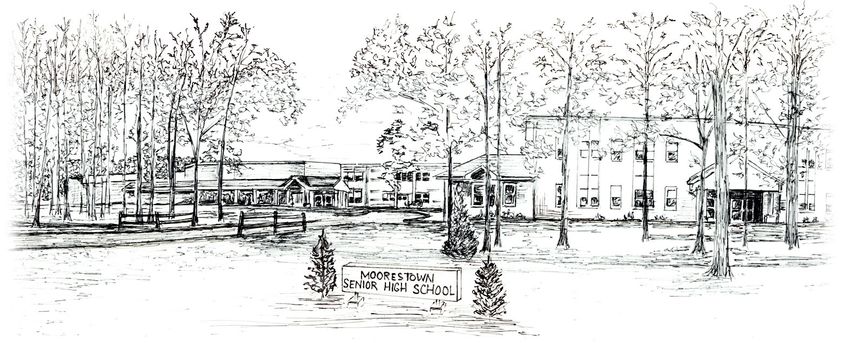
Moorestown High School
     350 Bridgeboro Road, Moorestown, NJ 08057

PROGRAM OF STUDIES
     2021-2022

“HIGH EXPECTATIONS - HIGH SUPPORT - HIGH ACHIEVEMENT”
2021-2022 Program of Studies
Moorestown High School
Telephone: (856) 778-6610
Facsimile: (856) 722-8983
Website: www.mtps.com
Administration
Mr. Andrew Seibel
Principal
Mr. Don Williams
Assistant Principal
Mr. Robert McGough
Assistant Principal
Dr. David Tate
Pupil Services Director
Ms. Kathleen D’Ambra
Guidance Services Administrator
Mr. Shawn Counard
Supervisor of Athletics
Supervisors
Mrs. Jacqueline Brownell Mrs. Julie Colby
Language Arts Literacy Mathematics
Mr. Gavin Quinn Ms. Roseth Rodriguez
Science Social Studies/World Languages
Mr. Shawn Counard Mrs. Patricia Rowe
Health/Physical Education Arts and Technology
Mrs. Cynthia Moskalow
Special Education
NOTE: It is our continuing goal to offer a comprehensive Program of Studies. Final decisions
regarding the actual offering of proposed or existing courses for the 2021-2022 school year will be
dependent upon budget approval and/or the number of requests for those courses. Courses with
fewer than ten (10) students assigned need Board approval to be scheduled. Therefore, not all
courses listed in this catalog are guaranteed to run during the 2021-2022 school year.
Introduction 2021-2022 12021-2022 Staff by Department
Athletics/Student Activities Mathematics Science
Shawn Counard, Supervisor Julie Colby, Supervisor Gavin Quinn, Supervisor
Justin Miloszewski, Trainer Brian Cary Kathie Alpert
Eileen Fitzpatrick Jinnie Anstice
Physical Education/Health Julie Fleming Jason Banyai
Shawn Counard, Supervisor Beth Glennon Dana Church-Williams
John Battersby Kristin Hanratty George Engle
Megan Collins Gina Higgins Donna Harvey
William Donoghue Timothy Hurley Allen Kolchinsky
Russell Horton Rachel Long Raymond Kucklinca
Deanna Knobloch Angela Murphy Lea Marano
Jaclyn McGarrigle Brian Orak Daniel Miller
William Mulvihill Christa Potts Tracee Panetti
Beau Sherry Christine Regn Pamela Shepard
Barbara Young Paul Sinatra Erin Todd
Jennifer Stansky Sean Watson
Child Study Team Richard Wilczewski
Dr. David Tate, Director
Anne LaMont, Psychologist Technology Education
Nicole Dolan, L.D.T.C. Patricia Rowe, Supervisor Special Education
Valerie Shopp, Social Worker Melissa Antler Cynthia Moskalow, Supervisor
Ashley Chiolan, Psychologist Susan Bennett Margie Bard
Jessica Noguera William Clark
ELL Stephen Peltier Bryan Clayton
Marisa Feeley Deborah Dickerson
Visual & Performing Arts Anne Furlong
English Patricia Rowe, Supervisor Jason Hicks
Jacqueline Brownell, Supervisor Melissa Antler William Kelly
John Barton Annette Burke Annmarie Kirwin
Alexandra Collins David Fauvell Joseph Kringler
Kathleen Dakosty Kelly Gartland Jaclyn McGarrigle
Courtney Darling Jill Ludwig Margaret Nissen
Elizabeth Everette Christopher Norris Adam Roth
Perri Geller-Clark Toni Paparone Brittany Scharadin
Marjorie Lipinsky Sergey Tkachenko Julianne Shawaryn
John Lloyd Christopher Welte George Snedden
Melissa Masi Kevin Stevens
Stacy McClintock Business & Career Education Michael Sullivan
Paige Morgan Patricia Rowe, Supervisor Donna Tortu
Christine Rivera Bryan Clayton Baron Wallenhurst
Elizabeth Rubin David Fauvell Kim Warren
Mikal Lundy
Media Jeffrey McDonald
Jacqueline Brownell, Supervisor Timothy O’Reilly
John Bishop
Anne Poole
Introduction 2021-2022 2Social Studies World Languages School Nurse
Roseth Rodriguez, Supervisor Roseth Rodriguez, Supervisor Eliz Uricoechea
Ethan Betten Cynthia Allen
Dr. Fred Bjornstad Jennifer Daily 504 Committee
Katelynn Brotz Laura Edwardsen Don Williams
Melanie Bruno Jessica Froelich
Kyle Burke Katrina Lucas I&RS Committee
Lorenzo Eagles Theresa Montagna Don Williams
Andrew Forshay Jeanine Motta
Greg Harr Guillermo Nold Guidance
Melanie Lomas Valerie Oswald-Love Kat D’Ambra, Supervisor
Patrick Mooney Melissa Panter Monica Bell
Rebecca Russo Lisa Trapani Catherine Booth
Lawrence Johnson
Melissa O’Donnell
Amilcan Rodriguez
Karen Sakoff
Equal Opportunity
The Moorestown Township School District is an equal opportunity institution and will not
discriminate on the basis of race, creed, color, national origin, ancestry, age, sex, handicap, or sexual
orientation, marital status, liability for service in the Armed Forces of the United States or atypical
heredity cellular or blood trait of any individual or inapplicable disability.
Access for the disabled is available in many of the district’s buildings. The Moorestown Township
Public Schools will also provide assistance in understanding this policy to the visually and/or
hearing impaired and to individuals whose native language is not English.
For information regarding special accommodations, grievance procedures, services and activities,
contact the Affirmative Action Office at the Moorestown Township Public Schools Administration
Building, 803 North Stanwick Road, Moorestown, New Jersey 08057 or call (856) 778-6600.
Counseling Department
Guidance Services Administrator: Ms. Kat D’Ambra, ext. 12170
Counselors:
Ms. Monica Bell, ext. 12190 Ms. Melissa O’Donnell, ext. 12194
Ms. Cate Booth, ext. 12192 Mr. Amilcan Rodriguez, ext. 12197
Mr. Lawrence Johnson, ext. 12191 Ms. Karen Sakoff, ext. 12196
Introduction 2021-2022 3The vision of the Moorestown High School Counseling Program is to oversee and advocate basic
human rights in the educational process for all students, through the delivery of services that meet
students’ academic, personal/social, and career development needs. Moorestown school counselors
are student advocates who are committed to individual uniqueness and the maximum development
of human potential. In their roles as members of the educational team, they consult and collaborate
with teachers, administrators, and families to ensure that all school programs facilitate the
educational process and offer the opportunity for school success for each student. As specialists in
human behavior and relationships, Moorestown school counselors provide assistance through four
primary interventions: counseling (individual and group), large group guidance, consultation and
coordination.
The counseling office of Moorestown High School provides counseling services as described in
multiple handouts distributed throughout the year. Programs provided by this department are
designed to help all students develop their educational, social, career and personal strengths and to
become responsible and productive citizens. Counselors help create and organize these programs, as
well as provide appropriate counselor interventions. As student advocates, the counselors are
committed to individual uniqueness and the maximum development of human potential.
School counseling services are an integral part of the school’s total educational program. School
counselors serve as a liaison between the home and school, the teacher and student, school and
college, school and employer, and student and peers. Getting to know the student well through
grade level meetings and understanding the student’s aptitudes, abilities and aspirations help the
counselor to carry out this important function. The counseling relationship is a dynamic helping
process in which the counselor establishes a trusting and confidential relationship which focuses on
problem-solving, decision-making and discovering personal meaning related to learning and
development.
From grades 9 through 12, Moorestown High School counselors meet with students individually and
in large and small group settings to advise and counsel on matters such as academic success, course
selection, interpersonal relationships with adults and peers, extracurricular involvement, transition
issues, and career and post-secondary planning. Helping students find success within a complex,
multi-faceted society is at the heart of all counseling activities and services. Student records such as
a permanent record card and cumulative folder are maintained in the Counseling Office. The official
transcript is used to transmit students’ academic records to colleges and/or perspective employers.
Information about a student is not released without permission of the student and parent.
Counseling Services include:
• Individual and group counseling
• Orientation for incoming 9th graders and new students
• Academic achievement counseling
• Course selection and program planning
• Standardized testing
• Informational events for students/parents such as college fairs, financial aid seminars,
curriculum nights, etc.
• College/career resource management
• Counseling website maintenance and updates
• College and career counseling
• College application and transcript service
Introduction 2021-2022 4• Working papers
• Personal and social counseling
• Peer mediation and conflict resolution
Assignment of Counselors
Each student is assigned a counselor for the duration of his or her high school experience. Counselor
assignments are alphabetical and adjusted annually for balance in August.
Introduction
This Program of Studies is designed to be the major reference for students, parents and school
personnel involved in curriculum planning at Moorestown High School (MHS). It is a complete
guide to all possible course offerings at MHS. Each department has had the opportunity to describe
the programs available. The material is presented in a format designed to highlight the essential
components of each course. This Program of Studies catalog should be an excellent reference guide
for a student’s long-range course planning.
A sound high school course of study should prepare students to move smoothly from high school to
post-secondary school endeavors. It should extend their knowledge, broaden their perspectives, and
prepare them to live in today’s society. This catalog is not a “How To” guide to achieve these goals,
but, coupled with help from parents, teachers and counselors, it can be a valuable tool in planning a
student’s course of studies.
Planning an individual student’s high school program of studies demands a cooperative effort
between home and school. It is vital to design a program plan that will be academically challenging
and career oriented. At the same time, realistic expectations must be maintained, and personally
enriching options must be provided in order to meet the needs of the student. In the end,
parents/guardians and students will be accountable for final course selection decisions. All student
placements are based on course prerequisites and teacher recommendations. Before committing to
these selections, it is imperative that students seek out the most informed resources available to assist
them. Consultation and close communication among teachers, administrators, counselors and
parents are strongly recommended. Input describing personal, social and motivational factors must
be tempered with both a candid, objective aptitude and an analysis of achievement data. Program
planners must include opportunities for each student at Moorestown High School to maximize
scholastic potential.
The creation of a Master Schedule for a high school is critical to the function and progress of the
school and its students. There are three critical elements to producing a sound Master Schedule:
program, process and priorities. In a school district with strong programs and clear priorities,
process is the focus. Within the process there must be validated data, continual feedback loop, and
clear timelines; all of which provide opportunities for correction and modification. In a perfect
world, a Master Schedule that meets every student’s needs and desires could be built. In reality, a
school utilizes all of its resources and expertise to build a Master Schedule containing the least
amount of conflict possible. Careful long-term planning for achieving requirements for graduation
and flexibility in elective choices are two critical components of a sound, realistic approach to
student program planning in high school.
Introduction 2021-2022 5Program Planning
The course of study that an individual pursues in high school should reflect his/her aspirations,
aptitudes and achievements. Since post-secondary school requirements for employment, college and
post-secondary training are constantly changing, students must frequently re-evaluate their
immediate and long term goals.
The courses at Moorestown High school provide students with opportunities to meet their
educational needs. Beyond the state and local requirements for employment, students are
encouraged to select courses that best fit their potential. Since career development often takes shape
slowly, each year’s course scheduling requires a review of completed courses, courses in progress,
and courses to select. In selecting a course, the questions listed below should be considered when
the courses are selected. Does the course…
• Meet high school graduation requirements?
• Provide an outlet for interests in subject areas?
• Reflect an aptitude or significant proficiency level?
• Provide a background for post-high school plans leading to career choices?
• Meet college entrance requirements?
• Meet NCAA initial eligibility?
• Build upon high school courses completed in the middle school?
Teacher Recommendations
Parent-student communication about program planning is invaluable. It is expected that students
will have prepared course selection choices when they receive their appointment date with their
counselor. Serious consideration should be made regarding teacher recommendations which are
made in the five core areas at the end of first semester. Issues regarding teacher recommendations
or questions about specific subject area programs should be directed to the teacher and/or subject
area supervisor. Additionally, counselors are a valuable resource for program planning. Counselors
and department supervisors meet annually to review student placement requirements, explain
significant program changes, and identify trends in their departments.
Please Note: Teacher recommendations are then reviewed and validated by teachers at the end of
Marking Period 3 and at the end of the school year.
Course Selection and Scheduling
After course recommendations are completed, counselors schedule meetings to discuss each
student’s program plan and to confirm course selection. Course selections in the five core areas and
some elective courses are based on teacher recommendations. These recommendations, in the form
of student requests, will be available prior to the course selection meetings via the Genesis Parent
Portal. During the course selection meeting, students discuss their choices with their counselor. A
form will be provided to be signed by the parent/guardian and returned to the counselor.
*Please Note - Students on home instruction may only be scheduled for courses that can meet as if
the student was attending classes in school full time.
Presentation of Courses by Departments
Students will have the opportunity to review course options with their current teachers and
department supervisors. Please be aware that the teachers of Honors level and Advanced Placement
Introduction 2021-2022 6courses host meetings for interested students on designated dates. These dates are well advertised in
multiple venues in order for students to attend.
Rising Freshman Class
There are three major components to orienting students and parents to the program planning and
scheduling process at MHS.
1. Guidance Counselors visit William Allen Middle School to meet with students in small
groups. During these sessions, they provide an overview of high school program planning,
department programs available at the high school and answer student questions.
2. An evening meeting for the parents of incoming freshmen is to be held in the spring in
conjunction with the release of the digital Program of Studies catalog. This meeting provides
an opportunity for guidance to provide an overview of suggestions for program planning and
graduation requirements. The subject area supervisors review the course offerings within
their disciplines.
3. High school counselors will meet with each 8th grade student individually to confirm his/her
course selections for 2021-2022.
It is expected that students are prepared for meeting with their counselors. Questions about
placement in the five core content areas should be addressed to the teacher by the student or
parent/guardian. Provided that the recommendations in the five core areas are accepted, a
preliminary list of elective choices should also be prepared for when the counselor meeting is
scheduled. Please note that elective choices are not guaranteed; flexibility in electives maximizes
opportunities to meet the graduation requirements.
When the counselors have completed course selection meetings with MHS students,
parents/guardians are encouraged to check the Genesis Parent Portal for accuracy of the final course
selections. Modification of course selections are possible until April 30, 2021. If there are any
lingering questions or concerns, they need to be addressed at this time. Issues specific to teacher
recommendations, subject area course sequences, etc., should be directed to the current classroom
teacher or subject area supervisor. Issues specific to graduation requirements, college preparation, or
overall academic status should be directed to the guidance counselor. Otherwise, the
parent/guardian accepts the selections as the committed course of study. Students pursuing waivers
into courses contrary to the teacher recommendations must follow the “Waiver Process” explained
on page 10. All waiver applications must be submitted by April 30, 2021 to qualify for
consideration. Requests for modification to course selection made after April 30, 2021, will not be
processed. Upon completion and verification of the Master Schedule, students who have irresolvable
conflicts will be notified by their counselor and given the opportunity to revise and repair the
schedule.
Scheduling Considerations
Make sound initial choices. Enrollment numbers may negate the potential for change once the
Master Schedule is finalized. The Master Schedule is based on the initial choices students make for
courses, thus, the potential for change once the Master Schedule is finalized is limited.
Minimum Scheduling Requirements
Every student is scheduled for a minimum of 32.5 credits per year. All exceptions must be approved
by the building principal or designee.
Introduction 2021-2022 7Choose courses, not teachers.
Students should not make the mistake of choosing or refusing a course based on their perception of a
particular teacher. Discuss specific subject areas with current teachers or the department supervisor.
Counselors and parents are extremely valuable in evaluating the broad picture, but the subject
teachers and supervisors can share insights into the nature of specific courses. Each choice should
be based on the merits of the course content and on its value to the student’s specific needs.
Requests for teacher changes will not be honored unless the request adheres to Board of Education
policy. The Board of Education policy (File Code: 5120) dictates that requests for teachers cannot
occur unless there are compelling reasons for the placement. A letter must be submitted to the
Building Principal outlining reasons for the request. Such reasons may include:
• there are siblings scheduled for the same course with the same teacher
during the same period of instruction;
• retention of a pupil results with subsequent assignment to the same teacher
where another teacher is available;
• documented family or pupil prior experience with a teacher that would
interfere with instruction.
Recommendations Guidelines
Student recommendations for placement by faculty are made using the following guidelines:
• Proceed in Course Sequence – In order to proceed in a course sequence, the student must
pass the prerequisite course. In addition, students who pass a course in high school that is
part of a linear sequence are not eligible to repeat the same course.*The exception to this rule is
for middle school students enrolled in Algebra I, Spanish, Latin or French at the middle school who
receive a final grade of “C” or lower.
• Maintain Level of Difficulty – In order to remain in the same level of difficulty, the student
must maintain a grade of “B” or higher.
• Increase Level of Difficulty – In order to increase the level of difficulty, the student must
achieve a grade of A or higher and have the teacher’s recommendation.
Course Classification
All courses are assigned a level of difficulty in one of three categories:
• Standard – Courses are designed to develop the essential skills necessary for students to meet
or exceed the requirements of the New Jersey Student Learning Standards as well as
addressing grade-level MHS curricular skills.
• College Prep – Courses are developed to provide students with the foundation for post-
secondary demands by emphasizing depth, breadth and enrichment.
• Honors/Advanced Placement – Courses are developed to further enhance students’ ability to
work independently and demonstrate high levels of critical, analytical and original thinking.
Post-Secondary Plans
It is not unusual to find that colleges and universities look for four years of study in the core subject
areas. Another component of the yearly course selection process is to examine the student’s four-
year program plan with consideration of post-secondary aspirations. Counselors are a primary
resource to students and parents in this planning. Additionally, every MHS student has access to
Naviance Student, which is a web-based college and career planning tool. Login and password
information are available from the guidance office.
Introduction 2021-2022 8NCAA Eligibility
The National Collegiate Athletic Association sets specific course, credit, GPA, and SAT/ACT
requirements for student athletes planning to compete at the Division I or Division II levels at the
college or university level. The information below should not to be considered a comprehensive
explanation of NCAA requirements. Students are responsible for knowing and following all
NCAA rules and regulations.
NCAA Division I: College-bound student-athletes first entering an NCAA Division I college or
university will need to complete 16 Core Courses in order to receive athletics aid (scholarship),
practice or compete during their first year. Ten of the 16 core courses must be complete before the
seventh semester (senior year) of high school. Seven of the 10 core courses must be in English,
Math, or Science.
• 4 years of English
• 3 years of Mathematics (Algebra 1 and higher)
• 2 years of Natural/Physical Science (1 yr of lab science if offered by the school)
• 1 year of additional English, Math, or Science
• 2 years of Social Studies
• 4 years of additional courses from any of the areas above and/or from World Languages or
non-doctrinal religion or philosophy
• Earn at least a 2.300 GPA in core courses.
• Earn an SAT combined score or ACT sum score matching his or her core-course GPA on the
Division I qualifier sliding-scale index.
NCAA Division II requires students to earn 16 core courses as noted below:
• 3 years of English
• 2 years of Mathematics (Algebra 1 and higher)
• 2 years of Natural/Physical Science (1 yr of lab science if offered by the school)
• 3 years of additional English, Math, or Science
• 2 years of Social Studies
• 4 years of additional courses from any of the areas above and/or from World Languages or
no doctrinal religion or philosophy
• Earn at least a 2.200 GPA in core courses.
• Earn the ACT/SAT score matching your core-course GPA on the Division II qualifier
sliding-scale index.
Please note: The requirements are changing for students who enroll full time for the first time at a
Division II school after Aug. 1, 2018. Division I and Division II have a sliding scale for test scores
and grade point averages (GPA). For more information on sliding scale, visit the NCAA website at
www.ncaa.org/eligibilitycenter
Reporting Test Scores
All SAT and ACT scores must be reported directly to the NCAA Eligibility Center by the testing
agency. Test scores on high school transcripts will not be used. When registering for the SAT or
ACT, use the NCAA Eligibility Center code number of 9999 to ensure that the scores are reported
directly to NCAA Eligibility Center.
Introduction 2021-2022 9Core Courses
Only NCAA-approved core courses are used in calculating the GPA for NCAA. Be sure to look at
the list of approved core courses for Moorestown High School on the NCAA website at
www.ncaa.org/eligibilitycenter . If you find that a course you have taken is not on the approved list,
contact your counselor or the Guidance Services Administrator in the MHS Counseling Office.
NCAA GPA Calculation
NCAA uses un-weighted grades in calculating student eligibility. No extra weight is given to honors
or Advanced Placement (AP) courses. To get a head start on calculating your core course GPA, visit
https://www.clearinghousecalculator.org/login.php. Again, if you find that a course you have taken
is not on the approved list, visit the Counseling Office. Student athletes may register with the
NCAA Eligibility Center at any time during the junior year or over the summer between the junior
and senior years. At the end of the junior year, the student should request that a copy of the high
school transcript be sent to the Eligibility Center by the high school counseling office. A final
transcript will be required at the end of the senior year, as well.
Waiver Policy and Procedure
The waiver process is intended for students interested in selecting course levels for which they are
not recommended. This process will occur during phase two of the course selection process: late
March for rising 9th graders and the beginning of April for rising 10th, 11th and 12th graders. The
waiver process will include information sessions designed by course, followed by the signature of
waiver forms by the student and parent. The subject area supervisor will review all waiver requests.
The following points should be taken into consideration:
• Students are scheduled for their English, Science, Social Studies, Mathematics and World
Language courses based on the level recommendation made by their most recent subject area
teacher. Electives requiring prerequisites or audition are treated as recommendations.
• Students pursuing waivers into courses contrary to teachers’ recommendations must obtain a
Waiver Form from the Counseling Office or the Counseling webpage. Waiver forms returned
to the Counseling Office. Students who choose to waive into a course must attend the
appropriate session(s). The information sessions will be held during 12th period and are
generally the last week of April.
• Students may not waive more than one level of rigor beyond the teacher recommendation.
• Students may not be waived from successfully completing pre-requisite courses or enrolling
in concurrent courses.
The following conditions apply to approve waivers:
• Waiver forms may not be submitted before the release of the 3rd marking period report card
nor will they be accepted after May 4th.
• A waiver will not be honored if the enrollment cap has been reached in the targeted course or
level.
• Retraction of the waiver request in favor of the original recommendation shall be granted
prior to June 30th. Consideration may be given to retraction of the waiver request prior to the
first day of classes, provided that the schedule can be reasonably adjusted within the
constraints of the Master Schedule.
All Waiver Forms are due to the Guidance Office by April 30, 2021. Waiver requests made after the
deadline will not be processed.
Introduction 2021-2022 10The purpose for not permitting students to submit waivers before the release of the 3rd marking
period report card is that teacher recommendations from the end of the 2nd marking period are
validated when the 3rd marking period grades are posted. Based on the feedback from their 2nd
marking period recommendations, students who have worked purposefully during the 3rd marking
period may not need to utilize the waiver process to achieve entry into the targeted course or level.
Once the school year has begun, students who waive into and who elect to withdraw from that
semester or full-year course without replacement must complete a “Schedule Change Request” with
their guidance counselor. All requests will be administratively reviewed for approval.
Waiver students who wish to apply for a course level change once the school year has begun must
demonstrate having utilized all possible resources for success: use of 12th period, Honor and Service
Society tutoring, communication between the student, parent, teacher and counselor. Additionally, it
is always recommended that the student sustain placement in the course through Marking Period 1.
Approved changes may only be made as class size permits as well as consideration of effect on the
student’s overall schedule. Final decisions are made at the discretion of the principal or his designee.
Course Withdrawal/Addition
Students will be given additional opportunities to commit to their choices. Beyond the initial phase
of course selection, students will be permitted to change requests during the month of April, prior to
the building of the Master Schedule.
For students who elect to withdraw from or add a course already in session, the following conditions
apply:
• Students may apply to drop in course level based on academic performance and/or demand.
This case applies to students who believe they are in the wrong level class or whose schedule
is deemed to be too demanding based on academic history and rigor. Each case will be
evaluated on an individual basis. Input from the student, parent, teacher, counselor and
subject supervisor are required. Approved changes may only be made as class size permits as
well as consideration of effect on the student’s overall schedule. Final decisions are made at
the discretion of the principal or his designee.
• Students may elect to drop a study hall to add an elective or vice versa.
• Students will not be permitted to drop one elective to add another.
• Students will not be permitted to drop a course based on the teacher assigned to teach the
course. Exceptions will be made only in accordance with Moorestown Board of Education
Policy (File Code: 5120).
• A student is expected to maintain at least 32.5 credits; exceptions must be approved by the
building principal or his designee.
• Schedule changes that are made for the benefit of a student, identified as a course placement
issue or course deemed to be too demanding based on academic history and/or rigor will
have no effect on the transcript. Approved changes may only be made as class size permits
as well as consideration of effect on the student’s overall schedule.
• Posted Marking Period grades transfer from one course level to another “as is.”
• Students who elect to withdraw from a course without replacement of an alternate level
course, more than ten school days after the first marking period, will receive a grade of
Withdraw Passing (WP) or Withdraw Failing (WF) as a final grade for the course.
Introduction 2021-2022 11Teacher Requests
Requests for teacher changes will not be honored unless the request adheres to Board of Education
policy. The Board of Education policy (File Code: 5120) dictates that requests for teachers cannot
occur unless there are compelling reasons for the placement. A letter must be submitted to the
Building Principal outlining reasons for the request. Such reasons may include:
• there are siblings scheduled for the same course with the same teacher
during the same period of instruction;
• retention of a pupil results with subsequent assignment to the same teacher
where another teacher is available;
• documented family or pupil prior experience with a teacher that would
interfere with instruction.
Administrative Withdrawal
The purpose of this measure is to ensure that the student applies himself/herself throughout the entire
year. In the best professional judgment of the teacher, any student who is not fulfilling the
requirements of the course and/or inhibiting the learning of others may be considered for an
administrative withdrawal. This student would lose course credit, receive a withdrawal failing (WF)
recorded on the report card, and face the possibility of losing opportunities for credit recovery, at the
discretion of the administration. It is expected that the teacher with documentation will have had
significant parent, counselor, supervisory, and administrative contact before the teacher appeals, in
writing, to the administration for withdrawal of the student.
Minimum Graduation Requirements
Statewide Assessment Requirements
The New Jersey Department of Education and the State of New Jersey are still actively establishing
the assessment criteria for the graduating classes of 2021 and beyond. Therefore, the information
provided here is based on what we have to date. We will continue to update the website and share
information as we are notified of the adoption of the assessment requirements for graduation.
Classes of 2021-2022
Students through the Class of 2022 may use the options below to meet the graduation assessment
requirements. We will update the information as it becomes available to us regarding future
graduating classes and their requirements. Students will work with their counselors to document
meeting the state-mandated graduation requirements for testing. *These are still under review by the
NJDOE for the Classes of 2023 and beyond.
English Language Arts Mathematics
PARCC/NJSLA ELA Grade 9 >=750 or PARCC/NJSLA Algebra I >=750 or
PARCC/NJSLA ELA Grade 10 >=750 or PARCC/NJSLA Geometry >=725 or
*PARCC/NJSLA ELA Grade 11 >=725 or PARCC/NJSLA Algebra II>=725 or
*SAT EBRW >= 450 or SAT Reading Test >=22 or SAT Math >= 440 or SAT Math Test >=22 or
ACT >= 16 or ACT >= 16 or
Accuplacer Write Placer >= 6 or Accuplacer Elementary Algebra >= 76 or
2014 or earlier PSAT >= 40 or 2014 or earlier PSAT >= 40 or
2015 or later PSAT>=22 or 2015 or later PSAT>=22 or
ACT Aspire >= 422 or ACT Aspire >= 422 or
Introduction 2021-2022 12ASVAB-AFQT >= 31 or ASVAB-AFQT >= 31 or
Meet the Criteria of the NJDOE Portfolio Appeal Meet the Criteria of the NJDOE Portfolio Appeal
*Students enrolled in AP Language and Composition are exempt from taking the PARCC/NJSLA ELA 11.
Statewide Course and Credit Requirements
As required by New Jersey School Law and Moorestown Township Board of Education Policy,
candidates for a high school diploma must earn a minimum of 120 credits. Please note that
additional credits may be necessary to meet the requirements of a specific pattern or goal.
Candidates for a high school diploma must complete the following core requirements:
• Fulfill the requirements as described utilizing one or both of the following options in keeping
with those prescribed by projected year of graduation:
1) Earn a minimum of 120 credits by successful completion of the prescribed courses
listed on the following chart. This requirement may be met in whole or in part through
a traditional program where a “credit” means the award for student participation in the
equivalent of a class period of instruction which meets for a minimum of forty minutes,
one time a week, during the school year (N.J.A.C. 6A:8-1.3). Therefore, in the
traditional MHS 40 minute period, a class that meets routinely for one class period for
an average of 5 days per week, for the full year, shall yield 5 credits. Courses meeting
for a portion of a year or a portion of a week shall be prorated accordingly.
Subject High School Years Credits
English 4 20
History (1 yr. World, 2 yrs. US History) 3 15
Mathematics (Algebra I; Geometry; one additional math 3 15
course beyond Algebra I and Geometry)
Science (Biology; Chemistry, Physics or Environmental; one 3 18
additional lab science)
World Languages 2 10
Health/Physical Education 4 16
Visual and/or Performing Arts 1 5
21st Century Life and Careers/CTE 1 5
Career Planning* Ends for Class of 2023 and beyond ½ year 2.5
Computer Literacy*τ Εnds for Class of 2023 and beyond ½ year 2.5
Fin., Econ. and Entrepreneurial Literacy* ½ year 2.5
Electives (Class of 2023 and beyond will have an additional 8.5
5 credits in this category)
Total 120
* Multiple courses may meet the Career Planning, Computer Literacy and Financial
Literacy requirements. Please refer to the “Arts and Technology” section of the Program of
Studies for the complete list. Beginning with Class of 2023, these categories will no longer be
a local requirement for graduation.
Introduction 2021-2022 13τ In addition to courses from the “Arts and Technology” department, Honors Programming,
AP Computer Science and AP Computer Science Principles may meet the Computer Literacy
requirement.
♦ Comprehensive Health, Physical Education and Safety: Students with a medically authorized
excuse may be excused from the physical activity part of the regular program and will be
assigned an alternative activity. This core curriculum content area is required for every year of
student attendance in grades 9-12. A minimum of 3 3/4 (150 minutes per week) or a maximum
of 4 credits will be awarded for each year of successful participation.
♦ All students will be encouraged to fulfill the two-year world language requirement. A student
is able to meet the world language requirement through “student demonstration of proficiency”
as determined by the Oral Proficiency Interview (OPI) in a world language recognized by the
State Department of Education. Students who qualify may appeal to the Principal’s Credit
Committee for exemption of the two-year MTPS requirement. All students will be held to the
NJDOE one-year world language requirement. Individual students with disabilities who have
irresolvable scheduling conflicts would need to fulfill the one-year world language
requirement. LEP students, who demonstrate proficiency in their native language or another
language, would be exempt. LEP students who take an additional English or English as a
Second Language (ESL) class may use that second English class to fulfill the requirement.
♦ Costs: All costs incurred by a student’s enrollment in such a program, including the costs of
proficiency testing, are absorbed by the student’s parent/legal guardian.
The course requirements shall include statutory mandates. Currently, these would include United States
and New Jersey history in N.J.S.A. 18A:35-1 and 2; civics in N.J.S.A. 18A:35-3; agricultural science in
N.J.S.A. 18A:35-4.13; health, safety, and physical education in N.J.S.A. 18A:35-5, 6, 7, and 8; the
Holocaust and genocides in N.J.S.A. 18A:35-28; and credit for seniors in active military service in
N.J.S.A. 18A:36-17.
The Board of Education, through the IEP process and pursuant to N.J.A.C. 6A:14-4.12, may, for
individual students with disabilities as defined in N.J.A.C. 6A:14-1.3, specify alternate requirements for a
State-endorsed diploma. Students with disabilities as defined in N.J.A.C. 6A:14-1.3 or eligible under
Section 504 may demonstrate that they have attained State minimum levels of proficiency through the
SRA process if specified in the student’s Individualized Education Program (IEP) or Section 504
accommodation plan.
OR
2) The 120-credit requirement set forth above may be met in whole or in part through program
completion of a range of experiences that enable students to pursue a variety of personalized
learning opportunities (referred to as Personalized Learning Opportunities in the MHS Program
of Studies and related documents). All students who plan on pursuing course work for credit
outside of the parameters of the normal MHS curriculum must submit an application to be
reviewed and approved by the Principal’s Credit Committee. Application forms may be
obtained in the Guidance Office. Thorough review of the application’s requirements by the
applicant and the parent/guardian should occur before consulting with a guidance counselor.
Applications must be submitted to the Principal’s Credit Committee. The Principal’s Credit
Committee will examine “Request for Personalized Learning Opportunity” based on the
student’s rationale and the criteria outlined in this document.
Introduction 2021-2022 14Students are not permitted to begin participation in the proposed Personalized Learning
Opportunity until approved by the Principal’s Credit Committee. The committee, designated by the
Principal, will be composed of the following: Principal or designee; a guidance counselor; a
curriculum supervisor; and two classroom teachers, one of whom is content specific with the
other being selected by the applicant.
Personalized Learning Opportunities
Models for developing Personalized Learning Opportunities or programs linked to the 2009 New
Jersey Student Learning Standards (NJSLS) include accredited college courses, interdisciplinary or
theme-based programs, co-curricular or extra-curricular activities, magnet programs, student
exchange programs, distance learning opportunities, internships, community service, or other
structured learning experiences. Activities and programs developed in accordance with Personalized
Learning Opportunities shall include appropriate assessments and ensure that student’s
performance/proficiency meets or exceeds the NJSLS. The Principal shall certify completion of
curricular activities or programs based upon specified instructional objectives aimed at meeting or
exceeding the New Jersey Student Learning Standards.
Note: Minimum graduation requirements, as prescribed in N.J.A.C. 6A:8-5.1, do not equate to
college admission requirements. MTPS actively encourages all students who have otherwise met
the requirements for high school graduation to include in their programs of study a fourth year of
the following additional credits: math, science, social studies and world languages aimed at
preparation for entrance into post-secondary programs or 21st century careers.
A. Structured Learning Experiences
Deadline for Applications: Semester 1 – May 15th; Semester 2 – December 15th
The Structured Learning Experience (SLE) is an initiative that is coordinated and monitored by
New Jersey Department of Education (NJDOE). The philosophy of the Structured Learning
Experience Program is to provide educational experiences that are meaningful and relevant, and
allow students the opportunity to explore career options. In addition to serving as an alternative
to traditional high school classes, Structured Learning Experiences allow students to focus on
their interests and abilities. SLE provides eligible students the opportunity to utilize their last
year of high school to gain purposeful experiences that will help them establish a possible future
path.
The 12th grade student may apply for the Structured Learning Experience option for each
semester they are enrolled, which may include:
1. Career Internships in a career-focused, work-related residency
2. Mentor/Scholar Program
3. A supervised advanced learning experience, related to the NJSLS
4. Volunteer positions for profit and non-profit organizations
5. Service Learning Project
The SLE falls under the auspices of the guidelines set forth by the NJDOE, which require
supervision of the student at the approved site by a staff member who holds a valid SLE
Supervision certification. Students are required to design the SLE to include NJSLS
proficiencies, activities performed in execution of the SLE that tie to the NJSLS, assessments
Introduction 2021-2022 15and timelines. The final proposal must also contain all forms and signatures required by the
student, parent/guardian and employer/provider. Students may be asked to present their proposal
to the Principal’s Credit Committee and to report back at the end of the experience.
Application forms/packets may be obtained in the Counseling Office. Thorough review of the
application’s requirements by the applicant and the parent/guardian should occur before
consulting with a guidance counselor for referral to a certified SLE staff member or a building
administrator for review. This review of the application is to offer the student guidance in
designing the SLE and assure that all necessary forms are signed before submission to the
Principal’s Credit Committee. It is strongly advised that student interested in participating in an
SLE begin well in advance of the application due date. Students who have successfully
completed an SLE will be awarded the pre-approved credit with a passing grade noted as “P” for
the final grade on the report card and transcript.
♦ Costs: All costs incurred by a student’s enrollment in such a program, including the costs of
required supplies/equipment and required insurance coverage, are absorbed by the student’s
parent/legal guardian. Transportation arrangements and expenses are also the responsibility of
the student and parent/legal guardian.
B. Advancing a Course Level
Deadline for Application: June 1st
A student may attempt to accelerate by one (1) level/course of a program sequence to enroll in
the next course (i.e. World Language, Mathematics). Students may not test out of a course
required for graduation.
1. A written request identifying the targeted course for acceleration and the desired course for
enrollment must be submitted for approval by the department supervisor and the principal or
his/her designee.
2. While there are many options for students to receive the content of the course being skipped,
all students will be required to take MHS Examinations for the Semester 1 content and
Semester 2 content to demonstrate readiness for the target course.
3. The student must earn a score of 90% or better on both of these Examinations in the target
course. The test will be administered and graded by the department supervisor or designee.
4. Since a passing NJSLA score is required for Algebra I to meet the NJDOE Graduation
Requirement for Assessment, students are not permitted to accelerate past Algebra I.
5. Students advancing in the areas of Geometry or Algebra II will be required to take the
associated NJSLA preparation course and assessment during the summer.
6. In elective areas, portfolio review demonstrating practice and proficiency may be designated
by the department supervisor or designee and must be completed by the date of the exams.
7. Neither grade nor credit will be awarded on the transcript for the target course.
♦ Costs: All costs incurred by a student’s enrollment in such a program, including the costs of
required supplies/equipment and required insurance coverage, are absorbed by the student’s
parent/legal guardian. Transportation arrangements and expenses are also the responsibility of
the student and parent/legal guardian.
C. Outside High School Course Work for Additional High School Credit
Deadlines for Application: Semester 1 – August 15th; Semester 2 – January 15th
Several stipulations exist for current students wishing to complete high school course work in an
academic setting other than MHS, to receive high school credits, and have coursework listed on
the high school transcript:
Introduction 2021-2022 161. The proposed course application, NJSLS proficiencies and assessments must be reviewed
and approved prior to the first instructional meeting of the course. The course must be from
an accredited institution and/or be monitored by a certified staff member. The institutional
accreditation must be from a United States Department of Education recognized national,
regional, specialized, and/or professional accrediting organization. The course work must be
approved by the principal in conjunction with the Principal’s Credit Committee, or be
certified by the principal under 6A:8-5.1(a) 1.ii.
2. Distance Learning courses may be taken only if pre-approved as outlined in the stipulations
above. The course must be from an accredited institution. The accreditation must be from a
United States Department of Education recognized national, regional, specialized, and/or
professional accrediting organization such as The Accrediting Commission of the Distance
Education and Training Council; or be approved by the principal in conjunction with the
Principal’s Credit Committee; or be certified by the principal under 6A:8-5.1(a)1.ii.
3. MHS must receive an official transcript clearly showing successful completion of the course
work. No grade will appear on the MHS transcript until an official transcript from the
approved institution is received. If no documentation is received, a “W” will be posted on
the MHS transcript as of the date grades are submitted for the next marking period.
4. High school credits may be awarded by certification by the principal under 6A:8-5.1(a) 1.ii
and attached to the transcript. Course credit equivalence to the MHS Program will be
determined by the Principal’s Credit Committee.
5. PARCC-related courses (ELA9, ELA10, ELA11, Algebra I, Geometry and Algebra II)
require that students participate in the End-of-Course assessment, therefore, must be pre-
approved by the district testing coordinator and the building principal.
♦ Costs: All costs incurred by a student’s enrollment in such a program, including the costs of
required supplies/equipment and required insurance coverage, are absorbed by the student’s
parent/legal guardian. Transportation arrangements and expenses are also the responsibility of
the student and parent/legal guardian.
D. College Course Work for High School Credit
Deadline for Applications: Semester 1 – August 15th; Semester 2 – January 15th
High school students may choose to pursue opportunities to enroll in college level work.
Completed course work in an accredited college/university for high school credits must meet the
following stipulations:
1. Course application, NJSLS proficiencies and assessments must be reviewed and approved by
the principal, in conjunction with the Principal’s Credit Committee, prior to the first
instructional meeting of the course.
2. The college course taken must be the same college course offered to regularly admitted
college students and must be taught by college faculty with academic rank or adjunct faculty
approved by the college.
3. College distance-learning courses may be taken only if pre-approved as outlined in the
stipulations above. The course must be from an accredited institution. The accreditation
must be from a Council for Higher Education Accreditation (CHEA) participating
organization and be recognized by the United States Department of Education as a national,
regional, specialized, and/or professional accrediting organization.
4. MHS must receive an official transcript clearly showing successful completion of the course
work.
Introduction 2021-2022 175. High school credits may be awarded based on the transcript received from the college, or by
the number of instructional hours per week, or by certification by the principal under 6A:8-
5.1(a) 1.ii, and posted on the permanent record card.
6. Students who have taken course work outside of MHS for credit may have a grade recorded
on their MHS transcript, but the grade will not be calculated in the student’s GPA.
7. NJSLA-related courses (ELA9, ELA10, ELA11, Algebra I, Geometry and Algebra II)
require that students participate in the End-of-Course assessment, therefore, must be pre-
approved by the district testing coordinator and the building principal.
♦ Costs: All costs incurred by a student’s enrollment in such a program, including the costs of
required supplies/equipment and required insurance coverage, are absorbed by the student’s
parent/legal guardian. Transportation arrangements and expenses are also the responsibility of
the student and parent/legal guardian.
Recording of Non-Traditional Coursework on the MHS Permanent Record (Transcript)
Students who have taken course work outside of MHS for credit may have a grade recorded on their
MHS transcript, but the grade will not be calculated in the student’s GPA. If the outside course
work is taken at an institution that provides a transcript, the student may choose to have the outside
record attached to their MHS transcript after consulting with their school counselor. The name of
course, institution and appropriate credits will be recorded on the MHS transcript for those students
approved for alternative course work given that the course(s) is successfully completed during the
time specified on the approval form. If course work is not completed within the time specified,
protocols described in the MHS Program of Studies under the section “Course Withdrawals” will be
observed with respect to recording on the transcript. Students may not take an MHS equivalent
course for full credit.
The transcript will denote:
1. Name of course;
2. Institution, school, college, university and/or situation, where, and/or how the coursework
was taken;
3. Grade issued by the institution (if a numeric grade is issued, then the MHS alpha equivalent);
or grade issued by a certified staff member under the guidelines established by the Principal’s
Credit Committee when the course work was approved; or as certified by the principal under
6A:8-5.1(a) 1.ii. Grades recorded on the transcript for outside course work do not count
towards WGPA or GPA.
4. Credit issued by institution; or credit awarded by a certified staff member under the
guidelines established by the Principal’s Credit Committee when the course work was
approved; or as certified by the principal under 6A:8-5.1(a) 1.ii.
5. Course Completion/Course Withdrawals: The expectation is that the course(s) will be
completed during the time specified on the approval form. The transcript will denote the
status of the course work as per the protocol described in the MHS Program of Studies under
“Course Withdrawals”. This includes incomplete course work.
6. No grade will appear on the MHS transcript until an official transcript is received from the
providing institution; or credit awarded by a supervisor certified staff member under the
guidelines established by the Principal’s Credit Committee when the course work was
approved; or as certified by the principal under 6A:8-5.1(a) 1.ii. Absent official
documentation, a “W” will be posted on the MHS transcript as of the date grades are
Introduction 2021-2022 18submitted for the next marking period.
7. Dual Credit - Through the cooperation of Rowan College at Burlington County, MHS
students taking Advanced Placement (AP) courses have the opportunity to earn college
credits as well. Offered under the auspices of the College Board, AP courses are really
college-level courses taught in the high school. Credit granting policies for AP and Dual
Enrollment credit vary widely from college to college and from department to department.
Students wishing to take advantage of the CAP/Dual Enrollment program pay a fee in
September for each AP course they wish to include. The student will need to earn a
minimum grade of a C- in the AP course at MHS, and the student must earn a minimum
score of 2 on the Advanced Placement Exam to qualify for credit from RCBC. For more
information about the program contact the MHS Counseling Office at 856-778-6610, ext.
12172 or contact Danielle Epps, RCBC Director of Recruitment, at 609-894-9311, ext. 1260.
8. All transcripts for courses taken independently or at a college/university may be attached to
the MHS transcript upon request. However, these grades will not be computed into the
student’s MHS GPA.
♦ Course Withdrawals
The expectation is that course(s) will be completed during the time specified on the approval
form. The transcript will denote course work as per the protocol described in the MHS Program
of Studies under “Course Withdrawals”, including incomplete course work.
Grading
Grading System
Although grades should not be regarded as ends in themselves, they do reflect how well students are
progressing in their studies from marking period to marking period. Parents and students are urged
to study the report card carefully noting all of the explanatory material on the card. Additionally, in
order to receive credit for a course, students must satisfy both academic and attendance requirements
(see Attendance Policy). If parents have any questions concerning the progress of a student, they
should call the teacher. If they have any questions concerning the student’s overall adjustment to the
school, they should call the Counseling Office.
Report cards are issued four times during the year and indicate the achievement and attendance of
the student for each nine week marking period. The marking period dates for each school can be
found in the district school calendar. Dates may be adjusted according to emergency school
closings. Report Cards will be available via the Genesis Parent Portal Grades tab approximately
eight days after the end of the marking period.
Grading System Equivalents
Grade1 Equivalent Explanation
A+ 4.3 97-100
A 4.0 – 4.2 93 – 96 Excellent
A- 3.7 – 3.9 90 – 92
B+ 3.3 – 3.6 87 – 89
B 3.0 – 3.2 83 – 86 Good
B- 2.7 – 2.9 80 – 82
C+ 2.3 – 2.6 77 – 79
Introduction 2021-2022 19You can also read


