PROGRESS REPORT REPORT - WMATA Bonds
←
→
Page content transcription
If your browser does not render page correctly, please read the page content below
WA S H IN G T O N M E T R O P O L ITA N A R E A T R A N S IT A U T H O R IT Y
WAS HI NG TON MET ROP OL I TA N AREA T R ANS I T AUT HORI T Y

PROGRESS
QUARTERLY
REPORT
PROGRESS
REPORT
February 7, 2020
Fiscal Year 2020 Quarter 3

                                                                                  Published
                                                                                 Published
                                                                                May 8, 2020
SECTIONS

Q3 FY2020 At-A-Glance                                                         3

Operating Results                                                             4

Ridership                                                                     5

Operating Revenue                                                             6

Operating Expenses                                                            7

Capital Programs                                                              8

   Railcar Investments                                                        9

   Rail Systems Investments                                                  10

   Track & Structures Rehabilitation Investments                             11

   Stations & Passenger Facilities Investments                               12

   Bus & Paratransit Investments                                             14

   Business Support Investments                                              16

Appendix I: Operating Financials & Ridership                                 17

Appendix II: Capital Project Financials by Investment Category               18

Appendix III: Weekday Parking Facility Usage                                 19

  Q3/FY2020              Note: All figures are preliminary and unaudited   PAGE│2
Q3 FY2020 AT-A-GLANCE
In the third quarter of FY2020, Metro continued to see positive growth in Rail ridership prior to the
onset of COVID-19 related restrictions on service and customers. Metro further advanced its
advertising and real estate strategies, advanced planning for upcoming platform rehabilitation
projects, and completed FY2021 budget public outreach in advance of budget approval on April 2.
In January, Metro reported promising ridership metrics from the prior year, highlighting a boost in customer
confidence for Metro’s reliability and on-time-performance. This was expressed as a net increase of seven
million trips on the system - ending a downward trend that lasted several years. Metrorail ridership gains
were largely a result of capital investments made earlier that improved service. Metro continued its focus on
finding regional solutions to make Metrobus service more competitive with other travel options, and
continued efforts to implement recommendations of the Bus Transformation Project with jurisdictional
partners.
Advancements to expand Metro’s digital advertising network were announced in January. Digital advertising
within the system provides an infusion of revenue to support rail and bus services for Metro riders.
Advertising is a growing component of Metro’s (non-fare) commercial revenues with revenue to Metro
exceeding the annual guarantee payments. These funds support operational expenses, keep fares and
services affordable, and help Metro stay within the legally mandated three percent annual subsidy growth
limit.
During the quarter, Metro announced plans for redevelopment of its current downtown Washington
headquarters site, the Jackson Graham Building. The real estate transaction will generate long-term revenue
for Metro over the term of a 99-year ground lease agreement. Working with Prince George's County, Metro
also updated a master plan for an urbanized town center that includes Metro’s future office building at New
Carrollton. The site will create a more attractive, walkable community connected by one of the region’s
largest transit hubs with access to Metro, Amtrak, MARC, Greyhound and the MTA Purple Line.
February also marked an important milestone in the FY2021 budget process. Metro conducted extensive
online and in-person outreach, including public hearings in the District of Columbia, Maryland and Virginia to
provide the public the opportunity to comment on proposed capital improvements and changes to service
and fares outlined in the FY2021 Budget. Over 17,000 comments and survey responses were received
during the public input period.
Pre-construction activity to support Metro’s Platform Improvement Project for the summer of 2020 began in
Q3. As part of this multi-year project, Metro is rebuilding deteriorated platforms at 20 outdoor Metrorail
stations. An expanded plan announced in April will simultaneously permit Metro to complete this summer's
work demolishing and reconstructing platforms at four Orange Line stations while enabling MWAA to
complete work needed for the integration of the Silver Line Phase 2.
In March, the coronavirus (COVID-19) pandemic had an increasing impact on the region and Metro
operations. The Metro Pandemic Task Force began work around the clock in March to support the region
and slow the spread of COVID-19. General Manager/CEO Paul J. Wiedefeld directed his team to implement
several new measures to strike an appropriate balance for Metro’s workforce and their families, customers,
and the region.
Metro use was declared for essential trips only and customers were urged not to take public transportation if
not feeling well. In addition to establishing precautionary measures, Metro closed 19 of the system’s 91 rail
stations until further notice. Metro also implemented rear-door boarding and free fares on Metrobus to
enhance the safety of its frontline workforce.

    Q3/FY2020                    Note: All figures are preliminary and unaudited                     PAGE│3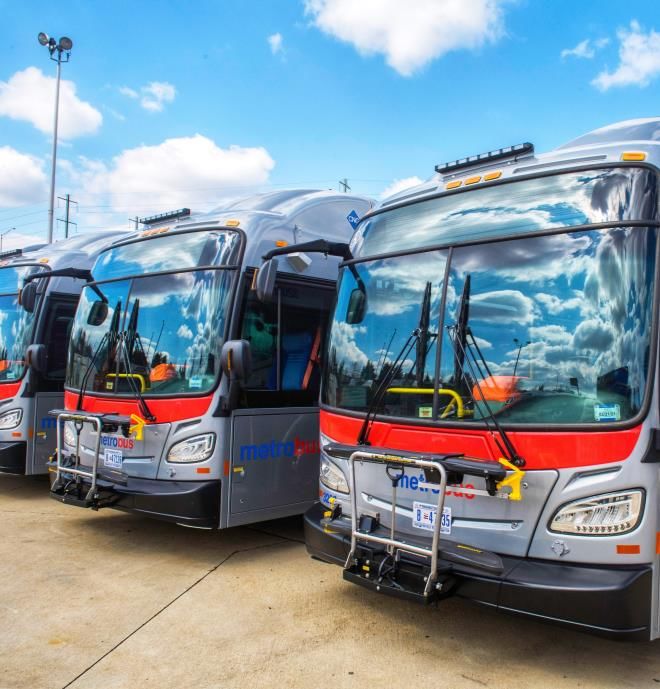
OPERATING RESULTS
The following highlights Metro’s system-wide financial performance through the third
quarter of fiscal year 2020.

Metro’s net subsidy through Q3 of FY2020 totaled $854.2 million, or $2.8 million favorable to budget despite
COVID-related losses in March.

Metro’s operating expenses through the third quarter were $1,414 million or $45.3 million less than budget.
Operating revenues were $559.3 million through Q3, funding 40 percent of operating expenses. Revenue
losses from COVID-impacted bus and rail ridership and non-transit revenue were offset by savings from
labor (including costs allocated to capital projects) and materials expenses.

          Operating                             Operating                              Subsidy
          Expenses                              Revenues

     Budget           Actual                Budget             Actual               Budget        Actual
  $1,459M         $1,414M                $601.9M          $559.3M                 $857.0M     $854.2M

    Q3/FY2020                   Note: All figures are preliminary and unaudited                    PAGE│4
RIDERSHIP
Actual ridership for all three modes was 217.6 million trips through Q3 of FY2020
Rail ridership through Q3 was 129.3 million trips – up 2.6 million (two percent) from prior year. The rail
variance to budget was 5.3 million trips, favorable by four percent. Bus ridership, using automated
passenger counts (APC), totaled 86.6 million trips through Q3, nine percent below budget. Total Ridership
on MetroAccess through the third quarter was 1.6 million trips, seven percent less than both budget and
prior year.

            Q3 YTD Budget                  Q3 YTD Actual

                           million                        million
           124.1 trips                  129.3             trips

             95.4          million
                           trips           86.6* million
                                                 trips

                           million                       million
                1.7        trips              1.6        trips

                                                           3-YEAR PERFORMANCE TREND
                                                                 (Trips in millions)

                                                FY2020                  129.3                86.6          217.6

                                                FY2019                  126.8                92.1          220.6

                                                FY2018                  128.1                89.1          218.9

                                                                    Metrorail   Metrobus *   MetroAccess

* Bus totals include shuttles to accommodate rail station shutdowns and other track work. Ridership is preliminary
and subject to change.

    Q3/FY2020                        Note: All figures are preliminary and unaudited                       PAGE│5
OPERATING REVENUE
PASSENGER REVENUE
YTD Q3 passenger revenue totaled $509.4 million, $22.1 million (4%) below budget, including:

                                                         Metrorail – 76%
                                                         •    Metrorail passenger revenue of $388.5 million
                                                         •    $2.4 million (1%) above budget

                                                         Metrobus – 17%
                                                         •    Metrobus passenger revenue of $83.1 million
                                                         •    $20.5 million (20%) below budget

            $509.4M                                      Parking – 6%
                Passenger                                •    Parking revenue of $31.7 million
                 Revenue                                 •    $2.7 million (8%) below budget

                                                         MetroAccess – 1%
                                                         •    MetroAccess passenger revenue of $6.0 million
                                                         •    $1.3 million (17%) below budget

NON-PASSENGER REVENUE
Non-passenger revenue totaled $49.9 million through Q3, $20.5 million (29%) below budget, including:

                                                         Advertising – 39%
                                                         •    Revenue of $19.7 million
                                                         •    $0.2 million (1%) above budget

                                                         Fiber Optic / Infrastructure – 26%
                                                         •    Revenue of $12.7 million
                                                         •    $0.4 million (3%) above budget
              $49.9M                                     Joint Development – 14%
             Non-Passenger
               Revenue                                   •    Revenue of $6.8 million
                                                         •    $0.2 million (3%) above budget
                                                         Other – 21%
                                                         •    Other non-passenger revenue of $10.7 million
                                                         •    $21.3 million (67%) below budget

    Q3/FY2020                   Note: All figures are preliminary and unaudited                     PAGE│6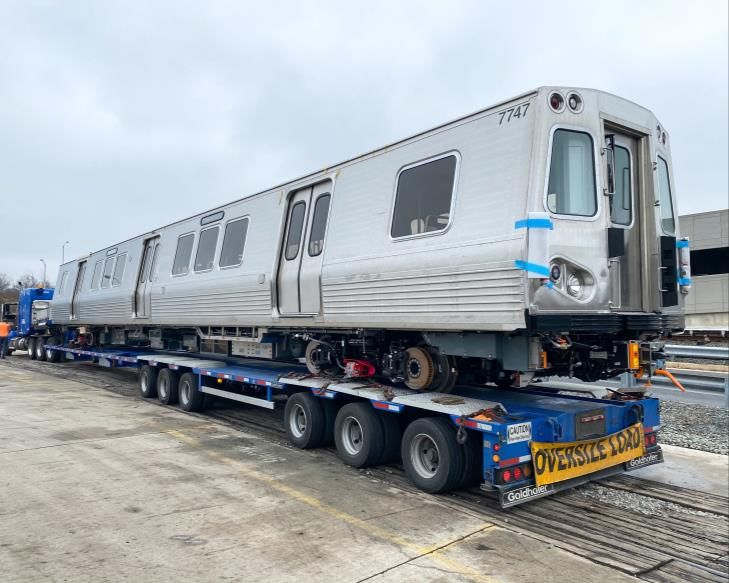
OPERATING EXPENSES
FY2020 operating expenses through Q3 were $1.414B – favorable to budget by $45.3M
due to savings in Salaries & Wages, Services, and Materials expenses and a larger-than-planned Capital
Cost Allocation.

PERSONNEL EXPENSES
                                                          Salaries and Wages – 62%
                                                          •    Expenses of $608.2 million
                                                          •    $24.4 million (4%) below budget due to
                                                               vacancies
                                                          Overtime –7%
                                                          •   Expenses of $70.0 million
            $985.4M                                       •   $13.8 million (25%) above budget due to
                Personnel                                     vacancy coverage
                Expenses                               Benefits & Capital Cost Allocation – 31%
                                                       •      Fringe benefit expenses of $380.2 million less
                                                              Capital Cost Allocation of $73.0 million
                                                       •      $9.8 million (3%) above budget

NON-PERSONNEL EXPENSES                                 Services – 31%
                                                       •      Expenses of $133.4 million
                                                       •      $13.1 million (9%) below budget due to reduced
                                                              expenses in professional/technical services
                                                       Paratransit Services – 26%
                                                       •      Expenses of $111.0 million
                                                       •      $3.1 million (3%) below budget
                                                       Materials – 14%

            $428.1M                                    •      Expenses of $59.9M

            Non-Personnel                              •      $21.1 million (26%) below budget with lower
                                                              than budgeted expenses for inventory writeoffs
              Expense
                                                              and other supplies
                                                       Fuel, Propulsion, & Utilities – 21%
                                                       •      Expenses of $89.6 million
                                                       •      $3.5 million (4%) below budget
                                                      Insurance & Other – 8%
                                                      •       Expenses of $34.3 million
                                                      •       $3.7 million (10%) below budget

    Q3/FY2020                  Note: All figures are preliminary and unaudited                          PAGE│7
FY2020 CAPITAL PROGRAM PROGRESS
Through Q3 of FY2020, Metro invested $1.249 billion in the Capital Improvement
Program, 72% of the FY2020 budget

Through the third quarter of FY2020, Metro continued            Budget vs Actual by Investment
the aggressive delivery of capital projects to improve                Category Q3 YTD
the safety and reliability of the transit system.

The FY2020 capital budget forecast as of the end of                                                            $256
                                                                            Railcar
Q3 (March 2020) totals $1.822 billion, $83 million                                                              $260
more than budget. This forecast reflects Metro's best
estimate as of the third quarter.                                                                        $188
                                                                      Rail Systems
Updated forecasts, reflecting the estimated impact of                                                     $193
COVID-19, will be included in a presentation to the
Finance and Capital Committee of the Board of                Track and Structures                $110
Directors in May 2020.                                          Rehabilitation
                                                                                                 $110

                                                                                                                        $417
                                                            Station and Passenger
                                                                   Facilities
                                                                                                                         $443

                                                                                                  $120
                                                                Bus and Paratransit
                                                                                                $92

                                                                                                          $200
                                                                  Business Support
                                                                                                        $151

                                                                                      Budget        Actual
                                                                                        $ in millions

Capital Expenditures by Month

                                                                                                                       $1,822
    Budget $1.740B

    Actual                                                                                                             $1,740
    Forecast $1.822B

  Jul        Aug    Sep      Oct     Nov       Dec        Jan        Feb       Mar           Apr               May      Jun

    Q3/FY2020                   Note: All figures are preliminary and unaudited                                        PAGE│8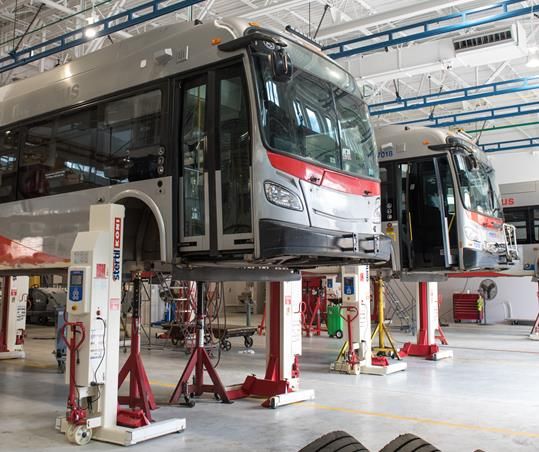
RAILCAR INVESTMENTS
Through Q3 of FY2020, Metro invested $260.3 million in Railcar

                                                     Acquisition – $124.8M
                                                     In February 2020, Metro received its 748th and final
                                                     7000-Series railcar at the Greenbelt Rail Yard. Of the
                                                     total 748 railcars ordered in the series, 740 have been
                                                     conditionally accepted. The remaining eight cars are
                                                     expected to be conditionally accepted in April 2020,

             $260.3                                  provided there are no quality issues.
                                                     In Q3, Metro initiated the next round of evaluation and
                  Railcar                            arranged meetings with all bidding vendors to receive
                                                     “Best and Final Offers” for the 8000 Series contract
                                                     proposals. This phase of the evaluation process will take
                                                     six to nine months to complete and is anticipated to
                                                     conclude with a winning bidder selected. The revised
                                                     estimate of the contract award and Notice to Proceed for
                                                     the 8000-Series railcars is Q3 of FY2021, reflecting
     Maintenance Facilities – $24.8M                 additional time to evaluate Final Offers.
In Q3, Metro awarded a contract for the
fabrication and installation of non-metallic         Customers are experiencing increased rail service
handrails for the Alexandria Rail Yard Service       reliability with fewer disruptions and offloads. See
and Inspection (S/I) Shop. The installation will     Metro’s Q3 Performance Report for specific data on
be completed in Q4 of FY2020 and will                Mean Distance Between Delay (MDBD) for the fleet
improve safety.                                      through Q3 of FY2020. Note that Metro has increased its
                                                     MDBD performance target for the fleet by 44%, from
Additionally, Metro completed the installation       90,000 in FY2019 to 130,000 in FY2020 due largely to
of LED lighting improvements to the                  the greater reliability of the 7000-Series railcars.
Alexandria S/I shop which will decrease
operating expenses.
                                                     Maintenance/Overhaul – $110.7M
                                                     Metro’s Railcar Rehabilitation Program supports the
                                                     Scheduled Maintenance Service (SMS) of railcars.
                                                     Specific deliverables include addressing 3000-Series air
                                                     compressors, HVAC conversions, truck assemblies, and
                                                     other components; as well as 6000-Series truck
                                                     assemblies. Through Q3, Metro completed 56 of 90
                                                     rehabilitations scheduled in FY2020 for the 2000/3000-
                                                     Series. Likewise, of the 104 planned rehabilitations for
                                                     the 6000-Series, 72 were completed through the end of
                                                     Q3.
                                                     Metro’s performance target for railcar availability is 98%,
                                                     which    makes ongoing           rail fleet preventative
                                                     maintenance critical. See Metro’s Q3 Performance
                                                     Report for specific railcar service data.

    Q3/FY2020                     Note: All figures are preliminary and unaudited                      PAGE│9
RAIL SYSTEMS INVESTMENTS
Through Q3 of FY2020, Metro invested $193.1 million in Rail Systems

                                                            Propulsion – $92.2M
                                                            In the 8-Car Train Power Upgrade project,
                                                            installation of Tie Breaker Station equipment at
                                                            the Yellow and Blue Line junction in Virginia
                                                            continued in Q3, along with the installation of Tie
                                                            Breaker Stations at West Hyattsville and College
            $193.1                                          Park. Construction also began on a Tie Breaker
                                                            Station at Van Dorn St., and 4,000 linear feet of
                  Rail                                      cabling was installed.
                Systems
                                                            Metro is mobilizing and reviewing design drafts
                                                            and engineering specifications for the second
                                                            large-scale Traction Power Substation and Tie
                                                            Breaker Station equipment supply and
                                                            installment contract. Traction Power Substation
                                                            equipment replacement work was completed at
                                                            Stadium-Armory to provide a permanent fix for
Signals & Communications – $100.9M                          the fire incident in 2015. Rosslyn cable tray
                                                            relocation design is currently underway. In Q3, a
In Q3, Metro completed cell phone coverage between          total of 675 cables were meggered and 6,800
Dupont Circle and Medical Center as well as between         linear feet of cable was replaced.
Grosvenor-Strathmore and White Flint as part of the
Radio Infrastructure Replacement project. The               Construction continues on AC Switchgear
remaining segments - the Yellow line from L’Enfant          replacements at Silver Spring and Gallery Place
Plaza to the Potomac River portal, and the one-mile         while replacement at East Falls Church and
Silver Line tunnel in Tysons - are expected to be           Vienna will be complete in Q2 of FY2021 after
completed in FY2021. At that point all 100 miles of         the conclusion of Phase 2 of the Platform
Metrorail tunnel track will have cellular and data          Rehabilitation Program. A contract for the AC
service available for riders to talk, text and stream.      Switchgear replacement for five additional
This project also enhances safety - in the event of an      locations (Arlington Cemetery, Crystal City,
emergency,      customers    and     employees     can      Deanwood, Farragut West, and Foggy Bottom)
communicate more easily with first responders while         has been awarded and a Notice to Proceed
underground.                                                issued. Metro is preparing solicitation for AC
                                                            Switchgear replacement at nine locations.
Metro also distributed 2,100 High Tier Police grade
radios to field personnel and MTPD in Q3.
Metro continued to fabricate the Alexandria Yard train
control bungalows, install and test power supplies at
various locations, and conduct training for the new
Switch Machine power supplies replacements as part
of the Automatic Train Control SOGR Program.

    Q3/FY2020                   Note: All figures are preliminary and unaudited                      PAGE│10
TRACK & STRUCTURES REHABILITATION
INVESTMENTS
Through Q3 of FY2020, Metro invested $109.9 million in Track & Structures
Fixed Rail – $96.8M
Through Q3, Metro has:
▪ Welded 580 joints
▪ Rehabilitated 0.5 miles of third rail
▪ Replaced 6,352 crossties
$109.9
▪ Replaced 29,718 fasteners
▪ Replaced 5.0 miles of running rail
Track & ▪ Replaced 2,627 insulators
Structures ▪ Tamped 18.2 miles of track
▪ Rehabilitated 3 turnouts
▪ Stabilized 730 linear feet of track
Structures – $13.0M
Through Q3, Metro has:
▪ Replaced 2,451 signs
▪ Rehabilitated 21,786 linear feet of grout pads
▪ Restored 11,782 square feet of concrete
▪ Replaced 3,130 linear feet of deck joints
▪ Mitigated 4,493 leaks
▪ Completed 111,881 linear feet drain rodding
▪ Cleaned 770,777 linear feet of track bed
Q3/FY2020 Note: All figures are preliminary and unaudited PAGE│11STATIONS & PASSENGER FACILITIES
INVESTMENTS
Through Q3 of FY2020, Metro invested $443.0 million in Stations & Passenger
Facilities
Platform & Structures – $330.6M
Pre-construction activities are currently advancing at
the four stations under Phase 2 of the Platform
Rehabilitation program: East Falls Church, West Falls
Church, Dunn Loring, and Vienna. This work will be
completed prior to the beginning of shutdown, which
$443.0 will take place from Memorial Day weekend in Q4
FY2020 to Labor Day in Q1 FY2021. The primary work
Station & is as follows:
Passenger
▪ Completed demolition of ceiling panels on
Facilities
Mezzanine levels and pedestrian bridges; work on
ceiling panels at station platforms will be completed
in May.
▪ Completed platform shoring on Track 3 at West Falls
Church; work is ongoing at all other stations.
▪ Ongoing demolition of floor tiles on Mezzanine levels
and pedestrian bridges at all stations.
▪ Ongoing concrete crack repairs and concrete
cleaning at all stations.
▪ Ongoing contractor mobilization related to work
trailers, Conex boxes, and yard setup.
The Platform Rehabilitation Program addresses
rehabilitation of the platform concrete, pavers, and
granite edges, as well as 36 other station systems
including information displays, lighting, signage,
bathrooms, public address, and fire systems.
Metro also completed station lighting improvements at
Ballston, Capitol South, Clarendon, Eastern Market,
Forest Glen, Glenmont, Potomac Ave., Stadium-
Armory, Virginia Sq. and Wheaton stations.
Q3/FY2020 Note: All figures are preliminary and unaudited PAGE│12STATIONS & PASSENGER FACILITIES
INVESTMENTS (CONTINUED)
Vertical Transportation – $22.2M
One elevator underwent rehabilitation in Q3, located at
Largo Town Center. Seven more elevators are
scheduled for rehabilitation in FY2020 at locations
$443.0
including Vienna, Greenbelt Rail Yard and Southern
Ave. Ten additional elevators will be rehabilitated in
FY2021 at locations still under evaluation.
Station &
Passenger In Q3, Metro developed design packages for the
Facilities rehabilitation of eight escalator units which are currently
being evaluated. These units are scheduled to be
rehabilitated in FY2021. One escalator was replaced in
Q3 at Court House station.
See Metro’s Q3 Performance Report for elevator and
escalator availability data in comparison with Metro’s
performance targets.
Station Systems – $90.2M
In the Fare Collection Program, Metro finalized
the conceptual design of the new faregates that
will be deployed throughout the system.
Deployment planning is nearing completion with
the pilot and rollout planned to start in late
Q1/early Q2 of FY2021.
Metro continues to make progress on finalizing
software development and testing in preparation
for the launch of new mobile payment
capabilities on Android and iOS. Metro planned
to move to field testing in Q4 FY2020 and
releasing the application after based on
successful testing. However, due to the impacts
of COVID-19 at a critical time in the program,
delivery schedules are currently being re-
evaluated. At this time, Metro still anticipates a
launch on both platforms in the first half of
FY2021.
Q3/FY2020 Note: All figures are preliminary and unaudited PAGE│13BUS & PARATRANSIT INVESTMENTS
Through Q3 of FY2020, Metro invested $91.8 million in Bus & Paratransit
Bus & Paratransit Acquisition – $33.5M
Through Q3 FY2020, 55 40-foot Clean Diesel buses have
been delivered with 45 more scheduled for delivery
through the remainder of FY2020. These vehicles will
enable Metro to achieve emissions reductions and fuel
savings as they replace buses that have reached the end
$91.8 of their useful life.
Metro plans to order 175 sedans (not vans) for
Bus &
Paratransit service with bid responses and a potential
Paratransit
delivery expected in Q4 FY2020.
Bus Maintenance & Overhaul – $39.6M
Metro’s bus maintenance and overhaul investments are
focused on maintaining the reliability and safe operating
Bus Passenger Facilities – $3.8M condition of equipment as well as achieving the
maximum useful life of the assets.
Metro installed 47 Customer Information
Electronic Display Signs (CIEDS) in Q3 at In Q3, 25 buses were rehabilitated, which included the
Metrobus stops for real-time bus arrivals. replacement of Energy Storing Systems (ESS) and the
Thirty-five additional are expected to be rebuilding of engine assemblies. Thirty transmissions
installed by the end of FY2020. and 25 fare boxes were also rehabilitated. In total this
fiscal year, Metro will rehabilitate 100 buses, rebuild 120
In Q3, an RFP solicitation was released for the
transmissions, and rebuild 105 fareboxes.
construction of the Bus Turn-outs for the
Chevy Chase Bus Loop. These investments are critical to meeting Metro’s Mean
Distance Between Failure (MDBF) target for the bus fleet
and providing customers with reliable service. See
Metro’s Q3 Performance Report for specifics on MDBF
data for the bus fleet.
Q3/FY2020 Note: All figures are preliminary and unaudited PAGE│14BUS & PARATRANSIT INVESTMENTS (CONTINUED)
Bus Maintenance Facilities – $14.9M
In Q3, construction continued on an off-site bus parking
lot for the Bladensburg Bus Garage, which is scheduled
to be completed in Q4. This will allow demolition and
construction of the new Bladensburg Bus Garage Facility
to proceed. Metro plans to increase the size of the site by
$91.8 approximately one acre to incorporate a state-of-the-art
garage for up to 300 buses, separate entrances for buses
Bus & and employee vehicles, and on-site employee parking.
Paratransit
IT infrastructure work for additional data drops and
CCTV tie-in will conclude the vehicle locator systems
project at Andrews Federal Center Facility, which is
expected to be closed out by Q4 FY2020.
Additional questions were submitted to vendors bidding
on the Design-Build contract for a new CNG facility at
Shepard Parkway. A contract is expected to be awarded
in Q4 (along with the Bladensburg Bus Facility).
In Q3, Pre-construction activities began in preparation of
demolition and construction at the Northern Bus Garage
Facility.
Q3/FY2020 Note: All figures are preliminary and unaudited PAGE│15BUSINESS SUPPORT INVESTMENTS
Through Q3 of FY2020, Metro invested $151.2 million in Business Support
Information Technology – $47.2M
Metro’s IT investments improve internal operations and the customer experience. In Q3, Metro completed
the Passenger Information Display Systems (PIDS) prototype and will begin to formulate an implementation
plan for new stations as part of the Rail Operations Support Software Program. This program is focused on
ensuring real time train information is accurate and available to customers.
As part of the office consolidation initiative, Metro is constructing a new data center to replace the existing
center at the Jackson Graham building. A design concept has been developed and a project management
plan is under review. Additionally, a study on the latest technology will be performed for potential adoption
during the office consolidation. A scope of work for an RFP, an Independent Cost Estimate, and a mitigation
strategies framework are all under development.
Support Equipment & Services – $103.4M
The largest project in the Support Equipment & Services category is the Office Consolidation Strategy that
will enable Metro to downsize from ten current office buildings throughout the region to seven.
Metro continues to advance interior design, base building and core design for the DC, VA, and MD
locations. Having received land use approvals in Q2, designs for each location are planned to be
completed in Q1 of FY2021, at which time the Guaranteed Maximum Pricing (GMP) will be negotiated. The
GMP for each project contract will be finalized by Q2 of FY2021. Additionally, pre-construction activities
continued at the DC and VA locations, with additional permits for the DC location to be secured throughout
the remainder of FY2020 and FY2021. An additional permit for the VA location will be secured in Q4 of
FY2020.
In Q3, design and engineering work continued to
advance for the installation of digital advertising
displays at high traffic stations in DC, VA and MD.
A total of four roofs were rehabilitated in Q3 at the
following locations:
▪ Landover Bus Maintenance Facility
▪ Metro Supply Facility
▪ Glenmont Yard Train Wash Facility
▪ Branch Ave S&I Shop
Metro Transit Police Department
(MTPD) – $0.6M
Q3/FY2020 Note: All figures are preliminary and unaudited PAGE│16APPENDIX I:
OPERATING FINANCIALS & RIDERSHIP
Fiscal Year 2020 – Q3 Year-To-Date ($ in millions)
Budget Actual Variance $ Variance %
Passenger Revenue $531.5 $509.4 ($22.1) -4.2%
Non-Passenger Revenue 70.4 49.9 (20.5) -29.1%
Total Revenue $601.9 $559.3 ($42.6) -7.1%
Personnel $986.2 $985.4 $0.9 0.1%
Non-Personnel 472.6 428.1 44.5 9.4%
Total Expenses $1,458.9 $1,413.5 $45.3 3.1%
Net Subsidy $857.0 $854.2 $2.8 0.3%
Cost Recovery Ratio 41% 40%
Note: excludes reimbursables
Fiscal Year 2020 – Q3 Year-To-Date (Trips in millions)
Variance Prior Variance
Ridership FY2019 Actual FY2020 Budget FY2020 Actual Year Budget
Metrorail 126.8 124.1 129.3 2.0% 4.2%
Metrobus* 92.1 95.4 86.6 -5.9% -9.2%
MetroAccess 1.7 1.7 1.6 -6.8% -6.6%
All Modes 220.6 221.2 217.6 -1.4% -1.6%
*Bus totals include shuttles to accommodate rail station shutdowns and other track work. Ridership
is preliminary and subject to change.
Q3/FY2020 Note: All figures are preliminary and unaudited PAGE│17APPENDIX II: CAPITAL PROJECT FINANCIALS
BY INVESTMENT CATEGORY
($ in Millions)
FY2020 FY2020 YTD %
Current Current FY2020 Q3 Forecast
Program Budget Forecast Actual YTD Expended
Railcar Acquisition 160.1 155.8 124.8 80%
Railcar Maintenance/Overhaul 116.6 123.0 110.7 90%
Railcar Maintenance Facilities 87.8 79.9 24.8 31%
Railcar Investments $364.5 $358.7 $260.3 73%
Propulsion 124.6 121.7 92.2 76%
Signals & Communications 114.2 134.5 100.9 75%
Rail Systems Investments $238.8 $256.2 $193.1 75%
Fixed Rail 139.9 134.3 96.8 72%
Structures 21.7 16.6 13.0 79%
Track & Structures Rehabilitation
Investments $161.6 $150.9 $109.9 73%
Platforms & Structures 388.7 504.0 330.6 66%
Vertical Transportation 35.7 32.7 22.2 68%
Station Systems 102.5 116.4 90.2 77%
Stations & Passenger Facilities
Investments $526.9 $653.1 $443.0 68%
Bus & Paratransit Acquisition 82.8 80.5 33.5 42%
Bus Maintenance/Overhaul 54.6 54.3 39.6 73%
Bus Maintenance Facilities 28.5 31.0 14.9 48%
Bus Passenger Facilities/Systems 11.0 10.1 3.8 38%
Bus & Paratransit Investments $176.3 $175.8 $91.8 52%
IT 86.0 73.6 47.2 64%
MTPD 2.6 1.8 0.6 35%
Support Equipment/Services 183.1 152.3 103.4 68%
Business Support Investments $271.7 $227.7 $151.2 66%
Total Capital Programs $1,739.8 $1,822.4 $1,249.3 69%
The forecasts in this report reflect Metro's best estimates as of the third quarter. Updated forecasts, reflecting the estimated impacts of
COVID-19, will be included in a presentation to the Finance and Capital Committee of the Board of Directors in May 2020.
Q3/FY2020 Note: All figures are preliminary and unaudited PAGE│18APPENDIX III:
WEEKDAY PARKING FACILITY USAGE
YTD Paid Utilization Variance, Year-Over-Year
Station Lot Capacity (% of Capacity) (% Change in Utilization)
Montgomery County
Grosvenor-Strathmore 1,659 83% -9%
White Flint 1,020 72% 16%
Twinbrook 1,097 50% -8%
Rockville 524 80% -15%
Shady Grove 5,745 67% -6%
Glenmont 2,998 74% 0%
Wheaton 977 39% 11%
Forest Glen 596 82% -4%
Montgomery County Total 14,616 69% -2%
Prince George’s County
New Carrollton 2,349 75% 1%
Landover 1,185 73% 36%
Cheverly 500 54% -5%
Addison Road-Seat Pleasant 1,268 51% 7%
Capitol Heights 372 75% -6%
Greenbelt 3,399 57% -7%
College Park-U of MD 1,290 62% 7%
Prince George’s Plaza 1,068 43% -5%
West Hyattsville 453 69% 7%
Southern Avenue 1,980 50% -1%
Naylor Road 368 87% -7%
Suitland 1,890 52% 0%
Branch Avenue 3,072 82% -7%
Morgan Boulevard 608 73% -13%
Largo Town Center 1,950 75% -8%
Prince George’s County Total 21,752 65% 0%
Maryland Total 36,368 63% -5%
Q3/FY2020 Note: All figures are preliminary and unaudited PAGE│19APPENDIX III:
WEEKDAY PARKING FACILITY USAGE
Lot YTD Paid Utilization (% Variance, Year-Over-Year (%
Station Capacity of Capacity) Change in Utilization)
District of Columbia
Deanwood 194 38% 4%
Minnesota Ave 333 76% -9%
Rhode Island Ave-Brentwood 221 86% 0%
Fort Totten 408 94% -14%
Anacostia 808 32% -13%
District of Columbia Total 1,964 71% 3%
Northern Virginia
Huntington 2,732 66% -9%
West Falls Church-VT/UVA 1,275 56% 0%
Dunn Loring-Merrifield 1,964 41% -4%
Vienna/Fairfax-GMU 4,719 70% -3%
Franconia-Springfield 5,069 52% -4%
Van Dorn Street 361 84% -17%
East Falls Church 422 91% -24%
Wiehle-Reston East 2,300 85% -10%
Northern Virginia Total 18,842 63% -5%
System Total 57,174 65% -3%
Q3/FY2020 Note: All figures are preliminary and unaudited PAGE│20You can also read


