Project Update: February 2021 Introduction - AWS
←
→
Page content transcription
If your browser does not render page correctly, please read the page content below
Project Update: February 2021

Introduction

This report is an accomplishment of the project’s Work Package 100, which was
conducted between December 2020 and February 2021. It involved mobilisation of
local communities, i.e., the Turtle Conservation Groups (TCGs), learning institutions
and other relevant management stakeholders including the private sectors.

First and foremost, we want to acknowledge changes that have occurred in the
project management during the implementation process, with the two co-PIs being
replaced upon their request due to transfer to different town with the project not
capable to cover their travel costs to conduct the project activities. Hassan
relocated to Lamu and his role has been taken over by Neville Agesa from Diani
Turtle Watch while Josephine transferred to Nairobi and has been replaced by Mr.
Said Shee Mohamed, a Sergeant from Kenya Wildlife Service (Kisite Mpunguti
Marine National Reserve and Park) based in the South Coast of Kenya.

The mobilisation process took about 21/2 months (end of December 2020 – February
2021) and involved visitation and consultation with different stakeholder groups and
official invitation to the project through physical visits to the TCG offices and sites
and meeting with the officials, emails and phone calls. Some of the groups visited
include Kisite Marine Park - Kenya Wildlife Service (KWS), Conservation Education
Society, Diani Turtle Watch, Msambweni TCG and Shimoni TCG. Due to the new
COVID-19 rules, the Ministry of Education banned all visits to schools and therefore
the project team resolved to working with Conservation Education Society, which
have an open centre, to conduct outdoor activities and mentor selected students
(ambassadors) in different schools around at the centre. Five students will be
selected in five primary schools that together with four students from Technical
University of Mombasa will be mentored through engagement in project activities.

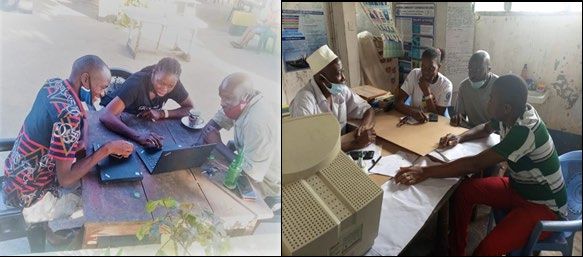
Project Planning Meeting, left project team members Neville Agesa (left) and Bakari
Ali (right) in Diani and in the other photo meeting with Shimoni BMU chair Mr. Rishard
(White Cap) and his secretary Mr. Ndalu.
Inception Meeting

This was conducted as the last part of the WP 100. It was spearheaded by Nancy
Oduor who is the project PI and representative of Eracoma, Kenya Conservation of
Aquatic Resources (KCAR) and Kenya Marine and Fisheries Research Institute
(KMFRI). The meeting was attended by 24 stakeholders representing different
conservation and management, government and private institutions in the region.
The purpose of the meeting was to officially introduce the RSG project to all the
invited stakeholders and identify areas of collaboration to achieve the project’s
goal of sea turtle protection and conservation in the area. In summary, the meeting was
held to:

   •   Identifying turtle conservation groups and their roles in the area.
   •   Establish the current status of turtle conservation and problems facing turtles and
       their habitats.
   •   Establish most pressing turtle conservation needs in the area.
   •   Establish turtle nesting trends in the area.

Meeting Outcomes

Turtle conservation groups and their roles in the Kenya’s South Coast
Eight major community-based turtle conservation groups (TCGs) were identified in the
area. These were:

GROUP          Current Status         Roles                        Challenges

Tiwi TCG       Active       under     Beach Patrols                Lack of resources i.e.,
               Tiwi Turtle Police     Nest monitoring              beach       monitoring
               Initially    under     Clean-up activities.         materials;     clean-up
               Diani         Turtle   Education            and     activities; means of
               Watch                  Awareness campaigns.         reaching KWS in case
                                      Arrest of poachers           of poaching cases.
Diani TCG      Active      under      Members trained by           Lack of appreciation
               Diani        Turtle    Watamu.                      of Volunteers efforts
               Watch.                 Turtle Watch for turtle      Lack of alternative
               Divided into 6         monitoring and data          sources of income by
               major      regions     collection.                  volunteers.
               i.e., Tiwi, Diani      Beach patrols.               Cultural    beliefs    in
               north, Mwaepe,         Nest monitoring.             medicinal value of
               Kinondo, Chale         Turtle rescue operations     sea turtle oils.
               and Funzi.             from by-catches.             High          poaching
                                      Beach Clean-ups              especially in Funzi.
                                      Mangrove          forests    Conflicts            with
                                      rehabilitation.              community         when
                                      Community                    reported             with
                                      environmental                poaching cases.
                                      education            and     Lack of resources
                                      awareness.                   e.g., boats to reach
                                                                   to Funzi Island with
                                                                   high poaching cases.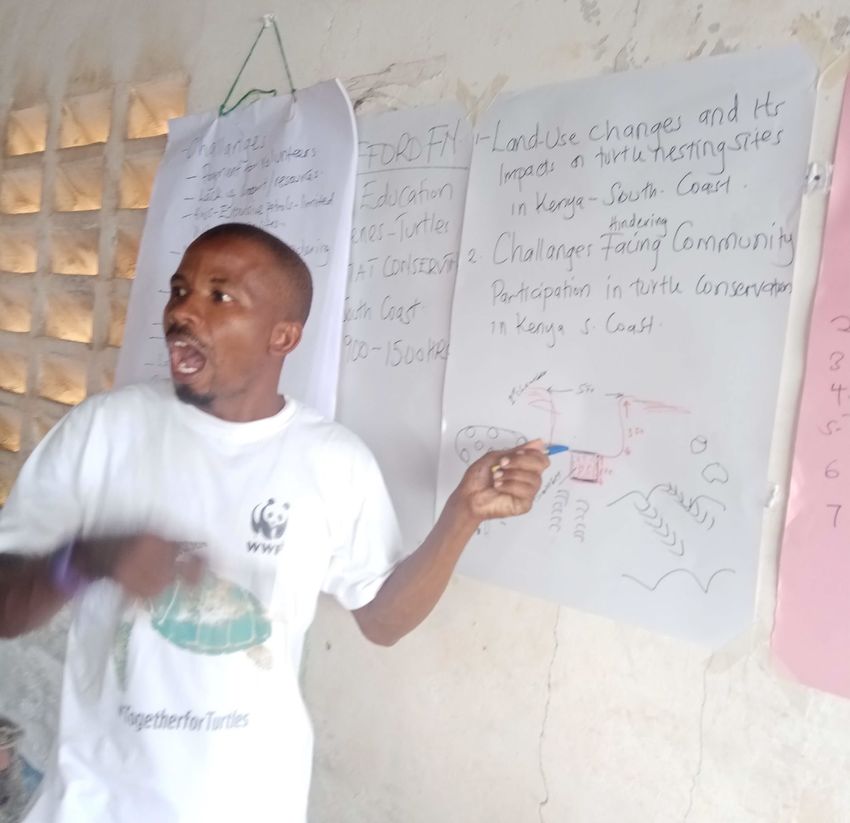
Funzi     TCG    - •   Beach patrols             •    Privatization      of
            Partially active   •   Nest monitoring                nesting      beaches
            under        Diani                                    hence       loss    of
            Turtle Watch                                          nesting sites
                                                             •    Poaching - this has
                                                                  reduced through
                                                                  the support from
                                                                  KWS
                                                             •    Lack of incentives
                                                                  /support
                               •                             •    Conflicting      laws
                                                                  /policies         and
                                                                  legislations
                                                             •    Lack of recognition
                                                                  of        community
                                                                  efforts.
                                                             •    Lack of alternative
                                                                  sources
                                                              •   of livelihoods.
             Chale - Active •      Identifying         turtle •   Poaching
             under Diani           nesting     sites    and •     Lack of alternative
             Turtle Watch          ensuring that they are         sources             of
                                   safe.                          livelihoods.
                               •   Natural           barriers •   Privatization       of
                                   (trees)    hinder     the      nesting beaches
                                   nesting sites for turtles
                               •   Monitoring           and
                                   recording of turtle
                                   data.
Msambweni    Active   under •      Conducting        beach •      Lack of modern
TCG          Msambweni             and         community          equipment          for
             Turtle     and        clean-ups                      data       recording
             marine         •      Creating awareness             and storage of
             conservation          on importance of               turtle data
             group                 turtle conservation to •       Construction along
                                   the community and              the shores and
                                   fishermen.                     lighting       affect
                               •   They       have        an      turtle nesting
                                   information       Centre •     Climate affects the
                                   where people can               hatching process
                                   learn      more        on •    Insufficient
                                   conservation.                  funds/lack          of
                               •   Collaborating        with      support
                                   other      organization •      Turtle poaching
                                   like Base Titanium •           Turtle
                                   during             waste       entanglement by
                                   recycling            and       fishing     nets     -
                                   collection.                    Bycatch
                               •   Recording turtle data
                                   and reporting to KWS.
                               •   Educating school kids
                                   and         community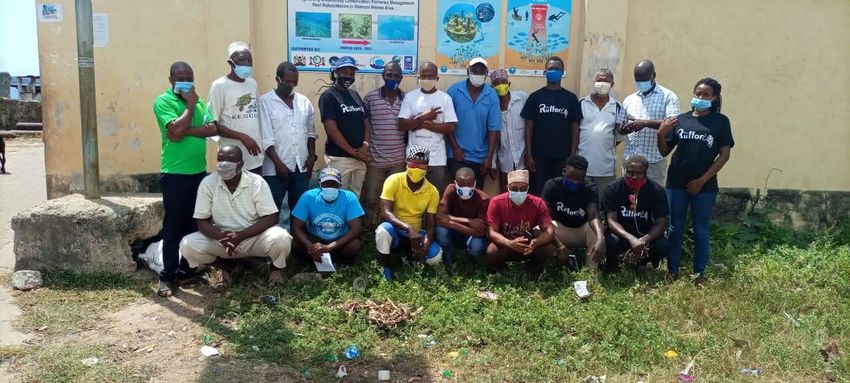
through    arts    and
                                      videos             with
                                      conservation themes.
                                   • Conducting regular
                                      beach patrols.
                                   • Members have been
                                      trained on how to
                                      mark nesting sites.
 Munje          Not active,         Not represented              Not Identified

 Shimoni –      Not      active,    Used to report turtle        Lack of necessary
 Mkwiro         previously          sightings.                   monitoring resources.
                managed by          No nesting but turtle        Lack      of   stable
                Shimoni BMU         feeding sites. Used to       livelihoods.
                                    conduct tagging              Lack of recognition
                                    Reporting of bycatches       and appreciation.
                                    and poaching cases.
 Vanga          Not active,         Not represented              Not Identified
 Jimbo          Not active,         Not represented              Not Identified
 Mwazaro        Not active,         Not represented              Not Identified

It was noted that Diani Turtle Watch have a marine education Centre and conducts
mapping of turtle nesting areas from Waa to Funzi with the help of the local
community volunteers. Despite Diani Turtle Watch working in the six listed regions,
only 1-2 volunteers are financially compensated for the activities carried this
demoralising the efforts of other people creating conflicts among the volunteers.
Also, much of DTW’s activities are done in easily accessible areas in Diani with high
tourism activities leaving remote areas like Funzi and Chale islands exposed and
vulnerable to poaching.

Management and Private Stakeholders invited

Local/County Government of Kwale:
The representative from the Environment and Energy Department also explained their role
in environmental conservation including the conservation of turtles. He promised to
collaborate with the project team to ensure its effective implementation and long-term
impacts on the communities in the region. The support included working with the groups
in managing marine litter through provision of cleaning materials and waste collection
trucks.

National Government/Kenya Wildlife Service
The representative from KWS explained the role played by their organisation and
laws and regulations that govern the management of turtle and their habitats. He
also advised the communities to keep on reporting poaching activities and
informed them of penalties of those found poaching the turtles and their products.
Some of the roles mentioned include: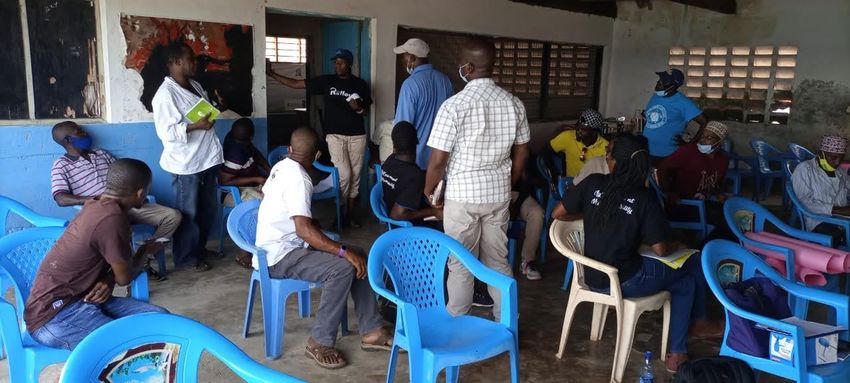
•   Law enforcement on turtle poachers.
•   Standard ways of turtle data recording should be adopted.
•   Human generated activities that affect turtle conservation should be reduced.
•   The conservationist should find means on how to benefit from data being
    collected/data management actions.
•   High mortality rate of turtle has been reported.
•   There are reduced cases of turtle poaching.
•   Community perception on some benefits of eating turtle meat should be
    discouraged.
•   Conducting regular patrols is expensive.

Private Sector/Base Titanium
The representative explained the role they play in environmental conservation and
the kind of support they provide the CBOs. These include:

•   Conducting coastal clean-ups with BMUs and other stakeholders.
•   Linking the community with waste recyclers.
•   Providing incentives to the local community during clean-ups.
•   Conducting environmental education programs in schools.

The representative agreed to support the project and the community groups and
schools in ensuring effective implementation and conduction of education and
awareness campaigns. This involves marine litter management and provision of other
resources necessary for fieldworks.

Other stakeholders that agreed to collaborate included the Kwale Plastic Plus, a
private sector working on recycling of plastics within Kwale County and
Conservation Education Society located in Diani conducting education programmes
on marine conservation and management.

Lastly, one major outcome of the meeting was an agreement of all the invited
stakeholders to work together not only for the project but beyond. A WhatsApp
group was therefore established for discussing and planning the project activities,
exchanging turtle conservation ideas, reporting poaching and other management
issues in the area.

Conclusion
There was a clear indication of the need to bring all the TCGs and all other
stakeholders to ensure effective management of turtles in Kenya’s South Coast. It
was also clear that the volunteers are demoralised by lack of recognition and
support of their conservation efforts. Resources including turtle monitoring materials
including boats for accessing remote areas like Funzi and Chale are also necessary
as high poaching cases have been reported in the areas. The project team
together with KWS and Base titanium representatives agreed to: work with students
under Conservation Education Society; search for absent TCGs representatives; work
with all the TCGs in the Kenya South Coast region through capacity building,
provision of needed materials including lunch allowances during patrols and
alternative income sources for the volunteers. The project team agreed to plan for a
training programme to all the volunteers from the eight TCGs to help in monitoring
turtle nesting trends and marine litter in the area.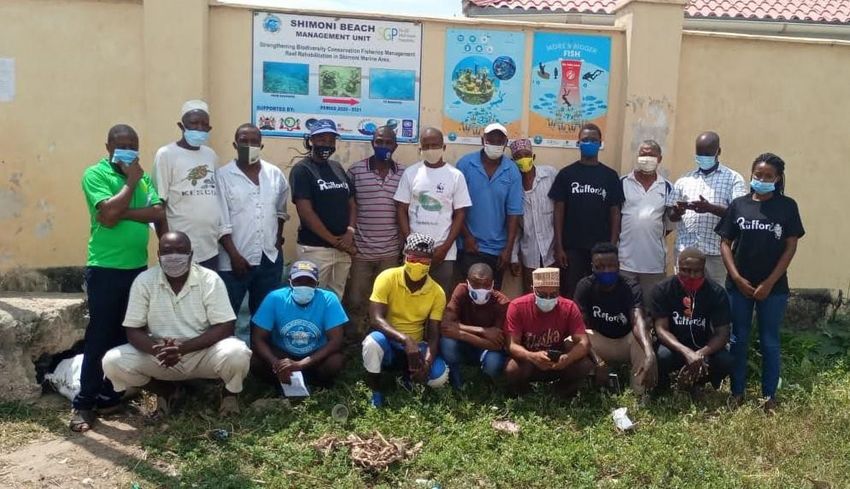
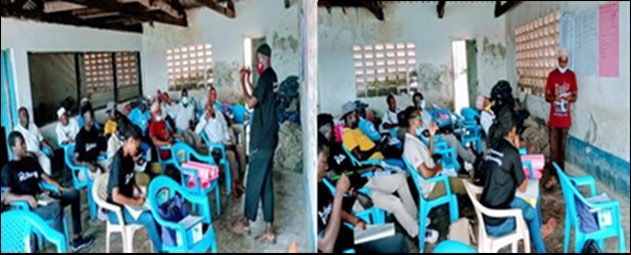
Stakeholder groups representatives during Inception meeting at Shimoni BMU
Headquarters

Stakeholder representatives’ presentations during Inception meeting at Shimoni
BMU Headquarters
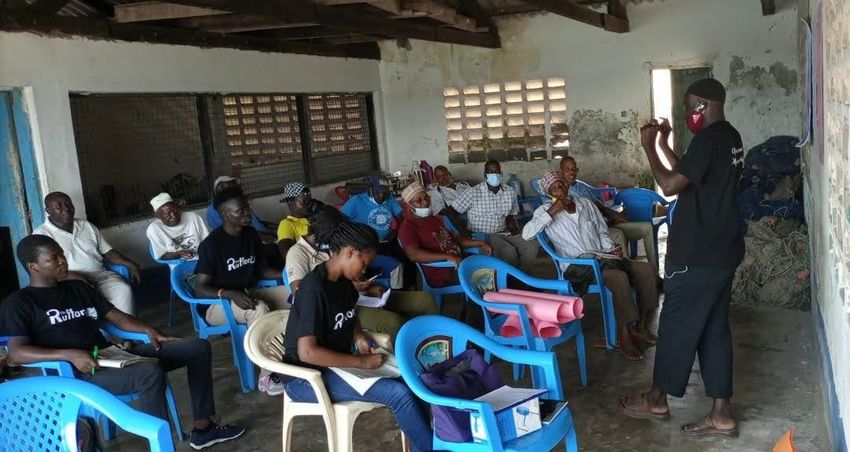
A representative from Msambweni TCG Explaining nest features.

Demonstration of boundaries of Marine Protected Areas by Ali She, KWS
representative.
Inception Meeting Group.

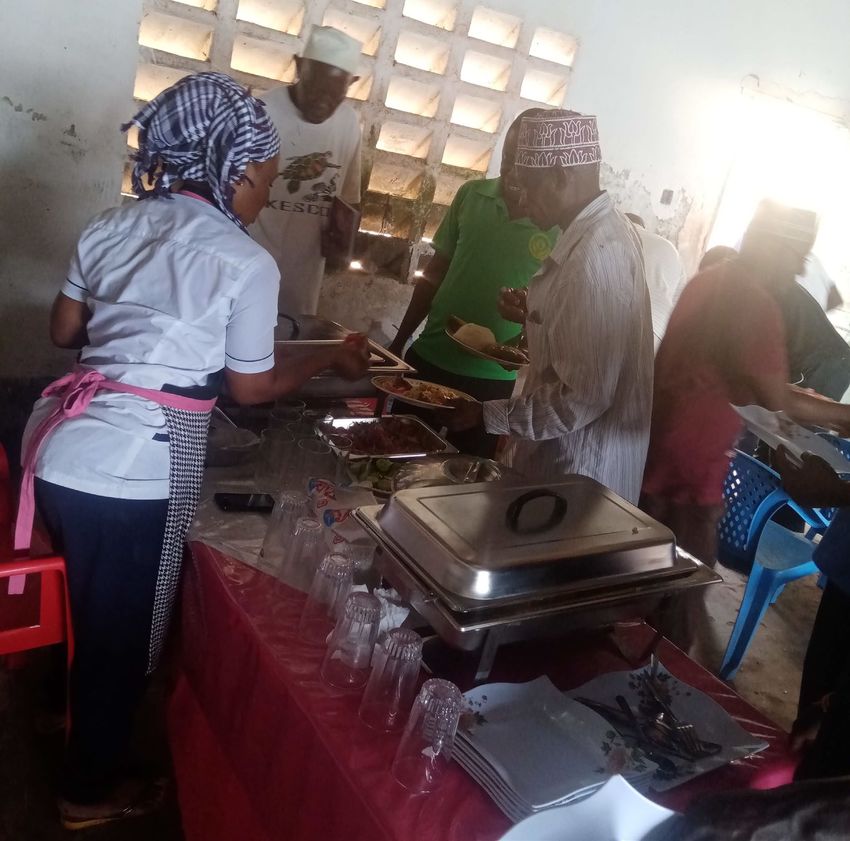
Lunchbreak during the inception meeting.
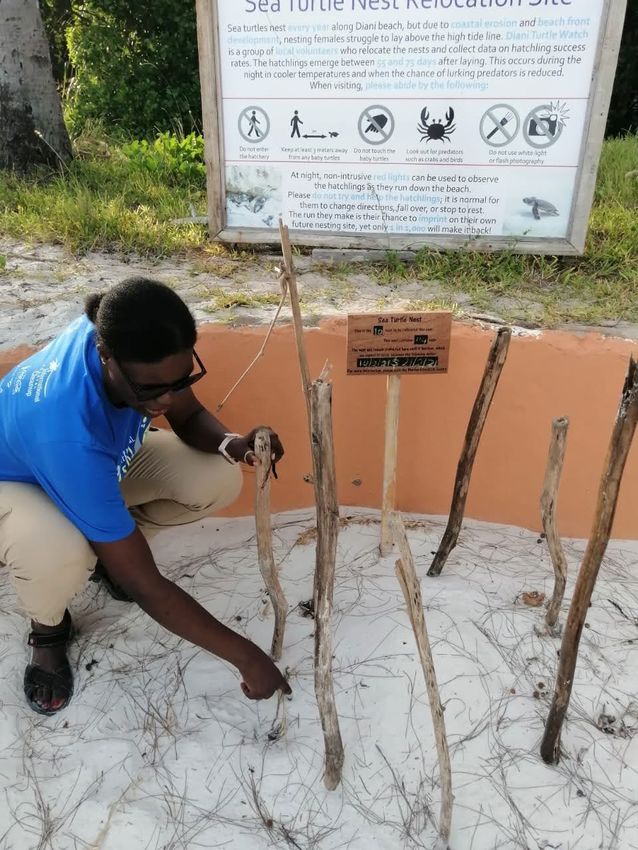
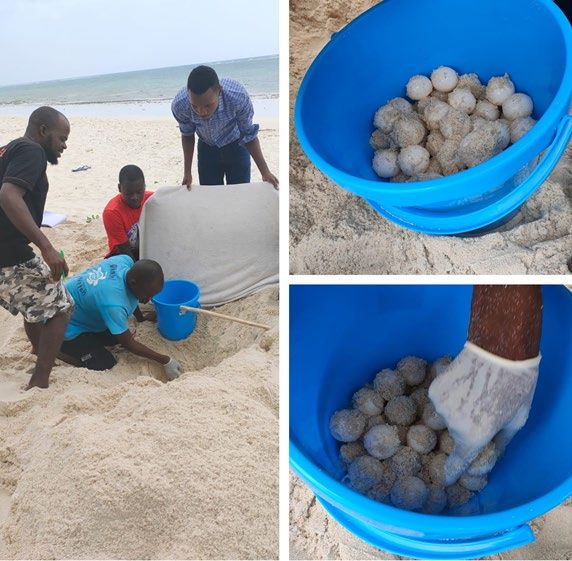
Neville Agesa (blue shirt) conducting nest relocation operation with students.

The project field assistant (Bakari Ali) explaining to the attendants the purpose of
the project.
Turtle nest inspection at Diani Beach.
You can also read


