Protecting taonga species Te tautiaki i ngā momo taonga koiora - PREDATOR RESPONSE TE RONGOĀ 2021 - DOC
←
→
Page content transcription
If your browser does not render page correctly, please read the page content below
PREDATOR RESPONSE
TE RONGOĀ

Protecting taonga species
Te tautiaki i ngā momo
taonga koiora
2021
THE PROBLEM – TE RARURARU

The native wildlife of Aotearoa
and the places they live are taonga (treasures).
We need to protect them.

Twenty-five million native birds are killed           increase when they are not controlled.
each year by possums, stoats, rats and                DOC must continue its long-term predator
other predators.1                                     control programme to prevent the decline
                                                      of native species.
Tiakina Ngā Manu is the Department of
Conservation’s (DOC) national programme               With the removal of the pressure to
to protect threatened native species from             respond to mast conditions, DOC is able
predators on public conservation land.                to return to sites nationally to protect
It is part of the national Predator Free              taonga species and their habitats.
2050 movement.                                        Overall, we aim to reduce predators
                                                      in approximately 500,000 ha of public
No beech mast or heavy seeding is
                                                      conservation land to give native species
predicted for 2020/2021, however, rat,
                                                      a chance to breed.
stoat and possum numbers continue to

Predator                                                          SUMMER
plague cycle                                                     When forest trees
                                                                 flower heavily, a lot of
                                                                 seed is produced

                                                                                 AUTUMN
                                                                                When seed is abundant,
                                                                                the rodent population
                                                                                increases rapidly

                                                                                 WINTER
                                                                               Stoats feed on
                                                                               abundant rodents

          SUMMER ONWARDS                                          SPRING
        Stoat numbers explode                                   When the seed rots or germinates,
        and they also turn                                      plagues of starving rats turn to bird
        to birds for food                                       eggs and nestlings

1
    John Innes, Manaaki Whenua – Landcare Research.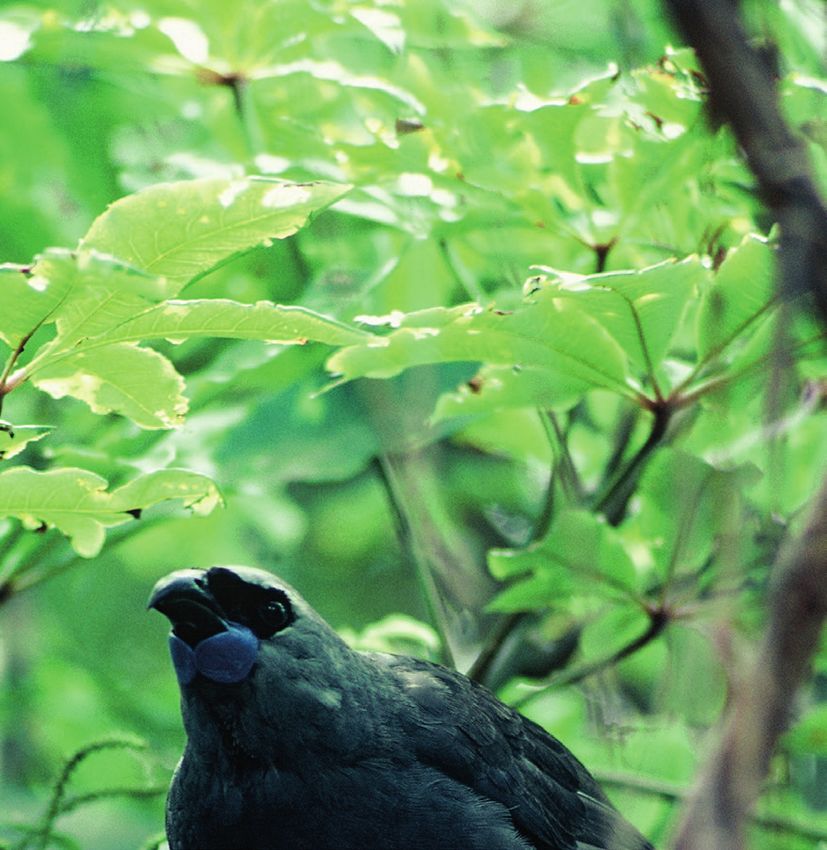
Treasure for the future
Hei taonga mā ngā
whakatupuranga
A fundamental part of DOC’s long-term
approach is to work closely with iwi,
hapū and whānau.
Iwi-led initiatives to improve the health
of the ngahere (forests), including
predator control on lands over which
they are kaitiaki (guardians), are also
supported by DOC.

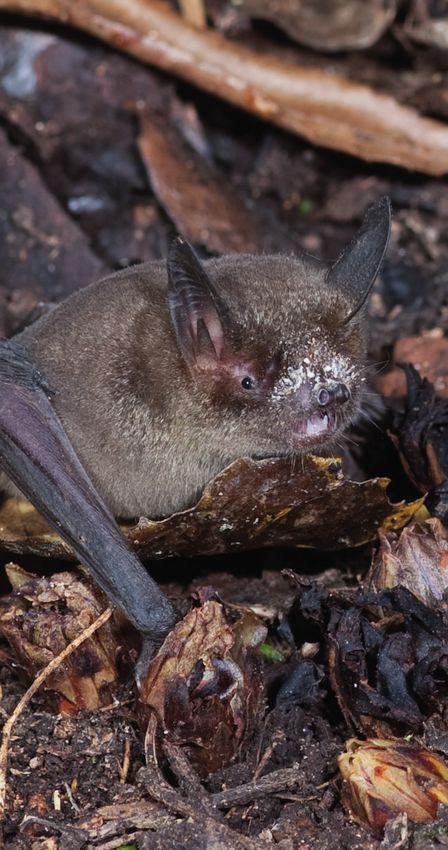
Pekapeka-tou-poto / short-tailed bat

      Threat status:
                     Northern: In serious trouble
                     Central: In some trouble
                     Southern: In some trouble
      Population:      More than 10,000
      Distribution:     orth Island: Restricted to two isolated populations in northern
                       N
                       North Island and patchy across central North Island. Restricted to
                       Fiordland and Codfish Island /Whenua Hou in the South Island.

  %

           2007 2008    2009   2010 2011 2012           2013 2014 2015 2016 2017           2018 2019 2020

                       With predator control national         Without predator control national
                       increase of 9% annually                decrease of 5% annually

                                                            Bat on ground among dactylanthus buds. Photo: David Mudge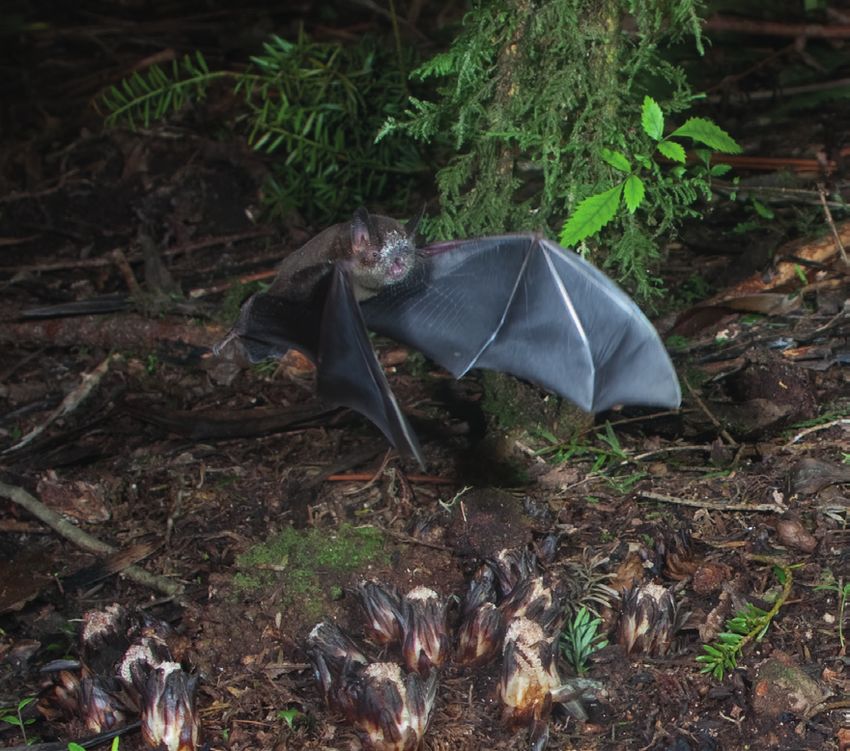
RESPONSE – TE RONGOĀ

Controlling predators

The Department of Conservation uses a range of pest-control tools to suit particular
needs. Trapping and other ground-based predator control methods play an important
part in ongoing control in accessible areas, but cannot be easily scaled up to respond
rapidly to immediate pest threats. Biodegradable 1080 is applied by air over large areas
or rugged terrain to suppress rats, stoats and possums.

Ground control
Conventional and self-resetting traps and bait stations are used for longer term
and localised suppression of predator populations in accessible areas.

    Conventional traps                Bait stations                Self-resetting traps

Aerial 1080
1080 is biodegradable,
breaks down quickly in the                                     4–6 baits are dropped
environment and does not                                       in an area the size of a
leave permanent residues in                                    tennis court.
water, soil, plants or animals.                                Without the need to
The active component occurs                                    respond to a mast this
naturally in many plants in                                    year, Tiakina Ngā Manu
Australia, South America and                                   is focused on protecting
Africa as a defence against                                    vulnerable sites and
browsing animals.                                              species across the country.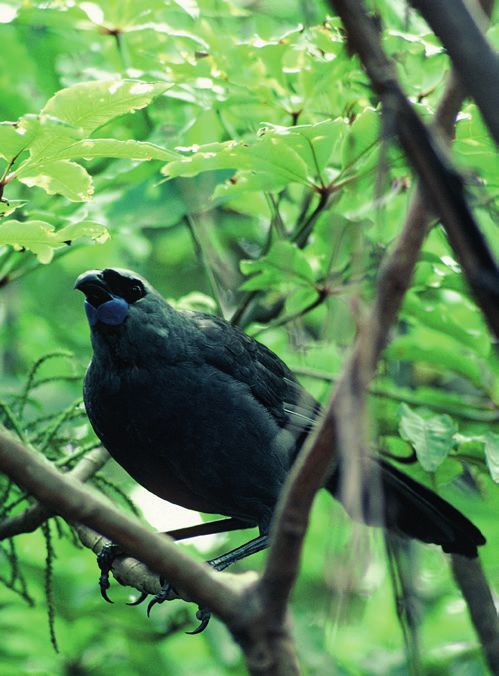
North Island kōkako

  Threat status:
                 In some trouble
  Population:         2000 pairs
  Distribution:       North Island native forests

     sporadic predator control                  regular predator control

                       100 pairs          300 pairs                        2000 pairs

               1989                         1999                             2020

More than 600 kiwi have
been monitored during
aerial 1080 operations since
1990. Not one kiwi has died
as a result of 1080.

                                                                                        Photo: Rod Morris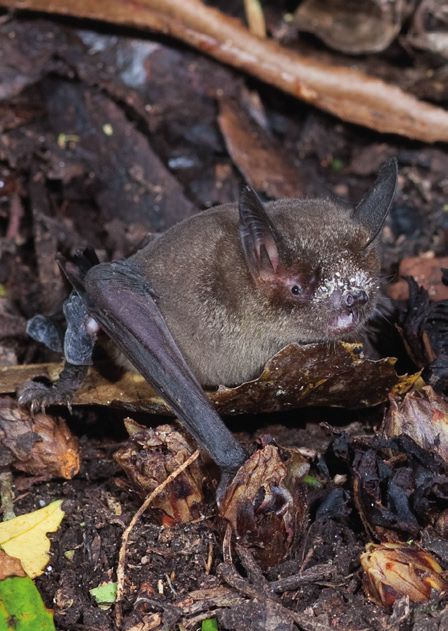
DELIVERY – TE WHAKATINANA

Taonga species under threat

The highlighted areas are
home to some of Aotearoa
New Zealand's most
vulnerable native species.
These species and their                                                               kōkako
habitats need protection                             pekapeka/bat                     kiwi
from introduced predators.                           snail                            whio/blue duck
                                                     kiwi                             pekapeka/bat
                                                     titipounamu/rifleman             kākā

     Indicative areas of species under most threat

     National park
                                                            kākā
                                                            whio/blue duck
     Conservation park
                                                            kiwi
     Other public conservation land
                                                            pekapeka/bat
                                                            toutouwai/robin

snail
pīwauwau/rock wren
kākāriki karaka/orange-fronted parakeet
whio/blue duck
kiwi                                                                          kākā
toutouwai/robin                                                               titipounamu/rifleman
kea                                                                           pōpokotea/whitehead
kākā

                                                                 kea
                                                                 mohua/yellowhead
                                                                 pīwauwau/rock wren
                                                                 kākā
                                                                 kiwi
tūturiwhatu/
                                                                 whio/blue duck
southern NZ dotterel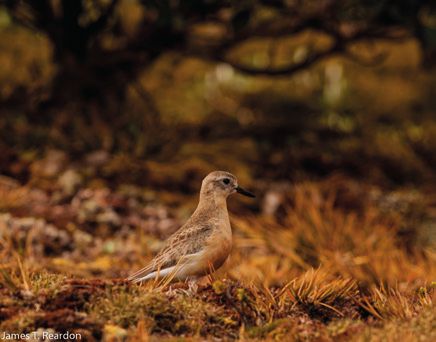
Whio                                                 Kākā

 Photo: Herb Christophers                             Photo: Herb Christophers

Status        In serious trouble                     Status:	North Island: In some trouble
                                                              South Island: In serious trouble
Population:
            Breeding population unlikely to
            be more than 1000 pairs                  Population: >10,000

Distribution:	Forested headwater catchments         Distribution: Large forested areas in the
              along the ranges of both islands.                     North and South Islands.

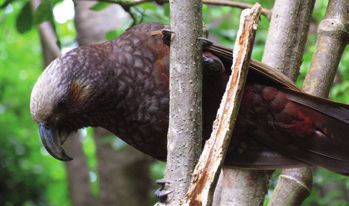
Kea                                                  Brown kiwi

 Photo: Sabine Bernert                                Photo: Rod Morris

Status:       In serious trouble                     Status:       In serious trouble

Population: 3000– 5000                               Population: Approximately 25,000

Distribution:	Alpine and forested environments of   Distribution:	Lowland and coastal native forest and
               the South Island.                                    subalpine areas of the North Island.

Powelliphanta snails                                 Tūturiwhatu/southern NZ dotterel

 Photo: Kath Walker                                   Photo: James Reardon

Status:       In serious trouble                     Status:       In serious trouble

Population: Declining                                Population: 173 individuals

Distribution: Widely but sparsely spread            Distribution: Remnant breeding population on
               throughout western South Island                     Rakiura/Stewart Island.
               and lower North Island.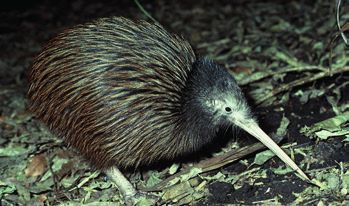
OUTCOME – TUKUNGA IHO

        Long-term monitoring
        An example: doubling native bird numbers
        in the Landsborough valley

        For 23 years, our ‘bird counters’ have researched how bird life
        in the South Westland’s remote Landsborough valley responds
        to sustained predator control.

        The results of this painstaking work show                   This outcome shows that where we protect
        that native bird numbers have more than                     taonga species against possums, rats and
        doubled since predator control began.                       stoats over whole valleys and forests, we
        Seven of the 13 taonga species in the                       can turn their fortunes around.
        valley have increased and four remain
                                                                    This progress bodes well as we work
        stable. One of the most threatened birds,
                                                                    towards a predator free Aotearoa
        the mohua/yellowhead, has gone from
                                                                    New Zealand.
        14 birds in the survey area to 485 birds
        at the last count in November 2020.

Mohua/yellowhead. Photo: Leon Berard       Titipounamu/rifleman. Photo: DOC         Miromiro/tomtit. Photo: Brent Beaven

        For more information on DOC’s planning for predator control               This publication is produced using
                                                                                  paper sourced from well-managed,
        this year, visit www.doc.govt.nz/tiakina-nga-manu
                                                                                  renewable and legally logged forests.
        For more information on Predator Free 2050:
        www.doc.govt.nz/pf2050

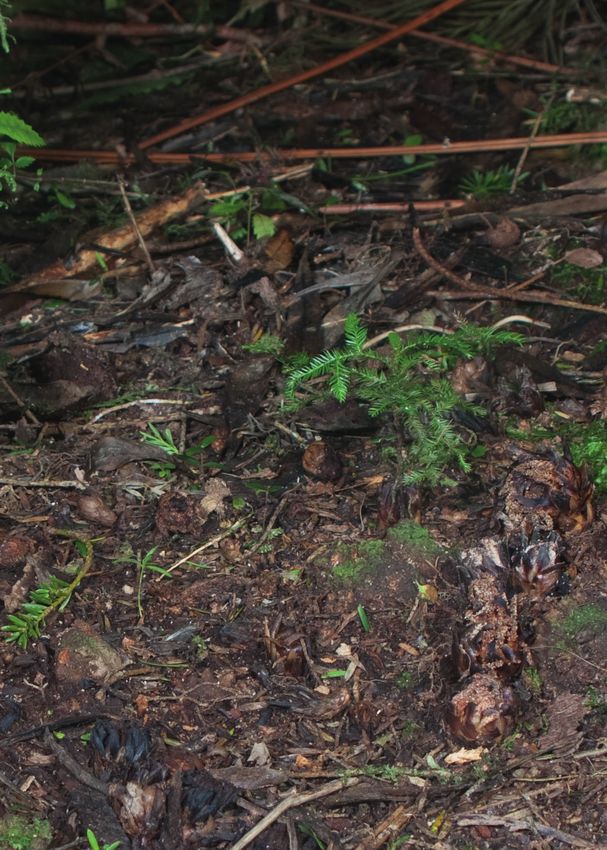
        Front cover: Pekapeka-tou-poto/short-tailed bat. Photo: David Mudge
        Published by: Department of Conservation, PO Box 10420, Wellington 6143
                                                                                                                           R196077

        Editing and design: Creative Services, Department of Conservation
        March 2021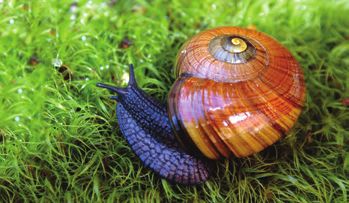
You can also read


