Public Safety Answering Points - Global Edition - Understanding PSAPs around the world has never been easier - EENA
←
→
Page content transcription
If your browser does not render page correctly, please read the page content below
Public Safety Answering Points
             Global Edition
                –December 2018–

Understanding PSAPs
around the world has never
been easier

                   Abstract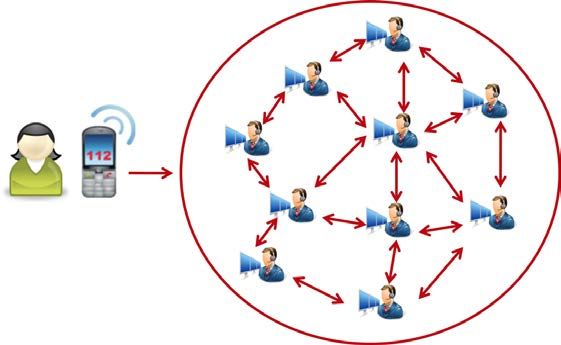
19 December 2018

Welcome message
Since 2011, EENA’s annual publication “Public Safety Answering Points (PSAPs)
in Europe” became one of the most anticipated documents in the emergency
services field. In order to provide readers with an even more comprehensive
guide, the document evolved to a global overview and, for the first time ever, in
2016 EENA published the “PSAPs around the Globe”.

The time for the third global edition is finally here! Find details about PSAPs’
functioning, understand the complexity of different national structures and get a
clear view of the context in which PSAPs operate – in 56 countries worldwide!

Every year, the report adds new questions and topics to make sure the latest
information on new technologies and developments is available to you. That is
why the 2018 edition adds everything covered by previous editions, as well as
information on AML deployments and tools used for ensuring a high quality of
service.

Enjoy your reading!

The EENA team

    Public Safety Answering Points Global Edition December 2018 | www.eena.org                      2 / 709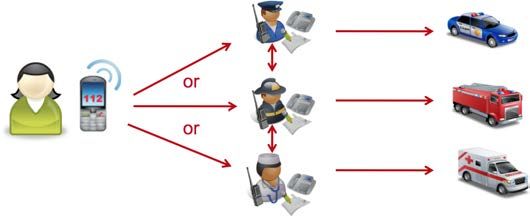
Legal disclaimer
This document is authored by EENA staff members with contributions from individual members of EENA. This document
does not represent the views of individual members of EENA, or any other parties.

This document is published for information purposes only and it does not declare to be a statement or interpretation of
EU law or the national law of EU Member States. This document is entirely without prejudice to the views of relevant
national statutory authorities and their legal functions and powers, whether under EU law or the national law of their
Member State. Accordingly, under no circumstances may reliance be placed upon this document by any parties in
compliance or otherwise with any applicable laws. Neither may reliance be placed upon this document in relation to the
suitability or functionality of any technical specifications, or any other matters discussed in it. Legal advice, technical
advice and other advice as relevant, may be sought as necessary.

This publication is for EENA Members only. It is forbidden to forward this publication to non-EENA members without the
approval of EENA. If you are not member of EENA you must not use, disclose, reproduce, copy or distribute the
contents of this communication. If you have received this in error, please contact the sender. The information published
is based on the information provided by EENA members. It is also based on responses to a questionnaire designed by
EENA and sent to EENA members in each country described in this document. Possible inaccuracies of information are
not under EENA’s responsibility. EENA is not liable for any use that may be made of the information contained therein.

For more information, please contact Jerome Paris at jp@eena.org.

              Public Safety Answering Points Global Edition December 2018 | www.eena.org                                     3 / 709
Report information
Last updated on 19 December 2018.
Use of symbols
• "-" and "No information provided" are used when no answer was provided in a questionnaire response
• "Not available" is used when a questionnaire response indicates that the data is not available
• "n/a" is used when a question is not applicable
List of acronyms
A definition of all acronyms related to 112 can be found in the 112 Terminology EENA Operations Document. It is
updated with the terminology used in the EENA Operations and Next Generation 112 documents.
Questions or comments? Please contact Jerome Paris at jp@eena.org.
Public Safety Answering Points Global Edition December 2018 | www.eena.org 4 / 43CONTENTS
Contents
. . . . . . . . . . . . . . . . . . . . . . . . . . . . . . . . . . . . . . . . . . . .7. . . . . .Malaysia
. . . .Models
112 ........................... . . . . . . . . . . . . . . . . . . . . . . . . . . . . . . . 346
..................
. . . . . . . . . . . . . . . . . . . . . . . . . . . . . . . . . . . . . . . . . .9. . . . . .Malta
. . . . . .Publications
EENA ........................... . . . . . . . . . . . . . . . . . . . . . . . . . . . . . . . 356
..................
. . . . . . . . . . . . . . . . . . . . . . . . . . . . . . . . . . . . . . . . . . . . . . 13
Albania ........................... . . . . . . . . . . . . . . . . . . . . . . . . . . . . . . . 368
. . . . . . . .Mexico ..................
. . . . . . . . . . . . . . . . . . . . . . . . . . . . . . . . . . . . . . . . . . . . . . 24
Australia ........................... . . . . . . . . . . . . . . . . . . . . . . . . . . . . . . . 379
. . . . . . . .Moldova ..................
. . . . . . . . . . . . . . . . . . . . . . . . . . . . . . . . . . . . . . . . . . . . . . 36
Austria ........................... . . . . . . . . . . . . . . . . . . . . . . . . . . . . . . . 390
. . . . . . . .Montenegro ..................
. . . . . . . . . . . . . . . . . . . . . . . . . . . . . . . . . . . . . . . . . . . . . . 48
Belgium ........................... . . . . . . . . . . . . . . . . . . . . . . . . . . . . . . . 401
. . . . . . . .Nepal ..................
. . . . . . .and
Bosnia . . . . . . . . . . . . . . . . . . . . . . . . . . . . . . . . . . . . 62
. . . Herzegovina ........................... . . . . . . . . . . . . . . . . . . . . . . . . . . . . . . . 410
. . . . . . . .Netherlands ..................
. . . . . . . . . . . . . . . . . . . . . . . . . . . . . . . . . . . . . . . . . . . . . . 72
Bulgaria . . . . . . . .New .................. . . . . . . . . . . . . . . . . . . . . . . . . . . . . . . . 421
.........Zealand ..................
. . . . . . . . . . . . . . . . . . . . . . . . . . . . . . . . . . . . . . . . . . . . . . 83
Canada ........................... . . . . . . . . . . . . . . . . . . . . . . . . . . . . . . . 433
. . . . . . . .Nigeria ..................
. . . . . . . . . . . . . . . . . . . . . . . . . . . . . . . . . . . . . . . . . . . . . . 94
Croatia ........................... . . . . . . . . . . . . . . . . . . . . . . . . . . . . . . . 442
. . . . . . . .Norway ..................
. . . . . . . . . . . . . . . . . . . . . . . . . . . . . . . . . . . . . . . . . . . . . 105
Cyprus ........................... . . . . . . . . . . . . . . . . . . . . . . . . . . . . . . . 452
. . . . . . . . .Poland ..................
Czech . . . . . . . . . . . . . . . . . . . . . . . . . . . . . . . . . . . . . . . 114
. . . . . . Republic ........................... . . . . . . . . . . . . . . . . . . . . . . . . . . . . . . . 463
. . . . . . . . .Portugal ..................
. . . . . . . . . . . . . . . . . . . . . . . . . . . . . . . . . . . . . . . . . . . . . 123
Denmark ........................... . . . . . . . . . . . . . . . . . . . . . . . . . . . . . . . 473
. . . . . . . . .Qatar ..................
. . . . . . . . . . . . . . . . . . . . . . . . . . . . . . . . . . . . . . . . . . . . . 135
Ecuador ........................... . . . . . . . . . . . . . . . . . . . . . . . . . . . . . . . 483
. . . . . . . . .Romania ..................
. . . . . . . . . . . . . . . . . . . . . . . . . . . . . . . . . . . . . . . . . . . . . 146
Egypt ........................... . . . . . . . . . . . . . . . . . . . . . . . . . . . . . . . 494
. . . . . . . . .Serbia ..................
. . . . . . . . . . . . . . . . . . . . . . . . . . . . . . . . . . . . . . . . . . . . . 155
Estonia ........................... . . . . . . . . . . . . . . . . . . . . . . . . . . . . . . . 503
. . . . . . . . .Slovakia ..................
. . . . . . . . . . . . . . . . . . . . . . . . . . . . . . . . . . . . . . . . . . . . . 166
Finland ........................... . . . . . . . . . . . . . . . . . . . . . . . . . . . . . . . 513
. . . . . . . . .Slovenia ..................
. . . . . . . . . . . . . . . . . . . . . . . . . . . . . . . . . . . . . . . . . . . . . 178
France ........................... . . . . . . . . . . . . . . . . . . . . . . . . . . . . . . . 525
. . . . . . . . .Spain ..................
. . . . . . . . . . . . . . . . . . . . . . . . . . . . . . . . . . . . . . . . . . . . . 189
Georgia ........................... . . . . . . . . . . . . . . . . . . . . . . . . . . . . . . . 551
. . . . . . . . .Sweden ..................
. . . . . . . . . . . . . . . . . . . . . . . . . . . . . . . . . . . . . . . . . . . . . 199
Germany ........................... . . . . . . . . . . . . . . . . . . . . . . . . . . . . . . . 566
. . . . . . . . .Switzerland ..................
. . . . . . . . . . . . . . . . . . . . . . . . . . . . . . . . . . . . . . . . . . . . . 211
Greece ........................... . . . . . . . . . . . . . . . . . . . . . . . . . . . . . . . 576
. . . . . . . . .Thailand ..................
. . . . . . . . . . . . . . . . . . . . . . . . . . . . . . . . . . . . . . . . . . . . . 221
Hungary ........................... . . . . . . . . . . . . . . . . . . . . . . . . . . . . . . . 586
. . . . . . . . .Turkey ..................
. . . . . . . . . . . . . . . . . . . . . . . . . . . . . . . . . . . . . . . . . . . . . 231
Iceland . . . . . . . . .United
............Arab ...... . . . . . . . . . . . . . . . . . . . . . . . . . . . . . . . 597
.........Emirates ..................
. . . . . . . . . . . . . . . . . . . . . . . . . . . . . . . . . . . . . . . . . . . . . 242
India . . . . . . . . .United ............... . . . . . . . . . . . . . . . . . . . . . . . . . . . . . . . 614
............Kingdom ..................
. . . . . . . . . . . . . . . . . . . . . . . . . . . . . . . . . . . . . . . . . . . . . 255
Ireland . . . . . . . . .United
............States
...........of . . . . . . . . . . . . . . . . . . . . . . . . . . . . . . . 625
....America ..................
. . . . . . . . . . . . . . . . . . . . . . . . . . . . . . . . . . . . . . . . . . . . . 264
Israel . . . . . . . . .Annex
............1:
....Number
........... .of
. . PSAPs
. . . . . . per . . . . . . . . . . . . . . . . . . . 636
. . . service ..................
. . . . . . . . . . . . . . . . . . . . . . . . . . . . . . . . . . . . . . . . . . . . . 275
Italy . . . . . . . . .Annex
............2:
....Direct
..........emergency
. . . . . . . . . .numbers
. . . . . . . to . . . . . . . . . . . . . 643
. . PSAPs ..................
. . . . . . . . . . . . . . . . . . . . . . . . . . . . . . . . . . . . . . . . . . . . . 287
Kosovo . . . . . . . . .Annex
............3:
....Number
........... .of
. . calls
. . . . per . . . . . . . . . . . . . . . . . . . . . 649
. . . service ..................
. . . . . . . . . . . . . . . . . . . . . . . . . . . . . . . . . . . . . . . . . . . . . 296
Kuwait . . . . . . . . .Annex
............4:
....Number
........... .of
. . calls
. . . . per
. . . network . . . . . . . . . . . . . . 662
. . . . . . . type ..................
. . . . . . . . . . . . . . . . . . . . . . . . . . . . . . . . . . . . . . . . . . . . . 306
Latvia . . . . . . . . .Annex
............5:
....Technologies
........... . . . . . available
. . . . . . . .in. .the . . . . . . . . . . . . . 668
. . .PSAPs ..................
. . . . . . . . . . . . . . . . . . . . . . . . . . . . . . . . . . . . . . . . . . . . . 318
Lithuania . . . . . . . . .Annex
............6:
....Caller . . . . . . . . . . . . . . . . . . . . . . . . . . . . . . . . 675
..........Location ..................
. . . . . . . . . . . . . . . . . . . . . . . . . . . . . . . . . . . . . . . . . . . . . 328
Luxembourg . . . . . . . . .Annex
............7:
....Advanced
........... . . .Mobile . . . . . . . . . . . . . . . . . . . . . . 684
. . . . . .Location ..................
. . . . . . . . . . The
Macedonia, . . . .former
. . . . . .Yugoslav
. . . . . . . Republic
. . . . . . . .of . . . . . . . . 338
. . Macedonia . . . . . . . . .Annex
............8:
....Apps
.........& . . . . . . . . . . . . . . . . . . . . . . . . . . . . . . . 690
.. SMS ..................
Public Safety Answering Points Global Edition December 2018 | www.eena.org 5 / 709CONTENTS
. . . . . . 9:
Annex . . . . . . . . . . . . . . . . . . . . . . . . . . . . . . . . . . . . . 698
. . Accessibility ......................
. . . . . . 10:
Annex . . . Public . . . . . . . . . . . . . . . . . . . . . . . . . . . . . . 704
. . . . . .Warning ......................
Public Safety Answering Points Global Edition December 2018 | www.eena.org 6 / 709112 MODELS
112 Models
This section provides a short explanation of the 112 models as they are used in this publication.
Please note that the following models do not introduce all the PSAPs Organisation models in Europe but present the
major concepts with simplified descriptions. The models do not cover the entire call handling model but rather try to
highlight their major characteristics.
This has been prepared by EENA based on several sources and is continuously amended.
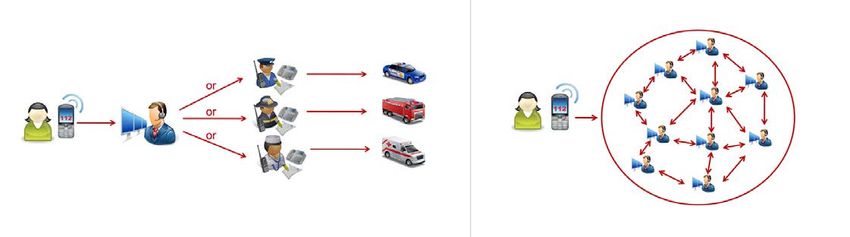
Model 1: EROs handling emergency calls
• Calls to national numbers and 112 redirected to
Emergency Response Organisations (EROs).
• If the intervention of a different ERO is required, call
and/or data about the emergency situation are
forwarded to the most appropriate ERO.
• Dispatch from the intervention resources done by the
ERO operators.
• In a variant, two EROS are colocated and contacted
via the same number
Model 2: Filtering Stage 1 PSAP and resource dispatching stage 2 PSAPs
• Independent Stage 1 PSAP receives all emergency
calls and then forwards it to a local ERO.
• Call-takers only ask the caller with which emergency
service he/she wants to be connected to.
• Stage 1 PSAP forwards the call to the appropriate
local ERO. Detailed data gathering and dispatch of the
intervention resources are done by the emergency response organisation.
Model 3: Data gathering by Stage 1, resource dispatching by Stage 2
• Also in two levels. The difference is the role played by
the independent organisations.
• Civilian call-takers classify the call and makes a
parallel dispatch of the calls to EROs. In some cases
police, EROs’ specialists are available to support the
call-takers.
• Dispatch of the intervention resources done by EROs.
Public Safety Answering Points Global Edition December 2018 | www.eena.org 7 / 709112 MODELS
Model 4: Data gathering by Stage 1 PSAP, resource dispatching by Stage 2 in an integrated control room
• Also in two levels but civilian call-takers and EROs are
in the same location.
• Civilian call-takers are in charge of classifying the call
and make a parallel dispatch of the calls to the most
appropriate EROs if needed. In some cases, EROs’
specialists are available to support call-takers.
• Dispatch of the intervention resources done by EROs.
Model 5: ERO independent PSAP
• Civilian call-takers handle both call-taking and
intervention resources’ dispatch. In some cases,
EROS’ specialists are available to support.
• The same PSAP is in charge of classification of calls,
data collection and dispatching the intervention
resources to the incident.
Model 6: Variant: "Interconnected PSAPs"
PSAPs of different regions can be interconnected. If no
call-taker is available, the call can be redirected to
another PSAP.
Source
Emergency calls handling systems simplified models
(EENA).
Public Safety Answering Points Global Edition December 2018 | www.eena.org 8 / 709E E N A P U B L I C AT I O N S
EENA Publications
112 General Information
112 service chain description
112 Terminology
Promotion of Emergency Numbers
Access to 112
112 Accessibility for People with Disabilities
Access to 112 from Private Networks
Digital Transformation of Cities: Smart Cities & Emergency Services
Means to Access 112
Mobile Handset Requirements: Communication to Emergency Services
Public Safety Digital Transformation: The Internet of Things (IoT) and Emergency Services
SMS Access to 112
SMS communication with PSAPs and EROs
AED
AED Mapping & Emergency Response
Apps
112 Apps Strategy: Pan European Mobile Emergency Apps
112 Smartphones Apps
Pan-European Mobile Emergency App (PEMEA) Approval Procedure
Pan-European Mobile Emergency Application (PEMEA) Protocol and Procedures Specification
Pan-European Mobile Emergency Application (PEMEA) Requirements and Functional Architecture
Case Studies
Advanced Mobile Location (AML) in the UK
Brussels Attacks Crossover between research and reality
eCall implementation in Lithuania
GIS112 Estonia
MANAGING CHANGE: The example of Finland From 15 centres to a network of 6 centres
MANAGING CHANGE: THE EXAMPLE OF REGIONE LOMBARDIA, ITALY
Public Warning in Chile: Resilient culture
Public Safety Answering Points Global Edition December 2018 | www.eena.org 9 / 709E E N A P U B L I C AT I O N S
Drones
Drone Efficacy Study: Evaluating the Impact of Drones for Locating Lost Persons in Search and Rescue Events
EENA / DJI Pilot Project Report: The use of Remotely Piloted Aircraft Systems (RPAS) by the emergency services
Remote Piloted Airborne Systems (RPAS) and the Emergency Services
Remote Piloted Airborne Systems Operations Manual
eCall
eCall and open issues: 2018 revision
eCall Factsheet
eCall implementation in Lithuania: PSAP, eCall Flag & TPSP eCall
eCall Key Performance Indicators
eCall TPSP and Emergency Services Authorities Agreement template
Next Generation eCall: NG eCall
Legislation
112 and the EU Legislative Framework
Emergency calls in the upcoming EU-legislation
Location
Advanced Mobile Location (AML) Additional requirements and guidance for Mobile Handset Manufacturers and
Mobile Network Operators
Advanced Mobile Location (AML) in the UK
Advanced Mobile Location (AML) Specifications & Requirements
Caller Location in Support of Emergency Services
Handset Derived Location for Emergency Calls
HTML5 Geolocation: Accurate caller location in support of emergency services
Mobile Identity: Platform for the Emergency services
The Role of Geographic Information Systems in Next Generation 112 Moving from current state 112 to future state
NG112
Public Safety Answering Points Global Edition December 2018 | www.eena.org 10 / 709E E N A P U B L I C AT I O N S
NG112
Next Generation 112 Long Term Definition
Next Generation eCall
NG112 and the new Emergency Services Networks landscape: Challenges and opportunities
NG112 Emergency Services Plugtest 2016 - Report by ETSI
NG112 Emergency Services Plugtest 2017 - Report by ETSI
NG112 Transition Models
NG112 Transition Models Implementation Activities
Results for Next Generation 112: Emergency services operational requirements survey
Security and Privacy Issues in NG112
The Role of Geographic Information Systems in Next Generation 112 Moving from current state 112 to future state
NG112
What is needed for Interoperability Testing?
PSAP Operations
Assessing meaningful response times
Call taking procedures and data to be gathered
Capturing Feedback from Stakeholders
Contingency Plans
Costs of Providing Emergency Call Answering Services
Data sharing between Emergency Services
Emergency Silent, Hang-Up and Abandoned 112 Calls
False Emergency Calls
Managing change
MANAGING CHANGE: The example of Finland From 15 centres to a network of 6 centres
MANAGING CHANGE: THE EXAMPLE OF REGIONE LOMBARDIA, ITALY
Managing human resources in a PSAP
Managing the Tendering process
Multilingual Emergency Calls
Overload of calls
Psychological support of 112 call takers
Training of 112 call takers
Transnational Emergency Calls
Workforce Management in PSAP operations
Public Safety Answering Points Global Edition December 2018 | www.eena.org 11 / 709E E N A P U B L I C AT I O N S
PSAP Technology
112 PSAPs Technology
Cybersecurity Guidelines and Best Practices for Emergency Services
GIS112 Estonia
GSI: The Value of Spatial Information for Emergency Services
Mobile Identity Platform for the Emergency services
Oblique Imagery in Support of Emergency Services
Public Safety Digital Transformation: The fundamentals of Voice over IP
Recording for PSAPs Future Technology
The who is who handbook in the public safety industry
Using and optimising GIS in an emergency response
WebRTC and Emergency Services
Public Warning
Media in Authority-to-Citizen (A2C) Communications
Public Warning
Public Warning (updated)
Public Warning in Chile: Resilient Culture
SMEM
Brussels Attacks Crossover between research and reality
VOST: Crowdsourcing and Digital Volunteering in Emergency Response
What Internet Companies can do in Emergency and Crisis situations
Public Safety Answering Points Global Edition December 2018 | www.eena.org 12 / 709NEW ZEALAND
New Zealand
4.7 million 267,710 km 2 2,705 K 2017
Population A re a Calls Ye a r o f re f e re n c e
Organisation handling 111 calls
New Zealand’s primary emergency call number is Triple One (111). The Initial Call Answer Point (ICAP) is operated by
Spark New Zealand Ltd. Stage 2 PSAPs are operated by Police, Fire and Ambulance Services.
National legislative / regulatory acts on 111 references
Spark New Zealand operates the New Zealand ICAP to fulfil requirements of the Telecommunications Service Obligation
(TSO) for local telephone services. The ICAP requirements obligations are prescribed in a TSO Deed agreement
between Spark New Zealand and the Crown. The TSO Deed is a regulatory instrument under the Telecommunications
Act 2001.
Other available emergency numbers
Primary emergency number: Triple One (111)
Secondary emergency numbers:
• International Standard Emergency Number (112)
• Triple One Text (for Police only)
Report applies to
• The national provider of the 111 Centre(s) who receives and distributes calls for Police, Fire and Ambulance
• All of New Zealand
Public Safety Answering Points Global Edition December 2018 | www.eena.org 421 / 709NEW ZEALAND
111 Model
There are two ‘Stage 1’ Answering Points, which is called the Initial Call Answer Point (ICAP) – operated by
telecommunications organisation Spark – which receives all national Triple One (111) calls. These calls are then
presented to one of 9 x ‘Stage 2’ Public Safety Answering Points (PSAPs) of Fire and Rescue Services, the Police, and
Ambulance Services.
The Stage 1 PSAPs have redundant facilities available for business continuity and disaster recovery.
Stage 2 PSAPs within each individual ESP are interconnected to provide ‘virtual’ call management and CAD service.
eCall implementation
eCall is under consideration. It may bypass the ICAP/PSAP and come direct into the Police CAD. It is anticipated to be
available within the next 12-24 months.
Plans to cooperate with third-party services (TPS)
Public Safety Answering Points Global Edition December 2018 | www.eena.org 422 / 709NEW ZEALAND
PSAPs and dispatch centres
PSAPs Dispatch centres Comments
2 x primary ICAP call centres, 2 x back up sites for business
111 2 -
continuity purposes
FRS - 3
EMS - 3
POLICE - 4 3 x primary, 1 x reserve centre for business continuity
OTHER AGENCIES - -
Included in ESP figures. Police and Fire Comms are co-
located in both Auckland and Wellington. Ambulance
SEVERAL FORCES - 3 standalone Police Fire, and Ambulance are all co-located on
the same floor within the Justice and Emergency Services
Precinct in Christchurch.
TOTAL 2 10
Comments
No plans to increase or reduce the number of PSAPs.
Direct numbers per emergency service
FRS EMS Police Other Several Forces
Do they directly receive 111 calls? No No No n/a No
Direct emergency number different from 111 No No No n/a No
Public Safety Answering Points Global Edition December 2018 | www.eena.org 423 / 709NEW ZEALAND
Emergency calls in 2017
Calls Comments
111 2,705,000 Total number of people who dialled 111
FRS 90,000 111 calls connected to Fire & Rescue
EMS 461,000 111 calls connected to Medical Services
POLICE 856,000 111 calls connected to Police
OTHER AGENCIES n/a
TOTAL 2,705,000
Comments
• 514K (19%) disconnected at the first IVR message
• 2.191 million people reached the ICAP queue
• 91K (4%) abandoned from the ICAP queue
• 2.100 million interacted with an ICAP operator
• 692K (33%) not transferred to an ESP PSAP
• 1.408 million (67%) transferred to an ESP PSAP
Emergency calls per type
Mobile Telephone Networks Fixed telephone networks (landlines)
2,089,000 (77%) 616,000 (23%)
Campus/private company networks IP networks
Included in counts for landline / mobile Included in counts for landline / mobile
Public Safety Answering Points Global Edition December 2018 | www.eena.org 424 / 709NEW ZEALAND
Technology and equipment used in the 111 PSAPs
Do all 111 PSAPs use the same technology in your country?
No. The Stage 1 PSAPs operate the same technology but not the same as the Stage ESP PSAPs. For
Stage 2 PSAPs:
• NZ Police and Fire Emergency NZ use the Hexagon CAD and shared telephony and radio network
• ST John and Wellington Free Ambulance use Tritech VisiCad and a different radio network
How are the 111 PSAPs interconnected?
Some are interconnected via data, others only voice interconnected. The ICAP and ESP call centres are
connected by voice. All ESP call centres are linked via voice and data through a common virtual private
network. There is an InterCAD link between Police, Fire and Ambulance.
In case of data interconnection, are these data exchanged thanks to a common network?
Yes. The Stage 1 ICAP PSAPs are connected through a private network but have no data connection
with the Stage 2 ESP PSAPs. Stage 2 ESP call centres are connected through a common virtual private
network within their own Agency.
Do the interconnected 111 PSAPs use common databases?
Yes - mostly. Police ESP call centres share common databases. Fire ESP call centres share common
databases. Fire access Police databases for landline subscriber information. Databases are not shared
across Police, Fire, and Ambulance.
Technologies available in the 111 PSAPs
Geographic Information System (GIS) Available in all ESP PSAPs
Computer Telephony Integration (CTI) Available in all ESP PSAPs
Computer-Aided Dispatch (CAD) Available in all ESP PSAPs
Workforce Management System Available in some PSAPs - Police use the ASPECT WFM system
Business Intelligence System Available in all ESP PSAPs
Public Safety Answering Points Global Edition December 2018 | www.eena.org 425 / 709NEW ZEALAND
Caller Location in support of emergency services
Mobile caller location
Method Time needed
• Pull - Mobile caller location is available in For mobile callers, Cell-ID can, in general, be
Police call centres using an App to pull GPS received by an ESP within 20 minutes of a
information from the phone on approval from request. Using ‘Mobile Locate’, NZ Police, can
the caller. receive GPS location in near real time once the
• A system accessed via a host website which caller has approved for it to be provided. With
acts as intermediary between Police and the PCL a maximum for 25 seconds for GPS.
caller called ‘Mobile Locate’ that connects Network and Wi-Fi a few seconds.
with a mobile phone and seeks permission of
the caller to access (pull) their device GPS
and relay this information to the ESP – on
approval from the caller.
• Push – New Zealand have implemented AML
for Android and are working with Apple to
introduce same capability
• Mobile caller location is unavailable in ICAP
call centres
Type of caller location
• Cell-ID
• Handset derived location via third party App
• Handset-derived location via AML
Landline caller location
Method Time needed
• Push - Landline caller location is available in Immediate with connection of call
ESP call centres
• Landline caller location is unavailable in ICAP
call centres
Public Safety Answering Points Global Edition December 2018 | www.eena.org 426 / 709NEW ZEALAND
Accuracy & reliability criteria defined for all 112 PSAPs
By mobile network providers when they provide you with caller location information.
There are no specified performance criteria applicable to mobile network operators for Cell ID
information, with the supply of Cell ID information by mobile network operators discretionary
unless the information is requested under warrant.
The supply of caller location information on a continuous basis for emergency calls by
telecommunications network operators is neither prescribed in legislative instruments such as
statutes and regulations nor prescribed in consensual instruments such as contracts and deeds.
The telecommunications industry code for emergency calling services references a data interface
standard that is applied for landline location data from telecommunications service providers
entered into ESP database.
Advanced Mobile Location (AML)
Read about Advanced Mobile Location (AML)
AML deployment Works with
deployed for 111 (In New Zealand AML is Android
called ECLI – Emergency Caller Location Apple (to be introduced with ECLI Phase 2
Information) capabilities later in 2018)
AML transmission Additional features
via Data SMS International roaming (in the planning stage)
Location tracking during 111 call (planned for
rollout late 2018/19)
Apps
ICAP and PSAPs are not able to receive data from emergency apps. New Zealand has no plans at this time to
develop its own emergency app.
Public Safety Answering Points Global Edition December 2018 | www.eena.org 427 / 709NEW ZEALAND
Accessibility for people with disabilities
Fax
Available to people with disabilities
Does not require registration
Disability emergency services are also available to all citizens with eligibility based on the level of disability.
Registration is not required for eligible persons to access emergency services by fax or textphone.
SMS
Available to people with disabilities
Requires registration
SMS sent to 111
Textphone (TTY)
Available to people with disabilities
Does not require registration
Disability emergency services are also available to all citizens with eligibility based on the level of disability.
Registration is not required for eligible persons to access emergency services by fax or textphone.
SMS service
SMS service is available
SMS sent to: 111 (111 SMS is answered by Police on behalf of the 3 emergency services.)
Available to people with disabilities
Registration is required (Registration is required for eligible persons to access emergency services by SMS)
111 available from handsets without SIM cards?
No
Public Safety Answering Points Global Edition December 2018 | www.eena.org 428 / 709NEW ZEALAND
Use of social media
Social media/networks mostly used
Facebook
Twitter
Social media/networks are used to
NZ Police use social media for increasing public engagement, Public alerting, getting information quickly out to
the public, myth busting, and to help with recruiting
Occasionally Fire Service PSAPs use the national Fire Service Facebook for alerting public to high risk days
during the drier months, and for non-specific monitoring during major events however currently this is not a
requirement or expectation
Use of Twitter is primarily used to alert media agencies to events of public interest with the intention of providing
initial information, and delay multiple media phone calls when busy
Virtual Operations Support Team (VOST)
Setting up a VOST is considered.
Most followed social media accounts
@nzpolice
@NZcivildefence
@EQCNZ (EarthquakeCommission)
@NZCDEM (sector info and resources)
@NZGetThru (public education and more)
@NZFireService
• The Stage ICAP does not use social media.
• NZ Police uses Facebook.
• Fire has a national Fire Service Facebook page but it is used primarily for providing information rather than
receiving information specific to current events.
• Fire Communications use Twitter to a very limited extent on a day to day basis to provide notification of
incident responses but it is dependent on the duty shift manager’s predisposition to the use of this social
media.
Public Safety Answering Points Global Edition December 2018 | www.eena.org 429 / 709NEW ZEALAND
Public warning
(Alert to citizens)
Public warning by
Cell Broadcast Alerting - Emergency Mobile Alert Portal went live nationally in NZ in 2017. The Cell Broadcast
Alerting (CBA) project is an NZ, All of Government (AoG) project, led by the Ministry of Civil Defence and
Emergency Management (MCDEM). CBA enables time critical safety information to be broadcast to geo-fenced
locations for communities at risk
Sirens
Radio
TV
App based mobile phone service (available in Auckland region)
Organisation Responsible for public warning
Ministry of Business Innovation & Employment (MBIE)
Use of RPAS
(Remotely Piloted Aircraft Systems) or UAVs (Unmanned Aerial Vehicles) in emergencies
Drones are used by Emergency Services Organisations (ESOs).
Emergency Services Organisations (ESOs) using RPAS
FRS
Police
Public Safety Answering Points Global Edition December 2018 | www.eena.org 430 / 709NEW ZEALAND
Quality of service
Recorded calls storage period
The ICAP call centres record all 111 emergency calls and store them for 45 days. The Police call centres record all
111 emergency calls and store them for 4 years.
Call handling evaluation
Call handling service is evaluated
ICAP
There is coaching (minimum two hours per month for each call taker) and random auditing of call recordings to ensure
call-takers follow the correct processes while conversing with callers in a pleasant tone and manner.
ESP
Police have assessors undertake in-depth analysis on a sample of 30-40 calls per week and provide structured
interview feedback to the call-takers for these calls.
Fire Service quality assurance is currently carried out by shift managers or senior communicators on watch. Rural
calls over 120 seconds and urban calls over 90 seconds exceed SLAs and reports are provided on the critique of the
call taking / dispatching process for these events. This process is starting to be standardised across all 3 Centres.
Use of quality improvement systems
Yes
NZ Police Comms have an In house developed QA process.
Use of key performance indicators
Yes
Use of protocols by call-takers/dispatchers
Yes
Use of questions and decisions tree by call-takers/dispatchers
Yes
NZ Ambulance uses ProQA. NZ Police and Fire do not use.
Quality certification(s)
ACE accreditation (NZ Ambulance)
Public Safety Answering Points Global Edition December 2018 | www.eena.org 431 / 709NEW ZEALAND
Projects, reforms, upgrades
• Public alerting, eCall,
• Ongoing development and enhancement of ECLI – Emergency Caller Location Information with Android and
Apple. (MCL)
• Police to rollout a Single Non-Emergency Number (SNEN) by 2019. Short dial number.
• Police Communications are trialling Preferential Based Rostering (PBS) for Call takers where staff choose their
own roster each quarter. To date 220 staff are on PBS. The only guideline for staff is the national call demand
profile. The aim is for staff to get around 80% of their preferences.
• In 2013 NZ Police rolled out Mobility to 12000 staff. This is constantly being developed and enhanced to
improve productivity and response to the public.
• Current Review of the Spark ICAP in consultation with ESPs and MBIE
• NZ Police online reporting
• Fire Service trialing mobility devices in Fire Appliances with roll out expected in approx. 18 months. This will
provide incident and route information, critical information relating to premises etc.
• NZ Police: Using Social Media as public communication medium for both emergency and non-emergency
• Push To Talk (PTT) development has recently started.
Upgrade towards Next Generation 112
Work has been under way for some time on facets of NG111.
Technology providers
• NEC
• Hexagon
• Mitel Aastra
• Optima (Intermedix)
• Unisys (Fire Service - private fire alarms)
• Salcom (Fire Service station alerting system)
• TriTec
• Spark (Fire Service national paging system)
Public Safety Answering Points Global Edition December 2018 | www.eena.org 432 / 709A N N E X 1 : N U M B E R O F P S A P S P E R S E RV I C E
Annex 1: Number of PSAPs per
service
Public Safety Answering Points Global Edition December 2018 | www.eena.org 636 / 709A N N E X 1 : N U M B E R O F P S A P S P E R S E RV I C E
Stage 1 FRS EMS Police Other Several forces TOTAL
Country Data PSAP DC PSAP DC PSAP DC PSAP DC PSAP DC PSAP DC PSAP DC
New Zealand 2017 2 - - 3 - 3 - 4 - - - 3 2 10
Public Safety Answering Points Global Edition December 2018 | www.eena.org 25 / 43ANNEX 2: DIRECT EMERGENCY NUMBERS TO PSAPS
Annex 2: Direct emergency numbers
to PSAPs
Public Safety Answering Points Global Edition December 2018 | www.eena.org 643 / 709ANNEX 2: DIRECT EMERGENCY NUMBERS TO PSAPS
Do PSAPs receive 112 emergency calls? Direct emergency number
Country FRS EMS Police Other Several FRS EMS Police Other Several
New Zealand n/a No No No n/a No
Public Safety Answering Points Global Edition December 2018 | www.eena.org 27 / 43A N N E X 3 : N U M B E R O F C A L L S P E R S E RV I C E
Annex 3: Number of calls per service
Public Safety Answering Points Global Edition December 2018 | www.eena.org 649 / 709A N N E X 3 : N U M B E R O F C A L L S P E R S E RV I C E
Country Data Stage 1 FRS EMS Police Other TOTAL Comments
112: Total number of people who dialled 111
FRS: 111 calls connected to Fire & Rescue
New Zealand 2017 2,705,000 90,000 461,000 856,000 n/a 2,705,000
EMS: 111 calls connected to Medical Services
Police: 111 calls connected to Police
Public Safety Answering Points Global Edition December 2018 | www.eena.org 29 / 43ANNEX 4: NUMBER OF CALLS PER NETWORK TYPE
Annex 4: Number of calls per network
type
Public Safety Answering Points Global Edition December 2018 | www.eena.org 662 / 709ANNEX 4: NUMBER OF CALLS PER NETWORK TYPE
Country Data Mobile Fixed Private IP
New Zealand 2017 2,089,000 (77%) 616,000 (23%) Included in counts for landline / mobile Included in counts for landline / mobile
Public Safety Answering Points Global Edition December 2018 | www.eena.org 31 / 43A N N E X 5 : T E C H N O L O G I E S AVA I L A B L E I N T H E P S A P S
Annex 5: Technologies available in
the PSAPs
Public Safety Answering Points Global Edition December 2018 | www.eena.org 668 / 709A N N E X 5 : T E C H N O L O G I E S AVA I L A B L E I N T H E P S A P S
Country GIS CTI CAD WFMS BIS
New Available in all ESP Available in all ESP Available in all ESP Available in some PSAPs - Police use the ASPECT Available in all ESP
Zealand PSAPs PSAPs PSAPs WFM system PSAPs
Public Safety Answering Points Global Edition December 2018 | www.eena.org 33 / 43A N N E X 6 : C A L L E R L O C AT I O N
Annex 6: Caller Location
Public Safety Answering Points Global Edition December 2018 | www.eena.org 675 / 709A N N E X 6 : C A L L E R L O C AT I O N
Mobile caller location Landline caller location
Country Method Time needed Type Method Time needed
Pull - Mobile caller For mobile callers, Cell-ID Cell-ID Handset derived location Push - Landline caller location is
New Immediate with
location is available in can, in general, be received via third party App Handset- available in ESP call centres
Zealand connection of call
Police call... by an... derived... Landline...
Public Safety Answering Points Global Edition December 2018 | www.eena.org 35 / 43A N N E X 7 : A D VA N C E D M O B I L E L O C AT I O N
Annex 7: Advanced Mobile Location
Public Safety Answering Points Global Edition December 2018 | www.eena.org 684 / 709A N N E X 7 : A D VA N C E D M O B I L E L O C AT I O N
Country Deployed Works with Transmission Features
Android International roaming (in the planning stage)
New Zealand via Data SMS
Apple Location tracking during 111 call (planned for rollout late 2018/19)
Public Safety Answering Points Global Edition December 2018 | www.eena.org 37 / 43ANNEX 8: APPS & SMS
Annex 8: Apps & SMS
Public Safety Answering Points Global Edition December 2018 | www.eena.org 690 / 709ANNEX 8: APPS & SMS
Country Apps SMS
SMS service is available
New Zealand Available to people with disabilities
Registration is required
Public Safety Answering Points Global Edition December 2018 | www.eena.org 39 / 43ANNEX 9: ACCESSIBILITY
Annex 9: Accessibility
Public Safety Answering Points Global Edition December 2018 | www.eena.org 698 / 709ANNEX 9: ACCESSIBILITY
Country Fax SMS App Video call Real Time Text Other
New Zealand Textphone (TTY)
Public Safety Answering Points Global Edition December 2018 | www.eena.org 41 / 43A N N E X 1 0 : P U B L I C WA R N I N G
Annex 10: Public Warning
Public Safety Answering Points Global Edition December 2018 | www.eena.org 704 / 709A N N E X 1 0 : P U B L I C WA R N I N G
Country Sirens Radio TV Cell Broadcast SMS Other
Cell Broadcast Alerting
New Zealand
App based mobile phone service
Public Safety Answering Points Global Edition December 2018 | www.eena.org 43 / 43You can also read


