C115 Certification Report - Argus Command Center Web Portal Stable Version 2.1 - Common Criteria
←
→
Page content transcription
If your browser does not render page correctly, please read the page content below
C115 Certification Report
Argus Command Center Web Portal Stable Version 2.1

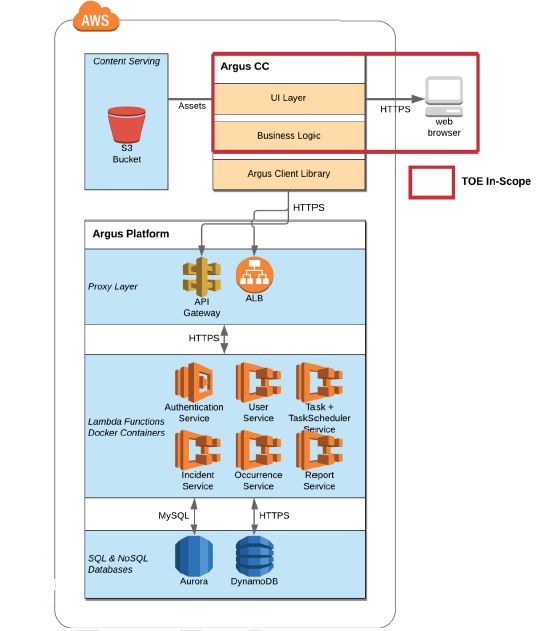
             File name: ISCB-3-RPT-C115-CR-v1
                         Version: v1
             Date of document: 16 JUNE 2021
              Document classification : PUBLIC

            For general inquiry about us or our services,
               please email: mycc@cybersecurity.my
PUBLIC
FINAL
C115 Certification Report ISCB-3-RPT-C115-CR-v1
C115 Certification Report
Argus Command Center Web Portal Stable Version 2.1
16 JUNE 2021
ISCB Department
CyberSecurity Malaysia
Level 6, Tower 1,
Menara Cyber Axis, Jalan Impact,
63000 Cyberjaya, Selangor, Malaysia
Tel: +603 8800 7999 Fax: +603 8008 7000
http://www.cybersecurity.my
Page i of ix
PUBLICPUBLIC
FINAL
C115 Certification Report ISCB-3-RPT-C115-CR-v1
Document Authorisation
DOCUMENT TITLE: C115 Certification Report
DOCUMENT REFERENCE: ISCB-3-RPT-C115-CR-v1
ISSUE: v1
DATE: 16 JUNE 2021
DISTRIBUTION: UNCONTROLLED COPY - FOR UNLIMITED USE AND
DISTRIBUTION
Page ii of ix
PUBLICPUBLIC
FINAL
C115 Certification Report ISCB-3-RPT-C115-CR-v1
Copyright Statement
The copyright of this document, which may contain proprietary information, is the
property of CyberSecurity Malaysia.
The document shall be held in safe custody.
©CYBERSECURITY MALAYSIA, 2021
Registered office:
Level 7, Tower 1
Menara Cyber Axis
Jalan Impact
63000 Cyberjaya
Selangor Malaysia
Registered in Malaysia – Company Limited by Guarantee
Company No. 201601006881 (726630-U)
Printed in Malaysia
Page iii of ix
PUBLICPUBLIC
FINAL
C115 Certification Report ISCB-3-RPT-C115-CR-v1
Foreword
The Malaysian Common Criteria Evaluation and Certification (MyCC) Scheme has been
established under the 9th Malaysian Plan to increase Malaysia’s competitiveness in quality
assurance of information security based on the Common Criteria (CC) standard and to
build consumers’ confidence towards Malaysian information security products.
The MyCC Scheme is operated by CyberSecurity Malaysia and provides a model for licensed
Malaysian Security Evaluation Facilities (MySEFs) to conduct security evaluations of ICT
products, systems and protection profiles against internationally recognised standards.
The results of these evaluations are certified by the Malaysian Common Criteria
Certification Body (MyCB) Unit, a unit established within Information Security Certification
Body (ISCB) Department, CyberSecurity Malaysia.
By awarding a Common Criteria certificate, the MyCB asserts that the product complies
with the security requirements specified in the associated Security Target. A Security
Target is a requirements specification document that defines the scope of the evaluation
activities. The consumer of certified IT products should review the Security Target, in
addition to this certification report, in order to gain an understanding of any assumptions
made during the evaluation, the IT product's intended environment, its security
requirements, and the level of confidence (i.e., the evaluation assurance level) that the
product satisfies the security requirements.
This certification report is associated with the certificate of product evaluation dated
23 June 2021, and the Security Target (Ref [6]). The certification report, Certificate of
product evaluation and security target are posted on the MyCC Scheme Certified Product
Register (MyCPR) at www.cybersecurity.my/mycc and the Common Criteria Portal (the
official website of the Common Criteria Recognition Arrangement).
Reproduction of this report is authorised provided the report is reproduced in its entirety.
Page iv of ix
PUBLICPUBLIC
FINAL
C115 Certification Report ISCB-3-RPT-C115-CR-v1
Disclaimer
The Information Technology (IT) product identified in this certification report and its
associate certificate has been evaluated at an accredited and licensed evaluation facility
established under the Malaysian Common Criteria Evaluation and Certification (MyCC)
Scheme using the Common Methodology for IT Security Evaluation, version 3.1 revision 5
(Ref [3]), for conformance to the Common Criteria for IT Security Evaluation, version 3.1
revision 5 (Ref [2]). This certification report and its associated certificate apply only to the
specific version and release of the product in its evaluated configuration. The evaluation
has been conducted in accordance with the provisions of the MyCC Scheme and the
conclusions of the evaluation facility in the evaluation technical report are consistent with
the evidence adduced. This certification report and its associated certificate is not an
endorsement of the IT product by CyberSecurity Malaysia or by any other organisation that
recognises or gives effect to this certification report and its associated certificate, and no
warranty of the IT product by CyberSecurity Malaysia or by any other organisation that
recognises or gives effect to this certificate, is either expressed or implied.
Page v of ix
PUBLICPUBLIC
FINAL
C115 Certification Report ISCB-3-RPT-C115-CR-v1
Document Change Log
RELEASE DATE PAGES REMARKS/CHANGE REFERENCE
AFFECTED
d1 7 June 2021 All Initial draft
v1 16 June 2021 All Final version
Page vi of ix
PUBLICPUBLIC
FINAL
C115 Certification Report ISCB-3-RPT-C115-CR-v1
Executive Summary
The Target of Evaluation (TOE) is a web-based command center application of the Argus
System called the Argus Command Center Web Portal (Argus CC) which provides the user
for two primary purposes as an officer (security personnel) support system; security
operations management and account management through the Internet.
The scope of the evaluation is defined by the Security Target (Ref [6]) which identifies
assumptions made during the evaluation, the intended environment for the TOE, the
security functional requirements, and the evaluation assurance level at which the product
is intended to satisfy the security requirements. Prospective consumers are advised to
verify that their operating environment is consistent with the evaluated configuration, and
to give due consideration to the comments, observations and recommendations in this
certification report.
This report confirms the findings of the security evaluation of the TOE to the Common
Criteria (CC) Evaluation Assurance Level 2 (EAL2). This report confirms that the evaluation
was conducted in accordance with the relevant criteria and the requirements of the
Malaysia Common Criteria Evaluation and Certification (MyCC) Scheme (Ref [4]).
The evaluation was performed by TÜV AUSTRIA CYBERSECURITY LAB SDN. BHD. and the
evaluation were completed on 21 May 2021.
The Malaysia Common Criteria Certification Body (MyCB), as the MyCC Scheme Certification
Body, declares that the TOE evaluation meets all the Arrangements on the Recognition of
Common Criteria certificates and the product will be listed in the MyCC Scheme Certified
Products Register (MyCPR) at http://www.cybersecurity.my/mycc and the Common Criteria
portal (the official website of the Common Criteria Recognition Arrangement) at
http://www.commoncriteriaportal.org
It is the responsibility of the user to ensure that Argus Command Center Web Portal Stable
Version 2.1 meets their requirements. It is recommended that a potential user of the TOE
refer to the Security Target (Ref [6]) and this Certification Report prior to deciding whether
to purchase the product.
Page vii of ix
PUBLICPUBLIC
FINAL
C115 Certification Report ISCB-3-RPT-C115-CR-v1
Table of Contents
Document Authorisation ................................................................................. ii
Copyright Statement ....................................................................................... iii
Foreword iv
Disclaimer ............................................................................................................ v
Document Change Log.................................................................................... vi
Executive Summary .......................................................................................... vii
Table of Contents .......................................................................................... viii
Index of Tables ................................................................................................. ix
Index of Figures ............................................................................................... ix
1 Target of Evaluation ......................................................................................... 1
1.1 TOE Description ............................................................................................. 1
1.2 TOE Identification ............................................................................................... 1
1.3 Security Policy .................................................................................................. 2
1.4 TOE Architecture .............................................................................................. 3
1.4.1 Logical Boundaries........................................................................ 3
1.4.2 Physical Boundaries ...................................................................... 4
1.5 Clarification of Scope ...................................................................................... 5
1.6 Assumptions ................................................................................................... 6
1.6.1 Operational Environment Assumptions............................................ 6
1.7 Evaluated Configuration.................................................................................. 7
1.8 Delivery Procedures ....................................................................................... 8
1.8.1 TOE Delivery ........................................................................................ 9
2 Evaluation ......................................................................................... 10
2.1 Evaluation Analysis Activities ........................................................................ 10
2.1.1 Life-cycle support .............................................................................. 10
2.1.2 Development ...................................................................................... 10
2.1.3 Guidance documents......................................................................... 12
Page viii of ix
PUBLICPUBLIC
FINAL
C115 Certification Report ISCB-3-RPT-C115-CR-v1
2.1.4 IT Product Testing ..............................................................................12
3 Result of the Evaluation ................................................................... 21
3.1 Assurance Level Information .........................................................................21
3.2 Recommendation ..........................................................................................21
Annex A References ....................................................................................... 22
A.1 References...................................................................................................22
A.2 Terminology ................................................................................................22
A.2.1 Acronyms ....................................................................................................22
A.2.2 Glossary of Terms ......................................................................................23
Index of Tables
Table 1: TOE identification........................................................................................................... 1
Table 2: Organizational Security Policies ..................................................................................... 2
Table 3: TOE Logical Boundaries ................................................................................................ 3
Table 4: Assumptions for the TOE environment ........................................................................... 6
Table 5: Independent Functional Test .........................................................................................13
Table 5: List of Acronyms ...........................................................................................................22
Table 6: Glossary of Terms.........................................................................................................23
Index of Figures
Figure 1: TOE Architecture .......................................................................................................... 5
Page ix of ix
PUBLICPUBLIC
FINAL
C115 Certification Report ISCB-3-RPT-C115-CR-v1
1 Target of Evaluation
1.1 TOE Description
1 The Target of Evaluation (TOE) is a web-based command center application of the
Argus System called the Argus Command Center Web Portal (Argus CC) which provides
the use for two primary purposes as an officer (security personnel) support system;
security operations management and account management through the Internet. The
user roles defined in the Argus CC consist of System Administrator, Account Owner,
Managers, Operators, Supervisors and Officers. Supervisors and Officers are managed
by TOE users but are themselves not TOE users and are thus omitted from the scope
of this evaluation. Fundamentally, the TOE can be accessed by consumers via selected
web browsers (front-end Command Center).
2 The TOE includes the following security functions:
• Identification & Authentication
• Security Management
• Trusted Path/Channels
• User Data Protection
1.2 TOE Identification
3 The details of the TOE are identified in Table 1 below.
Table 1: TOE identification
Malaysian Common Criteria Evaluation and Certification
Evaluation Scheme
(MyCC) Scheme
Project Identifier C115
TOE Name Argus Command Center Web Portal
TOE Version Stable version 2.1
TOE Release Date 4th October 2019
Security Target Title 2019 Certis Cisco – Argus CC EAL2 – Security Target [ASE]
Security Target Version V1.14
Security Target Date 18 February 2021
Assurance Level Evaluation Assurance Level 2
Page 1 of 24
PUBLICPUBLIC
FINAL
C115 Certification Report ISCB-3-RPT-C115-CR-v1
Common Criteria for Information Technology Security
Criteria
Evaluation, April 2017, Version 3.1, Revision 5 (Ref [2])
Common Methodology for Information Technology
Methodology Security Evaluation, April 2017, Version 3.1, Revision 5
(Ref [3])
Protection Profile None
Conformance
Common Criteria CC Part 2 Conformant
Conformance CC Part 3 Conformant
Certis CISCO Security Pte Ltd (Certis)
Sponsor
20, Jalan Afifi, Singapore 409179
Certis CISCO Security Pte Ltd (Certis)
Developer
20, Jalan Afifi, Singapore 409179
Evaluation Facility TÜV AUSTRIA CYBERSECURITY LAB SDN. BHD.
1.3 Security Policy
4 There is no organisational security policies defined regarding the use of TOE.
Table 2: Organizational Security Policies
Authorized TOE users are required to use a combination of
credentials (username and password) where the attribute
of the password consists of (at least one) uppercase,
lowercase, alphanumeric, special characters and a
minimum length of 8 characters.
All authorized TOE users are required to change the given
P.PASSWORD
temporary password during the following scenarios:
a. First-time login
b. When their existing password has been changed by TOE
users (Managers, Account Owners) using the Change
Password feature, which sends the temporary password to
the users through their registered email address.
Only authorized individuals that have been assigned with
P.ACCESS_ROLE
respective roles will be approved of access to the TOE and
Page 2 of 24
PUBLICPUBLIC
FINAL
C115 Certification Report ISCB-3-RPT-C115-CR-v1
permitted to perform the corresponding functions of the
TOE.
Role-based assignment controls the functional usage of
each user.
The TOE only accepts secure communications protocol
(TLSv1.2 and above) coupled together with a series of
P.CRYPTO secure cipher suites and algorithms when performing data
transmission between the TOE and TOE users through a
HTTPS connection.
1.4 TOE Architecture
5 The TOE includes both physical and logical boundaries which are described in Section
2.5 of the Security Target (Ref [6]).
1.4.1 Logical Boundaries
6 The TOE consists of the following security functions identified in the Security Target
(Ref [6]).
Table 3: TOE Logical Boundaries
Argus CC will identify and authenticate the user before any
actions can be performed. Mechanisms such as strong
Identification and
password requirement and account lockout are
Authentication
implemented to increase the difficulties of unauthorized
access.
Argus CC allows authenticated user to manage their own
password. TOE user with higher privilege (e.g., Account
Security Management
Owner) will be able to manage the user account such as
reset user’s password.
Argus CC has implemented a secure communication
Trusted
protocol where data communicated between TOE and user’s
Path/Channels
web browser travels through an encrypted channel.
Page 3 of 24
PUBLICPUBLIC
FINAL
C115 Certification Report ISCB-3-RPT-C115-CR-v1
Argus CC has implemented role-based access control
(RBAS), where data be only view by the authorized party.
User Data Protection Argus CC also implemented with appropriate data
segregation where user can only access to data based on
their assigned user role.
1.4.2 Physical Boundaries
7 Product components included in the TOE are listed below. Figure 1 illustrates a
representative diagram of the TOE in its evaluated configuration.
• UI Layer
• Business Logic
• Web Browser
8 At a high level, the TOE process flow includes the following:
• Software process flow for connection to internal supporting non-TOE
components and external IT products.
• Software process flow to receive and process traffic from internal supporting
non-TOE components and external IT products.
• User interface process flow to handle administrative actions.
9 Argus System product components excluded from the TOE in the evaluated
configuration are:
• Servers
• Databases
• Business components
• Third-party hosting platform (AWS)
10 The following diagram is a representation of the evaluated configurations of the TOE
and its components.
Page 4 of 24
PUBLICPUBLIC
FINAL
C115 Certification Report ISCB-3-RPT-C115-CR-v1
Figure 1: TOE Architecture
1.5 Clarification of Scope
11 The TOE is designed to be suitable for use in accordance with user guidance that is
supplied with the product.
12 Section 1.4 of this document describes the scope of the evaluation, which is limited to
those claims made in the Security Target (Ref [6]).
13 Potential consumers of the TOE are advised that some functions and services of the
overall product have not been evaluated as part of this evaluation. Potential consumers
Page 5 of 24
PUBLICPUBLIC
FINAL
C115 Certification Report ISCB-3-RPT-C115-CR-v1
of the TOE should carefully consider their requirements for using functions and
services outside of the evaluated configuration.
1.6 Assumptions
14 This section summarises the security aspects of the environment/configuration in
which the product is intended to operate. Consumers should understand their own IT
environment and requirements for secure operation of the TOE as defined in the
Security Target (Ref [6]).
1.6.1 Operational Environment Assumptions
15 Assumptions for the TOE environment as described in the Security Target (Ref [6]):
Table 4: Assumptions for the TOE environment
Assumption Statements
The assumption is made that one or more
A.TRUSTED_ADMIN
competent, trusted personnel who are not careless,
wilfully negligent, or hostile, are assigned and
authorized as the TOE System Administrators, and
do so using and abiding by guidance documentation.
Authorized TOE System Administrators have no
malicious intent; and are appropriately trained to
undertake the configuration and management of the
TOE.
The assumption is made that the TOE development
A.TRUSTED_DEV
team has no malicious intent and will not wilfully
modify the TOE with malicious exploits or misconfigure
the TOE so as to compromise its security mechanisms.
The assumption is made that the platform on which the
A.TIMESTAMP
TOE operates shall be able to provide reliable and
synchronized timestamps across the Argus System to
preserve accurate audit logs. The audit logs are
considered out of TOE scoping.
Page 6 of 24
PUBLICPUBLIC
FINAL
C115 Certification Report ISCB-3-RPT-C115-CR-v1
Assumption Statements
The assumption is made that the cloud service provider
A.CLOUD
that provides the IT infrastructure of the TOE is fully
capable of providing a physically secure environment
(data center) that limits access to authorized
personnel.
The cloud service provider will not willfully tamper with
the TOE or gain access to the contents of the TOE.
The assumption is made that the platform on which the
A.MALWARE
TOE operates shall be protected against malware.
The assumption is made that the platform and network
A.DDOS
environment on which the TOE operates shall be secure
against DDoS attacks.
The assumption is made that the TOE uses a secure and
A.CONNECTIVITY
trusted Internet connection.
The assumption is made that all integrated third-party
A.THIRDPARTY
data communicated between the TOE maintains
integrity.
1.7 Evaluated Configuration
16 The TOE’s evaluated configuration provides the access and usage of the Argus CC
modules and functions directly. The TOE’s primary function is to provide consumers
with an advanced but user-friendly interface that eases the monitoring and managing
of their accounts. These include functions such as monitoring of security operations
and managing users and tasks within their accounts. The target audience of the ST
encompasses consumers who are interested in maintaining and controlling a dynamic
platform that allows operations planners to break down security workflows into logical
series of tasks and to define the conditions necessary to fulfil those tasks.
17 The Argus CC allows consumers to have a complete command-and-control (C2) officer
support system that actively monitors the activities and wellbeing of security officers.
The TOE can only be used authenticated users via web browsers. Customers will need
Page 7 of 24
PUBLICPUBLIC
FINAL
C115 Certification Report ISCB-3-RPT-C115-CR-v1
to obtain the account username and password from Argus’s System Administrator in
order to use the TOE.
18 The TOE is an internal operations system and it is not sold as a commercial product.
Internally, Argus CC is provisioned on a software as a service-like model (SaaS), which
means new accounts are given Account Owner login credentials, which they will use
to manage their accounts.
19 The TOE software is installed together with the rest of the Argus System onto the AWS
cloud environment. Specifically, for the TOE, its components are hosted in Amazon S3
(object storage service) and distributed by Amazon CloudFront. It is assumed that the
installation of the TOE is secure and that the TOE software is not susceptible to
unauthorized modification by attackers, other tenants or even the cloud service
provider.
20 With reference to Sec. 1.3.2 of 2019 Certis Cisco – Argus CC EAL2 – Delivery
[ALC_DEL.1] supporting document, users of the TOE access Argus CC over the Internet
using any of the supported modern web browsers listed in Sec. 2.4. The TOE must be
accessed over an encrypted HTTPS channel using TLS 1.2, as mandated by Amazon S3
and Amazon CloudFront. The TOE does not support unencrypted access over HTTP.
There is no additional hardware requirement to access the TOE, for example, using
hardware security tokens. Securely accessing the TOE ensures that its source code is
not tampered with, which could lead to the TOE exhibiting unexpected behaviors.
21 As a web-based application, the TOE is rendered (HTML) and executed (JavaScript) by
web browsers. It is assumed that the web browsers and operating systems used by
TOE users are secured and do not have malicious agents that can access the TOE’s
content or snoop around the data transmission.
22 The installation of the TOE is performed by the Argus Preparative Team. After initial
configuration, the TOE is handed over to the appointed System Administrator, with
guidance documents described in the following table. Other than the System
Administrator, other TOE users of different roles are also provided guidance on how
to access and use the functions available to them.
1.8 Delivery Procedures
23 The evaluators examined the delivery documentation and determined that it describes
all procedures that are necessary to maintain security when distributing versions of
the TOE or parts of it to the consumer.
Page 8 of 24
PUBLICPUBLIC
FINAL
C115 Certification Report ISCB-3-RPT-C115-CR-v1
24 The evaluators also examined the aspects of the delivery process and determined that
the delivery procedures are used.
1.8.1 TOE Delivery
25 The Argus Command Center Web Portal (the TOE) is the operations and administration
frontend of the Argus platform (non-TOE system), which is a command-and-control
system for physical security operations.
26 The TOE is readily available to the end-user and runs within the context of web
browsers, as it is implemented as a web application (single-page HTML application).
The interfaces listed above are Graphical User Interfaces implemented as HTML pages.
TOE users interact with these interfaces, or web forms, through modern web browsers,
with the assumption that the operating environment is secure and safe from malware
that can modify the TOE’s behaviour or intercept communication.
27 Access to the TOE which involves the landing page URL and credentials, are
electronically distributed to the user with System Administrator role through email
after a system administrator has carried out creation of the user. This includes links
to download the user guidance documentation. Users that have the Account Owner,
Manager or Operator role also receive access to the TOE through electronic mail after
the users have been created.
Page 9 of 24
PUBLICPUBLIC
FINAL
C115 Certification Report ISCB-3-RPT-C115-CR-v1
2 Evaluation
28 The evaluation was conducted in accordance with the requirements of the Common
Criteria, version 3.1 Revision 5 (Ref [2]) and the Common Methodology for IT Security
Evaluation (CEM), version 3.1 Revision 5 (Ref [3]). The evaluation was conducted at
Evaluation Assurance Level 2. The evaluation was performed conformant to the ISCB
Product Certification Schemes Policy (Product_SP) (Ref [4]) and ISCB Evaluation Facility
Manual (ISCB_EFM) (Ref [5]).
2.1 Evaluation Analysis Activities
29 The evaluation activities involved a structured evaluation of the TOE, including the
following components:
2.1.1 Life-cycle support
30 An analysis of the TOE configuration management system and associated
documentation was performed. The evaluators confirmed that the TOE provided for
evaluation is labelled with its reference and the TOE references used are consistent.
31 The evaluators examined that the method of identifying configuration items and
determined that it describes how configuration items are uniquely identified
32 The evaluators examined the configuration items in the configuration item list and
determined that they are identified in a way that is consistent with the 2019 Certis
Cisco - Argus CC EAL2 - Configuration Management Scope [ALC_CMS.2] version 1.7.
2.1.2 Development
Architecture
33 The evaluators examined the security architecture description and determined that the
information provided in the evidence is presented at a level of detail commensurate
with the descriptions of the SFR-enforcing abstractions contained in the functional
specification and TOE design.
34 The security architecture description describes the security domains maintained by
the TSF.
35 The initialisation process described in the security architecture description preserves
security.
Page 10 of 24
PUBLICPUBLIC
FINAL
C115 Certification Report ISCB-3-RPT-C115-CR-v1
36 The evaluators examined the security architecture description and concluded that it
contains sufficient information to demonstrate that the TSF is able to protect itself
from tampering by untrusted active entities. The security architecture description
presents an analysis that adequately describes how the SFR-enforcing mechanisms
cannot be bypassed.
Functional Specification
37 The evaluators examined the functional specification and determined that:
• The TSF is fully represented;
• It states the purpose of each TSF Interface (TSFI); and
• The method of use for each TSFI is given.
38 The evaluators also examined the presentation of the TSFI and determined that:
• It completely identifies all parameters associated with every TSFI;
• It completely and accurately describes all parameters associated with every
TSFI; and
• It completely and accurately describes the SFR-enforcing actions associated
with the SFR-enforcing TSFIs.
39 The evaluators also confirmed that the developer supplied tracing links of the SFRs to
the corresponding TSFIs.
TOE Design Specification
40 The evaluators examined the TOE design and determined that the structure of the
entire TOE is described in terms of subsystems.
41 The evaluators also determined that all subsystems of the TSF are identified.
42 The evaluators determined that interactions between the subsystems of the TSF were
described.
43 The evaluators examined the TOE and determined that each SFR supporting or SFR-
non-interfering subsystem of the TSF was described such that the evaluators could
determine that the subsystem is not SFR-enforcing.
44 The evaluators found the TOE design to be a complete, accurate, and detailed
description of the SFR-enforcing behaviour of the SFR-enforcing subsystems.
Page 11 of 24
PUBLICPUBLIC
FINAL
C115 Certification Report ISCB-3-RPT-C115-CR-v1
45 The evaluators examined the TOE design and determined that it provides a description
of the interactions among SFR-enforcing subsystems of the TSF, and between the SFR-
enforcing subsystems of the TSF and other subsystems of the TSF.
46 The evaluators determined that the TOE design contained a complete and accurate
mapping from the TSFI described in the functional specification to the subsystems of
the TSF described in the TOE design.
47 The evaluators determined that all SFRs were covered by the TOE design, and
concluded that the TOE design was an accurate instantiation of all SFRs.
2.1.3 Guidance documents
48 The evaluators examined the operational user guidance determined that it describes,
for each user role, the user-accessible functions and privileges that should be
controlled in a secure processing environment, including appropriate warnings. For
each role, the secure use of available TOE interfaces is described. The available security
functionality and interfaces are described for each user role – in each case, all security
parameters under the control of the user are described with indications of secure
values where appropriate.
49 The operational user guidance describes, for each user role, each type of security-
relevant event relative to the user functions that need to be performed, including
changing the security characteristics of entities under the control of the TSF and
operation following failure or operational error.
50 The evaluators examined the operational user guidance in conjunction with other
evaluation evidences and determined that the guidance identifies all possible modes
of operation of the TOE (including operation following failure or operational error),
their consequences and implications for maintaining secure operation.
51 The evaluators determined that the operational user guidance describes, for each user
role, the security measures to be followed in order to fulfil the security objectives for
the operational environment as described in the ST.
52 The evaluators confirmed that the TOE guidance fulfilled all the requirements and
passed for this class.
2.1.4 IT Product Testing
53 Testing at EAL 2 consists of assessing developer tests, performing independent
functional test, and conducting penetration tests. The TOE testing was conducted by
TÜV AUSTRIA CYBERSECURITY LAB SDN. BHD. The detailed testing activities, including
Page 12 of 24
PUBLICPUBLIC
FINAL
C115 Certification Report ISCB-3-RPT-C115-CR-v1
configurations, procedures, test cases, expected results and actual results are
documented in a separate Test Report.
2.1.4.1 Assessment of Developer Tests
54 The evaluators verified that the developer has met their testing responsibilities by
repeating some developer test, as documented in the Evaluation Technical Report (Ref
[7]) (not a public document because it contains information proprietary to the
developer and/or the evaluator). The results of the evaluators’ tests are consistent with
the developers’ test results defined in their evaluation evidences submitted.
2.1.4.2 Independent Functional Testing
55 At EAL 2, independent functional testing is the evaluation conducted by evaluators
based on the information gathered by examining design and guidance documentation,
examining developer’s test documentation, executing a subset of the developer’s test
plan, and creating test cases that are independent of the developer’s tests.
56 All testing was planned and documented to a sufficient level of detail to allow
repeatability of the testing procedures and results. The results of the independent
functional tests were recorded by the evaluators and are consistent with the expected
test results in the test documentation.
Table 5: Independent Functional Test
TEST ID & RELATED DESCRIPTIONS RESULTS
SFRs
Test-ATE-001 Conduct test case ID [Test-UL-1] Passed. Result as
specified in the developer’s test expected.
FIA_AFL.1 documents to validate developer’s test
result.
FIA_ATD.1
FIA_SOS.1 The TOE user should be redirected to
the Administrator Console.
FIA_SOS.2
FIA_UAU.1
FIA_UID.1
FTP_ITC.1
Page 13 of 24
PUBLICPUBLIC
FINAL
C115 Certification Report ISCB-3-RPT-C115-CR-v1
TEST ID & RELATED DESCRIPTIONS RESULTS
SFRs
FTP_TRP.1
Test-ATE-002 Conduct test case ID [Test-SA-1] Passed. Result as
specified in the developer’s test expected.
FIA_ATD.1 documents to validate developer’s test
result.
FIA_UID.1
FMT_MSA.1 The Administrator Console should
refresh, and the list of existing accounts
FMT_MSA.3 will be displayed, along with the newly
created account.
FMT_SMF.1
FMT_SMR.1
FTP_ITC.1
FTP_TRP.1
FDP_ACC.1
FDP_ACF.1
Test-ATE-003 Conduct test case ID [Test-SA-4] Passed. Result as
specified in the developer’s test expected.
FIA_ATD.1 documents to validate developer’s test
result.
FIA_UID.1
FMT_MSA.1 The Administrator Console should
refresh, where the list of existing
FMT_MSA.3 account owners will be displayed, along
with the user whose details were just
FMT_SMF.1 updated.
FMT_SMR.1
FTP_ITC.1
FTP_TRP.1
FDP_ACC.1
FDP_ACF.1
Test-ATE-004 Conduct test case ID [Test-SA-5] Passed. Result as
specified in the developer’s test expected.
FIA_SOS.1 documents to validate developer’s test
result.
Page 14 of 24
PUBLICPUBLIC
FINAL
C115 Certification Report ISCB-3-RPT-C115-CR-v1
TEST ID & RELATED DESCRIPTIONS RESULTS
SFRs
FIA_SOS.2 The Administrator Console will be
refreshed, and the list of existing
FIA_UID.1 account owners will be displayed.
FMT_MSA.1
FMT_SMF.1
FMT_SMR.1
FTP_ITC.1
FTP_TRP.1
FDP_ACC.1
FDP_ACF.1
Test-ATE-005 Conduct test case ID [Test-PR-1] Passed. Result as
specified in the developer’s test expected.
FIA_AFL.1 documents to validate developer’s test
result.
FIA_ATD.1
FIA_SOS.1 The popup with title “Request sent
successfully!” should be displayed and
FIA_SOS.2 when “Close” is clicked, it should redirect
the TOE user to the Login page.
FIA_UAU.1
FIA_UID.1
FTP_ITC.1
FTP_TRP.1
Test-ATE-006 Conduct test case ID [Test-AO-1] Passed. Result as
specified in the developer’s test expected.
FIA_ATD.1 documents to validate developer’s test
result.
FIA_UID.1
FMT_MSA.1 The TOE user should be directed back to
the Account Owner Portal’s organization
FMT_SMF.1 menu, where the list of existing
organizations will be displayed, along
FMT_SMR.1 with the newly created organization.
FTP_ITC.1
Page 15 of 24
PUBLICPUBLIC
FINAL
C115 Certification Report ISCB-3-RPT-C115-CR-v1
TEST ID & RELATED DESCRIPTIONS RESULTS
SFRs
FTP_TRP.1
FDP_ACC.1
FDP_ACF.1
Test-ATE-007 Conduct test case ID [Test-AO-4] Passed. Result as
specified in the developer’s test expected.
FIA_ATD.1 documents to validate developer’s test
result.
FIA_UID.1
FMT_MSA.1 The TOE user should be directed back to
the Account Owner Portal’s account
FMT_SMF.1 user’s menu, where the list of existing
users will be displayed, along with
FMT_SMR.1 recently updated user.
FTP_ITC.1
FTP_TRP.1
FDP_ACC.1
FDP_ACF.1
Test-ATE-008 Conduct test case ID [Test-AO-6] Passed. Result as
specified in the developer’s test expected.
FTP_ITC.1 documents to validate developer’s test
result.
FTP_TRP.1
The TOE user should be directed back to
the Account Owner Portal’s account
users menu, where the list of existing
users will be displayed, along with
recently created user.
Test-ATE-009 Conduct test case ID [Test-AO-8] Passed. Result as
specified in the developer’s test expected.
FIA_UID.1 documents to validate developer’s test
result.
FMT_MSA.1
FTP_ITC.1 The TOE user should be redirected back
to the Account Owner Portal’s account
FTP_TRP.1 user menu, where the list of existing
account owners will be displayed, along
FDP_ACC.1 with the suspended user. The suspended
user should have a “Inactive” status
displayed.
Page 16 of 24
PUBLICPUBLIC
FINAL
C115 Certification Report ISCB-3-RPT-C115-CR-v1
TEST ID & RELATED DESCRIPTIONS RESULTS
SFRs
FDP_ACF.1
Test-ATE-010 Conduct test case ID [Test-MG-1] Passed. Result as
specified in the developer’s test expected.
FIA_UID.1 documents to validate developer’s test
result.
FTP_ITC.1
FTP_TRP.1 The TOE user should be redirected to the
Operator Console’s officer monitoring
FDP_ACC.1 menu, where the list of users that exist
in the account the Manager is currently
FDP_ACF.1 signed in to as well as a map displaying
the last known locations of each online
officer.
Test-ATE-011 Conduct test case ID [Test-MG-6] Passed. Result as
specified in the developer’s test expected.
FIA_UID.1 documents to validate developer’s test
result.
FTP_ITC.1
FTP_TRP.1 The TOE user should be redirected to the
Manager Portal’s task templates page,
FDP_ACC.1 where the list of task templates in the
organization will be displayed, along
FDP_ACF.1 with the recently created task template.
Test-ATE-012 Conduct test case ID [Test-MG-12] Passed. Result as
specified in the developer’s test expected.
FIA_ATD.1 documents to validate developer’s test
result.
FIA_SOS.1
FIA_SOS.2 The TOE user should be directed back to
the Manager Portal’s user’s menu, where
FIA_UID.1 the list of existing users will be
displayed, along with recently created
FMT_MSA.1 Officer.
FMT_MSA.3
FMT_SMF.1
FMT_SMR.1
FTP_ITC.1
FTP_TRP.1
Page 17 of 24
PUBLICPUBLIC
FINAL
C115 Certification Report ISCB-3-RPT-C115-CR-v1
TEST ID & RELATED DESCRIPTIONS RESULTS
SFRs
FDP_ACC.1
FDP_ACF.1
Test-ATE-013 Conduct test case ID [Test-MG-16] Passed. Result as
specified in the developer’s test expected.
FIA_UID.1 documents to validate developer’s test
result.
FTP_ITC.1
FTP_TRP.1 The TOE user should be redirected to the
Operator Console’s incident monitoring
FDP_ACC.1 page, where the list of incidents in the
organization will be displayed, along
FDP_ACF.1 with the recently created incident.
Test-ATE-014 Conduct test case ID [Test-OP-1] Passed. Result as
specified in the developer’s test expected.
FIA_UID.1 documents to validate developer’s test
result.
FTP_ITC.1
FTP_TRP.1 The TOE user should be redirected to the
Operator Console’s officer monitoring
FDP_ACC.1 menu, where the list of users that exist
in the account the Manager is currently
FDP_ACF.1 signed in to as well as a map displaying
the last known locations of each online
officer.
Test-ATE-015 Conduct test case ID [Test-OP-3] Passed. Result as
specified in the developer’s test expected.
FIA_UID.1 documents to validate developer’s test
result.
FTP_ITC.1
FTP_TRP.1 The TOE user should be redirected to the
Operator Console’s incident monitoring
FDP_ACC.1 menu, where the list of existing
incidents will be displayed. It is possible
FDP_ACF.1 to have zero incidents created.
Page 18 of 24
PUBLICPUBLIC
FINAL
C115 Certification Report ISCB-3-RPT-C115-CR-v1
TEST ID & RELATED DESCRIPTIONS RESULTS
SFRs
Test-ATE-016 Conduct test case ID [Test-OP-6] Passed. Result as
specified in the developer’s test expected.
FIA_UID.1 documents to validate developer’s test
result.
FTP_ITC.1
FTP_TRP.1 The TOE user should be redirected to the
Operator Console’s task monitoring
FDP_ACC.1 page, where the list of tasks in the
organization will be displayed, along
FDP_ACF.1 with the recently created task.
Test-ATE-017 Conduct test case ID [Test-OP-8] Passed. Result as
specified in the developer’s test expected.
FTP_ITC.1 documents to validate developer’s test
result.
FTP_TRP.1
FDP_ACC.1 The TOE user should be redirected to the
Operator Console’s incident monitoring
FDP_ACF.1 page, where the list of incidents in the
organization will be displayed, along with
the recently created incident.
57 All testing performed by evaluators produced the expected results and as such the
TOE behaved as expected.
2.1.4.3 Penetration Testing
58 The evaluators performed a vulnerability analysis of the TOE in order to identify
potential vulnerabilities in the TOE. This vulnerability analysis considered public
domain sources and an analysis of guidance documentation, functional specification,
TOE design, and security architecture description.
59 From the vulnerability analysis, the evaluators conducted penetration testing to
determine that the TOE is resistant to attack performed by an attacker possessing a
basic attack potential. The following factors have been taken into consideration during
penetration tests:
a) Any public knowledge of the vulnerability or known exploit;
b) The complexity of the vulnerability and its identification;
c) The exploitability of the identified vulnerability;
d) The time required to perform the exploit of vulnerability;
Page 19 of 24
PUBLICPUBLIC
FINAL
C115 Certification Report ISCB-3-RPT-C115-CR-v1
e) Level of knowledge towards the TOE; and
f) Additional resource(s), if any, required for an exploitation
60 The penetration focused on:
a) Insecure Channel;
b) Authentication Bypass;
c) Content Discovery;
d) Network Sniffing;
e) Password Requirement;
f) Password Brute Force; and
g) Black Box Scan.
61 The result of the penetration testing noted that there is no residual vulnerability found.
However, it is important to ensure that the TOE is used only in its evaluated
configuration and in a secure environment as specified in Section 1 of the Security
Target (Ref [6]).
2.1.4.4 Testing Results
62 Tests conducted for the TOE produced the expected results and demonstrated that
the product behaved as specified in its Security Target and its functional specification.
Therefore, the certifiers confirmed that all tests conducted were PASSED as expected.
Page 20 of 24
PUBLICPUBLIC
FINAL
C115 Certification Report ISCB-3-RPT-C115-CR-v1
3 Result of the Evaluation
63 After due consideration during the oversight of the execution of the evaluation by the
certifiers and of the Evaluation Technical Report (Ref [7]), the Malaysian Common
Criteria Certification Body certifies the evaluation of Argus Command Center Web
Portal Stable Version 2.1 performed by TÜV AUSTRIA CYBERSECURITY LAB SDN. BHD.
64 TÜV AUSTRIA CYBERSECURITY LAB SDN. BHD. found that Argus Command Center Web
Portal Stable Version 2.1 upholds the claims made in the Security Target (Ref [6]) and
supporting documentations and has met the requirements of the Common Criteria
(CC) Evaluation Assurance Level 2.
65 Certification is not a guarantee that a TOE is completely free of exploitable
vulnerabilities. There will remain a small level of risk that exploitable vulnerabilities
remain undiscovered in its claimed security functionality. The risk is reduced as the
certified level of assurance increases for the TOE.
3.1 Assurance Level Information
66 EAL 2 provides assurance by a full security target and analysis of the SFRs in that
Security Target, using functional and complete interface specifications, guidance
documentation and a description of the design of the TOE to understand the security
behaviours.
67 The analysis is supported by independent testing of the TSF, evidence of developer
testing based on the functional specification, selective independent confirmation of
the developer test results, and a vulnerability analysis (based upon the functional
specification, TOE design, security architecture description and guidance evidence
provided) demonstrating resistance to penetration attackers with a basic attack
potential.
3.2 Recommendation
68 The Malaysian Certification Body (MyCB) is strongly recommending that:
a) The developer to implement a session timeout mechanism into the platform.
b) The developer to apply international standard hardening checklists on the
platform’s system environment to ensure secure configuration.
Page 21 of 24
PUBLICPUBLIC
FINAL
C115 Certification Report ISCB-3-RPT-C115-CR-v1
Annex A References
A.1 References
[1] Arrangement on the recognition of Common Criteria Certificates in the field of
Information Technology Security, July, 2014.
[2] The Common Criteria for Information Technology Security Evaluation, Version 3.1,
Revision 5, April 2017.
[3] The Common Methodology for Information Technology Security Evaluation, Version
3.1, Revision 5, April 2017.
[4] MyCC Scheme Requirement (MYCC_REQ), v1, CyberSecurity Malaysia, December 2019.
[5] ISCB Evaluation Facility Manual (ISCB_EFM), v2a, August 2020.
[6] 2019 Certis Cisco – Argus CC EAL2 - Security Target, Version 1.14, 18 February 2021.
[7] Certis CISCO Argus Command Center Web Portal Draft, Evaluation Technical Report,
Version 1.2, 14 June 2021.
[8] 2019 Certis Cisco – Argus CC EAL2 TOE Design Documentation, Version 1.9, 7 May
2021
A.2 Terminology
A.2.1 Acronyms
Table 6: List of Acronyms
Acronym Expanded Term
CB Certification Body
CC Common Criteria (ISO/IEC15408)
CEM Common Evaluation Methodology (ISO/IEC 18045)
CCRA Common Criteria Recognition Arrangement
IEC International Electrotechnical Commission
ISO International Organisation for Standardization
ISCB Information Security Certification Body
MyCB Malaysian Common Criteria Certification Body
MyCC Malaysian Common Criteria Evaluation and Certification
Scheme
MyCPR MyCC Scheme Certified Products Register
MySEF Malaysian Security Evaluation Facility
PP Protection Profile
Page 22 of 24
PUBLICPUBLIC
FINAL
C115 Certification Report ISCB-3-RPT-C115-CR-v1
Acronym Expanded Term
ST Security Target
TOE Target of Evaluation
A.2.2 Glossary of Terms
Table 7: Glossary of Terms
Term Definition and Source
CC International An interpretation of the CC or CEM issued by the CCMB that
Interpretation is applicable to all CCRA participants.
Certificate The official representation from the CB of the certification of
a specific version of a product to the Common Criteria.
Certification Body An organisation responsible for carrying out certification
and for overseeing the day-today operation of an Evaluation
and Certification Scheme. Source CCRA
Consumer The organisation that uses the certified product within their
infrastructure.
Developer The organisation that develops the product submitted for CC
evaluation and certification.
Evaluation The assessment of an IT product, IT system, or any other
valid target as defined by the scheme, proposed by an
applicant against the standards covered by the scope defined
in its application against the certification criteria specified in
the rules of the scheme. Source CCRA and MS-ISO/IEC Guide
65
Evaluation and Certification The systematic organisation of the functions of evaluation
Scheme and certification under the authority of a certification body
in order to ensure that high standards of competence and
impartiality are maintained and that consistency is achieved.
Source CCRA.
Interpretation Expert technical judgement, when required, regarding the
meaning or method of application of any technical aspect of
the criteria or the methodology. An interpretation may be
either a national interpretation or a CC international
interpretation.
Certifier The certifier responsible for managing a specific certification
task.
Evaluator The evaluator responsible for managing the technical aspects
of a specific evaluation task.
Page 23 of 24
PUBLICPUBLIC
FINAL
C115 Certification Report ISCB-3-RPT-C115-CR-v1
Term Definition and Source
Maintenance Certificate The update of a Common Criteria certificate to reflect a
specific version of a product that has been maintained under
the MyCC Scheme.
National Interpretation An interpretation of the CC, CEM or MyCC Scheme rules that
is applicable within the MyCC Scheme only.
Security Evaluation Facility An organisation (or business unit of an organisation) that
conducts ICT security evaluation of products and systems
using the CC and CEM in accordance with Evaluation and
Certification Scheme policy
Sponsor The organisation that submits a product for evaluation and
certification under the MyCC Scheme. The sponsor may also
be the developer.
--- END OF DOCUMENT ---
Page 24 of 24
PUBLICYou can also read


