Public Swimming Pools and Spas - Excerpts from the California Health and Safety Code The California Code of Regulations California Building Code ...
←
→
Page content transcription
If your browser does not render page correctly, please read the page content below
Public Swimming Pools
and Spas

              Excerpts from the California
                   Health and Safety Code
        The California Code of Regulations
                   California Building Code
                  California Electrical Code

                           Revised July 1, 2018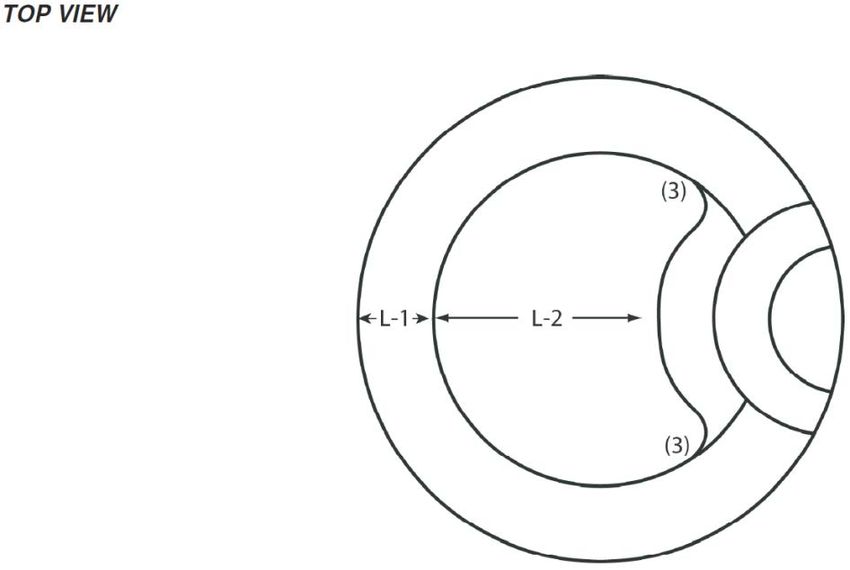
Table of Contents

  Health and Safety Code ......................................................................................................... 6

           Section 1797.182 Training of lifeguards and firefighters to administer first aid and
                 cardiopulmonary resuscitation .......................................................................... 6

      Swimming Pool Sanitation ............................................................................................... 6

           116025. Public swimming pool defined ....................................................................... 6

           116028. Lifeguard service defined ............................................................................... 6

           116030. Pools in excess of 20,000 square feet ............................................................ 7

           116033. Requirements for persons providing aquatic instruction ............................... 7

           116035. Supervising agency......................................................................................... 8

           116038. Filing copy of plans prior to construction of public swimming pool ............... 8

           116040. Operation and maintenance in sanitary, healthful and safe manner ............. 8

           116043. Sanitary, healthful and safe condition of pool, appurtenances, etc. .............. 8

           116045. Lifeguard service shall be provided ................................................................ 8

           116048. Record keeping for common interest development of less than 25 units ..... 8

           116049. Ground-fault interrupter................................................................................ 9

           116049.1. Ground-fault interrupter II .......................................................................... 9

           116050. Rules and regulations: enforcement of building standards; adoption of
                standards ........................................................................................................ 10

           116053. Enforcement officers ................................................................................... 11

           116055. Authority to enter and investigate ............................................................... 11

           116058. Publication of inspection reports ................................................................. 11

           116060. Public nuisance ............................................................................................ 11

           116063. Abatement of nuisance ................................................................................ 11

           116064. Suction hazards at wading pools .................................................................. 11

           116064.1 Uniform standards to prevent physical entrapment .................................. 13

           116064.2. Anti-entrapment devices and systems ...................................................... 13

           116065. Violation; misdemeanor; penalty ................................................................. 17

           116068. Separate offense for each day ..................................................................... 17

                                                               2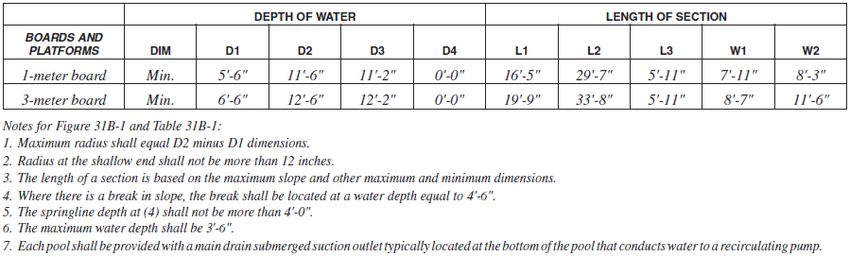
Wave Pool Safety Act ..................................................................................................... 18

         115950. Article known as Wave Pool Safety Act ........................................................ 18

         115951. Definitions for purposes of wave pool safety............................................... 18

         115952. Wave pool shall comply ............................................................................... 18

California Code of Regulations (Title 22) ............................................................................. 20

         65501. Definitions...................................................................................................... 20

         65503. Scope            ........................................................................................................ 21

         65511. Inspection ...................................................................................................... 22

         65521. Public Pool Supervision and Operation .......................................................... 22

         65523. Operation Records ......................................................................................... 23

         65525. Recirculation and Water Treatment System Operation ................................. 24

         65527. Water Clarity .................................................................................................. 24

         65529. Public Pool Disinfection ................................................................................. 24

         65530. Public Pool Water Characteristics .................................................................. 25

         65531. Public Pool Water and Indoor Air Quality Standards ..................................... 26

         65533. Public Pool Cleanliness ................................................................................... 26

         65534. Animals ........................................................................................................ 27

         65535. Public Pool Site Maintenance......................................................................... 27

         65537. Swimsuits, Towels, Caps, and Protective Head Gear...................................... 27

         65539. Lifesaving and Control of Public Pool Users ................................................... 28

         65540. Safety and First Aid Equipment ...................................................................... 28

         65541. Health of Employees and Public Pool Users ................................................... 29

         65545. Public Pool Closure ........................................................................................ 29

         65546. Fecal, Vomit, Blood Contamination, and near Drowning or Drowning Incident
              Response ........................................................................................................ 30

         65547. Compressed Chlorine Gas Safety Requirements ............................................ 31

         65551. Cleaning of Ancillary Facilities ........................................................................ 31

California Building Code (TITLE 24) ...................................................................................... 33

    Division I—General ......................................................................................................... 33

         Section 3101B Scope 33

         Section 3102B Definitions .......................................................................................... 33

         Section 3103B Plan Review ........................................................................................ 36

                                                                3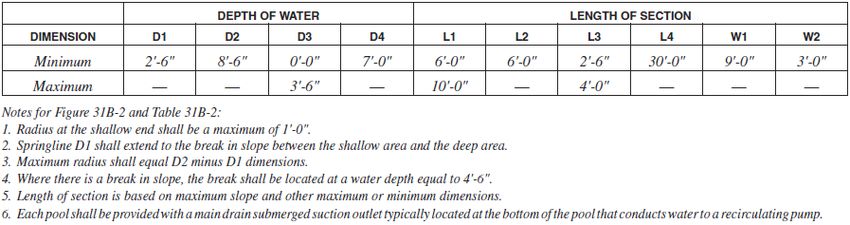
Section 3104B Construction....................................................................................... 36

Section 3105B Plan Compliance Inspections.............................................................. 36

Section 3106B Special Requirements for Spray Grounds ........................................... 37

Section 3107B Alternative Equipment, Materials and Methods of Construction ...... 39

Section 3108B Pool Construction............................................................................... 39

Section 3109B Pool Geometry ................................................................................... 40

Section 3110B Permanent Markings .......................................................................... 40

3110B.4 Water depth markers .................................................................................. 41

Section 3111B Steps, Recessed Steps, Ladders and Stairs ......................................... 42

Section 3112B Handholds .......................................................................................... 43

Section 3113B Diving Boards and Platforms .............................................................. 43

Section 3114B Pool Decks .......................................................................................... 44

Section 3115B Pool Lighting....................................................................................... 45

Section 3116B Dressing, Shower and Toilet Facilities ................................................ 45

Section 3117B Drinking Fountains ............................................................................. 46

Section 3118B Hose Bibbs ......................................................................................... 47

Section 3119B Pool Enclosure.................................................................................... 47

Section 3120B Required Signs.................................................................................... 49

Section 3121B Indoor Pool Ventilation ...................................................................... 52

Section 3122B Pool Equipment Enclosure ................................................................. 52

Section 3123B General Requirements ....................................................................... 52

Section 3124B Turnover Time .................................................................................... 53

Section 3125B Recirculation Piping System and Components ................................... 53

Section 3126B Recirculation Pump Capacity.............................................................. 54

Section 3127B Water Supply Inlets ............................................................................ 54

Section 3128B Filters (All Types) ................................................................................ 55

Section 3129B Rapid Sand Pressure Filters ................................................................ 55

Section 3130B Diatomaceous Earth Filters ................................................................ 55

Section 3131B High Rate Sand Filters ........................................................................ 56

Section 3132B Cartridge Filters.................................................................................. 56

Section 3133B Chemical Feeders ............................................................................... 56

Section 3134B Disinfectant Feeders .......................................................................... 57

                                                   4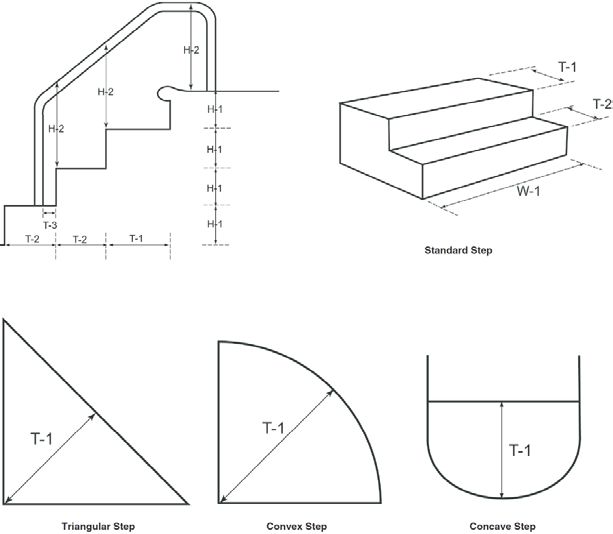
Section 3135B Gas Chlorination Equipment Room .................................................... 58

          Section 3136B Pool Skimming Systems...................................................................... 59

          Section 3137B Pool Fittings ....................................................................................... 61

          Section 3138B Spa Pool Special Requirements .......................................................... 62

          Figure 31B-1 Depths and Clearances for Pool with Diving Boards Greater than 30
                Inches (762 mm) above the Water Line........................................................... 63

          Table 31B-1               ........................................................................................................ 63

          Figure 31B-2 Depths and Clearances for Pools with Diving Boards 30 inches (762
                MM) or Less above the Water Line ................................................................. 64

          Table 31B-2               ........................................................................................................ 64

          Figure 31B-3 Depths and Clearances for Pools without Diving Boards ...................... 65

          Table 31B-3A Pools with Maximum Water Depth ≤ 6’ 0” .......................................... 65

          Table 31B-3B Pools with Maximum Water Depth > 6’ 0” .......................................... 65

          Section 3139B Solar Heating Installations.................................................................. 66

          Section 3140B Cleaning Systems ............................................................................... 66

          Section 3141B Wastewater Disposal ......................................................................... 66

     Division II – Public Swimming Pools ............................................................................... 68

          Section 3160B Ground Fault Circuit Interrupters ....................................................... 68

          Section 3161B Wading Pools ..................................................................................... 69

          Section 3162B Anti-Entrapment Devices and Systems .............................................. 70

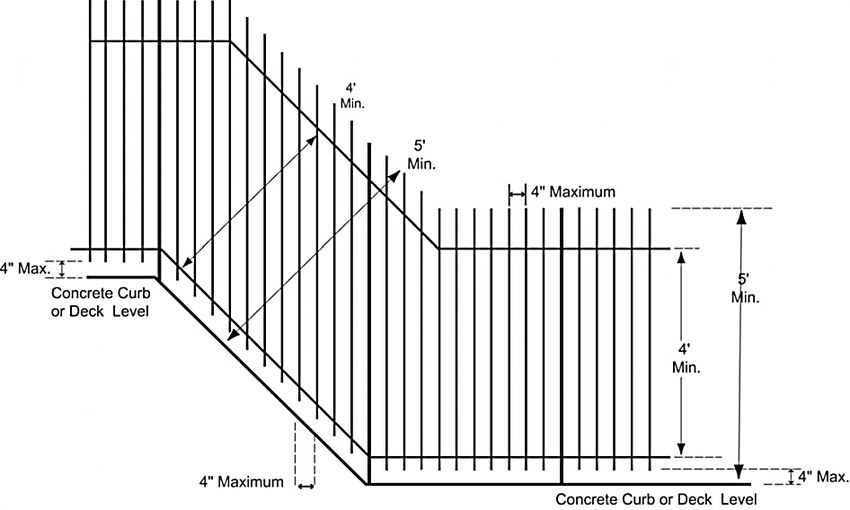
          Figure 31B-4 Perpendicular Fencing Dimensions on Sloping Ground ........................ 75

          Figure 31B-5 Effective Fencing Height ....................................................................... 76

          Figure 31B-6 Depths and Dimensions for Spa Pools .................................................. 77

          Table 31B-6               ........................................................................................................ 78

          Figure 31B-7 Stair and Handrail Dimensions .............................................................. 78

          Table 31B-7               ........................................................................................................ 78

          Figure 31B-8 Depth Marker Locations ....................................................................... 79

Index .................................................................................................................................... 80

                                                                   5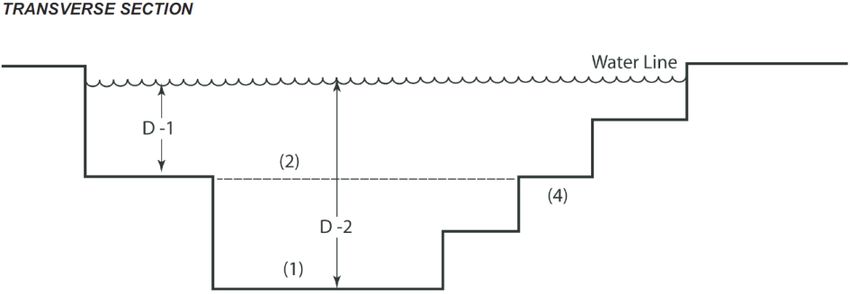
Health and Safety Code

Section 1797.182 Training of lifeguards and firefighters to administer first aid
and cardiopulmonary resuscitation

All ocean, public beach, and public swimming pool lifeguards and all firefighters in
this state, except those whose duties are primarily clerical or administrative, shall be
trained to administer first aid and cardiopulmonary resuscitation. The training shall
meet standards prescribed by the authority, and shall be satisfactorily completed by
such persons as soon as practical, but in no event more than one year after the date
of employment. Satisfactory completion of a refresher course which meets the
standards prescribed by the authority in cardiopulmonary resuscitation and other
first aid shall be required at least every three years.

The authority may designate a public agency or private nonprofit agency to provide
for each county the training required by this section. The training shall be provided
at no cost to the trainee.

As used in this section, "lifeguard" means any regularly employed and paid officer,
employee, or member of a public aquatic safety department or marine safety
agency of the State of California, a city, county, city and county, district, or other
public or municipal corporation or political subdivision of this state.

As used in this section, "firefighter" means any regularly employed and paid officer,
employee, or member of a fire department or fire protection or firefighting agency
of the State of California, a city, county, city and county, district, or other public or
municipal corporation or political subdivision of this state or member of an
emergency reserve unit of a volunteer fire department or fire protection district.

Swimming Pool Sanitation

116025. Public swimming pool defined

"Public swimming pool," as used in this article, means any public swimming pool,
bathhouse, public swimming and bathing place and all related appurtenances.

116028. Lifeguard service defined

"Lifeguard service," as used in this article, means the attendance at a public
swimming pool, during periods of use, of one or more lifeguards who possess, as
minimum qualifications, current certificates from an American Red Cross or YMCA of

                                           6
the U.S.A. lifeguard training program, or have equivalent qualifications, as
determined by the department, and who are trained to administer first aid,
including, but not limited to, cardiopulmonary resuscitation in conformance with
Section 123725 and the regulations adopted thereunder, and who have no duties to
perform other than to supervise the safety of participants in water-contact
activities. "Lifeguard services" includes the supervision of the safety of participants
in water-contact activities by lifeguards who are providing swimming lessons,
coaching or overseeing water-contact sports, or providing water safety instructions
to participants when no other persons are using the facilities unless those persons
are supervised by separate lifeguard services.
116030. Pools in excess of 20,000 square feet
(a) The construction standards as set forth in this article and the regulations
adopted pursuant thereto, shall not apply to any artificially constructed
swimming facility in excess of 20,000 square feet of surface area, including, but
not limited to, a manmade lake or swimming lagoon with sand beaches.
(b) The requirements of this article and regulations adopted pursuant thereto,
pertaining to the operation, maintenance, and use of a public swimming pool,
including the quality and purity of the water, lifesaving and other measures to
ensure the safety of bathers, and measures to ensure personal cleanliness of
bathers shall apply to the swimming facilities described in subdivision (a).
116033. Requirements for persons providing aquatic instruction
Persons providing aquatic instruction, including, but not limited to, swimming
instruction, water safety instruction, water contact activities, and competitive
aquatic sports, at a public swimming pool shall possess current certificates from an
American Red Cross or YMCA of the U.S.A. lifeguard training program, or have
equivalent qualifications, as determined by the department. In addition, these
persons shall be certified in standard first aid and cardiopulmonary resuscitation
(CPR). All these persons shall meet these qualifications by January 1, 1991. Persons
who only disseminate written materials relating to water safety are not persons
providing aquatic instruction within the meaning of this section.
The requirements of this section shall be waived under either of the
following circumstances: (a) when one or more aquatic instructors possessing the
current certificates from an American Red Cross or YMCA of the U.S.A. lifeguard
training program, or the equivalent, are in attendance continuously during periods
of aquatic instruction, or (b) when one or more lifeguards meeting the requirements
of Section 116028 are in attendance continuously during periods of aquatic
instruction.
7116035. Supervising agency
The department has supervision of sanitation, healthfulness, and safety of public
swimming pools.
116038. Filing copy of plans prior to construction of public swimming pool
Every person proposing to construct a public swimming pool shall file a copy of the
plans therefor, prior to construction, with the local health officer having jurisdiction
for approval.
116040. Operation and maintenance in sanitary, healthful and safe manner
Every person operating or maintaining a public swimming pool must do so in a
sanitary, healthful and safe manner.
116043. Sanitary, healthful and safe condition of pool, appurtenances, etc.
Every public swimming pool, including swimming pool structure, appurtenances,
operation, source of water supply, amount and quality of water recirculated and in
the pool, method of water purification, lifesaving apparatus, measures to insure
safety of bathers, and measures to insure personal cleanliness of bathers shall be
such that the public swimming pool is at all times sanitary, healthful and safe.
116045. Lifeguard service shall be provided
(a) Lifeguard service shall be provided for any public swimming pool that is of
wholly artificial construction and for the use of which a direct fee is charged.
For all other public swimming pools, lifeguard service shall be provided or signs
shall be erected clearly indicating that the service is not provided.
(b) "Direct fee," as used in this section, means a separately stated fee or charge for
the use of a public swimming pool to the exclusion of any other service, facility,
or amenity.
116048. Record keeping for common interest development of less than 25 units
(a) On or after January 1, 1987, for public swimming pools in any common interest
development, as defined in Section 4100 or 6534 of the Civil Code, that consists
of fewer than 25 separate interests, as defined in Section 4185 or 6564 of the
8Civil Code, the person operating each pool open for use shall be required to
keep a record of the information required by subdivision (a) of Section 65523 of
Title 22 of the California Administrative Code, except that the information shall
be recorded at least two times per week and at intervals no greater than four
days apart.
(b) On or after January 1, 1987, any rule or regulation of the department that is in
conflict with subdivision (a) is invalid.
116049. Ground-fault interrupter
(a) "Public swimming pool," as used in this section, means any public swimming
pool defined in Section 116025 that is owned or operated by the state or any
local governmental entity, including, but not limited to, any city, county, city
and county, charter city, charter county, or charter city and county.
(b) All dry-niche light fixtures, and all underwater wet-niche light fixtures operating
at more than 15 volts in public swimming pools shall be protected by a ground-
fault circuit interrupter in the branch circuit, and all light fixtures in public
swimming pools shall have encapsulated terminals. This subdivision is
declaratory of existing law.
(c) Any public swimming pools that do not meet the requirements specified in
subdivision (b) by January 1, 1995, shall be retrofitted to comply with these
requirements by January 1, 1996.
(d) The ground-fault circuit interrupter required pursuant to this section shall
comply with Underwriter's Laboratory standards.
(e) Any state or local governmental entity that owns or operates a public
swimming pool shall have its public swimming pool inspected by a qualified
inspector prior to July 1, 1996, to determine compliance with this section.
(f) A public swimming pool may charge a fee, or increase its fee charged, to the
public for use of the pool, for the purpose of recovering the administrative and
other costs of retrofitting pools in compliance with this section. The charge or
increase due to this section shall terminate when funds sufficient to cover
these costs are collected.
(g) All electrical work required for compliance with this section shall be performed
by an electrician licensed pursuant to Chapter 9 (commencing with Section
7000) of Division 3 of the Business and Professions Code.
116049.1. Ground-fault interrupter II
(a) "Public swimming pool," as used in this section, means any swimming pool
operated for the use of the general public with or without charge, or for the
use of the members and guests of a private club, including any swimming pool
located on the grounds of a hotel, motel, inn, an apartment complex, or any
residential setting other than a single-family home. For purposes of this
9section, public swimming pool shall not include a swimming pool located on the
grounds of a private single-family home.
(b) The design and installation of all underwater lighting systems, operating at
more than 15 volts, supplied from a branch circuit either directly or by way of a
transformer, shall be installed in a public swimming pool, as defined in this
section, so that there is no shock hazard with any likely combination of fault
conditions during normal use, and shall comply with both of the following
requirements:
(1) An approved ground-fault circuit interrupter shall be installed in the
branch circuit that supplies all fixtures operating at more than 15 volts.
(2) Only approved underwater lighting fixtures shall be used and no lighting
fixtures shall be installed for operations at more than 150 volts between
conductors.
(c) Any public swimming pool that does not meet the requirements specified in
subdivision (b), shall be retrofitted to comply with these requirements by May
1, 1999.
(d) The ground-fault circuit interrupter required pursuant to this section shall
comply with standards acceptable to the authority having jurisdiction.
(e) The owner or operator of a public swimming pool shall, on or before May 1,
1999, comply with both of the following:
(1) Obtain an inspection of its public swimming pool by the local health officer
or a qualified contractor as set forth in subdivision (f).
(2) Certify to the local health officer as set forth in Section 116053 that the
public swimming pool facility is in compliance with this section.
(f) All electrical work required for compliance with this section shall be performed
by a person licensed to perform electrical work within his or her general,
specialty, or limited specialty contractor' s licensed scope of practice pursuant
to Section 7059 of the Business and Professions Code.
(g) This section shall be known and may be cited as the Yasmin Paleso'o Memorial
Swimming Pool Safety Law.
116050. Rules and regulations: enforcement of building standards; adoption of
standards
Except as provided in Section 18930, the department shall make and enforce
regulations pertaining to public swimming pools as it deems proper and shall
enforce building standards published in the State Building Standards Code relating
to public swimming pools; provided, that no rule or regulation as to design or
construction of pools shall apply to any pool that has been constructed before the
adoption of the regulation, if the pool as constructed is reasonably safe and the
manner of the construction does not preclude compliance with the requirements of
the regulations as to bacteriological and chemical quality and clarity of the water in
the pool. The department shall adopt and submit building standards for approval
pursuant to Chapter 4 (commencing with Section 18935) of Part 2.5 of Division 13
for the purposes described in this section.
10116053. Enforcement officers
Every health officer shall enforce the building standards published in the State
Building Standards Code relating to swimming pools and the other regulations
adopted by the department pursuant to this article in his or her jurisdiction.
116055. Authority to enter and investigate
For the purposes of this article, any health officer, or any inspector of the
department, may at all reasonable times enter all parts of the premises of a public
swimming pool to make examination and investigation to determine the sanitary
condition and whether this article, building standards published in the State Building
Standards Code relating to swimming pools, or the other regulations adopted by the
department pursuant to this article are being violated.
116058. Publication of inspection reports
The department may publish the reports of inspections.
116060. Public nuisance
Any public swimming pool constructed, operated, or maintained contrary to the
provisions of this article is a public nuisance, dangerous to health.
116063. Abatement of nuisance
Any nuisance maintained in violation of this article may be abated or enjoined in an
action brought by a local health officer, or the department, or it may be summarily
abated in the manner provided by law for the summary abatement of other public
nuisances dangerous to health.
116064. Suction hazards at wading pools
(a) As used in this section the following words have the following meanings:
(1)
(A) "Public wading pool" means a pool that meets all of the following
criteria:
(i) It has a maximum water depth not exceeding 18 inches.
11(ii) It is a pool other than a pool that is located on the premises of a
one-unit or two-unit residence, intended solely for the use of
the residents or guests.
(B) "Public wading pool" includes, but is not limited to, a pool owned or
operated by private persons or agencies, or by state or local
governmental agencies.
(C) "Public wading pool" includes, but is not limited to, a pool located in
an apartment house, hotel, or similar setting, that is intended for the
use of residents or guests.
(2) "Alteration" means any of the following:
(A) To change, modify, or rearrange the structural parts or the design.
(B) To enlarge.
(C) To move the location of.
(D) To install a new water circulation system.
(E) To make any repairs costing fifty dollars ($50) or more to an existing
circulation system.
(3) "ANSI/APSP performance standard" means a standard that is accredited
by the American National Standards Institute (ANSI) and published by the
Association of Pool and Spa Professionals (APSP).
(4) "Suction outlet" means a fitting or fixture typically located at the bottom
or on the sides of a swimming pool that conducts water to a recirculating
pump.
(b) A public wading pool shall have at least two circulation suction outlets per
pump that are hydraulically balanced and symmetrically plumbed through one
or more "T" fittings, and are separated by a distance of at least three feet in
any dimension between the suction outlets.
(c) All public wading pool suction outlets shall be covered with antivortex grates or
similar protective devices. All suction outlets shall be covered with grates or
antivortex plates that cannot be removed except with the use of tools. Slots or
openings in the grates or similar protective devices shall be of a shape, area,
and arrangement that would prevent physical entrapment and would not pose
any suction hazard to bathers.
(d)
(1) The State Department of Health Services may adopt regulations pursuant
to this section.
(2) The regulations may include, but not be limited to, standards permitting
the use of alternative devices or safeguards, or incorporating new
technologies, that produce, at a minimum, equivalent protection against
entrapment and suction hazard, whenever these devices, safeguards, or
technologies become available to the public.
(3) Regulations adopted pursuant to this section constitute building standards
and shall be forwarded pursuant to Section 11343 of the Government
Code to the California Building Standards Commission for approval as set
forth in Section 18907 of the Health and Safety Code.
(e) The California Building Standards Commission shall approve the building
standards as set forth in this section and publish them in the California Building
12Standards Code by November 1, 1999. The commission shall publish the text of
this section in Title 24 of the California Code of Regulations, Part 2, Chapter
31B, requirements for public swimming pools, with the following note: "NOTE:
These building standards are in statute but have not been adopted through the
regulatory process." Enforcement of the standards set forth in this section does
not depend upon adoption of regulations, therefore, enforcement agencies
shall enforce the standards pursuant to the timeline set forth in this section
prior to adoption of related regulations.
(f) The maximum velocity in the pump suction hydraulic system shall not exceed
six feet per second when 100 percent of the pump's flow comes from the
circulation system and any suction outlet in the system is completely blocked.
(g) On and after January 1, 1998, all newly constructed public wading pools shall
be constructed in compliance with this section.
(h) Commencing January 1, 1998, whenever a construction permit is issued for
alteration of an existing public wading pool, it shall be retrofitted so as to be in
compliance with this section.
(i) By January 1, 2000, every public wading pool, regardless of the date of original
construction, shall be retrofitted to comply with this section.
116064.1 Uniform standards to prevent physical entrapment
The Legislature finds and declares that the public health interest requires that there
be uniform statewide health and safety standards for public swimming pools to
prevent physical entrapment and serious injury to children and adults. It is the
intent of the Legislature to occupy the whole field of health and safety standards for
public swimming pools and the requirements established in this article and the
regulations adopted pursuant to this article shall be exclusive of all local health and
safety standards relating to public swimming pools.
116064.2. Anti-entrapment devices and systems
(a) As used in this section, the following words have the following meanings:
(1) "ANSI/APSP performance standard" means a standard that is accredited
by the American National Standards Institute (ANSI) and published by the
Association of Pool and Spa Professionals (APSP).
(2) "ASME/ANSI performance standard" means a standard that is accredited
by the American National Standards Institute and published by the
American Society of Mechanical Engineers.
(3) "ASTM performance standard" means a standard that is developed and
published by ASTM International.
(4) "Public swimming pool" means an outdoor or indoor structure, whether
in-ground or above-ground, intended for swimming or recreational
bathing, including a swimming pool, hot tub, spa, or nonportable wading
pool, that is any of the following:
(A) Open to the public generally, whether for a fee or free of charge.
13(B) Open exclusively to members of an organization and their guests,
residents of a multiunit apartment building, apartment complex,
residential real estate development, or other multifamily residential
area, or patrons of a hotel or other public accommodations facility.
(C) Located on the premises of an athletic club, or public or private
school.
(5) "Qualified individual" means a contractor who holds a current valid license
issued by the State of California or a professional engineer licensed in the
State of California who has experience working on public swimming pools.
(6) "Safety vacuum release system" means a vacuum release system that
ceases operation of the pump, reverses the circulation flow, or otherwise
provides a vacuum release at a suction outlet when a blockage is detected.
(7) "Skimmer equalizer line" means a suction outlet located below the
waterline, typically on the side of the pool, and connected to the body of a
skimmer that prevents air from being drawn into the pump if the water
level drops below the skimmer weir. However, a skimmer equalizer line is
not a suction outlet for purposes of subdivisions (c) and (d).
(8) "Suction outlet" means a fitting or fixture of a swimming pool that
conducts water to a recirculating pump.
(9) "Unblockable suction outlet" means a suction outlet, including the sump,
that has a perforated (open) area that cannot be shadowed by the area of
the 18 inch by 23 inch Body Blocking Element of the ANSI/APSP-16
performance standard, and that the rated flow through any portion of the
remaining open area cannot create a suction force in excess of the
removal force values in Table 1 of that standard.
(b)
(1) Subject to subdivision (e), every public swimming pool shall be equipped
with antientrapment devices or systems that comply with the ANSI/APSP-
16 performance standard or successor standard designated by the federal
Consumer Product Safety Commission.
(2) A public swimming pool that has a suction outlet in any location other
than on the bottom of the pool shall be designed so that the recirculation
system shall have the capacity to provide a complete turnover of pool
water within the following time:
(A) One-half hour or less for a spa pool.
(B) One-half hour or less for a spray ground.
(C) One hour or less for a wading pool.
(D) Two hours or less for a medical pool.
(E) Six hours or less for all other types of public pools.
(c) Subject to subdivisions (d) and (e), every public swimming pool with a single
suction outlet that is not an unblockable suction outlet shall be equipped with
at least one or more of the following devices or systems that are designed to
prevent physical entrapment by pool drains:
(1) A safety vacuum release system that has been tested by a nationally
recognized testing laboratory and found to conform to ASME/ANSI
14performance standard A112.19.17, as in effect on December 31, 2009, or
ASTM performance standard F2387, as in effect on December 31, 2009.
(2) A suction-limiting vent system with a tamper-resistant atmospheric
opening, provided that it conforms to any applicable ASME/ANSI or ASTM
performance standard.
(3) A gravity drainage system that utilizes a collector tank, provided that it
conforms to any applicable ASME/ANSI or ASTM performance standard.
(4) An automatic pump shutoff system tested by a department-approved
independent third party and found to conform to any applicable
ASME/ANSI or ASTM performance standard.
(5) Any other system that is deemed, in accordance with federal law, to be
equally effective as, or more effective than, the systems described in
paragraph (1) at preventing or eliminating the risk of injury or death
associated with the circulation system of the pool and suction outlets.
(d) Every public swimming pool constructed on or after January 1, 2010, shall have
at least two suction outlets per pump that are hydraulically balanced and
symmetrically plumbed through one or more "T" fittings, and that are
separated by a distance of at least three feet in any dimension between the
suction outlets. A public swimming pool constructed on or after January 1,
2010, that meets the requirements of this subdivision, shall be exempt from
the requirements of subdivision (c).
(e) A public swimming pool constructed prior to January 1, 2010, shall be
retrofitted to comply with subdivisions (b) and (c) by no later than July 1, 2010,
except that no further retrofitting is required for a public swimming pool that
completed a retrofit between December 19, 2007, and January 1, 2010, that
complied with the Virginia Graeme Baker Pool and Spa Safety Act (15 U.S.C.
Sec. 8001 et seq.) as in effect on the date of issue of the construction permit, or
for a nonportable wading pool that completed a retrofit prior to January 1,
2010, that complied with state law on the date of issue of the construction
permit. A public swimming pool owner who meets the exception described in
this subdivision shall do one of the following prior to September 30, 2010:
(1) File the form issued by the department pursuant to subdivision (f), as
otherwise provided in subdivision (h).
(2)
(A) File a signed statement attesting that the required work has been
completed.
(B) Provide a document containing the name and license number of the
qualified individual who completed the required work.
(C) Provide either a copy of the final building permit, if required by the
local agency, or a copy of one of the following documents if no
permit was required:
(i) A document that describes the modification in a manner that
provides sufficient information to document the work that was
done to comply with federal law.
15(ii) A copy of the final paid invoice. The amount paid for the services
may be omitted or redacted from the final invoice prior to
submission.
(f) Prior to March 31, 2010, the department shall issue a form for use by an owner
of a public swimming pool to indicate compliance with this section. The
department shall consult with county health officers and directors of
departments of environmental health in developing the form and shall post the
form on the department's Internet Web site. The form shall be completed by
the owner of a public swimming pool prior to filing the form with the
appropriate city, county, or city and county department of environmental
health. The form shall include, but not be limited to, the following information:
(1) A statement of whether the pool operates with a single suction outlet or
multiple suction outlets that comply with subdivision (d).
(2) Identification of the type of antientrapment devices or systems that have
been installed pursuant to subdivision (b) and the date or dates of
installation.
(3) Identification of the type of devices or systems designed to prevent
physical entrapment that have been installed pursuant to subdivision (c) in
a public swimming pool with a single suction outlet that is not an
unblockable suction outlet and the date or dates of installation or the
reason why the requirement is not applicable.
(4) A signature and license number of a qualified individual who certifies that
the factual information provided on the form in response to paragraphs
(1) to (3), inclusive, is true to the best of his or her knowledge.
(g) A qualified individual who improperly certifies information pursuant to
paragraph (4) of subdivision (f) shall be subject to potential disciplinary action
at the discretion of the licensing authority.
(h) Except as provided in subdivision (e), each public swimming pool owner shall
file a completed copy of the form issued by the department pursuant to this
section with the city, county, or city and county department of environmental
health in the city, county, or city and county in which the swimming pool is
located. The form shall be filed within 30 days following the completion of the
swimming pool construction or installation required pursuant to this section or,
if the construction or installation is completed prior to the date that the
department issues the form pursuant to this section, within 30 days of the date
that the department issues the form. The public swimming pool owner or
operator shall not make a false statement, representation, certification, record,
report, or otherwise falsify information that he or she is required to file or
maintain pursuant to this section.
(i) In enforcing this section, health officers and directors of city, county, or city
and county departments of environmental health shall consider documentation
filed on or with the form issued pursuant to this section by the owner of a
public swimming pool as evidence of compliance with this section. A city,
county, or city and county department of environmental health may verify the
accuracy of the information filed on or with the form.
16(j) To the extent that the requirements for public wading pools imposed by
Section 116064 conflict with this section, the requirements of this section shall
prevail.
(k) The department shall have no authority to take any enforcement action against
any person for violation of this section and has no responsibility to administer
or enforce the provisions of this section.
116065. Violation; misdemeanor; penalty
Every person who violates any provision of this article, building standards published
in the State Building Standards Code relating to swimming pools, or the rules and
regulations adopted pursuant to the provisions of this article, is guilty of a
misdemeanor, punishable by a fine of not less than fifty dollars ($50) nor more than
one thousand dollars ($1,000), or by imprisonment for not more than six months, or
both.
116068. Separate offense for each day
Each day that a violation of this article continues is a separate offense.
17Wave Pool Safety Act
115950. Article known as Wave Pool Safety Act
This article shall be known and may be cited as the Wave Pool Safety Act.
115951. Definitions for purposes of wave pool safety
For purposes of this article, the following definitions shall apply:
(a) "Nonswimmer" means a person who is a weak or inexperienced swimmer or a
person who cannot swim.
(b) "Patron" means a swimmer or nonswimmer using a wave pool.
(c) "Rest period" means a period of time that the wave generating equipment for
the wave pool is not producing breaking waves.
(d) "Wave pool" means a swimming pool designed for the purpose of producing
breaking wave action in the water and that is not primarily designed for
standup surfing or bodyboarding.
115952. Wave pool shall comply
On and after January 1, 2009, a wave pool in this state shall comply with all of the
following:
(a)
(1) A wave pool operator shall provide a United States Coast Guard-approved
Type II or Type III lifevest that is free and available for use by a
nonswimmer or a child under 48 inches in height. A wave pool operator
shall also provide a United States Coast Guard-approved Type II or Type III
lifevest that is free and available for use to any other patron at the request
of the patron.
(2) Notwithstanding paragraph (1), a patron, including a nonswimmer and
child, may use his or her own lifevest if that lifevest is a United States
Coast Guard-approved Type II or Type III lifevest.
(b)
(1) Children under 48 inches in height, regardless of whether the child is
accompanied by an adult, shall wear a properly fitting United States Coast
Guard-approved Type II or Type III lifevest to gain access to a wave pool.
(2) A child under 42 inches in height shall be accompanied by an adult in
order to gain entry into the park. A wave pool operator shall deny
entrance into the park of a child under 42 inches in height if that child is
not accompanied by an adult.
18(3) Any person or child who refuses to comply with paragraph (2) of
subdivision (a) or paragraph (1) of this subdivision shall be removed from
the park by the wave pool operator.
(c) In all cases where wave action is suspended for any reason, an audible signal
shall be used prior to resuming wave action to warn patrons of impending
waves. That audible signal may be of any duration, but shall sound within 15
seconds immediately prior to resuming the breaking wave action. The audible
signal shall be loud enough so that it can be heard by all patrons of the wave
pool, but shall not exceed 90 decibels.
(d)
(1) Lifeguards shall be assigned to guard a wave pool.
(2) The wave pool operator shall ensure that there are a sufficient number of
lifeguards on duty to recognize, respond, and provide care to swimmers in
distress or passive or active drowning persons within, but no longer than,
30 seconds of the onset of their peril.
(3) A lifeguard subject to this subdivision shall have an unobstructed view of,
and be able to completely observe, in its entirety, his or her defined zone
of protection in the wave pool.
(4) A wave pool operator shall ensure that conditions in a wave pool are
continually reevaluated for safety and shall adjust lifeguard staffing
accordingly.
(e) An emergency stop for the wave equipment shall be easily accessible to the
lifeguards and other pool officials, as required by the Division of Occupational
Safety and Health.
(f) A wave pool operator shall ensure that the wave pool has regular periods
without breaking waves being produced; to accomplish this, the wave pool
operator shall ensure that continuous breaking wave cycles in a wave pool shall
not exceed 15 minutes.
(g) Signs with clearly legible letters and, if appropriate, symbols, indicating the
requirements described in subdivisions (a) to (c), inclusive, shall appear at the
ticket booth or entrance gate to the park or other facility where the wave pool
is located.
19California Code of Regulations (Title 22)
TITLE 22. SOCIAL SECURITY
DIVISION 4. ENVIRONMENTAL HEALTH
CHAPTER 20. PUBLIC SWIMMING POOLS
65501. Definitions
(a) "Ancillary Facility" means any area used in conjunction with or for the
operation of a public pool, including, but not limited to, public dressing rooms,
lockers, shower or bathroom areas, drinking fountains, equipment rooms, pool
deck areas, pool enclosures, or building spaces, that is intended to be used by
pool users.
(b) "Clean Pool Water" means public pool water maintained free of dirt, oils, scum,
algae, floating debris, or visible organic and inorganic materials that would
pollute the water.
(c) "Communicable Disease" means an illness caused by an infectious agent or its
toxins that occurs through the direct or indirect transmission of the infectious
agent or its products from an infected individual or via an animal, vector, or the
inanimate environment to a susceptible animal or human host.
(d) "Clear Pool Water" means public pool water that is free from cloudiness and is
transparent.
(e) "Enforcing Agent" means the local health officer, director of environmental
health, registered environmental health specialist, environmental health
specialist trainee, or an inspector of the State Department of Public Health.
(f) "Pool Operator'' means the pool owner or a person the pool owner delegates
to conduct public pool operation and maintenance. The public pool owner may
delegate pool operator responsibilities to another person, but the pool owner
shall retain responsibility for ensuring compliance with these regulations.
(g) "Pool User" means a person using a public pool or ancillary facilities for the
purpose of participating in or watching pool users engaged in water activities
such as diving, swimming, or wading.
(h) "Public Pool" means any public swimming pool, public bathhouse, public
swimming place, and public bathing place that is or includes an artificial basin,
chamber, or tank constructed or prefabricated with impermeable surfaces and
such pools, bathhouses, and places are used or intended to be used for public
swimming, diving, or recreational water activities. "Public Pool" does not
include individual therapeutic tubs or baths where the main purpose is cleaning
of the body.
(i) "Public Pool Sites" means all public pools, ancillary facilities, and water
treatment systems at the public pool premises.
(j) "Recirculation System" means the system of hydraulic components designed to
remove, filter, disinfect, and return water to the public pool.
20(k) "Spa" means a public pool that incorporates a water jet system, an aeration
system, or a combination of the two systems used in conjunction with heated
water.
(l) "Special Purpose Pool" means a public pool constructed exclusively for a
specific purpose, such as instruction, diving, or medical treatment.
(m) "Splash Zone" means the maximum distance the water from a spray ground
can project horizontally.
(n) "Spray Ground" means a public pool with no standing water in the splash zone
and consists of a surge basin with a recirculation system from which water is
directed through water features for contact with pool users.
(o) "Surge Basin" means a reservoir or surge trench open to the atmosphere that
receives water via gravity flow from the main drain, spray ground, or perimeter
overflow system and from which the recirculation system operates.
(p) "Wading Pool" means a public pool intended to be used for wading by small
children and having a maximum water depth of 18 inches (457 mm) at the
deepest point.
(q) "Water Feature" means an interactive device or structure such as a water
fountain, water spray, dancing water jet, waterfall, dumping bucket, or
shooting water cannon through which water is directed at the pool user.
(r) "Water Treatment System" means all materials and equipment related to
disinfection, water quality, recirculation, and filtration.
Note: Authority cited: Sections 116050, 131052 and 131200, Health and Safety
Code. Reference: Sections 116025, 116035, 116043, 116050 and 116055, Health and
65503. Scope
(a) The provisions of this Chapter shall apply to all public pools and public pool
sites, including, but not limited to:
(1) Amusement park pools.
(2) Apartment house pools.
(3) Bed and breakfast inn pools.
(4) Campground pools.
(5) Club pools.
(6) Commercial pools.
(7) Condominium pools.
(8) Health or fitness club pools.
(9) Homeowner association pools.
(10) Hotel pools.
(11) Licensed day care facility pools.
(12) Medical facility pools.
(13) Mineral springs pools.
(14) Motel pools.
(15) Municipal pools.
(16) Public or private school pools.
21(17) Recreational vehicle or mobile home park pools.
(18) Resort pools.
(19) Special purpose pools.
(20) Spray grounds.
(21) Swim school pools.
(22) Water park pools.
(23) Wave pools.
(b) Mineral springs pools that meet the fresh water flow exception standard in
section 3123B.1, Title 24, California Code of Regulations (CCR), must comply
with all the public pool standards in this chapter except for continuous public
pool disinfection requirements in section 65529, if monthly bacteriological
water-quality standards are met according to section 65531. Mineral springs
pools that do not meet the fresh water flow exception standard in section
3123B.1, Title 24, CCR, shall comply with all public pool standards in this
chapter and Title 24, CCR.
(c) The provisions of this Chapter shall apply to all ancillary facilities and
equipment provided, operated, and maintained in connection with public
pools, including, but not limited to:
(1) Dressing rooms.
(2) Drinking fountains.
(3) Fencing and enclosures.
(4) Locker rooms.
(5) Pool decks.
(6) Safety equipment.
(7) Shower rooms.
(8) Toilet facilities.
(9) Water treatment systems.
(d) A private pool is any constructed pool, permanent or portable, that is intended
for use by occupants of not more than three residential units. Private pools are
not public pools for the provisions of this chapter.
Note: Authority cited: Sections 116035, 116050, 131052 and 131200, Health and
Safety Code. Reference: Sections 116025 and 116043, Health and Safety Code.
65511. Inspection
Except after seasonal closures, the enforcing agent shall give written approval
before a public pool may be placed in operation.
Note: Authority cited: Sections 116050 and 131200, Health and Safety Code.
Reference: Sections 116035, 116050 and 116055, Health and Safety Code.
65521. Public Pool Supervision and Operation
22(a) Every public pool shall be under the supervision of a pool operator.
(b) The pool operator shall maintain pool operating procedures at the public pool
site for use by the pool operator and for inspection by the enforcing agent.
(c) The pool operator shall maintain manufacturers' instructions for the operation
and maintenance for all mechanical and electrical equipment and water
treatment systems at the public pool site for use by the pool operator and for
inspection by the enforcing agent.
Note: Authority cited: Sections 116050 and 131200, Health and Safety Code.
Reference: Sections 116035, 116040 and 116043, Health and Safety Code.
65523. Operation Records
(a) Except as provided in Health and Safety Code, section 116048, the pool
operator of every public pool open for use at a public pool site shall test the
disinfectant residual and pH of the public pool water a minimum of once per
day. The pool operator shall also test heated pools' water temperature a
minimum of once per day. The pool operator may perform these daily tests
using a properly calibrated automatic chemical monitoring and control system
if approved by the enforcing agent and in accordance with the manufacturer's
equipment specifications for calibration and directions for proper use. The pool
operator shall maintain a written daily record of all test results, equipment
readings, calibrations, and corrective action taken at the public pool site.
(b) If the pool operator adds cyanuric acid to a public pool, the pool operator shall
measure the cyanuric acid concentration in that pool a minimum of once per
month and shall maintain a written record of these test results and all
corrective action taken at the public pool site.
(c) The pool operator shall test combined chlorine at a frequency required to
maintain maximum combined chlorine concentrations below 0.4 ppm. The pool
operator shall maintain a written record of these test results and all corrective
action taken at the public pool site.
(d) The pool operator shall maintain a written record of routine maintenance and
repairs to the public pool at the public pool site.
(e) If a fecal, vomit, blood contamination, near-drowning, or drowning incident
occurs in a pool, the pool operator shall record the incident in accordance with
the requirements of section 65546 and shall identify the affected public pool in
the incident record if there is more than one pool at the public pool site. This
record shall be maintained at the public pool site.
(f) The pool operator shall maintain data and records collected pursuant to
subdivisions (a), (b), (c), (d), and (e) for at least two years for inspection by the
enforcing agent and shall submit all data and records to the enforcing agent
upon the agent's request.
23You can also read


