QUEENSLAND SPACE INDUSTRY STRATEGY - 2020-2025 February 2020
←
→
Page content transcription
If your browser does not render page correctly, please read the page content below

QUEENSLAND SPACE
INDUSTRY STRATEGY
2020–2025
February 2020

The Department of State Development, Manufacturing, Infrastructure and Planning
       Copyright
       This publication is protected by the Copyright Act 1968.
       Licence
                                This work, except as identified below, is licensed by the Department of State Development, Manufacturing,
                                Infrastructure and Planning under a Creative Commons Attribution-Non-Commercial-No Derivative Works
                                (CC BY-NC-ND) 4.0 Australia licence. To view a copy of this licence, visit: http://creativecommons.org.au/

       You are free to copy, communicate and adapt this publication, as long as you attribute it as follows:
       © State of Queensland, Department of State Development, Manufacturing, Infrastructure and Planning, February 2020.

                    The Queensland Government is committed to providing accessible services to Queenslanders of all cultural and
                    linguistic backgrounds. If you have difficulty understanding this publication and need a translator, please call the
                    Translating and Interpreting Service (TIS National) on telephone 131 450 and ask them to contact the Queensland
                    Department of State Development, Manufacturing, Infrastructure and Planning on (07) 3452 7100.

       Disclaimer
       While every care has been taken in preparing this publication, the State of Queensland accepts no responsibility for decisions or
       actions taken as a result of any data, information, statement or advice, expressed or implied, contained within. To the best of our
       knowledge, the content was correct at the time of publishing.
       Copies of this publication are available on our website at www.dsdmip.qld.gov.au and further copies are available upon request to:
       Department of State Development, Manufacturing, Infrastructure and Planning
       PO Box 15009, City East, Queensland 4002
       Phone:       13QGOV (13 74 68)
       Email:       info@dsdmip.qld.gov.au
       Web:         www.dsdmip.qld.gov.au

Page 2 | Queensland Space Industry Strategy
Foreword

The Queensland Government is working to transform the Queensland
economy and create high-paid, knowledge-based jobs for our state’s
future, particularly in regional Queensland.
Few industries capture public and expert imagination like space. Recent private sector involvement in
space has spurred the development of a US$345 billion global space industry, three quarters of which
has been driven by the private sector. The value of this industry is forecast to triple by 2040.
The opportunity for Queensland is significant. Our state’s space industry already employs more than
2000 full-time equivalent positions and generates $760 million per year through core industry services
like satellite communications. The state has the capability and location to develop a space industry with
the potential to contribute between $3.5 billion to $6 billion to Queensland’s economy by 2036.
The state’s universities and companies are at the forefront of space research and technology. Queensland
has world-leading capability in hypersonics, robotics and automation, nation-leading Earth observation,
niche manufacturing including advanced composite materials, and new launch technologies.
Queensland is Australia’s space coast.
The further development of the space industry here in Queensland provides new opportunities for
growth, particularly in the regions. The open spaces of our state’s outback are ideal for the location of
satellite ground stations, while an extensive coastline and proximity to the equator are significant assets
for the establishment of a launch site.
Queensland is already home to Australia’s launch vehicle and aviation manufacturing sectors,
as well as supporting industries such as aerospace and defence. With our advanced manufacturing
supply chain and world-leading research programs, it makes sense for the state to also be the home
of Australia’s space manufacturing industry.
To capitalise on these opportunities, the Queensland Space Industry Strategy builds on the Queensland
Aerospace and other priority sector 10-Year Roadmaps and Action Plans to provide more targeted actions
to grow our space industry.
These targeted actions will leverage the state’s space industry strengths and its competitive geographical
advantage. By supporting the enabling conditions for growth, Queensland’s space sector will be able to
offer new products and services to the state’s downstream industries and to international markets.
Queensland’s space industry has an important role in growing the state’s economy and providing
high-value knowledge-based jobs of the future. Our government is invested in supporting Queensland’s
space industry to grow and thrive.

                             The Honourable Cameron Dick MP
                             Minister for State Development,
                             Manufacturing, Infrastructure and Planning

                                                                                                              Page 3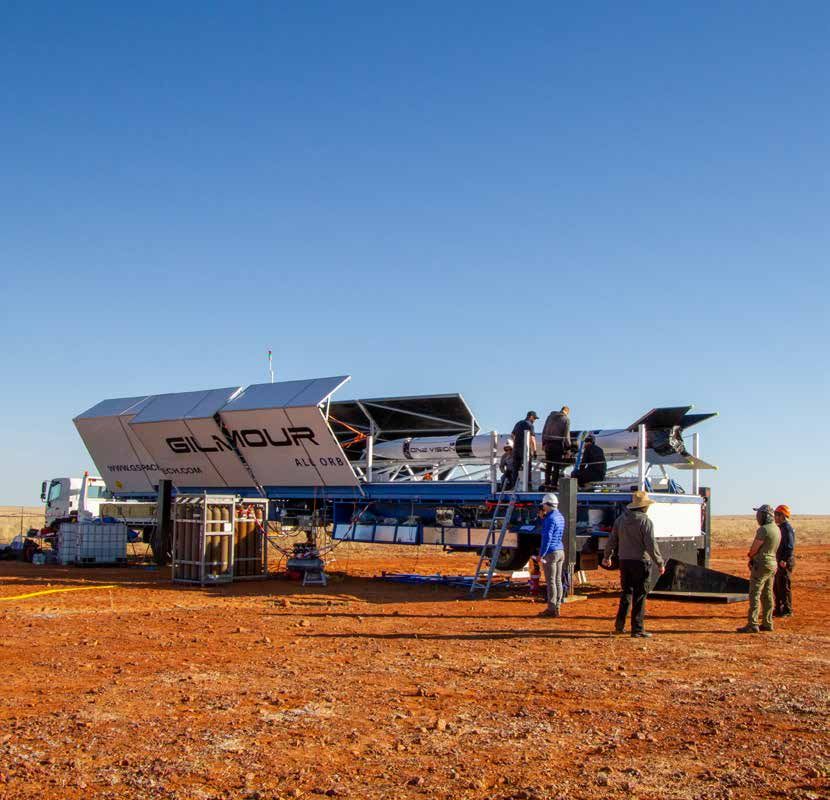
Contents
      Minister’s foreword ............................................................3
      Vision.................................................................................5
      Executive summary............................................................ 6
      Queensland’s opportunity in space..................................... 8
        Productivity and benefits for the rest
        of Queensland’s economy......................................................... 10
      Queensland’s space industry............................................. 11
      Queensland’s space industry strengths............................. 13
        Key strength 1: Launch activities................................................ 13
        Key strength 2: Ground systems................................................ 17
        Key strength 3: Space-enabled services..................................... 19
        Key strength 4: Space systems – manufacturing
        and robotics.............................................................................22
        Our geographical strengths.......................................................24
        Key growth areas and industry challenges.................................. 25
      Strategy action overview.................................................. 26
      Queensland space industry strategy actions..................... 28
      Glossary...........................................................................30
      End notes ......................................................................... 31

Image courtesy of the University of Southern Queensland

Page 4 | Queensland Space Industry Strategy
Vision

By 2025, Queensland’s space industry
will be recognised as a leading centre in
Australasia for launch activities, ground
systems, Earth observation, niche
manufacturing, robotics and automation
for space.

                                                                         Image courtesy of Gilmour Space Technologies

    Why a space strategy?
The Queensland Government is committed to growing
the state’s space industry.
The Queensland Aerospace 10-Year Roadmap and Action Plan (the Aerospace Roadmap) – in support of the
$755 million Advance Queensland initiative – sets out actions to leverage Queensland’s well-established
aerospace sector to accelerate the state’s fast-growing space industry.
While Queensland’s aerospace industry is well-established and world-renowned, our space industry is niche
and emerging as a competitive player. Because of this, it requires its own targeted actions – beyond the
Aerospace Roadmap – to support growth in Queensland’s space industry.

Building off the Aerospace Roadmap, the Queensland Government commissioned Deloitte Access Economics
to conduct economic modelling of Queensland’s space industry. The report’s findings, which showcased
Queensland’s enormous growth potential, were supported by the Government’s decision to accept in full,
or in principle, all 15 recommendations from a Queensland parliamentary inquiry into Queensland’s space
industry. These studies have informed the development of the Queensland Space Industry Strategy.

                                                                                                                Page 5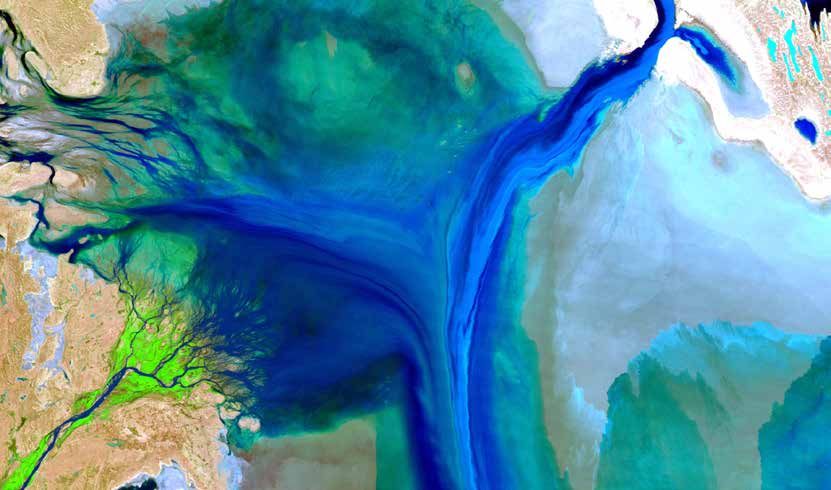
Executive summary

 Queensland has a rich history in space.
 From supporting humankind’s walk on                              Key strategies and priority actions –
 the moon with Toowoomba’s Cooby                                  focused on Queensland’s strengths
 Creek Tracking Centre; to housing an                             Two key action areas build on the government’s
                                                                  industry roadmaps.
 emergency landing site of the space
                                                                  1. Strengthen Queensland’s existing capabilities
 shuttle program at the Royal Australian                             to support Queensland’s niche areas to be
 Airforce Base Amberley.                                             world-class and positioned for growth.
                                                                     We will work to support:
 Today, Queensland’s space industry is blossoming.                   • Infrastructure capability – enable
 It currently supports over 2000 full-time equivalent jobs              growth in launch, ground systems and
 and generates $760 million in annual revenue, with                     Earth observation
 a further $500 million in value added to downstream                 • Human capability – promote clear career
 industries through the state’s world-class space-enabled               pathways into the space industry
 services, such as Earth observation.1                               • Commercial capability – support
                                                                        Queensland organisations to enter the
 Queensland’s space industry has enormous potential if
                                                                        space supply chain.
 nourished, with the possibility to support up to 6000 jobs
 by 2036 and add between $3.5 billion to $6 billion to the        2. Grow Queensland’s industry by connecting
 state economy.1 Because of this, Queensland is primed to            it to new markets.
 lead the Australian Space Agency’s goal to triple the size          We will grow Queensland’s industry by:
 of Australia’s space economy to $12 billion and create up           • Connecting industry to international markets
 to 20,000 jobs by 2030.2                                            • Connecting industry to upstream industries
                                                                         to support an end-to-end supply chain
 Queensland is Australia’s space coast                               • Leveraging downstream industries – through
                                                                         space-enabled services.
 Queensland is close to the equator, on the east coast
 of Australia, and has large areas free from radio traffic
 with high-speed internet thanks to the state’s remote
 industries. Queensland also shares a comparable
 latitude with Cape Canaveral, Florida; one of the world’s
 busiest launch sites.3
 Queensland’s location makes it perfect for launch and ready
 to host ground stations. We also lead Australia in robotics,
 automation and Earth observation; with a research sector
 that underpins the state’s ability to transfer these skills to
 support space missions and services.

Page 6 | Queensland Space Industry Strategy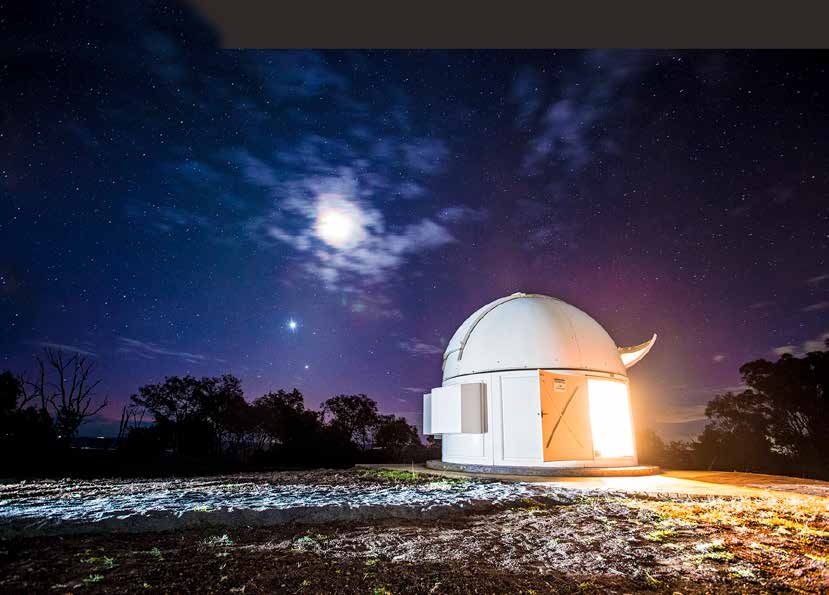
RESEARCH AND
                        DEVELOPMENT

  AEROSPACE                                                DEFENCE

                Queensland is home to 20 per cent
                     of the nation’s estimated
                    space-related jobs and has
                 access to world-class supporting
                     industries and research.

  ADVANCED                                             MINING EQUIPMENT,
MANUFACTURING                                       TECHNOLOGY AND SERVICES

                                                                              Page 7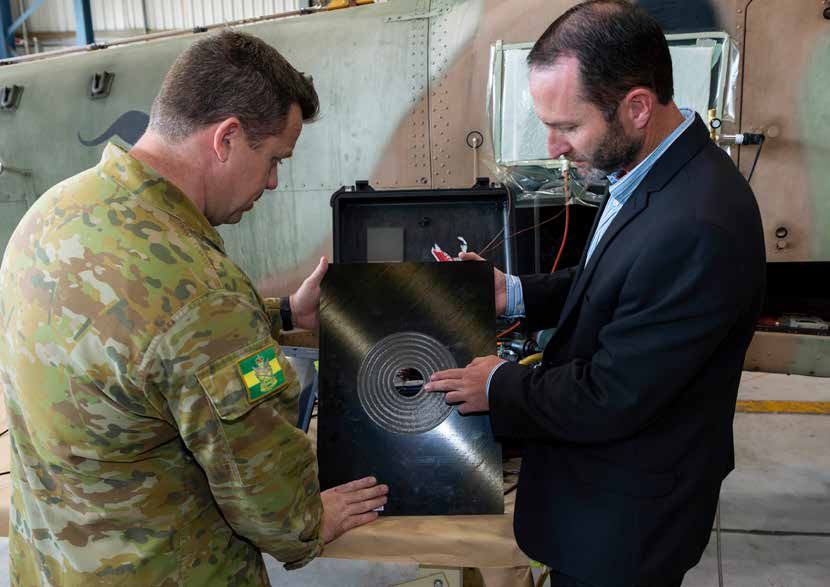
Queensland’s opportunity in space

 The changing global space economy
 Space has historically been the preserve of governments. The high entry costs and significant risks of space
 exploration necessitated governments taking the investment lead for research, development and operation.
 However, this is changing fast. In 2010, the United States announced the end of their Space Shuttle program,
 signaling the start of a new space era where industry would play a more active role in global space activity.
 Since 2010, the global space economy – which includes everything from building rockets to analysing satellite data
 – has been increasingly decentralised. Today, the global space economy, Space 2.0, is characterised by a growing
 number of private organisations working alongside global space agencies, to support space missions and supply
 new technology and services to Earth.

 Australia’s space industry generates approximately              Queensland is Australia’s space coast. Our state
 $3 billion to $4 billion in revenue a year and employs          has 20 per cent of the nation’s estimated
 some 10,000 full-time equivalent jobs.4 The Australian          space-related jobs, access to world-class
 Space Agency, established in July 2018, has an ambitious        supporting industries, and Australia’s most
 but achievable goal to triple the size of Australia’s space     advantageous location for launch.
 economy to $12 billion per annum and create up to
 20,000 additional jobs by 2030.2                                Queensland is:
 Increasing domestic and global demand for                       • Perfect for launch – east coast location with
 space-enabled services is driving growth in Australia’s           access to the equator and Australia’s most
 space industry and, in turn, demand for new satellites            advanced launch vehicle developers
 and the ability to launch, build and control them.5             • Ready to host ground stations – radio free
                                                                   regions with clear skies, remote internet, an
 By 2036, Queensland’s space economy                               international data cable and the ability to scan
 could directly create 6000 high-value                             both hemispheres
 jobs; more than one quarter of Australia’s                      • Nation-leading in Earth observation
 overall objective.                                              • World-class in robotics and automation

 From agriculture and mining, to automated vehicles and          By making the right decisions today, Queensland’s
 the growing demand for big data, the world’s industries         space industry could directly create up to 6000
 are increasingly relying on satellite-derived data and          high-value Queensland jobs and contribute
 the ability to ‘look back at earth’. Add to this new and        $3.5 billion to $6 billion to the state economy by
 exciting opportunities in space exploration and research,       2036.1 Many of these new jobs could be clustered
 and the global space industry is expected to skyrocket to       in regional Queensland through the development
 US$1.1 trillion by 2040.6                                       of space infrastructure. This will create new
                                                                 business opportunities and an industry supply
 Queensland is well-positioned to lead Australia in              chain to service them.
 this emerging industry. Our expanding space economy
 already employs over 2000 full-time equivalent
 jobs and generates more than $760 million in direct
 annual revenue.1
 Queensland also has geographical and industrial
 advantages that make it uniquely positioned to support
 global space activities and bolster Australia’s sovereign
 space capability; particularly in satellite launch, control,
 robotics and Earth observation.

Page 8 | Queensland Space Industry Strategy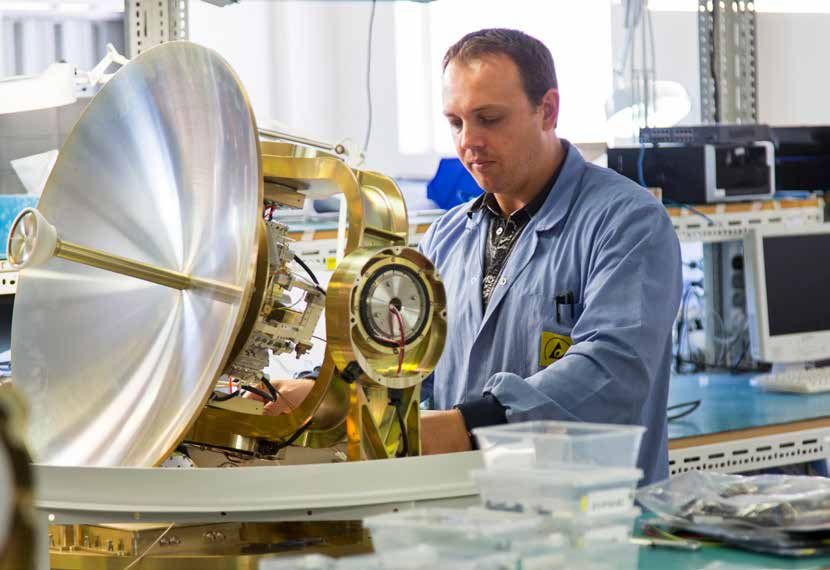
Image courtesy of Gilmour Space Technologies

Queensland’s space industry

  Growing at a rate of   Employs 2000 full-time   Generates $760 million          Generates $500 million
  7 per cent per year       equivalent jobs         per year in revenue           per year in value added
                                                                                   to gross state product

                                                                                                         Page 9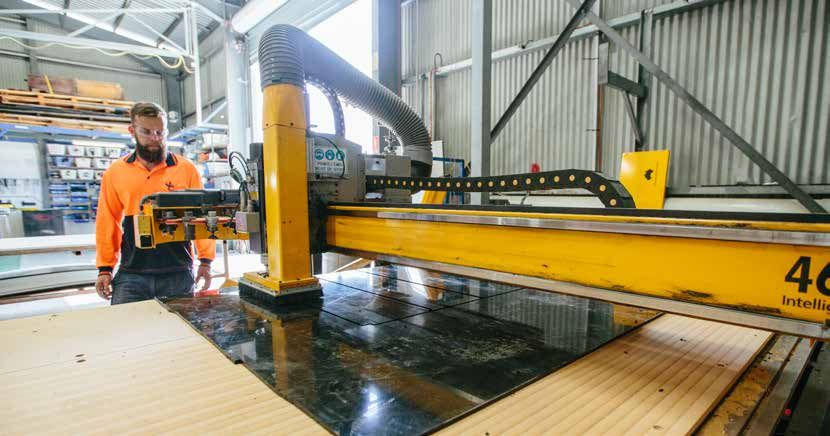
Productivity and benefits for the
 rest of Queensland’s economy
 Few industries share their benefits
 as widely as the space economy. In                         Water and food security from space
 2015, it was estimated that the use of                     Around 70 per cent of the world’s fresh water is
                                                            used for agriculture.8 By 2050, feeding a planet of
 space systems and space-derived data                       almost 10 billion people will require a 50 percent
 supported 70 per cent of economic                          increase in agriculture production and a 15 per cent
 activities worldwide.7                                     increase in water withdrawals for agriculture.9
                                                            Satellites are expected to become a key part to
 In Queensland, the space economy already adds
                                                            solve water and food insecurity through land and
 $500 million in value to other areas of the state’s
                                                            water monitoring services.10 These services provide
 economy.1 By adopting space-enabled services,
                                                            insights into land cover, crop forecasting, plant
 Queensland’s powerhouse industries are increasing
                                                            biomass and water transferal from land to the
 their productivity and output through better precision,
                                                            atmosphere.
 automation and new insights provided by Earth
 observation and satellite positioning systems.             While satellite services are already informing
                                                            on-the-ground farming practices – such as
 Globally, these services are expected to play a more
                                                            precision agriculture and maximising soil
 important role in responding to the challenges
                                                            capability – the ability to download satellite data
 associated with climate change, population growth,
                                                            and the costs associated with processing it or
 water scarcity and the need to produce more with less.
                                                            using satellite services are barriers to growth.
 The full potential of space-enabled services has not
                                                            It is expected that these costs will decrease to make
 yet been realised in Australia. Increasing the uptake of
                                                            space-enabled solutions more accessible in the
 space-related goods and services through Queensland’s
                                                            future, as new technologies emerge with start-ups
 industries such as agriculture and mining could
                                                            and the growing critical mass, lowering the cost of
 contribute $1.1 billion to $1.7 billion in productivity
                                                            imaging data.
 by 2036. Similarly, Space 2.0 will enable opportunities
 for Australian companies to expand their products and
 services to serve the global space economy.

Page 10 | Queensland Space Industry Strategy
Queensland’s space industry
Born from industry strengths Our space economy is supported by
Queensland’s powerhouse industries
and a competitive location
Queensland companies are used to operating remotely.
Queensland’s advantageous location on Australia’s Our world-leading mining equipment, technology and
eastern seaboard is close to the equator and has services (METS) industry, as well as our well-established
large areas free from radio traffic with high-speed defence, aerospace, manufacturing and research
internet access. These attributes are supported by sectors, have formed a solid industry base to support
designated areas set aside for ground stations by space robotics, automation, launch vehicles and
Australia’s communications authority. In addition, a space-based systems.
new international data cable at the Sunshine Coast will Queensland is also home to large downstream
provide Australia’s eastern seaboard with the fastest industries, such as agriculture and mining, that are both
connection to Asia and the second fastest connection to driving and benefiting from the state’s expertise in Earth
the United States. observation and data analytics.
Queensland’s location, which is uniquely suited to
support multiple launch orbits, has also spurred the Queensland’s strengths
development of Australia’s commercial launch vehicle • Launch activities
developers – Gilmour Space Technologies, Black Sky
• Ground systems
Aerospace and Hypersonix.
• Space-enabled services
• Space systems – manufacturing and robotics
Image courtesy of Gilmour Space Technologies
Page 11Some of our key research and development organisations supporting
Queensland’s space industry
>> Centre for >> Centre for Hypersonics is a
The University >> B
oeing Research
Advanced Materials world leader in hypersonic
of Queensland and Technology
Processing and technology and reusable
(UQ) Australia Centre
Manufacturing rockets
>> Q
UT’s Australian Research Centre for Aerospace Automation (now robotics and
autonomous systems discipline) played an integral role in building Australia’s
unmanned aircraft system industry
Queensland
University of
Technology
(QUT)
>> T he country’s only low-humidity
>> L eading the Asia Pacific with the electro-manufacturing dry rooms that
Australian Centre for Robotic Vision support production of commercial-grade
lithium-ion batteries
>> C
SIRO’s Queensland capabilities and facilities include: expertise in Earth observation
data analytics and applications development; satellite calibration and validation facilities;
CSIRO and the Queensland Centre for Advanced Technologies for research into robotics and
autonomous systems, advanced navigation systems, smart mining, and advanced
aeronautical engineering
>> I nstitute for Advanced Engineering and Space Sciences is nation leading in applied research
and commercial work on composites, hypersonics, solid rocket fuels, robotic vision in
uncontrolled environments and astronomy
University
of Southern
Queensland
(USQ)
>> L ong duration
>> M
ount Kent Observatory and a Shared Skies Partnership with
wind tunnel for
the University of Kentucky, USA, allows remote access to
supersonic and
telescopes around the world
hypersonic testing
>> S
pecialises in artificial intelligence, computer image processing and robotics through
its Institute for Integrated and Intelligent Systems
Griffith
University
>> A
dvanced Design and Prototyping Institute (ADaPT) brings together multi-disciplinary
expertise with leading industry partners to push the boundaries in advanced custom design,
rapid prototyping and new materials
Page 12 | Queensland Space Industry StrategyQueensland’s space industry strengths
Key strength 1: Launch activities
The annual global launch services market is worth
US$5.5 billion and growing.11 Reducing launch costs, “The small satellite revolution is gaining momentum
combined with the rising demand for space-enabled globally, with thousands of small satellites slated to
services, are driving the demand for rocket launches and launch into low-Earth orbits over the next five years.
creating opportunities to launch, operate, manufacture, Our end goal is to provide low-cost access to space,
test and develop launch supply chains. and to enable human spaceflight and exploration.”
– Adam Gilmour, CEO & Co-founder,
Most of the world’s launch companies are developing
Gilmour Space Technologies
next generation launch vehicles. New entrants, such as
Space X and New Zealand’s RocketLab have entered the
market with aggressive price points; forcing established Queensland has a launch supply chain
providers to align and develop new generation launchers
targeted at delivering low-cost payloads.12 Australia’s most advanced launch vehicle developers –
Gilmour Space Technologies, Black Sky Aerospace and
In Queensland, Gilmour Space Technologies, Black Sky Hypersonix – are based in Queensland. These companies
Aerospace and Hypersonix are developing affordable are developing small-to-medium launch platforms to
access to space for small and medium-sized payloads. respond to the world’s growing demand for smaller
satellites and rapid launch capability.
Launching from Queensland
INCLINED ORBIT
There are a number of technical considerations to
holding an ideal launch location. POLAR ORBIT
• Rockets are generally required to launch along a
coastline to avoid population.
• Launching eastward is cost-effective as rockets
EQUATOR
accelerate with, rather than against, the Earth’s
rotation to leave the atmosphere.
• Proximity to the equator means that rockets can pick
up an additional 460 metres per second of speed from
the Earth’s spin, further reducing costs. EQUATORIAL ORBIT
Queensland is the only state on Australia’s eastern
seaboard with access to equatorial orbits. Ideal latitude, “When you launch a rocket, you have to launch
clear skies and open waters to the east means that towards an easterly direction because the Earth spins
Queensland can launch larger payloads, and into more that way. The pickup that you get from the spinning of
orbits, than any other place in Australia. the Earth is up to about 460 metres a second, which
in relative terms is almost 1½ times the speed of
• Low Earth orbit (polar and inclined) sound... If you launch that way, you get a slingshot
• Geosynchronous equatorial orbit effect. It is way better to launch east than west. The
Queensland also has a comparable latitude to Cape closer you are to the equator, the closer you are to
Canaveral, Florida, which hosts the Kennedy Space having that slingshot effect take place.”
Centre; one of the world’s busiest launch sites. – Adam Gilmour, CEO & Co-founder,
Gilmour Space Technologies
Page 13Queensland is also home to a high-tech
Opportunity for launch: supporting launch
aerospace industry…
infrastructure and a national supply chain
Australia’s highest concentration of aircraft manufacture
and repair services are based in Queensland, including
Queensland’s geographical attributes, skilled workforce
more than half the world’s top 10 aerospace companies
and innovative industry position the state to expand its
who are involved globally in the space supply chain.
place in the world’s growing launch supply chain.
… and a supporting research base There are several opportunities to support the
The University of Queensland (UQ) and the University development of Queensland’s launch industry.
of Southern Queensland (USQ) excel in launch systems 1. National support and leadership – launch is a
research, testing and advanced composites. national capability that supports the growth in
• UQ’s Centre for Advanced Materials Processing and Australia’s space industry and sovereign capability.
Manufacturing is driving new combinations of metals, A national approach to capability development is key
polymers, ceramics and composites to optimising these benefits.
• UQ’s Centre for Hypersonics is a world-leader in 2. Support for enabling infrastructure – development
hypersonic technology and reusable rocket research of enabling infrastructure to test launch vehicles,
with a hypersonic wind tunnel components and payloads will strengthen
• USQ hosts a wind tunnel for supersonic and Queensland and Australia’s launch supply chain.
hypersonic testing Key considerations are a static test site and an
orbital launch facility in proximity to launch
• USQ is home to the Institute of Advanced Engineering
vehicle developers.
and Space Sciences, and has nationally leading
applied research and commercial work in composites 3. A versatile launch site – that can launch to multiple
and hypersonics. orbits and cater for multiple users.13 An Australian
launch facility would bolster national capability,
providing the Southern Hemisphere with a launch
location accessible to Asian markets.
Page 14 | Queensland Space Industry Strategy Image courtesy of the University of Southern QueenslandImage courtesy of Gilmour Space Technologies
Gilmour Space Technologies
Gold Coast-based Gilmour Space Technologies is a venture-capital-backed rocket company developing
next-generation hybrid propulsion launch vehicles. The Eris rocket will launch satellites up to 240 kilograms
into low Earth orbit, with the Eris Heavy rocket capable of taking 1000 kilograms.
Gilmour Space Technologies is designing launchers for production and ease of operation that will provide
customers with reliable and cost-effective access to space.
CASE STUDY
Page 15Image courtesy of Black Sky Aerospace
CASE STUDY
Black Sky Aerospace
The Queensland company behind Australia’s first commercial rocket launch, Black Sky Aerospace, is one
of Australia’s leading providers of launch services and propulsion systems.
In 2018, Black Sky Aerospace launched Australia’s first commercial rocket west of Goondiwindi in
outback Queensland. Three commercial payloads were tested on the sub-orbital flight, which also paved
the way for more rocket flights in Queensland, including a reusable rocket which landed 1.8 kilometres
away from the launch site.
Black Sky Aerospace provides payload launch vehicles, propulsion systems, ground support and
infrastructure, to support launch supply chains around the world.
Page 16 | Queensland Space Industry StrategyKey strength 2: Ground systems
Ground stations, also known as satellite parks, track
and control satellites and download data. They can Queensland provides a prime
provide data in real time to downstream industries location for ground stations
for time-based analytics.
Most ground stations in the global space economy
• Radio free areas and clear skies
• Remote internet and data backhaul
are in the Northern Hemisphere. Increasing capacity
services developed for Queensland’s
in Australia will provide more access to time-based
services for Australian and other Southern Hemisphere
mining and resource industries
businesses, which can currently have lengthy data • Location near the equator means that
wait times. ground stations can scan both the
Ground stations have specific requirements to operate.
Northern and Southern Hemispheres
• Strong Earth observation sector with
They require large areas free from radio traffic, clear
a large potential customer base
skies, dry weather, internet connectivity and security.
across Australia’s agricultural and
Opportunity: controlling from Queensland
mining industries
• From 2020, a new international
With clear skies and in proximity to the equator, submarine cable on Queensland’s
Queensland – particularly Western Queensland – offers Sunshine Coast will deliver Australia’s
multiple locations for ground stations that can scan fastest telecommunications connection
both the Northern and Southern Hemispheres.14 A to Asia, and the second fastest to the
ground station can be an industry enabler by connecting United States.
the upstream space economy with data analytics and
downstream users.15
Queensland companies, such as Yeronga-based
The ability to purchase satellite data in real time enables EM Solutions, are also highly skilled in next-generation
new services to grow. For example, real time data can ground terminal development and systems integration.
improve decision making for environmental management Most of Queensland’s organisations in this sector are
and disaster relief. Queensland’s space industry and export-focused.
the wider economy could benefit from ground station
capability, particularly in:
• the ground system sub-sector – with the opportunity
to attract large companies to Queensland
• the space-enabled services sub-sector
• downstream industry sectors, such as mining,
environmental management and agriculture
• exports – by enabling the rapid export of data
and analytics from Australia to the world through
the Sunshine Coast International Broadband
Submarine Cable.
Page 17CASE STUDY
EM Solutions
Brisbane-based EM Solutions is a trusted technology developer of innovative microwave and
on-the-move radio and satellite products that deliver high-speed telecommunications around the world.
EM Solutions supplies next generation high-speed communications products to deliver real-time voice,
data and multimedia to a broad range of industries, including defence, government, maritime and
telecommunications. The company’s customers typically serve the national interest and require resilient
and assured systems operable in high threat environments.
EM Solutions is building on more than two decades of experience in land and marine satellite terminals,
to expand the company’s space capabilities and bolster Australia’s efforts to grow a national space
supply chain.
Image courtesy of EM Solutions
Page 18 | Queensland Space Industry StrategyKey strength 3: Space-enabled services
From satellite communications and satellite navigation, Observing Earth from Queensland
to Earth observation and remote sensing, the world is
Australia is a world-leader in the field of Earth
increasingly relying on space-enabled services.
observation, and Queensland leads Australia in
Satellite-derived goods and services have become the
this field.
driving force behind the world’s space economy.
They are predominantly spread across satellite The state’s Earth observation sub-sector is the largest
communications (Satcom), satellite navigation (Satnav), in the country and has created a unique cluster through
and Earth observation. long-term investment in research. This has been driven
by Queensland’s climate, remote geography and the
In Queensland, the space-enabled services sub-sector
need to operate remotely.17
is primarily being driven by Earth observation and
satellite navigation. Earth and marine observation has enormous economic
benefits to other industries. The value of Earth and
marine observation to Asia-Pacific Economic Cooperation
Satcom
(APEC) forum economies is estimated at US$372 billion.18
– the US$142 billion Satcom
This is based on the value added:
market is shifting from video
to data-centric services.16 • to gross domestic products through the cumulative
effects of higher growth to downstream industries
(US$300 billion)18
• through improved disaster prediction and
Satnav management (US$26 billion)18
– the US$119 billion Satnav market
• to non-market services to consumers (US$46 billion),
has been driven by government-funded
such as free data for infrastructure planning.18
systems, which have opened up
civilian and commercial activities With Queensland’s proximity to APEC nations and its role
around the world.16 as Australia’s leader in Earth observation, Queensland’s
Earth observation ecosystem is positioned to expand
through both domestic and international uptake of
Queensland’s products and services. This growth will
Earth observation
complement emerging capabilities in Queensland’s
– the US$4.6 billion Earth observation
ground system sub-sector through increased availability
market has historically been
of data.
dominated by government services.
This is changing as commercial
opportunities emerge through
start-ups and automated analytics.16
Image courtesy of Earth Observation Australia Page 19Opportunity for space-enabled services:
untapped markets to drive space demand
for space services
Space-enabled services are the end of the space supply • Increased demand in the greater space supply chain
chain – the point where downstream industries use the – by increasing the demand to operate, launch and
products and insights derived from satellite technology. manufacture space systems to capture data.
Demand for space-enabled services drives demand A key challenge preventing the global uptake of
throughout the rest of the space supply chain. More space-enabled services in downstream industries, such
demand for data means more demand for satellites and as in agriculture, is the cost of accessing site-specific
the capability to build, launch and control them. data and services.19 These costs are expected to lower in
Space-enabled services have the potential to grow the coming years through new technologies, increased
Queensland’s economy in two ways: ground system services and new start-ups disrupting
traditional price points to offer local solutions.
• Direct benefits and efficiency gains to downstream
industries – particularly in industries that have a low
awareness of space-enabled services but an untapped
potential for growth
Space supply chain
SPACE LAUNCH GROUND SPACE-ENABLED
SYSTEMS ACTIVITIES SYSTEMS SERVICES
DOWNSTREAM INDUSTRY
Agriculture Mining Communications Disaster relief
Page 20 | Queensland Space Industry StrategyImage courtesy of the Remote Sensing Research Centre
Remote Sensing Research Centre
The Remote Sensing Research Centre is a leading national and international research and training centre
based at The University of Queensland for biophysical remote sensing to understand and solve environmental
management problems.
The centre provides unique services to research and government organisations to support areas such as:
• vegetation height and canopy structure
• environmental properties to map climate-impacted change
• the composition and energy dynamics of urban environments
• the composition, structure and productivity of terrestrial and marine systems.
The centre is a core part of the Joint Remote Sensing Program with the Queensland, New South Wales and
Victorian governments, as well as the University of New England, to develop scientifically and legally-defendable
environmental mapping and monitoring programs using satellite image data sources linked to field measurements.
Page 21Key strength 4:
Space systems – manufacturing and robotics
Industry snapshot Queensland’s manufacturers are innovative,
customer-focused and seeking ways to address
The demand for robotics in space exploration is
emerging issues. The existing advanced manufacturing
increasing. Even with the advent of Space 2.0,
base includes:
exploration is still one of the driving forces behind space
industry expenditure, with government space programs • additive manufacturing technologies
currently valued at US$71 billion.20 • advanced forming technologies (medical
and aerospace)
NASA is working to establish a permanent human
presence on the Moon within the next decade. The Moon • advanced materials
provides an opportunity to test new tools, instruments • biomanufacturing
and equipment that could be used on Mars, including • electronics manufacturing (including aerospace
constructing human habitats and life support systems. and defence)
Robotics and the need to operate remotely will be a key
• heavy engineering
part of this.
• high temperature superconducting technologies
Research, development and manufacturing (energy and defence)
robotics in Queensland • precision tooling and niche machining
(including for aerospace)
Queensland’s vast geographical landscape and remote
• technologically superior microwave systems
conditions share parallels with space exploration.
(next generation broadband and defence systems).
Specifically, Queensland has a long history in robotics
and remote asset management through its mining and
advanced manufacturing industries.
An industry-focused government
Queensland is the place for industry to collaborate and
• Manufacturing: $20 billion contribution to the state
commercialise great ideas. Through the $755 million
economy, around 170,000 people employed21
Advance Queensland program, the Queensland
• Mining: $39 billion contribution to the state economy, Government is growing highly skilled and high-tech jobs,
236,300 people employed22 and attracting industries that will feed into Australia’s
increasingly sophisticated space industry.
CASE STUDY
Queensland is home to the Advanced Robotics for Manufacturing hub, which
provides practical production and manufacturing support in a real-life factory
environment to enable Queensland manufacturers to uptake cutting-edge
robotics technologies and processes.
The hub allows manufacturers throughout the state to access state-of-the-art
robotics with applications across sectors as diverse as aerospace, defence,
METS and space.
Page 22 | Queensland Space Industry StrategyImage courtesy of Gough Plastics
Research and development organisations Opportunity for space systems:
focused on robotics and automation diversifying into the space supply chain
• QUT’s Robotics and Autonomous Systems faculty
was integral to building Australia’s unmanned aerial In September 2019, the Australian Government
system industry announced $150 million in new funding to support
• QUT is leading the Asia-Pacific with the Australian Australian businesses and researchers to join NASA’s
Centre for Robotic Vision and Advanced Robotics for endeavour to the Moon and Mars, and deliver key
Manufacturing hub capabilities for missions through participation in the
United States space supply chain.
• QUT has Australia’s only low-humidity
electro-manufacturing dry rooms that support As Queensland’s space industry grows, opportunities will
production of commercial-grade lithium-ion batteries increase for aerospace, defence and manufacturing to
• UQ is home to Boeing’s Research and Technology diversify into the space supply chain.
Australia Centre An opportunity exists for Queensland’s leading research
• Queensland is home to Australia’s Defence and industry organisations to support the Australian
Cooperative Research Centre for Trusted Autonomous Space Agency and contribute to NASA’s robotics and
Systems, which delivers world-leading robotics automation capabilities.
technology to enable cooperation between humans
and machines
• CSIRO’s Robotics and Autonomous Systems Group is
based in Queensland, developing foundational and
applied research in robotic technologies from concept
to commercialisation
• CSIRO’s Data61 Group is based in Brisbane, with a
focus on machine learning, robotics and automation
• Griffith University’s ADaPT combines a
variety of disciplines in designing advanced
manufacturing processes.
Page 23Thursday Island
Horn Island
Weipa Scherger
International airports
Domestic airports
Cape Flattery
Queensland major railway
Cooktown
Ports
Kuranda
Burketown Cairns Motorway/highway
Karumba Quintell Beach network
Mareeba
Mourilyan
Forsayth
Carpentaria
Major fibre optics
Lucinda
networks
Townsville
Abbot Point
Cloncurry
Hamilton Island
Whitsunday Coast (Proserpine)
Mount Isa
Mackay
Hay Point
Moranbah
Clermont
Boulia Yeppoon
Rockhampton
Alpha
Longreach Gladstone
Emerald Biloela
Bedourie (Thangool)
Blackall
Bundaberg
Taroom Hervey Bay
Birdsville Maryborough West
Gympie North
Wandoan Sunshine Coast
Kingaroy Nambour
Roma Chinchilla
Charleville
Miles
Toowoomba Brisbane
Archerfield
Gold Coast
Our geographical strengths
>> Queensland’s position on an eastern seaboard close to the equator, plus its low population density
and low radio interference, provides benefit for potential launch activities and ground processing.
>> Queensland is ideally located as a gateway to the Asia Pacific region.
>> A
n international broadband submarine cable connecting to the Sunshine Coast will create world-class
data export capability.
Page 24 | Queensland Space Industry StrategyKey growth areas and industry challenges
Key growth areas for Queensland’s space economy
Leveraging Queensland’s industry and geographical strengths to grow the space industry.23
Strengthening Queensland’s existing space capability to be world-class and competitive.23
Connecting Queensland organisations to the growing global space economy and to
Queensland’s downstream industries.23
Industry-wide challenges
Infrastructure
An Australian launch site and additional space-related infrastructure
will be catalytic for the space industry, supporting research and
development and opening up new market opportunities.24
Awareness of Australia’s space industry
Increased awareness of Australia’s space capability will improve
supply chain opportunities by enabling Queensland companies to
enter untapped markets.
Human capability (STEM and career pathways)
Queensland’s aerospace, defence and advanced manufacturing industries
– as well as the state’s focus on STEM education – form a strong base
to transfer current knowledge and skills for application across the
space supply chain. The development of career pathways will benefit
predominantly through the growth of Queensland’s wider space industry.
This challenge is already being addressed through the Department
of Employment, Small Business and Training and the Department of
Education’s Schools of the Future STEM Strategy.
• In 2019-20, the Queensland Government will invest $978 million in skills
and training to meet immediate demands and emerging needs, so that
Queenslanders are skilled for the jobs of today and the future.
• In 2018-19, the Queensland Government invested over $526,000 for
168 apprentices and trainees across aviation and aerospace.
Connectivity across the supply chain
An end-to-end supply chain incorporating the research sector and
associated industries within the space supply chain and potential
customers will strengthen opportunities to partner and innovate.
Page 25Strategy action overview
Two key action areas build on the Aerospace Roadmap. These will support the enabling
conditions for self-sustaining industry growth to generate highly skilled jobs, business
opportunities and STEM career pathways of the future. These action areas address
industry opportunities and challenges across Queensland’s core indsutry strengths:
• strengthening capability
• growing the industry – connecting to wider markets.
Image courtesy of Aviation Australia
Page 26 | Queensland Space Industry StrategyAction area 1: Action area 2:
Strengthening capability Growing the industry – connecting to
wider markets
Strengthening Queensland’s space industry Once capability has been strengthened, the strategy will
capability across its core strengths is the initial focus focus on growing Queensland’s space industry.
for implementation, with an aim to grow industry
Specifically, the strategy will support the expansion
opportunities and support Queensland’s niche areas to
of the space industry’s addressable customer base by
be world-class and positioned for growth. This action
connecting Queensland’s industry to international markets
area supports capability across three key areas.
and to untapped domestic downstream industries.
Opportunities and challenges addressed The focus of this will be industries that could benefit from
the uptake of space-enabled services, but are currently
Infrastructure capability
not accessing their full potential.
Leveraging Queensland’s industry strengths with
infrastructure support will unleash the state’s potential Opportunities and challenges addressed
and grow both upstream and downstream commercial
and research opportunities. Awareness of Queensland’s space industry
Raising awareness of Queensland’s space industry
Human capability
strengths and connecting these to untapped markets will
Raising awareness and promoting career pathways into drive growth through the uptake of products and services.
Queensland’s space industry will help boost workforce Primary opportunities are in:
readiness to support the growing space industry.
• international markets
Commercial capability • the greater supply chain
Supporting organisations in accessing the space supply • Queensland’s downstream industries.
chain and federal programs will boost Queensland’s
space industry competitiveness.
Page 27QUEENSLAND SPACE INDUSTRY STRATEGY
By 2025, Queensland’s space industry will be recognised as
Vision niche manufacturing, robotics and automation for space.
Action area 1: Strengthening capability
Strengthen existing capabilities to support Queensland’s niche areas to be world-class and
positioned for growth, with new opportunities in the space supply chain.
We will work to strengthen capability in:
• space-related infrastructure to open up growth opportunities by supporting common user infrastructure to enable
Queensland’s strengths to grow and become competitive
• human capability to support the growing critical mass of space activity in Queensland
• commercial capability to support Queensland organisations seeking to enter the space supply chain.
Infrastructure capability Human capability Commercial capability
(to support key strengths) (skilled workforce)
ACTIONS ACTIONS ACTIONS
1. Support the development of 8. Collaborate with industry, 12. Leverage the Defence and
common user space-related universities, TAFE and government Aerospace Industry Development
infrastructure. agencies to develop space Fund to support skill accreditation
2. Support the development of a industry-related skills and and events in Queensland’s
space-derived data analytics and promote clear career pathways space industry.
commercialisation hub. and internships into Queensland’s 13. Provide facilitation support to
space industry. organisations seeking to enter the
3. Support the development of a
common user static test site for 9. Support and facilitate industry space supply chain.
rocket engines. participation at events with 14. Engage with Queensland’s industry
Queensland universities that to support their involvement in
4. Conduct a business case for an
showcase and connect students international space missions and
orbital launch facility in Queensland.
with career opportunities. national space projects.
5. Conduct a market analysis on the
10. Explore targeted opportunities to 15. Work with Queensland universities to
demand and potential economic
support defence veterans to access increase the commercial application
impact of Australian launch services.
employment in Queensland’s space of research in Queensland’s key
6. Support the development of a and wider aerospace industry. space-related strengths.
ground station in Queensland.
11. Continue working with Queensland
7. Work with the Australian Space Government departments to support
Agency and Queensland universities STEM education as it relates to
to identify opportunities for Queensland’s space industry.
industry to access existing space
infrastructure across the nation.
Page 28 | Queensland Space Industry StrategyACTIONS
a leading centre in Australasia for launch activities, ground systems, Earth observation,
Action area 2: Growing Queensland’s industry
Connect Queensland’s industry to untapped domestic and international markets.
We will work to connect Queensland’s space industry to:
• the international market, which is set for sustained growth
• the greater supply chain by supporting an end-to-end supply chain in Queensland
• leverage downstream industries through increased domestic awareness and demand for space-enabled services in
Queensland’s strong traditional industries, driving upstream growth in the space economy.
Connect industry to the Leverage
Connect industry to
greater supply chain and downstream industries
international markets
promote capability (through space-enabled services)
ACTIONS ACTIONS ACTIONS
1. Identify international and domestic 4. Support industry cluster events with 13. Promote the application of
market opportunities, including defence, aerospace, robotics and space-enabled services to
customer base, for Queensland’s advanced manufacturing industries. downstream industries.
industry strengths. 5. Support Queensland industry 14. Work with industry peak bodies to
2. Support participation in key to maximise access to Federal identify promotional and networking
space-related trade shows and Government programs. opportunities at downstream
facilitate industry participation. 6. Leverage current defence, aerospace industry events.
3. Work in partnership with Trade and manufacturing industry 15. Encourage increased use of
and Investment Queensland’s platforms to promote opportunities space-enabled services by
international offices to play an active in the space supply chain. Queensland Government agencies.
role in targeted international market 7. Publish a Queensland space industry 16. Identify regulatory and
engagement, including to: capability directory to better connect non-regulatory barriers in
3.1 promote Queensland business industry users and service providers. Queensland that prevent the
and capability to overseas 8. Facilitate partnerships between uptake of space-enabled services.
markets, and connect with industry and universities to maximise 17. Pursue opportunities to encourage
overseas primes and space the use of national and private ground station data to be processed
agencies to understand supply space assets and grow supply chain in Queensland.
chain opportunities opportunities. 18. Support initiatives that cluster
3.2 make strategic connections 9. Develop promotional material to Queensland’s remote sensing and
between Queensland businesses increase awareness and access to Earth observation capabilities.
and overseas companies. Queensland’s space supply chain.
10. Actively market Queensland’s space
industry at relevant industry events.
11. Increase engagement with Federal
Government agencies where
Queensland can support Australia’s
sovereign space capability.
12. Advance a memorandum of
understanding with the Australian
Space Agency.
Page 29Glossary Earth observation – the gathering of information about the Earth’s physical, chemical and biological systems via remote-sensing technologies (e.g. satellites), supplemented by surveying techniques, which encompass the collection, analysis and presentation of data. Geosynchronous equatorial orbit – a high Earth orbit that allows satellites to match the Earth’s rotation. Located approximately 35,780 kilometres above the Earth’s equator – a valuable position for weather monitoring, communications and surveillance. Ground station – an on-ground terminal linked to a satellite or spacecraft by an antenna and associated electronic equipment for the purpose of transmitting or receiving data, and tracking or controlling satellites. Low Earth orbit – an Earth orbit with an altitude of between 160 and 2000 kilometres above the Earth’s surface. Low Earth orbit can accommodate multiple trajectories, including polar and inclined. Used primarily for data communication. Mid Earth orbit – an Earth orbit between 2000 and 35,780 kilometres above the Earth’s surface – commonly used for navigation. Satellite park – a designated area containing a number of ground stations. Space economy – all public and private actors involved in developing and providing space-enabled products and services. It comprises a long value-added chain; starting with researchers, developers and manufacturers of space hardware, and ending with the providers of space-enabled products and services to final users. Space-enabled services – designing, building, manufacturing and operating equipment, services or applications that require data or other services from space-based systems or components. Space industry – organisations involved in the space economy, and providing goods and services related to space. Page 30 | Queensland Space Industry Strategy
End notes
1.   Deloitte Access Economics 2019, Sky is Not the Limit, Building Queensland’s Space Economy, Brisbane, p6
2. Australian Space Agency 2019, Advancing Space: Australian Civil Space Strategy 2019 – 2028, Canberra, p3
3. Queensland State Development, Natural Resources and Agriculture Industry Development Committee 2019,
   Report No.23, 56 Parliament, Inquiry into job creation opportunities in Queensland arising from the establishment
   of an Australian space industry, p38
4. ACIL Allen 2017, Australian Space Industry Capability: A Review, for the Department of Industry, Innovation
   and Science, p1
5.   Deloitte Access Economics 2019, Sky is Not the Limit, Building Queensland’s Space Economy, p1
6. Morgan Stanley 2018, Space: Investing in the Final Frontier, https://www.morganstanley.com/ideas/investing-in-
   space, accessed 2019
7.   IBIS World 2018, Satellite Communications and Astronautics: Australia Market Research Report, https://www.
     ibisworld.com.au/industry-trends/specialised-market-research-reports/technology/satellite-communications-
     astronautics.html, accessed 2019
8. OECD 2019, Managing water sustainably is key to the future of food and agriculture, https://www.oecd.org/
   agriculture/topics/water-and-agriculture/, accessed 2019
9. The World Bank, 2014, Will water constrain our energy future? https://www.worldbank.org/en/news/
   feature/2014/01/16/will-water-constrain-our-energy-future, accessed 2019
10. Edwards, Amy (CSIRO) 2017, Putting satellite data into the hands of farmers, https://ecos.csiro.au/remote-
    sensing-for-farmers/, accessed 2019
11. Bryce, 2017, Global Space Industry Dynamics, https://www.industry.gov.au/sites/default/files/2019-03/global_
    space_industry_dynamics_-_research_paper.pdf, accessed 2019, p6
12. Neiderstrasser, Carlos 2018, Small Launch Vehicles: a 2-18 State of the Industry Survey, Northrop Grumman
    Corporation, Dulles
13. Mr Adam Gilmour, Gilmour Space Technologies, public hearing transcript, Report No.23, 56 Parliament, Inquiry
    into job creation opportunities in Queensland arising from the establishment of an Australian space industry,
    Brisbane, 16 November 2018, p15
14. Queensland State Development, Natural Resources and Agriculture Industry Development Committee, Report
    No.23, 56 Parliament, Inquiry into job creation opportunities in Queensland arising from the establishment of an
    Australian space industry, 2019, Brisbane, p43
15. Deloitte Access Economics 2019, Sky is Not the Limit, Building Queensland’s Space Economy, p15
16. DSDMIP ongoing industry consultation 2019, Euroconsult, June – December 2019
17. Queensland State Development, Natural Resources and Agriculture Industry Development Committee, Report
    No.23, 56 Parliament, Inquiry into job creation opportunities in Queensland arising from the establishment of an
    Australian space industry, 2019, Brisbane, p44
18. Australian Government / Asia-Pacific Economic Cooperation 2019, Current and future value of Earth and marine
    observing to the Asia-Pacific, p1
19. DSDMIP ongoing industry consultation, Ozius, 30 July 2019
20. Euroconsult 2019, Government space programs: benchmarks, profiles and forecasts to 2028, http://www.
    euroconsult-ec.com/shop/index.php?id_product=115&controller=product, accessed 2019
21. Department of State Development, Manufacturing, Infrastructure and Planning 2018, Queensland Advanced
    Manufacturing: 10-Year Roadmap and Action Plan, edition 2, Brisbane, p10
22. Queensland Treasury 2019, About the Queensland Economy, https://www.treasury.qld.gov.au/queenslands-
    economy/about-the-queensland-economy/, accessed 2019
23. Deloitte Access Economics 2019, Sky is Not the Limit, Building Queensland’s Space Economy, p5
24. Deloitte Access Economics 2019, Sky is Not the Limit, Building Queensland’s Space Economy, p71

                                                                                                                 Page 31
You can also read


