Investing in the railway - What you need to know - Network Rail
←
→
Page content transcription
If your browser does not render page correctly, please read the page content below
Investing in the railway
What you need to know
March 2021
Foreword
There are plenty of great reasons why now is the time to invest in the
railway, from transforming local communities to integrating the rail network
with ports and distribution centres to transport freight more effectively.
You’ve told us that our processes are too hard to navigate and what you
really need is a simple to use guide. We heard you loud and clear and that’s
why we have refreshed our old guide to do just that. We want to make it
easier for you to invest in the railways, so this guide has been stripped back
and simplified.
This is a key moment for the railway and we have a clear role to play in
the economic recovery from the pandemic, connecting communities and
supporting the levelling-up agenda as we build back better. We have a
responsibility to the taxpayer and in such a difficult economic climate, a
commitment to efficiency must be the golden thread that runs through all
we do if we are going to continue to be trusted to deliver for passengers. By
working together, we will be able to better fund and accelerate investments
to deliver benefits for passengers, businesses and local communities across
the country.

                          Andrew Haines, chief executive

Network Rail – Investing in the railway | March 2021                             2
Contents
1. Introduction                                                 4
     We run differently                                         5
     Our five regions                                           6
     Partnership example: Leeds station redevelopment           7

2. Delivering investment projects                               8
     Projects seeking government funding                        8
     Privately funded projects                                  9

3. Working with you                                            10
     Template agreements                                       11
     Partnership example: A masterplan for London Victoria     12

4. The regulatory stuff                                        13
     Station change                                            13
     Network change                                            14
     Land clearance                                            15
     Land disposal                                             16
     Closure and possessions                                   17
     Timing, costs and compensation                            18

5. Risk management                                             19

6. Supporting guides                                           20
     Partnership examples: Delivering 5G on the network,       21
     Maximising the value of our assets

7. Contact us                                                  22

8. Appendices                                                  24
     A – Investment process flowcharts                       24–25
     B – Criteria for assessing schemes                      26–27
     Partnership example: Newhaven marine port                 28
     C – Services provided by Network Rail                   29–30
     D – Template agreements and risk fees                   31–32

Network Rail – Investing in the railway | March 2021             3
Introduction

1. Introduction
Network Rail is                                        About us
open for business                                      We get people and goods to where
                                                       they need to be, supporting the
Whether you are investing to                           country’s prosperity and delivering
secure returns, improve the                            the best possible service to our
passenger experience, benefit                          passengers and freight customers.
local communities or assist other                      We own, operate and develop Britain’s railway
projects, there are many reasons to                    infrastructure. 20,000 miles of track, 30,000
invest in the railway.                                 bridges, tunnels and viaducts and some of the
                                                       largest and busiest stations in the country.
Enhancing the network creates benefits for
businesses and generates economic growth for           More than 4.8 million journeys happen on a
communities across the country. By working             typical day in the UK, on 24,000 trains. More
with investors, we hope to fund and accelerate         than 600 freight trains run on the railway
investment to deliver benefits for all.                and over 4 million tonnes of product was
                                                       transported in the last year.
There are wide-ranging opportunities to invest
in and around the rail network such as building        Over the next three years we will invest tens
infrastructure to better connect towns and             of billions of pounds to operate, maintain and
cities or exploring how we use our assets to           renew the railway.
support a greener planet, through to integrating
                                                       Each of our regions plan and respond to what
the rail network with ports and distribution
                                                       passengers and freight customers want from
centres to transport freight more effectively. It
                                                       the railway in their area and helps to deliver
could be transforming the heart of our towns
                                                       improvements. These regions are equipped to
and city centres for the benefit of passengers
                                                       work with investors too – reducing red tape and
and the local community or improving rural
                                                       enhancing the network for all.
broadband and mobile connectivity across the
country through the use of our infrastructure
– opportunities abound for more private
investment in and around the rail network.
Our five regions each have teams dedicated to
working with investors. We’re making it easier to
get involved, easier to run projects with us and
easier to access opportunities.
We speak railway, and we’re here to act as your
gateway to straightforward and rewarding
investment.

Network Rail – Investing in the railway | March 2021                                                    4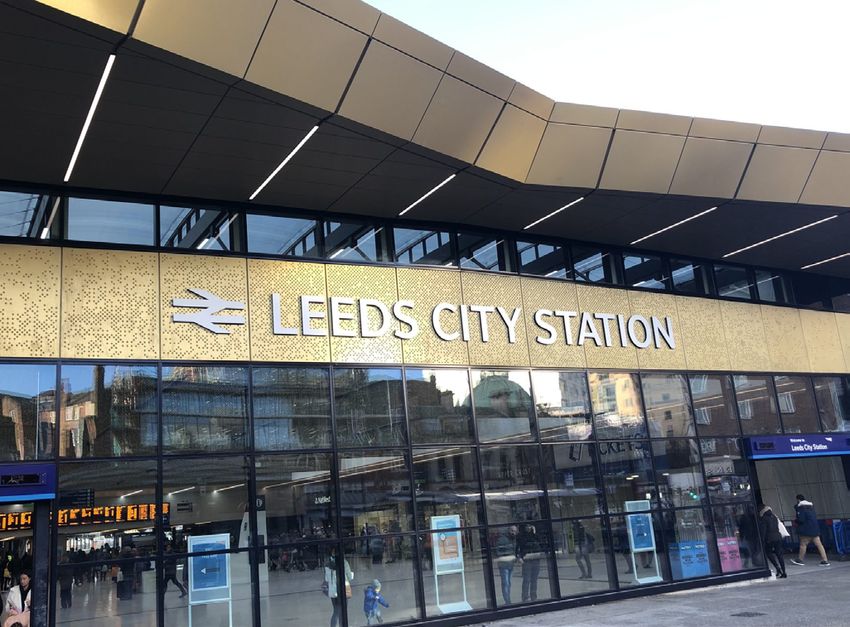
Introduction

We run differently
We are a public sector body, but with the commercial and operational
freedom to manage the railway.
We don’t have shareholders, but we make sure that any project is for the
benefit of passengers, the wider users of the railway and local communities.
Because of our unique role, there are some rules and regulations to follow.
But don’t worry, we’ll help you through any processes along the way.

Our licence to operate                                    or renew, the cost of that will be included in
                                                          the cost of a project
• Our licence is granted by government – it
  tells us what we can and cannot do                   Funders and stakeholders
• The Office of Rail and Road is our                   • Our main funders are the Department for
  independent regulator, making sure we work             Transport and Transport Scotland
  the way our licence intends
                                                       • Others include Transport for Wales,
                                                         Transport for London, Combined Authorities,
Working for the network                                  Local Enterprise Partnerships (LEPs),
                                                         local and county councils, rolling stock
• Our licence tells us to stay focused on our            manufacturers and developers
  core business, and not expose it to undue
  risks                                                • Passenger and freight operators are often
                                                         represented by the Rail Delivery Group
• Funding must be used for operating,                    (RDG)
  maintaining, renewing and enhancing the
  network
                                                       What this means for investors
Our public sector role                                 • All of this means that projects must have a
                                                         clear link and benefit to our core business
• We’re subject to some agreements with
  government, like the Treasury’s Managing             • Where the link is less clear, but we believe
  Public Money guidance and our framework                a project is valuable, we can apply to the
  agreement with the Department for                      Office of Rail and Road for consent. We’ll
  Transport                                              lead this process on your behalf

• We must always meet high standards of
  public conduct
                                                       We must always work in the way our licence and
• We provide financial reports and spending            regulator intend, but Network Rail is open for
  forecasts to the Department for Transport            business.

• We can’t be at risk of subsidising private           No matter where you are on the railway, our
  companies with public money. If a project            regional teams are ready to work with you to
  would leave us with new assets to maintain           develop and deliver your proposal.

Network Rail – Investing in the railway | March 2021                                                       5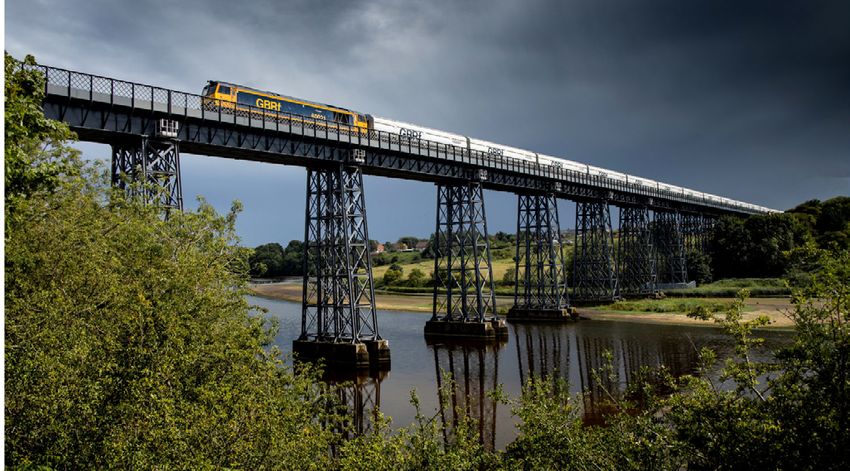
Introduction

Our five regions
We’re organised into five regions - Eastern, North West & Central, Scotland’s
Railway, Southern and Wales & Western.
This brings us closer to the communities and passengers we serve. Through
local understanding we can get closer to investors and make decisions that
are customer-led.
Each region has a business development team, ready to work with you.

                                                         Eastern

                                                         North West & Central

                                                         Scotland’s Railway

                                                         Southern

                                                         Wales & Western

Network Rail – Investing in the railway | March 2021                            6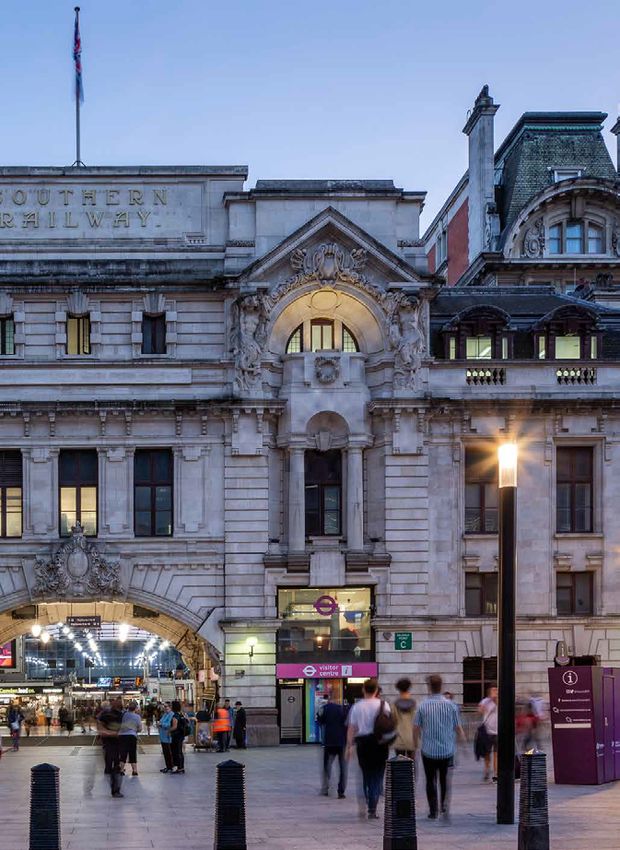
Partnership example

Leeds station redevelopment
Leeds is the north’s busiest railway station, with over 31 million passengers a
year. It has served the people of Leeds since 1938.
The redevelopment of the station will reduce train congestion and delays on
key commuter and leisure routes, improve the passenger experience through
the station as well as transform the area around the station for the benefit
of the local community.
The transformation of the station into a modern transport hub involves
improvements to the passenger concourse, a new platform, a glass station
facade and a stunning new transparent roof, flooding the building with
natural light.
The project is part of a £500m masterplan that will be an important driver
for the city’s future economy.

Outside Leeds City Station

Network Rail – Investing in the railway | March 2021                          7
Delivering investment projects

2. Delivering investment projects
We are the key contact for anyone who wants to invest in the railway. We
want to attract investment and help to deliver the benefits. Depending on
how your project is funded, there are some things to keep in mind.

Government funding                                                         Third-party funding
If you’re seeking public funding for your                                  For projects that don’t seek public funding,
scheme, it will need to go into government                                 there are fewer formal stages. But the spirit of
pipelines for rail projects. Our investment                                our investment framework and our knowledge
framework helps to manage this process and                                 of the railway will help to make sure projects are
provide certainty at each stage.                                           a good fit.

However a project is funded, the way we go through the process will depend on the details of the
project and how we decide to work together. We’ll work with you to decide the right scope and
contractual framework.

Projects seeking government funding
If you are looking for government funding for                              Our investment framework means that
your project, it will need to move through the                             decisions can be made in a consistent and
Rail Network Enhancements Pipeline (RNEP).                                 transparent way. It explains the decisions we
This is the government’s list of planned railway                           will take together, such as decisions about
projects.                                                                  investment in railway outputs (capacity, journey
                                                                           times and others).
The process moves through concept stage
and unlocking funding to acceptance onto the                               At each decision point, we work together to
network.                                                                   propose a programme and cost to progress
                                                                           to the next stage. Decisions involve factors
To provide certainty and help investors with                               including affordability and a viable business
this process, we have designed an Investment                               case that clearly demonstrates improvements
Decision Framework. Because of our public                                  and benefits to our passengers, freight
sector role, this is guided by the Treasury’s three                        customers or local communities.
stages of business cases – strategic, outline and
final.

    STAGE 1                          STAGE 2                         STAGE 3                 STAGE 4                STAGE 5
                   Decision to                         Decision to             Decision to
                                                                                                       Acceptance
                    develop                              design                  deliver
 Determine                          Develop                          Design                  Deliver                Deploy

Investment Delivery Framework

Network Rail – Investing in the railway | March 2021                                                                          8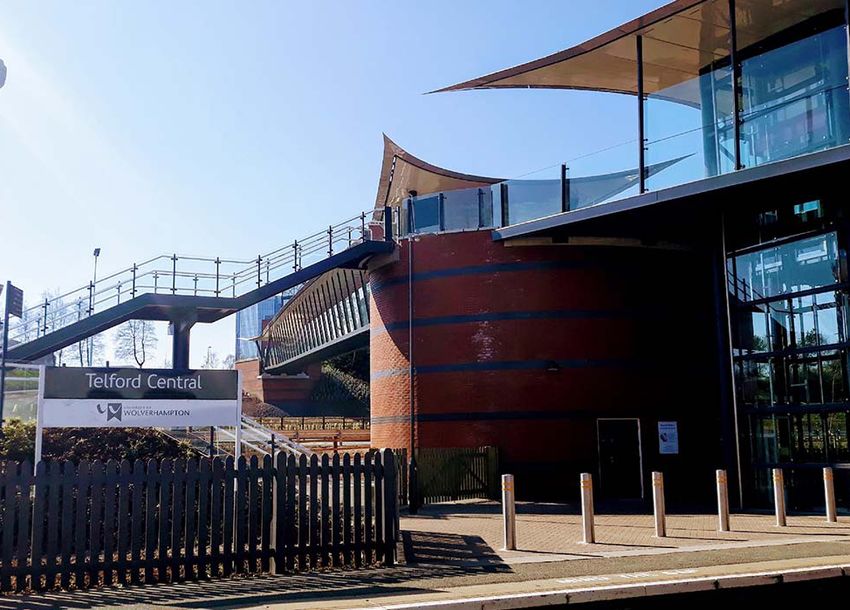
Delivering investment projects

Third-party funded projects
There may be fewer formal stages for projects that don’t seek public funding, but the investment
framework acts as a guide to the kinds of things to consider.
These projects don’t always need to follow every step of the investment framework process. If we
have agreed a business case and selected the right option, projects can enter the process at later
decision points and may be able to move more quickly to delivery.

                                        Privately funded projects can enter the process at later stages

    STAGE 1                          STAGE 2                         STAGE 3                     STAGE 4                STAGE 5
                   Decision to                         Decision to               Decision to
                                                                                                           Acceptance
                    develop                              design                    deliver
 Determine                          Develop                          Design                      Deliver                Deploy

Non-Investment Delivery Framework

Considerations for rail investments
Strategic fit is an important test for any rail                            • Any key risks
investment. Whether your project needs to
access the Rail Network Enhancements Pipeline                              • The likely effect on railway operations, other
or is funded privately, it will need to fit with                             relevant projects and regional strategies. For
strategic plans for the railway.                                             example, we can help to model any changes
                                                                             to the timetable
We will work with you to consider how projects
fit into the bigger picture of the network, and                            • The impact on stakeholders and any
any other work that is planned. We’ll use our                                involvement you need from them
knowledge of the full programme of planned                                 See Appendix A for examples of typical steps
work to help.                                                              in making and developing a proposal. See
In general, it’s important to consider some                                Appendix B for more details of the criteria used
crucial elements of your project when making a                             to assess schemes.
proposal.                                                                  You’ll have a nominated contact from our
The kinds of points to consider include:                                   investment teams to work with you, all the way
                                                                           from conception to delivery.
• The objective, scope and specification of the
  project                                                                  We’ll work together to agree the right approach
                                                                           for the benefit of all the stakeholders, and
• Timing of the work                                                       formalise it with one of our commercial
                                                                           contracts.

Network Rail – Investing in the railway | March 2021                                                                              9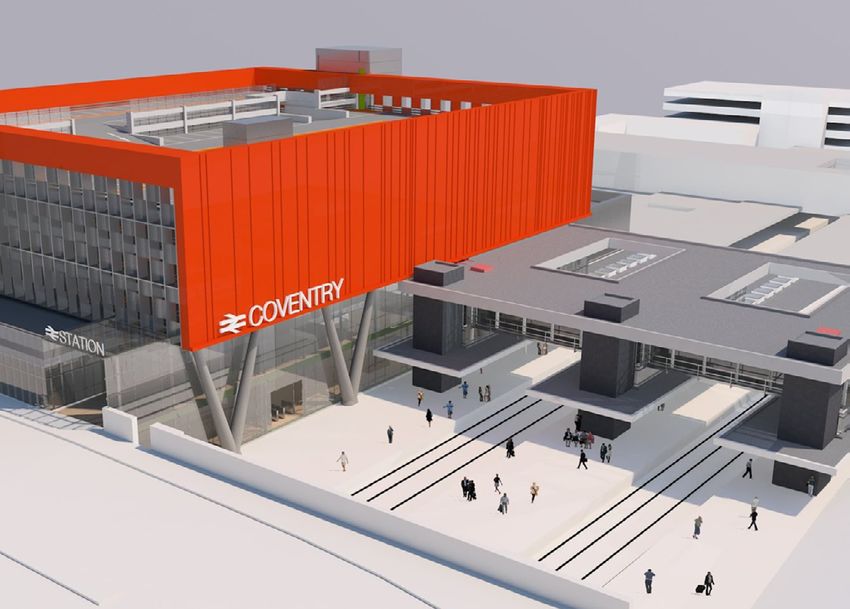
Working with you

3. Working with you
We are opening more and more services to investors; with a sharp focus
on ensuring benefits to passengers and the users of our railway, driving
innovation and creating flexible contract arrangements to work alongside us.
For specialist railway services, we have expert teams ready to work with you.

New ways of working                                    Network Rail services
Contestable services                                   Non-contestable
We want to drive innovation and creativity on          The are some services that only Network Rail
the railway, as well as value for money. So we         can deliver. Things like protecting the integrity
developed the idea of contestable services.            and safety of the rail network, providing
                                                       asset and operational information, safety
These are activities that would normally be            management, consents and access to the
done by us, but can be delivered by third              railway.
parties when it is safe. For example, the delivery
manager role could be offered to the market            We will always provide these non-contestable
as part of a contract. You would then be               services, and we’ll work closely with you to make
able to compete for and deliver renewal and            sure the project runs smoothly.
enhancement schemes.
                                                       One of the most important non-contestable
We would have a more hands-off approach in             services is Asset Protection and Optimisation
some aspects of delivery, given that the delivery      (ASPRO), your experts in working on or around
manager role is part of the contract. This             the railway.
output-focused approach should be less limiting
for investors.                                         See Appendix C for details of more contestable
                                                       and non-contestable services.

Your railway experts
Working near the railway can be a challenging          This is one of the non-contestable services that
environment, but we can help you navigate              only Network Rail can provide.
the risks. We are committed to safety and we
want to help you deliver your works safely and         The ASPRO teams can help you with things
securely.                                              including:

The process to unlock information can be               • Building on land near the railway
complicated, involving local authorities,              • Gas, water and electricity works
heritage bodies and any others with an interest
in the railway and surrounding land.                   • Radio masts and telecoms equipment

Our Asset Protection and Optimisation (ASPRO)          • Works on bridges near the railway
teams are here to provide expert railway               • New roads and transport schemes
assistance and support on planning activities
on or near the railway. They can visit you on site     • Inspection and surveying
and give advice at meetings.
                                                       • Works near level crossings
Network Rail – Investing in the railway | March 2021                                                       10
Working with you
If in doubt, please ask us for the full details of the services that ASPRO can provide.
Our ASPRO teams have been redesigned to make it easier to work with us. They have new leadership,
a national framework, service level commitments, customer satisfaction surveys and risk clarification.
Your regional business development team can help connect you to the local ASPRO team.
You can find out more about what our ASPRO teams can offer here:
https://www.networkrail.co.uk/running-the-railway/looking-after-the- railway/asset-protection-and-
optimisation/
Who does what? Template agreements
However we decide to work together, we have some tried and tested template agreements to work
with.
Our template agreements establish frameworks for the roles and responsibilities of Network Rail
and investors. There are a range of possible agreements, and we’ll work with you to choose the right
approach for each stage of the process.
The two broad types of template agreements are:
Basic agreements Detailed agreements
Simple agreements which quickly create These cover more specific details of the services
a contractual relationship after you’ve that will be provided by Network Rail or an
approached us. They cover things like pre- investor. For example, development and design
feasibility works on scope and business case. work including project management, managing
A common example is the Basic Services consents, governance and control. A common
Agreement (BSA). example is an Implementation Agreement.
See Appendix D for help with which template agreement might apply.
Detailed guide to template agreements
This guide describes the different kinds of agreement that might apply when funding a project
on the railway. It includes more detail on governance, risk management and any applicable
service level agreements.
Guide to template agreements
There are some regulations that apply to making changes to different parts of the network. The next
section explains what these are.
Network Rail – Investing in the railway | March 2021 11Partnership example
A masterplan for London Victoria
Victoria is home to a vibrant mix of • Improve the look, feel and capacity of the
station itself to benefit passengers
residents and businesses, and in the
last ten years has seen an increase • Enhance walking routes to Pimlico,
Belgravia and nearby attractions as well as
in development and investment in environmental improvements for cyclists
transport to the area. and pedestrians
We are working in partnership with key • Deliver at least 1,000 new homes and 4,000
stakeholders on Future Victoria, a masterplan new jobs
for a new understanding of development
opportunities in and around the station. Our Supported by a framework for transport and
aim is to make the area a destination by movement, commercial opportunities are a core
improving the station and the interchange focus. This includes property development and
around it for the benefit of passengers as well maximising third-party funding.
as transforming the local streets and spaces in We also managed the decision to develop
the vicinity. The plan will: through the Rail Network Enhancements
• Improve integration between public Pipeline. This involved showing a credible
transport modes (including consideration for commercial model and helping development
the future of Victoria coach station) partners secure the right approvals from
government.
• Add and enhance social and community
facilities in the area
London Victoria station
Network Rail – Investing in the railway | March 2021 12Regulatory matters
4. The regulatory stuff
Because of our licence and public role, there are regulatory obligations and
processes which apply to each project we work on together. This will include
how passengers and other station users are consulted, how impacts on the
network are considered or any compensation for disruption that is needed.
Early consideration of these factors is important and need to be built into
the overall project costs and timelines.
Station change
Stations change throughout their life, either by • Station users, including passengers, should
projects or changing use. A regulatory process be properly consulted and any contractual
applies to these changes. changes recorded
• The process ensures we get the funding • Improvements to existing facilities should
from government for maintenance and be considered first, followed by relocation
renewal of the network, and that train and new station openings
operators make the correct payments to
look after station assets • We can guide you through the process and
help you work with train operators
Station change at Port Talbot Parkway
Neath Port Talbot County Council promoted a regeneration scheme for a new transport hub in the
vicinity of the station to encourage more sustainable travel and provide easier access to employment
and residential areas in and around the town.
The council proposed a station change and the work involved revamping local roads, constructing a
new bus station as well as new pedestrian areas to create a more integrated travel hub for the benefit
of passengers and the local community.
Port Talbot Parkway station artist’s impression
Network Rail – Investing in the railway | March 2021 13Regulatory matters
Network change
If projects are likely to affect the operation of • Plans and descriptions of changes may
the railway, the network change process applies. be requested, and you may be invited to
presentations and discussions. Your surveyor
• If a proposal involves changes to the track, can advise you
or sidings which have not been formally
removed from the network, this process • We will lead on this process and liaise with
applies train operators and other relevant parties
Electrifying Scotland’s Railway - Busby Junction to Barrhead
This project is part of the first phase of the rolling programme of decarbonisation for Scotland’s
Railway. The network aims to be carbon neutral by 2035, making for a cleaner and more sustainable
railway for our passengers, customers and the environment.
Work includes route clearance, electrification of track and changes to platforms at Barrhead station
to accommodate electric trains. A footbridge at Nitshill will be replaced with a new one that is
compatible with electrification.
The network change process will be followed for work on and around the track. Site and ground
investigation will be key to enabling the work.
Line of route electrification from Busby Junction to Barrhead
Network Rail – Investing in the railway | March 2021 14Regulatory matters
Land clearance
This is our internal process to consult business use of the land or with obligations to be
units on whether there are any business or attached to the land
technical objections to a proposal to dispose of
land or change its use. • This is to ensure that railway land isn’t
disposed of without proper consideration,
• Clearances are valid for two years and may where it might have a future railway-related
be granted with conditions restricting the use
Land clearance approval at Telford
Telford and Wrekin Council were awarded public funding to replace the footbridge at Telford station.
The new, ‘eye catching’ bridge was moved closer to the station and passenger lifts, access ramps and
modern weather protection were added.
The land clearance process was followed to grant an overbridge easement, so that the bridge could be
moved and rebuilt providing a vital connection between the station and the town centre and the local
community.
Telford Central station footbridge
Network Rail – Investing in the railway | March 2021 15Regulatory matters
Land disposal
The land disposal process checks that we don’t • We must get consent from the Office of Rail
dispose of land that might have a railway use in and Road before we dispose of railway land
future.
• Usually, an industry-wide consultation
• This comes after our internal land clearance process will need to be carried out. We will
process, and typically involves consulting lead on this process and request any Office
more external stakeholders of Rail and Road consent
A new station for Coventry
We obtained consent from the Office of Rail and Road for the disposal of land next to Coventry
station.
The land lease was assigned to Coventry City Council to build a new, modern station with increased
retail space, safer step free access to all platforms, more passenger facilities, an enlarged 633
space multi-storey car park and bus station. The new station will benefit passengers and the local
community. Network Rail will maintain the station once it’s completed.
New Coventry station
Network Rail – Investing in the railway | March 2021 16Regulatory matters
Managing closures and possessions
These processes apply to projects that add • These processes make sure that the public
or remove anything from the network or take interest is safeguarded, especially any effect
tracks out of use. on passenger services
• If you need to close or remove something • They can add cost and time to a project,
on the railway, it’s likely that closure you should consider them as early as
provisions will apply possible. Working on the operational railway
can be challenging, but we will support you,
• When a section of track is required for work advise on the impact and help with next
and trains can’t run, possession rules need steps
to be followed
Reopening the Northumberland line
Passenger traffic has not run on the line from Newcastle to Ashington since 1964. Our long-term
aim is to bring back passenger trains, while integrating the new line with the business, cultural and
educational needs of the community. These will enable better access to education and employment
opportunities in the region as well as facilitating affordable housing developments and benefits to the
environment by moving travel from road to rail and stimulating more economic activity in the area.
Work involves designing and upgrading the 17-mile freight-only section of railway, including building
6 new stations, signalling and level crossing upgrades and the creation of a new passing loop.
We are working with Northumberland County Council to manage a significant number of closures to
facilitate the work, minimise impact on freight and create maximum benefits for future passengers.
New Seaton viaduct
Network Rail – Investing in the railway | March 2021 17Regulatory matters
Depot change
The depot change process applies when • Permission from the Office of Rail and Road
changes to a depot lease area, a light is needed if the operation of a depot will be
maintenance depot or changes to access affected for longer than 28 days
arrangements are needed.
• Relevant operators may need to be
• The facility owner has a period to object to compensated for any disruption
any proposals
Guidance on timing and costs
We will work with you, and key stakeholders, to manage whatever processes are involved in a project.
It’s important that we work together as early as possible, to ensure that time for regulatory processes
can be factored into your plans. Discounts may be available for acting early, while costs can increase
for later applications.
The table below is a guide to the industry wide process timescales which might apply, though exact
timings will depend on the specific details of a project.
Type Timeframe
Office of Rail and Road consent 2 – 12 weeks
Station or depot change 3 – 6 months
Network change 3 – 6 months
Land clearance 3 months
Land disposal 4 months
Closure or possession 9 – 12 months
Some of the regulatory processes allow compensation claims for costs or losses from a development.
You may need to consider this as part of overall development costs.
If there will be any new assets provided to Network Rail or train operators, these would be considered
as part of the compensation negotiations.
Throughout these processes, we will work with you to manage risks to the network.
Network Rail – Investing in the railway | March 2021 18Risk management
5. Risk management
We’re committed to helping you develop your project on the railway. Our
public role means we need to manage risks carefully, especially when we
provide some specialist services.
Risk fund agreements
You might want us to provide specialist design and development services, asset protection services
or physical works - responsibilities and liabilities which we have not been funded to provide. And for
investors, uncapped liabilities would be a significant barrier.
To frame the balance of risk and responsibilities between us and investors, we introduced two risk
funds which fund the liabilities taken by Network Rail under these agreements. These deal with
Network Rail’s contractual risks (the Network Rail fee) and those risks systemic to the rail industry (the
industry risk fee).
Network Rail fee Industry risk fee
This covers our potential contractual liabilities This provides appropriate funding support
to the investor. For each type of agreement, we for industry risks. Typically, these are the low
charge a set fee which reflects the risk profile. probability, high impact risks specific to rail
industry conditions (like a serious safety-critical
We pool these fees to meet any claims for event). We charge a fee for each agreement
contractual breach and negligence and cap our type.
liability at the level of the value of the works or
services being provided (or £100,000, whichever Again, we pool these fees to meet any industry
is higher). risk claims when they arise. See Appendix D for
details of fees by agreement type.
Public Liability Insurance
Our regulator requires the industry to have £155 million of public liability cover. This could apply to
investors carrying out works on or near the network.
You may need to check with your insurance advisors to arrange extra cover. Where we do work
directly, Network Rail will provide insurance.
Network Rail – Investing in the railway | March 2021 19Supporting guides
6. Supporting guides
These detailed guides explore some of the common projects and activities
that third parties may invest in. They are useful as an initial reference, but
your business development contact will work with you every step of the way.
Developing stations and railway land
You may want to partner with us on a development on and around railway land. We have lots of
experience in joint ventures on single or multi-site developments with long-term potential.
We can also work through partnerships with developers, local authorities or landowners to maximise
development opportunities and work safely around the operational rail network.
A guide to property development proposals
For more in-depth guidance, please see our guide for partners and land purchases.
Property development proposals on Network Rail land
Investment in stations
Our guide to investing in stations sets out the processes and regulations involved in developing
and delivering a station project.
Investment in stations
Station building design guidance
Using our telecoms assets
We work with the Department for Transport (DfT) to see if our railway telecoms equipment can
be reused to give passengers a better signal, and to better connect railway neighbours and nearby
communities.
We are making it easier for telecoms operators to reuse railway masts, fibre cables and
communications cabinets and provide better connectivity on and near the railway.
Guide to telecoms reuse
This guide describes how to work with our telecoms assets and the processes involved.
Guide to telecoms reuse
Network Rail – Investing in the railway | March 2021 20Partnership example
Delivering 5G on the network
By taking fibre services from
Network Rail and using streetlights
at the station, a leading telecoms
provider has delivered ultrafast
5G connectivity to a care home in
Marsden, Yorkshire.
This project was part of a trial to show how
existing telecoms assets can be used to
enhance connectivity on or near the railway.
Making use of our telecoms network reduces
the need to build costly new equipment.
The 5G connection meant that residents could
stay digitally connected to their families during
the coronavirus pandemic. Investment was also
used to enhance the network with a camera
system to detect potential rail disruptions in the
area.
Telecoms equipment on a streetlight, Marsden
Maximising the value of our assets
In 2019, Network Rail completed
the sale of its commercial estate
to Blackstone Group and Telereal
Trillium to generate funds to
support the railway upgrades
across the country for the benefit of
passengers and taxpayers.
The sale consisted of c.5,200 rental spaces,
majority of which are converted railway arches.
The deal was done on a long leasehold basis
and required innovative collaboration to define
the future interfaces between Network Rail and
the new owner. We had to ensure that Network
Rail could continue to maintain and operate
a safe railway whilst enabling investment
from the new leaseholders in the portfolio,
thereby delivering benefits to tenants and local
communities. Converted railway arches
Network Rail – Investing in the railway | March 2021 21Contact us
7. Contact us
Our business development teams have a wealth of commercial, business
development and railway expertise. They’re ready to work with investors
across the country.
Eastern Region Freight (nationwide)
Paul McKeown Guy Bates
Investment Director Head of Freight Development
Paul.McKeown@networkrail.co.uk Guy.Bates@networkrail.co.uk
07713 301885 07825 376699
North West and Central Region Telecoms (nationwide)
Jadon Silva Jamie Potter
Business Development Director Account Director, Telecoms
Jadon.Silva@networkrail.co.uk Jamie.Potter@networkrail.co.uk
07436 275492 07502 313574
Scotland’s Railway National
Matthew Spence For schemes that have national impact, please
Director, Strategy & Investment
contact:
Matthew.Spence@networkrail.co.uk Harriet Hepburn
07825 766724 Corporate Finance & Business Development Director
Harriet.Hepburn@networkrail.co.uk
Southern Region 07701 055641
Paul Harwood
Investment Director
Tolu Osekita
Lead - Third Party Funding
Paul.Harwood@networkrail.co.uk
Tolu.Osekita@networkrail.co.uk
07799 864430
07710 959895
John Gill
Office of Rail and Road, Investment
Business Development Director
investment@orr.gov.uk
John.Gill2@networkrail.co.uk
07795 688658 Network Rail online
Visit our website for third-party investors at:
Wales and Western Region
https://www.networkrail.co.uk/industry-and-
Francis McGarry
commercial/third-party-investors/
Investment Director
Francis.McGarry@networkrail.co.uk Other useful links:
07920 155806 Department for Transport - rail
Scotland’s Railway
Transport for Wales
Office of Rail and Road
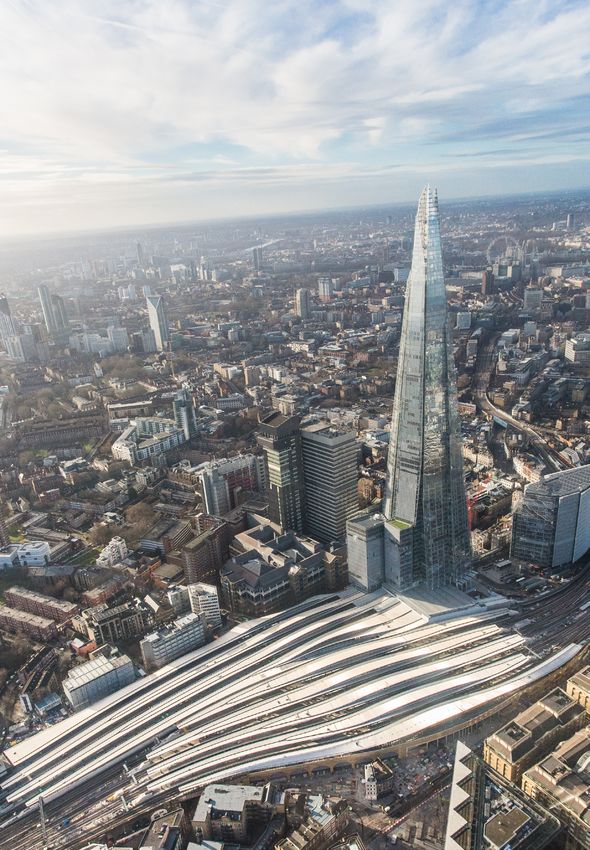
Network Rail – Investing in the railway | March 2021 22London Bridge station
Appendix

8. Appendix
A – Investment process flowcharts
The following charts show an example of the typical steps in the investment process. We will work
with you to manage these for the needs of your project.

Output definition                                                  Project feasibility
This flowchart describes the project ideas,                        This flowchart shows the initial project
initiation and prioritisation process.                             development process, where basic services are
                                                                   provided by us.

            The investor describes the objectives and                         We refine the project objectives, scope
                      scope of the project                                         and specification together

                                                                              We consider the resources, timescales
                The investor makes a request to us                           and costs required to deliver the project

                                                                             Together we agree the work-scope for a
                                                                             Basic Services Agreement (BSA) or Basic
             We acknowledge the request and raise it                           Asset Protection Agreement (BAPA)
              with our strategic planning colleagues

                                                                              Both parties obtain internal authority
                                                                                   and enter into BSA or BAPA
               Our strategic planners consider the
            project and we allocate a contact to work
                        with the investor
                                                                               We deliver the contracted feasibility
                                                                                services. We will also identify other
                                                                               agreements that may be required to
                                                                                       facilitate the project
             The investor and Network Rail start the
                  project development process
                                                                               The investor reviews the feasibility
                                                                               outputs, incorporates them into its
                                                                             business case and gets authority for the
              The investor decides on the preferred                                        next stage
                       procurement route

                                                                            The investor decides on the procurement
                                                                                    route for the next stage
                                         The investor chooses
                                         others to develop and
                                        refine the project scope
    The investor asks us to                    themselves                                               The investor chooses
    develop and refine the                                                                              others to develop and
        project scope                      (A suitable asset         The investor asks us to
                                        protection agreement                                           refine the requirements
                                                                     develop and refine the
                                        may be needed for non-       requirements to allow                (A suitable asset
                                         contestable services)          option selection               protection agreement
                                                                                                      may be required for non-
                                                                                                       contestable services)

Network Rail – Investing in the railway | March 2021                                                                             24
Appendix
Option selection Option development and design to
This flowchart shows the project development
construction and handover
process, with development services provided by This flowchart shows the implementation
us. process.
We consider the resources, timescales We consider the resources, timescales
and costs required to refine the project and costs required to complete option
requirements and allow option selection development and detailed design
We both agree the work-scope for a
Both parties agree the work-scope for a
Basic Services Agreement (BSA) or
Development Services Agreement (DSA)
Development Services Agreement (DSA)
Both parties obtain internal authority Both parties obtain internal authority
and enter into BSA or DSA and enter into the DSA
We deliver the contracted option We deliver the contracted DSA services
selection services. We will also identify and establish the cost and timescales to
other agreements that may be required construct the project
to facilitate the project.
The investor reviews the services and
The investor reviews the services and construction proposals, incorporates
selects the preferred option, incorporates them into its business case and gets
them into their business case and gets authority for the next stage
authority for the next stage
Both parties agree the terms of an
The investor decides on the procurement Implementation Agreement (IA)
route for the next stage
The investor chooses Both parties obtain internal authority
others to design and and enter into the IA
The investor asks us construct the project
to further design and
potentially construct the (A suitable asset
project protection agreement
may be required for non-
contestable services) We deliver the works, manage any
approvals and commission the project
The project is handed over, other
applicable agreements take effect
(property transfers, warranties, etc)
and both parties carry out a post-
implementation review of the project
Network Rail – Investing in the railway | March 2021 25Appendix
B – Criteria for assessing schemes
The key constraints on our stewardship of the Compatibility with existing
network are: commitments
• funding A requirement is regarded as reasonable if it
• network access satisfies all of these conditions:
• availability of materials, machinery and • it does not conflict with the access rights of
resource other operators
• asset knowledge • it is not designed to give unfair advantage
over other bidders in future franchise
• our network licence and contracts negotiations
These set the context for us to pursue our • it does not affect our future ability to
objectives. All of them are permanent, they deliver the published strategy on any route,
will always affect our approach to network including performance objectives for that
stewardship. route
Where there are constraints on our ability to • it fits with the rules of our network licence,
deliver a scheme, we will work with investors and statutory duties under the Railways Act
and stakeholders to find ways to mitigate them. 2005
investors’ schemes must meet the following • we can operate the new infrastructure
criteria: or service in a safe and efficient manner,
including financially
Where a proposed scheme conflicts with
Financial constraints an existing route strategy, we may consider
amending the strategy. This is subject to
A requirement is regarded as reasonable if it
discussion with our funders and other operators
satisfies one or more of these conditions:
and affected parties on the route.
• it can be achieved at no extra net cost
to us, including in future maintenance or
operation Deliverability criteria
• it can be achieved at no extra net cost to us We will consider a requirement as reasonable if
because it is part of a planned scheme to it satisfies all of these conditions:
renew or enhance the network
• the requirement is clearly defined, and the
• the investor commits to pay extra funds, or scope and timescale for delivery are realistic
procure the payment of additional funds
to us based on the cost of delivering and • the output is measurable, so that all parties
financing the enhancement, including a can agree when delivery has been achieved
return which is appropriate for the risks we
• we have, or can obtain, the necessary
carry
resources to implement the scheme
• the funding for the spending involved is
• network access can be made available
explicitly provided for at a periodic review of
costs and outputs (access charges review) • delivering the scheme does not compromise
our ability to deliver the existing programme
of works on the route
Network Rail – Investing in the railway | March 2021 26Appendix
Where we are only facilitating the delivery of whether by us or a promoter, we must also
a scheme, our ability to efficiently contribute consider the stewardship obligations as set out
to the scheme’s delivery will depend on the in our network licence.
promoter following the agreed programme
plan, as well as the management structure For example, this might affect areas where
and expertise they use to discharge their several schemes are being proposed at the
obligations. same time, such as during the London Olympics.
If these schemes make exceptional demands on
Deliverability constraints will not affect most resources, we may not be able to deliver every
schemes that are delivered by a promoter. scheme at the same time whilst operating our
However, when any scheme is delivered, network efficiently.
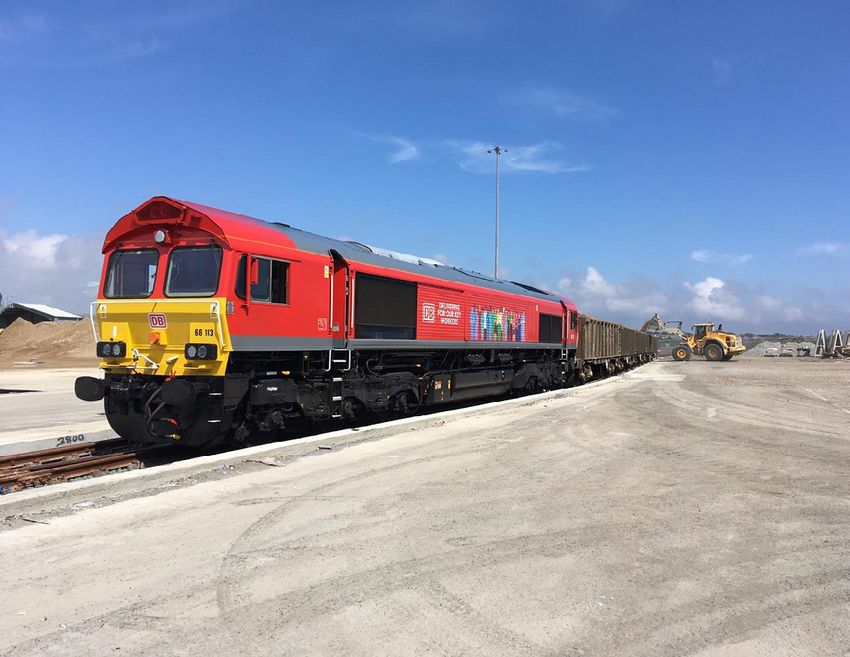
Network Rail – Investing in the railway | March 2021 27Partnership example Newhaven marine port We collaborated with Brett Aggregates to return rail freight to Newhaven after 30 years. Both parties played their part in making the project a success, to create a new offloading facility, rail infrastructure and aggregate processing plant. On the network, investment was directed to creating sidings and integrating the project with signalling works in the area. The new facility is a great addition to the sustainable construction sector in the south east and London. It employs around 20 people and will handle 2 trains a day. Each freight train removes 50-70 lorries from the region’s roads. First locomotive and freight train out of the refurbished Newhaven terminal Network Rail – Investing in the railway | March 2021 28
Appendix

C – Services provided by Network Rail
The specific services we provide will depend on        • quality assurance
the nature of the project and the partnership          • logistics and access planning
we agree together. We’ll discuss your service
requirements and our charges with you before           • constructability review
we do anything. We won’t charge for providing          • risk and value management for programme
services that are part of our normal funding.            and project
The lists below are for guidance only, but             • systems integration
outline the services we can provide to facilitate      • in-house design studies
an enhancement project
                                                       • maintenance, operation and performance
Broadly, the services we can provide are:                assessments
Contestable services, which can be put to              • technical review and validation
market:                                                • advising on the details of relevant
• project development                                    maintenance, performance and renewal
                                                         strategies
• design management
                                                       • timetable development and assessment
• scheme implementation through
  management contracting                               • developing acceptance criteria and
                                                         managing the acceptance process
Non-contestable services, which Network Rail
always provide:                                        • technical and operational assistance

• asset protection                                     • identifying issues related to coordination
                                                         with other railway projects
• engineering safety management
                                                       • network integration and co-ordination
• providing asset information and advising on            services
  booking possessions
                                                       • facilitating access to the network to
• railway operations                                     undertake agreed enabling works
• supporting applications for network and              • site surveys and other geotechnical
  station change                                         investigations
                                                       • administration and management of rail
                                                         industry processes
Development, design management and
                                                       • support for using a Transport and Works Act
implementation – contestable services                    order
Development, design management and                     • compliance checking
implementation services are generally
                                                       • facilitating use of statutory consents
contestable, and are associated with facilitating
the project for a promoter.                            • property-related advice

The services include:                                  • implementation of works through
                                                         management contracting
• programme management
• project management
• procurement and management of sub-
  consultants

Network Rail – Investing in the railway | March 2021                                                  29
Appendix
Non-contestable services • Engineering strategy proposals for the
application and integration of new
Non-contestable services are associated with technologies, including product acceptance,
protecting the integrity and safety of the and forwarding to Her Majesty’s Railway
rail network. We will provide these services Inspectorate for type approval if needed
using our knowledge of the network and the
programme of work that is planned. • Acceptance of maintainability criteria,
performance measures, acceptance criteria,
and reliability criteria processes (both
project-specific and route-wide)
Access to data:
• Hand-back strategy
• Company standards, sectional appendix and
hazard directory
• Drawings, asset data and relevant Railway operations:
information about the existing network
• Publication of operating notices
• Agreeing the development plan in relation
Asset protection – safety: to the train timetable
• Access to the network, including audit • Booking possessions, or supporting the
and compliance review of project safety process
management • Publishing notices under the station
• Agreement of level crossing risk assessments change, network change, or depot change
and forwarding to ORR safety directorate for regulations
approval • Agreements for using existing operational
• Compliance with supplier’s licence land and railway assets
• Acceptance of project safety case through
review group and acceptance board
• Acceptance of compliance with Network Rail
safety and environmental plan
• Acceptance of proposed changes, including
designs, drawings and operational layout
safety
• Any submissions to the Railway Safety
Directorate at the Office of Rail and Road
• Any submissions to the Fire Commissioner
for London
Asset protection - engineering safety
management:
• Acceptance of maintenance regime
processes and strategies, including
infrastructure maintenance interface
strategy
Network Rail – Investing in the railway | March 2021 30Appendix
D – Template agreements and risk fees
This flowchart illustrates the correct agreement to use, based on the requirements of the investor and
the stage of the project and Investment Decision Framework (IDF).
NETWORK RAIL DELIVERY OF SERVICES (EARLY DEVELOPMENT STAGE)
Consider using
Does the Customer a Funding to NR
Is the Customer
want to deliver Agreement
funding all of the
the Services
services?
themselves? Do the NR Services
Development Services
require access to
Agreement (DSA)
the Network/ Site/
possessions? From IDF determine stage
to design
High Level
Development
Agreement (HLDA)
Does the Customer IDF determine stage only
only need limited
initial Services?
Basic Services
Agreement (BSA)
IDF determine stage only
CUSTOMER DELIVERY OF SERVICES OR WORKS Basic Asset Protection
Agreement (BAPA)
followed by Asset
Protection Agreement
Are the Customer’s (APA)
services / works Full IDF delivery process
complicated?
Basic Asset Protection
Agreement (BAPA)
Full IDF delivery process
NETWORK RAIL DELIVERY OF SERVICES (POST DESIGN STAGE)
Consider using
a Funding to NR
Does the Customer Is the Customer Agreement
want to deliver the funding all of the
works themselves? Works?
Implementation
Agreement Emerging
Cost (IA – EC)
From IDF design stage to
deploy
Are NR works
complicated or
>£5m? Basic Implementation
Agreement Emerging
Cost (BIA – EC)
From IDF design stage to
deploy
Guide to template agreements
This guide describes the different kinds of agreement in detail.
Guide to template agreements
Network Rail – Investing in the railway | March 2021 31Appendix
Two risk funds deal with Network Rail’s contractual risks (the Network Rail fee) and those risks
systemic to the rail industry (the industry risk fee) under different contractual agreements.
Type of agreement Network Rail fee Industry risk fee
Asset protection agreement Fee is equal to 10% of the Fee is 2% of the total estimated
(including basic) aggregate agency costs, costs of the project up to its
consultants’ and contractors’ costs completion, including construction
and personnel costs, as estimated at costs, contractors’ costs, regulated
the scheme commencement date. change costs and Network Rail
costs.
Basic implementation Fee is equal to 5% of the aggregate Fee is equal to 2% of the aggregate
agreement (emerging cost) of the agency costs, consultants’ of the agency costs, consultant’s
and contractors’ costs and personnel and contractors’ costs and personnel
costs, as estimated at the scheme costs.
commencement date.
Basic implementation Fee is equal to 13% of the Fee is equal to 2% of the aggregate
agreement (fixed price) aggregate of the agency costs, of the agency costs, consultants’
consultants’ and contractors’ and contractors’ costs, personnel
costs, personnel costs and QRA costs and QRA (risk assessment for
(risk assessment for any variation any variation undertaken at a P50
undertaken at a P50 probability probability in respect of the risks
in respect of the risks owned by owned by Network Rail or capped to
Network Rail or capped to the the promoter).
promoter), as estimated at the
scheme commencement date.
Basic Services Agreement Fee is equal to 5% of the aggregate Not applicable.
(BSA) of the agency costs, consultants’
and contractors’ costs and personnel
costs, as estimated at the scheme
commencement date.
Development services Fee is equal to 5% of the aggregate Fee is equal to 2% of the project
agreement of the agency costs, consultants’ cost, which is the estimated total
and contractors’ costs and personnel cost of the project up to the
costs, as estimated at the scheme completion of the current stage of
commencement date. development contracted for.
Implementation agreement Fee is equal to 5% of the aggregate Fee is equal to 2% of the aggregate
(emerging cost) of the agency costs, consultants’ of the agency costs, consultant’s
and contractors’ costs and personnel and contractors’ costs and personnel
costs, as estimated at the scheme costs.
commencement date.
Implementation agreement Fee is equal to 13% of the Fee is equal to 2% of the aggregate
(fixed price) aggregate of the agency costs, of the agency costs, consultants’
consultants’ and contractors’ and contractors’ costs, personnel
costs, personnel costs and QRA costs and QRA (risk assessment for
(risk assessment for any variation any variation undertaken at a P50
undertaken at a P50 probability probability in respect of the risks
in respect of the risks owned by owned by Network Rail or capped to
Network Rail or capped to the the promoter).
promoter), as estimated at the
scheme commencement date.
Network Rail – Investing in the railway | March 2021 32Edinburgh Waverley station
You can also read


