Relative Risk Perceptions between Snus and Cigarettes in a Snus-Prevalent Society-An Observational Study over a 16 Year Period - MDPI
←
→
Page content transcription
If your browser does not render page correctly, please read the page content below
International Journal of
           Environmental Research
           and Public Health

Article
Relative Risk Perceptions between Snus and
Cigarettes in a Snus-Prevalent Society—An
Observational Study over a 16 Year Period
Karl Erik Lund *         and Tord Finne Vedoy
 Department Alcohol, Tobacco & Drugs, Norwegian Institute of Public Health, P.O. Box 222 Skøyen,
 N-0213 Oslo, Norway; tord.vedoy@fhi.no
 * Correspondence: kelu@fhi.no

 Received: 30 January 2019; Accepted: 6 March 2019; Published: 11 March 2019

 Abstract: Background: Most studies on perceived risks of smokeless tobacco products (SLT) have been
 conducted in the U.S., and the vast majority conclude that perceptions of the relative harmfulness of
 SLT versus cigarettes in the population are inconsistent with epidemiologically-based risk estimates,
 and typically conflated to that of cigarettes. We tested whether such inaccuracies also existed in
 Norway, where SLT-products are less toxic (Swedish snus) and SLT use is more prevalent than
 in the U.S. Methods: Over a 16 years period (2003–2018), 13,381 respondents (aged 16–79 years)
 answered questions about risk perceptions in Statistics Norway’s nationally representative survey of
 tobacco behavior. We applied an indirect measure of comparative harm where risk beliefs for eight
 nicotine products were assessed independently of other products and then compared the answers.
 The wording of the question was: “We will now mention a variety of nicotine products and ask you
 how harmful you think daily use of these are. Use a scale from 1 to 7, where 1 is slightly harmful
 and 7 is very harmful”. Mean scores with 95% confidence intervals were calculated. Results: The
 overall risk score for cigarettes was 6.48. The risk score for snus was 5.14–79.3% of the risk score
 of cigarettes. The relative risk scores for e-cigarettes (3.78) and NRT products (3.39) was 58.4% and
 52.3% when compared to cigarettes. Perceptions of risk were stable over time. A strong association
 was observed between perceived risk of snus and having used snus in attempts to quit smoking.
 Conclusion: Perceptions of relative risk between snus and cigarettes is inconsistent with estimates
 from medical expert committees, which assess the overall health risk from use of Swedish snus to be
 minor when compared to the risk from smoking. Like the situation in the US, incorrect beliefs about
 SLT risks seem to be prevalent also in the snus-prevalent Norwegian setting. Accurate information
 on differential harms needs to be communicated. Future research should try to identify reasons why
 health authorities in the US and Scandinavia allow these well-documented misconceptions to persist.

 Keywords: smokeless tobacco; snus; risk perception; tobacco; relative risk perception; e-cigarettes;
 NRT

1. Background
     Tobacco and nicotine products fall on a continuum of risk based on the mode of nicotine delivery
and product constituents. Consumers’ perceptions of the risk from using these products—subjective
judgements about the potential harm to health—are important constructs in decision making
theory [1–3] and are associated with numerous tobacco-related health behaviors, such as initiation [4,5],
cessation [6–8] and product switching [9,10].
     In the literature, consumers’ perceptions of risks are often reported as comparisons across
the nicotine product spectrum with combustible cigarettes—the most hazardous form of nicotine

Int. J. Environ. Res. Public Health 2019, 16, 879; doi:10.3390/ijerph16050879   www.mdpi.com/journal/ijerph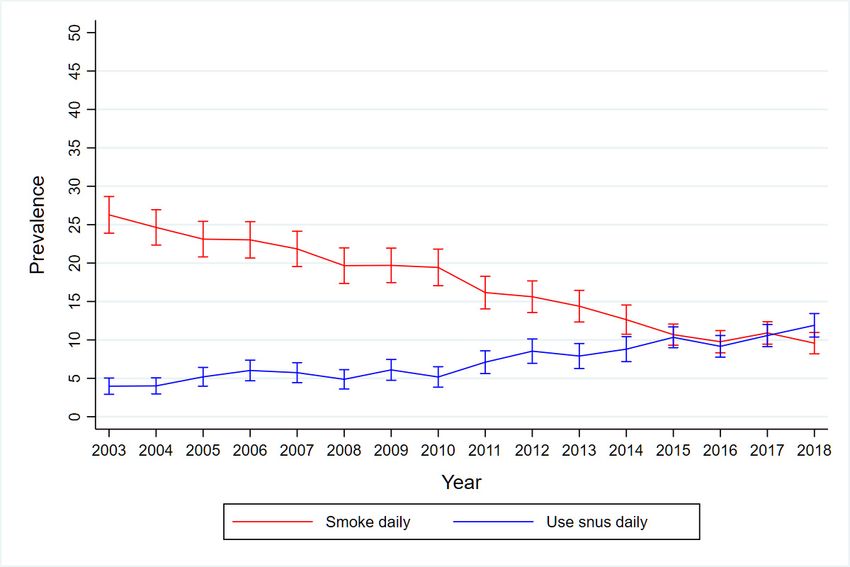
Int. J. Environ. Res. Public Health 2019, 16, 879                                                   2 of 14

uptake—as a reference category [11]. In addition to cigarettes, studies typically include risk assessments
for nicotine replacement therapy products (NRT), e-cigarettes and various types of oral smokeless
tobacco products (SLT). A recent systematic review of relative risk perceptions (RRP) across nicotine
products identified 29 studies in which RRP of SLT products had been compared to combustible
cigarettes [12]. The vast majority of these studies had been conducted in the U.S., and the authors
concluded that perceived risks of SLT use were overestimated and conflated to that of cigarettes.
Another U.S. study published after the review supported this finding [13].
     In this study, we identify how Norwegians perceive the risk difference between SLT and cigarettes.
This difference might be larger in Norway than what is typically reported from studies conducted
in the U.S. Firstly, in comparison to other SLTs, the Scandinavian types of SLT—often referred to as
Swedish snus—is acknowledged by the scientific community to be at the lower end of the risk scale
in terms of adverse health effects [14–16]. The U.S. types of SLTs are manufactured, stored and used
differently than is Swedish snus. During production, Swedish snus undergoes heat pasteurization to
reduce formation of carcinogenic tobacco-specific nitrosamines (TSNAs) and polycyclic hydrocarbons
(PAHs) [17].
     Secondly, risk beliefs might be better anchored in Norway than in the U.S. In the U.S.,
the awareness and prevalence of SLT use is low [18,19] compared to the situation in Norway where
there currently are as many snus users as smokers in the population, and the snus phenomenon
has been the subject of massive media attention [20]. Thus, the epistemological climate for making
judgements about relative harmfulness should be favorable and reduce confusion. Knowledge and
use of a nicotine product is often associated with more accurate risk beliefs [12,21].
     Thirdly, the majority of studies included in the review [12] employed a direct measure of
comparative harm, which elicits estimates of relative risks of SLT and cigarettes within a single
question (e.g., compared to regular cigarettes, are SLTs less harmful, as harmful or more harmful).
Evidence suggests that using an indirect method, as we do—measuring the perceived harm of SLT and
cigarettes in two separate questions and then comparing the answers—will increase the proportion of
respondents who define SLTs to be less harmful than cigarettes [10,22–25].

Aims
     In this study, we compare risk perceptions of snus use and smoking as reported by respondents
living in a snus-prevalent environment. More precisely, we have examined whether relative risk
perceptions of snus and cigarettes in the general population—and five other nicotine products—have
changed over a 16-year period characterized by a decline in smoking and an increase in snus use
(aim 1). Secondly, we singled out the risk perceptions of snus that were most inconsistent with risk
estimates from expert committees, and then studied how this overestimation of risk was associated
with respondent characteristics (aim 2). Third, we examined the association between perceived
harmfulness of snus and the likelihood of using the product in quit-smoking attempts (aim 3).

2. Methods

2.1. Material
     Data stem from Statistics Norway’s nationally representative survey of tobacco behavior among
adults (16–79 years) conducted annually since 1973. Questions about risk perceptions were included
each year in the period 2003–2011, excluded from 2012 to 2016, but reintroduced in 2017. In the period
2003 to 2014, a sample of 2000 Norwegians were contacted every fourth quarter by telephone and asked
questions about their past, present and planned tobacco use, attitudes towards tobacco preventive
measures, exposure to passive smoking, etc. In the period 2015 to 2018, the sample size was increased
to 3000. The average response rate was 62% for surveys conducted from 2003 to 2011 and 58% for
2017–2018. In total, 13,381 respondents were included in our study.Surveys conducted by Statistics
Norway are carried out in line with the European Statistics Code Of Practice. Statistics Norway states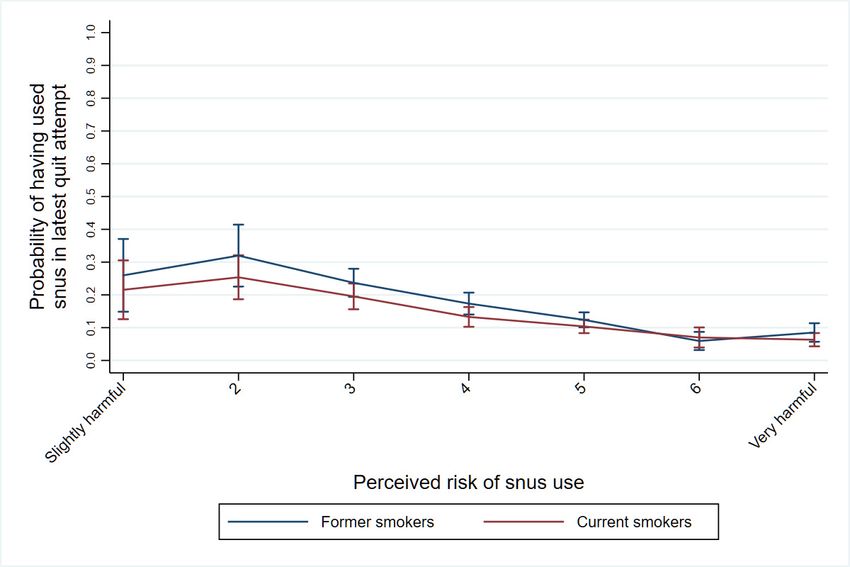
Int. J. Environ. Res. Public Health 2019, 16, 879                                                   3 of 14

to respondents that participation in the survey is voluntary and that respondents can withdraw from
the interview at any time. The survey is anonymous and the participants cannot be traced. The data
that support the findings of this study are available from Statistic Norway, but restrictions apply to the
availability of these data, as they were used under license for the current study. However, the data are
available from the authors upon reasonable request and with permission of Statistics Norway.

2.2. Measures
     We used an indirect measure of perceived relative harm. The wording of the question was:
“We will now mention a variety of nicotine products and ask you how harmful you think daily use
of these are. Use a scale from 1 to 7, where 1 is slightly harmful and 7 is very harmful”. Combustion
products included conventional manufactured cigarettes, manufactured cigarettes with reduced
nicotine and tar, roll-your-own cigarettes, cigars/cigarillos and pipe. The latter three were not included
in the 2017/18 surveys. Non-combustible products included Swedish snus, NRT and e-cigarettes
(ENDS). The latter was only included in the 2017 and 2018. Respondents who ticked off a “don’t
know”-category, were excluded from the analysis.

2.3. Current Use of Products
     Respondent’s smoking status was classified in five categories: never-smoker, former smoker (daily
or occasionally), current occasional smoker, current daily smoker (non-hard-core) and “hard-core”
smoker. The latter included daily smokers who had a) made no quit attempts, b) had no plans to quit
smoking, and c) who portrayed themselves as smokers in five years’ time [26]. Snus use was defined
using similar categories, but did not include a “hard-core” category.

2.4. Socio-Demographic Information
     Respondents’ socio-economic position was measured using education as a proxy and divided
into three groups. Respondents who had completed nine years of compulsory education (primary),
respondents who had completed at least three years of high-school education (secondary) and
respondents who had completed at least three years of university education (tertiary). Age was
categorized into four groups (16–24, 25–44, 45–66 and 67–79 years).

3. Analysis

3.1. Aim 1: Risk Perceptions of Nicotine Products and Changes Over Time
      For each year as well as for all years combined, we calculated mean risk score on the 7-point Likert
scale and 95% confidence intervals. To examine how respondents perceived each nicotine product
relative to conventional cigarettes, we calculated relative harm scores by dividing the overall score
(all years combined) for each product with the score for conventional cigarettes ×100.

3.2. Aim 2: Association of Snus Risk Overestimation with Respondent Characteristics
     We constructed three nested logistic regression models with a dichotomous measure of snus
risk perception in which the values 6 and 7 denoted high perceived risk and all other values (1–5)
denoted medium or low perceived risk. In model 1, perceived risk of snus (high vs medium/low)
was regressed on smoking status alone. Model 2 also included information on education, sex, age
and survey year, all coded as dummy variables. Lastly, model 3 included additional information on
snus use. To examine what background characteristics were important for perceiving snus use as very
harmful, we calculated average adjusted probabilities (and 95% confidence intervals) of rating the risk
from using snus as 6 or 7, from models 1–3, using the margins command in Stata 15. Both AIC (Akaike
information criterion) and BIC (Bayesian information criterion) strongly suggest that model 3 fit the
data best.
Int. J. Environ. Res. Public Health 2019, 16, 879 4 of 14
3.3. Aim 3: Relation between Perceived Harmfulness of Snus and the Likelihood of Using Snus in
Quit-Smoking Attempts
Lastly, we constructed a fourth logistic regression model in which the dependent variable defined
ever smokers (current or former) who had used snus in their latest quit attempt (N = 691/4924).
Independent variables were perceived risk of snus use, education, sex, age and survey year. In addition,
the model included an interaction between smoking status and all other independent variables to
check if the association between perceived risk of snus and using snus in the last quit attempt differed
between former smokers (successful quitters) and current smokers (unsuccessful quitters). Results are
presented as adjusted predicted probabilities.
4. Results
Our sample had a mean age of 45.3 years. Other demographic, smoking and snus use
characteristics are described in Table 1.
Table 1. Sample description, N = 13,381.
Variable Percent Standard Deviation
Smoking status
“Hard core” smoker 5.6 23.1
Daily smoker, not “hard
13.4 34.0
core”
Occasional smoker 7.6 26.5
Former smoker 29.5 45.6
Never smoked 44.0 49.6
Snus use status
Use snus daily 6.9 25.4
Use snus occasionally 4.0 19.7
Used snus previously 5.8 23.4
Never used snus 83.3 37.3
Education
Primary 19.3 39.5
Secondary 47.8 50.0
Tertiary 32.8 47.0
Sex
Men 50.1 50.0
Women 49.9 50.0
Age
16–24 12.8 33.4
25–44 36.6 48.2
45–66 38.2 48.6
67–79 12.4 33.0
Snus risk perception
Rated snus 1 to 5 of 7 60.2 48.9
Rated snus 6 to 7 of 7 39.8 48.9
Cigarette risk perception
Rated cigarettes 1 to 5 of 7 13.0 33.6
Rated cigarettes 6 to 7 of 7 87.0 33.6
Figure 1 illustrates the inverse correlation between smoking and snus use in the adult Norwegian
population for the period 2003–2018.Int.Int.
J. Environ. Res. Public Health 2019, 16, 879
J. Environ. Res. Public Health 2019, 16, x
5 of 14
5 of 14
Int. J. Environ. Res. Public Health 2019, 16, x 5 of 14
Figure 1. Unadjusted prevalence of daily smoking and daily use of snus among Norwegian adults
Figure 1. Unadjusted prevalence of daily smoking and daily use of snus among Norwegian adults
ages 16–79
Figure years, 2003–2018.
1. Unadjusted prevalence of daily smoking and daily use of snus among Norwegian adults
ages 16–79 years, 2003–2018.
ages 16–79 years, 2003–2018.
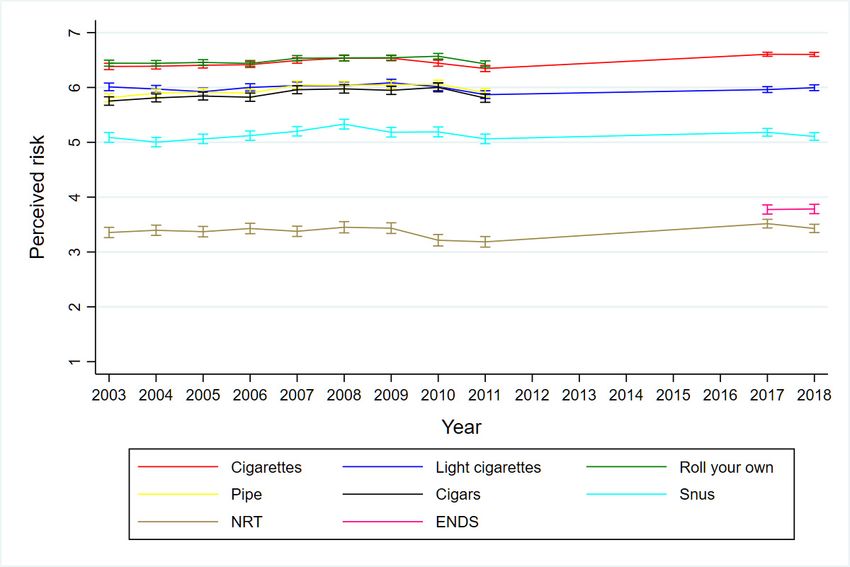
Figure 2 illustrates that the perceived risks have been stable for all nicotine products over this
Figure 2 illustrates that the perceived risks have been stable for all nicotine products over this 16-year
16-year period.
Figure Combustible
2 illustrates nicotine
that the products
perceived risksare generally
have perceived
been stable as nicotine
for all more hazardous
productsthanovernon-
this
period. Combustible nicotine products are generally perceived as more hazardous than non-combustible
combustible
16-year period.products. When nicotine
Combustible the risk score for cigarettes
products (6.48,perceived
are generally SD 0.88, all surveyhazardous
as more years combined)
than non-is
products. When the risk score for cigarettes (6.48, SD 0.88, all survey years combined) is set to 100%,
set to 100%, products.
combustible the risk score
When forthe
snus
risk(5.14,
scoreSD
for 1.48, all years
cigarettes (6.48,combined)
SD 0.88, allmakes
survey upyears
79.3% relative tois
combined)
the risk score for snus (5.14, SD 1.48, all years combined) makes up 79.3% relative to cigarettes (not
cigarettes
set to 100%,(not shown
the in the for
risk score figure).
snusIn(5.14,
otherSD
words,
1.48, daily snuscombined)
all years use is perceived
makesto up
be 79.3%
79.3%as harmful
relative to
shown in the
as daily figure).
cigarette In otherThe
smoking. words, daily snus use
corresponding is perceived
relative risk to be 79.3%
scores as harmful asSD
daily cigarette
cigarettes (not shown in the figure). In other words, daily snus use for E-cigarettes
is perceived (3.78,
to be 79.3% 1.67,
as 2017
harmful
smoking.
and
as daily
The
2018 corresponding
combined)
cigarette and NRT
smoking.
relative risk scores
products
The corresponding
for
SDE-cigarettes
(3.39,relative
1.58,risk (3.78,
all scores
years SD 1.67, 2017
combined) and
were(3.78,
for E-cigarettes
2018
58.4%SDand
combined)
52.3%
1.67, 2017
and NRT products
respectively. (3.39, SD 1.58, all years combined) were 58.4% and 52.3%
and 2018 combined) and NRT products (3.39, SD 1.58, all years combined) were 58.4% and 52.3% respectively.
respectively.
Figure2.2.Perception
Figure Perception of
of the
theharmfulness
harmfulness of of
eight nicotine
eight products
nicotine among
products Norwegian
among adults ages
Norwegian 16–79
adults ages
years,
16–79 2003–2018.
years,
Figure Unadjusted
2003–2018.
2. Perception mean risk
of theUnadjusted scores
harmfulness mean on a
of eightrisk scale from
scores
nicotine 1 (slightly
on a scale
products amongharmful)
from to 7 (very
1 (slightly
Norwegian harmful).
harmful)
adults to 7
ages 16–79
(very harmful).
years, 2003–2018. Unadjusted mean risk scores on a scale from 1 (slightly harmful) to 7 (very harmful).
If we examine current smokers and current snus users separately, we find that perceptions are
stable over
IfIfwe time, but
weexamine
examine that both
current
current groupsand
smokers
smokers generally
and currentperceive
current snus use of
users
snus users tobacco products
separately,
separately, findas
wefind
we less
that
that harmful than
perceptions
perceptions are
are
stable
stableover
overtime,
time,but
butthat
thatboth
bothgroups
groups generally
generally perceive use of
perceive use of tobacco
tobaccoproducts
productsas
asless
lessharmful
harmfulthan
thanInt. J. Environ. Res. Public Health 2019, 16, 879 6 of 14
the general population (not shown). In contrast, compared to the general population, snus users seem
to regard their own snus use as much less harmful (3.93 vs 5.14), whereas smokers rate smoking as
marginally less harmful (6.29 vs 6.48).
The overall likelihood of perceiving snus as very harmful (score 6 or 7) was 0.40 (Table 2). Based
on model 3 we find that being female (0.49) and being in the oldest age group (0.46) increased the
probability to classify snus as very harmful.
Table 2. Adjusted predicted probabilities (Pr) of perceiving snus as very harmful (score 6 or 7 on a
scale from 1- slightly harmful to 7-very harmful) across tobacco use status, education, sex, age and
survey year.
Model 1 Model 2 Model 3
Pr (95% CI) Pr (95% CI) Pr (95% CI)
Overall probability 0.40 (0.39–0.41) 0.40 (0.39–0.41) 0.40 (0.39–0.41)
Smoking status
“Hard core” smoker 0.34 (0.31–0.37) 0.33 (0.30–0.36) 0.33 (0.30–0.36)
Daily smoker, not “hard core” 0.40 (0.37–0.42) 0.39 (0.37–0.41) 0.39 (0.37–0.41)
Occasional smoker 0.33 (0.30–0.36) 0.37 (0.34–0.40) 0.40 (0.37–0.43)
Former smoker 0.39 (0.37–0.40) 0.38 (0.36–0.39) 0.39 (0.37–0.40)
Never smoked 0.42 (0.41–0.43) 0.43 (0.42–0.44) 0.42 (0.40–0.43)
Education
Primary 0.42 (0.40–0.44) 0.42 (0.40–0.44)
Secondary 0.41 (0.40–0.42) 0.41 (0.40–0.42)
Tertiary 0.37 (0.35–0.38) 0.36 (0.35–0.38)
Sex
Men 0.29 (0.27–0.30) 0.30 (0.29–0.31)
Women 0.51 (0.50–0.52) 0.49 (0.47–0.50)
Age
15–25 0.26 (0.24–0.28) 0.29 (0.26–0.31)
25–44 0.38 (0.37–0.40) 0.40 (0.39–0.41)
45–66 0.43 (0.41–0.44) 0.41 (0.40–0.42)
67–80 0.50 (0.47–0.52) 0.46 (0.44–0.48)
Survey year
2003 0.41 (0.39–0.44) 0.40 (0.38–0.43)
2004 0.36 (0.34–0.39) 0.36 (0.33–0.38)
2005 0.39 (0.36–0.41) 0.38 (0.35–0.41)
2006 0.38 (0.36–0.41) 0.38 (0.35–0.40)
2007 0.40 (0.38–0.43) 0.40 (0.37–0.43)
2008 0.45 (0.42–0.48) 0.44 (0.41–0.47)
2009 0.42 (0.39–0.45) 0.42 (0.39–0.45)
2010 0.39 (0.36–0.42) 0.39 (0.36–0.42)
2011 0.37 (0.34–0.40) 0.37 (0.35–0.40)
2017 0.41 (0.39–0.43) 0.43 (0.40–0.45)
2018 0.39 (0.36–0.41) 0.40 (0.38–0.43)
Snus use
Use snus daily 0.14 (0.11–0.16)
Use snus occasionally 0.20 (0.16–0.24)
Used snus previously 0.29 (0.26–0.33)
Never used snus 0.43 (0.42–0.44)
BIC 17,991 17,137 16,808
AIC 17,953 16,980 16,628
N 13,381 13,381 13,381
Smokers, in particular hard-core smokers (0.33), had lower probability of perceiving snus as very
harmful compared to never-smokers (0.42) (model 3). The lowest probability of perceiving snus asInt. J. Environ. Res. Public Health 2019, 16, 879 7 of 14
very harmful was observed among daily snus users (0.14), occasional snus users (0.20) and former
Int. J. Environ. Res. Public Health 2019, 16, x 7 of 14
snus users (0.29) (model 3). Moreover, inclusion of snus use in Model 3 did not affect the association
between
between smoking
smokingstatus statusor or
sex,sex,
andand
snussnus
risk perception, whichwhich
risk perception, indicated that thethat
indicated differences between
the differences
men and women, and between smoking status groups, were not a result
between men and women, and between smoking status groups, were not a result of the known of the known differences in
snus use patterns.
differences in snus use patterns.
Figure
Figure 33 shows
shows the the results
results from
from the
the fourth
fourth logistic
logistic regression
regression model
model andand illustrate
illustrate the
the strong
strong
association
association between perceived risk of snus and having used snus at the lasted attempt to
between perceived risk of snus and having used snus at the lasted attempt to quit
quit
smoking.
smoking. This This association
association was was almost
almost identical
identical among
among former
former smokers
smokers (successful
(successful quitters)
quitters) and
and
current smokers (unsuccessful quitters). Testing the differences between adjacent
current smokers (unsuccessful quitters). Testing the differences between adjacent coefficients showed coefficients showed
that
that thethe probability
probability of of having
having used
used snus
snus in
in the
the latest
latest quit
quit attempt
attempt was
was lower
lower for
for each
each additional
additional level
level
of
of snus risk perception, both among current and former smokers (p < 0.05), with the exception of the
snus risk perception, both among current and former smokers (p < 0.05), with the exception of the
two
two lowest
lowest values
values of of risk
risk perception
perception (1 (1 and
and 2).
2).
Figure 3.
Figure 3. Adjusted
Adjusted predicted
predictedprobabilities
probabilitiesofofhaving
havingused
usedsnus
snusininthe
thelatest
latest attempt
attempt to to quit
quit smoking
smoking at
at different
different levels
levels of of perceived
perceived risk
risk of,of, among
among current
current smokers
smokers (n (n = 381)
= 381) and
and former
former smokers
smokers (n(n
= =310).
310).
5. Discussion
Our study has shown that in the Norwegian population, where use of Swedish snus is widespread,
there isis aa persistent
persistentbelief
beliefthat
that the
the risk
risk of of daily
daily snus
snus useuse is equivalent
is equivalent to nearly
to nearly 80% 80%
of theofrisk
thefrom
risk from
daily
daily
smoking. The assumed risk difference between the two products is very inconsistent with estimates with
smoking. The assumed risk difference between the two products is very inconsistent from
estimates
medical expert fromcommittees,
medical expertwhichcommittees, whichthe
typically assess typically assess risk
overall health the overall
from use health risk from
of Swedish snususe of
to be
Swedish snus to be minor (below 10%) when compared to the risk from smoking
minor (below 10%) when compared to the risk from smoking [15,27–30]. Incorrect beliefs about SLT [15,27–30]. Incorrect
beliefs
(smokelessabouttobacco)
SLT (smokeless
risks seemtobacco)
to be risks seem also
prevalent to beinprevalent also in the snus-prevalent
the snus-prevalent Norwegian setting Norwegian
as also
setting
observed asin also
theobserved
US whereinSLT theproducts
U.S. whereare SLT
moreproducts
toxic andare usemore toxic and use is uncommon.
is uncommon.
Moreover,
Moreover, our our findings
findings reveal
reveal that
that the
the overestimations
overestimations of of the harm of snus have been consistent
over time.
time.This Thisapparent
apparent stability obscures
stability two underlying
obscures two underlying but counteracting mechanisms:
but counteracting A growing
mechanisms: A
inflow
growing of inflow
snus users (Figure
of snus users1)(Figure
who generally
1) who rate snus lower
generally rate snuson the riskon
lower scale
the(Table 2), pulled
risk scale (Tablethe
2),
overall
pulled theriskoverall
estimate forestimate
risk snus downwards. At the same time,
for snus downwards. At thethe relatively
same large
time, the group oflarge
relatively nevergroup
users of
snus
neverperceived
users of snus to be moderately
perceived snus to(but
be significantly)
moderately (but more hazardous over
significantly) more time (result not
hazardous shown),
over time
thus pulling the overall estimate upwards.
(result not shown), thus pulling the overall estimate upwards.
Despite inaccurate RRPs, there has been a dramatic transition from cigarettes to snus in Norway
since 2003 (Figure 1). This could perhaps have been even stronger if RRP had been more in line with
medical consensus, even if some snus users correctly believed snus is less harmful when they were
still smokers, and this may have helped to motivate their switch. Other contributing factors for the
marked shift might be the price difference between the two products (which is quite narrow), theInt. J. Environ. Res. Public Health 2019, 16, 879 8 of 14
Despite inaccurate RRPs, there has been a dramatic transition from cigarettes to snus in Norway
since 2003 (Figure 1). This could perhaps have been even stronger if RRP had been more in line
with medical consensus, even if some snus users correctly believed snus is less harmful when
they were still smokers, and this may have helped to motivate their switch. Other contributing
factors for the marked shift might be the price difference between the two products (which is quite
narrow), the implementation of increasingly stricter indoor smoking regulations in a country with
a harsh climate for outdoor smoking, and the growing anti-smoking sentiment that follows policy
implementation. The symbolic meaning of snus use is not considered in the same negative way as
smoking in Norway [31,32], and may have promoted snus use, even if risk perceptions are stable.
Admittedly, however, little is known about such possible causes. The most important factor is that
use of snus has become the most frequent method to quit smoking in Norway [33], (after unassisted
quitting). The important role of snus in smoking cessation has been addressed in several studies in
Norway [34–38].
5.1. Snus vs E-Cigarettes
In contrast to e-cigarettes, a heterogeneous product with short history, Swedish snus is a
standardized product with a long history. For Swedish snus, a convincing epidemiological evidence
base shows no associations with lung cancer or respiratory diseases, and very weak, if any, association
with cardiovascular diseases [15,16]. These diseases combined cause 2/3 of the smoking attributable
mortality. Moreover, there is no evidence that use of Swedish snus is associated with any major health
hazard that does not also arise from tobacco smoking [15].
In contrast, long-term epidemiological studies for e-cigarettes are not yet available. Claims of risk
reduction are currently based on toxicological testing, animal studies and acute physiological reactions
in humans. The heterogeneity of the products makes risk assessments even more complicated. Despite
a more robust evidence base for providing a lower estimate of risk, Swedish snus (score 5.14) was
perceived as more harmful than e-cigarettes (score 3.78).
The explanation might be that the risk concept for snus also include a concern for the
much-discussed increase in snus use among youth, which the health authorities have labeled an
epidemic. In the age-group 16–24 years, the prevalence of daily snus use was 24.7% among men and
15.9% among women in 2017, an increase from 11.9% and 1.1% in 2003 respectively [39]. In contrast,
the prevalence of vaping has been below 2% [40], and e-cigarettes have consequently not been
portrayed as a threat to public health. Moreover, in 2016, the Government decided to lift the ban on
the sale of nicotine containing e-liquids, and this might have downgraded the perceptions of risk from
e-cigarettes further.
In the U.S. the situation is inverse. The increase in vaping has been labeled an epidemic by the
health authorities, and the prevalence of SLT use is low. Nevertheless, also in the U.S. SLT products
seem to be perceived with greater harm than e-cigarettes [13].
5.2. Risk-Use Equilibrium
It may appear tolerable to accept that never-smokers overestimate the harm from snus use, as this
might protect some from taking up a product not totally risk-free. Misconceptions among smokers,
in particular hard-core smokers, is perhaps harder to accept because inaccurate beliefs might be a
barrier for a switch to less hazardous uptake of nicotine. In our study, we note that never-smokers tend
to overestimate the risk from snus more than smokers (Table 2). The question is whether dissemination
of information to correct RRP will encourage snus use among never-smokers so much that the reduced
risk for smokers who swap cigarettes for snus (as a consequence of being better informed) sums to
greater risk for the entire population.
To evaluate the possible problems caused by trying to correct beliefs, it is helpful to consider
what might be called the risk/use equilibrium—an equilibrium achieved by increasing use as risk
decreases [41]. Given the relatively low excess risk for never smokers who take up snus, and givenInt. J. Environ. Res. Public Health 2019, 16, 879 9 of 14
the epidemiological verified huge risk reduction for smokers who switch to snus, the number of
never-smokers taking up snus must go to unlikely large proportions to balance out the health gain
from the smokers who switch. For net harm to occur, an epidemiological modelling study estimated
that 14–25 ex-smokers would have to start using snus to offset the health gain from every smoker who
switched to snus rather than continuing to smoke. Likewise, 14–25 people who have never smoked
would need to start using snus to offset the health gain from every new tobacco user who used snus
rather than smoking [42].
Up until now, studies have demonstrated that the largest reservoir of potential snus users has
been smokers, and that use among never-smokers is small [43]. Based on current knowledge of the
a) absolute risk of snus use relative to non-use, b) the relative risk of snus relative to smoking, and c)
how the population of snus users is made up of never-smokers and smokers (the user configuration),
dissemination of information to correct misconceptions of relative risk will probably result in a net
gain to public health.
5.3. Confirmation and Optimism Bias
Consistent with other studies, being a current user of snus was associated with a greater likelihood
of endorsing the view that snus was less harmful than cigarettes relative to non-users of snus [44–46].
These findings may be explained by theories of selective exposure and perception [47] or optimism
bias [48]. An alternative interpretation could be that snus users in Norway, the vast majority being
ever-smokers [43], themselves have experienced significant improvements in health after switching
products. In any case, the cross-sectional nature of the study precludes any examination of the temporal
relationship between user perceptions and behavior.
5.4. Limitations
There is currently no consensus on how to best measure tobacco risk perceptions in tobacco
control research. Two reviews of risk perception measurement recommended assessing perceptions of
specific tobacco-related outcomes [11,49] rather than general perceptions of harm, as we did in our
study. However, one study from Norway [50] assessed perceptions of the relative snus/cigarette risk
of four specific outcomes; cardiovascular disease, cancer of the lung, stomach, and oral cavity. For all
diseases except lung cancer, the majority wrongly thought snus users were running a higher or equal
risk. For lung cancer, 22% believed that snus use gave a higher or equal risk. The authors concluded,
in line with our finding, that erroneous ideas of approximately equal harm from snus and cigarettes
were common in the general population.
In our study we make use of parametric statistics (mean score) and express perceived relative
harm as a percentage of the mean scores for each product compared to the score for cigarettes set at
100%. This implies that we are treating ordinal variables, originating from a 7-point Likert scale, as if
they were continuous. This is quite common in the social sciences in general and in attitude research
in particular [51]. However, each value on our Likert scale is anchored to an interpretation, and the
numerical distance between each set of subsequent interpretations is not necessarily equal. In spite
of being widely used, applying parametric statistics on ordinal variables continue to be a matter of
dispute among methodological purists.
5.5. Strengths
The study used national representative samples applying identical measures of risk over a long
time period. Risk perceptions were examined across multiple products therefore allowing comparisons
of the relative perceptions of the harmfulness of different products. Response options had verbal
qualitative comparisons ranging from slightly harmful to very harmful, avoiding numerical estimates
of risk that have proved difficult to use in lay people [52]. We used indirect measures of risk that
may help reduce social desirability bias, particularly in contexts where the ‘no safe tobacco product’
message resounds [12] as in Norway. However, other research suggests indirect measures may haveInt. J. Environ. Res. Public Health 2019, 16, 879 10 of 14
lower validity and or provide any new information beyond what can be extracted from using direct
measures [25]. While most other studies on risk perceptions of nicotine products are descriptive [12],
we also examined how perceptions are associated with product use and use of snus in smoking cessation.
Only 1% and 2% of the respondents reported that they did not know the health risk from smoking
and snus use respectively, supporting our assumption that most Norwegians are familiar with the
products. In the analyses, these respondents were excluded. To check the effect of omitting these
respondents, we reran all analyses with these respondents coded as 3.5. This did not alter the results.
In addition, to examine a possible urban-rural dimension in snus risk perception, we included a
measure of centrality in model 3. This variable was not associated with differences in risk perception
and did not alter any of the other estimates, and was therefore dropped from the model.
5.6. Implications
The World Health Organization (WHO) has emphasized that the public has a right to accurate
information on the harms of tobacco and that “countries have a legal obligation to provide it” [53].
However, independent of risk perception measurement method (indirect vs direct), outcome (general
harm vs specific diseases), and region (U.S. vs Scandinavia), the vast majority of studies (including
ours) demonstrate that the health risk posed by smokeless products is consistently overestimated
relative to the risk of smoking cigarettes.
The lay public often simply parse things into ‘safe’ or ‘unsafe’ [54]. This has been referred to
as the law of contagion [55]. Research indicates that individuals tend to convey the message “Snus
is not a safe alternative to cigarettes” that snus is not a safer alternative to cigarettes (i.e., just as
harmful as cigarettes) [22,56,57]. The health warning printed on snus boxes in Norway has been “Snus
can damage your health and is addictive”, but according to EU-regulations the modal verb can will
eventually be removed. A recent study from Norway demonstrated that risk information material
from the health authorities strongly distorted risk perceptions for snus in relation to cigarettes and
raised already exaggerated risk beliefs [58]. This finding was in line with one of the conclusions from
the systematic review: “Individuals may have been misled by public health authorities, which have provided
misinformation on the risk of SLT relative to combustible cigarettes in the USA, where most of the reviewed
population surveys were conducted” [12].
5.7. Future Research
We argue that a timely and relevant question for future qualitative research should be to
identify reasons why health authorities in the U.S. and Scandinavia allow these well-documented
misconceptions to persist. Perhaps they feel they lack encouragement from researchers? Even after
uncovering severe misconceptions of relative risk in their respective studies, several researchers
refrain from encouraging health authorities to correct misbeliefs about relative risks e.g., [13,24,59].
Perhaps moral psychological issues are influencing the reluctance from health authorities to inform on
differential risks, as some have suggested [60].
Health authorities might perhaps also have concerns about potential negative consequences if
consumers’ misbeliefs were to be corrected. If this is the case, such logic will prompt a range of
associated follow-up questions: Should fears of the possibility of negative consequences for some
persons justify suppressing or omitting health relevant information, especially when there is no
actual evidence that there would be any net negative effects on population health? Should public
health considerations prevail the principle of informed decision? Should the effectiveness of risk
communication be measured by the extent to which it is able to move recipients to specific behavioral
outcomes that the sender find desirable (e.g., continued nicotine abstinence in never-smokers)?
Alternatively, maybe risk communication instead should be judged by how it is interpreted by
the recipients?
Some researchers have argued [61] that quarantining information on differential risks need to
be justified, not merely by fears of net negative public health effects, but by convincing evidence thatInt. J. Environ. Res. Public Health 2019, 16, 879 11 of 14
such measures are actually warranted, that public health overall is in imminent danger and that the
danger is sufficient to override principles of individual autonomy. In countries where tobacco/nicotine
products are legally sold, and also differ greatly in disease risks compared to cigarettes (e.g., snus and
e-cigarettes), science-based, comprehensible, and actionable health information on differential risks
should be available and only reconsidered if it is established that this information is causing losses to
population health overall.
6. Conclusions
While continuing to emphasize the extreme lethality of smoking, accurate information on
differential harms needs to be communicated when snus is legally available. The extent of inaccurate
health beliefs regarding these products, as demonstrated in this and most other studies on RRP, implies
that significant efforts will be required to bring the public’s knowledge in line with epidemiologically
based evidence. Irrespective of the anticipated difficulty involved in constructing relative health-risk
messages and irrespective of the fear of misinterpretations by some persons, the health authorities
should work to facilitate better informed choices by tobacco consumers. Such public health information
should not be left in the hands of an industry marketing products to simply promote sales.
Author Contributions: T.F.V. analyzed and interpreted the data, and reviewed the manuscript. K.E.L. was the
major contributor in writing the manuscript. Both authors approved the final manuscript.
Funding: The Norwegian Institute of Public Health. Project #2035 “Snus, e-cigarettes and tobacco harm reduction”.
Conflicts of Interest: The authors declare no conflict of interest.
Abbreviations
AIC Akaike information criterion
BIC Bayesian information criterion
CI confidence interval
ENDS electronic delivery systems
NRT nicotine replacement therapy
PAH polycyclic hydrocarbons
RRP relative risk perceptions
SD standard deviation
SLT smokeless tobacco
TSNA tobacco specific nitrosamines
US United States
WHO World Health Organization
References
1. Glanz, K.; Rimer, B.K.; Viswanath, K. (Eds.) Health Behavior and Health Education: Theory, Research, and Practice,
4th ed.; Jossey-Bass: San Francisco, CA, USA, 2008.
2. Janz, N.K.; Becker, M.H. The Health Belief Model: A decade later. Health Educ. Q. 1984, 11, 1–47. [CrossRef]
[PubMed]
3. Weinstein, N.D. The precaution adoption process. Health Psychol. 1988, 7, 355–386. [CrossRef] [PubMed]
4. Gerking, S.; Khaddaria, R. Perceptions of health risk and smoking decisions of young people. Health Econ.
2012, 21, 865–877. [CrossRef] [PubMed]
5. Song, A.V.; Morrell, H.E.; Cornell, J.L.; Ramos, M.E.; Biehl, M.; Kropp, R.Y.; Halpern-Felsher, B.L. Perceptions
of smoking-related risks and benefits as predictors of adolescent smoking initiation. Am. J. Public Health
2009, 99, 487–492. [CrossRef] [PubMed]
6. Borrelli, B.; Hayes, R.B.; Dunsiger, S.; Fava, J.L. Risk perception and smoking behavior in medically ill
smokers: A prospective study. Addiction 2010, 105, 1100–1108. [CrossRef] [PubMed]
7. Costello, M.J.; Logel, C.; Fong, G.T.; Zanna, M.P.; McDonald, P.W. Perceived risk and quitting behaviors:
Results from the ITC 4-country survey. Am. J. Health Behav. 2012, 36, 681–692. [CrossRef] [PubMed]Int. J. Environ. Res. Public Health 2019, 16, 879 12 of 14
8. Jacobson, J.D.; Catley, D.; Lee, H.S.; Harrar, S.W.; Harris, K.J. Health risk perceptions predict smoking-related
outcomes in Greek college students. Psychol. Addict. Behav. 2014, 28, 743–751. [CrossRef] [PubMed]
9. Fiore, M.; Jaen, C.; Baker, T.; Bailey, W.; Benowitz, N.; Curry, S.; Dorfman, S.F.; Froelicher, E.S.; Goldstein, M.G.;
Healton, C.G.; et al. Treating Tobacco Use and Dependence: 2008 Update; U.S. Department of Health and Human
Services, Public Health Service: Rockville, MD, USA, 2008.
10. Tomar, S.L.; Hatsukami, D.K. Perceived risk of harm from cigarettes or smokeless tobacco among US high
school seniors. Nicotine Tob. Res. 2007, 9, 1191–1196. [CrossRef] [PubMed]
11. Kaufman, A.R.; Persoskie, A.; Twesten, J.; Bromberg, J. A review of risk perception measurement in tobacco
control research. Tob. Control 2018. [CrossRef] [PubMed]
12. Czoli, C.D.; Fong, G.T.; Mays, D.; Hammond, D. How do consumers perceive differences in risk across
nicotine products? A review of relative risk perceptions across smokeless tobacco, e-cigarettes, nicotine
replacement therapy and combustible cigarettes. Tob. Control 2017, 26, e49–e58. [CrossRef] [PubMed]
13. Fong, G.T.; Elton-Marshall, T.; Driezen, P.; Kaufman, A.R.; Cummings, K.M.; Choi, K.; Kwan, J.; Koblitz, A.;
Hyland, A.; Bansal-Travers, M.; et al. U.S. adult perceptions of the harmfulness of tobacco products:
Descriptive findings from the 2013–14 baseline wave 1 of the path study. Addict. Behav. 2018, 91, 180–187.
[CrossRef] [PubMed]
14. Royal College of Physicians. Harm Reduction in Nicotine Addiction Helping People Who Can’t Quit; A Report by
the Tobacco Advisory Group of the Royal College of Physicians; RCP: London, UK, 2007.
15. Scientific Committee on Emerging and Newly-Identified Health Risks (SCENHIR). Scientific Opinion on the
Health Effects of Smokeless Tobacco Products; European Commission: Brussels, Belgium, 2008.
16. Rostron, B.L.; Chang, J.T.; Anic, G.M.; Tanwar, M.; Chang, C.M.; Corey, C.G. Smokeless tobacco use and
circulatory disease risk: A systematic review and meta-analysis. Open Heart 2018, 5, e000846. [CrossRef]
[PubMed]
17. WHO Study Group on Tobacco Production Regulation. WHO Study Group on Tobacco Product Regulation.
Report on the Scientific Basis of Tobacco Product Regulation: Third Report of a WHO Study Group; World Health
Organization: Geneva, Switzerland, 2009.
18. Kaufman, A.R.; Mays, D.; Koblitz, A.R.; Portnoy, D.B. Judgments, awareness, and the use of snus among
adults in the United States. Nicotine Tob. Res. 2014, 16, 1404–1408. [CrossRef] [PubMed]
19. Biener, L.; Roman, A.M.; Mc Inerney, S.A.; Bolcic-Jankovic, D.; Hatsukami, D.K.; Loukas, A.; O’Connor, R.J.;
Romito, L. Snus use and rejection in the USA. Tob. Control 2014, 25, 386–392. [CrossRef] [PubMed]
20. Sæbø, G.; Tokle, R. Norske Avisers Dekning av snus 2002–2011—En Innholdsanalyse (Norwegian Newspaper
Coverage of Snus 2002–2011—A Content Analysis); Norwegian Institute for Alcohol and Drug Research: Oslo,
Norway, 2014.
21. Wilson, S.; Partos, T.; McNeill, A.; Brose, L.S. Harm perceptions of e-cigarettes and other nicotine products in
a UK sample. Addiction 2019. [CrossRef] [PubMed]
22. Wackowski, O.A.; Bover Manderski, M.T.; Delnevo, C.D. Comparison of Direct and Indirect Measures of
E-cigarette Risk Perceptions. Tob. Regul. Sci. 2016, 2, 38–43. [CrossRef] [PubMed]
23. Peiper, N.; Stone, R.; Van Zyl, R.; Rodu, B. University faculty perceptions of the health risks related to
cigarettes and smokeless tobacco. Drug Alcohol Rev. 2010, 29, 121–130. [CrossRef] [PubMed]
24. Popova, L.; Ling, P.M. Perceptions of relative risk of snus and cigarettes among US smokers. Am. J.
Public Health 2013, 103, e21–e23. [CrossRef] [PubMed]
25. Persoskie, A.; Nguyen, A.B.; Kaufman, A.R.; Tworek, C. Criterion validity of measures of perceived relative
harm of e-cigarettes and smokeless tobacco compared to cigarettes. Addict. Behav. 2017, 67, 100–105.
[CrossRef] [PubMed]
26. Lund, M.; Lund, K.E.; Kvaavik, E. Hardcore smokers in Norway 1996–2009. Nicotine Tob. Res. 2011, 13,
1132–1139. [CrossRef] [PubMed]
27. Nutt, D.J.; Phillips, L.D.; Balfour, D.; Curran, H.V.; Dockrell, M.; Foulds, J. Estimating the harms of
nicotine-containing products using the MCDA approach. Eur. Addict. Res. 2014, 20, 218–225. [CrossRef]
[PubMed]
28. Levy, D.T.; Mumford, E.A.; Cummings, K.M.; Gilpin, E.A.; Giovino, G.; Hyland, A.; Sweanor, D.; Warner, K.E.
The Relative Risks of a Low-Nitrosamine Smokeless Tobacco Product Compared with Smoking Cigarettes:
Estimates of a Panel of Experts. Cancer Epidemiol. Biomark. Prev. 2004, 13, 2035–2042.Int. J. Environ. Res. Public Health 2019, 16, 879 13 of 14
29. Savitz, D.A.; Meyer, R.E.; Tanzer, J.M.; Mirvish, S.S.; Lewin, F. Public health implications of smokeless
tobacco use as a harm reduction strategy. Am. J. Public Health 2006, 96, 1934–1939. [CrossRef] [PubMed]
30. Lee, P.N. Epidemiological evidence relating snus to health—An updated review based on recent publications.
Harm Reduct. J. 2013, 10, 36. [CrossRef] [PubMed]
31. Wiium, N.; Aarø, L.E.; Hetland, J. Subjective attractiveness and perceived trendiness in smoking and snus
use: A study among young Norwegians. Health Educ. Res. 2009, 24, 162–172. [CrossRef] [PubMed]
32. Lund, M.; Lund, K.E.; Halkjelsvik, T. Contrasting Smokers’ and Snus Users’ Perceptions of Personal Tobacco
Behavior in Norway. Nicotine Tob. Res. 2014, 16, 1577–1585. [CrossRef] [PubMed]
33. Lund, M.; Vedøy, T.F. Røykeslutt (Smoking Cessation). Norwegian Institute of Public Health, 2018.
Available online: https://www.fhi.no/nettpub/tobakkinorge/bruk-av-tobakk/roykeslutt (accessed on
29 October 2018).
34. Lund, K.E. Tobacco harm reduction in the real world: Has the availability of snus in Norway increased
smoking cessation? Drugs Alcohol Today 2013, 13, 92–101. [CrossRef]
35. Lund, K.E. Association between willingness to use snus to quit smoking and perception of relative risk
between snus and cigarettes. Nicotine Tob. Res. 2012, 14, 1221–1228. [CrossRef] [PubMed]
36. Lund, K.E.; McNeill, A.; Scheffels, J. The use of snus for quitting smoking compared with medicinal products.
Nicotine Tob. Res. 2010, 12, 817–822. [CrossRef] [PubMed]
37. Lund, K.E.; Scheffels, J.; McNeill, A. The association between use of snus and quit rates for smoking: Results
from seven Norwegian cross-sectional studies. Addiction 2010, 106, 162–167. [CrossRef] [PubMed]
38. Scheffels, J.; Lund, K.E.; Mcneill, A. Contrasting snus and NRT as smoking cessation methods.
An observational study. Harm Reduct. J. 2012, 9, 10. [CrossRef] [PubMed]
39. Vedøy, T.F.; Lund, K.E. Utbredelse av snus i Norge (Use of snus in Norway). Norwegian Institute of Public
Health, 2018. Available online: https://www.fhi.no/nettpub/tobakkinorge/bruk-av-tobakk/utbredelse-av-
snus-i-norge (accessed on 29 October 2018).
40. Tokle, R.; Vedøy, T.F.; Lund, K.E. Utbredelse av E-Sigaretter og Fordampere i Norge (Use of E-Cigarettes and
Vaporizers in Norway). Norwegian Institute of Public Health, 2018. Available online: https://www.fhi.no/
nettpub/tobakkinorge/bruk-av-tobakk/utbredelse-av-e-sigaretter-og-fordampere-i-norge (accessed on
29 October 2018).
41. Kozlowski, L.T.; Strasser, A.A.; Giovino, G.A.; Erickson, P.A.; Terza, J.V. Applying the risk/use equilibrium:
Use medicinal nicotine now for harm reduction. Tob. Control 2001, 10, 201–203. [CrossRef] [PubMed]
42. Gartner, C.E.; Hall, W.D.; Vos, T.; Bertram, M.Y.; Wallace, A.L.; Lim, S.S. Assessment of Swedish snus for
tobacco harm reduction: An epidemiological modelling study. Lancet 2007, 369, 2010–2014. [CrossRef]
43. Lund, K.E.; Vedøy, T.F.; Bauld, L. Do never smokers make up an increasing share of snus users as cigarette
smoking declines? Changes in smoking status among male snus users in Norway 2003–2015. Addiction 2016,
112, 340–348. [CrossRef] [PubMed]
44. Borland, R.; Cooper, J.; McNeill, A.; O’Connor, R.; Cummings, K.M. Trends in beliefs about the harmfulness
and use of stop-smoking medications and smokeless tobacco products among cigarettes smokers: Findings
from the ITC four-country survey. Harm Reduct. J. 2011, 8, 21. [CrossRef] [PubMed]
45. Minaker, L.M.; Shuh, A.; Burkhalter, R.J.; Manske, S.R. Hookah use prevalence, predictors, and perceptions
among Canadian youth: Findings from the 2012/2013 Youth Smoking Survey. Cancer Causes Control 2015, 26,
831–838. [CrossRef] [PubMed]
46. Richardson, A.; Pearson, J.; Xiao, H.; Stalgaitis, C.; Vallone, D. Prevalence, harm perceptions, and reasons for
using noncombustible tobacco products among current and former smokers. Am. J. Public Health 2014, 104,
1437–1444. [CrossRef] [PubMed]
47. Hart, W.; Albarracin, D.; Eagly, A.H.; Brechan, I.; Lindberg, M.J.; Merrill, L. Feeling validated versus being
correct: A meta-analysis of selective exposure to information. Psychol. Bull. 2009, 135, 555–588. [CrossRef]
[PubMed]
48. Masiero, M.; Lucchiari, C.; Pravettoni, G. Personal Fable: Optimistic Bias in Cigarette Smokers. Int. J. High
Risk Behav. Addict. 2015, 4, e20939. [CrossRef] [PubMed]
49. Institute of Medicine of the National Academies. Methods for Studying Risk Perception and Risk Communication.
Scientific Standards for Studies on Modified Risk Tobacco Products; The National Academies Press: Washington,
DC, USA, 2012.Int. J. Environ. Res. Public Health 2019, 16, 879 14 of 14
50. Lund, I.; Scheffels, J. Perceptions of relative risk of disease and addiction from cigarettes and snus. Psychol.
Addict. Behav. 2014, 28, 367–375. [CrossRef] [PubMed]
51. Weinstein, N.D. Smokers’ recognition of their vulnerability to harm. In Smoking—Risk, Perception, & Policy;
Slovic, P., Ed.; Sage Publications: Thousand Oaks, CA, USA, 2001; pp. 81–96.
52. Weinstein, N.D. What does it mean to understand a risk? Evaluating risk comprehension. JNCI Monogr.
1999, 25, 15–20. [CrossRef]
53. World Health Organization. WHO Report on the Global Tobacco Epidemic 2011. Warning about the Dangers of
Tobacco; World Health Organization: Geneva, Switzerland, 2011.
54. MacGregor, D.G.; Slovic, P.; Malmfors, T. “How exposed is exposed enough?” Lay inferences about chemical
exposure. Risk Anal. 1999, 19, 649–659. [CrossRef] [PubMed]
55. Rozin, P.; Ashmore, M.; Markwith, M. Lay American conceptions of nutrition: Dose insensitivity, categorical
thinking, contagion, and the monotonic mind. Health Psychol. 1996, 15, 438–447. [CrossRef] [PubMed]
56. Wackowski, O.A.; Lewis, M.J.; Delnevo, C.D. Interviews with smokers about smokeless tobacco products,
risk messages and news articles. Tob. Control 2016, 25, 671–678. [CrossRef] [PubMed]
57. Liu, S.T.; Nemeth, J.M.; Klein, E.G.; Ferketich, A.K.; Kwan, M.P.; Wewers, M.E. Risk perceptions of smokeless
tobacco among adolescent and adult users and nonusers. J. Health Commun. 2015, 20, 599–606. [CrossRef]
[PubMed]
58. Bergsvik, D.; Rogeberg, O. Assessing the effect of public health information by incentivised risk estimation:
An example on Swedish snus. Int. J. Drug Policy 2018, 54, 51–57. [CrossRef] [PubMed]
59. Strong, D.R.; Messer, K.; White, M.; Shi, Y.; Noble, M.; Portnoy, D.B.; Persoskie, A.; Kaufman, A.R.; Choi, K.;
Carusi, C.; et al. Youth perception of harm and addictiveness of tobacco products: Findings from the
Population Assessment of Tobacco and Health Study (Wave 1). Addict. Behav. 2019, 92, 128–135. [CrossRef]
[PubMed]
60. Kozlowski, L.T. Minors, Moral Psychology, and the Harm Reduction Debate: The Case of Tobacco and
Nicotine. J. Health Politics Policy Law 2017, 42, 1099–1112. [CrossRef] [PubMed]
61. Kozlowski, L.T.; Sweanor, D. Withholding differential risk information on legal consumer nicotine/tobacco
products: The public health ethics of health information quarantines. Int. J. Drug Policy 2016, 32, 17–23.
[CrossRef] [PubMed]
© 2019 by the authors. Licensee MDPI, Basel, Switzerland. This article is an open access
article distributed under the terms and conditions of the Creative Commons Attribution
(CC BY) license (http://creativecommons.org/licenses/by/4.0/).You can also read


