Repairing the damaged thyroid proteome through tailored supplementation with magnesium, selenium and coenzyme Q10: potential applicability for ...
←
→
Page content transcription
If your browser does not render page correctly, please read the page content below
Journal of Cardiology Case Reports

  Research Article                                                                                                                            ISSN: 2631-9934

Repairing the damaged thyroid proteome through tailored
supplementation with magnesium, selenium and coenzyme
Q10: potential applicability for cardiac disease
Moncayo R*, Moncayo H and Reisenzahn J
Department of Nuclear Medicine, Medical University of Innsbruck, Innsbruck, Austria

Abstract
The concept of a proteostasis network has been proposed as a general mechanism for maintaining cellular function and integrity. The network includes a series of
biochemical elements, which require energy in the form of ATP. This aspect, however, has received little attention in scientific publications. The aim of this study was
to demonstrate the efficacy of a combined supplementation protocol based on magnesium, selenium and Coenzyme Q10 (CoQ10) for thyroid disease. This approach
can lead to normalization of thyroid morphology and perfusion, thus fulfilling the postulates of proteostasis. In the field of cardiology similar concepts have been used
in clinical practice. Relying only on selenium and CoQ10 they have also demonstrated the beneficial effect as seen in patients with heart disease. In comparison to
these results, a literature analysis of supplementation studies done with single substances, i.e. either selenium or CoQ10, reveals that specific endpoint criteria are not
accurate. We conclude that a combined supplementation of selected elements – magnesium, selenium and CoQ0 – improves the proteostasis processes in the thyroid,
i.e. thyroid morphology will normalize. Literature sources on a similar approach have shown beneficial effects on patients with heart disease. These data suggest
a general applicability of the combined supplementation approach. We propose the concept of Shared Resources as a mechanism that delivers the basic elements
magnesium, selenium and CoQ10 and also iron to different organs. Their interplay will support mitochondrial and endoplasmic reticulum function by maintaining
ATP production and finally guarding proteostasis.

Introduction                                                                                In view of these circumstantial relationships we present here the
                                                                                        therapeutic effects of tailored supplementation with magnesium,
     Since many decades research efforts on aging and disease have                      selenium and CoQ10 in cases of thyroiditis as well as in hyperthyroidism.
been centered around concepts of oxidative damage caused by radicals                    Considering the importance of mitochondrial function in the field of
originating outside of living organisms. An early study on this topic                   cardiology [15]. we will include a short reference of studies dedicated
was presented by Gerschman in 1953 (published in 1954) [1]. Harman                      to the treatment of heart disease based on the combination of selenium
followed in 1956 with his aging theory [2]. In recent years the concepts                plus CoQ10. A short evaluation of supplementation studies using
of disease mechanisms have shifted towards proteostasis as proposed                     single substances, i.e. selenium or CoQ10, will also be included.
by Balch in 2008 [3]. The proteostasis concept encompasses a network
of cellular biochemical components that are dedicated to keep a                         Patients and methods
correct biological activity of the cells [4]. In the field of cardiology,                   Patients attending the out-patient thyroid service of the General
Henning et al. are working on targeting protein quality control as a                    Hospital in Innsbruck had been previously examined and treated by
way to promote heart health [5]. In the field of thyroid diseases, the                  one of us (RM). Those patients who were classified as having a sub-
concept of autoimmunity has now been associated to the topic of cell                    acute thyroiditis or hyperthyroidism (Grave’s disease) were retrieved
stress, however no clear therapeutic ideas have emerged [6]. In cases                   for the retrospective evaluation. Hyperthyroid patients had received
of thyroid disease marked destruction of the structure of the gland can                 thyreostatic (n=9) therapy plus supplementation while thyroiditis
be found [7], thus demonstrating that proteostasis is compromised.                      patients (n=23) received only supplementation. Besides the initial visit,
Besides morphological changes, functional alterations can lead either                   two follow-up consultations had been done in every case. Ultrasound
to hypothyroidism or hyperthyroidism or both [8]. The most frequently                   examination of the thyroid was done with a LOGIQ E9 machine
discussed pathogenic mechanism for benign thyroid disease refers to                     (General Electrics, GE Healthcare Austria, Zipf, Austria) using a 15
alterations of the immune system [9]. Contrary to this belief, we have
proposed that benign thyroid disease corresponds to an acquired
mitochondria dysfunction due to specific biochemical deficiencies                       *Correspondence to: Moncayo R, Department of Nuclear Medicine, Medical
which affect blood levels of magnesium, selenium and Coenzyme                           University of Innsbruck, WOMED, Innsbruck, Austria, E-mail: Roy.
Q10 (CoQ10) [10,11]. Our working hypothesis considers that this                         Moncayo@i-med.ac.at
deficiency state will compromise ATP production. Low ATP supply in                      Key words: thyroid disease, heart disease, magnesium, selenium, Coenzyme Q10,
different organs could alter proteostasis processes [12]. Besides energy                power Doppler sonography, proteostasis
supply, ATP is also important as a biological hydrotrope agent which is                 Received: February 17, 2020; Accepted: March 02, 2020; Published: March 10,
important for cardiac function [13,14].                                                 2020

J Cardio Case Rep , 2020           doi: 10.15761/JCCR.1000134                                                                                             Volume 3: 1-4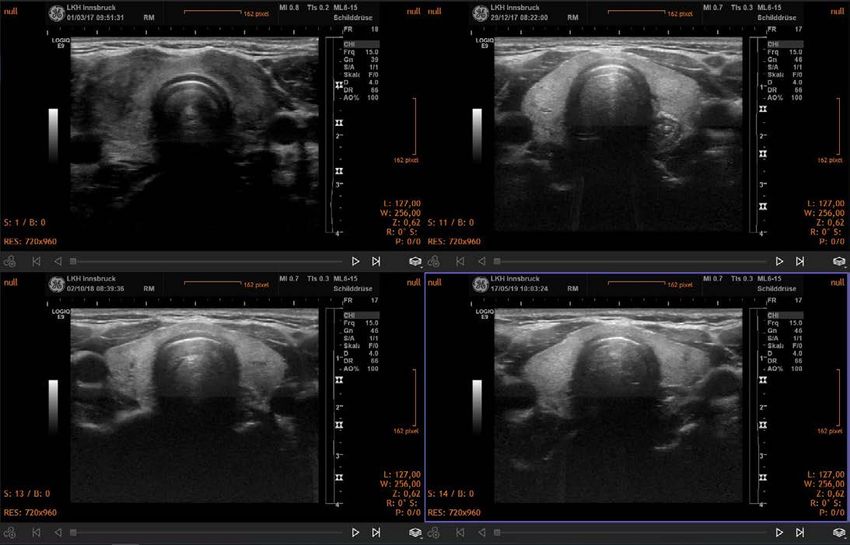
Moncayo R (2020) Repairing the damaged thyroid proteome through tailored supplementation with magnesium, selenium and coenzyme Q10: potential applicability
for cardiac disease

MHz probe. Vascularization was demonstrated using power Doppler                                 selenium supplementation, although the data are conflicting and many
modus. Cases showing signs of fibrosis of the thyroid were not included                         parameters must still be defined” [17].
in the evaluations since previous observations have shown no response
to supplementation in these cases.                                                                   Searching for similar therapy concepts, we came across the
                                                                                                publications by the group of Alehagen et al. who has been successful
Results                                                                                         in the treatment of patients with heart failure [18-25]. While we
                                                                                                administer 30 to 60 mg CoQ10 daily, Alehagen et al. prescribed 200mg
   Over a period of 18-24 months, signs of improved morphology
                                                                                                daily. The dose of selenium is similar with 200µg daily. Magnesium
and decreased vascularization were seen. In general, the morphological
changes included a reduction of thyroid volume and a normalization                              administration is included only in our protocol. The current daily dose
of the structure of the gland in cases of subacute thyroiditis.                                 lies between 3 to 4 g. of pure magnesium citrate dissolved in 500 to
Two representative clinical cases are shown in the figure 1. In                                 750 ml of water. Magnesium administration has the potential of being
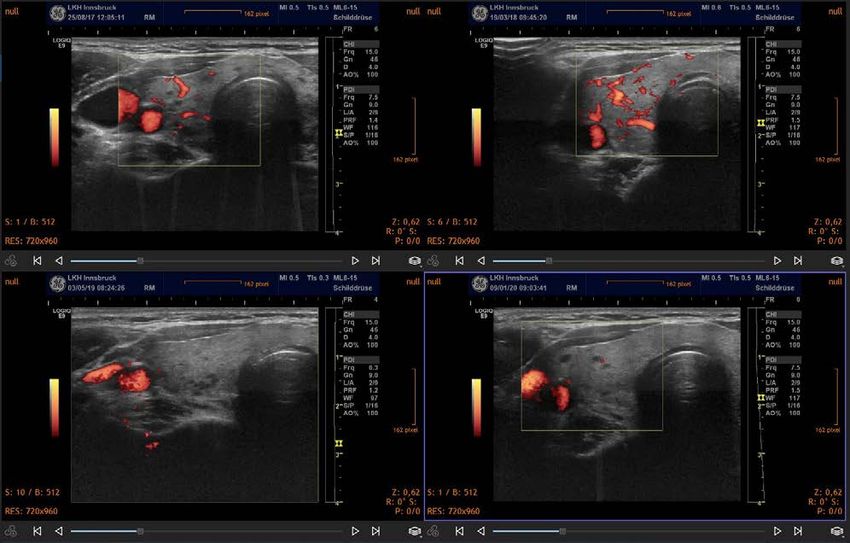
hyperthyroidism the pattern of increased vascularization of the gland                           beneficial for patients with heart disease [26]. A Cochrane analysis
normalized during treatment (Figure 2). Thyroid morphology also                                 of single administration of CoQ10 for patients for heart disease has
showed improvement (Figure 3).                                                                  concluded that there are no clinically relevant endpoints [27].

Discussion                                                                                          We conclude that proteostasis can be restored in the thyroid by
                                                                                                instituting a combined supplementation protocol. The theory behind
     This short paper confirms our previous experience related to a                             the interactions between magnesium, selenium and CoQ10 has been
beneficial effect of a combined supplementation for patients with
                                                                                                described elsewhere in this Journal (Citation Moncayo, Moncayo).
thyroid disease [10]. The difference to the previous study lies in the
                                                                                                Since the same elements have beneficial effects on different systems,
longer duration of treatment i.e. up to 2 years. The use of advanced
sonography methods allows the definition of objective endpoints. On                             we propose the concept of Shared Resources as a basic functional
the other hand, studies that have relied on the single administration                           framework for cell physiology and proteostasis guarding the function
of selenium for thyroid disease have not been conclusive [16]. This                             of mitochondria and endoplasmic reticulum.
situation has been addressed by Schomburg in 2011 by stating the
                                                                                                Conflicts of interest
following: “Some clinical studies have demonstrated that selenium-
deficient patients with autoimmune thyroid disease benefit from                                      The authors declare no conflicts of interest.

Figure 1. Sequential demonstration of normalization of thyroid morphology in a case of subacute thyroiditis. The initial study (upper left panel) revealed an inhomogeneous structure with
many areas with reduced echogenicity. The final image (lower right panel) shows a normal thyroid morphology

J Cardio Case Rep , 2020              doi: 10.15761/JCCR.1000134                                                                                                       Volume 3: 2-4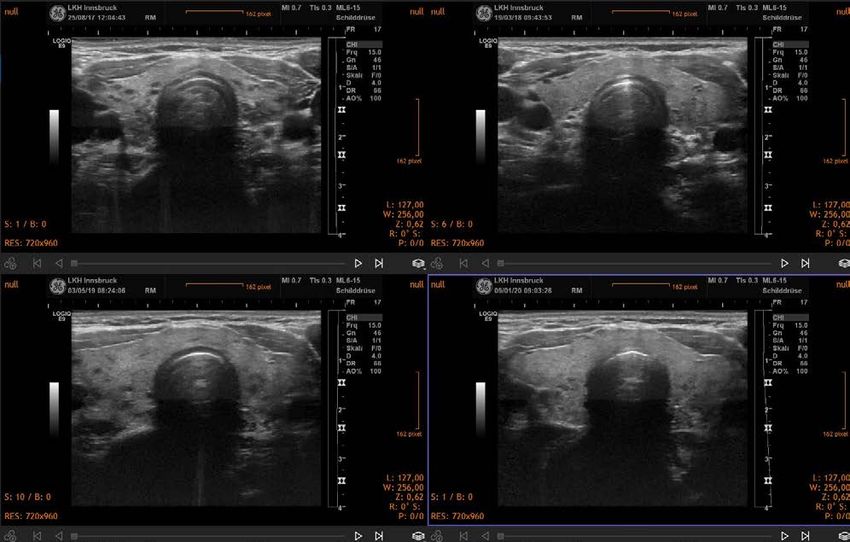
Moncayo R (2020) Repairing the damaged thyroid proteome through tailored supplementation with magnesium, selenium and coenzyme Q10: potential applicability
for cardiac disease

Figure 2. Sequential demonstration of normalization of thyroid perfusion in a case of Grave’s disease. The initial studies (upper panel) revealed enlarged vessels which correspond to CoQ10
deficiency. Following supplementation vascularization returned to normal.

                                     Figure 3. Sequential demonstration of partial normalization of thyroid morphology in a case of Grave’s disease

J Cardio Case Rep , 2020               doi: 10.15761/JCCR.1000134                                                                                                        Volume 3: 3-4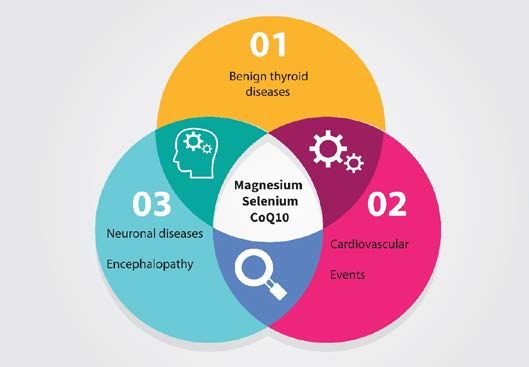
Moncayo R (2020) Repairing the damaged thyroid proteome through tailored supplementation with magnesium, selenium and coenzyme Q10: potential applicability
for cardiac disease

                                                                                                11. Moncayo R, Moncayo H (2015) The WOMED model of benign thyroid disease:
                                                                                                    acquired magnesium deficiency due to physical and psychological stressors relates to
                                                                                                    dysfunction of oxidative phosphorylation. BBA Clin 3: 44-64. [Crossref]

                                                                                                12. Balchin D, Hayer-Hartl M, Hartl FU (2016) In vivo aspects of protein folding and
                                                                                                    quality control. Science 353: aac4354. [Crossref]

                                                                                                13. Meyer T, Voigt N (2017) In search for novel functions of adenosine 5’-triphosphate
                                                                                                    (ATP) in the heart. Cardiovasc Res 113: e59-e60. [Crossref]

                                                                                                14. Patel A, Malinovska L, Saha S, Wang J, Alberti S, et al. (2017) ATP as a biological
                                                                                                    hydrotrope. Science 356: 753-756. [Crossref]

                                                                                                15. Brown DA, Perry JB, Allen ME, Sabbah HN, Stauffer BL, et al (2017)
                                                                                                    Mitochondrial function as a therapeutic target in heart failure. Nat Rev Cardiol 14:
                                                                                                    238-250. [Crossref]

                                                                                                16. van Zuuren EJ, Albusta AY, Fedorowicz Z, Carter B, Pijl H (2013) Selenium
                                                                                                    supplementation for Hashimoto’s thyroiditis. Cochrane Database Syst Rev 6:
                                                                                                    CD010223. [Crossref]

                                                                                                17. Schomburg L (2011) Selenium, selenoproteins and the thyroid gland: interactions in
                                                                                                    health and disease. Nat Rev Endocrinol 8: 160-171. [Crossref]
Figure 4. Venn diagram illustrating our concept of Shared Resources for different
physiological systems                                                                           18. Alehagen U, Johansson P, Björnstedt M, Rosén A, Dahlström U (2012) Cardiovascular
                                                                                                    mortality and N-terminal-proBNP reduced after combined selenium and coenzyme Q10
Author’s contributions                                                                              supplementation: A 5-year prospective randomized double-blind placebo-controlled
                                                                                                    trial among elderly Swedish citizens. Int. J. Cardiol 167: 1860-1866. [Crossref]
   HM and RM have developed the clinical working model and                                      19. Mortensen SA, Rosenfeldt F, Kumar A, Dolliner P, Filipiak KJ, et al. (2014) The effect
sonography methods. JR evaluated the citations contained in the                                     of coenzyme Q10 on morbidity and mortality in chronic heart failure: results from
Cochrane citations. RM wrote the manuscript. Figure 4 was adapted by                                Q-SYMBIO: a randomized double-blind trial. JACC Heart Fail 2: 641-649. [Crossref]
RM using a template for Adobe Illustrator.                                                      20. Alehagen U, Alexander J, Aaseth J (2016) Supplementation with Selenium and
                                                                                                    Coenzyme Q10 Reduces Cardiovascular Mortality in Elderly with Low Selenium
References                                                                                          Status. A Secondary Analysis of a Randomised Clinical Trial. PLoS One 11: e0157541.
1. Gerschman R, Gilbert DL, Nye SW, Dwyer P, Fenn WO (1954) Oxygen poisoning and                    [Crossref]
   x-irradiation: a mechanism in common. Science119: 623-626. [Crossref]
                                                                                                21. Alehagen U, Johansson P, Bjornstedt M, Rosen A, Post C, et al. (2016) Relatively high
2. Harman D (1956) Aging: a theory based on free radical and radiation chemistry. J                 mortality risk in elderly Swedish subjects with low selenium status. Eur J Clin Nutr
   Gerontol 11: 298-300. [Crossref]                                                                 70: 91-96. [Crossref]
3. Balch WE, Morimoto RI, Dillin A, Kelly JW (2008) Adapting proteostasis for disease           22. Alehagen U, Aaseth J, Alexander J, Svensson E, Johansson P, et al. (2017) Less fibrosis
   intervention. Science 319: 916-919. [Crossref]                                                   in elderly subjects supplemented with selenium and coenzyme Q10-A mechanism
                                                                                                    behind reduced cardiovascular mortality? Biofactors 44: 137-147. [Crossref]
4. Clausen L, Abildgaard AB, Gersing SK, Stein A, Lindorff-Larsen K, et al. (2019)
   Protein stability and degradation in health and disease. Adv Protein Chem Struct Biol        23. Alehagen U, Aaseth J, Alexander J, Johansson P (2018) Still reduced cardiovascular
   114: 61-83. [Crossref]                                                                           mortality 12 years after supplementation with selenium and coenzyme Q10 for four
5. Henning RH, Brundel BJJM (2017) Proteostasis in cardiac health and disease. Nat Rev              years: A validation of previous 10-year follow-up results of a prospective randomized
   Cardiol 14: 637-653. [Crossref]                                                                  double-blind placebo-controlled trial in elderly. PLoS One 13: e0193120. [Crossref]

6. Morshed SA, Davies TF (2020) Understanding Thyroid Cell Stress. J Clin Endocrinol            24. Alehagen U, Aaseth J, Alexander J, Svensson E, Johansson P, et al. (2018) Less fibrosis
   Metab 105: pii: dgz193. [Crossref]                                                               in elderly subjects supplemented with selenium and coenzyme Q10-A mechanism
                                                                                                    behind reduced cardiovascular mortality? Biofactors 44: 137-147. [Crossref]
7. Hashimoto H (1912) Zur Kenntniss der lymphomatösen Veränderung der Schilddrüse
   (Struma lymphomatosa). Arch. Klin. Chir 97: 219-248.                                         25. Alehagen U, Alexander J, Aaseth J, Larsson A (2019) Decrease in inflammatory
                                                                                                    biomarker concentration by intervention with selenium and coenzyme Q10: a
8. Pichler R, Wölfl S, Bogner S, Sulzbacher H, Shamiyeh, et al. (2002) Subacute
                                                                                                    subanalysis of osteopontin, osteoprotergerin, TNFr1, TNFr2 and TWEAK. J Inflamm
   thyroiditis with cell destruction and temporary hyperthyroidism in Graves’ disease--
   case report. Acta Med Austriaca 29: 137-140. [Crossref]                                          (Lond)16: 5. [Crossref]

9. Ciampolillo A, Guastamacchia E, Amati L, Magrone T, Munno I, et al (2003)                    26. Alsafwah S, Laguardia SP, Arroyo M, Dockery BK, Bhattacharya SK, et al. (2007)
   Modifications of the immune responsiveness in patients with autoimmune thyroiditis:              Congestive heart failure is a systemic illness: a role for minerals and micronutrients.
   evidence for a systemic immune alteration. Curr. Pharm. Des 9: 1946-1950. [Crossref]             Clin. Med. Res 5: 238-243. [Crossref]

10. Moncayo R, Moncayo H (2015) Proof of concept of the WOMED model of benign thyroid           27. Madmani ME, Yusuf Solaiman A, Tamr Agha K, Madmani Y, Shahrour Y,
    disease: Restitution of thyroid morphology after correction of physical and psychological       et al. (2014) Coenzyme Q10 for heart failure. Cochrane Database Syst Rev 6:
    stressors and magnesium supplementation. BBA Clin 3: 113-22. [Crossref]                         CD008684. [Crossref]

Copyright: ©2020 Moncayo R. This is an open-access article distributed under the terms of the Creative Commons Attribution License, which permits unrestricted
use, distribution, and reproduction in any medium, provided the original author and source are credited.

J Cardio Case Rep , 2020                doi: 10.15761/JCCR.1000134                                                                                                      Volume 3: 4-4
You can also read


