Research, Development & Technology Strategic Plan FY 2018-2022 - U.S. Department of Transportation
←
→
Page content transcription
If your browser does not render page correctly, please read the page content below

U.S. Department of Transportation
Research, Development & Technology
Strategic Plan FY 2018-2022

                                    October 2020
Intentionally left blank for printing purposes
Table of Contents
ADDENDUM:                                                                    i

  Addendum in Response to Covid-19                                           i

1 INTRODUCTION                                                               1

  Plan Purpose                                                               1

  Relationship to Other DOT Plans and Priorities                             1

  Plan Organization                                                          4

2 DOT RESEARCH PRINCIPLES AND PROGRAMS                                       5

  Research Principles                                                        5

  Research Program Overview                                                  7

  Research Coordination—the Role of the Office of the Assistant Secretary
  for Research and Technology (OST-R)                                        9

3 RESEARCH, DEVELOPMENT & TECHNOLOGY STRATEGIES                             12

  Strategic Goal: Safety                                                    13

  Strategic Goal: Infrastructure                                            18

  Strategic Goal: Innovation                                                23

  Strategic Goal: Accountability                                            27

4 IMPLEMENTATION                                                            32

APPENDIX A:                                                                 33

  The Role of U.S. DOT in the Transportation RD&T Ecosystem                 33

APPENDIX B:                                                                 37

  Technology Transfer and Evaluation Terminology                            37

REFERENCES                                                                  41

ACRONYMS AND ABBREVIATIONS                                                  42

ENDNOTES                                                                    44
i                                    ADDENDUM | U.S. DOT RD&T STRATEGIC PLAN | FY 2018–2022

                        Addendum
                                                 Addendum in Response to Covid-19
USDOT Strategic Plan for
FY 2018–2022 Strategic Goals:                    The U.S. Department of Transportation (DOT) Research, Development, and
                                                 Technology (RD&T) Strategic Plan presents DOT’s transportation research
• Safety: Reduce transportation-                 priorities and strategies to support the goals defined in the Department’s
  related fatalities and serious injuries        Strategic Plan for FY 2018-2022. This RD&T Strategic Plan update was
  across the transportation system.              developed as an update to the original Plan published in 2017. The
                                                 coronavirus disease 2019 (Covid-19) public health emergency emerged
• Infrastructure: Invest in                      concurrent with the completion of this strategic plan. The full effects of
                                                 Covid-19 will not be known for some time, but it is apparent that the
  infrastructure to ensure safety,
                                                 changes to transportation and to the broader economy will influence
  mobility, and accessibility and to             transportation research priorities over the next few years as transportation
  stimulate economic growth,                     adjusts to a post-Covid-19 era.
  productivity, and competitiveness
                                                 The effects of Covid-19 on research project priorities are anticipated to be
  for American workers
                                                 far-reaching. Early evidence suggests that the range of research initiatives
  and businesses.                                could include activities such as measuring and monitoring changes in
                                                 transportation systems, determining best practices for protecting the
• Innovation: Lead in the                        workforce and passengers from health risks, managing operations in
  development and deployment of                  response to disruptions such as Covid-19, understanding short- and
                                                 long-term land use and travel behavior responses to Covid-19,
  innovative practices and technologies
                                                 understanding transportation performance and costs due to responses to
  that improve the safety and                    Covid-19, and determining how transportation planning may need to adapt
  performance of the                             to integrate lessons learned from Covid-19, among others. As the Nation
  Nation’s transportation system.                takes steps to recover from the public health emergency, research will
                                                 be needed to understand the economics of Covid-19 and the use of
• Accountability: Serve the Nation               transportation system investments as an economic recovery tool in the
                                                 short- and long-term. DOT will prioritize research capable of providing
  with reduced regulatory burden and
                                                 decision makers with the data and tools needed to make informed
  greater efficiency, effectiveness,             decisions on future infrastructure investments that are economically viable
  and accountability.                            and resilient, while maintaining the Department’s priority focus on safety.

                                                  While these initiatives may be of value for research projects over the
                                                  next few years, they will not alter the fundamental strategic goals for
                        transportation, or alter the primary purposes of transportation research. These foundational
                        elements of the Strategic Research Plan will remain, while the portfolio of activities may evolve
                        as Covid-19 projects may supplement or reprioritize near-term research efforts.

                        The Covid-19 public health emergency has introduced significant challenges for the transportation
                        research community. The critical nature of this issue will challenge the pre-existing research
                        priorities and traditional processes for vetting and selecting research priorities. The desire to move
                        expeditiously will require further emphasis in timely coordination and information sharing such that
                        risks of research duplication can still be effectively avoided. Similarly, the desire for expeditious
                        decisions places emphasis on ability to make further timeliness improvements in the research
                        approval process when possible, thereby assuring the value of competitive research prioritization
                        inclusive of new criteria and goals.
ii
While the Covid-19 public health emergency will be a critical research
agenda issue for some time, the Principles Guiding DOT Research
Investments outlined in section 2 of this Strategic Plan document will        49 USC 6503: Primary Purposes
continue to govern the conduct of DOT research.                               of Transportation Research
                                                                              • Improving mobility of people
The Covid-19 public health emergency represents the kind of challenge
meant to be addressed by USDOT research activities; it will inevitably          and goods;
impact some project priorities and provide new opportunities for research     • Reducing congestion;
to demonstrate DOT’s goal of supporting policy, operations and investment
decision-making for transportation. Researchers will need to balance the      • Promoting safety;
challenge of providing timely research to support gathering knowledge         • Improving the durability and
gained from the Covid-19 experience with the need to protect the integrity
                                                                                extending the life of
and efficiency of research by respecting the fundamental principles guiding
DOT research investments.                                                       transportation infrastructure;

                                                                              • Preserving the environment; and

                                                                              • Preserving the existing
                                                                                transportation system.

   Principles Guiding DOT Research Investments
   1 Support topical DOT priorities.

   2 Avoid pitting safety and mobility against each other.

   3 Focus on market failures.

   4 Maximize value and avoid duplication.
Intentionally left blank for printing purposes

INTRODUCTION | U.S. DOT RD&T STRATEGIC PLAN | FY 2018–2022
                                                                                                                     1
Introduction
Plan Purpose
This U.S. Department of Transportation (DOT) Research, Development, and Technology (RD&T)
Strategic Plan presents DOT’s transportation research priorities and strategies to support the goals
defined in the Department’s Strategic Plan for FY 2018–2022. This RD&T Strategic Plan is an update
to the original plan published in 2017.1 This plan meets the requirement set forth in section 6503 of
the Fixing America’s Surface Transportation (FAST) Act for the development of a five-year strategic
plan to guide future Federal transportation RD&T activities.

Although the scope of the FAST Act is limited to research and
development (R&D) activities, the Department includes a
“technology” component in its reporting and budgeting. The
technology component represents the Departmental resources
and activities allocated to the deployment of R&D outputs. The
Department considers this to be an important part of its role,
ensuring that research results are fully leveraged in the transportation
system. Thus, this plan includes the Department’s strategic approach
to technology deployment and is titled the “DOT Research,
Development, and Technology (RD&T) Strategic Plan.

The purpose of this plan is to improve the coordination of
transportation RD&T, minimize redundancy, and guide the
development of Annual Modal Research Plans (AMRPs) by each
of the Department’s Operating Administrations (OAs). It also
describes the processes used for planning, reporting,
conducting, and evaluating RD&T across the Department.

The Office of the Assistant Secretary for Research and Technology
(OST-R) coordinated the development of this RD&T Strategic Plan                                             ©123rf.com/arinahabich

and solicited input from the Department’s OAs.

Relationship to Other DOT Plans and Priorities
This RD&T Strategic Plan is consistent with other relevant plans and priorities that the Department’s
leadership has articulated.

DOT Strategic Plan for FY 2018–2022
This RD&T Strategic Plan aligns with the Department’s Strategic Plan for FY 2018–2022, which
established four strategic goals:

• Safety: Reduce transportation-related fatalities and serious injuries across the
  transportation system.
• Infrastructure: Invest in infrastructure to ensure safety, mobility, and accessibility and to stimulate
  economic growth, productivity, and competitiveness for American workers and businesses.
2                         INTRODUCTION | U.S. DOT RD&T STRATEGIC PLAN | FY 2018–2022

            • Innovation: Lead in the development and deployment of innovative practices and technologies
              that improve the safety and performance of the Nation’s transportation system.
            • Accountability: Serve the Nation with reduced regulatory burden and greater efficiency,
              effectiveness, and accountability.
            The research deployment strategies discussed in section 3 are organized with respect to these goals.

            FAST Act: Primary Purposes of Transportation Research
            The FAST Act states that the DOT five-year transportation research and development strategic plan
            shall describe how the Department’s transportation research and development activities meet the
            following six primary purposes:
            • Improving mobility of people and goods;
            • Reducing congestion;
            • Promoting safety;
            • Improving the durability and extending the life of transportation infrastructure;
            • Preserving the environment; and
            • Preserving the existing transportation system.

            Figure 1 indicates the key areas of alignment between the Department’s Strategic Goals and the
            primary purposes of the transportation RD&T program as specified in the FAST Act.

                                                          FAST Act’s Primary Purposes for Transportation R&D
                                             Improving the        Reducing     Promoting   Improving        Preserving the   Preserving the
                                             mobility of people   congestion   safety      infrastructure   environment      transportation
                                             and goods                                     durability                        system

                   Safety
USDOT’s            Infrastructure
Strategic          Innovation
Goals
                   Accountability

            Figure 1. Crosswalk of the FAST Act’s Primary Purposes and DOT’s Strategic Goals

            DOT Research Principles
            The RD&T Strategic Plan is consistent with the four research principles that help guide DOT
            research investments. The Department’s “Principles Guiding Department of Transportation
            Research Investments” defined these research principles, which are described in detail in
            section 2 of this plan.
INTRODUCTION | U.S. DOT RD&T STRATEGIC PLAN | FY 2018–2022
                                                                                                              3
Annual Modal Research Plans
The RD&T Strategic Plan serves to guide the development of Annual Modal Research Plans
(AMRPs). The FAST Act requires that each Operating Administration and Joint Program Office
complete an AMRP that provides a comprehensive plan for research in the upcoming fiscal year
and a detailed outlook for the following fiscal year.

Annual Department R&D Funding Reports and Performance Plans/Reports
This RD&T Strategic Plan also guides annual R&D funding reports and performance plans/reports
required under 49 U.S.C. 6502. These requirements are described in greater detail in section 4.

Figure 2 summarizes the documents that guide DOT research efforts and associated reporting, as
described above. These include the goals for DOT research set forth by Congress in the FAST Act,
as well as the strategic goals and research priorities set forth by this Administration.

Principles Guiding DOT                    DOT Strategic Plan                      Fixing America’s Surface Transportation
Research Investments                      FY18 – FY22                             (FAST) Act
Research Principles                       Strategic Goals                         Primary Purposes of
and Priorities                            and Objectives                          Transportation R&D

                                DOT RD&T Strategic Plan
                                Research Topic Areas

                                Research, Development and Technology Strategies

 Annual Modal Research Plans               Annual DOT R&D Funding Reports              Annual DOT R&D Performance
                                                                                       Plans and Reports

Figure 2. U.S. DOT Research Guiding Documents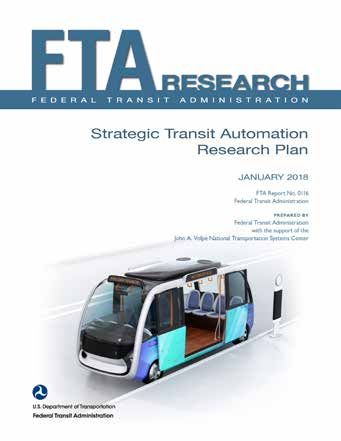
4                 INTRODUCTION | U.S. DOT RD&T STRATEGIC PLAN | FY 2018–2022

    Plan Organization
    The subsequent sections of this RD&T Strategic Plan are organized as follows:

    • Section 2 provides an overview of the Department’s research programs and the principles and
      priorities that guide those programs.
    • Section 3 describes the RD&T strategies that the Department will use to meet its strategic goals
      of Safety, Infrastructure, Innovation, and Accountability.
    • Section 4 explains how the Department will implement this RD&T Strategic Plan over the
      next five years, through subsequent AMRPs and other FAST Act requirements, and how the
      Department’s OAs intend to evaluate the performance of their RD&T strategies.

                                                                                        ©123rf.com/arinahabich
RESEARCH PRINCIPLES AND PROGRAMS | U.S. DOT RD&T STRATEGIC PLAN | FY 2018–2022
5
DOT Research Principles and Programs
Research Principles
The purpose of DOT’s research is to identify and address issues of national significance that
cannot or will not be addressed by other research sponsors, including issues that involve high-risk,
long-term, research and areas of specific Federal responsibility. In this role, the DOT shapes and
executes an effective national research and development, deployment, and training program that
helps to solve transportation challenges. To meet this purpose, the Department has defined a set
of four research principles to guide its future research investments, as defined in a memorandum
titled “Principles Guiding DOT Research Investments.”
1 Support topical DOT priorities. Where applicable, efforts should be made on areas of immediate
importance. DOT topical research priorities are described in table 1 on the next page. Furthermore,
each mode is expected to study the economic impact of reforming its respective regulations.2
2 Avoid pitting safety and mobility against each other. Both safety and mobility are central to
the concept of transportation.3 Projects may focus on safety or mobility or both, or seek to resolve
apparent conflicts, but should avoid pitting them against each other.
3 Focus on market failures. DOT should avoid research that can be or already is being undertaken
by private actors. DOT research should address market failures, which may include system safety;
multimodal improvements; interoperability; underserved populations; long-term deliverables;
and unfavorable risk profiles.4 Also, DOT research can play a useful role on national security and
national competitiveness.5
4 Maximize value and avoid duplication. DOT research should focus on efforts that are broadly
useful instead of being overly applied.6 This may include an emphasis on basic and early-stage
applied research.7 Technology transfer (T2) is also a key value-add: where possible, research should
have an active commercialization or T2 component to help the research achieve its highest and
best use. The performance of research investments and T2 applications should be tracked and
evaluated using quantitative metrics that link directly to strategic goals and objectives, to ensure
that maximum value is being maintained.8
©123rf.com/arinahabich6 RESEARCH PRINCIPLES AND PROGRAMS | U.S. DOT RD&T STRATEGIC PLAN | FY 2018–2022
Table 1. DOT Topical Research Priorities
Regulatory Reform
DOT research supports the Administration’s reform goals by helping to understand the economic impact of
regulations, identifying and removing unnecessary regulatory barriers, and providing tools and data to streamline
regulatory oversight and compliance activities.
Permitting Reform
DOT research seeks to understand the economic impact of delays to project delivery caused by the National
Environmental Policy Act (NEPA) and permitting processes. DOT research also supports the development of
tools and reforms designed to reduce delays and accelerate the delivery of transportation projects.
Performance-Based Safety Rules
DOT research supports the use of scientific methods and data-driven processes to guide safety programs, reduce
prescriptive regulations, and enable innovative approaches to improving safety.
Value Capture
DOT research is exploring the potential impact of innovative approaches to financing transportation. Value capture
is a type of public financing that recovers some or all of the value that public infrastructure generates from adjacent
private landowners that benefit from the infrastructure.
Asset Recycling
DOT supports approaches that use existing assets to fund necessary infrastructure. DOT research will assess
the potential of asset recycling, which uses proceeds from the sale or lease of existing public assets to the
private sector to finance public investments in infrastructure and vehicles.
Freight Mobility
To improve the mobility, efficiency, and safety of freight movement, DOT research supports the development of
innovative freight technologies, data, and processes.
Microtransit
DOT research will explore the feasibility of microtransit, a form of public transportation characterized by flexible routing
and scheduling of shared-ride vehicles operating according to passenger needs.
Underserved Communities
DOT research is designed to improve the mobility of people with disabilities, economically disadvantaged, older
persons, and to help rural and other underserved communities. DOT researches transportation needs and develops
appropriate technologies and policies to meet those needs.
Cybersecurity
DOT is pursuing research to understand and address cybersecurity vulnerabilities related to the deployment of
connected and automated transportation technologies and systems.7
OVERVIEW
Credit: Volpe Staff Art
Research Program Overview
The Department’s eight OAs and the Intelligent Transportation Systems Joint Program Office
conduct the majority of DOT’s research activities. These agencies are listed below:
• Federal Aviation Administration (FAA)
• Federal Highway Administration (FHWA)
• Federal Motor Carrier Safety Administration (FMCSA)
• Federal Railroad Administration (FRA)
• Federal Transit Administration (FTA)
• Maritime Administration (MARAD)
• National Highway Traffic Safety Administration (NHTSA)
• Pipeline and Hazardous Materials Safety Administration (PHMSA)
• Intelligent Transportation System Joint Program Office (ITS JPO)
Each OA has its own mission, statutory requirements, and funding sources. Each OA develops
an AMRP that describes how it intends to address the Department’s strategic goals and priorities in
the coming fiscal year. As mandated by the FAST Act, these AMRPs must also align with this RD&T
Strategic Plan. Figure 3 describes the missions of the Department’s OAs and joint program offices
and summarizes the range of entities with which they engage.8 RESEARCH PRINCIPLES AND PROGRAMS | U.S. DOT RD&T STRATEGIC PLAN | FY 2018–2022
Federal Highway Federal Railroad Maritime
Administration Administration Administration
The Federal Highway Administration The Federal Railroad Administration’s The Maritime Administration (MARAD)
(FHWA) is responsible for providing (FRA) mission is to enable the safe, promotes the use of waterborne
stewardship over the construction, reliable, and efficient movement of transportation and its seamless
maintenance, and preservation of the people and goods for a strong America. integration with other segments of the
Nation’s highways, bridges, and tunnels. FRA is advancing the use of new transportation system, and the viability
Through research and technical assis- technology in rail. of the U.S. merchant marine.
tance, the FHWA supports its partners
in Federal, State, and local agencies Federal Transit National Highway Traffic
to accelerate innovation and improve Administration Safety Administration
safety and mobility. The Federal Transit Administration The National Highway Traffic Safety
(FTA) provides financial and technical Administration’s (NHTSA) mission is to
Federal Motor Carrier assistance to local public transit save lives, prevent injuries, and reduce
Safety Administration systems, including buses, subways, the economic costs of road traffic
The Federal Motor Carrier Safety light rail, commuter rail, trolleys, and crashes through education, research,
Administration’s (FMCSA) mission ferries. FTA also oversees safety safety standards, and enforcement
is to reduce crashes, injuries, and measures and helps research next- activity. NHTSA carries out highway
fatalities involving large trucks and generation technologies. safety programs by setting and
buses. FMCSA partners with industry, enforcing safety performance standards
safety advocates, and State and local Intelligent Transportation for motor vehicles and equipment,
governments to keep the Nation’s roads Systems Joint Program identifying safety defects, and through
safe and improve commercial motor Office the development and delivery of
vehicle (CMV) safety through regulation, The Intelligent Transportation Systems effective highway safety programs for
education, enforcement, research, Joint Program Office (ITS JPO) leads State and local jurisdictions.
and technology. collaborative and innovative research,
development, and implementation of Pipeline and Hazardous
Federal Aviation intelligent transportation systems Materials Safety
Administration technologies to improve safety and Administration
The Federal Aviation Administration mobility for all. The Pipeline and Hazardous Materials
(FAA) provides the safest and most Safety Administration (PHMSA) protects
efficient aviation system in the world. people and the environment by
Annually, FAA manages over 54 million advancing the safe transportation of
flights, approaching a billion passengers. energy and other hazardous materials
that are essential to our daily lives.
To do this, PHMSA establishes national
policy, sets and enforces standards,
educates, and conducts research to
prevent incidents.
Figure 3. Missions of USDOT Operating Administrations and Joint Program OfficesRESEARCH PRINCIPLES AND PROGRAMS | U.S. DOT RD&T STRATEGIC PLAN | FY 2018–2022
9
Research Coordination—the Role of the Office of the Assistant Secretary for
Research and Technology (OST-R)
Housed in DOT’s Office of the Secretary, the Office of the Assistant Secretary for Research and
Technology (OST-R) plays a lead role in research coordination within the Department and with a
wide range of national and international stakeholders. OST-R focuses on three priority areas:
1. Coordination, Facilitation, and Review of the Department’s
RD&T activities University Transportation Centers
By law,9 the Secretary is responsible for coordination, facilitation, and
review of the Department’s RD&T programs and activities. OST-R
(UTC) Program:
executes this mandate by: The UTC program is a congressionally
mandated financial assistance program that
• Collecting, synthesizing, and disseminating information and provides grants to universities to conduct
statistics on DOT’s RD&T activities and its products to ensure that research on critical transportation issues and
all Open Science, Public Access, and other research funding and to support education activities for the next
product transparency mandates are met (Open Science is generation of transportation professionals.
the movement to make scientific research and its dissemination
accessible to all. Increasing public access to scientific data and This program was funded through FY 2015
research findings generated by Federal agencies, or resulting from under the Moving Ahead for Progress
Federally funded research, is a U.S. policy priority). in the 21st Century (MAP-21) Act, and
• Reviewing modal research plans through the RD&T Review was reauthorized in the FAST Act, which
and Approval Process to ensure that the Department’s research authorized the Office of the Assistant
portfolio is consistent with this strategic plan and does not Secretary for Research and Technology
duplicate significant aspects of other research efforts in to award $72.5 to $77.5 million in grants
the Department. to UTCs annually through FY 2020. The
program currently supports 35 multi-year
• Providing the organizational frameworks necessary for effective university-based centers that conduct work-
interaction between the Operating Administrations. force development and basic and applied
• Promoting best practices for Departmental research management research, the products of which are judged
and technology transfer. by peers or other subject matter experts
and are made available through technology
The core coordinating body is the RD&T Planning Team, composed of transfer to the transportation industry.
the senior research directors from each of the Operating Administra-
tions and chaired by the Director of OST-R’s Office of RD&T. The Plan- With the passage of the FAST Act, U.S.
ning Team meets monthly to discuss and coordinate research activities DOT received authorization for the next
underway around the Department. Operating Administration represen- round of UTC competition. The FAST Act
tatives provide regular updates on their agency’s research activities to authorized the competitive selection of up to
the group, facilitating research coordination and allowing potential 35 new centers to receive funding from FY
opportunities for interagency collaboration to be identified. 2016 through FY 2020 to conduct research
activities that address the six primary
As part of OST-R, the Volpe Center also plays a key role in facili- purposes referred to in the FAST Act.
tating research coordination and collaboration, partnering with the
Department’s Operating Administrations on a wide range of
transportation research topics.10 RESEARCH PRINCIPLES AND PROGRAMS | U.S. DOT RD&T STRATEGIC PLAN | FY 2018–2022
2. Aligning Departmental Research with other Secretarial
DOT RD&T Review and Approval Process: Office Functions
DOT has established a research review and approval OST-R’s elevation to a Secretarial Office in 2014 facilitated
process to ensure that the Department’s research portfolio a closer linkage between research and the Department’s
is a consistent with this strategic plan and does not other Secretarial Office functions, such as policy and
duplicate significant aspects of other research efforts in the budget development. OST-R’s role is to promote
Department. OST-R is responsible for the review process Departmental research within the Office of the Secretary
in partnership with the Office of the Assistant Secretary (OST) and act as a liaison between the Operating
for Budget and Programs and the Office of the Under Administrations and the other Secretarial Offices. OST-R
Secretary for Policy. The AMRP documents are used works with OST-Budget on research budget development,
for the review in conjunction with project spend plan and works with OST-Policy and the staff of the Secretary
information submitted by the DOT Operating Administra- and Deputy Secretary to ensure that the research portfolio
tions prior to the commencement of the fiscal year. is effectively aligned with the Department’s Strategic
Goals and Administration initiatives.
Each Operating Administration and Joint Program Office is
responsible for monitoring and evaluating the performance 3. Engaging External Stakeholders
of their RD&T strategies. Biannual briefings from modal
OST-R represents U.S. DOT research activities to gov-
administrations to OST-R are conducted to review
ernmental groups including Congress, the White House,
progress made on research plan implementation.
and other Federal agencies, and engages other transpor-
tation research entities on behalf of the Department. This
DOT has established a set of quantifiable performance
role includes coordinating external requests that require
metrics on research and development and technology
a Department-level response, organizing and chairing
transfer. Through the DOT Annual Performance Plan
briefings to members of Congressional Committees,
and Report, the DOT reports on these metrics, which
formal reporting on Departmental research activities, and
focus on the development of innovations in transporta-
developing Departmental research policies in response
tion through DOT research and the deployment of new
to Executive Orders and legislative direction. This OST-R
technologies and innovative practices to support the
function supplements the extensive engagement activities
performance of the transportation system.
conducted by each of the Operating Administrations. Such
Key innovation performance metrics include the following: activities allow the Nation’s transportation research
enterprise to move forward coherently and economically.
• Research Laboratory Utilization Rates
• Research Outcomes Made Publicly Available in
Research Hub
• Technical Reports Made Publicly Available in the
National Transportation Library
• Technologies Toward Implementation (Pilots
and Demonstrations)
• Success Stories (Evidence of Societal Benefits)RESEARCH PRINCIPLES AND PROGRAMS | U.S. DOT RD&T STRATEGIC PLAN | FY 2018–2022
11
Duplication in Research:
More than $1 billion of public money is spent on Federally funded transportation research by U.S. DOT every
year. The FAST Act requires the Secretary of Transportation to certify each year that there is no duplication
of research directed, commissioned, or conducted by DOT except to the extent that the research:
1) Is required by an Act of Congress;
2) Is part of a contract funded before enactment of the FAST Act;
3) Updates previously commissioned research; or
4) Is necessary according to the Assistant Secretary for Research and Technology who must provide a
certification to that effect with a justification.
Some duplication may be needed to validate research results. Duplication can corroborate a new result or reaffirm
a prior finding. For example, several studies might be needed to find the optimal type of asphalt to reduce potholes
under different weather conditions, or the optimal levels of tolls to keep traffic flowing. However, if validation is the
purpose of a proposed research, it should be stated explicitly during early scoping efforts and in all documentation.
Furthermore, duplication may be less than complete, meaning that similar research projects may include some
but not all the same elements. Partial duplication of research may not be wasteful when it is conducted in different
contexts and likely to produce differentiated results with varying applications. It is important for people conducting
similar research to be aware of what others are doing so they can adapt their research to complement one another
and draw on one another’s data, methods, or findings. Temporal and spatial aspects can also provide a legitimate
need for work that initially appears duplicative; the same study conducted at a different time or in a different loca-
tion can often yield new and valuable findings.
A key consideration is whether both the research sponsor and the research performer are fully aware of any
duplicative aspects of a proposed study. If the necessary awareness exists, the likelihood of redundant research
activity is eliminated. With this in mind, OST-R’s role in preventing wasteful duplication is to:
1) Facilitate the widest possible awareness and coordination of research among (i) the different recipients of
research funding under DOT’s auspices (intramural research), (ii) DOT funded researchers and others through-
out the Government, the States, and major independent research organizations (extramural research); and
2) Identify similar research projects and activities, determine whether they should continue for purposes of
validation or reaffirmation, be terminated for redundancy, or whether they can be modified, integrated,
or coordinated to produce incremental net benefits. The key evaluation criterion for funding research is
whether it has the potential to add more value than it costs.12 RD&T STRATEGIES | U.S. DOT RD&T STRATEGIC PLAN | FY 2018–2022
Research, Development & Technology Strategies
This Strategic Plan describes the DOT’s RD&T objectives and strategies by DOT strategic goal
and research topic area. As indicated in figure 4, the 12 research topic areas are aligned with the
four DOT strategic goals and represent common research focus areas and opportunities for future
cross-modal coordination for the Department. These research topic areas and associated RD&T
objectives and strategies are described in greater detail below.
USDOT’s Strategic Goals and Related Research Topic Areas
Safety Infrastructure Innovation Accountability
Automation: State of Good Repair: Emerging/Enabling Technology Transfer/
Enable the safe inte- Maintain transportation Technologies: Deployment:
gration of automated assets in a state of good Advance the development Facilitate the deployment
vehicles and unmanned repair, ensure resilience of emerging/enabling and adoption of DOT
aircraft systems into the to natural and man-made practices and technologies. research products into the
transportation system. threats, and optimize transportation system.
material cost and durability. Mobility Innovation:
Systemic Safety Use innovative business Evaluation/Performance
Approach: Environmental Stewardship: models, partnerships, and Measurement:
Use systemic, Preserve the environ- private-sector solutions to Monitor and evaluate the
performance- ment, ensure the safety expand mobility options for contribution of research,
based approaches to and cost-effectiveness of travelers, including including development, and
ensuring transportation alternative transportation underserved communities technology activities
system safety. energy sources, and ensure such as people with toward the achievement
the safe transportation of disabilities, economically of DOT strategic goals
Human Factors: hazardous materials. disadvantaged, older and objectives.
persons, and rural residents.
Ensure the integration of
human factors into the
Economic Competitiveness: Data:
design of the Stimulate economic growth, Cybersecurity: Ensure access to
transportation system. productivity, and Develop approaches high-quality data to
competitiveness through for maintaining the support data-driven
transportation cybersecurity of the technologies, operations,
infrastructure investments. transportation system. and decision-making.
Figure 4. DOT’s Strategic Goals and Related Research Topic AreasRD&T STRATEGIES | U.S. DOT RD&T STRATEGIC PLAN | FY 2018–2022
13
DOT has established working groups within each of these 12 topical research areas. Each work-
ing group is assigned to an OA or OST office and chaired by a representative from that OA/office.
Working group membership is composed of representatives from each OA and OST office working
within that topical research area, with membership selections based on recognized expertise within
the topic area and/or broad awareness of research activities within the topic area. The groups have
been designed to raise awareness of research activities underway across DOT, and across the wider
transportation research field outside DOT, in order to eliminate duplicative research efforts and to
identify cross-modal research needs for future funding consideration. This “bottom up” approach to
cross-modal research coordination complements the “top down” approach led by OST-R through
the new DOT RD&T Research Review and Approval Process.
Strategic Goal: Safety
Safety remains a major challenge for our Nation’s transportation system, and it is DOT’s top priority.
Across all modes of transportation, nearly 40,000 lives were lost in 2018. The vast majority of
transportation-related fatalities occurred on our Nation’s roadways. In 2018, 36,560 people died in
motor vehicle crashes, a decrease of almost 2.4 percent from 2017.10 Increasing seat belt use and
improved vehicle safety technology have contributed to a significant reduction in traffic fatality rates
over the past 40 years; however, motor vehicle crashes remain one of the leading causes of death
for Americans. Dangerous actions such as speeding, distracted driving, and driving under the influ-
ence are still putting many Americans at risk. Rural vehicle fatality rates are 2 times higher than in
urban areas, while pedestrian and cyclist deaths have increased as a proportion of traffic fatalities in
recent years.11 Though fatalities in other modes are less common, safety risks persist—particularly
in areas such as general aviation, highway-rail grade crossings, and railway trespassing.
Advances in technology, engineering, and human factors research are providing new insights into
how DOT can address transportation safety issues. Rapidly advancing connected and automated
vehicle technologies, for example, have the potential to dramatically reduce the number of crashes
with fatalities or serious injuries. In aviation, runway safety improvements and technology have
saved countless lives by reducing the risk and consequences of runway incursions and excursions.
In addition, the Next Generation Air Transportation System (NextGen) is improving the safety of
aviation by digitizing communication and navigation systems of the national airspace. The
deployment of positive train control is helping to improve the safety of rail transportation. In
addition, across all modes, improvements in safety data sources and analysis tools support better
safety management processes.
Research Topic Area: Automation
The integration of automation technologies across our transportation system has the potential to
improve safety dramatically by reducing crashes caused by human choice or error. In recent years, the
private sector has invested heavily in advancing the development of commercial automation technol-
ogy. The Department’s targeted research in this area aims to develop policies and other guidance and
safety assessment methods to assure the safety of automation and accelerate its integration into the
transportation system. Departmental research evaluates the safety and performance of automated
vehicles to assess their impacts on users, infrastructure, congestion, and the environment. Due to its
significant potential to improve safety, automation research supports the Department’s safety goal
while also contributing to achievement of the Department’s innovation goal.14 RD&T STRATEGIES | U.S. DOT RD&T STRATEGIC PLAN | FY 2018–2022
©istockphoto/692819426
Research objectives supporting the Automation cross-modal topic area are as follows:
• Automated Driving Systems: Conduct research to support the safe deployment of automated
driving systems.
> Assess regulatory barriers to the safe and efficient development, testing, and deployment of
automated vehicles.
> Develop approaches to testing and certifying the safety of
automated vehicles.
Ensuring American Leadership in Automated Vehicle
> Support field tests, pilots, and demonstrations of automated
Technologies: Automated Vehicles 4.0 vehicles to understand how they perform in a mixed-road
The White House and the U.S. Department user environment.
of Transportation developed AV 4.0, building > Test and evaluate the safety of automated commercial
upon previous versions of Federal AV guidance, motor vehicles (CMVs) and truck platoons and support
to coordinate efforts across the Federal their deployment.
government and provide high-level guidance > Identify and evaluate infrastructure design and operational
to Federal agencies, innovators, and the public practices that address the needs of automated vehicles while
ensuring the safety of all road users.
on the U.S. posture toward AVs. AV 4.0
establishes Federal principles for the > Conduct research into the safe packaging, carriage, and
transport of hazardous materials by automated vehicles.
development and integration of automated
vehicles, consisting of three core focus
areas: prioritize safety and security, promote
innovation, and ensure a consistent
regulatory approach.RD&T STRATEGIES | U.S. DOT RD&T STRATEGIC PLAN | FY 2018–2022
15
• Multimodal Applications of Automation Technologies: Foster
innovation and address barriers to deployment of automation Strategic Transit Automation Research
technologies in rail, transit, and marine transportation. (STAR) Plan
> Identify and address barriers to the development and deployment The Strategic Transit Automation Research
of automated bus transit. Plan, published in 2018, outlines an FTA
research agenda for transit bus automation
> Foster innovation, technology, automation, and autonomous over five years. The plan provides a frame-
operations in the maritime industry. work for the transit industry to pursue
> Develop technologies that will leverage positive train control (PTC) transit bus automation in a safe, efficient,
system functionality to enable automated train operation. and economically sound manner. Built on
a foundation of stakeholder engagement,
• Unmanned Aerial Systems: Advance the safe integration of use case analysis, and an extensive liter-
unmanned aircraft systems (UAS) into the National Airspace ature review, the plan defines activities in
System (NAS). the areas of Enabling Research, Integrated
> Support the development of regulations, policies, procedures, Demonstrations, and Strategic Partner-
guidance, and standards for UAS operations. ships. The plan’s continued emphasis
on stakeholder engagement, knowledge
> Develop UAS detection and mitigation technologies. transfer, and technical assistance ensures
> Explore applications of UAS to improve the efficiency and effective- that complementary work being done by
ness of the construction, operation, and maintenance of infrastructure. the public sector, the private sector, and
academia is effectively communicated.
> Explore the potential of UAS to improve rail worker safety in
public transit.
Research Topic Area: Systemic Safety Approach
Research and data help decision makers understand the systemic
causes of transportation safety challenges and prioritize investments.
Systemic and performance-based approaches to safety help ensure
efficient and timely detection of critical safety hazards. However, these
approaches will not work without reliable data, effective analytical
tools, and a broad understanding of risk management practices. DOT
research investments look to make improvements in these areas and
provide a foundation for systemic, performance-based approaches to
improving safety.
©istockphoto/69283243616 RD&T STRATEGIES | U.S. DOT RD&T STRATEGIC PLAN | FY 2018–2022
Research objectives supporting the Systemic Safety Approach
Systemic Safety Approach: Safety Data Initiative cross-modal topic area are as follows:
The Department’s Safety Data Initiative
• Performance-Based Regulatory Standards and Safety
seeks to develop new and integrated data Management Systems: Support the use of safety management
sources, analysis, and visualization tech- systems and performance-based safety standards, policies,
niques to enhance our understanding of and programs.
crash risk and our ability to mitigate it. The > Develop safety data collection methods, data integration and
initiative seeks to build DOT’s capacity to analysis techniques, and advance safety data and risk analysis
techniques to support risk-based decision-making capabilities.
translate the successes of predictive data
analytics tools used by private industry and > Develop the scientific basis for performance-based
regulations.
universities to identify systemic factors
contributing to serious crashes. The initiative > Research potential voluntary standards to increase safety
culture and improve safety in public transit systems.
has three goals: 1) to make data analysis and
insights accessible to policy makers through > Conduct research to support potential regulatory reform
and relief.
clear, compelling data visualizations; 2) to
integrate existing DOT databases and new
Research Topic Area: Human Factors
private-sector data sources to answer safety
Human choice or error causes or contributes to the majority of
questions; and 3) to use advanced analytic all transportation safety incidents.12 DOT human factors research
techniques to identify risk patterns and investigates sources of these human errors, such as fatigue, impair-
develop insights that anticipate and mitigate ment, operator performance, and fitness for duty. In an era of rapidly
evolving transportation technologies, DOT research on human fac-
safety risk to reduce injuries and fatalities.
tors such as distraction and interaction with technology, as well as
potential misunderstanding or overestimation of the capabilities of
new technologies, has also grown in importance. Human factors
are a key component of DOT’s automation research.
Research objectives supporting the Human Factors cross-modal topic area are as follows:
• Accelerate Technology Integration: Conduct human factors research to accelerate the
integration of new technologies.
> Conduct human factors research in areas including advanced vision systems and sensor-based
technologies, avionics and new technologies, physiological limitations, risk mitigation, and
weather systems and displays.
> Study human factors such as operator impairment, team coordination, and the safe integration
of people with technology.
> Assess how people respond to changes in roadway environments using data from driving
simulators, field research vehicles, sign laboratories, test tracks, and naturalistic studies.
> Conduct research to support the design of effective human-machine interfaces and system
design and operating procedures, and associated training, guidelines, rules, and standards.RD&T STRATEGIES | U.S. DOT RD&T STRATEGIC PLAN | FY 2018–2022
17
• Human Factors and Safety: Study human factors in
transportation safety.
Human Factors: Trucking Fatigue Meter
> Conduct research on strategies for influencing operator
behavior to inform national safety programs, provide FMCSA has developed the Trucking Fatigue Meter, a
guidance to State and community safety officials, and technology that uses existing streams of trucking data
develop training and education programs. to assess driver fatigue. The tool provides objective
> Study the effects of operator fatigue and provide quantitative feedback to truck drivers, dispatchers,
educational materials to drivers to learn about how and safety managers about fatigue stressors common
fatigue affects the safe operation of CMVs. in commercial motor vehicle operations (e.g., chronic
> Conduct pilot trials and studies to improve safety and sleep deprivation, extended duty hours, and night
organizational culture in the transportation industry. work). The tool gives safety managers an assessment
> Identify performance measures to support the analysis of overall fatigue of drivers in their fleet. It also
of the safety impacts of interactions with advanced provides drivers with guidance on optimal times to
automation. Examples include driver assistance and
drive, take a break, and sleep.
driving automation systems, including the information
needs of persons with disabilities as well as pilot control
stations for unmanned aircraft systems.
Human Factors: Intermodal Collaboration on Human Factors Research
The Department’s OAs coordinate human factors research through the DOT Human Factors Coordinating Committee,
which serves as a collaborative, multimodal team to address crosscutting human factors issues in transportation. There
are many other examples of intermodal coordination and collaboration on human factors research. FMCSA, NHTSA, and
FHWA are working together to conduct a systematic review of crash factors and to develop potential crash countermea-
sures. Researchers will examine data from a wide range of sources to gain a better understanding of driver behaviors that
precipitate a crash, such as distraction and fatigue. NHTSA, FHWA, and ITS JPO are coordinating on human factors studies
aimed at improving our understanding of safe operations of connected and automated vehicles. FRA is conducting research
that seeks to incorporate lessons learned from FAA’s Aviation Safety Information Analysis and Sharing system. This
research will promote the exchange of information to support continuous improvements to safety.18 RD&T STRATEGIES | U.S. DOT RD&T STRATEGIC PLAN | FY 2018–2022
Strategic Goal: Infrastructure
Public agencies face major challenges maintaining infrastructure in a state of good repair, ensuring
the resilience of infrastructure to disruptions caused by disasters and extreme weather, and making
targeted investments to support economic competitiveness and growth. This is a top priority for
the Administration, as noted in Office of Management and Budget (OMB) Memo M-17-30,
detailing Federal R&D priorities for FY19.13 Insufficient and inefficient investments have led to
increased congestion, deteriorating conditions, and growing maintenance backlogs.14 Slow and
inefficient environmental review and permitting processes make the delivery of infrastructure
projects more costly, unpredictable, and time-consuming. Departmental research supports
technologies and policies that can help transportation agencies maximize the effectiveness of
transportation investments to reduce congestion, improve the state of good repair, and increase
the resilience of our transportation system.
Research Topic Area: State of Good Repair
The Department supports research
that aims to accelerate adoption of
innovative materials, structures, designs,
and construction methods for infrastruc-
ture. The Department also researches
transportation asset management and
maintenance to help extend the life of
assets. This research helps to reduce
maintenance costs, accelerate construc-
tion, and improve conditions. By extend-
ing the life of infrastructure and reducing
the amount of time assets are under
construction and repair, such research
can also reduce delays and associated
safety hazards.
Research objectives supporting the State
of Good Repair cross-modal topic area are
Photo © 123rf.com as follows:
• Advanced Materials, Designs, and Technologies: Support the development and application
of advanced materials, designs, and technologies to improve durability, extend the life, and
reduce the maintenance needs of infrastructure.
> Develop and evaluate advanced materials that enable new infrastructure designs, improve
structural resilience, and accelerate construction and repair.
• Risk-Based Asset Management: Advance the understanding of infrastructure performance
and research ways to improve risk-based asset management and maintenance practices to
extend the life of infrastructure.
> Help decision makers assess vulnerabilities and integrate resiliency considerations into
transportation planning, asset management, project development, and design processes.
> Assess future levels of exposure of infrastructure to extreme weather events, including
changes in precipitation patterns, extreme temperatures, and cyclonic storm surges
and waves.RD&T STRATEGIES | U.S. DOT RD&T STRATEGIC PLAN | FY 2018–2022
19
> Assess the efficacy of “health” monitoring techniques of transit assets using advanced technol-
ogies to include sensors and the use of innovative construction techniques and new materials
such as nanoparticles, recycled polymers, and composites.
• Infrastructure System Resilience: Infrastructure across the country faces risks associated with
natural disasters, extreme weather, and security risk events. Addressing the risk of damage and
disruption caused by such events is essential in ensuring the continued
integrity of our transportation system.
> Develop approaches for assessing the vulnerability of infrastructure State of Good Repair: FRA Track
and transportation systems. Autonomous Inspection Program
> Improve estimations of current and future risks to transportation Decreasing derailments can significantly
systems posed by exposure to extreme weather events. improve freight mobility and improve
the costs of service. The industry cur-
> Assess current strategies and tools to support resilience analysis
rently uses frequent track inspections
and mitigation and encourage the adoption of effective approaches
as a method of decreasing derailments,
across modes.
but track inspections require significant
• Advanced Inspection Tools: Develop innovative inspection technol- personnel time and can disrupt train
ogies that use advances in sensor systems, automation technologies, operations. The FRA’s autonomous track
wireless communications technologies, and robotics including UAS to inspection program works to improve the
make inspection and oversight processes safer and more efficient. quality and coverage of inspections using
> Improve the use of advanced sensor systems, analytical automation. This program decreases the
techniques, and data visualization techniques to support early amount of track inspection time by using
identification of structural deficiencies and infrastructure revenue-service trains as the inspection
deterioration that may yield relatively low-cost solutions. vehicles and advanced analytics to
process data to determine safety risk.
This decreases the time and cost
Research Topic Area: Environmental Stewardship associated with the inspection process
Through environmental research, the Department seeks to develop and increases safety through improved
innovative approaches to improve the sustainability and resilience of capability to detect defects and prioritize
transportation infrastructure and expedite the environmental review track repair.
process. The Department aims to develop approaches that support
evidence-based decision-making regarding the environmental impacts
of projects. Departmental research also looks to accelerate technology
maturation and deployment, integrate resilience into asset management practices, improve the
energy efficiency of vehicles, and advance the use of alternative fuels in transportation.
Research objectives supporting the Environmental Stewardship cross-modal topic area are as follows:
• Accelerated Project Delivery: Conduct research that supports environmental analysis,
strengthens environmental decision-making, and accelerates the environmental review and
permitting of transportation projects.
> Expedite project delivery and reduce regulatory costs by improving environmental review and
permitting processes.
> Develop and refine analytical tools that can help decision makers understand the impacts of
transportation decisions on air quality, noise, and travel demand to support performance-based
decision-making and efficient project delivery while maintaining a healthy environment.20 RD&T STRATEGIES | U.S. DOT RD&T STRATEGIC PLAN | FY 2018–2022
• Alternative Fuels and Fuel Efficiency: Conduct research to support the use of alternative
fuels and the development of fuel-efficient and electric engines.
> Develop methods to safely use liquefied natural gas (LNG) as a fuel for locomotives and to
safely transport LNG as a commodity in regular freight service.
> Test, evaluate, and demonstrate the viability of alternative fuels and technologies in shipping.
> Support the development and adoption of alternative fuel passenger vehicles, highway
infrastructure and corridors.
> Support the development and adoption of more fuel-efficient aircraft
engines, alternative jet fuels, and an unleaded replacement for the gasoline
used in general aviation.
> Develop and demonstrate the viability of alternative fuels and technologies
in shipping.
> Support the development and adoption of low- and zero-emissions buses,
facilities, and related charging and maintenance technologies to support
their evaluation, certification, and eventual adoption by the transit industry.
> Evaluate the feasibility and implications of building inductive charging
capability into highway infrastructure.
> Support research and development of standards and inspection
procedures to address safe operation and maintenance of alternative
©istockphoto/871180138
fuel commercial vehicles.
> Reduce energy use of transit buses, reduce harmful emissions, and increase energy efficiency.
• Hazardous Materials Safety: Conduct research to improve the safety of hazardous materials
transportation.
> Support hazardous materials research that identifies emerging risks, develops technologies,
strengthens industry consensus standards, and promotes the use of new lessons learned by
decision makers.
> Identify, test, and document the performance of new materials that will improve the thermal
and mechanical performance of bulk packaging containing hazardous materials, including rail-
cars, road trailers, tanks, and other bulk packages.
Environmental Stewardship: Reducing the Environmental Impacts of Aviation
FAA’s NextGen Environmental Research project looks to reduce the environmental impacts
of aviation by developing tools and data to inform the development of engine and airframe
technologies that reduce aircraft noise, fuel use, and emissions. This project is being
conducted in partnership with industry through the Continuous Lower Energy, Emissions
and Noise (CLEEN) program. With the support of the CLEEN program, the aviation industry
can expedite the integration of technologies that reduce noise, emissions, and fuel use in
current and future aircraft. CLEEN helps accelerate technologies through a crucial phase in
their maturation, culminating in full-scale ground and flight test demonstrations and showing
technology readiness for product implementation.You can also read


