E-COMMERCE INDUSTRY IN VIETNAM - Edition 2018 - This project is co-funded by the European Union - UK-ASEAN Business Council
←
→
Page content transcription
If your browser does not render page correctly, please read the page content below
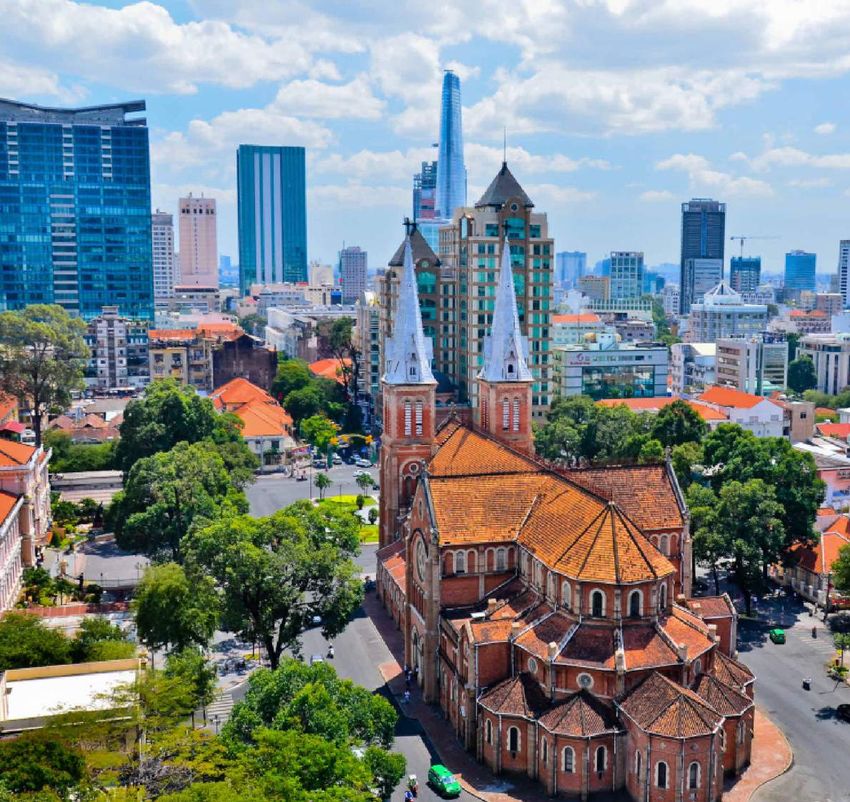
E-COMMERCE
INDUSTRY
IN VIETNAM
Edition 2018

                         Source: negativespace.co

RESEARCH REPORT
               This project is co-funded
               by the European Union
USEFUL CONTACTS                                                 MORE INFORMATION

      EU-Vietnam Business Network (EVBN)                            General Statistics Office of Vietnam:
      15th Floor, 5B Ton Duc Thang, District 1                      http://www.gso.gov.vn
      Ho Chi Minh City, Vietnam                                     Vietnam Customs Statistics:
      T: +84 (0)28 38239515                                         http://www.customs.gov.vn/
      www.evbn.org                                                  Vietnam Trade Promotion Agency (Vietrade):
                                                                    en.vietrade.gov.vn
                                                                    World Bank Vietnam:
                                                                    http://www.worldbank.org/en/country/vietnam

The Landmark, 15th floor, 5B Ton Duc Thang St., District 1,   This publication was produced with the assistance of the European
Ho Chi Minh City, Vietnam                                     Union.
Tel. +84 (0)28 3823 9515 Fax +84 (0)28 3823 9514
                                                              The content of this publication is the sole responsibility of EVBN and
www.evbn.org
                                                              can in no way be taken to reflect the views of the European Union.

                                                                                    EVBN E-commerce industry in Vietnam                2
CONTENTS
Contents                                 3
                                             Chapter 3: Competitive Landscape
List of Abbreviations                    4   Dominance of social media                     28
Currency Exchange                        4   B2C E-commerce landscape                      29
                                             B2B E-commerce landscape                      30
List of Figures                          5
                                             Case Studies                                  32
Executive Summary                        6

                                             Chapter 4: Profile of End Consumer            34
Chapter 1: Vietnam Overview
Geo-demographics                         8
Vietnam’s Economy                       10
Structure of consumption expenditures   12   Chapter 5: Regulatory and Legal
                                             Framework
                                             Regulatory and legal framework for
                                             investors in the E-commerce industry          38
Chapter 2: Overview of E-commerce            Relevance and impact of the EVFTA             40
in Vietnam
Vietnam’s digital landscape             14
   B2C E-commerce                       15   Summary                                       41
     Overview of B2C E-commerce         15
                                        16   List of Trade Fairs and Exhibitions           42
     Structure of B2C E-commerce
     Payment methods                    18   Main Online and Printed Publications          43
     Logistics                          18
                                             Useful Contacts                               44
  B2B E-commerce                        19
  Service E-commerce                    20   References                                    45

Market trends                           21
Market drivers                          24
Market barriers                         25
Opportunities and challenges within
the E-commerce industry                 26

                                                            EVBN E-commerce industry in Vietnam   3
LIST OF ABBREVIATIONS
     ASEAN        Association of Southeast Asian Nations
        B2C       Business to Consumer
       B2B		      Business to Business
       C2C		      Consumer to Consumer
      CAGR        Compound annual growth rate
        CIT       Corporate Income Tax
       COD		      Cash-on-delivery
         EU       European Union
     EVFTA        EU-Vietnam Free Trade Agreement
        FDI       Foreign Direct Investment
        FOE       Foreign Owned Enterprise
        FTA		     Free Trade Agreement
       GDP        Gross Domestic Product
      GRDI		      Global Retail Development Index
        IOT		     Internet of Things
      MoIT        Ministry of Industry and Trade
       POS		      Point-of-Sale
       SME        Small and Medium Enterprise
    VCUFTA
     		Vietnam and Customs Union of
     		    Belarus – Kazakhstan – Russia Free Trade Agreement
    VECOM         Vietnam E-commerce Association
    VECITA
    		            Vietnam E-commerce and Information Technology Agency
     VJEPA
     		           Vietnam Japan Economic Partnership Agreement
     VKFTA
     		           Vietnam Korea Free Trade Agreement
     WTO
     		           World Trade Organization

CURRENCY EXCHANGE
   EUR/US$        0.81
   EUR/VND        27,998.64

                                                           EVBN E-commerce industry in Vietnam   4
LIST OF FIGURES
Figure 1: Map of Vietnam with key cities								                                                            8
Figure 2: Vietnam’s population 2013-20f								                                                             9
Figure 3: Forecast of rural and urban population in Vietnam and Asia Pacific, 2030 			                      9
Figure 4: Nominal GDP and Real GDP growth, 2013-20f						                                                   10
Figure 5: Nominal GDP per capita, 2013-20f								                                                          10
Figure 6: Total registered FDI capital, 2010-2017							                                                    11
Figure 7: Total registered FDI capital by provinces, 2017						                                             11
Figure 8: Structure of consumption expenditure, 2013-22f						                                              12
Figure 9: Vietnamese Internet Users									                                                                14
Figure 10: Smartphone penetration rates in Vietnam							                                                   14
Figure 11:Structure of retail market in Vietnam							                                                      15
Figure 12: Vietnam B2C E-commerce market size and its proportion in total retail industry value, 2013-20f   16
Figure 13: Definitions of types of E-commerce							                                                        16
Figure 14: Number of registered E-commerce websites in Vietnam by type, 2015-2016		                         17
Figure 15: Preferred payment methods in Vietnam, 2015-2016					                                             18
Figure 16: Estimated E-commerce logistics market value, 2018-2022f				                                      18
Figure 17: Modes of shipping used by E-commerce businesses in 2016                  			                     19
Figure 18: Estimated market size of B2B E-commerce in Vietnam, 2012-2015				                                19
Figure 19: Growth in E-commerce website access via mobile phone in Southeast Asia		                         21
Figure 20: Percentage of online purchase methods in Vietnam, 2013 – 2016				                                22
Figure 21: Online shopping platform preferred by consumers, 2017					                                       28
Figure 22: Top 10 E-commerce websites by monthly visits						                                               29
Figure 23: List of some B2B E-commerce players in Vietnam						                                             30
Figure 24: Tiki’s homepage and logo									                                                                32
Figure 25: Auchan’s homepage and logo								                                                               33
Figure 26: Online shopping frequency								                                                                35
Figure 27: Device used to shop online								                                                               36
Figure 28: Products/services most purchased online							                                                   36
Figure 29: E-commerce registration process								                                                          38
Figure 30: Conditions for opening a shop on some key: E-marketplaces in Vietnam			                          39

                                                                            EVBN E-commerce industry in Vietnam   5
Executive
Summary
Vietnam is a land of opportunity for foreign E-commerce companies because of its
young population, high Internet penetration rate (ranked 17th in the world) and climbing
smartphone penetration rates. Millennials, considered the target population of
E-commerce firms, account for 30% of Vietnam’s population (approximately 30 million
people). The penetration of Internet is projected to increase steadily, with the percentage
of Internet users set to reach 65% in 2022.

Internet services made their first appearance in Vietnam in 1997. Three years later,
however, the Internet usage rate was still insignificant with a 0.2% local penetration.
However, the situation changed drastically over the years. In 2017, approximately 50
million Vietnamese, or half of the population, were connected to the Internet. Despite its
late start, Vietnam’s penetration rate (54%) in 2017 is now higher than the world average
(46.5%).

Following its accession to the WTO in 2007, Vietnam has allowed foreign investors to
establish 100% foreign-owned companies. This has attracted many foreign investors,
including E-commerce retailers. As E-commerce is expected to soon become an
important part of Vietnam’s trade sector, currently, big names such as Lazada, Shopee
(Sea Limited) and more recently, Amazon, market have seized the opportunity and
entered Vietnam. In 2017, the Southeast Asian E-commerce market was growing at 35%
per year, 2.5 times faster than in Japan. Vietnam ranks 4th for online shopping in the Asia
Pacific region and is expected to continue booming in the coming years, with sales
estimated to reach EUR8.1 billion in 2020.

This report will discuss the opportunities and challenges of E-commerce in Vietnam in
the next 5 years, with a focus on the B2B and B2C sectors. The report will also discuss the
impact of the EU-Vietnam Free Trade Agreement (EVFTA) on this market.

CHAPTER 1
VIETNAM OVERVIEW
                          Geo-demographics

                         Vietnam’s Economy

       Structure of consumption expenditures
I. Geo-demographics

                                                Vietnam comprises a landmass of 330,972.4 km2,
             Hanoi                              a vast sea area including a large continental
                                                shelf and a string of archipelagos stretching
                                                from the Gulf of Tonkin in the North to the Gulf
                                                of Thailand in the South. In 2017, Vietnam’s
                                                population was 95.54 million people and is
                                                projected to reach 98.4 million in 2020, an
                                                increase of 1% on average between 2015-2020.
                                                Major cities in Vietnam, namely Hanoi, Hai
                                                Phong, Danang, Nha Trang, Ho Chi Minh City,
                                                and Can Tho, are well-dispersed geographically.
                                                Hanoi, the capital of Vietnam, is the second
                                                largest city in Vietnam and is the country’s
                                                political and administrative centre. Hanoi is
                              Da Nang           known for its rich culture characterised by South
                                                East Asian, Chinese and French influences. Ho
                                                Chi Minh City, commonly known as Saigon, is
                                                the country’s largest city and the commercial
                                                hub of Vietnam. By 2030, Ho Chi Minh City will
                                                continue to be the largest city in Vietnam by
                                                population with over 10 million inhabitants
                                                accounting for 23% of Vietnam’s total urban
                                                population.

                                    Nha Trang

                                                                                                    Image from www.wikipedia.org
             Ho Chi Minh City

          Can Tho
                                                                                                    Image from www.vietnamtourism.gov.vn

 Figure 1: Map of Vietnam with key cities

                                                             EVBN E-commerce industry in Vietnam                                           8
91.50

                                                                                *Unit: million people
2013

2014                                                92.54
2015                                                 93.57
2016e                                                  94.57
2017f                                                   95.54
2018f                                                    96.49
2019f                                                     97.43
2020f                                                      98.36
                                      Figure 2: Vietnam's population 2013-20f
                                      				                                Source: D&B

                                        Although Vietnam remains predominantly
         57%
          RURAL
                                        rural, it is expected to undergo significant
                                        urbanisation in the next 14 years. By
                                        2030, the urban population is forecasted
                                        to increase by 37% from 2017, reaching
                   Vietnam              45.66 million people, or 43% of the
                                        total population of Vietnam. This rapid
                                        urbanisation is caused predominantly
                              43%       by the growth of urban cities and the
                              URBAN     expansion of the urban-based industrial
44%
 RURAL
                                        and services sectors. Moreover, high
                                        urbanisation rate causes a pressure on
                                        the construction sector to increase the
                                        number of high-rise apartment buildings
          Asia                          and office buildings.
         Pacific
                                         Figure 3: Forecast of rural and urban
                                                   population in Vietnam and
                     56%                                     Asia Pacific, 2030
                      URBAN
                                        				 Source:UNDP

                                              EVBN E-commerce industry in Vietnam                       9
II. Vietnam’s Economy

                                                             Gross Domestic Product

                         250                                                                                                         8
                                                               6.7                      6.8            6.7
                                                                          6.2                                                        7
                         200                     6.0
                                   5.4                                                                                               6

                         150                                                                                                         5
                                                                                                                           248.8
                (€ bn)

                                                                                                                                         (%)
                                                                                                                  228.6              4
                                                                                                      208.1
                         100                                            182.0           193.9
                                                              172.5                                                                  3
                                   128.4         140.0
                                                                                                                                     2
                          50
                                                                                                                                     1

                          0                                                                                                          0
                                   2013          2014        2015       2016            2017          2018e       2019f    2020f

                                                  Nominal GDP (EUR bn)                                   Real GDP growth (%)

                                                           Figure 4: Nominal GDP and Real GDP growth, 2013-20f
                                                           		                   				                                       Source: BMI

      Real gross domestic product (GDP) growth is expected to accelerate at 6.7% in 2018, reaching €208.1
      billion in value. With this growth rate, Vietnam remains one of the fastest-growing economies in Asia. The
      solid increase pace is foreseen to continue until 2020, to reach €248.8 billion. The outlook is underpinned
      by ongoing Government policies regarding the privatisation of state-owned enterprises (SOEs), the
      maintenance of price stability, the lowering of trade barriers and reduced tax rates.

      3000                                                                                                    In 2017, Vietnam’s nominal GDP
                                                                                              2,529           per capita reached €2,029, an
      2500                                                                      2,346                         increase of 5.4% compared to
                                                                      2,156
                                                   1,924
                                                             2,029                                            2016. Nonetheless, the country has
      2000                               1,843
                                                                                                              been recognised for its effort to
                           1,512
                                                                                                              increase the GDP per capita, and
(€)

      1500    1,403

                                                                                                              expects to reach a GDP per capita
      1000                                                                                                    of €2,529 in 2020. A solid increase
                                                                                                              in GDP per capita suggests that an
       500
                                                                                                              average Vietnamese will have more
         0                                                                                                    disposable income to spend on
              2013         2014          2015     2016       2017     2018e     2019f         2020f
                                                                                                              more goods than just basic needs.

      Figure 5: Nominal GDP per capita, 2013-20f
      Source: BMI

                                                                                                               EVBN E-commerce industry in Vietnam 10
Foreign Direct Investment
(€ mn) In 2017, Vietnam received a
24,041 record €24 billion of foreign
direct investment (FDI). This is a
19,761 reflection of the increase in trade
18,436
17,577 and production in Vietnam as more
16,378
15,066 global manufacturing giants have
11,904 decided to move their production
10,530 facilities to Vietnam to reap the
benefits from the numerous
incentives to attract investments
from the government.
Figure 6: Total registered FDI
2010 2011 2012 2013 2014 2015 2016 2017 capital, 2010-2017
Source: GSO
Ho Chi Minh City, Vietnam’s commercial centre, continued to receive the most FDI in 2017 with a total
registered capital of nearly EUR 2.7 billion. Provinces such as Binh Duong and Bac Ninh, where LG and
Samsung established their manufacturing centres, also received large amounts of FDI at EUR 2.0 and EUR 2.6
billion, respectively. Thanh Hoa and Khanh Hoa are two provinces receiving the highest number of newly
registered capital, respectively, due to mega Build – Operate – Transfer Japan’s thermal power projects.
(Unit: EUR mn)
Ho Chi Minh City 2,684.4
Bac Ninh 2,640.6
Thanh Hoa 2,563.8
Khanh Hoa 2,104.7
Binh Duong 2,003.5
Other 12,054.1
Figure 7: Total registered FDI capital by provinces, 2017
Source: GSO
EVBN E-commerce industry in Vietnam 11III. Structure of consumption expenditures
With this GDP growth and increase in disposable income, consumption expenditure is expected to grow
at a rate of 9% during 2016-22f. The increase in the standard of living will likely also raise the price and the
quality of goods purchased by Vietnamese consumers.
6,000
5,000
EUR per year per household
4,000
3,000
2,000
1,000
0
2013 2014 2015 2016 2017 2018 2019 2020 2021 2022
Other 624 669 715 754 815 883 967 1,060 1,163 1,278
Leisure & education 212 228 244 258 279 303 332 365 401 441
Transport & communications 515 551 588 618 667 721 787 862 944 1,035
Health spending 69 74 79 84 91 98 108 118 130 143
Furnishing and home 149 160 171 180 195 211 231 253 277 305
Housing and utilities 396 422 450 472 508 548 598 653 714 782
Clothing & footwear 74 80 85 90 97 105 114 125 137 151
Food, beverages & tobacco 588 629 671 706 761 823 899 984 1,078 1,183
Figure 8: Structure of consumption expenditure, 2013-22f
Source: BMI
EVBN E-commerce industry in Vietnam 12Source: negativespace.co
CHAPTER 2
OVERVIEW OF
E-COMMERCE IN VIETNAM
Vietnam’s digital landscape
Market trends
Market drivers
Market barriers
Opportunities and challenges within the E-commerce industryI. Vietnam’s digital landscape
Vietnam first connected to the Internet in November 60
Unit: million users
1997. In the last 20 years, the country has seen a CAGR 12-17: 10.9% 52.0
tremendous increase in the number of Internet 50
users. According to the Minister of Information
and Communications, Vietnam had approximately 40
52 million Internet users in 2017, or a 54% Internet
31.0
penetration rate, which is above the global 30
average of 46.5%. This puts Vietnam at the top of
Asian countries and the numbers are expected to 20
17.0
continue rising at a fast pace, thanks to relatively
flexible bandwidths services and low cellular data 10
cost. With the increasing accessibility to the Internet,
0.2
more and more people will have the opportunity to 0
access and use E-commerce services. 1997 2007 2012 2017
Figure 9: Vietnamese Internet Users
Source: Ministry of Information and Communications
80% This rise of Internet adoption can
72% 72% be partly attributed to the country’s
70% high smartphone penetration
rate. In the past five years, the
country has witnessed a surge in
60%
smartphone ownership, thanks
55%
to smartphones’ popularity and
50%
the rise of Vietnam’s per capita
disposable income. According to
40% 2017 statistics from Google, nearly
36% 72% of the Vietnamese population
30% use a smartphone. As smartphones
are key to conduct E-commerce
20% 20% activities online, the rise of
smartphone ownership will have a
10%
profound effect on the E-commerce
2013 2014 2015 2016 2017 landscape.
Figure 10: Smartphone penetration rates in Vietnam
Source: Google Consumer Barometer
EVBN E-commerce industry in Vietnam 141. B2C E-commerce
As mentioned in the 2018 EVBN Vietnam Retail Market Study, the retail industry in Vietnam comprises three
main channels: traditional, modern and online. This report will be dedicated to the study of the online
retail channel, or B2C E-commerce, with a brief overview of the emerging B2B E-commerce channel.
R E T A I L I N D U S T R Y
TRADITIONAL MODERN ONLINE
RETAIL RETAIL RETAIL
Wet Grocery Hypermarkets Department stores/ Convenience
E-commerce
markets stores Supermarkets Shopping Centres Specialty Stores
Figure 11: Structure of retail market in Vietnam
Source: Speeda
1.1. Overview of B2C E-commerce
E-commerce is defined in Decree 52/2013/ND-CP size of EUR 5.5 billion in 2017. The E-commerce
as follows: industry in Vietnam is forecasted to continue
rising rapidly with a forecasted CAGR of 14%
“E-commerce activity means conducting part or
during 2017-20f, accounting for 5.2% of total retail
the whole of the process of commercial activity
sales. Though the E-commerce’s market share is
by electronic means connected to the Internet,
still relatively small, with its digitally savvy young
mobile telecommunications network or other
population, (i.e., Millennials, born between 1981
open networks.”
and 1996; and Generation Z, born between 1997
Vietnam currently has one of the fastest growing and 2010) and a high smartphone penetration,
B2C E-commerce markets in Southeast Asia, with a Vietnam’s transition from brick-and-mortar to
32.3% CAGR from 2013-17, translating to a market online retail seems inevitable.
EVBN E-commerce industry in Vietnam 15150 148.8
(Unit: EUR bn)
120
110.4
99.6
89.1
90 80.6 140.7
72.0
60 104.9
85.9 95.6
78.2
30
70.2
1.8 2.4 3.3 4.1 5.5 8.1
0
2013 2014 2015 2016 2017 2020f
E-commerce Modern & Traditional Retail
Figure 12: Vietnam B2C E-commerce market size and its proportion in total retail industry value, 2013-20f
Source: VECOM, GSO, Ipsos Business Consulting analysis
Aware of this opportunity, numerous companies, both domestic and international, have invested
significantly to get the first-mover advantage. Their presence has made the landscape dynamic and
competitive, especially in the absence of a clear market leader. The competitive landscape and profile of
key players are further discussed in the Competitive Landscape section below.
1.2. Structure of B2C E-commerce
According to Decree 52/2013/ND-CP, B2C E-commerce in Vietnam is classified into four different types:
E-commerce trading floor
(E-marketplace)
E-commerce website
“An E-commerce website permitting traders,
(E-commerce sales website)
organizations or individuals that are not the
“The electronic information page set to website owners to conduct a portion or the
serve a portion or the whole process of
whole process of buying and selling goods
buying and selling activities of goods or
and services on that website, excluding
provision of services, from display and
introduction of goods or services to online securities trading websites.”
entering to contract, service provision,
payment and after-sales service.”
B2C
Online promotion website
“An E-commerce website set up by traders
Online auction website and organizations to promote the goods
“An E-commerce website providing solutions and services of traders, organizations or
allowing traders, organizations and individuals under the terms and conditions
individual that is not the website owners to of a promotion service contract.”
auction their goods on that website.”
Figure 13: Definitions of types of E-commerce
Source: Decree No.52/2013/ND-CP
EVBN E-commerce industry in Vietnam 16E-commerce websites constitute the majority of E-commerce activities in Vietnam, although
e-marketplaces are gaining popularity. Online auction sites and online promotion sites remain a
significant part in the E-commerce landscape.
15,000
13,510
12,000
9,429
9,000
6,000
3,000
492 682
19 20 19 93
0 2016 2017 2016 2017 2016 2017 2016 2017
E-commerce Online auction Online promotion
E-marketplace
sales website sites sites
Figure 14: Number of registered E-commerce websites in Vietnam by type, 2015-2016
Source: Vietnam E-commerce Report 2017 by VECITA
Vietnamese consumers are shopping online through two other means: social media platforms and
mobile apps. While social media platforms are quite popular among Vietnamese consumers, mobile
commerce is still an emerging trend. These two means are further discussed in the Market trend and
Competitive landscape sections below:
SOCIAL NETWORK MOBILE APPLICATION
indicates “an application installed on mobile
is “an information system providing its users with equipment connected to a network that allows users
services such as storage, provision, use, search, to access the databases of traders, organizations
sharing, and exchange of information, including the and individuals to purchase and sell goods and
provision of personal websites, forum, online chats, provide or use services. Mobile applications include
audio and video sharing, and other similar devices.” goods sale applications and e-commerce service
provision applications.”
(Decree 72/2013)
(Circular 59/2015)
EVBN E-commerce industry in Vietnam 171.3. Payment methods
Compared to the E-commerce industry, 100
the E-commerce payment landscape 91% 89%
lags behind considerably. Credit card
usage remains low in Vietnam, and cash- 80
on-delivery (COD) continues to be the
preferred method of payment. E-wallets
60
are not doing any better with their waning
popularity. Despite a recent rise in credit 48%
card usage, it is unlikely that consumers’ 41%
40
behaviour will change in the near future.
Lack of trust is a significant barrier to the
23%
adoption of online payment methods. 20
20%
11%
5% 6% 7%
Figure 15:
Preferred payment methods 0 2015 2016 2015 2016 2015 2016 2015 2016 2015 2016
in Vietnam, 2015-2016 Cash on Bank Electronic Mobile/game Credit/debit
Source: Vietnam E-commerce Report 2017 by VECITA delivery transfer wallet cards cards
1.4. Logistics
Logistics and delivery are a constant challenge 1000
(Unit: EUR million)
CAGR 18-22: 42.1%
for the E-commerce industry in Vietnam due
801.9
to slow transportation (e.g., a truck cargo from 800
Ho Chi Minh City to Hanoi can take up to three
days) and the preference for COD payments. The 600
combination of a booming E-commerce industry 464.3
and an underdeveloped logistics infrastructure has 400
motivated firms to invest considerably in this field, 268.8
leading to an impressive forecasted y-o-y growth of
200 155.7
42% during 2018-22f. 90.1
0
This E-commerce gold rush has resulted in a crowded 2018e 2019f 2020f 2021f 2022f
and competitive logistics landscape with over 50
providers as of 2017, from traditional express services Figure 16:
(e.g., Viettel, EMS, and VNPost) to start-ups (e.g., Estimated E-commerce
giaohangnhanh, supership, and giaohangtietkiem) logistics market value, 2018-2022f
Source: Ken Research, Ipsos Business Consulting analysis
and international players (e.g., DHL eCommerce,
Grab Express, and Lazada Express).
EVBN E-commerce industry in Vietnam 18With COD as the preferred method of payment, it
10% is crucial for E-commerce businesses to establish a
reliable shipping and delivery network. While large
45% companies often have a dedicated logistics and
delivery department responsible for fulfilling orders
45% (for example, Lazada is the first E-commerce company
in Vietnam to have its own delivery company named
LEX – Lazada Express), the majority of companies use
third-party services. Small businesses and individual
shops rely on third-party providers and freelance
shippers to minimise operational capital.
Figure 17:
Fulfill orders themselves Modes of shipping used by E-commerce
businesses in 2016
Hire a third party
Source: VECITA
Both
2. B2B E-commerce
Business-to-business (B2B) E-commerce remains and Amazon has announced that it would offer
relatively new in Vietnam, yet it receives much E-commerce services to the Vietnam E-commerce
attention and support from the government. In Association (VECOM), a group consisting of 140 local
recent years, the government has taken actions to businesses, to sell and export their products.
respond to the rise and development of the B2B
1.2
E-commerce industry.
CAGR 12-15: 22.9%
E-Commerce in Vietnam falls under the umbrella of Unit: EUR billion
1.0
import-export activities, based on the assumption
that E-commerce is a time and cost efficient channel
for cross-border trade, especially for SMEs with limited
0.8
financial resources. In 2016, 32% of businesses in
Vietnam partnered with foreign companies through
online channels.
0.6
1.05
Vietnam is a member of many economic
0.86
communities and has joined several free trade 0.4
agreements (FTAs) including the Vietnam-Korea FTA 0.70
(VKFTA), the Vietnam-Japan Economic Partnership 0.57
Agreement (VJEPA), the Vietnam-Eurasian Economic 0.2
Union (VCUFTA), and the European-Vietnam FTA
(EVFTA), which will come into effect in 2018. With the
0.0
support of these FTAs, B2B E-commerce is expected 2012 2013 2014 2015
to grow considerably in the near future. Vietnam’s
lucrative market has captured the attention of Figure 18: Estimated market size of B2B
international players: Alibaba now allows 500 to E-commerce in Vietnam, 2012-2015
Source: eMarketer
600 Vietnamese exporters to sell on its platform,
EVBN E-commerce industry in Vietnam 193. Service E-commerce
E-commerce is also a potential channel for services such as online tourism, online entertainment, online gaming
to online education services.
Online tourism in Vietnam is still in its infancy. But as Vietnam becomes a more lucrative destination, demand
is expected to increase. According to the VECOM, the rate of room reservations via online travel agents have a
y-o-y growth of over 30%, up from 20% in 2016. However, the market is currently dominated by foreign players
such as Agoda and Booking, which collectively hold about 80% of the market share. These websites are widely
popular among domestic and foreign travellers alike.
Due to the rising Internet penetration in Vietnam, online entertainment (movie tickets, event tickets) have
been rising steadily, accounting for a small but increasingly significant share of the total E-commerce value. This
emerging market is dominated by foreign players such as CGV for movie tickets and Ticketbox for event tickets.
However, it is expected to become more dynamic as more players enter the market. But with Vietnam’s low
credit card usage, it is unclear whether or when online entertainment will take off.
Vietnam’s online gaming market is one of the largest in Southeast Asia with more than a third of its population
playing online games, for a total of approximately EUR295 million in 2017. However, 80% of those games are
imported from South Korea and China, and none of the most popular games are Vietnamese.
Although online education (E-learning) has arrived in Vietnam a decade ago, it has taken off only recently.
In 2015, the country’s E-learning market size was estimated at EUR40.5 million only. However, according to
Ambient Insight, the country has a forecasted y-o-y growth rate of 44% on average in 2013-2018. As of August
2017, there were approximately 150 online education start-ups, which can be segmented into three groups:
Foreign languages: ESL dominates the market, but Japanese, Chinese and Korean language courses are
on the rise. Examples: tienganh123.com and tiengnhatonline.edu.vn
Preparation for the National University Entrance Exam: includes courses in mathematics, physics,
literature, chemistry and biology. Example: hocmai.vn
IT and soft skills: Vietnamese have started to pay more attention to these to improve their careers.
Example: kyna.vn
While e-services are undoubtedly promising in Vietnam, they are still in their early stages. Moreover, their study
is complicated by the fact that they are generally treated under their respective service category rather than
under the E-commerce umbrella. For this reason, e-services will not be further discussed in this report.
EVBN E-commerce industry in Vietnam 20II. Market trends
Continuous increase in mobile shopping
iPrice recorded that in 2017, 72% of E-commerce 80%
websites in Southeast Asia were accessed from a
mobile device. However, conversion rates – the
percentage of website visits that convert into a 72%
product purchase – were 1.7 times higher from a 70% 70%
computer than from a mobile device. In Vietnam,
the year 2015 was characterised by a boom in
mobile commerce after E-commerce operators
62%
made substantial investments in creating mobile-
60%
friendly versions of their websites. Nonetheless,
only 15% of E-commerce operators had mobile 57%
websites in 2017.
Although mobile commerce has not yielded 50%
2016 | Q3 2016 | Q4 2017 | Q1 2017 | Q2
great returns for operators yet, it deserves serious
consideration in the future, especially amidst Figure 19:
Growth in E-commerce website access
rising cellular network subscription (3G and 4G)
via mobile phone in Southeast Asia
and higher smartphone penetration. Source: iPrice
E-marketplaces are gaining popularity
Vietnam’s E-commerce landscape has seen the emergence of several e-marketplaces such as Sendo
(sendo.vn), Adayroi (adayroi.vn), Shopee (shopee.vn) and Tiki (tiki.vn). According to a survey of 1,159
Vietnamese Internet users by the Vietnam E-Commerce and Information Technology Agency (VECITA),
e-marketplaces are gaining popularity. Users reporting having used e-marketplace websites have risen
from 19% in 2013 to 41% of respondents in 2017. Usage of E-commerce websites rose from 57% to 76%
respectively, while usage of group-buying websites – a kind of online promotion website – went down
from 51% to 24% in the same period. It should be noted that although the number of E-commerce
websites grows faster than that of e-marketplace websites, they are generally the online version of their
brick-and-mortar retail outlets. Therefore, their popularity may not be as high as it seems.
EVBN E-commerce industry in Vietnam 21E-marketplaces, defined as “websites for parties other than the website owner to conduct trade of
their goods and services,” ease the buying and selling process between organizations and individuals,
thus facilitating online C2C trade. With e-marketplace websites on a rapid rise, Vietnam’s E-commerce
landscape can expect changes.
80 76%
71%
70
61%
60 57%
51%
50
40 35%
28% 41%
30 24%
20 25% 27%
19%
10
2013 2014 2015 2016
E-commerce websites E-marketplace Group-buying websites
Figure 20: Percentage of online purchase methods in Vietnam, 2013 – 2016
Source: VECITA
E-commerce logistics sets to robust
E-commerce logistics services facilitate the delivery of products and real-time communication of
information about customers’ orders. Those services support the flow of goods through the transaction
cycle, from order to check-out, packing, delivery, payment tracking, and post-sales services.
The significant investments in E-commerce logistics is expected to further boost the growth of the
E-commerce industry. New players are entering the market, and established E-commerce operators are
expanding their business into the logistics segment. Giao Hang Nhanh Company aims to have 1,500
outlets by 2018, whereas DHL eCommerce is looking to add 1,000 outlets to its current nationwide
network of service points in Vietnam by the end of 2019.
But the race is not just about expanding presence; it is also about innovation. Giao Hang Nhanh Company
plans to create a network of collection points at local shops, convenience stores and in buildings. Lazada,
on the other hand, runs automated sorting centres in Ho Chi Minh City and Hanoi.
As long as E-commerce continues to grow at its current pace, the E-commerce logistics industry will
continue to improve. There are opportunities, more particularly, to develop better last-mile delivery, i.e.,
the stage where goods are delivered to the buyer.
EVBN E-commerce industry in Vietnam 22
Photo by Fancycrave from PexelsCross-border E-commerce
is expected to grow big
The number of Vietnamese accounts on Alibaba was 500,000 in 2016, with 100,000 additional accounts
every year since then. Vietnamese buyers consume foreign goods and services in larger numbers than
foreign buyers consume goods and services from Vietnam. According to the Vietnam E-Commerce
Association, this trend can be explained by three factors. First, foreign goods are more varied and more likely
to meet domestic customers’ needs. Second, Vietnamese E-commerce websites are generally distrusted
while reputable names such as Amazon, Alibaba and Rakuten, are perceived as more trustworthy. Finally,
shipping from overseas to Vietnam is less costly than the other way around.
Several actions have been taken to facilitate E-commerce to and from Vietnam. Amazon have partnered
with VECOM to provide training for Vietnamese sellers on how to efficiently sell on Amazon. Moreover, the
Ministry of Industry and Trade has proposed various policies favourable to E-commerce in the hope that
it will boost cross-border E-commerce between Vietnam and other countries.
EVBN E-commerce industry in Vietnam 23
Source: freepik.comIII. Market drivers
competitors looking to enter the market.
1. Growth in young population With a growing retail market coupled with a
high adoption of technology, the acceleration
The coming of age of Generation Z, of the E-commerce industry is obvious and
accounting for 16% of the population, or 14 opportunities for businesses are vast.
million people in 2017, is expected to boost
Vietnam’s E-commerce market in the next five
years. This generation, who will have never
4. Government initiatives
known a world without the Internet, will have
started using mobile devices at a young age.
Millennials, representing 30% of the population The government’s Decision No. 1563 has
(approximately 29 million people in 2017), are approved a master plan to foster E-commerce
currently the largest group of online shoppers over the period from 2016 to 2020. The
in Vietnam. They are characterised by their government considers E-commerce essential to
changing lifestyle and willingness to pay more help Vietnamese businesses boost the domestic
to improve their lives. and export markets, join the global value chain,
and enhance the national competitiveness for
global integration.
The key elements of this plan include:
2. Rising income
Bolstering the efficiency of government
Vietnam has witnessed the fastest-growing administrative services;
middle and affluent class compared to other Ensuring 30% of the population buy goods and
ASEAN countries. Between 2012 and 2020, this services online;
consumer segment will rise from 12 million to
Ensuring an average spend of EUR283.5 per
33 million. The new middle class has already
person online;
fulfilled its basic and low-end needs and is now
willing to pay more for impact and high-end Increasing revenue from online B2C to EUR8.1 billion;
shopping. This economic growth is favourable Ensuring B2B revenue accounts for 5% of total
to the expansion of E-commerce in terms of retail spend;
both quantity and quality.
Ensuring online B2B turnover is worth 30% of
total turnover in 2020.
3. Growing retail market In order to achieve these targets, the
Vietnamese government is planning to develop
Vietnam’s retail market is considered a top a comprehensive legal framework for all
priority market with low market saturation. The E-commerce activities. A national E-commerce
nation was ranked sixth in the Global Retail payment system and integrated e-payment
Development Index (GRDI), an increase of five solutions applicable to all E-commerce models
ranks compared to the previous year. While will be established by 2020. Transportation as
remaining a small market in terms of size, well as delivery service networks and order-
Vietnam exhibits great potential for foreign processing systems will be implemented
EVBN E-commerce industry in Vietnam 24in all cities and provinces nationwide. The
government will also formulate mechanisms 5. Digital transformation
for the settlement of disputes and handling
of violations in the E-commerce environment. The last force driving Vietnam’s E-commerce
Finally, to facilitate online shopping and market is the digital transformation, which refers
e-payment, point-of-sale (POS) terminals to the emergence of new technologies such as
will be installed in all retail outlets, including analytics, mobility, social media and more recently,
department stores, supermarkets and modern the Internet of Things (IOT). The rise of the Internet
distribution centres. Finally, 70% of electricity, and other information technologies has helped
water, telecoms and media service providers Vietnamese people adopt online shopping. The
will support the e-payment of service charges. spread of digital technology to all aspects of
human society will make this trend continue.
IV. Market barriers
leads to higher cancellation rates and lower
1. Lack of trust profitability. Thus, this cultural preference will
continue to hamper the growth of Vietnam’s
Lack of trust remains the greatest hindrance to E-commerce industry.
the growth of E-commerce in Vietnam. It applies
to various aspects of a transaction, from product
quality to customer service, data protection,
banking fraud, unfulfilled deliveries, etc. This 3. Underdeveloped logistics and
lack of trust stems from an immature market delivery facilities
and the lack of technological infrastructure in
the country. Vietnam requires a better logistics infrastructure
to support the growth of its E-commerce industry.
Oftentimes, third-party logistics providers and
E-commerce websites have to work together to
2. Predominant of COD
meet the demand of the frequent, small-sized
payment method orders of Vietnamese consumers. Moreover,
E-commerce in Vietnam depends on a high
Despite its growing E-commerce market, the number of reliable shippers, since shippers
e-payment ecosystem in Vietnam is rather not only deliver the product to customers but
inadequate. Vietnam is still a cash-based society also collect payment. Therefore, most market
and Vietnamese consumers generally distrust players use a combination of in-house delivery
financial institutions when it comes to securing, teams and third-party service providers. Online
saving and transferring their money. For that sellers, regardless of their size, tend to opt for
reason, credit cards and online banking are outsourced delivery services, either partly or
not widely used. Moreover, many consumers fully, for the distribution of a large number of
see credit card and online banking transaction packages simultaneously. Further investment
fees as unnecessary costs. Such fees may in logistics technology and infrastructure is still
also discourage large transactions. From the required to address current problems such as
perspective of E-commerce operators, COD failed deliveries and high-costs.
EVBN E-commerce industry in Vietnam 25V. OPPORTUNITIES AND CHALLENGES
WITHIN THE E-COMMERCE INDUSTRY
B2B cross-border E-commerce
High-tech delivery solution Compared to the B2C E-commerce,
B2B E-commerce is still in its infancy
The demand for a seamless and reliable delivery
in Vietnam, with a highly fragmented
process is strong, especially with COD payment
market and relatively few international
method dominating the market. Due to the poor
players. With the EVFTA coming into
infrastructure in Vietnam, delivery companies
effect in 2018 and the green light from
still have to rely on human labour to provide
the government, EU companies can
their services, which presents many challenges.
offer high-quality export solutions for
E-commerce companies will continue to seek
Vietnamese SMEs who wish to take
better delivery solutions, especially high-tech
advantage of this opportunity.
solutions that can track and manage the entire
delivery process in a cost-effective way. With
a robust 42.1% CAGR, EU companies with a
technology advantage should consider entering
the Vietnamese market.
Opportunities
Challenges
Highly competitive B2C
E-commerce market
The Vietnam B2C E-commerce market Poor infrastructure
is currently facing fierce competition,
with E-commerce global giants Vietnam’s poor infrastructure, ineffective logistics
pouring out massive investments to system and preference for the COD payment
claim the lead positions. Therefore, method constitute tremendous hindrances
any EU company looking to enter to the growth of the E-commerce industry. EU
this space should possess substantial companies seeking to join this industry will
financial capabilities and have the have to adapt and innovate in order to succeed
persistence to survive. in this field.
EVBN E-commerce industry in Vietnam 26Image created by Freepik.com
CHAPTER 3
COMPETITIVE LANDSCAPE
Dominance of social media
B2C E-commerce landscape
B2B E-commerce landscape
Case StudiesI. Dominance of social media
Transactions via social media platforms, Moreover, by selling on social media platforms,
especially Facebook, are the dominant form sellers avoid taxation. According to Vietnamese
of E-commerce in Vietnam. Facebook alone law, sellers must pay income tax only if their
accounts for 66% of the country’s online annual revenue is above EUR3,572/year.
transactions in 2017 according to Q&Me. However, since most transactions are made
Furthermore, 62% of online consumers in cash, sellers’ revenue is hard to track.
reported thinking that buying on Facebook is Additionally, sellers do not have to register as a
“more interesting” than buying on traditional business to sell on social media platforms, due
E-commerce websites. This can be attributed to an ambiguity in the Vietnamese law. This is
to the ease of sharing favourite products and beneficial to small businesses and sellers who
opinion with friends on Facebook. Furthermore, can set up their activities on Facebook easily.
according to a 2018 Wearesocial report, 52%
of Vietnamese are active social media users, Until the government figures out a way
creating a large user base for consumers to to collect taxes on social media platforms,
interact with one another. By utilising Facebook traditional E-commerce operators will continue
as an E-commerce platform, sellers can take to be at a disadvantage when competing with
advantage of Facebook’s data analytics to better social media based e-businesses.
target specific consumer groups.
Others Facebook
34%
66%
Figure 21: Online shopping platform preferred by consumers, 2017
Source: Q&Me
EVBN E-commerce industry in Vietnam 28II. B2C E-commerce landscape
Vietnam’s E-commerce industry is competitive and companies go to great lengths to attract traffic
to their sites. Higher site visits mean better brand awareness and higher conversion rates, which
ultimately, lead to higher revenues.
Year of Key Monthly Alexa
Name Company background Type visits
lunch investors (Dec 2017) ranking
The Lazada Group is one of the top E-commerce companies in
E-Marketplace
Southeast Asia, currently present in Indonesia, Malaysia, the
E-commerce sales 2012 Alibaba 54.82 million 18
Lazada Philippines, Singapore, Thailand and Vietnam. It previously
Vietnam belonged to Rocket Internet, but has been acquired by Alibaba. website
Thegioididong is the E-commerce website of the Mobile World E-commerce sales Mobile World
The gioi 2004 Investment 39.17 million 70
di dong
Group and specialises in selling smartphones. website
Corporation
Sendo is FPT Corporation’s online marketplace. Sendo is E-Marketplace
currently serving 80,000 shops with more than 5 million E-commerce sales 2012 FPT Group 26.64 million 42
Sendo products from 21 different categories. website
Shopee is one of the largest C2C E-commerce platform in
E-Marketplace 2016 Sea, Tencent 22.28 million 25
Shopee Vietnam Southeast Asia and Taiwan.
Started out as an online bookstore, Tiki has grown to become E-Marketplace Sea, TenaJD.com,
one of the largest E-commerce companies in Vietnam, offering E-commerce sales 2010 Vinagame Corporation, 19.74 million 32
Tiki 10 different product categories. website STICcent
FPTshop.com.vn belongs to FPT corporation and specialises in E-commerce sales
2012 FPT Group 13.00 million 98
FPT shop selling electronic devices. website
Mobile World
Dienmayxanh is a Mobile World Group’s E-commerce website E-commerce sales
2014 Investment 10.49 million 194
Dien may xanh and specialises in selling household appliances. website
Corporation
Adayroi is Vingroup’s E-commerce website. Vingroup is the
largest multi-industry private corporation in Vietnam working E-commerce sales
2015 Vingroup 6.98 million 158
in real estate, retail, education, hospitality, healthcare, website
Adayroi agriculture and heavy industry.
Vatgia belongs to the VNP Group, one of the pioneers in Vietnam
E-commerce market. Vatgia currently has more than 26,000 E-Marketplace 2007 VNP Group 6.87 million 116
Vat gia
participating shops.
Nguyenkim is an E-commerce website of the long-time retail E-commerce sales
giant Nguyen Kim. It specialises in selling consumer electronics 2011 Central Group 6.06 million 211
Nguyenkim website
and household appliances.
Remark: Alexa’s rank is based on the browsing behaviour of people in its global database which is a sample of all Internet users
Figure 22: Top 10 E-commerce websites by monthly visits
Source: similarweb, Alexa, Ipsos Business Consulting analysis
EVBN E-commerce industry in Vietnam 29As can be seen from the table above, eight out of the ten most visited E-commerce websites in Vietnam
are domestic companies. However, the leading position is occupied by Lazada, an international giant
who has been rapidly expanding into the Southeast Asian region. Nonetheless, IPrice reported that
Lazada only accounts for 19% of E-commerce site visits in Vietnam, compared to over 40% of site
visits in the other Southeast Asian countries. With no clear market leader, Vietnam’s E-commerce
market remains highly competitive and companies spend aggressively in order to claim the top
positions. For example, in June 2017, Alibaba invested a total capital of more than EUR1.62 billion
into the Lazada Group in Southeast Asia. Tiki.vn, on the other hand, has received a total investment
of around EUR57.51 million from VNG Corporation (Vietnam), Tencent (China) and STIC (Korea).
In the near future, Vietnam’s E-commerce landscape is expected to become more dynamic, with the
entrance of large E-commerce players worldwide. Aside from Alibaba, Tencent and JD.com – both
giants in the global E-commerce market – have made considerable investment into Shopee and Tiki
respectively, in order to establish their presence in the country. Finally, Amazon – the world’s biggest
and oldest E-commerce company – has announced its plan to enter Vietnam by providing VECITA
with E-commerce services.
III. B2B E-commerce landscape
B2B companies focus on import-export Vietnam in 2012 by providing E-commerce
activities and connect Vietnamese businesses, support to 500-600 exporters. Alibaba later
including SMEs, to foreign enterprises while created the Vietnam Export Support Alliance in
also providing foreign prospective buyers/ collaboration with its local partners in order to
sellers with an overview of the business and establish the B2B E-commerce scene in Vietnam.
legal environments of Vietnam. Over time, some Vietnamese players rose such
Currently, the B2B E-commerce market in as Vietrade.com (belonging to the Ministry of
Vietnam is highly fragmented. The top player Industry and Trade), and Vietnamesemade.com.
is the Chinese giant Alibaba, who entered
Name Year of
Key Investors Offering
establishment
A range of services to assist Vietnamese in business
development and expansion or foreign enterprises in Vietnam
Vietrade.com Ministry of Act as a reliable source between global buyers and
2000 Vietnamese export enterprises
(www.vietrade.com) Industry and Trade
Offers memberships – Gold, Verified, and Standard – to
buyers/sellers to help sell their products or source material inputs
A well-structured website, a listing of a large number of
Vietnamesemade.com goods, and trusted sellers
1996 N/A A discount on bulk orders
(www.vietnamesemade.com)
Latest news on trade shows and recent market trends
Basic website structure, mainly solid business
BizViet
N/A BizViet Simple account
EVBN management
E-commerce industry in Vietnam 30
(www.bizviet.net/)Name Year of
Key Investors Offering
establishment
Basic website structure, mainly solid business
BizViet
N/A BizViet Simple account management
(www.bizviet.net/)
Numerous discounts for bulk orders
TradeKey The biggest directory of products and sellers in Vietnam
2006 TradeKey
(www.vietnam.tradekey.com) A well-built website structure
A list of various traders in Vietnam
Vietnam Business Directory A wide range of product categories
N/A N/A
(www.vietnambiz.org) Simple deal process
Suitable for serious business transactions
Online fair of Vietnamese manufactured goods
Vietnam E-commerce Simple and detailed website design
Vietnam Trade Fair
2004 Development Joint
(www.vietnamtradefair.com) A wide range of product categories
Stock Company
Details of various sellers
VietAZ.com Basic B2B marketplace
2006 Viet AZ Co., Ltd.
(www.vietaz.com) High quality products, especially food items
One of the biggest website present in Vietnam
TradeFord A wide range of products, from electronics to lifestyle
N/A TradeFord
(www.tradeford.com) Well-designed website structure and interface
Smooth process
Figure 23: List of some B2B E-commerce players in Vietnam
Source: Speeda Ecommerce - B2B in VNM 2018; emergeapp.net
B2B E-commerce also provides e-marketplace websites offering B2B2C services such as online shops,
warehousing and delivery services. However, the main focus of B2B2C websites is consumers. Hence,
B2B2C services offered to businesses are quite similar, differing only in the conditions and offerings
when setting up shops on different websites. Examples of B2B2C websites are Lazada, Sendo, Tiki
and Vat Gia, which have previously been introduced in the B2C E-commerce landscape section.
Conditions and offerings for setting up shops on these websites will be further elaborated in the
Legal Framework section.
EVBN E-commerce industry in Vietnam 31CASE STUDIES
1. Vietnamese E-commerce website:
Tiki (tiki.vn)
Established in March 2010, Tiki started as an online
English book-selling website. Less than two years later,
Tiki expanded its business model beyond books, and is
now selling more than 300,000 products in 12 different
categories. Tiki is currently one of the ten largest
E-commerce websites in Vietnam and has won branding
and entrepreneurship awards. Tiki’s special features
include 10%+ discounts on 90% of its products; 24-hour
or 2-hour delivery; customer hotline offering support
12 hours a day/7 days a week, and return and exchange
policies. The company used to have a B2C model but
has now adopted the E-marketplace model. This model
helped Tiki diversify its product offering and become a
competent E-commerce player. This model, however,
poses a number of challenges including quality control,
originality of the products and building customer trust.
Despite its growth and enviable position in the market,
Tiki still operates at a loss, like many other E-commerce
companies in Vietnam. In 2017, Tiki recorded a loss of
over EUR10.8 million. Though E-commerce is growing
rapidly in Vietnam, it is still at a stage where companies
have to invest large amounts of money in advertising,
warehousing, and human resourcing to position
themselves in the market. Nonetheless, Tiki has attracted
investors and received funding from companies such as
Seedcom, Cyberagent Ventures, Sumitomo Corporation
and VNG before receiving a large investment from JD.com
in late 2017 and early 2018. Tiki is planning to expand its
Figure 24: Tiki's homepage and logo
product offering to intangible products such as music,
movies and applications in the near future.
Source: www.travel-to-vietnam.net
EVBN E-commerce industry in Vietnam 32CASE STUDIES
2. French E-commerce website:
Auchan (auchan.vn)
Auchan is one of the largest retailers in France and was listed in the
top 500 global companies by Fortune magazine in 2017. Auchan
was established in 1961 and has a presence in 16 countries around
the world. The French retailer came to Vietnam in 2012, officially
opened its first supermarket in 2015, and is currently operating 20
supermarkets nationwide. Auchan sells more than 20,000 different
products including fresh goods, home appliances, packaged food,
cosmetics, etc. Auchan offer customers surprisingly low prices,
many sales promotions, high quality products and a wide range of
goods to meet people’s daily needs. In order to catch up with the
modern trend in shopping, Auchan has committed to diversify its
market expansion, including developing E-commerce.
At the moment, Auchan only offers online shopping through its
website auchan.vn. All of its products are listed online with detailed
descriptions. Customers can choose between two types of delivery:
Auchan Direct or Auchan MotorDrive. With Auchan Direct, goods
are delivered to the customer’s home; with Auchan MotorDrive,
customers choose their goods online and Auchan readies them for
pickup and payment later. Auchan Direct offers delivery services
within a 5-kilometer radius, with free delivery for orders above EUR11
and under 30 kilograms. If the shipment is delayed, customers are
notified and they can choose to cancel the delivery. Customers
can pay cash upon delivery (COD) or by cards. Most goods can be
returned or exchanged within 15 days, except fresh products, which
have a time limit of 24 hours, and some other products.
Auchan is not interested in opening a large number of outlets.
Figure 25: Instead, it focuses on cooperating with real estate firms to open
Auchan's homepage and logo their new outlets in key residential areas or apartment buildings.
EVBN E-commerce industry in Vietnam 33Image Created by Freepik
CHAPTER 4
PROFILE OF END CONSUMERAs mentioned earlier, the Internet adoption rate respondents in Vietnam’s two largest cities Hanoi and
in Vietnam is high in comparison with other Ho Chi Minh has shown that 25% of consumers plan
neighbouring countries. This percentage is a catalyst to reduce their number of trips to physical stores in
for growth for the E-commerce industry as more the future. 45-50% said that they would shop online
people realise the convenience of this platform. more frequently in the future using either a personal
A 2018 research conducted by CBRE on 1,000 computer, laptop, smartphone or tablet.
Urban consumer profile
A recent research highlighted that in urban cities, the higher the income, the more likely and more frequently
an individual engages in online purchasing activities. Indeed, individuals aged 23-39 are the most frequent
online shoppers, probably taking advantage of the convenience of online shopping because of their busy
lives. This finding opens up opportunities for companies to reach this affluent group of consumers with their
high-end products, especially as Vietnam’s disposable income continues to rise.
29% 25%
36% 41% 33% 33%
43% 33%
46%
15%
21% 17%
21%
20%
22%
20% 23%
30% 19%
29%
27% 31% 28%
22% 23%
29% 22%
30% 30%
17% 16% 19% 18% 20%
15% 13%
Total Male Female 18-22 23-29 30-39 Rich Middle Low
Never or Rarely
Rich: income EUR723 or more
Once/several months
Middle: income EUR271 - EUR723
Once - A few times/month
Low: income EUR271 or less
Weekly and more
Figure 26: Online shopping frequency
Source: Q&Me
EVBN E-commerce industry in Vietnam 35While most online shopping is conducted
on personal computers or laptops, the use of
smartphones is on the rise. But mobile shopping
remains marginal since few E-commerce businesses
have mobile applications. These applications are key 53% 52% 52% 52%
47%
since they increase customer reach and allow to 40% 41%
engage with them more regularly and directly. 29%
2016 2017 2016 2017 2016 2017 2016 2017
Smartphone Home PC Smartphone Office PC
(browser) (app)
Figure 27: Device used to shop online
Source: Q&Me
Clothes, Shoes, Cosmetics 56% The most popular type of goods sold online
Electronic devices 55% are clothes, shoes and cosmetics, followed
Home appliances 48% by electronics, and household appliances,
as reported by a research conducted by
Flight, train, car tickets 45%
VECITA in 2016 on 1,159 respondents
Books, Stationery, Flower, Souvenirs 38% nationwide. It should also be noted that
Movie, Music tickets 27% the majority of consumers use this platform
Food 26% to compare prices, read reviews, and search
Hotel booking / Travel tour 25% for product details. These findings suggest
Consulting services, online education 12% that E-commerce should not only be used
as an alternate means of selling products,
Music / Videos / DVDs / Games 11%
but that companies should also focus on
Spa and Beauty 7% creating an ecosystem/interactive platform
Other 23% where consumers can benefit beyond
merely buying/selling goods.
Figure 28: Products/services most purchased online
Source: VECITA
Trust is a critical issue to E-commerce in Vietnam. Because the E-commerce market is still underdeveloped,
consumers (especially middle-aged) have concerns over the quality of the products and the reliability of
the service. iPrice and Trusted Company reviewed 30,000 reviews on 5,000 websites in Vietnam, Malaysia,
Singapore, Indonesia, the Philippines and found that consumers’ level of trust is the lowest in Vietnam, and
consequently Vietnamese consumers spend less online than consumers in other countries. Taking into account
this weakness, it is essential that companies source quality products and build data protection policies to
protect their customers.
EVBN E-commerce industry in Vietnam 36You can also read


