Residential Improvement Guidelines (RIGs)
←
→
Page content transcription
If your browser does not render page correctly, please read the page content below
Residential Improvement
            Guidelines (RIGs)

These residential improvement guidelines have been prepared by the
HRCA Architectural Committee and adopted by the Board of Directors
 of the Highlands Ranch Community Association. The Architectural
Committee reserves the right to add to or modify these guidelines at
   its discretion. Please check with the Community Improvement
     Services Department to ensure you have the latest edition.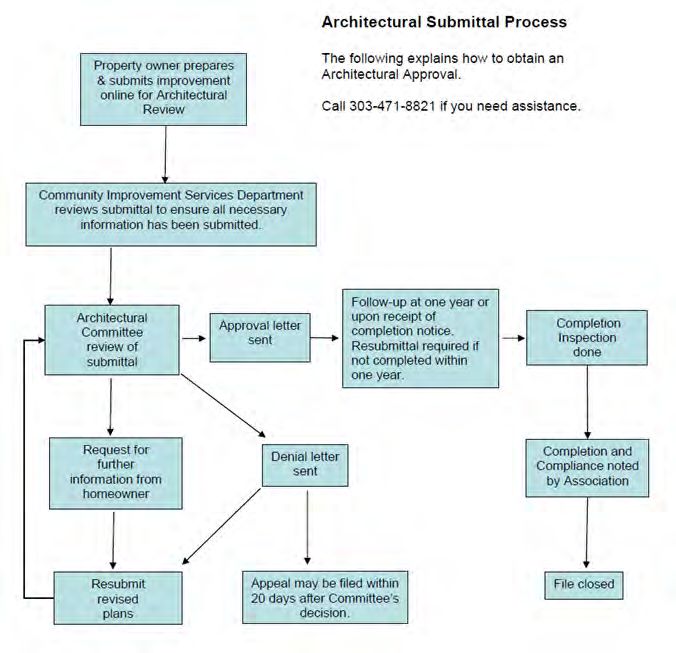
TABLE OF CONTENTS

I.      INTRODUCTION ................................................................................................................. 1
        1.1   Basis for Guidelines ............................................................................................... 1
        1.2   Contents of Guidelines ........................................................................................... 1
        1.3   Architectural Committee ......................................................................................... 1
        1.4   Committee Address and Phone ............................................................................. 1
        1.5   Effect of Community and Supplemental Declarations ........................................... 1
        1.6   Effects of Development Guide ............................................................................... 2
        1.7   Effect of Governmental and other Regulations ...................................................... 2
        1.8   Interference with Utilities ....................................................................................... 2
        1.9   Goal of Guidelines ................................................................................................. 2

        ARCHITECTURAL SUBMITTAL PROCESS ...................................................................... 3
        1.10  General …………………………………………………………………………………...4
        1.11  Drawings or Plans .................................................................................................. 4
        1.12  Submission of Drawings and Plans ....................................................................... 4
        1.13  Review Fee ............................................................................................................ 4
        1.14  Action by Committee .............................................................................................. 4
        1.15  Prosecution of Work ............................................................................................... 4
        1.16  Right of Appeal....................................................................................................... 5
        1.17  Questions ………………………………………………………………………………..5

II.     SPECIFIC TYPES OF IMPROVEMENTS/MAINTENANCE – GUIDELINES ..................... 6
        2.1   General .................................................................................................................. 6
        2.2   Accessory Buildings/Accessory Use ...................................................................... 6
        2.3   Additions and Alterations/Scrape Lot or Rebuild Construction .............................. 6
        2.4   Address Numbers .................................................................................................. 7
        2.5   Air Conditioning Equipment; Evaporative Coolers ................................................. 8
        2.6   Antennas/Satellite Dishes ...................................................................................... 8
        2.7   Awnings .................................................................................................................. 9
        2.8   Balconies ................................................................................................................ 9
        2.9   Basketball Backboards, Portable and Permanent Backboards ............................. 9
        2.10  Beehives .............................................................................................................. 10
        2.11  Birdbaths, Birdhouses and Birdfeeders ............................................................... 10
        2.12  Boats .................................................................................................................... 10
        2.13  Business Activity from a Residence ..................................................................... 10
        2.14  Campers ............................................................................................................... 11
        2.15  Car Covers ........................................................................................................... 11
        2.16  Carports .............................................................................................................. 11
        2.17  Chicken Coops/House ......................................................................................... 11
        2.18  Clothes Lines and Hangers .................................................................................. 11
        2.19  Commercial Vehicles/Trailers ............................................................................. 11
        2.20  Composite Storage Units ..................................................................................... 12
        2.21  Compost ............................................................................................................... 12
        2.22  Decks (New and Replacement) ........................................................................... 13
        2.23  Deck Cover/Pergola ............................................................................................ 13
        2.24  Disability Accessibility ......................................................................................... 13
        2.25  Dog Runs/Dog Houses ........................................................................................ 14
        2.26  Door Replacement and Additions/Garage Doors ................................................ 14
        2.27  Drainage ............................................................................................................... 14
        2.28  Driveways ............................................................................................................. 14
        2.29  Evaporative Coolers ............................................................................................. 15
        2.30  Fences ................................................................................................................ 15
        2.31  Firewood Storage ................................................................................................. 18

Adopted June 15, 2021
2.32    Flag Displays........................................................................................................ 18
        2.33    Gardens – Flower................................................................................................. 18
        2.34    Gardens – Vegetable ........................................................................................... 18
        2.35    Gazebo and other Shade Structures ................................................................... 18
        2.36    Grading and Grade Changes ............................................................................... 19
        2.37    Greenhouses ........................................................................................................ 19
        2.38    Hot Tubs ............................................................................................................... 19
        2.39    Inoperable Vehicles.............................................................................................. 19
        2.40    Irrigation Systems ................................................................................................ 19
        2.41    Kennels ................................................................................................................ 19
        2.42    Landscaping ........................................................................................................ 20
        2.43    Latticework ........................................................................................................... 21
        2.44    Lights and Lighting .............................................................................................. 21
        2.45    Motorcycles .......................................................................................................... 21
        2.46    Motor Homes ........................................................................................................ 22
        2.47    Motor Vehicles/Recreational Vehicles ................................................................. 22
        2.48    Ornaments/Lawn Decor ....................................................................................... 22
        2.49    Outdoor Fireplaces/Chimineas ............................................................................ 22
        2.50    Painting ................................................................................................................ 22
        2.51    Patio Covers/Pergolas ......................................................................................... 23
        2.52    Patios ................................................................................................................... 23
        2.53    Patios – Enclosed ................................................................................................ 23
        2.54    Paving/Hardscapes .............................................................................................. 23
        2.55    Pipes .................................................................................................................... 23
        2.56    Play and Sports Equipment and Trampolines ..................................................... 23
        2.57    Playhouses ........................................................................................................... 23
        2.58    Poles .................................................................................................................... 23
        2.59    Ponds and Water Features .................................................................................. 24
        2.60    Pools .................................................................................................................... 24
        2.61    Railings ................................................................................................................ 24
        2.62    Retaining Walls .................................................................................................... 24
        2.63    Roofs (Replacement) ........................................................................................... 24
        2.64    Rooftop Mounted Applications and Devices ........................................................ 26
        2.65    Saunas ................................................................................................................. 26
        2.66    Screen Doors ....................................................................................................... 26
        2.67    Security/Surveillance Cameras ............................................................................ 26
        2.68    Sewage Disposal System .................................................................................... 26
        2.69    Shutters ................................................................................................................ 26
        2.70    Siding/Exterior Finishes ....................................................................................... 27
        2.71    Signs and/or Advertising Devices ........................................................................ 27
        2.72    Skylights ............................................................................................................... 27
        2.73    Solar Energy Devices........................................................................................... 27
        2.74    Solar Shades ........................................................................................................ 29
        2.75    Sports Courts ....................................................................................................... 29
        2.76    Sprinkler Systems ……………………………………………………………………..29
        2.77    Statues ................................................................................................................. 29
        2.78    Storage Sheds ..................................................................................................... 29
        2.79    Swamp Coolers .................................................................................................... 29
        2.80    Swim Spas ........................................................................................................... 29
        2.81    Swing Sets ........................................................................................................... 30
        2.82    Temporary Structures .......................................................................................... 30
        2.83    Trailers ................................................................................................................. 30
        2.84    Trash Containers, Enclosures, and Pick Up ........................................................ 30
        2.85    Treehouses .......................................................................................................... 31
        2.86    Trucks .................................................................................................................. 31
        2.87    View and Solar Obstructions ................................................................................ 31

Adopted June 15, 2021
2.88       Vents .................................................................................................................... 31
        2.89       Water Systems ..................................................................................................... 31
        2.90       Wells .................................................................................................................... 31
        2.91       Windows, Replacement ....................................................................................... 31
        2.92       Windows: Tinting, Security Bars, etc. .................................................................. 31
        2.93       Wind Turbines, Directional, Wind Driven Devices or Electric Generators. .......... 31
        2.95       Xeriscaping .......................................................................................................... 32

III.    LANDSCAPING SUGGESTIONS ..................................................................................... 33
        3.1  General ................................................................................................................ 33
        3.2  Slopes .................................................................................................................. 33
        3.3  Drainage/Grading ................................................................................................. 33
        3.4  Soil Preparations .................................................................................................. 33
        3.5  Retaining Walls .................................................................................................... 33
        3.6  Climate and Soil ................................................................................................... 33
        3.7  View and Solar Obstructions ................................................................................ 34
        3.8  Screening Views and Directing Winds ................................................................. 34
        3.9  Rockscapes .......................................................................................................... 34
        3.10 Irrigation ............................................................................................................... 34
        3.11 Paved Areas ......................................................................................................... 34
        3.12 Shade ................................................................................................................... 34
        3.13 Landscape Materials ............................................................................................ 35
        3.14 Mulches ................................................................................................................ 35
        3.15 Landscaping Maintenance ................................................................................... 35
        3.16 Suggested Plant List ............................................................................................ 36
        3.17 Recommended Grasses ...................................................................................... 36

IV.     DEFINITIONS AND ATTACHMENTS............................................................................... 37
        4.1    Definitions ............................................................................................................ 37
        4.2    List of Attachments............................................................................................... 39

Adopted June 15, 2021
This page was intentionally left blank
I.      INTRODUCTION.
1.1     Basis for Guidelines. These Residential Improvement Guidelines and Residential Site
        Restrictions are intended to assist homeowners in Highlands Ranch in the making of landscaping
        and other improvements to their property, and as provided for in Section 5.16 of the Community
        Declarations, to list the rules and regulations adopted by the Community Association with respect
        to the use of Residential Sites. THE COMMUNITY DECLARATION FOR HIGHLANDS RANCH
        COMMUNITY ASSOCIATION, INC. REQUIRES PRIOR APPROVAL OF THE
        ARCHITECTURAL COMMITTEE BEFORE ANY “IMPROVEMENT TO PROPERTY”
        INVOLVING A RESIDENTIAL LOT IN HIGHLANDS RANCH. “Improvement to Property” is very
        broadly defined in the Community Declaration. For instance, an Improvement to Property would
        include any landscaping or change of grade of property; the construction or installation of any
        accessory building, patio, deck, pool or hot tub; the demolition or removal of any building or
        improvement; and any change of exterior appearance of a building or other improvement. In
        order to assist homeowners, the Community Declaration authorizes the Architectural Committee
        to establish guidelines, to establish certain pre-approved designs for several types of
        Improvements to Property, and to exempt certain Improvements to Property from the requirement
        for approval. This booklet contains the guidelines established by the Architectural Committee with
        respect to residential property. Throughout this document the term “property” shall refer to a
        Residential Site.

1.2     Contents of Guidelines. In addition to the introductory material, these guidelines contain (a) a
        listing of specific types of improvements which homeowners might wish to make with specific
        information as to each of these types of improvements; (b) rules and regulations applicable to
        Residential Sites; (c) a summary of procedures for obtaining approval from the Architectural
        Committee; (d) attachments for fencing guidelines; and (e) a section to define commonly used
        terms herein. If your questions are not answered by reading these guidelines, please call the
        Community Improvement Services staff at (303) 471-8821 for assistance.

1.3     Architectural Committee. The Architectural Committee consists of not less than five (5) and up to
        nine (9) members appointed by the Board of Directors of the Community Association.

1.4     Committee Address and Phone. The address of the Architectural Committee will be the same as
        the address of the Community Association. The present address of the Architectural Committee is
        9568 South University Boulevard, Highlands Ranch, Colorado 80126. The phone number of the
        Architectural Committee is (303) 471-8821, Information can be obtained at the Highlands Ranch
        Community Association website (www.hrcaonline.org).

1.5     Effect of Community and Supplemental Declarations. The Community Declaration for
        Highlands Ranch Community Association, Inc. is a document governing property within Highlands
        Ranch. Particular areas or groups of lots become part of the Community Association Area by
        Annexation pursuant to a Supplemental Declaration. The builder should provide copies of the
        Community Declaration and of the applicable Supplemental Declaration to new homebuyers
        when they purchase their homes and are available at any time at the Community Association
        office. Each homeowner should review and become familiar with the Community Declaration and
        with the Supplemental Declaration applicable to his or her property. Nothing in these Guidelines
        can supersede or alter the provisions or requirements of the Community Declaration or of the
        applicable Supplemental Declaration and, if there is any conflict or inconsistency, the Community
        Declaration and the applicable Supplemental Declaration will control. Provisions relating to the
        use of property and to Improvements to Property are found in Article IX and X of the Community
        Declaration and in Article IV in most Supplemental Declarations.

Adopted June 15, 2021                                                                                    1
Any improvement not in compliance with these Guidelines and Restrictions may result in a
fine against the owner, following Notice and an opportunity for Hearing and such further
action, legal or otherwise, as permitted by the Community Declaration or statute.
All approvals by the Architectural Committee are final. Approved plans and improvements
completed as approved are not subject to appeal or request for Hearing.
If any provision of these Guidelines and Restrictions is ruled invalid or unenforceable, the
remainder of these Guidelines and Restrictions shall remain in full force and effect.
1.6 Effects of Development Guide. A Planned Community District Development Guide for Highlands
Ranch was approved by the Board of the County Commissioners of Douglas County on September
17, 1979 and has been recorded in the Douglas County real estate records. The Development
Guide defines permitted uses in the various areas of Highlands Ranch and contains some
provisions, which could affect improvements by homeowners. The Development Guide establishes
among other things, minimum lot area and, in some cases, minimum lot width, minimum front yard,
side yard and rear yard distances (i.e., “setbacks”) and maximum building height. The Development
Guide identifies permitted accessory building uses and sets development standards for accessory
buildings and special set back requirements for swimming pools. The Development Guide contains
specific standards for signs.
1.7 Effect of Governmental and Other Regulations. Use of property and Improvements to Property
must comply with applicable building codes and other governmental requirements and regulations.
Approval by the Architectural Committee will not constitute assurance that improvements comply
with applicable governmental requirements or regulations, nor does approval assure that a permit
or approvals are not also required from applicable governmental bodies. For general information
about Douglas County requirements, homeowners may write or call Douglas County Building
Department, 100 Third Street, Castle Rock, Colorado 80104, or at (303) 660-7497.
1.8 Interference with Utilities. In making Improvements to Property, homeowners are responsible for
locating all water, gas, sewer, electrical, cable television or other utility lines or easements.
Homeowners should not construct any improvements over such easements without the consent of
the utility involved and homeowners will be responsible for damage to any utility lines. All
underground utility lines and easements can be located by contacting the following entities:
Highlands Ranch Metropolitan District . . . . . . . . . . . . . . . . . . . . (303) 791-0430
Utility Notification Center (cable, electric, gas, telephone) . . . . . .(800) 922-1987 or 811
1.9 Goal of Guidelines. Compliance with these Guidelines and Restrictions, the provisions of the
Community Declaration and the applicable Supplemental Declaration will help preserve the
inherent architectural and aesthetic quality of Highlands Ranch. It is important that the
Improvements to Property be made in harmony with, and not be detrimental to, the rest of the
community. A spirit of cooperation with the Architectural Committee and neighbors will go far in
creating an optimum environment, which will benefit all homeowners. By following these Guidelines
and Restrictions and obtaining approvals for Improvements to Property from the Architectural
Committee, homeowners will be protecting their financial investment and will help ensure that
Improvements to Property are compatible with standards established for Highlands Ranch. If a
question ever arises as to the correct interpretation of any terms, phrases or language contained
in these Guidelines and Restrictions, the Architectural Committee’s interpretation thereof shall be
final and binding.
Adopted June 15, 2021 2Adopted June 15, 2021 3
PROCEDURES FOR COMMITTEE APPROVAL
1.10    General. As indicated in the listing of specific types of improvements, there are some cases in
        which advance written approval of the Architectural Committee is not required if the guidelines for
        that specific type of improvement are followed. In a few cases, as indicated in the listing, a specific
        type of improvement is not permitted under any circumstances. IN ALL OTHER CASES,
        INCLUDING IMPROVEMENTS NOT INCLUDED IN THE LISTING, ADVANCE OR PRIOR
        WRITTEN APPROVAL BY THE ARCHITECTURAL COMMITTEE IS REQUIRED BEFORE AN
        IMPROVEMENT TO PROPERTY IS COMMENCED. THIS SECTION OF THE GUIDELINES
        EXPLAINS HOW SUCH APPROVAL IS TO BE OBTAINED.

1.11    Drawings or Plans. The Architectural Committee requires all submittals to list the address of the
        property and name and address of the property owner. Submittal must be made prior to
        commencement of work on any Improvement to Property, including “descriptions, surveys, plot
        plans, drainage plans, elevation drawings, construction plans, specifications and samples of
        materials and colors” as the Architectural Committee may reasonably request showing “the nature,
        kind, shape, height, width, color, materials and location” of the proposed Improvement to Property.
        In most cases, a simple drawing and description will be sufficient. In the case of major
        improvements, such as room additions, structural changes or accessory building construction,
        detailed plans, and specifications, prepared by a registered architect and/or engineer, may be
        required. Whether the property owner or a contractor will do the improvement, the following
        guidelines should be utilized in preparing drawings or plans:

          A. The drawing or plan should be done to scale and should depict the property lines of your lot
             and the outside boundary lines of the home as located on the lot. If you have a copy of the
             site plan of your lot obtained when you purchased it, this survey would be an excellent base
             from which to draw.
          B. Existing improvements, in addition to your home, should be so shown on the drawing or plan
             and identified or labeled. Such existing improvements include driveways, walks, decks, trees,
             bushes, etc.
          C. The proposed improvements should be shown on the plan and labeled. Either on the plan or
             on an attachment, there should be a brief description of the proposed improvement, including
             the material to be used and the colors. (Example: Redwood deck, 10 feet by 12 feet with two
             (2) inch by four (4) inch decking, natural stain.)
          D. The plan or drawing and other materials should show the name of the property owner, the
             address of the home and a telephone number where the property owner can be reached.

1.12    Submission of Drawings and Plans. Improvement plans must be submitted to the Architectural
        Committee at the address in the introductory of these guidelines. These plans will not be returned.

1.13    Review Fee. An architectural review fee will be charged for each request for approval of any
        proposed residential improvement except as noted in the approved HRCA Architectural Review
        Fee structure. Please check with the Community Improvement Services Department for current
        fees.

1.14    Action by Committee. The Architectural Committee will meet regularly to review all plans
        submitted for approval. Under Section 10.6 of the Community Declaration, the Committee may
        require submission of additional material and the Committee may postpone action until all required
        materials have been submitted. You will be notified if they believe additional materials are
        necessary or have any suggestions for change. Under Section 10.10 and 10.12 of the Community
        Declaration, the Architectural Committee must act on the plans within 30 days after receipt of all
        materials required by the Committee (unless the time is extended by mutual agreement). You will
        be notified, in writing, of the decision of the Committee within this time period.

1.15    Prosecution of Work. Section 10.13 of the Community Declaration requires that, after approval,
        a proposed Improvement to Property should be accomplished as promptly and diligently as

Adopted June 15, 2021                                                                                        4
possible in accordance with the approval plans and description. Under this provision, the work must
be completed, in any event, within one (1) year, or re-submittal shall be required. Section 10.15 of
the Community Declaration gives the Committee the right to inspect the work and under Section
10.17, the Committee must act within 30 days after receipt of a Notice of Completion or the
Improvement to Property is deemed to be in compliance. A Work Completion Notice will be included
with your approval letter for you to return.
1.16 Right of Appeal. If the Architectural Committee denies or imposes conditions on a proposed
improvement, a homeowner may, under Section 10.11 of the Community Declaration, appeal to a
Tribunal by giving written notice of such appeal within twenty (20) days after such denial.
1.17 Questions. If you have any questions about the Committee’s procedures, feel free to call and talk
to the Community Improvement Services department staff at (303) 471-8821.
Adopted June 15, 2021 5SPECIFIC IMPROVEMENTS/ MAINTENANCE – GUIDELINES.
2.1 General. Following is a listing, in alphabetical order, of restrictions as well as a wide variety of
specific types of improvements which homeowners typically consider installing, with pertinent
information as to each. UNLESS OTHERWISE SPECIFICALLY STATED (SEE PROCEDURES
FOR COMMITTEE APPROVAL, ARTICLE III), DRAWINGS OR PLANS FOR A PROPOSED
IMPROVEMENT MUST BE SUBMITTED TO THE ARCHITECTURAL COMMITTEE AND THE
WRITTEN APPROVAL OF THE ARCHITECTURAL COMMITTEE OBTAINED BEFORE THE
IMPROVEMENT IS MADE. In some cases, where it is specifically so noted, a homeowner may
proceed with the improvement without advance approval by the Architectural Committee if the
homeowner follows the stated guidelines. In some cases, where specifically stated, a type of
improvement is prohibited. ANY OTHER IMPROVEMENT NOT SPECIFICALLY LISTED HEREIN
REQUIRES COMMITTEE REVIEW AND WRITTEN APPROVAL.
2.2 Accessory Buildings/Accessory Use. See definition in Section IV. Architectural Committee
approval is required. Submitted plans must include the dimensions and roof pitch. Considerations
will include, but may not be limited to, the following criteria:
A. Materials, including roofing, shall match existing house unless otherwise approved by
Committee. No plastic, resin, metal or plastic composite sheds are permitted.
B. Smaller lots may not have a suitable location for a storage shed. In any case, no more than
one (1) accessory building/storage shed shall be permitted per property.
C. Color of siding and trim shall match colors of the existing house.
D. Maximum size is 8’ by 10’ by 8 ½’ in height, including skids, foundation or concrete slab.
Shall be complementary to the architectural style of the house.
E. Shall be screened by a fence or vegetation. Vegetation must be evenly distributed on all
exposed sides and shall not allow more than 50% of building to be viewed from ground level.
F. Shall be located in the most unobtrusive location possible to adjacent properties with a
minimum of two (2) feet off any property line or fence.
G. Any utilities to accessory building shall be underground.
H. Shall not unreasonably obstruct views of properties on open spaces (See View and Solar
Obstructions Section 2.87).
Note: If grade is uneven, it may be necessary to excavate in order to meet the height requirement.
Submittals will be reviewed on a case-by-case basis, taking into consideration the lot size and
proposed location of shed or accessory building.
A playhouse will be considered to be an accessory building if it is more than 24 square feet
and/or over six (6) feet in height from highest peak to ground (see Playhouses, Section 2.57).
Little Libraries will be considered subject to Committee approval.
2.3 Additions and Alterations/Scrape Lot or Rebuild Construction. Committee approval is
required. An addition should look like the original structure with matching architectural style and
rooflines. Additions or alterations to the home will require submission of detailed plans and
specifications to include a site plan and floor plan. Site plans should be submitted in a scale of 1’’-
0” = 20’-0” and floor plans and elevations in ¼” = 1’-0”. A $100.00 review fee shall accompany the
submittal and the homeowner should plan on a 30-day review period. For complex and detailed
Adopted June 15, 2021 6additions, it is suggested that homeowners schedule an appointment to meet with the Architectural
Committee, with their contractor or architect as needed, at the same meeting the submittal will be
reviewed by the Committee. Considerations will include, but may not be limited to the following
criteria:
• Exterior elevations of the existing structure and the proposed addition must be provided.
• All materials and colors shall match the existing house.
• Location and proximity to neighboring properties (be advised that front elevation alterations
and side yard additions will be considered on a case-by-case basis.) In general, additions
should not extend beyond the side plane of the original home.
• Roof pitch must match the existing pitch on the home as closely as possible and drawings
must show how rooflines integrate between the home and the addition.
Any proposed revision that might alter the intended and defined use of a private residential
garage must be approved by Douglas County.
Garage door conversions to enclose a garage by creating a fixed wall on the exterior of the home
is not allowed.
Scrape Lot or Rebuild Construction. Committee approval is required. Considerations will include
those for additions and alterations, and include, but not be limited to the following:
A. Custom Built Homes (Falcon Hills, Highwoods, and BackCountry): Homes in these filings
may be replaced with another custom-built home, which meets with the approval of
Architectural Committee and the Sub-Association, and meets all applicable setbacks for the
specific filing as recorded with Douglas County.
B. Tract Homes (All filings for single family homes): Each filing has a “series” of homes with
different floor plans and several exterior elevations. Replacement (either partial or total) of a
home within a recorded filing must use one of the pre-existing models and with the front
elevation for that product within the series of homes. Side and rear elevations may be
reasonably modified to allow for changes to the interior floor plan. Exterior building materials
are to be reasonably compatible with the existing homes in the filing.
The Planned Community District Development Guide for Highlands Ranch provides
Residential Development Standards for minimum lot area, maximum allowable height and
setbacks for a dwelling. Any zoning revision to combine adjacent platted lots with the intent
to increase a building area must be reviewed and approved by Douglas County Zoning
Department. Rebuild construction must follow these guidelines as appropriate to the type of
dwelling proposed. Approval by Douglas County Zoning Department is required.
C. Attached Homes: Must be rebuilt with the same exterior elevations and material as the
original home. Interior changes may be made to the extent that the exterior elevations are
not altered.
2.4 Address Numbers. Address numbers are required and must be visible from the street. Committee
approval is not required unless numbers on the house will be larger than six (6) inches in height.
Numbers painted on curbs do not require Committee approval if they are six (6) inches or smaller
and are black and white or glow-in-the dark yellow on black background. Curb numbers are not
required. Stand-alone decorative and/or illuminated house number signs are permitted with
Committee approval.
Adopted June 15, 2021 72.5 Air Conditioning Equipment; Evaporative Coolers. Committee approval is required. Window
units installed at street level must be located in a “side yard” or “rear yard” and must be “screened”
from adjacent properties. Installation of air conditioning equipment above street level will not be
permitted unless totally “concealed”, see definition in Section IV. For air conditioner equipment
installed at ground level, considerations will include, but may not be limited to, screening, location,
and specific proximity to neighbor's living spaces.
Evaporative coolers (swamp coolers) require Committee approval. Considerations will include, but
are not be limited to, location and screening.
2.6 Antennas/Satellite Dishes.
The Telecommunications Act of 1996 (“Act”) was signed into law on February 8, 1996. Pursuant
to the Act, the Federal Communication Commission (“FCC”) adopted a rule effective October 14,
1996 (“the FCC Rule”), preempting certain restrictions in the governing documents of homeowner’s
associations concerning the installation, maintenance, and use of direct broadcast satellite (“DBS”),
television broadcast (“TBS”), and multi point distribution service antennas (“MMDS”)
(“antennas/dishes”).
In response to the FCC Rule, and due to the development of recent technology, the Architectural
Committee adopted the following reasonable restrictions and guidelines governing installation,
maintenance, and the use of antennas/dishes in the best interest of the Community and consistent
with the FCC Rule.
A. Antenna size and type.
1. DBS and MMDS antennas/dishes that are one (1) meter (39”) or less in diameter and
for personal use of a homeowner may be installed. DBS and MMDS antennas/dishes
larger than one (1) meter are prohibited.
2. All antennas/dishes not covered by the FCC Rule are prohibited.
B. Location.
1. All antennas/dishes shall be installed with emphasis on being as unobtrusive as
possible to others in the community. To the extent that reception is not substantially
degraded or costs unreasonably increased, all antennas/dishes shall be screened from
view from any street and nearby lots to the maximum extent possible, and placement
shall be made in the following order of preference:
a. “rear” yard or “side” yard, behind and below the fence line;
b. “rear” yard or “side” yard, mounted on the house, in the least visible location
below roofline;
c. ”side” yard in front of wing fence, screened by and integrated into landscaping;
d. “front” yard screened by and integrated into landscaping;
e. “back” rooftop.
If more than one (1) location on the property allows for adequate reception without
imposing unreasonable expense or delay, the order of preference described above
shall be used, and the least visible site shall be selected. Dishes/antennas may not be
attached to the fence.
2. If the selected site is not inside the structure or in the “rear” or “side” yard below the
fence line (B.1.a. and B.1.b.), the Owner shall complete a notification form and deliver
it to the Association, along with a statement signed by the Owner and the installer of
Adopted June 15, 2021 8the antenna/dish stating that all positions, described in paragraph B.1., have been tried
in order of rank, and that the site of installation is the first site whereby an acceptable
quality signal can be received. For example, if an acceptable quality signal is available
from a site in the “rear” yard below fence level, sites listed below B.1.b. (c., d., e., and
f.) are not acceptable.
3. Antennas/dishes shall not encroach upon common areas or any other Owner’s
property.
C. Installation. Committee approval is required.
1. All installations must comply with all applicable building codes and other governmental
regulations and must be secured so they do not jeopardize the safety of residents or
cause damage to adjacent properties. Any mast installation must strictly comply with
FCC guidelines.
2. All antennas/dishes shall be no larger, nor installed more visibly, than is necessary for
reception of an acceptable signal.
3. Owners are responsible for all costs associated with the antenna/dish, including but
are not limited to costs to install, replace, repair, maintain, relocate, or remove the unit.
4. All cabling must be run internally when feasible, must be securely attached, and must
be as inconspicuous as possible. Antennas/dishes, masts, and any visible wiring may
be required to be painted to match the color of the structure to which they are attached.
The owner should check with the installer/vendor for the appropriate type of paint.
5. Except as otherwise provided herein above, to the extent not prohibited by the FCC
Rule, approval of the location, height, materials and other features regarding the
appearance of any antenna/dish shall be submitted in accordance with the Community
Declaration.
Note: Antenna approval by the Architectural Committee in no way should be construed as
a representation, guarantee, or warranty, etc. by the Architectural Committee and/or the
Highlands Ranch Community Association, Inc. that reception and/or transmission signals
will be adequate or will remain undisturbed by vegetation or improvements located on
surrounding properties. All other antennas, not addressed above, shall remain restricted
on all residential sites and Committee approval is required.
2.7 Awnings. Committee approval is required. The color shall be complementary to the exterior of the
house.
2.8 Balconies. See Decks, Section 2.22.
2.9 Basketball Backboards, Portable Basketball Goals and Permanent Basketball Backboards.
A. Permanently installed, commercially manufactured backboards of standard design and color
may be mounted above the garage without Committee approval.
B. All other backboards and goals must be submitted for Committee approval. Criteria for
consideration will include, but may not be limited to:
1. Proximity of goal to adjacent houses.
2. Adequate visual screening and lot location in rear and side yard applications.
3. For permanent goal applications sleeve shall not protrude more than four (4) inches
above the ground.
Adopted June 15, 2021 9C. Portable goal applications will not require approval under the following considerations:
1. The location should not impede or obstruct the use of the garage, driveway, public
sidewalk or street, and the unit must be leveled to ensure that the goal is balanced
and standing upright. This location constitutes proper placement for the unit and the
goal must be kept in this location.
2. The portable goal must always remain upright and maintained.
3. Homeowners may submit to have a permanent concrete pad installed adjacent to a
public sidewalk or homeowner’s driveway for the storage and use of a portable
basketball goal.
Portable Basketball Goals – defined by the Architectural Committee as equipment that is
commercially manufactured, with a large base for counterbalance, and/or wheels for
mobility, and are engineered for removal.
Portable goals are considered personal items, rather than permanent improvements to the
property, and therefore, are to be moved with other personal belongings when a property
changes ownership or residents.
Committee approval is required for a portable basketball goal installation in any other
area than the driveway, i.e. back yard, side yard. A back yard or side yard installation of a
portable basketball goal may be considered a sport court and may be subject to Section
2.75 Sport Courts considerations.
Note: For Sport Courts see Section 2.75.
2.10 Bee Hives. Requires Committee approval. Plans must include bee hive dimensions, materials,
and location within the property. A maximum of two (2) bee hives will be allowed per property. Bee
hives must be located in an unobtrusive location in the property with a minimum of five (5) feet off
of the side property lines and eight (8) feet off the rear property line. Bee hives are not permitted in
the front yard.
2.11 Birdbaths, Birdhouses and Birdfeeders. Committee approval is not required for one (1) birdbath
if it is less than three (3) feet tall, including pedestal. Placement of additional units requires
Committee approval. Refer to Section 2.48 Ornaments
Committee approval is not required for two (2) “rear” yard installations. Size is limited to 1’ x 2’ x
18”. Additional units or location in “front” or “side” yard requires Committee approval. If the
birdhouse or birdfeeder is to be pole-mounted, the maximum height shall be six (6) feet from grade
to top of feeder. Attracting any undesirable species may be considered a nuisance under Section
9.2 of the Community Declaration. Birdhouses and birdfeeders may not be attached to a fence.
2.12 Boats. See Motor Vehicles/Recreational Vehicles, Section 2.47.
2.13 Business Activity from a Residence. The owner of a residential site may use his property for
professional or other home-based occupations so long as there is no external evidence thereof and
no unreasonable inconvenience to the neighbors is created. See Section 4.2 Residential Use in
the Supplemental Declaration quoted below:
4.2. Residential Use. Each Residential Site in the Annexed Property shall be improved with a
Dwelling Unit and used solely for (a) one Common Household Group for residential living purposes
and such purposes as are customarily incident thereto, and shall not be used at any time for
business, commercial or professional activities; provided, however, that (b) an Owner of a
Adopted June 15, 2021 10Residential Site in the Annexed Property may use his Dwelling Unit for professional or other home
occupations so long as there is no external evidence thereof and no unreasonable inconvenience
to the neighbors is created, and (c) the Owner of such Site may rent or lease a Dwelling Unit
constructed on the Site for residential living purposes for a term of at least thirty (30) days, pursuant
to a written lease or rental agreement. The terms of any such lease or rental agreement shall be
subject in all respects to the provisions of this Supplemental Declaration, the Community
Declaration, the Articles of Incorporation and the Bylaws of the Community Association, and shall
provide that failure by the lessee of such Dwelling Unit to comply with the terms of any such
documents shall constitute a default under the lease or rental agreement.
Considerations will be based upon, but not limited to the following criteria: trash, sound, odor,
signage, traffic, vehicles, parking, deliveries, employees, and impact to neighboring properties.
Homeowners should also contact Douglas County for zoning restrictions regarding home-based
businesses (303) 660-7460.
2.14 Campers. See Motor Vehicles/Recreational Vehicles, Section 2.46.
2.15 Car Covers. Committee approval is not required if the following guidelines are met: Shall be
manufactured as the specific cover for the vehicle, shall be of neutral color, and must be well
maintained at all times. Covered vehicles must be parked in the driveway or garage. All other covers
require Committee approval.
2.16 Carports. Not permitted. See Motor Vehicles/Recreational Vehicles, Section 2.46 for allowable
methods of vehicle storage.
2.17 Chicken Coops/Houses. Require Committee approval. Submitted plans must include chicken
coop/hen house dimensions, materials, and the location within the property. Chicken coops/hen
houses should not exceed the following dimensions: 4 ft width, 7 ft length, and 4. 5 ft in height.
Chicken Coop/ Hen Houses should be located in the most unobtrusive location with a minimum of
five (5) feet off the side property lines, and eight (8) feet off the rear property line. No chicken
coops/hen houses are permitted in the front yard. Adjacent connected chicken runs are not
considered part of the structure. Coops will be considered an accessory structure. There is a
maximum of four (4) animals allowed per property (i.e dogs, cats, hens.), no roosters. No other
“farm type” animals (goats, ducks, pigs, horses, etc.) are permitted.
2.18 Clothes Lines and Hangers. Committee approval is not required for temporary or retractable
clothes lines or clothes drying structures located in the backyard that have adequate visual
screening and which can be, and are in fact, taken down or retracted after each use. Note that,
under many of the currently existing Supplemental Declarations, clothing, fabrics and other articles
may not be hung, dried or aired so as to be visible from other property except as provided in
guidelines of the Committee.
2.19 Commercial Vehicles/Trailers.
A. A commercial vehicle is defined as, but is not limited to, a vehicle that has a business name
or logo on it, and/or has equipment racks or equipment attached. Trailers used to carry
equipment or tools are considered commercial vehicles. The following vehicles are
prohibited:
1. box trucks and enclosed trailers;
2. flatbed trucks;
3. limousines and hearses;
4. shuttle buses and converted school buses;
Adopted June 15, 2021 115. semi cabs and trailers;
6. tow trucks;
7. bucket/boom trucks;
8. Food trucks.
All commercial vehicles shall be parked in the garage unless Committee approval has been
given to park in the driveway. Such approval will be based upon but not limited to curb appeal,
effect on safety and street traffic, size and type of vehicle, signage and attached
appurtenances. Commercial vehicles will not be given approval to be parked in the street. In
any case, no more than one commercial vehicle shall be permitted per property unless they
are consistently parked within the garage, even if they have been given conditional approval
to park at the property with work-related equipment (i.e. ladders, pipes, etc.) removed. One
standard issue toolbox is permitted mounted in the truck bed with Committee approval.
Vehicles that have significant commercial logos/paint schemes must be approved by the
Architectural Committee and will be considered based on curb appeal and inability to park
vehicle in the garage.
B. Emergency vehicles may be parked on a street or driveway if the owner is required, as a
condition of his/her employment, to keep the vehicle available at his/her residence during
certain times as an emergency service provider, and all of the following criteria are met:
1. the vehicle has a gross vehicle weight rating of 10,000 pounds or less;
2. the Owner is a member of a volunteer fire department or is employed by an emergency
service provider;
3. the vehicle bears visible designation of the emergency service provider; and
4. the parking of the vehicle does not obstruct emergency access or interfere with the
reasonable needs of other Owners within the Community.
The owner of a vehicle that fits these criteria must provide proof to the Architectural
Committee by submitting a letter from his/her emergency service provider employer
verifying that the employee is required to maintain this emergency vehicle at his/her
residence.
Emergency service provider is defined as a first responder of emergency firefighting, law
enforcement, ambulance, emergency medical, or other life-safety emergency services or
Governmental Agencies.
2.20 Composite Storage Units. Composite storage units are permitted in the rear yard provided they
do not exceed a height of five (5) feet, are screened from street view and must be located a
minimum of two (2) feet off all property lines. Color should be neutral in tone and complementary
to that of the home.
2.21 Compost. Committee approval is required. Container shall be a minimum of five (5) feet off of a
side property line and eight (8) feet off of a back property line and shall not be immediately visible
to adjacent properties or streets. Odors must be controlled. Underground composting is not
permitted. Contact CSU Cooperative Extension in Douglas County for additional information, (720)
733-6930.
Adopted June 15, 2021 122.22 Decks (New and Replacement). Committee approval is required for new and replacement deck
plans. Deck plan submittals shall include the following:
1. Site plan denoting location with dimensions to property lines;
2. Floor plan with rear and side elevation drawings;
3. Materials being used;
4. Railing design and materials.
Consideration for decks will include, but may not be limited, to the following criteria:
A. Location and proximity to neighbor’s properties with standard installation being directly
behind the house. Alternative locations (i.e., master-level, side-yard, etc.) will be considered
on a case-by-case basis and must be proportionate in size to the overall plan.
B. Construction material (i.e., redwood, cedar, pressure-treated wood, “Trex” or comparable
product, in a natural wood color, stained a cedar tone, or a complementary color to the home).
C Size must be in proportion to lot (standard is considered to be not more than approximately
25% of backyard area.)
D. Deck railings must be of similar materials to deck. Use of glass or plexi-glass panels requires
Committee approval.
Considerations by the Committee will include, but may not be limited to, size, location, material,
and aesthetics. Color must be similar to, or generally acceptable, as complementary to the house
and must be maintained to include necessary repairs, staining, painting, etc. Decks shall not be
constructed on or over utility easements.
2.23 Deck Cover/Pergolas. Committee approval is required for any type of deck cover. Deck
Covers/Pergolas must be maintained to include necessary repairs, staining, painting, etc.
Considerations will include, but may not be limited to, the following criteria:
A. Materials shall match existing house (i.e. painting, staining, siding, roofing, etc.).
B. Plan shall denote dimensions and distances from property lines. Side yard applications will
be considered on a case-by-case basis.
C. Plan shall include side and rear elevations.
D. Minimum roof pitch is 3:12 (for every foot of run, roof must rise three inches) but should match
existing pitch as close as possible; plan must show how rooflines integrate between the
house and cover.
E. To enclose a deck cover, please see additions in Section 2.3.
2.24 Disability Accessibility. Committee approval is required for both temporary and permanent
structures. Such items shall include, but may not be limited to, ramps, railings, landings, lifts, and
hard surface (paving) alterations. Considerations will include, but may not be limited to, integration
into the landscape and if the improvement is complementary to the home including materials,
colors and screening.
Adopted June 15, 2021 13You can also read


