RESILIENCE Kuljeev Singh - RESQ's - MENU Mag
←
→
Page content transcription
If your browser does not render page correctly, please read the page content below

SURVIVAL
                                                        EQUALS
                                                        HELPING ONE
                                                          ANOTHER
                                                         ONE CRISIS
                                                          AT A TIME

            RESILIENCE
            RESQ's
            Kuljeev Singh
            on living through two Gulf Wars and COVID

            $ 18.95
400009977

            Fall 2020
            menumag.ca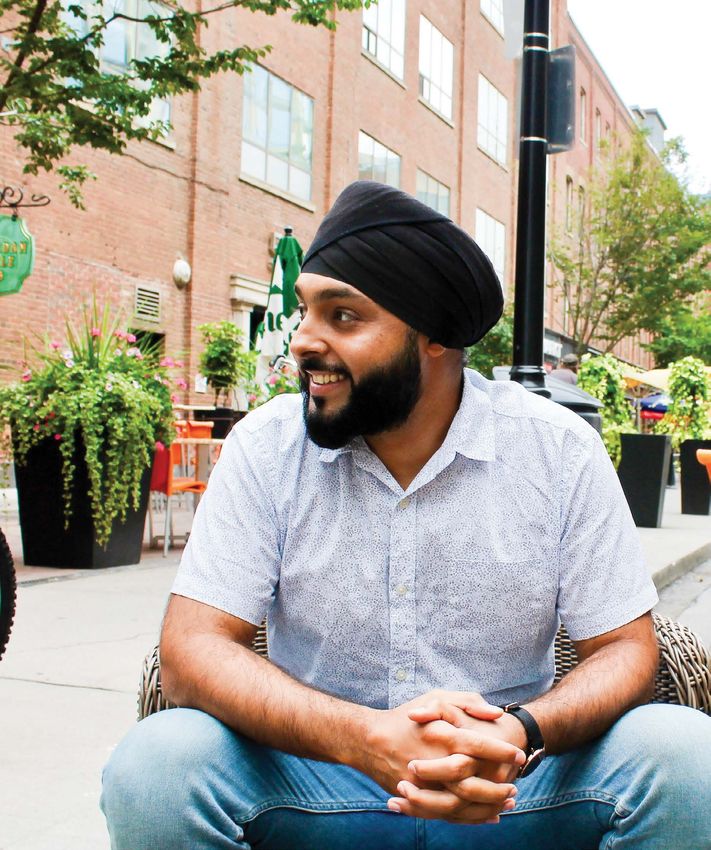
We know what comes next.
Eggs are the versatile, margin-friendly protein solution that
adds value anywhere you use them. For inspiration on how
to boost your menu and your bottom line with eggs visit

   foodservice.eggs.ca
When the global pandemic hit, many of us                     As the new president and CEO of Restaurants
believed it was going to be short lived, perhaps lasting a   Canada, I am excited and privileged to join an associa-
few months with little to no impact on our lives. Yet here   tion which has been focused on helping the foodservice
we are almost seven months later still navigating a world    industry grow and prosper in Canada for over 75 years. I
that looks completely different and will remain forever      know that our industry, which employs over one million
changed. While uncertainty has always been something         Canadians and is a critical part of the national economy,
restaurants have faced, now more than ever, the greatest     is currently facing significant challenges. As we continue
challenges our industry will face is the uncertainty that    to navigate the COVID-19 pandemic, the team and I are
the crisis will have on restaurant businesses and how        actively setting our sights on what we can do today to
long the effects will last.                                  support our members, and how we can help the industry
   Which is why we, at Restaurants Canada, continue          recover and thrive in the short term and into the future.
to focus on our Feeding the Recovery campaign. In this          This issue hits on many of the challenges as we head
issue, we highlight many of the challenges and issues that   into the winter months, and takes a look at the far reach-
are informing this campaign. We are pleased to welcome       ing economic effects of COVID-19. We take a dive into our
back Jacob Richler who writes about consumer confi-          yearly Foodservice Facts report, the most trusted annual
dence and safety when eating out and shares key insights     foodservice industry research and insights guide, featur-
from our consumer confidence campaign. Ivy Knight            ing the latest foodservice statistics, trends and forecasts.
highlights some of our industry’s most resilient com-        You can also read about the effects of COVID-19 on bars
munity members, and we also shine a light on what’s to       and entertainment venues, and how these effects have
come as we head into the cold, winter months. To find out    trickled down to other industries.
more information on this campaign, along with shareable         With this edition of MENU, we aim to share ways
resources, please visit feedingtherecovery.ca.               you can be part of the collective voice of the foodservice
   Through these troubled times, we are pleased to           industry to ensure we are heard and how together we can
welcome Todd Barclay as our new president and chief          call on all levels of government to guarantee that restau-
executive officer (CEO) to the Restaurants Canada family.    rants and foodservice businesses have what they need to
Todd has over 20 years of senior leadership experience       feed the recovery. Let’s use our passion and fervour, our
in food manufacturing, with national restaurant brands       ability to inspire and lead, our strong and expansive rela-
and he has also owned a small independent restaurant         tionships and our deep love affair with food to do what we
cafe. Our industry will continue to face many challenges     do best—feed the nation and help people heal.
and the road to recovery will be a long and mighty one,
but we wouldn’t be in this industry if the path were easy.
Together we play a massive role in rebuilding the econo-
my, reviving neighborhoods and we must firmly reinstate      Todd Barclay
our place as the foundation of our local communities.        President

Guy Laframboise
Chair of the Board

                                                                                                                    FALL 2020   MENU   3
Fall 2020
    Volume 5 Number 5

              Do you have comments or a
              story for us? If so, please email
              menueditor@restaurantscanada.org.

      MENU is published six
      times per year by
      Restaurants Canada

      Managing Editor
                                    Circulation Inquiries,
                                    Changes and Updates
                                    members@restaurantscanada.org
                                    1-800-387-5649
                                                                         Twitter
                                                                           @RestaurantsCA
                                                                           @MENUmagCA

                                                                         Instagram:
                                                                                         5.5             Stronger Together
                                                                                                         Thank you to our corporate sponsors

                                                                                                         PLATINUM

      Stacey Newman                 Advertising Sales                       MENUmagCA
                                    Laurie Dawe
      Contributors                  1-800-387-5649, ext. 4233            HST Registration No. #
      Ivy Knight                    menu@restaurantscanada.org           106866460 RT0001
      Jacob Richler
      Jessica Huras                 © Copyright 2020. All rights         Subscription price:
      Chris Elliott                 reserved. No part of this magazine   CANADIAN PRICE: $75 per year:
      Stacey Newman                 may be reproduced without written    most single issues $18.95.      GOLD

      Shannon Murphy                permission of the publisher.
      Jared Hochman                                                      Publication Mail Agreement
                                    Mailing Address                      No. 400009977
      Creative Direction            Restaurants Canada                   ISSN 2371-4883
      Boomerang Art & Design Inc.   1155 Queen Street West
      boomart.net                   Toronto, ON M6J 1J4
                                    T: 416-923-8416
                                    Toll-free: 1-800-387-5649
                                    F: 416-923-1450                                                      SILVER

                                    info@restaurantscanada.org

4                MENU FALL 2020
¨

@welbiltcanada   Garland Canada - A Welbilt Company   @Garland_Canada

16

                                                contents
            MENU-Cover Fall 2020 nopostal.pdf   2   2020-10-06   12:20 PM

                                                                                  SURVIVAL
                                                                                 EQUALS
                                                                                 HELPING ONE
                                                                                   ANOTHER
                                                                                  ONE CRISIS
                                                                                   AT A TIME
                                                                                               THE COLUMN                                   MAIN COURSE
                                                                                               8    Lean on Me                              17 COVID Closures
                                                                                                    When a restaurant is your client…           Restaurants across Canada are
                                                                                                                                                saying goodbye

            RESILIENCE
            RESQ's
            Kuljeev Singh                                                                      YOUR STORIES
                                                                                                                                            20 Winter is Coming
                                                                                                                                                Reviewing the last six months for
            on living through two Gulf Wars and COVID
                                                                                                                                                tips on navigating the future
            $ 18.95
                                                                                               12 Black Foodie:
400009977

            Fall 2020

                                                                                                                                            BEHIND THE BAR
            menumag.ca

                                                                                                    Nunu Ethiopian Fusion
ON THE COVER:                                                                                  14 Back to square one:
ResQ’s Kuljeev Singh “fell in                                                                       On identifying racism in industry and   26 Fall 2020 Beverage Showcase
love” with Canada, and he’s                                                                         education
passionate about restaurants.                                                                  16 Russell Auckbaraullee:
Photo by Ivy Knight.                                                                                Chef, Teacher, Ambassador
                                                                                                    and Dual Citizen

6                                                                           MENU FALL 2020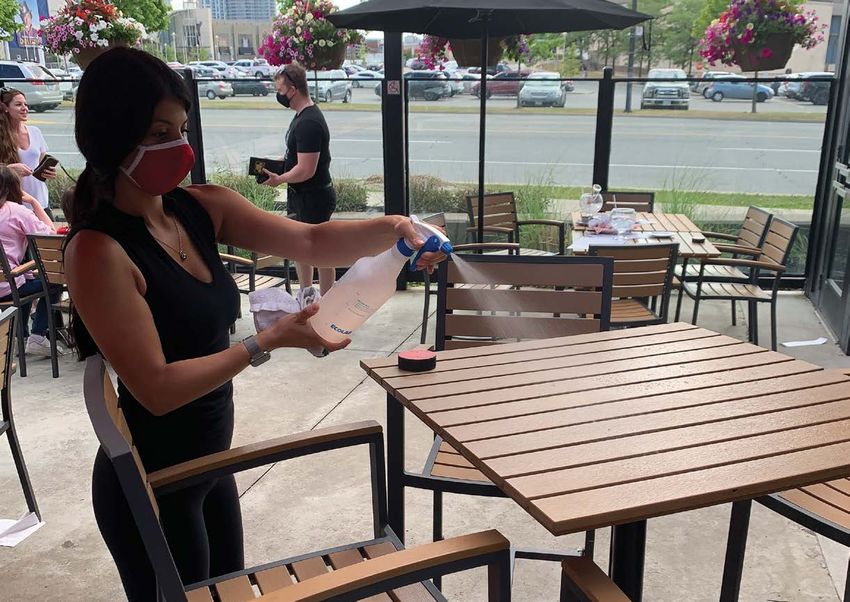
12            42                                     24
                                                                                             26

FRONT OF HOUSE                               47 Invest in your staff, and your future     PARTNER CONTENT
32 Foodservice Facts:                                                                     54 Savour Ontario: supporting
     What Lies Ahead for Foodservice Sales   APP SHOWCASE                                      local farmers, restaurants and
                                                                                               businesses
35 Entertaining the Future:
     Feeding the Recovery                    50 Sectors join forces to help right         58 The Way Consumers Pay is
     Bars & Clubs Post-COVID                      across the supply chain                      Changing Dramatically. Is Your
                                                                                               Point of Sale Ready?
40 Jacob Richler: As a judge in culinary
     competitions, always vote on the
     complete picture                        FRESH

                                                                                             50
                                             56 Marketplace
BACK OF HOUSE                                     Caesarstone, Pather Plastics:
                                                  Acrylic and Plexiglas Shields,
                                                  Rensair Air Purification, Juiceworks:
42 Stakeholders throughout the entire             Transportable Kitchens, ThermalPass
     food supply chain must collaborate to        touchless fever detection
     overcome challenges

                                                                                                              FALL 2020   MENU   7
THE COLUMN

    Lean on Me:
    When a
    restaurant
    is your
    client...
    BY IVY KNIGHT

8   MENU FALL 2020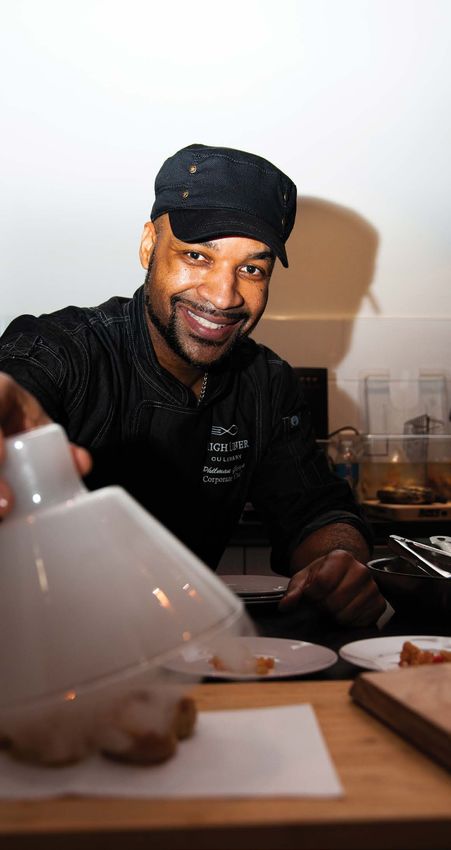
ResQ
In 2005, a sixteen year old boy from Kuwait came to
Canada. He came alone in the last week of August. No friends
or family met him at the airport.
   Kuljeev Singh was just barely a teenager but he had
already lived through two Gulf wars. The first when he was
three, when he and his family were among the 170,000
people evacuated from Kuwait by the Indian Army using Air
India aircraft—the largest evacuation by civilian airlines in
history. “The entire region was very unstable,” Singh says
over the phone. “I wanted to build my future in a place that
was stable.”
   Lucky for him he was really good at math.
   He studied hard at the University of Waterloo on an
international student visa and he fell hard. Not for a girl,
or a particularly stunning mathematical equation, but for a
country: “I fell in love with Canada and the people here. I’m
very blessed with what this country has given me.”
   He graduated and started his working life in private equity
and venture capital. He could have stayed on that path,
but he had this thing about food. “I was always passionate
about restaurants.” So he got out of finance and bought
not one but two Kanga Foods, which quickly grew into four.
Kuljeev soon discovered an overlooked pain point, one of so
many inherent in foodservice entrepreneurship. “Repair and
maintenance is an overlooked part of operations. Not many
operators are equipped to do their own repairs.”
   He certainly wasn’t.
   A math protégé from the world of finance, he found him-
self scrambling when equipment broke down. “We struggled
finding contractors, we lost thousands in inventory.” He
had a vision to empower restaurateurs to rise above busted
toilets and exploding grease traps and to do it without going
broke or having to learn HVAC in the process. So he created
ResQ; a platform that helps owners manage all of their re-
pair and maintenance operations through a streamlined app
connecting them to vetted contractors à la minute.
   Within two years he grew ResQ to over a thousand cus-
tomers, including big-name clients like Tim Hortons, Pizza
Hut, Cactus Club Cafe and Earls.
   And then the goddamn pandemic hit.
  C O N T I N U E D O N PA G E 10

                                                                 FALL 2020   MENU   9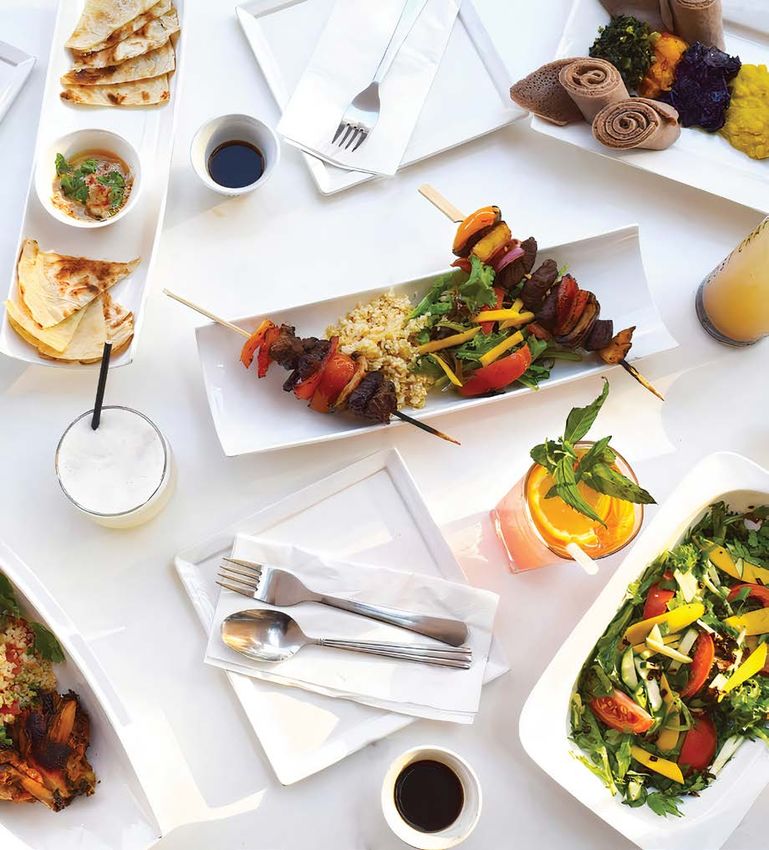
Mr. Sign
THE COLUMN

                                          Ten years ago, Dave Arnold was                    soon took off. “Montreal is so tight knit, word
                                          working as a display artist at the Urban          spread quickly.”
                                          Outfitters flagship in downtown Montre-              Especially among restaurants. He created
                                          al, “painting stuff on windows,” when he          custom work for Nora Gray, Le Vin Papillon,
                                          realized that most companies don’t have a         Mandy’s, Lawrence and many others. His
                                          budget for a visual consultant.                   client list could ostensibly double as a dining
                                             He had noticed that there wasn’t much          guide to The City of A Hundred Steeples—as
                                          in the way of old-fashioned hand lettering        Mark Twain nicknamed it in the 1800’s.
                                          on business signage, so he put together a            In mid-March business completely dried up.
                                          flyer offering his services, and dropped it off   “Even contracts that were already cooking, peo-
                                          to shops and restaurants in his neighbour-        ple were calling to ask me to stop. They didn’t
                                          hood. “I wasn’t really reinventing the wheel.     know if they’d have a business in two months.”
                                          In New York it never died, but here in Mon-       Mr. Sign wasn’t sure if he would either. “Everyone
                                          treal the craft had almost disappeared.”          went into survival mode. Paper over windows. It
                                             He called himself Mr. Sign and business        was terrifying.”

In November of 2013, a crowd                     such there isn’t a lot of room for growth
of people lined up at an old United church       for “the second in command. A lot of them
in downtown Winnipeg. When the doors             will sit at the sous chef level for years, and
opened, Guns N’ Roses blasted out, the           they get frustrated. I was noticing a pretty
stained glass windows lighting up from           high burnout rate among younger cooks
within as the crowd entered. The event was       and I decided to give them a platform.”
called “November Rain” and it was the first         Since launching her business she has
soirée created by Leane Funk’s Winnipeg          sold out every single event. Her last dinner
Supper Club.                                     before the pandemic was held on March

Winnipeg
   A former marketing exec, Funk took the        12. Through her business Funk not only
success of that first night and made pop-ups     provides unique dining experiences for
and secret dinners her new business. For five    the people of Winnipeg, but she’s become
years she ran a Sunday Night Dinner series       a member of the city’s food community.
that showcased the cooking talents of Winni-     “We’re in self-preservation mode right
peg’s most overlooked culinary demographic:      now. My primary focus is to create smaller
the sous chefs.                                  events that keep local caterers and chefs
   Winnipeg doesn’t have the robust restau-      generating some income.”

Supper Club
rant scene of New York or Toronto, and as

10               MENU FALL 2020
Survival
THE COLUMN
Mode
By the time summer rolled around
in Montreal, calls had started coming
in to Mr. Sign again. But these clients
weren’t looking for hand-painted
of us have experienced a loss of income, if this can replen-
ish or help someone catch up—every little bit helps.”
Her annual seafood boil also happened in September.
After a morning of dealing with liquor license applica-
tions for events, Funk is waiting in her car for a tow truck,
her tire having just blown out on the highway. “I’m very
aware that my role in Winnipeg Supper Club is the easiest
one, it’s more nerve-wracking for the chefs. There’s a fear
signs so much anymore. of the unknown day to day. The fact that things are selling
at all this year, under these circumstances, makes me feel
“A lot of the new imagery I’m creating now is to repre- really positive about 2021. If we can get through these next
sent what change has occurred at the business. They’re six months.…”
using that for t-shirts, tote bags, on windows, profile pics. It is autumn now, and I meet Singh at ResQ headquar-
It’s become the temporary branding across all platforms— ters on the Esplanade in Toronto; a few blocks of huge pa-
a new look for whatever the company is now.” tios that would normally be packed with summer tourists,
Arnold streamlined his process. “In the old days I now abandoned and eerily quiet. The office is empty save
would have given three different logos to choose from; for one employee and his young son. Most of the team
I’m knocking out options and revisions to give a break on work remotely, coming in for socially-distanced team
pricing. I’m going lean, trying to trim as much of the fat as meetings and brainstorming sessions.
humanly possible.” “You can’t brainstorm on Zoom,” says Singh.
That restaurants are still putting their limited resources For ResQ to stay open, for this office to keep the lights
into his services says a lot about the importance of what on and the Wi-Fi running, he and his team have had to
Mr. Sign offers. “Your sign is the first impression. I think adapt fast. “We lowered our prices by 10-20% and we’ve
that’s why businesses are still allocating funds to commer- changed our own revenue model to provide more flexibili-
cial artwork—to get people in the door.” ty. Where restaurants were paying by the service, now it’s
Even with his efforts he knows that 2020 will not be a a subscription, so all services are covered. And we’ve built
profitable year. “Jesus Christ, if I can make enough to keep in features so clients can manage some tasks internally,
the lights on that’s become the definition of success. At like cleaning in-house rather than hiring outside.”
least for me.” Survival mode has helped ResQ, Mr. Sign and Winnipeg
But it’s about more than profit at Mr. Sign, his clients Supper Club to refine their businesses and narrow in on
have become like family. “Everyone has that same look of what is most important to them. Each understands that
concern. We don’t want to see anyone drop off, we’re all restaurants are the lifeblood of their enterprise; the familial
working hard to boost each other up.” feeling of restaurants has seeped into the mindset of each
Last month Funk hosted Southern BBQ & Blues, “a entrepreneur, and their companies are better for it. They’ve
mountain of meat and loads of sides,” both in Winnipeg managed to survive, not by being hard-ass business people,
and in her hometown of Winkler on the North Dakota but through empathy, flexibility and cooperation.
border. They served two pounds of food per person; three And for a boy who came to this country alone and fol-
kinds of meat sided by mac and cheese, beans, slaw and lowed his passion, leaving finance to work in restaurants to
cornbread all laid out on beer flats. find himself in such a deeply unstable situation? Well, this
“Even though people were sitting far apart it felt like a nor- isn’t a war zone. This kind of crisis is one he can handle.
mal evening. People were so grateful to have a night out.” At ResQ, Singh’s customers are coming back, and new
Recent Winnipeg Supper Club happenings: “Art & clients are signing up. “So many restaurants are in a more
Snacks,” an event Funk holds every year as a fundraiser. This comfortable spot now than they were in March. There’s a
year the proceeds went to the chefs participating. “So many lot of hope now.” m
FALL 2020 MENU 11YO U R S TO R I E S For Nunu Rampen, ‘Nothing Exposes People’s Most Basic Biases—and Loves —More Than Food’ BY ALEXANDRA CIOPPA When a restaurant is touted to be a favourite life—almost 27 years—and essentially came for dishes like Moroccan Saffron Pears with of Jake Gyllenhaal and counts Idris Elba to an end when Aster returned to Ethiopia to homemade ricotta and a trifle with peaches among its customers, I trust that the menu start a construction company. from Two Century Farm in Grimsby. At does not disappoint. Nunu Ethiopian Fusion For her next venture, Nunu wanted to ex- Nunu’s bar, you’ll find Chris slinging New restaurant is located on trendy Queen West plore a more upscale Ethiopian dining expe- Orleans-style classic cocktails. “I think we in downtown Toronto. Owned and operated rience, so when her previous landlord offered are the only people doing a proper Sazerac in by Nunu Rampen, the restaurant is a family her a space on Queen West she jumped at the neighbourhood,” Nunu points out. affair; her team consists of her husband the opportunity. The restaurant is a labour In the 12 years since Nunu opened, the Chris, sister, and daughters that jump in of love—it was designed by Nunu herself—as team has garnered rave reviews. “We would when needed. Nunu and her husband Chris gutted and like to think that we are the first upscale Nunu’s passion for cooking began at a very built the establishment together. Featuring Ethiopian/North East African restaurant in early age. Her mother ran a 100-seat “Tej an open kitchen and a simple but elegant bar, Toronto and maybe even Canada or North house’ serving Ethiopian honey wine and the space is a beautiful but approachable America,” says Nunu. However, this hasn’t barbecue in the town of Nazareth, Ethio- dining experience. resulted in the media spotlight they should pia. When she was 16 she was sent to Kenya Nunu’s mantra is to create fresh, light, deserve. with her uncle, a UN diplomat, to escape the and healthy Ethiopian fusion cuisine that “Toronto Life has never done an article Mengistu regime then in power. In Kenya, she is responsive to the seasonal variations of on us or our sister cafe, Bu’na. They did do learned to formally cook from the UN Mission North America. Injera (Ethiopian sourdough an article when Addis closed though, which chef—a Cordon Bleu-trained chef named bread) is made in-house every morning and gives the impression they were waiting for Roma. Beyond learning French, Italian, Nunu leverages local ingredients as much its demise! In fact, they have never done an Indian, and Kenyan cuisines, she learned the as possible; during the summer much of the article on any Ethiopian restaurant—one of formal discipline and logistics of cooking for produce comes from the family garden in the oldest international cuisines. How is that large groups. Oakville and the meat from nearby Menno- possible?” She came to Canada to help her sister nite farms. Ethiopia is the birthplace of coffee, as Nunu Aster: a single mother who had bravely The menu is divided into ‘herbivore’ and points out, “just as France is the place for just opened Addis Ababa—one of the first ‘carnivore’—which reflects the way Ethiopi- cheese culture.” However, it’s an introspec- Ethiopian restaurants in the city. Together ans eat. Ethiopian cuisine does not heavily tive question that we need to ask ourselves—is they ran Addis with Nunu doing the cooking feature desserts, so Nunu blends Western the level of admiration or respect for Ethiopia and Aster running the front. Addis had a long styles and ingredients with unique flavours the same as it is for France? “No one else on 12 MENU FALL 2020
the planet spends two hours every day of their    business. In the past, Nunu has worked with
adult life having a coffee,” Nunu states.         BLACK FOODIE and founder Eden Hagos
   The oversight and exclusion of Black-          on their first live event—
owned restaurants on behalf of mainstream         Injera & Chill—in 2017, and over the years,
media (MENU included), is just one exam-          Eden has featured Nunu and the team in
ple of how the foodservice industry needs         articles and through their various social
                                                                                                   We are talking about
changing and needs to evolve into a more          channels.
inclusive and welcoming space.                       “BLACK FOODIE is part of breaking down        creating a social fabric
   On this, Nunu explains the much-needed         these barriers,” furthers Nunu. “For many
shift in her own words: “I think the first step   people, there is this peculiar hierarchy in
is to throw out the French model where the        the food world where French haute cuisine
                                                                                                   where we treat everyone
chef is a feudal overlord. This allows a lot of   is at the pinnacle and everything is some-
bad behaviour and it is not a helpful relation-   where below. I think the work that they’re       with respect and love
ship. We are talking about creating a social      doing is having an impact on this ideal slowly
fabric where we treat everyone with respect       going away, and I’m hopeful that there will      wherever we come from.
and love wherever we come from. This will         continue to be a growing appreciation for all
take time and self-reflection by all of us.       cuisines, for street food, and honest artis-
Lip service and faux concern isn’t going to       anal things.” m                                  This will take time and
change anything.”
   It’s not just the fact that we (as an indus-   To learn more about how your organization        self-reflection by all of us.
try or even as consumers) aren’t supporting       can benefit from their unique reach
Black-owned foodservice operations, but it’s      and authority within the foodie community,
that we aren’t showing up in a beneficial or      get in touch via bookings@blackfoodie.co.
meaningful way.
   Nunu provides insight into this: “Avoid
stereotypes. [There’s a tendency to lump]
African cuisine as a single thing and speak of
the Black experience as monolithic. Ethiopian
food is a completely different cuisine than
South African, Ghanaian, and Moroccan.
We tend to lump ‘Blackness’ as a singular
experience, but it is not. The world view of an
Ethiopian is very different from a Jamaican.”
   This is why organizations like BLACK
FOODIE are so essential to foodservice.
BLACK FOODIE is a versatile media plat-
form focused on sharing Black food tradi-
tions, amplifying Black voices in the food in-
dustry, and creating opportunities for Black
food influencers. Nunu puts it succinctly
when she says, “Nothing exposes people’s
most basic biases—and loves—more than
food. The biases may not be racist in origin,
but they are powerful and they inhibit real
relationships. How can you really begin to
know someone if you can’t eat with them?”
   To Nunu (and many others), BLACK
FOODIE’s work is so valuable to their

                                                                                                               FALL 2020   MENU    13
Back to
Square HOW AND
WHERE DO T
he year 2020 has left many of us with
the sense of living through ominously
One
historical times—against the backdrop
WE BEGIN of a global pandemic, our societies’ deepest
scars have become open wounds. The pain
from these injuries can no longer be ignored.
TO ADDRESS Injuries that have manifested in grief and
rage; grief for Missing and Murdered Indig-
enous Women (MMIW), for Breonna Taylor,
RACISM IN George Floyd and countless others. For BIPOC
members of our society and industry, racism,
discrimination and inequity are not new
INDUSTRY? experiences. Systemic racism and its roots
in our institutions are not new realizations.
I’m a woman of European descent, a settler,
therefore, I don’t include my opinions in this
BY STACEY NEWMAN
article. I’ve spoken to two industry veterans
willing to give me their viewpoints. It’s im-
portant to note, however, though we should
not be afraid to ask questions in order to
build a better industry, our BIPOC colleagues
are not only representatives of their respec-
tive cultures, but multifaceted human beings.
We shouldn’t forget this when approach-
ing these issues as journalists. Education,
research, acknowledgment, compassion,
understanding, honesty and self-awareness:
these are the overarching principles that we
should employ in our collective approach to
dismantling system racism. We all have a role
to play.
Industry veterans Philman George and
Michelle Caine, along with Black Foodie and
Restaurants Canada are tackling systemic
racism in the food industry. Through research
they’re identifying structures so deeply root-
ed that looking at the data alone does not
paint the full picture. They’re matching data
with experiences, and identifying barriers
in front of certain groups. The following are
their thoughts, observations, anecdotes and
points to consider…in their words:
DIG IN
This is only a starting point for
this vital discussion. Please visit
MENU online at menumag.ca or
restaurantscanada.org for in-depth
coverage of our work with Philman
George, Michelle Caine and Black
Foodie on this front.
14 MENU FALL 2020YOUR STORIES
PHILMAN GEORGE
AKA ‘THE RHYMING CHEF’
in their words
CORPORATE CHEF, HIGH LINER FOODS
“You look at this systemic problem and the first thing is
just addressing it, right. Just, acknowledging that it exists
is huge. I’m seeing more of that acknowledgment now. As
we look at it from the food lens, tackling systemic racism
means examining issues that go far beyond the confines
of a restaurant.
“When it comes to food and we think about all of the
touchpoint institutions like school education outward,
how we’re taught, the biases that exist, it stems into a lot
of other areas. Think about people applying for loans to
open up their restaurant and the bias that may be in the MICHELLE CAINE
loan officer. So many of us have been educated through
a flawed education system making this such a complex
CHAIR OF HOSPITALITY MANAGEMENT, CENTENNIAL COLLEGE
issue. Like, it’s hard to narrow in on a branch when you “When I speak, it's from my experience you talk about generations, [it’s] very
really should be looking at the root. These systemic struc- and what I’ve learned over the years. I different in how we grew up with different
tures are buried deep in our foundations. have a different experience than the mil- race. I don't have any children, but raising
“If you look at Canada and how it was colonized, it lions of [other Black women]. And so when a Black male in either Canada or the US
was done from a place of ‘superiority.’ [How we treated I hear ‘Black Lives Matter,’ when I hear is still a totally different thing. Like, yes,
First Peoples] their culture was devalued and a new ‘social change,’ we all have our own stories my cousins had the speech ‘do not argue
one was imposed on them. This mindset of ‘superiority’ and experience. But, there’s also the op- with the police,’ ‘just answer the question,’
has laid the foundations for the systemic structures portunity to be a collective voice. ‘don’t try to prove that you are right in
that exist across all of our institutions in Canada. [Where is the representation in upper the field. Wait till you’re in a court of law.’
“And I can only speak from my experience. My management? On boards? As executives in All Black males and my cousins [heard
schooling, it was very much from a European base. the food industry?] “From my experience it that speech]. My uncle had the speech,
This world is structured where Europeans have a lot of comes down to education versus industry. I you know, ‘Respect them. Whether they
dominance. We need to re-examine our culinary curric- think that I have seen more [diverse female] disrespect you, you respect them because
ulum and also re-examine how it’s implemented. If leaders including management and exec- I want you to come home.’
we, as chefs, we gotta learn the mother sauces and all utives in education than I have in industry. “It can be very overwhelming…I was on
types of culinary foundations that stem from European When I came into this role, I wasn't the first, LinkedIn, and, you know, there are still
influences, is the teacher doing a good enough job to I didn't break any barriers. My predecessor panels and interviews that have very white
connect the dots, you know, connect the cultures, right? was a Black woman who had an esteemed male leadership, but I’m optimistic about
For example, we’re using clarified butter. Well, there’s career at hotels before she was an aca- hospitality. I’m optimistic about our indus-
a perfect time for the instructor to draw the connection demic. I definitely saw more senior leaders try, about academics.
between clarified butter and Ghee, which is used a lot in in education than I did in industry. In “And so what can we change in people's
South Asian cuisine. industry, I see more diversity in entry-level hearts? I don't know. I’m coming from a
“BIPOC: we have been advocating for our rights and guest-facing positions. “As educators, place, a place of faith myself. So I’m going to
for decades. And it feels like, like finally everybody's the systemic part is on us, on colleges and try to do what I can do to be good and to of-
paying attention, but you should have been paying university. We have a lot of work to do as fer good and still be a human being and have
attention a long, long time ago. So, you can imagine everyone does. I know there has been some emotions and get frustrated and all that sort
the amount of overload. We are the victims of systemic criticism, especially when it comes the co- of stuff, but also be somewhat accepting.
racism yet we have to continue to educate and help lonial way of cooking or the European way One of the things that I also learned growing
break down a system that we didn’t create. That’s of cooking. If that helps to teach the basics, up is not all white people are racist and not
a heavy burden. This burden needs to be shared. teach the basics, it’s on us to hire [diverse] only white people are racist.
Through Restaurants Canada we're going to be able to chefs, to now take those basics and add [The reality is] “We’ve been hating each
have these conversations on bigger platforms, bigger flair to it and understand different cultures other as human beings from day one. And
stages. We’re going to make some changes; I’m think- so you can speak to it. we’ve been loving each other as human
ing about the food industry landscape as a whole.” “It’s so complex. You talk about race… beings since day one.” m
FALL 2020 MENU 15YOUR STORIES
CHEF RUSSELL AUCKBARAULLEE
ON WHAT IT MEANS TO BE
CANADIAN-MAURITIAN
THE IMPORTANCE OF
COOPERATION AND INCLUSIVITY
DURING DIFFICULT TIMES
BY STACEY NEWMAN
M
auritius is an island nation off the the start of our interview—always the chef— baraullee again touts the unity at the heart of
southeast coast of Africa. Its econ- Auckbaraullee gives me a literal taste of tradi- Mauritian society. He is matter-of-fact because
omy is dependent on tourism and tional street food that you might find hawked this is how he too was raised the Mauritian way.
fishing, and the island nation boasts on the streets of Port Louis—gateaux piments Referring to the multicultural makeup of the
populations of varied flora and fauna with many (fried balls of yellow split pea flour, spice and country’s population—Mauritians may be of
species endemic to the island. chillies served with a piquant, sweet sauce). Indian, Creole, French or Chinese descent—he
On July 25, 2020, a Japanese ship—the bulk Then it’s onto the business at hand, he tells states that Mauritians work together. Period.
carrier MV Wakashio—ran aground on a coral me about the clean-up efforts being carried out No matter which cultural heritage you might
reef off the coast of Mauritius, releasing tonnes in Mauritius. Immediately following the acci- belong to, Auckbaraullee says this kind of
of fuel oil before it broke in two, causing envi- dent, the people of Mauritius rapidly mobilized. inclusivity is a beloved facet of Mauritian life. It
ronmental, social and economic crises for the Their beaches, reefs and surrounding waters is respect, it is a sense of belonging no matter
island nation. There was delay in the govern- already sullied by the black, sticky, noxious what. Inclusivity is taught in the Mauritian
ment response. But everyday Mauritian citizens leaked fuel oil, regular people began organizing school system, it finds its ways into centres
and ex-pats weren’t going to wait to act; they a grassroots clean-up effort that can only be of worship and religious celebrations. Auck-
mounted a massive citizen effort to save their described as an engineering and sociological baraullee says that when you go to a church
natural world. marvel (Auckbaraullee tells me about vast in Mauritius, you’re probably going to hear
Chef Russell Auckbaraullee was born in quantities of human hair being donated and about friendship. Go to a Mandir and you're
Toronto of Mauritian parents. He has dual collected by Mauritians. Along with the fibrous going to hear it in Hindi. A Buddhist temple,
citizenship in Canada and Mauritius and he has pulp of sugar cane called “bagasse,” the hair you’ll hear it in Mandarin. A Masjid, you’ll hear
spent much of his life travelling to and from and bagasse are stuffed into green mesh tubes about friendship and unity from the Imam.
both countries. Auckbaraullee is one of those which are sewn closed by hand in an assembly Auckbaraullee thinks this ability to co-exist
helping from abroad by fundraising and raising line of volunteers to absorb the fuel oil before it and respect fellow human beings is uniquely
awareness of the disaster. Auckbaraullee is part can spread further, then removed and replaced Mauritius. That Mauritians are demonstrating
of a small, tight-knit community of Mauritians with new tubes). this cooperative spirit under the weight of such
in Canada. He’s a big deal in Canada, but he’s Since the first days following the accident, adversity is a lesson for the taking. The recovery
an even bigger deal in Mauritius. He cooks for the beaches nearest the disaster have become efforts in Mauritius continue and likely will for
dignitaries, including the prime minister of muster points where the infrastructure of di- many years to come.
Mauritius as well as politicians and celebrities saster management has been put in place. The Auckbaraullee was supposed to be in Mauri-
in Canada, owns and runs Penthouse Catering, fuel oil is highly toxic, breathing apparatuses tius when the ship ran aground. Due to COVID, he
teaches culinary courses, and he is a television are required as well as protective gear over the has been grounded in Canada like all of us. But
personality on Star Foodies. skin. Despite this, Mauritians are wading into he is doing all that he can to help until he can
The news of the shipwreck and fuel oil spill— the waters or using their boats to contribute to once again travel there himself. If you would like
heartbreaking photos of the subsequent dam- the efforts without hesitation. to contact Russell Auckbaraullee to offer help,
age coming from his relatives at home—was an How is it that Mauritians have managed to or to learn more about his work, please visit him
immediate call to action for Auckbaraullee. At pull this off with so little outside support? Auck- online at penthousecatering.ca. m
16 MENU FALL 2020MAIN COURSE
BEWARE…
Your local could
be shutting down
RESTAURANTS ACROSS CANADA ARE SAYING GOODBYE
BY SHANNON MURPHY
Twelve years ago, during what was, at the time, the biggest recession
of our generation, Chef Robert Belcham and his partners built a regionally
specific Italian restaurant in Vancouver called Campagnolo. Set up as a casual
and approachable destination, the restaurant focused on locally-sourced
food, supported by a full charcuterie and butchery program. When COVID-19
hit earlier this spring, Chef Belcham closed the doors for what he thought, like
many other restaurant owners, was only going to be a temporary measure.
Unfortunately, like many other restaurant owners, he has recently had to ac-
cept the sad news that Campagnolo will never be opening again—COVID-19
simply made it too tough to continue.
It’s a story we are hearing far too often these days, as restaurants
across Canada—from local institutions to new spots hustling to establish
themselves—continue to close as COVID-19 ravages an industry already
plagued by razor-thin margins. Owners face not only the emotional loss of
their business, but also face large debt, little savings or contingency and
an uncertain future.
A survey conducted by Restaurants Canada in April found that while
one in 10 restaurants have already been forced to close permanently,
another 18 per cent of restaurants may have to close their doors for good
if conditions continue. Due to steep reopening costs on top of debt accu-
mulated during the pandemic, a typical table service restaurant could be
facing more than $90,000 in losses and between 17 to 35 months to return
to positive cash flow.* It’s a sad reality for some operators, that business
won’t ever recover, and they will have to close permanently.
Closing a restaurant isn’t a decision that is taken lightly. Owners spend
countless hours and large sums of money trying to invest their passion for
food into a successful business. For owners, closing their second home is
devastating. “It was absolutely awful,” says Chef Belcham. “When we first
closed down the first thought that came to my head was my staff and how
to ensure they are safe and taken care of.”
C O N T I N U E D O N PA G E 1 8
FALL 2020 MENU 17MAIN COURSE
For Brian Flowers, owner of Table Top Café, a board game
café he describes as a special blend of coffee shop, board game
library and retail store, the hardest part was admitting defeat.
With two locations in Edmonton, Alberta, Flowers was forced to
permanently shut his downtown location in April. “In order for
this downtown store to function, it has to be full. So, it needs
social distancing to not be a thing, or there’s just no way to
make enough money,” he says.
Apart from the emotional toll of closing a restaurant, the
logistics of shutting a restaurant can also be overwhelming:
laying off staff who have become part of the family, disposing
of inventory and selling off assets. Flowers laid off all 19 of his
employees, so they could begin the process of applying for
employment insurance right away and leveraged social media to
sell assets with loyal customers buying the chairs or tables they
played at. When he first shut the doors of Campagnolo, Chef
Belcham and his team did everything they could to preserve
food, transforming fresh herbs to pesto, vegetables to pickles
and freezing everything that could be frozen. “Then we had to
figure out a way to liquidate almost everything, from kitchen
equipment to furniture to $40,000 worth of wine. It involved a
lot of difficult decisions. It’s not fun and it’s not easy. There’s a
strong emotional attachment to everything in that space and it’s
hard to sell your heirlooms,” he says.
Flowers and Chef Belcham were both lucky when it came to
rent negotiations. Flowers had an excellent relationship with his
landlord who was able to buy him out and Chef Belcham owned
the building where the restaurants lived. “That allowed us a
bit of flexibility, we still have a mortgage, but we didn’t have to
worry about talking to a landlord.”
While the CECRA program has been a controversial topic, Chef
Belcham feels the government has done some good things, like
implementing CERB, and appreciates how local governments
quickly pivoted to ensure patios licenses and extensions were
put in place. However, he feels that more can be done to help
restaurant owners, such as “easing up on payroll taxes, easing
up on GST and HST remittances and giving bailouts to smaller
businesses versus larger corporations to help those who really
need the help.”
18 MENU FALL 2020MAIN COURSE
I
t’s also important for restaurateurs to recognize that while
driven by a fervent love for food, ultimately restaurants are
businesses that cannot be run on passion alone. Says Chef
Belcham: “So many people go bust because their passion
outweighs the logical side of their brain. There’s always
room for passion, but what is the point if you can’t pay your
staff. Restaurant owners are not shy of hard work, but they must
understand it’s not their fault they are struggling, it’s not because
they are not working hard enough. It’s not on them. Do what is
logical and smart and do what is best for your business and not
for your ego.
Unfortunately, time has run out for Chef Belcham and Flowers
and their businesses. But for Chef Belcham it was the right
decision: “Closing down was the right decision in the begin-
ning and closing down completely was the best decision for my
business. My partners and I reviewed over 12 years of data to
see how much we could possibly make and decided maybe it’s
time to go out on top and be masters in control of our destiny.
I didn’t want to be the one completely stressed out every day
trying to figure out how to make this work.” Flowers agrees: “I
did a survey with my customers asking what they would need
to come back and 20% said they wouldn’t come back without a
vaccine. I wasn’t ok loosing 20% of my business. You need to be
realistic and honest with yourself—look in the mirror and make
the difficult decision.”
So, what does the future hold for Flowers and Chef Belcham?
Lots of hope. Flowers has pivoted his business model, partici-
pating in farmers markets and looking for new virtual revenue
opportunities. Chef Belcham continues to keep his other two
restaurants running and optimistically plans to open another
restaurant in the spring—a quick service burger concept.
He also sees this period as an opportunity for the restaurant Chef Belcham
industry to fix what he calls a broken system: “The restaurant
business has been broken for so long and COVID-19 exposed it
for what it is. There is no better time in our industry than right
“
now to figure out a way to fix the ongoing issues. Most restau-
rants are only thinking about their survival, but they should also
be thinking of a way to make it better for everyone.” m
*Model is based on a licensed, 80-seat, full-service restaurant, with annual sales of
In order for this downtown store to function,
$1.8 million, which was shut down from March 18 – May 31, 2020, except for takeout
and delivery. (Source: The Fifteen Group)
it has to be full. So, it needs social distancing
to not be a thing, or there’s just no way to
make enough money
FALL 2020 MENU 19MAIN COURSE Winter is Coming: LOOKING AT THE LAST SIX MONTHS TO PREPARE FOR MONTHS AHEAD By Jared Hochman 20 MENU FALL 2020
MAIN COURSE

“WINTER IS COMING…AND WE
KNOW WHAT COMES WITH IT”
IS ONE OF THE MOST WELL-
                                               and emotional roller coaster that has been
KNOWN PHRASES IN MODERN                        the past few months. It’s a time when
POPULAR CULTURE. AND                           restaurants have been making the best
                                               with what they have, but they’re playing
FOR THE CURRENT STATE OF                       against a stacked deck.
CANADA’S RESTAURANT IN-                           First, there was the COVID-19 lock-
                                               down, where restaurants were limited to
DUSTRY, TRUER WORDS HAVE                       just takeout and delivery, but consumers
NEVER BEEN SPOKEN.                             were overwhelmingly scared to venture
                                               out. Then restaurants were allowed to
Well, almost true.                             offer limited patio space, and eventually
   While we do know that the fall/winter       our current climate of indoor dining at a
months equal slower traffic and leaner         reduced (50 per cent) capacity.
revenue, that’s the only thing that’s for         Even though the restrictions have
certain. Will restaurants continue to re-      gradually eased, and customer confi-
ceive the desperately-needed government        dence slowly grew, there’s still a lot of the
support they’ve had during the lockdown?       market unavailable: McArthur explained
Will the COVID-19 pandemic restrictions        that IMI research for Canada showed that
continue to relax...or could a second wave     one-quarter of Canadians will not have an
arise and send us into another lockdown.       indoor restaurant dining experience until a
   Restaurants have been pivoting,             vaccine has been developed.
adapting and displaying remarkable agility        Why is there still such a hesitancy from
through the last six months to tread water,    consumers to support the restaurant             isn’t even that much: when factoring in
but with the most profitable months of the     industry? For Larry Isaacs, president of        the physical distancing guidelines and
year behind us, the goal is not to thrive      the Firkin Group of Pubs, it starts with the    precautions, Isaacs estimates that most
right now—it’s to survive.                     messaging from the top.                         restaurants will run at about a 25-30 per
   “Nobody truly does know what the               “The government is still telling peo-        cent capacity.
future is going to look like, and if anybody   ple to stay home, to stay indoors,” says           “That, along with takeout and delivery,
says they do…RUN,” says Jo-Ann McAr-           Isaacs. “That means there’s still nobody        is simply not a sustainable business
thur, president and chief strategist at        going to work in their offices, so lunch-       model,” says Isaacs.
Nourish Food Marketing. “We’re at a time       time business rushes, cocktail hours and
when consumers are feeling more com-           after-work parties are all no longer a thing
fortable than they were at the start of the    for restaurants.”                               GETTING IN THE
pandemic, but that could quickly change if        Isaacs explained that restaurants typ-       BEST POSITION TO SURVIVE
we get a second wave.”                         ically operate at razor-thin three-to-four      While the industry as a whole suffered
   McArthur, like the rest of the foodser-     percent margins at standard full capacity.      massive losses throughout the pandem-
vice industry, has been riding the financial   The patios and warm weather have been           ic, some restaurants were able to do
                                               a help, but once those are taken down           better than others, because of a few key
                                               restaurants will only be left with the 50 per   adaptations.
                                               cent capacity dine-in seating, which truly        C O N T I N U E D O N PA G E 2 2

                                                                                                                                    FALL 2020   MENU            21
MAIN COURSE
For David Hopkins, president of The
Fifteen Group, two major things stood out.
The first was planning: restaurants that ex-
ceeded expectations sat down and thought
about how to get through this ‘new normal,’
even if it was just the short term.
“Restaurants that just opened their
doors, with the same menu, same price
point—same everything—they haven’t
been as successful,” says Hopkins. “They
were in for a surprise as what worked for many different types of packaging they “RESTAU-
SAFETY IS PARAMOUNT
them six months ago probably didn’t work tried.” That led them to remove it from their RANTS THAT The other major standout for Hopkins was
in this environment.” offerings, but it was returned as soon as that restaurants that took a more profes-
JUST OPENED
That planning could have ranged from some form of dine-in service was restored. sional and disciplined approach to health
THEIR DOORS,
simply adjusting hours to completely over- Other restaurants, such as The Birds & and safety have fared best.
WITH THE
hauling their restaurant offerings and busi- The Beets in Vancouver, decided to essen- “We always say that the most important
ness concept, all to suit customer needs. tially reinvent themselves. SAME MENU, pillars of restaurant success are quality,
Service Inspired Restaurants (SIR Owner Matthew Senecal-Junkeer says SAME PRICE service and atmosphere,” says Hopkins. “But
Corp.), which owns 60 different restau- that they operated two different locations, POINT—SAME now there are four pillars: quality, service,
rants under a number of different themes choosing to temporarily close one down at EVERYTHING— atmosphere and cleanliness/sanitization.”
and banners (predominantly in Ontario), the beginning of the pandemic and con- THEY HAVEN’T Hopkins noted that it starts from the very
realized this need to pivot quickly and verting the other one from a cafe/bakery BEEN AS SUC- beginning: what’s the messaging on your
adjust to this new reality. to a grocery-style takeout service. CESSFUL,” SAYS social media? Your website? How do you an-
“We started as a very busy place for so- “We’re a bakery, so we sold baked HOPKINS. swer when people ask about your protocols?
cial dining occasions, and had to pivot into breads and made jams, yogurts, that sort He stressed that from the get-go, you
a glorified takeout business,” says Anesie of stuff,” says Senecal-Junkeer. “Normally need to convey a real level of professional-
Johnson-Smith, vice president of market- we’re making consumed-on-site sand- ism, which the majority of restaurants took
ing for Service Inspired Restaurants. “We wiches and such, so we shifted our focus to heart.
started offering items in a way that we pretty dramatically, while also reducing “One of the biggest things we had to focus
became a grocery store, then we offered a our hours and staffing quite dramatically on was communication and transparency
liquor store; it was almost a weekly change as well.” with our guests and our people,” says John-
that we started to implement based on While going from a full lockdown to son-Smith. “We had mandatory PPEs for our
adapting and adjusting to what we saw relaxed restrictions didn’t make everything team members. Mandatory health screening
happening in the marketplace.” better, Senecal-Junkeer noted that they checks every day for all our staff—before
Johnson-Smith added that they severely are currently down 30 per cent year-over- they even entered the building.”
cut down their menus at all their various year, but they started down 70 per cent in SIR Corp also introduced strict
locations, while constantly doing tempo- May (heading into June). hand-washing and sanitizing protocols:
rary additions (and deletions) based on “Every month has been 20-25 per cent any touchpoint or guest surface was con-
what services they could offer. busier than the month before it, so we’re stantly sanitized and they had to remove
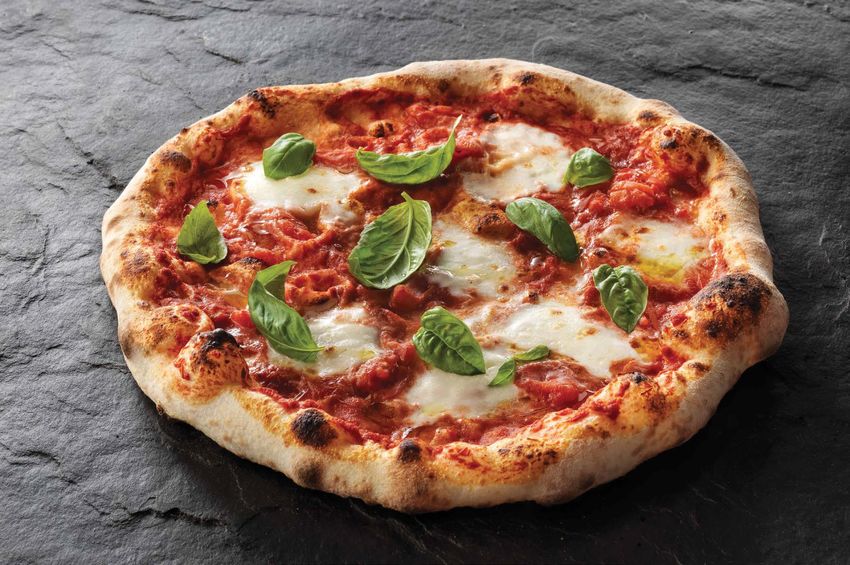
For SIR Corp’s Scaddabush locations, one definitely seeing a positive trend,” says Sen- tables and change the configuration of
of their key products is fresh mozzarella, ecal-Junkeer. “We were a takeout sandwich both their dine-in space and patios to
which “did not travel well, no matter how restaurant, but now we’re a bakery/grocery adhere to physical distancing.
that also serves sandwiches too.”
22 MENU FALL 2020MAIN COURSE
“The one thing we learned the most was guidelines in good faith—and it seems to and we added around eight new flavours of
that safety became the cost of entry... be working.” chicken fingers this summer.
in any kind of visit,” says Johnson-Smith. “We decided that
“We had to pivot from being foodservice hey, if guests really
experts into becoming safety experts.”
It was a lofty, and costly, undertaking
that all restaurants had to take, but it
The challenges ahead wanted something,
we were going to give
them the best possible
was essential in being transparent with Despite coming so far, there is still so experience in that product.”
customers that they put their safety above much uncertainty ahead that restaurants For The Birds & The Beets, they’re back
all else. need to remain nimble and ready for any- to about 60 per cent of their full menu right
While a new-found emphasis on ad- thing, and more cost-saving measures may now (and both locations are open again).
vanced cleaning sounds like more work for need to be put in place. But as they make most of their products
everyone, McArthur notes that it presents a “Restaurants have already narrowed menu in-house and from scratch, with a reduced
new opportunity to leverage technology to selection, but they realistically will have to seating capacity, Senecal-Junkeer realized
provide the customer with a new—but still look at increasing prices,” says McArthur. that committing to the whole menu was not
seamless—experience. “The cost of doing business has gone up: in their best interest if he wanted to main-
“Make sure that you’re preparing guests labour is your No. 1 input, food costs are tain giving a high-caliber guest experience.
for your experience before they even going up across the board, along with the What he has done, innovation-wise, is
come to your restaurant,” says McArthur. additional safety protocols and only running add new capacities, such as a pizza oven,
“Ensure that they know what your safety at half capacity: don’t try to hide the fact to create food that is conducive to take
protocols are. Let them look at the menu that it costs more to do business.” C O N T I N U E D O N PA G E 2 4
before they arrive, perhaps even allow While a price increase may be immedi-
them to order in advance. ately off-putting, Hopkins notes that it’s not
“That’s already existing consumer be- actually as bad as you think: For perspective,
haviour: most customers check out a menu roughly a 30 per cent sales reduction, due to
online before they actually go to a restau- lack of volume, can be offset by about a 12 per
rant. So leverage that behaviour and have cent price increase.
people actually decide what they want to “Restaurants are really going to have to
eat beforehand. It makes it easier to pre- look at their pricing and profitability model
pare for the back-of-house, easier for food and really figure out what they need to do to
inputs and promotes less food wastage.” make it through the winter,” says Hopkins.
It also provides much-needed transpar- At SIR Corp, while all avenues are being
ency. McArthur recommends restaurants explored, they’re finding that the best ap-
“show people you’re cleaning—make it a proach is to simply give the customer what
hygiene theatre.” they want...and more.
With the ease of how a negative story They noticed that consumers started
can spread, it’s also critical that restau- to change their ordering habits, and their
rants handle their health and safety proto- menu mix changed pretty severely from
cols in an authentic way. pre-COVID to post-COVID as people gravi-
“We just did a really good job of follow- tated towards classic favorites.
ing the rules in good faith, and not trying “At Jack Astor’s, chicken fingers were al-
to find little loopholes to beat the system,” ways our No. 1, but it grew to about 30 per
says Senecal-Junkeer. “Consumers sense cent of our menu mix,” says Johnson-Smith.
when places are cheating or trying to “People were craving those familiar, com-
bend the rules, so we’re all better served fort foods that they trusted, so we started
by everybody universally following those innovating around chicken fingers again,
FALL 2020 MENU 23MAIN COURSE
out. He’s hedging his bets on a second Isaacs has been one of the champions “THE come in—and be separated—it hurts our
wave hitting, in a sense, by having offer- and faces of lobbying for an even further AMBIANCE restaurants,” says Isaacs. “The ambiance
ings that should work really well if that extension, and possibly increasing, the IS CRITICAL is critical to our product, and if this mes-
event does occur—or even if it doesn’t. amount of government support, because it TO OUR saging continues, then Christmas parties
still simply isn’t enough. PRODUCT" and holiday parties, normally big draws
“The restaurant industry holds 1.2-mil- for all restaurants, will not be a part of our
CAN’T DO IT ALONE/NEED HELP lion employees, in which 800,000 of them revenue this winter.”
While restaurants have displayed remark- are without work right now,” says Isaacs. Johnson-Smith noted that the restau-
able dexterity in navigating through this “The assistance from the government, in rant industry is made up of incredibly
dark and uncertain period, it’s becom- both wage subsidy and rent relief, is nec- hard-working, resilient and talented peo-
ing increasingly obvious that they won’t essary for all restaurants to survive.” ple, who are willing and ready to fight to
be able to manage through the coming He maintains that the combination of the stay alive, but there’s a somber reality.
months alone. subsidies expiring, when restaurants are “Without government support, this will
The government has provided both hitting their leanest fiscal stretch and the not be possible,” says Johnson-Smith. “As
rent and wage subsidies to the majority of continued cautiousness being pushed by the a cornerstone of our country’s economy
restaurants (with 70-85 per cent of staff government is a one-two punch that will KO and social fabric, we need to protect our
wages subsidized for qualifying restau- a lot of restaurants. restaurant industry so that we can contin-
rants), but those subsidies are set to expire “Our business is a social industry, and ue to safely employ and serve millions of
in December—even after being extended. to be able to allow only a few people to Canadians.” m
More options to ensure survival
While Jo-Ann McArthur, president and chief strategist at Nourish Food Marketing, understands that
nobody has the playbook for how to best stay afloat heading into the coming months, she does have
some ideas for restaurants to explore adoption to help their bottom lines.
1. 2. 3. 4.
Dynamic pricing: Airline
Utilizing QR and sporting events have been
Meal kits/mobile food:
Codes: OpenTable and Dedicated reservations: doing it for decades, but that’s
It’s not a good time to be in
some of those reservation These may need to make a the restaurant industry, but
potentially an opportunity for
services are starting to comeback. With limited capac- it could be a good time to get
restaurants as well. It’s a chance
add pre-dining features ity, restaurants need to make into the industry. Christmas
to smooth out those traffic
and expanded technolo- every table profitable, so it may and the holidays are not going
spikes and stay busier through-
gy, but the good-old QR be a situation where customers to look the same—is there an
out the day. Perhaps we need to
code is still relevant. Every have to pay for not showing up opportunity for that elevated
look at the concept of an ear-
phone now has a built-in on a reservation. But it’s some- meal kit idea, that’s chef-cu-
ly-bird special or happy hour put
QR reader—use them. thing that will be tough to man- rated with alcohol pairings,
throughout the day. It not only
age in this climate, because and bring that to consumers?
helps the front-of-house, but
say, for instance, someone Or even open a food truck to
it helps keep the kitchen from
cancels a reservation because cater to various non-mobile
getting slammed and it could go
they are feeling sick? groups and families?
a long way to promote staff and
customer safety as well.
24 MENU FALL 2020You can also read


