CSIR develops unique ventilator
←
→
Page content transcription
If your browser does not render page correctly, please read the page content below
JULY 2020
                         Automation and Control | Electronics | Measurement and instrumentation | Technology and IoT

CSIR develops
unique ventilator
Panel discussion:
A practical approach
to POPIA

CIOs see better
healthcare future

IoT is enabling
“smart” mining

Radio is dead, long
live radio

Mobile robotics
revolutionise HMI

Why Microsoft Teams
won’t replace your
phone system in 2020

Nokia takes
generational step in
data centre networking

ISSN 1991-5047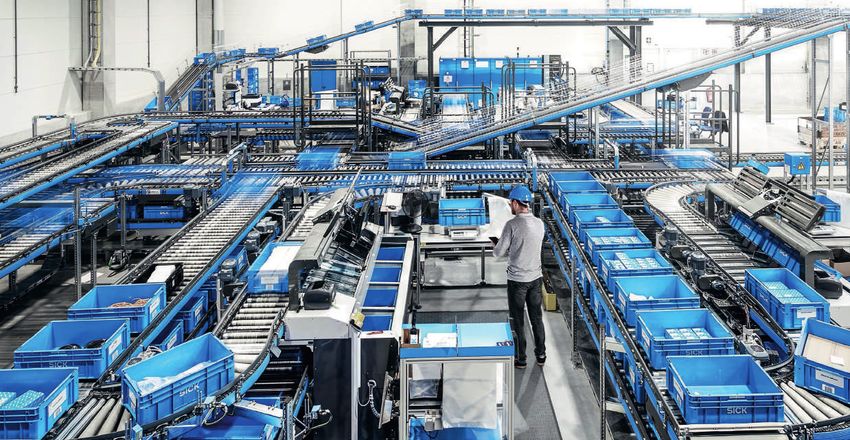
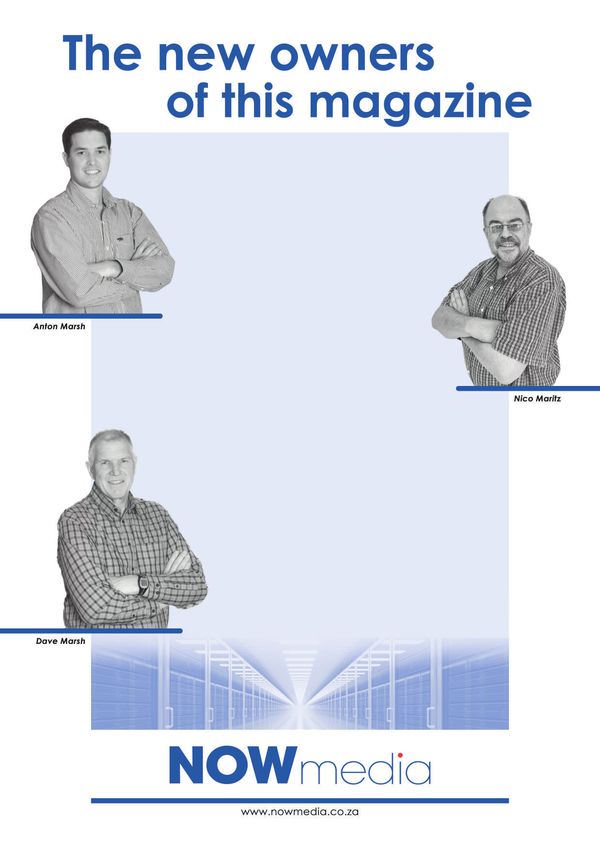
The Now Media Group is the new owner of the EngineerIT and Energize titles.

The Marsh family, owners of the Now Media Group, and the Yelland family,
  the previous owners of the titles, go back a generation when their
     parents ran their businesses out of London House in Loveday Street
        in the centre of Johannesburg some 50 years ago.

           That is where the coincidence ends. Yelland was in the electrical
            business and John H Marsh, a journalist and best-selling author
             of Skeleton Coast, was a magazine publisher.

              Now Media was founded in 1953 by John and
              continues to be run as a family business by Dave,
              chairman (2nd generation), and Anton, CEO
             (3rd generation).

            The company has taken an innovative approach to
publishing, whether it be establishing quick-read high frequency
trade newspapers or running its own printing works to ensure it
can be first with the news.

Before the internet was popularised it launched its first online B2B
service in 1989, Travelinfo, which changed the way the travel industry
in South Africa operates. It continues to flourish today with over 4 000 travel
   agents using it repeatedly throughout the day for their operations.

    It now has a strong internet presence with three daily news sites in the
     freight and travel sectors.

     Nico Maritz, who heads up a division that focuses on B2B monthlies and
     upmarket magazines for large residential estates, will manage Energize
         and EngineerIT.

             Most critically we believe in being effective for our clients.
              Through niche publications with highly engaged audiences
                we can provide solid, effective promotional solutions to the
                 industries and audiences we serve.

                    The Now Media Group is a level 2 B-BBEE company
                     based in Illovo, Johannesburg and employs around
                      100 staff across: 5 business magazines, 11 security estate
                     publications, 3 daily news and 3 twice-weekly trade
                   websites, a travel reference and training system, as well
                as its printing works.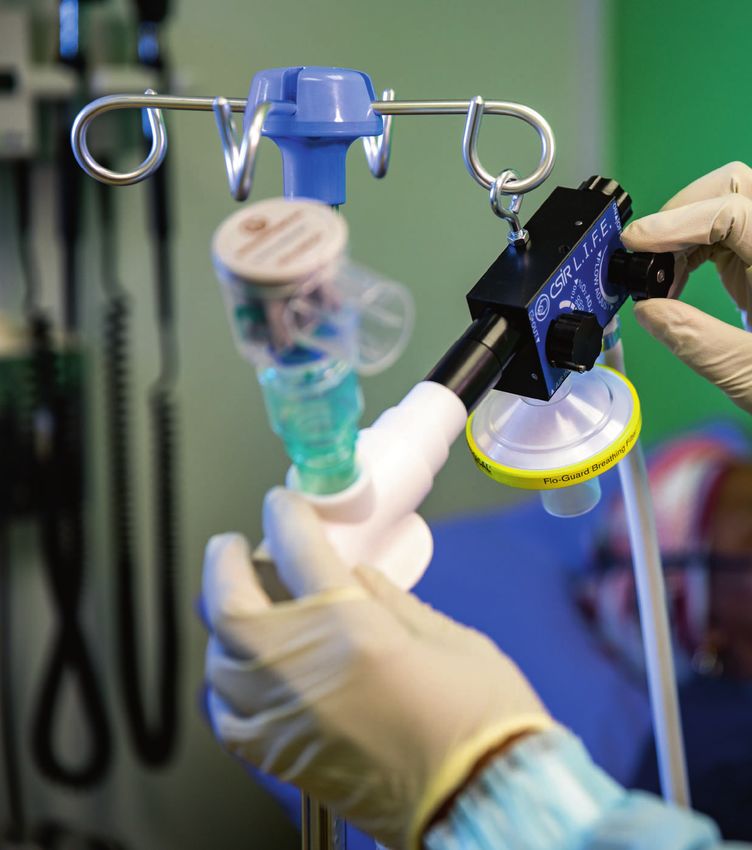
FROM THE EDITOR
         his month 15 years ago, in                                                    new features and making the

T        July 2006, saw the birth of
         EngineerIT. In the first
editorial Chris and Irene Yelland
                                                                                       involvement with our readers more
                                                                                       interactive, both in the print media and
                                                                                       on the website which we rebranded
wrote: “EngineerIT is a business to                                                    www.engineerit.co.za. Then came the
business magazine covering the                                                         dreaded Covid-19 pandemic and the
techniques and applications of                                                         lockdown. We decided that EngineerIT
electronics, measurement,                                                              would not be totally locked down and
automation, control, computing,                                                        continued publishing a monthly edition
information and communications                                                         on the web as well as two e-
technologies in all branches of                                                        newsletters every week.
engineering for economic, business                                                         Now that the lockdown has moved
and social development.                                                                to level 3, we have been able to
     Technology innovation in these                                                    expand our activities. In the last
field is particularly fast moving and                                                  month we have introduced a virtual
therefore information needs to be shared and                         interactive panel discussion covering topical subjects
effectively communicated to enhance and maximise                     of interest to the industry. The first two subjects
the business potential and bring the economic and                    covered are: Working remotely and the Introduction of
social benefit to fruition.”                                         the PoPI Act and how companies should respond.
     EngineerIT was the outflow of Electronics which                 These are available free of charge from the
was published on behalf of the South African                         EngineerIT website and make riveting listening.
Institute of Electrical Engineers (SAIEE). Taking the                    In the planning stage is virtual townhall meetings
high road, the new publication was intended to                       featuring speakers with subjects of interest and
widen the scope and incorporate all aspects of                       importance to the industry.
technology. In hindsight the Yellands could not have                     We have also introduced a 10-minute podcast
made a better decision. In the past 15 years the                     feature where businesses can add voice to their print
Engineering profession has branched out and taken                    and online advertising, featuring an interview with a
so many new technologies on board. Today it is                       company’s technical and marketing personnel.
difficult not to find some aspect of digital technology                  These new features also offer great marketing
and software in any of the branches of engineering.                  opportunities. My colleague Merinda Lottering is
     I became involved from the start, first as a                    available to discuss the details with you and I am
corresponding editor and later as a feature editor, and              looking forward to doing the interviews. Contact
now as editor. In the first edition my article was entitled          Merinda on 071 765 5702.
“Is the HF radio spectrum under threat?” I am still                      Now is the time to get your company in print, as
passionate about the subject. Over the 15 years the                  we enter what is so aptly called “the new norm”, the
position has not improved and in fact is getting worse               market needs to know that you and your company are
and has spilt over into the VHF, UHF and microwave                   there to make South Africa move to better times,
spectrum. It is an issue that need to be constantly                  greater times. We are here to support you. Call me!
addressed as technology products enter the market
without meeting the minimum EMC standards.                           Regards
     In January this year African Destination Publishers,
a division of Nowmedia, acquired the ownership of                    Hans van de Groenendaal
EngineerIT and appointed me as editor. The team                      Editor
published the first edition under the new ownership in               012 991 4662 / 082 781 4631
February this year. We had great plans for introducing               Email: hansv@nowmedia.co.za

                                             EngineerIT | June 2020 | 1
CONTENTS
                                                    JULY 2020

            Automation and Control | Electronics | Measurement and instrumentation | Technology and IoT

                                                                                     EDITOR
                                                                                     Hans van de Groenendaal -
The Council for Scientific and                                                       MIng Honoris Causa (Stellenbosch)
Industrial Research (CSIR), an entity                                                Tel: 012 991 4662
of the Department of Science and                                                     Cell: 082 781 4631
Innovation (DSI) - in collaboration                                                  Email: hansv@nowmedia.co.za
with a number of local partners -
has completed work on a local                                                        ADVERTISING
                                                                                     Merinda Lottering
ventilator to be rolled out nationwide to patients showing respiratory distress
                                                                                     Cell: 071 765 5702
in the early phase of COVID-19 infection.
                                                                                     Email: merindal@nowmedia.co.za
The CSIR solution is a Continuous Positive Airway Pressure (CPAP) device
that uses an innovative all mechanical design to provide a mild level of             DESIGNER

oxygenated air pressure to keep the airways open and thus assist with                Adéle Gouws
                                                                                     Email: adele@dezignhq.co.za
breathing. A CPAP device delivers air 100% of the time while the alternative,
a BiPAP device, would cycle between supplying air and allowing the patient
                                                                                     PUBLISHED BY
to exhale during the cycle when no air is supplied to the patient.                   African Destination
                                                                                     Publishing (Pty) Ltd
                                                                                     Tel: +27 (0)11 327 4062
                                        A VOICE FOR                                  Fax: +27 (0)11 327 4094
                                                                                     E-mail: engineerit@nowmedia.co.za
                                                                                     Physical address:
                                                                                     Now Media Centre
                                                                                     32 Fricker Rd, Illovo, Johannesburg
                                                                                     South Africa
                                                                                     Postal address:
                                                                                     PO Box 55251, Northlands, 2116

                                                                                     PUBLISHER
                                                                                     Nico Maritz
                                                                                     Email: nicom@nowmedia.co.za

                                                                                     PRINTED BY
                                                                                     JUKA

                                                                                     WEBSITE
                                                                                     www.engineerit.co.za

                                               EngineerIT | July 2020 | 2
5                                                   10 12

                                     14                                                        27 30
FROM THE EDITOR                                                                           1      Copyright
                                                                                                 Copyright of all material appearing in EngineerIT
                                                                                                 is vested in African Destination Publishing (Pty)
MEASUREMENT                                                                                      Ltd. In submitting any article for publication, the
CSIR develops a unique ventilator                                                         5      authors confirm that they own the copyright to
                                                                                                 the said article, which is ceded to African
                                                                                                 Destination Publishing (Pty) Ltd for publication.
ICT WORLD VIEW                                                                                   The editor reserves the right to edit or shorten
Nokia takes a generational step in data centre networking                                 8      articles submitted for publication. Editing and/or
CIOs see a better future for health care                                                 10      shortening is done with due dilligence, where
                                                                                                 necessary in conjuction with the author(s).
                                                                                                       No part of this publication may be
95% of companies have changed their technology priorities                                11      reproduced, or stored in a retrieval system, or
                                                                                                 transmitted in any form, or by any means,
                                                                                                 except as described below, without the written
AUTOMATION AND CONTROL                                                                           permission of African Destination Publishing
Mobile robotics revolutionise human-machine collaboration in the automotive industry     12      (Pty) Ltd. Copying of articles is not permitted
IoT is enabling “smart” mining                                                           14      except for personal and internal use, to the
                                                                                                 extent permitted by South African law.
Vision-based solutions in e-commerce applications                                        16
                                                                                                 Permission is not required to make abstracts, on
                                                                                                 condition that a full reference to the source is
PANEL DISCUSSION                                                                                 shown. Requests for permission for other kinds
                                                                                                 of copying should be addressed to African
A practical approach to the PoPI Act and how best to comply with the regulations         18
                                                                                                 Destination Publishing (Pty) Ltd.

APPOINTMENTS                                                                             20      Disclaimer
                                                                                                 Articles published in EngineerIT do not
                                                                                                 necessarily reflect the views of African
BROADCASTING                                                                                     Destination Publishing (Pty) Ltd or the editor.
Radio is dead, long live radio                                                           21      In addition, views expressed by the editor do
                                                                                                 not necessarily reflect the views of African
Africa’s changing times in broadcast media                                               24
                                                                                                 Destination Publishing (Pty) Ltd or any other
                                                                                                 person or organisation associated with
TECHNOLOGY AND INDUSTRY                                                                  26      EngineerIT.
                                                                                                      It is a condition of publishing material in
                                                                                                 EngineerIT that African Destination Publishing
COMMENT AND OPINION                                                                              (Pty) Ltd shall not be liable for any
Why Microsoft Teams won’t replace your phone system in 2020 (as yet...)                  30      consequential or other damages arising from
                                                                                                 the publication in good faith of any article,
An opportunity for more balanced copyright law in line with global precedent
                                                                                                 advertisement, picture, comment, view or
and commercial realities                                                                 32      opinion. This applies to publishing, failing to
                                                                                                 publish, late publishing or incorrectly publishing
                                                                                                 any article, advertisement, insert, picture,
AMATEUR RADIO
                                                                                                 caption, etc.
Longwave - the forgotten amateur radio bands                                             34           It is acknowledged that errors in transcript,
                                                                                                 human and technical errors can and do occur,
                                                                                                 but that reasonable effort will be made to
SPACE SCIENCES
                                                                                                 minimise their occurence, and to acknowledge
Solar Cycle Update                                                                       36      and correct such errors when they are brought
                                                                                                 to the attention of African Destination
                                                                                                 Publishing (Pty) Ltd.
NEW PRODUCTS                                                                             IBC

                                                            EngineerIT | July 2020 | 3
MEASUREMENT

CSIR develops a unique ventilator
       he Council for Scientific and         Africa and the world market under special license, on evaluation the CSIR decided to

T      Industrial Research (CSIR), an
       entity of the Department of
Science and Innovation (DSI) – in
                                             follow its own design route in order to simplify manufacturing and localise the technology
                                             incorporating its own IP, whilst meeting the required standards to obtain approval for use
                                             in South African hospitals.
collaboration with a number of local              The units are non-invasive and meet the need for readily available breathing
partners – has completed work on a           apparatus. They are deployed and applied easily – even outside of hospitals if needs
local ventilator to be rolled out            be – for intervention in cases where patients are at an early, and not intensive stage of
nationwide to patients showing               respiratory distress caused by the Coronavirus. Therefore, the device can be used in
respiratory distress in the early phase of   both high-tech clinical environments as well as temporary settings, such as field
COVID-19 infection.                          hospitals and quarantine facilities that have been established across the country to
    The CSIR solution is a Continuous        handle rising COVID-19 cases.
Positive Airway Pressure (CPAP) device            Under the project name, ‘CSIR L.I.F.E.’ (Lung Inspiratory Flow Enabler), the system
that uses an innovative all mechanical       uses standard, hospital-grade oxygen supply and features easy-to-use, on-device flow
design to provide a mild level of            gauges to adjust a fraction of inspired oxygen in steps of 10% oxygenation.
oxygenated air pressure to keep the
airways open and thus assist with            Design and manufacture
breathing. A CPAP device delivers air        The device is wholly designed and produced in South Africa by the CSIR, together with
100% of the time while the alternative       local manufacturing and industry partners such as Siemens, Simera, Akacia, Gabler,
BiPAP device would cycle between             Umoya and the University of Cape Town (UCT), with others soon to join.
supplying air and allowing the patient to        “The clinical requirement from the National Ventilator Project (NVP) was for the rapid
exhale during the cycle when no air is       development and distributed production of a non-invasive, pre-intubation ventilation
supplied to the patient.                     solution that could be used for most hospitalised COVID-19 patients as part of
    While a UK design became available       government’s response plan to the pandemic,” Martin Sanne, Executive Manager of
during April 2020 for replication in South   CSIR Future Production, said.

                                                     EngineerIT | July 2020 | 5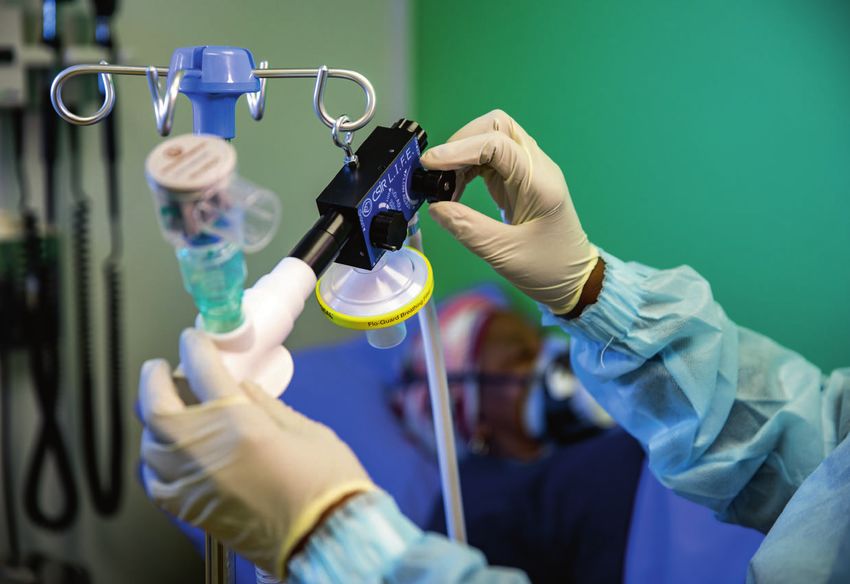
MEASUREMENT

     “While ensuring that we achieved this in a short period of time, we also had to           interrupted airflow, allowing the patient to
ensure that we followed a rigorous, documented product life cycle methodology that             breath in the oxygenated air and to
would ensure scalable manufacturing as well as compliance and licensing under the              exhale normally. The advantage of the
South African Health Products Regulatory Authority (SAHPRA), and the guidelines of the         BPAP system is that it uses less air and
World Health Organisation”.                                                                    oxygen and is reportedly more
     A fully digital design approach was used with Siemens providing the necessary             comfortable for the patients.
software support for the product lifecycle management, as well as software to facilitate           The first prototype units were
rapid production scaling. This included components for systems engineering processes,          manufactured from metal but Sanne
computer-aided design tools, manufacturing execution tools, as well as quality                 said: “We realised that to ramp up
management solutions that would ensure compliance with health product regulations for          production we would need to look at
certification. Using a digital product life-cycle design methodology also ensures that the     alternative materials such as high-grade
product can be manufactured in multiple factories in the industry, in large volumes, and       plastics which can also be machined
is true to the principles of the Fourth Industrial Revolution.                                 using CNC machines. Currently we are
     “In this way, we remain true to the role of the CSIR – which is to perform research and   manufacturing the necessary injection
development (R&D) that is cutting edge, involves local industry in their niche areas, and      moulding tools which will significantly
ensures that together we address issues that are of national importance,” Sanne explains.      speed up production. Our biggest
The CSIR will however manufacture the first batch of ventilators while other companies,        challenge is however to synchronise the
who have the necessary manufacturing facilities, are being considered. Although the CSIR       supply chain around materials and parts
has its own regulatory approval licence, the CSIR manufactured ventilators will be             for all the 35 components required to
distributed by registered medical equipment supplier and distributor companies.                assemble a full CPAP ventilator solution.”
                                                                                                   The design is fully mechanical and
Fast track to meet expected increase in infections                                             does not include any electronics. “We
By June, the necessary R&D had been completed and the CPAP system was tested at                made this decision because not every
UCT’s Medical Devices Laboratory, which houses specialised apparatus to evaluate               facility where the ventilators will be
such products. This led to regulatory approval and licensing obtained from the South           used will necessarily have an electricity
African Health Regulatory Authority (SAHPRA). SAHPRA is an entity of the National              outlet nearby each patient. Had we
Department of Health and has assumed the roles of both the Medicines Control Council           included electronics to control the
(MCC) as well as the Directorate of Radiation Control (DRC).                                   various valves, pressure regulators and
    There are ongoing discussions with the Department of Health and the Department of          display screen, it would have required
Trade, Industry and Competition (DTIC) to produce additional devices before the end of         battery backup and a battery charging
August, as data on the spread of the virus becomes available.                                  system. Also, including electronics in
    In another project, the CSIR is also working on a bi-level positive airway pressure        the design would have delayed
ventilator (BPAP) with a local partner to develop a solution for patients with more severe     manufacture by at least six months as
symptoms. These units assist with both inhalation and exhalation, either in fixed              the ventilator would have had to
pressure modes or by sensing the oxygen supply required by a patient and adjusting the         underly additional requirements, for
pressure accordingly. The Bi-level positive airway pressure ventilator provides an             example CE mark certification which is
                                                                                                               required for electronic
                                                                                                               equipment. Our all-
 The all-mechanical design
 is easy to operate with                                                                                       mechanical design is
 airflow control in steps of                                                                                   easy to operate and
 10% oxygenation.                                                                                              maintain and offers all
                                                                                                               the capabilities required
                                                                                                               to help COVID-19
                                                                                                               patients in the early
                                                                                                               stages of their infection.”
                                                                                                                    The development
                                                                                                               forms part of
                                                                                                               government’s National
                                                                                                               Ventilator Project (NVP)
                                                                                                               under the auspices of the
                                                                                                               DTIC, and is supported by
                                                                                                               the Solidarity Fund. The
                                                                                                               first batch of ventilators
                                                                                                               will be provided to state
                                                                                                               hospitals around the
                                                                                                               country that are currently
                                                                                                               experiencing pressure due
                                                                                                               to the unavailability of
                                                                                                               equipment to deal with
                                                                                                               the pandemic.               n

                                                          EngineerIT | July 2020 | 7
ICT World View

Nokia takes a generational step in
data centre networking
          okia has redefined data centre fabrics with the launch of a new and                 Nokia FSP provides the set of tools cloud

N         modern Network Operating System (NOS) and a declarative, intent-based
          automation and operations toolkit. This will allow cloud and data centre
builders to scale and adapt operations in the face of year-over-year exponential
                                                                                          builders need to implement intent and policy-
                                                                                          based operation of the network. Well beyond
                                                                                          a node-centric management system, FSP was
traffic growth and constant change brought on from technology shifts like 5G and          designed to build, deploy and monitor the
Industry 4.0. The new Nokia Service Router Linux (SR Linux) NOS and Nokia                 entire data centre network with powerful
Fabric Service Platform (FSP) were co-developed with leading global webscale1             network level constructs. Finally, the FSP
companies, including Apple, which is deploying the technology at its data centres.        includes technologies that were only available
     Facing massive growth in demand for cloud-based applications and use of              to the largest cloud builders, such as a real-
new technologies like AI, machine learning and AR/VR, today’s large and                   time state-correct virtual digital twin for
growing community of cloud builders require an unprecedented level of                     validation and troubleshooting.
customisation and flexibility from networking components to operate and monitor
sprawling data centres.                                                                   Balance for the future
                                                                                          The combined solution provides the
Drilling deeper into the new solution                                                     openness, flexibility, robustness and
Network Operating Systems have not kept up with new demands and                           automation to make data centre and
developments, and evolving, traditional systems are restrictive and difficult to          cloud environments easier to scale, adapt
customise, integrate and automate. For example, today’s leading systems expose            and operate.
limited functions for customisation and even then require cumbersome                           “With decades of experience serving the
integrations. Often this means rudimentary applications that require re-compiling         world’s telecom operators, we understand the
each time the NOS vendor upgrades releases. Newer open systems attempts are               engineering challenges of building and
nascent, challenging to operationalise and generally unproven at scale.                   operating business and mission-critical IP
     Nokia SR Linux is a genuine architectural step forward as it is the first fully      networks on a global scale. However, today’s
modern microservices-based NOS, and the SR Linux NDK (NetOps development                  massive data centres have their own unique
kit) exposes a complete and rich set of programming capabilities. Applications            operational challenges. The SR Linux project
are easily integrated through modern tools like gRPC (remote procedure call)              was the proverbial ’clean-sheet’ rethink,
and protobuf, with no recompiling, no language limitations and no dependencies.           drawing from our partnership with Apple and
SR Linux also inherits Nokia’s battle-tested Internet protocols from the service          others. The resulting design is impressive in
router operating system (SROS), which is the trademark of the huge installed base         its depth and strikes the needed balance for
of Nokia carrier-grade routers. SR Linux is in effect the industry’s first flexible and   the future”, Basil Alwan, President of IP and
open network application development environment.                                         Optical Networks at Nokia, said.

                                                           EngineerIT | July 2020 | 8
ICT World View
Nokia SR Linux is built on the Internet protocol suite
leveraged from Nokia's proven SROS, a rock-solid foundation
with proven scalability, resilience and inter-operability that has
Some terminology
been deployed globally in over one million routers in IP networks Explained
and the Internet. Hardware agnostic and running on standard
Linux, it implements a ground-up architecture around model-
driven management, streaming fine-grained telemetry and Web-scale IT
modern interfaces – such as gRPC and protobuf – which Web-scale IT is used to reference a global-class of computing
provide easier programmability with heightened visibility and — or an architectural approach — used to deliver the
deeper control for all applications. It offers a state-of-the-art NDK capabilities of large cloud service providers within an
for customers’ NetOps teams to develop new applications and enterprise IT setting. The approach is to design, build and
operational tools in their language of choice. manage data centre infrastructure where capabilities go
Nokia FSP is a declarative intent-based automation and beyond scale in terms of size, to include scale as it pertains
operations toolkit which delivers agile and scalable network
to speed and agility.
operations for SR Linux and multi-vendor data centre
infrastructure. The Nokia FSP integrates easily with existing
gRPC
operational systems and provides a unique digital sandbox for
gRPC is a modern open source high performance RPC
real-time fabric simulation that can be used for network design,
framework that can run in any environment. It can
testing and troubleshooting. FSP-certified designs decrease
efficiently connect services in and across data centres with
fabric design times and simplify Day 0, Day 1 and Day 2 planning
pluggable support for load balancing, tracing, health
activities. These capabilities give NetOps teams greater
checking and authentication. It is also applicable in last mile
confidence across all stages of large fabric deployment and
of distributed computing to connect devices, mobile
operations, allowing them to run more efficiently, at a lower cost
applications, and browsers to backend services.
and with fewer staff.
Nokia’s data centre switching portfolio delivers massive
scale and resilience, providing a strong foundation for data Protobuf
centre and cloud networking. The portfolio includes the Nokia Protobuf is short for protocol buffers, which are language-
7250 Interconnect Router (IXR), Nokia 7220 IXR-H series and and platform-neutral mechanisms for serialising structured
Nokia 7220 IXR-D series platforms, which offer a broad range data for use in communications protocols, data storage, and
of high-performance chassis-based and fixed-form-factor more. Think XML, but smaller, faster, and simpler. You define
options for data centre top of rack (TOR), leaf, spine and super- how you want your data to be structured once, then you can
spine applications. The platforms support 400GE, 100GE, use special generated source code to easily write and read
50GE, 40GE, 25GE, 10GE and 1GE interfaces and deliver a your structured data to and from a variety of data streams
robust and comprehensive set of capabilities spanning IP and using a variety of languages. You can even update your
routing, layer two switching, QoS, scalable telemetry, security data structure without breaking deployed programs that are
and model-driven management. compiled against the “old” format – this is especially useful
The combined solution provides the openness, flexibility, in Google, where a new rollout of a server usually has to
robustness and automation to make data centre and cloud start out talking to older servers. n
environments easier to scale, adapt and operate. n
SR Linux, 7250 IXR and 7220 IXR-D series are available today, the FSP and 7220 IXR-H series are expected to be available in Q4 2020.
EngineerIT | July 2020 | 9ICT World View
That rapid shift to telemedicine could
reveal a window into the very future of
healthcare. “Telemedicine is here to stay,”
Suleima Salgado of the Georgia
Department of Public Health said at
another roundtable discussion. “If anything,
it’s going to triple in expansion and growth,
and it’s going to be a standard model of
care moving forward now, post COVID.”
Part of the reason is that patients and
healthcare professionals — many of whom
may have resisted change pre-COVID — will
now expect it. In many cases, telemedicine
will prove safer, faster and more efficient
than face-to-face visits, which can involve
CIOs see a better future
long travel times, frustrating waits and
exposure to dangerous pathogens. “The
patients are really demanding it now,
because they had a taste,” said Peter
for health care Marks, “and thank God they had a taste.”
Dr. Damian Jankowicz, CIO and chief
privacy officer for Canada’s Centre for
Addiction and Mental Health, spoke of
Webex’s ability to keep patients and
As the world runs on Cisco stuff, they are healthcare specialists separate, while still
maintaining a human connection. “Some
more committed than ever to getting clinicians came to me and called Webex
virtual PPE, virtual personal protective
through the current challenges. equipment,” he said. “They say working
through Webex makes them feel so safe.”
At Cisco Live, the company
IOs and IT teams are among the critical front-line workers who have kept the announced new capabilities that will
C world running through the COVID-19 pandemic. So, at Cisco Live, the company
was honoured to highlight the efforts of top healthcare CIOs. All spoke of
challenging times in the early days of the virus but saw a positive future for healthcare.
make Webex even more intelligent,
integrated and secure, with greater
capacity to support business resiliency
“Healthcare is going to change forever,” Cisco CEO Chuck Robbins predicted at the for future crises.
virtual event, the company’s premier education and training event for IT professionals.
And he was quick to share Cisco’s efforts to make those positive changes happen. Maintaining trust and privacy as
“It’s been a phenomenal show of support from all the communities of the world,” cyberthreats rise
Robbins said of efforts to combat the pandemic. “Cisco now has contributed roughly “We’ve said for years, privacy is a
$500 million dollars to this response. And as the world runs on our stuff, we are more human right,” Robbins repeated in his
committed than ever to getting through the current challenges.” keynote. And nowhere is that more
As part of that commitment, the company announced new capabilities for business obvious than in healthcare. Patients
resiliency. These include continued support for healthcare, such as infrastructure kits for need to feel that their records,
emergency field hospitals. Todd Nightingale, Cisco’s SVP and general manager for healthcare data and shared feelings are
enterprise networking and cloud, stressed that such solutions will better support the kind protected by rock-solid security.
of herculean efforts we have seen from healthcare and IT workers in recent months. As many headlines trumpeted during
“There have been heroics across healthcare groups around the world,” he said. “One the pandemic, hackers had a field day
of the most remarkable was at the U.K. National Health Services where they popped up with unsecured platforms. Cisco
enormous field hospitals. One was a 4,000-bed field hospital that they deployed in nine solutions, however, have been a success
days, and they built out the network in only seven days.” All over the world, IT teams story throughout the crisis. “Privacy isn’t
accomplished things that would have seemed impossible even weeks earlier. something that we can bolt on,” said
“We changed everything in five days,” Peter Marks, vice president and CIO of Steve Martino, Cisco’s chief information
WakeMed Health and Hospitals in North Carolina, said at a roundtable discussion. “We security officer. “It’s not something we
went from having no telemedicine appointments to having 2,500 in a week.” can think about after we enable some
Marks cited the organisation’s partnerships as a key driver of that fast pivot. “When new capability; we really need to bake
COVID hit, we were really fortunate that we had already created these really strong that in. And we need to hold our vendors
relationships with our vendors, including Cisco,” he added. “And although it was pretty and partners accountable for doing that
crazy, we were able to rapidly adjust. We were able to use Webex to not only treat early and making it a fundamental part
patients but for every meeting that was previously face-to-face.” of their solutions.”
EngineerIT | July 2020 | 10ICT World View
Traci Tyndall CTO of WakeMed Health and Hospitals said that previously all
electronic medical records had been secured on prem, but with the upsurge in remote
collaboration, they needed to ensure that patient privacy was guaranteed in virtual
meetings and team spaces. “We went through all the checks and balances to make sure
that Webex was secure,” Tyndall said. “It’s encrypted, it’s secure, and we were 100
percent confident.”
In challenging times, a better way forward
In supporting the courage and expertise of health professionals, secure, fast network
technologies and collaboration tools played an essential role. They enabled deeper levels
of collaboration and information sharing, connected more patients remotely than ever
before and freed up scarce talent for the most acute emergencies. And not least, they
enabled both patients and workers to stay home, thereby lessening the spread of the virus.
Along the way, it revealed a window into the very future of healthcare. “I’m excited
about the new opportunities,” said Martino. “The new things that we can bring to our
customers, to our employees, the new kinds of experiences that maybe we were
thinking about but were hesitant to do. But today we’re really doing them.”
Cisco’s purpose is to power an inclusive future for all and that will include efforts Chuck Robbins
to make healthcare more equitable and accessible to the most underprivileged
members of society.
Liz Centoni, Cisco’s SVP for emerging technologies and incubation, spoke of the Mental Health, concluded his
promise of AI and machine learning in healthcare — but only if we use them ethically, discussion by emphasising the great
and program them without unconscious bias. opportunities that are emerging from
“We want to solve an inclusive future for everybody,” she said, “not just those who these challenging times. “Even in
can afford access to healthcare and education. Increasingly, she added, that will demand crisis, there is an opportunity,” he said,
a more conscious, inclusive approach to technology “and whether that relates to what’s
“The ethical way to create AI and machine learning is to have the purpose of happening in racial justice or what’s
creating that capability for everyone,” Centoni said. “You need to build the models with happening in healthcare, there is a
that intent. [Otherwise] access to healthcare could be based on your socio-economic huge opportunity that has emerged and
status or the colour of your skin.” Jankowicz, of Canada’s Centre for Addiction and one has to seize it.” n
95% of companies have changed
their technology priorities
ne of the largest transitions The Agents of Transformation Report reveals that technologists are experiencing
O organisations have had to
face since the outbreak of
COVID-19 has been that of
pressure from every angle as they mobilise workforces to operate from home, manage
increasing pressure on their networks and applications, and maintain the security of the
technology stack, while also taking on new roles and responsibilities. It further shows:
technological advancement and • 81 percent of technologists state that COVID-19 has created the biggest technology
digital transformation. For the first pressure for their organisation they have ever experienced.
time in decades, technologists are • 61 percent of technologists feel under more pressure at work than ever before.
experiencing a spike in digital • Almost two thirds (64 percent) of technologists are now being asked to perform tasks
transformation from all around the and activities they have never done before.
globe. Research by AppDynamics, a
Cisco company and the world’s The research highlights that the majority of organisations (95 percent) changed their
largest and fastest growing technology priorities during the pandemic, and 88 percent of technologists stated that
Application Performance Monitoring the digital customer experience is now the priority.
(APM) vendor, has presented Technologists have the opportunity to step up and guide their organisations through
information that delves into the this new reality. Cisco believes in the importance of contributing research to help the
effects the pandemic has had within continuing dialogue on technology’s future impact. These kinds of insights are essential
multiple organisations on a as companies look to navigate the new normal. The next leap for IT is on continual
technological spectrum. transformation as technologies improve. n
EngineerIT | July 2020 | 11AUTOMATION AND CONTROL
Mobile robotics revolutionise
human-machine collaboration in
the automotive industry
Major German automotive group optimises efficiency and innovation
leadership in material handling with Omron LD mobile robots and a
conveyor attachment from cts GmbH
utomobile production and assembly line production have including components for steering wheel and cockpit assembly,
A always been closely linked. It was not until Henry Ford
began using conveyor belts in his factories in 1913 that the
car was able to conquer the world as a mass-produced product.
routable parts or interior lights for example, must be transported
continuously from storage to the assembly line.
"Employees in the production halls were involved in the
Today, a working day without assembly lines is inconceivable at transport of components for more than 60 percent of their working
the BMW factories. The group relies on innovative transport and time. Merging the different storage and production areas with
logistics to increase efficiency and flexibility, to better link work conveyor belts is impractical, so this step was mostly done
processes, as well as to relieve employees from repetitive and manually, which cost valuable capacity," says Aleksandar
time-consuming tasks. These concepts include Omron LD mobile Cvetanovic, European Key Account Manager, Automotive at
robots for material transport that deliver a particularly high return Omron Industrial Automation Europe.
on investment (ROI). These autonomous mobile robots are
equipped with a conveyor tower - a height-adjustable load Mini smart transporters address needs and
handling device, developed by system integrator cts GmbH. The requirements
interaction between employees and transport robots at BMW BMW factories have utilised an automated and driverless
impressively demonstrates how factory harmony can be transport system since the 1980s. However, this system is not
implemented in the factory of the future. flexible in its use and is tied to fixed routes via lanes in the form of
grooves. BMW needed a robot that could transport the so-called
Continuous optimisation of production and small load carriers (KLT), to create its own route. This transport
logistics processes robot needed to be able to flexibly and quickly adapt to new
Depending on the BMW plant, up to 1600 vehicles are produced processes without having to make major changes to the
each day. With such production volumes, continuous optimisation infrastructure - an advantage over line-guided materials handling.
and efficiency gains through innovative strategies and "At the beginning of the initial project, the first task was to
technologies are essential. This also includes logistics and understand and address the customer's requirements and find out
transport processes in production. Various small and large parts, what could be implemented. What's more, BMW Group Logistics
needed a standard for its products and services. The group opted
for LD mobile robots from Omron, also known as BMW Mini Smart
Transport Robots (miniSTRs), with specially-designed conveyor
belt attachments in some of their factories," Cvetanovic adds.
As a system integrator, cts GmbH, a longtime Omron Solutions
Partner, developed a complete solution of LD mobile robots - a
conveyor attachment and software that specifically matches the
requirements of BMW. The solution combines the Omron
Enterprise Manager with the company's own Enterprise Resource
Planning (ERP) system.
Cts GmbH has been using Omron products and solutions for
years and is currently exploring new opportunities for the use of
Autonomous Intelligent Vehicles (AIVs). With over 100 integrated
AIVs, cts GmbH is the largest system integrator of this vehicle
technology in Europe.
EngineerIT | July 2020 | 12AUTOMATION AND CONTROL
Omron convinces with worldwide service and support
"To fully automate the intralogistics and bring together
manufacturing automation with Industry 4.0 and digitisation, a
solution for material transfer had to be created and job creation
developed using the software architecture from the cts AIV
framework," says Cvetanovic. "Our Enterprise Manager fleet
management system has more options than other vendor
solutions. The narrow and high design of the solution was also
beneficial, as there are quite narrow paths and high equipment in
use at the BMW plant. However, the main reason that BMW has
opted for Omron was the global service and support.”
Millimeter accurate alignment
Mobile robots such as the Omron LD in combination with the
customisation of cts GmbH allow significant cost optimisation with
barrier-free material supply, combined with a small footprint -
avoiding the typical downsides of traditional conveyor belts. In
addition, the robot can be deployed quickly and flexibly thanks to
autonomous routes without forced guidance, such as induction
loops. The LD robots move at a speed of up to 1.8 metres per
second. Thanks to their optional double sensors, guided by
special magnetic strips on the floor, the robots can align
themselves with millimeter precision. This additional accuracy
makes it possible to accelerate the production processes. Users
at BMW also praise the reliability of their robot colleagues.
"As the robots move between cells, they detect people or
objects in their way, using their own sensors. They then
autonomously manoeuvre around them or stop to let people pass
by. For example, the production line operators and maintenance
personnel can safely work with LD robots," says Cvetanovic.
Omron Enterprise Manager adds efficiency
"Developing an overall system based on the Omron LD, that The Omron Enterprise Manager fleet management system
meets the high requirements of a premium manufacturer like ensures that products are transported from one production stage
BMW, was a challenge that we gratefully accepted. Drawing on our to the next as they become ready. It also ensures that the robots
many years of experience with the Omron LD, which is are always charged. Even during hectic times, the robots can be
impressively demonstrated in more than 100 successful operating briefly steered into the charging station to give their batteries a
AIV systems, we were able to implement the ideal solution very boost as needed. At planned downtimes, all robots are sent to
quickly and successfully, together with Omron and BMW. Thanks their charging stations. The Enterprise Manager also makes it
to our extensive software knowledge and product AIV framework, easy to add attachments to robots. If a new one is added, it does
integration into the IT level of the BMW Group was also easily not require additional programming. The Enterprise Manager
made possible," reports Alfred Pammer, Head of Factory automatically integrates it into the current inventory and assigns it
Automation at cts GmbH. the appropriate tasks.
In addition to enabling more efficient processes in the
Ideal route determined independently production halls, the Omron LD robots bring further benefits: the
Since 2015, the BMW Group developed the first self-driving protection scanners provide the LD 90 with the necessary security
Smart Transport Robots (STR), together with the Fraunhofer against other road users, including both machines and people.
Institute IML, for the transport of roll containers on logistics areas The system offers process security, while being easy to operate
within production halls. The second generation is now in and integrate. Automating the process also makes it cost-effective.
operation at the BMW Group Regensburg plant. The robots carry "Automated material handling without traditional conveyor
roll containers weighing up to one ton and transport them technology, barrier-free material supply and flexible configuration
autonomously to the destination of the goods. They calculate the are becoming increasingly important for future-oriented production
ideal route independently and move freely in the area. The new processes. On top of this, there is also a need for simple
navigation method SLAM (Simultaneous Localisation and adjustments to changing production conditions, such as line shifts
Mapping) does not require any permanently installed navigation or plant relocation,” says Cvetanovic.
transmitters in buildings and thus can be used quickly in a new “BMW is an innovation leader in the automotive sector,
environment. A built-in battery module of the BMW i3 powers the including smart logistics, and through our partnership with Omron
STR for a whole working shift. The delivery of urgent small parts and cts GmbH, the useful interaction between the robot and
is handled by a smaller version of the STR - the mini STR based factory employees will lead the way for other sectors such as the
on the Omron LD mobile robot. pharmaceutical industry," concludes Cvetanovic. n
EngineerIT | July 2020 | 13AUTOMATION AND CONTROL
IoT is enabling “smart” mining
he Internet of Things (IoT) has system anomalies,” Marggraff says.
T enabled smart mining
technologies and brought Industry
4.0 to the mining sector. It is imperative
Brownfield IoT integration solutions can
be costly and don’t offer immediate
results, so any savings from problems
that hydraulic and pneumatic systems prevented are measured on a long-term
and applications keep abreast of smart basis only. “However, as this technology
industry developments to better serve the becomes more refined and widely used,
21st century requirements demanded by the cost decreases and is already
modern mining. beginning to fall,” he adds.
Historically, implementing smart Predictive maintenance, enabled by
technologies in the hydraulic sector were usable data from monitoring and
met with caution. While hydraulic OEMs measuring hydraulic, pneumatic and
need to find ways to keep abreast as automation system performance, reduces
smart technologies develop, there is a component and downtime expenditure.
different rate of development between From oil contamination and oil level
the air and fluid power industries within sensors, to temperature, position and
the mining sector. This is the view of vibration sensors, the Bosch Rexroth
Bosch Rexroth South Africa pneumatic Group of Companies South Africa has all
and hydraulic experts. the required instrumentation for data
Pneumatic and mechanical linear monitoring and its transfer to a plant’s
motion controls are used more commonly operations. All information is filtered and
in production factories, so more can be transferred to various layers of
technology has been invested in these management, from the foreman through
The PR 21 Controller. Distribution is
sectors. The upshot is enhanced system undertaken using the PR21- 43 to the production manager via the IoT.
monitoring and production modules, industrial industries or the
improvements. While all system- RCU controllers, suitable for the Solutions and gateway products
monitoring devices are available for the mobile market. Bosch Rexroth supplies the full range of
hydraulic industry, most of these haven’t available monitoring devices, packages
been implemented. “Hydraulics has the information and transfers it to the
traditionally been seen as a robust operation used more often in user at any location worldwide using available communication
extreme conditions,” says Klaus Marggraff – Business systems. Developing specialised applications that work with the
Development Manager – Africa, Bosch Rexroth South Africa. BODAS* environment is at an advanced stage and applications,
which are open to customer specifications, report on mobile
Associated costs units’ targeted systems in the mining sector.
Another factor contributing to lack of system monitoring devices “The onus is on the equipment suppliers to introduce and
in hydraulic applications is the cost. Monitoring a hydraulic implement the technology,” Marggraff stipulates. “Although the
system is an expensive process and adds to an already technology is no longer new, gathered information must be
expensive outlay. Because of this, many plants opted to monitor converted into useable information for end users. This is where
only the critical portions of their hydraulic systems. gateway products, currently aimed at working non-invasively
In addition, hydraulic systems in many South African plants alongside existing systems, aid customers entering the Industry
are obsolete. They have been subjected to sub-standard 4.0 market.”
maintenance, resulting in increased production costs. In the
past, data in these plants was stored on control room SCADA
systems, where the information was used primarily to set
machine alarms and trip switches. Data monitoring was
conducted only occasionally and the information obtained used
only to analyse failures.
Retrofitting sensing technology to existing hydraulic systems
(Brownfield IoT integration) and establishing a ‘collecting
gateway’ to upgrade systems to current monitoring methods are
being explored by Bosch Rexroth and a client. “The collecting
gateway gathers and transfers information which can be used to
visualise performance and alert machine operators to any The PR21 featured while in application.
EngineerIT | July 2020 | 14AUTOMATION AND CONTROL
To this end, Bosch Rexroth has introduced its new range of the RCU controllers, which are suitable for the mobile market.
cntrlX products*, developed specifically for Industry 4.0. IoT “These devices facilitate the gathering of predictive
systems can be used in conjunction with existing WiFi maintenance, data analysis, visualisation and notification,
installations to transfer data, which enables users to make more optimisation and machine intelligence,” Marggraff points out.
informed decisions regarding their maintenance strategies. “Any third party software, from simple reporting to complex AI
systems, can be used with the gateway technologies. Bosch
Smart mining projects Rexroth has developed its own software products ranging from
Hytec South Africa, part of the Bosch Rexroth South Africa simple local monitoring software called ‘IoT Insights’ to high-end
Group, has various smart mining technology projects underway. cloud-based reporting services like Nexeed Production
One of these is the installation of a simplified monitoring system Performance Manager.”
onto hydraulic mining shovels, which is being tested to
determine if recorded data is accurately communicated to end Implementing IoT for African mining
users. The results will be used to demonstrate the technology Bosch Rexroth South Africa’s strategy to implement IoT
and implement its use in other mining equipment. systems into the South African market place is two-fold: invest
Similar projects underway include implementing the in equipment and have it certified for use in South Africa (while
technology on a ladle control system in a Mozambique mine ensuring ICASA compliance). “It is important that the equipment
and condition monitoring for a mobile machine in a Botswanan is suitable for local applications, providing workable solutions for
mine. For each of these projects, tailor-made solutions that our market conditions,” says Marggraff. “There is a lot of
deliver specific results have been provided. Hytec South Africa development still required to ensure that this equipment can be
is also undertaking scope definition studies on open cast mines implemented and used correctly.”
in South Africa’s platinum sector to further develop and “Systems usually have to be highly customised to be
shape/customise its smart technology offerings. effective, and this is one of Bosch Rexroth South Africa’s
“There has been a lot of hype regarding predictive specialities,” Marggraff concludes. “Applying smart systems that
maintenance,” Marggraff points out. “These projects are new have worked well in developed countries to the African market
only in the sense that it is not a standardised approach, but a has been both challenging and rewarding. Bosch Rexroth South
tailor-made offering that enables plants to receive information Africa is committed to helping the African mining sector achieve
live. The instantaneous receipt of data allows plant managers world-class smart mining technology, and will work with mines
and operators to optimise production processes and rectify and plants to ensure they receive the solution best suited to
potential faults before they occur. This information facilitates their requirements.” n
accurate fact-based decisions on service extension intervals
and early maintenance interventions.” *BODAS hardware is an open, scalable and easily accessible mobile
The biggest Industry 4.0 challenge facing the hydraulic and electronics platform consisting of control units, connectivity devices,
pneumatic sectors is transferring acquired information to end sensors and human machine interfaces (joysticks, displays, pedals)
users in a user-friendly format and at an acceptable cost. Each for mobile machines. Individual BODAS hardware components are
plant’s requirements must be customisable to take full freely programmable and ready for BODAS Connect.
advantage of the investment. Bosch Rexroth hardware with *The ctrlX AUTOMATION platform is the new Industry 4.0 automation
regards to IoT capabilities is built on the Linux operating system platform for industrial and factory applications from Bosch Rexroth. It
that offers familiarity to developers and installers, allowing them has a Linux real-time operating system, open standards, app
to create their own processes. programming technology, web-based engineering and
comprehensive IoT connection, reducing the engineering time and
Costs and benefits effort by 30 – 50%.
Integrating and implementing these systems should never
outweigh the savings achieved when machine improvements
and production rates increase. “Returns on systems like these
are not immediate,” Marggraff reminds us. “Because of this,
many potential clients have difficulty believing the extent of
savings incurred when avoiding breakdowns.”
Ideally, smart technology systems must be implemented in the
feasibility study phase of a project to acquire accurate project
costs. Adding smart technology to systems only after the feasibility
study means that a plant runs the risk of having insufficient funds
to implement the required technology. “Once our full range of cntrlX
products has been rolled out, we foresee a more structured
advance in this field of technology,” says Marggraff.
Bosch Rexroth’s comprehensive product offering can be
used for numerous applications. Various IoT devices can be
connected to device portals, incorporating IoT gateway
Bosch Rexroth developed a new range of cntrlX products
software. This enables information to be transferred to a cloud specifically for Industry 4.0. They enable the use of IoT systems in
or directly to a plant’s server, for distribution. Distribution is conjunction with existing WiFi installations to transfer data,
undertaken using the PR21- 43 modules, industrial industries or enabling users to make informed maintenance strategy decisions.
EngineerIT | July 2020 | 15AUTOMATION AND CONTROL
Vision-based solutions in
he success of the e-commerce
T age drives the need for smart
and digitised sorting and
tracking. For all the strategy that goes
into e-commerce success, it comes
down to moving the right items and
packages to customers quickly and
efficiently. If operations cannot identify
e-commerce applications
goods accurately and control the
movement of automated material
handling equipment with precision and customer demands on the supply This is required to provide the
speed, the result is unhappy customers chain were recognised as the biggest information necessary in effective
and loss of market momentum. industry pressure, with 73% calling it handling, tracking and movement of
extremely or very challenging. The the smaller-item e-commerce stream.
A challenging environment second most acute challenge reported “Initially, the goal of reader
The challenge of moving goods has was the hiring of qualified workers, technology was to get a good read
become more complex over time, as with 64% of those surveyed rating it from the scan (typically on a one-
e-commerce orders are typically at the extremely or very challenging. dimensional bar code label) and to
individual item level and not full cases Lastly, the 2018 survey found that move product from here to there. Now
or pallets. Another challenge in moving the adoption of robotics and operations need more information
goods is the change in e-commerce automation, which stood at 34%, was about everything surrounding the read,
packaging, where instead of boxes, predicted to exceed 53% in two years like label condition and orientation,
with uniform dimensions and edges, and 73% in five years. package condition and how packages
the use of polybags and shipping are being presented to the reader. This
envelopes are more common. Mega-trends impact industry extra information makes your
According to research firm The impact of these mega-trends is processes more efficient,” says Tom
Technavio, polybags accounted for vast. Firstly, you have smaller, more Wik, national product manager, vision
over $31 billion of roughly $82 billion frequent orders that need to move and identification with SICK.
global e-commerce packaging market quickly through increasingly automated
in 2015 and constituted the fastest facilities. Secondly, the packaging is The rise of vision-based
growing segment. often smaller bags that can be difficult solutions
E-commerce operations face other to detect and handle. Automated materials handling
immense pressures, such as demands With these mega-trends in mind, systems rely on automatic
on the supply chain. companies need to evaluate whether identification technology to scan bar
According to MHI’s survey-based, they have the right sensing, reader and codes so that goods can be handled
2018 Annual Industry Report, digital image management technology. and routed according to the correct
material flow. Other sensors such as
photo eyes, dimensioning systems
and digital weigh scales also are
essential to cost-efficient shipping.
This is because carriers apply
dimensional weight pricing formulas
that make it advantageous to use
right-sized packaging.
Vision-based readers are shaping
a fundamental technology to meet
these challenges.
While laser-based readers still have
their place, vision-based readers are
needed to read two-dimensional codes.
Additionally, the high-resolution digital
images that are captured “digitise”
what the reader sees as well as the
characteristics of the goods moving
through the process. This repository of
information about package and label
characteristics can be used for
assessing the root cause of ‘no-read’
events, making automated equipment
E-commerce industries are leaning towards full and smart process automation. run better.
EngineerIT | July 2020 | 16You can also read


