REVIEW Q1 2019 RESIDENTIAL - DNG
←
→
Page content transcription
If your browser does not render page correctly, please read the page content below

RESIDENTIAL
MARKET
REVIEW Q1
       2019
65 MOUNT PROSPECT AVENUE, CLONTARF
SOLD MARCH 2019

RESIDENTIAL MARKET
REVIEW Q1

CONTENTS
INTRODUCTION                                                                           4

HOUSE PRICE GAUGE                                                                       6

APARTMENT PRICE GAUGE                                                                  14

CASH/NON-MORTGAGE TRANSACTIONS                                                         21

TRANSACTION LEVELS (IRELAND V’S UK)                                                    22

ANALYSIS & COMMENT                                                                     25

DNG NATIONWIDE PRESENCE                                                                26

REPORT COMPILED BY
DNG RESEARCH 2019

PAUL MURGATROYD
DIRECTOR OF RESEARCH
& BUSINESS DEVELOPMENT

                          3 |   RESIDENTIAL MARKET REVIEW   |   Q1 2019   |   DNG.IE
INTRODUCTION
                      PROPERTY PRICES THIS QUARTER
                      WERE MORE OR LESS LEVEL,
   KEITH LOWE         WITH THE ONLY INCREASES
                      BEING EXPERIENCED IN THE
CHIEF EXECUTIVE DNG

                      ENTRY LEVEL PRICE RANGES.
                      The first quarter of 2019 has started
                      relatively strongly for the residential
                      sector with improved viewing levels
                      and sales actively being recorded across
                      our network compared to the last quarter
                      of 2018.
                      New homes launches have been successful
                      with sales being recorded across all DNG
                      new homes schemes in the capital, which
                      is an encouraging start to the year.
                      Second hand sales in our network are
                      slightly ahead of last year for the first
                      quarter of 2019 as the market continues
                      on its slow road to recovery.

                        4 |   RESIDENTIAL MARKET REVIEW   |   Q1 2019   |   DNG.IE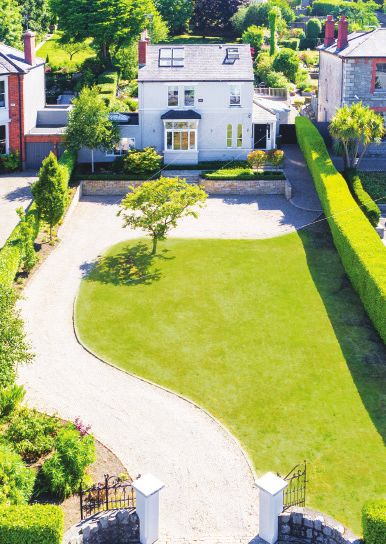
The first quarter of 2019 has started relatively                    In the capital, 4,800 new homes were sold on
strongly for the residential sector with improved                   the market in developments of three or more units
viewing levels and sales actively being recorded                    in the last year, up only 770 units on 2017. In one
across our network compared to the last quarter                     form or another, NAMA continues to play a major
of 2018. New homes launches have been                               role in new housing development across the city,
successful with sales being recorded across all                     having being involved in 30% of new homes sales
DNG new homes schemes in the capital, which                         in 2018. Only seven schemes in Dublin completed
is an encouraging start to the year.                                more than 100 sales in any one development last
Second hand sales in our network are slightly                       year. However, we anticipate strong growth in this
ahead of last year for the first quarter of 2019                    sector over the next few years which is being helped
as the market continues on its steady but slow                      by a wider availability of funding from new entrants
road to recovery.                                                   such as Activate Capital, Castlehaven and the newly
                                                                    opened Home Building Finance Ireland along with
Property prices this quarter were more or less level,               the main banks.
with the only increases being experienced in the
entry level price ranges. This is very good news for                The demand for block sales appears unyielding
buyers, and indeed the market, as the double-digit                  with existing and new entrants purchasing large
price growth of the past number of years was                        apartment blocks and now portfolios of houses
neither welcome nor sustainable.                                    across Dublin. This trend is now spreading to
                                                                    some of the other main cities across Ireland, as
The number of residential property transactions                     investors are attracted to relatively attractive yields
per thousand population still remains low compared                  compared to those available across other European
to our UK neighbours and still lags Northern Ireland                capital cities. The recent announcements and
by 17% and Wales and Scotland both by 42%.                          now construction projects for the likes of Google,
One would have hoped that at this juncture                          Facebook, LinkedIn, Salesforce and We Work who
the gap in transactions recorded would have                         collectively have let or purchased 1,750,000 sq.ft.
narrowed further between Ireland and the UK.                        of office space in recent times, is giving renewed
However, negative equity, borrowers in arrears                      confidence to the mid to high end rental sector
and the large volume of assets still under the                      and many employees in these firms are attracted
control of funds continues to slow recovery in                      to the rental sector.
the residential market.
                                                                    We believe that assuming an orderly Brexit is
New housing output is certainly showing strong                      achieved, the property market will remain robust
signs of ramping up at present, and this will                       for the rest of this year with stronger sales volumes
continue in the medium term. Official figures report                anticipated for the first half of 2019 compared to
that 18,000 homes were built in Ireland last year,                  2018. However, the Help to Buy scheme is due to
of which 7,000 were in Dublin. Our own internal                     cease at the end of this year and in order for new
analysis calculates that 11,000 of these were sold                  homes output to continue its road to recovery it
on the market, an increase of 1,620 or 17.5%                        is imperative that this measure is extended in
on the year before.                                                 Budget 2020.

                                  5 |   RESIDENTIAL MARKET REVIEW     |   Q1 2019   |   DNG.IE
DNG HOUSE PRICE
GAUGE Q1 2019
6 | RESIDENTIAL MARKET REVIEW | Q1 2019 | DNG.IEHEADLINE RESULTS - THE KEY FINDINGS
0%
PRICES REMAIN STATIC
0.9%
ANNUAL RATE OF INFLATION
€454,510
AVERAGE PRICE OF A RESALE
-36.6%
PRICES ACROSS THE CAPITAL
ACROSS DUBLIN DURING FALLS TO 0.9% OVER THE HOME IN THE CAPITAL REMAIN 36.6% BELOW THEIR
THE FIRST THREE MONTHS TWELVE MONTHS TO MARCH REMAINS AT €454,510 PREVIOUS PEAK LEVELS
OF THE YEAR ON AVERAGE
QUARTERLY RESULTS
The latest results recorded by the DNG House Price Gauge
(HPG) show that prices remained unchanged during the first
three months of the year with 0% change in prices recorded
by the HPG. This is the second consecutive quarter in which
0%
RESIDENTIAL RESALE PRICES
REMAINED UNCHANGED ON
prices have remained static in the capital for the overall HPG,
AVERAGE, DURING Q1
and the latest quarterly results are in stark contrast to the
corresponding period in 2018 when prices rose by 1.9%.
The latest quarterly results show that the average price of a
resale residential property in the capital remained unchanged
at just over €454,000 at the end of the first quarter of 2019.
FIGURE 1:
QUARTERLY PERCENTAGE CHANGE IN DUBLIN RESIDENTIAL PROPERTY PRICES
6
4
% CHANGE
2
0
-2
Q4 2014
Q2 2017
Q1 2015
Q2 2015
Q3 2015
Q4 2015
Q1 2016
Q2 2016
Q3 2016
Q4 2016
Q1 2017
Q3 2017
Q4 2017
Q1 2018
Q2 2018
Q3 2018
Q4 2018
Q1 2019
7 | RESIDENTIAL MARKET REVIEW | Q1 2019 | DNG.IEANNUAL PERCENTAGE CHANGE
0.9%
As shown in figure 2 below, the annual rate of price inflation
continued to decline in the twelve months to March 2019. In the
year to the end of quarter one, prices across the capital remained
virtually unchanged, increasing by just 0.9%. Over the last twelve
months the rate of growth has eased back substantially, and the
latest results are in marked contrast to the twelve months to OVER THE LAST TWELVE MONTHS
March 2018, when the HPG record an annualised rate of price THE RATE OF GROWTH HAS
inflation of 9.4%. EASED BACK SUBSTANTIALLY
Although asset price inflation has seen values rise by 87% since
the market low point in 2012, it is still the case that on average,
current prices are still 36% below the peak levels of 2006 at the
top of the last cycle.
FIGURE 2:
ANNUAL PERCENTAGE CHANGE IN DUBLIN RESIDENTIAL PROPERTY PRICES
15
10
% CHANGE
5
0
Q4 2014 - Q4 2015
Q2 2015 - Q2 2016
Q4 2015 - Q4 2016
Q2 2016 - Q2 2017
Q4 2016 - Q4 2017
Q2 2017 - Q2 2018
Q3 2015 - Q3 2016
Q3 2016 - Q3 2017
Q3 2017 - Q3 2018
Q4 2017 -Q4 2018
Q1 2018 -Q1 2019
Q1 2015 - Q1 2016
Q1 2016 - Q1 2017
Q1 2017 - Q1 2018
8 | RESIDENTIAL MARKET REVIEW | Q1 2019 | DNG.IEPRICE CHANGES BY LOCATION
-0.2%
Q1 SOUTH DUBLIN
-0.3%
Q1 NORTH DUBLIN
1.1%
Q1 WEST DUBLIN
The DNG HPG records the change in the average price of a
residential property according to location within Dublin as
shown in Table 1.
West Dublin saw a modest increase in prices during the first quarter of the year, whilst the rest of the capital
recorded very modest declines on the overall HPG. In effect, prices remained fairly constant over the period
across the city. On an annualised basis all areas saw a slight increase in prices but not at any significant level.
Prices in west Dublin are 26% below their previous peak levels, having recovered over 94% of their value
since the market low point. In contrast, prices in south Dublin remain over 40% below the previous peak,
as measured by the HPG.
TABLE 1:
PRICE CHANGES BY LOCATION
Q1 ANNUAL FROM PEAK FROM LOW
2019 % CHANGE (Q3 2006) (Q2 2012)
SOUTHSIDE -0.2% 0.4% -41.3% 84.9%
NORTHSIDE -0.3% 1.0% -33.1% 88.2%
WESTSIDE 1.1% 2.0% -26.3% 94.7%
9 | RESIDENTIAL MARKET REVIEW | Q1 2019 | DNG.IEPRICE CHANGES BY PRICE BRACKET
3.3%
The DNG HPG measures the
movement in prices for different
price brackets of property
within the sample as shown
PROPERTIES VALUED BELOW #300,000
in table 2 below. ON THE HPE SAW AN AVERAGE RATE
OF PRICE INFLATION OF 3.3%
DURING THE YEAR TO MARCH
As has been the trend in the last few quarters, prices at the entry level to the market continue to see the
strongest rate of price inflation compared to properties with higher prices as outline in table 2. In the year
to the end of March, properties values at under €300,000 saw an increase in values of 3.3% on average,
whilst those valued above €500,000 recorded almost no change. Indeed, in the first quarter of 2019, the
average price at the upper end of the market declined marginally, reflecting a slight correction in pricing
for some of the most expensive properties on the market.
TABLE 2:
PRICE CHANGES BY PRICE BRACKET
Q1 ANNUAL FROM PEAK FROM LOW
2019 % CHANGE (Q3 2006) (Q2 2012)
Up to €300,000 0.7% 3.3% -29.2% 126.5%
€301,000 to 0.4% 0.9% -26.2% 91.9%
€500,000
Over €500,000 -0.5% 0.1% -43.9% 75.5%
10 | RESIDENTIAL MARKET REVIEW | Q1 2019 | DNG.IEDNG HPG & CSO RESIDENTIAL PROPERTY
PRICE INDEX COMPARISON DUBLIN
Figures 3 and 4 below and overpage show the quarterly change in Dublin residential property prices
as measured by both the DNG HPG and the CSO Residential Property Price Index (RPPI) for all Dublin
residential property.
FIGURE 3:
QUARTERLY PERCENTAGE CHANGE - DNG HPG & CSO RPPI DUBLIN RESIDENTIAL PROPERTY
DNG HPG
CSO RPPI DUBLIN
RESIDENTIAL PROPERTY
12
10
8
% CHANGE ON PREVIOUS QTR
6
4
2
0
-2
-4
-6
-8
Q2 2014
Q3 2014
Q4 2014
Q1 2015
Q2 2015
Q3 2015
Q4 2015
Q1 2016
Q2 2016
Q3 2016
Q4 2016
Q1 2017
Q2 2017
Q3 2017
Q4 2017
Q1 2018
Q2 2018
Q3 2018
04 2018
Note: The CSO RPPI figure shown in Q3 2018 above relates to the 3 months to the end of January 2019 only, the latest data available at time.
of publication.
Interestingly, the CSO Residential Property Price Index for all Dublin properties recorded a decline in prices
in the three months to January 2019 (the latest data available at the time of writing). However, it should be
noted that in the first nine months of 2018 the CSO record an increasing rate of inflation in the market when
it was clear from the DNG HPG that prices had started stabilising on a quarterly basis (see figure 3 above)
so the latest data could therefore be something of a correction in the statistics.
11 | RESIDENTIAL MARKET REVIEW | Q1 2019 | DNG.IEAs figure 4 shows below, on an annualised basis the DNG HPG and the CSO RPPI continue to follow a
very close trend and it is evident from the graph that the rate of growth in prices in the capital has eased
substantially over the last eighteen months but remains positive on an annualised basis on both measures.
FIGURE 4:
ANNUAL PERCENTAGE CHANGE DUBLIN RESIDENTIAL PROPERTY PRICES
DNG HPG
CSO RPPI DUBLIN ALL
RESIDENTIAL PROPERTY
30
25
20
ANNUAL % CHANGE
15
10
5
0
Q2 2013 Q3 2013 Q4 2013 Q1 2014 Q2 2014 Q3 2014 Q4 2014 Q1 2015 Q2 2015 Q3 2015 Q4 2015 Q1 2016 Q2 2016 Q3 2016 Q4 2016 Q1 2017 Q2 2017 Q3 2017 Q4 2017 Q1 2018
-Q2 2014 -Q3 2014 -Q4 2014 -Q1 2015 -Q2 2015 -Q3 2015 -Q4 2015 -Q1 2016 -Q2 2016 -Q3 2016 -Q4 2016 -Q1 2017 -Q2 2017 -Q3 2017 -Q4 2017 -Q1 2018 -Q2 2018 -Q3 2018 - Q4 2018 - Q1 2019
Note: The CSO RPPI figure shown in Q1 2019 above relates to the 12 months to the end of January only, the latest data available at time of publication.
12 | RESIDENTIAL MARKET REVIEW | Q1 2019 | DNG.IEANNUAL % CHANGE IN SECOND HAND
HOUSE PRICES
ANNUAL PERCENTAGE CHANGE IN SECOND HAND HOUSE PRICES 2001 - 2018
YEAR % CHANGE SECOND HAND HOUSE PRICE
a
2001 -3.5%
a a a a a
2002 +21.2%
2003 +9.5%
2004 +13.0%
2005 +22.0%
2006 +19.0%
a a a a
2007 -11.3%
2008 -21.5%
2009 -24.2%
2010 -15.1%
a a a a a a a a
2011 +20.0%
2012 +2.2%
2013 +17.7%
2014 +23.5%
2015 +0.6%
2016 +5.9%
2017 +10.9%
2018 +2.8%
13 | RESIDENTIAL MARKET REVIEW | Q1 2019 | DNG.IEDNG APARTMENT
PRICE GAUGE Q1 2019
14 | RESIDENTIAL MARKET REVIEW | Q1 2019 | DNG.IEDNG APG RESULTS Q1 2019 - KEY FINDINGS
€330,156
AVERAGE PRICE OF AN
0.3%
% CHANGE
1.4%
ANNUAL
APARTMENT IN DUBLIN Q1 2019 % CHANGE
The DNG Apartment Price Gauge (APG) analyses the movement
of apartment prices across Dublin. The APG measures the
change in value of a representative sample of apartment
dwellings across Dublin on a quarterly basis. Within the
Dublin apartment market, the APG will analyse price
movements in different areas (Central, North, South and
West) and by the number of bedrooms the property contains.
QUARTER ONE RESULTS
The Dublin apartment market also continues to see a moderation in the rate of price growth as outlined in
figure 5 below.
The average price of an apartment in the capital increased by a modest 0.3% in the first three months of
the year. This follows no change in prices recorded by the APG in the final quarter of 2018, in line with the
House Price Gauge reflecting the current market conditions prevailing. The rate of growth recorded by the
APG has moderated substantially with each successive quarter over the last fifteen months as shown below.
FIGURE 5:
QUARTERLY PERCENTAGE CHANGE IN DUBLIN APARTMENT PRICES
6
5
% CHANGE
4
3
2
1
0
Q2 2016 Q3 2016 Q4 2016 Q1 2017 Q2 2017 Q3 2017 Q4 2017 Q1 2018 Q2 2018 Q3 2018 Q4 2018 Q1 2019
15 | RESIDENTIAL MARKET REVIEW | Q1 2019 | DNG.IEANNUAL RESULTS
Equally, the annual percentage change in apartment prices in the capital has fallen back with each successive
quarter as shown in figure 6 below. From a peak rate in excess of 14% at the end of 2017 the latest results
of the APG confirm an annual rate of growth in the order of 1.4% in the year to the end of March 2019.
As a result, the average price of a resale apartment in the capital now stands at €330,000, a moderate
and sustainable increase from a level of 4325,00 one year ago.
FIGURE 6:
ANNUAL PERCENTAGE CHANGE IN DUBLIN APARTMENT PRICES
20%
18%
16%
14%
12%
10%
8%
6%
4%
2%
0%
Q3 2014 Q4 2014 Q1 2015 Q2 2015 Q3 2015 Q4 2015 Q1 2016 Q2 2016 Q3 2016 Q4 2016 Q1 2017 Q2 2017 Q3 2017 Q4 2017 Q1 2018
-Q3 2015 -Q4 2015 -Q1 2016 -Q2 2016 -Q3 2016 -Q4 2016 -Q1 2017 -Q2 2017 -Q3 2017 -Q4 2017 -Q1 2018 -Q2 2018 -Q3 2018 -Q4 2018 -Q1 2019
16 | RESIDENTIAL MARKET REVIEW | Q1 2019 | DNG.IERESULTS BY AREA
As part of the DNG APG series, prices in the apartment
market are analysed by geographical location across Dublin.
Table 3 shows the rate of change in prices over the last
three and twelve months.
Prices in Central Dublin eased back slightly during the opening three months of the year, falling by -
1.2% in the period, due to an increase in supply coming onstream. As a result, prices in the year to
March in the Central area also fell marginally, at -0.9%.
All other areas of the capital saw small levels of growth during quarter one and recorded positive
values for annual price inflation in the year to March, with the North Dublin market delivering the
strongest performance at +4.0%. South Dublin recorded the strongest growth in quarter on at
+1.0% and apartment prices in this area have increased in value by 1.9% in the twelve months
to March according to the APG.
TABLE 3:
PRICE CHANGES BY AREA
% CHANGE Q1 2019 ANNUAL % CHANGE
CENTRAL -1.2% -0.9%
NORTH DUBLIN 0.9% 4.0%
SOUTH DUBLIN 1.0% 1.9%
WEST DUBLIN 0.3% 1.0%
17 | RESIDENTIAL MARKET REVIEW | Q1 2019 | DNG.IERESULTS BY NUMBER
OF BEDROOMS
The results of the DNG APG are analysed based on
the price movements of apartments, as defined by the
number of bedrooms the property contains. The results
are aggregated for the whole Dublin area.
One and two bedroom apartments saw a small increase in value across the city in the first three
months of the year, rising on average by +0.3% and +0.6% respectively during the period. As a
result, both one and two bedroom apartments rose by 1.7% in the year to March.
Three bedroom apartments saw a slight correction in prices during quarter one, with the average
price falling by -0.4% in the period. In the year to the end of March this sector of the market also
saw a marginal decline in values in the order of -0.4% also.
TABLE 4:
PRICE CHANGES BY NO. OF BEDROOMS
% CHANGE Q1 2019 ANNUAL % CHANGE 2018
ONE BED APARTMENT 0.3% 1.7%
TWO BED APARTMENT 0.6% 1.7%
THREE BED APARTMENT -0.4% -0.4%
18 | RESIDENTIAL MARKET REVIEW | Q1 2019 | DNG.IEDNG APG & CSO RESIDENTIAL PROPERTY
PRICE INDEX COMPARISON
Figure 7 below shows the comparison between the Central Statistics Office Dublin Apartment Price Index
and the DNG APG on a quarterly basis whilst figure 8 shows both indices on an annualised basis.
FIGURE 7:
DNG APG & CSO RPPI - DUBLIN APARTMENT PRICE INDEX
DNG APG
CSO DUBLIN APARTMENT INDEX
6%
5%
4%
3%
2%
1%
0
-1%
-2%
Q1 2016 Q2 2016 Q3 2016 Q4 2016 Q1 2017 Q2 2017 Q3 2017 Q4 2017 Q1 2018 Q2 2018 Q3 2018 Q4 2018 Q1 2019
Note – The CSO data reported above in the period Q1 2019 relates to the 3 months to January 2019 only. The latest available data at time of writing.
19 | RESIDENTIAL MARKET REVIEW | Q1 2019 | DNG.IEWhist the full quarter one statistics are not yet available for the first quarter of the year, it is evident that
the DNG APG and CSO Apartment Price Index are recording slightly different trends. The CSO data shows
prices falling at an increasing rate at the end of 2018 and in the three months to January 2019. It is worth
noting that the CSO’s statistics also recorded a decrease in prices in the first quarter of a year of 2018,
only to immediately return to significantly stronger growth in quarters two and three.
Perhaps the more reliable guide to what is happening in the capital’s apartment market can been seen
figure 8 below. Both the DNG APG and the CSO recorded positive growth rates for the year to December
and of a similar magnitude, with the APG recording price appreciation of +4.0% and the CSO +3.5%
over the course of 2018 as a whole.
FIGURE 8:
ANNUAL PERCENTAGE CHANGE IN DUBLIN APARTMENT PRICES
APG
CSO DUBLIN APARTMENT INDEX
20%
15%
10%
5%
0
Q3 2015 Q2 2015 2015 2015 Q1 2016 Q2 2016 Q3 2016 Q4 2016 Q1 2017 Q2 2017 Q3 2017 Q4 2017 Q1 2018
-Q1 2016 -Q2 2016Q3 -Q3 2016Q4 -Q5 2016 -Q1 2017 -Q2 2017 -Q3 2017 -Q4 2017 -Q1 2018 -Q2 2018 -Q3 2018 -Q4 2018 -Q1 2019
Note - The CSO data reported above in the period Q1 2018 - Q1 2019 relates to the 12 months to January 2019 only. The latest available data
at time of writing.
20 | RESIDENTIAL MARKET REVIEW | Q1 2019 | DNG.IECASH / NON-MORTGAGE
TRANSATIONS – FULL YEAR 2018
• 57% of all residential property transactions were financed by cash or non-Banking Payments Federation
Ireland related lending in 2018 (by value)
• For 2018 as a whole there was a 13.5% increase in purchase mortgage drawdowns compared to 2017
in value terms, and a 9% increase in volume terms
• Total residential transaction numbers rose by 5% in 2018 compared to 2017 and the value of those
transactions increased by 16.2% over the same period
• In Quarter 4 2018 there were 9,613 purchase mortgage drawdowns valued at f2,166 million in the
Irish market.
€€
VALUE OF TRANSACTIONS 2018 – EURO (BILLION)
16.74 7.26 9.49 57%
VALUE OF VALUE OF VALUE OF % VALUE FUNDED
TRANSACTIONS RESIDENTIAL PURCHASES BY CASH OR
€€MORTGAGES
ISSUED
FUNDED BY CASH
OR OTHER
SOURCES
OTHER SOURCES
VOLUME OF TRANSACTIONS 2018
56,755 32,123 24,632 43%
NO. OF NO. OF NO. OF % TRANSACTIONS
TRANSACTIONS TRANSACTIONS TRANSACTIONS FUNDED BY
FUNDED BY FUNDED BY CASH OR CASH OR OTHER
MORTGAGE OTHER SOURCES SOURCES
*DNG Research - BPFI & Property Price Register (Figures exclude Re-mortgages & Top-ups) December 2018.
21 | RESIDENTIAL MARKET REVIEW | Q1 2019 | DNG.IETRANSACTION LEVELS IRELAND V’S UK
DNG Research tracks the number of housing transactions
across the United Kingdom and Ireland on a quarterly
basis. Results are presented as the number of housing
transactions per thousand head of population for each
country for comparison.
QUARTERLY CHANGE IN HOUSING TRANSACTIONS
Housing transactions per thousand population increased again in quarter four compared to quarter
three 2018 as outlined in figure 9. Ireland and Dublin both experienced a proportionately larger increase
in the number of transactions per head of population than any UK region during the final three months
of the year, and in England the number of transactions only increased marginally compared to other areas.
FIGURE 9:
HOUSING TRANSACTIONS PER ‘000 POPULATION
Q3 2018
Q4 2018
7
6
5
4
3
2
1
0
IRELAND UK ENGLAND SCOTLAND WALES N.IRELAND DUBLIN
Source: UK HM Revenue & Customs; Residential Property Price Register, Ireland.
22 | RESIDENTIAL MARKET REVIEW | Q1 2019 | DNG.IEIreland continues to lag behind the UK in terms of the number of transactions per thousand population
as shown in figure 10 below where the UK saw an average of 5 transactions per thousand population
in the fourth quarter compared to 3.6 in Ireland. More significantly, the number of transactions continued
to increase with each successive quarter throughout 2018, in contrast to previous years when the number
of transactions per thousand population dipped in the final quarter of the year.
FIGURE 10:
TRANSACTIONS PER ‘000 POPULATION – UK AND IRELAND
IRELAND
UK
6
5
4
3
2
1
0
Q1 2015 Q1 2015 Q3 2015 Q4 2015 Q1 2016 Q2 2016 Q3 2016 Q4 2016 Q1 2017 Q2 2017 Q3 2017 Q4 2017 Q1 2018 Q2 2018 Q3 2018 Q4 2018
2.04 2.45 2.64 3.00 2.10 2.40 2.70 2.8 2.3 2.6 3.00 3.40 2.40 2.50 3.10 3.60
3.91 4.69 5.39 5.40 5.40 4.00 4.94 4.8 4.2 4.7 5.10 5.00 4.00 4.40 4.60 5.00
Source: UK HM Revenue & Customs; Residential Property Price Register, Ireland.
23 | RESIDENTIAL MARKET REVIEW | Q1 2019 | DNG.IELooking at the average number of transactions recorded per quarter in 2018, Ireland recorded the lowest
number of any region analysed at 2.7. The figure in Dublin was marginally better at 3.2 and Northern
Ireland 3.6. All other areas of the UK averaged over 4 transactions per thousand population.
FIGURE 11:
AVERAGE NO. OF TRANSACTIONS PER QUARTER 2018 (PER THOUSAND POPULATION)
5.0
4.5
4.0
3.5
3.0
2.5
2.0
1.5
1.0
0.5
0
IRELAND UK ENGLAND SCOTLAND WALES N.IRELAND DUBLIN
Source: UK HM Revenue & Customs; Residential Property Price Register, Ireland.
24 | RESIDENTIAL MARKET REVIEW | Q1 2019 | DNG.IEANALYSIS & COMMENT
The latest results of the DNG House and Apartment Secondly affordability in the Dublin market remains
Price Gauges show that residential property prices in an issue, particularly for first time buyers looking to
the capital have remained virtually unchanged over enter the market. As such, the Help to Buy initiative
the last twelve months, having averaged a quarterly which improves affordability for first time buyers
growth rate of 2.5% in the period 2014-17. Whilst of new properties relative to comparable resale
prices have remained constant over the last twelve properties has shifted an element of demand into
months, analysis of the property price register shows that sector of the market. In addition, the Central
that residential transaction levels in the capital rose Bank’s mortgage lending rules continue to restrict
steadily in 2018 compared to 2017 at 3.6%, driven the amount which buyers can borrow in order to
primarily by an increased level of new homes sales finance their home purchase to a loan to income
last year. DNG analysis of new homes sales shows ratio of 3.5 times income, unless an exemption
that in 2018, 25.9% of all transactions in Dublin can be obtained.
were new homes, compared to 22.5% in 2017. Prices across the capital are however being
This increased is in line with the increase housing underpinned by the continued shortage of overall
output currently evident across the capital. accommodation available in the market place
Whilst the overall House Price Gauge recorded no across the ownership and private rental sectors,
change in the average price during the first quarter however there is evidence that the availability of
of 2019, this is not to say that different areas of resale properties is improving slowly with property
the city and properties at different price levels all portal Myhome.ie recording a 13% increase in
behaved in the same way; they did not. Properties Dublin listings during the first quarter of 2019
at the entry level to the market saw modest price compared to the previous year.
growth both in the quarter and over the past twelve In addition, the main economic indicators continue
months, whilst more expensive resale homes saw a to underpin demand in the market. The seasonally
slight correction in values in the first three months adjusted unemployment rate fell to a new low of
of 2019 (see table 2.), reflecting the different drivers 5.6% in February 2019, and employment levels
of demand in the market. in the economy continued to rise during 2018.
The latest data on residential property price The increase in total employment of 50,500 in the
movements can be attributed to two primary causal year to Q4 2018 included an increase in full-time
factors. Firstly, the supply of new housing output employment of 48,200 (+2.7%) which is significant
coming to the market in Dublin and its environs for underlying demand in the property market.
continues to increase. According to the latest Looking ahead, it is likely that the current period
available data from the Central Statistics Office, of stability in the market will continue for a number
60% of all new dwelling completions evident in of months, as housing output continues to edge
quarter four 2018 were delivered in Dublin and upwards, redressing the supply demand imbalance,
the Mid-East region. Almost 7,000 new dwellings and mortgage lending levels remain somewhat
were completed in Dublin alone during 2018, with constrained by the Central Bank mortgage lending
the vast majority constructed as part of multi-unit rules. That said it is clear that demand will continue
developments. Newly built homes are also more to run ahead of supply in the short term as the
attractive relative to resale properties in the market, projected level of housing output is still well short
particularly for first time buyers, who can avail of of the estimated 35,000 units per annum required
the government’s Help To Buy Initiative and new to satisfy demand in the market, which continues
homes come with the highest level of energy to be driven be household formation, population
efficiency rating compared to resale properties growth and the replacement of obsolete
meaning lower running costs for buyers at a housing stock.
time of seemingly ever increasing energy costs.
25 | RESIDENTIAL MARKET REVIEW | Q1 2019 | DNG.IESKERRIES
DNG NATIONWIDE PRESENCE
76 BRANCHES NATIONWIDE
DUBLIN RAHENY
PHIBSBORO FAIRVIEW
LUCAN CENTRAL
CELBRIDGE NEW HOMES
HEAD OFFICE & ADVISORY DIVISION
ROCK ROAD
DONNYBROOK
TERENURE RATHMINES
DONEGAL TALLAGHT
DUN LAOGHAIRE
STILLORGAN
RATHFARNHAM
BRAY
MONAGHAN
LEITRIM
SLIGO
CAVAN
MAYO LOUTH
ROSCOMMON
LONGFORD MEATH
GALWAY
WESTMEATH
DUBLIN
OFFALY KILDARE
CLARE WICKLOW
LAOIS
CARLOW
TIPPERARY KILKENNY
LIMERICK
WEXFORD
WATERFORD
KERRY CORK
26 | RESIDENTIAL MARKET REVIEW | Q1 2019 | DNG.IEADDITIONAL SOURCES USED IN COMPILING THIS REPORT:
Residential Property Price Index Central Statistics Office - February 2019
AIB Irish Economic Update AIB Treasury ERU - March 2019
AIB Housing Market Bulletin AIB Treasury ERU - December 2018
Banking and Payments Federation Ireland - Housing Market Monitor Q4 2018
Banking and Payments Federation Ireland - Mortgage Drawdowns Report Q4 2018
Central Statistics Office - New Dwelling Completions Q4 2018
Central Statistics Office - Labour Force Survey Q4 2018
HM Revenue & Customs - Monthly Property Transactions February 2019
MyHome.ie Q4 2018 Property Report
Residential Property Price Register, Ireland
27 | RESIDENTIAL MARKET REVIEW | Q1 2019 | DNG.IET: +353 1 4912600 E: info@dng.ie Disclaimer: Information herein has been obtained from sources believed reliable. While we do not doubt its accuracy, we have not verified it and make no guarantee, warranty or representation about it. It is your responsibility to independently confirm its accuracy and completeness. Any projections, opinions, assumptions or estimates used are for example only and do not represent the current or future performance of the market. This information is designed exclusively for use by DNG and cannot be reproduced without prior written permission of DNG. All charts are created by DNG Research unless otherwise sourced.
You can also read


