SANS Institute Information Security Reading Room - SANS.org
←
→
Page content transcription
If your browser does not render page correctly, please read the page content below
SANS Institute
Information Security Reading Room

Dealing with DoH: Methods to
Increase DNS Visibility as
DoH Gains Traction
______________________________
Scott Fether

Copyright SANS Institute 2020. Author Retains Full Rights.

This paper is from the SANS Institute Reading Room site. Reposting is not permitted without express
written permission.
ts
                                                                                               gh
                     Dealing with DoH: Methods to Increase DNS

                                                                                           Ri
                           Visibility as DoH Gains Traction

                                                                                        ll
                                                                                   Fu
                                                                             ns
                                                                          ai
                                       GIAC (GCIA) Gold Certification

                                                                      et
                                 Author: Scott D. Fether, sfether711@outlook.com

                                                                 rR
                                            Advisor: Johannes Ullrich

                                                            ho
                                                        ut
                                              Accepted: April 3, 2020

                                                   ,A
                                               te
                                                      Abstract
                                          itu

              Microsoft is planning to implement DNS over HTTPS (DoH) in the native Windows
                                       st

              DNS Client (Jensen, Pashov, & Montenegro, 2019). Firefox and Chrome have already
              implemented this protocol in their browsers. Because of DoH’s encrypted nature and use
                                   In

              of port 443, security analysts will need to adjust their log collection and analysis
                            NS

              techniques. Much of the literature available regarding DoH suggests either preventing the
              use of DoH (Hjelm, 2019, p. 20) or utilizing SSL/TLS proxies to inspect the queries
                        SA

              (Middlehurst, 2018). Firefox can generate host logs on DoH resolution, which includes
              unencrypted queries and answers. This research will explore various inspection and
                     e

              logging techniques that will identify the most effective approach to analyzing DoH.
                Th
          20
     20
 ©

© 2020 The SANS Institute                                                                       Author retains full rights.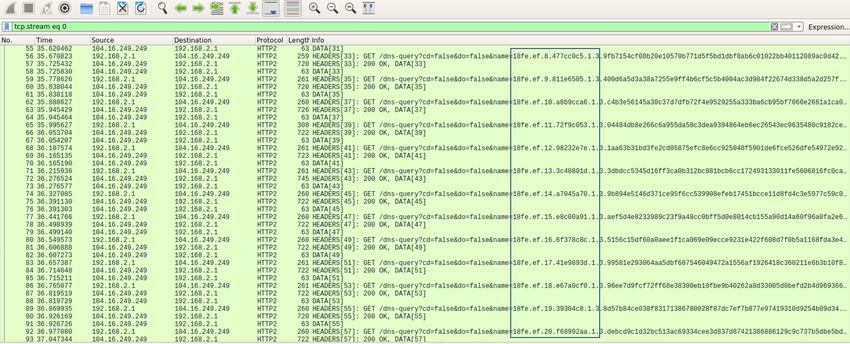
ts
                Dealing with DoH: Methods to Increase DNS Visibility as DoH Gains Traction 2

                                                                                                   gh
                                                                                               Ri
              1. Introduction

                                                                                            ll
                                                                                       Fu
                         DNS over HTTPS (DoH) will soon be available within the native Windows DNS
              Client (Jensen, Pashov, Montenegro, 2019), and network analysts must identify the most

                                                                                 ns
              effective log collection and analysis techniques. Some of the current methods of analysis

                                                                              ai
              for DoH include either preventing the use of DoH (Hjelm, 2019, p.20) or utilizing

                                                                          et
              SSL/TLS proxies to inspect the queries (Middlehurst, 2018). Internet Service Providers

                                                                    rR
              (NCTA, 2019), governments (Gatlan, 2019), and many security professionals (Warran &

                                                                ho
              Buchanan, 2019) have spoken out against DoH due to the challenges it presents to current

                                                            ut
              filtering, identification, and blacklisting methods. Encrypted DNS is beneficial to privacy

                                                       ,A
              and security overall, and it is the researcher’s opinion that security professionals must
                                                   te
              embrace encrypted protocols while developing robust techniques to identify malicious
                                              itu

              traffic.
                                          st

                         Encrypted DNS provides increased privacy, and can prevent man-in-the-middle
                                       In

              attacks. It is also an imminent technology that security professionals must face. Malicious
                                NS

              actors have always abused DNS in C2 channels and for data exfiltration. The introduction
                          SA

              of DoH will only prove to be more enticing to adversaries. Malware such as Godlua and
              PsiXbot have already made use of the protocol (“New Godlua Backdoor Found Abusing
                     e
                Th

              DNS Over HTTPS (DoH) Protocol”). DoH traffic is not easily distinguished from other
          20

              HTTPS traffic, so it will be miscategorized by tools such as Zeek. Blocking DoH may
              seem like a viable option, but due to its use of port 443, this becomes difficult, especially
     20

              if custom malware makes a presence on the network (Cihodariu, 2019).
 ©

                         DoH, in its current implementation, can and should be utilized safely with the
              addition of host logging, proxy methods, and a Security Event Information Management
              (SEIM) solution. Firefox can provide logs on DoH resolution, which includes
              unencrypted queries and answers. These logs can be shipped to a SEIM and visualized,
              providing a more complete DNS picture (Hjelm, 2019, p.21). As Chrome and Microsoft
              refine their implementations, it is expected that host and application logs will contain the
              information that analysts need in an unencrypted format. This research will implement
              custom Elasticsearch, Logstash, and Kibana configurations to view DoH information on

              Scott D. Fether, sfether711@outlook.com
© 2020 The SANS Institute                                                                           Author retains full rights.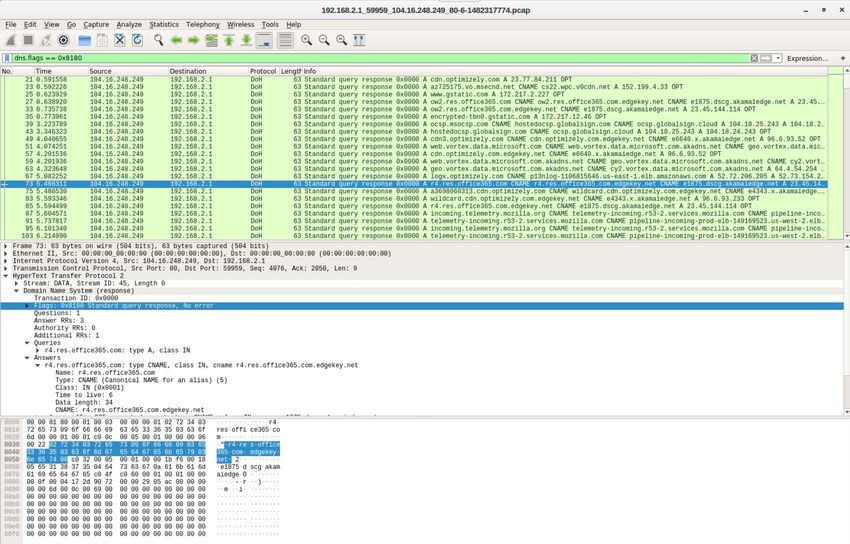
ts
                Dealing with DoH: Methods to Increase DNS Visibility as DoH Gains Traction 3

                                                                                                  gh
                                                                                              Ri
              Security Onion. It will also attempt to measure the effectiveness of proxying traffic

                                                                                          ll
              destined for port 443.

                                                                                     Fu
                                                                               ns
              2. Research Method

                                                                            ai
                      To determine the effectiveness of various logging and analysis techniques, a

                                                                        et
              VMWare ESXi lab environment was used to create three different security architectures.

                                                                  rR
              All scenarios implemented a pfSense firewall as the gateway for a LAN. Each LAN

                                                                ho
              included one Windows 10 version 1909 virtual machine (VM) with Firefox version

                                                            ut
              17.0.1 installed. Firefox was configured to utilize DoH by following the procedures

                                                      ,A
              outlined at https://support.mozilla.org/en-US/kb/firefox-dns-over-https (“Firefox DNS-
                                                   te
              over-HTTPS”). Cloudflare was configured as the DoH server in all scenarios. Each
                                             itu

              scenario also included a standalone Security Onion VM to capture and analyze traffic.
                                         st

                      With each of these architectures in place, Firefox browsed several websites. Once
                                       In

              at least 100 DoS queries were generated, the researcher checked Security Onion to
                              NS

              identify how the traffic was categorized and analyzed. This method revealed to analysts
                        SA

              the level of detail each security architecture presented, and whether this provided value to
              their ability to analyze traffic or intrusions.
                     e
                Th

                      Once this baseline was gathered, a tool called GoDoH simulated a malware
          20

              infection that utilized DoH as a command and control method. GoDoH is a proof of
     20

              concept that uses DoH as a means to issue OS commands or transfer files. The
              effectiveness of each scenario was measured to determine which architecture was best
 ©

              suited to detect malware using DoH.

              2.1. Scenario 1 - Baseline
                      Scenario 1 served as the baseline for data collection. No additional logging was
              enabled on either VM. This scenario represents the security architecture that an enterprise
              would likely implement without consideration for handling DoH traffic. This basic LAN
              included the Windows 10 VM with Firefox and Security Onion. Prior to collecting data,
              the assumption was that DoH would evade Security Onion’s ability to track name
              resolution due to its encrypted nature and utilization of the standard HTTPS port 443.

              Scott D. Fether, sfether711@outlook.com
© 2020 The SANS Institute                                                                         Author retains full rights.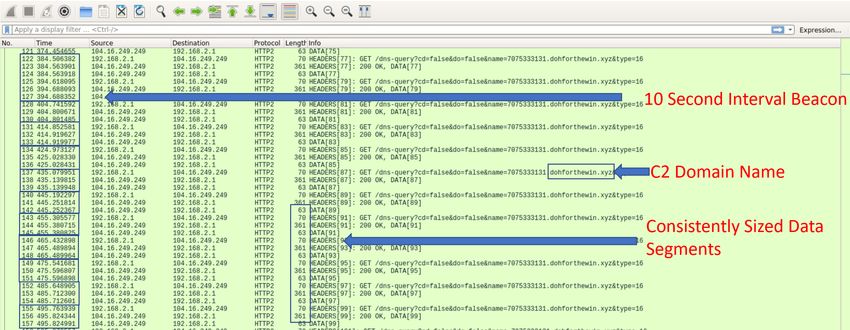
ts
                Dealing with DoH: Methods to Increase DNS Visibility as DoH Gains Traction 4

                                                                                                   gh
                                                                                              Ri
              2.2. Scenario 2 – Firefox HTTP logs with ELK

                                                                                           ll
                      Scenario 2 enabled some enhanced logging on the VMs. This scenario intended to

                                                                                      Fu
              identify how much additional DoH visibility could be gained by enabling Firefox HTTP

                                                                                ns
              logging. Firefox HTTP log modules were enabled utilizing the “about:networking”

                                                                            ai
              configuration option. Specific steps for enabling these log modules are located at

                                                                        et
              https://developer.mozilla.org/en-US/docs/Mozilla/Debugging/HTTP_logging (“HTTP

                                                                   rR
              logging”). In this lab, the logging modules for “timestamp,sync,nsHostResolver:5” were

                                                             ho
              enabled to capture DoH queries and answers at the unencrypted level. The remaining

                                                          ut
              modules were disabled to prevent the log files from growing too large. After logging was

                                                    ,A
              enabled, the researcher installed Filebeat on the Windows 10 VM. Filebeat was
                                                 te
              configured to ship the Firefox logs to Security Onion’s Elasticsearch, Logstash, and
                                           itu

              Kibana (ELK) instance.
                                        st

                      For Security Onion to correctly parse custom Firefox logs, a custom Logstash
                                    In

              configuration file must be written. Custom visualizations and dashboards in Kibana were
                             NS

              also written so that the data could be appropriately visualized for analysis. The specific
                        SA

              configuration files, visualizations, dashboards, and procedures are published on the
              researcher’s GitHub page (Figure 1) at https://github.com/SigWarrant/Firefox-DoH-SO.
                     e
                Th

              The assumption before data collection was that enhanced logging would provide an
              analyst with unencrypted DoH queries and answers.
          20
     20
 ©

              Scott D. Fether, sfether711@outlook.com
© 2020 The SANS Institute                                                                          Author retains full rights.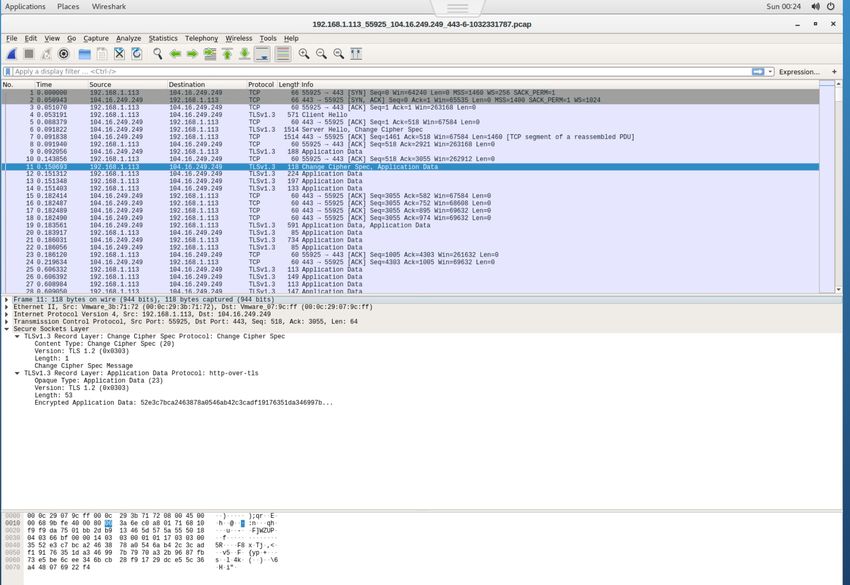
ts
                Dealing with DoH: Methods to Increase DNS Visibility as DoH Gains Traction 5

                                                                                                  gh
                                                                                              Ri
                                                                                          ll
                                                                                     Fu
                                                                               ns
                                                                            ai
                                                                        et
                                                                  rR
                                                             ho
                                                         ut
                                                    ,A
                                                te
                                           itu
                                        st
                                    In
                             NS

              Figure 1. Firefox-DoH-SO GitHub Page
                        SA

              2.3. Scenario 3 – Security Onion with PolarProxy
                      Scenario 3 focused on proxying DoH traffic at the network level, allowing
                     e
                Th

              Security Onion to analyze the DoH traffic in an unencrypted form. This architecture
              started with the same setup as Scenario 1. From that baseline, PolarProxy was installed
          20

              on the Security Onion VM using the instructions provided by NETRESEC at
     20

              https://www.netresec.com/?page=Blog&month=2020-01&post=Sniffing-Decrypted-
 ©

              TLS-Traffic-with-Security-Onion (Hjelmvik, 2020). Port-forwarding was configured on
              the pfSense firewall to redirect all port 443 traffic to the Security Onion where it would
              be decrypted by PolarProxy. Upon decryption, PolarProxy utilized tcpreplay to feed the
              unencrypted data to Security Onion for analysis. A graphic depiction of this architecture
              is shown in Figure 2. In this configuration, all HTTPS traffic (including DoH) was
              analyzed in its unencrypted form while remaining encrypted during network exposure.
              Before data collection, the assumption for this scenario was that the unencrypted DoH
              traffic would be parsed as HTTP for more detailed analysis by Security Onion tools.

              Scott D. Fether, sfether711@outlook.com
© 2020 The SANS Institute                                                                         Author retains full rights.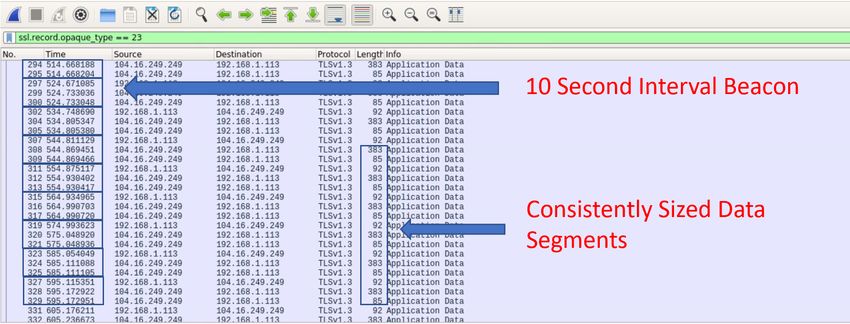
ts
                Dealing with DoH: Methods to Increase DNS Visibility as DoH Gains Traction 6

                                                                                                 gh
                                                                                             Ri
                                                                                         ll
                                                                                    Fu
                                                                               ns
                                                                           ai
                                                                       et
                                                                  rR
                                                             ho
                                                         ut
                                                    ,A
                                                te
                                           itu
                                        st
                                    In

              Figure 2. Security Onion with PolarProxy (Hjelmvik, 2020)
                             NS

              2.4. Malware Infection
                        SA

                      Scenario 1-3 was infected with a simulation of malware utilizing DoH as a
                     e

              command and control function. A C2 tool called GoDoH was used to infect the Windows
                Th

              10 machines in each scenario. According to Sensepost, “Godoh is a proof of concept
          20

              Command and Control framework, written in Golang, that uses DNS-over-HTTPS as a
     20

              transport medium” (Sensepost, 2019). GoDoH uses a combination of DoH and domain
              fronting to establish a covert C2 channel. Domain fronting is a circumvention technique
 ©

              that obfuscates the domain of an HTTPS connection (“Domain fronting”, 2020). One
              perspective suggests that:
                      Using legitimate and more often than not, trusted domains such as google.com to
                      “front” your traffic to a C2 has been a thing for a while. Domain fronting has seen
                      a decent enough uptake where it has been used for censorship circumvention as
                      well as in some malware campaigns (SensePost, 2018).
                      To establish a GoDoH C2 channel, a public domain name was registered using
              NameCheap called “dohforthewin.xyz.” An Amazon t2.micro instance was configured as

              Scott D. Fether, sfether711@outlook.com
© 2020 The SANS Institute                                                                         Author retains full rights.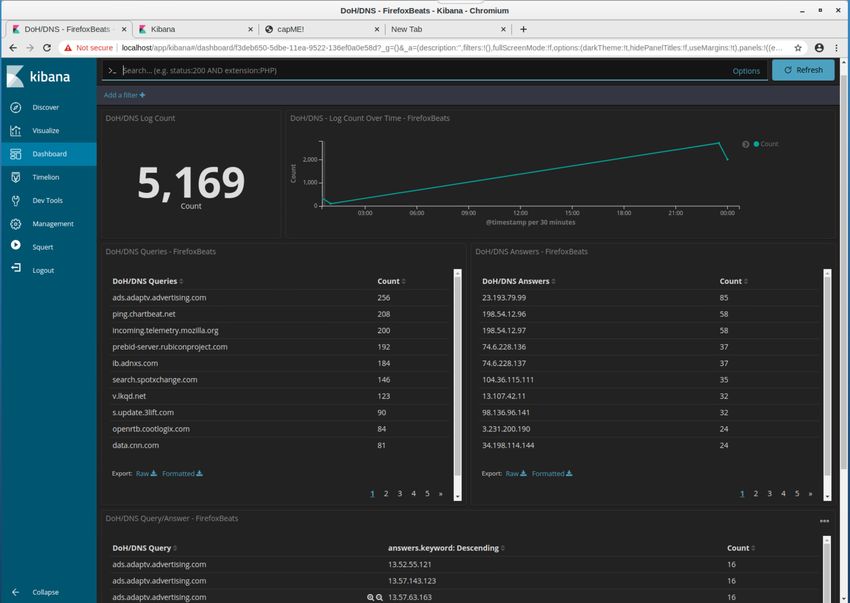
ts
                Dealing with DoH: Methods to Increase DNS Visibility as DoH Gains Traction 7

                                                                                                       gh
                                                                                                Ri
              the authoritative name server for this domain. GoDoH was installed on the server and

                                                                                            ll
              configured to listen for queries on port 53.

                                                                                       Fu
                                                                                 ns
                                                                             ai
                                                                          et
                                                                    rR
                                                              ho
              Figure 3. GoDoH C2 Server

                                                             ut
                                                     ,A
                      On the client, the GoDoH agent was downloaded and configured to run utilizing
              the preferred DoH server. For consistency, the CloudFlare server was utilized to establish
                                                 te
                                            itu
              the DoH C2 session. This configuration enabled the C2 server to utilize CloudFlare as a
              means to forward hidden data within DoH queries and answers. The assumption for this
                                        st
                                    In

              portion of the research was that each solution would render the C2 channel differently.
              One solution may provide more complete visibility on the trace, making it easier for an
                             NS

              analyst to discover the malicious traffic.
                        SA
                     e
                Th

              Figure 4. GoDoH Agent
          20

              3. Findings and Discussion
     20
 ©

                      To identify how the DoH traffic is handled in each scenario, it is essential to
              understand which DoH servers Firefox is communicating with. By default, Firefox
              utilizes https://mozilla.cloudflare-dns.com as its server. Using Firefox’s own DoH
              resolver that is available in the “network:config” page, it is possible to find the IP
              addresses of this url (Figure 5). This information was utilized to analyze the traffic with
              these source/destination IP addresses.

              Scott D. Fether, sfether711@outlook.com
© 2020 The SANS Institute                                                                              Author retains full rights.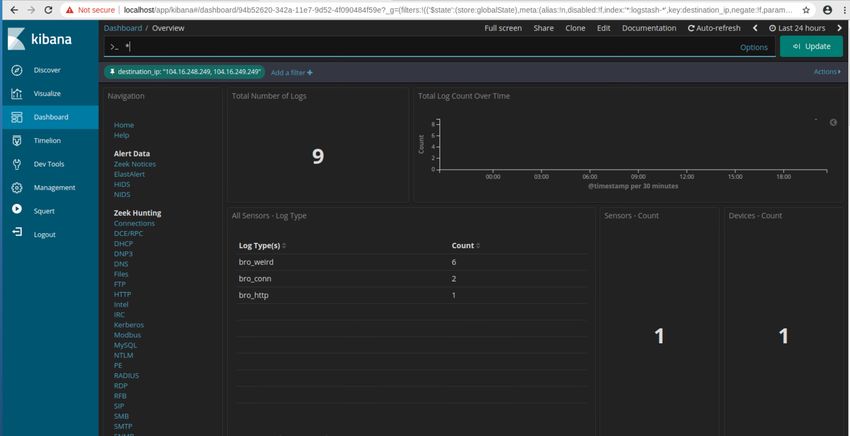
ts
                Dealing with DoH: Methods to Increase DNS Visibility as DoH Gains Traction 8

                                                                                                     gh
                                                                                                Ri
                                                                                            ll
                                                                                       Fu
                                                                                 ns
                                                                              ai
                                                                          et
                                                                    rR
                                                               ho
                                                           ut
                                                     ,A
                                                 te
              Figure 5. IP Lookup of Mozilla’s Cloudflare DoH Server
                                            itu

              3.1. Scenario 1 Findings
                                        st
                                    In

                      In this baseline scenario, the DoH traffic was captured by Security Onion, and
              placed in Zeek’s ssl.log in its encrypted format. This behavior was expected. Zeek was
                             NS

              unable to identify the traffic as DNS due to its use of port 443 and encrypted nature.
                        SA

              Furthermore, when the captures were viewed in Wireshark there were just a few sessions
                     e

              that appeared to consist of multiple queries and answers. The traffic was using TLS 1.3,
                Th

              and without a proxy, this did not provide the analyst with detailed data. The only way to
          20

              separate the traffic from other SSL traffic was to filter for the destination IPs of
     20

              CloudFlare’s DoH servers, which is depicted in Figure 6.
 ©

              Scott D. Fether, sfether711@outlook.com
© 2020 The SANS Institute                                                                            Author retains full rights.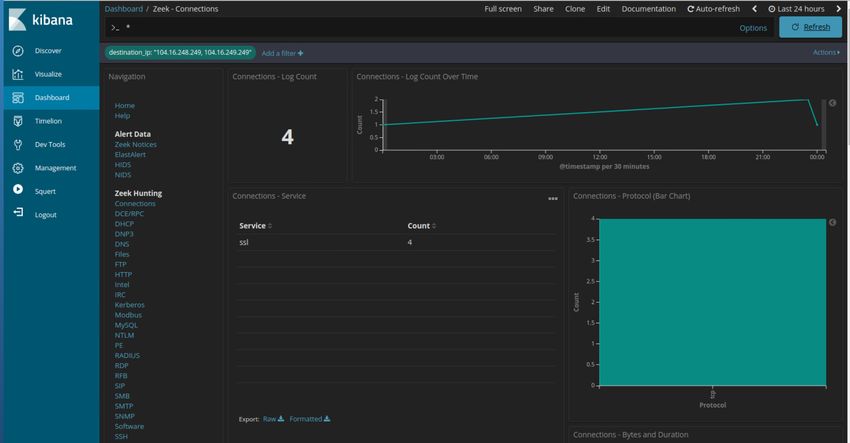
ts
                Dealing with DoH: Methods to Increase DNS Visibility as DoH Gains Traction 9

                                                                                                 gh
                                                                                             Ri
                                                                                         ll
                                                                                    Fu
                                                                               ns
                                                                           ai
                                                                        et
                                                                  rR
                                                             ho
                                                         ut
                                                    ,A
                                                te
                                           itu

              Figure 6. Zeek Hunting with Encrypted DoH Traffic
                                        st

                      Figure 7 shows the encrypted DoH traffic as it is seen in Wireshark for this
                                    In

              scenario.
                             NS
                          SA
                     e
                Th
          20
     20
 ©

              Figure 7. Encrypted DoH Traffic

              Scott D. Fether, sfether711@outlook.com
© 2020 The SANS Institute                                                                        Author retains full rights.
ts
Dealing with DoH: Methods to Increase DNS Visibility as DoH Gains Traction 10
gh
Ri
The same network trace shows as a single SSL session when opened in Network
ll
Miner because multiple queries are performed utilizing the same source and destination
Fu
port. This lack of detailed data validates the assumption that DoH can effectively hide the
ns
nature of its traffic unless additional methods are utilized.
ai
Although the nature of the traffic is shrouded in encryption for this scenario, one
et
tool did prove its ability to show the presence of DoH traffic on the network, regardless
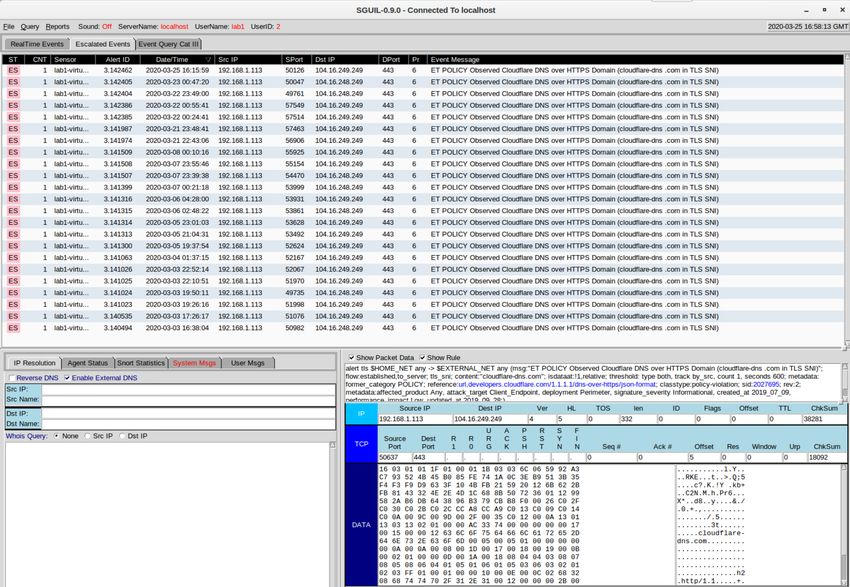
rR
of the encrypted format. Suricata fired multiple alerts when DoH traffic initialized with
ho
the “ET POLICY Observed Cloudflare DNS over HTTPS Domain (cloudflare-dns.com
ut
in TLS SNI)” rule. This rule, sid 2027695, utilizes the TLS Servier Name Indication
,A
(SNI) to identify standard DoH traffic on the network. The rule reads the content of the
te
packet where the SNI is located and looks for “cloudflare-dns.com.” It is useful in
itu
identifying the presence of the protocol on a network, and can effectively be utilized to
st
identify DoH traffic if it is against policy. SGUIL was used to view these Suricata alerts.
In
A screenshot of the findings is shown in Figure 8.
NS
SA
e
Th
20
20
©
Figure 8. Suricata Alerts for Cloudflare DoH Traffic
Scott D. Fether, sfether711@outlook.com
© 2020 The SANS Institute Author retains full rights.ts
Dealing with DoH: Methods to Increase DNS Visibility as DoH Gains Traction 11
gh
Ri
3.2. Scenario 2 Findings
ll
This architecture was the same as Scenario 1 from the network capture
Fu
perspective, but it did attempt to provide visibility on the queries at the host logging
ns
level. Host log visibility was accomplished by shipping Firefox HTTP logs to Security
ai
Onion via Filebeat. The Security Onion ELK stack provided a centralized place for the
et
analyst to parse and visualize these logs in an unencrypted format. Using the methods
rR
outlined in the researcher’s GitHub page https://github.com/SigWarrant/Firefox-DoH-
ho
SO, Scenario 2 enabled Security Onion to see queries and answers, aggregate those beats
ut
into a visualization, and build a dashboard for a centralized location for the information.
,A
Figure 9 shows the dashboard. te
itu
st
In
NS
SA
e
Th
20
20
©
Figure 9. Custom Kibana dashboard for Firefox beats
Using this method, the enhanced logging allowed each query that Firefox
performed to be parsed by Logstash as a single event. These events were then sent to
Elasticsearch for indexing, and were visualized via Kibana. The DoH queries and
answers were aggregable by accessing the “query.keyword” and “answers.keyword”
fields within Elasticsearch. This dashboard allows an analyst to see how many times and
Scott D. Fether, sfether711@outlook.com
© 2020 The SANS Institute Author retains full rights.ts
Dealing with DoH: Methods to Increase DNS Visibility as DoH Gains Traction 12
gh
Ri
at what frequency a query is performed. It also permits an analyst to view all IP addresses
ll
that were returned for a particular query.
Fu
Scenario 2 was an improvement over the baseline configuration, because by
ns
accessing the host logs in their unencrypted format, a security analyst can view the
ai
queries and answers that Firefox is utilizing. At the same time, the queries are not
et
viewable over the network, so the inherent privacy protections that DoH provides remain
rR
intact. In that respect, this method is an improvement over Scenario 1; however, this only
ho
accounted for Firefox activity. If the host was infected with malware that utilizes DoH as
ut
a C2 channel, the logs would not be visible to an analyst. Custom C2 activity would only
,A
be accessible from a network capture perspective, and this scenario did not improve upon
that situation.
te
itu
3.3. Scenario 3 Findings
st
Scenario 3 utilized PolarProxy to decrypt all traffic destined for port 443.
In
PolarProxy sent unencrypted copies of the traffic to Security Onion on port 57012 using
NS
tcpreplay. This proxy method presented data to Security Onion in an unencrypted format.
SA
The expected behavior was that all the DoH traffic would be parsed by Zeek and placed
in the http.log. Upon generating traffic, however, this was not the case consistently.
e
Th
While Zeek categorized some of the traffic as HTTP, other DoH traces were placed in the
weird.log for various reasons. Zeek had three reasons for placing the traffic in weird.log:
20
"bad_HTTP_request", "line_terminated_with_single_CR", and
20
"unknown_HTTP_method". A smaller portion of traces did make it into the http.log. In
©
this test, six traces made it into weird.log, and only one made it into http.log. Zeek log
placement is shown in Figure 10.
Scott D. Fether, sfether711@outlook.com
© 2020 The SANS Institute Author retains full rights.ts
Dealing with DoH: Methods to Increase DNS Visibility as DoH Gains Traction 13
gh
Ri
ll
Fu
ns
ai
et
rR
ho
ut
,A
te
itu
Figure 10. Zeek categorization of unencrypted DoH traffic
st
Regardless of which log Zeek places the trace in, each one can be analyzed in
In
plain text via Wireshark. In Figure 11, the researcher used the Wireshark filter “dns.flags
NS
== 0x8180” to view all standard query responses coming from the Cloudflare server.
Queries and answers were seen in plain text. Furthermore, since the traffic was analyzed
SA
at the network level, the analyst has complete information as to the data contained in the
e
transmission, including the query, query type, class, time-to-live, data length, and
Th
CNAME. If an attacker were to misuse the DoH protocol for C2 or tunneling, the analyst
20
would have all the data necessary to identify the protocol misuse.
20
©
Scott D. Fether, sfether711@outlook.com
© 2020 The SANS Institute Author retains full rights.ts
Dealing with DoH: Methods to Increase DNS Visibility as DoH Gains Traction 14
gh
Ri
ll
Fu
ns
ai
et
rR
ho
ut
,A
te
itu
st
In
Figure 11. Unencrypted DoH traffic in Wireshark
NS
Security Onion has more tools available than just Zeek, and this makes it possible
SA
to utilize intrusion detection tools like Suricata for automated detection. This was evident
in Scenario 1, where DoH traffic to CloudFlare triggered an alert. When analyzing traffic
e
Th
in an unencrypted format, Suricata rules may need to be customized to trigger on
decrypted traffic.
20
As the analyst was building the security architecture for Scenario 3, it was
20
discovered that a tool called NetworkMiner, already included in the Security Onion
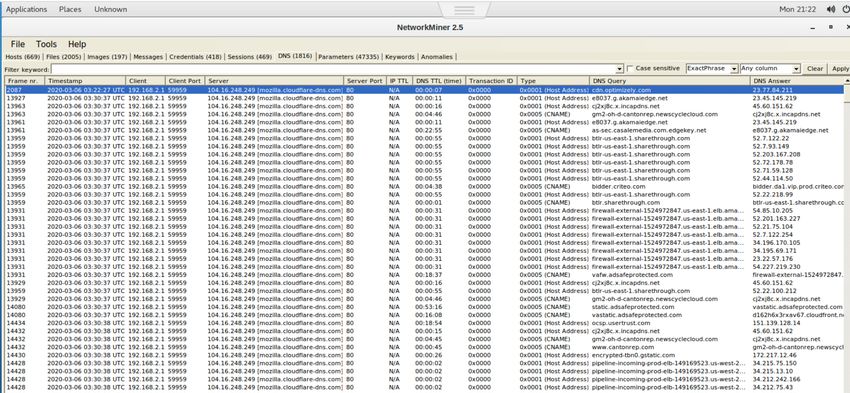
©
distro, has a parser for DoH traffic built-in. Erik Hjelmvik demonstrated this at CS3Sthlm
2019 (Hjelmvik, 2020). When traffic is sent to NetworkMiner in its unencrypted form, all
DoH traffic can be viewed on its DNS tab. This can be accomplished simply by
configuring NetworkMiner to listen on port 57012. The feature is called PCAP-over-IP
and is available as an option under the “File” menu.
Scott D. Fether, sfether711@outlook.com
© 2020 The SANS Institute Author retains full rights.ts
Dealing with DoH: Methods to Increase DNS Visibility as DoH Gains Traction 15
gh
Ri
ll
Fu
ns
ai
et
rR
Figure 12. NetworkMiner PCAP-over-IP configuration
ho
Optionally, the analyst could open a decrypted pcap in NetworkMiner to view the
ut
traffic in the same way. Still, the ability to capture the traffic live using PCAP-over-IP
,A
provides additional ways to conduct incident response. If a security analyst suspects that
te
DoH is being utilized maliciously, he or she could redirect HTTPS traffic to Security
itu
Onion with PolarProxy, and use this tool as a way to capture all DNS and DoH traffic for
st
that particular machine. NetworkMiner parses the traffic in the same way that Wireshark
In
does but filters DNS specifically all in one tab.
NS
SA
e
Th
20
20
©
Figure 13. DoH traffic in NetworkMiner
These tools work very well when you are expecting to find DoH traffic on your
network, but if DoH were prohibited, the proxied traffic would present a bit of a problem.
In Scenario 1, it was observed that Suricata fired multiple alerts concerning the presence
of DoH traffic. This rule used TLS SNI to identify traffic going to CloudFlare, and could
be very useful if the enterprise’s policy is to prohibit DoH to specific servers. In Scenario
Scott D. Fether, sfether711@outlook.com
© 2020 The SANS Institute Author retains full rights.ts
Dealing with DoH: Methods to Increase DNS Visibility as DoH Gains Traction 16
gh
Ri
3, all the traffic was decrypted before being sent to Security Onion’s suite of tools.
ll
Because of this, no Suricata rules fired, showing the presence of DoH traffic. While
Fu
analyzing the traffic in its decrypted form proved useful for inspecting the packets in
ns
detail, it did render some alerts benign.
ai
Scenario 3 provided the most visibility into DoH traffic out of the three options.
et
One of the benefits is that DoH traffic remained encrypted over the network. The only
rR
place that the decrypted traffic could be viewed was on the Security Onion host itself.
ho
This scenario accounted for all DoH traffic, whether it originated from Firefox, Chrome,
ut
Windows, or custom applications. Some tools, such as Suricata were not as useful as they
,A
were in Scenario 1, but it was the most robust scenario for identifying DoH misuse.
te
3.4. Malware Detection Findings
itu
Upon observing the behavior of regular DoH traffic in each scenario, the malware
st
was introduced into each lab environment. A GoDoH C2 server was configured on an
In
Amazon t2.micro instance, and the domain name “dohforthewin.xyz” was registered for
NS
the C2 to use. Once the agent was installed and configured to communicate to the C2
SA
server utilizing CloudFlare DoH, commands could be issued to the client utilizing DoH
as a covert channel. Figure 14 shows the success of this C2 channel through the issuance
e
Th
of the “systeminfo” command. Several commands were issued in each lab instance to
generate enough traffic for Security Onion analysis.
20
20
©
Scott D. Fether, sfether711@outlook.com
© 2020 The SANS Institute Author retains full rights.ts
Dealing with DoH: Methods to Increase DNS Visibility as DoH Gains Traction 17
gh
Ri
ll
Fu
ns
ai
et
rR
ho
ut
,A
te
itu
st
In
NS
SA
e
Th
20
Figure 14. C2 commands utilizing DoH as a covert channel
20
As soon as the GoDoH agent was initiated in Lab 1, the Suricata alert for
©
Cloudflare DoH traffic fired and was visible in SGUIL. This provided a starting point for
the analyst to view the trace. SGUIL gives the user the ability to open the offending
network trace by merely right-clicking the alarm and opening it in Wireshark. As
expected, the trace contained encrypted TLS traffic, but the data still had the recognizable
traits of a C2 channel. When filtering only for frames that included application data, some
patterns emerged. These patterns included a C2 beacon interval of 10 seconds and
consistently-sized data segments. The alert quickly leads to the conclusion that C2 data
exists on the network, as seen in Figure 15.
Scott D. Fether, sfether711@outlook.com
© 2020 The SANS Institute Author retains full rights.ts
Dealing with DoH: Methods to Increase DNS Visibility as DoH Gains Traction 18
gh
Ri
ll
Fu
ns
ai
et
rR
ho
ut
Figure 15. GoDoH C2 Beacon in Wireshark
,A
The frames that included deviations from the consistent lengths of 383, 85, and 92
te
are presumably where data exchange occurred between the C2 server and agent. That
itu
data presents itself in a completely encrypted format in both Lab 1 and Lab 2. Lab 2’s
st
host logging produced no further insight for the analyst because the GoDoH agent was
In
running in its process outside of Firefox’s host logging capability.
NS
While the C2 channel was able to be identified in these all scenarios, it could
SA
easily be lost in a network where connections to CloudFlare are permitted. It is likely that
an analyst would disable the Suricata rule for Cloudflare DoH in order to minimize the
e
number of alerts that are produced. If that were the case, the Suricata rule would never
Th
fire. In a restrictive environment, however, this Suricata alert would stand out
20
immediately and require further analysis.
20
Scenario 3 did not produce a Suricata alert, but this was expected based on
©
previous analysis. The traffic was placed into Zeek’s http.log in a decrypted format. This
presented a much different view of the data. Wireshark, nor any other tool, parsed the
traffic as DoH, but when viewed, it was quickly identified as DoH traffic by analyzing
the HTTP2 headers. Not only was the analyst able to see the 10-second interval between
beacons and consistency in data length, but he was able to see the C2 malware domain in
plain text. This provides a distinct advantage over Scenario 1 and Scenario 2, because the
domain name can be reported as malicious once the channel is identified. A view of C2
beacon traffic is depicted in Figure 16.
Scott D. Fether, sfether711@outlook.com
© 2020 The SANS Institute Author retains full rights.ts
Dealing with DoH: Methods to Increase DNS Visibility as DoH Gains Traction 19
gh
Ri
ll
Fu
ns
ai
et
rR
ho
ut
Figure 16. GoDoH C2 Beacon – Decrypted
,A
The capture in Figure 16 only shows the C2 keepalive traffic but does not
te
represent actual data transfer between the agent and the C2 server. In Lab 1 and 2, the
itu
analyst was only able to guess that data was being transferred by observing data length
st
differences in the traffic. Since the traffic was still encrypted by TLS, no other patterns
In
could be seen. In Scenario 3, however, different data patterns can be observed which can
NS
identify or create a signature for the C2 channel. Figure 17 shows an actual data transfer
SA
between the server and the agent. A pattern can be observed within the DNS query where
segments are distinguished by number. Presumably, when the C2 server commands the
e
Th
agent to issue “systeminfo” to the OS, that data is encrypted or encoded in segments.
Still, an identifier for each segment is given so that the server can reassemble the OS
20
output on the other end. Note that the third “.” delimited field within the dns-query
20
increases by 1 each time new data is sent. This is presumed to be a segment identifier.
©
Scott D. Fether, sfether711@outlook.com
© 2020 The SANS Institute Author retains full rights.ts
Dealing with DoH: Methods to Increase DNS Visibility as DoH Gains Traction 20
gh
Ri
Figure 17. GoDoH Data Transfer – Decrypted
ll
While further work would need to be done to read the data that was transferred, it
Fu
is clear that this proxied traffic provides some additional data to an analyst such as the
ns
structure of the queries and the plain text name of the C2 server. The weakness of
ai
Scenario 3’s security architecture is that it renders some Suricata rules useless if they
et
were written to trigger on TLS traffic using SNI. Analyzing DoH in its encrypted format
rR
as depicted in Scenarios 1 and 2 did have the benefit of utilizing some built-in Suricata
ho
rules for identifying DoH to particular service providers; however, Scenario 3 provided
ut
the analyst the most detail when further investigation was necessary.
4. Recommendations and Implications ,A
te
itu
DoH introduces increased privacy and malware protection over the legacy DNS
st
protocol. It also presents a challenge for information security personnel who have relied
In
on DNS as a mechanism to verify compliance of acceptable use and aid in intrusion
NS
detection. Just as DoH will be utilized as a way to harden the vulnerability of DNS, it is
SA
expected that malicious actors will use it to hide their activity. Information security
professionals must go further than attempting to block the protocol by identifying
e
Th
methods to control and analyze DoH.
20
4.1. Recommendations for Practice
20
This research tested the effectiveness of three different security architectures
when DoH was present on the network. It is clear that current architectures have limited
©
detection capability and do not provide enough detail for malicious DoH traffic to be
analyzed appropriately. Scenario 2 of the research showed that application logging could
aid information security personnel in viewing DoH queries and answers without
compromising the encryption of DoH traffic itself. The additional visibility Scenario 2
provides was limited to the application in which host logging was being performed,
however. This practice is recommended in environments where DoH is being utilized,
and it is especially useful where proxies are not feasible. This research developed
configurations for dealing with Firefox DoH logs. If other applications are being used,
Scott D. Fether, sfether711@outlook.com
© 2020 The SANS Institute Author retains full rights.ts
Dealing with DoH: Methods to Increase DNS Visibility as DoH Gains Traction 21
gh
Ri
researchers can establish configurations to parse those logs as well. This will result in
ll
increased visibility as applications will rely on traditional DNS less in the future.
Fu
Scenario 2 did not, however, account for the visibility of DoH traffic that could be
ns
introduced by custom malware. The ability to alert on DoH using TLS SNI was already a
ai
feature in the baseline Scenario 1 environment. Malware has already been identified that
et
utilizes DoH as a C2 channel. This practice is expected to increase in the future. The
rR
ability to alert on DoH by using Suricata rules is useful, but it does not aid further
ho
analysis, such as identifying the malicious malware domain name. Scenario 3 accounts
ut
for this by proxying all traffic that uses port 443. Research showed that, while Zeek did
,A
not correctly categorize the traffic consistently, the traces were readable and available for
te
analysis. Details such as the structure of C2 queries and the C2 domain name were
itu
revealed by proxying the traffic. Dealing with DoH traffic in its unencrypted form allows
st
analysts to write additional rules using intrusion detection tools such as Suricata. This
In
method provided the most detailed insight into the nature of DoH traffic when compared
NS
with other security architectures.
SA
The researcher recommends that information security personnel utilize a
combination of encrypted analysis, proxy solutions, and application logging to gain
e
Th
proper visibility of DoH traffic on the network. It would be feasible to run two Security
Onion instances – one that analyzes encrypted traffic, and one that works as a proxy –
20
and ship application logs to one or both to gain the advantages of each scenario. With the
20
strengths and weaknesses depicted in this research, slight modifications to a current
©
security infrastructure could significantly increase DoH visibility. Blocking DoH will not
always be feasible, especially as Microsoft intends to release the capability within its
native Windows DNS client. Security personnel should begin using these methods now
so that they can identify the misuse of this protocol in the future.
4.2. Implications for Future Research
Future research should include complete parsers for DoH traffic in security tools.
This research showed that tools such as Zeek were not able to categorize unencrypted
DoH traffic in a consistent manner. While some tools such as NetworkMiner were able to
parse the traffic effectively, more tools need to follow suit. DoH appears to be the future
Scott D. Fether, sfether711@outlook.com
© 2020 The SANS Institute Author retains full rights.ts
Dealing with DoH: Methods to Increase DNS Visibility as DoH Gains Traction 22
gh
Ri
of encrypted DNS and will become part of every network. Tools must adjust to the new
ll
standard to remain effective at identifying malicious traffic.
Fu
Just as the researcher utilized Filebeat to ship Firefox logs to Security Onion,
ns
additional work must be done to accomplish similar tasks for other applications.
ai
Applications should include robust logging capabilities in order to keep this method as
et
useful as possible. Many environments prohibit proxies or make them difficult, so
rR
application logging must continue to be part of the picture within security operations
ho
centers.
ut
,A
5. Conclusion te
DoH is a more secure way to conduct name resolution; however, it presents some
itu
challenges for security personnel who need to control its use. This research introduced a
st
method for analyzing application logs and incorporated them into a security distribution.
In
It also identified the effectiveness of proxying 443 traffic, so analysis can be conducted
NS
after encryption is removed. Security analysts must learn how to handle DoH traffic as it
SA
will become popular in both applications and malware. Using the methods depicted in
this paper, the reader should be able to use these techniques to benefit their organization’s
e
Th
security posture.
20
20
©
Scott D. Fether, sfether711@outlook.com
© 2020 The SANS Institute Author retains full rights.ts
Dealing with DoH: Methods to Increase DNS Visibility as DoH Gains Traction 23
gh
Ri
References
ll
Fu
Atkinson, J. (2019, January 9). Open Sourcing Bro-Sysmon. Retrieved December 27,
2019, from https://engineering.salesforce.com/open-sourcing-bro-sysmon-
ns
946295bc7da2
ai
Baker, C. (2019, September 27). Challenges in Effective DNS Query Monitoring.
et
Retrieved December 5, 2019, from https://www.sans.org/reading-
rR
room/whitepapers/dns/challenges-effective-dns-query-monitoring-39215
ho
Cihodariu, M. (2019, September 18). Enabling DNS over HTTPS (DoH): Advantages
ut
and Best Practices. Retrieved March 25, 2020, from
,A
https://heimdalsecurity.com/blog/dns-over-https-doh-best-practices/#
te
Cimpanu, C. (2019, October 17). DNS-over-HTTPS causes more problems than it solves,
itu
experts say. Retrieved December 27, 2019, from
st
https://www.zdnet.com/article/dns-over-https-causes-more-problems-than-it-
In
solves-experts-say/
NS
Domain fronting. (2020, January 15). Retrieved March 25, 2020, from
SA
https://en.wikipedia.org/wiki/Domain_fronting
Gatlan, S. (2019, October 4). Dutch Govt Explains the Risks Behind DNS-Over-HTTPS
e
Th
Move. Retrieved December 27, 2019, from
https://www.bleepingcomputer.com/news/security/dutch-govt-explains-the-risks-
20
behind-dns-over-https-move/
20
Firefox DNS-over-HTTPS. (n.d.). Retrieved January 10, 2020, from
©
https://support.mozilla.org/en-US/kb/firefox-dns-over-https
Hjelm, D. (2019, August 26). A New Needle and Haystack: Detecting DNS over HTTPS
Usage. Retrieved December 5, 2019, from https://www.sans.org/reading-
room/whitepapers/dns/needle-haystack-detecting-dns-https-usage-39160
Hjelmvik, E. (2020, January 13). Sharing a PCAP with Decrypted HTTPS. Retrieved
February 13, 2020, from https://www.netresec.com/?page=Blog&month=2020-
01&post=Sharing-a-PCAP-with-Decrypted-HTTPS
Hjelmvik, E. (2020, January 20). Sniffing Decrypted TLS Traffic with Security Onion -
NETRESEC Blog. Retrieved February 20, 2020, from
Scott D. Fether, sfether711@outlook.com
© 2020 The SANS Institute Author retains full rights.ts
Dealing with DoH: Methods to Increase DNS Visibility as DoH Gains Traction 24
gh
Ri
https://www.netresec.com/?page=Blog&month=2020-01&post=Sniffing-
ll
Decrypted-TLS-Traffic-with-Security-Onion
Fu
HTTP logging. (n.d.). Retrieved January 23, 2020, from https://developer.mozilla.org/en-
ns
US/docs/Mozilla/Debugging/HTTP_logging
ai
Jensen, T., Pashov, I., & Montenegro, G. (2019, November 17). Windows will improve
et
user privacy with DNS over HTTPS. Retrieved December 20, 2019, from
rR
https://techcommunity.microsoft.com/t5/networking-blog/windows-will-improve-
ho
user-privacy-with-dns-over-https/ba-p/1014229
ut
Middlehurst, D. (2018, October 26). DOH! DNS Over HTTPS Poses Possible Risks to
,A
Enterprises. Retrieved January 7, 2020, from https://www.trustwave.com/en-
us/resources/blogs/spiderlabs-blog/doh-dns-over-https-poses-possible-risks-to-
te
itu
enterprises/
NCTA, CTIA and USTelecom Alert Congressional Committees About Google’s New
st
In
Browser Protocol: NCTA - The Internet & Television Association. (2019,
NS
September 19). Retrieved January 7, 2020, from
https://www.ncta.com/media/media-room/ncta-ctia-and-ustelecom-alert-
SA
congressional-committees-about-googles-new-browser-protocol
e
New Godlua Backdoor Found Abusing DNS Over HTTPS (DoH) Protocol. (n.d.).
Th
Retrieved December 27, 2019, from
20
https://www.trendmicro.com/vinfo/se/security/news/cybercrime-and-digital-
20
threats/new-godlua-backdoor-found-abusing-dns-over-https-doh-protocol
Osborne, C. (2019, September 10). PsiXBot malware upgraded with Google DNS over
©
HTTPS, sexploitation kit. Retrieved December 27, 2019, from
https://www.zdnet.com/article/psixbot-malware-upgraded-with-google-dns-over-
https-sexploitation-kit/
Salesforce. (2019, January 30). salesforce/bro-sysmon. Retrieved December 27, 2019,
from https://github.com/salesforce/bro-sysmon
Sensepost. (2019, October 23). sensepost/goDoH. Retrieved March 15, 2020, from
https://github.com/sensepost/goDoH
SensePost. (2018, October 24). Waiting for goDoH. Retrieved March 25, 2020, from
https://sensepost.com/blog/2018/waiting-for-godoh/
Scott D. Fether, sfether711@outlook.com
© 2020 The SANS Institute Author retains full rights.ts
Dealing with DoH: Methods to Increase DNS Visibility as DoH Gains Traction 25
gh
Ri
ll
Warren, M., & Buchanan, C. (2019, September 6). New DNS Over HTTPS Exploits
Fu
Concern Security Experts. Retrieved January 7, 2020, from
ns
https://www.bluevoyant.com/blog/new-dns-over-https-concern
ai
Windows will improve user privacy with DNS over HTTPS. (2019, December 11).
et
Retrieved December 27, 2019, from
rR
https://techcommunity.microsoft.com/t5/Networking-Blog/Windows-will-
ho
improve-user-privacy-with-DNS-over-HTTPS/ba-p/1014229
ut
,A
te
itu
st
In
NS
SA
e
Th
20
20
©
Scott D. Fether, sfether711@outlook.com
© 2020 The SANS Institute Author retains full rights.Last Updated: September 30th, 2020
Upcoming SANS Training
Click here to view a list of all SANS Courses
SANS October Singapore 2020 Singapore, SG Oct 12, 2020 - Oct 24, 2020 Live Event
SANS Community CTF , Oct 15, 2020 - Oct 16, 2020 Self Paced
SANS Sydney 2020 Sydney, AU Nov 02, 2020 - Nov 14, 2020 Live Event
SANS Secure Thailand Bangkok, TH Nov 09, 2020 - Nov 14, 2020 Live Event
APAC ICS Summit & Training 2020 Singapore, SG Nov 13, 2020 - Nov 21, 2020 Live Event
SANS FOR508 Rome 2020 (in Italian) Rome, IT Nov 16, 2020 - Nov 21, 2020 Live Event
SANS Community CTF , Nov 19, 2020 - Nov 20, 2020 Self Paced
SANS Local: Oslo November 2020 Oslo, NO Nov 23, 2020 - Nov 28, 2020 Live Event
SANS Wellington 2020 Wellington, NZ Nov 30, 2020 - Dec 12, 2020 Live Event
SANS OnDemand OnlineUS Anytime Self Paced
SANS SelfStudy Books & MP3s OnlyUS Anytime Self PacedYou can also read


