Securing Australia | Protecting Our Community - COUNTER-TERRORISM WHITE PAPER
←
→
Page content transcription
If your browser does not render page correctly, please read the page content below

COUNTER-TERRORISM WHITE PAPER

Securing Australia | Protecting Our Community

              2010
Published by the Department of the Prime Minister and Cabinet
Designed by Papercut Pty Ltd, Canberra
Printed by New Millennium Print Pty Ltd to independently assessed, high environmental standards on Mondi Colour Copy,
an FSC certified paper

ISBN 978-1-921385-96-4 (Hardcopy)
ISBN 978-1-921385-99-5 (PDF)

© Commonwealth of Australia 2010

This work is copyright. Apart from any use as permitted under the Copyright Act 1968, no part may be reproduced by any
process without prior written permission from the Department of the Prime Minister and Cabinet.

Requests and enquiries concerning reproduction should be addressed to the Commonwealth Copyright Administration,
Attorney-General’s Department, 3–5 National Circuit, Barton ACT 2600 or at www.ag.gov.au/cca.
Prime Minister’s Foreword

                                             Terrorism continues to pose a serious security challenge to Australia.
                                             The Australian Government remains resolute in its commitment to
                                             protect Australia, its people and interests from this threat.

                                             The Government is committed to concrete action to combat
                                             terrorism. We will continue to ensure that agencies are
                                             appropriately resourced, that responses are agile and can meet
                                             changing threats, and that all necessary and practical action is
                                             taken to protect Australia and Australians.

                                             The policy outlined in this White Paper delivers an effective
                                             and balanced approach that further strengthens our domestic
                                             counter-terrorism efforts and makes a strong contribution
                                             to international counter‑terrorism efforts.

The Government has made a number of important changes to the way Australia responds to terrorism.
This White Paper sets out our strengthened approach to aviation security, and improves the coordination of our
counter-terrorism efforts. It also sets out for the first time a strategy to counter violent extremism in Australia.

The Government has taken and will continue to take all necessary measures to combat terrorism and those
who plan or perpetrate such acts. This White Paper reiterates the Government’s commitment to provide the
necessary resources to Australia’s law enforcement, intelligence, security and border protection agencies to enable
them to operate effectively. At the same time, we have also taken steps to ensure that Australia’s response to
terrorism does not inadvertently undermine the principles that we seek to uphold.

No government can guarantee that Australians will be free from the threat of terrorist attack.

But this Government can guarantee that we will take all necessary and practical measures to combat the threat.

This White Paper forms part of the Government’s national security reform agenda. It is a further step in
delivering a safer, more secure Australia.

The Hon Kevin Rudd MP
Prime Minister of Australia

                     Counter-Terrorism White Paper 2010 Securing Australia | Protecting Our Community                  i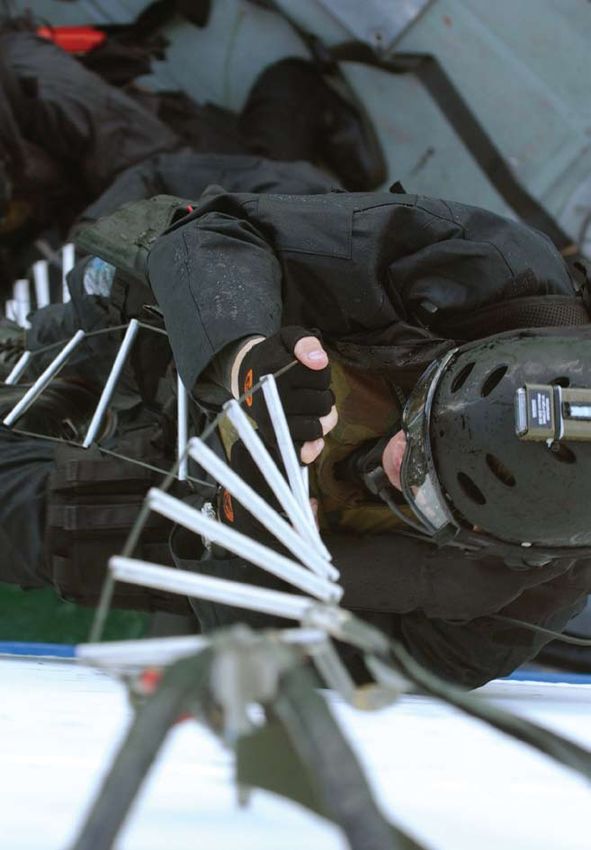
Executive Summary

     The first responsibility of government is the protection of Australia, Australians and Australian interests. So a key
     government priority is to protect Australia from terrorism.

     The threat of terrorism to Australia is real and enduring. It has become a persistent and permanent feature
     of Australia’s security environment.

     The main source of international terrorism and the primary terrorist threat to Australia and Australian interests
     is from a global violent jihadist movement – extremists who follow a distorted and militant interpretation
     of Islam that espouses violence as the answer to perceived grievances. This extremist movement comprises
     al‑Qa’ida, groups allied or associated with it, and others inspired by a similar worldview.

     While the threat is persistent, the challenge has evolved since the last counter-terrorism White Paper in 2004
     in two respects.

     First, while there have been counter-terrorism successes (most notably pressure on al‑Qa’ida’s core leadership
     in Afghanistan and Pakistan, and action against terrorists in South-East Asia), these successes have been offset by
     the rise of groups affiliated with, or inspired by, al‑Qa’ida’s message and methods, with new areas such as Somalia
     and Yemen joining existing areas of concern in South Asia, South-East Asia, the Middle East and the Gulf.

     A second shift apparent since 2004 has been the increase in the terrorist threat from people born or raised
     in Australia, who have become influenced by the violent jihadist message. The bombings in London
     on 7 July 2005, which were carried out by British nationals, brought into stark relief the real threat of
     globally-inspired but locally generated attacks in Western democracies, including Australia.

     A number of Australians are known to subscribe to this message, some of whom might be prepared to engage
     in violence. Many of these individuals were born in Australia and they come from a wide range of ethnic
     backgrounds. The pool of those committed to violent extremism in Australia is not static – over time some
     move away from extremism while others become extreme.

     We have seen terrorist planning within Australia. Since 2001, numerous terrorist attacks have been thwarted
     in Australia. Thirty-eight people have been prosecuted or are being prosecuted as a result of counter-terrorism
     operations and 20 people have been convicted of terrorism offences under the Criminal Code. Over
     40 Australians have had their passports revoked or applications denied for reasons related to terrorism.

     The Government’s counter-terrorism strategy is informed by a number of core judgements. We must take
     a comprehensive and layered approach. Our counter-terrorism measures must be informed by strategic
     judgements about the nature of the threat and Australia’s vulnerability to it. And we must conduct our activities
     in a manner which harnesses our capabilities, upholds our principles and mitigates the risk of attack or
     failure in our response.

ii                        Counter-Terrorism White Paper 2010 Securing Australia | Protecting Our Community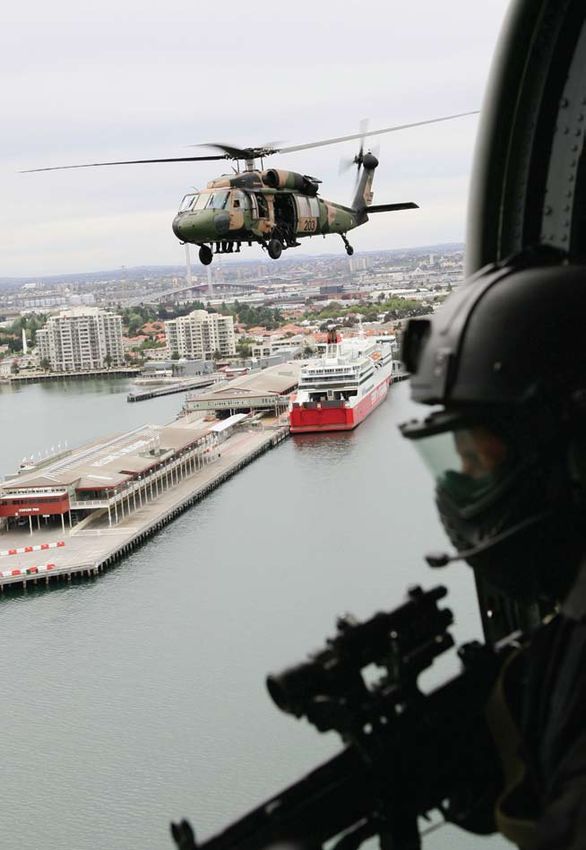
The strategy has four key elements:
1. Analysis: an intelligence-led response to terrorism driven by a properly connected and properly informed
national security community.
2. Protection: taking all necessary and practical action to protect Australia and Australians from terrorism at
home and abroad.
3. Response: providing an immediate and targeted response to specific terrorist threats and terrorist attacks
should they occur.
4. Resilience: building a strong and resilient Australian community to resist the development of any form of
violent extremism and terrorism on the home front.
Analysis
Australia’s counter-terrorism efforts are intelligence-led and focused on prevention. This approach hinges on
strong partnerships and cooperation at the national level, effective engagement at the international level,
and effective information sharing. Over recent years, there has been significant growth in Australia’s security,
intelligence and law enforcement agencies and the Government has taken steps to improve their capabilities
and enhance information sharing. The establishment of the National Intelligence Coordination Committee
has ensured that Australia’s intelligence effort, both domestically and internationally, is better integrated into
the new national security arrangements. The creation of a new Counter-Terrorism Control Centre will also
ensure that we better integrate our overall counter-terrorism intelligence capabilities.
Protection
The Government is committed to taking strong action to protect Australians and reduce the risk of attack.
This approach involves efforts at a number of complementary levels, including:
strong border management arrangements to prevent the movement of individuals who try to enter
or transit Australia to conduct terrorism-related activities by introducing a new biometric-based visa
system for certain non-citizens – making it harder for terrorists to evade detection;
preventing Australians suspected of involvement in terrorism from travelling overseas by revoking
or denying passports;
improving the security of our airports to enhance protection of the travelling public;
continued cooperation and collaboration with the states and territories through comprehensive national
counter-terrorism arrangements;
working in partnership with the business community to protect our critical infrastructure, including
information and communications technology; and
strengthened collaboration with international partners, both bilaterally and multilaterally, to contribute to
international counter-terrorism efforts and create an international environment that is hostile to terrorism.
Counter-Terrorism White Paper 2010 Securing Australia | Protecting Our Community iii
Response
     The Government’s ability to prevent and disrupt terrorist attacks within Australia relies on coordinated and
     cooperative relationships between our intelligence, security and law enforcement agencies nationally.
     This collaborative approach ensures that we have a robust and effective national capacity to respond to terrorist
     threats. Australia’s comprehensive national response uses the full array of Commonwealth, state and territory
     counter-terrorism capabilities. It is underpinned by a legal regime that provides effective powers for our agencies
     and the ability to prosecute people who seek to conduct terrorist acts. The Government will keep these powers
     under review against any further need to expand them or tailor them to deal with any changes in the nature of
     the threat in the future.

     Resilience
     Australia’s counter-terrorism efforts are supported by our open democratic society. There are inherent strengths
     in our society that make Australia resilient to the divisive worldview of al-Qa’ida and like-minded groups.
     However, we know from experience that the terrorist narrative may resonate with a small number of Australians.
     It is incumbent upon all Australians to work together to reject ideologies that promote violence, no matter from
     where they arise or to what purpose they aspire. We must all support and protect the values and freedoms
     from which all Australians benefit. By reducing disadvantage, addressing real or perceived grievances and
     encouraging full participation in Australia’s social and economic life, government policies can help to mitigate
     any marginalisation and radicalisation that may otherwise occur within the Australian community.

     Terrorism will continue to pose challenges to Australia’s national security for the foreseeable future.
     The Government is committed to the continuous improvement of Australia’s counter-terrorism efforts,
     and will pursue a range of measures to protect Australia, its people and interests from terrorism.
     Our coordinated, multilayered approach is aimed at ensuring that counter-terrorism efforts are effective
     and conducted in a manner that enhances our wider national security.

     The Government remains committed to taking all necessary and practical action to keep Australia safe.

iv                        Counter-Terrorism White Paper 2010 Securing Australia | Protecting Our Community
Table of Contents

Executive Summary                                                                                           ii

1 Introduction                                                                                              1

2 The Threat                                                                                                5

3 Australia’s Counter-Terrorism Strategy                                                                   17

4 Analysis                                                                                                 25
   An intelligence-led response to terrorism driven by a properly connected and properly informed
   national security community

5 Protection                                                                                               33
   Taking all necessary and practical action to protect Australia and Australians from terrorism at home
   and abroad

6 Response                                                                                                 53
   Providing an immediate and targeted response to specific terrorist threats and terrorist attacks
   should they occur

7 Resilience                                                                                               63
   Building a strong and resilient Australian community to resist the development of any form of violent
   extremism and terrorism on the home front

8 Conclusion                                                                                               69

Glossary                                                                                                   73

                   Counter-Terrorism White Paper 2010 Securing Australia | Protecting Our Community              v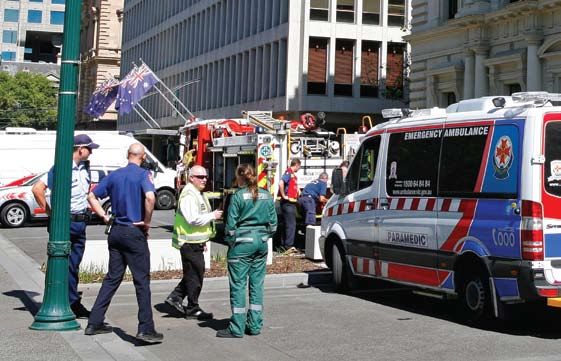
introduction

  01
               1
1 Introduction
Terrorism is the use of violence by groups or individuals pursuing political objectives. Terrorists are frequently
indiscriminate in their attacks and can deliberately target civilians and non-combatants, often seeking to
inflict mass casualties.
The purpose of this Counter-Terrorism White Paper, Securing Australia – Protecting our Community, is to:
explain the nature of the terrorist threat to Australia within Australia’s broader national security context;
set out the Australian Government’s strategy for countering terrorism; and
detail the policy settings by which the Government will implement its counter-terrorism strategy.
This White Paper reflects a number of improvements to Australia’s approach to counter-terrorism. It
brings together for the first time, in a comprehensive manner, Australia’s response to terrorism both
domestically and internationally.
The strategy outlined in this White Paper sets out a comprehensive response to terrorism while upholding the
fundamental rights and freedoms of all Australians. Preventing terrorist acts, and dissuading those who might
seek to commit them, is a complex challenge for all levels of government and the Australian community more
broadly. The responses and measures outlined in this White Paper are targeted and proportionate, and take into
account the evolving strategic environment and the lessons we have learnt over recent years.
Australia’s counter-terrorism policies form part of the Government’s comprehensive national security strategy.
Australia faces a range of complex, dynamic and evolving security challenges. The National Security Statement
of 2008 set out the Government’s vision for a coherent approach to addressing these challenges. Australia must
be clear in its analysis of the threats and challenges we face, actively manage them, and seize opportunities to
enhance our overall national security.
This White Paper sets out Australia’s counter-terrorism objectives and the means by which the Government
will pursue them. The nature of the threat is explained in Chapter two and the Government’s counter‑terrorism
strategy is detailed in Chapter three. The various elements of our strategy are detailed in Chapters four to seven.
Following page: Members of the Australian Defence Force Tactical Assault Group (East) in Black Hawk helicopters over Melbourne.
Counter-Terrorism White Paper 2010 Securing Australia | Protecting Our Community 3The threat
02
52 The Threat
The threat of terrorism to Australia and our interests is real. Terrorism has become a persistent and permanent
feature of Australia’s security environment. It threatens Australians and Australian interests both at home and
overseas. The Government’s intelligence agencies assess that further terrorist attacks could occur at any time.
Over the past century the world has seen a succession of terrorist campaigns supporting various ideological or
nationalist causes. Methods of attack have evolved and terrorists have proved innovative, adaptive and ruthless
in pursuing their goals.
Terrorism affected Australia before the 11 September 2001 attacks against the United States. Various overseas
terrorist groups have long had a presence in Australia – focused largely on fundraising and procurement,
occasionally escalating to violence. But prior to the rise of self-styled jihadist1 terrorism fostered by al-Qa’ida,
Australia itself was not a specific target. We now are.
Terrorist attacks in Australia before 2001
Terrorist attacks conducted in Australia before 2001 include:
the 1972 bombing of the Yugoslav General Trade Agency in Sydney;
the 1978 bombing of the Sydney Hilton hotel during a Commonwealth Heads of Government
Regional Meeting;
the 1980 assassination of the Turkish Consul-General in Sydney;
the 1982 bombing of the Israeli Consulate and the Hakoah Club in Sydney; and
the 1986 bombing at the Turkish Consulate in Melbourne.
Since 2001, more than 100 Australians have been killed in terrorist attacks overseas. Numerous other attacks
have been thwarted in Australia. Thirty-eight people have been prosecuted or are being prosecuted as a
result of counter-terrorism operations, 35 of whom were prosecuted for terrorism offences pursuant to the
Criminal Code Act 1995 (the Criminal Code). A number of these prosecutions are ongoing. Twenty people
have been convicted of terrorism offences under the Criminal Code. More than 40 Australians have had their
passports revoked or applications denied for reasons related to terrorism.
1 The term ‘jihadist’ is an imperfect descriptor that has multiple meanings. It is, however, a term that has been appropriated by many terrorist
groups to describe their activities, and it is commonly used by security services and public commentators across the world to describe them.
Counter-Terrorism White Paper 2010 Securing Australia | Protecting Our Community 72.1 The current threat
The main source of international terrorism and the primary terrorist threat to Australia and Australian interests
today comes from people who follow a distorted and militant interpretation of Islam that calls for violence as
the answer to perceived grievances. This broad movement comprises al‑Qa’ida, groups allied or associated with
it, and others inspired by a similar worldview but not formally linked to al‑Qa’ida networks. Their constituency,
while small in global terms, shows every sign of persisting even if al-Qa’ida’s current senior leadership were to
be killed or captured.
Al-Qa’ida has been the vanguard of an international movement of like-minded groups and influences its
direction through both propaganda and actions. Its extremist ideology, goals and interpretations of world
events allow local grievances to be worked into its global vision. This message resonates with jihadist terrorists
around the world and continues to attract new adherents. Their activities challenge governments and
communities globally, and threaten prosperity and security in various parts of the world.
Al-Qa’ida remains a significant, but not the only, threat. It has links to other extremist groups operating in various
parts of the world. Some of these have entered into a formal association with core al-Qa’ida and adopted
names that reflect this, such as ‘al-Qa’ida in Iraq’ and ‘al-Qa’ida in the Arabian Peninsula’. Others have remained
independent but have ongoing operational, training, propaganda or logistic cooperation with al-Qa’ida.
‘Lone wolf’ attackers with no group affiliation but motivated by the same ideology can emerge at any time.
A distorted narrative
Many distinct terrorist networks with differing and often local objectives share a broadly common set
of beliefs that narrowly and simplistically interprets history and current affairs through the lens of the
alleged oppression of Muslims, principally by the West. Groups like al‑Qa’ida want people to believe:
the West, led by the United States of America, is engaged in the systematic exploitation and
repression of Muslims;
governments in Muslim majority countries are illegitimate, corrupt and un‑Islamic;
the solution is the removal of Western interference in Muslim majority countries and the
establishment of ‘truly Islamic’ systems of governance; and
it is the religious duty of all Muslims individually to use violence to attack the political, military,
religious and cultural enemies of Islam anywhere around the world.
2.1.1 A persistent threat
Personal and social connections between groups and networks have been central to the rise of the so called
‘global jihad’. These connections form the platform for the planning and execution of terrorist attacks. It is in
these extra-organisational networks that much of the current threat subsists. This relative lack of formal structure
contributes to the movement’s resilience and complicates counter‑terrorism efforts. While fragmentation and
autonomy impose certain operational constraints on terrorist groups, it also makes it easier for them to evade
detection by security agencies and to adjust their tactics in response to successful counter-terrorism measures.
8 Counter-Terrorism White Paper 2010 Securing Australia | Protecting Our Community1970 1975 1980 1985 1990 1995 2000 2005 2010
1986 1998 2005
Bombing attempt on Attempted London underground
Melbourne Turkish firebombing bombings on 7 July.
consulate of vehicle at 1 Australian killed.
1977 Indonesian
2005
consulate, Perth
Kidnapping of the Bombing of restaurants in
Indian Defence Bali. 4 Australians killed
Attache and his wife
1999 2005
Occupation of Sydney Operation PENDENNIS. Arrests
Greek consulate by in Sydney and Melbourne
1988 pro-PKK protesters disrupt attack planning
US Defence Attaché's
car bombed
2008
or Australian citizens
2000
Aborted plot to Mumbai attacks.
1978 3 Australians killed
Sydney Hilton attack the Israeli
1991 diplomatic missions
bombing Shooting murder of in Australia
National Action member
2004
Australian Embassy
Jakarta bombed
1972 1992
Letter bombs to Israeli 1982 MeK attack on
Iranian embassy 2003
diplomats from Black Bombing of the Israeli
September consulate, Sydney Australian killed
2001 in Riyadh
Church/Mosque
arson attacks 2003
Disrupted LeT planning
2001 for attack in Australia
Disrupted planning for
1980 2003
attack in Singapore
Assassination of the Willie Brigitte: early
Turkish Consul-General plans for an attack
2001
and body guard in Australia
Australian woman killed
1995 by bomb inTurkey
Firebombing of French
Counter-Terrorism White Paper 2010 Securing Australia | Protecting Our Community
honorary consulate, Perth 2001 2002 2009
US September 11 attacks. Bombing on nightclubs in Jakarta hotel bombings.
Figure 1: Timeline of terrorism-related incidents involving Australia
10 Australians killed. Bali. 88 Australians killed 3 Australians killed
Other terrorism-related cases are currently before the courts
910
London
New York Istanbul
Riyadh
Mumbai
Jakarta
Bali
Counter-Terrorism White Paper 2010 Securing Australia | Protecting Our Community
Istanbul 10 September 2001, one Australian killed. Riyadh 12 March 2003, one Australian killed.
New York 11 September 2001, ten Australians killed. London 7 July 2005, one Australian killed.
Bali 12 October 2002, 88 Australians killed Mumbai 26 November 2008, three Australians killed.
1 October 2005, four Australians killed. Jakarta 17 July 2009, three Australians killed.
Figure 2: Terrorist attacks since 2001 in which Australians have been killedAlthough damaged by the death or capture of many of its leading figures, al-Qa’ida has shown the capacity to
regenerate quickly. As the al-Qa’ida core leadership in the border areas of Pakistan and Afghanistan has come
under increasing pressure, its ability to train new terrorists, move them to the West and successfully launch
attacks has been degraded. But it still has a substantial pool of operatives capable in their own right of planning
and conducting attacks and helping other like‑minded extremists across the globe. It continues to run a global
propaganda campaign and remains an inspiration to other like-minded networks and individuals operating
outside its direct control.
Any reduction of the ability of core al-Qa’ida to project terrorism beyond its immediate region has been offset
by the rise of those affiliated with, or inspired by, its message and methods. The ability of some of these to reach
into the West is increasing. We are seeing more real and potential threats to the West from countries such as
Somalia and Yemen. A major concern is that this represents a new generation committed to terrorism.
These groups are a determined and capable adversary that has proved highly adaptive. They have the capacity
to learn from their mistakes, adapt to counter-terrorism measures, and to regenerate. And they are innovative in
their tactics and methods and have shown a dogged persistence in pursuing their goals, repeatedly following
up failed attempts with successful attacks.
The scale of threat cannot be estimated with certainty beyond the next few years. It may expand or contract in
response to political, social or geo-strategic events. If global counter-terrorism efforts gain more ground, it may
subside. But we can confidently assume that some violent jihadists will retain an abiding motivation to continue
their attacks. Periodic attacks or attempted attacks, including those inflicting mass casualties, can be expected
for some time to come.
2.1.2 The international threat
Since the last counter-terrorism White Paper the geography of the threat has changed. Counter‑terrorism
efforts have had an impact, as have groups exploiting lawless spaces, poor governance and regional grievances.
Over the past five years some parts of the world have remained constant areas of concern while other, newer
areas such as Somalia and Yemen have risen to prominence.
The unstable environment in Afghanistan and Pakistan, and the potential for political violence there to spread
more widely in South Asia and beyond, is of the greatest concern globally. The threat of terrorism in South Asia,
a region with nuclear arms, is compounded by the continued safe haven that al-Qa’ida and other jihadists have
found there. Groups such as Lashkar-e-Tayyiba and Jaish e Mohammed are likely to continue to train militants
within Pakistan, maintain links with al‑Qa’ida and stage attacks in neighbouring India.
South-East Asian countries, notably Indonesia, have had significant success against terrorism in recent years.
But the Jakarta hotel attacks in July 2009 underscore the ongoing threat to Indonesians, Australians and
others from terrorism in our region. The region has become home to loosely affiliated terrorist networks,
including those associated with Jemaah Islamiyah and the Abu Sayyaf Group. Despite continued regional
counter-terrorism successes, including the killing in 2009 of terrorist leader Noordin Mohammed Top by
Indonesian security forces, these groups will continue to adapt, combining local and international agendas
in unpredictable ways. So the danger to Australian lives and interests in the region will persist.
Counter-Terrorism White Paper 2010 Securing Australia | Protecting Our Community 11Jemaah Islamiyah and its offshoots
Jemaah Islamiyah (JI) has been the most prominent terrorist group in South‑East Asia since the late
1990s. Its roots lie in Indonesia’s Darul Islam movement, formed in the 1940s, which sought to create an
Islamic state in Indonesia. The involvement of JI’s founding members in the Afghan‑Soviet conflict and
the personal connections they formed at that time galvanised their belief that their cause is part of an
international struggle.
JI, or its offshoots, have been responsible for most of the major anti-Western attacks affecting
Australians, including:
The 12 October 2002 Bali bombing that killed 202 people, including 88 Australians.
The 5 August 2003 JW Marriott bombing in Jakarta that killed 12 people.
The 9 September 2004 bombing of the Australian Embassy in Jakarta that killed 10 people.
The 1 October 2005 Bali bombings that killed 26 people, including four Australians.
The 17 July 2009 JW Marriott and Ritz Carlton hotel bombings that killed 7 people,
including three Australians.
The Middle East and the Gulf host a variety of different terrorist groups. Most countries in the region have firm
measures to strictly control their activity, but it remains latent and could recur. In the likely absence of political
and social reform or an economic renaissance, the region is likely to witness cycles of terrorist activity and
ruthless repression. Most recently the emergence and growth of al-Qa’ida in the Arabian Peninsula (AQAP)
poses a significant threat to an already unstable Yemen. AQAP has already conducted attacks in Saudi Arabia
and claimed responsibility for the 2009 Christmas Day attempted bombing of an airliner bound for Detroit.
The challenges seen in the Middle East also occur in North Africa. Groups such as al-Qa’ida in the Islamic
Maghreb have proved particularly adept at reinventing themselves, adopting local grievances and extending
their field of operation into other parts of Africa, particularly the Sahel countries such as Mauritania, Mali and
Niger. Terrorist operations against Western interests there will recur and North Africa’s greater connection to
Western Europe allows local al-Qa’ida-inspired groups to pose a recurring threat to the European continent.
Terrorist activity in Somalia has intensified in recent years with the growth and consolidation of the al‑Shabab
group. No early return to stable government is in sight in Somalia and terrorist activity within the country and
the adjoining region can be expected for years to come.
The continuing resonance of the violent jihadist message within sections of Muslim communities in the Western
world (including Australia) will lead to the creation and activity of new violent cells. This will include groups
with little or no contact with core al-Qa’ida or its affiliates. The emergence of these groups is likely to be uneven
across the West – indications are that for now, the phenomenon may have the biggest impact in the UK and
parts of Europe but the US and Australia will not be immune. The scale of the problem will continue to depend
on factors such as the size and make-up of local Muslim populations, including their ethnic and/or migrant
origins, their geographical distribution and the success or otherwise of their integration into their host society.
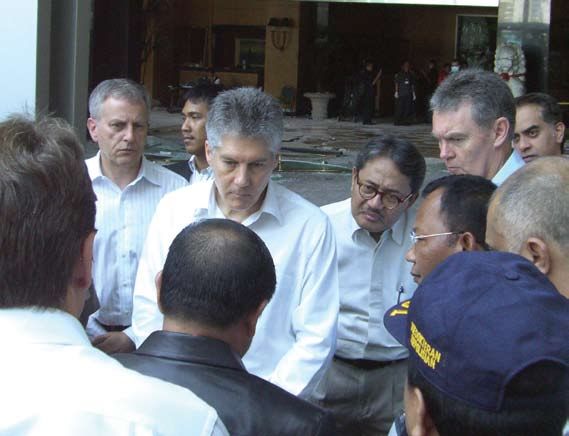
12 Counter-Terrorism White Paper 2010 Securing Australia | Protecting Our CommunityAustralia’s Foreign Minister, the Hon Stephen Smith MP, is briefed by Indonesian officials at the scene of the terrorist bombing outside the Ritz-Carlton
Hotel, Jakarta on 19 July 2009. Also in this photo, from left, are Australian Ambassador for Counter-Terrorism, Mr Bill Paterson PSM, and Australia’s
National Security Adviser, Mr Duncan Lewis AO.
2.1.3 The international and domestic threat to Australia
Australia is a terrorist target. Public statements by prominent terrorist leaders and other extremist
propagandists have singled out Australia for criticism and encouraged attacks against us both before and
after 11 September 2001. Although al-Qa’ida has not itself launched a direct attack on Australia, it has shown
an operational interest in doing so. We know that in 2000 Australian national Jack Roche was tasked by senior
al-Qa’ida operative Khalid Sheikh Mohammed to identify Israeli and Jewish targets in Australia, and in 2001
Khalid Sheikh Mohammed applied for and was granted a visa to visit Australia (cancelled before he could travel).
We continue to see terrorist planning within Australia by terrorists inspired by al‑Qa’ida. This is an important shift
since the publication of the last White Paper. The 7 July 2005 bombings of the London transit system highlighted
the threat of globally-inspired but locally generated attacks in Western democracies. This is a threat to which
Australia is not immune.
In 2005, nine men in Sydney were arrested and charged with terrorism offences. All nine were convicted of
terrorism offences.
In 2006, Australian national Faheem Lodhi was convicted of planning terrorist attacks in Australia during
2003. Lodhi was working with French national Willie Brigitte who had been sent to Australia by a senior
Lashkar-e-Tayyiba member. Brigitte was subsequently convicted on terrorism charges in France.
Counter-Terrorism White Paper 2010 Securing Australia | Protecting Our Community 13 In September 2008, a Sydney man was convicted of collecting or making documents likely to facilitate
terrorist acts.
In 2006, 13 men in Melbourne were arrested and charged with terrorism offences. Nine were convicted of
being members of a terrorist organisation.
Other terrorism-related cases are currently before the courts.
So far, terrorist attempts in Australia have been disrupted by the coordinated and highly professional efforts
of Australia’s security agencies and police services, with support from international partners. But this success
should not give us any false confidence that all plots here can be discovered and disrupted.
There remain a significant number of Australian extremists radicalised to the point of being willing to engage
in violence to advance their political aims. There is also a wider, but still small, group sympathetic to al-Qa’ida’s
beliefs, some of whom may be further radicalised in the years ahead. Australians sympathetic to terrorist causes
also continue to provide financial support for terrorist groups overseas.
A number of Australians are known to subscribe to the violent jihadist message. Many of these individuals were
born in Australia and they come from a wide range of ethnic backgrounds. The pool of those committed to
violent extremism in Australia is not static, over time some move away from extremism while others become
extreme. Since the last counter-terrorism White Paper, security investigations have identified many new
individuals of security concern.
Some have travelled overseas, or facilitated the travel of others, to engage in terrorist training and fighting
– and it is likely that others will seek to do so in the future. It is also possible that Australians travelling or living
overseas will be exposed to extremist ideas, become radicalised, connect to terrorist networks and engage in
terrorism. Regardless of where radicalisation occurs, Australian extremists have engaged in terrorist activity,
not only in Australia but also in other countries. We expect this to continue.
The conviction of individuals in Australia on terrorism charges and ongoing investigations clearly demonstrate
that there are Australians who are committed to supporting or engaging in violent jihad in Australia and
elsewhere. Most of these were born in Australia or have lived here since childhood. The emergence and activity
of terrorist cells in Australia, inspired by the narrative espoused by al-Qa’ida, is likely to continue, including those
with little or no contact with core al-Qa’ida or its affiliates.
2.1.4 Other forms of terrorism
Jihadist terrorism is the predominant focus of Australia’s current counter‑terrorism efforts due to its spread,
impact and explicit targeting of Australians. But terrorism motivated by other beliefs has affected Australia
in the past and will affect us in the future.
Australia is currently home to a small number of people who support other causes that involve active terrorist
campaigns overseas. The terrorist movements they support do not necessarily see Australia or Australians as a
target for their violence but some might see that Australia could be used as a suitable or convenient location for
an attack on their enemies. This includes groups with a long history of engaging in terrorist acts and a current
capability to commit them, such as Lebanese Hizballah’s External Security Organisation.
Future geo-political events could mean other terrorist movements with a presence or support base in Australia
could become willing to engage in operational activity here. And in the future new terrorist threats could
manifest themselves in Australia, either as a by-product of events overseas or as a result of a political grievance
within Australia. There will always be the disaffected and disempowered, often but not always at the fringes of
communities or the followers of radical ideologies, who mistakenly see advantages in the use of terrorist tactics.
14 Counter-Terrorism White Paper 2010 Securing Australia | Protecting Our CommunityAttacks using CBRN
The attacks on 11 September 2001 highlighted how creative and ruthless terrorist attack planning can
be. The potential for terrorist use of chemical, biological, radiological or nuclear (CBRN) weapons is of
particular concern. We know that a small number of terrorists seek CBRN weapon capabilities and would
use them if they could. While the risk is small, the consequences of any such attack would be devastating.
The acquisition of a nuclear weapon is currently beyond terrorist capability though a crude, low-yield
nuclear device is possible. An attack with a radiological dirty bomb, biological materials or industrial
chemicals is feasible and could have a significant impact even if it only succeeded in generating
widespread panic. But obtaining, producing, handling and deploying such weapons is difficult.
Domestic and international efforts to secure CBRN materials are crucial to limit the risk of a CBRN attack.
2.1.5 Outlook
Al-Qai’da and like-minded terrorist groups and individuals have suffered setbacks but continue to adapt to
counter-terrorism efforts and exploit changing geo‑political circumstances. The nature of the beliefs that inspire
them and their emotional appeal in some quarters means that such groups will remain a security threat for years
to come. Adherents believe that they are fighting a war that will last for generations, so setbacks are accepted
and persistence is expected.
Al-Qa’ida has not given up its goal of conducting catastrophic attacks in Western countries, despite pressures on
it. And planning for further attacks by globally-inspired local individuals who subscribe to the same worldview is
unlikely to decline in the short to medium term.
2.1.6 A long-term challenge
Coordinated counter-terrorism efforts will continue to be vital to curb the threat of terrorism. To be successful,
our efforts need to be conducted on many levels. Finding and bringing terrorists to justice, and improving
controls over financial flows, border movements and communication channels constrain the ability of terrorist
groups to operate. Important progress has been made on these fronts but many terrorists have proved adept
at finding ways to circumvent counter-terrorism measures and remain free and operationally active.
Terrorism will continue to pose a serious challenge to Australia and to international security. Terrorist networks
will continue to aspire to conduct further attacks and to alter their methods to defeat counter-terrorism
measures. We must remain ready to meet this challenge and work productively with the international
community and the governments of Australia to thwart terrorist groups and lessen the appeal of their
extreme views.
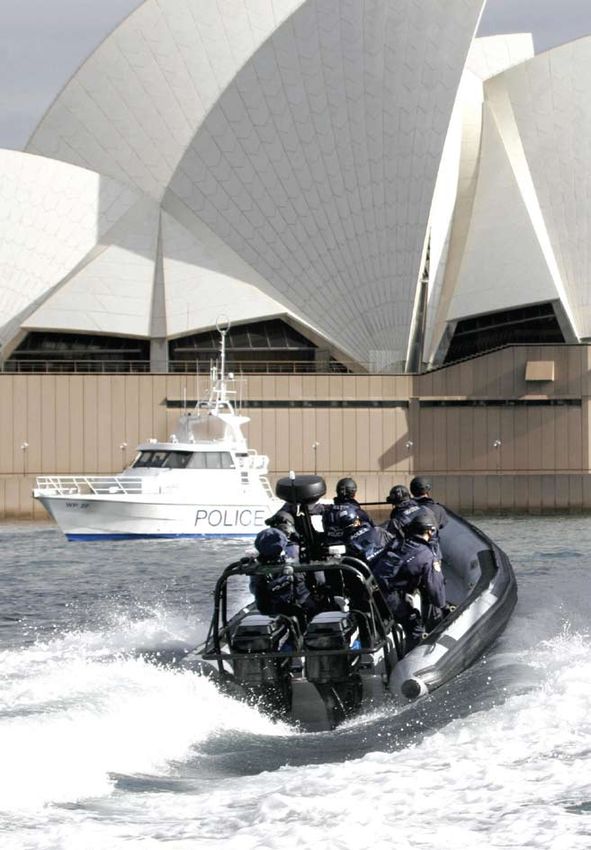
Following page: NSW Police participate in a joint counter-terrorism exercise with Commonwealth agencies on Sydney Harbour.
Counter-Terrorism White Paper 2010 Securing Australia | Protecting Our Community 15australia’s counter-terrorism strategy
03
173 Australia’s Counter-Terrorism Strategy
The aim of Australia’s counter-terrorism strategy is to protect Australia, its people and interests from terrorism.
The Government’s strategy has four elements:
1. Analysis: an intelligence-led response to terrorism driven by a properly connected and properly informed
national security community.
2. Protection: taking all necessary and practical action to protect Australia and Australians from terrorism at
home and abroad.
3. Response: providing an immediate and targeted response to specific terrorist threats and terrorist attacks
should they occur.
4. Resilience: building a strong and resilient Australian community to resist the development of any form of
violent extremism and terrorism on the home front.
We will pursue these objectives informed by the following core judgements:
Countering terrorism requires a long-term commitment, and complementary international and
domestic efforts.
To prevent acts of terrorism, and anticipate evolving terrorist intentions and tactics, our efforts must
be intelligence-led and highly coordinated across agency and governmental boundaries.
A risk-informed and layered approach to counter-terrorism is essential because no single measure
will be fully effective.
Our efforts should always seek to be lawful, proportionate and accountable.
Australia must have in place mechanisms that allow us to respond seamlessly to and recover from acts of
terrorism should they occur.
The support and cooperation of business and the community are essential to extend the reach
and effectiveness of government counter-terrorism efforts.
3.1 Elements of Australia’s counter-terrorism strategy
3.1.1 Analysis: an intelligence-led response to terrorism driven by a properly connected
and properly informed national security community
Australia’s counter-terrorism efforts are intelligence-led and focused on prevention. This approach hinges on strong
partnerships and cooperation at the national level, effective engagement at the international level, and effective
information sharing. Over recent years, there has been significant growth in Australia’s security, intelligence and law
enforcement agencies and the Government has taken steps to improve their capabilities and enhance information
sharing. The establishment of the National Intelligence Coordination Committee has ensured that Australia’s
intelligence effort, both domestically and internationally, is better integrated into the new national security
arrangements. The creation of a new Counter-Terrorism Control Centre will also ensure that we better integrate our
overall counter-terrorism intelligence capabilities.. Our efforts to ensure an intelligence-led response to terrorism
delivered by a connected and informed national security community are detailed in Chapter four.
Counter-Terrorism White Paper 2010 Securing Australia | Protecting Our Community 193.1.2 Protection: taking all necessary and practical action to protect Australia
and Australians from terrorism at home and abroad
The Government is committed to taking action to protect Australians and reduce the risk of attack.
This approach involves efforts at a number of complementary levels, including:
strong border management arrangements to prevent the movement of individuals who try to enter
or transit Australia to conduct terrorism-related activities by introducing a new biometric-based visa
system for certain non-citizens – making it harder for terrorists to evade detection;
preventing Australians suspected of involvement in terrorism from travelling overseas by revoking
or denying passports;
improving the security of our airports to enhance protection of the travelling public;
continued cooperation and collaboration with the states and territories through comprehensive national
counter-terrorism arrangements;
working in partnership with the business community to protect our critical infrastructure,
including information and communications technology; and
strengthened collaboration with international partners, both bilaterally and multilaterally, to contribute to
international counter-terrorism efforts and create an international environment that is hostile to terrorism.
Details of the Government’s efforts to protect Australia and Australians at home and abroad are discussed
in Chapter five.
3.1.3 Response: providing an immediate and targeted response to specific terrorist
threats and terrorist attacks should they occur
The Government’s ability to prevent and disrupt terrorist attacks within Australia relies on coordinated and
cooperative relationships between our intelligence, security and law enforcement agencies nationally.
This collaborative approach ensures that we have a robust and effective national capacity to respond to terrorist
threats. Australia’s comprehensive national response uses the full array of Commonwealth, state and territory
counter-terrorism capabilities. It is underpinned by a legal regime that provides effective powers for our agencies
and the ability to prosecute people who seek to conduct terrorist acts. The Government will keep these powers
under review against any further need to expand them or tailor them to deal with any changes in the nature of
the threat in the future. Australia’s comprehensive approach to providing an immediate and targeted response
to terrorist threats and recovering from an attack is set out in Chapter six.
3.1.4 Resilience: building a strong and resilient Australian community to resist the
development of any form of violent extremism and terrorism on the home front
Australia’s counter-terrorism efforts are supported by our open democratic society. There are inherent strengths
in our society that make Australia resilient to the divisive worldview of al-Qa’ida and like-minded groups.
However, we know from experience that the terrorist narrative may resonate with a small number of Australians.
It is incumbent upon all Australians to work together to reject ideologies that promote violence, no matter from
where they arise or to what purpose they aspire. We must all support and protect the values and freedoms
from which all Australians benefit. By reducing disadvantage, addressing real or perceived grievances and
encouraging full participation in Australia’s social and economic life, government policies can help to mitigate
any marginalisation and radicalisation that may otherwise occur within the Australian community. How we
will counter violent extremism is explained in Chapter seven.
20 Counter-Terrorism White Paper 2010 Securing Australia | Protecting Our CommunityVictorian Police, along with members of the Metropolitan Fire Brigade, Country Fire Authority and the Metropolitan Ambulance Service, conduct a
chemical, biological, radiological and nuclear (CBRN) exercise in Melbourne.
3.2 The way Australia will pursue our objectives
In pursuit of our aim to protect Australia, its people and interests from terrorism, we must take a comprehensive
and layered approach. Our counter-terrorism measures must be informed by strategic judgements about the
nature of the threat and Australia’s vulnerability to it. And we must conduct our activities in a manner that
harnesses our capabilities, upholds our principles and mitigates the risk of attack or failure in our response.
3.2.1 International and domestic activities
International terrorism challenges any notion of separate domestic and international security realms.
Australia must pursue a range of counter-terrorism measures internationally to counter the threat to our
interests both overseas and domestically. Given the transnational nature of the threat and the willingness
of some terrorist groups to export terrorism to countries like Australia, our international efforts support
our domestic security. The narrative espoused by al‑Qa’ida will continue to resonate with some members
of our society, so we should also ensure that our efforts to counter terrorism domestically are informed by
best-practice models internationally.
Counter-Terrorism White Paper 2010 Securing Australia | Protecting Our Community 213.2.2 Intelligence-led and coordinated preventive measures
Terrorism requires an active, preventive and adaptive response across the full range of government
counter‑terrorism measures. It presents challenges across all levels of government and our response involves
a broad range of government agencies. Over recent years, there has been significant growth in Australia’s
security, intelligence and law enforcement agencies designed to enhance Australia’s counter-terrorism capacity.
The Government has also taken steps to enhance information sharing. The newly established NICC ensures
that Australia’s intelligence effort, both domestically and internationally, is better integrated into the new
national security arrangements. The national approach to counter-terrorism is based upon strong, cooperative,
coordinated and consultative relationships between our agencies. The agencies cooperate to conduct
preventive operations.
3.2.3 A risk-informed and layered approach
Intelligence plays a critical role in identifying, investigating and anticipating threats, developing preventive
responses and determining the areas of greatest need for our counter-terrorism efforts. It also provides the
basis to identify opportunities to more effectively focus counter‑terrorism efforts, disrupt terrorist acts or make
changes to our counter-terrorism measures on the basis of risk‑informed assessments. No one counter-terrorism
measure can protect all of our interests or preclude attack. As a result, Australia’s approach to counter-terrorism
relies on complementary security layers designed on the basis of assessments of risk, involving threat,
vulnerability and the potential consequences of attack. These layers collectively strengthen Australia’s
national security.
3.2.4 A lawful, proportionate and accountable response
To be effective, Australia must pursue a principled and proportionate response that promotes and upholds
the values we seek to protect. The Government does not support the use of torture or other unlawful methods
in response to terrorism. Terrorism is a crime and the Government will pursue terrorists within proper legal
frameworks and in accordance with the rule of law. A response based on our democratic values and universal
human rights serves to undermine the narrative of terrorist groups that seek to portray our actions, and those
of our allies, as oppressive. In recognition of the importance of our counter‑terrorism and security legislation,
the Government has introduced legislation to establish an Independent National Security Legislation Monitor
to regularly and independently review the operation of Australia’s counter‑terrorism laws.
3.2.5 Effective national arrangements
Cooperative federalism is a vital part of Australia’s counter-terrorism strategy. Australian governments have
overlapping responsibility for protecting our communities, infrastructure and assets and the interests of
Australia as a whole against terrorism. Australia’s national approach to counter‑terrorism is coordinated
through a comprehensive set of arrangements. The National Counter‑Terrorism Plan sets out arrangements and
responsibilities for dealing with terrorism. The Commonwealth and the states and territories routinely conduct
multi-jurisdictional exercises to enhance Australia’s national counter‑terrorism and emergency management
capabilities. These exercises test national and jurisdictional counter-terrorism arrangements with a focus on
consequence management, including the simulation of large-scale and multiple-site mass casualty incidents.
Opposite page: Boat Assault Force members of the Australian Defence Force Tactical Assault Group (East) conduct a boarding during
counter-terrorism exercises.
Counter-Terrorism White Paper 2010 Securing Australia | Protecting Our Community 233.2.6 Cooperation between governments, business and communities
As the owners and operators of infrastructure that may be targeted by terrorists, the business community has
a key role to play in Australia’s response to terrorism and in supporting resilience within our economy and
community. Communities also play a leading role in rejecting extremist ideologies and supporting individuals
who are at risk of marginalisation, or who might be attracted to the use of violent expression to achieve political,
social or ideological goals. Communities can also assist our law enforcement and security agencies to help
prevent acts of terrorism.
24 Counter-Terrorism White Paper 2010 Securing Australia | Protecting Our CommunityAnalysis
An intelligence-led response to terrorism driven by a properly
connected and properly informed national security community
04
254 Analysis
An intelligence-led response to terrorism driven by a properly connected and
properly informed national security community
Terrorist networks are clandestine. They hide and obfuscate their activities to avoid detection and disruption.
To be effective against terrorism, the Government needs access to intelligence that will uncover terrorists,
their methods and plans.
An intelligence-led approach
As Australia confronts an evolving and increasingly complex national security environment,
the importance of intelligence to inform our responses to challenges will increase. Intelligence is
information, obtained covertly or otherwise, that provides insight and advantage. It is by its nature
sensitive information. It can be a single piece of information, or a conglomerate of fused, corroboratory
material from various sources that is the result of careful analysis and assessment. Intelligence is collected
in many forms by agencies across the national security community including, but not limited to,
the intelligence collection agencies of the Australian intelligence community. Numerous agencies utilise
this intelligence to identify emerging threats and determine operational or policy responses.
4.1 An effective intelligence capability
The ability to collect, analyse and share information expeditiously is critical to protecting Australia and its
people from attack. The Australian intelligence community comprises agencies charged with collecting human
intelligence, signals intelligence and imagery, and assessment agencies which analyse and interpret intelligence
and data from other sources. Both arms of the intelligence community – collection and assessment – contribute
to all aspects of our counter-terrorism effort.
The terrorist threat demands close cooperation between Australia’s foreign intelligence, security intelligence,
law enforcement, financial intelligence and criminal intelligence agencies, and also with international partners.
Our intelligence capabilities must also evolve to ensure that they keep pace with changes in the operational
security methods of terrorist groups or their use of new technologies. The nature of intelligence, which is often
fragmentary or imprecise, is such that there can be no guarantee of prior warning of terrorist attacks.
4.1.1 A new approach to counter-terrorism intelligence coordination
The Government has moved to strengthen Australia’s counter-terrorism intelligence activities by better
integrating and coordinating capabilities across the national intelligence community through the
establishment of a Counter-Terrorism Control Centre.
Counter-Terrorism White Paper 2010 Securing Australia | Protecting Our Community 27The Counter-Terrorism Control Centre
The Government has decided to reshape the way it manages its counter-terrorism work. A multi-agency
Counter-Terrorism Control Centre will be established in the Australian Security Intelligence Organisation
(ASIO) to set and manage counter-terrorism priorities, identify intelligence requirements, and ensure
that the processes of collecting and distributing counter‑terrorism information are fully harmonised and
effective across the spectrum of Australia’s counter-terrorism activity. It will support the established roles
of federal and state law enforcement authorities. It will be the key Commonwealth body for evaluating
and integrating counter‑terrorism intelligence. By strengthening the integration of our counter-terrorism
capabilities, the Centre will improve the ability of agencies to operate against terrorism and to detect and
prevent terrorist threats to Australians and Australia’s interests.
4.1.2 Working in partnership
Australia’s response to terrorism is driven by our understanding of current and emerging threats and the intent,
capability and operational methods of terrorist groups. Intelligence underwrites Australia’s understanding of
terrorism. It can play a vital role in preventing and disrupting the activities of terrorists threatening to attack Australia
and our interests. It can also drive preventive operational responses across Australia’s national security community.
Intelligence assessments are often built from fragmentary pieces of information. For this reason, our agencies
work collaboratively and share information to ensure that all of the capabilities of Australian agencies are
leveraged to minimise the risk of intelligence failure. The establishment of the National Intelligence Coordination
Committee (NICC) in 2009 has strengthened cooperation across Australia’s intelligence agencies and the
broader national security community.
The National Intelligence Coordination Committee
The National Intelligence Coordination Committee (NICC) is chaired by the National Security Adviser and
comprises the heads of the Office of National Assessments, the Australian Secret Intelligence Service,
the Australian Security Intelligence Organisation, the Defence Imagery and Geospatial Organisation,
the Defence Intelligence Organisation, the Defence Signals Directorate, the AFP, the Australian Crime
Commission, and Customs and Border Protection. The departments of Defence, Foreign Affairs and Trade,
Immigration and Citizenship, and Attorney-General’s are also represented at the Deputy Secretary level.
The NICC enhances the ability of Australia’s security agencies to share information, coordinate effort and
identify opportunities to improve the whole-of-government response to terrorism and other national
security challenges.
28 Counter-Terrorism White Paper 2010 Securing Australia | Protecting Our CommunityYou can also read


