SENIOR COLLEGE COURSE AND SUBJECT GUIDE
←
→
Page content transcription
If your browser does not render page correctly, please read the page content below
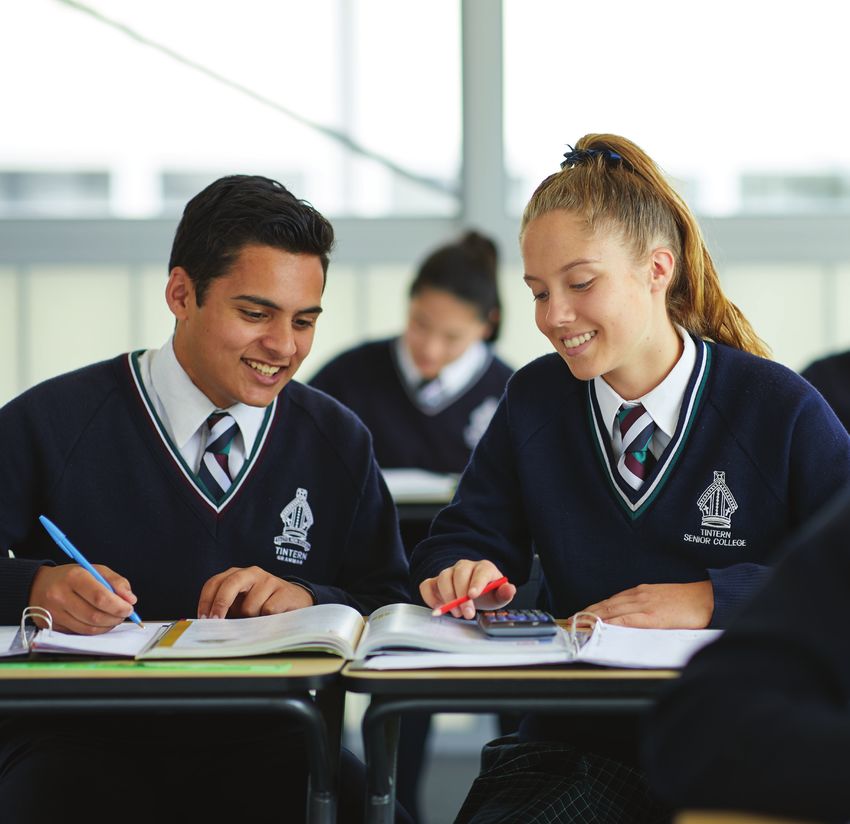
SENIOR COLLEGE
COURSE AND SUBJECT GUIDE
          2020
CONTENTS

FROM THE PRINCIPAL                                                      4
THE SPECIFIC AIMS OF TINTERN GRAMMAR                                    4
SCHOOL PRINCIPLES                                                       5
TINTERN GRAMMAR SENIOR COLLEGE ETHOS STATEMENT - A UNIQUE EXPERIENCE    5
PRACTICAL STUDY SUGGESTIONS FOR ALL STUDENTS                            5
KEY STAFF CONTACTS                                                      6
HEADS OF DEPARTMENT 2020                                                6
FROM THE HEAD OF SENIOR COLLEGE                                         7
ASSESSMENT AND REPORTING                                                8
PARENT TEACHER NIGHTS                                                   8
CAREERS AND PATHWAY PLANNING                                            8
YEAR 10 CURRICULUM IN THE SENIOR COLLEGE                                9
YEAR 10 SUBJECTS                                                        9
YEAR 10 COMMERCE                                                        9
YEAR 10 ENGLISH                                                        11
ENGLISH SUBJECTS FOR INTERNATIONAL STUDENTS                            13
YEAR 10 GEOGRAPHY                                                      13
YEAR 10 HISTORY                                                        14
YEAR 10 MATHEMATICS                                                    15
YEAR 10 PHYSICAL EDUCATION                                             16
RELIGION                                                               18
VCE RELIGION AND SOCIETY UNIT 2: RELIGION AND ETHICS                   18
YEAR 10 SCIENCE                                                        18
YEAR 10 ELECTIVES                                                      19
AGRICULTURE AND SUSTAINABLE FUTURES                                    19
HEALTH AND HOME ECONOMICS ELECTIVE: THE CAFÉ EXPERIENCE                19
INFORMATION AND COMMUNICATIONS TECHNOLOGY (ICT)                        19
LANGUAGES                                                              20
MEDICAL SCIENCE ELECTIVE                                               22
OUTDOOR AND ENVIRONMENTAL STUDIES                                      22
PERFORMING ARTS ELECTIVE: YEAR 10 PHYSICAL THEATRE                     22
PERFORMING ARTS: MUSIC ELECTIVE                                        23
VISUAL ARTS AND DESIGN ELECTIVES                                       23
YEAR 10 STUDENTS AND VCE UNIT 1/2 STUDIES                              24
THE INTERNATIONAL BACCALAUREATE (IB) DIPLOMA                           24
COMPULSORY COMPONENTS                                                  26
ASSESSMENT FOR THE INTERNATIONAL BACCALAUREATE                         27
THE INTERNATIONAL BACCALAUREATE (IB) PATHWAY                           28
GROUP 1: LANGUAGE A - FIRST LANGUAGE                                   28
GROUP 2: LANGUAGE B - SECOND LANGUAGE                                  28
GROUP 3 STUDY OF PEOPLE IN SOCIETY: ECONOMICS, HISTORY, PSYCHOLOGY     29
GROUP 4 EXPERIMENTAL SCIENCE: BIOLOGY, CHEMISTRY, PHYSICS		            31
GROUP 5 MATHEMATICS                                                    32

                                                       2
GROUP 6 THE ARTS: MUSIC, THEATRE, VISUAL ARTS, OR AN “ELECTIVE” (A SECOND SUBJECT FROM GROUPS 2, 3 OR 4)   33
THE VICTORIAN CERTIFICATE OF EDUCATION (VCE)                                                               35
YEAR 11 VCE (UNITS 1 AND 2)                                                                                35
YEAR 12 VCE (UNITS 3 AND 4)                                                                                35
UNITS 3–4 VCE SUBJECT SELECTION FOR YEAR 11 VCE STUDENTS                                                   36
PROCEDURE FOR CHANGING OR WITHDRAWING FROM A VCE STUDY                                                     36
VCE COMMERCE                                                                                               36
PERFORMING ARTS VCE DRAMA                                                                                  42
VCE ENGLISH STUDIES                                                                                        47
VCE ENGLISH LANGUAGE                                                                                       48
VCE LITERATURE                                                                                             49
VCE ENGLISH AS AN ADDITIONAL LANGUAGE                                                                      50
VCE GEOGRAPHY                                                                                              50
VCE HEALTH AND HUMAN DEVELOPMENT                                                                           53
VCE HISTORY                                                                                                55
VCE LANGUAGES: CHINESE, FRENCH AND GERMAN - (SECOND LANGUAGE) AND CHINESE (FIRST LANGUAGE)                 57
VCE MATHEMATICS                                                                                            59
VCE MUSIC                                                                                                  63
VCE OUTDOOR AND ENVIRONMENTAL STUDIES                                                                      65
VCE PHYSICAL EDUCATION                                                                                     67
VCE PSYCHOLOGY                                                                                             70
VCE RELIGION AND SOCIETY                                                                                   70
VCE SCIENCES                                                                                               71
VCE THEATRE STUDIES                                                                                        76
VCE VISUAL ARTS AND DESIGN                                                                                 81
VCE VOCATIONAL EDUCATION AND TRAINING (VET) STUDIES                                                        88
GLOSSARY OF TERMS                                                                                          87

                       TINTERN GRAMMAR SENIOR COLLEGE COURSE AND SUBJECT GUIDE 2020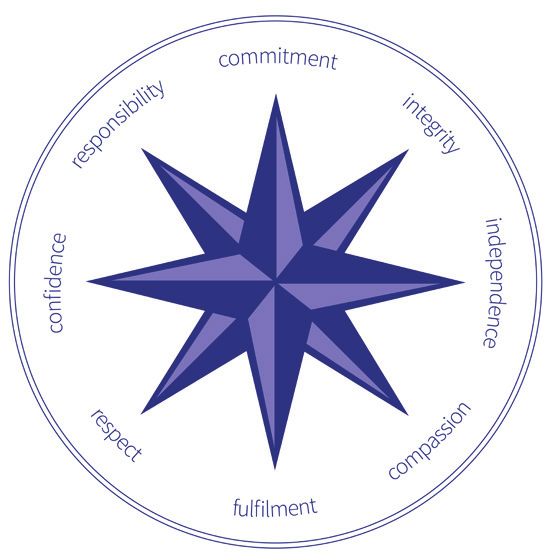
FROM THE PRINCIPAL
                            Welcome to the Senior College experience where your travels lead you to your life beyond school. Over your
                            time here, we want you to build and develop a course that engages your interests and passions, as well as
                            providing you with every possible opportunity for the future that you can create. In selecting your course at
                            each stage of the process, a range of staff are available to assist you with your subject choices, to align them
                            with tertiary and other goals and to negotiate the requirements of our three pathways:
                            • Victorian Certificate of Education (VCE)
                            • Victorian Certificate of Education/Vocational Education and Training (VCE/VET)
                            • International Baccalaureate (IB)
Each of these programs has their own unique requirements and you should choose the one that interests you, follows your passions
and to which you are best suited. As you consider the courses available, it is important to think about where these programs and
courses may lead you in your life beyond Tintern Grammar. What are the tertiary courses that you are interested in, and what are the
pre-requisites for entry to these courses, or perhaps what are your goals that do not involve further study for the moment?
As you make the transition from Middle School to Senior College, I encourage you to be brave and adventurous and to make every
effort to “be the best that you can be”. Strive to make the most of each and every opportunity that comes your way. To achieve the best
that you are capable of, your Senior College years need to be both challenging and rewarding. I look forward to watching your many
successes in your final years at Tintern Grammar!
Mr Bradley Fry
Principal

THE SPECIFIC AIMS OF TINTERN GRAMMAR

Tintern Grammar provides educational and cultural experiences that offer each student
opportunities to:
• develop an enquiring mind;
• find purpose and enjoyment in learning;
• value and appreciate excellence and opportunity; and
• develop personal and professional skills for life in the context of the dynamic and challenging
   environment of C21 Australia and its global context.
Our vision for our graduates is for them to show:
• the strength of character that will support the tenacious pursuit of goals and fulfilment in
  later life
• the aspiration to achieve personal excellence by always making the best effort possible in every situation
• the confidence to engage with the world positively, to take risks proactively and to make a difference
• true purpose in appreciating and shouldering our obligation to work to create a better world for all
Our school values are captured in the Tintern Grammar Compass, the visible expression of what we expect from our community in our
lives at school and beyond. Each compass point guides our thoughts and behaviour, and is a focus for mindfulness and reflection, each
and every day. This occurs through our programs designed to specifically cater for the developmental needs of boys and girls and/or the
regular interaction between our staff and students.
Our Learner Profile Attributes express clearly what our students are encouraged to strive to be:

 Inquirers             We nurture our curiosity, developing skills for inquiry and research. We know how to learn independently and
                       with others. We learn with enthusiasm and sustain our love of learning throughout life.

 Knowledgeable         We develop and use conceptual understanding, exploring knowledge across a range of disciplines. We engage
                       with issues and ideas that have local and global significance.
 Thinkers              We use critical and creative thinking skills to analyse and take responsible action on complex problems.
                       We exercise initiative in making reasoned, ethical decisions.
 Communicators         We express ourselves confidently and creatively in more than one language and in many ways. We collaborate
                       effectively, listening carefully to the perspectives of other individuals and groups

 Principled            We act with integrity and honesty, with a strong sense of fairness and justice, and with respect for the dignity
                       and rights of peopleeverywhere. We take responsibility for our actions and their consequences.
 Open-minded           We critically appreciate our own cultures and personal histories, as well as the values and traditions of others.
                       We seek and evaluate a range of points of view, and we are willing to grow from the experience.

                                                                         4
Caring We show empathy, compassion and respect. We have a commitment to service, and we act to make a positive
difference in the lives of others and in the world around us.
Risk-Takers We approach uncertainty with forethought and determination; we work independently and cooperatively to
explore new ideas and innovative strategies. We are resourceful and resilient in the face of challenges and
change.
Balanced We understand the importance of balancing different aspects of our lives-intellectual, physical, and emotional-
to achieve well-being for ourselves and others. We recognize our interdependence with other people and with
the world in which we live.
Reflective We thoughtfully consider the world and our own ideas and experience. We work to understand our strengths
and weaknesses in order to support our learning and personal development.
Adapted from International Baccalaureate Organisations Learner Profile (2013)
SCHOOL PRINCIPLES
The School respects, adheres to and affirms the following principles:
• Elected government
• The rule of law
• Equal rights for all before the law
• Freedom of religion
• Freedom of speech and association
• The values of openness and tolerance
TINTERN GRAMMAR SENIOR COLLEGE ETHOS STATEMENT - A UNIQUE
EXPERIENCE
We aim to inspire independence and a sense of identity in every student so that each young adult leaves Tintern Grammar:
• empowered to face the future with confidence
• with the ability to creatively solve problems
• as principled and compassionate young people
• with a commitment to contributing to the wider and global communities
• enabled to be a life long learner
The Senior College creates a pre-tertiary environment where students experience a greater measure of independence as they move
from Year 10 through to Year 12.
Emerging young adults learn that independence comes with responsibility. Students are guided and supported in their journey by their
teachers and their peers.
PRACTICAL STUDY SUGGESTIONS FOR ALL STUDENTS
Conditions for study
a. Adequate light, ventilation, heat and space
b. Use a consistent workplace
c. Sit on a comfortable chair at a desk or table
d. Keep both noise and visual distractions to a minimum
e. Work while you are fresh
Fitness
a. Physical fitness is important in order to work well
b. Proper food, exercise and leisure are essential
c. Adequate sleep is a must
TINTERN GRAMMAR SENIOR COLLEGE COURSE AND SUBJECT GUIDE 2020Organisation
a. Plan your study time: not only WHEN you will study but WHAT and HOW you will study
b. Do not sit down to study and then try to decide what you will do – this is a sure way of wasting valuable time.
c. Work out a study timetable, allotting time fairly so that each subject is well covered – this will overcome the tendency to spend too
much time on any one subject at the expense of others.
d. Break study time into blocks allowing for 5–10 minutes break after each hour.
e. Use an efficient reading method, for example the SQ3R - Survey, Question, Read, Recall, Review.
Goals
a. Be realistic and do not set goals you cannot possibly reach or you will become disappointed and frustrated.
b. Work out YOUR goals NOW and think about SHORT TERM GOALS – the work due in this week. MIDDLE TERM GOALS – the SACs,
SATs, practical work, essays due in later in the Term. LONG TERM GOALS – preparation for major tests or examinations should begin
at the start of the year.
c. Set a realistic goal that will allow time at the end for revision, and then stick to your plan.
Self-Discipline
a. This is entirely up to you. Set your goals, organise your time and get to it!
KEY STAFF CONTACTS
Students and parents may obtain advice from:
Principal Mr Bradley Fry
Vice Principal Mr Jason McManus
Head of Senior College Miss Oriana Constable
Year 10 Level Co-ordinator Mrs Heather Ruckert
Year 11 Level Co-ordinator Ms Nicole Morphett
Year 12 Level Co-ordinator Mrs Jennifer Tsai Bove
IB Co-ordinator Mrs Nola Brotchie
VCE/VCE VET Co-ordinator Mr Andrew Cho
Careers Education Consultants Mrs Heather Ruckert, Ms Catrina Ord
HEADS OF DEPARTMENT 2020
Head of Commerce Ms Nicole Morphett
Head of Learning Enhancement Mrs Megan Scholz
Head of English Ms Christine Millgate-Smith
Head of Geography Mrs Naomi Baulch
Head of Health & Human Development Ms Adriana Mantella
Head of History Ms Tisha Eggleston
Head of Information & Communications Technology Mr John Holland
Head of Languages Mr Sebastien Lauret
Head of Mathematics Ms Vanessa Rich
Head of Outdoor Education Ms Emma Lowing
Head of Performing Arts Mrs Melinda Quirillo
Head of Music Ms Anne Bortolussi
Head of Physical Education Ms Catrina Ord
Head of Religion Studies Rev Alison Andrew
Head of Science Mrs Lanna Derry
Head of Sport Mr Ashley Viney
Head of Visual Arts and Design Mrs Rachel Waud
6FROM THE HEAD OF SENIOR COLLEGE
The Senior College is an environment that allows each student opportunities to take on greater responsibility and decision-making
which helps to develop the independence, resilience and personal growth necessary for success in their schooling and life beyond
school in their future studies or careers.
The Senior Years are a time of increased growth and decision making. Preparation for the transition to life beyond school is achieved
through our pastoral programs which encourage resilience, confidence, independence and social awareness; and the individual
academic pathways which promote excellence and achieving your own personal best.
Year 10 is a year of transition as students move on from the Middle School and students explore various subject areas through the
elective program. Some students take the opportunity to select a subject from our VCE Unit 1/2 subject offerings. Important skills
such as study techniques, examination revision techniques and learning styles are explored. Formal examination sessions and VCE
assessment requirements will be experienced by our Year 10 students, preparing them for the final years of secondary schooling and
the accompanying external assessment demands.
We offer students multiple pathways through their senior years. With the support of the Careers Department, Year Level Co-ordinators,
Heads of Department and academic staff, students are encouraged to examine their goals and aspirations, their strengths, their
passions and the pre-requisite requirements for tertiary courses when they consider which pathway is right for them.
The three pathways available in Years 11 and 12 offer alternative structures in their academic programs; The International
Baccalaureate (IB) the Victorian Certificate of Education (VCE), and a combination of Vocational Education Training programs (VET) and
the VCE. Each pathway has different characteristics and students are able to select the pathway best suited to their learning needs and
abilities.
Selection of the appropriate pathway is an important decision to be made on an individual basis. Students should read the information
contained in this handbook carefully, attend subject talks and consult with the careers consultants prior to making an informed
decision. During the Senior College years, Pastoral Mentors play an active role in helping students to organise their study programs. The
pastoral program focuses on time management, study skills and revision techniques. Our Mentors work closely with individual students
who need help in systematic planning, or who are experiencing difficulties in coping successfully with the workload. It is important that
all students remember to ask for help before they become overwhelmed.
Pastoral Mentors and Year Level Co-ordinators, meet with parents early in the year and are available throughout the year for
discussions about student progress or special needs. In line with our School Values, during their three years in the Senior College,
all students are expected to complete fifteen hours of service to the wider community. This must be done in their own time and
negotiated independently with their chosen service provider. Students report both orally and in writing on this service. Mentors include
a statement relating to community service on the end of Semester report.
All students in the Senior College are encouraged to maintain physical fitness and to participate in co-curricular activities each Semester.
All students are offered the opportunity to participate in EISM Inter-school sport or in recreational activities on Wednesday afternoons
in school time. Participation in EISM and Recreational Sport is compulsory for Year 10 and 11 students and voluntary for Year 12s.
Tintern Grammar’s staff are committed to working with our students to ensure the best possible outcome is achieved. Through their
involvement in the school community, the development of habits of independent study and personal management, and the growing
sense of achievement in these mature levels and styles of study and reflection, Senior College students are being prepared for the
variety of demands and challenges awaiting them in the wider world of further study and employment.
We are always ready to assist in enabling our students to be well prepared for the next stage of their journey of lifelong learning and I
wish all students a fulfilling Senior College experience.
Miss Oriana Constable
Head of Senior College
TINTERN GRAMMAR SENIOR COLLEGE COURSE AND SUBJECT GUIDE 2020ASSESSMENT AND REPORTING NS Work not submitted
LS Work submitted late resulting in no grade
ABS Student absent during assessment task
As students move through Tintern Grammar, their progress
S/N Satisfactory/Non-satisfactory
and achievements are monitored through on-going classroom
assessment and specially set external assessment. In 2020 the W Student has withdrawn from a VCE subject (Year 10 only)
latter includes the General Achievement Test (GAT) and external J No formal withdrawal from a VCE subject by the due date
subject examinations for students undertaking Year 12 level occurred (Years 11 and 12 only).
subjects.
Work of a particularly high standard within each band of
Within the classroom (or internal) assessment program, our goal achievement is indicated by the plus (+) with the letter grade.
is to reflect and reinforce the students’ learning through a range Each subject department nominates tasks to be graded on this 10
of activities appropriate to the subjects studied. Thus assessment point (A+ to E) scale.
is both formative (while the unit of study is in progress) and
For VCE Units 3 and 4 the Semester 1 reports contain only S or N
summative (at the conclusion of the unit). Assessed work
for each task as the formal assessment procedure is incomplete
may include projects, practical exercises, essays, research
until the end of the year when each student receives the full
assignments, design and creative folios. One or more assessed
Victorian Certificate of Education.
pieces may be taken under test conditions.
The cumulative or final assessment for each Semester unit is also
Key areas of the students’ study are selected for inclusion on the
reported as S or N for both Years 11 and 12 VCE.
Semester reports and results for assessed tasks for Years 10 and
11 are made available through our Progressive Reporting System Assessment tasks in Units 3-4 have a separate assessment
throughout each Semester. In Year 10 core and elective subjects procedure, determined annually by the VCAA. It governs both
the assessment tasks evolve from the Australian Curriculum. external examination and school-based assessment. Further
In Years 11 and 12 the assessment tasks arise from the details will be provided to the students in February at the
achievement of learning outcomes of the Victorian Curriculum commencement of their studies.
and Assessment Authority (VCAA) or areas of assessment in the
For IB and VET assessment procedures, please see the relevant
International Baccalaureate Diploma or the Vocational Education
IB and VET sections of this handbook.
and Training modules. If a Year 10 student takes a VCE subject
VCAA regulations apply. All Semester Reports in the Secondary School give an
achievement level of Very High, High, Satisfactory, Low or Very
Low for a student’s Preparation for Learning, Participation in
PARENT TEACHER NIGHTS Learning and Attitude towards Learning.
N.B Please note that whilst every effort is made to accommodate
In March/April and again in September (as needed) teachers every student’s subject request, running each subject is
meet individually with families to discuss student progress. Just dependent on a viable class size as determined by the numbers of
prior to these meetings an interim report will be made available students requesting the subject and on timetable constraints.
via the online Parent Portal at https://portal.tintern.vic.edu.au/
and each family will be issued with a user name and password.
(other than in September for VCE Unit 3/4 and Year 12 IB
CAREERS AND PATHWAY
subjects). It is intended that these interim reports will act as a PLANNING
stimulus for these meetings.
Additionally, we report to families in writing at the end of
Focus
Semester 1 (June) and Semester 2 (December), other than
for Year 12 students who do not receive a Semester 2 School Establishing and maintaining a career involves a commitment to
Report. A report is prepared for each student in each subject; it lifelong learning. The Careers program aims to provide students
combines grades with a descriptive comment providing specific with the knowledge and skills required to research and analyse
advice on the work undertaken and guidance for further study in career options with a view to developing a satisfying and
the subject. These are made available to families online via the successful pathway over the course of their career.
Tintern Grammar Portal.
Year 10 Areas of Study
Year 10 and VCE Units 1 and 2 Assessment
Pastoral sessions are used for discussion and activities
All tasks are internally assessed by the subject teachers. appropriate at this early stage of career development such as
increasing an awareness of self through identifying abilities,
The grading scale is represented by A to UG:
interests and values and linking these to a range of occupations.
A Work is of an excellent standard (80%+) Further themes explored during the course encourage students
B Work is of a good standard (70%+) to gain an understanding of the world of work and identify
C Work is of a satisfactory standard (60%+) relevant employability and learnability skills. Students develop
the ability to research career options using the internet and a
D Work is of a minimum standard (50%+)
variety of publications. Information and assistance are provided
E Work is below the minimum acceptable standard (40%+) through a number of forums to assist students understand the
UG Work shows significant weakness in all areas (39% and structure of the programs available for Years 11 and 12 and to
below) select subjects that support their individual study plans.
The following additional symbols are used: Students at Year 10 will undertake the Morrisby Online
+ Higher standard within level of achievement Vocational Testing and this item will appear in the Year 10
Booklist for 2020. The accumulation of this knowledge and
NA Not assessed
8the appropriate research skills equips students to make more Year 10 Core Subjects
effective decisions when planning their education in the senior Commerce
secondary years and accessing tertiary education or training Curriculum Support Learning Enhancement Programs (for eligible
required to enter their chosen field of work. students)
English
Careers Interviews
Geography
All students in Year 10 will meet with a Careers Consultant to History
discuss subject selection and pathways. Year 11 students will Mathematics
have the option of a Careers meeting and they are invited to the Physical Education
'Career Chats' that occur during the year. At Year 12 students Religion and Society VCE Unit 2: Religion and Ethics OR
meet to discuss career and course options for tertiary study and World Religions and Ethics
life beyond school. Science
EISM/Recreational Sport
Work Experience
Year 10 Electives
It is highly recommended that all Year 10 students participate
in a week of work experience in June to help them clarify their Agriculture and Sustainable Futures
strengths and abilities. Students are encouraged to find their own Animation and Film Making
work placement. The school provides the required Occupation Art Explorations
Health and Safety training and staff generally visit students Creating Great Websites
during their placement to discuss what they have been doing Graphic Design
and learning. Students at Years 11 & 12 may undertake a week of Languages
work experience during the first or second term holidays. Medical Science
Music
Other Activities Outdoor and Environmental Studies
Careers information is also presented to students through the Photography
Career News which is available on the portal for students in Years Physical Theatre
10 to 12. Periodically, guest speakers deliver presentations to Textile Design & Technology
Assemblies and individual classes. These include representatives The Café Experience
from tertiary institutions and past students who describe their N.B Please note that whilst every effort is made to accommodate
individual career journey. every student’s elective request, running each subject is
dependent on viable class size as determined by the numbers of
YEAR 10 CURRICULUM IN THE students requesting the subject and on timetable constraints.
SENIOR COLLEGE The Senior College structure provides wider opportunities for
some students in Year 10 to consider accelerating in an area
and undertake one VCE Unit 1/2 study as part of their Year 10
program in the place of a Year 10 Elective in each semester. For
Year 10 – Shaping Decisions
details please see page 24 of this Guide.
The Senior College at Tintern Grammar seeks to engender
Ebook Levies
greater decision making and civic responsibility among students
in order to equip them with the independence, resilience and In 2019, all ebooks and online subscriptions listed as required
personal excellence necessary for success in both their schooling texts on the booklist will again be charged to parent’s school
and the future. account as a levy rather than as purchases made through
The role of Year 10 in this process is to provide students with the Campion. This will be stated on the booklist for each relevant
skills, confidence and knowledge to make their own informed subject.
decisions and to help develop in them the attitudes to work and These changes will allow the school to bulk buy access codes and
the organisational skills necessary for tertiary studies and the subscriptions directly from the publishers, which enables us to
workforce. This pastoral and academic focus takes place without secure competitive prices and provide a higher level of technical
overlooking the importance of maintaining a balanced, healthy support to families.
lifestyle and, as such, a significant part of the transition to Year
10 includes the social, emotional and psychological changes that
take place in the later years of adolescence.
Year 10 Studies
YEAR 10 SUBJECTS
Listed are the core (compulsory) subjects studied and the elective
subjects that students may request to study.
• Each student may study two electives per Semester. YEAR 10 COMMERCE
•A ll core and elective studies, with the exception of Physical
Education, are delivered in mixed gender classes in line with
In this core unit students will be introduced to the subjects of
the Senior College educational model.
Economics, Accounting and Legal Studies which are all part of the
•D etailed descriptions of all these subjects, core and elective,
VCE Commerce offering.
may be found in the following pages of the handbook that
list each department alphabetically. However, while these Economics
reflect the intended details of the courses and will be • The study of Economics will be focussing on key microeconomic
generally accurate, some minor changes to subject content concepts as well as introducing macroeconomic concepts of
or assessment may be made as part of our annual curriculum unemployment, inflation and economic growth, along with key
review process. policies tools such as the budget. The role of international trade
will also be discussed.
TINTERN GRAMMAR SENIOR COLLEGE COURSE AND SUBJECT GUIDE 2020COMMERCE
The Commerce stream of subjects is designed to allow students to select from a range of Business and
Civics education alternatives. This means you could choose one or a range of Commerce subjects
depending upon whether you follow the VCE or International Baccalaureate pathway.
YEAR
10 Commerce VCE Business
VCE Legal Studies
(Core) Management
1&2
1&2
YEAR
11 VCE Legal Studies
1&2
VCE Economics
1&2
VCE Accounting
1&2
IB Economics
Year 1
VCE Business
Management
VCE Business
Management
VCE Legal Studies
3&4
3&4 1&2
YEAR
12
VCE Legal Studies VCE Economics VCE Accounting IB Economics VCE Business
3&4 3&4 3&4 Year 2 Management
3&4
10Accounting necessary for the pursuit of tertiary studies. English, therefore,
•A
ccounting will introduce students to the concepts of assets, serves both cultural and practical ends:
liabilities, revenue and expenses to enable them to accurately • Through the appreciation of literature it leads students to a
complete a Profit and Loss Statement and a Balance Sheet. greater understanding of life: of themselves as individuals, of
An ability to analysis the information obtained from these other people, and of society.
documents will also be developed. • It prepares students for active participation in their society
Legal Studies through the acquisition and development of appropriate
• T his unit will provide students with the ability to distinguish language and communication skills.
between criminal and civil cases, which will be aided by the The focus in English is on improving literacy through explicitly
completion of a media folio of current court proceedings. targeted teaching activities which cater for all levels of ability.
• T he court hierarchy will also be discussed, along with how laws
We offer a full range of VCE English options, as well as the
are made. Students will analyse the reasons why laws are made
opportunity to undertake the International Baccalaureate
and the role of societal values in this process. Students will
compare the legal processes of the Koori Court and its impact • English (VCE)
on indigenous Australians. • Literature (VCE)
Assessment • English Language (VCE)
• International Baccalaureate Language A1 English
Students will be assessed through the following methods:
• Knowledge of Content – topic tests • International Baccalaureate Language B English
•A nalysis and problem solving – comparative project, along Year 10 teachers ensure each student is well prepared to choose
with a media folio and other exercises completed within the the most appropriate Senior College course for their individual
classroom needs. Each year level teaching team ensures the program is
• Communication – presentation of their investigative project. consistent across all classes and meets the needs of all students.
In the Senior College, students are preparing for, or undertaking,
YEAR 10 ENGLISH more specialised subjects. In English at Year 10, students study a
range of challenging literary texts such as a Shakespearean play,
poetry, a novel and a film. They are assessed on their reading,
The study of English provides all students with the opportunity writing and speaking skills in response to these texts, as well as a
to experience both a sense of challenge and achievement. This, wide reading task for each Semester.
in turn, assists in the development of a positive attitude towards
Students sit both mid-year and end-of-year examinations in
the use of language, confidence in expression, and a sense of
preparation for Years 11 and 12. Throughout Year 10, students
their own individual worth and competence that will enable
are given the opportunity to complete tasks and units modelled
them to respond effectively and appropriately to their society.
on those in the various English subjects offered in Year 11 and 12
English plays a key role in the development of the individual as
to allow them to make informed choices.
a person and in preparing the student for taking their role in
society. This involves: At Year 11, students must choose to study either the VCE or the
International Baccalaureate. Those selecting the VCE can choose
Intellectual Development
at least one of the available English subjects: mainstream English,
Language is a key tool and a necessary prerequisite for the Literature or English Language. They may choose more than one
acquisition of knowledge and skills. It plays an important role in of these. The latter two are considered more specialist courses
the representation of experience and in the development and for students with particular interests or abilities. Those students
refining of ideas. who select the International Baccalaureate will study either
Language A, if English is their first language, or Language B, if
Personal Development
English is not their first language.
The study of language contributes to students’ personal
development by providing, through literature, the means by YEAR 10 ENGLISH
which they can confront and investigate life experiences and
problems. The Year 10 English course encourages students to focus on
the study of language in a variety of texts and contexts and to
The study of English develops the skills necessary for effective explore different perspectives on complex moral, psychological
reading, writing, listening and oral expression by encouraging and philosophical issues. By understanding why and how texts
creative thought and appropriate language use. are constructed, students acquire the knowledge, skills and
Social Development personal qualities that enable them to read, view and listen
critically, and to think, speak and write effectively. This formal
The study of language develops the communication and language study aims to expand student’s working vocabulary and
analytical skills necessary for participation in society, both refine revising and editing skills. The course is designed to enable
socially and in practical terms. Further, and more importantly, students to select the senior English subject/s which will best
the study of English fosters greater understanding of others, suit their needs and interests. To that end, students experience
develops keener insights into others and so encourages more elements of each of these senior courses over the year: English,
mature responses to real-life situations. English Language and Literature.
Vocational and Academic Preparation
Areas of Study
The study of language provides students with the skills to obtain
• Speaking and Listening
the educational qualifications necessary for securing a satisfying
occupation by giving students the communication skills to meet • Writing
the demands of prospective employers. The study of language • Reading and Viewing
also assists students to acquire the language and analytical skills • Skills – spelling, grammar and vocabulary
TINTERN GRAMMAR SENIOR COLLEGE COURSE AND SUBJECT GUIDE 2020ENGLISH
Subject Pathways in English (Years 7 – 12)
Year 7
YEAR Year 7 EAL
7
English Support
Year 8
YEAR Year 8 EAL
8
English Support
Year 9
YEAR Year 9 EAL
9
English Support
YEAR Year 10 Year 10
10 English EAL
YEAR 11 VCE 10/11 VCE
11 VCE
11 IB 11 IB 11 VCE
11
English
English Literature English A English B EAL
Language
YEAR 12 VCE 11/12 VCE
12 VCE
12 IB 12 IB 12 VCE
12
English
English Literature English A English B EAL
Language
* In addition, students and teachers work together to identify individual learning targets.
Consolidation, revision and extension skills programmes are then tailored to meet individual learning needs.
12Assessment
YEAR 10 GEOGRAPHY
Speaking: a range of formal oral presentations, performances,
class discussions and role plays as well as informal class
discussion. Geography assists students to make sense of an increasingly
complex and changing world. The subject possesses a distinct
Writing: a range of drafted imaginative, personal, expository, body of knowledge and skills and also acts as a link between
informative and persuasive writing. Analytical writing includes different curriculum areas to provide a spatial view of the world.
close reading analyses and commentaries, and essays prepared
both in class under timed conditions and at home. The issue of sustainability and an inquiry approach to learning
are fundamental in Geography. Geography focuses on the
Reading and Viewing: analytical and creative responses to their dynamics of culture, political systems and economics (human
wide reading, film, novels, Shakespearean drama and a range of geography) and relates it to physical landscapes (physical
poetry. geography).
Skills: explicit assessment of spelling, grammar, vocabulary and The use of information and communications technology is an
expression in all written assessment and in separate tests and integral component of Year 10 Geography in each area of study.
activities.
Geography is particularly well supported by subjects from areas
Written examinations (90 minutes) at end of Semesters 1 and 2 of Commerce such as Economics and Legal Studies, Humanities,
the Sciences and Outdoor Education. The dynamic and evolving
ENGLISH SUBJECTS FOR field of spatial technologies including Geographic Information
Systems (GIS) provides diverse opportunities for tertiary study
INTERNATIONAL STUDENTS and career development.
There are a broad range of careers which benefit from a spatial
For many years students from across the globe have chosen perspective and geographic knowledge including:
to study at Tintern. These students enrich the learning Environmental Management:
opportunities and raise cultural awareness for all students and
staff and add to the exciting environment a Tintern education For example: Architecture, Ecology, Surveying, Urban and Rural
provides. Planning, Cartography, Agriculture, Landscape Architecture,
International Relations and Development, Resource Management
The broad aims of International English are to develop in
overseas students: Science
• a level of competency and confidence in using English that For example: Meteorology, Oceanography, Ecology, Engineering,
allows them over time to develop learning strategies, control Archaeology, and Geology
over linguistic structures and features of text;
Management and Administration
• a greater understanding of the learning styles and expectations
of the Australian schooling system. For example: Local Government, Sports Management, Human
Resources, Environmental Consultancy, Occupational Health and
Students who enter the school with little or no prior English
Safety, Event Management
language learning may be assessed by the International Students’
Coordinator as requiring a period of intensive English studies. Business and Finance
Intensive English tuition, that is not part of the School’s standard
offerings, can be arranged. This may attract an additional charge, For example: Law, Insurance, Banking, Marketing, Advertising,
depending on student circumstances. Real Estate, Small Business Management
Leisure, Travel and Tourism
ENGLISH AS AN ADDITIONAL LANGUAGE
For example: Travel Consultancy and Management, Pilot, Hotel
To successfully complete the VCE, all students must undertake Management, Tourism Departments, Photography, Flight Data
four units of an English subject including a Unit 3 and 4 sequence Officer, Recreation Officer
over two years. Students who have been in Australia less than
Information Services
seven years may undertake English as an Additional Language
(EAL) instead of English. While very similar to mainstream For example: Journalism, Publishing, Communications, Radio and
English, EAL classes are targeted for students who do not have Television, Systems Analyst, Statistician, Foreign Affairs, Property
a first language understanding of English. More accessible texts
are studied and there is a stronger focus on grammar and general Education and Social Services
writing skills. International students undertake EAL in Years 10, For example: Social work, Teaching, Armed Forces, Police Force,
11 and 12. Sociologist, Lecturer, Research Scientist
LIST OF YEARS 10 - 12 EAL SUBJECTS YEAR 10 GEOGRAPHY
Year 10 Geography uses a spatial framework to understand the
English as an Additional Language interactions between humans and their natural environment.
Students are encouraged to become informed about local and
Year 11
global issues. They formulate and evaluate policies to deal
English as an Additional Language Units 1 and 2 with the management of resources in a sustainable manner.
IB English B Year 1 Information and communication technologies are applied where
Year 12 appropriate to assist the learning process and as a means of
creating and communicating knowledge. The use of Information
English as an Additional Language Units 3 and 4
and Communications Technology is an integral component of the
IB English B Year 2
Geography in each area of study.
TINTERN GRAMMAR SENIOR COLLEGE COURSE AND SUBJECT GUIDE 2020Areas of Study to do VCE Unit 1 and/or Unit 2 History in addition to the core
subject. VCE or IB History subjects are excellent choices for
The course consists of a series of three self-contained units:
those students who are interested in pursuing career paths
Unit 1: Environmental Change and Management in law, journalism, international relations, teaching, media,
drama, writing, publishing, film and television producing,
This unit focuses on investigating environmental geography
archaeology, anthropology, criminology, museum and library
through an in-depth study of a specific environment. This
management, research, public relations, administration and
begins with an overview of the environmental functions that
charity organisations. History complements many other subjects
support all life, the major challenges to their sustainability, and
areas offered at Tintern Grammar such as English, Literature,
the environmental world views - including those of Aboriginal
Economics, Legal Studies, Geography, Visual Arts, Performing
and Torres Strait Islander Peoples – that influence how people
Arts, Music, French, German, and Chinese. All the courses
perceive and respond to these challenges. Students investigate
offered aim to promote a lifelong interest in the study of history.
a specific type of environment and environmental change in
Australia and one other country. They apply human-environment
systems thinking to understand the causes and consequences of YEAR 10 HISTORY
the change and geographical concepts and methods to evaluate The Modern World and Australia
and select strategies to manage the change. The case study used Period of study: One Semester
for this unit will be Coasts as a Natural System.
This course provides a study of the history of the modern world
Unit 2: Geographies of Human Wellbeing and Australia from 1918 to the present, with an emphasis on
This unit focuses on investigating global, national and local Australia in its global context. The twentieth century became
differences in human wellbeing between places. This examines a critical period in Australia’s social, cultural, economic and
the different concepts and measures of human wellbeing, and political development. The transformation of the modern world
the causes of global differences in these measures between during a time of political turmoil, global conflict and international
countries. Students explore spatial differences in wellbeing cooperation provides a necessary context for understanding
within and between countries, and evaluate the differences Australia’s development, its place within the Asia-Pacific region,
from a variety of perspectives. They explore programs designed and its global standing.
to reduce the gap between differences in wellbeing. These In their study of the twentieth century, students are introduced
distinctive aspects of human wellbeing are investigated using to the concepts of nationalism, imperialism, colonialism,
studies drawn from Australia, India and across the world as democracy, citizenship, totalitarian dictatorship, racism,
appropriate. Case study materials include Australia, China, and human rights, gender, class, socialism, capitalism, fascism,
HIV/AIDS in Africa. communism, Zionism, national identity, terrorism and religious
Unit 3: Fieldwork fundamentalism. Students are aware of the importance of
differing interpretations of the past; they use a range of primary
An extended fieldwork study is undertaken at Phillip Island. The and secondary sources, both written and visual, and evaluate
students collect primary data which is manipulated and analysed them in terms of origin, purpose, context, reliability and
to form the basis of a comprehensive fieldwork report. This objectivity. This fosters historical reasoning and interpretation
augments their studies of resource management and ecotourism. and students use historical conventions to document sources.
The course provides students with knowledge and skills
Assessment
to understand themselves and their world, to apply their
Assessment is derived from the various activities during understanding in their present lives and consider futures
the Semester and utilises a variety of information and they desire.
communication technology tools.
A framework for developing students’ historical knowledge,
• Practical exercises understanding and skills is provided by inquiry questions through
• Map work the use and interpretation of sources. The key inquiry questions
• Written responses at this year level are:
• Tests
Key inquiry questions
• Group presentation
• Fieldwork and fieldwork Report 1. How did the nature of global conflict change during the
twentieth century?
2. What were the consequences of World War II? How did these
YEAR 10 HISTORY consequences shape the modern world?
3. How was Australian society affected by other significant global
events and changes in this period?
The study of History gives students a well rounded general
knowledge of world history which enables them to understand Areas of Study
contemporary society and their place in the world. It is a
synthesising discipline, which draws upon most elements These will be drawn from:
of knowledge and human experience. History develops an 1. World War II (1939-45): An examination of significant events
understanding of the concepts of change and continuity, cause of World War II, including the Holocaust and use of the atomic
and effect, motivation, the role of individuals and empathy. bomb
It fosters the skills of comprehension, research, reasoning and 2. Rights and freedoms (1945 – the present): An investigation
the interpretation of written and visual sources. History allows of the struggle for human rights including how rights and
for the thoughtful analysis of complex problems, the confidence freedoms have been ignored, demanded or achieved in
to challenge and debate issues and the development of more Australia and in the broader world context
refined writing skills. It gives students wide ranging skills 3. The Globalising World (1945 – the present): An investigation of
which are transferable to all tertiary courses. While History in one major global influence that has shaped Australian society
Year 10 is part of the core curriculum, students may choose in depth, focussing on the environmental movement.
14HISTORY
Year 10 History
Modern World
(Core)
YEAR
10 VCE IB
YEAR Either or both Standard and
11
Unit 1: 20th Century Higher Level
Unit 3/4 History:
History 1900-1945 20th Century
Revolutions
Unit 2: 20th Century World History
History 1945-2000 Topics
YEAR
12
Higher Level Standard Level
Unit 3/4 History: Regional Study: 20th Century
Revolutions Aspects of the World History Topics
History of Asia and Oceania
Assessment All Year 10 Mathematics courses will incorporate the use of
• Short answer exercises Casio ClassPad CAS calculators to support learning and to assist
• Analytical exercises, including visual evidence with skill development and exploration of concepts.
• Essays
• Research assignments and tasks YEAR 10 MATHEMATICS
• Oral presentations The Year 10 Mathematics course will cover appropriate content
• Topic tests from the syllabus documented in the Year 10/10A Australian
• Film or documentary analysis Curriculum and will cater for the majority of students. This
• Semester examination course aims to consolidate and extend mathematical skills as well
as introducing students to more open-ended problem solving
tasks. Suitable extension work will be provided depending on the
YEAR 10 MATHEMATICS learning needs of the student.
Algebra is an important focus for both of this course which
There will be three effective learning groups operating at Year 10: aims to prepare students for Mathematical Methods in Year
11. Students are encouraged to consolidate skills regularly and
•G
eneral Mathematics
develop sound study skills in order to be fully prepared for
• Year 10 Mathematics assessment tasks.
•M
athematical Methods: Units 1 and 2 (for students who have
Areas of Study
successfully completed the Year 9 Accelerated Mathematics
course). NB: this course will follow the new Australian The topics covered in Year 10 Mathematics include:
Curriculum syllabus introduced in 2016. • Linear Equations and Graphs
Courses for students who are not accelerating will cover • Simultaneous Equations
appropriate content from the syllabus documented in the
• Trigonometry
Year 10/10A Australian Curriculum.
• Algebra
Prior to the commencement of classes, students and parents • Geometry
are notified of the group allocations. The composition of the
• Measurement
groups will be flexible allowing for student movement between
• Quadratic Equations and graphs
groups where necessary.
• Rational and Irrational Numbers
• Probability
TINTERN GRAMMAR SENIOR COLLEGE COURSE AND SUBJECT GUIDE 2020• Exponential Functions Outcomes
• Statistics
• Students should be able to define and explain key concepts and
Assessment apply a range of related mathematical routines and procedures
in relation to the topics studied.
Students will be assessed on a regular basis with topic tests in • Students should be able to apply mathematical processes
which they are required to demonstrate their knowledge and in non-routine contexts and analyse and discuss these
skill development, as well as their ability to apply mathematical applications of mathematics in their areas of study.
techniques to practical and non-routine problems. Reports based
• Students should be able to use technology to produce results
on investigations and problem solving activities will be assessed.
and carry out analysis in situations requiring problem solving,
Assessment is also based on two mid-year and two end-of-year
modelling or investigative techniques in their area of study.
examinations.
Assessment
YEAR 10 GENERAL MATHEMATICS Assessment is based on a 1 hour short answer style examination
This subject aims to consolidate and extend mathematical without access to a calculator, a 2 hour multiple choice and
skills and is designed to prepare students wishing to pursue extended response examination with access to a calculator,
the General Mathematics/Further Mathematics pathway problem solving exercises, tests, assignments.
through to Year 12. It is designed to cater for students who have
Unit 2
experienced difficulty with previous Core Mathematics courses
or who have undertaken a Year 9 Modified or Focus Mathematics This unit involves the study of:
course. Tasks are adapted to cater for individual learning needs • Functions and Graphs: covering graphical representation
and styles, with an emphasis on improving basic skills and of exponential, logarithmic and trigonometric functions
applying knowledge to practical applications. Students will apply
• Calculus: covering the analysis of properties of functions
mathematical knowledge to real world problems. Timetable
and approximating the behaviour of functions by lines and
blocking enables movement of students from the Mathematics
rectangles
group to General Mathematics based on performance and
learning requirements. • Algebra: covering the use of formulae and equations to
generalise and analyse work in other areas
Areas of Study The use of CAS technology is integrated throughout the course
The topics covered include: to assist with skill development and exploration of concepts. This
course is a prerequisite for Mathematical Methods (CAS) Units 3
• Number skills (including percentages and ratio)
and 4.
• Trigonometry
• Measurement Areas of Study
• Linear Graphs & solving equations
• Functions and Graphs
• Univariate Statistics
• Calculus
• Bivariate Statistics
• Algebra
• Financial Maths
• Probability
• Geometry
Outcomes
Assessment
• Students should be able to define and explain key concepts and
Assessment is based on an end-of-Semester examination,
apply a range of related mathematical routines and procedures
assignments, topic tests and investigations dealing with the
in relation to the topics studied.
application of mathematics.
• Students should be able to apply mathematical processes
in non-routine contexts and analyse and discuss these
YEAR 10 VCE MATHEMATICAL METHODS
applications of mathematics in their areas of study.
Unit 1 • Students should be able to use technology to produce results
This unit involves the study of: and carry out analysis in situations requiring problem solving,
modelling or investigative techniques in their area of study.
• Probability: covering introductory probability concepts
• Functions and Graphs: covering graphical representation of Assessment
linear and non-linear functions and relations including circles
Assessment is based on a 1 hour short answer style examination
• Algebra: covering the use of formulae and equations to without access to a calculator, a 2 hour multiple choice and
generalise and analyse work in other areas extended response examination with access to a calculator,
• Introductory Calculus: covering gradient as a measure of rate problem solving exercises, tests, assignments.
of change
The use of CAS technology is integrated throughout the course YEAR 10 PHYSICAL EDUCATION
to assist with skill development and exploration of concepts. This
course is a prerequisite for Mathematical Methods Unit 2, which
in turn, is prerequisite for Mathematical Methods Units 3 and 4. YEAR 10 PHYSICAL EDUCATION
Areas of Study The Physical Education course at Year 10 is designed to promote
regular physical activity as a means toward the development of
• Probability student’s physical, social and mental wellbeing. The course aims
• Functions and Graphs to develop the skills and knowledge that will encourage lifelong
• Algebra participation in regular physical activity. An emphasis is placed
• Introductory Calculus on the importance of students taking responsibility for the
16M ATHEMATICS
Common Pathways in Mathematics (Years 7 – 12)
Year 7 Year 7
YEAR Modified Year 7 Enrichment
7
Mathematics Mathematics & Enhancement
Mathematics
Year 8 Year 8
YEAR Modified Year 8 Enrichment
8
Mathematics Mathematics & Enhancement
Mathematics
Year 9
Year 9 Year 9 Accelerated
YEAR Modified Mathematics Mathematics
9
Mathematics (Years 9 & 10
Mathematics
Course)
Mathematical
YEAR Year 10 Year 10
Methods
10
General Mathematics
Mathematics 1&2
Mathematical Mathematical IB Mathematics
General Mathematical Methods Mathematical Methods
YEAR Mathematics Methods 1&2 Methods 3&4
- Applications and
11
Interpretations
1&2 1&2 3&4 OR
Specialist Specialist
Mathematics Mathematics - Analysis and
1&2 1&2 Approaches
Mathematical
Further Mathematical Methods IB Mathematics
YEAR Mathematics Methods 3&4
Specialist
- Applications and
12
Mathematics
3&4 3&4 Interpretations
Specialist 3&4
OR
Mathematics - Analysis and
3&4 Approaches
KEY
Indicates
based on student
performance
TINTERN GRAMMAR SENIOR COLLEGE COURSE AND SUBJECT GUIDE 2020maintenance and improvement of their own health and physical and develop their own personal positions within these debates.
fitness. Ethical method is an important component in several VCE
and IB subjects such as Units 3-4 Religion and Society, History,
Students are exposed to a variety of recreational activities that
Philosophy and Theory of Knowledge.
promote the development of cardio-respiratory fitness, co-
ordinated body actions and motor skills. The course also provides Areas of Study:
opportunities for students to refine and consolidate personal
• Thinking and deciding
and social skills in demonstrating leadership, teamwork and
• Religious viewpoints
collaboration in a range of physical activities.
• Engaging in an ethical society.
They will participate in a selection of sports that will enable them
to implement advanced strategies and tactics. The nature of the Assessment: (to be selected from the following)
subject helps students to develop an understanding of their own • Short and extended answer responses to media texts within a
personal development which includes group work and team test framework
dynamics. • Commentary
• Reflection
Areas of Study: (Girls)
• Oral Presentations
Semester 1:
• Research Projects
• Fitness - Recreational Activities • Examination: Opinion pieces and extended answer responses
• Self Defence to a provided issue.
Semester 2:
• Croquet YEAR 10 SCIENCE
• Golf
• Pilates
• Racquet Sports Science provides an empirical way of answering interesting
Areas of Study: (Boys) and important questions about the biological, physical and
technological world. The knowledge it produces has proved
Semester 1:
to be a reliable basis for action in our personal, social and
• Golf economic lives. Science is a dynamic, collaborative and creative
• Ultimate Frisbee human endeavour arising from our desire to make sense of our
• Self Defence world through exploring the unknown, investigating universal
• Football Codes mysteries, making predictions and solving problems. Science
Semester 2: aims to understand a large number of observations in terms of
a much smaller number of broad principles. Science knowledge
• Squash is contestable and is revised, refined and extended as new
• Spinning evidence arises.
• Stick sports
• Yoga The Australian Curriculum: Science provides opportunities for
students to develop an understanding of important science
• Racquet Sports
concepts and processes, the practices used to develop scientific
Assessment knowledge, of science’s contribution to our culture and society,
• Performance and skill competency and its applications in our lives. The curriculum supports students
• Effort & Enthusiasm to develop the scientific knowledge, understandings and skills to
• Peer & Self Assessment make informed decisions about local, national and global issues
• Organisation - including correct sports uniform and to participate, if they so wish, in science-related careers.
In addition to its practical applications, learning science is a
RELIGION valuable pursuit in its own right. Students can experience the
joy of scientific discovery and nurture their natural curiosity
about the world around them. In doing this, they develop critical
VCE RELIGION AND SOCIETY and creative thinking skills and challenge themselves to identify
questions and draw evidence-based conclusions using scientific
UNIT 2: RELIGION AND ETHICS methods.
The wider benefits of this “scientific literacy” are well
established, including giving students the capability to investigate
VCE RELIGION AND SOCIETY UNIT 2: RELIGION AND ETHICS
the natural world and changes made to it through human
Religion Studies is part of the core curriculum and is offered as a activity.
VCE subject. This course is thus viewed, possibly, as the final year
The science curriculum promotes six overarching ideas that
of students’ formal Religion Studies. It is also a vital introduction
highlight certain common approaches to a scientific view of the
to the methodology and implementation of several VCE subjects.
world and which can be applied to many of the areas of science
‘Religion and Ethics’ explores the world of ethical decision- understanding. These overarching ideas are patterns, order and
making in our pluralist society. organisation; form and function; stability and change; systems;
scale and measurement; and matter and energy.
It examines issues from multi-media and public debate, often
from the perspective of contemporary world religions. It involves In the Year 10 curriculum students explore systems at different
considering and analysing the role of influential factors which scales and connect microscopic and macroscopic properties to
may include: values, authorities, traditions and conscience. This explain phenomena. Students explore the biological, chemical,
course encourages students to engage in higher order thinking geological and physical evidence for different theories, such as
18You can also read


