Senior School Course Descriptions - Security Support Success - Inspiring and equipping students for successful futures - Gulf Christian College
←
→
Page content transcription
If your browser does not render page correctly, please read the page content below
Senior School
Course Descriptions
Inspiring and equipping students for successful futures
                                               Year 12 - 2021

         Security ~ Support ~ Success
Mission Statement

                     The Mission Statement
                of Nambour Christian College is:

      To provide a secure and
      supportive Christ-centred
   learning community where a
    commitment to excellence,
      creativity and service is
     encouraged and modelled
Table of Contents
The purpose of this booklet is to outline the academic programs offered at Nambour Christian College. It is intended
as a guide for students and their parents when facing decisions concerning appropriate subjects and courses to study.
            BUSINESS SUBJECTS
             Accounting (General Subject)                                                          4
               Business (General Subject)                                                          5
               Legal Studies (General Subject)                                                     6
            COMPUTING SUBJECTS
             Digital Solutions (General Subject)                                                   7
            CREATIVE & PERFORMING ARTS SUBJECTS
               Drama (General Subject)                                                             8
               Film, Television and New Media (General Subject)                                    9
               Music (General Subject)                                                            10
               Music Extension (General Subject) - Year 12 Only                                   11
               Visual Art (General Subject)                                                       12

            DESIGN SUBJECTS
               Design (General Subject)                                                           13
               Industrial Technology Studies (Applied Subject) 14-15
               Light Manufacturing and Furnishings - VET (Non-ATAR)16
            ENGLISH SUBJECTS
              English (General Subject)                                                           17
               Literature (General Subject)							                                                 18
               Essential English (Applied Subject)                                                19
            HOSPITALITY SUBJECTS
             Hospitality - VET (Non-ATAR)                                                      20-21
               Pastry and Bakery - VET (Non-ATAR)                                                 22
            HUMANITIES SUBJECTS
             Geography (General Subject)                                                          23
               Modern History (General Subject)                                                24-25
               Philosophy & Reason (General Subject)                                              26
            LOTE SUBJECTS
              Japanese (General Subject)                                                          27
               Distance Education (General Subject)                                               28
            MATHEMATICS SUBJECTS
             Mathematics General (General Subject)                                                29
               Mathematics Methods (General Subject)                                              30
               Mathematics Specialist (General Subject)                                           31
               Mathematics Essential (Applied Subject)                                            32
               Prerequisite Requirements and Standards for Year 10 and 11 Maths Courses		          33
            PHYSICAL EDUCATION SUBJECTS
              Physical Education (General Subject)                                                34
               Recreation - VET (Non-ATAR)                                                        35
            RURAL OPERATIONS
              Rural Operations - VET (Non-ATAR)							                                         36-37
            SCIENCE SUBJECTS
              Agricultural Science (General Subject)                                              38
               Biology (General Subject)                                                          39
               Chemistry (General Subject)                                                        40
               Physics (General Subject)                                                          41
            CORE DESCRIPTIONS
               Christian Living (School Based) (Non QCE/ATAR)42
            REFERENCES									                                                                    42
Page 1 | NCC | Senior School Course Description Booklet
Senior Subject Selection for Year 10 2019
   The QCE is presented to students who complete the equivalent of five subjects to at least a Sound Level of Achievement. The Australian
   Tertiary Admission Rank (ATAR) is generated for students who complete an English subject (General or Applied) to at least a Sound Level of
   Achievement and complete either:
       Five General subjects.
      Or
       A combination of four General subjects, plus an Applied subject.
   Inter-subject scaling will be applied to calculate the ATAR and therefore students considering tertiary study should seek advice about their
   subject combination and how this might affect their ATAR.
   Year 10 Students will study English, Maths and 4 subjects from Group C in the table below.

                             Group                   General Subject         Applied Subject         VET subjects
                                                                                                     QCE - Yes
                                                                                                     ATAR - No
                             A
                             All Year 10 students    English                 Essential English
                             study English
                                                     Literature

                             B                      General                  Essential
                             Assigned by the Maths Mathematics               Mathematics
                             Department for Year 10 Mathematical
                                                    Methods
                             C                       Specialist              Industrial              Furnishing and
                                                     Mathematics             Technology Studies      Manufacturing
                                                     Accounting                                      Hospitality
                                                     Agricultural Science                            Pastry and
                                                                                                     Bakery
                                                     Biology                                         Recreation
                                                     Business                                        Rural Operations
                                                     Communication &
                                                     Technologies
                                                     Chemistry

                                                     Drama
                                                     Design
                                                     Digital Solutions
                                                     Film, Television and
                                                     New Media
                                                     Geography

                                                     Japanese
                                                     Legal Studies
                                                     Modern History
                                                     Music
                                                     Philosophy & Reason
                                                     Physical Education
                                                     Physics
                                                     Visual Art

   Year 10 subjects follow the Australian Curriculum and transition students into the QCAA Senior Syllabuses. Each Year 10 subject provides
   foundational skills and understandings for the Year 11 and 12 subject of the same name. Similarly, the assessment methods for each subject
   are modelled on those that the students will experience in the Year 11 and 12 subjects.

   All Year 10 students participate in the following classes which are not applicable to either the QCE or ATAR: Christian Living, Focus,
   Pathways to Success, Health and Fitness, Chapel, Family Group.
Page 2 | NCC | Senior School Course Description Booklet                                                                             Back to TOC
Senior Subject Selection Process Chart
   Senior Subject Selection Process Chart
                                                               Senior Subject
                                                              Selection Process

                                                              Does my career
                                        No                 goal require University                          Yes
                                                                  training?

                                                                                     Maybe

                     ATAR not required                                                                 Choose ATAR Path
                All subjects can be General,                                                        Subjects must meet ATAR
                       Applied or Vet                                                                     requirements

                     Do I know the trade
                                                                                                   Do I know the course I want
                   or occupation I want to
                                                                                                          to do at Uni?
                           pursue?

                             Yes                                                                                   Yes

                           FIRST:                                                                      FIRST:
   No       Choose the subjects* that are either                                        Choose the Pre-requisite subjects* for
           required, or beneficial preparation for                                                  that course.                               No
                      that occupation.
            See the Jobs Guide website and the                                                  See the QTAC website and the
                      Careers Adviser.                                                                  Careers Adviser.

                            Then                                                                                  Then

           Choose subjects you will enjoy, at the                                        Choose subjects you will enjoy, at the
             highest level you can do well in.                                             highest level you can do well in,
             Note: Year 10 science is required                                             according to the ATAR pattern:
                     for some trades.                                                       •     4 subjects must be General (can include
                                                                                                               English or Maths)
                                                                                        •       5th and 6th subject can be either General or
                                                                                                                    Applied,
                                                                                                   maximum of 1 Vet (won t contribute)]

                           Complete your Senior Education and Training (SET) Plan online through QTAC, ‘MYPATH’

           Complete the NCC Subject Selection Form online. Print, sign and return it to the student office on or before
                                                    Monday 20 August.

                 *If you do not have the school pre-requisites to do a subject you need, make an appointment to see either
                                                          Mrs Stirling or Mr Drew

Page 3 | NCC | Senior School Course Description Booklet                                                                                        Back to TOC
COURSE DESCRIPTIONS
 BUSINESS SUBJECTS
 Accounting (General Subject)
DESCRIPTION OF SUBJECT
Accounting provides opportunities for students to develop an understanding of the essential role of organising, analysing and
communicating financial data and information in the successful performance of any organisation.
Students learn fundamental accounting concepts in order to understand accrual accounting and managerial and accounting controls,
preparing internal financial reports, ratio analysis and interpretation of internal and external financial reports. They synthesise financial
data and other information, evaluate accounting practices, solve authentic accounting problems, make decisions and communicate
recommendations.
Students develop numerical, literacy, technical, financial, critical thinking, decision-making and problem-solving skills. They develop
an understanding of the ethical attitudes and values required to participate effectively and responsibly in a changing business
environment.
PATHWAYS
The assessment criteria consist of Knowledge and Procedural
Practices, Interpretation and Evaluation, and Applied Practical
Processes. Assessment is done by examination and to a lesser
extent assignments.
OBECTIVES
By the conclusion of the course of study, students will:
• describe accounting concepts and principles
• explain accounting concepts, principles and processes
• apply accounting principles and processes
• analyse and interpret financial data and information to draw
conclusions
• evaluate accounting practices to make decisions and propose
recommendations
• synthesise and solve accounting problems                                                  Accounting teaches useful life-long skills
• create responses that communicate meaning to suit purpose and
audience.
YEAR 10 STRUCTURE 		                           YEAR 11 AND 12 STRUCTURE
 Semester 1               Semester 2            Unit 1                     Unit 2                    Unit 3                    Unit 4
 Accounting               Accounting            Real world                 Management                Monitoring a              Accounting - the
 Practices                Software              accounting                 effectiveness             business                  big picture
 • General Journals and   • MYOB                • Accounting for a         • Accounting for a        • Managing resources      • Cash management
 Reconciliation           • Finance software    service business - cash,   trading GST business      for a trading GST         • Complete account-
 • Income Statements      • Investment          accounts receivable,       • End of year             business - non-current    ing process for a
 • Balance Sheets                               accounts payable and       reporting for a trading   assets.                   trading GST business
                                                no GST                     GST business              • Fully classified        • Performance
                                                • End of month                                       financial statement       analysis of a listed
                                                reporting for a service                              reporting for a trading   public company
                                                business                                             GST business

ASSESSMENT
Assessment in Units 1 and 2 will be modelled on the techniques used in Units 3 and 4.
In Units 3 and 4 students complete four summative assessments. The results from each of the assessments are added together to
provide a subject score out of 100. Students will also receive an overall subject result (A–E).
Summative assessments

 Unit 3                                                                    Unit 4
 Summative internal assessment 1 (IA1):                            25% Summative internal assessment 3 (IA3):                                  25%
 Examination - combination response                                    Project - cash management
 Summative internal assessment 2 (IA2):                            25% Summative external assessment (EA):                                     25%
 Examination - short response                                          Examination - short response
PREREQUISITES
Nil, although a Sound ‘C’ pass in Year 9 Maths is recommended. Study in the Business Area in Year 9 would be an advantage.

Page 4 | NCC | Senior School Course Description Booklet                                                                                 Back to TOC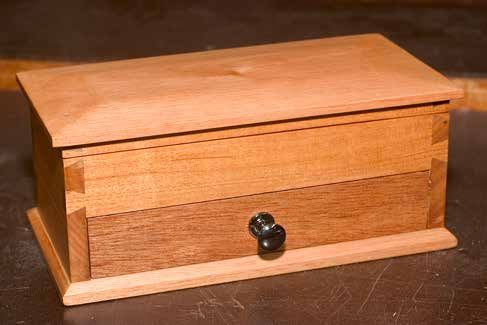
Business (General Subject)
DESCRIPTION OF SUBJECT
Business provides opportunities for students to develop business knowledge and skills to contribute meaningfully to society, the
workforce and the marketplace and prepares them as potential employees, employers, leaders, managers and entrepreneurs.
Students investigate the business life cycle, develop skills in examining business data and information and learn business concepts,
theories, processes and strategies relevant to leadership, management and entrepreneurship. They investigate the influence of, and
implications for, strategic development in the functional areas of finance, human resources, marketing and operations.
Students use a variety of technological, communication and analytical tools to comprehend, analyse, interpret and synthesise
business data and information. They engage with the dynamic business world (in both national and global contexts), the changing
workforce and emerging digital technologies.
PATHWAYS
A course of study in Business can establish a basis for further education and employment in the fields of business management,
business development, entrepreneurship, business analytics, economics, business law, accounting and finance, international
business, marketing, human resources management and business information systems.

                                                                  OBJECTIVES
                                                                  •  describe business environments and situations
                                                                  •  explain business concepts, strategies and processes
                                                                  •  select and analyse business data and information
                                                                  •  interpret business relationships, patterns and trends to draw
                                                                     conclusions
                                                                  • evaluate business practices and strategies to make decisions and
                                                                   propose recommendations
                                                                  • create responses that communicate meaning to suit purpose and
                                                                   audience.

              Business knowledge and skills to
             contribute meaningfully to society

YEAR 10 STRUCTURE 		                               YEAR 11 AND 12 STRUCTURE
 Semester 1              Semester 2                Unit 1              Unit 2                 Unit 3                  Unit 4
 Business                Business                  Business creation   Business growth        Business                Business
 Environments            Development               • Fundamentals of   • Establishment of a   diversification         evolution
 • Production and        • The Business Cycle      business            business               • Competitive markets   • Repositioning a
 Distribution            • Marketing               • Creation of       • Entering markets     • Strategic             business
 • Economics of Supply   • Write a business plan   business ideas                             development             • Transformation of a
 and Demand                                                                                                           business
 • Globalisation

ASSESSMENT
Assessment in Units 1 and 2 will be modelled on the techniques used in Units 3 and 4.
In Units 3 and 4 students complete four summative assessments. The results from each of the assessments are added together to
provide a subject score out of 100. Students will also receive an overall subject result (A–E).
These assessment techniques consist of: examinations, assignments, multimedia presentations and practical demonstrations.
Summative assessments

 Unit 3                                                                Unit 4
 Summative internal assessment 1 (IA1):                         25% Summative internal assessment 3 (IA3):                              25%
 Examination - combination response                                 Extended response - feasibility report
 Summative internal assessment 2 (IA2):                         25% Summative external assessment (EA):                                25%
 Examination - business report                                      Examination - combination response

PREREQUISITES
Nil

Page 5 | NCC | Senior School Course Description Booklet                                                                          Back to TOC
Legal Studies (General Subject)
DESCRIPTION OF SUBJECT
Legal Studies focuses on the interaction between society and the discipline of law and explores the role and development of law
in response to current issues. Students study the legal system and how it regulates activities and aims to protect the rights of
individuals, while balancing these with obligations and responsibilities.
Students study the foundations of law, the criminal justice process and the civil justice system. They critically examine issues of
governance, explore contemporary issues of law reform and change, and consider Australian and international human rights
issues.
Students develop skills of inquiry, critical thinking, problem-solving and reasoning to make informed and ethical decisions and
recommendations. They identify and describe legal issues, explore information and data, analyse, evaluate to make decisions or
propose recommendations, and create responses that convey legal meaning. They question, explore and discuss tensions between
changing social values, justice and equitable outcomes.
PATHWAYS
A course of study in Legal Studies can establish a basis for further
education and employment in the fields of law, law enforcement,
criminology, justice studies and politics. The knowledge, skills and
attitudes students gain are transferable to all discipline areas and
post-schooling tertiary pathways. The research and analytical skills
this course develops are universally valued in business, health, science
and engineering industries.
OBJECTIVES
By the conclusion of the course of study, students will:
• comprehend legal concepts, principles and processes
• select legal information from sources
• analyse legal issues                                                                          Legal Studies incorporates a
• evaluate legal situations                                                                    number of aspects of the law
• create responses that communicate meaning.
YEAR 10 STRUCTURE		                          YEAR 11 AND 12 STRUCTURE
  Semester 1            Semester 2            Unit 1                    Unit 2             Unit 3                  Unit 4
  Australian            Legal Systems         Beyond                    Balance of         Law, governance         Human rights in legal
  Citizenship           • Criminal Law        reasonable                probabilities      and change              contexts
  • Nature of Laws      • Civil Law           doubt                     • Civil law        • Governance in         • Human rights
  and Govenment         • Vehicle Law         • Legal                   foundations        Australia               • The effectiveness of
  • Citizenship                               foundations               • Contractual      • Law reform within a   international law
  • Poliicing                                 • Criminal                obligations        dynamic society         • Human rights in Australian
                                              investigation process     • Negligence and                           contexts
                                              • Criminal trial          the duty of care
                                              process
                                              • Punishment and
                                              sentencing
ASSESSMENT
Assessment in Units 1 and 2 will be modelled on the techniques used in Units 3 and 4.
In Units 3 and 4 students complete four summative assessments. The results from each of the assessments are added together to
provide a subject score out of 100. Students will also receive an overall subject result (A–E).
Summative assessments

  Unit 3                                                                    Unit 4
  Summative internal assessment 1 (IA1)                               25% Summative internal assessment 3 (IA3)                             25%
  Examination - combination response                                      Investigation - argumentative essay
  Summative internal assessment 2 (IA2)                               25% Summative external assessment (EA)                                25%
  Investigation - inquiry report                                          Examination - combination response

PREREQUISITES
A Sound Achievement in English is desirable as all assessment work includes a Communication grade.

Page 6 | NCC | Senior School Course Description Booklet                                                                                Back to TOC
COMPUTING SUBJECTS
 Digital Solutions (General Subject)
DESCRIPTION OF SUBJECT
Digital Solutions enables students to learn about algorithms, computer languages and user interfaces through generating digital
solutions to problems. Students engage with data, information and applications to create digital solutions that filter and present
data in timely and efficient ways while understanding the need to encrypt and protect data. They understand computing’s personal,
local and global impact, and the issues associated with the ethical integration of technology into our daily lives.
Students use problem-based learning to write computer programs to create digital solutions that: use data; require interactions with
users and within systems; and affect people, the economy and environments. They develop solutions using combinations of readily
available hardware and software development environments, code libraries or specific instructions provided through programming.
Students create, construct and repurpose solutions that are relevant in a world where data and digital realms are transforming
entertainment, education, business, manufacturing and many other industries.
PATHWAYS
A course of study in Digital Solutions can establish                                                                                           a
basis for further education and employment in the fields
of science, technologies, engineering and mathematics.nd
information in a variety of genres is critical to an effective
coverage of this topic.
OBJECTIVES
By the conclusion of the course of study, students will:
• recognise and describe elements, components, principles and
processes
• symbolise and explain information, ideas and interrelationships
• analyse problems and information
• determine solution requirements and criteria
• synthesise information and ideas to determine possible digital
solutions
• generate components of the digital solution
• evaluate impacts, components and solutions against criteria to
make refinements and justified recommendations                                                    Digital Solutions
• make decisions about and use mode-appropriate features,                                touches many aspects of human life
language and conventions for particular purposes and contexts.
YEAR 11 AND 12 STRUCTURE
 Unit 1                             Unit 2                                Unit 3                             Unit 4
 Creating with Code                 Application and data                  Digital innovation                 Digital impacts
                                    solutions
 •    Understanding digital                                               •   Interactions between users,    •   Digital methods for
      problems                      •    Data-driven problems and             data and digital systems           exchanging data
                                         solution
 •    User experiences and                                                •   Real-world problems and        •   Complex digital data
      interfaces                    •    Data and programming                 solution requirements              exchange problems and solu-
                                         techniques                                                              tion requirements
 •    Algorithms and programming                                          •   Innovative digital solutions
      techniques                    •    Prototype data solutions                                            •   Prototype digital data
                                                                                                                 exchanges
 •    Programmed solutions
ASSESSMENT
Assessment in Units 1 and 2 will be modelled on the techniques used in Units 3 and 4.
In Units 3 and 4 students complete four summative assessments. The results from each of the assessments are added together to
provide a subject score out of 100. Students will also receive an overall subject result (A–E).
Summative assessments
 Unit 3                                                                   Unit 4
 Summative internal assessment 1 (IA1)                              20% Summative internal assessment 3 (IA3)                             25%
 Investigation - technical proposal                                     Project - folio
 Summative internal assessment 2 (IA2)                              30% Summative external assessment (EA)                                25%
 Project - digital solution                                             Examination

Page 7 | NCC | Senior School Course Description Booklet                                                                                Back to TOC
CREATIVE & PERFORMING ARTS SUBJECTS
 Drama (General Subject)
DESCRIPTION OF SUBJECT
Drama fosters creative and expressive communication. It interrogates the human experience by investigating, communicating and
embodying stories, experiences, emotions and ideas that reflect the human experience. It engages students in imaginative meaning-
making processes and involves them using a range of artistic skills as they make and respond to dramatic works.
Students experience, reflect on, understand, communicate, collaborate and appreciate different perspectives of themselves, others
and the world in which they live. They learn about the dramatic languages and how these contribute to the creation, interpretation
and critique of dramatic action and meaning for a range of purposes. They study a range of forms, styles and their conventions in a
variety of inherited traditions, current practice and emerging trends, including those from different cultures and contexts.
Students learn how to engage with dramatic works as both artists and audience through the use of critical literacies. The study of
drama develops students’ knowledge, skills and understanding in the making of and responding to dramatic works to help them
realise their creative and expressive potential as individuals. Students learn to pose and solve problems, and work independently and
collaboratively.
PATHWAYS
A course of study in Drama can establish a basis for further education
and employment in the field of drama, and to broader areas in creative
industries and cultural institutions, including arts administration and
management, communication, education, public relations, research and
science and technology.
OBJECTIVES
By the conclusion of the course of study, students will:
• demonstrate an understanding of dramatic languages
• apply literacy skills
• apply and structure dramatic languages
• analyse how dramatic languages are used to create dramatic action and
meaning
• interpret purpose, context and text to communicate dramatic meaning                     Drama explores a variety of theatre styles and allows
• manipulate dramatic languages to create dramatic action and meaning                     students to develope character and communication
• evaluate and justify the use of dramatic languages to communicate                                        confidence skills
dramatic meaning
• synthesise and argue a position about dramatic action and meaning.
YEAR 10 STRUCTURE 		                      YEAR 11 AND 12 STRUCTURE
 Semester 1              Semester 2           Unit 1                      Unit 2                      Unit 3                   Unit 4
 Page to Stage           Design from          Share                       Reflect                     Challenge                Transform
 • Text Analysis         Scratch              How does drama              How is drama shaped to      How can we use           How can you transform
 • Published play-text   • Collage Drama      promote shared under-       reflect lived experience?   drama to challenge       dramatic practice?
 performance             • Production         standings of the human      Realism, including          our understanding of     Contemporary
                         Responsiblities      experience?                 Magical Realism, Aus-       humanity?                performance
 A Splash of             • Student-devised    cultural inheritances of    tralian Gothic              Theatre of Social        associated conventions
 Colour                  public Performance   storytelling                associated conventions      Comment, including       of styles and texts
 • Commedia dell                              oral history and emerg-     of styles and texts         Theatre of the Absurd    inherited texts as
 ‘Arte                                        ing practices                                           and Epic Theatre         stimulus
 • Improvisation                              a range of linear and                                   associated conventions
                                              non-linear forms                                        of styles and texts
ASSESSMENT
Assessment in Units 1 and 2 will be modelled on the techniques used in Units 3 and 4. In Units 3 and 4 students complete four
summative assessments. The results from each of the assessments are added together to provide a subject score out of 100.
Students will also receive an overall subject result (A–E).
Summative assessments
 Unit 3                                                                      Unit 4
 Summative internal assessment 1 (IA1)                              20%      Summative internal assessment 3 (IA3)                               35%
 Performance                                                                 Project - practice-led project
 Summative internal assessment 2 (IA2)                              20%
 Project - dramatic concept
                                                    Summative external assessment (EA) 25%
                                                       Examination - extended response

Page 8 | NCC | Senior School Course Description Booklet                                                                                     Back to TOC
Film, Television and New Media (General Subject)
DESCRIPTION OF SUBJECT
Film, Television & New Media fosters creative and expressive communication. It explores the five key concepts of technologies,
representations, audiences, institutions and languages. Students learn about film, television and new media as our primary sources
of information and entertainment. They understand that film, television and new media are important channels for educational
and cultural exchange, and are fundamental to our self-expression and representation as individuals and as communities. Students
creatively apply film, television and new media key concepts to individually and collaboratively make moving-image media products,
and investigate and respond to moving-image media content and production contexts. Students develop a respect for diverse
perspectives and a critical awareness of the expressive, functional and creative potential of moving-image media in a diverse range of
global contexts. They develop knowledge and skills in creative thinking, communication, collaboration, planning, critical analysis, and
digital and ethical citizenship.
PATHWAYS
A course of study in Film, Television & New Media can establish a basis for further education and employment in the fields of
information technologies, creative industries, cultural institutions, and diverse fields that use skills inherent in the subject, including
advertising, arts administration and management, communication, design, education, film and television, and public relations.
OBJECTIVES
By the conclusion of the course of study, students will:
• explain the features of moving-image media content and practices
• symbolise conceptual ideas and stories
• construct proposals and construct moving-image media products
• apply literacy skills
• analyse moving-image products and contexts of production and use
• structure visual, audio and text elements to make moving-image media products
• experiment with ideas for moving-image media products
• appraise film, television and new media products, practices and viewpoints
• synthesise visual, audio and text elements to solve conceptual and creative
problems. Students learn to use a variety of film making equipment
YEAR 10 STRUCTURE YEAR 11 AND 12 STRUCTURE
Semester 1 Semester 2 Unit 1 Unit 2 Unit 3 Unit 4
Pump up the Special effects Foundation Story forms Participation Identity
Volume: Music • After effects • Concept: technologies • Concept: representa- • Concept: technolo- • Concept:
Videos animation How are tools and tions How do represen- gies technologies
• Film, New Media • Visual and associated processes tations function in story How do technologies How do media artists
codes and simulated effects eg used to create meaning? forms? enable or constrain experiment with tech-
onventions Green screening • Concept: institutions • Concept: audiences participation? nological practices?
• Storyboarding • Scripting How are institutional How does the • Concept: audiences • Concept:
• Music Video • Group Production practices influenced relationship between How do different representations
Production by social, political and story forms and mean- contexts and purposes How do media artists
economic factors? ing change in different impact the portray people, places,
• Concept: languages contexts? participation of events, ideas and
How do signs and sym- • Concept: languages individuals and cultural emotions?
bols, codes and conven- How are media groups? • Concept:
tions create meaning? languages used to • Concept: institutions languages
construct stories? How is participation in How do media artists
institutional practices use signs, symbols,
influenced by social, codes and
political and economic conventions in
factors? experimental ways to
create
meaning?
ASSESSMENT
Assessment in Units 1 and 2 will be modelled on the techniques used in Units 3 and 4. In Units 3 and 4 students complete four
summative assessments. The results from each of the assessments are added together to provide a subject score out of 100.
Students will also receive an overall subject result (A–E).
Summative assessments
Unit 3 Unit 4
Summative internal assessment 1 (IA1) 15% Summative internal assessment 3 (IA3) 35%
Case study investigation Stylist project
Summative internal assessment 2 (IA2) 25%
Multi-platform project
Summative external assessment (EA) 25%
Examination - extended response
PREREQUISITES At least a Sound Achievement ‘C’ in English is strongly advised for entry into the course.
Page 9 | NCC | Senior School Course Description Booklet Back to TOCMusic (General Subject)
DESCRIPTION OF SUBJECT
Music fosters creative and expressive communication. It allows students to develop musicianship through making (composition and
performance) and responding (musicology).
Through composition, performance and musicology, students use and apply music elements and concepts. They apply their
knowledge and understanding to convey meaning and/or emotion to an audience.
Students use essential literacy skills to engage in a multimodal world. They demonstrate practical music skills, and analyse and
evaluate music in a variety of contexts, styles and genres
PATHWAYS
A course of study in Music can establish a basis for further
education and employment in the fields of arts administration,
communication, education, creative industries, public relations
and science and technology.
OBJECTIVES
By the conclusion of the course of study, students will:
• demonstrate technical skills
• explain music elements and concepts
• use music elements and concepts
• analyse music
• apply compositional devices
• apply literacy skills
• interpret music elements and concepts
• evaluate music to justify the use of music elements and
concepts
• realise music ideas
YEAR 10 STRUCTURE YEAR 11 AND 12 STRUCTURE
Three of these are chosen Unit 1 Unit 2 Unit 3 Unit 4
• X- Factor- What makes a performer or Designs Identities Innovations Narratives
performance great? Find out in this unit! Through inquiry Through inquiry learning, Through inquiry learn- Through inquiry
• World Fusion - From African rhythms to learning, the following is the following is explored: ing, the following is learning, the
unusual Asian instruments and their influence explored: How do musicians use explored: following is
on music today, students explore various styles How does the treatment their understanding of How do musicians explored:
of music and instrumentation from around the and combination of music elements, concepts incorporate How do musicians
world. different music and practices to commu- innovative music manipulate music
• Jazz - Students study the various forms of elements enable nicate cultural, political, practices to com- elements to com-
Jazz music from its roots to contemporary jazz musicians to design social and personal iden- municate meaning municate narrative
styles and its influence on music today. music that communi- tities when performing, when performing and when performing,
• A Taste of the Later Classics - Students cates meaning through composing and composing? composing and
examine the Baroque, Classical and Romantic performance and responding to music? responding to
era and why melodies from these time periods composition? music?
have stood the test of time.
ASSESSMENT
Assessment in Units 1 and 2 will be modelled on the techniques used in Units 3 and 4. In Units 3 and 4 students complete four
summative assessments. The results from each of the assessments are added together to provide a subject score out of 100.
Students will also receive an overall subject result (A–E).
Summative assessments
Unit 3 Unit 4
Summative internal assessment 1 (IA1) 20% Summative internal assessment 3 (IA3) 35%
Performance Intergrated project
Summative internal assessment 2 (IA2) 20%
Composition
Summative external assessment (EA) 25%
Examination
PREREQUISITES
Music in Years 9 would be a definite advantage however it is not mandatory. The subject often proves quite challenging for students
who are not currently learning an instrument or have never attempted composing or analysing music. Therefore, it is recommended
that the student is learning an instrument or voice with regular tuition and is also involved in a musical ensemble within the College.
Page 10 | NCC | Senior School Course Description Booklet Back to TOCMusic Extension (General Subject) - Year 12 Only
DESCRIPTION OF SUBJECT
Music Extension (Performance) is an extension of the Music General senior syllabus. It provides an opportunity for students with
specific abilities in music to extend their expertise. Students select one specialisation only, and follow an individual program of study
designed to continue the development of refined musicianship skills. Music Extension encourages students to investigate music
concepts and ideas relevant to their specialisation.
PATHWAYS
A course of study in Music Extension can establish a basis for further education and
employment in the fields of arts administration, communication, education, creative
industries, public relations and science and technology.
OBJECTIVES
As well as objectives specific to their specialisation, by the conclusion of the course of
study, students will also be able to:
• apply literary skills
• evaluate music and ideas about music
• examine music and ideas about music
• express meaning, emotion or ideas about music
YEAR 12 STRUCTURE
Unit 3 Unit 4
Explore Emerge
• Key idea 1: Initiate best practice • Key idea 3: Independent best practice
• Key idea 2: Consolidate best practice
ASSESSMENT
Assessment in Units 1 and 2 will be modelled on the techniques used in Units 3 and 4.
In Units 3 and 4 students complete four summative assessments. The results from each of the assessments are added together to
provide a subject score out of 100. Students will also receive an overall subject result (A–E).
Summative assessments
COMPOSITION
Unit 3 Unit 4
Summative internal assessment 1 (IA1) 20% Summative internal assessment 3 (IA3) 35%
Composition 1 Composition project
Summative internal assessment 2 (IA2) 20%
Composition 2
Summative external assessment (EA) 25%
Examination
MUSICOLOGY
Unit 3 Unit 4
Summative internal assessment 1 (IA1) 20% Summative internal assessment 3 (IA3) 35%
Investigation 1 Musicology project
Summative internal assessment 2 (IA2) 20%
Investigation 2
Summative external assessment (EA) 25%
Examination
PERFORMANCE
Unit 3 Unit 4
Summative internal assessment 1 (IA1) 20% Summative internal assessment 3 (IA3) 35%
Investigation 1 Performance project
Summative internal assessment 2 (IA2) 20%
Investigation 2
Summative external assessment (EA) 25%
Examination
PREREQUISITES Year 11 Music is the prerequisite for entry into Music Extension and students must complete Year 12 Music and
Music Extension concurrently. Please note that Music Studies (the non-board registered subject), is not a pre-requisite for Music
Extension. It is also expected that students complete Year 10 Music prior to their commencement of Year 11 Music as this semester
prepares them for the challenges of the Senior Music course. Students who elect Music Extension usually drop a subject (other than
Senior Music) so they are not too overloaded.
Page 11 | NCC | Senior School Course Description Booklet Back to TOCVisual Art (General Subject)
DESCRIPTION OF SUBJECT
Visual Art provides students with opportunities to understand and appreciate the role of visual art in past and present traditions
and cultures, as well as the contributions of contemporary visual artists and their aesthetic, historical and cultural influences.
Students interact with artists, artworks, institutions and communities to enrich their experiences and understandings of their
own and others’ art practices.Students have opportunities to construct knowledge and communicate personal interpretations
by working as both artist and audience. They use their imagination and creativity to innovatively solve problems and experiment
with visual language and expression. Through an inquiry learning model, students develop critical and creative thinking skills. They
create individualised responses and meaning by applying diverse materials, techniques, technologies and art processes.
In responding to artworks, students employ essential literacy skills to investigate artistic expression and critically analyse artworks
in diverse contexts. They consider meaning, purposes and theoretical approaches when ascribing aesthetic value and challenging
ideas.
PATHWAYS
A course of study in Visual Art can establish a basis for further education and employment in the fields of arts practice, design,
craft, and information technologies; broader areas in creative industries and cultural institutions; and diverse fields that use skills
inherent in the subject, including advertising, arts administration and management, communication, design, education, galleries
and museums, film and television, public relations, and science and technology.
OBJECTIVES
By the conclusion of the course of study, students will:
• implement ideas and representations
• apply literacy skills
• analyse and interpret visual language, expression and meaning in artworks and practices
• evaluate art practices, traditions, cultures and theories
• justify viewpoints
• experiment in response to stimulus
• create meaning through the knowledge and understanding of materials, techniques, technologies and art processes
• realise responses to communicate meaning.
YEAR 10 STRUCTURE YEAR 11 AND 12 STRUCTURE
Semester 1 Semester 2 Unit 1 Unit 2 Unit 3 Unit 4
Modern Art Paths/Journey’s: Art as lens Art as code Art as Art as
movements & Printmaking Through inquiry learn- Through inquiry learn- knowledge alternate
Figurative • Introduction to a ing, the following are ing, the following are Through inquiry learn- Through inquiry
Sculpture Body of Work explored: explored: ing, the following are learning, the follow-
• Fauvism, Futurism • Printmaking folio: • Concept: lenses to • Concept: art as a coded explored: ing are explored:
and Expressionismon- Lino, Drypoint and explore the material visual language • Concept: construct- • Concept: evolving
ventions Solar Plate etching, world • Contexts: formal and ing knowledge as alternate representa-
•Painting styles and Collographs • Contexts: personal cultural artist and audience tions and meaning
mediums • Developing a Major and contemporary • Focus: Codes, symbols, • Contexts: contempo- • Contexts:
• Figurative ceramics work: Artists Book • Focus: People, place, signs and art conventions rary, personal, cultural contemporary and
• Analysis of Artists • Analysis of Artists objects • Media: 2D, 3D, and and/or formal personal, cultural
and their works using and their works using • Media: 2D, 3D, and time-based • Focus: student- and/or formal
Art Elements and Art Elements and time-based directed • Focus: continued
Principles Principles • Media: student- exploration of Unit
directed 3 student-directed
focus
• Media: student-
directed
ASSESSMENT
Assessment in Units 1 and 2 will be modelled on the techniques used in Units 3 and 4.In Units 3 and 4 students complete four
summative assessments. The results from each of the assessments are added together to provide a subject score out of 100.
Students will also receive an overall subject result (A–E).
Summative assessments
Unit 3 Unit 4
Summative internal assessment 1 (IA1) 15% Summative internal assessment 3 (IA3) 35%
Investigation - inquiry phase 1 Project - inquiry phase 3
Summative internal assessment 2 (IA2) 25%
Project - inquiry phase 2
Summative external assessment (EA) 25%
Examination
PREREQUISITES Having studied Art in Year 9 is a major advantage. Those students who do not have this previous Art experience
will have to learn art terminology, skills and the elements of principles of Art as well as deal with the Art concepts and units covered
throughout the Senior Art Syllabus. At least a Sound Achievement ‘C’ in English is strongly advised to enter this course.
Page 12 | NCC | Senior School Course Description Booklet Back to TOCDESIGN SUBJECTS
Design (General Subject)
DESCRIPTION OF SUBJECT
Design focuses on the application of design thinking to envisage creative products, services and environments in response to human
needs, wants and opportunities. Designing is a complex and sophisticated form of problem-solving that uses divergent and convergent
thinking strategies that can be practised and improved. Designers are separated from the constraints of production processes to allow
them to appreciate and exploit new innovative ideas.
Students learn how design has influenced the economic, social and cultural environment in which they live. They understand the
agency of humans in conceiving and imagining possible futures through design. Collaboration, teamwork and communication are
crucial skills needed to work in design teams and liaise with stakeholders. They learn the value of creativity and build resilience as
they experience iterative design processes, where the best ideas may be the result of trial and error and a willingness to take risks and
experiment with alternatives.
Students learn about and experience design through exploring needs, wants
and opportunities; developing ideas and design concepts; using drawing and
low-fidelity prototyping skills; and evaluating ideas and design concepts. They
communicate design proposals to suit different audiences.
PATHWAYS
A course of study in Design can establish a basis for further education and
employment in the fields of architecture, digital media design, fashion design,
graphic design, industrial design, interior design and landscape architecture.
OBJECTIVES
By the conclusion of the course of study, students will: Design encourages imaginative and creative
• describe design problems and design criteria problem solving and design
• represent ideas, design concepts and design information using drawing and low-
fidelity prototyping
• analyse needs, wants and opportunities using data
• devise ideas in response to design problems
• synthesise ideas and design information to propose design concepts
• evaluate ideas and design concepts to make refinements
• make decisions about and use mode-appropriate features, language and conventions for particular purposes and contexts.
YEAR 11 AND 12 STRUCTURE
Unit 1 Unit 2 Unit 3 Unit 4
Design in practice Commercial design Human-centred design Sustainable design
• Experiencing design • Explore — client needs and • Designing with empathy • Explore — sustainable design
• Design process wants opportunities
• Design styles • Develop — collaborative • Develop — redesign
design
ASSESSMENT
Assessment in Units 1 and 2 will be modelled on the techniques used in Units 3 and 4.
In Units 3 and 4 students complete four summative assessments. The results from each of the assessments are added together to
provide a subject score out of 100. Students will also receive an overall subject result (A–E).
Summative assessments
Unit 3 Unit 4
Summative internal assessment 1 (IA1) 15% Summative internal assessment 3 (IA3) 25%
Examination - design challenge Project
Summative internal assessment 2 (IA2) 35% Summative external assessment (EA) 25%
Project Examination - design challenge
PREREQUISITES
It is strongly recommended that a student wishing to study Design in the senior years should have done it at middle school level.
It is also strongly recommended that students have regular computer and internet access at home for CAD work and design
research.
Page 13 | NCC | Senior School Course Description Booklet Back to TOCIndustrial Technology Skills (Applied Subject)
INTRODUCTION
Industrial Technology Skills (Manufacturing) is an Authority Registered Subject (no VET modules).
DESCRIPTION OF SUBJECT
Industrial Technology Skills focuses on the practices and processes required to manufacture products in a variety of industries.
Students understand industry practices; interpret specifications, including technical information and drawings; demonstrate and
apply safe, practical production processes with hand/power tools and machinery; communicate using oral, written and graphical
modes; organise, calculate and plan production processes; and evaluate the products they create using predefined specifications.
Students develop transferable skills by engaging in manufacturing tasks that relate to business and industry, and that promote
adaptable, competent, self-motivated and safe individuals who can work with colleagues to solve problems and complete practical
work.
PATHWAYS
A course of study in Industrial Technology Skills can establish a basis for further education and employment in manufacturing
industries. Employment opportunities may be found in the industry areas of aeroskills, automotive, building and construction,
engineering, furnishing, industrial graphics and plastics.
OBJECTIVES
By the conclusion of the course of study, students should:
• describe industry practices in manufacturing tasks
• demonstrate fundamental production skills
• interpret drawings and technical information
• analyse manufacturing tasks to organise materials and resources
• select and apply production skills and procedures in manufacturing tasks
• use visual representations and language conventions and features to communicate for particular purposes
• plan and adapt production processes
• create products from specifications
• evaluate industry practices, production processes and products, and make recommendations.
YEAR 11 AND 12 STRUCTURE
The Industrial Technology Skills course is designed around:
• core topics, which are integrated throughout the course
• elective topics, organised in industry areas, and manufacturing tasks related to the chosen electives.
Core Topics Industry Area Elective topics
• Industry practices Aeroskills • Aeroskills mechanical
• Production processes • Aeroskills structures
Automotive • Automotive mechanical
• Automotive body repair
• Automotive electrical
Building and construction • Bricklaying
• Plastering and painting
• Concreting
• Carpentry
• Tiling
• Landscaping
Engineering • Sheet metal working
• Welding and fabrication
• Fitting and machining
Furnishing • Cabinet-making
• Furniture finishing
• Furniture-making
• Glazing and framing
• Upholstery
Industrial graphics • Engineering drafting
• Building and construction drafting
• Furnishing drafting
Plastics • Thermoplastics fabrication
• Thermosetting fabrication
Page 14 | NCC | Senior School Course Description Booklet Back to TOCIndustrial Technology Skills (Applied Subject) Cont...
ASSESSMENT
For Industrial Technology Skills, assessment from Units 3 and 4 is used to determine the student’s exit result, and this consists of
four instruments, including:
• at least two projects
• at least one practical demonstration (separate to the assessable component of a project).
Project Practical demonstration Examination
A response to a single task, situation and/ A task that assesses the practical applica- A response that answers a number of pro-
or scenario. tion of a specific set of teacher-identified vided questions, scenarios and/or problems
production skills and procedures.
A project consists of a product component Students demonstrate production skills and • 60–90 minutes
and at least one of the following compo- procedures in class under teacher supervi- • 50–250 words per item
nents: sion.
• written: 500–900 words
• spoken: 2½–3½ minutes
• multimodal
non-presentation: 8 A4 pages max (or
equivalent)
presentation: 3–6 minutes
• product: continuous class time.
PREREQUISITES
It would be a definite advantage for a student to have studied Industrial Technology previously, although it is NOT mandatory.
Page 15 | NCC | Senior School Course Description Booklet Back to TOCLight Manufacturing and Furnishings - VET (Non-ATAR)
DESCRIPTION OF SUBJECT
‘Furnishings’ is the subject that NCC have registered with the
Qld Curriculum Assessment Authority (QCAA) to allow us to
teach within the Australian Qualifications Framework (AQF). The
curriculum is part of the National Training agenda and offers
qualifications which are recognised across Australia. This is exciting
news for those students wanting their studies at school to have a
direct contribution towards a job, or for those who just wish to gain
some skills in woodworking/furniture making.
Students studying this course will be working towards a ‘Certificate
1 Furnishing’ MSF10113.
Some of the objectives of the course include: to gain skills and
knowledge of the furnishing industry, to gain basic knowledge
and skills in construction and assembly of furniture and finishing
techniques generally associated with cabinet making. Students will
also gain skills in basic machining, hand and power tools. Students
Furnishings includes VET Certificate 1
will need to complete set theory to support all the practical elements of
the course.
The types of projects we will be making include such things as a clock case, chess box / roll-top desk and vanity mirror.
All students will be required to complete ‘core’ units for the certificate requirements as set out by the AQF.
Code Competency name Core/Elective
MSFFM1001 Construct a basic timber furnishing product Elective
MSFFM1002 Operate basic woodworking machines Elective
MSFFM2002 Assemble furnishing components Elective
MSMENV272 Participate in environmentally sustainable work practices Core
MSAPMOHS100A Follow OHS Procedures Core
MSMOPS101 Make Measurements Core
MSMSUP102 Communicate in the Workplace Core
MSMSUP106 Work in a team Core
VOCATIONAL APPLICATION
The course provides the basis for entry into the furnishing industry by providing the opportunity to gain a Certificate 1 Furnishings
MSF10113. However, this course provides a very sound basis for the development of hand skills and knowledge in any practical area, or
for those who just wish to gain some more skills in the woodwork field purely as a hobby.
ASSESSMENT
All class projects will be assessed according to set criteria. There
will be some theory. Workbooks to be purchased and completed.
Student interaction with the teacher, other students and the
facilities including tools is also monitored and evaluated against set
standards.
Students will also have the opportunity to complete a Certificate
1 in Manufacturing (MSA10107) over the 2 years. The successful
completion will enable students to gain 5 credit points towards
their QCE.
PREREQUISITES
It would be a definite advantage for a student to have studied
Industrial Skills (Woodwork) previously, but this is NOT mandatory.
The Jewelry Box is one of the projects
students complete in Furnishings
Page 16 | NCC | Senior School Course Description Booklet Back to TOCENGLISH SUBJECTS
English (General Subject)
DESCRIPTION OF SUBJECT
English focuses on the study of both literary texts and non-literary texts, developing students as independent, innovative and creative
learners and thinkers who appreciate the aesthetic use of language, analyse perspectives and evidence, and challenge ideas and
interpretations through the analysis and creation of varied texts.
Students are offered opportunities to interpret and create texts for personal, cultural, social and aesthetic purposes. They learn
how language varies according to context, purpose and audience, content, modes and mediums, and how to use it appropriately
and effectively for a variety of purposes. Students have opportunities to engage with diverse texts to help them develop a sense
of themselves, their world and their place in it.Students communicate effectively in Standard Australian English for the purposes
of responding to and creating texts. They make choices about generic structures, language, textual features and technologies for
participating actively in literary analysis and the creation of texts in a range of modes, mediums and forms, for a variety of purposes
and audiences. They explore how literary and non-literary texts shape perceptions of the world, and consider ways in which texts may
reflect or challenge social and cultural ways of thinking and influence audiences.
PATHWAYS
A course of study in English promotes open-mindedness, imagination, critical awareness and intellectual flexibility — skills that prepare
students for local and global citizenship, and for lifelong learning across a wide range of contexts.
OBJECTIVES
By the conclusion of the course of study, students will:
• use patterns and conventions of genres to achieve particular purposes in cultural contexts and social situations
• establish and maintain roles of the writer/speaker/signer/designer and relationships with audiences
• create and analyse perspectives and representations of concepts, identities, times and
places
• make use of and analyse the ways cultural assumptions, attitudes, values and beliefs
underpin texts and invite audiences to take up positions
• use aesthetic features and stylistic devices to achieve purposes and analyse their effects
in texts
• select and synthesise subject matter to support perspectives
• organise and sequence subject matter to achieve particular purposes
• use cohesive devices to emphasise ideas and connect parts of texts
• make language choices for particular purposes and contexts
• use grammar and language structures for particular purposes
English offers a wide variety of literature
• use mode-appropriate features to achieve particular purposes.
YEAR 10 STRUCTURE YEAR 11 AND 12 STRUCTURE
Semester 1 Semester 2 Unit 1 Unit 2 Unit 3 Unit 4
In-depth Novel Canonical Perspectives and Texts and culture Textual Close study of
Study Literature Study: texts • Examining and connections literary texts
Canon Reloaded •Examining and shaping representa- • Exploring connec- • Engaging with liter-
creating tions of culture in tions ary texts from diverse
Shakespeare’s Documentary perspectives in texts texts between texts times and places
Romeo & Juliet Study: • Responding to a • Responding to liter- • Examining different • Responding to
Documenting variety of non-literary ary and non-literary perspectives of the literary texts creatively
Reality and literary texts texts, including a same issue in texts and and critically
• Creating responses focus on Australian shaping own perspec- • Creating imagina-
for public audiences texts tives tive and analytical
and persuasive texts • Creating imagina- • Creating responses texts
tive and analytical for public audiences
texts and persuasive texts
ASSESSMENT
Assessment in Units 1 and 2 will be modelled on the techniques used in Units 3 and 4.
In Units 3 and 4 students complete four summative assessments. The results from each of the assessments are added together to
provide a subject score out of 100. Students will also receive an overall subject result (A–E).
Summative assessments
Unit 3 Unit 4
Summative internal assessment 1 (IA1) 25% Summative internal assessment 3 (IA3) 25%
Extended response - written response for a public audience Examination - design challenge
Summative internal assessment 2 (IA2) 25% Summative external assessment (EA) 25%
Extended response - persuasive spoken response Examination - anaylytical written response
PREREQUISITES A minimum standard for a student to undertake English at Senior level is a Sound Achievement in both of the skills
(written and spoken genres) in both Semesters. Students who do not achieve this level study Essential English.
Page 17 | NCC | Senior School Course Description Booklet Back to TOCLiterature (General Subject)
DESCRIPTION OF SUBJECT
Literature focuses on the study of literary texts, developing students as independent, innovative and creative learners and thinkers
who appreciate the aesthetic use of language, analyse perspectives and evidence, and challenge ideas and interpretations through the
analysis and creation of varied literary texts.
Students engage with language and texts through a range of teaching and learning experiences to foster the skills to communicate
effectively. They make choices about generic structures, language, textual features and technologies to participate actively in the
dialogue and detail of literary analysis and the creation of imaginative and analytical texts in a range of modes, mediums and forms.
Students explore how literary texts shape perceptions of the world and enable us to enter the worlds of others. They explore ways in
which literary texts may reflect or challenge social and cultural ways of thinking and influence audiences.
PATHWAYS
A course of study in Literature promotes open-mindedness, imagination, critical awareness and intellectual flexibility — skills that
prepare students for local and global citizenship, and for lifelong learning across a wide range of contexts.
OBJECTIVES
By the conclusion of the course of study, students will:
• use patterns and conventions of genres to achieve particular purposes in cultural contexts and social situations
• establish and maintain roles of the writer/speaker/signer/designer and relationships with audiences
• create and analyse perspectives and representations of concepts, identities, times and places
• make use of and analyse the ways cultural assumptions, attitudes, values and beliefs underpin texts and invite audiences to
take up positions
• use aesthetic features and stylistic devices to achieve purposes and analyse their effects in texts
• select and synthesise subject matter to support perspectives
• organise and sequence subject matter to achieve particular purposes
• use cohesive devices to emphasise ideas and connect parts of texts
• make language choices for particular purposes and contexts
• use grammar and language structures for particular purposes
• use mode-appropriate features to achieve particular purposes
YEAR 10 STRUCTURE YEAR 11 AND 12 STRUCTURE
Semester 1 Semester 2 Unit 1 Unit 2 Unit 3 Unit 4
Introduction to Texts and culture Literature and Independent
literary studies identity explorations
• Ways literary texts • Ways literary texts • Relationship between • Dynamic nature of
are received and connect with each language, culture and literary interpretation
responded to other — genre, identity in literary texts • Close examination
• How textual choices concepts and contexts • Power of language to of style, structure and
affect readers • Ways literary texts represent ideas, events subject matter
• Creating analytical connect with each and people • Creating analytical
and imaginative texts other — style and • Creating analytical and imaginative texts
structure and imaginative texts
• Creating analytical
and imaginative texts
ASSESSMENT
Assessment in Units 1 and 2 will be modelled on the techniques used in Units 3 and 4.
In Units 3 and 4 students complete four summative assessments. The results from each of the assessments are added together to
provide a subject score out of 100. Students will also receive an overall subject result (A–E).
Summative assessments
Unit 3 Unit 4
Summative internal assessment 1 (IA1) 25% Summative internal assessment 3 (IA3) 25%
Examination - analytical written response Exended response- imaginative written response
Summative internal assessment 2 (IA2) 25% Summative external assessment (EA) 25%
Extended response - imaginative spoken/multimodal response Examination - anaylytical written response
PREREQUISITES A minimum standard for a student to undertake Literature at Senior level is a Sound Achievement in English for
both of the skills (written and spoken genres) in both Semesters.
Page 18 | NCC | Senior School Course Description Booklet Back to TOCYou can also read


