Signal Quality - Keysight
←
→
Page content transcription
If your browser does not render page correctly, please read the page content below
Signal Quality                Lots of Channels                    Channel              Life Beyond Connectors
mmWave, Waveform, Fidelity       MIMO & Beamforming           Characterizing & Emulating          Over-the-Air

    Performance on the Network                     Connect Design & Test                    Field & Drive Test
         Network Emulation                         Components & Systems

                                                                  3

     Protocol   RF/RRM   Functional       Design   Simulate    Validate   Connect   Test
      R&D        DVT        KPI

                                                                                                                 1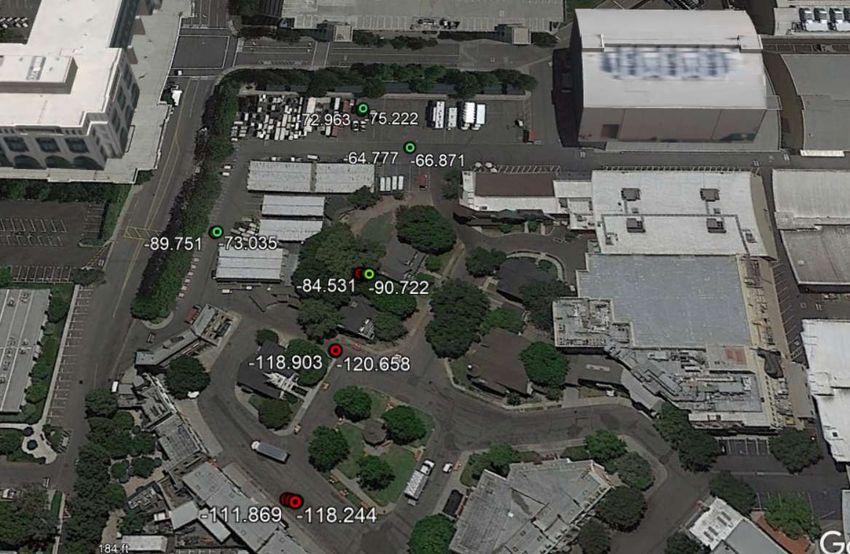
• Introduction to 5G field testing
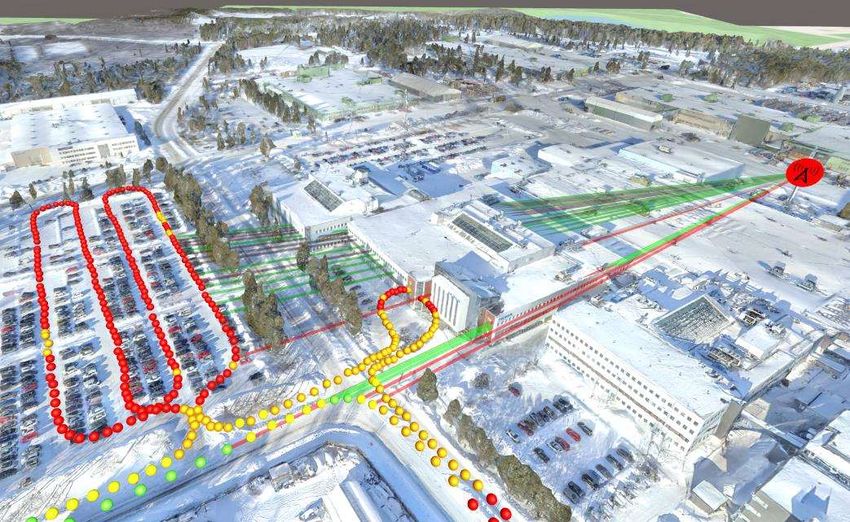
• 5G coverage and measurements
• 3D visualization of 5G beams
• 5G indoor testing
• 5G device benchmarking
• 5G interference and site maintenance
  tests
• Key takeaways

                                         2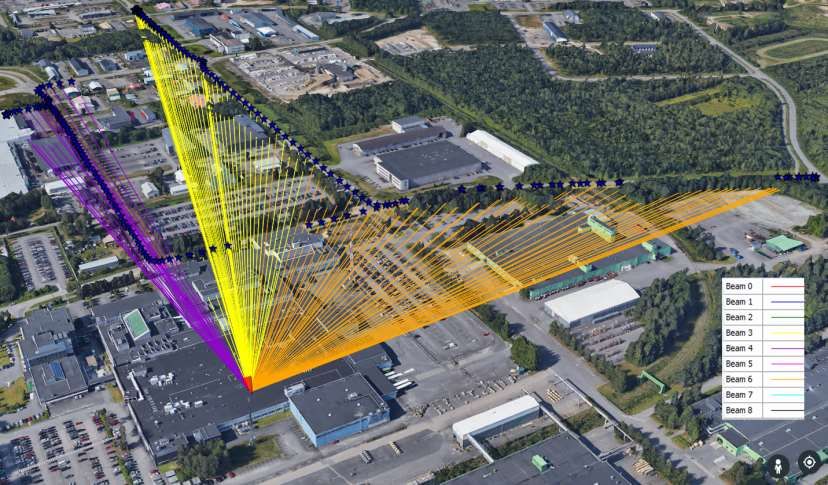
VIDEO

• https://youtu.be/nPlpSKMiKjw

                                 3
We measure the air
interface from the live
radio access network
(RAN)

                          Possibility to measure the
                          latest technologies with
                          the latest devices

                                                4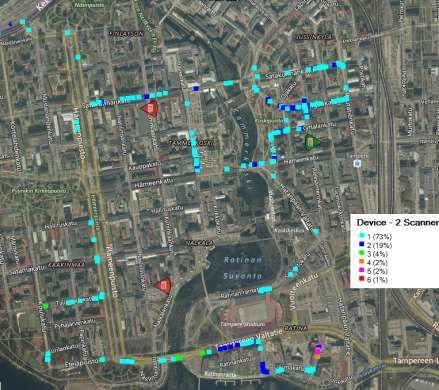
5G                          5G
           TESTING                     TESTING
             NOW                        2020+

•   Lab testing            •   Lab testing
•   Networks trials        •   Networks trials
•   Network rollout        •   Network rollout
•   Network optimization   •   Network optimization
•   Network benchmarking   •   Network benchmarking
•   Network monitoring     •   Network monitoring

                                                      5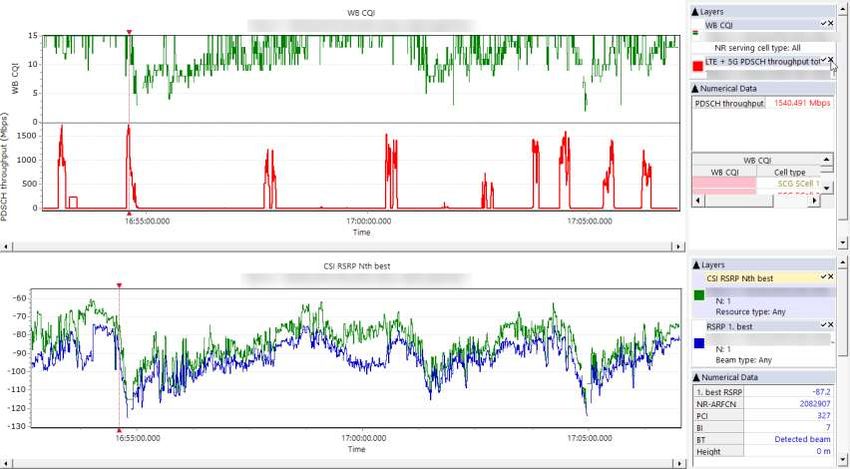
6
• Nemo Outdoor supports an extensive set of                     Qualcomm X50 based devices
  commercial and pre-commercial devices that have
  been used in the field by Keysight customers       LG V50 ThinQ       Xiaomi Mi Mix 3 5G    HTC 5G Hub

• Device support for both mmWave and sub-6 GHz

  Industry-leading scanners

                              and more
                                                     OnePlus 7 Pro 5G
                                                                        ZTE Axon 10 Pro 5G    Oppo Reno 5G

   Qualcomm X50 and             HiSilicon Balong
   Samsung Exynos              5000 based devices
   5100 based devices           Huawei   Huawei
                               Mate 20X Mate 30 5G
     Samsung S10 5G                                   Samsung Note 10+ 5G
                                 5G
                                                                        Netgear Nighthawk
                                                                                             WNC 5G hotspot

                                                                                                        7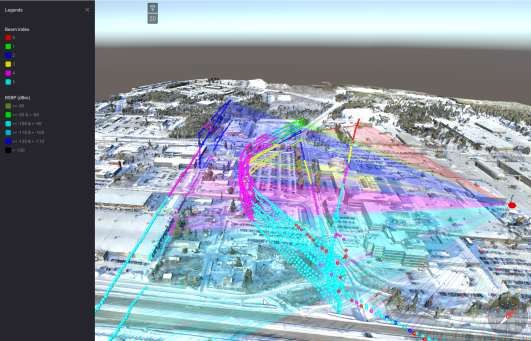
BEAM-BASED SIGNALS IN 5G NR
                                                                      gNB    Synchronization and
                                                                             broadcast signals
                                                                             (beam sweeping)

• gNB has an antenna array to send and receive beams
  to/from user equipment (UE)
• UE attach process
                                                                                        UE
 • gNB sweeps beams at intervals
 • UE look for strongest beam to send RACH request                    gNB
                                                                              Beam acquisition
 • UE to report channel state information (CSI) periodically to gNB           for UE
                                                                                       Uplink beam
• Beam management
 • Measure and understand beam switching
                                                                            Downlink
 • Analyzing beam performance is important                                  beam
                                                                                          UE

                                                                                                     8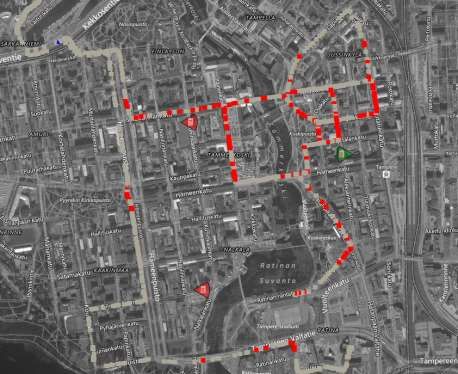
PCI 7 Beam   PCI 7 All Beams      PCI 7 Beam
Index 0                           Index 3

PCI 7 Beam                        PCI 7 Beam
Index 1                           Index 4

             PCI 7 Beam Index 6

PCI 7 Beam                        PCI 7 Beam
Index 2                           Index 5

                                        9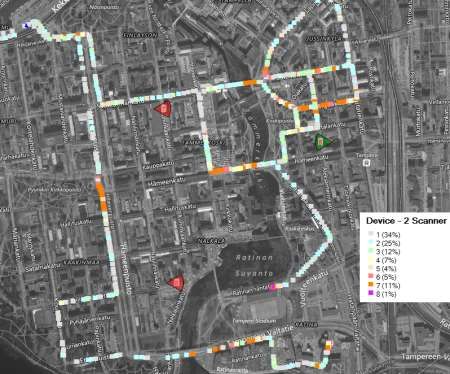
DETECTING THE SYNC SIGNAL BLOCK (SSB)

• 5G NR signal demodulation is needed to get

                                                                                                          240 subcarriers, 20 RBs
                                                                                                                                    SSB
  beam-specific coverage and quality KPIs

                                                                            127 subcarriers
                                                                                                                                    240 subcarriers
  • SS-RSRP, SS-RSRQ, SS-SINR, etc.                                                                                                 max 7.2 MHz in
SCANNER VS UE
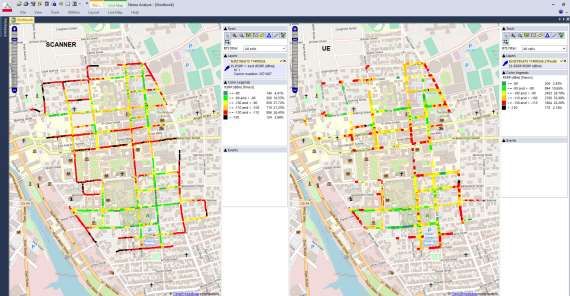
• Scanner is able to measure more simultaneous beams than the UE, scanner measures 5G
signal regardless of the existence of an LTE anchor or configuration
• UE-based coverage measurement gives the end-user perspective
115G SCANNER TROUBLESHOOTING
Interference Number of strong beams
Areas with good RSRP and poor SINR Number of servers above coverage threshold
125 G N E T W O R K P E R F O R M A N C E A N A LY S I S
Interference Number of strong beams
Areas with good RSRP and poor SINR Number of beams above coverage threshold and
within 5 dB of best server
13or
Radio Link
Optional amplifier
or
Built-in CW generator
300 kHz to 50 GHz
14180m
1516
3D BEAM VIEW IN GOOGLE EARTH

                               17
L I N E O F S I G H T, B L O C K A G E , S H A D O W I N G
• Propagation characteristics of
mmWave radio signals are getting
closer to visible light
• High blockage, even from small objects
such as trees Blockage
• Strong reflections
• High shadowing loss Shadowing
• Seeing even the smallest objects of
the environment in 3D together with
the signal helps to understand signal
propagation
Line of sight, good coverage
18• 5G beam patterns may be a combination of
horizontal and vertical beams
• Coverage footprint of each beam can be Nemo Analyze’s 3D Visualizer, SSB beam coverage footprint
visualization from drone measurements. Measurements done
different at the ground level and higher with Nemo Handy on OnePlus 5G device attached to the
altitudes drone, FR1 5G cell
• Coverage to high-rise buildings from a macro
base station requires vertical beams
• Coverage for drone flight paths
• Measuring with a drone provides a way to
verify 3D coverage footprint of each beam
1920
WNC 5G hotspot   PcTel HBFlex scanner
• FR1= 3.5 GHz
• FR2= 28 GHz
• Inbuilding open area, no dividers or walls
• Both FR1 and FR2 gNB antenna in the same
  location, same direction
• gNB Tx power configuration
  • FR1 total TX power: 1W
  • FR2 total TX power: 2W
  • FR1 BW: 100MHz, FR2 BW: 4x100 MHz
  • → SS-RS TX power ~ -2 dBm for both FR1 and
    FR2
  • gNB antenna gain not known

• Measurement devices
  • HBFlex scanner
  • WNC router with Speedtest.net download active
    tests
                                                                                       21
22
Top quality (CQI 15) at many parts of the route
             Up to 1.5Gbps throughput

CSI-RSRP (green line) stronger than SS-RSRP. CSI channel and the traffic channel
transmitted with more narrow beam and better gain compared to SSB beam.
                                                                                   23
24
QUALCOMM MODEM VS SAMSUNG EXYNOS MODEM

• Measurements performed with Nemo Handy
• Lot of differences detected in device behavior
• Device A 5G NR performing much better, solid
  420 Mbps throughput
• Device A detecting NR signal much better in
  drive test (moving device)
• Devices A and B mostly camping on different
  SSB beams

→ Devices and networks still a bit immature, further fine-tuning and testing needed.

                                                                                       25
• During device acceptance, lab engineers use network simulators such as the UXM 5G to test different chipsets along
with UEs for multiple test cases – FR1 and FR2. Are all my
UE
Why am I antennas
seeing all working?
these SCG
failures?
Does my
beamforming
Is my work?
chipset
Is my newer UE
working?
software build
better than my
Keysight UXM 5G Wireless Test Platform
previous one?
How do you correlate these
two disparate sets of data?
A lot of issues are captured in the form
of logs by both the network simulator
and the UE but... Is there a problem with my UE
or the test network?
26NEMO SOLUTION
Test UE
Nemo Outdoor connected to test UE
• Support for multiple chipsets – Qualcomm/Samsung/Huawei
• Qualcomm QXDM traces with trace mask activation
Nemo Outdoor • Automated root cause analysis
or
Log file
QXDM
Nemo 5G Device Analytics
UE and UXM log correlation with
Log file root cause analysis by
Nemo 5G Device Analytics
Keysight UXM 5G
Wireless Test Platform
27• Identify regression between software builds
• Benchmark against a reference device
• Benchmark against
competitor device(s)
UE with
SW build Log file
E7515B - Keysight UXM 5G
1 Wireless Test Platform
UE with SW
build 2
NTL50000A - Nemo 5G
Device Analytics Benchmarking reports
• 5G Device
Analytics offers
benchmarking
report generation
Log file
and device scoring
NTA50000B - Nemo
Outdoor
2829
100 MHz RTSA to capture signals      Scan multi cells, multi carriers       Battery-powered mmWave signal
reliably                             and all available beams                generator to facilitate coverage
                                                                            test in venues and indoors
• 5G control channel is not always   • 5G uses beams to provide
  on                                   required S/N for individual mobile   • mmWave propagation in street
                                                                              level and indoors is complex
• 5G is TDD, uplink and downlink     • UE measures beams from
  signals are at the same              different cells and carriers         • Real coverage requires testing
  frequency, offset by time                                                   before gNB installation

                                                                                                               30
CARRY PRECISION WITH YOU
For devices and components For signal analysis
1. Cable and antenna test 9. Spectrum analysis
2. TDR 10. Real-time spectrum analysis
3. VNA/time domain 11. Time gating
4. Noise figure 12. Interference analysis
5. Vector voltmeter 13. Channel scanner
6. Power meter 14. Analog demodulation (AM/FM)
7. Extended range transmission 15. OTA LTE, 5G OTA
analysis (ERTA) 16. IQ analyzer
8. Tracking generator 17. Pulse measurement with peak power Utilities
sensor
22. GNSS
18. Frequency counter
23. DC voltage source
19. Keysight VSA 89600 link
24. Secure erase
20. Phased array antenna control
25. Mapping
21. EMF measurement
26. Frequency extender
311.Same basic requirements as earlier
generations – coverage, interference and
KPIs, but 5G also increases flexibility,
security, and complexity over 4G.
2.There is real value in both UE and scanner
measurements.
3.Collecting data is not enough – need to
effectively visualize the results.
4.Challenges differ between FR1 and FR2.
32RESOURCES
• Webpage: Solutions for 5G NR field testing and data analytics
• Keysight 5G Webinar Series
• Nemo Solutions:
• Nemo Intelligent Device Interface • Nemo Autonomous Probe
• Nemo Handy • Nemo Cloud
• Nemo Walker Air • Nemo WindCatcher
• Nemo Analyze
• Nemo Invex II
• Nemo Customer Experience Monitor
33• 3GPP – Third Generation Partnership Project • PRB – Physical resource block
• 5G NR – 5th generation new radio • PSS – Primary synchronization signal
• API – Application programming interface • QoE – Quality of experience
• BI – Beam index • QoS – Quality of service
• BLER – Block error rate • RACH – Random access channel
• CPE – Customer premise equipment • RAN – Radio access network
• CSI-RS (DL) – Channel state information reference signal • RAT – Radio access technology
• DL – Downlink • RRC – Radio resource control
• DUT – Device under test • SRS (UL) – Sounding reference signal
• FCC – Federal Communications Commission • SSB – Synchronization signal block
• KPI – Key performance indicator • SS-RSRP – SS reference signal received power
• MAC – Media access control • SS-RSRQ – SS reference signal received quality
• MCS – Mobile crowd sourcing • SS-SINR – SS signal-to-noise and interference ratio
• MIMO – Multiple-input multiple-output • SSS – Secondary synchronization signal
• mmWave – Millimeter-wave • TAP – Test automation platform
• NEM – Network equipment manufacturer • TRS – Tracking reference signal
• PBCH – Primary broadcast channel • TX – Transmitter
• PBCH DMRS – PBCH demodulation reference signal • UE – User equipment
• PDSCH – Physical downlink shared channel • UL – Uplink
34You can also read


