Sixty successful years of the Antarctic Treaty - Instituto Antártico Chileno
←
→
Page content transcription
If your browser does not render page correctly, please read the page content below
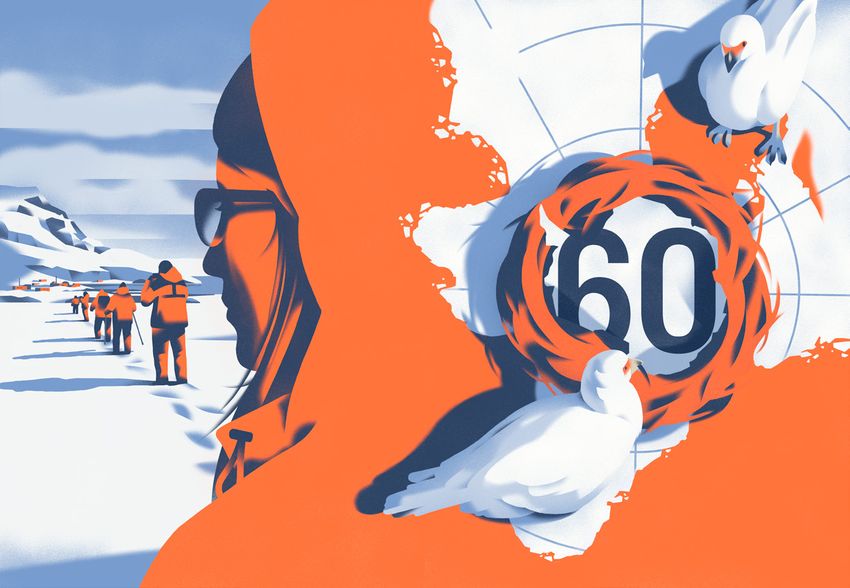
A DvA Nc E S i N C H i L E A N A N T A rcT i C S Ci E Nc E n 5 – 2 0 1 9

Sixty successful years
of the Antarctic Treaty

Co�TE�T�
01 editorial
Official publication of inach. Its goals include
dissemination of information on the Chilean
o2 short notes
Antarctic Science Program and related
activities. Ilaia has a circulation of 1,000 copies, 02 Fossil Patagonia: An intriguing project to encourage
distributed free of charge to regional and “science tourism”
s. izquierdo
national authorities, international Antarctic 02 Celebrating the 500th anniversary of the discovery of the Strait of
institutions, Chilean and foreign libraries, Magellan and 200 years of Antarctic exploration
universities, and researchers. Ilaia is an annual
publication. The opinions expressed here are
03 Open call for media coverage of the 55th Chilean Antarctic Editorial
Scientific Expedition
those of the authors and do not necessarily
The Antarctic Treaty: 60 years of peace,
knowledge... and hope
reflect the positions of inach. Total or partial
04 advances in chilean antarctic science
reproduction is allowed with mention of the
source. “Ilaia” is a Yagan word that means 04 Teleconnections: South America-Antarctica.
How does the White Continent affect South America?
“beyond the South.”
Dr. Marcelo Leppe
05 Physical Teleconnections with Antarctica
Director inach
06 Ozone hole influence on rainfall in South America
T
08 Oceanic-Atmospheric System Teleconnections: interactions he number of international migrants (people living in a country other than their country of
between Antarctica (Southern Ocean) and Chile (South Pacific) birth) reached 258 million worldwide in 2017. The economic and social crises that occur in
director many parts of the world lead us to believe that this number has increased. Almost half of the
10 Biological Teleconnections: South America-Antarctica
Marcelo Leppe migrants (48%) are women and more than 36 million are children (data from https://migrationdat-
12 Antarctic isolation, under the spotlight aportal.org/).
This phenomenon has stimulated public discussion about several issues of great importance.
editor 14 Boeckella poppei and Halicarcinus planatus:
Two crustaceans testing the circumpolar barrier Borders and immigration policies. Identity and how it is built and how it changes. The socio-economic
Reiner Canales
impact of the arrival of large numbers of people in certain territories.
rcanales@inach.cl 18 Environmental Teleconnections Is there a link between these migrations and the climate crisis? In a global warming scenario of
20 More than the sum of its parts: Biomagnification and the effects 2ºC, the projected increase in sea level is 5 meters or more in the coming centuries. If it is possible
editorial advisory committee to limit the heating to 1.5ºC, the rise in sea level would be maintained under 1 meter in the long term.
of pollutants on coastal areas of Antarctica and Patagonia
Marcelo Leppe, Edgardo Vega, The bad news is that this latter scenario is no longer achievable, and we are facing a more likely
Marcelo González, Paulina Rojas, 22 Antarctic pollution pathways
scenario of an increase of 1.7ºC or more.
Elías Barticevic. 24 Ancient Teleconnections between South America and Antarctica Consequently, if we don’t currently accept that there is a relationship between migrations and
climate change, in the future we could see a stronger linkage, with perhaps entire populations aban-
26 Echoes of a once-green Antarctica in modern Chile
translation doning coastal areas or places inexorably struck by endless drought.
Robert Runyard In Antarctica and especially in the Peninsula, a warming of only 1.5º C will have considerable ef-
fects. The number of days with temperatures above 0ºC will increase, rains will increase and the ice
30 A compound derived from Antarctic plant inhibits growth
surface will melt. The ocean will become more turbulent and will release heat to the surface of the sea
photography in colorectal cancer
and to the coasts. The distribution patterns of marine life will change and in the continent new spaces
inach archives, René Quinán, Harry
will be opened for the successful arrival of non-native species. Again, the projections appear bleak.
Díaz, Pablo Ruiz, Sergio Izquierdo, 32 horizon scan This year, from 2-13 December, Chile will host COP25, the highest decision-making body of the
Felipe Trueba. United Nations Framework Convention on Climate Change, which brings together 196 member coun-
34 Antarctic fiction in English: A thematic analysis
tries plus the European Union (197 parties). This is the largest such summit held each year to address
design global action against this phenomenon.
www.negro.cl 40 international collaboration
Members of the scientific community, and particularly those dedicated to Antarctic science,
42 Interview. Dr. Kirk Johnson, are making their best and biggest efforts to supply information that illustrates the current state of
cover illustration Smithsonian National Museum of Natural History the climate crisis and its possible projections, with an eye on collaboration to assist with political
Harol Bustos decision making.
46 Interview. Gabriela Roldán,
And so we can now look at the legacy of the Antarctic Treaty from a brighter and more optimistic
Gateway Antarctica, University of Canterbury, New Zealand
perspective. Signed almost 60 years ago and today endorsed by 54 countries, the Treaty pursues
Printed by Ograma
49 Interview. Dr. César Cárdenas, the vision of protecting an entire region, promoting science and other peaceful activities, where the
Chilean Antarctic Institute only frontiers are those of the human desires and capabilities to produce greater knowledge, all the
Instituto Antártico Chileno - inach
while without putting at risk the preservation of this polar region.
Plaza Muñoz Gamero 1055
52 chilean antarctic science program 2019-2020 The Antarctic spirit of fraternity and collaboration is palpable not only on the White Continent,
Punta Arenas, Chile but also in the cities which serve as the gateways to this icy region, and in the countries that feel
Phone (56-61) 229 81 00 the call of Antarctica. In December we will celebrate the six decades of this unique instrument of
inach@inach.cl 67 antarctic science publications 2018 (Web of Science)
international relations, an example of the human ability to reach agreements and put the interests
(and rights) of future generations first. Let’s hope that this will serve as an example for key decisions
Reg. Prop. Int. nº 224.246 75 southern lights that must be made sooner rather than later.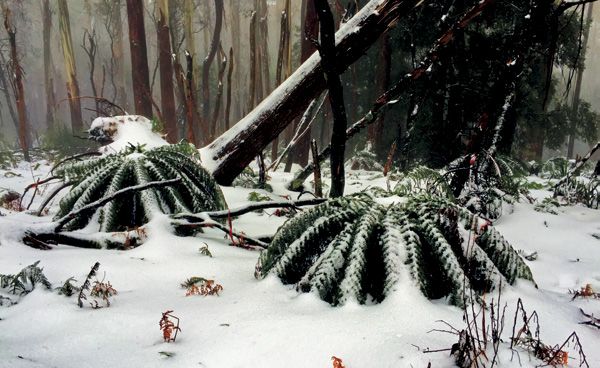
ilAiA | short notes ilAiA | short notes
Open call for media
shOrt NOtEs coverage of the 55th
Chilean Antarctic
Scientific Expedition
I
n 2018, for the first time,
the Chilean Antarctic Insti-
Fossil Patagonia: An intriguing project tour guides and public officials, we hope will prove to be
The materials produced
tute (INACH), held an open
beneficial in this new paleo-tourism route.” solicitation to choose the me-
to encourage “science tourism” The head of the Antarctic Institute also stressed that
under this project
are available for free dia that would cover its 55th
he would like to see the creation of a way of observing download at this Antarctic Scientific Expedition
these “paleo” objects, where the citizens of the Magallanes site: www.inach.cl/ (ECA 55) and disseminate the
An investment of 180 million pesos (about region would be able to generate high quality scientific in- patagoniafosil information concerning the
US$270,000) and 30 months of work has formation which would serve as the basis for technology Chilean Antarctic Science Pro-
f. trueba
culminated in the completion of a special- transfer and the development of useful subject matter. “We gram (procien). The goal was
are providing a guide book to foster the understanding of to communicate knowledge of
interest tourism project that attempts the landscape here, to tell its story. We stress that this is Antarctic matters for the great-
to “open a window into time” to travel not intended to serve as a guide for fossil hunters. This er community, through media presence that features high
back to the Cretaceous period to discover document is free and downloadable from the inach web quality journalism and addresses a wide range of interests.
page. We have a limited hard-copy printing and we are This effort hopes to develop a national community that
the ancient connection between South
aiming at the tourism and educational sectors to develop infrastructure, interconnectivity, the promotion of tourism appreciates the importance of knowledge about the White
America and Antarctica. their own competencies.”• and investment, as well as scientific cooperation and pro- Continent as well as measures for its protection.
I
tection of the environment. Media professionals (newspapers, radio, television, and
n January 2016, the electronic media) and audio-visual producers were invit-
Chilean Antarctic Institute 200 years of Antarctic exploration ed to apply and become “embedded” within the Antarctic
(inach), with financing In 2020, the 200th anniversary of three decisive milestones Scientific Expedition. This would include travelling to the
from the Economic Develop- of Antarctic exploration will also take place. These include Antarctic Peninsula region for on-site reporting on Chilean
ment Agency (corfo) for the scientific and logistic activities during the Antarctic season
Magallanes region, under-
Celebrating the 500th anniversary of two of the first sightings of the continent, and of the first
2018-2019. The open call is a way to obtain greater trans-
recorded landing on these coasts.
took an intriguing new spe- the discovery of the Strait of Magellan In the summer of 1820, the expeditions of the Russian parency in coverage of Chilean scientific activity, as well as
cial-interest tourism project. and 200 years of Antarctic exploration Admiral Fabian Gottlieb von Bellingshausen, (aboard the top quality, in addition to generating new communication
This involved condensing Vostok, January 27) and the English sailor William Smith alliances.
scientific information from (aboard the Williams, January 30) made the first sightings In this first solicitation, 32 applications were received
more than ten years of paleontological research and or- October 2020 will mark 500 years of the northern regions of the Antarctic Peninsula. On De- from both national and foreign media. The proposals were
ganizing it all into a tourism-oriented theme activity. Then since Hernando de Magallanes passed cember 16 of that year, Andrew Macfarlane (on board the evaluated by a committee made up of professionals from
the effort evolved into a nine-point visitor route between Dragon) landed on the Antarctic continent, on a sector inach and its citizen advisory board (Consejo de la Sociedad
Punta Arenas and Cerro Guido, leading to a true “window through the narrow austral strait that of the peninsula located south of Deception Island. Both Civil). According to the rules of the open call, nine commu-
into time” for time-travel back to the Cretaceous period, bears his name, uniting the Atlantic and the Dragon and the Williams had sailed from the port of nication professionals from different media or production
to discover the ancient connection between South America Pacific oceans. This milestone, which is Valparaiso, Chile. This reminds us of the importance of this companies were selected to cover activities in the plat-
and Antarctica. country as a bridge to Antarctica, and of Punta Arenas as forms in which scientific work would be carried out.
After thirty months of work, on July 2018 at the hear-
part of the Fifth Centennial of the First
the gateway to the White Continent during that period.
ing room for the national comptroller for the Magallanes Circumnavigation of the World, brings Chile The “long, thin country” would continue to play a vital role The selections included:
region, the ceremony heralding the completion of project together with Spain and Portugal, during the so-called “heroic era” of Antarctic exploration, in Professor Julio Escudero Station (INACH)
was held. This included the certification of tourism guides the late nineteenth and early twentieth centuries. • Rosario Jiménez-Giliand & Eva Vera Cuadra (CNN,
that make up part of theory-and-practice course along this
in commemorating the event. BioBioTV, CuriosityStream)
In this context, Chile, through its Antarctic Institute, will
W
route. These guides take note of the landscapes and flora reissue the updated book, Traces of Antarctica around Punta • María Skinner Huerta (Heureka, National Maritime
and fauna as they were 65 million years ago, to subse- ith this in mind, Chile wanted to highlight this Arenas and the Strait of Magellan, which brings together Museum, Blog NGO Plastic Ocean)
quently present these to visitors in a narrative specially date with the creation of a high-level Presidential information about fifty places related to Antarctic history.•
adapted to a new form of tourism. Advisory Council to lead the national celebrations AP-41 Aquiles, Chilean Navy
During the development of the “Fossil Patagonia” initia- of the Fifth Centenary of the Magellan’s Voyage Around the • Claudia Aranda Arellano (Pressenza)
tive there were several instances of transfer of knowledge World, an event which opened the door to greater cultural • Fernando Caro Carrasco (El Mostrador)
involving a number of public-interest objectives, includ- and commercial exchange in the world. The celebrations • Cristian Fuentes Valencia (University of Chile)
ing training for pre-school educators and public officials, also recognize that the discovery of the Strait was a key • Paula López Wood (EcoWatch, The Explorers Journal,
exhibitions of fossils and “paleo art” to the community, factor in the opening of maritime routes and expanded El Mercurio, Ladera Sur)
conferences and workshops for artists and entrepreneurs, shipping. As a result, the government of Chile and the
involvement of citizens, and scientific field expeditions. In Municipality of Punta Arenas are preparing a program of Marinero Fuentealba, Chilean Navy
addition, a field guide was developed along with a digital activities to get underway this year (2019) and extend be- • Nadia Politis Mella (Autonomous University of Chile)
application. There will soon be an installation of two urban yond October of 2020. The project to upgrade the Punta
landmarks at Punta Carrera and Cerro Guido to help solidify Arenas waterfront includes a site museum with full-scale Yelcho Station (INACH)
and distribute the content of this fossil story. replicas of emblematic ships of world exploration: the Nao • Andrea Navarro Gezán (IDEAL Center, EFE, CNN,
Dr. Marcelo Leppe Cartes, director of inach, pointed Victoria (Hernando de Magallanes), the HMS Beagle (Robert Chilevision)
out that this project attempts to permanently translate FitzRoy-Charles Darwin), the Ancud (John Williams), the
this scientific content for tourism operators and guides, James Caird (Ernest Shackleton) and the Yelcho (Luis Pardo). The preliminary evaluation has been positive, resulting in
for incorporation into meaningful tourism information. With this, Chile hopes to honor the 21st of October, an increase in the number of press releases in local, nation-
Dr. Leppe: “Through this document we are providing in- 2020, to celebrate this date which marks five hundred years al, and international media. The reporting has shown im-
formation that is reliable and validated scientifically, with since the of the discovery of the Strait of Magellan. This day proved relevance in covering the institutions that support
material from current publications. The products we are will memorialize the historic voyage that eventually led to and carry out the Antarctic activity for Chile. The selected
providing (the guidebook, the downloadable application for the development of the southern territories of the conti- professionals are committed to publishing the resulting
h. díaz
smartphones, and a web page), along with the training for nent, through the facilitation of trade, the development of material throughout the year 2019.•
2 | a d va n c e s i n c h i le a n a n ta r c t i c s c i e n c e | n5 instituto antártico chileno | 3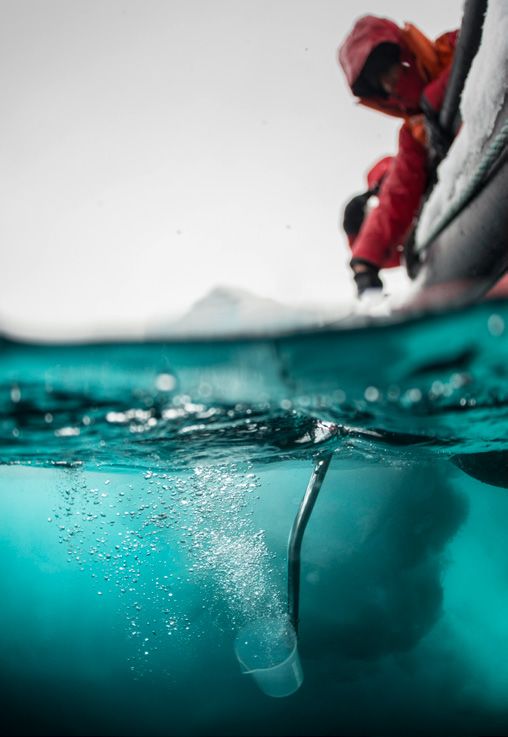
ilAiA | teleconnections: south america-antarctica
ADvA�cE�
Physical Teleconnections
with Antarctica
i� cH |lE A � T
Author he term “teleconnection” is role in teleconnections. Hence, the Ocean. These have been linked to
associated with the existence Southern Annular Mode (sam) or rapid winter warming around the
Ricardo Jaña
INACH
of low-frequency variations Antarctic Oscillation, is a climatic Antarctic Peninsula, while changes in
in climate that are evident in the at- pattern that reveals the north-south the ocean surface temperature in the
a�tARCtiC
mosphere and in the ocean, having a displacement of the westerly winds central tropical Pacific have been tied
significant correlation of climatologi- belt that circulates around Antarctica. to the warming of western Antarctica.
cal variables between a reference base Consequently, the variation in the The negative phase of the Inter-
region and other distant areas on the latitude of the west wind belt affects decadal Pacific Oscillation is said to be
planet. It can also be said these are the intensity and position of both the characterized by anomalies similar to
SCiEnCe
recurring and persistent anomalies, cold fronts and other mid-latitude those observed by the changes in pres-
of large both temporal (over many systems. Thus, positive values for the sure at sea level, and the force of zonal
years) and spatial (over hundreds or Antarctic Oscillation indicate that the winds near the surface (850 hPa) near
thousands of kilometres) scale, af- low pressures are closer to Antarctica, Antarctica, which have led to the ex-
fecting the variability of atmosphere and away from the south of Chile. On pansion of the sea ice extent since the
and ocean circulation. At the same the other hand, negative values imply year 2000. This is particularly true in
time, although these weather patterns that low pressures are circulating far- the Ross Sea region during all seasons,
may last from several weeks to several ther north than usual (farther from involving also the intensification of the
months, these may also last for several Antarctica), indicating that periods of Amundsen Sea Low-pressure centre.
consecutive years, reflecting inter-an- rainy weeks or months are more likely On the other hand, a 1000-year
nual and inter-decadal variability. to happen in the south of Chile. low-resolution simulation of a cou-
In this sense, these teleconnec- Recent literature reports a series pled atmosphere-ocean model shows
tions are the climatic links between of cases in which teleconnections a natural and highly regular oscillation
geographically separated regions, as between Antarctica and the tropical between open-ocean convection and
seen in a couple of examples. One cor- and extra-tropical zones, are well doc- non-convective periods in the South-
responds to the relationship between umented. For example, massive frac- ern Ocean. The strength and global
Teleconnections: the El Niño Southern Oscillation
(enso) behaviour’s and their influ-
turing and destruction of a fixed ice
area (sea ice attached to the coast) oc-
scale of the observed teleconnections
suggest that the Southern Ocean plays
South America-Antarctica ence at high austral latitudes, known curred in Lützow-Holm Bay, near the a very important role in the dynamics
How does the White Continent as the Pacific South-American climate
pattern (psa). This generates a series
Japanese Syowa Station in 2016. This
rupture is highly correlated to the
of global climate on the shorter inter-
annual and multidecadal time scales.
affect South America? of standing wave trains of anomalies warming recorded in tropical Pacific Due to the growing interest in ex-
that extends southeastward through waters due to a maximum event of the plaining the mechanisms and impacts
The discovery of the hole in the ozone layer in
to the Amundsen and Bellingshausen El Niño Southern Oscillation (enso) associated with the different modes
Antarctica in the mid-1980s accelerated the increasing
Seas, crosses the Antarctic Peninsula, during that season. Similarly, model of Antarctic climate variability and
interest in the polar regions that had begun at least
and extends into the southwestern simulations have provided evidence their interaction with other tropical
a hundred years earlier. This was a tangible sign that
Atlantic Ocean. that warns about that an increasing climate phenomena, the activities
human beings could affect nature on a scale never
Another example relates to the number of extreme events of El Niño of the Scientific Research Program
before seen. It also showed that Antarctica was not
characteristics of a system of coupled Southern Oscillation projected for the “Climate Change in the 21st Century
isolated, nor intact, nor safe behind its frozen barrier.
atmospheric/oceanic climate anom- 21st century may expose the western (AntClim21)” run for the Scientific
The phenomenon of climate change, and the
alies that include the inter-annual Antarctica ice sheet to greater and Committee on Antarctic Research
confirmation that the Antarctic Peninsula was to be
variability of atmospheric pressure at more frequent melting events. (scar) have been reinforced. Thus,
one of the critical regions affected by global heating,
sea level, wind fields, sea surface tem- At the same time, the Antarc- to examine processes linking tropics
propelled the White Continent to the center of
perature, and the extent of sea ice. tic Oscillation and the Semi-annual to Antarctica and to understand the
conservation priorities, as well as multinational and
These phenomena spread around the Oscillation Index stimulate the in- future trajectory of Antarctic climate,
multidisciplinary scientific research.
Southern Ocean with a circumpolar ter-annual variation of sea ice, due to in August 2016 the scar Tropical
With South America being so close to Antarctica, it is
flow to the east, known as the Antarc- a general change in the atmospheric Antarctic Teleconnections Action
only natural to think that it affects us. But how? In this
tic Circumpolar Wave (acw). and ocean circulation in the Southern Group (tate) was created to upgrade
ILAIA special, we reveal the many ways in which South
Furthermore, annular modes be- Ocean. This fact is demonstrated by inspiring ideas pushed by former col-
America and Antarctica are linked, in their physical,
tween the poles and the surround- the long-term changes observed in laborative Polar to Tropical virtual
biological, environmental, and historical dimensions.
imagen de chile
ing latitudes, provide oscillations in the sea surface temperature of the institute initiative.•
fluctuating weather patterns (such as western tropical Pacific, the tropical
www.polartropical.org out-of-phase relationships), playing a Atlantic, and the northern Atlantic
instituto antártico chileno | 5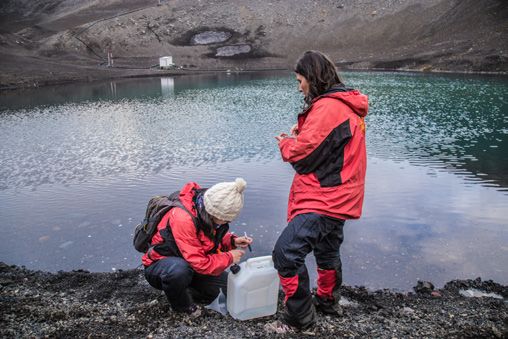
ilAiA | advances in chilean antarctic science ilAiA | teleconnections: south america-antarctica
Ozone hole influence
on rainfall in South America the orographic barrier of the Andes served to be more significant during South Pacific coast of South America
mountains. The intensity of these pre- the austral summer. (central-southern Chile)– there have
The ozone hole that has appeared over Antarctica every year since the end of the 70s (between August and
cipitations is also modulated by the Several previous studies have been significant decreases in wind and
December) causes changes in the hemispheric atmospheric circulation, which in turn generate anomalies in
natural variability resulting from vari- linked decreasing precipitation be- rain in intensity.
wind patterns, cloudiness, and precipitation. In South America, these anomalies have particularly affected
ous modes of large-scale atmospheric tween Coquimbo and Aysén (lati- Global warming induced by green-
the southern Pacific coast (latitude 30-45º S), where there have been persistent decreases in rainfall (-8%
circulation, such as El Niño-South- tude 30-45º S) with the trend towards house gases also favors the positive
per decade) in recent decades during the austral summers. Experiments seeking causal attribution using the
ern Oscillation (enso) and Southern positive sam values during the austral phase of the sam, but the effect of
Coupled Model Intercomparison Project (CMIP5) reveal that the Antarctic ozone hole may be responsible for up
Annular Mode (sam). summer (with the enso playing only a this forcing on the sam shows simi-
to 80% of the current negative trend observed during summer, for the rainfall in central-southern Chile.
The index used to identify the minor role in those latitudes). lar intensity throughout the year. On
phase in which the sam is found is cal- the other hand, changes in the sam
culated using the atmospheric depres- Teleconnection associated with the ozone hole are
imagen de chile
Lower precipitation in
south-central Chile is
sion difference (at the surface) record- Observations and simulations carried more intense in summer, due to the
due, to a large extent, ed between several meteorological out using global climate models show time necessary to propagate (from
to Antarctic climate
phenomena. The hole stations located around latitude 40° S that stratospheric cooling resulting the stratosphere to the lower tropo-
in the ozone layer, for (the Valdivia sector of Chile) and vari- from the ozone hole over the Antarc- sphere) the cooling signal caused by a
example, has resulted
in major changes ous Antarctic stations located around tic favors the positive phase of the reduction in stratospheric ozone be-
in the composition
of the Antarctic the latitude 65°S (Yelcho base sector, sam during the austral summer. This tween August and December.
atmosphere, resulting in Antarctic Peninsula region). phase is associated with a decrease in
perturbations in wind,
cloud, and precipitation
patterns, particularly in
the south-central region
of the country.
1 Changes in wind
A B intensity at a height (A)
of 2m, and rainfall (B),
between 1950-1980
and 1996-2005, using
averages from CMIP5
global climate models
during the austral
summer (December to
February).
Authors The ozone hole During the positive phase of the atmospheric pressure at high latitudes Attribution experiments to iden-
The ozone hole is a seasonal phe- perature of the stratosphere (strato- posphere. Towards the austral sum- sam, the west wind belt grows in and an increase in atmospheric pres- tify causal factors through the use
Raúl Cordero
Universidad de
nomenon characterized by a sharp spheric cooling) and a more stable mer these alter the westerly winds, strength and migrates hundreds of sure at mid latitudes, which generates of cmip5 global climate models indi-
Santiago de Chile decrease in stratospheric ozone con- and persistent polar vortex. These storm tracks, precipitation patterns, kilometers towards the South Pole. hemispheric changes in atmospheric cate that the effects on atmospheric
centration over the Antarctic region, conditions facilitate the formation of atmospheric pressure, and tempera- These changes in the atmospheric cir- circulation. circulation of the Antarctic ozone
Alessandro
Damiani which has been taking place since at polar stratospheric clouds, which in tures. These even affect the extent of culation at latitudes relatively close to Figure 1 shows the percentage hole explain between 40-80% of the
Universidad de least the late 1970s. During the austral turn leads to a greater loss of ozone. sea ice and the ability of the Southern Antarctica in turn generate anomalies changes, between 1950-1980 and reduction in precipitation (-8% per
Santiago de Chile
spring, ozone at altitudes of between Although the ozone hole is more Ocean to absorb carbon dioxide. in wind patterns, cloudiness, and pre- 1996-2005, in the intensity of winds decade) observed during in the austral
Sarah Feron 15-20 km is almost completely absent, intense during the beginning of the cipitation throughout the southern 1A and in rainfall 1B, calculated by summers in recent decades along the
Universidad de due to chemical reactions on the sur- austral spring, the effect of strato- Lower rainfall in hemisphere. comparing averages from global cli- Pacific coast of southern South Amer-
Santiago de Chile
faces of polar stratospheric clouds, spheric cooling is significant until the south-central Chile For example, in the central-south- mate models cmip5 during the austral ica, particularly in the central-south-
Pedro Llanillo which leads to ozone destruction due austral summer, resulting in a change Rainfall along the southern Pacific ern zone of Chile, there has been a summer (December to February). As ern zone of Chile (latitude 30-45º S). •
Universidad de to chemical compounds containing in the latitudinal temperature gradi- coast of South America (south-cen- reduction in the cloud coverage and shown in the figure, in recent decades
Santiago de Chile
chlorine and bromine. ent in the atmosphere. This change tral Chile) comes partly from storms rainfall recorded during recent de- there have been significant increases
Atmospheric ozone absorbs promotes the acceleration of strato- originated in mid-latitudes within cades. The negative trend in rainfall in the intensity of winds and precip-
short-wave solar radiation, and the spheric zonal winds. the belt of westerly winds, and partly in this region started about 1980 (at itation around Antarctica (over the
reduction of this ozone concentra- The effects of these changes mi- from the condensation of air in these about the same time that the ozone Southern Ocean), while at mid-lati-
tion contributes to lowering the tem- grate from the stratosphere to the tro- humid winds as they ascend into hole was detected) and has been ob- tudes (30-45º S) –particularly on the
6 | a d va n c e s i n c h i le a n a n ta r c t i c s c i e n c e | n5 instituto antártico chileno | 7
ilAiA | advances in chilean antarctic science ilAiA | teleconnections: south america-antarctica
Oceanic-Atmospheric System Teleconnections: (acw). Given the characteristics of the south-austral region of Chile,
interactions between Antarctica (Southern Ocean)
40°W 20°W 0° 20°E 40°E
its low period and sub-decadal time decreasing surface salinity, a feature
South Africa scales, it is coupled with the enso, of sub-Antarctic waters, whose in-
and Chile (South Pacific) Sub
ical
Fron
trop ic Front
t a r ct
t
ACC
transmitting its influence through fluence reaches latitudes to nearly
60°
an
Sub lar Fron
t 60° the acc and therefore transporting 30° S (the Subtropical front, in the
For several decades, the concept of “teleconnections” has been used to relate remote Po
re
Gy the warm sea surface temperature Coquimbo region). To the north,
ell
interactions on the dynamics of the oceanic-atmospheric system. One of these is the well- Ch We
dd
ile anomalies to all other oceans of the the warmest and most saline waters
known phenomenon called the El Niño-Southern Oscillation (ENSO), which mainly affects the 80° 80°
PCC CHC southern hemisphere. (though still cold) predominate, aided
coasts of Ecuador, Peru, and northern Chile. Here, the ENSO is associated with increases in sea Antarctica
30°S 40° 50° 60°
ACC by an upwelling phenomena bring-
surface temperatures and rainfall, among other effects. WWD
100° 100° Antarctica and the Coasts of Chile ing cold subsurface water (known as
Ross Gyre
On one hand, more permanent con- “Ekman pumping”) due to the pres-
Suba Polar Frontal Zone
ntar
ct
nections can be considered over time, ence of the Pacific Anticyclone and its
ic Z
120° one 120°
which contribute to the establish- s-sw winds. These conditions, plus the
Normal situation Situation Australia ment of a specific climate for a region. effects of the topography, make for a
(without El Niño) with El Niño
The west coast of Chile is primari- dry and somewhat unique climate.
140°W 160°W 180° 160°E 140°E
ly influenced by the acc, whose core is Finally, there is the influence
between the sub-Antarctic front and of circulation of deep water masses
the Polar front. However, its north- (thermohaline circulation), the result
2 Antarctic Circumpolar Current (ACC) and oceanographic fronts. This shows the ern branch meets the South American of differences in density due to chang-
meeting of the South Pacific West Wind Drift Current (WWD), which gives rise to
Ekman the currents of Cape Horn current (CHC) and Peru-Chile current (PCC) continent (as the West Wind Drift) es in temperature, salinity, and pres-
equatorial or Humboldt Current (map based on Nowlin and Klinck, 1986).
Equatorial upwelling Equatorial in a strip centered on the Taitao pen- sure. Besides those associated with
thermocline thermocline
insula, thus creating the Peru-Chile the acc, there are others at various
or Humboldt current flowing to the levels of depth that arise in Antarcti-
1 Diagram showing oceanic-atmospheric conditions in the tropical Pacific. Red
colors indicate areas of positive sea surface anomalies (warm). Blue indicates north, and the Cape Horn current ca. These include the Antarctic Inter-
negative (cold) conditions. Arrows indicate air flows. (Adapted from NOAA/CPC). (chc) to the south. mediate Water (aaiw), generated in
A
Thus, this system carries cold the Antarctic convergence area (Po-
Author
lthough originally this effect tant event such as the enso affect it? for the entire Southern Hemisphere. water, which influences the charac- lar front), and the Pacific Deep Water
3 A: Diagram showing global thermohaline circulation according to Rahmstorf
was thought to be a rather It seems that the El Niño/La Niña ef- This is associated with the northward (2002). B: Longitudinal Profile (segmented line offshore of Chile-Peru in “A”) teristic Chilean climate. The westerly (pdw), which originates near the coast
Cristián Rodrigo showing vertical distribution of percentages of water masses, according to Silva
Universidad regional event, it was later fects act as a forcing for this “Antarc- or southward movements of the sys- et al. (2009). The direction of the flow is indicated by arrows. STW: Subtropical
winds are associated with this system and is very cold and dense, so it flows
Andrés Bello determined to be also linked to anom- tic seesaw.” As a consequence of the tem of low Antarctic pressures that Water; SAAW: Sub-Antarctic Water; ESSW: Equatorial Subsurface Water; AAIW: and they bring abundant rainfall to down the Antarctic continental mar-
Intermediate Antarctic Water; PDW: Pacific Deep Water.
alous variations on a larger scale, re- direct wave propagation, effects are give rise to E-W winds. If these low gin and sinks to the sea floor 3.
lated to the behavior of the general observed more in the Antarctic sector pressures are modified by some dis- Generally speaking, this circu-
circulation of the tropical Pacific, as- that is “exposed” to the South Pacific. tant forcing, the Antarctic influence lation creates a kind of “conveyor
sociated with changes in atmospher- The consequences of El Niño in the on the southern hemisphere would be belt” around the world, bringing the
ic pressure systems, which generate Antarctic Peninsula are manifested altered. This could result in significant thermal, gaseous, and other charac-
wave trains that carry certain “tropi- in changes in meteorological vari- consequences for the general climate teristics, to various areas around the
cal properties” to the middle and high ables such as increased atmospheric of the Southern Hemisphere. A planet, constituting perhaps the larg-
latitudes. pressure and reduced rainfall 1. In the Southern Ocean there are est submarine teleconnection system.
During recent decades there has In the behavior of the climate important exchanges between the at- It has not been possible to de-
been a rapid warming of the Antarctic there is a greater influence from cold mosphere, the ocean and the sea ice. termine the direct influence of these
Peninsula (ap) and the western region air masses arriving from the south- The Antarctic Circumpolar Current Antarctic bodies of water along the
of Antarctica, as well as an imbalance west. In that case, the extent and con- (acc), which is a shallow (near-surface) southeastern Pacific Ocean and the
in the extent of sea ice between the centration of sea ice area on the west- flow and revolves around the Antarc- coast of Chile, due to lack of data and
Ross Sea sector versus the Belling- ern side of the Peninsula increases tic, is generated by the westerly winds sampling, but it is believed that these
Surface Salinity > 36
shausen-Amundsen area. This dipole (the Bellingshausen Sea area), unlike and other dynamic phenomena 2. do impact the local ecosystems and
B
Deep Salinity < 34
Bottom Deep water formation
condition resembles the “rocker” the eastern side (in the Weddell Sea). This current plays an important the long-term climate.
mechanisms that occur between the In Antarctica there are various role in global climate, since it trans- There are still many factors and
hemispheres when trying to compen- systems and climate mechanisms that mits thermal and mechanical energy phenomena yet to be understood in
sate for changes in the general circu- can be coupled with remote events. to the entire Southern Hemisphere, this complicated web, including an-
lation of the atmosphere. It is not within the scope of this ar- as well as climatic anomalies. It has thropogenic effects. This is why more
ticle to detail each of those. Howev- been noted that the characteristics research and new data are needed, to
Antarctica and the El Niño Effect er, we can take note of the Antarctic of inter-annual variability propagate feed the oceanic-atmospheric models
In Antarctica similar processes take Oscillation (ao) or Southern Annular eastward with the acc in the form and thus contribute to sustainable hu-
place to balance changes between it Mode (sam), which is important in the of a coupled anomaly system, known man development and protection of
climate systems. But how does a dis- rainfall and temperature distribution as the Antarctic Circumpolar Wave the world’s environment. •
8 | a d va n c e s i n c h i le a n a n ta r c t i c s c i e n c e | n5 instituto antártico chileno | 9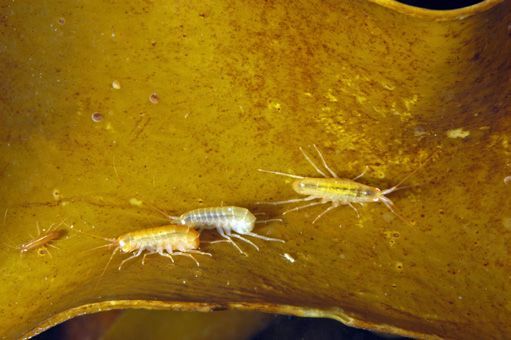
ilAiA    |   teleconnections: south america-antarctica

                                                          Biological Teleconnections:
              Amphipods on a
              frond of brown kelp

                                                          South America-Antarctica
              Himantothallus
              grandifolius.

                                                          Isolation in both geographical and environmental terms, ocean currents
                                                          that act as true physical barriers, and an extreme climate —all of these
                                                          factors have contributed to the unique Antarctic ecosystem, which
                                                          has been the focus of attention since the very beginning of Antarctic
                                                          exploration.

                                                          A
                                    Author                         lthough, geographical isola-       weed and other marine organisms,            eling thousands of kilometers thanks
                                                                   tion in many cases does not        including mollusks, echinoderms, and        to the transport provided by storms.
                                     César Cárdenas                seem so obvious. For many          fin fish.                                   This finding tends to confirm the hy-
                                     INACH
                                                          years the role of the islands of the             Our procien (Chilean Antarc-           pothesis, under discussion for years,
                                                          Scotia Arc has been under research.         tic Science Program) is no exception        about the role of drifting seaweed in
                                                          These are the only ecosystem step-          here. This area of study is well repre-     the transport of organisms to polar wa-
                                                          ping stones between the Antarctic           sented, and provides important con-         ters from distant geographical areas.
                                                          region and South America. Likewise,         tributions to advance our understand-           The new discoveries presented in
                                                          the existence of mesoscale eddy cur-        ing of how species are distributed and      this edition invite us to concentrate
                                                          rents (eddies) has been studied, as         how the evolutionary history of high        our vision and efforts in enhancing
                                                          these could provide entry into the          latitude organisms has developed.           our knowledge of these biological
                                                          Antarctic Circumpolar Current, the               This volume covers several aspects     teleconnections, as a part of the chal-
                                                          great barrier that circulates around        of this relationship, including physi-      lenges posed by the effects of climate
                                                          the Frozen Continent.                       cal, historical, environmental, and bio-    change.
                                                              The first scientific voyages that fo-   logical teleconnections. The latter are         The evidence of a “permeable”
                                                          cused on exploration of the Southern        covered from a molecular perspective        Antarctic Circumpolar Current; in-
                                                          Ocean passed through the Magallanes         that allows us to understand how ma-        creasing ocean temperatures that
                                                          region of continental South America         jor environmental changes have taken        would allow the colonization of pre-
                                                          on their way to colder polar waters.        place in the past and how these studies     viously hostile habitats for certain
                                                          There they studied and described the        modeled the distribution and connec-        invasive species (absent for millions
                                                          distribution patterns of the marine         tions of Antarctic and sub-Antarctic        of years in Antarctic waters); the in-
                                                          organisms in those areas. From this         organisms.                                  crease in micron- and nano-size plas-
                                                          work grew a biogeographic perspec-               Likewise, the results of work pre-     tic pollution and their negative effects
                                                          tive, showing an important degree of        sented in this volume tell us about the     on biota; –these are all problems that
                                                          connection between the Antarctic            connection between both areas due to        must be addressed by further re-
                                                          region and South America.                   the unintended transportation of or-        search, in order to better understand
                                                              Today, our knowledge of this area       ganisms in boats, either in ballast wa-     and calculate the potential vulnera-
                                                          has increased considerably thanks           ters or attached to the hulls of vessels.   bility of fragile Antarctic ecosystems,
                                                          to better quality and availability of       Another study considers transport of        and how they can be best protected. •
                                                          research platforms (ships and scien-        biota through eddies or intrusions of
                                                          tific bases), as well as the rapid de-      sub-Antarctic waters, which would
                                                          velopment of computational tools            have allowed the intrusion of non-na-
                                                          for modeling, along with molecular          tive fauna past the polar barriers.
                                                          analyses, that employs new sequenc-              In this sense, the recently pub-
                                                          ing methods with increasingly better        lished evidence of the discovery of
                                                          data resolution.                            sub-Antarctic seaweed in the Antarc-
                                                              These new resources have led to         tic Peninsula (its origin confirmed
                                                          a notable increase in the number of         through molecular studies and model-
                                                          studies and increase in the knowledge       ing of currents) confirmed that these
                                                          about the connections between the           seaweeds would have reached the
c. cárdenas

                                                          continent and the Antarctic, in sea-        coastal waters of the Peninsula, trav-

                                                                                                                                                  instituto antártico chileno        |   11
ilAiA | advances in chilean antarctic science ilAiA | teleconnections: south america-antarctica
Antarctic isolation, under the spotlight Brown kelp
(Cystosphaera
The “cochayuyo” seaweed, the southern bull kelp that is famous and used for human jacquinotii) (showing
the flotation
consumption in Chile, it has the scientific name Durvillaea antarctica, though it does not grow in mechanism, or air
cysts) and a seaweed
the waters of the southernmost continent. However, the recent discovery of pieces of this kelp patch drifting in
in the Antarctic Peninsula provides evidence that it is possible for organisms to be transported waters of the Antarctic
Peninsula.
from sub-Antarctic areas. Perhaps, Antarctica is not really as isolated as we have believed.
Author
Erasmo
Macaya Horta
IDEAL Center
Seaweeds as an alternative these, about 20 million would even Within the scope of research car-
T
dispersal vehicle retain their attachment structures ried out by the ideal Center, we have
he Antarctic Circumpolar
Recent studies have demonstrated (“holdfasts.”) been looking for floating seaweed
Current (acc) is the longest
that floating plants and seaweeds along the Antarctic Peninsula. So far
and strongest current in the
can be an effective dispersal vehicle Southern bull kelp in Antarctica: there have been anecdotal reports of
world, extending about 23,000. At
connecting remote geographic areas. a record floating patches of the brown sea-
the Drake Passage it carries a volume
Even Charles Darwin conducted some Some pieces of southern bull kelp weed Cystosphaera jacquinotii, the only
of approximately 170 million cubic
experiments with floating plants, say- (cochayuyo) were found in the Antarc- known species featuring buoyancy
meters per second. It is flanked by
ing that “…although we do not know tic Peninsula in the summer of 2017 structures. However, the observation
the Sub-Antarctic Front on the north
how sea-shells are dispersed, we can provided key indications of an im- and collection of floating material in
and the Polar Front to the south.
observe that their eggs or larvae, at- pressive trip, confirming the travel of Fildes Bay and around Doumer Island,
Both the current and these fronts
tached to seaweed or floating wood... floating seaweed crossing the acc. have accounted of more than 5,000
have isolated Antarctica for millions
those can be transported hundred of From molecular analysis and com- pieces of floating seaweeds compris-
of years geographically, climatically,
milles in open sea.” (Darwin, 1859: On parisons with benthic populations ing almost 20 different species. This
and oceanographically. These “barri-
the Origin of Species). along their range in the sub-Antarctic positive buoyant pieces can represent
ers” have kept most species of plants spring. For example, there are reports Map showing the
Several species of macroalgae (sea- region, it was possible to show that an alternative dispersal method for discovery location of
and animals from going in and going of crustacean larvae on the legs of the pieces of southern
weed) have structures that confer pos- the bull kelp pieces traveled from the different species in Antarctica. •
out the Antarctic region. wandering albatross, Diomedea exulans. bull kelp (red point)
itive buoyancy (aerocysts). For exam- Kerguelen Islands in the southern and their points of
The isolation of the Antarctic This bird can make ocean voyages travel origin: Kerguelen
ple: Macrocystis, Sargassum, and Fucus. Indian Ocean, and from the South Islands. South Georgia
continent has been nearly total, even lasting more than one month, travel-
Other species can have gases inside Georgia Islands, in the South Atlan- Islands.
though there are reports of incursions ing up to 15,000 km.
their tissue, such as the southern bull tic. This indicates displacement of
by air or sea of some species, but also SAF:
kelp, Durvillaea antarctica. more than 20,000 km, correspond- Sub-Antarctic Front.
the transport of organisms that has Transport and biological connec- APF:
Once detached from the sub- ing to the longest biological “rafting”
been taken place by anthropogenic tions over the ocean Antarctic Polar Front.
strate, these seaweeds can stay afloat event recorded to date. SACCF:
means, including ships and airplanes. Although there are frequent move- Southern Antarctic
for considerable periods of time, The seaweeds journey were even Circumpolar Current
It has been reported that it is ments of marine megafauna (for ex- Front.
transported by winds and currents. modeled through computer simula-
possible for propagules (a structure ample, whales) to and from Antarc-
ed in their ballast waters. Also, deca- Studies have indicated that their tions, which indicated that crossing
becomes detached from a plant and tica, the trip for smaller organisms is Above: Piece of
pod crustacean larvae of crustaceans Durvillaea antarctica buoyancy depends largely on environ- the acc and reaching the Antarctic
forms a new plant or algae) and other more complicated and usually must (southern bull kelp)
Emerita and Pinnotheres were reported found on the shore
mental conditions. In the high lati- coast was possible due to large waves
organisms to travel such distances “by be carried out with other organisms South America
in association with specimens of the of Fildes Bay on King tudes, low temperatures tend to favor whipped up by storm events.
air.” The presence of pollen from ter- assistance, or using certain oceano- George Island.
copepod Acartia on King George the continued floatation of these sea- The finding of these southern
restrial plants (Nothofagus, Podocarpus) graphic conditions.
Island in 2002. In this case, it is possi- weed clumps. bull kelp pieces are the evidence of
has been established in the Antarctic Some studies have revealed that Below: Durvillaea
ble that the larvae could have crossed antarctica (southern Most reports of floating seaweed in the possibility to get into Antarctica
region, as well as fungi (Tetraploa, certain organisms have crossed bull kelp) drifting in Antarctica South
the Polar Front by using eddies cur- open waters.
the Southern Hemisphere correspond after crossing the acc. But this is also Georgia
Sporomiella) and bacteria, all of which the acc. For example, in 1986 the Australia Islands
rents or intrusions of sub-Antarctic to Macrocystis pyrifera and Durvillaea an attention call. If exotic (non-na-
would have been transported from Hygrosara crab, a species found in the SACCF
waters across the acc. antarctica, seaweeds that form dense tive) plants and animals are floating
northerly latitudes. North Atlantic and Arctic oceans,
underwater forests at high latitudes. southward and arriving frequently, as APF
Some migratory birds can also be was reported in samples taken from SAF
Some studies have suggested that it soon as the Antarctica becomes more
vectors for transporting organisms. the Antarctic Peninsula. Researchers Africa
would be possible to find about 70 hospitable enough (due to climate
Birds travel thousands of kilometers suggest that this species would have Kerguelen
million seaweed patches (D. antarctica) change), these organisms will be able Islands
from the north to the Antarctic each adhered to the hulls of ships, or float-
floating north of the Polar Front. Of to establish themselves.
12 | a d va n c e s i n c h i le a n a n ta r c t i c s c i e n c e | n5 instituto antártico chileno | 13
ilAiA | advances in chilean antarctic science ilAiA | teleconnections: south america-antarctica
Boeckella poppei and Halicarcinus planatus:
Two crustaceans testing the circumpolar barrier
Marion Is.
South Georgia
Crozet Is.
South Orkney Is
Falkland / Malvinas Is.
South Shetland Islands
Kerguelen Is.
South America
Margarite Bay
Deception Is.
Boeckella poppei
Halicarcinus planatus Boeckella poppei
Halicarcinus planatus
Authors
The history of a separation
The ancient separation of Antarctic
The cooling of the Antarctic con-
Karin Gerard
Universidad de tinent began approximately 34 mil- and sub-Antarctic fauna was a
Magallanes
lion years ago, resulting in profound profound event, and affected most
Claudia
changes in the marine and continen- aquatic organisms. For several to evaluate the teleconnections be- This distribution is unique for in the South Shetland Islands (Red
Maturana
Universidad de
tal fauna. The advance and retreat of
million years there has been tween Antarctica and South America Antarctic terrestrial and freshwater Zone 1).
1 Current distributions
of Boeckella poppei (in
the ice caused the extinction of large
Chile and Instituto
de Ecología y marine groups (osteichthyes or “bony
an effective isolation between along two time scales: fauna, representing an excellent mod- green) and Halicarcinus
planatus. Blue indicates
Ancient teleconnections
populations of seaweed and
Biodiversidad el for understanding the impact of ma- native sub-Antarctic
fishes,” chondrichthyes or “cartilagi- distribution. Red shows
1. Measure how tectonic and climat- jor past climatic evolution as well as Following the morphological and mo-
nous fishes,” crustaceans, and deca- marine invertebrates formerly ic changes between 36 million and current changes, with the underlying lecular identification of the sampled
sighting in Antarctica
in 2010.
pods) and both terrestrial and fresh-
co-distributed on both sides of 20,000 years ago affected Antarc- increasing anthropogenic activity. individuals, we found six species of
water life.
Today, terrestrial and freshwa-
the Drake Passage. There are, tic life and its connection with Halicarcinus planatus is a marine Boeckella genus, being B. poppei the
ter biota are restricted only to a very however, still vestiges of past South America; brachyura, a small crab that is distrib- only species that inhabits Antarctica.
2. Evaluate the current biological uted throughout the sub-Antarctic The high genetic diversity observed
small part of the Antarctic continent connections. In the last ten exchanges between Patagonia, zone of the Southern Ocean (South in mitochondrial dna sequences indi-
(0.32%) and comprise primarily inver- years this connection has been the Scotia Arc, and the Antarctic America, and the Falkland /Malvinas, cates that Antarctic populations have
tebrates (diptera, mites, collembolae,
nematodes, rotifers, tardigrades, pro-
carefully studied mainly in marine Peninsula resulting from human Marion, Kerguelen, and New Zealand a very ancient origin, probably before
tists, diplopods, copepods, cladoc- species. At the same time, a small activity and global warming. Islands) 1. It is abundant in the shal- the Last Glacial Maximum. Demo-
erans) and limited communities of number of studies on freshwater low rocky intertidal zones generally graphic analyzes of these populations
Two aquatic crustaceans: associated with seaweed forests. indicate that this species would have
plants, mosses, and lichens. ecosystems in South America and Boeckella poppei and This tiny crab has a long plank- remained in sheltered locations south
Current global warming in the
Antarctica have concluded that Halicarcinus planatus tonic larval phase, giving it a high of the Antarctic Peninsula (Margari-
Antarctic Peninsula region and the
permeability of the circumpolar cur-
there would be an extremely small Boeckella poppei is a small crustacean potential for dispersion, and the pe- ta Bay sector) and Signy Island (South
rent recently observed in transport- number of comparable species at (copepod) that inhabits exclusively culiar ability to reduce magnesium Orkney Is.2). Along with this, the
freshwater ecosystems, from small concentrations in its hemolymph, strong common genetic structuring
ing seaweed (Fraser et al. 2018) have both regions, being represented ponds to big lakes. It has a very inter- which increases as water cools. among the different regions suggests
opened a window into less drastic
by a few invertebrates and esting distribution, since it is present Halicarcinus planatus is not found in only a limited dispersal capacity in
climatic conditions, facilitating the
arrival and survival of sub-Antarctic
microorganisms. in both South America (Patagonia Antarctica, since all decapods on the these organisms.
and the Falkland Islands) and Antarc- Antarctic continental shelf became Contrary to Antarctica, popula-
species along the White Continent.
tica (Antarctic continent, Antarctic extinct 15 million years ago. Howev- tions of B. poppei in Patagonia are very
Our understanding of the evolu-
Peninsula, the South Shetland and er, in 2010, H. planatus was observed scarce. After four years of sampling,
tionary history of the fauna in marine
South Orkney Islands) as well as the at the site of Morro Baily on the outer we have only been able to find three
and freshwater ecosystems allows us
sub-Antarctic island South Georgia 1. coast of Deception, a volcanic island, populations. These populations were
14 | a d va n c e s i n c h i le a n a n ta r c t i c s c i e n c e | n5 instituto antártico chileno | 15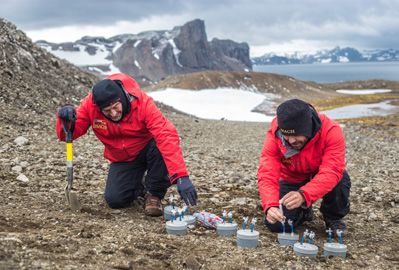
ilAiA | teleconnections: south america-antarctica
Boeckella poppei
on the eastern edge of the Brunswick searched for H. planatus using an au-
Acknowledgements
Peninsula (Punta Delgada sector) and tonomous diving system in the South
Tierra del Fuego. These Patagonian Shetlands (Fildes Bay, Prat Station, This research has been carried out under the scope of CONICYT
doctoral thesis 21150317, with CM financing INACHDT_04-16,
populations have unique genetic in- Risopatrón Hut), and particularly FONDECYT Project 1161358 (KG) and CONICYT Project PIA
Antarctica
formation that is not shared with around two volcanic islands, Decep- ACT172065 (CM and KG).
Patagonia Antarctic individuals, indicating an tion and Penguin, as well as the area
ancient connection, perhaps previous around the Yelcho Station. To date, Further information
sub-Antarctic islands to the Last Glacial Maximum. There we have not found any crab in the Aronson, R.B., Frederich, M., Price, R. & Thatje, S. (2015) Prospects
is, however, evidence of an ancient Antarctic Peninsula, even though the for the return of shell-crushing crabs to Antarctica. Journal of
10 individuals Biogeography, 42, 1-7.
connection, perhaps prior to the Last marine environments seem adequate
Billard, E., Reyes, J., Mansilla, A., Faugeron, S. & Guillemin, M.L.
Glacial Maximum (> 20,000 years). for their survival. A final expedition
1 individual (2015) Deep genetic divergence between austral populations
Meanwhile, the Patagonian pop- to the third volcanic island of the of the red alga Gigartina skottsbergii reveals a cryptic species
endemic to the Antarctic continent. Polar Biology, 38, 2021-2034.
ulations of H. planatus show high ge- Antarctic Peninsula, (Paulet Island, in
netic diversity in mitochondrial dna the Weddell Sea) is scheduled for the Bisset, A., Gibson, J.A., Jarman, S.N., Swadling, K.M. & Cromer,
L. (2005) Isolation, amplification, and identification of ancient
sequences, indicating that they would 55th eca. We concluded that, it is very copepod DNA from lake sediments. Limnology and Oceanography,
3, 533-542.
also have survived the Last Glacial likely that the presence of H. planatus
Maximum in this region. This also reported in 2010 was a one-time event. Convey, P., Gibson, J.A., Hillenbrand, C.D., Hodgson, D.A., Pugh,
P.J., Smellie, J.L. & Stevens, M.I. (2008) Antarctic terrestrial life-
shows a close (though very remote) Finally, after establishing the geo- challenging the history of the frozen continent? Biol Rev Camb
Philos Soc, 83, 103-17.
connection to the sub-Antarctic is- graphic distributions of the genetic
Halicarcinus planatus lands that include the Falkland and diversity in these two crustaceans, we Crame, J.A. (1999) An evolutionary perspective on marine faunal
connections between southernmost South America and Antarctica.
Kerguelen Islands (in the Indian sec- can trace the effects of past climatic Scientia Marina, 63, 1-14.
tor of the Southern Ocean), demon- and ecological changes. Contrasting
Diaz, A., Gonzalez-Wevar, C.A., Maturana, C.S., Palma, A.T., Poulin,
strating this species’ capacity for long both aquatic environments (conti- E. & Gerard, K. (2012) Restricted geographic distribution and
low genetic diversity of the brooding sea urchin Abatus agassizii
distance dispersal. nental and marine) allows us to predict (Spatangoidea: Schizasteridae) in the South Shetland Islands: A
the distribution of the biota under the bridgehead population before the spread to the northern Antarctic
Peninsula? Revista Chilena de Historia Natural, 85, 457-468.
Current teleconnections current projections of global warming
Fraser, C.I., Morrison, A.K., Hogg, A.M., Macaya, E.C., van Sebille, E.,
The whaling industry has been one of conditions and growing human activ- Ryan, P.G., Padovan, A., Jack, C., Valdivia, N. & Waters, J.M. (2018)
the human activities with the greatest ity in the Antarctic. Antarctica’s ecological isolation will be broken by storm-driven
dispersal and warming. Nature Climate Change, 8, 704-708.
impact in Antarctica, at the beginning Activities such as the extraction
of the 20th century. Some records of of fresh water for use on scientific and Frederich, M., Sartoris, F. & Hans-O, P. (2001) Distribution patterns
of decapod crustaceans in polar areas: a result of magnesium
the time indicate that ships and fac- military bases, transporting ballast regulation? Polar Biology, 24, 719-723.
tory stations extracted and transport- water, or the accidental or deliberate
González-Wevar, C.A., Gérard, K., Rosenfeld, S., Saucède, T.,
ed water taken from lakes and rivers transport of organisms from one re- Naretto, J., Díaz, A., Morley, S.A., Brickle, P. & Poulin, E. (2019)
from and to Punta Arenas. gion to another, all threaten to extend Cryptic speciation in Southern Ocean Aequiyoldia eightsii
(Jay,1839): Mio-Pliocene trans-Drake Passage separation and
We can still see some vestiges of the current geographical distribution diversification. Progress in Oceanography, 174, 44-54.
this whaling activity in South Geor- of these and other species, bringing Menu-Marque, S., Morrone, J.J. & Locascio, C. (2000) Distributional
gia, Deception and Signy Island. The new colonization of non-native organ- pattern of the South American species of Boeckella (Copepoda:
Centropagidae): A track analysis. Journal of Crustacean Biology,
Antarctica whaling industry could have produced isms in the Antarctic region. • 20, 262-272.
the connection we are seeing today in Ocaranza, P., Gonzalez-Wevar, C., Guillemin, M.L., Rosenfeld, S. &
Patagonia Antarctica. In East Antarctica it is Mansilla, A. (In press) Molecular divergence between Iridea cordata
(Turner) Bory de Saint Vincent 1826 from the Antarctic Peninsula
suspected that human activities may and the Magellan Region. Journal of Applied Phycology.
sub-Antarctic islands
2 Haplotype networks (mitochondrial DNA coxI) reconstructed with median-joining and maximum likelihood. also have introduced B. poppei. How-
Each circle represents a haplotype (a type of sequence), whose size reflects its frequency and the color Poulin, E., Gonzalez-Wevar, C.G., Díaz, A., Gérard, K. & Hüne, M.
1 mutational step indicates its sampling site. Genetic diversity is expressed by the number of different haplotypes present in ever, sedimentological evidence has (2014) Divergence between Antarctic and South American marine
a place or a species, but also by the number of mutational steps between them. High diversity indicates the invertebrates: What molecular biology tells us about Scotia Arc
dated the presence of this copepod geodynamics and the intensification of the Antarctic Circumpolar
place of origin of a species or a population.
Above: Boeckella poppei shows high genetic diversity in Antarctica, which is shared with individuals from sub- for more than 9,000 years. Current. Global and Planetary Change, 123, 392-399.
Antarctic islands, but not with those from Patagonia, indicating that there has not been a recent connection.
Below: Halicarcinus planatus has a higher level of haplotype diversity in Patagonia (shown in red) than in
During the 53rd and 54th Antarc- Siegert, M.J., Barrett, P., DeConton, R., Dunbar, R., Cofaigh, C.Ó.,
Passchier, S. & Naish, R. (2008) Recent advances in understanding
the sub-Antarctic islands (Kerguelen and Falkland Islands). This would indicate that Patagonia would be the tic Scientific Expeditions (eca) we Antarctic climate evolution. Antarctic Science, 20, 313–325.
5 10 20 40 originating area for dispersion to the sub-Antarctic islands.
16 | a d va n c e s i n c h i le a n a n ta r c t i c s c i e n c e | n5 instituto antártico chileno | 17You can also read


