Skout Collect Version 2.0.1 - September 2012
←
→
Page content transcription
If your browser does not render page correctly, please read the page content below
Skout Collect
     Version 2.0.1
Evaluation Report
         September 2012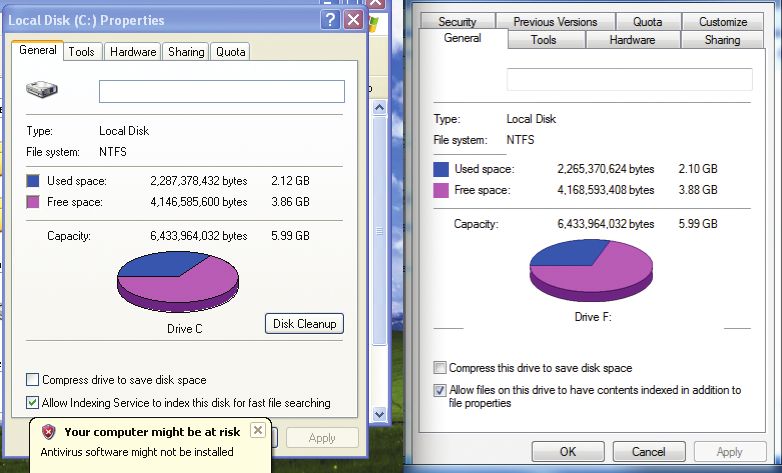
NIJ Electronic Crime Technology Center of Excellence
550 Marshall St., Suite B
Phillipsburg, NJ 08865
www.ECTCoE.org

NIJ ECTCoE Testing and Evaluation Project Staff
Robert J. O’Leary, CFCE; DFCP              Michael Terminelli, ACE   Victor Fay-Wolfe, Ph.D.
Russell Yawn, CFCE                         Randy Becker, CFCE        Kristen McCooey, CCE; ACE
Chester Hosmer                             Jacob Fonseca             Laurie Ann O’Leary
Mark Davis, Ph.D.
Contents         n   iii

Table of Contents

Introduction................................................................................................................................................................1

Overview.....................................................................................................................................................................3

      Product Information .............................................................................................................................................3

      Special Features...................................................................................................................................................3

Evaluation and Testing of Skout Collect .................................................................................................................5

      Skout Configuration .............................................................................................................................................5

      Test – VMware Collection.....................................................................................................................................6

      Test – Laptop With Single Hard Drive ..................................................................................................................9

      Test – Multiple Hard Drives (32-Bit OS.................................................................................................................9

      Test – Multiple Hard Drive-Raid Array-Windows 64-Bit .....................................................................................10

      Test – Macbook Air With Solid State Drive ........................................................................................................11

      Live Imaging Tests..............................................................................................................................................11

      Test – Virtual Machine Live.................................................................................................................................11

      Test – Toshiba E205 Laptop Live Collection ......................................................................................................14

      Test – Live Test of Windows 7 Desktop With Multiple Drives ............................................................................15

      Conclusion ........................................................................................................................................................17

This report is current at the time of writing. Please be sure to check the vendor website for the latest
version and updates. All software and trademarks are property of their respective companies and owners.

                                                                                                                                                   Skout Collect Version 2.0.1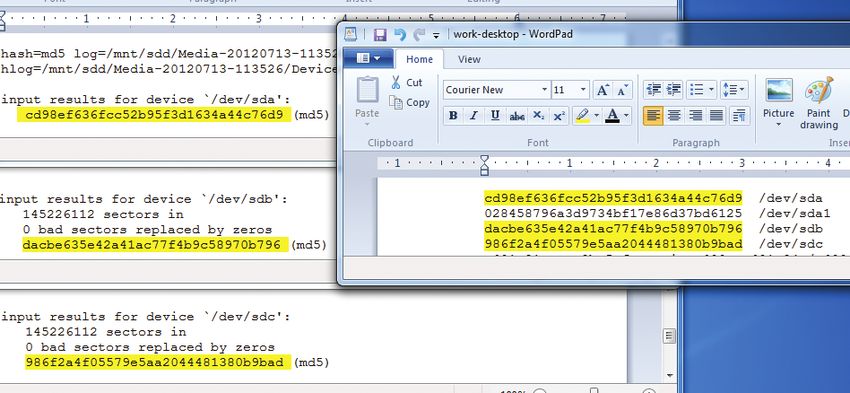
Introduction n 1
Introduction
T
he National Institute of Justice (NIJ) Electronic process. After grants are awarded, the grantee and
Crime Technology Center of Excellence the NIJ program manager then work collaboratively
(ECTCoE) has been assigned the responsibil to develop the solutions.
ity of conducting electronic crime and digital evidence
n � Phase IV: Demonstrate, test, evaluate and adopt
tool, technology and training testing and evaluations
potential solutions into practice. A potential solu
in support of the NIJ Research, Development, Testing
tion is tested to determine how well it addresses
and Evaluation (RDT&E) process.
the intended functional requirement. NIJ then works
The NIJ RDT&E process helps ensure that NIJ’s with first-adopting agencies to facilitate the intro
research portfolios are aligned to best address the duction of the solution into practice. After adoption,
technology needs of the criminal justice community. the solution’s impact on practice is evaluated. Dur
The rigorous process has five phases: ing the testing and evaluation process, performance
standards and guides are developed (as appropri
n � Phase I: Determine technology needs princi
ate) to ensure safety and effectiveness; not all new
pally in partnership with the Law Enforcement
solutions will require the publication of new stan
and Corrections Technology Advisory Council
dards or guides.
(LECTAC) and the appropriate Technology Work
ing Group (TWG). NIJ identifies criminal justice n � Phase V: Build capacity and conduct outreach to
practitioners’ functional requirements for new tools ensure that the new tool or technology benefits
and technologies. (For more information on LECTAC practitioners. NIJ publishes guides and standards
and the TWGs, visit http://www.justnet.org.) and provides technology assistance to second
adopters.1
n � Phase II: Develop technology program plans
to address those needs. NIJ creates a multiyear The High Priority Criminal Justice Technology Needs
research program to address the needs identified are organized into five functional areas:
in Phase I. One of the first steps is to determine
n Protecting the Public.
whether products that meet those needs currently
exist or whether they must be developed. If a solu n Ensuring Officer Safety.
tion is already available, Phases II and III are not
necessary, and NIJ moves directly to demonstra
n Confirming the Guilty and Protecting the Innocent.
tion, testing and evaluation in Phase IV. If solutions n Improving the Efficiency of Justice.
do not currently exist, they are solicited through
annual, competitively awarded science and technol n Enabling Informed Decision-Making.
ogy solicitations and TWG members help review the
The NIJ ECTCoE tool, technology and training evalu
applications.
ation and testing reports support the NIJ RDT&E pro
n � Phase III: Develop solutions. Appropriate solici cess, which addresses high priority needs for criminal
tations are developed and grantees are selected justice technology.
through an open, competitive, peer-reviewed
1
National Institute of Justice High-Priority Criminal Justice Technology Needs, March 2009 NCJ 225375.
Skout Collect Version 2.0.1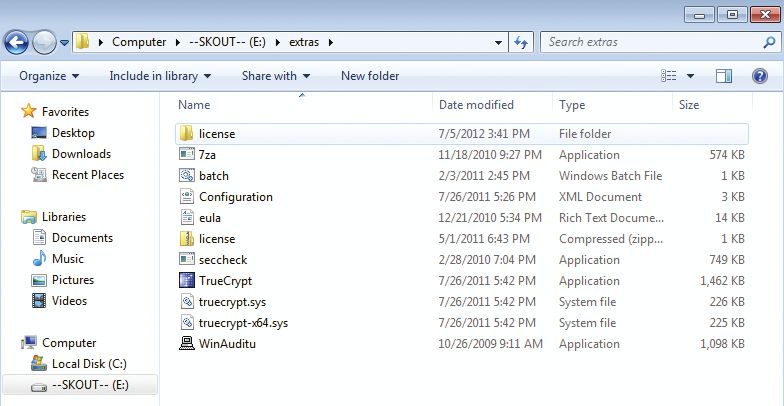
Overview n 3
Overview
Product Information n � The evidence is secure and cannot be accessed
without knowledge of the password.
Skout Collect from Skout Forensics is designed to
image target computers with a portable external hard n � Transport, store or analyze the resulting evi
drive. An investigator purchases or configures a Skout dence contained on the Skout drives.
Collect drive and sends it to the location of the target
n � Use the drive for multiple collections until
computer. The drive is then connected to the target
the Skout drive is filled.
system, automated collection software is executed
via a boot CD or Windows executable and the drive is Skout Collect is available in two different versions.
returned to the investigator for further analysis. “Skout Collect Drives” comes in varying sizes of col
lection hard drives and is designed to be used until
The process as described on the Skout Forensics
the drive is full. The second product is an Enterprise
website (www.skoutforensics.com) is comprised of
solution that allows any drive to be configured as a
three main steps:
Skout Collect drive with a pay-as-you-go structure
1. Purchase a Skout drive that is slightly larger than in increments of 1 TB each. Skout Forensics also
the evidence being collected. sells a number of accessories such as bootable
thumb-drives, foam-lined cases and high-speed drive
n � Have it sent anywhere in the world. adapters that enable faster collection times of target
n � Connect
computers. Current prices are available on the Skout
the Skout drive to the target system.
Forensics website.
n � Available 1 TB, 750 GB, 500 GB, 320 GB; >1 TB
is available upon request.
Special Features
2. Once the Skout drive is connected to the target
The following features of Skout Collect were taken
system:
from the product brochure available on the Skout
n � Simply press “Enter” or click “OK” to start the Forensics website:
collection process.
n � Inherently maintains chain of custody through 256
n � Data is saved to the encrypted Skout drive bit secure encryption.
automatically.
n � Uses standard “dd” format, a widely acceptable fo
n � The automated software is contained on a boot rensic format that is cross-compatible with standard
CD or windows executable. forensic software.
n � Seamlessly images all internal hard disks and n Logs all processes performed.
attached devices and images volatile memory
n MD5 hash of source and images.
using HBGary’s FDPro.
n � HBGary’s FDPro Memory Collection tool collects
3. The user will be alerted when the process has
valuable volatile RAM automatically (http://www.
completed.
hbgary.com).
Skout Collect Version 2.0.1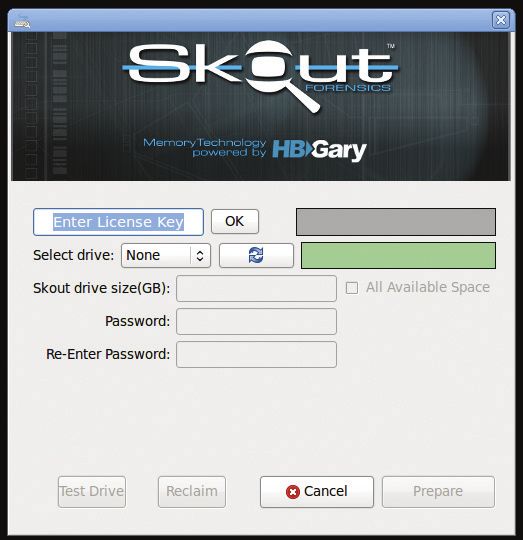
4 n Overview
n � System info, make, model, serial number, size, etc. n � Works on most systems including, but not limited
of the devices is logged. to, Macintosh, Windows and Linux.
n � Automatically images each attached physical device n � Easily adds additional tools to the streamline pro
(thumb drives, external hard drives, etc.). cess flow; ideal for network collections or Incident
Response.
n � Neatly organizes cases by using time-stamped
folders.
NL E C T C Cr im inal Ju sti ce E l ectroni c Cri me Techno lo g y C enter o f Excellence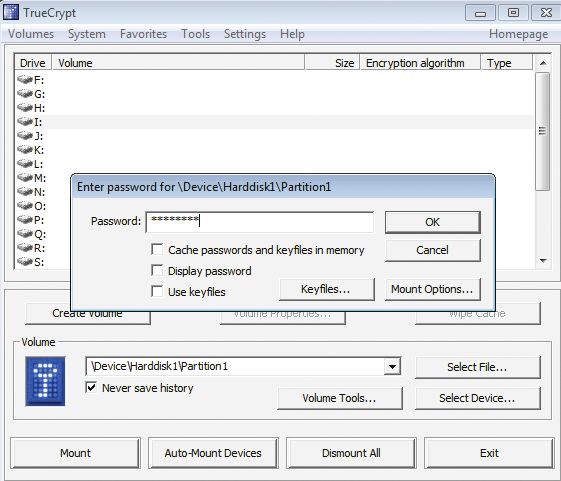
Evaluation and Testing of Skout Collect n 5
Evaluation and Testing of Skout Collect
Skout Configuration
Skout Enterprise is the program used to configure
Skout drives for imaging. In order to prepare for the
rest of the testing, the following steps were performed:
1. The Skout Collection and Skout Web Enterprise
ISO files were downloaded from a FTP site provid
ed by Skout Forensics. Documentation provided
by Skout was also downloaded and reviewed.
2. Both ISOs were hashed using the MD5 algorithm
to verify the downloaded files.
3. Each ISO was burned to a CD-R.
After reviewing the Skout Enterprise Instructions PDF,
it was determined that a computer with an Ethernet 4. Clicked “Test Drive.” Received the “Pass” message.
connection was needed. This was bypassed by con
figuring a VMware session to use the Skout ISO image
as a CD drive and the computer’s wireless connection
as a bridged network adapter. The following steps
were taken to prepare the two provided Skout drives:
1. Booted the VMware session from the ISO file.
2. Connected the Skout drive to the computer and
configured it to connect to the VMware session.
3. On the configuration menu, entered the key
provided by Skout, clicked “all available space”
and entered “password” twice for the password.
Skout Collect Version 2.0.1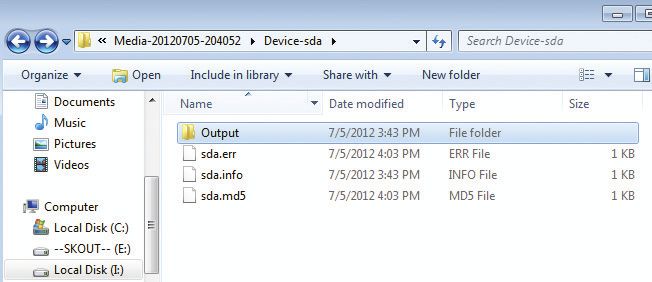
6 n Evaluation and Testing of Skout Collect
5. Clicked “Prepare”; after about five minutes, re- 3. When prompted, the Skout drive was connected
ceived the completion message. to the computer and configured for use by the
VMware session.
6. The same procedure was used to prepare a
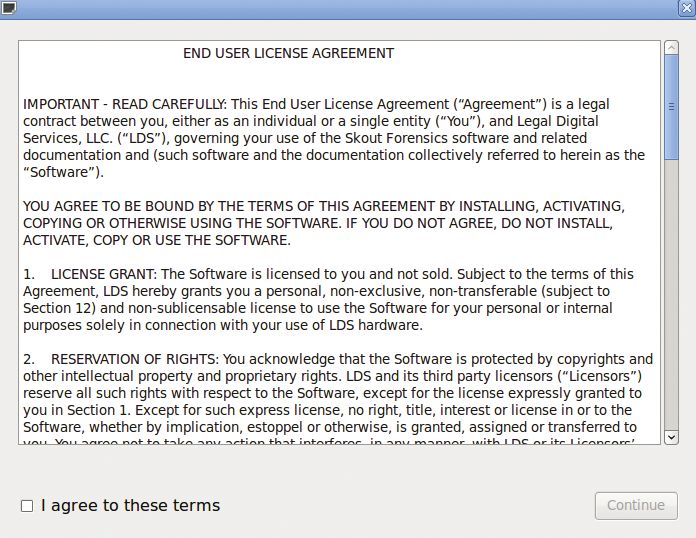
second drive. 4. The end-user license agreement (EULA) was accepted.
Test – VMware Collection
The following test was performed primarily to collect
screenshots of normal Skout Collect boot CD opera
tion. This was performed on the same VMware virtual
machine that was used to create the drives. The virtual
hard disk is 12 GB in size and has Windows XP 32-bit
installed.
1. The VMware session was configured to use a
Backtrack 5 32-bit ISO as the CD drive. The
VMware was started. Backtrack was started in
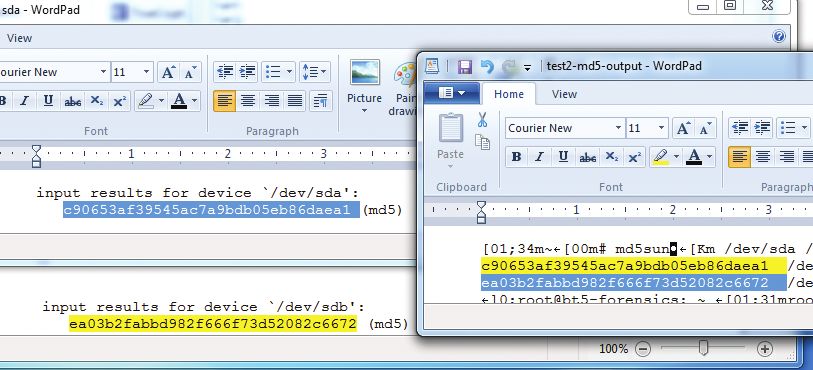
forensics mode (no drives mounted) and the drive 5. The following window appeared and was com
(/sda) was hashed using the “md5sum” program. pleted as follows. “Ok” was clicked.
Backtrack was shutdown.
2. The VMware session was configured to use the
Skout Collection ISO and the VMware session was
started. A Skout splash screen was displayed dur
ing bootup.
NL E C T C Cr im inal Ju sti ce E l ectroni c Cri me Techno lo g y C enter o f ExcellenceEvaluation and Testing of Skout Collect n 7
6. A copy progress window appeared indicating the 10. The VMware session was then booted to Windows
progress and time remaining of the clone. (In this XP. The size of the drive was recorded.
case, about eight minutes total).
Test Results
To examine the results of this test, the following steps
were taken:
1. The Skout external drive was plugged into a Win
7. After completion of copying, Skout Collect then dows 7 machine.
displayed an “Output hashing” window.
8. A completion message was displayed. “Enter” was
pressed and the VMware session shut down. No
corrupt sectors were found. 2. The “SKOUT” drive appeared and was browsed
to. The “Extras” folder was clicked and the
TrueCrypt program was displayed and double
clicked.
9. The VMware session was configured to use a
Backtrack 5 32-bit ISO as the CD drive. The
VMware was started. Backtrack was started in
forensics mode (no drives mounted) and the drive
(/sda) was hashed using the “md5sum” pro
gram. Backtrack was shutdown. The hash value
matched the previously calculated hash value,
indicating that no changes were made to the hard
drive from using the Skout Collect CD.
Skout Collect Version 2.0.18 n Evaluation and Testing of Skout Collect
3. TrueCrypt was used to mount the Skout drive, with 7. Within the device folder were three files, contain-
the previously configured password. ing the drive info, MD5 checksum and general
information about the drive. Also was a folder
labeled “Output.” Within the “Output” folder was
the image of the drive, “sda.dd.”
4. A drive named “SKOUT” appeared in Windows
Explorer.
8. The recorded hash of the drive as recorded by
Skout Collect was compared to the hash report by
backtrack, and they matched.
5. The newly mounted drive was browsed to. A folder
with a date and time stamp of the Skout acquisi
tion was present.
6. Several files were contained within the directory,
including audit files, fdisk info and system info.
9. The sda.dd file was located. FTK Imager was used
Also included was a folder called “Device-sda.”
to mount the sda.dd file as a local disk. This disk’s
properties were examined and it was found to be
the same size in bytes as the original, verifying that
the disk image was complete.
NL E C T C Cr im inal Ju sti ce E l ectroni c Cri me Techno lo g y C enter o f ExcellenceEvaluation and Testing of Skout Collect n 9
In this test the tools performed exactly as expected.
Further tests will not include all the screenshots and
details since it would be redundant. Results and ob
servation will be reported.
Test – Laptop With Single Hard Drive
This test was performed on a Toshiba branded laptop,
Model: Satellite E205, with 4 GB of RAM and a 500 GB
hard drive. To perform this test, the following steps
were performed:
1. It was verified that the internal CD/DVD drive
would boot before the internal hard drive.
2. The computer was powered on and the Skout Col
lect CD inserted into the drive. It appeared that the
CD tried to boot; however, nothing was displayed
on the screen.
10. The fdisk info was examined to determine the
physical size of the disk. This information matched 3. This process was repeated with a freshly burned
the size of the sda.dd file, indicating the entire disk Skout Collect CD. After several attempts, it was
was imaged. determined that Skout Collect would not boot this
computer.
4. The Backtrack 5 DVD was used to boot this
computer to ensure proper operation of the com
puter. Backtrack booted properly. However, when
the “startx” command was entered, the screen
went black, much like the Skout Collect boot
11. Another program, TestDisk, was used inside of the CD behaved. Upon further examination, it was
running virtual machine to determine the physi determined that this was a video driver issue and
cal properties of the disk; again this matched the not directly related to the Skout Collect program.
output recorded by Skout Collect. The vendor has been notified of this issue and
expects to have a solution in the new version to be
released in August 2012.
Test – Multiple Hard Drives
(32-Bit OS)
This test was performed on a custom home-built com
puter with two drives attached to the SATA inputs on
the motherboard. There is no RAID configuration. The
installed operating system is Windows 7 32-bit. The
following steps were performed:
Skout Collect Version 2.0.110 n Evaluation and Testing of Skout Collect
1. The computer was powered on. The “Del” key 8. The Skout drive was plugged into the Windows 7,
was pressed repeatedly to enter the computer’s and the TrueCrypt was accessed as per the previ
BIOS configuration. It was verified that the CD/ ous test. The hash values recorded by Backtrack
DVD drive was configured to boot first. The Skout and Skout were compared and found to match.
Collect CD was inserted into the drive and the
computer was restarted.
2. Once booted, a window appeared that stated
“Please insert the output drive(s) now, and press
ENTER.” The Skout drive was connected to a
front-mounted USB port and enter was pressed.
3. The error message, “No valid external hard drive
was detected, please connect a valid SKOUT
Drive and try again,” was received. The drive was
9. The computer was booted to its native OS, Win
then connected to a rear-mounted (directly on the
dows 7 32-bit, TestDisk was executed, and the
motherboard) USB port and enter was clicked. It
drive information was found to match the Skout
was later determined that this was an issue with
Collect captured info. Both drive images were
this particular computer’s USB ports and not an
mounted read-only using FTK Imager, and the
issue with Skout.
size comparison was the same. Furthermore, both
4. The EULA appeared and was accepted. The drives could be browsed with Windows Explorer
screen asking for case information was displayed and contained all of the expected data.
and “Test: 2 Internal Drives” was entered for the
name. All other fields were left blank. “Ok” was
Test – Multiple Hard Disks-Raid
clicked.
Array-Windows 64-Bit
5. The copy progress status bar appeared and indi
The following test was performed on a custom-built
cated that Skout Collect would finish in about one
computer with three hard drives running a 64-bit ver
hour and 35 minutes. Once completed, an output
sion of Windows 7. One of the drives is the operating
hashing status bar was displayed. Once the
system drive and is connected to the computer via
hashing status bar completed, another copy
IDE cable. The other two drives are configured using a
progress window was shown, with an estimated
SATA RAID controller. For this test, the following steps
time of two hours and 32 minutes. Once again, a
were performed:
hashing status bar appeared. Both times the hash
ing progress windows took about as much time for 1. The computer was booted with the Backtrack
copying as the progress bar did. 5 DVD. The hash values of all the drives were
recorded using the “Script” and “md5sum” com
6. After completion, a window was displayed indicat
mand.
ing that no corrupt sectors were found and 383
GB were copied. 2. The computer was then powered off.
7. The computer was booted with Backtrack 5 and 3. The computer was booted using the Skout Col
the hash value of the two drives was calculated lect CD. When prompted, the Skout external hard
and recorded with the script command. drive was connected. The EULA was agreed to.
The form was completed with “work-desktop” as
the case name. The progress bar appeared. This
computer was allowed to run overnight.
NL E C T C Cr im inal Ju sti ce E l ectroni c Cri me Techno lo g y C enter o f ExcellenceEvaluation and Testing of Skout Collect n 11
4. The next morning Skout collect had completed. selected screen appeared, the CD/DVD drive was
The drive was removed and the system powered selected. Backtrack was booted and the Macbook
down. Air’s internal storage hashed. The Macbook Air
was then shut down.
5. The Skout drive was connected to a Windows 7
computer and the TrueCrypt volume was mounted 3. The Macbook Air was powered on holding the alt/
using the previously configured password as in option key. The Skout Collect CD was inserted into
the previous tests. The hash values of the Skout the Superdrive. Once Skout booted, the screen
output for all three drives was compared to the was very fuzzy and difficult to read. The EULA was
Backtrack result and it was observed that they agreed to and “Macbook-Air-Test” was entered for
matched. the case. The progress bar appeared but was not
readable due to the graphical errors. The vendor
expects a fix to be released in August 2012.
4. The test completed screen was displayed and the
computer was powered down. The Skout drive
was plugged into the Windows 7 computer and
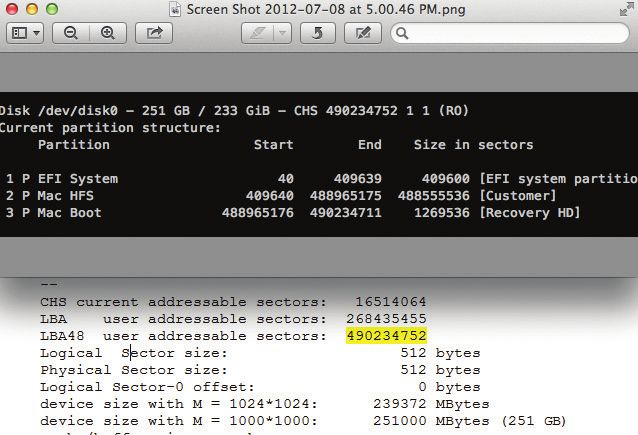
the TrueCrypt volume mounted. The hashes, drive
vs. image sizes and addressable space vs. hard
disk parameters all matched.
6. The hard drive parameters and size of the drives
were also found to match.
7. The IDE drive image could be mounted and
viewed with FTK Imager. However, the RAID drives
would have to be reconstructed using appropriate
tools. There is every expectation that these drives
imaged correctly since the MD5 hash values and
drive parameters matched.
Test – Macbook Air With Solid
State Drive
Live Imaging Tests
This test was to determine if Skout Collect would func
tion correctly on a Macbook Air equipped with a solid In preparation for the live tests, the Skout Enterprise
state 256 GB drive. CD was booted. Within the drive preparation pro
cess, it is possible to “reclaim” space that has not
The following steps were performed: been used, adding it back to the purchased licensed
space from Skout Forensics. As a test, one drive was
1. An Apple branded Superdrive (external CD/DVD
manually formatted before attempting this. It was not
drive) was connected to the USB port of the
possible to reclaim the unused space on this drive. It
Macbook Air.
is always recommended that Skout drives be prepared
2. The Macbook Air was powered on, with the alt/ and formatted only with the Skout Enterprise program.
option key held down. A Backtrack 5 CD/DVD Both drives were then prepared using all available
was inserted into the Superdrive. Once the bootup space.
Skout Collect Version 2.0.112 n Evaluation and Testing of Skout Collect
It is important for an investigator to understand that
collecting data from a live system will impact the
target system. Any action, even as simple as plugging
a USB drive into a computer, will cause the underlying
operation system to access system files, potentially
overwriting information and changing date and time
stamps. Ideally, these actions will not affect user-
generated data, such as documents, picture files 4. Within the drive, a folder and a program “SysC-
or e-mail. This impact is typically minimal and an PYGUI” were present. “SysCPYGUI” was double-
investigator will have to weigh the pros and cons to clicked.
an investigation. Furthermore, it is also worth noting
that operating systems are constantly doing things
behind the scenes and may access or update files at
any time.
Test – Virtual Machine Live 5. The EULA was displayed and agreed to.
This test was performed to determine the effectiveness
of Skout on a live system. This test is being performed
on a VMware session to generate screenshots and to
easily perform an analysis of the memory impact of the
live collection of Skout. For the testing of the live imag
ing system, the following steps were performed:
1. The virtual machine was booted with the Skout
Collect ISO file. Skout was used to create an im
age of the drive as performed in previous tests 6. The following screen was displayed. This was
with a name of “Baseline.” This will serve as the similar to the case information from the Boot CD
baseline for the file system change analysis. tests. “Test-LiveVM” was entered for the name and
“Ok” was clicked.
2. The native operating system, Windows XP SP3
32-bit, was booted in the virtual machine. The
machine was shut down. The virtual machine was
then booted with the Skout Collect ISO file, and
an image was created as in previous tests with
the name of “Base-Start-Stop.” This image will
be compared to the baseline to eliminate any file
system changes that occur from just booting and
shutting down the operating system.
3. The Virtual Machine was then booted using the
native operating system. The Skout external drive
7. A status bar indicating the progress of the memory
was connected to the computer and connected
collected was displayed.
to the Virtual Machine. Windows then installed a
driver for this drive and mounted the Skout drive
as drive letter “E:/.”
NL E C T C Cr im inal Ju sti ce E l ectroni c Cri me Techno lo g y C enter o f ExcellenceEvaluation and Testing of Skout Collect n 13
of the system at time of collection. The “Userinfo” file
contains the manually entered details of the case dur
ing collection.
The “Extras” folder contains information such as active
8. Once the memory was collected, a progress bar network connections and an audit of the Windows
indicating the status of the disk copying progress system, including installed software, at the time of
was displayed. collection.
9. Once the drive collection process was completed, The “Device0” folder contains the image of the hard
a window appeared instructing the user to dis drive.
connected the Skout drive. The Skout drive was
disconnected.
Test Results The image files were then mounted as a local drive
The Skout drive was connected to the Windows 7 using FTK Imager. Shown below is a screenshot of the
VMware session for analysis of the collected data. The virtual machine’s drive that was imaged vs. the proper
Skout drive was mounted using TrueCrypt as in the ties of the mounted imaged drive. Notice in particular
previous tests. that both drive sizes are identical. Also, browsing the
mounted image showed all data that was expected to
Several folders and files were noticed in the collection be present.
folder.
The “MasterAudit” file contains details of the sys
tem and the steps performed by Skout Collect. The
“MemoryDump.bin” file is the contents of the memory
Skout Collect Version 2.0.114 n Evaluation and Testing of Skout Collect
The memory dump file’s properties were viewed. Furthermore, 164 were modified (Including the six
The virtual machine was configured to use 512 MB that were created). Upon analysis it was concluded
of RAM. Since 1 MB is actually representative of that these were all system files, such as the Windows
1,048,576 bytes, it can be seen here that the memory memory paging files, registry changes and system
image is the expected 536,870,912 bytes. restore files. Also, 80 additional files were accessed
during this process, including the Windows registry,
page files and driver files. No user data was found to
be modified, changed or added during this process.
This is a relatively small impact on the system consid
ering the power of Skout.
The original baseline drive images were also analyzed
and similar file system activity was discovered, indicat
ing that Skout Collect’s impact was minimal.
Test – Toshiba E205 Laptop Live
Collection
This test was performed on the Toshiba laptop that
Using a hex editor to browse the memory file revealed
was previously tested using the boot CD. The follow
the names of many running processes.
ing steps were performed:
1. The Toshiba laptop was booted into Windows 7.
The Notepad application was opened and the fol
lowing sentence was typed: “this is a test.”
2. The Skout drive was connected to a USB port.
3. “SpyCPYGUI” was double clicked. The screens
were clicked though as in the previous test.
The Skout drive was then plugged into a forensic 4. The Skout drive was disconnected.
workstation. The drive image was processed using
FTK. All files that had an accessed, modified or cre
Results
ated time after Skout was started were bookmarked.
From the analysis, six files were created. The Skout drive was then connected to another com
puter. The file size of the drive image matched what
was expected. The memorydump.bin file was much
larger than the expected 3,904 MB (4,093,640,704
bytes) reported by the laptop’s operating system. This
is a result of Skout using HBGary as the memory col
lection engine. In short, the user addressable space of
Five of the files created relate to Windows perfor
memory includes all hardware on the computer’s bus.
mance caching, primarily the Prefetch system. The
A more detailed explanation of this can be found at:
sixth file was found to be related to VMware print
drivers.
NL E C T C Cr im inal Ju sti ce E l ectroni c Cri me Techno lo g y C enter o f ExcellenceEvaluation and Testing of Skout Collect n 15
http://www.hbgary.com/winddexe-almost-there-but 4. “SysCPYGUI.exe” was double clicked and the
not-quite collection process was completed as in the first
live test.
Results
The Skout drive was then connected to another com
puter. The TrueCrypt partition was accessed as before.
All drive images were mounted.
Hex Workshop was used to open the memory image
and “This is a test” was search for and found. Note:
The notepad entry was never saved to a disk.
Review of the files that had been accessed, created or
modified revealed similar results to the previous test
and no user data was created, altered or accessed.
Test – Live Test of Windows 7
Desktop With Multiple Drives
This test was performed on the same custom-built
desktop (Windows 7 32-bit) as previously imaged with
the Skout Collect CD. For this test, the following steps
were performed:
1. The test computer was booted normally into
Windows 7.
2. A 128 MB USB drive was plugged into the front
facing USB port of the computer.
3. The Skout collection drive was connected to a
rear USB port of the computer
Skout Collect Version 2.0.116 n Evaluation and Testing of Skout Collect
The file size of the drive images and the RAM image
matched what was expected, including the attached
external USB thumb drive.
Review of the files that had been accessed, created or
modified revealed similar results to the previous test
and no user data was created, altered or accessed.
NL E C T C Cr im inal Ju sti ce E l ectroni c Cri me Techno lo g y C enter o f ExcellenceConclusion n 17
Conclusion
S
kout Collect and Skout Enterprise performed Using TrueCrypt to secure the data, the Skout drives
as advertised in most instances. During the could be shipped and transported anywhere in the
Skout Collect CD test, only the Toshiba laptop world with confidence that evidence is secure.
was not able to be imaged, due to a graphics driver
issue. There was also a graphical issue with the Mac- The speed of collection was surprisingly fast given that
book Air that could be worked around. The vendor has Skout uses the USB 2.0 standard. The 500 GB Toshiba
been informed of these graphical issues and expects laptop only took about 10 hours to fully image.
to have a fix released in August of 2012. All other tests
performed as expected. In addition, the VMware sessions were processed per
fectly. Normally these VMware sessions are just used
Skout Collect is a extremely simple to use program.
to capture screenshots of normal operation and some
Usually all that is needed to perform an acquisition is
anomalies are expected. However, in these tests, no
for a user to plug the Skout drive into the computer,
errors caused by the use of virtual machines were de
boot from a CD if using the boot method, agree to the
tected. This was a nonadvertised use of Skout Collect
EULA, and enter some basic descriptive case informa
and a pleasant surprise.
tion. Once those steps are completed, the software
performs admirably imaging RAM (if using the live sys
In every instance that data was collected, the data
tem) and any attached drives, minus the Skout collect
collected matched what was expected. Skout Collect
drive. Given Skout’s ease of use, a minimally trained
performed exceptionally well overall.
user would find Skout Collect simple to operate.
Skout Collect Version 2.0.1You can also read


