Small-House Nursing Homes - AARP Public Policy Institute ...
←
→
Page content transcription
If your browser does not render page correctly, please read the page content below
LT S S C H O I C E S            Small-House Nursing Homes

                                                    Small-House Nursing Homes
                                                    Susan C. Reinhard and Edem Hado

   About this Series                                Given COVID-19’s devastating impact on long-term care facilities, more
   This Spotlight is part of the AARP               and more individuals and families are interested in finding alternatives to
   Public Policy Institute’s LTSS Choices           traditional institutional care settings. Residents of nursing homes and other
   initiative. This initiative includes             long-term care facilities account for a disproportionate share (40 percent as
   a series of reports, blogs, videos,
                                                    of December 15, 2020) of coronavirus-related deaths in the United States,
   podcasts, and virtual convenings that
                                                    despite representing less than 1 percent of the population.1,2 A major driver
   seeks to spark ideas for immediate,
   intermediate, and long-term options              of widespread transmission of COVID-19 in traditional nursing homes was the
   for transforming long-term services              physical environment of these settings—typically large buildings with shared
   and supports (LTSS). We will explore a           living spaces.3,4
   growing list of innovative models and
   evidence-based solutions—at both the             Even before the coronavirus pandemic, long-standing problems in traditional
   national and international levels—to             nursing homes, such as infection control violations, low staffing ratios, and
   achieve system-wide LTSS reform.
                                                    safety concerns, led some individuals and their families to seek alternative
                                                    options, including small-house nursing homes.5,6,7,8 Small-house nursing
   We recognize the importance of
   collaborating and partnering with                homes incorporate design elements that enable a safer living environment
   others across the array of sectors,              for people in need of nursing-home levels of care (see sidebar, p. 2). THE
   disciplines, and diverse populations             GREEN HOUSE® model, which generated national interest with its inception
   to truly transform and modernize                 in the early 2000s, is the most widely researched small-house nursing home
   the LTSS system. We invite new ideas             today.
   and look forward to opportunities for
   collaboration.
                                                    This report describes key elements of the Green House model, with a focus
   For all questions and inquiries,                 on its housing, services and supports, workforce, and community integration.
   please contact Susan                             Also discussed are opportunities to expand the availability of both Green
   at LTSSChoices@aarp.org.                         House homes and similar small-house nursing homes, as well as challenges
                                                    associated with the model.

1 | AARP Public Policy Institute © 2021 ALL RIGHTS RESERVED | www.aarp.org/LTSSChoices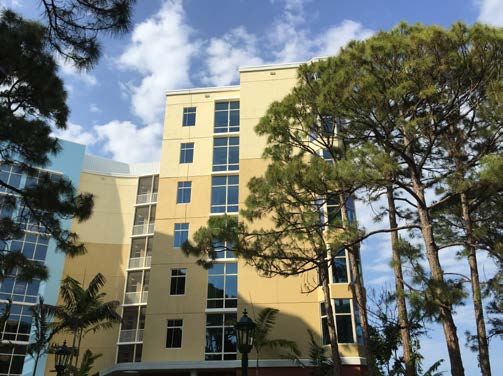
LTSS CHOICES: Small-House Nursing Homes

What Is the Green House Model?
Green House homes are small, residential-style living spaces for individuals in need of nursing-home levels of care. When the
model’s pioneer, Dr. William H. Thomas, conceived the concept of the Green House, he envisioned a decentralized, all-inclusive
physical environment that enabled individuals to live healthy, empowered, and satisfying lives.9 The design’s overall goal is to
achieve a better quality of care and quality of life for residents—and higher satisfaction rates among staff and families—than
that experienced in traditional nursing homes.

The Green House model consists of several distinctive elements and practices shaped by three core values: real home,
meaningful life, and empowered staff (see appendix A for core values and elements essential to the Green House model).10
Unlike the traditional nursing home environment with its hospital-like elements such as medication carts and nurses’ stations,
Green House homes are built to look and function like homes in the community.11 All registered homes in the Green House
network must adhere to a set of design guidelines and quality standards associated with the model.12

Behind this model is the concept that a person-centered approach to services enhances a resident’s quality of life. Residents
decide on critical aspects of their day-to-day activities, from the types of services they want to their preferred level of interaction
with other residents. In this setting, residents can get what is essential for them and what is important to them.

The staffing approach is a defining feature of the Green House model, with Certified Nursing Assistants (CNAs) holding more
responsibility for and being empowered to achieve quality of care and quality of life for residents. CNAs operate as a self-
managed work team, known as the Shahbazim (singular form is Shahbaz), to respond to what residents want and need. All
team members are trained to provide a diverse range of supports including personal care, meal preparation, laundry, and

  What Are Small-House Nursing Homes?

    Small-house nursing homes are residential-style living spaces primarily for individuals who require full-time levels
    of nursing care and assistance with daily activities.1 Unlike traditional, large-scale nursing homes, small-house
    nursing homes are typically self-contained buildings occupied by fewer residents.2 With small-house nursing homes,
    typically a cluster of small houses is licensed as a nursing facility, or they can be part of a licensed traditional nursing
    home. They tend to be within residential neighborhoods or located on senior living campuses. Although small-house
    models can vary in structural elements, a hallmark is the emphasis on privacy and homelike features.3 Rather than
    shared bedrooms, residents typically have private rooms with private bathrooms. Beyond the privacy of their rooms,
    residents can engage with others in shared community spaces such as the kitchen, dining room, lounge area, and
    outdoor area. As a licensed skilled nursing facility, this setting offers a range of services and supports to residents.
    In addition to residents having access to a clinical team, direct care workers are on hand to support them with their
    daily needs, providing a wide range of assistance, including personal care, laundry, cooking, and cleaning.

    1
     Reinhardt et al., “The Small House Model of Long-Term Care: Association with Older Adult Functioning,” The Journal of Post-Acute and Long-Term Care 20, no. 2 (2019): 222–23,
    https://www.jamda.com/article/S1525-8610(18)30576-0/fulltext.
    2
     University of Minnesota, “Small-House Nursing Homes (Green House®),” Long Term Care Resource Center, November 25, 2013, http://www.hpm.umn.edu/ltcresourcecenter/research/
    green_houses.htm.
    3
     I Advance Senior Care, “From ‘Nursing Home’ to ‘Home’: The Small House Movement,” IASC Home, April 1, 2018, https://www.iadvanceseniorcare.com/from-nursing-home-to-home-
    the-small-house-movement/.

2 | AARP Public Policy Institute © 2021 ALL RIGHTS RESERVED | www.aarp.org/LTSSChoices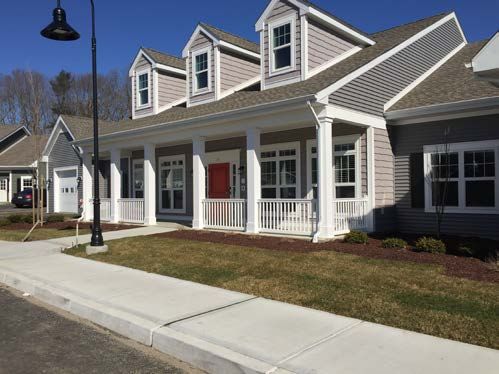
LTSS CHOICES: Small-House Nursing Homes

housekeeping. This design allows for any staff member to respond in the moment to what a particular resident needs—a
noticeable difference from the model often employed by larger nursing homes, where workers typically perform only one or two
functions for large numbers of residents. In larger homes, a worker must call in someone else if a resident requires something
they are not tasked with performing. CNAs in Green House homes must also complete additional hours of specialized training,
including dementia care and culinary education (See appendix A for more details on staffing).

What Is the Current State of the Green House Model?
Nationwide, approximately 3,200 people currently live in Green House
homes. The majority of residents receive nursing care and other services        Today’s Green House Homes
and supports such as personal care, hospice care, and dementia
care. Almost 9 in 10 (87 percent) Green House homes are licensed as             3,200 Residents Nationwide
skilled nursing facilities, and most of them are dually Medicare and              ■      Majority receive nursing care
Medicaid certified, allowing them to offer Medicare-covered short-term            ■      Majority pay out of pocket
rehabilitation services as well as long-term nursing home care.                   ■      45% covered by Medicaid
                                                                                300 Licensed Homes in 32 States
The original four Green House homes were constructed in 2003; today
                                                                                  ■      87% licensed as skilled nursing facilities
approximately 300 licensed homes exist in 32 states. Of those facilities,
                                                                                  ■      37% located in rural areas
89 percent of the homes (268) remain actively engaged in the Green
                                                                                  ■      63% located in urban areas
House peer network.13 Nearly two-thirds (63 percent) of all the licensed
                                                                                  ■      82% not-for-profit
                                                                                  ■
homes are within urban communities, and 37 percent are in rural areas.
                                                                                         18% for-profit
Although most Green House homes are designed as single-family,                    ■      89% remain active in Green House peer
                                                                                         network
ranch-style homes, other design models exist (see appendix B for three
types of Green House models). The Green House model can operate
as a single, independent housing unit; however, Green House homes
are typically built as a cluster of homes in a residential neighborhood or as part of a larger health care campus that includes
other facilities. Over the years, the location of Green House homes has evolved to include being placed within residential
neighborhoods, but many are located on the campuses of senior living communities (also known as continuing care retirement
communities or, more recently, life plan communities). The Green House model has been adopted in various settings, including
assisted living facilities, public housing, veteran communities, and dementia care settings.14

Most Green House partners (82 percent) are not-for-profit owners, while 18 percent are for-profit. Among the not-for-profit
partners, many are faith-based organizations. Although most partners have used tax-exempt bonds to finance a Green House,
others have received financing from the USDA or conventional banks, or they have undertaken capital campaigns or fundraising.
In terms of payment for individual residents, the three payer sources of the Green House are private pay, Medicare, and
Medicaid. Most residents pay out of pocket for services, but roughly 45 percent of residents are covered by Medicaid, according
to the results of a 2017 finance survey.

The Evidence: Is the Green House Model Resulting in Improved Outcomes?
Prior to the COVID-19 pandemic, studies documented better clinical outcomes for residents in Green House homes than those
for residents in traditional nursing homes. A 2015 study found that Green House home residents were 16 percent less likely to
be bedridden, 38 percent less likely to have pressure ulcers, and 45 percent less likely to have catheters.15 The study also found

3 | AARP Public Policy Institute © 2021 ALL RIGHTS RESERVED | www.aarp.org/LTSSChoices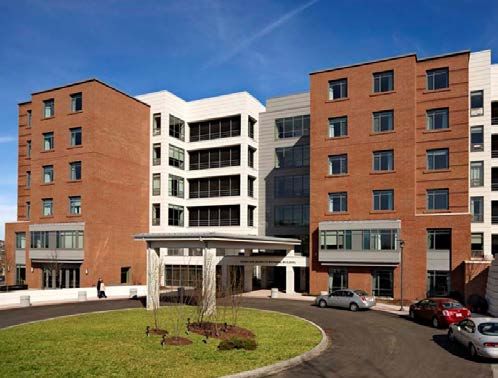
LTSS CHOICES: Small-House Nursing Homes

that Green House residents had lower hospital readmission rates than did traditional nursing home residents. Other studies
on Green House homes have documented the effect of the model on a broad range of measures, including quality of life and
quality of care, family satisfaction, and staff satisfaction (see appendix B for a selection of research reports). Existing studies on
this model are limited in scope, and further research is needed to confirm findings and determine which elements of the Green
House model are most effective. Furthermore, limited research on other small-house home models, in general, makes it difficult
to compare the Green House to similar approaches, such as the Household model.16

More recently, meanwhile, the COVID-19 pandemic has highlighted the potential value of the Green House model—perhaps
as never before—what with the model’s smaller settings and intentional design. Green House homes are faring far better than
traditional nursing homes in handling COVID-19—with 2.8 confirmed deaths per thousand residents in Green House homes
through July 2020, compared with 38 deaths per thousand residents in all certified skilled nursing homes.17 Though further
research is necessary, these positive preliminary results can be attributed to several factors, including the structural elements
(e.g., small size, private bedrooms and bathrooms), fewer residents, and adequate infection-control measures.18,19

Challenges for Expanding the Availability of Small-House Homes
Despite being around since the early 2000s and having attributes that would seem highly appealing, Green House model
adoption rates remain relatively slow, resulting in only a small proportion of the residential care population (3,200 residents)
living in this setting today. By comparison, 1.4 million adults resided in nursing homes as of 2018.20 As discussed below, a few
factors are responsible for this slow uptake.

Challenges for individuals trying to access small-house homes like Green House Homes
Limited Availability. For individuals and their families seeking alternatives to nursing home care, such as small-house homes,
a major barrier is the limited availability of this type of care. With just 300 Green House homes spread across the country, most
people in need of skilled nursing care do not have access to this setting (see figure 1). By contrast, the 15,600 traditional nursing
homes operating in the United States today
make access to this type of setting much
                                                                     Figure 1: Map of Active Green House Homes
more widely available.21

Costs. Cost may also serve as an impediment
for an individual wanting to live in a Green
House home, with daily rates typically
ranging from $246 to $495.22 Although the
rate very much depends on the location of
the Green House home (e.g., Boston would
have higher rates than Little Rock), the high
cost may make this setting unaffordable for
individuals and their families unless they
qualify for Medicaid.23 Like some long-stay
nursing home residents, some Green House
home residents will need to spend down their
assets to qualify for Medicaid, which, in turn,        Source: The Green House Project
will pay for services.

4 | AARP Public Policy Institute © 2021 ALL RIGHTS RESERVED | www.aarp.org/LTSSChoices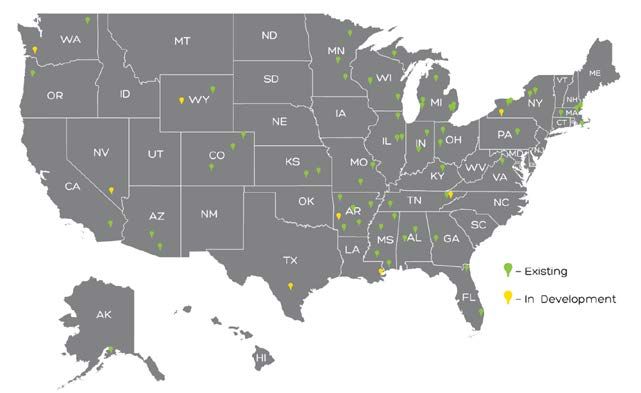
LTSS CHOICES: Small-House Nursing Homes

Challenges for potential providers seeking to offer or expand small-house homes
Financing. The cost of developing a Green House home is comparable to building a nursing home with private bedrooms,
bathrooms, and equivalent common space. To achieve financial viability, potential providers must consider four factors: (1)
development and construction costs (e.g., land, infrastructure); (2) financing (e.g., availability, type, terms); (3) revenue (e.g.,
payer mix and rates, market assessments); and (4) operating costs. In Green House development—as is the case in many
construction situations—smaller is economical, so limiting the number of square feet in the home is important for controlling
costs. Fewer square feet and properly sized spaces within the home equates to a more affordable project.

In general, an organization is better able to spread overhead costs when building more than one home. Construction costs also
depend on other factors, such as whether a Green House is part of an existing residential campus. Finally, although Green House
homes tend to achieve higher occupancy rates than do traditional nursing homes, and the return of investment typically pays
off, an ongoing challenge for potential providers is finding and maintaining attractive financing mechanisms.

Regulations. Regulatory challenges around building new nursing homes also serve as obstacles for potential providers. For
example, certificate-of-need (CON) laws—which are state regulatory approvals for building or expanding health care facilities in
a given area—are known to hinder innovation in nursing homes by making it difficult for providers to get permission to build a
new facility.24,25 Currently, most states—36, including Washington, DC—operate CON programs.26 In addition to these regulations,
many states have issued construction moratoria on new facilities to control nursing home bed supply.27 Some argue that these
regulatory measures are restrictive, discouraging private investment in both new facilities and expansion of current ones.

Workforce. Research suggests that Green House homes offer higher-than-average compensation and more training
opportunities for staff. Green House homes report higher staff retention and satisfaction rates than traditional nursing homes.
But like all LTSS providers, small-house home providers have to grapple with the widespread workforce challenges in this
field of recruitment and retention of qualified workers; it is a field that puts workers at an elevated risk for contagious disease
and injury, and it pays low wages and offers few standard employment benefits such as paid sick leave. Between 2016 and
2026, there will be an estimated 7.8 million direct care worker job openings.28,29 Addressing long-standing workforce shortage
challenges at large will be necessary to ensure that individuals who need LTSS and their families have access to what they need
in their preferred setting.

Four Policy Recommendations for Expanding the Availability of Small-House Homes
To expand access to small-house nursing homes such as Green Houses, policy makers should address the challenges inhibiting
their growth. Below we outline four policy recommendations for consideration:

     ■    Incentivize public and private investment: Policy makers should offer attractive financial incentives to encourage
          more capital investments in innovative models. For example, policy makers should consider improving current
          public funding streams for LTSS, starting with Medicaid. Although Medicaid is the biggest funder of nursing home
          care, it has the lowest payment rate among the payer sources for skilled nursing homes. Improving Medicaid
          reimbursement rates will help some providers balance their payer mix, making small-house homes more accessible
          and affordable for individuals in the long term.

     ■    Eliminate regulatory barriers to entry: State policy makers should consider updating their CON laws and
          construction moratoria for nursing homes, to allow for greater innovation in the marketplace.

5 | AARP Public Policy Institute © 2021 ALL RIGHTS RESERVED | www.aarp.org/LTSSChoices
LTSS CHOICES: Small-House Nursing Homes
■ Strengthen the LTSS workforce: Policy makers should establish policies that will increase the available supply of LTSS
workers, particularly direct care workers, and address job-quality issues. To attract qualified workers, LTSS providers
must offer higher wages that reflect the complex skills needed to perform these jobs and the benefits necessary to
keep workers in them, including hazard pay, guaranteed health insurance, and sick leave. Given COVID-19’s particular
impact on nursing homes, new policies should also address the training needs of workers, with a specific focus on
infection control and other emergency-preparedness protocols.
■ Expedite adoption of key model features associated with quality improvement: Though longer-term investment
will be necessary to make small-house models available to more people, there are key features of the Green House
model that might be applied in the short term to existing nursing facilities. Policy makers should promote more
research and demonstration of how key features of the Green House model (e.g., “universal worker” staffing model,
private rooms) could be adopted by larger facilities.
The coronavirus pandemic not only has shined a light on deep-rooted issues with nursing homes but has revealed serious
cracks and inefficiencies in our nation’s LTSS infrastructure. Now more than ever, policy makers have an opportunity to redesign
and refresh the LTSS system to meet the diverse needs and preferences of current and future LTSS consumers and their families.
Investing in evidence-based alternatives to traditional institutional settings, such as small-house homes, is a crucial step in the
right direction.
ABOUT THE AUTHORS
Susan C. Reinhard, RN, PhD, FAAN, is senior vice president and director of the AARP Public Policy Institute. She leads the LTSS
Choices project and serves as the chief strategist for the Center to Champion Nursing in America and Family Caregiving Initiatives.
Edem Hado, MPH, is a policy research senior analyst on the Family, Home, and Community team in the AARP Public Policy
Institute. She focuses on a variety of issue areas, including LTSS, Medicaid, long-term care workforce, health disparities, public
health, and preventive care.
ACKNOWLEDGMENTS
The authors express their gratitude to the members of the LTSS Choices Team who provided helpful comments incorporated in
this Spotlight, particularly Harriet Komisar and Carrie Blakeway Amero. We also appreciate the thought contributions of Susan
Ryan, senior director of the Green House Project.
1
Kaiser Family Foundation, “State Data and Policy Actions to Address Coronavirus,” Kaiser Family Foundation, Washington, DC, December 17, 2020, https://www.kff.org/health-costs/issue-brief/state-
data-and-policy-actions-to-address-coronavirus/#long-term-care-cases-deaths.
2
Priya Chidambaram, “Rising Cases in Long-Term Care Facilities Are Cause for Concern,” Henry J. Kaiser Family Foundation, San Francisco, CA, July 2020, https://www.kff.org/coronavirus-covid-19/
issue-brief/rising-cases-in-long-term-care-facilities-are-cause-for-concern/.
Mitre, “Coronavirus Commission for Safety and Quality in Nursing Homes,” Mitre, McLean, VA, September 2020, https://sites.mitre.org/nhcovidcomm/wp-content/uploads/sites/14/2020/09/FINAL-
3
REPORT-of-NH-Commission-Public-Release-Case-20-2378.pdf.
4
Mathematica, “A Study of the COVID-19 Outbreak and Response in Connecticut Long-Term Care Facilities,” Mathematica, Princeton, NJ, September 2020, https://www.mathematica.org/
publications/fr-a-study-of-the-covid-19-outbreak-and-response-in-connecticut-long-term-care-facilities.
5
U.S. Government Accountability Office, “Infection Control Deficiencies Were Widespread and Persistent in Nursing Homes Prior to the COVID-19 Pandemic,” U.S. Government Accountability Office,
Washington, DC, May 2020, https://www.gao.gov/assets/710/707069.pdf.
6 | AARP Public Policy Institute © 2021 ALL RIGHTS RESERVED | www.aarp.org/LTSSChoicesLTSS CHOICES: Small-House Nursing Homes
6
Rosalie A. Kane and Lois J. Cutler, “Re-Imagining Long-Term Services and Supports: Towards Livable Environments, Services Capacity, and Enhanced Community Integration, Choice, and Quality of
Life for Seniors,” The Gerontologist 55, no. 2 (2015): 286–95, https://academic.oup.com/gerontologist/article/55/2/286/659519.
7
Debbie Cenziper, Joel Jacobs, and Shawn Mulcahy, “Hundreds of Nursing Homes with Cases of Coronavirus Have Violated Federal Infection-Control Rules in Recent Years,” The Washington Post,
April 17, 2020, https://www.washingtonpost.com/business/2020/04/17/nursing-home-coronavirus-deaths/?arc404=true.
8
Rachel M. Werner, Allison K. Hoffman, and Norma B. Coe, “Long-Term Care Policy after Covid-19—Solving the Nursing Home Crisis,” New England Journal of Medicine 383 (2020): 903–5, https://www.
nejm.org/doi/full/10.1056/NEJMp2014811.
9
Nancy Wieler Fishman, Jane Isaacs Lowe, and Susan Frazier Ryan, “Promoting and Alternative to Traditional Nursing Home Care: Evaluating the Green House Small Home Model, an Introduction
from the Funders and the Green House Project,” Health Services Research 51 (2016): 344–51, https://www.ncbi.nlm.nih.gov/pmc/articles/PMC5338204/.
Lauren W. Cohen et al., “The Green Home Model of Nursing Home Care in Design and Implementation,” Health Services Research 51, no. 9 (2016): 352–77, https://www.ncbi.nlm.nih.gov/pmc/
10
articles/PMC5338211/.
Rosalie A. Kane, “Resident Outcomes in Small-House Nursing Homes: A Longitudinal Evaluation of the Initial Green House Program,” The Commonwealth Fund, New York, NY, August 2007,
11
https://www.commonwealthfund.org/publications/journal-article/2007/aug/resident-outcomes-small-house-nursing-homes-longitudinal.
The Green House Project, “Guide Book for Transforming Long-Term Care,” The Green House Project, Linthicum, MD, April 2010, https://blog.thegreenhouseproject.org/wp-content/
12
uploads/2011/12/THE-GREEN-HOUSE-Project-Guide-Book_April_100413.pdf.
13
The Green House Project, “LinkedUp,” The Green House Project, Linthicum, MD, December 2020, https://www.thegreenhouseproject.org/resources/linkedup.
14
Paula Span, “A Better Kind of Nursing Home,” The New York Times, December 22, 2017, https://www.nytimes.com/2017/12/22/health/green-houses-nursing-homes.html.
15
Ibid.
Deborah Schooch, “How Family-Style Nursing Homes Are Better Weathering the Pandemic,” AARP, September 18, 2020, https://www.aarp.org/caregiving/basics/info-2020/household-model-
16
nursing-homes-coronavirus.html.
The Green House Project COVID Study Report,” The Green House Project, Linthicum, MD, September 2020, https://www.aarp.org/content/dam/aarp/caregiving/2020/09/green-house-homes-
17“
report-summary-09-21.pdf.
18
Schooch, “How Family-Style Nursing Homes Are Better Weathering the Pandemic.”
19
Justin Davidson, “The American Nursing Home Is a Design Failure,” New York Magazine, June 25, 2020, https://nymag.com/intelligencer/2020/06/the-american-nursing-home-is-a-design-failure.
html.
Edem Hado and Harriet Komisar, “Long-Term Services and Supports,” AARP Public Policy Institute, Washington, DC, August 2019, https://www.aarp.org/content/dam/aarp/ppi/2019/08/long-term-
20
services-and-supports.doi.10.26419-2Fppi.00079.001.pdf.
National Center for Health Statistics, “Nursing Home Care,” Centers for Disease Control and Prevention, National Center for Health Statistics, May 20, 2020, https://www.cdc.gov/nchs/fastats/
21
nursing-home-care.htm.
22
The Green House Project, “Essential Elements of Financial Viability,” The Green House Project, Linthicum, MD, April 11, 2018, https://blog.thegreenhouseproject.org/tag/financial-viability/.
23
Medicaid is the joint federal and state health insurance program for low-income people.
National Conference of State Legislatures, “CON-Certificate of Need State Laws,” National Conference of State Legislatures, December 1, 2019, https://www.ncsl.org/research/health/con-certificate-
24
of-need-state-laws.aspx.
25
David C. Grabowski, “Nursing Home Certificate-of-Need-Laws Should be Repealed,” Health Affairs, June 9, 2017, https://www.healthaffairs.org/do/10.1377/hblog20170609.060529/full/.
National Conference of State Legislatures, “CON-Certificate of Need State Laws,” National Conference of State Legislatures, December 1, 2019, https://www.ncsl.org/research/health/con-certificate-
26
of-need-state-laws.aspx.
Momotazur Rahman et al., “The Impact of Certificate-of-Need Laws on Nursing Home and Home Health Care Expenditures,” Medical Care 73, no. 1 (2016): 85–105, https://www.ncbi.nlm.nih.gov/
27
pmc/articles/PMC4916841/.
Allison Cook, “State Workgroups Confront the Direct Care Workforce Crisis,” Paraprofessional Healthcare Institute (PHI), October 29, 2019, https://phinational.org/news/state-workgroups-confront-
28
the-direct-care-workforce-crisis/.
Paraprofessional Healthcare Institute (PHI), “Direct Care Workers in the United States: Key Facts,” PHI, Bronx, NY, September 8, 2020, https://phinational.org/resource/direct-care-workers-in-the-
29
united-states-key-facts/.
7 | AARP Public Policy Institute © 2021 ALL RIGHTS RESERVED | www.aarp.org/LTSSChoicesLTSS CHOICES: Small-House Nursing Homes
Appendix A
Core Values and Elements Essential to the Green House
Core Values Elements and Practices
Real Home • 10–12 residents referred to as elders1
• Private bedroom with full bathroom
− Ceiling lifts in each resident room to facilitate a safe transfer to/from bathrooms, and in the spa
area to support transfer to spa tub as necessary
• Shared space includes a central living area with a fireplace, open kitchen, dining area with a
communal dining table, and den
• Easy access to outdoor and green spaces: front porches, secured courtyard
• Pet-friendly
Meaningful Life • Relationship-rich, elder-directed living
− Control over day-to-day activities (e.g., sleeping times, self-care, alone time)
− Informed choices to participate in formal/informal house decision making (e.g., house council
meetings)
− Residents have a say in their own care plan (creation, discussion, and implementation)
− Formal and informal opportunities for community engagement
− House councils organize activities, menus, and house routines
− End-of-life process is inclusive and reflects palliative- and hospice-care principles
Empowered Staff • Certified nursing assistants (CNAs), also known as Shahbazim, work as versatile workers2
− CNAs equipped with 128 additional hours of specialized training, including culinary training,
person-directed care for people with dementia, and specific policies and procedures for the
Green House model
− Tasks include meal preparation, laundry, and provision of personal care
• Clinical team consists of a full-time nurse who works in collaboration with the self-managed work
team of Shahbazim
− The clinical team also includes other disciplines, such as dietary manager/dietitian, physical
therapist, occupational therapist, speech-language pathologist, social worker, and activity
director
− Although the clinical team may not always be located in the home, they are nearby if needed
• Consistent assignments and multifaceted roles enable staff to build meaningful relationships
with residents and their families
• Staff engage in collaborative decision making with residents and their families3
1
Cohen et al., “The Green House Model of Nursing Home Care in Design and Implementation.”
2
The Green House Project, “Guide Book for Transforming Long-Term Care.”
3
The Green House Project, “What Informal Caregivers Think about the Green House Project,” The Green House Project, Linthicum, MD, February 2013, https://blog.thegreenhouseproject.org/wp-
content/uploads/2013/02/Consumer-Research-1-Pager.pdf.
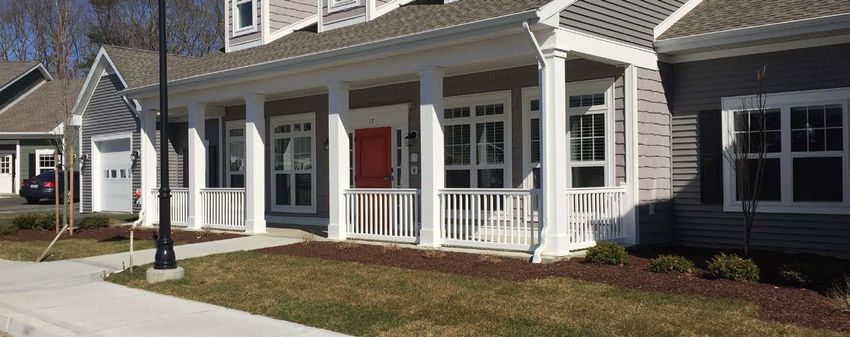
8 | AARP Public Policy Institute © 2021 ALL RIGHTS RESERVED | www.aarp.org/LTSSChoicesLTSS CHOICES: Small-House Nursing Homes Appendix B Three Design Models of the Green House Home Name: Saint Elizabeth Location: Greenwich, Rhode Island Design Model: Single-family, ranch-style home Name: The Woodlands at John Knox Village Location: Pompano Beach, Florida Design Model: Seven-story building located within a continuing care retirement community; total of 12 homes, and 4 of the 12 homes are dedicated to short-term rehab. First floor includes bistro (open to all residents, families, guests), outpatient rehab, spa, and community room. Name: Leonard Center for Living Location: Chelsea, Massachusetts Design Model: First urban vertical building; total of 10 homes, with 3 of 10 homes dedicated to short-term rehab, 3 of 10 homes supporting people living with ALS and MS, and the remaining 4 for long-term care. 9 | AARP Public Policy Institute © 2021 ALL RIGHTS RESERVED | www.aarp.org/LTSSChoices
LTSS CHOICES: Small-House Nursing Homes

Appendix C
Six Selected Studies of Green House Homes

 Focus Area               Study                                 Findings

                Costs     Financial Implications of the         Analysis of published and other Green House studies related
                          Green House Model. Jenkins*,          to financial performance, each limited in scope but with
                          Robert, MSRED; Sult, Terri,           mutually reinforcing findings, provides growing evidence that
                          MBA; Lessell, Newell, MBA;            the Green House model’s operations are comparable in cost to
                          Hammer, David, MS; Ortigara,          those of traditional nursing homes as well as to those nursing
                          Anna, RN, MS, FAAN. Seniors           home providers utilizing some culture change practices.
                          Housing & Care Journal, 2011.         Capital costs are found to be equivalent to or less than similar
                                                                culture change models but higher than traditional designs,
                                                                which provide much less space per resident. Revenue from
                                                                higher occupancy and more private-pay days found to be
                                                                associated with Green House home implementation may
                                                                offset these higher capital costs.

 Family Satisfaction      Effects of Green House®               A longitudinal quasi-experimental study with two comparison
                          Nursing Homes on Residents’           groups was conducted to test the effects of a Green House
                          Families. Lum, Terry Y., MSW,         nursing home program on residents’ family members. These
                          PhD; Kane, Rosalie A., MSW,           family members were somewhat less involved in assisting
                          PhD; Cutler, Lois J., PhD; Yu,        residents, although family contact did not differ among
                          Tzy-Chyi, MHA, PhD. Health            the settings at any time period. Green House families were
                          Care Financing Review; Winter         more satisfied with the resident’s care and with their own
                          2008/2009.                            experience as family members and had no greater family
                                                                burden. Issues in studying family outcomes are discussed as
                                                                well as implications for roles of various personnel, including
                                                                social service and activities staff.

           Quality of     Evidence behind the Green             In a systematic review to examine the evidence for the
            Care/Life     House and Similar Models              elements of the model, the authors concluded that the
                          of Nursing Home Care.                 evidence supports some Green House model elements,
                          Zimmerman, Sheryl; Cohen,             including those related to privacy, outdoor access, residential-
                          Lauren W. Aging Health, 2010.         style kitchens and dining, and person-centered schedules of
                                                                care. The evidence was mixed in other areas, including those
                                                                related to the size of the home, consistent staff assignment,
                                                                and the clinical staffing model, and was negative regarding
                                                                the Green House’s normalized engagement practices.

10 | AARP Public Policy Institute © 2021 ALL RIGHTS RESERVED | www.aarp.org/LTSSChoices
LTSS CHOICES: Small-House Nursing Homes
Focus Area Study Findings
Quality of Care/ Residential Outcomes in A two-year longitudinal quasi-experimental study comparing
Life (continued) Small-House Nursing Homes: Green House residents with residents at two comparison
A Longitudinal Evaluation traditional nursing home sites using data collected at
of the Initial Green House baseline and three follow-up intervals. Controlling for
Program. Kane, Rosalie A.; baseline characteristics (age, sex, activities of daily living,
Lum, Terry Y.; Cutler, Lois J.; date of admission, and proxy interview status), statistically
Degenholtz, Howard B.; Yu, significant differences in self-reported dimensions of quality
Tzy-Chyi. Journal of the American of life favored the Green Houses over one or both comparison
Geriatrics Society, 2005. groups. The quality of care in the Green Houses at least
equaled, and for change in functional status exceeded, that of
the comparison nursing homes.
The Green House Model of Green House homes showed substantial variation in practices
Nursing Home Care in Design to support resident choice and decision making; neither the
and Implementation. Cohen, Green House homes nor traditional nursing homes provided
Lauren W., MA; Zimmerman, complete choice, and all Green House homes excluded
Sheryl, PhD; Reed, David, PhD; residents from some key decisions. Green House homes were
Brown, Patrick, BS; Bowers, most consistent with the model and one another in elements
Barbara J., RN, PhD; Nolet, of the living environment, such as private rooms and baths
Kimberly, MS; Hudak, Sandra, and open kitchens, and in staff-related elements, such as self-
RN; Horn, Susan, PhD; Thrive managed work teams and consistent, universal workers.
Research Collaborative;
Grawbowski, David. Health
Services Research, November
2015.
Staff Satisfaction Workforce Characteristics, An observational study finding few significant differences
Perceptions, Stress, and between Green House and comparison nursing homes.
Satisfaction among Staff Exceptions were Green House caregivers were older,
in Green House and Other provided twice the normalized hours per week budgeted per
Nursing Homes. Brown, Patrick resident than did CNAs in comparison nursing homes, and
BS; Hudak, Sandra L., RN, MSN; had lower turnover. Study findings suggest that the Green
Horn, Susan D., PhD; Cohen, House environment may promote staff longevity and does
Lauren W., MA; Reed, David not negatively affect workers’ stress, safety perceptions, or
Allen, PhD; Zimmerman, Sheryl, satisfaction.
PhD; and the THRIVE Research
Collaborative; Bowers, Barbara;
Grabowski, David; Nolet,
Kimberly. Health Services
Research, December 2015.
https://doi.org/10.26419/ppi.00126.001
11 | AARP Public Policy Institute © 2021 ALL RIGHTS RESERVED | www.aarp.org/LTSSChoicesYou can also read


