Standard Chartered - Publicised tax avoidance strategy
←
→
Page content transcription
If your browser does not render page correctly, please read the page content below
Standard Chartered –
Publicised tax avoidance strategy
January 2015

  Summary

   Standard Chartered is a UK FTSE-100 listed               Mozambique it would theoretically reduce Capital
   bank with an extensive presence across                   Gains Tax from 32 percent to 0 percent. Among
   Africa, Asia and the Middle East. The bank               other countries potentially affected are Nigeria,
                                                            Kenya, Uganda, and Zimbabwe depending on
   offers a wide-range of banking services in
                                                            the specifics of their taxation treaties with Mauritius.
   15 African countries1. It has operated on
   the continent for 150 years and is a well-               Although it does not endorse the strategy, by
   recognised brand both in African business                publishing it Standard Chartered contributed to a
   circles and among consumers.                             conversation among companies about how to
                                                            avoid tax in some very poor countries. According to
   The bank plays an important role in                      ActionAid International research, almost half of all
    providing financial services for growing                investment into developing countries goes through
                                                            tax havens3. Meanwhile the OECD estimates that
    economies on the continent. In its report
                                                            developing countries lose three times more to tax
   “Impact on Africa” it states it supports 1.9             havens than the amount they receive in aid each
    million jobs in Sub-Saharan Africa and in               year4. This is money that could otherwise be used
    2013 supported trade worth USD7.2 billion2.             to pay for schools, hospitals and transport
                                                            infrastructure and to reduce aid-dependency.
   Evidence seen by ActionAid International shows the
   bank published an article by a Mauritius-based           The need for African nations to improve revenue
   financial firm describing a tax avoidance strategy in    collection is widely recognised. For example, a
   its publication Standard Chartered Insights              major report by the High Level Panel on Illicit
   2013/2014: Maximising Business Opportunities             Financial Flows for the African Union chaired by
   in Asia, Africa and the Middle East – a                  former President of South Africa Thabo Mbeki will
   Treasury Guide. The strategy can be used to              examine how African nations can prevent the loss
   legally avoid tax in some of the poorest countries in    of billions of dollars of tax revenue – which could
   the world and was contained within an article            otherwise be invested in vital services. To be clear,
   authored by Cim Tax Services managing director           ActionAid International is not suggesting that the
   Gary Gowrea.                                             use of the investment structure described in the
                                                            Cim article is unlawful or would constitute an “illicit
   The article highlights the tax benefits of structuring   financial flow”.
   investments through Mauritius in order to legally
   avoid capital gains tax and withholding tax. This        Standard Chartered states that the Cim article does
   strategy could be used by companies to legally           not constitute the Bank’s own advice or opinion,
   avoid potentially hundreds of millions of dollars of     and that it does not itself promote tax avoidance
   tax on a single deal. In the example of                  products to its customers.

ActionAid International Report                                                                          January 2015
The evidence The ActionAid International allegation relates to and opinion. The tax avoidance strategy appeared a tax avoidance strategy published in the journal in an article entitled “Mauritius: An Investment “Standard Chartered Investment Insight Gateway to Africa” and was written by Mauritius- 2013/14”. This publication consists of articles written based financial company Cim Tax Services. by external contributors offering investor information ActionAid International Report January 2015
The article explains that tax can be avoided           The key advantages of the tax avoidance
by structuring investments through Mauritius-          structure described in the article, which
based holding companies in order to take               uses the example of Mozambique, are:
advantage of the island’s network of tax
treaties (referred to in the strategy as Double        1. Capital Gains Tax
Taxation Avoidance Agreements (DTAAs).)
                                                       Using the structure, a company could reduce its
There is no suggestion that the structure included     capital gains tax from 32 percent to no tax at all.
by CIM in the article is particularly innovative or
                                                       This single tax avoidance strategy could potentially
unusual, or that its use by any given taxpayer is
                                                       be worth hundreds of millions of dollars to a
unlawful. In fact ActionAid International has found
                                                       company. As an example of the amount of money
a previous instance where a very similar structure
                                                       potentially involved – in 2014 the oil and gas
was advised by a major accountancy firm5.
                                                       company Anadarko was reported to have paid
The authors of the article advise investors            Mozambique US$520 million in capital gains tax at
that “adequate substance and commercial                the standard rate of 32% following a transaction
rationale be included in the structure to avoid        which yielded a capital gain of US$1,625,000,0007.
any potential challenge by tax authorities”.
                                                       The report describes the capital gains tax advantages
However ActionAid International believes               for companies operating in Africa as follows:
that the structure could be used where
                                                       “An increasing number of African states
there is little or no commercial rationale
                                                        are starting to impose capital gains tax.
for doing so other than to avoid tax.
                                                        However the DTAAs [tax treaties] in force
The article states that:                                in Mauritius restrict taxing rights of capital
                                                        gains to the country of the seller of the
“an essential ingredient [of Mauritian                  assets. Since there is no capital gains tax
 investment] beyond the commercial rationale            in Mauritius, the potential tax savings
 is the tax arbitrage a company can benefit             for a Mauritius registered company are
 from”. Expanding on the taxation advantages of         significant.”
 Mauritius, the article goes on to say:
                                                       2. Withholding Tax
“Based on the beneficial withholding tax
 rate that the treaties provide as well as the         Using the structure advised in the strategy could
 flexible Income Tax Act provisions, various           potentially lead to a 60 percent saving in withholding
 structuring possibilities are available, such         tax. In Mozambique, the rate of withholding tax
 as an investment holding platform or                  on dividends and interest is 20 percent. But
 regional treasury, or a structure holding             by using a holding company incorporated in
 intellectual properly rights.”                        Mauritius this rate can be reduced to 8 percent.

The strategy is designed to be used in different       The report describes the overall benefits
ways in a range of countries which have tax treaties   of this form of tax avoidance to companies
with Mauritius. Mauritius has recently embarked        operating in Africa as follows.
on a significant expansion of its network of tax
treaties with African nations and currently has        “The majority of African states impose
more than 40 either agreed, signed or awaiting          some withholding tax on dividends paid
ratification with countries including Mozambique,       out to non-residents. These vary between
Kenya, Zambia, Uganda, Zimbabwe, and                   10 percent and 20 percent. The DTAAs
Nigeria6. The amount of money that can be               [tax treaties] in force in Mauritius limit
avoided using a similar strategy will vary depending    withholding taxes on dividend[s]”.
on the specifics of individual tax treaties.

ActionAid International Report                                                                   January 2015
What the companies told us: Cim Tax Services Ltd Statement:
We wrote to both Standard Chartered and Cim Tax “The article in question makes mention
Services asking them to respond to our allegation. of a wide range of benefits for companies
Below is the text of the statements they sent us. and investors seeking to use Mauritius as
an investment and trading hub for Africa;
Standard Chartered Statement: the tax treatment of certain financial
receipts could be just one of these benefits.
“Standard Chartered does not consider this
Mauritius and other developing African
article to be the advice of the bank. There
countries have entered into mutually
is a clear disclaimer on the back of the
beneficial bi-lateral agreements designed
report that says ‘The opinions expressed in
to promote and increase the flow of
this publication are not necessarily those
Foreign Direct Investment to support the
of either the publisher, Standard Chartered
sustainable development of these countries.”
Bank nor the institutions for which the
contributing authors work or by which they Conclusion
have been commissioned”.
Standard Chartered clearly provide developing
“Standard Chartered is one of the largest economies with high-quality financial services
corporate tax payers in Africa. In 2013, that in turn generate jobs and reduce poverty.
across our 15 Sub-Saharan businesses
we paid US$182m in Corporation tax. An But by publishing this strategy – Standard Chartered
independent report, ‘Banking on Africa’, contributed to a culture whereby companies are
found that Standard Chartered’s support exploring ways to pay minimal tax on their profits in
for our clients underpins $1.8 billion of very poor countries. Tax avoidance costs developing
annual tax payments in Sub Saharan Africa, countries billions of dollars a year in lost revenues..
equivalent to 1.1% of the entire tax receipts
received by governments in the region.” Taxation treaties remain a key tool currently in
use by large companies wishing to avoid paying
“Our tax position is very clear. We do tax on their operations in Africa. Mauritius is in
not enter into transactions whose sole the process of rapidly expanding its network of
purpose is to minimise or reduce tax cost. taxation treaties – and there remain risks that
Similarly, we do not promote tax avoidance these treaties will continue to expose developing
products to our customers. We set out countries to further loss of tax revenues.
country-by-country tax information in
respect of the year ended 31 December By Richard Grange
2013 on our website.” With assistance from Nadia Harrison
1. h
ttps://www.sc.com/en/sustainability/performance- 5. http://www.actionaid.org.uk/sites/default/files/
and-policies/impact-reports/africa-day.html publications/deloitte_in_africa_1.pdfN
2. https://www.sc.com/en/sustainability/performance-and- 6. http://www.lowtax.net/information/mauritius/
policies/impact-reports/sub-saharan-africa-report.html mauritius-tax-treaty-introduction.html
3. http://www.actionaid.org.uk/sites/default/files/publications/ 7. http://allafrica.com/stories/201404150130.html
how_tax_havens_plunder_the_poor_2.pdf
4. http://www.theguardian.com/commentisfree/2008/
nov/27/comment-aid-development-tax-havens
ActionAid International
Postnet Suite 248
Private Bag X31
Saxonwold 2132
Johannesburg
South Africa
ActionAid is a registered charity no. 27264198
ActionAid International Report January 2015The key pages from the documents which are referred to in this report are attached below. They are the copyright of PPP
Company Limited, Standard Chartered Bank and contributors. They are drawn from the publication Standard Chartered
Insights 2013/2014: Maximising Business Opportunities in Asia, Africa and the Middle East – a Treasury Guide.
Mauritius:
An Investment Gateway to Africa
Based on Investment Promotion and companies, these are deemed to
Protection Agreements be a foreign source and get the
the beneficial As an African nation, Mauritius $3*%
*
%(
$*.( *
has signed Investment mechanism.
withholding tax Promotion and Protection
rate that the Agreements (IPPAs) with
15 African member states.
Figure 4 depicts a typical
holding structure that can be
treaties provide The IPPA typically offers set up in Mauritius. We have
the following guarantees to taken an example of a Chinese
as well as the investors from contracting Investor wishing to invest in the
flexible Income states:
1 ((&*( * %$%
emerging coal and gas sector in
%0# '+
3$$ $
%
Tax Act provisions, investment capital and the Mozambique Company can
returns;; be done either through debt or
various structuring 1 +($*
$)* equity.
possibilities are expropriation;;
1%)*
,%+($* %$(+" i) The Chinese Investor can
available, such with respect to the treatment invest in equity in the Mauritius
of investment, compensation Holding Company, which in
as an investment for losses in case of war, turn invests in the Mozambique
holding platform or (#%$4 *( %*)*$
1(($
#$*
%()**"#$*
Company.
The advantages of this
regional treasury, of disputes between investors structure are:
and the contracting states. 1)&(*
*.*(*/*-$
or a structure Mauritius and Mozambique,
holding intellectual )%$*
$3 "
withholding tax rate that the
dividend paid to the Mauritius
Holding Company will
property or rights. treaties provide as well as be subject to a reduced
*
4. "$%#.* withholding tax rate of 8% in
provisions, various structuring Mozambique.
possibilities are available, 1 *
*
&&" * %$%
*
such as an investment holding foreign tax credit mechanism,
platform or regional treasury, or the effective tax for the
a structure holding intellectual Mauritius Holding Company
property or rights. will be reduced to nil.
1+( * +)
)*
."+) ,
The Finance Act 2012 has right to tax any gains derived
amended the Financial Services by the Mauritius Holding
Act 2007 to add two activities to Company on the sale of shares
*
+( * +)%
( $
2
"%" held in the Mozambique
headquarters administration Company.
and global treasury activities. 1)%&&%)*%%*
(
Schedule 2 part II and part III tax treaties signed by
sets out that that at least three Mozambique, Mauritius has
services must be performed for exclusive rights to tax capital
three related entities, be it in gains on the sale of shares
the treasury or administrative held in the Mozambique
3" ,$
*
* , * )( Company even if the assets
provided to global business of the Mozambique Company
260 Standard Chartered Insights 2013/14The key pages from the documents which are referred to in this report are attached below. They are the copyright of PPP
Company Limited, Standard Chartered Bank and contributors. They are drawn from the publication Standard Chartered
Insights 2013/2014: Maximising Business Opportunities in Asia, Africa and the Middle East – a Treasury Guide.
Mauritius:
An Investment Gateway to Africa
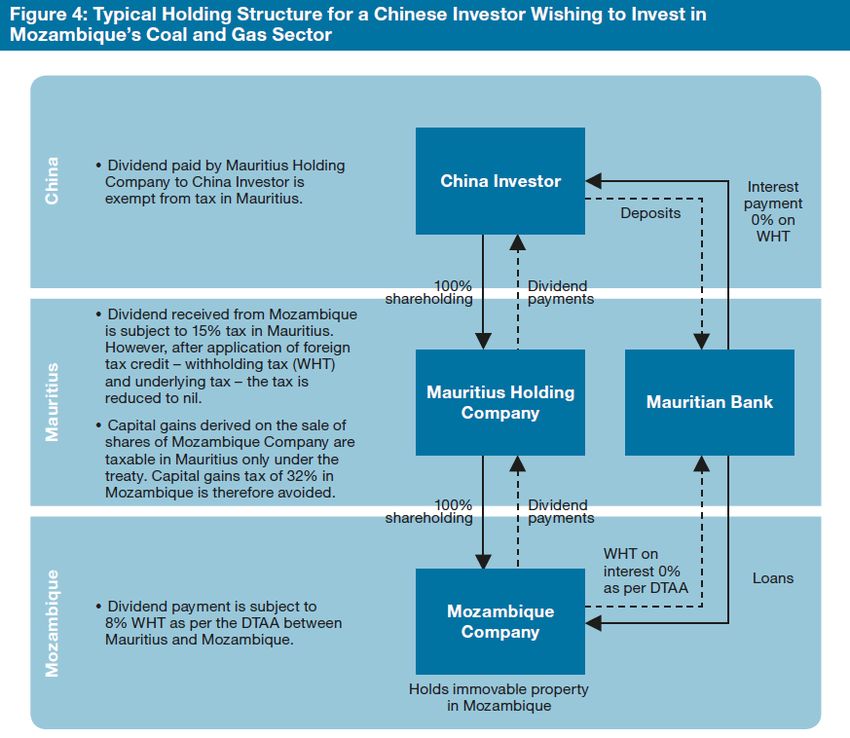
Figure 4: Typical Holding Structure for a Chinese Investor Wishing to Invest in
Mozambique’s Coal and Gas Sector
1Dividend paid by Mauritius Holding
China
Company to China Investor is China Investor Interest
exempt from tax in Mauritius. payment
Deposits 0% on
WHT
100% Dividend
shareholding payments
1Dividend received from Mozambique
is subject to 15% tax in Mauritius.
However, after application of foreign
tax credit – withholding tax (WHT)
Mauritius
and underlying tax – the tax is
reduced to nil. Mauritius Holding
Mauritian Bank
Company
1Capital gains derived on the sale of
shares of Mozambique Company are
taxable in Mauritius only under the
treaty. Capital gains tax of 32% in
Mozambique is therefore avoided.
100% Dividend
shareholding payments
WHT on
interest 0% Loans
Mozambique
as per DTAA
1Dividend payment is subject to Mozambique
8% WHT as per the DTAA between
Mauritius and Mozambique. Company
Holds immovable property
in Mozambique
Source: Taxand
consist principally of between Mauritius and 1$(*
*(*/ $*()*&
immovable property. Mozambique. by the Mozambique Company
1)*
( )$%& *"
$) to the Mauritian Bank is free
tax in Mauritius, gains are not ii) The Chinese Investor can of any withholding tax.
taxed at all. ")%3$$*
%0# '+ 1"*($* ,"/*
)#()+"*
1 , $)& /*
Company partly through a can be achieved if the Chinese
Mauritius Company to the back-to-back loan. Investor invests the money
Chinese Investor will be 1
$) %#&$/ as equity in the Mauritian
exempt from tax in Mauritius. deposits money in a Mauritian Company, which then deposits
1$,$&( $
(#$* Bank. the money in the Mauritian
can be obtained from the 1
+( * $$!&(%, Bank.
Mauritius Revenue Authority a loan to the Mozambique 1$*()*( ,/*
under Article 25 of the treaty Company. Mauritius Company from
Maximising Business Opportunities in Asia, Africa and the Middle East – a Treasury Guide
261The key pages from the documents which are referred to in this report are attached below. They are the copyright of PPP
Company Limited, Standard Chartered Bank and contributors. They are drawn from the publication Standard Chartered
Insights 2013/2014: Maximising Business Opportunities in Asia, Africa and the Middle East – a Treasury Guide.
Mauritius:
An Investment Gateway to Africa
the Mauritian Bank will be provided by the Mauritius- Conclusion
exempt from tax in Mauritius. Mozambique tax treaty are Mauritius continues to be used
1%-,(%0# '+%) not available under the South as a platform for investment
have thin capitalisation rules Africa-Mozambique or India- into Africa and Asia and to
which provide that loans from Mozambique tax treaty. reinforce its reputation as
related foreign corporations a jurisdiction of substance
must not exceed twice the Caution must be taken in through its network of IPPAs,
corresponding equity in light of greater convergence DTAAs and other such
the borrowing Mozambican toward the adoption of anti- agreements. A testimony to this
corporation. avoidance rules by developed is the December 2012 visit from
1"*
%+
*
"%$ )
(%# and emerging nations. It is International Monetary Fund
the Mauritian Bank, which strongly advised that adequate Managing Director Christine
is a non-related party, it is substance and commercial Lagarde, which resulted in
advisable to keep a debt to rationale be included in the the signing of a memorandum
equity ratio of 2:1. structure to avoid any potential with the Government of
While we have taken the challenge by tax authorities. Mauritius to locate the Africa
example of an investor from a In many cases, the returns on Training Institute in Mauritius.
country that does not have a investment will be yielded in the As reported in the press,
tax treaty with Mozambique, future. However, it is important the Australian Agency for
the structure can also be to provide substance to the International Development and
used by investors from treaty Mauritius Company well before the Chinese authorities have
countries like India and South there is any claim for treaty also pledged support for this
Africa, as the advantages $3*) initiative.
About the Author
Gary Gowrea
Gary Gowrea is Managing Director at Cim Tax Services. He has more than 15 years of
experience in international tax and advises on tax structures set up by multinational
corporations, fund managers and high net worth individuals. He is also a member
of the operational committee of Global Institutional Investors Forum and sits on
agreements. He has been a speaker at several local and international conferences and
is a Member of the Society of Trust and Estate Practitioners (UK) and the International
and holds a Diploma in International Taxation. He completed his MSc in Accounting from De Monfort
University in Leicester, UK.
262 Standard Chartered Insights 2013/14You can also read


