Strategic Assumptions for Long Term Plan 2021-2031
←
→
Page content transcription
If your browser does not render page correctly, please read the page content below

1

                                                                                                             Strategic Assumptions
                                                                                                             for Long Term Plan
                                                                                                             2021-2031
                                                                                                             Rautaki Whakapae mō te
                                                                                                             Mahere Rae Roa 2021-2031
                                                                                                             The Strategic Assumptions are the Council’s ‘best
                                                                                                             guess’ at how the future may look. They form the
                                                                                                             basis for planning and are developed from a wide
                                                                                                             range of sources.

39   Western Bay of Plenty District Council - Te Kaunihera a rohe mai i nga Kuri-a-Wharei ki Otamarakau ki te Uru
Strategic Assumptions for the Long Term Plan 2021-2031 - Informing our Planning

1   Population growth
    Assumption               Implication               Level of uncertainty                Impact                                            Mitigation
    Our District will        Growth affects the        High                                If population growth is faster than expected      Council plans for growth
    continue to attract      number of rateable                                            and the number of rateable properties are         in collaboration with TCC,
                                                       Based on national assumptions and
    new residents and our    properties in the                                             under-estimated the consequences are:             BOPRC, Iwi and Waka
                                                       regional economic projections, we
    population will grow.    District and the                                                                                                Kotahi through SmartGrowth
                                                       expect sustained growth over the    - income growing faster than expected
                             expected demand                                                                                                 (including the UFTI initiative).
    Growth won’t be                                    next three years.                   - higher demand for Council services
                             for services and
    uniform across the       infrastructure.                                               - financial contributions being set too high.     Council re-forecasts growth
                                                       The potential impacts of COVID-19
    District but will be                                                                                                                     projections each year through
                                                       have increased the level of
    primarily centered       Growth has a lot of                                           Council would respond by bringing forward         the annual plan to ensure
                                                       uncertainty.
    around our urban         benefits but also                                             future expenditure and adjusting financial        infrastructure provision and
    areas.                   creates challenges                                            contributions the following year.                 service delivery are aligned to
                             for the delivery of                                                                                             growth.
    See table below and      services and funding                                          If population growth is lower than expected,
    maps overleaf for        infrastructure work.                                          the consequences are:                             We will look at actual consent
    further detail.                                                                        - over-investment in infrastructure and un-       numbers throughout the year.
                                                                                             used capacity
                                                                                                                                             The timing of growth-related
                                                                                           - income from rates and financial                 projects is managed to provide
    Year ended        New lots        Growth rate     Total               District
                      (average annual (average annual dwellings                              contributions falling short of budget,          infrastructure ‘just in time’.
    30 June                                                               population
                      increase)       increase)                                              meaning debt is repaid more slowly and
                                                                                             interest costs increase
    2021                       244            1.04%             23,399           57,355
                                                                                           - financial contributions being set too low for
    2026                       340            1.34%             25,352           62,219      that financial year.
    2031                        317            1.17%            27,093          66,300
                                                                                           Council would respond by funding the
    2036                       160            0.57%             28,312           69,102    shortfall through rates or increasing debt,
    2041                       100            0.35%             28,957          70,620     or by deferring expenditure. Council is
                                                                                           well within its prescribed debt limits with
    2046                         10           0.03%             29,262           71,203    borrowing headroom to raise more debt if
    2051                         10           0.03%              29,312          71,367    required.

                                                                                                                                              Long Term Plan 2021-2031          40
Waihī Beach
Waiau
/ Bowentown
2021 - 2,770
Census SA2 Areas
2021 - 345
2031 - 370
2031 - 2,888
Athenree
Projected population increase
from 2021 - 2031
+118
2021 - 880
2031 - 950 Matakana
Tahawai +25 +70 Island
2021 - 1,980 2021 - 190
2031 - 2,032 Katikati 2031 - 200
+920 2021 - 5,500 Less than 5%
+52
2031 - 6,420
Between 5% and 10%
Aongatete
2021 - 3,550 +170 Ōmokoroa
Kaitemako Greater than 10%
2031 - 3,720 +10 2021 - 1,950
Katikati / 2021 - 4,575
2031 - 2,026
2031 - 8,547
Waihī +3,972
Te Puna Beach
2021 - 3,250 Ward +190
Te Puke
2021 - 9,700
2031 - 3,440 Tauranga 2031 - 12,371 Maketu
Pahoia City 2021 - 1,310
2021 - 3,440 +80 +76 2031 - 1,330
2031 - 3,520
Minden +20
+183 Kaimai +102 Pukehina
2021 - 2,465 Beach
2031 - 2,648
Ward +80
+2,671 2021 - 870
2031 - 950
+90 +40
Te Puke /
Maketu
Kaimai +86 +50 Ward
2021 - 2,230 Pongakawa
2031 - 2,320 +40 2021 - 3,360
2031 - 3,400
Waiorohi
2021 - 2,710 Otawa
Kopurereua Rangiuru
2021 - 1,260 2031 - 2,796 2021 - 2,060 2021 - 2,950
2031 - 1,362 2031 - 2,100 2031 - 3,000
41 Western Bay of Plenty District Council - Te Kaunihera a rohe mai i nga Kuri-a-Wharei ki Otamarakau ki te Uru
Strategic Assumptions for the Long Term Plan 2021-2031 - Informing our Planning
Waihī Beach
Waiau
/ Bowentown
2021 - 2,770 Census SA2 Areas
2021 - 345
2051 - 370
2051 - 2,900 Athenree
2021 - 880
Projected population increase
+130
2051 - 950
Matakana
from 2021 - 2051
Tahawai +25 +70
Island
2021 - 1,980 Katikati 2021 - 190
2051 - 2,040 2021 - 5,500 2051 - 200
+60 +1,640
2051 - 7,140 Less than 5%
Between 5% and 10%
Aongatete
2021 - 3,550 +170 Ōmokoroa Kaitemako Greater than 10%
2051 - 3,720 Katikati / +10 2021 - 4,575 2021 - 1,950
2051 - 2,030
Waihī +7,511
2051 - 12,086
Beach
Te Puna
2021 - 3,250
Ward +190
Te Puke
2021 - 9,700
2051 - 3,440 Tauranga 2051 - 13,021 Maketu
Pahoia City 2021 - 1,310
2021 - 3,440 +80 +80 2051 - 1,330
2051 - 3,520
+20
Minden +215 Kaimai +110
Pukehina
Beach
2021 - 2,465 Ward +80
2021 - 870
2051 - 2,680 +3,321
2051 - 950
+90 +40
Te Puke /
Maketu
Kaimai +90 +50 Ward
Pongakawa
2021 - 2,230 2021 - 3,360
2051 - 2,320 +40
2051 - 3,400
Waiorohi
2021 - 2,710 Otawa
Kopurereua Rangiuru
2051 - 2,800 2021 - 2,060
2021 - 1,260 2021 - 2,950
2051 - 2,100
2051 - 1,370 2051 - 3,000
Long Term Plan 2021-2031 42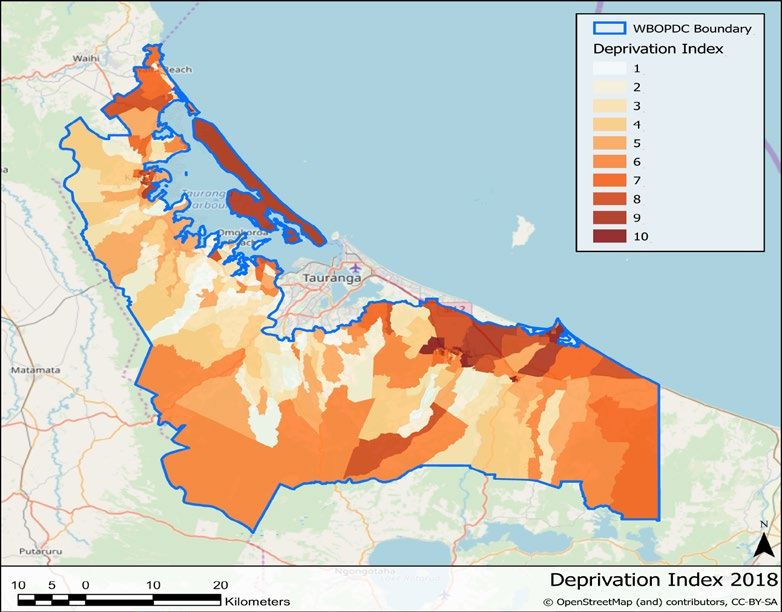
2             Climate change
                      Assumption                                 Implication                    Level of uncertainty        Impact                              Mitigation
                       As a result of climate change              Council’s business             Moderate                   If the impacts of climate           Coastal Erosion Responses Policy, to provide a
                       the Western Bay of Plenty can              must respond to                                           change are felt more severely       decision-making framework to address impacts
                                                                                                 We know climate
                       expect to see:                             climate change now                                        within the 10 years, the likely     on Council-owned assets on the coast. Asset
                                                                                                 change will impact on
                                                                  to ensure a level of                                      consequences are:                   assessments will be undertaken to identify
                       •   more hot days (temperatures                                           our business, however
                                                                  preparedness for                                                                              vulnerability and $200,000 per annum has
                           25 degrees or more)                                                   the exact nature,          •   failure to meet the levels
                                                                  future impacts. Failure                                                                       been budgeted for coastal erosion works.
                       •   milder autumns and winters                                            extent and timing of           of service, primarily
                                                                  to respond will lead
                                                                                                 the impacts is difficult       in stormwater (due to           Council has modelled harbour inundation
                       •   wetter winters                         to significant future
                                                                                                 to predict.                    infrastructure being            scenarios, alongside BOPRC and TCC, through
                       •   decreasing summer rainfall             challenges and costs.
                                                                                                                                undersized)                     the Natural Hazards Charter. Council is also
                           with heavier downpours                                                The major impacts of
                                                                  The local economy                                         •   impacts on Council assets       modelling impacts of climate change on our
                       •   fewer cold nights and frosts                                          climate change are
                                                                  may be negatively                                             located on the coast            stormwater systems.
                                                                                                 expected outside of
                       •   Rising sea levels (0.52m above         impacted by climate                                       •   unbudgeted maintenance
                                                                                                 the 10-year planning                                           As a member of the BOP Lifelines Group,
                           MVD 1953 at 2070).                     change, particularly                                          and / or capital costs due to
                                                                                                 horizon.                                                       Council is investigating the resilience of our
                                                                  through changes to                                            damage to assets.
                       Overall there will be more                 growing conditions and                                                                        infrastructure.
                       extreme weather and storm                  susceptibility to new
                       events (potentially three times                                                                                                          Council has developed a Climate Change
                                                                  pests.
                       more frequent) and increased                                                                                                             Action Plan to set out the intended actions
                       risk from natural hazards such as          Council will                                                                                  to respond to climate change impacts over
                       coastal erosion and inundation.            have to meet                                                                                  the next three years. Council will focus on
                                                                  additional reporting                                                                          understanding the level of risk our assets face.
                       Council will plan using RCP8.5,            requirements.
                       however individual projects will                                                                                                         See from page 31 for more information.
                       undertake their own modelling as
                       appropriate.

                       This will have social, economic
                       and environmental consequences
                       that are difficult to predict and
                       plan for.

                       The Zero Carbon Act and new
                       regulations will require reporting
                       on the actions Council is taking
                       to move towards zero carbon by
                       2050.

43   Western Bay of Plenty District Council - Te Kaunihera a rohe mai i nga Kuri-a-Wharei ki Otamarakau ki te Uru
Strategic Assumptions for the Long Term Plan 2021-2031 - Informing our Planning

31   Demographics
     Assumption                Implication                Level of uncertainty                  Impact                                          Mitigation
     The make up of our        Increasing cooperation     Low                                   An over-estimation or under-estimation of       We continually monitor
     communities will          between local                                                    this assumption is considered immaterial – as   population demographics
                                                          Some changes such as the ageing
     change. As a District     government and health                                            any major impacts would be felt in population   through SmartGrowth, using
                                                          population are clear, because they
     we will become older      sectors to understand                                            growth changes (addressed under the             census data and NIDEA
                                                          are determined by the make up
     and more diverse.         and deliver healthy                                              population growth assumption).                  projections.
                                                          of the existing population and our
                               environments for
     There will be variation                              current birth rate. Immigration is                                                    Our community engagement
                               residents.
     between communities                                  more difficult to predict and would                                                   guidelines assist us to work
     as people move and        Changing household         potentially affect our population                                                     with communities and respond
     places grow. For          occupancy (ageing          growth. The impacts of this                                                           to their changing needs.
     example, Te Puke’s        population and single      have been addressed under the
     average age dropped       occupancy balanced         population growth assumption.                                                         We are a funding partner in
     in the last census.       against cultural norms                                                                                           the Welcoming Communities
                               of multiple generations                                                                                          programme, which assists
     The graphs and charts     in one house).                                                                                                   local communities that have a
     overleaf provide                                                                                                                           high number of international
     further detail.           Impacts on the                                                                                                   migrants.
                               District’s labour force.
                                                                                                                                                The Spaces and Places
                               Changing methods of                                                                                              Strategy guides our decision
                               engagement to involve                                                                                            making for recreational
                               different communities                                                                                            facilities, and provides a
                               and create welcoming,                                                                                            framework to consider
                               tolerant communities.                                                                                            changing recreation patterns.

                               Continued cultural
                               awareness practices
                               in communities and
                               workplaces.

                               Changing use of
                               infrastructure.

                               Changing recreation
                               patterns may change
                               investment priorities.

                                                                                                                                                 Long Term Plan 2021-2031       44
2021-51 LTP Age Projections

       85+ years                                                                                                                            2051
     80-84 years
      75-79 years                                                                                                                           2031
     70-74 years
                                                                                                                                            2021
     65-69 years
     60-64 years                                                                                                                            2018 Provisional Estimated
     55-59 years                                                                                                                            Resident Polulation (PERP)
     50-54 years
     45-49 years
     40-44 years
     35-39 years
     30-34 years
     25-29 years
     20-24 years
      15-19 years
      10-14 years
       5-9 years
       0-4 years

                    0                   1000                  2000                  3000                  4000         5000   6000   7000

45      Western Bay of Plenty District Council - Te Kaunihera a rohe mai i nga Kuri-a-Wharei ki Otamarakau ki te Uru
Strategic Assumptions for the Long Term Plan 2021-2031 - Informing our Planning

Ethnic groups for people in Western Bay of Plenty and New Zealand. (2018 Census)

                           European

                               Māori

                      Pacific peoples

                               Asian

Middle Eastern/Latin American/African

                      Other ethnicity

                                        0   10             20             30             40           50            60           70            80                   90

                                                 Western Bay of Plenty District (%)            New Zealand (%)

                                                                                                                                         Long Term Plan 2021-2031        46
4
       1             Technology
                      Assumption                                 Implication                                Level of uncertainty            Impact                             Mitigation
                      Technology is changing fast and            Advances in data and analytics             Low for years 1 - 3.            More infrastructure is likely to   Council has budgeted for
                      will continue to do so.                    should improve capacity,                   High for years 4 - 10.          become obsolete before the         continued investment into
                                                                 performance, and reliability of                                            end of its life cycle.             our information technology to
                      We expect to see:                                                                     We know changes will
                                                                 infrastructure, shifting design                                                                               better support our operations
                      •    greater connectivity                  from meeting peak demand                   happen, but we don’t            Maintenance programmes may         and improve customer
                           throughout our District,              to ways of smoothing out the               know exactly when or how        be more responsive, leading to     experience.
                           including rural broadband,            peaks. This should enable us               disruptive those changes will   less costly repairs.
                           fibre in all urban areas,             to get more out of our existing            be.                                                                We also have an additional
                           and remedying of mobile                                                                                          There may be renewal and           project to look at making
                                                                 infrastructure.
                           blackspots within the 10-year                                                                                    capital expenditure decisions      the organisation increasingly
                           period                                Expect to see changes in how                                               made on the best available         future ready, with $8.5 million
                                                                 the business operates with                                                 information now, that are          budgeted over the 10 years.
                      •    more digital disruption that is
                                                                 increased remote working                                                   inefficient or do not meet
                           transformational and impacts
                                                                 capabilities.                                                              future usage requirements.
                           on the way we live
                                                                                                                                            However, disruption is not an
                      •    public demand for open data           Customer services and how we                                               excuse for inaction.
                      •    more empowered individuals            engage with our customers and
                           wanting to co-design                  communities will change.
                           solutions to problems
                                                                 Increasing connectivity between
                      •    new models of asset
                                                                 energy, transportation and
                           ownership (called
                                                                 technology driving infrastructure
                           Infrastructure As A Service)
                                                                 investment decisions.
                      •    smart communities seeking
                           everything ‘on demand’ and            There will be increased
                           increasing requirements               opportunities to deliver demand
                           to provide ‘real time’                management and non-asset
                           information                           solutions as better information is
                      •    more demand to be able to             available.
                           work from home and carry
                                                                 More ‘localised’ micro-solutions
                           out ‘traditional’ business
                                                                 may become available and
                           remotely.
                                                                 affordable, as opposed to
                                                                 large centralised infrastructure
                                                                 networks.

47   Western Bay of Plenty District Council - Te Kaunihera a rohe mai i nga Kuri-a-Wharei ki Otamarakau ki te Uru
Strategic Assumptions for the Long Term Plan 2021-2031 - Informing our Planning

51   Social
     Assumption               Implication              Level of uncertainty              Impact                                            Mitigation
     Equality and equity      There will be            Medium                            Should the pattern of social-economic             Regular monitoring of social
     will continue to be      increased demand                                           wellbeing change radically across our District,   deprivation index through the
                                                       We expect the imbalance between
     issues. This may         placed on social                                           Council may have to postpone, amend or add        LTP cycle.
                                                       communities to remain, or to
     increase due to the      services, community                                        new projects to the work programme.
                                                       change only slightly.                                                               Consideration of social
     economic implications    support organisations,
     of COVID-19 and its      and relief funds.                                          Changes would generally be gradual and as         wellbeing and needs through
     unprecedented nature.                                                               such the overall financial impact would be        Council projects and plans.
                              Council may need                                           low.
     We have greater          to tailor solutions                                                                                          Council will continue to build
     income and wealth        and investment for                                                                                           on its strong relationships
     imbalances than          some communities,                                                                                            with community groups and
     in the past. Some        to ensure people are                                                                                         organisations.
     communities have         receiving the services
     reduced access to        they need.
     services and less
     ability to pay for       These may be
     services. We expect      geographic
     this imbalance to        communities, or parts
     remain.                  of the population (eg.
                              older people).
     As a result of
     COVID-19 it is likely
     that some residents
     will be worse off than
     previously. However,
     others may also be
     better off.

     The map to the right
     gives an indication of
     these patterns.

                                                                                                                                            Long Term Plan 2021-2031        48
61 Economic
Assumption Implication Level of uncertainty Impact Mitigation
The local economy will return to The kiwifruit industry is a High Moderate Continual monitoring of the
2019 levels and grow from 2022. high water user and its water situation and 'just in time'
Forecasts align with national The level of economic
demand will increase. This may infrastructure will aid in
At the District and sub-regional forecasts for economic growth activity and growth in the
put pressure on resources and mitigating some of these issues.
levels, the economic outlook and local trends, however District can directly impact
infrastructure.
is fairly positive. Our economy the impacts of COVID-19 are ratepayers’ ability to pay, Council will continually
has been cushioned from some Continued economic growth uncertain. while also influencing the monitor the District’s economic
of the impacts of COVID-19 will require provision of level of financial contributions situation and may revise
due to our diverse economy, business land. Demands for collected as development any plans, with consultation
strong rural sector (especially freight movement will need occurs or the level of demand through Annual Plans if
horticulture) and low reliance on consideration in transport placed on infrastructure. necessary.
international tourists. network planning.
Investment decisions will Council will continue
The local economy will have Growth in tourism means be made cognisant of this to provide funding for
largely recovered from the targeted infrastructure uncertainty. organisations such as Priority
impacts of COVID-19 by close investment may be needed One, Tourism BOP, Te Puke
of 2022 with growth above 2019 (such as toilets in rest areas, EDG, and Katch Katikati.
levels. upgraded walking tracks). This
will require cooperation with
On the back of strong and
central government agencies.
continued population growth,
the Western Bay of Plenty’s There may be increased
economy is projected to pressure on the natural
continue to grow. We are part of environment from increased
the Golden Triangle (Auckland / use.
Waikato / Bay of Plenty) and our
The demands on the capacity
economic growth is expected to
of industry to deliver
be above the national average.
infrastructure projects may
We expect to see an increase mean increased competition,
in ‘sustainable’ low waste, low leading to increased prices and
emission business practices as possibly time delays.
standard.
We expect to see:
• significant growth in the
kiwifruit industry
• growth in the avocado
industry
• growth in domestic tourism.
49 Western Bay of Plenty District Council - Te Kaunihera a rohe mai i nga Kuri-a-Wharei ki Otamarakau ki te UruStrategic Assumptions for the Long Term Plan 2021-2031 - Informing our Planning
71 Environmental
Assumption Implication Level of uncertainty Impact Mitigation
Environmental sustainability will A business as usual approach Low Low Council has included additional
play an increasingly important to asset renewals and capital budgets to address increased
Implementation of recently Sudden increase in
role in decision making. projects is likely to be standards for our three waters
revised legislation is expected expectations or requirements
insufficient to address new services and for predicted
In line with the changing global to address water quality may have significant impact on
requirements. Changes are increased requirements as part
environment, environmental and efficient use of water current operations or capital
likely to come with higher of resource consent renewals.
sustainability will continue to be and increased planning projects, however planning and
capital and operational costs.
a requirement. We expect to see: requirements are anticipated implementation timeframes Council is working to reduce
These may be offset through through a series of new will mean sudden changes are our organisational carbon
• increasing standards for national party statements. See unlikely.
joint funding of capital projects impacts.
water quality page 99 for more details.
with central government
• increasing requirements for agencies and other local
efficient use of water The Zero Carbon Act provides
authorities.
a strong government direction
• increasing expectation for
for the nation.
waste minimisation
• continued movement Council's Waste Management
towards a low carbon and Minimisation Plan
operation and low carbon emphasises the need for waste
transportation network reduction.
• an increasing focus on the
management and use of
harbour and coastal margins,
as a result of the NZ Coastal
Policy Statement and sea
level rise.
Long Term Plan 2021-2031 5081 Community expectations
Assumption Implication Level of uncertainty Impact Mitigation
Our communities continue to Council will need to continue Low Low Council actively seeks
have higher expectations for to find innovative ways to fund community input into decision
delivery of Council services. service delivery, other than Community expectations are Level of service changes making.
through rates. frequently communicated with are often undertaken
We expect to see: Council and level of service incrementally and with Feedback is sought through
• continued demands to There will be tension between changes consulted on through subsequent projects the LTP 2021-2031 consultation
not only maintain, but also differing expectations between the LTP process. reassessed and possibly open processes on level of service
improve levels of service different groups. to consultation. changes.
across all of Council’s
business (with increased The key principle of ‘growth
associated costs) pays for growth’ needs
• continued demands from the to be balanced against
community to keep rates as the uncertainties of when
low as possible population growth will occur
and how Council can then fund
• continued requirements of
growth-related infrastructure
increased environmental
projects where these are
standards and environmental
required in advance of growth
sustainability
occurring.
• demands for social
sustainability and investment.
Level of service changes are
signalled in the LTP (for example
for libraries, recreation facilities,
swimming pools, cycleway and
kerbside waste collections).
51 Western Bay of Plenty District Council - Te Kaunihera a rohe mai i nga Kuri-a-Wharei ki Otamarakau ki te UruStrategic Assumptions for the Long Term Plan 2021-2031 - Informing our Planning
91 Political
Assumption Implication Level of uncertainty Impact Mitigation
There will be increased Council will need to be Low Low Council will continue to
collaboration. flexible in order to respond actively collaborate where
to this changing environment. This is an observed trend that Collaboration is regularly benefits can be made for
Working with other organisations It’s important we maintain has been experienced and considered as we look at the District. This may occur
can deliver multiple benefits and collaborative arrangements and observed over several years. improvements and operational with other neighbouring
thinking ‘outside the square’. look to build capability, as there actions. council’s through joint contract
We expect to see: will be an increased push for Use of Urban Development procurement sub-regionally
them in the future. Authorities and Boundary such as through BOPLASS or
• continued emphasis on
changes will still require a SmartGrowth, or at a sector
partnerships across the
planning process and Council's level with other provincial and
community and organisations,
active involvement. rural Councils.
and shared service models
• increasing public demand for Active involvement and
different models of services communication is key for
delivery and community input Council to mitigate any residual
• more legislative changes risk this poses.
that will impact on the way
Council does business, such
as Urban Development
Authorities.
Long Term Plan 2021-2031 5210
1 Community participation
Assumption Implication Level of uncertainty Impact Mitigation
Communities want to engage Council will need to Low Low Council will continue to
with Council's in different ways. continuously evolve the way we actively engage with our
They want to be actively involved engage our communities and be We will look at different ways communities through a variety
in decision making. At the same inclusive of all members of our to work with, hear from, and of means.
time they are ‘time-poor’ and it’s communities. involve the community through
challenging to get the right level Council's decision-making
We will need to rethink our processes and projects.
of engagement.
traditional project management
and delivery structures so that
communities can have a greater
role in what we do.
53 Western Bay of Plenty District Council - Te Kaunihera a rohe mai i nga Kuri-a-Wharei ki Otamarakau ki te UruStrategic Assumptions for the Long Term Plan 2021-2031 - Informing our Planning
11
1 Tangata Whenua
Assumption Implication Level of uncertainty Impact Mitigation
Partnerships with Māori Council may need to change Low Low Through the development of
will continue to increase in the way it manages its assets the LTP 2021-2031, Council has
importance. to provide for greater iwi Treaty settlement processes Council maintains relationships specifically sought input from
involvement. This may also are finalised, underway or are with iwi in our area and will iwi and Māori.
The settlement of the Treaty of impact on how we use natural nearing completion. continue to build on these.
Waitangi (Te Tiriti o Waitangi) resources, such as our Councill will continue to
claims in the District will water takes and stormwater build on the relationships we
continue over the next 10 years. discharges. Council is part maintain.
This will change the economic of a joint committee of iwi
landscape, and is likely to authorities and councils, set up
offer new opportunities for to co-govern the Kaituna River,
collaboration and partnership. and to look to bring all our
efforts into alignment.
This will also be a key
opportunity, as settlements
will provide iwi organisations
with the power to invest
in economic and social
development projects which
will ultimately benefit our
community as a whole.
Long Term Plan 2021-2031 5412
1 Legislative
Assumption Implication Level of uncertainty Impact Mitigation
We expect to see continued Council will need to be Moderate High Continue to watch and input
focus on the way Council involved in any national into legislative developments,
delivers its core services and conversations about service Legislative change and national Some changes to the delivery to ensure a Western Bay of
provides infrastructure for delivery, to ensure we are direction is highly dependent of services could significantly Plenty voice is heard and
growth. ready to adapt to any changes on the political direction and alter how Council functions, Council is prepared for any
that are made at the national priorities at the time. however the generally lengthy changes.
There is likely to be increased level. development process of
regulation aimed at delivering legislation and implementation
higher public health and Costs associated with the phases will allow for suitable
environmental standards. impact of legislative changes planning and may require
are unlikely to be recovered community consultation.
Legislative reforms are likely to from Central Government.
continue to focus on alternative These may be substantial. Changes to the delivery of
ways to deliver public services. three waters could significantly
For example the review of Individual activities of Council impact Council’s financial
Three Waters and joint Council- may need to make specific position, depending on how
controlled organisations for assumptions. this is structured. This could
providing services. Similarly the impact the Council’s levels
Future of Local Government of debt, forecast capital and
Review and the Resource operational expenditure and
Management Act reform will income. The actual impact can
have impacts. not be quantified at this point.
There is currently insufficient
detail regarding the possible
changes to the delivery of
Three Waters (water supply,
wastewater and stormwater)
services. This is similar for the
Local Government Review and
the Resource Management
Act reform work. It is prudent
to plan on a business as usual
approach to service delivery, but
with an allowance for staff time
for the initial phases as indicated
by Central Government.
55 Western Bay of Plenty District Council - Te Kaunihera a rohe mai i nga Kuri-a-Wharei ki Otamarakau ki te UruStrategic Assumptions for the Long Term Plan 2021-2031 - Informing our Planning
13
1 COVID-19
Assumption Implication Level of uncertainty Impact Mitigation
Disruptive events, such as Council may need to be in High High Council will continue to
COVID-19, have significant a position to respond to monitor the situation and
The future situation is Implications for Council’s
potential to cause shocks to emerging events. Council may may revise any plans, with
uncertain and very difficult to growth and financial models
international, national and local consider bringing forward some consultation through Annual
predict. and work programmes could
systems. infrastructure projects in order Plans if necessary.
be extensive. Council will have
to help maintain economic
Implications for the District are to be flexible in its response.
activity in the District and
wide ranging and depend on support impacted workers.
the level of domestic infection The key impact of any
rates, national and international Alternatively, Council may lockdowns affecting our
responses. look to defer projects in order District or material/contractor
to limit additional economic availability, would be potential
Impacts on the economy and stresses. delays in Council project
population growth are expected delivery and associated
to be greatest, but possibly Council may need to change expenditure.
short term. International tourism the way we work and how we
is expected to continue to be use our public spaces to limit
significantly impacted. infection.
Currently we are expecting Council may need to
economic impacts in 2020 and reschedule the timing of
for these to be largely recovered projects and works or
by the close of 2022. reconsider budgets, due to
COVID-19.
We assume that our projects
and works will be completed to
time, as planned in the LTP, and
there will be no significant delays
caused directly or indirectly by
COVID-19.
Long Term Plan 2021-2031 5614
1 Land use
Assumption Implication Level of uncertainty Impact Mitigation
How land is used in the District Council will have to ensure that Low Moderate Council will maintain input into
will change. services are appropriately sized SmartGrowth and UFTI.
to accommodate growth and Growth areas are sufficiently Land use changes have direct
We expect to see a physical service any growth areas. well signalled through the implications for the design of Council will be reviewing the
expansion and increased District Plan and SmartGrowth. our services. If this occurs in District Plan during the course
intensification of urban areas. Similarly, increased horticulture The development of a new unexpected areas, or does not of this LTP.
This will generally be inline with development may have settlement pattern will require occur as planned, then there
the District Plan and the new implications for roading. a political process, community may be financial implications.
SmartGrowth Joint Spatial Plan engagement and a high level of
(incorporating the Urban Form technical scrutiny to ensure it
and Transport Initiative (UFTI)). is viable.
This may see an increase in Horticulture growth is
impervious surfaces in urban currently occurring and has
areas. been well signalled by industry.
The Joint Spatial Plan will result
in a new urban settlement
pattern being developed. This
may signal the development of
new residential areas. However,
this is likely to be in the 10-50
year time period.
We will also expect to see
continued conversion of dairy
land to horticulture over the next
10 years.
57 Western Bay of Plenty District Council - Te Kaunihera a rohe mai i nga Kuri-a-Wharei ki Otamarakau ki te UruStrategic Assumptions for the Long Term Plan 2021-2031 - Informing our Planning
15 Inflation rates
Assumption Implication Level of uncertainty Impact Mitigation
Costs are assumed to increase Inflation rates impact the Moderate Moderate Inflation assumptions are
due to inflation. expected costs of our services reviewed each year as part of
The level of uncertainty for If inflation is under-estimated
in the future. the annual budgeting process.
Financial projections over the this assumption is moderate. and actual cost increases are
10-year period have been These vary by activity as the It is difficult to predict materially higher than forecast,
adjusted inline with indices type of goods purchased differ. inflation over a 10-year period, budgets for the first year of
prepared by BERL (September therefore actual results are the LTP may be too low to
2020), which deals specifically likely to vary from these complete the work scheduled
with the costs local government indices, particularly from 2024 for the year. In such cases the
deal with. Council has identified onwards. work would be re-scheduled.
that the faster rebuild scenario is
If inflation is less than forecast,
most suited for our District. The
some work may be brought
indices are applied according to
forward from Year 2 of the
the types of expenditure that
Plan or surplus revenue held
make up each activity.
over the following year.
An inflation assumption of 2%
has been used for the remaining
20 years of the Infrastructure
Strategy.
For the Uniform Targeted Rates
(UTR) (stormwater, water and
wastewater) the inflation rate
is defined by Council and is
generally based on historic and
projected financial information:
2022: 3%
2023-2031: 1%
Projected indexed prices from a 1,000 base in September 2020
Year 2021 2022 2023 2024 2025 2026 2027 2028 2029 2030 2031
Roading 1,015 1,048 1,082 1,116 1,151 1,187 1,224 1,261 1,300 1,340 1,381
Planning and regulation 1,014 1,040 1,066 1,094 1,121 1,149 1,178 1,207 1,237 1,267 1,297
Water and environment 978 1,019 1,053 1,089 1,127 1,167 1,202 1,243 1,285 1,328 1,369
Community activity 1,007 1,038 1,067 1,097 1,127 1,159 1,189 1,222 1,256 1,291 1,325
Long Term Plan 2021-2031 581
16 Interest rates
Assumption Implication Level of uncertainty Impact Mitigation
Interest rates will fluctuate over Interest rates govern the cost Low Moderate Interest rate assumptions are
the course of the LTP. However, of borrowing. While borrowing reviewed each year as part of
on average, the interest rate on is beneficial in spreading the The level of uncertainty for If interest rate assumptions the annual budgeting process.
future term borrowing for the cost of infrastructure across all this assumption is low. Council were too low, it would result in
10 years of the LTP has been generations that benefit from has a high level of confidence borrowing costs being higher
estimated at 3.8%. it, fluctuating interest rates can in these assumptions, which than forecast.
impact how much we pay. are based on cost, market
information and hedges on If interest rate assumptions
existing borrowings through were too high, borrowing costs
interest rate swaps, in would be lower than forecast.
conjunction with advice from A 0.5% movement on $150m
New Zealand Treasury experts. of debt equates to a $750k
movement in interest expense.
59 Western Bay of Plenty District Council - Te Kaunihera a rohe mai i nga Kuri-a-Wharei ki Otamarakau ki te UruStrategic Assumptions for the Long Term Plan 2021-2031 - Informing our Planning
17
1 External funding for projects
Assumption Implication Level of uncertainty Impact Mitigation
External funding will be available Some projects will only be High Moderate Council will continue to talk
and some projects will be progressed with sufficient with partnering agencies
contingent on this. external funding. The level of uncertainty for If the project is unable to regarding funding availability.
this assumption is high. It is secure funds then Council
Council and the community difficult to predict whether may be approached to meet
often rely on external funding community groups and any shortfall. If this is the
sources to help deliver projects. Council for that matter will case, this request will be
be successful in obtaining considered through the annual
Council is aware of external funding for projects. budget process. If the project
approximately $87m of does not proceed, Council
community and recreation The level of funding will remove the funding
facility projects that the available may vary from our contribution (if applicable)
community is wanting to deliver assumptions. from the budget.
over the next 10 years. Where
Council is planning on making
a contribution, this has been
included in the LTP. Otherwise
it is assumed that the projects
will be delivered with external
funding and that there will be no
ongoing cost to Council.
Council is able to access central
government funds in some
situations to assist with delivery
of projects. It is assumed these
projects will not be delivered
unless there is certainty of funds
from Central Government.
There will be more central
government funding available
in the early years of the LTP, as
part of the economic recovery
response to COVID-19. However,
there will be less funding
available from other sectors
(philanthropic organisations).
Long Term Plan 2021-2031 601
18 Asset lifecycles
Assumption Implication Level of uncertainty Impact Mitigation (revise through LTP)
Asset lifecycles will align with Asset life cycles drive our Low Low Council will continue to
those forecast and used as renewals and maintenance maintain its asset management
Asset condition is monitored Several asset classes have
the basis of depreciation. It schedules. processes and plan accordingly.
to ensure that maintenance or very young infrastructure
is assumed that assets will be
replacement is optimised. (they have a long time until
replaced at the end of their
their theoretical end of life).
useful life.
As such the likelihood of
Please refer to the depreciation significant levels of failures or
section of Council’s Significant early replacement is muted for
Accounting Policies. Council.
61 Western Bay of Plenty District Council - Te Kaunihera a rohe mai i nga Kuri-a-Wharei ki Otamarakau ki te UruStrategic Assumptions for the Long Term Plan 2021-2031 - Informing our Planning
Pyes Pa School
Long Term Plan 2021-2031 62You can also read


