STRATEGY 2021 OUR MISSION IN ACTION - Canadian International School of Hong Kong
←
→
Page content transcription
If your browser does not render page correctly, please read the page content below
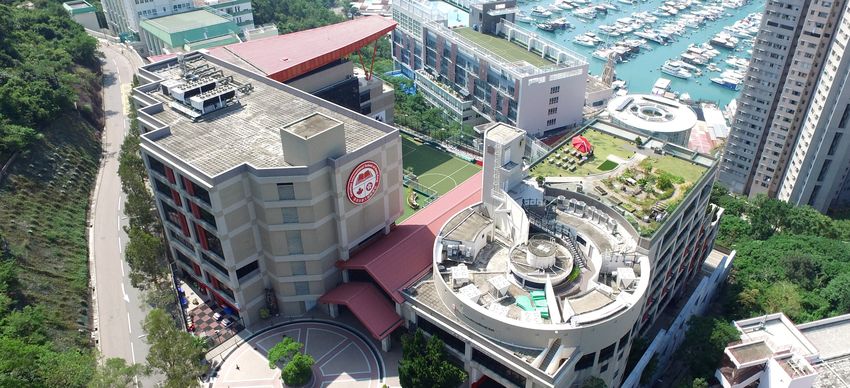
STRATEGY 2021 OUR MISSION IN ACTION
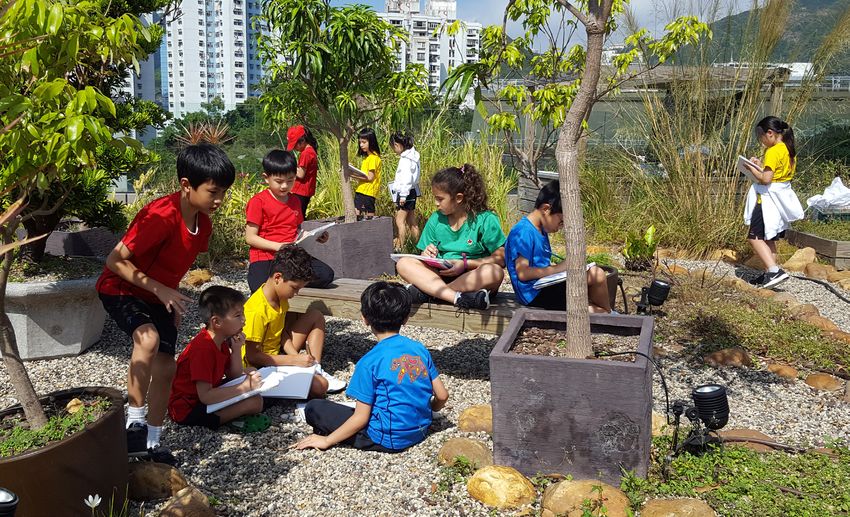
To inspire excellence,
cultivate character,
and empower engagement
locally and globally.
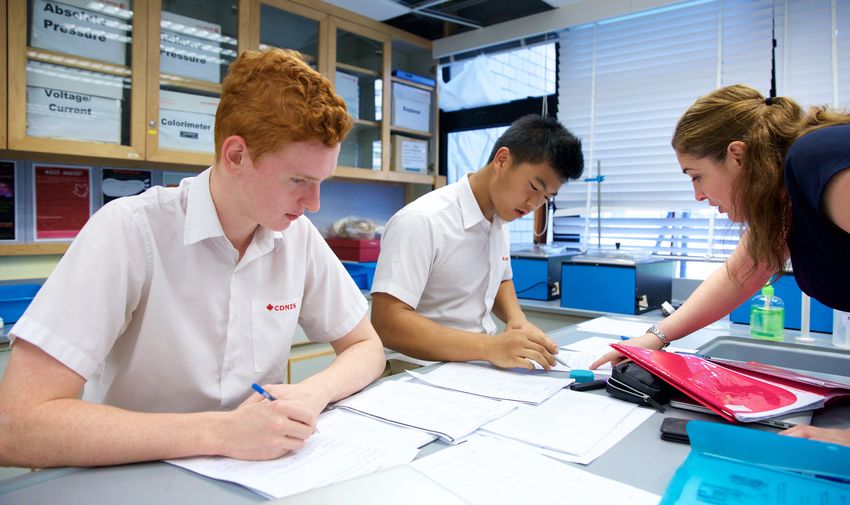
The Board of Governors and Administrators of
Canadian International School of Hong Kong
have crafted a strategic plan that will shape the
future growth and direction of the school.
Created from hundreds of hours of parent, staff
and student collaboration, Strategy 2021 blends
three strategic goals supported by the three
pillars of the CDNIS Mission and Vision into a
focused direction that will ensure student
learning and engagement remain at the
forefront of all that we do. We invite you to join
us as CDNIS continues to lead the way for
education in Hong Kong and globally.
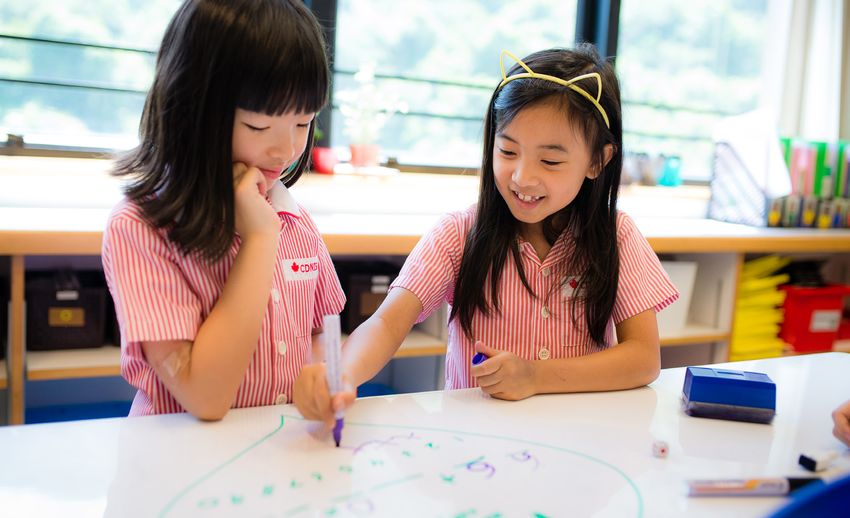
Message from the Board Chair
                         On behalf of the Board, I am delighted to unveil Strategy 2021, which
                         outlines the school’s vision for 2018-2021. As a vehicle for future
                         change as well as personal growth, it is no surprise that the education
                         sector is ever evolving, and I fervently believe that the plan put forth
                         today will help CDNIS usher in a new generation of success.

                         The Board of Governors and Administrators have developed this plan
                         which provides a strategic framework that strengthens our operations,
                         enables us to focus our resources appropriately, and helps our
                         community work towards a unified vision: “to inspire
                         excellence, cultivate character, and empower engagement locally and
                         globally.”

                         With over 25 years of history, CDNIS is recognised as one of Asia’s
                         leading international schools. Our “through-train” education serves
                         nearly 1,800 students representing some 43 countries from
                         Pre Reception to Grade 12. We are proud of our world-class teaching
                         faculty, and of our students who continue to achieve success, time
                         and time again.

                         In more ways than one, Strategy 2021 consolidates the very best of
                         what CDNIS has to offer, and strengthens it in a way that best
                         responds to the changing landscape of the global education
                         sector, as well as the prevailing opportunities and challenges involved.
                         Strategy 2021 also demonstrates an understanding of the increasingly
                         competitive English-medium education market in Hong Kong. The
                         number of international schools in the city is growing and so
                         choosing the right school has never been more crucial. While CDNIS
                         still holds the mantle of being the only school in the city to offer both
                         the International Baccalaureate and Ontario Secondary School
                         diplomas in its curricula, Strategy 2021 will help further solidify our
                         position in the industry.

                         I would like to thank everyone who has contributed to the
                         development of Strategy 2021 as it charts a new and exciting
                         direction for our school. Our students remain, as always, the life force
                         of the school, and the direction we are taking will play an important
                         and positive role in their development.

                         Godwin Hwa
                         Chairman
                         Board of Governors
Message from the Head of School
                        At CDNIS, we believe it is our responsibility to offer the very best
                        education experience to our students. This is hardly surprising given
                        that, as educators, we play one of the most influential roles in the
                        development of an individual’s life – from providing our youngest
                        Pre Reception students with early childhood education and care, to
                        guiding our Grade 12s through their university applications.

                        Strategy 2021 was developed following an extensive research process
                        that saw our community provide valuable feedback which outlined our
                        school’s strengths, as well as areas for improvement. Following the
                        school’s successful IB, CIS and WASC accreditation visits during the
                        2017-2018 school year, the school has implemented subsequent
                        recommendations from the three visits, in addition to some of the
                        initiatives listed in Strategy 2021. A few of the facilities upgrades
                        mentioned have been completed, while some of the curriculum
                        improvements have a longer timeline for completion. Our Maker
                        Culture has been firmly established with new facilities and
                        professional training for our teachers, while robotics and coding are
                        developing programmes at the school.

                        Constant communication has been key, and I am looking to
                        strengthen this even further. As you will undoubtedly learn, Strategy
                        2021 focuses on long-term priorities for CDNIS, many of which will
                        make a real difference to our students and community. This will be
                        done through the implementation of three new strategic objectives:
                        Joy of Learning, Excellence in Achievement, and Development of
                        Character.

                        The Board of Govenors and Administrators have highlighted 15
                        priority actions that will help us deliver on our promise, several of
                        which have already begun. As always, the progress for each action will
                        be closely monitored, and we will keep the community updated as we
                        move forward. We all know the value of building a love for learning,
                        and how doing so enables our students to become lifelong learners –
                        a trait greatly valued by the fast-changing world today.

                        The school will report regularly to our community on the progress we
                        are making. Head of School newsletters, Annual Reports and Flash
                        updates will keep everyone apprised of timelines and strategies that
                        have been completed. The goal of education is to create possibilities
                        for a child to invent and discover, as well as to develop individuals
                        who are capable of doing new things. Strategy 2021 is committed to
                        supporting these capabilities, and I look forward to working with the
                        CDNIS community to make these aims our reality.

                        David Baird
                        Head of School
Vision Statement
                  To inspire excellence, cultivate character,
               and empower engagement locally and globally.

                        Mission Statement
  CDNIS is a school united by the joy of learning, excellence in achievement,
and development of character. We will inspire academic and personal growth in
  our students by encouraging inquiry, stimulating creativity and innovation,
  embracing cross-cultural and global perspectives, and fostering meaningful
                          participation and service.

                            CDNIS Values

                     OPEN-
                                       RESPONSIBILITY
                  MINDEDNESS

        LEADERSHIP                                    INTEGRITY

                     CRITICAL
                                            RESPECT
                    THINKING
Strategy 2021
Canadian International School of Hong Kong’s Strategy 2021 implements the
three pillars of our guiding statements:
   Joy of Learning
   CDNIS will ensure our learning is joyful and future-ready by emphasizing engagement through
   innovative and diverse teaching strategies, with a focus upon creativity, critical thinking,
   communication and collaboration.

   Excellence in Achievement
   CDNIS will provide all students with a future-ready education by encouraging innovative
   thinkers who possess exceptional core skills (in literacy, numeracy, science, and technology).

   Development of Character
   CDNIS will emphasize the development of a CDNIS student’s character as a foundation for
   success in learning and life.

To support the implementation of these three pillars, three strategic
objectives have been identified.

                          Future-Ready Learning

                          Resources and Facilities Development

                          Financial Sustainability
JOY OF LEARNING
    Increase student engagement
    through the provision of increased
    opportunities for personalised
    learning built around a student’s
    own interests.

    •   Leverage and build upon existing opportunities for
        personalised learning through the key IB culminating projects
        of the PYP Exhibition, MYP Personal Project and DP Extended
        Essay.
    •   Develop fresh opportunities to personalise learning across
        the school including the development of mini-exhibitions,
        passion projects and iTime in the Lower School, and maker
        and innovation fairs in the Upper School.
    •   Further develop student portfolios through the use of Seesaw
        from Early Years to Grade 4 and student blogs and iFolios
        from Grade 5 and up.

6
FUTURE-READY LEARNING
Increase opportunities for
inquiry, creativity and
collaboration through
experiential, hands-on, and
project-based learning.
•   Embed the maker culture and use of the design
    thinking model across the school.
•   Embed coding and robotics across the school.
•   Embed project-based learning across the school.
•   Provide staffing and resources to support the further
    development of the maker culture, design, coding,
    robotics, and project-based learning.
•   Increase collaboration in the arts across the school
    through whole school leadership in the arts.
•   Continue to expand the Artist in Residence programme
    supported by a development programme and establish
    networks with creative and innovative individuals and
    organisations.
•   Refine assessment strategies in the Upper School to
    support inquiry and creativity, especially in transition
    years of Grades 6 to 8.

                                                                   7
attend to the well-being and
personal growth of our
community.
•   Focus upon educating the “whole child.”
•   Provide appropriate resources to support social and
    emotional counselling in school.
•   Embed good digital citizenship across the community
    underpinned by strong digital literacy.
•   Address the needs of our students and their families
    transitioning into the school.
FUTURE-READY LEARNING
EXCELLENCE IN ACHIEVEMENT
Further develop strong Core Skills in
Literacy, Numeracy, Science, and Technology.
• Ensure horizontal and vertical curriculum alignment within and across divisions of the
school in the areas of literacy and science.
• Ensure transparency of clear and concise learning outcomes for literacy and science in
every grade level to parents.
• Further develop the use of standardised, formative and summative assessment across the
school to support student learning.
• Ensure all students’ needs are met, in relation to core skills, through effective
differentiation in the classroom.
• Increase opportunities for science in the Lower School and develop expertise in science.
• Develop common approaches between all MYP and DP languages and literature
subjects based on research and best practice.Develop a ‘one school’ approach
around the philosophies and
implementation of the three IB
programmes and the Ontario
Secondary School Diploma
(OSSD) to ensure a consistently
strong and connected
Pre Reception to Grade 12
experience for our students.
• Create a new structure of the pedagogical leadership of
the school to support a ‘one school’ approach.
• Implement a five-year curriculum review cycle across
the whole school.
• Review our PYP, MYP, DP and OSSD programmes to
ensure they provide a cohesive learning journey for our
students.
• Convene a task force to focus specifically on cohesion
across the transition years of Grades 6 to 8.
• Provide resources to support the Grades 6 to 8
transition programme.
• Increase role-dedicated time for MYP and DP
Coordinators as communicated through CIS/WASC
and IB evaluation visits.FUTURE-READY LEARNING
Extend extra-curricular learning
opportunities for students
seeking additional
challenges both within and
outside the school.
• Provide additional opportunities for our students by
building partnerships with other educational
institutions and organisations.
• Provide increased opportunities for students to engage
in local and international competitions to enhance their
learning and showcase their achievements.
• Develop the support structures for students who have
aspirations to attend the top 20 world-ranked
universities, including building stronger relationships
with those universities through a University Outreach
Counsellor.
• Continue to expand the community and service
offerings at the school including developing
expeditionary learning.Extend the use of data driven
decision making in relation to
learning.
• Ensure resources are in place to utilize available data
across the school to inform educational decision
making.
• Use MAP standardised assessment data in literacy
and mathematics to support the progress of
individual students and track the effectiveness of our
programmes.
• Develop a student tracking system which monitors
each student’s academic progress within and across
grade levels.
• Review systems to ensure each student’s
pastoral needs are effectively monitored as they
move through the school.
• Survey recent graduates to ensure alignment
between university choices and individual
aspirations.
• Establish whether internal assessment deadlines are
congruent with university application deadlines.FUTURE-READY LEARNING
DEVELOPMENT IN CHARACTER
Develop a shared understanding of
how we cultivate character in our
students through the use of the IB
Learner Profile, PYP Attributes and
Future-Ready Character Qualities.
• Be more explicit about the character qualities we wish to
develop.
• Audit the approaches and programmes already in place to
develop these character qualities.
• Identify where and how we can improve character
development in our programme.
• Implement a Digital Citizenship curriculum across all grade
levels.
• Increase data collection strategies for community input for
school improvement with character development.Ensure we are fostering meaningful
participation and service.
• Embed international-mindedness into our learning through
highlighting local and global engagement as a deeply rooted
core value amongst our students and teachers.
• Provide increased opportunities for students to take action.
• Encourage connections with parents, alumni and the wider
community.
Build a strong and supportive
community.
• Establish a review cycle of the school’s Guiding Statements
that involves extensive community consultation.
• Develop increased opportunities for student leadership.
• Further develop the House system to build strong
relationships between students of all ages.
• Ensure flow of information and interaction across all
stakeholder groups.FUTURE-READY LEARNING
7Support student learning experience through
improved facilities development.
• Review our facilities to match pedagogical goals by working with individuals and groups
within and outside the community.
• Develop a long-term Facilities Master Plan for the refurbishment and redevelopment of the
school’s buildings to create exceptional 21st century learning environments.
• Develop linked committee goals for Premises, Development, and Finance and
Administration Committees based on Facilities Master Plan.
• Develop action plans and multi-year capital and operating budgets to achieve the goals.
• Agree on a plan to implement short-term redevelopment projects, including the provision
of an Upper School design space, music practice rooms, refurbished science labs, a new
Early Years environment, Lower School makerspaces and a redeveloped learning
commons on the 10/F.RESOURCES AND FACILITIES DEVELOPMENT
Continue to remain at the
forefront of educational
technology.
• Enhance facilities to ensure that the IT and
technological infrastructure continues to support
the needs of future-ready learners.
• Ensure a coherent and cohesive approach to the
future development of our IT infrastructure through
the development of a Technology Strategy Plan.
• Further develop a comprehensive aging matrix for
physical plant equipment.
• Collaborate with Tencent on a Smart School Project.
• Implement a new student information
system (Veracross).
• Develop partnerships with organisations in Hong
Kong, China and elsewhere that are at the forefront
of technological innovation.Support systems and processes to
ensure CDNIS continues to
attract and retain exceptional
educators, administrators and
staff.
• Ensure the school is well positioned locally and
internationally to recruit and retain highly qualified and
engaged staff.
• Review compensation packages for all staff
guaranteeing fairness, enabling the school to continue
to attract highly qualified and exceptional individuals.
• Review teacher professional development programmes
and financing to ensure we are achieving maximum
benefit from funds spent to support the school’s goals.FINANCIAL SUSTAINABILITY
Strengthen the financial security
of the school through
sustainable funding by
optimising enrolment.
• Improve student retention by understanding the needs
of our families.
• Develop tangible key performance indicators (KPIs) to
assess performance in various divisions of the school
to demonstrate how we add value to students.
• Implement a marketing strategy to brand and position
the school through brand identification, brand
management and brand awareness.
• Enhance the school’s visibility, identity and positioning
in the market by differentiating the school from
competitor schools.
• Establish strategic partnerships with private and
international schools that do not offer secondary school
education through feeder school arrangements.
• Develop ways to maximise “word of mouth” marketing
from our existing community.Support the financial sustainability of the school and diversify sources of income by the establishment of a Development Programme to support future capital projects, embrace new opportunities and invest in CDNIS’ ambitions. • Design and implement a development programme. • Strengthen and enhance alumni initiatives.
7
Canadian International School of Hong Kong
36 Nam Long Shan Road, Aberdeen, Hong Kong
Phone: (852) 2525 7088 Fax: (852) 2525 7579
schoolinfo@cdnis.edu.hk
cdnis.edu.hk
You can also read


