Strength to Change Lives - Children's Aid Foundation of Canada Strategic Plan 2020-2025 - Children's Aid Foundation
←
→
Page content transcription
If your browser does not render page correctly, please read the page content below
Strength to Change Lives
Children’s Aid Foundation of Canada
Strategic Plan 2020-2025

YOUNG PEOPLE’S ADVISORY COUNCIL 2019-2020

“I believe there are four words more powerful than ‘I love you,’
and those are ‘I’m here for you.’ I’m not just a client or a number;
I’m a human and I need to be cared about.”
- Former youth in care and recipient of support from Children’s Aid Foundation of Canada

CO NTE NT S

Strength to Change Lives                                                                    1

About Children’s Aid Foundation of Canada                                                  2

Kate’s Story                                                                               3

Our Priority Populations                                                                   4

Strategic Vision and Priorities                                                            9

The Future Starts Now                                                                      17

Board of Directors                                                                         17

2020/25 Strategic Plan

Strength to change lives
For over 40 years, Children’s Aid Foundation of Canada has been at the
forefront of the intersection between philanthropy and social impact.

Driven by a shared vision to improve the lives of the        On the heels of our successful $60 million national
most vulnerable young people in our country – those          campaign for child welfare, Stand Up for Kids, we have
involved with the child welfare system – our ever-           now identified the strategic priorities that will guide
growing community of donors, child welfare agency            us through the next five years and beyond with focus,
partners and stakeholders has worked tirelessly to help      direction and determination.
empower hundreds of thousands of children and youth
with the resources they need to thrive.                      Our newly defined priorities all share a singular goal:
                                                             to ensure that every young person involved with the
Over the decades, we have witnessed the true potential       child welfare system in every part of Canada has every
of generosity and partnerships to ignite change – for        opportunity to thrive.
the youth we serve, for public awareness and for the
system as a whole. But there is still so much work to        Just like the young people we serve, our strategic
be done.                                                     priorities will evolve, grow and shift with the
                                                             changing landscape of the child welfare sector. We
In 2020, Children’s Aid Foundation of Canada is at a         are committed to regularly revisiting them, adjusting
pivotal point in its history. Now a national charity with    as we go to maximize our impact for Canada’s most
scope and impact across Canada, we are poised to             vulnerable children and youth.
leverage the power of philanthropy, innovation and
collaboration in ways that will permanently transform        None of this work would be possible without the
the lives, experiences and outcomes of young people          enduring compassion, dedication and generosity of our
involved with the child welfare system – from coast to       donors and stakeholders. Thank you for being by our
coast to coast.                                              side on this journey, every step of the way.

Valerie McMurtry, CFRE                   Daniel Barclay                         Gordon G. Raman
President & CEO                          Chair, Board of Directors              Past Chair, Board of Directors

                                                                                                                       1
2020/25 Strategic Plan

About Children’s Aid Foundation
of Canada
Our vision                              To create a future, together with our donors, partners
                                        and stakeholders, in which the children and youth we
                                        serve have the strength and resilience to build a lifetime
                                        of their own unstoppable success.

What we believe                         We believe that every young person in every part of
                                        Canada deserves every opportunity to thrive.

What we do                              Through the transformative power of philanthropy and
                                        partnerships, we help young people involved with the
                                        child welfare system go from surviving to thriving.

Children’s Aid Foundation of Canada is our country’s leading charity dedicated to improving the
lives of children and youth involved with the child welfare system. We raise and grant funds and
design and deliver a wide range of high-impact programs and services in partnership with over
70 child- and youth-serving organizations across the country – including the Children’s Aid
Society of Toronto, our founding partner and North America’s largest board-governed child
welfare agency.

Recognizing that vulnerable children and youth require supports that extend well beyond what
government funding can provide, we are committed to creating access to the tools and resources
young people need to move confidently forward and create a bold vision of success
for themselves.

Only together can we help empower kids involved with the child welfare system to break the
cycle of abuse and neglect and achieve their greatest potential.

                                                                                                      2
2020/25 Strategic Plan

Kate’s story

At just 10 months old, Kate was hospitalized for congestive heart failure – a result of being severely
malnourished due to the extreme neglect she was experiencing at home. Behind on most of her
developmental milestones, she was unable to even hold her head up.

Kate was removed from her family home and placed in foster care until her mother was able to take
her back. Then, when she was four years old, her mother left the family and Kate came into the
permanent care of the child welfare system.

During her time in care, Kate lived in three different foster homes. Although she had positive
experiences in care, she says that she always struggled to find her place in the world.

                                                     “The biggest challenge for me was feeling like
                                                     I didn’t belong,” says Kate. “People know you’re
                                                     not adopted, but they don’t really understand your
                                                     situation. It was a struggle of identity for me.”

                                                     Eventually leaving foster care to live on her
                                                     own at the age of 15, Kate says that she faced
                                                     judgment and stigma from her community and
                                                     the people in her life. “Living on your own as
                                                     a teenager is interesting: people look at you
                                                     differently, like you did something bad,” she says.
                                                     “There are so many stereotypes placed on you,
                                                     which impacted my confidence and identity
                                                     even more.”

Despite the obstacles she faced, Kate was determined to build a better life for herself. With
scholarship funding from Children’s Aid Foundation of Canada to support her academic goals, Kate
was able to focus on graduating from high school and enrolling in university. In June 2020, Kate
graduated from Brock University with her Bachelor of Science degree in medical sciences. This fall,
she will be attending Lakehead University to pursue her BSc in nursing, with a goal to become a
nurse practitioner and eventually work with underserved populations.

“The Foundation’s funding and the programs it offers really help us have the same opportunities
as other kids to build our support networks and grow,” says Kate. “Yes, it’s money that helps us
financially, but it’s so much more than that.”

                                                                                                         3
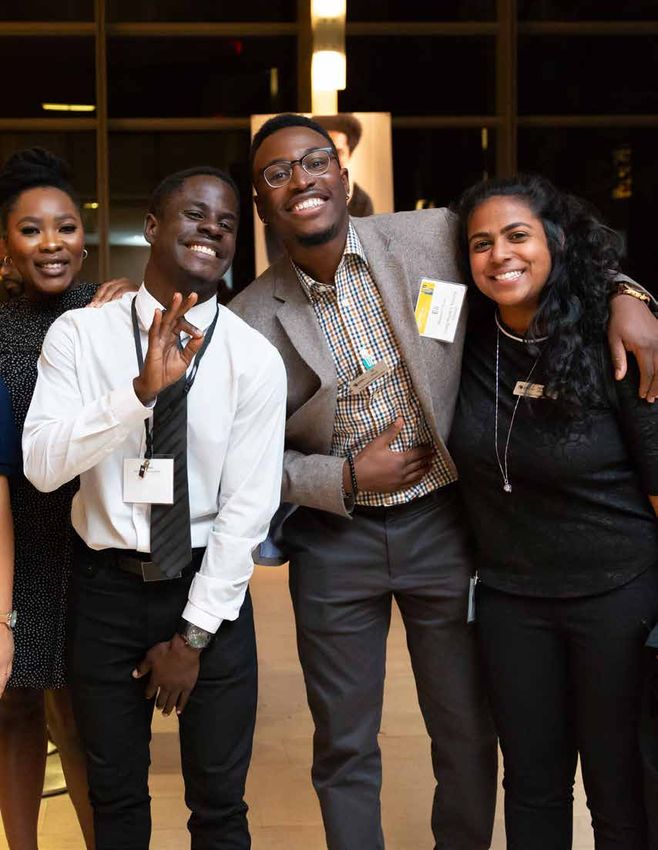
ERINE, TROY, ELI AND SAMIDHA, FORMER YOUTHS IN CARE AND MEMBERS OF CHILDREN’S AID FOUNDATION OF CANADA’S
YOUNG PEOPLE’S ADVISORY COUNCIL

      Our Priority Populations
2020/25 Strategic Plan
Who are the young people
we serve?
Together with our stakeholders – donors, child welfare partners, youth
advisors, government partners and peer non-profit organizations –
Children’s Aid Foundation of Canada is committed to improving outcomes
for young people involved with the child welfare system.
The young people we serve represent three distinct priority populations
facing unique and complex challenges and needs.
Children and families at risk
Nationwide, 235,000 children and youth living with
their families are considered at risk of abuse, neglect or
abandonment and are under the close watch of child
protection agencies.1
Children and youth in care
63,000 young people across Canada are living in foster
homes, institutional settings or with extended family as a
result of abuse, neglect or abandonment.2
Youth transitioning out of care
Each year, approximately 2,300 youth “age out” of the
child welfare system, suddenly confronted with navigating
life on their own – sometimes as young as 18.3
By leveraging the power of philanthropy and partnerships, and through
strategic investments in evidence-based programs and resources, we are
helping to empower the young people we serve to move forward with
strength, health, resilience and hope for a brighter, bolder future.
1. Public Health Agency of Canada, 2008. | 2. Centre for Research on Children and Families, McGill University, 2015. | 3. The Conference Board of Canada, 2014. 5O U R P R I O R I T Y P O P U L AT I O N S 2020/25 Strategic Plan
Children and families
at risk
We believe that children should be raised by strong and resilient families,
not the government.
When child welfare agencies remove children from their • Access to identity-based programming that aims to
families and place them in government care, it is always strengthen Indigenous families by helping children,
to protect them from abuse, neglect or abandonment youth and caregivers re-connect with their culture
and ensure their health and safety. Yet without the and traditions, and develop new life skills.
unconditional and ongoing love and support of a family
to call their own, children and youth who grow up in IMPACT
care are more likely to experience poor academic, Stronger, healthier and more resilient families and a
social, employment and health outcomes compared to nation in which fewer children and youth enter into or
their peers. grow up in care.
We know that children do best when raised in loving, PROGRAM SPOTLIGHT: Journey to Zero
caring forever families. Unfortunately, too many Co-designed by Children’s Aid Foundation of Canada
families across Canada are struggling with complex and Children’s Aid Society of Toronto, Journey to
issues and circumstances that are putting the well- Zero is an innovative early intervention program that
being of children at risk. Poverty is a leading factor aims to reduce the number of children growing up in
contributing to family instability, with low-income government care.
households more likely to experience food insecurity,
mental health challenges, substance use issues and With a goal to strengthen the capacity of vulnerable
domestic violence.4,5 families to provide nurturing care and build healthy,
sustaining relationships, Journey to Zero is delivered
Together with our community of donors and partners, through unique partnerships with George Hull Centre
we are committed to helping vulnerable families find and YouthLink -- leading community-based agencies
stability and thrive – ensuring that fewer children and working directly with children and their parents.
youth grow up in the care of the child welfare system.
The program offers family partnership meetings,
WHAT DO WE FUND? intensive in-home supports for adolescents, access
• Early intervention programs that aim to support to early engagement teams and other targeted
family strength and permanency and prevent approaches that help to empower families with the
or address family challenges such as domestic tools and resources they need to stay together. It
violence, intergenerational trauma, parenting skills, includes a robust evaluation component to enable the
mental health issues, substance use and more partners to monitor its impact and potential for scaling.
• Access to emergency support for basic necessities
• Support for health, wellness and enrichment-related Journey to Zero was developed in partnership with
needs Generation Capital and is supported through the
• Financial support for vulnerable families living in collaborative efforts of private and government funders.
poverty to help them provide resources for their
children, such as tutoring, school supplies, camp
and other extracurricular activities
4. Institute for Research on Poverty, 2012. | 5. Canadian Child Welfare Research Portal, 2016. 6O U R P R I O R I T Y P O P U L AT I O N S 2020/25 Strategic Plan
Children and youth
in care
We believe that children and youth in care should graduate from high
school at the same rate as their peers and pursue lives of unlimited
opportunity.
Right now, over 63,000 children and youth across • In-school and community-based mentoring
Canada are living in foster care, with extended family • Access to opportunities and supports that help
members (kinship care) or in institutional care settings. with school success like technology, eyeglasses,
These young people have experienced abuse, neglect transportation to school and educational
or abandonment and have been removed from their assessments
families to protect their safety and well-being. • Enrichment programs supporting physical and
mental health and well-being so that young people
While Canada’s child welfare agencies do everything can focus on doing well in school
in their power to help the young people in their • Extracurricular activities that help young people
care thrive, children and youth who grow up in care build skills and stronger connections to their peers
are significantly more likely to experience adverse and communities, supporting their overall academic
outcomes compared to their peers – particularly when success
it comes to their education. For example:
IMPACT
• Just 46 per cent of young people in care graduate More children and youth from care graduate from high
from high school, compared with 83 per cent of the school and have the confidence to move forward in
general population.6 pursuit of their goals.
• As many as 82 per cent of children in care have
been diagnosed with special needs.7 PROGRAM SPOTLIGHT: HSBC Bank Canada National
• On average, a child living in foster care will move Transformation Project
five times – with each move uprooting them from The HSBC National Transformation Project is a special
their school, friends, activities and communities.8 fund that provides a range of wraparound education
supports for young people involved with the child
Without a high school diploma, and struggling with the welfare system. At the primary and secondary levels,
impacts of instability and trauma, these young people the program helps young people in care access
face a lifetime of lost potential, underemployment and intensive tutoring and coaching, homework clubs,
low income – a reality that has a ripple effect across the school supplies, advocacy, access to physical and
Canadian economy. mental health supports and other resources critical to
their success in school.
Together with our community of donors and partners,
we are committed to helping kids in care access the With a goal to break down barriers to academic
tools, resources and supports they need to overcome advancement and improve rates of primary and high
the odds stacked against them. school graduation, ultimately leading to post-secondary
enrollment, the HSBC National Transformation Project
WHAT DO WE FUND? is helping to empower Canada’s most vulnerable
• Tutoring support young people with the tools they need to realize their
• Alternative school programs greatest potential.
6. Ontario Association of Children’s Aid Societies, 2014 . | 7. Ontario Association of Children’s Aid Societies, 2011. | 7
8. Ontario Looking After Children 2018 Provincial Report.O U R P R I O R I T Y P O P U L AT I O N S 2020/25 Strategic Plan
Youth transitioning
out of care
We believe that young people leaving care should have every opportunity
to overcome the barriers they face to education and employment, develop
meaningful community connections and achieve independence.
Each year, approximately 2,300 youth in care “age • Post-secondary scholarships, bursaries and
out” of the child welfare system – some as young graduation awards
as 18, depending on their province – and must leave • Other education-related needs, including support
government care. for short-term courses, textbooks, school supplies
and application fees
Suddenly confronted with navigating life on their own, • Life skills development, such as literacy, cooking
young people leaving care are expected to assume and nutrition
adult responsibilities like finding employment and a • Mental health supports and resources
place to live, paying rent and cooking meals – often • Housing supports, including a housing navigator,
without a high school education or a support network furniture and rent support
of any kind. For many youth in transition, these • Programming focused on developing positive
significant challenges are further exacerbated by the relationships, social supports and cultural identity
ongoing impacts of childhood trauma.
IMPACT
Feeling isolated, alone and ill-equipped to manage life Stronger, healthier and more resilient young people
on their own, too many young people leaving the care transitioning out of care who have access to meaningful
of the child welfare system are simply unable to find the education and employment opportunities, are
stability they need to create lives of their own making. supported by nurturing relationships and feel equipped
For example: to navigate life on their own.
• Youth from care are nearly 200 times more likely to PROGRAM SPOTLIGHT: Youth Works
experience homelessness compared to their peers.9 Youth Works is a pre-employment development
• Young people raised in care enroll in post- program that helps youth in and from care transition to
secondary institutions at half the rate of the general independence and find meaningful employment.
population.10
• Compared to the average Canadian, youth from Developed by Children’s Aid Foundation of Canada
care will earn an average of $326,000 less income and currently being delivered in partnership with six
over the course of their lifetime.11 youth-serving organizations across Canada, Youth
Works offers three integrated components: enhancing
Together with our community of partners and employability skills such as resume development and
donors, we are committed to empowering youth in completing job applications; support for securing
transition with the supports and resources they need internships and job placements; and employment
to successfully navigate independence and establish training supports to help young people secure key
meaningful, fulfilling lives after care. credentials needed for entry-level roles in their field.
WHAT DO WE FUND? Youth Works is generously supported by lead sponsor
• Employment-readiness, internships and job RBC Future Launch and Employment and Social
placements and skill building programming Development Canada.
9. Canadian Observatory on Homelessness, 2017. | 10 The Conference Board of Canada, 2014. | 11 The Conference Board of Canada, 2014. 8“I’ve always been my own
person with my own dreams
and ambitions, and I think that
I’m a resilient person. I think you
can build resilience, especially if
you’re forced into a situation
where you have to survive.”
– JUSTIN, former youth in care and
recipient of support from
Children’s Aid Foundation of Canada
Strategic Vision and Priorities
92020/25 Strategic Plan
Strategic vision and priorities
2020-2025
As we look ahead to a future of unprecedented impact in partnership with
Canada’s philanthropic community, Children’s Aid Foundation of Canada has
identified five key strategic priorities that will sharpen our focus, empower us
with financial strength and flexibility, deepen our local, provincial and national
partnerships and advance our impact on our three priority populations.
Ultimately, our strategic priorities will enable us – always together with our donors, volunteers, partners, youth
advisors and stakeholders – to create a future in which Canada’s most vulnerable young people have the strength
and resilience to build a lifetime of their own unstoppable success.
We did not arrive at these priorities on our own. Celebrating and recognizing the invaluable insights and
contributions of our community, we reached out to donors, child welfare agency partners, peer non-profit
organizations, academics, members of government and, most importantly, young people with lived experience. We
conducted in-depth consultations with these groups to better understand the role we play, identify our strengths
and weaknesses and gain perspective on our areas of greatest potential.
What we heard – and what we know – is that now is our time.
The strategic priorities we have identified will serve as our roadmap as we embark on a bold new chapter as
a national organization with national scope, impact and influence. Along the way, we will carefully evaluate
outcomes and measure our progress against our goals, adjust course when needed and never stop seeking
feedback from our community.
Because community – and the vision we share for young people in every part of Canada – is at the heart of
everything we do. Only together can we help Canada’s most vulnerable kids recognize and harness their strength,
resilience and inherent power to realize a brighter future.
Thank you for being by our side on this journey.
102020/25 Strategic Plan
Our strategic priorities
1. Grow and diversify revenue 2. Focus on co-designing
for financial strength and programs to maximize impact
sustainability on priority populations
3. Address the needs of overrepresented populations of children and
youth in the child welfare system
4. Strengthen our capacity and 5. Be a leading influencer of
impact as a national organization child welfare issues in Canada
11S T R AT E G I C P R I O R I T I E S 2 02 0 –2 02 5 / P R I O R I T Y 1 2020/25 Strategic Plan
Grow and diversify revenue
for financial strength and
sustainability
To achieve our ambitious vision in support of young people involved with
the child welfare system, we must first secure the long-term financial
sustainability of our organization.
Through a focus on diversifying our revenue streams Invest in our planned giving program to attract
and increasing undesignated funds, we will strengthen new donors and deepen commitments from
our ability to deliver on our mission, build operational existing donors.
resilience and have the flexibility to quickly respond to
Secure additional government funding by
the evolving needs of the children and youth we serve.
identifying new grant opportunities and building
relationships with key stakeholders.
We know our team and Canada’s philanthropic
community are up to the challenge. Over the past five Pilot new fundraising programs in the community
years, our fundraising revenues have grown by 41 per to increase brand visibility and build our donor
cent – a direct result of the generosity and compassion base.
of Canadians who believe deeply in our mission and
Attract social impact investors by piloting
vision.
innovative models for investing in social change in
child welfare.
But we must not stop now. By working together to
achieve the strongest possible financial position for our
organization, we will ultimately ensure that vulnerable
young people across Canada have access to the
Measurements of Success
supports and resources they so urgently need to thrive. • Dollars raised and percentage of funds
raised against target per year and over the
Key Activities 2020-2025 course of the new campaign.
Increase undesignated funds by attracting donors • Percentage increase of undesignated funds
committed to investing in our mission through year-over-year.
campaign activity, targeted asks to corporate and • Successful achievement of $75 million
individual donors, community and annual giving national fundraising goal.
programs and new fundraising initiatives.
• Percentage increase in donor retention
Launch a new campaign to rally Canada’s year-over-year.
philanthropic community around our shared vision
and increase revenues across all channels. • Percentage of revenue from new sources
or programs year-over-year.
Engage community, philanthropic and business
leaders as key volunteers to support our • Number of new donors year-over-year.
fundraising efforts.
12S T R AT E G I C P R I O R I T I E S 2 02 0 –2 02 5 / P R I O R I T Y 2 2020/25 Strategic Plan
Focus on co-designing programs
to maximize impact
As Canada’s leading charity dedicated to improving the lives of our
nation’s most vulnerable young people, Children’s Aid Foundation of
Canada is uniquely positioned to respond to gaps in services for the
children and youth we serve by creating, testing and evaluating innovative
new programs in partnership with child- and youth-serving organizations
and philanthropists who share our vision to improve outcomes and create
sustained impact.
Working in collaboration with our donor community
and our network of child welfare partners and
government stakeholders, over the next five years we
Measurements of Success
will focus on opportunities to co-design new programs
• Co-designed programs developed and
and solutions that are evidence-informed (or
launched in partnership with child- and
demonstrate promising results) and aligned with the
youth-serving organizations.
needs of our priority populations.
• Dollars raised and granted in support of
Through this work, which will leverage the extensive co-designed programs, and percentage of
knowledge and expertise of our staff and leadership, total grants directed to co-designed
we will ignite deeper engagement with our mission programs.
among existing and new donors.
• Number of people with lived experience
engaged throughout program design
Key Activities 2020-2025 process.
Develop and launch innovative new programs and • Number of new and existing donors and
services in partnership with child welfare and government partners engaged to invest in
government partners. development and launch of co-designed
programs.
Create strong evaluation methodologies and
outcome measurement frameworks. • Assessed value of outcomes data to child
welfare sector, as established through
Attract lead funders to invest in the launch of
independent third party evaluations.
innovative new co-design programs.
Seek advice and insights from young people with
lived experience to ensure co-designed programs
are as strong and effective as possible.
13S T R AT E G I C P R I O R I T I E S 2 02 0 –2 02 5 / P R I O R I T Y 3 2020/25 Strategic Plan
Address the needs of
overrepresented populations of
children and youth in the child
welfare system
Every young person involved with the child welfare system deserves to
have access to the resources and opportunities they need to thrive. But
as a result of many complex factors, certain populations of young people
are dramatically overrepresented in the system and require unique,
targeted interventions.
In Canada today, over half of young people living in Engage all Foundation stakeholders in ongoing
care are Indigenous despite representing just eight per education and learning to enhance knowledge and
cent of Canada’s child population.12 In some provinces, awareness of issues of social equity and justice.
that figure is even higher: in Manitoba alone, Indigenous
Develop advisory groups or committees to inform
youth represent 90 per cent of kids in care.13
our strategies to address the underlying conditions
that lead to overrepresentation of Black,
Black children are similarly overrepresented in care. In
Indigenous and other populations of young people
Toronto, for example, although just 8.5% of the city’s
within the child welfare system.
population is of African descent, Black children represent
40 per cent of kids living in government care.14
Together with our partners, donors and youth advisors, Measurements of Success
we are committed to developing and supporting
• Dollar amount and percentage of total
targeted strategies that address the specific needs of
grants directed to programs and initiatives
Black, Indigenous and other overrepresented
targeting overrepresented populations.
populations of children, youth and families involved
with the child welfare system and reduce the number of • Number of and percentage change in
young people from these populations coming into and number of young people served from these
growing up in care. communities.
• Number of new partnerships established
Key Activities 2020-2025 with experts and organizations committed
to addressing the needs of
Align the Foundation’s grants and programs with
overrepresented populations.
initiatives being delivered by our child welfare
agency partners that specifically address the unique • Successful launch of an Indigenous
needs of Black and Indigenous children and youth. Advisory Circle and number of learning
and training opportunities rolled out to
Co-design new programs with select child welfare
staff and Board members as part of our
partners to specifically address the systemic issues
continuing journey of reconciliation.
that lead to the overrepresentation of targeted
populations in child welfare.
12. Statistics Canada, 2011. | 13. Government of Manitoba, 2018. | 14. Ontario Association of Children’s Aid Societies, 2019. 14S T R AT E G I C P R I O R I T I E S 2 02 0 –2 02 5 / P R I O R I T Y 4 2020/25 Strategic Plan
Strengthen our capacity and
impact as a national organization
Since 1979, Children’s Aid Foundation of Canada has been a leading
advocate for the health, well-being and success of vulnerable children and
youth. Originally serving the Toronto community before evolving to have
province-wide impact, over the past five years we have transformed into an
organization with national scope, impact and influence.
As we grow into this next chapter, we are focused on
understanding how to best align our efforts to support
our three priority populations with the unique needs of Measurements of Success
communities at the local, provincial and national levels.
• Number of strong relationships achieved
with child welfare agency partners and
Through this work, we strive to complete our evolution
government representatives in key
as a national leader with national impact for child
provinces and territories, measured
welfare organizations and young people in every part
through progress toward shared goals,
of the country.
distribution of grants and development of
formal operating agreements
Key Activities 2020-2025 • Dollars raised and granted in provinces and
Build and grow partnerships with child and youth- territories across the country
serving organizations and government
• Percentage of national child welfare
stakeholders in key provinces and territories.
agency partners that report a strong and
Diversify fundraising models to include focus on positive connection with the mission of
raising funds from donors and government Children’s Aid Foundation of Canada, as
partners in other provinces and territories. measured through an annual survey
Develop an operating structure that supports and • Strong reputational scores among the
strengthens our national impact. public and other key stakeholders
Design granting strategies that support our
national child welfare agency partners, specifically
through program co-design opportunities and
calls for proposals.
Build diversity at the leadership level to ensure
effective representation of diverse populations
being served nationwide.
15S T R AT E G I C P R I O R I T I E S 2 02 0 –2 02 5 / P R I O R I T Y 5 2020/25 Strategic Plan
Be a leading influencer for child
welfare issues in Canada
With decades of experience and expertise in addressing the complex
needs of young people involved with the child welfare system, Children’s
Aid Foundation of Canada is ideally positioned to deepen our influence on
child welfare issues at the local, provincial and national levels.
Working together with our child welfare partners,
government stakeholders, senior volunteers and donor
community, over the next five years and beyond we will Measurements of Success
take our place as Canada’s leading philanthropic voice
• Number of annual media impressions (both
for child welfare.
earned and organic) and quality scores.
Key Activities 2020-2025 • Number of external opportunities for
Foundation representatives to share
Develop and execute awareness-building thought leadership, evidence and impact
campaigns that educate and inform Canadians findings (roundtables, conferences,
about key issues facing the child welfare system seminars, etc.).
and the young people served by child- and youth-
• Number of new collaborations developed
serving organizations.
and/or launched between agency partners
Invest in innovative solutions to critical issues and academic and government
facing the child welfare system to improve stakeholders.
outcomes for vulnerable children and youth.
• Ongoing reputational assessments to
Disseminate key learnings from the Foundation’s monitor key benchmarks of success such
strategic granting and program activities to our as awareness, positive regard and intent to
child welfare partners and academic and donate.
government stakeholders.
Leverage fundraising and philanthropic
partnership opportunities to encourage innovative
collaborations between our agency partners and
government stakeholders.
162020/25 Strategic Plan
The future starts now.
From the day we were first founded by a group of philanthropists committed to a shared
vision – to help empower vulnerable young people to realize their greatest potential –
Children’s Aid Foundation of Canada has been driven and guided by the experiences and
insights of the children and youth we serve, and by the compassion and generosity of
people from every walk of life.
As we embark on our next chapter with our donors and partners by our side, we are
inspired by the possibilities of what can be achieved at that intersection of philanthropy
and social impact. The world has changed, and so too has philanthropy. More than ever,
there is a need and desire to innovate, collaborate and imagine new solutions for the
challenges that continue to be faced by young people involved with the child welfare
system.
We are ready. Together with our dedicated and ever-growing community, we are
committed to achieving a future of bold national impact for the young people we serve
through the pursuit of our newly defined strategic plan. And we are committed to taking
our place as a leading philanthropic voice for child welfare in Canada – as an advocate and
champion standing alongside every young person in need.
The future starts now, and we can’t do it without you. Let’s get started.
Valerie McMurtry, CFRE | President & CEO
Board of Directors 2020-2021
Daniel Barclay | Chair Pierre Frappier Sandra Roberts, CRMA
Gordon Raman | Past Chair John Gossling Sean St. John
Pruyn Haskins Nicole Stewart Kamanga
Lynn Belzberg Barry Hildred Andrea Weissman-Daniels
Bill Butt Dougal Macdonald Aaron Zifkin
Christian Exshaw Jenny Poulos
17“There’s so much
that goes on that
youth can’t bear
by themselves. I
have a big heart,
and if I can help
just like the
Foundation does, I
hope to do that
one day. Thank
you so much to the
Foundation.”
- CHRISTINA, former youth
in care and recipient of
support from Children’s
Aid Foundation of Canada
Children’s Aid Foundation of Canada is our country’s leading charity dedicated to improving the lives of children and youth
growing up in the child welfare system. We raise and grant funds, and deliver a wide range of high-impact programs and
services in partnership with 72 child- and youth-serving agencies across the country that support more than 19,300 vulnerable
young people and 4,200 families annually.
Stand Up for Kids is our national public movement uniting caring Canadians in changing the futures of our nation’s most
vulnerable kids – those who have experienced abuse and neglect. We know that by helping these young people to overcome
their trauma and break the cycle for future generations, they gain the strength and resilience to create a lifetime of their own
unstoppable successes.
25 Spadina Road | Toronto, ON, M5R 2S9 | 416-923-0924 | cafdn.org
Charitable registration number: 108076480RR0001You can also read


