Berlin Educational Program - A Brief Overview of the For the Education and Care of Children in Pre-School Prior to Starting Elementary School
←
→
Page content transcription
If your browser does not render page correctly, please read the page content below
A Brief Overview of the

                  Berlin Educational
                  Program
                  For the Education and Care of Children in
                  Pre-School Prior to Starting Elementary School

verlag das netz
Dear parents,              children’s educators and also with other
                                                       parents.
                             Pre-schools are edu-
                             cational institutions.    The publications on the Berlin Educational
                             What children learn in    Program were made possible by the support
                             their early years plays   of IBM Deutschland. By equipping more than
                             an important role in      10 percent of Berlin’s pre-schools with multi-
                             their future. The         media learning stations, IBM Deutschland is
                             “Educational Program      also helping to pave your children’s way to
    for Berlin’s Pre-Schools” serves as a frame-       participating in the knowledge-based society,
    work for the work with children in Berlin’s        and I would like to express my sincere thanks
    pre-schools before their school years begin.       to IBM.

    The program is intended to help educators to       I wish you and your child an enjoyable and
    enhance your children’s skills as much as pos-     inspiring time in these pre-school years and
    sible. You, the parents, are important and         hope that you will find this brochure interes-
    indispensable partners in this process. I am       ting reading.
    therefore very pleased to be able to present
    this little brochure to you. It gives a brief      Yours sincerely,
    overview of the goals and the content of the
    Educational Program and some advice on
    how you as parents can assist with its imple-
    mentation. A book version containing the           Prof. Dr. E. Jürgen Zöllner
    entire program for pre-school teachers is also     Berlin Senator for Education, Science, and
    available in bookstores, if you are interested.    Research

    I would be happy if you were to engage in a
    dialogue on the program’s objectives and
    ideas and their implementation with your
2
Why do we need an educational program in pre-schools?

Every child has the right to education from        As a parent, you should feel sure that your
the very start. Human beings learn more and        child can develop his or her abilities as well as
at a faster pace in the first few years of their   possible in pre-school regardless of the type
lives than at any time after that. As a parent,    of school and the methods used at this
you have supported and followed the learning       school.
processes of your child from birth. Since your
child started pre-school, the teachers have
also fostered your child’s development. In
doing so, they build on your child’s existing
abilities and knowledge. Both you as a parent
and the child’s teachers want to encourage
your child’s development in the best way
possible so that his or her education gets off
to a good start.

The Berlin educational program is designed to
support pre-school teachers in this effort. The
program offers binding, scientifically founded
and objectively tested, guidelines for the work
done at all Berlin pre-schools. It describes
which basic abilities all children need to be
successful in life, which knowledge they need
and how they can be encouraged in line with
their individual developmental levels and
aptitudes.

                                                                                                       3
The cornerstones of the educational program:
    How is children’s development fostered?

    Active learning                                   Active learning and achievement

    From the time they are born, children learn       Children strive to acquire skills that promise
    with a lot of energy and concentration. They      them greater independence and more oppor-
    conquer the world of their own free will          tunities for exploring their environment. They
    through movement and utilization of all of        are prepared to go to great lengths to attain
    their senses. They are constantly learning and    these skills. Anyone who lives with children
    educating themselves, they can’t help it.         knows how proud they are when they reach
                                                      their goals. This pride serves as the foundation
    The educational program describes how             for their future willingness to achieve even if it
    curiosity and the desire for knowledge can be     means overcoming difficulties and opposition.
    enhanced in children and how children can
    be supported in facing new tasks with perse-      The educational program describes how chil-
    verance and the excitement of discovery. All      dren can be supported in increasing the
    preschool children should experience that:        amount of room they have for action and
    • other people, be it adults or children, share   making decisions. All preschool children
      their interest in something                     should experience that:
    • they are encouraged to pursue things that       • they can rely on their own strengths
      interest them and can associate with their      • they can rely on key adult figures for sup-
      previous experiences                              port when testing out their strengths
    • they are confronted with subjects that          • adults appreciate their achievements
      extend beyond their current scope of expe-      • adults are willing to the place their trust in
      rience                                            them and ask something of them

4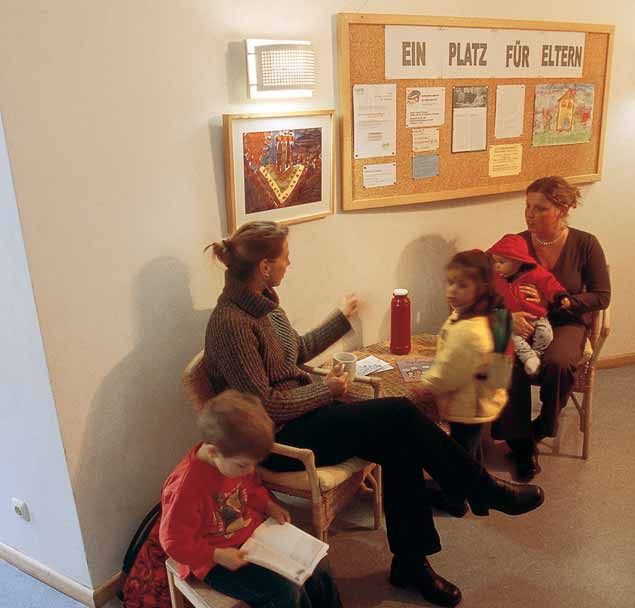
Active learning and democracy                     tiated together with the pre-school
                                                  teachers and the other children
Just like all other human beings, children live
in social communities. They are dependent
upon relationships and willing to work to
maintain these relationships. In doing so,
they increasingly develop a sense of commu-
nity and come to terms with what is right
and wrong, what the community benefits
from and what harms it.

The educational program describes how chil-
dren can be stimulated to perceive themsel-
ves as individuals as well as part of a group,
to negotiate within this group and adopt
standards and values that are important for
both adults and children. In this way, pre-
school can be seen as a place to cultivate
democratic values in children. All preschool
children should experience that:
• they are important and feel that they
  belong
• they can make a contribution to the com-
  munity with their knowledge and abilities
• they can incorporate their ideas and desires
  into shaping the daily processes in the pre-
  school
• the rules of coexistence at the pre-school
  are not laws set in stone but rather nego-
                                                                                        5
In which areas is children’s development fostered?

Children need targeted stimuli in all areas      Social and cultural environment
that play a role in their development. The
educational program is broken down into          Learning is inconceivable without social relati-
seven areas of education and describes how       onships. The social experience in a culturally
pre-school teachers can support children in      diverse community requires that basic values
these areas to understand the world in which     which ensure the rights of individuals and the
they live. How information is processed in       preservation of the community be analyzed
pre-schools should stimulate their desire for    on an ongoing basis. This is the case in pre-
knowledge. It should also teach children         school as well as in the rest of the world.
how they can explore and learn about new         Even the youngest children deal with ques-
things.                                          tions of perception and meaning that need
                                                 answers. These are questions about good and
                                                 evil, life and death and ideas about this life
The seven areas of education:                    and the afterlife.

Body, movement and health
                                                 Communication: Languages, early literacy
Children’s learning is linked to how they        and media
experience something physically through
bodily movement. Important prerequisites         Language, whether spoken or written, is the
for a child’s learning processes are physical,   predominant medium that we use to commu-
mental and social well-being.                    nicate with one another in our society. It is
                                                 also the medium that we use to exchange
                                                 and give order to information. Those who
                                                 want to orient themselves in our information

                                                                                                    7
society depend on communication and have offers enjoyment and relaxation and makes it
to acquire the ability to communicate. The possible to communicate beyond language
first word a child says, the first picture a child barriers.
draws, are important milestones along this
path. The access children have to books and
artwork, to media as a whole, their exposure Basic mathematical activities
to other languages, enrich language develop-
ment and promote a sense of how different Math helps children to orient themselves in
cultures coexist. the world, to impose order on it and produce
predictable figures: numbers, the clock, the
seven days of the week, the circle, the line...
Artistic activities
Because children are still at the beginning of Basic scientific and technical activities
their language development, aesthetic per-
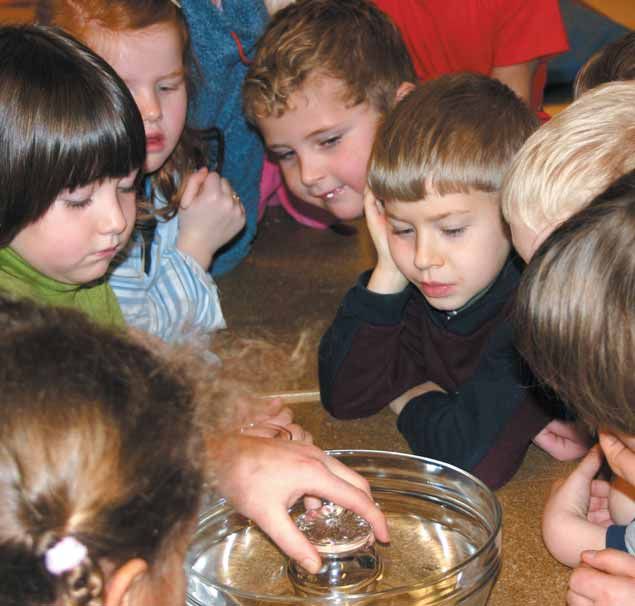
ception and artistic expression are a good Scientific observations and learning to operate
way, especially for the youngest children, for technical devices and media provide stimula-
them to come to terms with reality. Painting, tion for experimentation and generate questi-
drawing, making shapes with clay, these ons. In attempting to answer these questions,
types of creative activities help children pro- children establish a relationship with the world
cess what they experience on a day-to-day and discover logical correlations: why does a
basis and develop their imagination. bird fly? where does light come from? what
is electricity?
Music All children have the right to be exposed to
knowledge from each different educational
Every human being is musical, every child area during pre-school.
even more so. Music, with its melodies,
rhythms and tones, affects the emotions,
8Which abilities should be fostered in children?
People who learn simultaneously acquire the Functional skills
ability to act successfully. The educational For example:
program describes which skills pre-school • understanding spoken words and being
teachers should foster in day-to-day activities able to express one’s own thoughts accura-
at pre-school so that children can be success- tely and correctly from a grammatical point
ful in their lives and actions both today and of view,
in the future. • being able to formulate generalizations and
concepts, being able to use tools properly…
These are broken down into four different
areas: Learning skills
For example:
Personal skills • expanding one’s own strengths and wan-
For example: ting to make progress,
• developing trust in one’s own strengths, • cooperating and working together with
• respecting one’s self, others,
• being curious and open to new experiences, • realizing that effort leads to success,
developing ideas and taking initiative… • acknowledging that learning enhances
one’s own ability to take action and make
Social skills decisions…
For example:
• listening to others, being able to empathize,
negotiating and complying with rules and
standards of coexistence, communicating
about different expectations, dealing with
conflict and making compromises…
9How do pre-school teachers view themselves?
What are their responsibilities?
Progress would not be possible if the current • It is also a prerequisite that children ex-
generation only learned what the former change information among themselves
generation already knew. Consequently, lear- about what is important to them and what
ning requires an active discussion between they want to know and experience. Pre-
generations. Adults make their experiences, school teachers thus ensure that children
knowledge, skills and abilities available to exchange experiences and create the
their children. They are curious to see what opportunity for them to cooperate with
their children will do with them. They realize each other in their day-to-day activities,
that children are capable of creating some- in games and in projects.
thing new out of something old during this
process. • The final prerequisite is that pre-school
teachers make their skills and experiences
Pre-schools are places of invention. Pre-school available. They must therefore analyze
teachers are there in the dual-role of teachers which knowledge and experiences children
and learners. Children and adults set out on need to be able to deal effectively with cur-
an exciting educational journey in pre-school rent and future situations that occur in their
from which everyone involved benefits. lives. They themselves must be willing to
learn new things.
• One prerequisite is that pre-school teachers
create opportunities to give children access
to a variety of different experiences. They
encourage children to ask questions and
search for answers. They support each child
in his or her attempt to arrive at sound
explanations for those answers.
11The educational program breaks down Games: teachers initiate games that involve
the responsibilities of pre-school all of the senses and challenge the children’s
teachers into five different categories: imagination. They provide the materials
necessary for these games.
Daily organization: teachers structure day-to-
day life in the pre-school in such a way that Examples: • incorporate name games, games
children have lots of different kinds of oppor- involving the sense of touch, word games or
tunities for learning on a day-to-day basis. songs, nonsense verses, counting rhymes
• role plays and theater or circus games that
Examples: • during breakfast or lunch, start a challenge physical, emotional and mental
discussion about the different foods: how abilities (costume material, props, makeup,
does it taste? what preferences do individual build a stage, incorporate other ideas for
children have? find out where the food games...) • suitable board and table games,
comes from and how it is processed before dolls, toy animals and other game materials,
being eaten • develop rituals for saying hello • initiate games involving physical activity
and goodbye: learn different languages and (make room for these games both inside and
gestures for these rituals • participate in day- outside, make material available) • rediscover
to-day chores: what type of system makes forgotten games, ask parents and grandpa-
sense? create and label containers for diffe- rents • incorporate games from other cultures
rent materials, learn how to use different thus bringing traditions and other cultures to
cleaning materials and tools effectively and life in the pre-school...
test them out • for breakfast, a celebration or
go shopping together: write a shopping list, Projects: teachers plan and deal with impor-
consider: how much do we need of what? tant topics with the children in long-term
compare prices and special offers, take into projects.
account sell by dates, learn to recognize spe-
cial offers aimed at children, practice hand- Examples: • “My body” (how do I look?
ling money... what do I like about myself, what don’t I
like?) • “Every family is different” • “Where
12does our water come from” • “Why do pla- document these observations. In the educa-
nes fly?” • “I have to go to the hospital” tional program, it is recommended that
• “Me and the other children” (get to know teachers talk to the parents of each child
oneself and the other children better and about what they have observed in their
recognize similarities and differences) child’s development on a regular basis. In this
• “Where do we live?” (find out about the way, teachers and parents can think together
place you live and learn how history changes strategically about how each child can best
this place)... be supported in his or her development and
coordinate their activities.
Floor plan: teachers set up rooms in such a
way that children are encouraged to underta- These responsibilities include: • regular
ke activities and learn independently. observation of individual children or groups
of children, documentation of these observa-
Examples: • create different types of possibi- tions and evaluation with the children
lities for physical activity both inside and • regular discussions with parents about the
outside • set up rooms with opportunities developmental progress of their children;
both for privacy and group activities • provi- possible use of different types of media such
de interesting devices and tools, for example, as video or photo after parental consent
optical aids such as magnifying glasses, • agreement with parents about how docu-
kaleidoscopes, colored transparencies • have mentation is to be handled
different materials available for making sha-
pes • provide experimental tables and work-
benches with the respective materials • set
up corners for writing, a library...
Observation and documentation: one of the
ongoing responsibilities of teachers is to clo-
sely observe children’s development and
13What can parents do to support the implementation
of the new educational program in pre-schools?
You, as parents, are the most important part- what you’re not satisfied with, ask questions
ners of the pre-school when it comes to your about what you want to know. A lot of ques-
child’s education. tions can be clarified and problems solved
when they are discussed. And, if there is
You know your child and his or her develop- something you like, don’t keep it to yourself
ment since birth. You know your child’s likes because it shows teachers that they are on
and dislikes, what he or she likes to do, the the right path.
strengths and problems.
Of course you have a lot to do. But now and
Tell your child’s teachers about the things again, it might be possible to schedule a little
your child is really interested in at home and time when you pick up your child from pre-
what he or she likes to do. It is particularly school. See for yourself what your child has
important when your child starts pre-school been doing all day. You might even find an
that you help teachers understand your child opportunity for a quick chat with the teacher.
and support his or her learning processes. You can also learn what your child likes to do
in the pre-school and who he or she likes to
Children are happy when they sense that play with. Perhaps you could also consider
their parents and teachers get along. This together what interests your child can pursue
helps them feel comfortable in pre-school at home and what kind of support he or she
and develop well. would need.
Your opinion, your suggestions and your The teachers will invite you to talk about the
desires are important to the teachers. Don’t learning and developmental progress your
be afraid to express the expectations you child has made at regular intervals. They will
have of the pre-school. Don’t hesitate to say report their own observations to you and ask
15you what changes you have noticed in your expand their scope of experience is welcome.
child and what your assessment of his or her Talk to the teachers about whether what you
development is. have to offer can benefit the children and,
if so, how.
These discussions are important for your child
because they give teachers the informations We hope that this overview has aroused your
they need on how best to encourage it. And curiosity about the Berlin educational program
you also get a good overview of what your and everything that your child experiences in
child can already do. his or her day-to-day life at the pre-school.
A lot of parents are particularly concerned A complete version of the program is available
the year before their child enters elementary at your pre-school and can also be purchased
school. They are worried about how their in bookstores.
child will fare in school and whether he or
she is adequately prepared. Talk about this We wish you and your child lots of fun lear-
with the teachers. The school is capable of ning. As you know, you never stop learning...
changing and adjusting to different needs.
The teachers will certainly be appreciative if
you are interested in having more contact
with the pre-school.
Maybe you work in a field that is interesting
for the children? Maybe you lived overseas
and can share your experiences? Perhaps you
remember songs and games that no one else
does? Perhaps you play an instrument that
you would like to teach the children? Ever-
ything that enriches children and that can
16Imprint
verlag das netz
Kreuzstr. 4
13187 Berlin
Tel: 030.48 09 65 36
Fax 030.481 56 86
evagrueber@verlagdasnetz.de
Published by
Senatsverwaltung für Bildung, Wissenschaft Senatsverwaltung für Bildung,
und Forschung Berlin Jugend und Sport
Beuthstr. 6-8
10117 Berlin Berlin Educational Program
Authors For the Education and Care of Children
Dr. Christa Preissing, Internationale Akade- in Pre-School Prior to Starting Elementary
mie, INA gemeinnützige Gesellschaft für School*
innovative Pädagogik, Psychologie und
Ökonomie mbH an der Freien Universität
Berlin in cooperation with the Arbeitskreis 132 pages, with color illustrations,
Neue Erziehung e.V., Berlin EUR 14.90, ISBN 978-3-937785-61-5
*available only in German
Can be ordered from book stores or
© 2004 verlag das netz, Berlin
directly from verlag das netz
Layout: Jens Klennert, Tania Miguez Kreuzstr. 4 ·13187 Berlin
Print and binding: Colordruck Zwickau Tel: 030.48 09 65 36
Photos: Torsten Krey-Gerve, Klaus Dom- Fax: 030.481 56 86
browski, Angelika von der Beek www.betrifftkinder.de
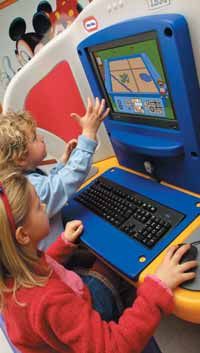
17Quality in pre-school learning IBM supports the Berlin educational program and has equipped 10 percent of Berlin pre-schools with multimedia learning stations The IBM KidSmart program launched in Berlin in 2003 will be further expanded. IBM and Berlin Senate’s Department of Education, Science, and Research implemented this key program for pre-school media edu- cation in a public private partnership initiative. As part of this program, IBM has given 200 multimedia learning stations with learning software to Berlin pre-schools and also equipped them with color printers and digital cameras. The Berlin qualification program called “Learning, Information, Technology and Service for Working with Young People in Berlin” is assuming responsibility for the media education and advanced training for pre-school teachers and the exchange of experiences as part of the regional program “jugendnetz-berlin.de”. Goals of this IBM program: • improve media education in pre-schools • promote learning processes through hands-on learning as early as pre-school, particular attention is to be paid to basic IT education • involve children, teachers and parents • set up an Internet forum for exchange and information • contribute to ongoing progress in the implementation of the overall educational program • define active learning as a social process You can find more information on the IBM KidSmart program at: www.kidsmartearlylearning.org www.ibm.com/de/ibm/unternehmen/engagement/bildung/kidsmart/html www.jugendnetz-berlin.de
Betrifft                               www.betrifftkinder.de

             KINDER
Das Praxisjournal für ErzieherInnen, Eltern und GrundschullehrerInnen heute
                                                                              Das legendäre Poster mit den gesammelten pädagogischen Zeigefingern
                                                                               Betrifft KINDER Poster · (DIN A1) · Idee: Mike Weimann
                                                                               ISBN 978-3-937785-03-5 · Euro 4,- zzgl. Versand
                                             Klar,
                                             lebendig,                        Ganzheitlich lernen von Anfang an
                                             unabhängig!                      Entdecken Sie Wege, auf dem Kindergärten und Grundschulen ihren Anspruch,
                                                                              Bildungseinrichtungen zu sein, auf unverwechselbare Weise erfüllen können.
                                           »Betrifft KINDER« ist das neue
                                           Praxisjournal für ErzieherInnen,
                                           Eltern, GrundschullehrerInnen,
                                          LeiterInnen von Kindergärten,
                            Kindertagesstätten, Krippen, Grundschulen und
                            Horten sowie die begleitende Fachszene – in
                           Ausbildung und Praxis. Es stellt klar, lebendig
                           und unterhaltsam spannende Ideen sowie Kon-
                           zepte und Projekte in der Bildung, Erziehung
                           und Betreuung von Kindern zwischen 0 und 12         Dagmar Arzenbacher/Catherine Springer    Dagmar Arzenbacher/Catherine Springer
 Jahren vor. Das dichte Netzwerk von Kooperationspartnern lässt »Betrifft      Apfelsinen-Heft + Apfelsinen-Poster      Schnecken-Heft + Schnecken-Poster
 KINDER« zu einer kreativen Ideenschmiede für Autoren, LeserInnen,             (40 Seiten) · ISBN 978-3-937785-00-4     (52 Seiten) · ISBN 978-3-937785-05-9
 Erfinder, Gestalter und Redaktion werden, zu einem Entwicklungsmotor          Euro 9,80                                Euro 11,80
 für innovative Pädagogik und offensive Politik.

    8 Ausgaben + 4 Themenhefte
    + »Betrifft KINDER«-Kalender
                                                                               Mathe-Kings
    ISSN 1613-737X                                                             Junge Kinder fassen Mathematik an
    Direkt-Jahresabo Euro 48,- zzgl. Versand                                   Elisabeth Niggemeyer und Nancy Hoenisch zeigen,
    Abo für Azubis, Studenten und in der Elternzeit Euro 36,-                  »wie lustvoll und natürlich man das Wahrnehmen,
    zzgl. Versand                                                              Denken, Aneignen mit Kindern üben kann, ohne die
    Kennenlern-Abo (3 Hefte) Euro 10,- zzgl. Versand                           Tätigkeiten und Interessen nun schon der Vierjähri-
                                                                               gen zu ›verschulen‹.« (Hartmut von Hentig)
    Roger Prott/Annette Hautumm
    12 Prinzipien
    für die erfolgreiche Zusammenarbeit                                                                         Nancy Hoenisch/Elisabeth Niggemeyer
    von Erzieherinnen und Eltern                                                                                Mathe-Kings
                                                                                                                Junge Kinder fassen Mathematik an
    Betrifft KINDER Extra
                                                                                                                152 Seiten, vierfarbig, Euro 24,80
    ISBN 978-3-937785-01-1                                                                                      ISBN 978-3-937785-37-0
    40 Seiten, Euro 6,90

verlag das netz       Redaktion »Betrifft KINDER« ·Kreuzstr. 4 · 13187 Berlin · Tel. 030.48 09 65 36 · Fax 030.481 56 86
                      www.betrifftkinder.de · www.verlagdasnetz.de · service@verlagdasnetz.de
You can also read


